For the climate’s sake, the $multibillion nuclear industry bailouts must stop
|
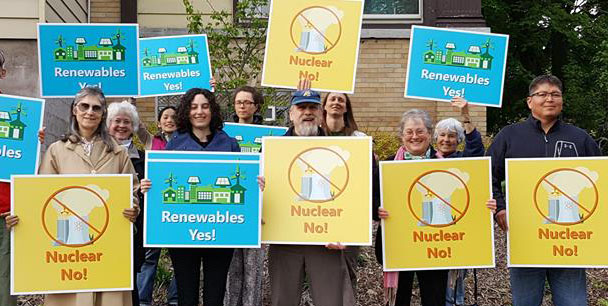
Nuclear Industry’s $23 Billion Bailout Request Shows Why It Should Have ‘No Role to Play’ in Solving Climate Crisis: Study “For the sake of taxpayers, electricity consumers and the climate, Congress must stop this endless nuclear boondoggle.” by Eoin Higgins, staff writer A proposed bailout of the U.S. nuclear power industry that could cost taxpayers $23 billion over the next 10 years is a perfect example of why the climate crisis needs solutions that focus on renewable resources, green advocacy group Friends of the Earth said Thursday.”The dying nuclear industry wants a massive bailout at the expense of taxpayers and the climate,” the group’s senior policy analyst Lukas Ross said in a statement. Friends of the Earth commissioned a study (pdf) on the Nuclear Powers America Act of 2019, a nuclear industry-backed bill making its way through Congress that would continue subsidies for the industry for decades. Vermont Law School fellow Mark Cooper, who authored the study, wrote that the consequences of continuing tax credits for the industry would have the effect of making other potential technologies unviable for reducing emissions. “Subsidizing nuclear keeps reactors on-line and crowds out the alternatives,” said Cooper. “It slows the transition to an electrical grid based on low-carbon distributed resources.” While renewables are a major part of the push from climate activists and advocates to solve the climate crisis, using nuclear power to reduce emissions has been floated as a potential piece of the Green New Deal. The technology was notably left out of the legislation by Rep. Alexandria Ocasio-Cortez (D-N.Y.) and Sen. Ed Markey (D-Mass.), a decision that Popular Mechanics writer Avery Thompson hailed in February as a “great idea.” “Reactors are gigantic beasts, and sustaining a nuclear reaction while drawing power from it requires an absurd level of engineering,” wrote Thompson. “Reactors are expensive, bulky, and complicated, to say nothing of the waste products they produce or the fear of a catastrophe like Chernobyl or Fukushima.” The proposed nuclear industry bailout, warns Cooper in the new report, is an attempt to reverse economic trends that have never been favorable to nuclear power standing by itself. The industry, Cooper said, hasn’t earned the right to be considered as a realistic solution to the climate crisis or U.S. energy needs. “Nuclear has failed for over 50 years to control its costs, even with help from massive subsidies, and alternatives are available to reduce greenhouse gas emissions at a much lower cost,” wrote Cooper. Time is of the essence, said Friends of the Earth’s Ross. “With just a decade left to prevent the worst of the climate crisis, we shouldn’t dump more money into ancient nuclear reactors at the expense of cleaner and much cheaper renewables,” he said. |
|
Problems for Elizabeth Warren’s policy of No First Use of nuclear weapons
 Elizabeth Warren Wants A Nuclear No First Use Policy, But It Won’t Be Easy to Implement, Presidents Bill Clinton and Barack Obama tried—but failed—to incorporate NFU into their Nuclear Posture Reviews. If Warren wants an NFU, she should look to these Democratic presidents’ pasts to learn how to make her lofty goal achievable. National Interest by Lauren Sukin, 25 Oct 19, While President Donald Trump boasts about the “tippy top” shape of the U.S. nuclear arsenal, Senator Elizabeth Warren (D-MA) has a much more reasonable plan for American nuclear weapons, outlined in her co-sponsored fourteen-word bill that aims to radically alter the conditions under which the United States can use nuclear weapons. The bill (S. 272/H.R. 921) reads simply: “It is the policy of the United States to not use nuclear weapons first.” The idea—called No First Use (NFU)—has been around since the Cold War, but it has never officially been U.S. policy………..
Lessons for the Next President
If the next president wants to implement NFU, what should they do differently? First, an improved NPR process would involve hands-on, consistent leadership from civilian executives. Second, the next president will need to bridge differences of opinion between traditionalists and those who are more reform-minded. That means choosing civilian leaders of the NPR effort who have and commit to building a good rapport with the military establishment and military leaders who are receptive to new ideas while using their expertise to ensure that any adopted policies are beneficial, clear, and implementable. Lessons for the Next President If the next president wants to implement NFU, what should they do differently? First, an improved NPR process would involve hands-on, consistent leadership from civilian executives. Second, the next president will need to bridge differences of opinion between traditionalists and those who are more reform-minded. That means choosing civilian leaders of the NPR effort who have and commit to building a good rapport with the military establishment and military leaders who are receptive to new ideas while using their expertise to ensure that any adopted policies are beneficial, clear, and implementable. Lauren Sukin is a Ph.D. Candidate in the Department of Political Science at Stanford University. https://nationalinterest.org/feature/elizabeth-warren-wants-nuclear-no-first-use-policy-it-wont-be-easy-implement-90716 |
|
USA’s nuclear wastes can’t stay in above-ground canisters forever
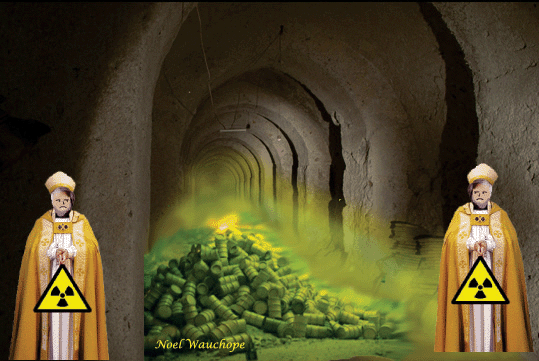
Who will be the ultimate bearer of the nation’s nuclear waste? Mashable
by Mark Kaufman, Editors Nandita Raghuram and Brittany Levine Beckman Illustrations Vicky Leta, 25 Oct 19, In Mashable’s series Wasted, we dig into the myriad ways we’re trashing our planet. Because it’s time to sober up.When future tourists journey through a desolate, sun-baked patch of the southeastern New Mexico desert, some 20 miles outside of the 21st-century oil boomtown of Carlsbad, they’ll spot dozens of giant pillars on the flat terrain, somewhat like the great stone heads looming on the treeless hills of Easter Island. If the intrigued desert visitors wander close enough to the 25-foot high granite monuments, erected by the United States Department of Energy, they’ll see inscriptions written in seven different, perhaps archaic, languages.
And if they dare wander past the perimeter of the grandiose columns, the travelers will find an open-air structure made of 15-foot high walls, emblazoned with frightening pictographs and symbols. Taken together, the U.S. agency hopes to convey a clear message to anyone who enters.Keep out. Leave. Don’t dig. Something bad lurks beneath the ground. “This ‘stay out’ sign warns future generations of the danger of intrusion,” the Department of Energy wrote in its blueprint of this imposing message.
In 1990, the agency convened a group of linguists, writers, anthropologists, and an assortment of other scientists to think about how, in centuries or thousands of years (perhaps long after the fall of the U.S. empire), they might discourage people from revealing what lay 2,000 feet below the rocky soil and dashing roadrunners: hundreds of thousands of containers filled with radioactive sludge, soil, mops, brooms, and gloves from the U.S. government’s nuclear weapons program. The sealed casks would be a danger for at least 10 millennia.
 [illustration by Vicky Leta, Mashable). Rather, much of the nuclear rummage is the spent radioactive fuel from power plants ……..the waste is scattered around the country at the very nuclear power plants where it was used, because the U.S. hasn’t decided on a place to permanently deposit the deadly dross. But the concrete and metal storage casks, often stockpiled directly on the surface in places like the idyllic California coast, age, crack, and decay over time. The waste can’t stay there forever.
It’s got to go somewhere,” said Allison Macfarlane, the former chairman of the United States Nuclear Regulatory Commission and professor of science and technology policy at George Washington University.
“The worst option is leaving it above ground indefinitely,” stressed Edwin Lyman, a senior scientist and expert in nuclear weapons policy at the Union of Concerned Scientists, a nonprofit science advocacy group….. there’s no good place to store the forever waste. “There’s no best option. There’s only the least bad option,”………
One day, WIPP might be joined by another nuclear waste site — but this one exposed on New Mexico’s desert surface.
Between the cities of Carlsbad and Hobbs, about 70 miles apart, lies 1,000 acres of rough desert scrub. Holtec International, a company that sells sturdy containers for storing nuclear waste, has a scheme for these 1,000 acres that would make them a lot of money. The company wants to transform this forsaken desert into a concrete field holding 10,000 containers of spent fuel from all the nation’s nuclear power plants, collectively called the HI-STORE Consolidated Interim Story Facility. “Interim” is a somewhat deceiving word here. Taxpayers would essentially rent these thick casks until our underperforming Congress finds a truly permanent place to store the spent fuel from nuclear plants. The waste could stay there for 40 years. Or, if the casks are continually restored, much longer……..
The waste must eventually go deep, deep underground, said Lyman, the nuclear expert. The irradiated can can’t be punted down the road all century. Nuclear plants are brimming with this stuff. “The Department of Energy is on the hook to produce some type of a solution as the reactor facilities are filling up,” emphasized Notre Dame’s Burns.
There’s only one way that can happen: not forcing, not dictating, but collaborating with a community, somewhere, to allow a geologic depository, stressed Macfarlane. The site would need to be heavily guarded in perpetuity. “The question is can they be compensated enough and their concerns be mitigated enough that they’re willing to accept it,” said Lyman.
while the waste can’t just sit exposed on the surface forever, it could be some 50 years before the casks become an imminent threat.
Indeed, nuclear waste is “out of sight out of mind,” noted Lyman. This is in stark contrast to an environmental threat like relentlessly rising global temperatures, wherein the well-predicted consequences of a warmer globe are conspicuously unfolding today: wildfires torching more land, the melting of the great ice sheets, unprecedented deluges, overheated infrastructure, an incessantly warming ocean, and beyond……..
If New Mexico’s nuclear heritage is somehow ever lost, perhaps by the passage of millennia and ravages of time, tall monuments will stand in the windswept desert for thousands of years, hopefully warding off any curious pilgrims, explorers, or future industrialists from the decaying consequences of war, weaponry, and defense. Whatever symbols the Department of Energy ultimately etches into the walls of the roofless, sunlit temple where WIPP once stood, they better be damn scary.https://mashable.com/feature/most-radioactive-state-in-us-nuclear-waste-new-mexico-nevada/?fbclid=IwAR3hb7-ZZjWxaF863zuHqueEHeA8VjhLwrWVm2sA849Kvcb5D6OAQ00SmdI
20 sovereign nations in New Mexico and Texas oppose nuclear facility near Carlsbad
 Native American Pueblo leaders oppose nuclear facility near Carlsbad, Hobbs, https://www.oilandgas360.com/native-american-pueblo-leaders-oppose-nuclear-facility-near-carlsbad-hobbs-2/ in Press by— 360 Feed Wire
Oct. 24– Oct. 24–A group of Native American leaders opposed a plan to temporarily store nuclear waste at proposed facilities in southeast New Mexico and West Texas before a permanent repository is available.
The All Pueblo Council of Governors, which represents 20 sovereign nations in New Mexico and Texas held a meeting on Thursday where members affirmed their opposition to the projects, read a Monday news release from the group.
Concerns with the transportation of spent nuclear fuel rods drove the group’s opposition to two proposed consolidated interim storage (CIS) sites, one near the border of Eddy and Lea counties in New Mexico and another in Andrews, Texas. Continue reading
Nuclear power and nuclear weapons always inextricably bound together
 RICHARD BELL: Nuclear power heightens peril of nuclear weapons, RICHARD BELL https://www.thechronicleherald.ca/opinion/local-perspectives/richard-bell-nuclear-power-heightens-peril-of-nuclear-weapons-367646/In his Oct. 12 column, “Four parties’ climate change platforms blowing smoke; nuclear power offers way forward,” Bill Black says he wants to “have an honest conversation about climate change after the election.”
We could start by having an honest conversation about nuclear power.
I don’t disagree for a second that climate change poses an existential threat to the survival of the human species. But in his enumeration of a few of the problems with nuclear power, Black leaves out the biggest one: nuclear weapons. They are an existential threat to the survival of the human species right now.
The problem here is that the atoms don’t know the difference between war and peace. When you train nuclear physicists, there’s not one textbook on atoms for peace and a different textbook on atoms for war. Giving people the knowledge and technology to build and operate nuclear power plants gives them almost all the knowledge they need to make at least crude nuclear weapons.
Once you know the physics, the only real limitation is getting your hands on enough fissile material to make a weapon. The world has been very fortunate thus far that making large enough quantities of fissile material is extremely expensive, something that only nation states have managed to finance, so far.
If you want to see how peaceful nuclear power leads directly to nuclear weapons, you have only to look at Canada’s role in India’s nuclear weapons program. India exploded its first nuclear weapon on May 18, 1974, using plutonium from a 40-megawatt CIRUS research reactor that Canada had donated under a plan to promote development. A condition of the donation was that it be used for peaceful purposes only — a condition that the Indians claimed to have met by declaring the blast a “peaceful nuclear explosive.”
The last thing we should be doing is spreading nuclear technology more broadly, since, in the end, such a policy will only increase the number of nations with nuclear weapons and make the threat of a nuclear war even more serious.
Black could also spend some time reading the history of attempts to rein in the dangers of nuclear proliferation caused by the spread of nuclear power plants.
He mentions, for example, that we could reduce the risk of proliferation by “providing a safe facility for other countries’ handling of spent fuel.” (Countries bent on going nuclear can extract plutonium from spent fuel.) There have been efforts to internationalize the control of nuclear materials, like having spent fuel handled in one place, since the United States floated the Baruch Plan at the United Nations in 1946. Every effort to establish such a “safe facility” has failed. There is nothing on the horizon to suggest that a new effort would succeed.
Nuclear power is a technology that has never matured. Each plant is a one-off, with construction cost overruns soaring into the billions in some of the most recent reactors, like the French one at Flamanville that was originally priced at $5.5 billion, and a few days ago reached $20.8 billion.
From the 1950s onward, nuclear power proponents have insisted that the “next generation” of nuclear power plants would finally solve all the problems that had bedevilled the industry thus far. But with each passing decade, the “next generation” has failed to deliver. Nuclear power turns out to be a fiendishly demanding and difficult way to boil water.
There is also plenty of evidence that the rapid drop in the price of renewable electricity from wind and solar is already competitive, if not cheaper, than new nuclear. As noted energy analyst Amory Lovins concluded in a 2017 paper published in The Electricity Journal, “Subsidizing distressed nuclear plants typically saves less carbon than closing them and reinvesting their saved operating cost into several fold-cheaper efficiency.”
Richard Bell lives in Musquodoboit Harbour. He is editor of the monthly newspaper, the Eastern Shore Cooperator. He is also co-author of the Sierra Club Book, Nukespeak: Nuclear Language, Myths, and Mindset, originally issued in 1982. Sierra Club Books commissioned an electronic update of the book on its 30th anniversary.
Sweden’s wind power to surpass nuclear this year
Sweden’s wind power to surpass nuclear this year: lobby, Lefteris  Karagiannopoulos, STOCKHOLM (Reuters) 35 Oct 19, – Sweden is set to have more wind power capability
The association makes quarterly forecasts based on data it collects from turbine manufacturers and project developers.
Its latest forecast for 2 GW growth was down from 2.2 GW previously.
Investment decisions corresponding to 686 MW of new wind power were made in the third quarter, it said, up from 114 MW in the second quarter. https://www.reuters.com/article/us-sweden-wind/swedens-wind-power-to-surpass-nuclear-this-year-lobby-idUSKBN1X3145Reporting by Lefteris Karagiannopoulos; editing by Jason Neely
Ohio’s Nuclear and Coal Bailout Bill Survives Court Challenge.
|
Ohio’s Nuclear and Coal Bailout Bill Survives Court Challenge. Federal judge says group seeking overturn of pro-nuclear House Bill 6 must seek state Supreme Court relief, raising bar for a 2020 challenge. Greentech Media, JEFF ST. JOHN OCTOBER 24, 2019 An effort to overturn Ohio’s controversial nuclear bailout law via voter referendum suffered a setback this week, after a federal judge denied the group’s request for more time to collect signatures to put it before state voters next year.In a late Wednesday evening decision, U.S. District Judge Edmund A. Sargus, Jr. denied a request from the Ohioans Against Corporate Bailouts group for more time to collect the required 265,774 signatures to prevent House Bill 6 from going into effect while it faces repeal.
Instead, Sargus wrote that the issues raised by the group were under the jurisdiction of the Ohio Supreme Court, which “could afford plaintiffs the remedy they seek — a stay of HB 6 and additional time to circulate their petitions.” HB 6, passed in July by the state’s Republican-controlled legislature and signed into law by Republican Gov. Mike DeWine, is broadly unpopular with the public, according to multiple polls, and has come under withering attack from the Union of Concerned Scientists, the Sierra Club, and other environmental groups. The bill, which went into effect on Tuesday, slashes the state’s existing efficiency and renewable energy mandates, a long-term goal of the Ohio GOP, and redirects the hundreds of millions of dollars a year to support bankrupt utility FirstEnergy Solutions’ nuclear power plants. The surcharges of about 85 cents per month on typical residential customers’ utility bills, meant to raise roughly $1 billion for FirstEnergy’s Davis-Besse and Perry nuclear plants over seven years, won’t go into effect until 2021. “We’re disappointed, but we’re exploring our options with the Ohio Supreme Court,” Gene Pierce, spokesperson for Ohioans Against Corporate Bailouts, told The Toledo Blade. A high-stakes energy policy battle turns nastyOhioans Against Corporate Bailouts has alleged that its signature-gathering efforts were targeted by HB 6 supporters in a dirty-tricks campaign that prevented it from hitting its targeted signature numbers. According to its complaints, these tactics included bribing its signature-takers with cash and plane tickets to join an opposing ballot initiative, and in some cases, allegedly threatening signature-gatherers in public. The Ohio Attorney General’s office is investigating dozens of complaints related to signature-gathering, including activities by pro-HB 6 group Generation Now, which has been accused of hiring “blockers,” or people who will stand in the way of or otherwise interfere with signature-gatherers in public. Earlier this month, Sargus granted the group a temporary order preventing enforcement of a state law that requires some paid signature-gatherers to disclose their identities or face criminal penalties, based on allegations that Generation Now had been approaching signature-takers and their employers to pressure them into quitting…….. Ohio’s bill also eliminates the state’s renewable portfolio standard of 12.5 percent by 2027, passed in 2008, which has been under attack from state Republicans for years. And it eliminates the nearly $200 million per year, collected in surcharges of roughly $1.69 per month on Ohio utility customers, to fund energy-efficiency and demand-reduction programs. These programs have saved Ohio customers $5.1 billion from 2009 to 2017, according to the Midwest Energy Efficiency Alliance. HB 6 also imposes a $2.50-per-month charge on utility customers’ bills to support two coal-fired power plants owned by the Ohio Valley Electric Corp., a consortium of utilities in the state. Opponents of the plan have challenged the subsidies, saying the law’s text inadvertently bars them from participating. https://www.greentechmedia.com/articles/read/ohios-nuclear-and-coal-bailout-bill-survives-court-challenge |
|
|
Too small for the monstrosity’: Anti-nuclear campaigners to take Sizewell C opposition to public meeting
|
Too small for the monstrosity’: Anti-nuclear campaigners to take Sizewell C opposition to public meeting https://www.eadt.co.uk/news/nuclear-free-local-authorities-meeting-colchester-essex-october-2019-1-6341230
Anti-nuclear campaigners are to voice their “real concern” over the planned building of new nuclear power stations – including at Sizewell C – during a public meeting. EDF Energy has said that building new nuclear reactors across the country, including in Suffolk, is crucial to meeting the country’s future ends – with Sizewell B station director Paul Morton recently saying: “The lights won’t stay on without it.” But that has caused controversy in Suffolk for years, with opponents questioning its environmental benefits while raising fears that building a massive new nuclear power station could have on the area of outstanding natural beauty at Sizewell. The Nuclear Free Local Authorities (NFLA) English Forum is now holding a public meeting at the Firstsite Gallery in Colchester on Saturday, October 26 in association with groups such as Together Against Sizewell C (TASC). NFLA steering committee chairman David Blackburn said it would allow “councillors and the concerned public to understand the real concerns in building new nuclear reactors”. Pete Wilkinson, of Together Against Sizewell C, called the planned Suffolk location “an eroding coastal site, bequeathing future generations an inequitable and intolerable radioactive waste legacy”. He also said it was “a site too small for the monstrosity it is required to contain, hemmed in by precious areas of outstanding natural beauty in a remote, inaccessible and tranquil area”. He added that Sizewell C would be “an unnecessary behemoth” that “electricity bill payers are being asked to subsidise”. EDF Energy was approached for comment. |
|
|
Why nuclear reactors are the perfect missile target in the Middle East, or anywhere, really
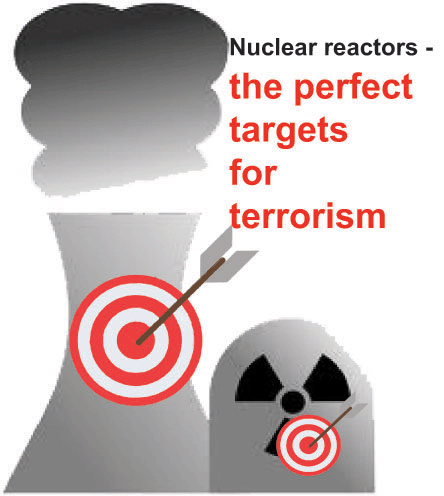
Saudi Arabia has plans to build an array of large nuclear power plants. Next door, the United Arab Emirates is spending $20 billion to complete four commercial reactors at Barakah. Egypt and Turkey both have begun constructing two massive Russian-designed nuclear power plants. Meanwhile, Iran has two operating reactors and has begun constructing two more. After Iran’s Sept. 14 missile attack against Saudi Arabia, though, all of these plants risk being wiped out.
Precision guided missiles are the reason why. Shortly after the Iranian attack on Saudi Arabia, pictures revealed each of the oil tanks struck at Abqaiq were hit in the exact same spot. The missiles’s estimated accuracy was one meter. That makes even the hardiest of large reactors easy marks. Rather than target the most protected part of the plant, the large concrete containment building covering the reactor’s core, accurate missiles can put key auxiliary reactor facilities at risk.
One such aim point is the power plant’s emergency electrical diesel generator building. Knock the generators out and you deprive the reactor of emergency backup power needed to keep its safety and coolant pump systems operating when external, grid-supplied electricity is cut off by blackouts, storms, or attacks.
Then, there are the main electrical power lines coming into the plant. Hit both of these and the emergency diesel backup generators and you rob the plant’s coolant pumps and safety systems of all power. Reactor core meltdowns and fuel fires in the reactor’s spent fuel storage pond are assured (similar to Fukushima).
Yet, another aim point is the reactor’s control room, which is often located outside the reactor’s containment walls. Knock it out and you lobotomize the plant, which again will set the reactor on a meltdown trajectory.
Finally, there’s the reactor’s spent fuel storage pond building. If it is hit and subsequently drained of coolant, the spent fuel it contains will catch fire, risking a major release of radioactivity.
How large of a release? The U.S. Nuclear Regulatory Commission estimated a spent fuel fire at a typical power plant would likely discharge 100 times as much damaging radiation as was spread in the Fukushima accident. Accordingly, the Nuclear Regulatory Commission projected a desired evacuation area more than 700 times larger than what the Fukushima accident required.
Some nuclear reactor owners recognize the risks of aerial attacks. Belarus just announced its deployment of modern air and missile defenses to counter possible military attacks against its new nuclear plant. Iran and Algeria have air-defended their reactors, as has Israel. UAE officials also have suggested they have such systems.
But will they work against the kind of high-accuracy missiles Iran fired at the Saudis? In the September attack, all 25 of the low-flying attack drones and missiles flew undetected. None of Riyadh’s air defenses (which included U.S. Patriot, German Skyguard, and French Shahine systems) engaged.
Yet, some experts doubt any current air defense system could do any better. The Pentagon’s top policy official and Israel’s prime minister were both rattled by the Saudi attack. The United States publicly warned that NATO currently can’t cope with such low-flying missiles. Israeli Prime Minister Benjamin Netanyahu called for a crash multibillion-dollar Israeli air defense development program to deal with them. Securing such defenses won’t be easy.
In the meantime, Middle Eastern states need more large reactors like a hole in the head. That goes for Iran, Turkey, Egypt, the UAE, Jordan, Morocco, and Algeria, as well as Saudi Arabia. In fact, no one in the natural gas and the sun-drenched Middle East needs nuclear power. Renewable and gas-fired electricity are much cheaper, quicker to build, and far less provocative…..https://www.washingtonexaminer.com/opinion/the-ultimate-middle-east-missile-target-nuclear-reactors
No such thing as a zero- or close to zero-emission nuclear power plant.
 David Lowry, Guardian 21st Oct 2019: in the analysis
 of MPs’ voting record on bills to combat climate change (Tories five times more likely than other MPs to vote against bills to tackle climate crisis, 12 October), both Jeremy Corbyn and Caroline Lucas are marked as 92% supportive on the basis they voted to
“keep nuclear power subsidies relatively low”.
Proposed Solution to Global Warming, Air Pollution, and Energy Security, in
his forthcoming book, 100% Clean, Renewable Energy and Storage for
Everything, Jacobson argues: “There is no such thing as a zero- or close to
zero-emission nuclear power plant. Even existing plants emit due to the
continuous mining and refining of uranium needed for the plant. Overall
emissions from new nuclear are 78 to 178g of CO2/kWH, not close to 0.”
https://www.theguardian.com/environment/2019/oct/21/tory-boasts-on-climate-action-are-full-of-hot-air
Climate change: Permafrost is now becoming a carbon emitter
|
Climate change has turned permafrost into a carbon emitter, Tundra plants can’t absorb enough carbon in summer to make up for carbon released in winter, CBC, Bob Weber · The Canadian Press Oct 22, 2019 Research has found Arctic soil has warmed to the point where it releases more carbon in winter than northern plants can absorb during the summer.
The finding means the extensive belt of tundra around the globe — a vast reserve of carbon that dwarfs what’s held in the atmosphere — is becoming a source of greenhouse gas emissions responsible for climate change. “There’s a net loss,” said Dalhousie University’s Jocelyn Egan, one of 75 co-authors of a paper published in Nature Climate Change. “In a given year, more carbon is being lost than what is being taken in. It is happening already.” The research by scientists in 12 countries and from dozens of institutions is the latest warning that northern natural systems that once reliably kept carbon out of the atmosphere are starting to release it………. Emissions speeding upWhat’s more, the pace of the emissions is likely to increase. Under a business-as-usual scenario, emissions from northern soil would be likely to release 41 per cent more carbon by the end of the century. But the Arctic is already warming at three times the pace of the rest of the globe. Even if significant mitigation efforts are made, those emissions will increase by 17 per cent, said the report. Egan notes the research didn’t measure methane, a greenhouse gas about 30 times more potent than carbon dioxide that is also released from soil. Her findings echo previous studies. Last summer, research suggested that larger, hotter wildfires are turning boreal forests into carbon sources. Another paper found that instead of melting slowly and steadily, permafrost is subject to sudden collapses that speed up the rate of carbon release. Mitigation won’t stop the problem any more, said Egan, but it will help.https://www.cbc.ca/news/technology/permafrost-climate-change-1.5330144 |
|
|
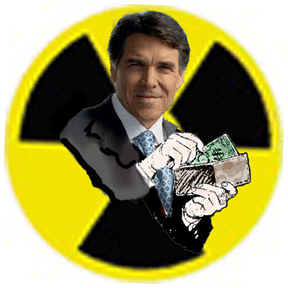
Rick Perry, as Energy Secretary, “solved” nuclear waste problem by reclassifying high level waste as low level
|
Perry’s Odd Definition of Progress on Nuclear Waste https://www.nrdc.org/experts/caroline-reiser/perrys-odd-definition-progress-nuclear-waste, October 22, 2019 Caroline Reiser
After months of suspense, Energy Secretary Rick Perry finally confirmed he will resign, boasting in a farewell tweet that under his leadership the Department of Energy “made environmental progress unseen for decades cleaning up the legacy of the Manhattan Project.” —What’s that now? Where exactly are the “numerous” legacy sites that Perry claims the Department tackled? All the Department of Energy has done under Perry is weaken standards and renege on promises by finding ways to abandon the world’s most toxic chemical and radioactive waste in place. To give a brief history of the legacy Perry is referring to, the Manhattan Project is the name of the World War II era research and development effort that led to the first several nuclear weapons, including those used to destroy Hiroshima and Nagasaki. In the atomic arms race of the Cold War, the Department of Energy and its predecessor agencies continued to design, test, and manufacture nuclear weapons but on a vaster scale—ultimately manufacturing over 30,000 nuclear weapons. Making nuclear weapons is not a clean business. Every country that has built a nuclear arsenal has harmed its own people and environment in the process. Nuclear production created a so-called “legacy” of profoundly contaminated radiological and chemical waste sites. There are dozens of these legacy waste sites across the United States; the largest three are the Idaho National Engineering and Environmental Laboratory, the South Carolina Savannah River Site, and the Washington Hanford site (which many consider one of the most contaminated sites in the Western Hemisphere). To give you a picture of the scale in terms of size and danger, the Hanford site hosts 177 tanks. The tanks range from 55,000 gallons to more than a million gallons of radioactive and chemical waste each. That’s from about 20 semi-trucks full to about two Olympic sized swimming pools. And even brief exposure to a small portion of that waste can be deadly. So what happened at these sites under Perry? Not much. The most far-reaching action the Department of Energy took under Secretary Perry was to give itself permission to “reclassify” highly toxic radioactive waste. The Department’s new stance is that it can magically decide that certain High-Level Waste is now Low-Level Waste without oversight from the Environmental Protection Agency, states, or tribes. With this authority, the Department of Energy no longer has to permanently isolate from the environment High-Level Waste, but instead can abandon hundreds of gallons of the most toxic waste at sites like Hanford. So really the only way Perry could be said to have cleaned up this toxic waste is by “recategorizing” it as something less dangerous than it is, and then (metaphorically) washing his hands of it. The Perry-led Department of Energy will also be remembered for breaking promises. In addition to the promises the Department is breaking by reclassifying High-Level Waste, the Department is also breaking promises to clean up smaller sites as well. For example, the Santa Susana Field Laboratory sits in the golden hills of California, right on the outskirts of Los Angeles’s urban sprawl. In 2010, the Energy Department agreed to clean up the site to what’s called “background levels,” meaning the normal levels of radiation one could expect to find at the site before industry intervened. But the Perry Energy Department decided this agreement didn’t matter – it now plans to leave in place the vast majority of the contamination and to act without consent from California. Both Washington and California are pushing back against the Department of Energy’s broken promises. And it’s clear that if the Department gets away with it at these sites, it will do the exact same thing at other sites across the country. So, for Secretary Perry’s tweet to be true, he must have a strange definition of “progress.” Maybe he means progress in abandoning the Department of Energy’s obligation to clean up the mess it made. Maybe he means progress in speeding up transferring the responsibility of managing highly toxic sites back to states, tribes, and local communities. Maybe he means progress in cutting corners to favor cost over health and safety. All I can say is that I hope the next Secretary and I have a more similar idea of what progress looks like. The Department of Energy can do better. President Trump has already nominated Dan Broulliette as a replacement for Perry. If Broulliette wants to make actual progress on America’s nuclear waste legacies, he needs to stop wasting time trying to get away with doing less – do the work and do it right. Given the track record of the last few years, there’s ample reason for skepticism. But I would love to be proven wrong. |
|
Highly toxic nuclear waste being imported into Russia, from Germany
 Russia Is Importing Toxic Nuclear Waste From Germany, Greenpeace Warns, https://www.themoscowtimes.com/2019/10/23/russia-is-importing-toxic-nuclear-waste-from-germany-greenpeace-warns-a67873 A European uranium enrichment firm has resumed shipments of a highly toxic and radioactive waste product from Germany to Russia, Greenpeace Russia warned Wednesday. The enrichment firm Urenco and Russia’s state nuclear company Rosatom halted the radioactive waste imports from Germany in 2009 over revelations that the waste was stored in the open. German media reported Tuesday that Urenco had resumed exports of the toxic compound used to enrich uranium, sending up to 3,600 metric tons to central Russia in May-October 2019. “Russia should not become a radioactive burial ground for the rest of the world,” Greenpeace’s energy campaigner Rashid Alimov said, demanding the release of government documents and punishment of officials responsible for resumed shipments. Urenco plans to send 12,000 metric tons of uranium hexafluoride to Russia in 2019-2022, the Die Tageszeitung newspaper reported, citing officials’ communications. Greenpeace estimates that Russia has stored 1 million metric tons of the uranium hexafluoride, a waste product known as “tails.” Vyacheslav Alexandrov, the head of the state-run radioactive waste management operator’s Novouralsk branch where Urelco had reportedly sent the “tails,” said Russia prohibits nuclear-waste imports and expressed surprise over Greenpeace’s warning. In comments to the Znak.com news website, Alimov agreed with Alexandrov that “Russia formally observes the law” but contended that about 90% of the imported toxic “tails” remain in Russia after enrichment. |
|
UK govt postpones decision on Wylfa nuclear project
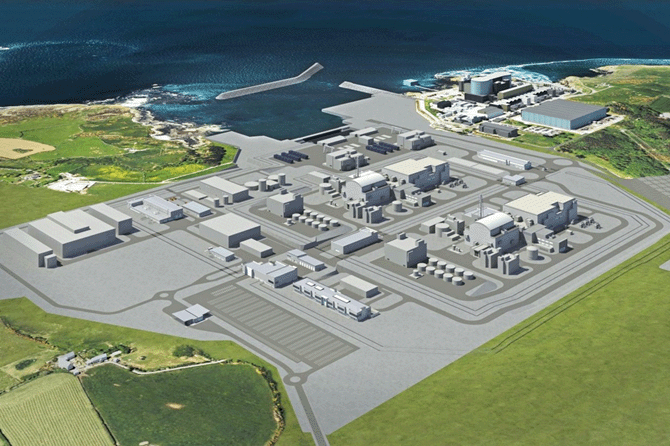 Wylfa: Anglesey nuclear power plant planning decision deferred, BBC,
She had been widely expected to back the proposals, granting what is known as a development consent order (DCO).
Hitachi shelved the scheme, the biggest energy project ever proposed in Wales, over funding issues.
Developers Horizon Nuclear Power had earlier said the decision would “heavily influence” how the project progresses.
Ms Leadsom has now given a deadline by the end of the year – and invited comments from Natural Resources Wales, the Office for Nuclear Regulation, Anglesey council and other bodies. She wants more assurances on various aspects – from biodiversity, visual impact, flooding and construction noise – and any risk to the Sandwich tern, which has a colony nearby.…….
Opponents of nuclear power have called on Ms Leadsom to dismiss the planning application and focus on renewable sources of electricity. Dylan Morgan of People Against Wylfa B said it was “obvious the developers are keen to get planning permission in order to try and sell the site”.
“But that’s easier said than done at the moment given the pretty perilous state of the global nuclear industry and the hopeless economics.”……. https://www.bbc.com/news/uk-wales-50139360
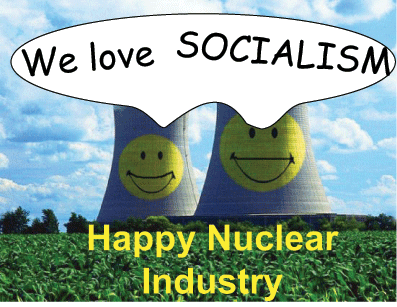
Uninsurable – and for good reason – nuclear power
|
Nuclear energy is too costly and risky; better alternatives exist https://www.jhnewsandguide.com/opinion/columnists/common_ground/nuclear-energy-is-too-costly-and-risky-better-alternatives-exist/article_71a11439-581d-572f-87c7-88dad34ddf74.html Common Ground / By Paul W. Hansen , 23 Oct 19 In last week’s Guest Shot the director of the Idaho National Lab (INL) Mark Peters wrote to open a dialogue with News&Guide readers about nuclear energy. I want to take him up on his offer. First, what we agree on. Nuclear energy produces about 20% of the nation’s electricity, which is about 8% of our total energy use. Overall, we need to produce and use energy that minimizes greenhouse gases. Looking at the troubled history, poor economics, attendant risk and unsolved problem of nuclear waste disposal, I think there are much better alternatives for producing carbon free energy. Today, there are 97 nuclear reactors in 29 states that produce electricity. Thirty-four reactors have been shut down. More orders for nuclear plants have been canceled than plants have been built. Only one plant has come online in the last 25 years. Early claims that nuclear power would be “too cheap to meter” proved false. Despite extensive public subsidies, nuclear plants across America have faced significant cost overruns. For example, the Washington Public Power Supply System defaulted on $2.25 billion in municipal bonds when cost overruns on two units caused the cancellation of two other units. The Shoreham Nuclear Power Plant on Long Island was completed in 1985, but never operated when an evacuation plan could not be implemented. The plant was decommissioned. The $6 billion cost of the unused plant was passed on to Long Island residents. Attempts to build new nuclear plants have been even more challenging. During the 1980s, the cost of Plant Vogtle’s first two nuclear units near Augusta, Georgia, jumped from an estimated $660 million to $8.87 billion. Regardless, 20 years later Georgia Power wanted to build the “next generation” of nuclear power plants. In August 2008, it was estimated that Plant Vogtle reactors 3 and 4 would cost $14.3 billion and begin operations in 2017. Today, updated estimates put the cost at $28 billion with an operation date of November 2022. The project is projected to be $14 billion over budget and more than 5 years behind schedule. The builder of the reactors, Westinghouse, has declared bankruptcy. In 2017, a similar two-unit plant in South Carolina, the V.C. Summer plant, was abandoned — costing about $5 billion. Concerns over the transportation and storage of highly radioactive spent nuclear fuel have prevented any nuclear waste repositories from being developed in the U.S. Spent fuel rods are stored onsite at nuclear plants. When uranium fuel is used up, usually after about 18 months, the spent rods are generally moved to deep pools of circulating water to cool down for about 10 years. The radioactive material is then transferred to metal casks. The waste remains dangerously radioactive for about 10,000 years. There is no plan for permanent disposal of this waste. This brings me to my biggest concern — the fact that those in our society whose business it is to determine risk will not insure nuclear power. If you own a home, look at your homeowner’s insurance policy. You are not covered in the event of a nuclear accident. No one is. The nuclear industry exists only due to the liability limitations granted by Congress in the Price Anderson Act. Price Anderson requires the nuclear industry to fund an account of $12.6 billion. Any liability above that is supposed to be covered by taxpayers. Then there are the issues of long-term decommissioning costs, nuclear accidents or terrorists. In Chernobyl and Fukushima, nuclear accidents have left large areas uninhabitable. What if the 9/11 terrorists had managed to crash those planes into the Indian Point Nuclear Power Plant north of New York City? While the reactor containment vessel might have survived the impact, the spent fuel rod pools may not have, leaving much of the New York metropolitan area uninhabitable. Nuclear energy has not worked out as planned. Far more carbon-free power can be generated at far less cost and risk by renewable energy and energy efficiency programs. |
|
1 This Month
19 November – Webinar – The Reality of Reprocessing
Time: 11:00 AM Pacific Time (US & Canada) / 2:00 PM Eastern / 7:00 PM UK / 8:00 PM CET
Register for the Zoom Event Here

Tell Congress: Prevent Nuclear Catastrophe in Iran

Tell Congress: Prevent Nuclear Catastrophe in Iran

Read the Public Inquiry Report, the Commissioners’ report, Surrendering Australia: The AUKUS Deception is available to download for free at aukuspublicinquiry.com. Or just watch the replay of the National Press Club Luncheon.


Shut down the radiation-damaged Heysham nuclear reactors now
To see nuclear-related stories in greater depth and intensity – go to https://nuclearinformation.wordpress.com

Say No to NASA’s Reckless Nuclear Reactor on the Moon
Say No to NASA’s Reckless Nuclear Reactor on the Moon
-
Archives
- November 2026 (178)
- October 2026 (302)
- September 2026 (339)
- August 2026 (330)
- July 2026 (355)
- June 2026 (287)
- May 2026 (306)
- April 2026 (356)
- March 2026 (251)
- February 2026 (267)
- January 2026 (308)
- December 2025 (358)
-
Categories
- 1
- 1 NUCLEAR ISSUES
- business and costs
- climate change
- culture and arts
- ENERGY
- environment
- health
- history
- indigenous issues
- Legal
- marketing of nuclear
- media
- opposition to nuclear
- PERSONAL STORIES
- politics
- politics international
- Religion and ethics
- safety
- secrets,lies and civil liberties
- spinbuster
- technology
- Uranium
- wastes
- weapons and war
- Women
- 2 WORLD
- ACTION
- AFRICA
- Atrocities
- AUSTRALIA
- Christina's notes
- Christina's themes
- culture and arts
- Events
- Fuk 2022
- Fuk 2023
- Fukushima 2017
- Fukushima 2018
- fukushima 2019
- Fukushima 2020
- Fukushima 2021
- general
- global warming
- Humour (God we need it)
- Nuclear
- RARE EARTHS
- Reference
- resources – print
- Resources -audiovicual
- Weekly Newsletter
- World
- World Nuclear
- YouTube
-
RSS
Entries RSS
Comments RSS

