Over 300 financial institutions put $748 billion in to nuclear weapons companies
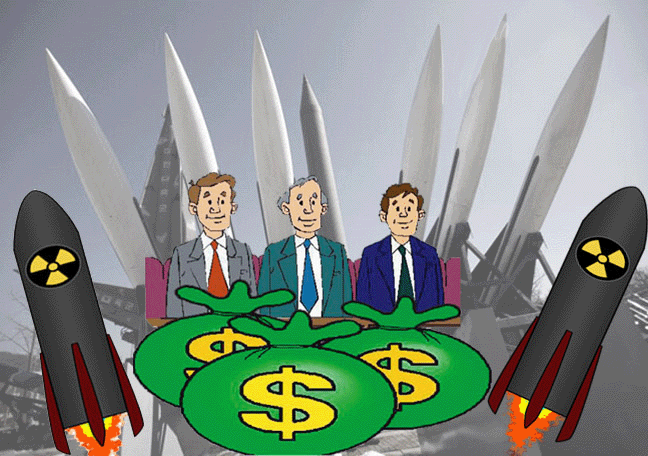
Of the 325 investors, eight are Japanese lenders with a total investment of $25.5 billion, says the Netherlands-based PAX. The eight include Mitsubishi UFJ Financial Group Inc., Mizuho Financial Group Inc. and Sumitomo Mitsui Financial Group Inc.
The 18 recipients, which PAX calls “the top 18 nuclear weapon producing companies,” include Boeing Co. and Lockheed Martin Corp. a U.S. defense giant involved in the manufacturing of the long-range nuclear Minuteman intercontinental ballistic missile.
The total investment was up 42 percent from the tally in the previous report, which covered 20 companies in a period between January 2014 and October 2017, according to Susi Snyder, a PAX member who is the main author of the new report.
She attributed the increase to a 192 percent jump by Boeing and a 300 percent surge by French defense company Thales SA.
Snyder, however, said the number of investors “continues to drop” amid rising criticism against investment in inhumane weapons such as nuclear bombs.
She cited a provision in the nuclear weapons ban treaty banning “to assist” developing nuclear weapons or other nuclear explosive devises. The treaty was adopted in 2017 at the U.N. General Assembly.
Snyder praised Resona Holdings Inc. for not providing loans to borrowers that are involved in the development of nuclear weapons.
Such a policy is “a really positive step” toward reducing — and eventually eliminating — nuclear weapons, she said.
Of the eight Japanese lenders listed in the report, Fuyo General Lease Co. said it has not invested in nuclear weapon producing companies, although a company that had business dealings with a Fuyo subsidiary in the United States was acquired by a nuclear weapons-related company.
Sumitomo Mitsui Trust Holdings Inc. said it invests in the given companies through some index funds handled by a group company.
Six other lenders — Mitsubishi UFJ, Mizuho, Sumitomo Mitsui, Orix Corp., Nomura Holdings Inc. and the Development Bank of Japan — said they do not comment on individual dealings.
PAX focused on all financial institutions involved in underwritings of share and bond issuances for one or more of the 18 companies since January 2017 and own at least 0.5 percent of the outstanding shares or bonds of at least one of the companies based on the latest data available through June last year.
Seven Peace Activists Found Guilty of “Conspiracy” for Anti-Nuclear Protest
 Seven Peace Activists Found Guilty of “Conspiracy” for Anti-Nuclear Protest, https://truthout.org/video/seven-peace-activists-found-guilty-of-conspiracy-for-anti-nuclear-protest/, BY Amy Goodman, Democracy Now!, October 25, 2019
In Georgia, a federal grand jury on Thursday found seven Catholic peace activists guilty on three felony counts and a misdemeanor charge for breaking into the Kings Bay Naval Submarine Base on April 4, 2018. The activists, known as the Kings Bay Plowshares 7, entered the base armed with hammers, crime scene tape, baby bottles containing their own blood, and an indictment charging the U.S. government with crimes against peace. The base is home to at least six nuclear ballistic missile submarines, each of which carries 20 Trident thermonuclear weapons.
AMY GOODMAN: The activists will be sentenced within the next 90 days. They face more than 20 years in prison. This is Plowshares activist Martha Hennessy.
Worrying legacy of radioactive trash under planned Moscow roadway
|
Locals fear radiation spikes as Moscow plans road across nuclear waste dump: ‘Everything is very bad’ Greenpeace claims radiation levels at the site are already many times above natural levels – and higher than the levels now seen in the Chernobyl exclusion zone, Independent Oliver Carroll, Moscow @olliecarroll 27 Oct 19,
Up a small hill from the Moskvorechye commuter station in southeastern Moscow, there is a hole in a green corrugated fence. Radioactive warning signs, fly-posted by a group of local activists, are a clue to the mystery on the other side. Equipped with rubber boots, air masks and radiation counters, a motley crew is carrying out an inspection of the radioactive waste dumps behind the fence, on the perimeter of Moscow’s decommissioned Polymetal factory. It’s part of a last-gasp attempt to stop local authorities from building a bridge and eight-lane motorway across part of the site – controversial plans, the activists say, that run the risk of releasing buried radioactive material into the air and adjacent Moskva river. Campaigning group Greenpeace has recently published results from new tests of topsoil from the area immediately affected by the highway construction. Those tests showed radiation levels dozens of times above permissible levels, and pose a cancer risk to local residents, the group claimed. Samples at 0.5 metres below the surface showed significantly higher levels of radiation.
|
|
|
Protestors against Sizewell nuclear project get their message out, despite EDF’s blocking tactics
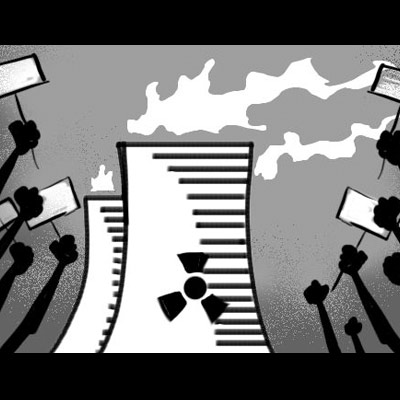
 East Anglian Daily Times 27th Oct 2019, A protest planned to take place in Pillbox Field, Sizewell, on October 26, was thwarted when EDF arranged for metal barriers and security staff to occupy an access road to the site. Undaunted but remaining peaceful, the protest was moved to a new location, Sizewell beach car park, where the activists erected marquees and carried out their planned truth-tellingexercises and people’s assembly.
XR protestor Victoria Proctor said:
“There’s been lots and lots of groups in the past few years that have been
working so hard to bring attention to what’s being planned along the coast.
“We’re trying to get the truth out there for people so they realise what is
under threat.
https://www.eadt.co.uk/news/extinction-rebellion-xr-protest-edf-sizewell-1-6343148
National nuclear commission strategy for Marshall Islands
Marshalls endorses nuclear commission strategy, https://www.rnz.co.nz/international/pacific-news/401921/marshalls-endorses-nuclear-commission-strategy The Marshall Islands government has endorsed the adoption of a national nuclear commission strategy for the next three years.
The strategy honours the legacy of Marshallese nuclear heroes and heroines who fought and continue to demand accountability for their communities.
The strategy was mandated in the Marshall Islands parliament, or Nitijela, as part of the National Nuclear Commission Act of 2017.
It focuses on five broad themes for nuclear justice: compensation, health care, the environment, national capacity, and education and awareness.
From 1946 to 1958, the US used the Marshall Islands to test its nuclear weapons.
The commission also aims to establish an independent panel of scientists and specialists in fields related to radiation exposure, to provide the republic’s citizens access to trusted, independent science.
The commission’s chair, Rhea Moss-Christian, said the NNC strategy was a tool for all Marshallese, whether living in the islands or overseas, to use in their individual and collective efforts to respond to the devastation resulting from the US nuclear weapons testing program in the Marshall Islands.
“It is also a resource for our partners and friends outside the Marshall Islands to understand the nuclear testing impacts that persist today and how they can support the Marshallese people,” Ms Moss-Christian said.
Bushfires rage in California- 940.000 without power
 Power shut off to 940,000 Californians as major bushfires rage, SBS, 27 Oct 19,Nearly a million people in California will be blacked out as powerful winds threaten to knock down electric wires and spark further fires.
A California power company says it will shut off power to around 940,000 customers across the north of the US state as powerful winds threatened to knock down electric wires and spark further fires.
“Winds of this magnitude pose a higher risk of damage and sparks on the electric system and rapid wildfire spread.”
California Governor Gavin Newsom said the outages were “unacceptable.”
“We are going to do our best to get through these high-wind events and work through Saturday, Sunday into Monday and get these lights back on and do everything in our power to make sure PG&E is never in a position where they’re doing this to us again,” Newsom said in a video posted on Twitter.
The largest wildfire is currently raging in northern California’s Sonoma County, where 50,000 residents were ordered to evacuate on Saturday.
‘Story about greed’
A number of bushfires are also raging in the northern part of the state. The most serious – the Kincade Fire – broke out late Wednesday in the Sonoma wine region, also prompting evacuations.
The state’s largest utility, Pacific Gas & Electric Co., warned that millions of people in northern and central parts of the state could have their power cut off during the weekend given the high risk of fire.
The same type of equipment was responsible for the state’s deadliest bushfire ever – the Camp Fire in 2018 which killed 86 people.
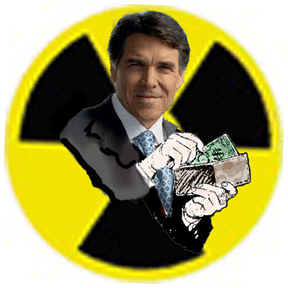
U.S. Energy Secretary Rick Perry says USA and Saudi Arabia negotiating on nuclear sales
 U.S. says talks progressing with Saudi on possible
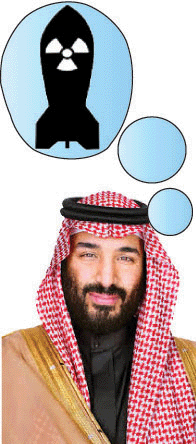 nuclear program, DUBAI (Reuters) 27 Oct 19– U.S. Energy Secretary Rick Perry said on Saturday that conversations with Saudi Arabia on a nuclear program are going forward.The world’s top oil exporter had said it wanted to use nuclear power to diversify its energy mix. It wants to go ahead with a full-cycle nuclear program, including the production and enrichment of uranium for atomic fuel.
In order for U.S. companies to compete for Saudi Arabia’s project, Riyadh would normally need to sign an accord on the peaceful use of nuclear technology with Washington.
Reuters has reported that progress on the discussions has been difficult because Saudi Arabia does not want to sign a deal that would rule out the possibility of enriching uranium or reprocessing spent fuel – both potential paths to a bomb.
“The kingdom and the leadership in the kingdom .. will find a way to sign a 1,2,3 agreement with the United States, I think,” Perry said.
Speaking at a round table in Abu Dhabi, Perry added that the United States was doing everything it could to have a ready global supply of oil…… https://www.reuters.com/article/us-uae-us-energy/us-says-talks-progressing-with-saudi-on-possible-nuclear-program-idUSKBN1X509E
Extinction Rebellion: One Year On
Extinction Rebellion: One Year On, As their one-year anniversary approaches, Felicity Graham reviews the successes and failures of Extinction Rebellion. Cherwell, By Felicity Victoria Graham, 27th October 2019
North Korea exasperated with USA’s hostile policies and demands
SEOUL, South Korea — North Korea on Sunday said it’s running out of patience with the United States over what it described as hostile policies and unilateral disarmament demands, and warned that a close personal relationship between the leaders alone wouldn’t be enough to prevent nuclear diplomacy from derailing.
In a statement published by Pyongyang’s official Korean Central News Agency, senior North Korean official Kim Yong Chol said there has been no substantial progress in relations despite warm ties between leader Kim Jong Un and President Donald Trump. He said the persisting hostility means “there can be the exchange of fire at any moment.”
Kim Yong Chol said the Trump administration would be “seriously mistaken” if it ignores an end-of-year deadline set by Kim Jong Un to propose mutually acceptable terms for a deal to salvage nuclear negotiations.
The North issued a similar statement on Thursday that was attributed to veteran diplomat Kim Kye Gwan. He criticized U.S. officials for maintaining “Cold War mentality and ideological prejudice” and urged the United States to act “wisely” through the end of the year……..
talks have faltered after the collapse of a February summit between Kim and Trump in Hanoi, Vietnam, where the U.S. rejected North Korean demands for broad sanctions relief in exchange for a piecemeal deal toward partially surrendering its nuclear capabilities.
The North expressed its displeasure with a flurry of short-range missile tests while Kim said he would “wait with patience until the end of the year for the United States to come up with a courageous decision.”……..
North Korea for decades has been pushing a concept of denuclearization that bears no resemblance to the American definition, with Pyongyang vowing to pursue nuclear development until the United States removes its troops and the nuclear umbrella defending South Korea and Japan. https://www.wusa9.com/article/news/nation-world/north-korea-running-out-of-patience-with-united-states-nuclear-diplomacy/65-7aaa9700-aadd-44b2-8070-73e53732a579
Iran Looms Over Race to Lead U.N. Nuclear Agency
Iran Looms Over Race to Lead U.N. Nuclear Agency
Group’s most powerful members are split over IAEA’s approach to Tehran……..(subscribers only) https://www.wsj.com/articles/iran-looms-over-race-to-lead-u-n-nuclear-agency-11572197016
$85B Nuclear Missile Competition Gets Messier as Feds Investigate Northrop,
GLOBAL BUSINESS EDITOR, 27 Oct 19, Boeing is breaking up its ICBM team — just as the Federal Trade Commission begins looking into the company’s allegations that Northrop wasn’t playing fair.
The Pentagon’s effort to build a new ICBM just took another step toward a no-competition sole-source award — and the prospective lone bidder just came under federal investigation for anti-competitive behavior.
Two pieces of news broke late this week concerning the U.S. Air Force’s Ground Based Strategic Deterrent program, whose total value has been estimated at $85 billion. First, the service stopped paying Boeing for ICBM-related technology-development work that began in 2017. In response, the company has begun to break up the specialized team of engineers it brought together to create a replacement for the Cold War-era Minuteman III, according to a Boeing source close to the project.
Second, a Northrop Grumman filing revealed that the Federal Trade Commission is looking into allegations that the company is not abiding by an agreement that allowed its 2018 acquisition of Orbital ATK, one of just two U.S. makers of solid rocket motors. Those terms required the company to sell rocket motors “on a non-discriminatory basis to all competitors for missile contracts.”
Until July, Boeing and Northrop had both been planning to bid on the ICBM contract. Then Boeing announced that it would withdraw, charging that it had been unfairly handicapped in the competition because Northrop had slow-rolled an agreement that would have paved the way for Boeing to buy rocket motors from Orbital ATK……. https://www.defenseone.com/business/2019/10/usaf-puts-its-icbm-chips-northrop-feds-launch-investigation/160888/
Governments manipulate social media – Twitter executive is a British army psychological operations officer
 governments have a long history of trying to manipulate the media,” and are steadily moving into the realm of social media.
Media Ignore Unmasking of Twitter Exec as British Psyops Officer https://fair.org/home/media-ignore-unmasking-of-twitter-exec-as-british-psyops-officer/comment-page-1/#comment-3169114
Government penetration and control over media of little interest to those who are subject to it, ALAN MACLEOD, 24 Oct 19, A recent investigation from independent news outlet Middle East Eye (9/30/19) uncovered that a senior Twitter executive is, in fact, an officer in the British Army’s 77th Brigade, a unit dedicated to psychological operations (psyops), propaganda and online warfare.
For media so committed to covering news of foreign interference with US public opinion online (see FAIR.org, 8/24/16, 12/13/17, 7/27/18), the response was distinctly muted.The story did not appear at all in the New York Times, Washington Post, CNN, CNBC, MSNBC, Fox News or virtually any other mainstream national outlet. In fact, the only corporate US outlet of any note covering the news that a person deciding what you see in your Twitter feed is a foreign psyops officer was Newsweek, which published a detailed analysis from Tareq Haddad (10/1/19). When asked by FAIR why he believed this was, Haddad agreed it was major news, but downplayed the idea of media malevolence, suggesting that because it was a small British outlet breaking news involving a British officer, US media may have overlooked it.
Deep State and Fourth Estate
A Fact-Free Zone
Yet factchecking organizations are not neutral arbiters of truth, but part of an increasingly elite class of people with their own biases and preconceptions. In practice, they have tended to espouse a “centrist” ideology—a word with its own problems (FAIR.org, 3/23/19)—and are hostile to anyone challenging the status quo from either right or left. Factcheckers have been carrying out something of a war against Bernie Sanders’ campaign, constantly rating the Vermont Senator’s statements as misleading or untrue without due reason.
Furthermore, the choice of who gets to decide what is true and what is false is an important one. Facebook has already partnered with conservative magazine the Weekly Standard, a publication that was crucial in pushing arguably the greatest fake news stories of the 21st century: those of Iraqi weapons of mass destruction and Saddam Hussein’s links to 9/11 (Extra!, 9/09). “There is no debate about the facts” that “the Iraqi threat” to the US is “enormous” and that Saddam’s henchmen helped Osama Bin Laden, it wrote in 2002 (1/21/02). Yet Facebook picked this organization to help it gauge the veracity of viral stories across its platform.
Silencing Dissent Online
In September, Twitter suspended multiple accounts belonging to Cuban state media. And along with Facebook and YouTube, it also suspended hundreds of Chinese accounts it claimed were attempting to “sow political discord in Hong Kong” by “undermining the legitimacy” of the protest movement. These social media giants have already deleted thousands of Venezuelan, Russian and Iranian accounts and pages that were, in their own words, “in line with” those governments’ positions. The message is clear: Sharing opinions that do not fall in line with official US doctrine will not be tolerated online.
In contrast, Western politicians can continually flout Twitter’s terms of service with no consequences. Sen. Marco Rubio threatened Venezuelan President Nicolas Maduro with torture and execution, sharing a video of Moammar Gadhafi being tortured and killed in a not-so-subtle message that broke multiple Twitter rules. Meanwhile, Donald Trump announced that we would “totally destroy” North Korea with “fire and fury,” and promised he would bring about the “official end” of Iran if it angered him again. Twitter has continually refused to delete tweets like that on the grounds that this would “hamper necessary discussion,” although it later saw fit to delete those from Iran’s Ayatollah Ali Khamenei.
Decisions like these highlight how there is one rule for the powerful and quite another for the rest of us, and how the big social media platforms are increasingly acting like arms of Western governments, adopting their perspectives on what are and are not acceptable political viewpoints.
Press freedom in Europe is on the decline
Q&A: How Europe has Moved Away from Being a Sanctuary for Journalists http://www.ipsnews.net/2019/10/qa-europe-moved-away-sanctuary-journalists/?utm_source=English+-+IPS+Weekly&utm_campaign=2391e81e36-EMAIL_CAMPAIGN_2019_10_24_01_01&utm_medium=email&utm_term=0_eab01a56ae-2391e81e36-5466689
As it released its annual Press Freedom Index earlier this year, the group warned that Europe was “no longer a sanctuary for journalists”, pointing to the murders of three journalists in Malta, Slovakia and Bulgaria in the space of a few months and warning that “hatred of journalists has degenerated into violence, contributing to an increase in fear… the decline in press freedom in Europe… has gone hand in hand with an erosion of the region’s institutions by increasingly authoritarian governments”.
IPS spoke to Pauline Ades-Mevel, Head of European Union & Balkan desk at RSF about why press freedom was deteriorating across the continent and how, while threats to press freedom in Central and Eastern Europe often make headlines, the situation is far from trouble free in Western Europe. Excerpts of the interview follow.
Inter Press Service (IPS): RSF’s most recent surveys and reports suggest that media freedom is on the decline generally in Europe. Is this decline specific for Europe or part of a global trend?
Pauline Ades-Meve (PAM): When working on our most recent Global Press Freedom Index, we looked to see if there was a trend of deterioration of press freedom just in Europe or elsewhere. We found that it was actually a global trend, that we could see that trend in many regions. We looked at why this was the case and, while there are some different reasons in different countries, what we saw in general was that there was a climate of fear in which many journalists were working in. This is why there is this general deteriorating trend. Fear has been causing the most problems for journalists.
In Europe specifically a number of countries have fallen down the Index. This is for a number of reasons and comes with rising populism, anti-media rhetoric from politicians, cyber-harassment of journalists, physical attacks.
IPS: Threats to media freedom in central and eastern Europe and the Balkans have made a lot of headlines in recent years, perhaps understandably due to the nature of those threats, but RSF has made clear that media freedom in western Europe is also declining. What kind of threats are media facing in western Europe today?
PAM: We have seen threats to journalists emerge in recent years in Western Europe. For instance, in Spain, during the Catalan independence protests, leaders of the movement delivered rhetoric which undermined trust in journalists. They did not think journalists were covering the situation properly, or at least not in the way they wanted, and they viewed journalists who were not supporting their cause as people who were working against it and trying to prevent independence.
We recently published a report on the pressures faced by journalists in Spain and people don’t realise that, at the moment, Spain is no longer a heaven to be a journalist when you cover politics.
And then another example is Italy where there are 20 journalists who have around the clock police protection because they are facing threats from criminal networks.
Journalists in Europe are facing cyber-harassment – journalists covering protests in Spain and in France have been attacked online.
There is also a trend we are seeing in Western Europe of journalists being attacked when covering protests themselves. This is because part of the population no longer trusts the media anymore – protest leaders have portrayed them negatively, as untrustworthy, because they are not happy with the coverage. Journalists sometimes face violence and terrible threats from protestors. We have had cases of female journalists being threatened with rape. And sometimes, when they cover demonstrations, journalists are sometimes targeted by both the protestors and the police, which makes their mission even harder.
IPS: Are these threats growing or changing in nature?
PAM: They are growing and new threats are emerging. One of these is growing legal harassment of journalists. Governments and businessmen are chasing journalists legally, through lawyers and courts, trying to stop them reporting and doing their jobs. This is extremely worrying.
IPS: How do they differ, if at all, from the threats faced by media in central and eastern Europe and the Balkans?
PAM: In some ways the threats are the same. There is a lot of legal harassment of journalists in central and eastern Europe and the Balkans. There is also physical intimidation of journalists and cyber-harassment too, while in some countries the independence of public media is under threat as well with governments trying to interfere in editorial independence, to influence them. We tend not to see this in Western Europe.
IPS: Physical intimidation of journalists is not a new phenomenon, especially in some countries in Europe, e.g. Russia or Ukraine. Is it becoming more common in western Europe, though, and if so, who is doing the intimidation?
PAM: Western Europe is certainly not free of this. Journalists in Western European states do face physical intimidation. Places like France, Spain, Italy, fascist groups in Greece. And it is only a few months ago that a journalist, Lyra McKee, was killed in Northern Ireland. Western Europe is not without this problem, even today.
IPS: There have been cases of journalists being attacked by protestors, and sometimes police, at demonstrations in parts of Western Europe in recent years e.g. in France. While this is not a problem specific to just western Europe, or Europe as a whole, in the past press were generally seen as neutral observers at such events and as such, left alone. Is that changing, are journalists now being seen as ‘fair game’ by certain groups?
PAM: One thing we have noticed in recent years is that due to social media and some ‘media’ which frankly should not be labelled as media, people are losing trust in media in general and this has galvanised certain people in certain movements and groups to attack journalists. As an example, when asked many of the Gilets Jaunes protestors in France said that their favourite TV station for news was the Russian state-sponsored channel RT, or people’s Facebook pages where they could read stories. We could then see at protests that protestors were attacking journalists with rocks because they were not happy with them, they did not trust them, did not think they were portraying the protests the way they wanted them to. So they just attacked them and destroyed their things, like cameras.
IPS: Online hatred towards journalists, including incitement to violence against them, appears to have become more of a problem in recent years. Is this the case in Europe and if so, what do you think is driving this rise?
PAM: This is a problem across Europe, but not just Europe. It is worldwide. Being online means that the attacked can remain anonymous and that anonymity emboldens them, makes them feel stronger. Their hatred also makes them feel powerful. Cyber-harassment is one of the major problems facing journalists in a lot of countries in Europe, both in Western Europe and the rest of the continent.
Much has been reported about authoritarian governments in parts of central and Eastern Europe and the Balkans trying to crack down on critical media so they can cement their power e.g. Hungary, Poland, Serbia. Do you think public perception of western Europe with its historical traditions of democracy and freedoms, particularly freedom of speech, means that people can sometimes mistakenly assume that this could never happen in western Europe?
I am often reminded of conversations between journalists in France who remind themselves of how they work in an environment where they are protected by legislation, by institutions, and have the freedom to do their jobs. But while the West is seen as having traditionally good, strong democracies to protect journalists, the situation with press freedom is not as good as it has been. Populist movements have spread across Europe, including Western Europe. We have seen problems with, for example, independence of public media in Spain
IPS: Would you say there are greater legal or constitutional safeguards against an erosion of media freedom in western European states than in other parts of Europe?
PAM: I think that Western European states may have a greater sense of European values and respecting those values. This includes respecting the freedom of the media and some governments in Western Europe have moved to specifically protect journalists, even giving them a special status – in Portugal, there is a legal statute protecting journalists so that if someone attacks a journalists it is actually more serious a charge than attacking a normal member of the public.
Overall the situation in Western Europe with regard for respect of the institution of press freedom is better than in other parts of the Europe. This is why we have seen an erosion of press freedom in places such as Hungary, or Bulgaria, because in those countries there is not the same tradition, or sense of, European values.
340,000 to evacuate Fukushima, landslide fears(- and what about the nuclear waste bags?)

 Why doesn’t the news media explore the question of what is happening to Fukushima’s bags of radioactive nuclear debris?
|
Fukushima evacuation: 340,000 people told to leave over landslide fears after flooding, Mirror UK , By Bradley Jolly, Online journalist, 25 OCT 2019The 143,699 households in Fukushima, Japan, have been evacuated over flooding fears after Typhoon Hagibis lashed across the area. More than 340,000 people were today told to leave their homes over landslide fears due to flooding .
Many low-lying towns and cities east of Tokyo, Japan, were left inundated after Typhoon Hagibis swept across the region . Some 143,699 households in Fukushima, one of the worst affected cities, were evacuated today.
Fukushima Prefecture, the evacuation advisory, fears the danger of landslides remains very high. Alarming photos show muddy water spill from rivers and pedestrians wade through waist-deep floods. Almost 30,000 soldiers and rescue workers have been sent in to save stranded residents across the region. The recent typhoons have so far killed 24 people. More than 9,000 homes, including 6,000 in the Chiba prefecture and 2,500 in the nearby Ibaraki prefecture, were without electricity, according to Tokyo Electric Power Company. Local media reported two dams were expected to release built-up water and urged downstream residents to evacuate as a precaution. A motorway toll gate near Narita International Airport was temporarily closed for safety reasons. Heavy rain also washed out the second round of the PGA Tour’s first tournament held in Japan, the Zozo Championship in Inzai City, where Tiger Woods was tied with Gary Woodland at 64 after Thursday’s opening round. Fukushima is on Honshu, Japan’s largest island. It is about 40 miles away from Japan’s idyllic east coast. Soma, in particular, is a coastal city nearby popular with tourists.https://www.mirror.co.uk/news/world-news/fukushima-evacuation-340000-people-told-20721981 And the Meteorological Agency has predicted up to seven inches of rain over the next 24 hours. |
|
The failure of nuclear reprocessing and the “Plutonium Economy”
No one on the planet has been able to run unspent nuclear fuel through twice, and make it economically viable, let alone the countless times needed to make it ecologically viable.
It costs more to run unspent fuel through once more than to
• mine uranium,
• process for shipping
• process into yellowcake
• make into rods
• ship rods onsite to reactors
There is little to NO CHANCE of doing that again, and again.
Business history shows this wasn’t possible when;
• uranium was at its peak in price in 1980
2019, about to enter the third decade of the 21C, where commodities exchanges show nuclear fuel it is;
• LOWEST PRICE than in all of economic history,
and yet it still can’t compete with any other energy sources.
Nuclear apologists are a joke, delusional.
The nuclear sales executives of the nuclear estate have been busy rebranding, white and greenwashing their product is ever since Ronald Reagan announced The Plutonium Economy failed.
In point of fact, carbon fuel, gas spinning a turbine, has been producing cheaper energy fully levelized for three decades than any nuclear reactor.
Large scale
• solar PV and
• on-offshore wind turbines
• reached PARITY with
• carbon fuel NATURAL GAS
late last decade on an LCOE basis.
For this whole decade these;
• renewable systems
• fully lifecycle factored
• are cheaper than even carbon fuels
• NATURAL GAS
1 This Month
19 November – Webinar – The Reality of Reprocessing
Time: 11:00 AM Pacific Time (US & Canada) / 2:00 PM Eastern / 7:00 PM UK / 8:00 PM CET
Register for the Zoom Event Here

Tell Congress: Prevent Nuclear Catastrophe in Iran

Tell Congress: Prevent Nuclear Catastrophe in Iran

Read the Public Inquiry Report, the Commissioners’ report, Surrendering Australia: The AUKUS Deception is available to download for free at aukuspublicinquiry.com. Or just watch the replay of the National Press Club Luncheon.


Shut down the radiation-damaged Heysham nuclear reactors now
To see nuclear-related stories in greater depth and intensity – go to https://nuclearinformation.wordpress.com

Say No to NASA’s Reckless Nuclear Reactor on the Moon
Say No to NASA’s Reckless Nuclear Reactor on the Moon
-
Archives
- November 2026 (178)
- October 2026 (302)
- September 2026 (339)
- August 2026 (330)
- July 2026 (355)
- June 2026 (287)
- May 2026 (306)
- April 2026 (356)
- March 2026 (251)
- February 2026 (267)
- January 2026 (308)
- December 2025 (358)
-
Categories
- 1
- 1 NUCLEAR ISSUES
- business and costs
- climate change
- culture and arts
- ENERGY
- environment
- health
- history
- indigenous issues
- Legal
- marketing of nuclear
- media
- opposition to nuclear
- PERSONAL STORIES
- politics
- politics international
- Religion and ethics
- safety
- secrets,lies and civil liberties
- spinbuster
- technology
- Uranium
- wastes
- weapons and war
- Women
- 2 WORLD
- ACTION
- AFRICA
- Atrocities
- AUSTRALIA
- Christina's notes
- Christina's themes
- culture and arts
- Events
- Fuk 2022
- Fuk 2023
- Fukushima 2017
- Fukushima 2018
- fukushima 2019
- Fukushima 2020
- Fukushima 2021
- general
- global warming
- Humour (God we need it)
- Nuclear
- RARE EARTHS
- Reference
- resources – print
- Resources -audiovicual
- Weekly Newsletter
- World
- World Nuclear
- YouTube
-
RSS
Entries RSS
Comments RSS

