Cybersecurity concerns complicate nuclear digital upgrades
|
As Dominion, others target 80-year nuclear plants, cybersecurity concerns complicate digital upgrades, Utility Dive , By Matthew Bandyk, Nov. 4, 2019,
At a lab on the campus of Purdue University, researchers are testing something that has never been done before in the U.S. energy industry, but has potentially huge implications for the future of nuclear power. They are attempting to demonstrate how to operate a nuclear reactor with all-digital, network-connected instruments and controls, while, at the same time, mitigating the cybersecurity risk of someone hacking into those digital systems.
Earlier this year, federal regulators granted Purdue University Reactor Number One, a research reactor that has been running since 1962, a license to go entirely digital, eschewing the analog wires and tubes that were state-of-the-art at the start of the atomic age and continue to dominate many of the nuclear power reactor fleet’s most important safety systems. While U.S. nuclear plants have been incorporating digital technology over time, many important systems designed to prevent the release of dangerous radiation are still typically analog. For cybersecurity reasons, the digital controls that do exist have to be “air gapped,” meaning they are physically isolated from outside networks. At Purdue, researchers are using the safety of the laboratory to take the exact opposite approach. The digital controls will have wireless connections that the researchers assume can be hacked so they can test how a digital control room can maintain the safety of the reactor even in the face of a cyber threat. “Can we detect that there was an intrusion and how does that affect the rest of the facility?” Clive Townsend, the reactor’s supervisor, explained to Utility Dive.
Extending nuclear livesThis research comes at a time when the U.S. nuclear industry is seeking to go further than they have before with digitization. The reactor fleet is getting old and, for the most part, not being replaced by new reactors. If nuclear power is going to continue generating anywhere near the more than half of U.S. CO2 emissions-free electricity that it provides now, extending the life of existing nuclear plants is necessary. As a result, the nuclear industry has been stressing the advantages of digital systems for life extension, including the ability to more easily replace digital equipment as it ages compared to analog equipment that may be decades-old and no longer available.
“It is urgent that we get on with this,” Doug True, the chief nuclear officer for the industry trade association the Nuclear Energy Institute (NEI), said at a May briefing on digital instrumentation and control before the U.S. Nuclear Regulatory Commission (NRC). “We have plants that are aging, we have plants that are making decisions about moving into subsequent license renewal where digital controls are important.” “By narrowing [the cybersecurity guidance for nuclear plants], you are assuming you know exactly what the adversary is going to do, and that’s a mistake.” Edwin Lyman, Acting Director of the Nuclear Safety Project, The Union of Concerned Scientists: – Last week the NRC approved a key milestone for Florida Power & Light’s application to renew its license for the Turkey Point nuclear plant for another 20 years, potentially allowing Turkey Point to be operate for a total of 80 years, something no U.S. nuclear plant has achieved.
One of the plants right behind Turkey Point in the application process for an 80-year license is Dominion Energy’s Surry Power Station in Virginia, where two reactors started operating in 1972 and 1973, respectively, and without license extensions, will have to retire by 2032 and 2033. “We are evaluating converting several analog systems to digital” at Surry, Dominion spokesman Kenneth Holt told Utility Dive. Those systems include the annunciators — the panels in the control room full of indicators that light up with warning signs about the reactor status — and the equipment that shows the position of control rods within the reactor core.
It is difficult to find replacement parts” for many of the analog systems, Holt said. In some cases, “the manufacturer went out of business 20 years ago.” Cyber challengesStrict rules on cybersecurity, however, pose a challenge to the goal of introducing more digital equipment into a plant. Any digital device or piece of software that the NRC has determined is connected to the systems meant to prevent radiological sabotage undergoes rigorous and continual scanning, updates and other actions to ensure it has not been and cannot be compromised by cybersecurity threats. In addition, any plant employee who has access to this equipment must undergo regular background checks, tests for reliability and trustworthiness and psychological assessments.
There has been some disagreement between the industry and regulators as to which digital equipment should be subjected to the highest level of scrutiny. The NRC’s broad application of its cybersecurity rules has “resulted in reactor licensees having to implement cyber security controls on hundreds to thousands of digital assets, most of which have no direct relationship to radiological sabotage,” like digital indicators on non-safety-related equipment, fax machines, hand-held calibration devices, radios, pagers and calculators NEI wrote in its petition. The group is asking the NRC to narrow its application to only those digital assets that, if compromised in a cyber attack, “would be inimical to the health and safety of the public.”
That change would lead to a “substantial reduction in burden” for plant operators’ use of digital equipment, while “maintaining adequate protection against cyber attacks,” the petition said. But NEI filed that petition in June 2014, kicking off an NRC review that is still ongoing. As reactors continue to age, the NRC is conducting cybersecurity inspections of the country’s nuclear plants. Those inspections will likely be likely wrapped up by the fourth quarter of 2020, according to a recent NRC update.
The NRC’s caution about changing the cybersecurity rules is appropriate, according to Edwin Lyman, the acting director of the Nuclear Safety Project at the Union of Concerned Scientists. In an interview, Lyman said the unpredictability of cybersecurity threats means that regulators should keep the guidance for what equipment is subject to the strongest cybersecurity protections as broad as possible. “By narrowing [the guidance], you are assuming you know exactly what the adversary is going to do, and that’s a mistake,” Lyman said. A piece of equipment that may not initially appear to be directly related to radiological sabotage could become critical if a cyber attack is combined with a physical attack, according to Lyman. For example, a hack of digital communications devices used by plant security could not lead to a radiological accident by itself, but if the devices were hacked while a physical attack threatened the reactor core, security’s ability to respond and prevent the attack could be compromised. …. despite the benefits, some plant operators have found these types of digital upgrades to be difficult to justify due to the upfront cost and the time and effort spent going through the regulatory process to get NRC approval for the changes. ……. NEI officials point out, however, that the test reactor is a tiny fraction of the size of an operating power reactor, so the results of its work with all-digital systems may not always apply to the industry at large. ……. https://www.utilitydive.com/news/as-nuclear-plants-look-to-digitize-controls-and-enhance-performance-cyber/566478/ |
|
Clearwater Appeals Decision On Nuclear Subsidies
 Clearwater Appeals Decision On Nuclear Subsidies, WAMC, By ALLISON DUNNE 8 Nov 19, Hudson River Sloop Clearwater and other plaintiffs are appealing a court decision against them. They say they have a case against the New York state Public Service Commission that challenges subsidies for upstate nuclear plants.
Clearwater and its co-petitioners — the Nuclear Information and Resource Service, the Indian Point Safe Energy Coalition and Goshen Green Farms — contend that nuclear subsidies divert ratepayer funds from renewables that could help meet New York’s climate goals, build a clean energy future and create permanent jobs. Clearwater initially sued at the end of 2016. It filed an appeal of the state Supreme Court’s October decision Tuesday.Seth Davis is a Clearwater board member. “First and most importantly, we think that the state’s approach towards subsidizing nuclear plants is just wrong, that they should be totally emphasizing the switch to renewable resources,” Davis says. He has another concern. “This is the Public Service Commission, administrative body, acting with disregard to the requirements of the Administrative Procedure Act and due process of law in effectively deciding that a shift from a $1 billion subsidy, which was laden with problems itself, the shift to a $7.6 billion, an increase of almost $7 billion, that’s billion with a ‘b,’ was not a significant change. And I think it’s really a stretch to find that such a change is not significant,” Davis says. “Why that’s important is that that change of significance would have required opening public comment, greater public participation in the decision-making process.”……. Clearwater supports the first two tiers of the Clean Energy Standard that provide subsidies for new and existing renewable energy. In July, New York Governor Andrew Cuomo signed the Climate Leadership and Community Protection Act, which requires the state to achieve a carbon-free electricity system by 2040 and reduce greenhouse gas emissions 85 percent below 1990 levels by 2050. Cuomo called it the most ambitious and comprehensive climate and clean energy legislation in the country. Davis applauds the legislation. “The state’s moving in the right direction but we just wish all parts of the state were moving in the same way,” Davis says. He says there is a contradiction between state policy and the subsidy…… Clearwater says the subsidies unfairly impact low-income ratepayers and those who opt into 100 percent renewable energy. Clearwater says the subsidies unfairly impact low-income ratepayers and those who opt into 100 percent renewable energy. https://www.wamc.org/post/clearwater-appeals-decision-nuclear-subsidies |
|
Farmers oppose plan for groundwater to be taken for nuclear power
 West Valley farmers fight APS attempt to take water for nuclear , RoseLawGroup Reporter, plant https://roselawgroupreporter.com/2019/11/west-valley-farmers-fight-aps-attempt-to-take-water-for-nuclear-plant/ Posted by Staff / November 6, 2019 By Ryan Randazzo | Arizona Republic Arizona Public Service Co. has applied to pump “poor-quality” groundwater from the West Valley that the company says Buckeye farmers are wasting. But the farmers say the water is neither poor nor wasted.
APS wants to take some of the high-saline water from underground and test whether it is cost effective to use at the Palo Verde Nuclear Generating Station about 50 miles west of Phoenix.
Unlike most nuclear facilities that use river or seawater to cool the reactors, Palo Verde uses treated effluent water.
Right now, it gets all of its water from the 91st Avenue Wastewater Treatment Plant. But the cost of that treated effluent water is going to increase over time, so the plant is seeking alternatives.
“If we don’t get some kind of innovative approach to water, 20 or 30 years down the road, the costs would just be prohibitive,” said Jack Cadogan, senior vice president of site operations at Palo Verde for APS. “We’ve always known we would be looking for innovative, cost-effective solutions for water.”…….
UK firms given £18m for mini nuclear power stations

|
Firms handed £18m for mini nuclear power stations, Construction Enquirer , Aaron Morby, 8 Nov 19,
A consortium including BAM Nuttall and Laing O’Rourke has netted Government match funding to develop the next generation of compact nuclear power stations. The new small-scale power stations are being designed to be manufactured in sections in regional factories, before being transported to existing nuclear sites for rapid assembly inside a weatherproof canopy…… Firms involved include: Assystem, BAM Nuttall, Laing O’Rourke, National Nuclear Laboratory, Rolls-Royce, Atkins, Wood, The Welding Institute and Nuclear AMRC. The consortium ultimately aims to generate a joint investment of £500m focused on designing a first-of-its-kind small modular reactor, which would form the core of the new compact plants…… https://www.constructionenquirer.com/2019/11/08/firms-handed-18m-for-mini-nuclear-power-stations/ |
|
Small nuclear power station consortium targeting Cumbrian sites
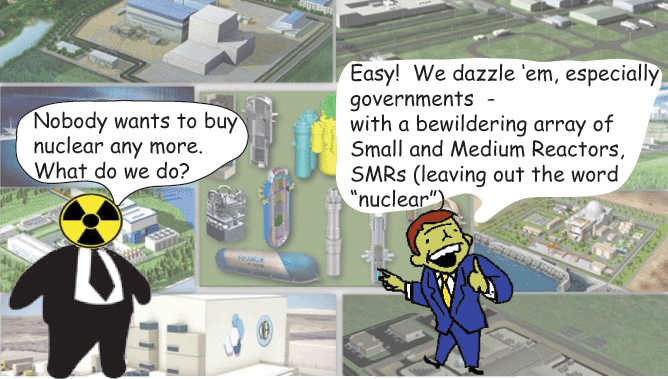 Small nuclear power station consortium targeting Cumbrian sites, The Mail 7th November, By Luke Dicicco @lukeadicicco Group business editor A consortium headed by engineering giant Rolls Royce has revealed it expects to develop its first-of-a-kind small nuclear reactors in Cumbria.
In July the Government said it will invest up to £18 million to support the design of the UK-made mini nuclear power stations. And this week UK Research and Innovation pledged to provide a further £18m, which will be matched by members of the consortium, to progress the project.
Both the Conservative Parliamentary Candidate for Copeland Trudy Harrison and Copeland Borough Council have vowed to up the ante on lobbying the Government to push for SMRs to be developed in Copeland, following the demise of plans for a large-scale nuclear power station at the Moorside site. ……
“We expect to build them on sites in Wales and particularly in Cumbria. That’s where we’re focusing, that’s where we’ll put our effort.”- Mr Woods …..
The SMRs are roughly the size of a one-and-a-half football pitches……..Construction is expected to take around four years per station, although the first unit would be longer, said Mr Woods.
The consortium says it is targeting a £1.8bn cost for each station…….
However, industry insiders still believe a large-scale plant is more suited to the vast Moorside site adjacent to Sellafield. And hopes remain high that a new development will come forward for the site once the Government unveils a new way of financially supporting new plants, with the most likely option a Regulated Asset Base Model. ……
“Unless you build a fleet, you will not do it. We want an industrial partnership between UK and China.” – Rob Davies, chief operating officer at CGN UK
CGN is already heavily involved in the UK’s nuclear new build plans.
It is a partner in the under-construction Hinkley Point C power station in Somerset, as well as planned developments for Bradwell B in Essex and Sizewell C in Somerset. https://www.nwemail.co.uk/news/18021450.small-nuclear-power-station-consortium-targeting-cumbrian-sites/
Fukushima: Radioactive waste bags still missing after Typhoon Hagibis

In many municipalities in the prefecture, a lot of radioactive waste, including soil, was generated through decontamination work after the 2011 nuclear disaster at Tokyo Electric Power Company Holdings Inc.’s Fukushima No. 1 power plant. Numerous bags containing the waste are kept outdoors in temporary storage areas around the prefecture.
Heavy rains from the 19th typhoon of the year flooded storage space in many locations, sweeping away 44 bags in Kawauchi, 30 in Tamura, 15 in Nihonmatsu and one in Iitate.
By the end of October, 50 bags had been recovered. The contents had leaked from half of them. “We had far heavier rains than we expected. We did not cover bags of radioactive waste,” said an official of the Tamura Municipal Government.
The ministry and other organizations have mobilized 20 to 30 workers to look for the missing bags, wading into rivers when necessary and using drones to search areas that cannot physically be entered.
An aerial survey was conducted by helicopter on Oct. 23. On Friday, 29 workers searched the Furumichi River and areas along it in Tamura. Four bags were collected, but their contents had been lost.
“There has been no confirmation of any environmental impact due to the loss of the bags,” a ministry official said.
“We’ll continue searching in cooperation with local municipalities.”
USA’s intercontinental ballistic missiles- epitome of nuclear corruption
   Why Are We Rebuilding the ‘Nuclear Sponge’? https://nationalinterest.org/feature/why-are-we-rebuilding-%E2%80%98nuclear-sponge%E2%80%99-94371
Welcome to the “nuclear sponge.” A bizarre idea that has outlived its questionable Cold War-era usefulness, the nuclear sponge is the United States’ collection of land-based intercontinental ballistic missiles intended to “soak up” a nuclear attack. by Tom Z. Collina Akshai Vikram 6 Nov 19, The media is abuzz about the epic battle between corporate titans Northrop Grumman and Boeing over who will win the $100 billion contract to build a new nuclear-armed ballistic missile. For those who are keeping score, it looks like Northrop will win a sole-source contract, which would be a disaster for taxpayers.
But media coverage of the Clash of the Titans is missing the real story. This is not about contractor wars or sweet-heart deals. This is about the integrity of our government: why, thirty years after the end of the Cold War, are we rebuilding nuclear weapons that we do not need? Why are we spending national treasure to buy weapons that make us less safe?
What if we told you that residents of Colorado, Montana, Nebraska, North Dakota, and Wyoming are being used as bait in a nuclear war with Russia? Surely, no sane person would accept or offer such terms. However, if you live anywhere near these states, you already have a nuclear target on your back. Welcome to the “nuclear sponge.” A bizarre idea that has outlived its questionable Cold War-era usefulness, the nuclear sponge is the United States’ collection of land-based intercontinental ballistic missiles (ICBMs) intended to “soak up” a nuclear attack. Before the development of nuclear-armed submarines that can hide their locations at sea, ICBMs were the crux of American nuclear strategy. Today, however, their only purpose is to draw fire away from other targets (like New York and San Francisco) in the (suicidal and thus highly unlikely) event of a first strike by Russia. The Air Force does not plan to launch the missiles in a war, but to have them draw a nuclear attack to the Upper Midwest.
We’re not making this up—that’s what former Defense Secretary Jim Mattis told Congress. However, sacrificing the Upper Midwest not only undervalues the people who live there but would not actually spare the residents of other states. A major nuclear war with Russia would doom the entire nation. It would little matter whether one resides in Manhattan or Montana.
Why then are we rebuilding the nuclear sponge? The answer, as House Armed Services Committee Chair Adam Smith (R-CA) recently highlighted, has much more to do with parochial interests and money than national security. When asked at a recent press conference why states would want to host the missiles, and thereby put themselves at risk, Smith said, only partly in jest, “They’re fond of their missiles. Apparently, they want to be targeted in a nuclear first strike.” And then, more seriously, he said “They want the jobs . . . no matter the circumstances. And that’s not rational. It’s parochial.”
 With current ICBMs getting older, the Trump administration has greenlit a new cohort of missiles as part of an almost $2 trillion nuclear rebuild plan over the next thirty years. The price tag for the new ICBM alone is potentially $140 billion. That contract is currently slated to go to Northrop Grumman, even as it fights off a Federal Trade Commission investigation for unfair competition, which may cost taxpayers “billions.” Northrop Grumman and others have hijacked the nuclear-security agenda of the United States through the usual Washington channels: lobbying and
 campaign contributions. In the 2018 election cycle, Northrop spent $5.6 million in campaign contributions. In fact, Northrop spends more than any other defense contractor on lobbying and is just behind Amazon and Facebook. Defense contractors have grown even more powerful with a willing ally in the White House. Simply put, the Trump administration has filled its top national-security ranks with people holding extensive ties to major defense contractors.  Mattis worked for General Dynamics and received speaking fees from Northrop Grumman. The current defense secretary, Mark Esper, worked for Raytheon. Ex-White House Chief of Staff John Kelly worked for DynCorp; former Deputy Defense Secretary Mike Shanahan’s employment history at Boeing goes back over thirty years. Meanwhile, Undersecretary of Defense for Policy John Rood worked for Lockheed Martin as did former Secretary of the Air Force Heather Wilson. In fact, that’s where she skirted lobbying restrictions. This list goes on. Programs such as a new ICBM are strategically unnecessary, economically unsustainable, and morally abhorrent. The missiles would be destroyed in a first strike (Russia knows where they are; you can find them on Google Maps) and serve no purpose except to “absorb” blows in a war whose fallout would kill most Americans anyway. Some jobs are created—but far more jobs could be created if the money was spent in other ways. In 2019, there are surely better ways to employ people than to have them guard Cold War relics. As Smith observed after visiting bases that host nuclear weapons, “what struck me was that the job is unbelievably boring.” Maybe that’s why substance abuse continues to plague these sites, with service members literally falling asleep on duty. Clearly, our nuclear policy needs a reboot. As Sen. Elizabeth Warren(D-MA) has said “Take any big problem we have in America today and you don’t have to dig very deep to see the same system at work . . . despite our being the strongest and wealthiest country in the history of the world, our democracy is paralyzed. And why? Because giant corporations have bought off our government.” Warren was talking about climate change, guns, and healthcare, but her remarks hold just as true for nuclear weapons. The next president must tackle corruption in nuclear policy aggressively—by throwing away the nuclear sponge. Tom Collina is Policy Director and Akshai Vikram is a Hale Fellow at Ploughshares Fund, a global security foundation in Washington DC. |
|
The mockery of justice that was Julian Assange’s extradition process
|
Julian Assange’s Extradition Process Is ‘A Charade’, The Real News Network, November 5, 2019
Interview Transcript GREG WILPERT: Julian Assange recently lost a court bid to have his upcoming February 2020 extradition hearing postponed. The hearing about the postponement took place on October 21, and according to observers who were present, he could barely speak in coherent sentences. Reacting to the hearing, UN Human Rights Rapporteur Nils Melzer warned last Friday that Assange continues to show symptoms of psychological torture. Melzer had visited Assange in May when he conducted an extensive review of his physical and psychological condition. In his statement on Friday, Melzer said, “Despite the medical urgency of my first appeal, and the seriousness of the alleged violations, the U.K. has not undertaken any measures of investigation, prevention, and redress required under international law.” In addition to the concerns about Assange’s treatment at Belmarsh Prison outside of London, many have also raised concerns about the impartiality of the proceedings against him. Assange was jailed last April when the Ecuadorian Embassy, where he had been given political asylum, allowed the police to arrest him. He then received a 50-week sentence for having skipped jail in 2012. The Trump Administration has since then requested Assange’s extradition on 17 charges of espionage for which he could receive a 170-year prison sentence in the United States. Joining me now to discuss the latest developments in the case of Julian Assange is John Pilger. He has been observing the Assange case very closely and was present at the October 21 court hearing…… John Pilger – “…..His physical condition has changed dramatically. He’s lost about 15 kilos in weight. To see him in court struggling to say his name, and his date of birth, was really very moving. I’ve seen that when I visited Julian in Belmarsh Prison where he struggles at first, and then collects himself. I’m always impressed by the sheer resilience of the man, because as Melzer says, absolutely nothing has been done to change the conditions imposed on him by the prison regime. Nothing has been done by the British authorities.
This was almost underlined by the contemptuous way that this court hearing recently was conducted by this judge, by this magistrate. There was a sense among all of us who were there that the whole charade, and it seemed a charade, was preordained. You had sitting in front of us, on a long table, four Americans who were from the U.S. Embassy here in London, and one of the prosecution team was scurrying backwards and forwards to get instructions from them. The judge could see this, and she allowed it. It was just absolutely outrageous.
When Julian did try to speak, and to say that basically he was being denied the very tools with which to prepare his case, he was denied the right to call his American lawyer. He was denied the right to have any kind of word process or laptop. He was denied certain documents. As he said, “I’m even denied my own writings,” as he called it. That is, his own notes and manuscripts. This hasn’t changed at all, and of course the effect of that on his morale, to say the least, has been very significant, and that showed in the court.
Greg Wilpert – ” ….district judge, Vanessa Baraitser, and one of the things that she did was completely dismiss Assange’s request for determination whether the extradition proceedings are even legal. That is, he cites according to U.K. law, “Extradition shall not be granted if the offense for which extradition is requested is a political offense”
JOHN PILGER quotes Julian’s lawyer Gareth Peirce – “….under law, it’s not a matter of opinion. They are political. All but one of the charges concocted in Virginia are based on the 1917 Espionage Act, which was a political piece of legislation used to chase off the conscientious objectors during the first World War. It’s political. There is no charge. There is no basis, no foundation, for allowing these extradition proceedings to go forward, and almost perversely the judge seemed to, if not acknowledged that in her contempt for the proceedings. Whenever Julian Assange spoke, she feigned a disinterest, a boredom, and whenever his lawyers spoke, the same thing. Whenever the prosecutor spoke, she was attentive. The theatrics of this hearing were quite remarkable. I’ve never seen anything like it. Then very hurriedly, when Julian Assange’s lawyer requested a delay in when the case actually starts from February, they said, “We’re not going to be ready in February,” and she dismissed that out of hand.Not only that, she said that the extradition case would be held in a court that is in fact adjoining Belmarsh prison. It’s almost part of the prison. It’s a long way out of London.
So you have, if not a secret trial, but a trial in which, or an extradition hearing in which very few seats are available to the public. It’s a very difficult place to get to. So every obstacle has been put in the way of Assange getting a fair hearing. And I can only repeat, this is a publisher and a journalist convicted of nothing, charged with nothing in Britain, whose only crime is journalism. That may sound like a slogan, but it’s true. They want him for exposing the kind of outrageous war crimes, Iraq, Afghanistan, that journalists are supposed to do. “
GREG WILPERT: “…….How do you explain this lack of concern among the media and human rights groups for Assange’s situation?
JOHN PILGER: Because so many human rights groups are deeply political, Amnesty International never made Chelsea Manning a prisoner of conscience. A really disgraceful thing. Chelsea Manning, who was effectively tortured in prison, and they haven’t, as you say, they haven’t elevated Julian’s case. Why? Well, they’re an extension. They’re an extension of an establishment that is now almost systematically coming down on any form of real dissent. In the last five, six years, the last gaps, the last bolt holes, the last spaces in the mainstream media for journalists, from average journalists for the likes Assange, not only Assange, for the likes of people like even myself and others, have closed. The mainstream media, certainly in Britain, always held open those spaces. They’ve closed, and there is generally I would think a fear, right throughout the media, a fear about opposing the state on something like the Assange case. You see the way the whole obsession with Russia has consumed the media with so many nonsensical stories. The hostility, the animosity towards Julian. My own theory is that his work shamed so many journalists. He does what journalists ought to have done, and don’t do any more. He’s done the job of a journalist. That can only explain it. I mean when you take a newspaper like The Guardian, which published originally the WikiLeaks revelations about Iraq and Afghanistan, they turned on Julian Assange in the most vicious way.
They exploited him for one thing. A number of their journalists did extremely well with their books, and Hollywood scripts, and so on, but they turned on him personally. It was one of the most unedifying sights I think I’ve ever seen in journalism. The same thing happened in the New York Times. Again, I can only surmise the reason for that. It’s that he shames them. We have a desert of journalism at the moment. There are a few who still do their jobs; who still stand up against establishment power; who still are not frightened. But there’re so few now, and Julian Assange is totally fearless in that. He knew that he was going to run into a great deal of trouble with the state in Britain, the state in the United States–but he went ahead anyway. That’s a true journalist…… https://therealnews.com/stories/julian-assange-extradition-process-charade
|
|
Japan still has land space to store radioactive waste tanks, but tries to justify dumping into ocean
 Japan accused of trying to justify nuclear dump http://www.taipeitimes.com/News/taiwan/archives/2019/11/07/2003725403COVER? Tokyo Electric Power Co has said new storage tanks could be built to hold radioactive water at its stricken plant, a Greenpeace Germany member said By Lin Chia-nan / Staff reporter The Japanese government’s claim that it will run out of room to store radiation-contaminated water at the Fukushima Dai-ichi nuclear power plant in two years is not true, and is simply an attempt to justify discharging polluted water into the Pacific Ocean, a Greenpeace International member said yesterday.
Shaun Burnie, senior nuclear specialist at Greenpeace Germany who has conducted long-term surveys in Japan, was invited by Greenpeace Taiwan to talk about the issue at a news conference in Taipei. An earthquake and a tsunami in March 2011 caused the plant’s reactor fuel rods to melt and large amounts of radioactive-contaminated water was released into the Pacific. As of Oct. 22, more than 1 million cubic meters of processed polluted water was stored at the treated water storage tank, while the current storage capacity is nearly 1.1 million cubic meters, Burnie said. Tokyo Electric Power Co in August said the tank would reach full capacity by the summer of 2022 and that there is no room for expansion at the site, he said. However, the company in a meeting in September said that land is available to build additional tanks, Burnie added. The claim of insufficient capacity is just an excuse to cover the Japanese government’s political agenda, Burnie said, adding that Tokyo has the option of storing contaminated water for a longer period. If Japan approves the discharge, radioactive tritium and other radionuclides in the water will likely enter the East China Sea, and eventually the waters surrounding Taiwan through the subtropical gyre, he said. However, even if the Japanese government decides to discharge polluted water into the ocean, it would not be able to carry out the plan immediately, as it might take years to build outflow pipelines, he said. In addition to protests from local fishers, especially those living along Japan’s Tohoku coast, the Japanese government would face strong pressure from the international community for discharging polluted water, he said, adding that it is a long-term problem that should be approached more cautiously. The Fukushima Dai-ichi disaster has led to catastrophic results, and the Taiwanese government should be lauded for making the “brave and correct” decision to phase out nuclear power plants, Burnie said. Taiwan should call on the Japanese government, via diplomatic or non-governmental channels, to shoulder its responsibility as a Pacific nation and not discharge radiation-contaminated water into the sea, National Nuclear Phase-out Action Platform spokesperson Tsuei Su-hsin (崔愫欣) said. As Taiwan generates less than 10 percent of its electricity from nuclear power — much lower than the ratio in Japan before the 2011 disaster, it should persist in its goal of phasing out all nuclear power plants by 2025, Tsuei said. |
|
Senator Elizabeth Warren questions Holtec Exemption from Emergency Planning Requirements at the Pilgrim Nuclear Power Station
 Senator Warren Statement on Holtec Exemption from Emergency Planning Requirements at the Pilgrim Nuclear Power Station, https://www.warren.senate.gov/newsroom/press-releases/senator-warren-statement-on-holtec-exemption-from-emergency-planning-requirements-at-the-pilgrim-nuclear-power-station 4 Nov 19, Boston, MA – United States Senator Elizabeth Warren (D-Mass.) released the following statement today following news federal regulators at the Nuclear Regulatory Commission (NRC) plan to exempt Holtec International from emergency planning regulations as the firm works to decommission the Pilgrim Nuclear Power Station: “I’m disappointed to learn Holtec will be exempt from important emergency preparation and planning safeguards as it decommissions the Pilgrim Nuclear Power Station,” said Senator Warren. “The Southeastern Massachusetts community has rightly continued to raise important questions about the plant’s decommissioning and they deserve answers, not more strong-arming.”
In October 2018, Senator Warren raised concerns about safety and lack of public input during Pilgrim’s shutdown last year and raised similar concerns regarding communications with local residents in her statement. In August 2019, she called for community concerns to be addressed before Pilgrim was allowed to change hands from Entergy Nuclear Operations, Inc. to Holtec.
|
|
Deadline looms for nuclear veterans and descendants study
The study lead by University of Otago associate professor David McBride will look into the connection between nuclear veterans and their children, who may have been affected by their parents’ exposure to radiation.
So far only 166 people had signed up, according to Mururoa Nuclear Veterans president Gavin Smith.
Mr Smith implored more to join, saying about 500 people went to the Christmas Island and were exposed to nuclear tests in the 1950s and about 500 went to Mururoa during the 1970s.
“Everyone who has a veteran father or grandfather that served there and has maybe deceased or may be living but mentioned nothing of it, I urge them to contact the University of Otago,” he said.
He said the study was crucial because veteran’s children may have been affected by their parents’ exposure to radiation, which could make their offspring more susceptible to conditions like leukaemia and auto-immune diseases.
“Our study is open to all nuclear veterans. If we don’t do it in our generation, it’s going to be an even bigger battle for the next generation.”
The group, which was established in 2013 to press the government to help families with nuclear related illnesses, had 135 members who served at the protest.
Of those, 56 had children or grandchildren with unexplained medical conditions.
Testing would begin next week at the University of Otago, with a timeframe and details on the study yet to be confirmed.
U.S. Nuclear Plants Vulnerable to Terrorist Drones – NRC says “not our problem”
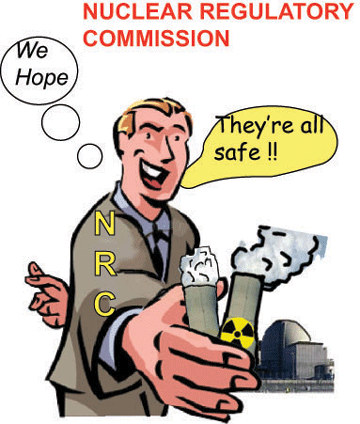 NRC Decision Leaves U.S. Nuclear Plants Vulnerable to Terrorist Drones, https://www.ucsusa.org/about/news/nrc-decision-leaves-nuclear-plants-vulnerable-terrorist-drones WASHINGTON (November 4, 2019)—After a two-year review, the Nuclear Regulatory Commission (NRC) has declined to require owners of U.S. nuclear power reactors and some nuclear material processing plants to defend against unmanned aerial vehicles, commonly known as drones. As a result, commercial nuclear facilities will remain unprepared to cope with the additional capabilities that these rapidly evolving technologies could provide to terrorist groups seeking to sabotage nuclear reactors or steal weapon materials, according to the Union of Concerned Scientists (UCS). The decision was disclosed in an unclassified summary document posted on the NRC’s public document server on October 30.“The NRC’s irresponsible decision ignores the wide spectrum of threats that drones pose to nuclear facilities and is out of step with policies adopted by the Department of Energy and other government agencies,” said physicist Edwin Lyman, acting director of the UCS Nuclear Safety Project. “Congress should demand that the NRC require nuclear facility owners to update their security plans to protect against these emerging threats.”
The NRC requires nuclear power reactor owners to protect their facilities against attacks by terrorists assumed to have a defined set of capabilities known as the “design basis threat.” After the September 11, 2001, attacks on the World Trade Center in New York and the Pentagon outside of Washington, D.C., the NRC considered but ultimately rejected requiring nuclear plants to defend against attacks by jets or other types of aircraft.
The NRC argued that protecting nuclear facilities from aircraft is the responsibility of the Transportation Security Administration and other federal agencies. Rapid advancements in drone technology since then, however, have introduced new ways in which terrorists could use readily available aerial systems to defeat nuclear plant security measures that are designed only to defend against ground-based assaults and vehicles. Drones have been misused to spy on the U.S.-Mexican border, smuggle contraband into prisons, and—most recently—to attack oil processing facilities in Saudi Arabia. Drones are difficult to detect and defeat without specialized equipment.
According to an April 2019 report by the Department of Energy (DOE) inspector general, “the increasing availability and improved capabilities of small [drones] enhances the potential for use in illicit operations, including surveillance, disruption, and weaponization.” The report recommended that the DOE “use the appropriate process to update security controls based on the most recent information available concerning [drone] capabilities.” In response, the agency is revising its design basis threat policy, but the details of its revision—like the original design basis threat policy—are classified. By contrast, the NRC’s own threat assessment resulted a recommendation of no action.
The NRC summary claims that drones would not be able to exploit security vulnerabilities at nuclear reactors or other facilities or provide any surveillance capabilities beyond what potential adversaries are already assumed to have. It is true that small payload drones would not likely to be able to cause major damage by themselves to safety structures and equipment. But there are many ways in which drones could assist ground-based attackers, including delivering more weapons, explosives and other equipment to a nuclear facility’s protected areas than an attacking force could carry. Drones also could create disturbances to confuse plant security forces and disrupt their response, as well as provide real-time aerial surveillance as an attack progresses. “Many companies are developing technologies to protect critical infrastructure from drone attacks through early detection, tracking, and jamming,” said Lyman. “If the NRC were to add drones to the design basis threat, nuclear plant owners would likely to have to purchase such systems. Laws would also have to be changed to allow private facilities to disrupt hostile drone flights. But plant owners are loath to spend more on safety and security at a time when many of their facilities are struggling to compete with cheap natural gas, wind and solar. “The NRC seems more interested in keeping the cost of nuclear plant security low than protecting Americans from terrorist sabotage that could cause a reactor meltdown,” he added. “The agency needs to remember that it works for the public, not the industry it regulates.” |
|
Pilgrim Nuclear Power Station to Shrink Emergency Planning Zone
 FEMA and some states dispute the Nuclear Regulatory Commission staff’s premise that “all hazards planning” would be enough to address a nuclear accident. Planning experts recommend the planning zone remain in place. Government Technology Emergency Managdement, BY CHRISTINE LEGERE, CAPE COD TIMES, HYANNIS, MASS. / NOVEMBER 5, 2019
(TNS) — Despite opposition from the region’s legislators and even the Federal Emergency Management Agency, the Nuclear Regulatory Commission has voted to allow the owners of Pilgrim Nuclear Power Station to shrink the plant’s emergency planning zone from the current 10-mile radius down to its own property line. Pilgrim’s reactor ceased operation May 31. The NRC will allow elimination of the zone, which encompasses sections of Plymouth, Kingston, Carver, Marshfield and Duxbury, come April. And with that elimination will come the loss of about $2 million in annual funding for those towns, to be put toward safety training, staffing, equipment and expenses. “The exemption saves Holtec money at the cost of public safety,” Mary Lampert, president of Pilgrim Watch, said. “NRC rationalizes its decision to grant the exemption on a false assumption. They incorrectly claim that the risk of a rapidly occurring offsite radiological release is significantly lower at a nuclear power reactor that has permanently ceased operations and removed fuel from the reactor vessel. Wrong. There is far more radiation in the spent fuel pool than in the reactorcore when Pilgrim is operating.”……. A single NRC member voted against the exemption, citing a number of issues of concern, including increased possibility of an earthquake in the region. The earthquake risks at the Pilgrim site are greater than previously understood, Commissioner Jeff Baran wrote in a statement explaining his vote. In May 2014, as part of the post-Fukushima seismic hazard reevaluation, the NRC published updated ground motion response spectra for Pilgrim, Baran said. “The results revealed the potential for an earthquake at Pilgrim significantly stronger than the safe shutdown earthquake the plant was designed to handle,” Baran wrote. “In fact, the gap between the previously understood seismic risk and the updated seismic risk was larger at Pilgrim than at any other nuclear power plant in the country.” Baran said the Federal Emergency Management Agency, along with several states including Massachusetts, have disputed the NRC staff’s premise that so-called “all hazards planning” would be sufficient to address a spent nuclear fuel accident. “FEMA notes that it is ‘unrealistic’ to ‘scale up non-existent plans’ and that the resulting ‘lack of necessary equipment and shortage of trained emergency personnel could have unfortunate consequences,'” Baran wrote, citing an August letter to the NRC from Michael Casey, director of FEMA’s technical hazards division. …… , emergency planning experts have recommended the planning zone remain in place until all spent fuel on a reactor site is stored in dry casks. About 3,000 radioactive spent fuel rods remain in a massive pool at Pilgrim. U.S. Sen. Edward Markey, D-Mass, blasted the NRC’s decision to exempt Pilgrim from emergency planning requirements……… To date, every nuclear plant in the U.S. that has decommissioned has requested an exemption from the emergency planning requirements, and in every instance the NRC has granted it…….. https://www.govtech.com/em/disaster/-Pilgrim-Nuclear-Power-Station-to-shrink-emergency-planning-zone.html |
|
TEPCO needs to make its case for bailing out aging nuclear plant

Katharine Hayhoe: the religious duty to act on climate change

I’m a Climate Scientist Who Believes in God. Hear Me Out.
Global warming will strike hardest against the very people we’re told to love: the poor and vulnerable. NYT, 3 Nov 19, By Katharine Hayhoe
Dr. Hayhoe is a professor and co-directs the Climate Center at Texas Tech University. I’m a climate scientist. I’m also an evangelical Christian.
And I’m Canadian, which is why it took me so long to realize the first two things were supposed to be entirely incompatible.
I grew up in a Christian family with a science-teacher dad who taught us that science is the study of God’s creation. If we truly believe that God created this amazing universe, bringing matter and energy to life out of a formless empty void of nothing, then how could studying his creation ever be in conflict with his written word?
I chose what to study precisely because of my faith, because climate change disproportionately affects the poor and vulnerable, those already most at risk today. To me, caring about and acting on climate was a way to live out my calling to love others as we’ve been loved ourselves by God.
I realized, distantly, that there were people on both “sides” who fundamentally believed and were even dedicated to promoting the idea that faith and science were in conflict. But it wasn’t until after I’d moved to the United States for graduate school that it dawned on me, to my disbelief, that divisions within the science-faith arena, originally focused on questions of human origins and the age of the universe, were expanding to include climate change.
Now, this discrepancy is pointed out to me nearly every day: often by people with Bible verses in their social media profiles who accuse me of spreading Satan’s lies, or sometimes by others who share my concerns about climate change but wonder why I bother talking to “those people.” The attacks I receive come via email, Twitter, Facebook comments, phone calls and even handwritten letters.
I track them all, and I’ve noticed two common denominators in how most of the authors choose to identify themselves: first, as political conservatives, no matter what country they’re from; and second, in the United States, as conservative Christians, because the label “evangelical” has itself been co-opted as shorthand for a particular political ideology these days.
But I refuse to give it up, because I am a theological evangelical, one of those who can be simply defined as someone who takes the Bible seriously. This stands in stark contrast to today’s political evangelicals, whose statement of faith is written first by their politics and only a distant second by the Bible and who, if the two conflict, will prioritize their political ideology over theology.
I’m not a glutton for punishment and I don’t thrive on conflict. So why do I keep talking about climate change to people who are disengaged or doubtful? Because I believe that evangelicals who take the Bible seriously already care about climate change (although they might not realize it). Climate change will strike hard against the very people we’re told to care for and love, amplifying hunger and poverty, and increasing risks of resource scarcity that can exacerbate political instability, and even create or worsen refugee crises.
Then there’s pollution, biodiversity loss, habitat fragmentation, species extinction: climate change makes all those worse, too. In fact, if we truly believe we’ve been given responsibility for every living thing on this planet (including each other) as it says in Genesis 1, then it isn’t only a matter of caring about climate change: We should be at the front of the line demanding action………
I explained that climate change is not a belief system. We know that the earth’s climate is changing thanks to observations, facts and data about God’s creation that we can see with our eyes and test with the sound minds that God has given us. And still more fundamentally, I went on to explain why it matters: because real people are being affected today; and we believe that God’s love has been poured in our hearts to share with our brothers and sisters here and around the world who are suffering. ……https://www.nytimes.com/2019/10/31/opinion/sunday/climate-change-evangelical-christian.html
1 This Month
19 November – Webinar – The Reality of Reprocessing
Time: 11:00 AM Pacific Time (US & Canada) / 2:00 PM Eastern / 7:00 PM UK / 8:00 PM CET
Register for the Zoom Event Here

Tell Congress: Prevent Nuclear Catastrophe in Iran

Tell Congress: Prevent Nuclear Catastrophe in Iran

Read the Public Inquiry Report, the Commissioners’ report, Surrendering Australia: The AUKUS Deception is available to download for free at aukuspublicinquiry.com. Or just watch the replay of the National Press Club Luncheon.


Shut down the radiation-damaged Heysham nuclear reactors now
To see nuclear-related stories in greater depth and intensity – go to https://nuclearinformation.wordpress.com

Say No to NASA’s Reckless Nuclear Reactor on the Moon
Say No to NASA’s Reckless Nuclear Reactor on the Moon
-
Archives
- November 2026 (178)
- October 2026 (302)
- September 2026 (339)
- August 2026 (330)
- July 2026 (355)
- June 2026 (287)
- May 2026 (306)
- April 2026 (356)
- March 2026 (251)
- February 2026 (267)
- January 2026 (308)
- December 2025 (358)
-
Categories
- 1
- 1 NUCLEAR ISSUES
- business and costs
- climate change
- culture and arts
- ENERGY
- environment
- health
- history
- indigenous issues
- Legal
- marketing of nuclear
- media
- opposition to nuclear
- PERSONAL STORIES
- politics
- politics international
- Religion and ethics
- safety
- secrets,lies and civil liberties
- spinbuster
- technology
- Uranium
- wastes
- weapons and war
- Women
- 2 WORLD
- ACTION
- AFRICA
- Atrocities
- AUSTRALIA
- Christina's notes
- Christina's themes
- culture and arts
- Events
- Fuk 2022
- Fuk 2023
- Fukushima 2017
- Fukushima 2018
- fukushima 2019
- Fukushima 2020
- Fukushima 2021
- general
- global warming
- Humour (God we need it)
- Nuclear
- RARE EARTHS
- Reference
- resources – print
- Resources -audiovicual
- Weekly Newsletter
- World
- World Nuclear
- YouTube
-
RSS
Entries RSS
Comments RSS

