Pope Francis wants a total ban on nuclear weapons, visiting Hiroshima and Nagasaki
 Pope Francis to take anti-nuclear mission to Japan’s ground zeros
A TOTAL BAN ON NUCLEAR WEAPONS
After four days in Thailand, Francis moves on to Japan, where international and domestic politics will loom large, particularly on Nov. 24, when he visits Hiroshima and Nagasaki.
About 400,000 people were killed, either instantly or from radiation illness or injuries resulting from the atomic bombs that the United States dropped on Hiroshima on Aug. 6, 1945 and on Nagasaki three days later as it sought to end World War Two.
Francis wants a total ban on nuclear weapons, going further than his predecessors when he said in 2017 that countries should not stockpile them even for the purpose of deterrence……..
Francis will meet blast survivors, pray, and read a major “message on nuclear weapons” at the bomb epicenter in Nagasaki. He later visits Peace Memorial Park in Hiroshima.
Nuclear energy will also feature in the trip when the pope meets victims of Japan’s “triple disaster,” the 2011 earthquake that triggered a tsunami that in turn caused a meltdown at the Fukushima power plant. Radiation forced 160,000 people to flee and thousands will never return.
Following the Fukushima disaster, Japan’s Catholic Bishops Conference issued a document calling for the abolition of nuclear power generation.
They also oppose Prime Minister Shinzo Abe’s moves to revise Japan’s post-war pacifist constitution……..https://www.reuters.com/article/us-pope-asia/pope-francis-to-take-anti-nuclear-mission-to-japans-ground-zeros-idUSKBN1XR0BV
49 USA universities get lots of money for helping to develop nuclear weapons
 ‘Schools of Mass Destruction’: Report Details 49 US Universities Abetting Nuclear Weapons Complex https://www.commondreams.org/news/2019/11/13/schools-mass-destruction-report-details-49-us-universities-abetting-nuclear-weapons “Why would an institution of higher learning support weapons that cause terrible humanitarian consequences?”
That’s according to a new report released Wednesday by the International Campaign to Abolish Nuclear Weapons (ICAN), “Schools of Mass Destruction: American Universities in the U.S. Nuclear Weapons Complex.” The report calls out 49 educational institutions, describes their direct and indirect involvement, and recommends steps the universities, students, and faculty can take to address the issue.
The report names prestigious universities including Stanford, Georgetown, and MIT. The cited universities have reportedly engaged in four different avenues of complicity in nuclear weapons production, defying their own mission statements and international law.
In return, the report says, “universities receive funding, access to research facilities, and specific career opportunities for students.”
The complicity, according to ICAN, falls into one of four categories: direct management, institutional partnerships, research programs and partnerships, and workforce development programs.
From the report’s profiles on Georgetown University and the University of Nevada – Reno:
- Georgetown is listed as a university partner on the website of Lawrence Livermore National Laboratory. According to administration at Georgetown, the university has a formal agreement with the laboratory and collaborates in the areas of neuroscience, physics and cancer, with the lab hosting graduate students for summer internships. The Lawrence Livermore lab provides design and engineering for several nuclear warhead types and conducts simulated experiments to evaluate warheads.
- The University of Nevada – Reno developed a new Graduate Certificate in Nuclear Packaging in partnership with the Department of Energy. A Nevada National Security Site engineer was the first to complete the program. The Nevada National Security Site is the location of nearly 1,000 tests of nuclear weapons in past decades, leading to serious health impacts for nearby residents and participating military personnel. Currently, staff at the site conduct simulated experiments to test the reliability and performance of nuclear weapons. The site also hosts “subcritical experiments” that allow for the evaluation of nuclear weapons materials under certain conditions, but do not cause a “self-sustaining nuclear chain reaction.”
Those universities are not the “most complicit.” That dubious honor goes to the University of California, Texas A&M University, Johns Hopkins University, and University of New Mexico. In a Twitter thread, ICAN highlighted those schools’ involvement:
#1 The state of California supports a ban of #nuclearweaponshttp://bit.ly/2pbn7OT,but the @UofCalifornia has continuously managed the primary #nuclearweapons labs for the US since WWII. When will UC stop supporting weapons that pose a catastrophic threat to our existence?
#2 @TAMU administration has publicly stated its “commitment to the #nuclearweapons industry.”http://bit.ly/2CyVbau Why would an institution of higher learning support weapons that cause terrible humanitarian consequences?#3 @JohnsHopkins’ applied physics lab is directly involved in #nuclearweapons production. It receives more than twice as much funding from the US @DeptofDefense than any other U.S. university. @JHUPress @JHUNewsLetter
#4 More than 3,800 New Mexicans have suffered serious illness or death as a result of US nuclear weapons tests http://bit.ly/33IL4vS So why does the @UNM University of New Mexico wants its faculty and students to collaborate with #nuclearweapons lab scientists?The report comes as Trump administration policies have given rise to fears of a new arms race. As the report notes,
In the United States, the Trump administration has expanded plans to upgrade the nation’s nuclear weapons arsenal. Over the next ten years, the Congressional Budget Office estimates U.S. taxpayers will pay nearly $500 billion to maintain and modernize its country’s nuclear weapons arsenal, or almost $100,000 per minute.
Also noted in the publication is the administration’s withdrawal earlier this year from the Intermediate-Range Nuclear Forces Treaty with Russia and its 2018 Nuclear Posture Review (NPR), which calls for “diversifying” the country’s nuclear arsenal.
That gives greater urgency to the call for the schools to sever their partnerships—and the clear support for the United Nations Treaty on the Prohibition of Nuclear Weapons, ICAN says, should be seen as an opportunity for action.
U.S. universities must reconsider connections to the nuclear weapons complex due to the devastating humanitarian and environmental impacts of nuclear weapons and because current U.S. policies make their use more likely,” says the report.
A first step is for schools to be more transparent about their involvement in the nuclear weapons complex but that’s not enough. “Universities would not willingly participate today in research enabling the production of chemical and biological weapons. Nuclear weapons are morally equivalent to these other weapons of mass destruction.”
Students and faculty can take action as well. ICAN suggests sharing the report to increase awareness, demanding the institutions make their research transparent, and calling on the schools to become part of the effort to ban nuclear weapons by dropping their involvement.
The plight of Fukushima nuclear workers getting leukaemia
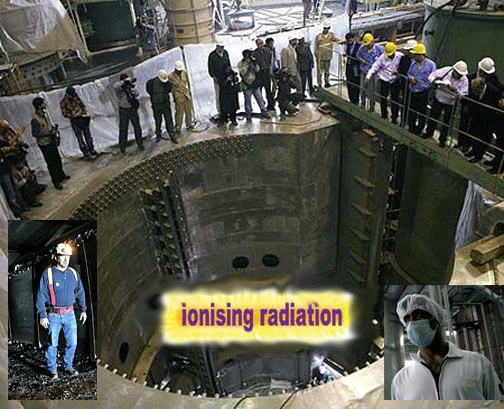 Fukushima Workers Battle Leukemia – and Bureaucracy Unseen Japan by Hiro Ugaya, November 13, 2019 The March 2011 tsunami, and the subsequent meltdown of three reactors at the Fukushima nuclear power plant, has had a devastating impact on Japan. Eight years later, and most journalists – in Japan and abroad – have forgotten about the story. But for many, the struggle continues.
This is especially true of workers who helped assist in the cleanup effort at Fukushima. Some Fukushima workers have contracted severe diseases – including cancer and leukemia – since their work concluded. The government of Japan has even certified that some cases are a result of recovery work. But workers who are fighting for their lives also find themselves fighting the system. Tokyo Electric (TEPCO), which led the recovery effort, refuses to admit any connection between the cleanup work and subsequent diseases in workers. And many insurance companies are pointing to the fine print in private insurance contracts stating they don’t cover accidents at nuclear facilities. Unseen Japan has been pleased to partner with photojournalist Hiro Ugaya (烏賀陽弘道) to translate his interviews with evacuees and former evacuees, and to document the ongoing struggle of the victims of this tragedy. We previously published Hiro’s interview with a mother in the city of Minamisoma. In this installment, we share the first part of Hiro’s interview with Mr. Ikeda (pseudonym), a Fukushima nuclear reactor cleanup volunteer who now finds himself fighting two uphill battles. Translation from an article originally published on Note.mu. Translation by Jay, Editor/Publisher, Unseen Japan. All photos used with permission of Hiro Ugaya.) Ikeda’s StoryFor this installment of the Fukushima Report, I visited Northern Kyushu City in Fukuoka prefecture. I departed from Tokyo and flew west, in the direction opposite Fukushima. I went to Fukuoka, which is quite far from Fukushima. That’s where the leukemia-stricken Ikeda Kazuya (age 44; pseudonym) has lived since participating in the Daichi Nuclear Reactor reconstruction efforts. I had visited Ikeda once in 2017 to hear his story. Among all my interviews here in the Fukushima Report, it’s the one that’s reverberated the loudest. Mr. Ikeda volunteered to participate in the restoration work at the Fukushima Daiichi nuclear power plant. By trade, he’s an independent welder. In March 2011, when so many people died due to the tsunami, he looked at the report of the death of a small child and thought, “I need to do something useful for Tohoku” [Editor: the region of Japan hit by the tsunami]. He asked permission from his boss and threw himself into the reconstruction effort. The interior of the heavy machinery room of Reactor 4 butts up against the nuclear fuel rod pool. But in 2013, Mr. Ikeda came down with leukemia. Mr. Ikeda is one of the first cancer patients that the country recognizes as a work-related accident connected to the Fukushima Daiichi nuclear power plant. Two Fukushima workers contracted leukemia (bone marrow cancer), and one contracted thyroid cancer. The first case of leukemia was recognized in October 2015. The second was recognized in August 2016. The third person, who had thyroid cancer, was certified in December 2016. As of May 2019, there are six patients in the country whose cases have been recognized as occupational accidents caused by work at the Fukushima Daiichi nuclear power plant. To tell the truth, I was quite surprised that the country recognized them as occupational accidents. Judging from the history of pollution diseases, such as Minamata disease and Itai-itai disease, I predicted the government would probably prevaricate and not admit a causal relationship. But the government admitted it readily (employing a lot of rhetoric, of course, such as “This is not an admission of a scientific, causal relationship”). From a global and historical perspective, the admission is rare. In the Three Mile Island nuclear accident (1979) in the US, more than 2000 lawsuits have been filed, but no relationship between health damage and exposure has been admitted in even a single case. The state government naturally won’t admit it, and the courts don’t either. Due to this admission, the assertion that “the radiation leakage from the Fukushima Daiichi nuclear accident is mild enough not to damage health” fell apart. In the Chernobyl nuclear accident in the former Soviet Union, the first to suffer serious harm were the so-called “Liquidators,” the firefighters and soldiers who were the first responders. Nearly 5,000 people died. Naturally, people who are close to radiation-intensive sites will become seriously ill. The same phenomenon occurred in the Fukushima Daiichi nuclear power plant accident. While the case was recognized as a workplace injury, Mr. Ikeda filed a lawsuit against Tokyo Electric (TEPCO), which ran the restoration project. That’s because TEPCO doesn’t “recognize a causal relationship between Mr. Ikeda’s leukemia and exposure to radiation at the Fukushima Daiichi nuclear power plant.” I’ve long found it mysterious that not a single TV station, weekly newspaper, web media or other news outlet has done an article on those like Mr. Ikeda who contracted deadly diseases from the nuclear reactor recovery work. Since the government’s announcement certifying them as workplace injuries, there’s been dead silence. Those affected can’t be heard in their own voices. ……. Mr. Ikeda pointed out something important. People who work in nuclear facilities such as nuclear power plants are not covered by private insurance, even if they have an accident or get sick. It’s in the so-called “disclaimer.” If People who engaged in the dangerous work of recovering the nuclear power plant post-meltdown have been left naked and defenseless. And few people notice it. Even insurance companies don’t care. I want to fix this abnormality…… (Interview: -) There are six people, including yourself, who have been certified as workplace accidents due to cancer or death from overwork in the recovery work of the Fukushima Daiichi nuclear power plant accident. Any contact from them? No, none. I’ve caught sight of the wife of one of the Fukushima workers who died from overwork (karoshi) at rallies in Tokyo. It seems that TEPCO employees and primary subcontractors who got sick will receive 30 million yen [around USD $274,000]. But in return, they can’t sue. That’s what my lawyer emphasized at trial. But that offer doesn’t extend to us (second-tier subcontractors). The owner who hired me also had business owner insurance. Just in case we have an industrial accident. However, we found out later that it wasn’t valid in nuclear facilities, such as nuclear power plants. The insurance companies say it’s too dangerous a place to cover via employer insurance. And yet TEPCO denies responsibility for my leukemia. That’s what you’re contesting in court. That’s right. They’re denying everything. They say it was too low of a dose to bear any relationship. In the previous trial, TEPCO says I developed leukemia due to smoking, drinking, and a vegetable deficiency. That took me aback (laughs). They talk to us like we’re alcoholics…… What evidence is TEPCO presenting to refute you? Search for the stories of scholars who kowtow to the government, you’ll find it (laughs). Who’s providing testimony, besides you? There are various people I think. TEPCO won’t recognize the causal relationship between your leukemia and radiation exposure, correct? If they did, it’ll become a serious obstacle to future nuclear power policy. I was the first person certified, and there’ve been a number since. So there has to be a causal relationship, right? What total dose did you receive? A total of 19.8 millisieverts. Others received more. TEPCO is terrible. It’d be better if they just copped to it. “Others Will End Up Like Me”Why do you think TEPCO should admit responsibility? When this happens to someone else, this won’t be any guarantee, but it’ll give them peace of mind, you know? I mean, it’s not like you can tell people, “Don’t help with recovery efforts.” Other industries offer insurance – who’s going to guarantee workers who enter a nuclear facility if the employer’s primary insurance won’t? That’s what I want to tell people. Fukushima workers who entered the facility had no idea their employer’s primary insurance wouldn’t cover it……. https://unseenjapan.com/fukushima-workers-leukemia-bureaucracy/ |
|
Will Air Independent Propulsion (AIP) submarines make nuclear submarines obsolete?

Why is the nuclear lobby frantically propagandising nuclear reactors for  Australian submarines, just as it looks as if cheaper AIP submarines look likely to take over? (Sell SMRS for submarines off quickly to a dumb nation, before they’re obsolete?)
AIP powered-submarines have proliferated across the world using three different types of engines, with nearly 60 operational today in fifteen countries. Around fifty more are on order or being constructed.
Stealth:…..AIP submarines can, if properly designed, swim underwater even more quietly.
Cost: ….a country could easily buy three or four medium-sized AIP submarines instead of one nuclear attack submarine
|
All U.S. Navy Submarines are Nuclear Powered (But That Could Change)
Here come the subs. National Interest, 11 Nov 1 9, by Sebastien Roblin Key point: AIP subs are affordable and, when piloted by a competent crew, can sink carriers.
Nuclear-powered submarines have traditionally held a decisive edge in endurance, stealth and speed over cheaper diesel submarines. However, new Air Independent Propulsion (AIP) technology has significantly narrowed the performance gap on a new generation of submarines that cost a fraction of the price of a nuclear-powered boat…….
In the 1990s, submarines powered by Air Independent Propulsion (AIP) technology entered operational use. Though the concept dated back to the 19th century and had been tested in a few prototype vessels, it was left to Sweden to deploy the first operational AIP-powered submarine, the Gotland-class, which proved to be stealthy and relatively long enduring. The 60-meter long Gotlands are powered by a Stirling-cycle engine, a heat engine consuming a combination of liquid oxygen and diesel fuel. Since then, AIP powered-submarines have proliferated across the world using three different types of engines, with nearly 60 operational today in fifteen countries. Around fifty more are on order or being constructed. China has 15 Stirling-powered Yuan-class Type 039A submarines with 20 more planned, as well as a single large Type 032 missile submarine that can fire ballistic missiles. Japan for her part has eight medium-sized Soryu class submarines that also use Stirling engines, with 15 more planned for or under construction. The Swedes, for their part, have developed four different classes of Stirling-powered submarines. Germany has also built dozens of AIP powered submarines, most notably the small Type 212 and 214, and has exported them across the globe. The German boats all use electro-catalytic fuel cells, a generally more efficient and quiet technology than the Stirling, though also more complex and expensive. Other countries intending to build fuel-cell powered submarines include Spain (the S-80), India (the Kalvari-class) and Russia (the Lada-class). Finally, France has designed several subs using closed-cycle steam turbine called MESMA. Three upgraded Agosta-90b class subs with MESMA engines serve in the Pakistani Navy. Continue reading |
Indigenous opposition grows against proposal for grand nuclear waste dump in New Mexico
 Some fear the “interim” storage facility could become a de facto permanent storage facility
transport of high-level radioactive waste across the state  could also lead to potentially dangerous nuclear releases, leaving impacted communities responsible for emergency responses.
 the proposal fits into a wider pattern of negligence and environmental racism on behalf of the federal government towards one of the United States’ poorest majority-minority states.
|
Nuclear Colonialism: Indigenous opposition grows against proposal for nation’s largest nuclear storage facility in NM Political Report By Kendra Chamberlain 14 Nov 19, A proposal for New Mexico to house one of the world’s largest nuclear waste storage facilities has drawn opposition from nearly every indigenous nation in the state. Nuclear Issues Study Group co-founder and Diné organizer Leona Morgan told state legislators last week the project, if approved, would perpetuate a legacy of nuclear colonialism against New Mexico’s indigenous communities and people of color.Holtec International, a private company specializing in spent nuclear fuel storage and management, applied for a license from the federal Nuclear Regulatory Commission to construct and operate the facility in southeastern New Mexico. The proposal, which has been in the works since 2011, would see high-level waste generated at nuclear power plants across the country transported to New Mexico for storage at the proposed facility along the Lea-Eddy county line between Hobbs and Carlsbad. Continue reading |
China General Nuclear Power Group to invest $2.5 billion into a huge solar project – plus 2 GW of wind turbines
China’s nuclear operator to develop 1 GW solar field https://www.pv-magazine.com/2019/11/15/chinas-nuclear-operator-to-develop-1-gw-solar-field/
China General Nuclear Power Group is reportedly preparing to invest almost $2.5 billion into a huge solar project – plus 2 GW of wind turbines – in the autonomous province of Inner Mongolia. Local authorities say the massive project will be complete in 2021.
NOVEMBER 15, 2019 VINCENT SHAW Sources in Beijing have told pv magazine the state-owned China General Nuclear Power Group (CGN) is preparing to invest RMB17 billion ($2.43 billion) in renewables generation capacity in northern China, including 1 GW of solar panels.
The nuclear power company is also planning 2 GW of onshore wind capacity, with all the facilities to be built in the Inner Mongolian city of Ulanchabu.
The authorities in Ulanchabu say compliance reviews and administrative procedures will be carried out in the first half of next year with construction due to start on the massive renewables project by August, ready for completion in 2021.
Having been founded in 1994 in Guangdong province to operate China’s first nuclear power station – the Daya Bay plant – CGN has long since diversified into solar and wind power. The company claims to operate a 4.4 GW solar portfolio and 12.7 GW of wind facilities across all provinces of its homeland after funding more than 300 clean energy projects. The nuclear company also claims to have a 13.4 GW overseas renewable energy project pipeline.
The autonomous region of Inner Mongolia boasts excellent sunshine resources and the Inner Mongolia Solar Energy Industry Association said the construction of ultra-high voltage transmission lines in the province has enabled the authorities to set a curtailment target of near zero for solar electricity, and of 10% for wind power.
Trump picks another lackey of the coal and nuclear industries as US Energy Secretary
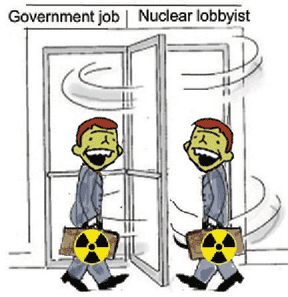
Dan Brouillette, 57, a former lobbyist at Ford Motor Co and Louisiana state energy regulator, would replace Rick Perry, who has said he is stepping down on Dec. 1.
Perry became known as one of the “three amigos” in a side-channel Ukraine policy led by Trump’s personal lawyer, Rudy Giuliani, that has been at the center of the Trump impeachment probe. But Perry has said he was not involved in any conversations where former Vice President Joe Biden was brought up…….
If, as expected, he is confirmed by the Senate Energy Committee and then by the full Senate, Brouillette will work to carry out Trump’s “energy dominance” agenda of boosting U.S. production of oil and natural gas.
Brouillette told Republican senators from Wyoming and Louisiana that he supports technology on curbing climate change by capturing and storing underground carbon dioxide from coal and natural gas facilities, adding that fossil fuels would power a large portion of global energy needs for the next 40 to 50 years…….
Brouillette also said he wants to support development of advanced nuclear power plants, hopefully one day bringing microreactors that provide relatively small amounts of power to remote places like rural Louisiana, where he was born, to Alaska. ……
Democratic senators not on the Energy Committee, including Ed Markey and Tim Kaine, sent Brouillette a letter on Wednesday asking whether he supported nonproliferation standards in any deal on sharing U.S. nuclear power technology with Saudi Arabia, a question he will likely continue to face if he is confirmed.
Reporting by Timothy Gardner; Editing by Peter Cooney and Tom Brown https://www.reuters.com/article/us-usa-trump-energy/trump-energy-pick-to-face-questions-on-coal-nuclear-power-idUSKBN1XO1OH
Before he’s even in the job, USA’s new Energy Secretary Dan Brouillette is busily promoting SMRs for his REAL bosses, the nuclear industryg
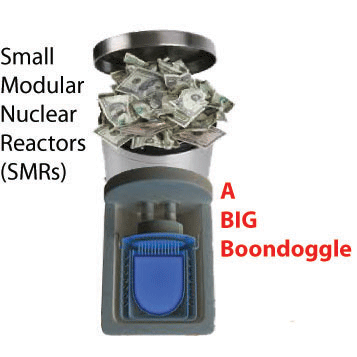 Could tiny nuclear reactors power Alaska villages?
“We want to get to a place where we can develop small micro-reactors, one to five megawatts,” Dan Brouillette said Thursday at his confirmation hearing in the U.S. Senate Energy Committee. …..
Brouillette is now the deputy secretary. He told Murkowski there’s reason to be optimistic about the development of reactors that are a fraction of the size of those in use today. ….. https://www.alaskapublic.org/2019/11/14/energy-secretary-nominee-says-tiny-nuclear-reactors-could-power-alaska-villages/
New type of uranium nuclear fuel has safety risks
 Nuclear fuel alternatives after Fukushima have challenges ahead, https://www.manchester.ac.uk/discover/news/nuclear-fuel-alternatives-after-fukushima-have-challenges-ahead/ 15 Nov 19, Research at The University of Manchester suggests that the preferred candidate fuel to replace uranium oxide in nuclear reactors may need further development before use. Dr Robert Harrison led the research, published in the journal Corrosion Science, with colleagues from the University and the Dalton Nuclear Institute. “Since the 2011 Fukushima accident,” explains Dr Harrison, “there has been an international effort to develop accident tolerant fuels (ATFs), which are uranium-based fuel materials that could better withstand the accident scenario than the current fuel assemblies.” One of these ATFs is a uranium silicon compound, U3Si2. This material conducts heat much better than the traditional uranium oxide fuels, allowing the reactor core to be operated at lower temperatures. In an emergency situation, this buys more time for engineers to bring the reactor under control. However, there are many unknowns about how U3Si2 will behave in the reactor core. “One of these unknowns,” says Dr Harrison, “is how it will behave when exposed to high temperature steam or air, as may happen during manufacturing or a severe accident during reactor operation.” To investigate just how accident tolerant ATFs are, Dr Harrison and his colleagues investigated how Ce3Si2 – a non-radioactive material analogous to U3Si2 – behaved under exposure to high-temperature air. Using advanced electron microscopy techniques, available at The University of Manchester Electron Microscopy Centre (EMC), the researchers were able to study the reaction products after Ce3Si2 was exposed to air at temperatures of up to 750oC. They discovered the material was prone to forming nanometre sized grains of silicon and silicon oxide, as well as cerium oxide. These nano-grains may allow for enhanced corrosion of the fuel material or the escape of radioactive gasses formed during reactor activity. This is because the formation of nano-grains creates more grain boundary areas – interfaces between grains, which provide pathways for corrosive substances or fission gases to migrate along. “Similarly,” adds Dr Harrison, “it would also allow for hazardous gaseous fission products produced during the splitting of uranium (such as xenon gas that would normally be trapped within the material) to diffuse out along these grain boundaries and be released, which would be potentially harmful to the environment.” While Dr Harrison stops short of saying that these ATFs are more unsafe under accident conditions than the current fuels they are looking to replace, he would argue they are currently not any better, and “aren’t as tolerant to accident conditions as once hoped”. Dr Harrison concludes “However, with the new insight developed in this work it will be possible to develop and engineer ATF candidates to better withstand these accident conditions, perhaps by adding other elements, such as aluminium, or manufacturing composite materials to give higher protection of the fuel material”. The full title of the paper is “Atomistic Level Study of Ce3Si2 Oxidation as an Accident Tolerant Nuclear Fuel Surrogate”, and the DOI is 10.1016/j.corsci.2019.108332
|
|
North Korea issues warning on nuclear negotiations deadline
North Korea warns U.S. will face ‘harsh suffering’ if nuclear deadline passes, Market Watch, Nov 13, 2019, North Korean leader Kim Jong Un imposed an end-of-year deadline to salvage nuclear talks with the United States.
SEOUL, South Korea (AP) — North Korea’s supreme decision-making body lashed out Wednesday at planned U.S.-South Korean military drills and warned that the United States will face a “bigger threat and harsh suffering” if it ignores North Korean leader Kim Jong Un’s end-of-year deadline to salvage nuclear talks.
In a statement carried by state media, an unidentified spokesperson for the North’s State Affairs Commission said the drills would violate agreements between Kim and President Donald Trump on improving bilateral relations and compel North Korea to raise its war readiness.
Kim is chairman of the commission, which he established in 2016 following years of efforts to consolidate his power and centralize governance.
The statement is North Korea’s latest expression of displeasure over the military drills and slow pace of nuclear negotiations with Washington. The talks have stalled over disagreements on disarmament steps and sanctions relief.
North Korea has also ramped up its missile tests in recent months and experts say it is likely to continue weapons displays to pressure Washington as Kim’s deadline nears for the Trump administration to offer mutually acceptable terms for a deal.
The spokesperson said annual U.S.-South Korea military drills are continuing to cause a “vicious cycle” in relations between the U.S. and North Korea…… https://www.marketwatch.com/story/north-korea-warns-us-will-face-harsh-suffering-if-nuclear-deadline-passes-2019-11-13
European Union struggles to preserve Iran nuclear deal
|
, https://apnews.com/e63a5526db184d39be4439b82010df62 By LORNE COOKNovember 12, 2019
BRUSSELS (AP) — European Union foreign ministers on Monday affirmed their support for the nuclear deal with Iran, after the Islamic Republic began enrichment work at its Fordo site in a fresh act of defiance that seems likely to spell the end of the painstakingly crafted international agreement.At talks in Brussels, the ministers mulled what action to take as they awaited a new report from the International Atomic Energy Agency later Monday on whether Iran is still complying with its commitments. EU foreign policy chief Federica Mogherini said that the ministers underlined their “full commitment to the agreement that remains crucial for our security, even if it’s increasingly difficult to preserve it. We will continue our efforts to have a full implementation of the agreement.” The EU powers that signed the 2015 Iran nuclear deal — Britain, France and Germany — were due to hold talks later Monday in Paris to discuss the next steps once the U.N.’s nuclear watchdog issues its latest findings. A joint commission meeting of all the signatories is likely to be held in coming days. “We want to preserve the (deal), but Iran must finally return to its commitments and comply with them, otherwise we will reserve the right to use all mechanisms that are set out in the agreement,” said German Foreign Minister Heiko Maas. The EU sees the nuclear pact as a key component of regional and global security and has struggled to stop it from unraveling since President Donald Trump unilaterally pulled the United States out of it over a year ago, triggering debilitating economic sanctions against Iran. It’s a great agreement and we need to keep it alive,” Slovakia’s foreign minister, Miroslav Lajcak, told reporters. But it remains unclear what more the EU can do as Iran’s economy buckles under the weight of the sanctions, apart from renewing its appeals for restraint and dialogue. The Europeans have poured a lot of cash and credibility into ensuring the deal stays afloat. A safeguard was built to keep money flowing to Tehran, but it has not been effective. A system is in place to protect European companies doing business in Iran from U.S. sanctions, even though many remain reluctant because they fear being shut out of the more lucrative American market if they do. One option could be to trigger the dispute mechanism in the agreement, which would open a window of up to 30 days to resolve the problem. Some are even calling on the Europeans to impose their own sanctions on Iran. “Sanctions, sanctions, sanctions. We’re not going to solve the problem like that,” said Luxembourg Foreign Minister Jean Asselborn. “Right now, we should wait for the report from the IAEA to see where we stand.” Dutch Foreign Minister Stef Blok said he was “very worried about Iran’s behavior,” after uranium gas was injected into centrifuges at Fordo last Thursday to produce low-enriched uranium to fuel nuclear power plants. Under the deal, Tehran was not supposed to do this at the site until 2030. However, the Europeans are hardly surprised by Iran’s actions. They believe the writing has been on the wall ever since Trump withdrew from the nuclear agreement last year, claiming that it does not to stop Tehran from developing missiles or undermining stability in the Gulf region. “Sadly, it’s a degradation that was to be expected,” Asselborn said. AP Writers Geir Moulson and David Rising in Berlin contributed to this report. |
|

US- North Korea negotiations may be revived
|
US-North Korea nuclear talks may stir back to life, SMH, 15 Nov 19, Seoul: North Korea is unhappy the United States has proposed a resumption of stalled nuclear negotiations next month through a third party.It comes as the two countries approach an end-of-year deadline set by North Korean leader Kim Jong-un for the Trump administration to offer an acceptable deal to salvage the talks, and as the US President faces an impeachment inquiry at home.
In a statement released by state media, new North Korean negotiator Kim Myong-gil didn’t clearly say whether the North would accept the supposed US offer. Kim Myong-gil said Stephen Biegun, Trump’s special envoy for North Korea, proposed via an unspecified third country to hold another round of talks in December. “I cannot understand why he spreads the so-called idea of DPRK-US relations through the third party, not thinking of candidly making direct contact with me, his dialogue partner, if he has any suggestions or any idea over the DPRK-US dialogue,” Kim Myong-gil said of Biegun. “His behaviour only amplifies doubts about the US.” He said North Korea had no interest in talks if they were aimed at buying time without discussing solutions. He said the North wasn’t willing to make a deal over “matters of secondary importance”, such as possible US offers to formally declare an end to the 1950-53 Korean War, which was halted by a ceasefire, not a peace treaty, or establish a liaison office between the countries. If the negotiated solution of issues is possible, we are ready to meet with the US at any place and any time,” said Kim Myong-gil, who called for Washington to present a fundamental solution for discarding its “hostile policy” towards North Korea. “If the US still seeks a sinister aim of appeasing us in a bid to pass the time limit – the end of this year – with ease as it did during the DPRK-US working-level negotiations in Sweden early in October, we have no willingness to have such negotiations,” he said, using the abbreviation of North Korea’s official name, the Democratic People’s Republic of Korea…… In a separate statement attributed to another senior official, North Korea demanded that the US scrap a planned military drill with South Korea to keep the momentum alive for dialogue. Responding to comments by US Defence Secretary Mark Esper, who said Washington could possibly modify its military activities with Seoul to make room for diplomacy, North Korean official Kim Yong-chol said he would like to consider Esper’s remarks as US intention to “drop out of the joint military drill or completely stop it.” ……..https://www.smh.com.au/world/asia/us-north-korea-nuclear-talks-may-stir-back-to-life-20191115-p53ayr.html |
|
Fukushima: Japan’s government has not solved its many technical, economic, and socio-political problems

|
An update from Fukushima, and the challenges that remain there, https://thebulletin.org/2019/11/an-update-from-fukushima-and-the-challenges-that-remain-there/ By Tatsujiro Suzuki, November 11, 2019 After more than eight years, Japan is still struggling with aftermath of the 2011 Fukushima nuclear disaster. The Japanese government and nuclear industry have not solved the many technical, economic, and socio-political challenges brought on by the accident. More worrying, they continue to put special interests ahead of the public interest, exacerbating the challenges and squandering public trust. The longer these issues remain unsolved, the more difficult it will be to restore this trust.
Technical challenges. The most difficult challenge is, of course, the decommissioning of the Fukushima Daiichi reactors. It would take too long to describe all of the technical challenges of the decommissioning operations, but two recent events are instructive of the overall difficulties. The first is the dismantlement of the joint exhaust stack for units one and two. This stack stands 120 meters tall and is at risk of collapse because of fractures in its pillars. It was also heavily contaminated by the venting of radioactive gases during the accident. So the stack must come down, and the operation to deconstruct it must be done remotely from the stack itself to avoid exposing workers to dangerous radiation. According to the Tokyo Electric Power Company (TEPCO), the operation was supposed to be simple: cut down the top of the tower using special remote-controlled equipment, slicing pieces from the top of the chimney one by one and guiding them down by crane. Originally, the operation was supposed to start in March 2019, but TEPCO deployed an operation tower that was about three meters too short for the task, meaning it needed to rebuild the tower before starting. The cutting operation began on August 1, but the project has already faced numerous additional delays because of technical difficulties that include malfunctions of the crane, the camera on the cutting machine (which is needed to monitor the operation), the saws of the cutting machine, and both the main generator and sub-generators. The operation was supposed to finish by the end of 2019 but will now drag on until at least March 2020. The second technical problem, which is much more serious than the first, is the management of contaminated water. The water is continuously injected into the reactors to cool the fuel debris, and then treated to remove most—though not all—of the radioactive materials. The so-called “treated water” is being stored on site and amounts to about 1.1 million tons, with several hundred tons being added every day. According to TEPCO, the total tank capacity to store treated water will be approximately 1.37 million tons by the end of 2020, but the volume of treated water will exceed storage capacity by 2022. A subcommittee of the Ministry of Economy, Trade, and Industry recommended that the treated water, which still contains tritium, should be released into the sea once the radioactive concentration is below the standard agreed beforehand. The agreed standard between TEPCO and the local fishing industry association is 1,500 becquerels per liter (Bq/l), which is far below the drinking water standard for tritium water of 10,000 Bq/l set by the World Health Organization. An additional condition of release, however, is that all other radioactive substances besides tritium must be removed below a detectable limit or in line with regulatory standards. Unfortunately, in August 2019 news outlets reported that some radioactive materials such as iodine 129 were not completely removed and that their concentration levels were above the regulatory standards. Most recently, the super typhoon Hagibis hit the eastern part of Japan, which includes Fukushima prefecture and the area affected by the nuclear accident. TEPCO reported irregular readings from sensors monitoring water at the Fukushima Daiichi plant but did not confirm whether any radioactive water leaked into the sea. In addition, according to the Tamura city government, some bulk bags filled with soil collected from decontamination operations were swept into a river during the typhoon on October 12. The bags were among 2,667 that have been temporarily stored at a site in the city. The Ministry of the Environment later confirmed that total of 11 bags were swept away and found downstream. Thankfully, there was no evidence that any of the contaminated soil leaked out. But this wasn’t the first time an incident like this has happened. In September 2015, several hundred bags were swept downstream during flooding caused by tropical storm Etau. The recurring close calls reveal the ongoing vulnerabilities of the Fukushima and associated sites. The contaminated soil will need to be stored for at least 30 years, and the risk of possible leakage remains if a larger and stronger typhoon, or a tsunami, hits the region again. Economic challenges. In December 2016, the Ministry of Trade, Economy, and Industry’s committee for reforming TEPCO published its latest estimate for total accident costs, including decommissioning the reactors, compensation, and decontamination of the land. The total cost was estimated at almost 22 trillion yen ($188 billion), which was twice as much as the previous estimate of 11 trillion yen ($96 billion). More recent estimates have put the figure even higher—up to 80 trillion yen ($736 billion) over 40 years. According to the legal scheme established by the ministry, TEPCO and other nuclear utilities will pay about 20 trillion yen of the total accident costs. But now the rest (2 trillion yen) will be footed by Japanese taxpayers. The 2016 report was the first time that the Japanese government admitted that tax money would be spent for the Fukushima accident costs. The government’s lack of transparency in agreeing to this scheme is a source of ongoing concern, not least because the taxpayer burden could balloon if total costs go up, or if the nuclear utilities cannot pay off the debt. The government has given no clear explanation why and how much tax money will be spent to cover the total accident costs. To make matters worse, the power utilities are passing on part of the accident cleanup costs to customers by increasing their electricity rates, but without disclosing the amount. This exceptionally high cost may have influenced the future economic competitiveness of nuclear power. At present, no utility has announced plans to build new reactors or to replace existing reactors. Socio-political challenges. On September 19, 2019, three former top executives of TEPCO were found not guilty of criminal negligence for their roles in the disaster, which resulted in the death of 44 and the injury of 13 others. The Tokyo district court ruled that it was not realistic for the former executives to have prevented the triple core meltdown because they were not able to predict all possible tsunami scenarios. This was the only criminal case so far involving TEPCO officials and, although they were found not guilty, the case revealed new facts regarding the tsunami predictions.A 2008 TEPCO internal study, based on a 2002 report by a government panel, concluded that a wave of up to 15.7 meters could hit the plant after a magnitude 8.3 earthquake, overwhelming the Fukushima site, which sits 10 meters above sea level. The findings were reported to the TEPCO executives, but they did not act to take measures against such high-tsunami scenarios. The court decision was totally unsatisfactory to the public, especially for the victims in Fukushima who were forced to leave their homes. For them, it is now clear that the accident was preventable and that no one at TEPCO will be held accountable for their lack of action to prevent it. Although the criminal case was highly symbolic, it is not the only legal one involving TEPCO and Fukushima. More than 100,000 evacuees have filed about 30 different civil lawsuits seeking compensation from TEPCO and the government. Several district courts have ruled that TEPCO could have predicted and prevented the nuclear crisis and have awarded millions of dollars in damages to the evacuees. TEPCO isn’t the only utility with a public relations problem. On September 27, 2019, the Kansai Electric Power Company held a press conference to disclose that 20 of its employees, including top executives, received inappropriate payments and gifts worth a total of $2.9 million from a senior local government official in Takahama, a town that hosts one of the company’s four nuclear power plants. This has become the biggest scandal since the 2011 Fukushima accident and has exposed the collusive relationship between the utility companies and local public officials as well as the connection between the utilities and local construction companies, which may have benefited from favorable contracts for necessary safety upgrades at the nuclear plants. In October, the chairman, executive vice president, and three executive directors resigned, while the president of the company stepped down from his position as the head of the powerful Federation of Electric Power Companies of Japan. Although Kansai Electric Power Company planned to restart units one and two of its Takahama nuclear plant earlier this year, that plan is now on hold indefinitely. These two recent events show that social and political problems persist even eight years after the Fukushima accident. According to the latest public polling conducted in 2018 by Japan Atomic Energy Relations Organization, a utility-sponsored pro-nuclear organization, only 6.7 percent of the public think nuclear industry organizations are trustworthy or somewhat trustworthy (a decline from 7 percent in 2017), and only 7.9 percent of the public think the government is trustworthy or somewhat trustworthy (a decline from 9.2 percent in 2017). Lessons not learned. The ongoing technical, economic, and socio-political problems demonstrate that the nuclear power industry and the Japanese government haven’t learned their lesson from the Fukushima accident, which is that transparency is the key to public trust. It is true that the quantity of information about cleanup has increased substantially over the years. But transparency means that the utilities and the government need to disclose information that the public needs, even when it is not favorable to them. One solution, which they have so far been unwilling to accept, would be to establish a truly independent third party to oversee their activities. Lack of such an independent oversight organization is one of the main causes for not taking alternative and possibly better, more appropriate measures over the last eight years. |
|
|
S and P Global Ratings has made it plain: nuclear power can survive only with massive tax-payer support
 Nuclear power ‘dead and alive’, S&P proclaims, EURACTIV, 13 Nov 19, Growing competition from cheap renewable electricity, safety concerns, and rising costs of new plants are slowly driving nuclear power over the edge – except in Russia and China where the industry continues to enjoy extensive state support, S&P said in a note to investors.It’s probably one of the worst kept secrets in the energy world: nuclear power wouldn’t be able to stand on its own feet without massive government support.
Now, S&P Global Ratings has made it plain and clear to investors.
“The global nuclear industry is facing challenges to do with safety concerns, tightening regulations post-Fukushima, phase-out policies in several countries, aging asset bases, increasingly volatile energy markets, and competition with renewables,” the rating agency wrote in the note, released on Monday (11 November).
“We see little economic rationale for new nuclear builds in the US or Western Europe, owing to massive cost escalations and renewables cost-competitiveness, which should lead to a material decline in nuclear generation by 2040,” S&P said.
But despite those challenges, it would be too soon to pronounce nuclear power dead, S&P adds. China and Russia, for instance, continue to build new nuclear capacities, supported by energy policies and significantly lower construction costs, the rating agency remarked.
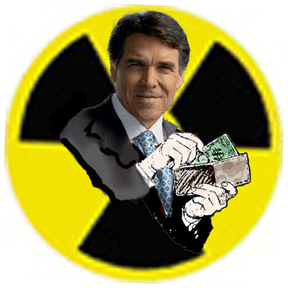 In the US, Energy Secretary Rick Perry has touted small modular reactors (SMRs) as key to the industry’s future, saying small reactors could provide access to electricity in areas of the globe which are currently “shrouded in darkness”. ……..
In Europe, a battle has been raging below the radar on whether to include or reject nuclear power from an upcoming sustainable finance classification scheme aimed at driving private investments into the green economy.
While France supports the inclusion of nuclear in the EU’s draft green finance taxonomy, Germany and Austria argue nuclear isn’t sustainable and shouldn’t be eligible for any kind of EU support. A final decision on the EU’s sustainable finance taxonomy is expected in December. https://www.euractiv.com/section/electricity/news/nuclear-power-dead-and-alive-sp-proclaims/
1 This Month
19 November – Webinar – The Reality of Reprocessing
Time: 11:00 AM Pacific Time (US & Canada) / 2:00 PM Eastern / 7:00 PM UK / 8:00 PM CET
Register for the Zoom Event Here

Tell Congress: Prevent Nuclear Catastrophe in Iran

Tell Congress: Prevent Nuclear Catastrophe in Iran

Read the Public Inquiry Report, the Commissioners’ report, Surrendering Australia: The AUKUS Deception is available to download for free at aukuspublicinquiry.com. Or just watch the replay of the National Press Club Luncheon.


Shut down the radiation-damaged Heysham nuclear reactors now
To see nuclear-related stories in greater depth and intensity – go to https://nuclearinformation.wordpress.com

Say No to NASA’s Reckless Nuclear Reactor on the Moon
Say No to NASA’s Reckless Nuclear Reactor on the Moon
-
Archives
- November 2026 (178)
- October 2026 (302)
- September 2026 (339)
- August 2026 (330)
- July 2026 (355)
- June 2026 (287)
- May 2026 (306)
- April 2026 (356)
- March 2026 (251)
- February 2026 (267)
- January 2026 (308)
- December 2025 (358)
-
Categories
- 1
- 1 NUCLEAR ISSUES
- business and costs
- climate change
- culture and arts
- ENERGY
- environment
- health
- history
- indigenous issues
- Legal
- marketing of nuclear
- media
- opposition to nuclear
- PERSONAL STORIES
- politics
- politics international
- Religion and ethics
- safety
- secrets,lies and civil liberties
- spinbuster
- technology
- Uranium
- wastes
- weapons and war
- Women
- 2 WORLD
- ACTION
- AFRICA
- Atrocities
- AUSTRALIA
- Christina's notes
- Christina's themes
- culture and arts
- Events
- Fuk 2022
- Fuk 2023
- Fukushima 2017
- Fukushima 2018
- fukushima 2019
- Fukushima 2020
- Fukushima 2021
- general
- global warming
- Humour (God we need it)
- Nuclear
- RARE EARTHS
- Reference
- resources – print
- Resources -audiovicual
- Weekly Newsletter
- World
- World Nuclear
- YouTube
-
RSS
Entries RSS
Comments RSS

