Holtec International Under Criminal Investigation
Holtec International, a subsidiary of which owns and is decommissioning the inactive nuclear plant in Plymouth, is under criminal investigation, Politico New Jersey reported based on a legal brief filed by the New Jersey Economic Development Authority.
According to the report, New Jersey-based Holtec International sued the NJ EDA in March over the payment of $26 million of a $260 million New Jersey tax incentive, which the agency held up because Holtec allegedy gave a false answer on its 2014 tax credit application.
“Holtec’s misrepresentations — which include its failure to disclose a prior government debarment by the Tennessee Valley Authority (the ‘TVA’) for bribing an official of that agency — first came to light during an investigation conducted by the Governor’s Task Force on the Economic Development Authority’s Tax Incentive Program, and they are now the subject of an ongoing criminal investigation,” the brief read, according to Politico.
A spokesperson and a lawyer for Holtec did not respond to Politico New Jersey, and the company did not immediately return a News Service email seeking a response.
Last week, two Holtec subsidiaries — Holtec Decommissioning International and Holtec Pilgrim LLC — agreed to a settlement with Attorney General Maura Healey and the Baker administration that requires the company to maintain a decommissioning trust fund at a minimum balance and puts other guardrails on the decommissioning of Pilgrim Nuclear Power Station.
Last September, Healey and Baker’s Executive Office of Energy and Environmental Affairs sued the U.S. Nuclear Regulatory Commission over the agency’s decision to approve the transfer of Pilgrim’s license from Entergy to Holtec.
The attorney general, Baker’s administration and members of the state’s Congressional delegation mounted an effort to block the transfer unless the NRC held a full hearing on concerns over Holtec’s ability to safely decommission the nuclear plant, the company’s financial stability and its alleged involvement in a kickback scheme. No hearing was held before the NRC approved the transfer.
Holtec has said that it can complete decommissioning work in Plymouth by the end of 2027 and is in the process of removing all spent nuclear fuel from the plant’s spent fuel pool and placing it on a newly constructed Independent Spent Fuel Storage Installation by early 2022. AT TOP https://www.wbur.org/earthwhile/2020/06/25/plymouth-nuclear-plant-decommissioning-company-criminal-investigation
North Korea to ‘counter nuclear with nuclear’ against US
|
North Korea to ‘counter nuclear with nuclear’ against US https://www.9news.com.au/world/north-korea-to-counter-nuclear-with-nuclear-against-us/f1da3676-8adb-4056-9245-363b039406e9
By Inga Neilsen, Jun 26, 2020 North Korea has claimed it is prepared to use nuclear weapons in response to “hostile policy” by the US, according to an official government report.
The Democratic People’s Republic of Korea (DPRK) issued a report by the Ministry of Foreign Affairs Institute for Disarmament and Peace, which said the country had no choice but to counter “nuclear with nuclear.”
“In order to eliminate the nuclear threats from the US, the DPRK government made all possible efforts either through dialogue or in resort to the international law, but all ended in vain,” the report read.
“The option left was only one, and that was to counter nuclear with nuclear.”
The report, released on state run media on the 70th anniversary of the start of the Korean War, said the socialist state will continue to bolster its power to “to contain the persistent nuclear threats from the US.”
The Trump administration and Kim Jong Un’s regime embarked on a series of talks in an attempt to stop North Korea’s nuclear ambitions, but did not reach a binding agreement.
North Korea responses by firing short-range missile tests which blew up an inter-Korean liaison office, cutting communication lines with South Korea.
The option left was only one, and that was to counter nuclear with nuclear.”
South Korean President Moon Jae-in, speaking at a ceremony to honour veterans of the Korean War, urged North Korea to seek peace.
“We will continuously search for routes that are mutually beneficial for both Koreas through peace,” he said.
“Before speaking of unification, I hope that we can become friendly neighbours first.”
|
|
LAWSUIT ALLEGES COVERUP AT US NUCLEAR WEAPON FACILITY
Nuclear Coverup
A physicist who was fired by the Lawrence Livermore National Laboratory is suing over an alleged coverup that he claims could have compromised the U.S.’s ability to predict the behavior of nuclear weapons.
Peter Williams, the plaintiff, claims in the lawsuit that he was terminated in retaliation after complaining that his superiors tinkered with his models of nuclear weapon explosions, Science Magazine reports. In doing so, Williams alleges, his superiors were trying to make data align with the models rather than improving their accuracy — leaving the U.S. clueless as to how the weapons would actually behave when actually detonated.
Difficult Math
While he was at Livermore, Williams modeled the behavior of an explosive called a PBX 9502. When equipped to a nuclear warhead, the explosive first triggers a nuclear fission explosion that, in turn, sets off an even more powerful fusion blast, Science reports.
It’s a particularly-difficult dynamic to model, especially because the PBX 9502 is relatively slow-burning, and models also need to account for how the explosion travels through the sample of PBX.
Routine Maintenance
Williams’ central allegation, Science reports, is that supervisors would adjust the parameters of tests after the fact to make the models seem more accurate than they were — rendering them incapable of making meaningful predictions.
But astrophysicist Robert Rosner, a Livermore board member, told Science that modeling adjustments of that sort are commonplace and an expected part of improving them. Still, Williams sees his lawsuit as a matter of duty.
“I couldn’t look myself in the mirror if I didn’t do it,” he told Science.
2,000 Covid-19 Cases in Severodvinsk, city that builds Russia’s nuclear submarines
 The City That Builds Russia’s Nuclear Submarines Now Has Over 2,000 Covid-19 Cases, By The Barents Observer, 24 June 20,
Two naval construction yards in a northern Russian city near the site of last year’s mysterious nuclear testing accident have become new hotbeds for the coronavirus.
Severodvinsk is near the Nyonoksa testing site where an August 2019 explosion during a rocket engine test killed five nuclear workers and led to a radiation spike. The building of nuclear subs and other naval vessels continues despite the increasingly serious virus situation.
Approximately 43% of all infections in the Arkhangelsk region are in Severodvinsk, regional authorities recently announced.
That indicates that there now are more than 2,000 cases in the city.
The lion’s share of the people infected are affiliated with Sevmash and Zvezdochka, the two naval yards.
Despite the introduction of protective measures, the virus has continued to spread among the local population of about 180,000.
In the past week alone, more than 320 new cases have been registered in town, most of them among the shipbuilders, a statistics overview said.
Temperature testing is conducted at entry points to the yards as well as on the construction premises, and workers are required to wear masks.
But the mask requirement is not observed, a local employee told the Sever.Realii newspaper in early June. Every worker is given 10 masks every five days along with a liter of antiseptic.
But most workers still do not wear the masks and ignore social distancing rules, the worker said.
There are about 30,000 employees at the Sevmash and about 11,000 workers at the Zvezdochka.
While the Zvezdochka engages primarily in vessel repair and upgrades, the Sevmash builds nuclear submarines. At the moment, there are at least eight new vessels under construction onsite, among them four Borey-class and four Yasen-class subs. AT TOP https://www.themoscowtimes.com/2020/06/24/the-city-that-builds-russias-nuclear-submarines-now-has-over-2000-covid-19-cases-a70681
Testing for radiation in Fukushima – the continued anxiety
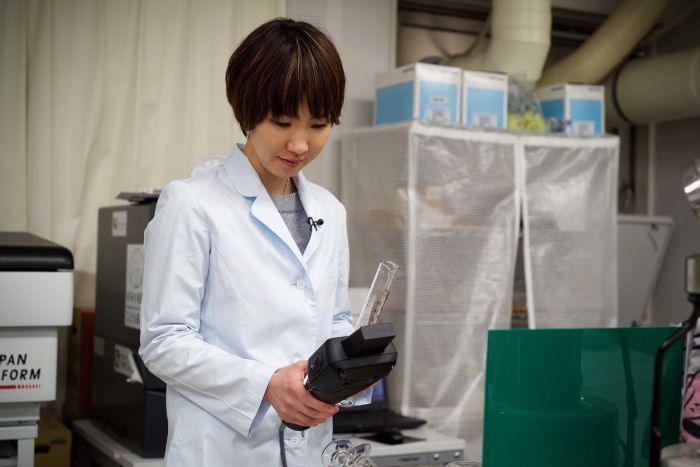
Nine years on, Fukushima’s mental health fallout lingers
As radiation from the Fukushima nuclear accident subsides, a damaging social and psychological legacy continues, Wired
Iida, who is 35, forbids her children from entering the sea or into forests. She agonises over which foods to buy. But no matter what she does, she can’t completely protect her children from radiation. It even lurks in their urine.
“Maybe he’s being exposed through the school lunch,” she says, puzzling over why her nine-year-old son’s urine showed two-and-a-half times the concentration of caesium that hers did, when she takes such care shopping. “Or maybe it’s from the soil outside where he plays. Or is it because children have a faster metabolism, so he flushes more out? We don’t know.”
Iida is a public relations officer at Tarachine, a citizens’ lab in Fukushima, Japan, that tests for radioactive contamination released from the 2011 accident at the Fukushima Daiichi nuclear plant. Agricultural produce grown in the area is subject to government and supermarket testing, but Tarachine wants to provide people with an option to test anything, from foraged mushrooms to dust from their home. Iida tests anything unknown before feeding it to her four children. Recently, she threw out some rice she received as a present after finding its level of contamination – although 80 times lower than the government limit – unacceptably high. “My husband considered eating it ourselves, but it’s too much to cook two batches of rice for every meal. In the end we fed it to some seagulls.”
Tarachine is one of several citizen labs founded in the wake of the Tōhoku earthquake and tsunami on March 11, 2011, which obliterated a swathe of the country’s northwest coast and killed more than 18,000 people. The wave knocked out cooling systems at the Fukushima Daiichi nuclear plant, triggering a meltdown in three of the reactor cores and hydrogen explosions that sprayed radionuclides across the Fukushima prefecture. More than 160,000 people were forced to evacuate. A government decontamination programme has allowed evacuation orders to be lifted in many municipalities, but one zone is still off limits, with only short visits permitted.
Driven by a desire to find out precisely how much radiation there was in the environment and where, a group of volunteers launched Tarachine in Iwaki, a coastal city that escaped the worst of the radioactive plume and was not evacuated, through a crowdfunding campaign in November 2011. It is now registered as a non-profit organisation, and runs on donations.
In a windowless room controlled for temperature and humidity and dotted with screens showing graphs, two women sort and label samples, either collected by staff or sent in by the public: soil from back gardens, candied grasshoppers, seawater. In the beginning, mothers sent in litres of breastmilk. Tarachine initially charged a tenth of what a university lab would charge to make the testing accessible to as many people as possible; last year, they made it free.
To test for caesium-137, the main long-term contaminant released from the plant, staff finely chop samples and put them inside a gamma counter, a cylindrical grey machine that looks like a centrifuge. Tarachine’s machines are more accurate than the more commonly accessible measuring tools: at some public monitoring posts, shoppers can simply place their produce on top of a device to get a reading, but this can be heavily skewed by background radiation (waving a Geiger counter over food won’t give an accurate reading for the same reason). Tarachine tries to get as precise readings as possible; the lab’s machines give results to one decimal place, and they try to block out excess background radiation by placing bottles of water around the machines.
Measuring for strontium, a type of less penetrative beta radiation, is even more complicated: the food has to first be roasted to ash before being mixed with an acid and sifted. The whole process takes two to three days. Tarachine received training and advice from university radiation labs around the country, but the volunteers had to experiment with everyday food items that scientists had never tested. “There was no recipe like ‘Roast the leaf for two hours at so-and-so Celsius’, you know?” says Iida. “If it’s too burnt it’s no good. We also had to experiment with types of acid and how much of the acid to add.”
Japanese government standards for radiation are some of the most stringent in the world: the upper limit of radioactive caesium in food such as meat and vegetables is 100 becquerels per kilogram, compared with 1,250 in the European Union and 1,200 in the US (the becquerel unit measures how much ionizing radiation is released due to radioactive decay). Many supermarkets adhere to a tighter limit, proudly advertising that their produce contains less than 40 becquerels, or as few as 10. Tarachine aims for just 1 becquerel.
“How I think about it is, how much radiation was there in local rice before the accident? It was about 0.01 becquerel. So that’s what I want the standard to be,” says Iida. Continue reading
How we can manage the intermittency of renewables and attain 100% renewables
|
Yes. In fact, many ways are possible, including
Interestingly, in June 2020, several large power companies, including Centrica and E.ON, sent an open letter calling on National Grid to accelerate the deployment of smart electric vehicle (EV) charging infrastructure, energy storage and other flexibility services in order to manage the Grid more rationally. The utilities’ letter stated that a number of options existed to reduce its current reliance on curtailing renewables, from long-duration storage to industrial-scale demand response. They stated that EVs, smart electric heaters and home solar batteries “could all be providing services at this time if the right signals and instructions were being administered”. They added “flexible technologies and storage assets will be needed to integrate a higher level of renewable generation into the system to produce carbon savings. Harnessing the potential of these technologies is critical to ensuring green energy supply isn’t unnecessarily wasted”. https://www.greentechmedia.com/articles/read/smart-flexibility-could-slash-uk-coronavirus-curtailment-costs Indeed, throughout the UK,local authorities and local companies are in fact steaming ahead with their own initiatives. See box below. In addition, the recent UK pressure group, 100percentrenewableuk, was also set up to press for these developments. www.100percentrenewableuk.org Some examples of innovative flexible RE technologies Continue reading |


UK’s expensive problem of nuclear power’s inflexibility
Because of the inflexibility of the AGRs, RE suppliers are shut off first. This is explained in a recent report by the newly-formed pressure group, 100 percentrenewable uk, which explains that the inflexible nature of nuclear power is instrumental in forcing the National Grid to turn off large amounts of wind power (ie in the jargon to be ‘constrained’) in Scotland when there is too much electricity on the network.
This appears nonsensical as the Grid is turning off cheap renewables to preserve expensive nuclear, and then paying large compensation payments to them to do so.
UK Electricity: Renewables and the problem with inflexible nuclear, Ian Fairlea, June 21, 2020
In recent years, the share of the UK’s electricity supplied by renewable energy (RE) sources has increased substantially to the point that RE is now the second largest source after gas: It now supplies 20% to 25% of our electrical needs. This is greater than the amount supplied by nuclear – about 15% to 18%. Coal, hydroelectric, and mainly gas (~40%) constitute the other sources. See chart [on original] for Britain’s electrical power supplies in 2019.
Why are AGR reactors inflexible? Continue reading
Trump administration says it won’t carry out a nuclear weapons test ‘at this time’
 Trump administration says it won’t carry out a nuclear weapons test ‘at this time’, By Kylie Atwood, CNN, June 24, 2020 Washington , The US told Russia that that there is no reason for the Trump administration to carry out a nuclear weapons test “at this time,” during nuclear negotiations in Vienna this week, but reserved the right to conduct one if they see a need to do so.
Nuclear waste from Germany to Russia
A shipment of 600 tonnes of depleted uranium has left a nuclear fuel plant in Germany bound for Russia, a Russian environmentalist group says.
Twelve rail cars left the Urenco plant in the town of Gronau, close to the Dutch border, on Monday 22 June, according to the Ecodefense group.
The waste will reportedly be moved by sea and rail to a plant in the Urals.
Urenco told the BBC its uranium would be further enriched in Russia and the process met environmental standards.
Russia’s state atomic energy corporation, Rosatom, insisted it was “inaccurate and misleading” to refer to the depleted uranium as waste.
But environmental activists have long been concerned that Russia may become a “dumping ground” for radioactive material from power plants.
Greenpeace protested last year after German media reports that Urenco had resumed shipping depleted uranium from Germany to Russia after a gap of 10 years. Russia had halted the practice in 2009 under pressure from environmentalists.
On Monday activists in Germany posted video on social media of what appeared to be the train en route from Gronau, as well as photos of anti-nuclear protesters.
Why is the shipment being sent to Russia?
According to the report (in Russian) by Ecodefense, some of it will be shipped by sea to Russia via the port of Amsterdam.
It will, the group says, eventually arrive at the Ural Electrochemical Combine in Novouralsk, 3,400km (2,500 miles) away in Russia’s Ural Mountains.
The group believes that nearly 3,000 tonnes of depleted uranium have already been shipped from Germany to Russia this year.
The Urenco spokesperson contacted by the BBC said they could not give details of shipments for “safety and security reasons”.
But Urenco did confirm that it had a contract with a firm called Tradewill, a subsidiary of Tenex which is the overseas trade company of Rosatom.
Under the contract, it said, depleted uranium “tails” are sent to Russia for further processing. The enriched uranium product then returns to Urenco while the “depleted fraction” remains with Tenex.
“This is common and legal practice,” Urenco says. “We also retain depleted uranium at Urenco in Europe.”
Urenco, which is a partnership between German, British and Dutch companies, said its representatives had inspected the facilities involved in the process and had found that they complied with “all internationally recognised logistics standards, which includes handling, storage, safeguarding and processing of nuclear material, as well as appropriate environmental standards”.
Why are environmentalists so concerned?
One of the big questions is how much of the waste is eventually returned to Germany, with activists arguing that most of it stays in Russia.
There are also fears of toxic pollution in the event of any spill.
On 15 June, a petition to stop the shipments was sent to Russian President Vladimir Putin and German Chancellor Angela Merkel. It was signed by environmental groups and activists from Russia, Germany and the Netherlands.
The petition calls for an end to the “colonial policy of moving hazardous cargoes from Europe to Russia’s Siberian and Ural regions”.
It argues that Germany has the technology to deal with its own nuclear waste and ends with the words: “Russia is not a dumping ground!”
Greenpeace argued last year that Russia lacked a plan to utilise depleted uranium on a large scale. Continue reading
Coalition for Responsible Energy Development wants a stop to nuclear expansion in Canada
The Coalition for Responsible Energy Development in New Brunswick includes public interest organizations and individuals and is intended to advocate for responsible energy development.
David Thompson is a project coordinator for CRED-NB.
“I guess a number of people in the province were looking at organizations also, were looking at the way energy was proposed to be developed and the kind of energy we had here and we felt that something a lot better could happen,” he said.
Thompson said there is a need to reduce the demand for energy in the province by eliminating energy waste and maximizing energy efficiency.
“We respond to climate change and to promote emission-free and waste-free energy, that sort of thing and to get on the bandwagon of the new renewable energies,” he said.
CRED-NB wants the provincial and federal government to invest in sources of renewable energy such as wind, solar, geo-thermal, tidal, certain types of bio-energy and water-driven power.
“I think everyone wants more cost-effective energy and energy that’s not going to leave behind waste or pollute our environment and we have to get energy in place rather quickly now to deal with climate change.”
The coalition is calling upon governments to invest in less costly and safer renewable energy, coupled with energy efficiency and conservation programs. CRED-NB says this will create more jobs and economic activity in New Brunswick.
Opposition by Saugeen-Ojibway nation brings end to plan for nuclear waste near Lake Huron

Ontario Power Generation Formally Ends Effort To Place Nuclear Storage Site Near Lake Huron, WKAR
In letters sent in May, Ontario Power Generation officially withdrew from an environmental assessment of the project and an application for a construction license. Those withdrawals were first reported in the Detroit Free Press.
Fred Kuntz is with OPG. He said after fifteen years the company decided to look elsewhere to build a storage facility.
“You need three things in Ontario for a project like this to proceed. You need good geology, which we had, you need municipal support, which we had, and you need indigenous support. Without that, we couldn’t proceed with the project.”
Kuntz said the company will begin looking for alternate locations. …….
In letters sent in May, Ontario Power Generation officially withdrew from an environmental assessment of the project and an application for a construction license. Those withdrawals were first reported in the Detroit Free Press.
Fred Kuntz is with OPG. He said after fifteen years the company decided to look elsewhere to build a storage facility.
“You need three things in Ontario for a project like this to proceed. You need good geology, which we had, you need municipal support, which we had, and you need indigenous support. Without that, we couldn’t proceed with the project.”
Kuntz said the company will begin looking for alternate locations. …..A second, high-level nuclear storage facility could still be built near Lake Huron. The Canadian Nuclear Waste Management Organization is considering two possible sites for a facility, one of which is near the lake.
A spokesperson for the organization said the Saugeen-Ojibway vote was not a referendum on their plan
The organization is expected to select a site for the facility by 2023. https://www.wkar.org/post/ontario-power-generation-formally-ends-effort-place-nuclear-storage-site-near-lake-huron#stream/0
Lawsuit alleges scientific misconduct at U.S. nuclear weapons lab
Researchers familiar with the labs say Williams’s allegations should be taken seriously. ……https://www.sciencemag.org/news/2020/06/lawsuit-alleges-scientific-misconduct-us-nuclear-weapons-lab
Board of IAEA issues mild rebuke to Iran
Iran hawks in and outside the US government wanted a finding of non-compliance with Iran’s safeguards agreement with the IAEA and a report to the UN Security Council to buttress their campaign of “maximum pressure.”
Crash of nuclear waste truck, fortunately the cask was empty
Brattleboro Reformer 22nd June 2020, An oversized flatbed truck carrying an empty nuclear waste cask headed to the Vermont Yankee nuclear power plant drove onto a soft shoulder on Route 11 in Andover and tipped over Friday morning, setting off a 36-hour effort to retrieve the cask and reopen the busy east-west highway. The cask is slated to be used at the Vernon nuclear power plant which is undergoing demolition and decommissioning. The cask, which weighs upwards of 50 tons, is used as an on-site cask to transfer waste on site, according to Curtis Roberts, a spokesman for Orano, one of the companies involved in the
decommissioning project with main owner NorthStar Vermont Yankee LLC.
He said the cask is owned and manufactured by Orano [Ed note: formerly AREVA, which went bankrupt] . Orano is disassembling the nuclear reactor core, which contains high levels of radioactivity.
https://www.reformer.com/stories/truck-carrying-empty-nuclear-waste-cask-crashes,607654
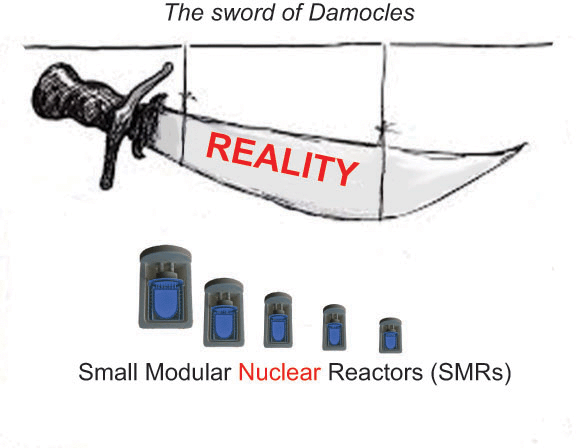
USA financing nuclear projects abroad – but what if Small Nuclear Reactors are a flop?
 Daily on Energy, presented by API: Inside the new US policy on financing nuclear abroad, Washington Examiner, by Josh Siegel, Energy and Environment Reporter & Abby Smith, Energy and Environment Reporter | June 22, 2020
INSIDE NEW POLICY ON FINANCING NUCLEAR ABROAD: The U.S. International Development Finance Corporation mostly had small nuclear reactors in mind when it proposed this month lifting its ban on funding nuclear projects overseas. But a senior official from the DFC – a greatly expanded successor to the Overseas Private Investment Corporation – says the agency also envisions select situations for funding traditional large reactors, despite recent projects being delayed or canceled by cost overruns……..
The official cited a move by Congress a year after lawmakers passed the BUILD Act in 2018, which authorized the DFC, that called on the U.S. government to support energy diversification projects in Europe as a counter to Russia’s “energy dominance.”
The DFC offers direct equity financing, loans, and political risk insurance, while Ex-Im can only offer credit or lending. The DFC has a total investment limit of $60 billion, amounting to about a $1 billion maximum per project, the official said.
“I am not aware we have anyone on staff who has built a nuclear power plant,” the official said. “What we do have is very strong policies and procedures and frameworks to look at big complicated projects.” https://www.washingtonexaminer.com/policy/energy/daily-on-energy-presented-by-api-inside-the-new-us-policy-on-financing-nuclear-abroad
1 This Month

Tell Congress: Prevent Nuclear Catastrophe in Iran

Tell Congress: Prevent Nuclear Catastrophe in Iran

Read the Public Inquiry Report, the Commissioners’ report, Surrendering Australia: The AUKUS Deception is available to download for free at aukuspublicinquiry.com. Or just watch the replay of the National Press Club Luncheon.

19 November – Webinar – The Reality of Reprocessing
Time: 11:00 AM Pacific Time (US & Canada) / 2:00 PM Eastern / 7:00 PM UK / 8:00 PM CET
Register for the Zoom Event Here


Shut down the radiation-damaged Heysham nuclear reactors now
To see nuclear-related stories in greater depth and intensity – go to https://nuclearinformation.wordpress.com

Say No to NASA’s Reckless Nuclear Reactor on the Moon
Say No to NASA’s Reckless Nuclear Reactor on the Moon
-
Archives
- November 2026 (147)
- October 2026 (302)
- September 2026 (339)
- August 2026 (330)
- July 2026 (355)
- June 2026 (287)
- May 2026 (306)
- April 2026 (356)
- March 2026 (251)
- February 2026 (267)
- January 2026 (308)
- December 2025 (358)
-
Categories
- 1
- 1 NUCLEAR ISSUES
- business and costs
- climate change
- culture and arts
- ENERGY
- environment
- health
- history
- indigenous issues
- Legal
- marketing of nuclear
- media
- opposition to nuclear
- PERSONAL STORIES
- politics
- politics international
- Religion and ethics
- safety
- secrets,lies and civil liberties
- spinbuster
- technology
- Uranium
- wastes
- weapons and war
- Women
- 2 WORLD
- ACTION
- AFRICA
- Atrocities
- AUSTRALIA
- Christina's notes
- Christina's themes
- culture and arts
- Events
- Fuk 2022
- Fuk 2023
- Fukushima 2017
- Fukushima 2018
- fukushima 2019
- Fukushima 2020
- Fukushima 2021
- general
- global warming
- Humour (God we need it)
- Nuclear
- RARE EARTHS
- Reference
- resources – print
- Resources -audiovicual
- Weekly Newsletter
- World
- World Nuclear
- YouTube
-
RSS
Entries RSS
Comments RSS

