Ballooning by $billions – UK’s costs for its nuclear weapons
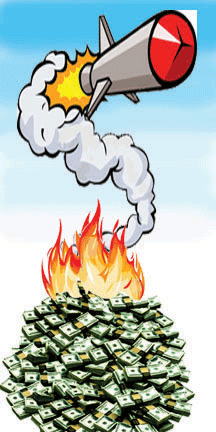 The Ferret 2nd Aug 2020 The cost of UK programmes to replace Trident and nuclear submarines on the
Clyde increased by over £1 billion in a year, according to data released
by the Ministry of Defence (MoD).
The construction of new reactor cores,
replacement submarines and major new facilities at the Faslane and Coulport
bases in Argyll are also facing prolonged delays, with growing doubts over
whether some projects can be successfully delivered.
Most of the delays are
unrelated to the coronavirus pandemic. Four major nuclear projects have
been officially rated as “amber” or worse, meaning that they have
“significant issues”. Two have been “rebaselined” by the MoD,
meaning that costs have risen significantly and timescales lengthened.
https://theferret.scot/trident-nuclear-submarine-costs-1bn-delays/
Australia gets anti-China propaganda, funded by USA, in cahoots with Falun Gong

Before becoming Australia’s Defence Minister, Linda Reynolds worked as a project director at Raytheon (weapons manufacturer).
Propaganda Wars: US state department funds anti-China news outlet in Australia https://www.michaelwest.com.au/propaganda-wars-us-state-department-funds-anti-china-news-outlet-in-australia/
by Marcus Reubenstein | Aug 4, 2020 Office bearers of US-backed Chinese language news service Decode China are linked with Falun Gong, the spiritual group that has spent millions backing Donald Trump through fake social media accounts. The same people are on the board of the National Foundation for Australia China Relations, raising scepticism about its ability to repair fractured relationships. Marcus Reubenstein investigates US state funding of anti-China media in Australia and links to global arms dealers via ASPI.
The US State Department is quietly funding a Chinese-language news service in Australia, a move more typically associated with China’s state media propagandists.
And two of the three office bearers of the news service, Decode China, are members of a taxpayer-funded independent board advising the Australian government on engagement with China.
Corporate records show Dr Wai Ling Yeung and Maree Ma became secretary and director, respectively, of Decode China Pty Ltd just eight weeks before Foreign Minister Marise Payne appointed them to the board of the National Foundation for Australia China Relations. The NFACR replaced the Australia China Council (ACC), which was set up by the Fraser government in 1978 and later chaired by former prime minister Gough Whitlam.
The retired Curtin University academic Dr Yeung is a vocal critic of the Chinese government, while Ma is the general manager of the Falun Gong-aligned, largely anti-Chinese government Vision Times newspaper. According to journalist and former Australian Falun Gong practitioner Ben Hurley, Vision Times is part of the apparatus of Falun Gong media in Australia, led by The Epoch Times and New Tang Dynasty Television.
The spiritual group Falun Gong is banned in China and there is substantial evidence that its mainland Chinese followers are harshly persecuted by the Chinese government.
However, former practitioners say it’s a dangerous cult, whose leaders claim to have the power of levitation and tell followers that aliens from other planets are responsible for interracial marriage and mixed-race children.
Falun Gong-aligned media affiliates in the US have been accused of pouring millions of dollars into fake social media accounts and Facebook advertising, since banned, supporting Donald Trump. A recent investigation by the ABC’s Foreign Correspondent and Background Briefing programs revealed Falun Gong-affiliated media in the US have spent more than US$11.5 million in social media advertising to promote Trump.
ASPI lurking in the background Continue reading
The continuing and ever more expensive saga of Britain’s Hinkley Point C nuclear project

Times 3rd Aug 2020, The first thing you notice as you approach Hinkley Point C is the sea of
cranes. There are dozens of them, jutting into the Somerset sky from the
site where EDF, of France, and CGN, the Chinese state nuclear group, are
building Britain’s first new nuclear plant in a generation. One stands
out: a 250 metre-tall yellow beast known as “Big Carl”. It is the
world’s largest crane and is central to the companies’ battle to
deliver the project successfully.
£18 billion, the plant was slated to generate its first power before the
end of 2025. Four years on, the budget has risen to between £21.5 billion
and £22.5 billion and EDF says that there is a risk that first power may
be delayed until 2027, adding £700 million in costs; thanks to disruption
from Covid-19, that risk is now “high”.
another big risk, with EDF warning last week that productivity at the site
and in supply chain factories were still being affected. The company said
that it had done what it could to minimise delays, from bringing in extra
buses to transport workers to sending contractors to France to bring back
parts from a factory laid low by the pandemic. EDF believes that it can
catch up on Covid-19 delays by the end of next year, so long as operations
and its supply chain are back to normal by the end of 2020. How confident
was Mr Crooks that the plant would start up in 2025 as planned?
“There’s a long way to go yet. It is a big, complex project.”
https://www.thetimes.co.uk/article/no-let-up-in-heavy-lifting-at-hinkley-point-plant-3s02wmscp
Nuclear radiation – potential danger in East Ukraine
Coal mines and the metallurgical plants associated with them are the backbone of the economy in the self-proclaimed republics of Donetsk and Luhansk in eastern Ukraine, where the conflict between the central government and the Russian-backed separatists rages on. Closing them deprives the local population of their livelihoods and threatens these and the neighboring regions in Ukraine with ecological disaster.
Pumps cut off
In 2017, the “Donetsk People’s Republic” (“DPR”) developed a plan, according to which only 17 of the profitable mines in the region were kept in operation.
But reality decided to throw a wrench in the works, primarily because Russia did not invest in the Donetsk industry.
The mines were closed by a simple method: the pumps that pump out the water were turned off. The equipment was cut and handed over for scrap.
And it will inevitably affect the situation on the territory controlled by Ukraine – the mines on Ukrainian territory and the Donbass mines form a single water pumping system.
No radioactive contamination…yet
Of particular concern is the Yunkom mine, which in 1979 carried out an experimental nuclear explosion with a yield of 0.3 kilotons.
After the explosion, a glassy capsule with liquid radioactive waste was formed at a depth of 903 meters. It was flooded just after the pumps were turned off in April 2018.
None of the experts really know how the radioactive capsule will react with water, when it will naturally collapse, or where its contents will end up. Neither the authorities of the self-proclaimed republics nor the government of Ukraine are monitoring the radioactive contamination. Nor are they in the Rostov region, where the waters of the Seversky Donets River flow……… https://jam-news.net/ukraine-conflict-miness-ecology/
Portuguese party PAN lodges complaint to U.N. about Spain’s ageing Almarez nuclear power station
The risks associated with Almaraz have been making headlines for years (click here).
So has the perceived ‘inertia’ of the Portuguese government in tackling them (click here).
As PAN’s leading MP André Silva stresses, what’s crucial at this point is a ‘transfrontier evaluation of the environmental impact” of the decision to prolong the life of the 41-year-old power station running two very old fashioned reactors beyond the 2023/ 2o24 limit previously established.
The latest approval by Spain extends the reactors’ lives to 2027 and 2028 respectively.
Says Silva: ‘We have on the one hand’ Spain that is violating two conventions, and on the other a Portuguese government and a Portuguese environment minister that does nothing about it.
Spain’s unilateral decision to further extend the lifespan of a plant that sits so close to Portuguese territory – not to mention on the banks of the river Tejo – is “an affront to Portuguese people” who, according to a study conducted by the Portuguese army, would be severely impacted in the event of any kind of serious incident (click here).
The two conventions André Silva refers to are the Espoo Convention, which requires environmental impacts in situations like these, and the Arhus Convention, which obliges Madrid to ‘inform and consult’ Portuguese counterparts before making any decisions.
Says Silva, “it is fundamental that the international community is alerted to this problem, which is not simply environmental but social and political as well”.
‘Ideally’ Almaraz should have been mothballed 10 years ago “but Spanish authorities have successively renewed its continuation”, despite the increasing risks of a nuclear accident, which as Silva stresses, would have a “disastrous impact” on Portugal.
This is in fact the second time a formal complaint has been lodged against Spain over activity at Almaraz. A bid to stop a warehouse for nuclear waste being constructed in 2017 resulted in the creation of a commission, but this has never presented any ‘material’ / findings or reports to speak of.
Never mind about Hiroshima – a nuclear arms race is on – in space!

|
A nuclear arms race in space? It seems we’ve learned nothing from Hiroshima https://www.theguardian.com/commentisfree/2020/aug/02/a-nuclear-arms-race-in-space-it-seems-weve-learned-nothing-from-hiroshima
Simon Tisdall As the world marks the 75th anniversary of the dropping of the atom bomb on Japan, it must wake up to the new rearmament.Russia’s apparent test-firing of an anti-satellite weapon in outer space on 15 July, as alleged by the US and Britain, could be dismissed as another of Vladimir Putin’s annoying provocations. That would be a mistake. The alleged new space weapon should be seen in the broader context of a rapidly evolving, hi-tech, high-risk international arms race involving all the major nuclear powers that, largely undiscussed, is spinning out of control. This week sees the 75th anniversary of the atomic bomb attacks on Hiroshima and Nagasaki that killed over 200,000 people, but the absence of public debate or a sense of alarm about the grim advent of sophisticated new nuclear, hypersonic, cyber and space weapons is striking. In the decades after Hiroshima, noisy anti-nuclear “ban the bomb” protests by CND and others spanned the globe. Today, by comparison, an eerie silence reigns. The battle for outer space is only getting going – yet deserves immediate attention. Russia’s alleged development of anti-satellite weapons is almost certainly matched by the US and China, and undermines past undertakings about the peaceful use of space. Christopher Ford, US assistant secretary of state for international security and non-proliferation, warned last week that Russia and China had already turned space into a “war-fighting domain”. “What [the Russians] are doing is signalling to the world that they’re able to destroy satellites in orbit with other satellites,” Ford said. “This is the sort of thing that could get out of hand and go very badly rather quickly.” The UK called the alleged test “a threat to space systems on which the world depends” – meaning use of such weapons could, in theory, produce an instant global security and communications blackout. Yet in relaunching US space command last year, Donald Trump also pointed to space as the next great-power battlefield. Nato secretary-general Jens Stoltenberg says the alliance will not deploy weapons in space but is obliged to defend its interests, which include 2,000 orbiting satellites. For Nato, too, space is now an “operational domain”. New and “improved” nuclear weapons are proliferating in parallel with the race for space. According to the Stockholm International Peace Research Institute (Sipri), nine states – the US, Russia, China, Israel, the UK, France, India, Pakistan and North Korea – together possess about 13,400 weapons. While the overall total is falling, “retired” warheads and bombs are being replaced by more powerful, versatile devices, such as smaller, “use-able” US battlefield nukes. “All these states are either developing or deploying new weapon systems or have announced their intention to do so,” Sipri’s annual report said. The US and Russia each possessed about 1,550 deployed, long-range weapons, while China had about 300. Both the US and Russia were spending more and placing greater reliance on nuclear weapons in future military planning, it said, while China was rushing to catch up. “China is in the middle of a significant modernisation of its nuclear arsenal. It is developing a so-called nuclear triad for the first time, made up of new land- and sea-based missiles and nuclear-capable aircraft. India and Pakistan are slowly increasing the size and diversity of their nuclear forces,” Sipri reported. Meanwhile, North Korea continued to prioritise its military nuclear programme, while conducting “multiple” ballistic missile tests. “Instead of planning for nuclear disarmament, the nuclear-armed states appear to plan to retain large arsenals for the indefinite future, are adding new nuclear weapons, and are increasing the role such weapons play in their national strategies,” a Federation of American Scientists survey said. It estimated about 1,800 warheads were kept on high alert, ready for use at short notice. Russia claims to lead the world in developing hi-tech weaponry. Speaking in July, Putin boasted that Russia’s navy was being equipped with nuclear-powered hypersonic cruise missiles, which supposedly have unlimited range, and submarine-launched underwater nuclear drones. Despite celebrated speeches supporting a nuclear-free world, Barack Obama authorised a $1.2tn plan to upgrade America’s nuclear triad while pursuing strategic arms reductions via the 2010 New Start treaty with Russia. Trump has doubled down, at the same time abandoning arms control pacts. His 2018 nuclear posture review proposed an extra $500bn in spending, including $17bn for low-yield, battlefield weapons. Trump looks set to scupper New Start, which expires in February, on the spurious ground that it does not reduce China’s much smaller arsenal (which it was never intended to do). He has previously reneged on the 2015 Iran nuclear treaty, the 1987 Intermediate-range Nuclear Forces treaty, and is said to favour resumed nuclear testing in Nevada in defiance of the 1996 Comprehensive Nuclear-Test-Ban treaty. Like Britain and other signatories, the US continues to fail to fulfil its obligation under the 1970 Nuclear Non-Proliferation treaty “to pursue nuclear disarmament aimed at the ultimate elimination of nuclear arsenals”. Despite its acute financial situation, Britain remains committed to replacing its Trident missile system at an estimated cost of £205bn over 30 years. While nuclear weapons have not been used since 1945, great-power military flashpoints are increasing the risk that they might be. These potential triggers include the South China Sea, Taiwan, the India-Pakistan and India-China borders, the US-Israel-Iran conflict, North Korea and Ukraine. Heightened international tensions and collapsing arms-control regimes only partly explain the accelerating pace of nuclear rearmament. Resurgent nationalism, authoritarian rightwing populism, revived or new territorial rivalries (as in space), the bypassing of the UN and multilateral institutions, and a shifting economic and geopolitical power balance are all aggravating factors. But so, too, is amnesia. Seventy-five years after Armageddon was visited upon the people of Japan, the world seems to have forgotten the truly existential horror of that moment. A history lesson, and a renewed debate, are urgently needed.
|
|
|
UK is lobbying USA for a controversial new warhead for Trident missiles
UK lobbies US to support controversial new nuclear warheads
Letter from defence secretary seen by Guardian draws Britain into debate pitting Trump administration against many Democrats, Guardian, Julian Borger in Washington, 2 Aug 20,
The UK has been lobbying the US Congress in support of a controversial new warhead for Trident missiles, claiming it is critical for “the future of Nato as a nuclear alliance”.
A letter from Britain’s defence secretary, Ben Wallace, seen by the Guardian, urged Congress to support initial spending on the warhead, the W93.
The letter, sent in April but not previously reported, draws the UK into a US political debate, pitting the Trump administration against many Democrats and arms control groups over whether the the $14bn W93 programme is necessary. The US navy already has two warheads to choose from for its submarine-launched Trident missiles.
The close cooperation on the W93 casts further doubt on the genuine independence of the UK deterrent – parliament first heard about it when US officials accidentally disclosed Britain’s involvement in February – and the commitment of both countries to disarmament.
The UK is also supporting the administration’s efforts to speed up work on the warhead and its surprise $53m request for initial weapon design work in the 2021 budget, two years ahead of the previous schedule.
Sceptics believe the rush is intended to lock in funding before the election. A Biden administration would be likely to review or even cancel the W93 programme……..
The demand for funding for the W93 is particularly controversial in the US as the W76 and a higher-yield submarine-launched ballistic missile (SLBM) warhead, the W88, have already been subject to multibillion-dollar upgrades.
“This is excess on top of excess,” Kingston Reif, director for disarmament and threat reduction policy at the Arms Control Association, said. “We already have two SBLM warheads. The W76 just went through a major life extension programme and is slated to be good into the early 2040s, and the W88 is going through a major alteration.
“The US can continue to assist the UK’s arsenal without rushing the development of an unnecessary, at least $14bn new-design, third SLBM warhead,” Reif added.
The total cost of the US nuclear weapons modernisation programme is expected to be far in excess of $1tn.
The US and Russia, which is also upgrading its arsenal and developing new weapons, together account for more than 90% of all the nuclear warheads on the planet, and both countries are putting increasing emphasis on them in their rhetoric and defence postures.
Under Donald Trump, the US has now left three nuclear agreements and his administration is reluctant to extend the last major arms control deal with Russia, the 2010 New Start treaty, which is due to expire in February.
The bonfire of nuclear accords, combined with the huge amounts spent on weapons like the W93, are a threat to the 1968 nuclear non-proliferation treaty, the fundamental bargain by which countries without nuclear arms pledged not to acquire them on condition the recognised nuclear powers (the US, UK, France, Russia and China) took steps to disarm, under article six of the treaty………
Alexandra Bell, a former state department official and now senior policy director at the Center for Arms Control and Non-Proliferation, said the US-UK special relationship had shown greater solidarity in promoting new weapons than in arms control. ………. https://www.theguardian.com/world/2020/aug/01/uk-trident-missile-warhead-w93-us-lobbySun
World is in coronavirus for the long haul

The World Health Organization has warned the coronavirus pandemic is likely to be “lengthy” after its emergency committee met to evaluate the crisis six months after sounding the international alarm.
The committee “highlighted the anticipated lengthy duration of this COVID-19 pandemic”, the WHO said in a statement, and warned of the risk of “response fatigue” given the socio-economic pressures on countries.
The panel gathered Friday for the fourth time over the coronavirus crisis, half a year on from its January 30 declaration of a public health emergency of international concern (PHEIC) – the WHO’s highest level of alarm………
Warning over crisis fatigue
Several countries around the world have imposed strict lockdowns in a bid to control the spread of the respiratory disease, plunging economies into sharp contraction.
The committee urged the WHO to provide nuanced, pragmatic guidance on COVID-19 management “to reduce the risk of response fatigue in the context of socio-economic pressures”.
The panel urged the WHO to support countries in preparing for the rollout of proven therapeutics and vaccines.
It called for improved understanding of the epidemiology and severity of COVID-19, including its long-term health effects.
And the committee wanted more light shed on the dynamics of the virus, such as “modes of transmission, shedding, potential mutations; immunity and correlates of protection”.
The near six-hour gathering was hosted at the WHO’s headquarters in Geneva, with some participants joining via video-link.
The committee will reconvene within the next three months……..https://www.sbs.com.au/news/the-who-says-coronavirus-is-a-once-in-a-century-crisis-that-will-impact-lives-for-decades
Next type of coronavirus may be on its way
|
The next coronavirus may already be circulating in bats, study suggests, Philadelphia Inquirer, by Tom Avril, July 29, 2020 While the exact origin of the coronavirus remains murky, scientists have been racing to determine how it jumped from animals to humans so they can prevent another pandemic. The next one could just be a matter of time, a study published this week suggests. The authors said a virus with similar ability to infect humans may already be out there, carried by a type of bats known for having horseshoe-shaped “leafs” on their noses. Scientists made that prediction after constructing a family tree of the coronavirus — tracing its ancestry by comparing its genetic code with that of other coronaviruses found in bats, humans, and a scaly animal called the pangolin. The lineage of the virus that causes COVID-19 appears to have branched off from its closest viral relatives about 40 to 70 years ago, the authors wrote in Nature Microbiology. And other viruses in the same branch of the family likely share a similar ability to latch onto cells in human airways, said Maciej F. Boni, a Pennsylvania State University biologist and lead study author. “It’s very likely there are lots of other lineages that nobody knows about, because nobody has sampled, that are circulating quietly in bats,” he said. “Potentially all of them could have this ability to infect human cells.”…… by using a battery of statistical techniques, the scientists identified three genetic regions in the coronavirus that appeared to have remained intact for decades. They identified the same three regions in another coronavirus that came from a bat found in Yunnan, a province in southern China near Laos. That virus cannot infect humans but is otherwise highly similar to the one causing the pandemic, which was first identified in human patients in the city of Wuhan. The two viruses seem to have branched apart in the family tree sometime in the 1960s, and almost certainly have undiscovered cousins with the potential to infect humans, said Boni, who collaborated with scientists in Europe and China……. By itself, the presence of similar coronaviruses in bats would not mean another pandemic is imminent, said Kevin Olival, vice president for research at EcoHealth Alliance, a nonprofit that works with scientists worldwide to protect people and animals from infectious disease……. What is not in dispute is that viruses have been jumping from animals to humans for centuries, and that it will happen again. And coronaviruses carried by bats are a prime suspect. Similar predictions have been made before — such as in 2013, when a Science magazine article was headlined “Bats May Be Carrying the Next SARS Pandemic.”
Sure enough, as the world now knows too well, that came true. https://www.inquirer.com/health/coronavirus/covd19-bats-china-virus-origin-penn-state-rna-genetics-20200729.html |
|
Bangladesh flooding – a victim of global heating, though not a contributer to it
 A Quarter of Bangladesh Is Flooded. Millions Have Lost Everything.
The country’s latest calamity illustrates a striking inequity of our time: The people least responsible for climate change are among those most hurt by its consequences. NYT, By Somini Sengupta and Julfikar Ali Manik 30 July 20,
Torrential rains have submerged at least a quarter of Bangladesh, washing away the few things that count as assets for some of the world’s poorest people — their goats and chickens, houses of mud and tin, sacks of rice stored for the lean season.
It is the latest calamity to strike the delta nation of 165 million people. Only two months ago, a cyclone pummeled the country’s southwest. Along the coast, a rising sea has swallowed entire villages. And while it’s too soon to ascertain what role climate change has played in these latest floods, Bangladesh is already witnessing a pattern of more severe and more frequent river flooding than in the past along the mighty Brahmaputra River, scientists say, and that is projected to worsen in the years ahead as climate change intensifies the rains.
“The suffering will go up,” said Sajedul Hasan, the humanitarian director of BRAC, an international development organization based in Bangladesh that is distributing food, cash and liquid soap to displaced people.
This is one of the most striking inequities of the modern era. Those who are least responsible for polluting Earth’s atmosphere are among those most hurt by its consequences. The average American is responsible for 33 times more planet-warming carbon dioxide than the average Bangladeshi.
This chasm has bedeviled diplomacy for a generation, and it is once again in stark relief as the coronavirus pandemic upends the global economy and threatens to push the world’s most vulnerable people deeper into ruin.
An estimated 24 to 37 percent of the country’s landmass is submerged, according to government estimates and satellite data By Tuesday, according to the most recent figures available, nearly a million homes were inundated and 4.7 million people were affected. At least 54 have died, most of them children. ……. https://www.nytimes.com/2020/07/30/climate/bangladesh-floods.html
USA’s Nuclear Regulatory Commission plans to weaken safety standards for smaller nuclear reactors
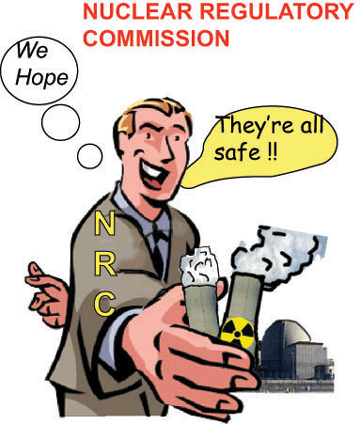 Smaller Nuclear Plants May Come With Less Stringent Safety Rules, npr, August 1, 2020
The NRC is considering whether to shrink emergency planning and evacuation zones around these newer reactors — from a 10-mile radius to, in some cases, the boundary of the plant site.
Nuclear energy critics say that would be a mistake.
“When you’re talking about a reactor that’s never been built or operated, you have to take with a big grain of salt the claims that it’s actually safer or more secure,” says Edwin Lyman at Union of Concerned Scientists.
He says the industry also wants to use weaker reactor containment shells, and in some cases they don’t want to have to keep an operator at the site.
Lyman thinks companies should build plants under current rules first. “You have to work out the kinks of these new plants,” he says. “And then over time you might be able to adjust your requirements accordingly. But you don’t do that at the get-go.”
A National Nuclear Security Administration (NNSA) official recently echoed some of Lyman’s concerns in comments sent to the NRC. The NNSA is a semi-autonomous agency within the Department of Energy.
Deputy Under Secretary Jay Tilden called the proposed rule a major departure from “the successful 42-year-old practice of using a 10-mile plume exposure emergency planning zone.” That existing regulation, he wrote, provides “the last layer of a defense-in-depth for low-probability, high-consequence accidents.” ………
Rokkasho plant should be shut down in energy policy shift
 Japan Nuclear Fuel Ltd.’s Rokkasho nuclear fuel reprocessing plant in Rokkasho, Aomori Prefecture, in 2018
July 31, 2020
Japan’s nuclear watchdog has effectively endorsed the safety of a controversial nuclear reprocessing plant being built in a village along the Pacific coast in northern Japan.
The Nuclear Regulation Authority on July 29 approved an outline of safety measures for the trouble-plagued nuclear fuel reprocessing plant Japan Nuclear Fuel Ltd. is building in Rokkasho, Aomori Prefecture.
The NRA said the outline meets the new safety standards introduced after the 2011 Fukushima nuclear disaster.
The NRA’s decision marks a major step forward in constructing the plant for recovering plutonium from spent nuclear reactor fuel, the core facility for the government’s program to establish a nuclear fuel recycling system.
NRA Chairman Toyoshi Fuketa, however, stressed that the body’s decision does not mean an endorsement of the nuclear fuel recycling policy per se, saying in a news conference that it is a “policy issue” whether there is enough of a rationale for pursuing the policy.
Prime Minister Shinzo Abe’s administration should confront the reality that the catastrophic accident at the Fukushima No. 1 nuclear power plant has completely changed the environment surrounding nuclear power generation and make a fundamental review of the government’s nuclear energy policy.
Nuclear fuel recycling involves recovering plutonium from spent nuclear fuel to be reused in reactors. The government has been promoting recycling separated plutonium back into the fuel of reactors since the 1950s under the rationale that Japan, a nation poor in natural resources, needs to make more efficient use of nuclear fuel.
More than half a century on, the share of nuclear power generation in Japan’s overall electricity production is now very small as most of the reactors that were shut down in the wake of the Fukushima meltdowns have yet to be restarted.
It is also nearly impossible to find a site for building a new nuclear plant. As aged reactors will be decommissioned one after another in the coming years, the importance of nuclear power generation for Japan’s energy supply will steadily diminish.
Over the long term, Japan needs to phase out nuclear power generation to remove public anxiety about a large-scale accident.
Nuclear fuel recycling can have no great significance in this new era when Japan has to start shifting away from atomic energy. Many industrial nations have long given up nuclear reprocessing as economically unviable.
Another big problem with reprocessing the spent fuel is that it produces plutonium, a material that can also be used to make nuclear weapons.
Japan has a stockpile of some 46 tons of plutonium, stored both at home and abroad, an amount enough to make 6,000 atomic bombs. It is fueling fears and drawing criticism internationally.
Japan Nuclear Fuel’s plant in Rokkasho is designed to have the capacity of reprocessing 800 tons of spent nuclear fuel annually to recover 7 tons of plutonium.
But the plan to develop a fast neutron reactor that can “consume” plutonium by transforming it into other forms of nuclear waste, the key technology for plutonium consumption, has gone awry with the decision to decommission Japan’s “Monju” prototype sodium-cooled fast-breeder reactor.
There are clearly also limitations to the plan to burn so-called MOX (mixed oxide) fuel, which is usually plutonium blended with natural uranium, in existing nuclear reactors.
The government has promised the international community to reduce the nation’s surplus plutonium. That means the reprocessing operation at the Rokkasho plant will have to be restricted so that the amount of plutonium recovered will not exceed consumption.
It simply does not make sense to spend as much as 14 trillion yen ($134.33 billion) on building the plant to recover a small amount of plutonium.
Given that this huge cost will be passed onto consumers through higher electricity bills, it is impossible to win broad public support for the project.
If the government decides to pull the plug on the fuel recycling program, it will have to face tough policy challenges it has long avoided tackling, such as how to dispose of spent fuel. But the nation cannot make the inevitable leap into the new age of energy if it continues spending huge amounts on nuclear power generation, which is beset by so many problems.
There is a growing global trend toward renewable energy sources such as solar and wind power. This is the time for the government to make a radical shift in its energy policy.
Hiroshima court recognizes Hiroshima ‘black rain’ victims outside designated area as hibakusha after 75 years
How long will it take for the Fukushima victims outside the evacuation zone to be finally all recognized?
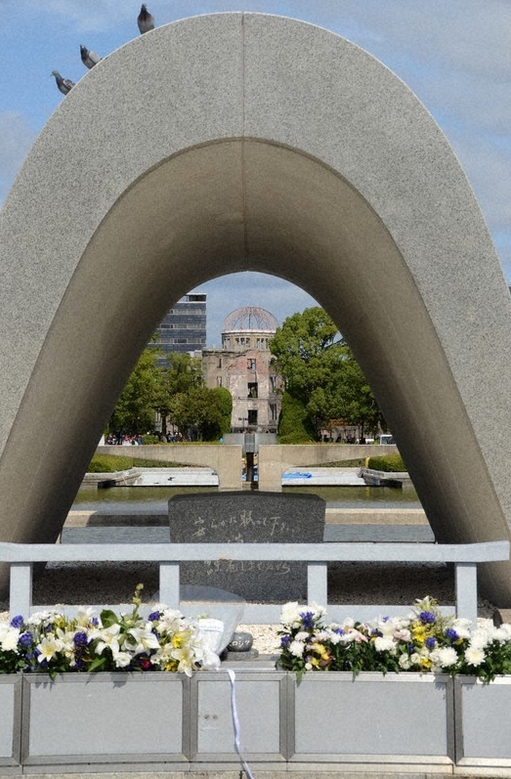 In this October 2019 file photo, the cenotaph for the 1945 atomic bombing victims is seen at the Hiroshima Peace Memorial Park. The Atomic Bomb Dome is seen in the background.
Japan court recognizes Hiroshima ‘black rain’ victims outside designated area as hibakusha
July 29, 2020
HIROSHIMA (Kyodo) — A Japanese court ruled Wednesday that state health care benefits should be extended to people who were exposed to radioactive “black rain” after the 1945 U.S. atomic bombing of Hiroshima outside a zone currently recognized by the government.
The Hiroshima District Court ruled in favor of a suit filed by 84 plaintiffs in their 70s to 90s. It said they should receive the same health care benefits as provided for atomic bomb survivors who were in the zone where the state has recognized black rain fell.
It is the first court decision regarding the boundary of the area affected by radioactive rain and subsequent health problems among survivors.
Presiding Judge Yoshiyuki Takashima said, “It is possible black rain fell outside the designated zone and reasonable to conclude that they were affected by radiation if they were exposed (to such rain.)”
The court then determined that the plaintiffs developed diseases specific to atomic bomb survivors due to the effect of black rain.
Following the ruling, Chief Cabinet Secretary Yoshihide Suga said in a press conference the government has not decided whether to appeal the ruling.
The designated area lies northwest of the hypocenter of the atomic bombing on Aug. 6, 1945 and measures about 19 kilometers in length and 11 km in width.
People who were recognized as being in the affected area at the time of the bombing are eligible to receive periodic health checkups free of charge. Among them, those who developed illnesses believed to be caused by radiation effects can receive free health care services in principle.
The 84 plaintiffs including deceased individuals represented by family members developed such illnesses as cancer and cataracts after they were exposed to black rain containing radioactive materials outside the designated area and consumed contaminated food and water.
They had applied to the city and prefectural governments of Hiroshima for health care benefits for atomic bomb survivors between 2015 and 2018, but their applications for atomic bomb survivors’ certificates were turned down.
The plaintiffs sued the Hiroshima city and prefectural governments from 2015, seeking the nullification of their decisions.
The local governments insisted there was no scientific evidence that radioactive rain fell on areas outside the designated zone and the plaintiffs’ health problems were caused by their exposure to radiation.
The ruling was also welcomed by people in Nagasaki Prefecture, where an atomic bomb was also dropped three days after Hiroshima and there are survivors who claim to have been exposed to radioactive rain but have not been eligible for the state’s healthcare aid.
“(The ruling) departed from the unscientific ways of judging whether plaintiffs are ‘hibakusha’ (A-bomb survivors) simply based on distances (from the hypocenter) and administrative jurisdictions,” said Koichi Kawano, an 80-year-old resident of the town of Nagayo in Nagasaki, who survived the bombing.
Japan’s law on supporting atomic bomb survivors defines victims eligible for state aid in the following four categories.
They are those who were directly exposed to the bombing, people who entered within 2 km from the hypocenters of Hiroshima or Nagasaki in the period of two weeks from the attacks, those who were affected by radiation while rescuing survivors or other reasons and fetuses exposed to radiation in the womb.
The plaintiffs claimed they fit into the third category.
Hiroshima court recognizes atomic bomb ‘black rain’ victims
July 29, 2020
TOKYO — A Japanese court on Wednesday for the first time recognized people exposed to radioactive “black rain” that fell after the 1945 U.S. atomic attack on Hiroshima as atomic bomb survivors, ordering the city and the prefecture to provide the same government medical benefits as given to other survivors.
The Hiroshima District Court said all 84 plaintiffs who were outside of a zone previously set by the government as where radioactive rain fell also developed radiation-induced illnesses and should be certified as atomic bomb victims. All of the plaintiffs are older than their late 70s, with some in their 90s.
The landmark ruling comes a week before the city marks the 75th anniversary of the U.S. bombing.
The U.S. dropped the world’s first atomic bomb on Hiroshima on Aug. 6, 1945, killing 140,000 people and almost destroying the entire city. The plaintiffs were in areas northwest of the ground zero where radioactive black rain fell hours after the bomb was dropped.
The plaintiffs have developed illnesses such as cancer and cataracts linked to radiation after they were exposed to black rain, not only that which fell but also by taking water and food in the area contaminated with radiation.
They filed the lawsuit after Hiroshima city and prefectural officials rejected their request to expand the zone to cover their areas where black rain also fell.
In Wednesday’s ruling, the court said the plaintiffs’ argument about their black rain exposure was reasonable and that their medical records showed they have health problems linked to radiation exposure.
One of the plaintiffs, Minoru Honke, who was exposed to black rain at age 4, said more than a dozen people died during the trial. “I want to tell them that we won,” he said.
Osamu Saito, a doctor who has examined atomic bomb survivors in Hiroshima, welcomed the ruling for considering the survivors’ welfare based on an assumption that anyone who was in these areas and hit by the rain could have been affected by radiation.
Earlier in the day, dozens of plaintiffs walked into the Hiroshima court in the rain, showing a banner saying “Certificates to all ‘black rain’ victims.” As soon as the ruling was issued, lawyers for the plaintiffs ran out of the court, showing a banner saying “Full victory,” and their supporters applauded and cheered.
Chief Cabinet Secretary Yoshihide Suga told reporters that the government will closely examine the ruling and respond after consulting with related government agencies and Hiroshima officials.
For the nuclear industry, coronavirus is helpful, as nuclear wastes go quietly from Germany to Russia
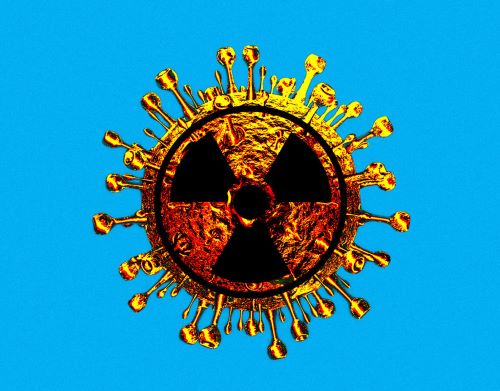 FoE Europe 25th June 2020, Russia and Germany have taken advantage of the coronavirus crisis to resume
shipping radioactive waste to dump in the Urals and Siberia in northern
Russia.
Germany was exporting radioactive waste from it’s nuclear power stations to
Russia, via the harbor of Amsterdam, they directly organized protests in
the three countries.
and sea of uranium – a waste product of nuclear fuel production by Urenco
Germany – was put on hold. That was before the coronavirus crisis hit.
in March 2020, when Covid-19 lockdowns restricted people’s right to protest
in Russia even further, the shipments of radioactive waste were set to
resume.
United Arabs Emirate’s nuclear power station cut corners on safety
Al Jazeera 1st Aug 2020, Paul Dorfman, an honorary senior research fellow at the Energy Institute,
University College London and founder and chair of the Nuclear Consulting
Group, has criticised the Barakah reactors’ “cheap and cheerful” design
that he says cuts corners on safety.
Dorfman authored a report (PDF) last
year detailing key safety features Barakah’s reactors lack, such as a “core
catcher” to literally stop the core of a reactor from breaching the
containment building in the event of a meltdown. The reactors are also
missing so-called Generation III Defence-In-Depth reinforcements to the
containment building to shield against a radiological release resulting
from a missile or fighter jet attack. Both of these engineering features
are standard on new reactors built in Europe, says Dorfman.
1 This Month

Tell Congress: Prevent Nuclear Catastrophe in Iran

Tell Congress: Prevent Nuclear Catastrophe in Iran

Read the Public Inquiry Report, the Commissioners’ report, Surrendering Australia: The AUKUS Deception is available to download for free at aukuspublicinquiry.com. Or just watch the replay of the National Press Club Luncheon.

19 November – Webinar – The Reality of Reprocessing
Time: 11:00 AM Pacific Time (US & Canada) / 2:00 PM Eastern / 7:00 PM UK / 8:00 PM CET
Register for the Zoom Event Here


Shut down the radiation-damaged Heysham nuclear reactors now
To see nuclear-related stories in greater depth and intensity – go to https://nuclearinformation.wordpress.com

Say No to NASA’s Reckless Nuclear Reactor on the Moon
Say No to NASA’s Reckless Nuclear Reactor on the Moon
-
Archives
- November 2026 (138)
- October 2026 (302)
- September 2026 (339)
- August 2026 (330)
- July 2026 (355)
- June 2026 (287)
- May 2026 (306)
- April 2026 (356)
- March 2026 (251)
- February 2026 (267)
- January 2026 (308)
- December 2025 (358)
-
Categories
- 1
- 1 NUCLEAR ISSUES
- business and costs
- climate change
- culture and arts
- ENERGY
- environment
- health
- history
- indigenous issues
- Legal
- marketing of nuclear
- media
- opposition to nuclear
- PERSONAL STORIES
- politics
- politics international
- Religion and ethics
- safety
- secrets,lies and civil liberties
- spinbuster
- technology
- Uranium
- wastes
- weapons and war
- Women
- 2 WORLD
- ACTION
- AFRICA
- Atrocities
- AUSTRALIA
- Christina's notes
- Christina's themes
- culture and arts
- Events
- Fuk 2022
- Fuk 2023
- Fukushima 2017
- Fukushima 2018
- fukushima 2019
- Fukushima 2020
- Fukushima 2021
- general
- global warming
- Humour (God we need it)
- Nuclear
- RARE EARTHS
- Reference
- resources – print
- Resources -audiovicual
- Weekly Newsletter
- World
- World Nuclear
- YouTube
-
RSS
Entries RSS
Comments RSS

