Trump administration sends mixed signals on nuclear weapons budgeting
 Trump administration sends mixed signals on nuclear weapons budgeting, Defense News, By: Joe Gould and Aaron Mehta 28 Aug 20, WASHINGTON ― Defense hawks in Congress are pushing a contentious plan to give the Pentagon a stronger hand in crafting nuclear weapons budgets, but the Trump administration has been sending mixed messaging over recent weeks about whether the change is needed.
The Senate-passed version of the annual defense policy bill would give the Pentagon-led Nuclear Weapons Council a say in the budget development of the National Nuclear Security Administration, a semi-autonomous agency within the Department of Energy that’s responsible for the stockpile’s safety, security, and effectiveness.
However, Assistant Secretary of Defense for Strategy, Plans, and Capabilities Vic Mercado told reporters that change is unneeded; the status quo between the Defense Department’s nuclear modernization efforts and NNSA is appropriate.
“I think right now we have it about right,” Mercado said in an interview this month. Nuclear deterrence falls under Mercado’s portfolio as an adviser to the defense secretary and undersecretary for policy.
The remarks could be read as neutral as the House and Senate debate competing proposals as part of their deliberations on the 2021 National Defense Authorization Act…….. https://www.defensenews.com/congress/2020/08/25/trump-administration-sends-mixed-signals-on-nuclear-weapons-budgeting/
UK’s Dounreay nuclear power site, opened in 1955, closed 1994, cleaned up in 2333, if they’re lucky

Dounreay on Scottish north coast has been site of considerable radioactive leaks https://www.independent.co.uk/environment/nuclear-power-dounreay-scotland-thurso-decommissioning-radiation-a9680611.html Harry Cockburn, Thursday 20 August 2020 In 313 years’ time, 378 years after it first opened in 1955, and 339 years after it ceased operations in 1994, the 178-acre nuclear power facility site at Dounreay will be safe for other uses, a new report has stated.
Though the site on the north coast of Scotland was only home to functioning nuclear reactors for 39 years, the clean-up will take roughly ten times as long, with efforts already underway to clean up hazardous radioactive material.
The facility, near Thurso, was used by the government for research and testing of various types of nuclear reactors, including a “fast reactor” and those intended for use on nuclear submarines.
The first reactor at the site to provide power to the National Grid was the Dounreay Fast Reactor, which provided power between 1962 and 1977. A second reactor also pumped power into the grid between 1975 and 1994.
A draft report from the government’s nuclear decommissioning authority states the site will only be ready for other uses after the year 2333.
Over the next two years, Dounreay Site Restoration Limited has said it will undertake assessments of “installations, current and future disposals, areas of land contamination, sub-surface structures and other discrete site conditions” to determine “credible options for the site end state”.
A process of demolition of buildings and waste removal is already underway at the site, which has previously been used to store dangerous radioactive material.
Part of the demolition process has involved the use of a remote controlled robot nicknamed the “Reactosaurus”, a 75-tonne device with radiation-proof cameras, and robotic arms which are able to reach 12 metres into the reactors where they can operate an array of size-reduction and handling tools, including diamond wire and disks and hydraulic shears.
One of the areas targeted for waste removal is a highly contaminated area called the Shaft.
The water reacted violently with the sodium and potassium, throwing off the massive steel and concrete lids of the shaft, and littered the area with radioactive particles.
The dangerous pollution affected local beaches, the coastline and the seabed. Fishing has been banned within a two-kilometre radius of the plant since 1997.
Milled shards from the processing of irradiated plutonium and uranium, are roughly the size of grains of grains of sand. The most radioactive of the particles are believed to be potentially lethal if ingested. These small fragments are known to contain caesium-137, which has a half-life of 30 years, but they can also incorporate traces of plutonium-239, which has a half-life of over 24,000 years.
FirstEnergy heavily involved in the corruption-filled Ohio nuclear stations bailout
 FirstEnergy had big stake in tainted nuclear plant bailout,
 Chattanooga Times Free Press, August 28th, 2020 | by MARK GILLISPIE and JOHN SEEWER / The Associated Press CLEVELAND (AP) — FirstEnergy Corp. was once blamed for its part in triggering North America’s largest blackout nearly 20 years ago. Now, the multistate power company is again facing intense scrutiny — this time for its role in an alleged $60 million bribery scheme that has ensnared one of Ohio’s most powerful politicians.While FirstEnergy and its executives have denied wrongdoing and have not been criminally charged, federal investigators say the company secretly funneled millions to secure a $1 billion legislative bailout for two unprofitable Ohio nuclear plants then operated by an independently controlled subsidiary called FirstEnergy Solutions.
Officials from the Akron-based corporation, including CEO Chuck Jones, have long insisted FirstEnergy Corp. had no financial stake in rescuing the plants because they were operated by FirstEnergy Solutions. Yet nearly all of the money used to fund the scheme, authorities said, came from the corporation itself.
Critics say the bailout bill, known as HB6, helped smooth the way for FirstEnergy to officially shift ownership of the nuclear plants and two coal-burning power plants to its creditors in federal bankruptcy court in February. Shedding the plants allowed the corporation to focus on its profitable business of powering 6 million customers in Ohio and other states.
Ashley Brown, executive director of the Harvard Electricity Policy Group at Harvard University’s John F. Kennedy School of Government and a member of the Public Utilities Commission of Ohio from 1983 to 1993, said the bailout legislation clearly benefited FirstEnergy Corp.
“I think there’s no question that FirstEnergy was acting in its own self-interest,” Brown said. “Ordinarily, there’s nothing particularly wrong with that. But HB6 skewed everything.”
‘Company A’
After its bailout-driven success, FirstEnergy’s fortunes took an unwelcome turn July 21.
That’s when federal authorities released a criminal complaint detailing how “Company A” — a clear reference to FirstEnergy — spent $60 million to get a well-known Republican named Larry Householder selected as Ohio’s House speaker, finance his bailout passage efforts and prevent Ohioans from having their say about the legislation at the polls.
FirstEnergy’s stock price plummeted nearly 35% within two days and has yet to rebound. Independent board members have called for an internal investigation and shareholders have filed at least four potential class-action lawsuits alleging FirstEnergy’s executives committed fraud and concealed an “illicit campaign” to secure the bailout.
“The company’s most senior executives, including its CEO defendant Jones, were directly involved in and oversaw these efforts, placing the company and its shareholders at extreme risk of legal, reputational and financial harm,” one lawsuit said………
The corporation funneled $38 million to a dark money group to finance a dirty tricks campaign that prevented bailout opponents from gathering enough signatures to place a referendum on the ballot, federal authorities alleged.
FirstEnergy also benefited from a last-minute change to the bailout legislation that essentially allowed the utility to charge retail customers more for lost revenue, a sweetener that Jones said made roughly one-third of the company’s business “recession proof.”
While the utility said the add-on would stabilize rates for customers, an analysis released by the Ohio Manufacturers Association estimated FirstEnergy could reap $355 million in unearned revenue through 2024.
Federal investigators said the add-on “likely came as a result of the successful influence campaign” waged by Householder and his four associates, all of whom were indicted on federal racketeering charges last month. The associates have pleaded not guilty, while Householder has been given more time to find a new attorney. ………
with state and federal officials reluctant to help, the FirstEnergy Solutions subsidiary announced in March 2018 that it would close the plants in 2021. The subsidiary filed for bankruptcy three days later, saying it had $7.2 billion in assets and $3.1 billion in debt as of Dec. 31, 2016.
By that time, according to federal authorities, the bribery scheme had already been set in motion.
Two months after Householder flew on a company plane to President Donald Trump’s inauguration in January 2017, FirstEnergy wired $250,000 into the bank account of Generation Now — a dark money group created to promote “social welfare” under a provision of federal tax law that shields its funding sources or spending. Authorities say Householder controlled Generation Now as part of the alleged scheme.
Of the $60 million eventually funneled by FirstEnergy to Generation Now through the end of 2019, $42 million came from an entity called FirstEnergy Services that is overseen by Jones and his corporate team, the criminal complaint said.
……….Jonathan Entin, a law professor emeritus at Case Western Reserve University in Cleveland, said there is no way for FirstEnergy “to spin this.”
“They cannot credibly say they’re completely innocent bystanders even if they did not break the law,” Entin said. “It’s really hard to believe they were completely ignorant of what was happening.”
……….The bailout legislation became law last October, the day after the anti-bailout referendum effort failed. By February of this year, FirstEnergy appeared to have gotten what it wanted: FirstEnergy Solutions had emerged from bankruptcy as a new privately held company called Energy Harbor. FirstEnergy Corp. was out of the power generation business and was now a regulated electric transmission company, feeding power to 6 million customers in six states.
And it was good, at least initially, for FirstEnergy’s bottom line, its shareholders, and the FirstEnergy leadership team.
The company, in a Securities and Exchange Commission filing early this year, said Jones’ total compensation in 2019 was nearly $21 million, including a $1.6 million performance-based salary bonus for that year and $18 million in performance-based stock units for a three-year period ending in 2019.
Now, 17 summers after a tree branch touched a high-voltage line and a computer malfunction at FirstEnergy unraveled into a massive blackout in the U.S. northeast and Canada, the company again finds itself on the defensive.
“If it turns out what FirstEnergy went over the line, the question is who will be held responsible,” Entin said. “Will it be individuals? Or will it be the company?” https://www.timesfreepress.com/news/business/aroundregion/story/2020/aug/28/firstenergy-stake-tainted-nuclear-plant-bailout/530974/
Ohio’s Republican Ohio Attorney General David Yost Considers Blocking Nuclear Power Plant Bailout
 Ohio AG Considers Blocking Nuclear Power Plant Bailout, https://www.wcbe.org/post/ohio-ag-considers-blocking-nuclear-power-plant-bailout, By OHIO PUBLIC RADIO 28 Aug 20, Republican Ohio Attorney General David Yost says he’s considering taking legal action to stall the billion dollar nuclear power plant bailout law.The subsidies are at the center of one of the largest alleged bribery scandals in Ohio history. Ohio Public Radio’s Andy Chow reports.
An injunction could halt increased charges on nearly every Ohioan’s electric bills if the legislature fails to repeal House Bill 6.
The announcement from Yost is the latest action from leaders, advocates, and interest groups fighting to repeal HB6, which is said to be the catalyst for a 60 million dollar racketeering scheme.
Michael Hartley with the Coalition to Restore Public Trust says legislators must toss out the law.
“Every single word of it is corrupt, and every single word of it is tainted.”
Federal investigators say a utility believed to be FirstEnergy and its subsidiaries funneled millions of dollars to Republican former House Speaker Larry Householder in exchange for the bailout.
Exelon demanding Illinois state subsidies for 2 nuclear power stations
 Exelon Threatens to Close 2 Nuclear Plants as Battle Over State Subsidies Looms
Illinois governor nixes the utility’s preferred legislative fix, leaving the future of its ZECs in doubt. Greentech Media JEFF ST. JOHN AUGUST 28, 2020 Exelon is following through with a threat to close two of its Illinois nuclear power plants by next year unless it receives state support to boost their financial viability……..
Exelon subsidiary Exelon Generation’s announcement that it plans to close its Byron and Dresden power plants in 2021, decades ahead of schedule, cited long-standing economic pressures on a fleet that supplies the vast majority of the state’s carbon-free generation.
Hurdles for Exelon at the state and federal levels
Exelon worked with legislators and environmental groups to include a version of the Fixed Resource Requirement in the Clean Energy Jobs Act legislation introduced last year. However, the bill stalled in 2019 after the federal bribery investigation involving ComEd was announced. CEJA and a rival clean energy bill, dubbed Path to 100, were also unable to advance during this year’s legislative session, which was constrained by the COVID-19 pandemic.
Ohio’s laws hamper renewable energy, even if the pro nuclear HB6 law is repealed
 HB 6 Repeal Would Address Only Part Of Lawmakers’ Actions To Slow Renewables, Cincinnati Public Radio, By KATHIANN M. KOWALSKI & EYE ON OHIO • JUL 24, 2020 Both Republican and Democratic Ohio lawmakers are pushing to repeal the state’s nuclear bailout bill after this week’s release of a federal criminal complaint against House Speaker Larry Householder and others. Clean energy advocates say that would be a start, but more is needed to address eight years of lawmakers’ actions to slow the growth of renewables in the state.
The complaint alleges a $60 million bribery and conspiracy scheme that led to the passage of House Bill 6 last summer, followed by the defeat of a referendum effort to give voters a say on the bill. Amounts involved are about 20 times more than amounts that could be tracked through public documents.
HB 6 is primarily known as a “nuclear bailout” for providing six years of subsidies for the FirstEnergy Solutions/Energy Harbor nuclear power plants in Ohio totaling roughly a billion dollars, but it also gutted the state’s renewable energy and energy efficiency standards, and provided bailouts for two 1950s-era coal plants in Ohio and Indiana.
And while Gov. Mike DeWine has recently shifted his position from defending HB 6 to saying he wants to “repeal and replace” it, legislators from both parties say the whole thing should be thrown out. DeWine has said his office had no involvement in the alleged scheme. Yet he signed the law within hours after Householder secured its passage last summer.
Whether due to actual or perceived corruption, HB 6 “is a corrupt piece of legislation. All of it — not just part of it,” said Rep. Mike Skindell, D-Lakewood. “Therefore, the entire thing needs to be repealed. … That is one step in restoring the confidence of the citizens which was broken because of this corrupt process.”
“Those of us who are free-market conservatives are against the bill. Those of us who care about consumers and predatory pricing are against the bill. And it’s why those of us who want more renewable energy, not less, are against the bill,” said Rep. Laura Lanese, R-Grove City.
“Ohioans deserve an immediate and full
repeal of House Bill 6 in order to restore the public’s trust in the legislative process, and also to get Ohio’s clean energy future restarted,” said Miranda Leppla, vice president of energy policy for the Ohio Environmental Council Action Fund. “There is simply no room to consider anything less than a full repeal of this bill, as it is corrupt to the very core. Ohio lawmakers should consider what policies are best for Ohioans, without the corrupt influence of pay-to-play politicians and lobbyists working to influence their decisions.”
“I think this fiasco of HB 6 is just symbolic of the pay-to-play culture that has been in operation for a decade or more,” said Steve Melink, founder and CEO of Melink Corporation in Cincinnati. An analysis of lawful, reported campaign contributions from the utility, nuclear and coal industries in Ohio shows substantial increases in election years after a competitive generation market finally began developing in the state.
Efforts to give preferences to FirstEnergy and utility and fossil fuel interests didn’t start with HB 6. Bailout proposals have been on the table since at least 2014. And efforts to limit or repeal Ohio’s clean energy standards have been underway since at least 2012. A 2014 law imposed a two-year “freeze,” and then former Gov. John Kasich vetoed another bill to erode the standards. Other bills for nuclear and fossil subsidies and for weakening the standards were proposed in 2017 and 2018. And then Householder was elected.
HB 6 “was much more than a bailout for uneconomic nuclear and coal plants. It was an attack on renewable energy and energy efficiency that FirstEnergy, and its allies in the legislature, had been pushing for years,” said J.R. Tolbert, managing director for Advanced Energy Economy’s national business group.
What More Is Needed?
“Ohio has some fundamental changes that need to be made to get back on track in our fight against climate change,” Leppla said. “These include fixing our wind setbacks, prioritizing efficiency as a money- and energy-saving resource, and fixing our power siting board process to ensure renewables have an even playing field.”
Removing a 2014 provision that tripled property line setbacks for wind turbines “is the very first change that has to happen” after a full repeal of HB 6, said Sandy Buchanan, executive director of the Institute for Energy Economics and Financial Analysis.
“When the rules changed, it essentially froze the number of wind projects,” said IEEFA data analyst Seth Feaster. That caused communities to miss out on revenues, more financial stability, better credit ratings and indirect job benefits, he and Buchanan noted. Meanwhile, a lot of wind projects moved to other states that were more welcoming.
The constant push to limit or repeal the state’s renewable energy and energy efficiency portfolio standards has also hurt, Melink noted. The portfolio standards act as incentives to attract and develop clean energy and other businesses that want renewable energy by setting enforceable targets, which the market then moves to meet, he said………. https://www.wvxu.org/post/hb-6-repeal-would-address-only-part-lawmakers-actions-slow-renewables
Expansion of nuclear power in the troubled Middle East – not a good idea
Will the UAE’s Barakah project launch new era of peaceful nuclear power in the Middle East? Al-Monitor
Ali Ahmad @Ali_Ahmad_Not 28 Aug 20, “……. Despite the UAE’s commitment and thorough planning, arguably supported by the best experts and consultants, Barakah’s first unit took more than eight years in construction and testing. It is, therefore, safe to assume that other countries in the region will need at least that much time to bring their own projects to completion. Considering such a long time frame, and the emerging energy revolution in the region that is powered by cheap renewables and natural gas, it would be very hard to sell a nuclear project anywhere in the region based on economic rationales………….
Of course, financing was never an issue for the UAE. One of the most daunting challenges for Middle Eastern countries — or indeed any country — with nuclear aspirations has been the substantial financing needed for nuclear power projects. In contrast to the UAE, an oil-rich country with readily available financial resources and a high credit rating of AA2, based on latest data by Moody’s, many other countries in the region are struggling with strained economies and mounting public debt.
The coronavirus pandemic further weakened regional economies, including oil-rich states such as Saudi Arabia, which also suffered from the collapse of oil prices. Meanwhile, the majority of the UAE’s nuclear investments were made well before the pandemic as the project started in 2012……
…..the expansion of nuclear power in the Middle East introduces more challenges than opportunities in a region swept by conflicts, fragility and economic hardship. https://www.al-monitor.com/pulse/originals/2020/08/uae-power-plant-middle-east-nuclear-race.html#ixzz6WSB4zMqe
Army dismantling long dead nuclear power plant at Fort Belvoir
Army dismantling deactivated nuclear power plant at Fort Belvoir, INSIDE NOVA, Aug 28, 2020
Illinois governor’s energy plan shakes up debate over nuclear and renewables
Illinois governor’s energy plan shakes up debate over nuclear and renewables, Energy News, Kari Lydersen, August 27, 2020 ” ………..Illinois Gov. J.B. Pritzker ‘s Aug. 20 announcement came in the wake of revelations about alleged widespread bribery and corruption by utility ComEd, and the first point of Pritzker’s eight-point plan demands ethics reform and strengthening utility company transparency. The governor’s plan would likely take a proposal for a state-run capacity market off the table. That concept, part of the Clean Energy Jobs Act and backed by both the Clean Jobs Coalition and ComEd’s parent company Exelon, would prioritize zero emissions sources in capacity, essentially creating new subsidies for nuclear plants while limiting payments to fossil fuel plants. Theoretically renewables could also benefit from capacity payments, but renewable company leaders said the proposal as drafted would not help them.
The coalition says that a fixed resource requirement, or FRR, that changes how capacity is procured in northern Illinois is key to funding increased residential and community solar and clean energy equity programs, since — they say — it would mean savings on unnecessary capacity payments that could be funneled into the state’s incentive program for solar. …….
Critics say the fixed resource requirement as drafted would not really save money, and that Exelon’s nuclear plants don’t really need more support in order to keep operating. And solar and wind companies say the proposed requirement would not help them, in part because it would only apply to PJM territory in northern Illinois, not the MISO market downstate. While renewables could technically participate in a state-run capacity market, just as they can in PJM’s capacity market, they say the proposed terms are unworkable. …..…
Freedom from influence?
While the corruption scandal seemingly chills the political power that ComEd and Exelon might have had to help pass clean energy legislation, some clean energy advocates described it as a refreshing chance to push legislation without major corporate backing. ………
“It’s always been a reluctant partnership to get this work done. … We’ve been told whenever we need to pass an energy bill that the only route to passage was working with utilities and certain energy companies,” said Jen Walling, executive director of the Illinois Environmental Council, a Clean Jobs Coalition member. “That was the reality we had to work under, but there was never any group that relished or wanted to do so. [Now] we are excited about getting the chance to pass a bill that’s not written by utilities, that has the best policy for consumers and equity.”
Walling added that “political corruption has plagued the energy sector for decades in Illinois.”……… https://energynews.us/2020/08/27/midwest/illinois-governors-energy-plan-shakes-up-debate-over-nuclear-and-renewables/
Evacuation orders for Fukushima radioactive areas to be lifted without decontamination
Evacuation orders for Fukushima radioactive areas to be lifted without decontamination, August 27, 2020 (Mainichi Japan) TOKYO — The Japanese government is set to allow the lifting of evacuation orders for highly radioactive areas near the disaster-stricken Fukushima Daiichi Nuclear Power Station without decontamination work on condition that residents will not resettle there.
The government on Aug. 26 disclosed the policy to the Nuclear Regulation Authority (NRA) for the so-called “difficult-to-return” zones where residents have remained evacuated since the onset of the Fukushima nuclear disaster in 2011 due to high radiation doses in those areas in northeastern Japan. The NRA gave its consent to the government policy, paving the way for residents to enter areas outside the specified disaster reconstruction and revitalization base zones.
The government has heretofore made it a condition for lifting the evacuation orders that: the radiation exposure doses will not exceed 20 millisieverts per year; infrastructure necessary for daily lives is developed and sufficient decontamination work is performed; and consultations are held with local bodies and residents. The government previously designated parts of the difficult-to-return zones as disaster recovery bases, which mainly lie in areas where local residents lived, and planned to lift the evacuation orders by 2023 after decontamination work and infrastructure development.
Meanwhile, upon receiving a request from the village of Iitate in Fukushima Prefecture, the government has also been examining under which situations the evacuation directives can be lifted in areas outside the disaster recovery base areas……….. (Japanese original by Hisashi Tsukamoto and Yuka Saito, Science & Environment News Department) https://mainichi.jp/english/articles/20200827/p2a/00m/0na/005000c
Safety of Belarus nuclear power station in question after IAEA report
Deficiencies discovered during IAEA INIR mission in Belarus may cause negative impact on safety of Belarusian NPP, Vates, 08/27/2020 International Atomic Energy Agency (IAEA) conducted the Integrated Nuclear Infrastructure Review (INIR) Phase 3 mission from 24 February to 4 March 2020 in the Republic of Belarus and recently published the report with 7 recommendations and 6 suggestions.
The mission evaluated the development status in the areas linked to Belarus nuclear infrastructure such as regulatory framework, nuclear safety, radioactive waste management, financial and human resources, nuclear security in order to commission and operate the first nuclear power plant (hereinafter – NPP).
The report emphasizes, that Belarus needs to further develop its legal and regulatory framework of nuclear energy, to assure regulatory body independence in cooperation with technical support organizations, to ensure sufficient funds for decommissioning and radioactive waste management, to allocate responsibility for establishing the radioactive waste management organization, to ensure reliable restart of the grid system in the event of total collapse once the NPP is in operation, to finalize all necessary programmes for starting operation, to ensure long term arrangements for maintenance of Belarusian NPP and to ensure capacity and competence of operating organisation.
Recommendations and suggestions concerning improvement of nuclear energy infrastructure are related to:
– deficiencies in legal and regulatory framework of nuclear safety;
– assurance of independence of regulatory body;
– deficiencies in implementing Integrated Management Systems of regulatory body and operating organization;
– ensuring readiness to restart of the grid system in the event of total collapse once the NPP is in operation;
– assurance of Belarussian NPP maintenance after the warranty period;
– deficiencies in the readiness of the physical security system in the operating organization;
– deficiencies in establishing responsibilities in the area of the radioactive waste management;
– international obligations (Belarus has not yet joined the Amendment to the Convention of Physical Protection of Nuclear Material and not ratified Protocol Additional to IAEA for the Application of Safeguards).
In VATESI experts’ opinion, not implementation of recommendations and suggestions, indicated in the report, may cause negative impact on safety of the Belarusian NPP during its commissioning and consequent operation…… http://www.vatesi.lt/index.php?id=551&L=1&tx_news_pi1[news]=882&tx_news_pi1[controller]=News&tx_news_pi1[action]=detail&cHash=e3cdcce90fb55e6650c0eb887e2cce12
If the arms treaty with Russia ends USA will spend even more than the planned $1.2 trillion on nuclear weapons
 US nuclear weapons budget could skyrocket if Russia treaty ends, Defense News, 27 Aug 20 By: Joe Gould WASHINGTON ― The New START nuclear pact’s demise could cost the Department of Defense as much as $439 billion for modernization, plus $28 billion in annual maintenance costs, the Congressional Budget Office said in a report published Tuesday.
That price estimate, as the United States and Russia remain at odds over the treaty, reflects a threefold increase in weapons production costs. With Washington and Moscow’s responses to the expiration of New START unclear, CBO explored several possible paths, including other less expensive options. “If the New START treaty expired, the United States could choose to make no changes to its current plans for nuclear forces, in which case it would incur no additional costs,” the CBO study found. “If the United States chose to increase its forces in response to the expiration of the treaty, modest expansions could be relatively inexpensive and could be done quickly. Larger expansions could be quite costly, however, and could take several decades to accomplish.” The New START treaty limits each country to no more than 1,550 deployed nuclear warheads and 700 deployed missiles and bombers. Signed in 2010 by then-U.S. President Barack Obama and then-Russian President Dmitry Medvedev, the pact would expire Feb. 5, but includes an option to extend it for another five years without needing the approval of either country’s legislature. The analysis comes amid predictions of flattening defense budgets and as the United States and Russia concluded two days of arms control talks in Vienna last week with some signs of a possible willingness to extend the existing New START deal. A key sticking point is the U.S. demand to include China in any new treaty, even as China has repeatedly refused…….. Russia has offered an extension without any conditions. U.S. negotiator Marshall Billingslea indicated the U.S. was willing to talk about an extension but only if there were a politically binding framework for making changes to New START, which he called “deeply flawed.” House Armed Services Committee Chairman Adam Smith, D-Wash., and Senate Foreign Relations Committee ranking member Sen. Bob Menendez, D-N.J., said a failure to renew would drive the U.S. toward a dangerous and unaffordable arms race, as Russia would use a U.S. exit to “quickly expand its arsenal.” “Extending the New START Treaty for a full five years is clearly the right financial and national security choice,” they said in a joint statement. “America cannot afford a costly and dangerous nuclear arms race, particularly in the middle of our current financial, political, and health crises. We again call on the Trump Administration to extend the New START Treaty today.” Arms control advocates have likewise warned against the U.S. allowing the treaty to lapse with no limits on their nuclear arsenals, after both Moscow and Washington withdrew from the 1987 Intermediate-range Nuclear Forces Treaty last year. “Ever-increasing spending on nuclear weapons without an arms control framework that bounds U.S. and Russian nuclear forces is a recipe for budget chaos, undermining strategic stability, and damaging the health of the global nonproliferation regime,” said the Arms Control Association’s director for disarmament and threat reduction policy, Kingston Reif. “Such an approach also flies in the face of longstanding bipartisan Congressional support for the pursuit of modernization and arms control in tandem.” An expansion in nuclear weapons spending would likely place pressure on other parts of the national defense budget. CBO previously concluded the U.S. will spend $1.2 trillion over the next three decades on nuclear-weapons. Meanwhile, the Pentagon is not budgeting for New START’s expiration, according to a recent GAO report. U.S. lawmakers of both parties are pressuring the White House to extend the pact. ………. https://www.defensenews.com/congress/2020/08/25/cbo-us-nuclear-weapons-budget-could-skyrocket-if-russia-treaty-ends/ |
|
Not all scientists are objective, especially nuclear scientists running for election

 system that only rewards those who can afford to contribute to political campaigns.” Foster “has
 taken millions of dollars from big banks, hedge fund managers, insurance companies, big Pharma and even money from fossil fuel companies.”
With a denier of science in The White House—whether it has to do with the climate crisis or Covid-19 and so on—there is a major push, including by Democratic officials, for making science the basis for governmental decision-making.
That’s completely understandable.
But what about the push by some scientists to politically further areas of science and technology which they favor? Science might be objective—but that doesn’t mean all scientists are.
Take Congressman Bill Foster.
Foster in a Democratic primary this year was challenged by Rachel Ventura, a member of the Will County Board in Illinois, who describes herself as a “progressive.” She is also an environmentalist who earlier worked as a naturalist for Georgia State Parks.
“Will County is effectively the ‘dumping grounds’ for Chicago’s dirty energy industry and garbage,” she declared in campaign literature. “Will County is home to two coal plants, two refineries and one nuclear power plant,” the twin-reactor Braidwood nuclear power plant.
She told patch.com/Illinois that the “Green New Deal is a centerpiece of my campaign” for both environmental and economic reasons. “I believe we can replace warehouse jobs with jobs building windmills and installing solar panels. I believe that we can replace the sweatshops in Aurora [a city, the second in population in Illinois after Chicago and in the Congressional district]…with better-paying jobs building energy efficient window and doors.”
She supports the Future Energy Jobs Act, pending before the Illinois General Assembly, which emphasizes solar and wind power and energy efficiency and commits the state to 100 percent renewable energy by 2050.
Ventura noted that Foster “argues that his Ph.D. somehow makes him a better lawmaker, yet he has become part of the broken pay-to-play system that only rewards those who can afford to contribute to political campaigns.” Foster “has taken millions of dollars from big banks, hedge fund managers, insurance companies, big Pharma and even money from fossil fuel companies.”
She wants to see nuclear power replaced by energy from solar, wind and hydropower.
Despite a modest budget—$80,000—she received 41.3 percent of the primary vote, 32,411 votes—to 58.7 percent, 46,116 votes, for Foster.
As to the Republican whom Foster will face on Election Day, it is Rick Laib, a Trumpster and sergeant in the Will County Sheriff’s Office, who stresses his opposition to abortion and the right for people to carry guns………..
In his farewell address as president in 1961, Dwight Eisenhower warned of the rise of a “military-industrial complex” in the U.S. In fact, according to Douglas Brinkley, formerly director of the Eisenhower Center for American Studies at the University of New Orleans, the original draft of the speech warned not only of a “military-industrial complex” but of a “military-industrial-scientific complex.” Because of the “urging” of Eisenhower’s science advisor, James Killian, said Brinkley, the word “scientific” was eliminated. (Brinkley is now Katherine Tsanoff Brown Chair in Humanities and professor of history at Rice University.)
Remaining in Eisenhower’s address were other words on the issue. Eisenhower said, “in holding scientific research and discovery in respect, as we should, we must also be alert to the equal and opposing danger that public policy could itself become the captive of a scientific technological elite.”
Eisenhower also said: “Akin to, and largely responsible for the sweeping changes in our industrial-military posture, has been the technological revolution during recent decades. In this revolution, research has become central; it also becomes more formalized, complex, and costly. A steadily increasing share is conducted for, by, or at the direction of, the federal government. Today, the solitary inventor, tinkering in his shop, has been overshadowed by task forces of scientists and laboratories.”
The chain of U.S. national laboratories which grew out of the crash program of World War II to build atomic bombs, the Manhattan Project, was—and is—the base for much of the scientific establishment about which Eisenhower was concerned.
In 1999, three-term U.S. Representative Michael Forbes, concerned about leaks of tritium from nuclear reactors at BNL, spoke out in connection to the radioactive pollution caused by the facility, located in his district. Its two reactors were leaking tritium directly into the underground water table below on which Long Island depends as its sole source of potable water.
As a result of Forbes’ criticism of the federal laboratory, he was opposed in a primary for the Democratic nomination by Regina Seltzer whose husband had been a BNL scientist. BNL personnel manned phone banks to campaign for Seltzer. She won the Democratic nomination over Forbes by 45 votes, but lost to the Republican candidate in the general election. Meanwhile, Forbes, a highly capable representative was driven out of Congress.
One need not be a scientist at a federal facility involved in atomic science to develop an affinity for nuclear technology. Involvement in the U.S. nuclear Navy can also be a springboard.
Take Congresswoman Elaine Luria.
Her online biography notes “Rep. Luria was one of the first women in the Navy’s nuclear power program.” She “served two decades in the Navy, retiring at the rank of Commander. Rep. Luria served at sea on six ships as a nuclear-trained Surface Warfare Officer, deployed to the Middle East and Western Pacific.”
In the online biography, Luria, of Virginia, states: “As a nuclear engineer in the Navy, I saw firsthand that nuclear power, when deployed safely and responsibly, can play a key role in our future as a zero-carbon energy source. That is why I introduced the bipartisan Nuclear Energy Leadership Act, which will encourage innovation in the design and deployment of advanced nuclear reactor technologies.”
Her Nuclear Energy Leadership Act, introduced in 2019, declares its purpose is to “direct the Secretary of Energy to establish advanced nuclear goals, provide for a versatile, reactor-based fast neutron source, make available high-assay, low-enriched uranium for research, development, and demonstration of advanced nuclear reactor concepts, and for other purposes.”
Luria is a Democrat and will face Republican Scott Taylor, a former Navy SEAL endorsed by Trump who had lost to her two years ago…… This past December “Congress voted to approve appropriations for fiscal year 2020 that includes $1.5 billion for nuclear energy programs, a 12.5 increase from the previous year,” the leading PR entity for the nuclear industry, the Nuclear Energy Institute, trumpeted. It quoted its president and CEO Maria Korsnick saying: “Today’s historic 2020 funding of $1.5 billion for nuclear energy programs reaffirms that nuclear energy is an essential driver in lowering carbon emissions. With Congress’ action, our government is signaling that nuclear energy is a vital part of our country’s commitment to a reliable and resilient energy system.” https://www.nationofchange.org/2020/08/25/science-is-objective-but-are-all-scientists-objective/?fbclid=IwAR32pATHxLwEv5-3jnrQTNCHcuavdl6zT0T1W1Bmm5O4UlCpMcu33L_E1dw
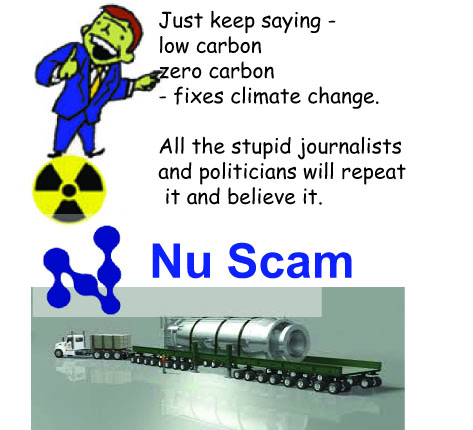
Lehi City Council backs out of NuScam ‘small’ nuclear reactor project
 Daily Herald 26 Aug 20,
The Lehi City Council voted unanimously Tuesday to withdraw the city from a multiagency nuclear power project that would provide nuclear power to cities across Utah, citing concerns over increasing costs.
The Carbon Free Power Project is an initiative by Oregon-based NuScale Power, the Utah Associated Municipal Power Systems and the United States Department of Energy to build a small modular reactor power plant at the Idaho National Laboratory………
Earlier this month, the Utah Taxpayer Association called on cities to withdraw from the project ahead of the Sept. 14 deadline after a closed-door virtual town hall meeting on July 21 where officials warned of project delays, increased costs to cities and towns involved, and “dependence on unpredictable federal subsidies.”
“The UAMPS project will lock in 27 municipalities in Utah and several in surrounding states for a share of billions of dollars in costs and unclear risk in the pursuit of a cluster of small modular reactors (SMRs) touted by Oregon-based NuScale Power, which repeatedly has delayed timelines and increased costs associated with its SMRs,” Utah Taxpayer Association Vice President Rusty Cannon said in an Aug. 4 news release. “The risky project with massive cost escalations is being conducted largely out of the public eye.”
In November 2017, the total cost of the project was estimated at $3.6 billion. By November 2019, that number had increased to $4.2 billion. By July, the estimated cost had gone up to $6.1 billion.
That would cost Lehi $466 million at the city’s current subscription levels, Eves said. UAMPS would be responsible for paying $4.8 billion, while the DOE would pay $1.3 billion and NuScale Power would pay $5 million. ………… https://www.heraldextra.com/news/local/govt-and-politics/lehi-city-council-votes-to-back-out-of-nuclear-power-project-contract/article_0af6e67c-24e5-5427-9029-e52b9f9d63ae.html
Nuclear and gas industries desperate to win EU endorsement AND FUNDING, as clean and green

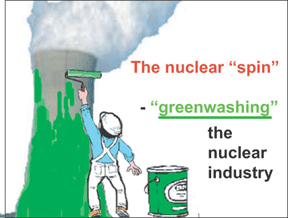
 Gas and nuclear industries fight to the end for ‘green’ EU investment label, Kate Abnett, Simon Jessop, BRUSSELS/LONDON (Reuters) 26 Aug 20 – The gas and nuclear industries have ramped up lobbying to secure last-ditch changes to European rules defining which investments are sustainable, fearing that exclusion from a new “green” list could deprive them of billions of dollars of funding. The climate section of the EU’s Sustainable Finance Taxonomy is due to be finalised this year and it could prove crucial as nuclear power and most natural gas plants and pipelines were excluded from a provisional list published in March. By forcing providers of financial products to disclose which investments meet climate criteria from the end of 2021, the new EU green finance rules are designed to channel cash towards projects that support the bloc’s climate goals. In the four months since the rules were published, gas and nuclear industry representatives held 52 meetings – in person or virtually – with EU officials, according to EU logs analysed by non-profit Reclaim Finance and shared exclusively with Reuters.
Overall, industry representatives have held a total of 310 meetings with EU policymakers since the start of 2018, according to the data based on transparency filings published by July 8. Nuclear groups in particular have stepped up their lobbying, Of the 36 meetings they’ve held over the past two-and-a-half years, 10 have taken place since March. Brussels is facing calls to use the rules to guarantee spending from its 750 billion euro ($888 billion) COVID-19 recovery fund goes to green projects. The money starts flowing in 2021, meaning any delay to the rules could thwart this plan.
NEED TO BREAK FREE’Climate campaigners urged the EU not to bow to pressure from the oil and gas industry as the stakes were too high. “If EU institutions and member states are serious about building a sustainable Europe that confronts the climate emergency, they need to break free from fossil-fuel lobbyists,” said Paul Schreiber, a campaigner at Reclaim Finance. One of the main gripes of both energy industries is that they were locked out of the group of finance experts that came up with the proposals released in March. A new EU sustainable finance platform will take over as the European Commission’s advisor on taxonomy next month – and both industries are jostling to be included on the panel. ……
Nuclear industry groups say the energy deserves a sustainable label, based on its low carbon emissions and existing secure waste disposal sites. They fear that if nuclear isn’t deemed sustainable, the cost of capital for power plants will rise – a concern for an industry where flagship projects, such as Britain’s Hinkley Point C reactor, are struggling with spiralling costs. To help get the message across, several nuclear lobby groups enlisted the help of the public, tweeting to encourage responses to an EU consultation in April on the proposed rules – and suggesting what to write. That helped generate 126 responses to the EU consultation from concerned citizens asking for nuclear power to be termed sustainable – nearly a third of all the responses received, according to InfluenceMap analysis. The expert finance group was split on how to brand nuclear power and the Commission has now asked its scientific arm to report on the issue next year. Lobby groups told Reuters they were confident nuclear power would ultimately be considered sustainable, but they want the energy section of the taxonomy delayed until the report is done…….. Reporting by Simon Jessop in London and Kate Abnett in Brussels; Editing by David Clarke https://www.reuters.com/article/us-europe-finance-lobbying-analysis/gas-and-nuclear-industries-fight-to-the-end-for-green-eu-investment-label-idUSKBN25L0GA |
|
1 This Month

Tell Congress: Prevent Nuclear Catastrophe in Iran

Tell Congress: Prevent Nuclear Catastrophe in Iran

Read the Public Inquiry Report, the Commissioners’ report, Surrendering Australia: The AUKUS Deception is available to download for free at aukuspublicinquiry.com. Or just watch the replay of the National Press Club Luncheon.

19 November – Webinar – The Reality of Reprocessing
Time: 11:00 AM Pacific Time (US & Canada) / 2:00 PM Eastern / 7:00 PM UK / 8:00 PM CET
Register for the Zoom Event Here


Shut down the radiation-damaged Heysham nuclear reactors now
To see nuclear-related stories in greater depth and intensity – go to https://nuclearinformation.wordpress.com

Say No to NASA’s Reckless Nuclear Reactor on the Moon
Say No to NASA’s Reckless Nuclear Reactor on the Moon
-
Archives
- November 2026 (128)
- October 2026 (302)
- September 2026 (339)
- August 2026 (330)
- July 2026 (355)
- June 2026 (287)
- May 2026 (306)
- April 2026 (356)
- March 2026 (251)
- February 2026 (267)
- January 2026 (308)
- December 2025 (358)
-
Categories
- 1
- 1 NUCLEAR ISSUES
- business and costs
- climate change
- culture and arts
- ENERGY
- environment
- health
- history
- indigenous issues
- Legal
- marketing of nuclear
- media
- opposition to nuclear
- PERSONAL STORIES
- politics
- politics international
- Religion and ethics
- safety
- secrets,lies and civil liberties
- spinbuster
- technology
- Uranium
- wastes
- weapons and war
- Women
- 2 WORLD
- ACTION
- AFRICA
- Atrocities
- AUSTRALIA
- Christina's notes
- Christina's themes
- culture and arts
- Events
- Fuk 2022
- Fuk 2023
- Fukushima 2017
- Fukushima 2018
- fukushima 2019
- Fukushima 2020
- Fukushima 2021
- general
- global warming
- Humour (God we need it)
- Nuclear
- RARE EARTHS
- Reference
- resources – print
- Resources -audiovicual
- Weekly Newsletter
- World
- World Nuclear
- YouTube
-
RSS
Entries RSS
Comments RSS

