3 unplanned shutdowns- Turkey Point nuclear station vulnerable to climate extremes
Critics have pushed Turkey Point and the NRC to take sea rise impacts more seriously, Lyman said.
“We think nuclear plants need to be protected not only against the flood hazards that are reasonably expected today but far into the future, especially plants that have a license renewal like Turkey Point,” he said. “Unfortunately, the NRC today is not interested in increasing regulatory requirements for its current fleet.”
 After 3 unplanned shutdowns at Turkey Point nuclear plant, feds launch ‘special inspection’, Miami Herald BY ADRIANA BRASILEIRO AND ALEX HARRIS, SEPTEMBER 01, 2020 After three unplanned nuclear reactor shutdowns over three days this month, federal regulators have launched a “special inspection” at Florida Power & Light’s Turkey Point plant.
In a statement issued Monday, the Nuclear Regulatory Commission said it was inspecting the plant this week to determine why one of the reactors in the two-unit facility “tripped” or shut down three times between Aug. 17 and Aug. 19. Such visits from the federal agency that oversees nuclear power plants aren’t unheard of but are unusual.
The NRC said FPL had supplied different explanations for each event………..
Edwin Lyman, director of nuclear power safety at the Union of Concerned Scientists, called the number of scrams “very unusual,” in a whole year, much less a few days. He said the NRC has a specific set of criteria plants must meet before they need a special investigation.
“These inspections are fairly rare events,” he said. “This could be a sign that they think there is some increase in risk to the public.”
Edwin Lyman, director of nuclear power safety at the Union of Concerned Scientists, called the number of scrams “very unusual,” in a whole year, much less a few days. He said the NRC has a specific set of criteria plants must meet before they need a special investigation.
“These inspections are fairly rare events,” he said. “This could be a sign that they think there is some increase in risk to the public.”………..
Over the past few years FPL has faced criticism and legal challenges over Turkey Point’s aging cooling system, a unique canal network that doesn’t exist anywhere else in the U.S. The problems from the leaking canal water, which created a saltwater plume encroaching into the adjacent freshwater aquifer, have led state and county regulators to cite FPL for polluting the waters in Biscayne Bay.
The plant last year won federal approval to continue to operate through at least 2053 — an unprecedented decision by regulators to extend the operating lifespan of nuclear reactors to 80 years.
The extended approval also brings up concerns of sea level rise and the increased storm surge that comes with it. By the end of this plant’s current license, Miami-Dade is planning for just under two feet of sea-level rise. Turkey Point is planning for between a half foot and a little over a foot by 2050.
Critics have pushed Turkey Point and the NRC to take sea rise impacts more seriously, Lyman said.
“We think nuclear plants need to be protected not only against the flood hazards that are reasonably expected today but far into the future, especially plants that have a license renewal like Turkey Point,” he said. “Unfortunately, the NRC today is not interested in increasing regulatory requirements for its current fleet.” The plant last year won federal approval to continue to operate through at least 2053 — an unprecedented decision by regulators to extend the operating lifespan of nuclear reactors to 80 years.
The extended approval also brings up concerns of sea level rise and the increased storm surge that comes with it. By the end of this plant’s current license, Miami-Dade is planning for just under two feet of sea-level rise. Turkey Point is planning for between a half foot and a little over a foot by 2050.
Critics have pushed Turkey Point and the NRC to take sea rise impacts more seriously, Lyman said.
“We think nuclear plants need to be protected not only against the flood hazards that are reasonably expected today but far into the future, especially plants that have a license renewal like Turkey Point,” he said. “Unfortunately, the NRC today is not interested in increasing regulatory requirements for its current fleet.” https://www.miamiherald.com/news/local/environment/article245384945.html?fbclid=IwAR2h6Kk7IV87lRlc0HWNgR42aIVowxmKXeijJzIwcPyUADkGEUIngnV2xHo
Nuclear corruption in Ohio: HB 6 was never about jobs and communities by keeping nuclear plants open
HB 6 was never about jobs and communities by keeping nuclear plants open. In fact, First Energy Solutions refused to show legislators there was a need for the bailout. Yet, their own numbers posted on the company’s website show subsidies were never needed and, with the subsidy secure, they paid shareholders $800 million! That’s not done by a company in dire straits. Electricity customers should never have been forced to pay for this – especially now when hospitals, households, small businesses, schools and communities are struggling. ...
|
Ohioans should take notice when they hear the word “subsidy” because it refers to your money. That’s why most Ohioans have opposed House Bill 6 – the bailout of power plants owned by First Energy Solutions (now Energy Harbor) that will be tacked onto your electricity bill – from the beginning. And you really have no choice because we all need electricity. HB 6 should have never happened. But because of greed, it was secretly conceived through alleged corruption via the Ohio legislature rather than what should have been settled through a private bankruptcy process. An intimidating monopoly and indicted politician stand accused of perverting the legislative process with some $60 million spent to shift the billion-dollar subsidy from shareholders to Ohioans. That’s why Vistra has vigorously fought against this tainted legislation from the start. First, when HB 6 was before lawmakers and the corruption not yet alleged, we were a member of Ohioans Against Nuke Bailouts. Then, after the legislature passed HB 6 and the governor signed it, we pressed on as a member of Ohioans Against Corporate Bailouts, advocating to let Ohioans vote, as allowed by the state constitution, on whether they’d like their money used to bailout select companies. With the corruption that fueled HB 6 now exposed in a criminal indictment, we continue to fight, demanding the immediate and complete repeal of HB 6 as members of the Coalition to Restore Public Trust. We now know, through the substantial and mounting evidence amassed in the FBI’s investigation, that the real winners of HB 6 were a politician and his cronies, charged with racketeering and bribery, and the Wall Street owners of First Energy and First Energy Solutions. The losers are Ohioans still on the hook today to pay more than a billion dollars – unless Ohio legislators act to immediately repeal HB 6 in its entirety. HB 6 was never about jobs and communities by keeping nuclear plants open. In fact, First Energy Solutions refused to show legislators there was a need for the bailout. Yet, their own numbers posted on the company’s website show subsidies were never needed and, with the subsidy secure, they paid shareholders $800 million! That’s not done by a company in dire straits. Electricity customers should never have been forced to pay for this – especially now when hospitals, households, small businesses, schools and communities are struggling. …….. https://www.cincinnati.com/story/opinion/2020/09/01/opinion-nuclear-bailout-corruption-kills-public-trust-and-competition/3455443001/ |
|

Iran Nuclear Deal Parties ‘United in Resolve’ to Preserve Agreement
 Iran Nuclear Deal Parties ‘United in Resolve’ to Preserve Agreement https://www.voanews.com/middle-east/voa-news-iran/iran-nuclear-deal-parties-united-resolve-preserve-agreement, By VOA News, September 02, 2020 A European Union official leading talks among Iran and a group of five world powers Tuesday said the participants are committed to keeping alive the 2015 nuclear deal that restricted Iran’s nuclear program in exchange for sanctions relief. Helga Schmid tweeted after the meeting in Vienna that “participants are united in resolve to preserve the #IranDeal and find a way to ensure full implementation of the agreement despite current challenges.” “All participants reaffirmed the importance of preserving the agreement recalling that it is a key element of the global nuclear non-proliferation architecture, as endorsed by United Nations Security Council Resolution 2231,” Schmid said in a later statement. The deal came under stress last year when Iran announced would take steps to walk away from its commitments, complaining it was not getting the promised economic relief after the United States imposed fresh sanctions. Those sanctions came after the Trump administration withdrew from the agreement in 2018, arguing it did too little to prevent Iran from developing nuclear weapons while giving the country too much in sanctions relief. Iran has denied it worked to build nuclear arms, and says it is able and prepared to reverse the actions it has taken to back away from the deal. Tehran has surpassed limits on the amount of enriched uranium it can hold at one time as well as the level to which it is allowed to enrich the material and has installed more advanced centrifuges. Representatives from Britain, China, France, Russia and Germany all took part in Tuesday’s talks, the latest in their efforts to salvage the agreement. Speaking with reporters after the meeting, Chinese representative Fu Cong called on Iran to return to full compliance with its requirements, but also said “the economic benefit that is due to Iran needs to be provided.” The U.N. Security Council resolution that enshrined the nuclear agreement includes mechanisms for participants to address non-compliance, and last month the United States sought to reinstate U.N. sanctions based on Iran’s violations of its requirements. The other signatories have rejected the U.S. move, something they reaffirmed at Tuesday’s talks. Schmid’s statement said that because the United States announced it was halting its participation in the nuclear deal and had not participated in any related activities since that time in May 2018, all of the remaining signatories agree it “therefore could not be considered as a participant state,” and thus “cannot initiate the process of reinstating U.N. sanctions.” The United States has argued that because it was an original member of the agreement, it retains the right to seek the snapback sanctions. The representatives at Tuesday’s talks also welcomed Iran’s decision last week to allow the U.N. atomic energy agency to inspect two sites where Iran is suspected of having stored or used undeclared nuclear material in the early 2000s. |
Petition against dumping ‘nuclear mud’ off Cardiff reaches 5k threshold for Senedd debate
|
Petition against dumping ‘nuclear mud’ off Cardiff reaches 5k threshold for Senedd debate https://nation.cymru/news/petition-against-dumping-nuclear-mud-off-cardiff-reaches-5k-threshold-for-senedd-debate/, 2nd September 2020 A petition to stop the dumping of what campaigners are calling ‘nuclear mud’ off the coast of Cardiff has reached its 5,000 signature target.The campaigners are calling for plans to dump mud from the construction of the new Hinkley Point C nuclear power station into the sea off Cardiff Bay to be halted.
Reaching the 5,000 target means the controversial topic will be up for a debate in the Welsh Parliament. Campaign group Geiger Bay are pressing for extensive testing of the sediment following what they say is evidence of plutonium contamination, a claim that Westminster’s Environment Agency (EA) denies. The petition, created by Cian Ciaran of the Super Furry Animals, demands “that a full Environmental Impact Assessment (EIA) is carried out before any further sediment from Hinkley Point nuclear power station can be dumped”. 780,000 tonnes of the sediment from set to be dumped just one mile from Wales’ capital city. Concerned’ Speaking this morning, Welsh National Party leader and Cardiff West Senedd candidate Neil McEvoy MS said, who has been a prominent voice in the campaign, said that “Wales is standing up for itself”. “How can we allow 780,000 tonnes of material dredged from outside a nuclear power station to be dumped in our waters without testing it properly?” he said. “The Labour Government and Natural Resources Wales have a lot to answer for. “The public are concerned about this issue. Environmentalists are outraged. Eminent scientists are on record saying they are seriously concerned. The only people who don’t seem to be bothered about this are the Labour politicians sitting in Cardiff Bay. “This is first and foremost about the safety of our people and of our marine environment. It is also about how Wales is treated as a nation.” |
|
Renewable energy can save the natural world – but if we’re not careful, it will also hurt it
 Renewable energy can save the natural world – but if we’re not careful, it will also hurt it https://theconversation.com/renewable-energy-can-save-the-natural-world-but-if-were-not-careful-it-will-also-hurt-it-145166
September 2, 2020 Laura Sonter, Lecturer in Environmental Management, The University of Queensland, James Watson, Professor, The University of Queensland, Richard K Valenta, Director – WH Bryan Mining and Geology Research Centre – The Sustainable Minerals Institute, The University of Queensland
A vast transition from fossil fuels to renewable energy is crucial to slowing climate change. But building solar panels, wind turbines and other renewable energy infrastructure requires mining for materials. If not done responsibly, this may damage species and ecosystems.
In our research, published today, we mapped the world’s potential mining areas and assessed how they overlap with biodiversity conservation sites.
We found renewable energy production will exacerbate the threat mining poses to biodiversity – the world’s variety of animals and plants. It’s fair to assume that in some places, the extraction of renewables minerals may cause more damage to nature than the climate change it averts.
Geoengineering to counter global heating? It’s a risky gamble
|
SHOULD WE BANK ON INNOVATION TO HOLD BACK GLOBAL HEATING? HISTORY SAYS IT’S A RISKY BET, Ensia
Andrew Urevig September 2, 2020 — From research scientists to political organizers, people around the planet are working to thwart a threat whose scale has become increasingly clear: Global heating is spurring a climate crisis of megafires, superstorms and record-setting heat waves that current policies are not enough to address.Many climate activists, driven in part by the youth movements of Gen Z, are joining major scientific bodies in calling for economic and social transformation, while other onlookers are hoping for “moonshot” technology to step in as climate “savior.” How did we end up here? Answers to that vary, but research published earlier this year in the journal Nature Climate Change puts at least some of the blame on a surprising villain: computer modeling–based on wishful thinking. In the paper, Duncan McLaren and Nils Markusson, social scientists with the UK-based Lancaster University’s Lancaster Environment Centre, note that speculative technologies promising big climate benefits down the line have been included again and again in computer models used to inform government policies. That relieves some of the political pressure to cut or sequester greenhouse gases here and now, helping to stall tangible reductions in the near term. But it also spurs scientists creating the next round of models to rely, however unintentionally, on even more hoped-for innovations to make established climate goals appear feasible. We need to “recognise and break this pattern to unleash more effective and just climate policy,” the researchers conclude. …………… In the paper, Duncan McLaren and Nils Markusson, social scientists with the UK-based Lancaster University’s Lancaster Environment Centre, note that speculative technologies promising big climate benefits down the line have been included again and again in computer models used to inform government policies. That relieves some of the political pressure to cut or sequester greenhouse gases here and now, helping to stall tangible reductions in the near term. But it also spurs scientists creating the next round of models to rely, however unintentionally, on even more hoped-for innovations to make established climate goals appear feasible. We need to “recognise and break this pattern to unleash more effective and just climate policy,” the researchers conclude. https://ensia.com/notable/climate-change-models-technology-innovation/ |
|
USA – new plutonium pit production – but no new environmental assessment !

 US officials: No new environmental study for nuclear lab, Spectrum, BY ASSOCIATED PRESS AP, SEP. 02, 2020, ALBUQUERQUE, N.M. (AP) — The National Nuclear Security Administration says it doesn’t need to do an additional environmental review for Los Alamos National Laboratory before it begins producing key components for the nation’s nuclear arsenal because it has enough information.
The National Nuclear Security Administration on Tuesday released its final supplemental analysis of a site-wide environmental impact statement done for the lab more than a decade ago. The agency concluded that no further analysis is required.
Critics have pushed for a new environmental impact statement, saying the previous 2008 analysis didn’t consider a number of effects related to increased production, such as the pressure it puts on infrastructure, roads and the housing market.
“The notion that comprehensive environmental analysis is not needed for this gigantic program is a staggering insult to New Mexicans and an affront to any notion of environmental law and science,” Greg Mello of the Los Alamos Study Group said in a statement.
Lab officials last year detailed plans for $13 billion worth of construction projects over the next decade at the northern New Mexico complex as it prepares for plutonium pit production. About $3 billion of that would be spent on improvements to existing plutonium facilities for the pit work, the Albuquerque Journal reported…….https://spectrumlocalnews.com/nys/buffalo/ap-online/2020/09/02/us-officials-no-new-environmental-study-for-nuclear-lab
Republicans And Democrats Clash Over How To Repeal Nuclear Bailout
|
Republicans And Democrats Clash Over How To Repeal Nuclear Bailout, WOSU By ANDY CHOW 2 Sept 20, •At the Statehouse on Tuesday, both the Ohio House and Senate addressed the potential repeal of the controversial nuclear power plant bailout. As Democrats call for a quick repeal, Republicans moved ahead with a different approach.
House Speaker Bob Cupp (R-Lima) says a special committee will hold hearings on HB6, the law that bails out nuclear power plants, subsidizes coal plants, rolls back renewable energy standards and eliminates efficiency mandates. Cupp says there’s a lot of unwinding the House must do to understand the impacts of a repeal….. Minority Leader Emilia Sykes says Democrats have asked for hearings on repeal bills that haven’t moved – so they’ll take other steps to, in her words, press the issue …. Supporters of HB6 say a repeal would allow the continuation of increased charges customers see for the renewable and energy efficiency standards. Opponents of HB6 say the energy efficiency standards creates a return on investment with savings that counter the initial cost……. Federal investigators charge that HB6 was at the center of a $60 million bribery scheme. A utility believed to be FirstEnergy and its subsidiary is accused of funneling the money into a dark money group controlled by former House Speaker and current Rep. Larry Householder (R-Glenford), in return for passing the bailout. Householder, who faces federal racketeering charges, says he plans on entering a plea of “not guilty.” https://radio.wosu.org/post/republicans-and-democrats-clash-over-how-repeal-nuclear-bailout#stream/0 |
|
Santee Cooper and Westinghouse Electric to sell of equipment at the failed $9 billion VC Summer nuclear site.
|
SANTEE COOPER, WESTINGHOUSE BURY NUCLEAR HATCHET Agree to sell millions of dollars in nuclear equipment, Lexington Chronicle , By Jerry Bellune, JerryBellune@yahoo.com, 2 Sept 20, Squabbling over millions of dollars in nuclear equipment may be temporarily over. This gives the taxpayer-owned utility full ownership of all non-nuclear equipment at the failed $9 billion nuclear site. Santee Cooper reportedly is in debt more than $8 billion, at least half of it from the nuclear failure. |
France’s President Macron joins the global nuclear lobby’s push to export nuclear reactors
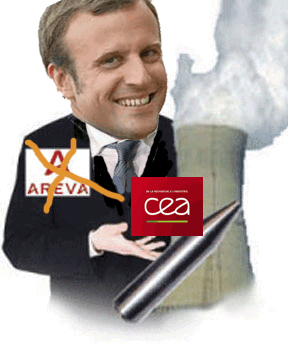 Macron talks nuclear energy and ways to control militias during Iraq visit, The National , Khaled Yacoub Oweis, Sep 2, 2020French PM is the most significant leader to visit Iraq since Prime Minister Mustafa Al Kadhimi came to power in May
During a visit to Baghdad on Wednesday, French President Emmanuel Macron discussed solving Iraq’s massive power shortages with nuclear energy ……. Mr Kadhimi told reporters in Baghdad that he discussed with Mr Macron “a future project” to use nuclear energy to produce electricity and solve decades-long power shortages……..
If realised, the project would place Iraq along with the UAE and Iran as the only Middle East countries with electricity produced by a nuclear reactor. ………. https://www.thenational.ae/world/mena/macron-talks-nuclear-energy-and-ways-to-control-militias-during-iraq-visit-1.1071729
North Korea’s nuclear activity still a ‘serious concern’: UN watchdog
Nuclear activities in North Korea remain a cause for “serious concern,” and the rogue totalitarian state continues to enrich uranium, which could be used in an atomic weapon, the UN’s watchdog said in a recent report.
The activities by the country are in “clear violation of relevant UN Security Council resolutions,” the International Atomic Energy Agency wrote in the report that was released Tuesday.
The report also notes that what was once the heart of the country’s nuclear program, the Yongbyon site, has likely been shut down since 2018 — and that no plutonium has been produced there in the past year.
Still, the information it’s able to get about the program is “declining” because the agency’s been locked out of the hermit nation.
“Knowledge of the DPRK’s nuclear program is limited and, as further nuclear activities take place in the country, this knowledge is declining,” the report states.
Nuclear waste project proposed near Carlsbad sees mixed response in final public hearing
|
Nuclear waste project proposed near Carlsbad sees mixed response in final public hearing, Adrian Hedden– Carlsbad Current-Argus, 3 Sept 20, In its final public comment hearing on an environmental analysis for a nuclear waste facility near Carlsbad and Hobbs, the federal Nuclear Regulatory Commission (NRC) heard arguments both for and against the project that would see high-level spent nuclear fuel rods stored temporarily in southeast New Mexico.Holtec International sought a permit to build and operate the site known as a consolidated interim storage facility (CISF) to remove nuclear waste from generator sites around the U.S., and temporarily store the refuse until a permanent repository was ready. The NRC’s recently released draft environmental impact statement (EIS) found the project, during construction and operation, would have minimal environmental impact. A safety analysis was forthcoming, which would study the project’s impact on human safety and require another period of public comments………… Opponents of the project, including New Mexico Gov. Michelle Lujan Grisham and members of her cabinet panned the proposal for environmental concerns and impacts on other industries in the state such as extraction and agriculture. Protesters during Wednesday’s meeting also questioned the NRC’s decision to hold public hearings online and via phone instead of in person amid the COVID-19 pandemic as “rushing” the project and reducing public participation. ……. Rose Gardner, a resident of Eunice near the proposed site and member of the Alliance for Environmental Strategies argued that the project was illegal under federal law and unfairly impacted Hispanic communities in rural New Mexico. “The National Waste Policy Act does not allow for this license to be issued and a privately-owned corporation to take the high-level waste from commercial reactors,” Gardner said. “The failure of the NRC to satisfy the public with these poorly run and moderated webinars is an example of government waste as usual.” New Mexico State Sen. Jeff Steinborn (D-36) argued the EIS was “deficient” in that it did not address the transportation plan that would bring the waste to the facility from “all sides of New Mexico,” he said. “Transportation should not be an afterthought,” Steinborn said. “This is a fatal flaw in this plan. New Mexicans continue time and again to pay the high cost of America’s nuclear legacy.” Steinborn also called on the NRC to postpone the licensing process until after the pandemic subsided and in-person public meetings could be held safely. “New Mexicans have not been proactively reached out to and engaged on this proposal,” he said. “This pandemic has created a digital divide in New Mexico.” New Mexico U.S. Sens. Martin Heinrich and Tom Udall agreed with the call on the NRC to postpone the licensing process amid the public health crisis in a letter sent last month to NRC leadership. “Ultimately, there is no compelling public interest reason to justify this rush to replace meetings with virtual webinars, and this decision gives the Commission the appearance of valuing the preferences of a for-profit company looking to store highly dangerous nuclear waste that of the public and their elected representatives,” the letter said.https://www.currentargus.com/story/news/local/2020/09/02/holtec-nuclear-waste-project-near-carlsbad-sees-mixed-public-response/5681636002/ |
|
ICAN chief: Japan sabotaging nuclear disarmament
 Beatrice Fihn, Executive Director of the International Campaign to Abolish Nuclear Weapons, or ICAN, spoke to NHK about the possible game changers in the drive to get rid of the weapons of mass destruction.
Aug. 15, 2020
Hiroshima and Nagasaki in southwestern Japan are the only two cities to have suffered attacks using nuclear weapons. For people around the country, the anniversary month of August is a time to remember the tens of thousands of lives erased in the twin flashes in 1945, as well as the countless others affected by the subsequent radiation.
Fihn’s organization won the Nobel Peace Prize in 2017 for its efforts to bring people to the negotiating table to pledge to work toward nuclear disarmament. The adoption of the Treaty on the Prohibition of Nuclear Weapons at the United Nations was a step forward, in which ICAN played a major role.
Fihn says the next few months are crucial, as her team has given itself until the end of the year to get enough signatures to put the treaty into effect. Just this month, Ireland, Nigeria, Niue, and Saint Kitts and Nevis have signed up, bringing the total number on board to 44.
“We always aimed that we would be getting 50 in 2020.” She says. “And obviously COVID-19 has slowed down some processes, but we still think that there’s a really good chance that we can get the 50 ratifications needed this year. So we’re working very very hard on this.”
What about Japan?
But Japan remains one of the countries that’s yet to sign the treaty. Prime Minister Abe Shinzo has said every year at the memorial ceremonies that it’s Japan’s mission to, “realize a world without nuclear weapons.”
But Fihn wonders why the commitment hasn’t been backed up by action. “There is no leadership right now on nuclear disarmament from Japan’s side — rather the opposite,” she says. “Japan is going backwards as well and undermining its own resolutions that it’s supported for a long time ago, weakening language and documents.”
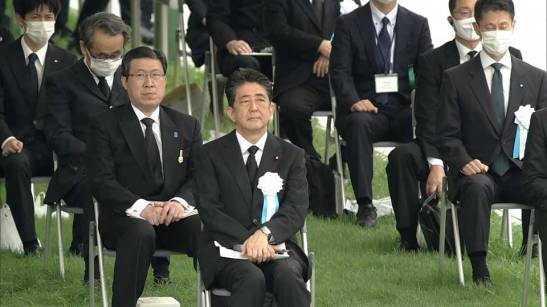 Japanese Prime Minister Abe Shinzo made another pledge this year that the country would commit to achieving a world without nuclear weapons.
“That’s very serious. And I think that’s an insult to the survivors — to the hibakusha,” Fihn says. “We really know the Japanese people want the government to sign the treaty.”
“It’s very often that we look at nuclear armed states as the problem, but we have to recognize that the nuclear-allied states, like Japan for example, are protecting them. They are standing in a circle around them and protecting nuclear weapons. Until those countries stop doing that, it’s going to be very hard to convince the nuclear armed states.”
“How am I going to convince North Korea, the United States and Russia to disarm, if Japan cannot say that nuclear weapons should be illegal?”
Nuclear war ‘like the coronavirus’
Fihn says the coronavirus pandemic is proof that a global emergency could happen anytime. “Health experts have warned about this, and they have been preparing, thinking about it,” she says. “Yet people have been surprised that it happened. It’s the same thing with nuclear weapons. We don’t know when, we don’t know how exactly, but experts say it’s going to happen.”
She warns that nuclear weapons will be far more lethal than the coronavirus. “What we have to do with nuclear weapons — there’s no mitigating it once it happens.” she says. “When we feel the consequences, when the bombs are starting to fall on cities again, then it’s going to be too late to prevent it.”
Nuclear weapons don’t protect us
Fihn says the ongoing pandemic further highlights why governments should be investing in people, not weapons. “This pandemic has shown us where the threats to our security are and how we can’t absorb these things with nuclear weapons,” she says. “Nuclear armed states spend 73 billion dollars on nuclear weapons. Just imagine how many ventilators, doctors, nurses ICU, beds we can have… how many vaccinations we could develop.”
Listen to the hibakusha
She credits atomic bomb survivors for helping spread the message of a nuclear-free world. But she says their time is running out: “Given that it’s probably one of the last milestones where we will still have survivors who are able to speak about it in the first person. I really do think that it’s up to us to use this moment as much as possible to share their stories.”
For the first time, ICAN organized online tours of the Hiroshima and Nagasaki atomic bomb museums this year.
Fihn ended our interview with a message for the hibakusha. “Thank you for doing the incredibly difficult work of sharing your very traumatic experiences so that we can survive, and we can prevent it from happening again,” she says. “ICAN and the millions of people that support us are pledging to take action. We are going to honor the hibakusha, not through words, but through action to eliminate nuclear weapons.”
Sea level rise from melting ice sheets match worst-case climate warming scenarios.
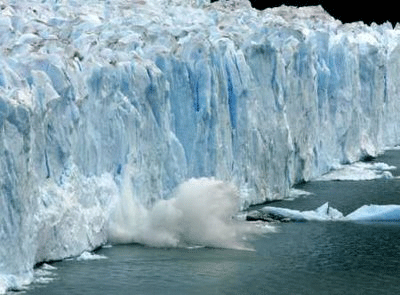
Sea level rise from ice sheets track worst-case climate change scenario, https://www.sciencedaily.com/releases/2020/08/200831112101.htm August 31, 2020
 Source: University of Leeds
- Summary:
- Ice sheets in Greenland and Antarctica whose melting rates are rapidly increasing have raised the global sea level by 1.8cm since the 1990s, and are matching the Intergovernmental Panel on Climate Change’s worst-case climate warming scenarios.
-
Ice sheets in Greenland and Antarctica whose melting rates are rapidly increasing have raised the global sea level by 1.8cm since the 1990s, and are matching the Intergovernmental Panel on Climate Change’s worst-case climate warming scenarios.
According to a new study from the University of Leeds and the Danish Meteorological Institute, if these rates continue, the ice sheets are expected to raise sea levels by a further 17cm and expose an additional 16 million people to annual coastal flooding by the end of the century.
Since the ice sheets were first monitored by satellite in the 1990s, melting from Antarctica has pushed global sea levels up by 7.2mm, while Greenland has contributed 10.6mm. And the latest measurements show that the world’s oceans are now rising by 4mm each year.
“Although we anticipated the ice sheets would lose increasing amounts of ice in response to the warming of the oceans and atmosphere, the rate at which they are melting has accelerated faster than we could have imagined,” said Dr Tom Slater, lead author of the study and climate researcher at the Centre for Polar Observation and Modelling at the University of Leeds.
“The melting is overtaking the climate models we use to guide us, and we are in danger of being unprepared for the risks posed by sea level rise.”
- The results are published today in a study in the journal Nature Climate Change. It compares the latest results from satellite surveys from the Ice Sheet Mass Balance Intercomparison Exercise (IMBIE) with calculations from climate models. The authors warn that the ice sheets are losing ice at a rate predicted by the worst-case climate warming scenarios in the last large IPCC report.Dr Anna Hogg, study co-author and climate researcher in the School of Earth and Environment at Leeds, said: “If ice sheet losses continue to track our worst-case climate warming scenarios we should expect an additional 17cm of sea level rise from the ice sheets alone. That’s enough to double the frequency of storm-surge flooding in many of the world’s largest coastal cities.”
-
So far, global sea levels have increased in the most part through a mechanism called thermal expansion, which means that volume of seawater expands as it gets warmer. But in the last five years, ice melt from the ice sheets and mountain glaciers has overtaken global warming as the main cause of rising sea levels.
Dr Ruth Mottram, study co-author and climate researcher at the Danish Meteorological Institute, said: “It is not only Antarctica and Greenland that are causing the water to rise. In recent years, thousands of smaller glaciers have begun to melt or disappear altogether, as we saw with the glacier Ok in Iceland, which was declared “dead” in 2014. This means that melting of ice has now taken over as the main contributor of sea level rise. ”

Nuclear waste – another great injustice to indigenous people, and people of color
|
Add nuclear waste to list of social injustices, https://calmatters.org/commentary/my-turn/2020/08/add-nuclear-waste-to-list-of-social-injustices/, 31 Aug 20, – By Chelsi Sparti As national attention centers on racial injustices, a report by Rep. Mike Levin of California exposes yet another assault upon Black, Indigenous and people of color: they are especially vulnerable to harm from our handling and storage of radioactive waste. Across the country, as waste from aging nuclear power plants piles up by the ton, investor-owned utilities and their contractors continue to eye Indigenous lands as dumping sites. To reach these sites, the deadly material would travel unannounced on railways through hundreds of socioeconomically-disadvantaged neighborhoods. From the initial extraction of raw uranium to the eventual, millennia-long storage of spent nuclear fuel, the nuclear industry relies upon the exploitation of rural, Indigenous lands, states the June report by Levin, a Democrat from San Juan Capistrano. The “Report of the San Onofre Nuclear Generating Station Task Force” urges Congress to approve a siting process that aligns with recommendations of the Blue Ribbon Commission on America’s Nuclear Future, which calls for tribal leaders and local governments to have a “meaningful consultative role in important decisions” on nuclear waste storage. Those decisions will determine the permanent disposition of nuclear waste from 65 low-quality storage sites in 33 states. Drafted by scientists and policymakers over 18 months, the task force report contains new scientific discoveries and 30 policy recommendations. Action is expected on eight of them this year. Across the nation, Americans of all income levels are surrounded by radioactive material that remains deadly for more than 200,000 years and is impossible to clean up. In California, spent fuel stockpiles have accumulated at the Humboldt Bay, Diablo Canyon, Rancho Seco and San Onofre reactor sites. At San Onofre alone, 3.6 million pounds of radioactive waste is lodged in temporary storage about 100 feet from the rising ocean. Radioactive waste is an issue made worse by decades of inaction. Clearly, the nuclear industry is determined to unload its waste at the doorsteps of working-class, BIPOC communities. Even today, as the federal government deploys forces to U.S. cities to impose its will upon protesters for racial justice, the next generation of nuclear energy – in the form of “advanced reactors” – is poised to move closer to urban centers, according to an NRC memo. Black, Indigenous and people of color communities have a lot to be angry about. Their outrage should include demands to protect people of color from exposure to hazardous waste for the sake of nuclear industry profits.
|
|
|
1 This Month



Read the Public Inquiry Report, the Commissioners’ report, Surrendering Australia: The AUKUS Deception is available to download for free at aukuspublicinquiry.com. Or just watch the replay of the National Press Club Luncheon.

19 November – Webinar – The Reality of Reprocessing
Time: 11:00 AM Pacific Time (US & Canada) / 2:00 PM Eastern / 7:00 PM UK / 8:00 PM CET
Register for the Zoom Event Here


Shut down the radiation-damaged Heysham nuclear reactors now
To see nuclear-related stories in greater depth and intensity – go to https://nuclearinformation.wordpress.com

Say No to NASA’s Reckless Nuclear Reactor on the Moon
Say No to NASA’s Reckless Nuclear Reactor on the Moon
-
Archives
- November 2026 (119)
- October 2026 (302)
- September 2026 (339)
- August 2026 (330)
- July 2026 (355)
- June 2026 (287)
- May 2026 (306)
- April 2026 (356)
- March 2026 (251)
- February 2026 (267)
- January 2026 (308)
- December 2025 (358)
-
Categories
- 1
- 1 NUCLEAR ISSUES
- business and costs
- climate change
- culture and arts
- ENERGY
- environment
- health
- history
- indigenous issues
- Legal
- marketing of nuclear
- media
- opposition to nuclear
- PERSONAL STORIES
- politics
- politics international
- Religion and ethics
- safety
- secrets,lies and civil liberties
- spinbuster
- technology
- Uranium
- wastes
- weapons and war
- Women
- 2 WORLD
- ACTION
- AFRICA
- Atrocities
- AUSTRALIA
- Christina's notes
- Christina's themes
- culture and arts
- Events
- Fuk 2022
- Fuk 2023
- Fukushima 2017
- Fukushima 2018
- fukushima 2019
- Fukushima 2020
- Fukushima 2021
- general
- global warming
- Humour (God we need it)
- Nuclear
- RARE EARTHS
- Reference
- resources – print
- Resources -audiovicual
- Weekly Newsletter
- World
- World Nuclear
- YouTube
-
RSS
Entries RSS
Comments RSS

