Antarctica – global heating and nuclear issues – polar theme for September 20

Antarctica is not in the news as much as the Arctic is, But global heating is affecting Antarctica too, and Antarctica has its nuclear issues.
Antarctica has made headlines several times this year due to extremely warmer than usual temperatures. It has been steadily heating up for decades. Antarctic ice shelves have lost nearly 4 trillion metric tons of ice since the mid-1990s, scientists say. Ocean water is melting them from the bottom up, causing them to lose mass faster than they can refreeze. As ice shelves melt, they become thinner, weaker and more likely to break. When this happens, they can unleash streams of ice from the glaciers behind them, raising global sea levels. Antarctica is also losing ice from melting ice sheets, and chunks of ice falling from glaciers.
Less studied than the Arctic region, Antarctic is now being investigated by Australian researchers, using robots to gather data from difficult to reach underwater areas. Satellite monitoring confirms the shelves’ melting trend.
Nuclear issues. From 6,000 nautical miles away, uranium mining in Australia is polluting the Antarctic. After 1945 atomic bomb testing sent radioactive pollution to the South Pole, as well as to everywhere else on the planet.
USA operated a small nuclear power plant at Antarctica’s McMurdo Sound. It was known as “nukey poo” because of its frequent radioactive leaks. It had 438 malfunctions – nearly 56 a year – in its operational lifetime, including leaking water surrounding the reactor and hairline cracks in the reactor lining. The emissions of low level waste water where in direct contravention of the Antarctic Treaty, which bans military operations as well as radioactive waste in Antarctica. After the reactor was closed down, the US shipped 7700 cubic metres of radioactive contaminated rock and dirt to California. Many USA naval workers there developed cancers.
Today, small nuclear reactors similar to this one, are being touted for remote areas in Australia and other countries. The history of this one in Antarctica, and 7 others elsewhere, was one of malfunctions, and closing down within a few years. This does not augur well for the small nuclear reactors being promoted today.
The threatening presence of highly radioactive material in Russia’s sunken nuclear submarines
 Do Russia’s Sunken Nuclear Submarines Pose Environmental Danger? There’s radioactive fuel hanging at the bottom of the sea. https://www.popularmechanics.com/military/navy-ships/a33902569/russia-sunken-nuclear-submarines/ BY KYLE MIZOKAMI, SEP 4, 2020
- Two ex-Soviet nuclear submarines, K-27 and K-159, lie at the bottom of the Barents Sea.
- The wrecked ships still have their radioactive fuel sources aboard, which experts worry could leak into the environment.
- The Russian government has vowed to clean up the wrecks, but the work is not a priority.
Governments and environmental groups are worried a rupture of nuclear fuel supplies could cause a nuclear catastrophe, impacting local fishing areas. The Russian government is working to solve the problem, which some experts are calling a potential “Chernobyl in slow motion on the seabed.
A legacy of the Cold War threatens Russia’s people and environment, potentially irradiating a large portion of the Barents Sea and closing it to commercial fishing. Two Soviet nuclear-powered submarines are sitting on the bottom of the ocean and could unleash their radioactive fuels into the surrounding waters.
The Soviet Union built four hundred nuclear-powered submarines during the Cold War. The vast majority were either scrapped, or still serve with the Russian Navy today. A few subs, however, are trapped in precarious circumstances, lying on the seabed floor with their uranium fuel supplies still intact. The BBC reports on efforts to render two such ships, K-27 and K-159, safe.
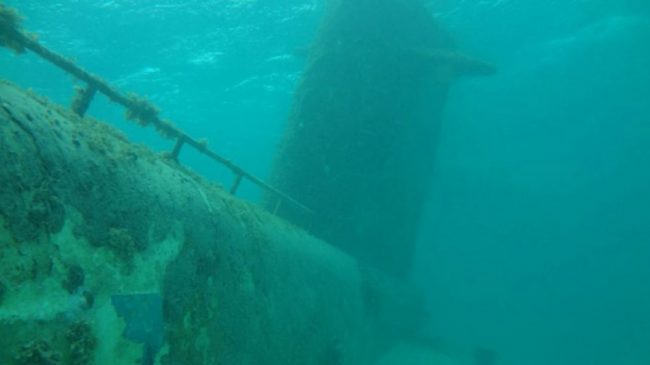 The first ship, K-27, was a Soviet Navy submarine prototype equipped with a new liquid metal reactor. In 1968, the six-year-old sub suffered a reactor accident so serious, nine Soviet sailors received fatal doses of radiation. The submarine was scuttled off the Russian island of Novaya Zemlya in 1982 with its reactor still on board.
The second ship, K-159 (shown above before sinking, on original), was a November-class submarine that served a fairly typical career with the Soviet Northern Fleet before retirement in 1989. In 2003, however, the K-159 sank while in the process of being dismantled, killing nine sailors. The ship still resides where it was lost, again with its reactor on board.
Environmentalists in Norway and Russia are concerned that eventually the reactors on both submarines will break down, releasing huge amounts of radiation.
The effects of these leaks could range from increasing local background radiation to declaring local fish and animals off limits, particularly Barents Sea fishing stocks of cod and haddock, costing local fishermen an estimated $1.5 billion a year.
While Russia’s state nuclear agency, Rosatom, has been tasked with cleaning up the ships, the effort is underfunded, resulting in a race against time (and saltwater corrosion).
The dangerous and deadly toll of uranium mining, on Indian communities

Child with cerebral palsy, in uraniummining region Dungridih village. Jaduguda, photo by Subhrajit Sen.
[Photos] Suffering in the town powering India’s nuclear dreams. Mongabay, BY SUBHRAJIT SEN ON 4 SEPTEMBER 2020
- Uranium is a vital mineral for India’s ambitious nuclear power programme. Out of the seven states with uranium reserves, Jharkhand and Andhra Pradesh have currently operating mines.
- In Jharkhand’s Jaduguda region, which has India’s oldest uranium mines, local communities narrate stories of suffering due to degrading health and the environment. The government, however, denies any ill-impact of uranium mining on people.
- The Indian government is aiming to increase uranium exploration and mining.
- This photo essay features images taken between 2016-2019 of residents of villages around uranium mines in Jharkhand. Some of these photos contain sensitive content.
Anamika Oraom, 16, of village Dungridih, around a kilometre away from Narwa Pahar uranium mine in Jharkhand, wants to study. But she cannot, owing to severe headaches that come up periodically, triggered by a malignant tumour on her face. Sanjay Gope, 18, cannot walk and is confined to his wheelchair. Haradhan Gope, 20, can study, walk, talk, but owing to a physical deformity, his head is much smaller in proportion to his body.
There are many more, young and old, in the village Bango, adjacent to Jaduguda uranium mine in Jharkhand, whose lives and death highlight the ill-effects of uranium mining, say the villagers.
Uranium is a naturally occurring radioactive mineral and is vital to India’s nuclear power programme. At present (till August 31, 2020), India’s installed nuclear power capacity is 6780 megawatts (MW). The country aims to produce 40,000 MW of nuclear power by 2030.
The Uranium Corporation of India Limited (UCIL) is involved in the mining and processing uranium ore in the country. According to the UCIL, mining operations at Jaduguda began in 1967, and it is India’s first uranium mine.
In the 25-kilometre radius of Jaduguda, there are other uranium deposits at Bhatin, Narwa Pahar, Turamdih, Banduhurang, Mohuldih, and Bagjata. While UCIL claims that Jaduguda mine has created a large skill base for uranium mining and the mining industry, local communities point out that their lives and land have changed irreversibly.
The villagers complain that the hills surrounding Jaduguda, dug up to create ‘tailing ponds,’ have proven to be a severe health hazard. A tailing pond is an area where leftover material is stored after the excavated ore is treated to extract uranium. Communities argue that these ponds have led to groundwater and river contamination.
Namita Soren of village Dungridih said, “This radioactive element has become a part of our daily life.”
“Children are born with physical disabilities or people with cancer. But our sorrow doesn’t end there,” said Soren who had three miscarriages before giving birth to a child born with physical deformities.
Ghanshyam Birulee, the co-founder of the Jharkhandi Organisation Against Radiation (JOAR), said that villagers earlier marked certain forest areas as ‘cursed’ – a woman passing through the area was believed be affected by an evil gaze and suffer a miscarriage or people would feel dizzy. These areas coincided with the forest spaces around tailing ponds. In cultural translation, the regions surrounding tailing ponds became infested with ‘evil spirits.’ But as the people became more aware, they connected their misery to the mining operations.
A 2003 study by Tata Institute of Social Sciences emphasised that 18 percent of women in the region suffered miscarriages/stillbirth between 1998 and 2003, 30 percent reported some sort of problem in conception, and most women complained of fatigue and weakness.
When asked the reason for opposing the UCIL’s mining project, Birulee said, “Before mining started, people never used to have diseases like these – children were not handicapped, women were not suffering from miscarriages, people didn’t have tuberculosis or cancer. People had ordinary illnesses, cold and cough, that got cured by traditional medicines. But today, even the doctors are not able to diagnose diseases. It all emerged after uranium mining started.”
India has uranium reserves in Rajasthan, Jharkhand, Chhattisgarh, Meghalaya, Telangana, Andhra Pradesh, and Karnataka. It is currently operating mines in Jharkhand and Andhra Pradesh. The country has a detailed plan to become self-sufficient in uranium production by achieving a nearly ten-fold rise by 2031-32, including expansion from existing mines and opening new mines. However, to augment supply until then, it has signed a long-term contract with Uzbekistan (in 2019) to supply 1,100 metric tons of natural uranium ore concentrates during 2022 -2026. Similar agreements have been signed with overseas suppliers from various other countries like Canada, Kazakhstan, and France to supply uranium ore.
No help from the government or politicians
Birulee feels that the political class is aware of the problem but that has not translated into safeguarding villagers’ lives. “Whoever is elected from here – legislator or parliamentarian – has never raised our issue about radiation either in the state legislature or parliament. If they raise our issue, I am sure the government will take some action to resolve people’s issues,” said Birulee.
In March 2020, Bharatiya Janata Party leader Rajiv Pratap Rudy asked Prime Minister Narendra Modi in Lok Sabha about public health hazards due to India’s uranium mines.
Rudy asked whether the central government has reports of hazardous activities like radioactive slurry being stored in the open, causing health hazards to people residing in adjacent areas of uranium mines in the country, and, if so, the action taken on it.
While replying to the question, Minister of State for Personnel, Public Grievances and Pensions and Prime Minister’s Office, Jitendra Singh, refuted any such impact. ………..
Birulee reflects on the opposing conditions that he has witnessed. For him, it is impossible to leave behind his land, livelihood, and traditions. But for people close to the mines and tailing ponds, “the only solution is that from this region – from this radiation zone – people should be rehabilitated to a safer place. Else they’ll be surrounded by the same problems.”
Local livelihood options impacted
The people note that displacement and then deforestation for uranium mining robbed them of their land and livelihood, and later cursed them with health impacts.
Though the company and those in power deny any ill-impact on local ecology and livelihood, locals alleged that small-scale production of bidis is also hampered due to the low quality of tendu leaves. They suspect that the trees have been exposed to contaminated groundwater.
Villagers said that with expansion of mining large tracts of sal, sarjom, and teak trees are being wiped out. The trees are essential for the communities’ sacred rituals and traditional activities.
Ashish Birulee, photojournalist and member of JOAR, said that the route for transporting uranium ore is the same used by the public. He says the resulting pollution from the dust has a long-term impact on health and ecology.
Ashish adds that the mining company cannot ignore the most significant factor – the experience of people living in this area. “The experience of people is nothing less than any study or research. It can’t be denied. UCIL is not ready to admit that there are problems. It is because if it admits it would have to compensate people. Peoples’ experience shows that before 1967 there were no such issues, but it started after mining took off. If you look at the population of Jaduguda, there are a lot of people with disabilities. But if you go about 15 kilometres away, there are no such problems.”
“As far as a solution is concerned, once you start mining at any place, there is no solution. The company will mine here till the uranium ore exists. It has a lease for 45-50 years and after mining is over here, it will move to a new mine and extract resources. But the mining waste will be left here,” said Ashish. …… https://india.mongabay.com/2020/09/photos-suffering-in-the-town-powering-indias-nuclear-dreams/
Global heating – low water rate affecting France’s Saint-Alban nuclear plant
  Low water flow may halve output at France’s Saint-Alban nuclear plant https://www.reuters.com/article/france-nuclear/low-water-flow-may-halve-output-at-frances-saint-alban-nuclear-plant-idUSL8N2G04V7 PARIS, Sept 3 (Reuters) – A low flow rate on the Rhone River will likely restrict output from Saturday to Monday at EDF’s Saint-Alban nuclear plant in southeastern France, French grid operator RTE said on Thursday.The two Saint-Alban reactors produce 1.3 gigawatts (GW) of power each and RTE said the reduction in output could be equivalent to the production of one unit. The Saint-Alban 2 reactor is currently scheduled to go offline for routine maintenance on Sept. 19. EDF’s use of water is regulated by law to protect plant and animal life. The company is obliged to reduce output during hot weather when water temperatures rise, or when river levels and the flow rate are low. August was the third hottest in France on records going back to 1900, with the summer months between June and August entering the top 10 hottest summers on record, Meteo France data showed. Low flow rates were already an issue at the Saint-Alban plant last month, as RTE warned on Aug. 20 that the equivalent of one reactor could be taken offline for that reason. French nuclear availability is currently at 52.4% of total capacity, with 29.7 GW offline. (Reporting by Forrest Crellin; Editing by Susan Fenton) |
|
Radiation from Chernobyl spreads far away, as global heating exacerbates widfires
 Climate change is spreading radiation from Chernobyl over 2,000 miles away, Boing Boing, 3 Sep 20, One of the more difficult parts of trying to convince people about the seriousness of climate change is explaining how so many disparate elements and factors can collude and compound* and make everything worse. And it’s even harder to predict how long those complications will take to manifest, whenever they do what they do…….
. As The Atlantic reports:
Monitors in Norway, 2,000 miles away, detected increased levels of cesium in the atmosphere. Kyiv was smothered in smoke [from forest fires]. Press reports estimated that the level of radiation near the fires was 16 times higher than normal, but we may never know how much was actually released: Yoschenko, Zibtsev, and others impatient to take on-the-ground measurements were confined to their homes by the coronavirus pandemic. August is typically the worst month of the Chernobyl fire season, and this year, public anxiety is mounting. The devastation left by the world’s worst nuclear disaster is colliding with the disaster of climate change, and the consequences reach far and deep.
The unexpected result is an immense, long-term ecological laboratory. Within the exclusion zone, scientists are analyzing everything, including the health of the wolves and moose that have wandered back and the effects of radiation on barn swallows, voles, and the microorganisms that decompose forest litter. Now, as wildfires worsen, scientists are trying to determine how these hard-hit ecosystems will respond to yet another unparalleled disruption. ……
when something nuclear does go wrong — which is still likely, because nothing’s perfect — more nuclear power production will result in more radiation damage. And, if this situation with Chernobyl’s forest fires is any indication, then the ultimate fallout of that combined with our existing climate change problems could be even more insurmountably devastating……. https://boingboing.net/2020/09/04/climate-change-is-spreading-ra.html
U.S. Court fins that mass surveillance program exposed by Snowden was illegal
 U.S. court: Mass surveillance program exposed by Snowden was illegal, Raphael Satter, (Reuters) 4 Sept 20, – Seven years after former National Security Agency contractor Edward Snowden blew the whistle on the mass surveillance of Americans’ telephone records, an appeals court has found the program was unlawful – and that the U.S. intelligence leaders who publicly defended it were not telling the truth.In a ruling handed down on Wednesday, the U.S. Court of Appeals for the Ninth Circuit said the warrantless telephone dragnet that secretly collected millions of Americans’ telephone records violated the Foreign Intelligence Surveillance Act and may well have been unconstitutional.
Snowden, who fled to Russia in the aftermath of the 2013 disclosures and still faces U.S. espionage charges, said on Twitter that the ruling was a vindication of his decision to go public with evidence of the National Security Agency’s domestic eavesdropping operation. …….
“Today’s ruling is a victory for our privacy rights,” the ACLU said in a statement, saying it “makes plain that the NSA’s bulk collection of Americans’ phone records violated the Constitution.”
Reporting by Raphael Satter; Editing by Tom Brown https://www.reuters.com/article/us-usa-nsa-spying-idUSKBN25T3CK?fbclid=IwAR3sRR-njWN8HPgtFcejytlwQP7TV5Ca0HqxOYy-PhSL-AnnEE5fL3krU5w
Despite the undoubted danger of USA’s gigantic new plutoniu pit production, USA safety officials won’t bother with a new environment study
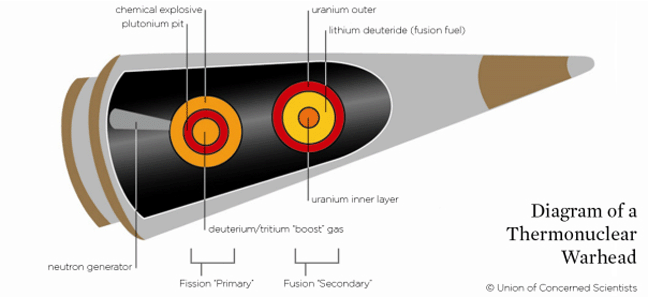
 Officials Dismiss New Environmental Study for Nuclear Lab https://www.mbtmag.com/home/news/21173922/officials-dismiss-new-environmental-study-for-nuclear-lab
Watchdog groups say the plutonium pit production work will amount to a vast expansion of the lab’s mission. Manufacturing Business Technology , Sep 3rd, 2020 ALBUQUERQUE, N.M. (AP) — The National Nuclear Security Administration says it doesn’t need to do an additional environmental review for Los Alamos National Laboratory before it begins producing key components for the nation’s nuclear arsenal because it has enough information.
Watchdog groups are concerned about Tuesday’s announcement, saying the plutonium pit production work will amount to a vast expansion of the lab’s nuclear mission and that more analysis should be done.
Los Alamos is preparing to resume and ramp up production of the plutonium cores used to trigger nuclear weapons. It’s facing a 2026 deadline to begin producing at least 30 cores a year — a mission that has support from the most senior Democratic members of New Mexico’s congressional delegation. The work is expected to bring jobs and billions of federal dollars to update buildings or construct new factories.
The work will be shared by the Savannah River Site in South Carolina, which has been tasked with producing at least 50 plutonium cores a year.
The National Nuclear Security Administration on Tuesday released its final supplemental analysis of a site-wide environmental impact statement done for the lab more than a decade ago. The agency concluded that no further analysis is required.
Critics have pushed for a new environmental impact statement, saying the previous 2008 analysis didn’t consider a number of effects related to increased production, such as the pressure it puts on infrastructure, roads and the housing market.
“The notion that comprehensive environmental analysis is not needed for this gigantic program is a staggering insult to New Mexicans and an affront to any notion of environmental law and science,” Greg Mello of the Los Alamos Study Group said in a statement.
Lab officials last year detailed plans for $13 billion worth of construction projects over the next decade at the northern New Mexico complex as it prepares for plutonium pit production. About $3 billion of that would be spent on improvements to existing plutonium facilities for the pit work, the Albuquerque Journal reported. AT TOP Lab officials last year detailed plans for $13 billion worth of construction projects over the next decade at the northern New Mexico complex as it prepares for plutonium pit production. About $3 billion of that would be spent on improvements to existing plutonium facilities for the pit work, the Albuquerque Journal reported.
Exelon again bullying Illinois into subsidies for nuclear power stations
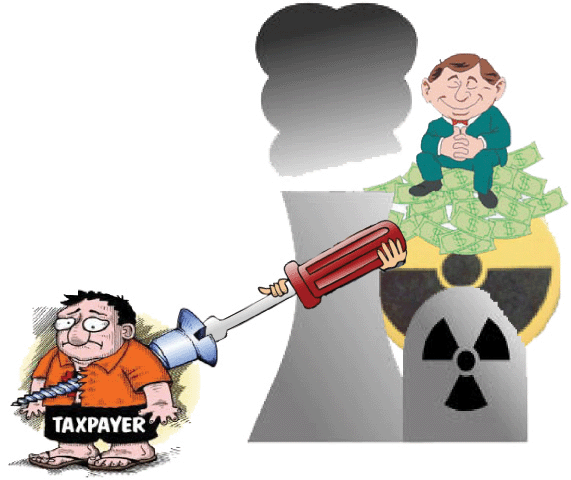 Inside Clean Energy: Illinois Faces (Another) Nuclear Power Standoff. Exelon wants a subsidy to keep two nuclear plants running, reigniting a longstanding—and acrimonious—debate. Inside Climae News, BY DAN GEARINO 4 Sept 20,
If this sounds familiar, it’s because something very similar happened in Illinois about five years ago, leading to a 2016 state law that subsidized two other Exelon nuclear plants in the state—a law now tainted by a still-unfolding bribery scandal.
Despite all the reasons to tell Exelon to take a hike, some consumer and environmental advocates say there is a strong case for keeping the plants open because they are an important source of carbon-free electricity. This ties into the larger, often acrimonious debate about the role of nuclear power in the transition away from fossil fuels.
Exelon owns all six nuclear plants in Illinois. This includes the two that would close in 2021, two (the Braidwood and LaSalle plants) that the company says are at risk of closing for financial reasons but are not yet scheduled to close and two (the Quad Cities and Clinton plants) that are subsidized by the 2016 law.
The six plants produced 54 percent of the electricity generated in the state last year. Coal is a distant second with 27 percent, followed by natural gas with 10 percent.
Renewable energy is growing, thanks in part to programs that also were part of the 2016 nuclear bailout legislation. But wind and solar are still small shares of the energy mix, with 8 percent and less than 1 percent, respectively.
Renewable energy is growing, thanks in part to programs that also were part of the 2016 nuclear bailout legislation. But wind and solar are still small shares of the energy mix, with 8 percent and less than 1 percent, respectively. ……….
Exelon has a lot of baggage these days. Federal prosecutors said in July that Commonwealth Edison, which is owned by Exelon, provided illegal payments and favors to help persuade lawmakers to pass the 2016 nuclear bailout.
ComEd agreed to pay $200 million to resolve the case, and is now cooperating in an ongoing probe that is likely to be focused on the lawmakers who allegedly accepted the favors, including Illinois House Speaker Mike Madigan, a Democrat.
Adding to the complexity of this debate is that environmental advocates are divided on whether nuclear should be part of a clean energy future. The case against nuclear is that it’s unsafe, with risks of devastating accidents and concerns about where to store nuclear waste.
David Kraft, director of the Nuclear Energy Information Service in Chicago, describes this latest push by Exelon as “yet another nuclear hostage crisis.” His group has been campaigning since 1981 for the country to phase out nuclear power.
“A better future for our children would be one that’s both carbon-free and radioactive waste free!” Kraft said in a guest commentary published Monday in The Chicago Tribune.
“To create a truly low-carbon and less-polluting energy future, put those funds gambled on nuclear directly into renewables, efficiency and energy storage upfront instead, eliminating nuclear power’s unpredictable risks and perpetual bailouts,” he said. ………….https://insideclimatenews.org/news/02092020/inside-clean-energy-nuclear-illinois-ohio
How to educate American children about nuclear weapons?
|
What’s missing from American schools’ curricula? Nuclear weapons. Bulletin of the Atomic Scientists, By Sara Z. Kutchesfahani, September 3, 2020 This week, students across the United States are heading back to school. While many high schools and universities are still deciding whether classes this semester will happen online, in-person, or in some hybrid combination, one thing is certain: Nuclear weapons are not a standard part of their class curricula.
The answer is fairly simple. Nuclear weapons issues are not a standard part of secondary school education, nor are they widely covered in undergraduate and graduate programs. A 2018 survey of 1,100 high school students in Washington State found that less than 1 percent even knew which countries possessed nuclear weapons. The finding was all the more startling because the students live in a nuclear-armed country themselves, and in an area with a nuclear legacy dating back to the Manhattan Project. While the situation is not as bad at the university level, the number of undergraduate courses that cover nuclear weapons issues is still low. A 2019 study on undergraduate nonproliferation education found that, among 75 of the top-ranked public, private, and military institutions in the country, on average, each institution offered seven such courses over a two-year academic period, or less than two courses per semester. A good way to contextualize that is to compare it to course offerings on climate change—the other most pressing threat to humanity’s survival. The same study found that on that topic, the nation’s three leading public, private, and liberal arts institutions each offered between 19 and 30 courses during just a single academic year (2017–2018). Why does this matter? It matters because the nuclear weapons threat isn’t going away—if anything, it is growing—but the number of people working in the field is shrinking. …. The field is going to need many more bright minds to solve current and future nuclear challenges. Attracting those bright minds starts with building awareness of the issue. And awareness of any issue can be linked to issue exposure. So, if school boards, curriculum writers, and teachers and professors continue to ignore the topic of nuclear weapons and do not include it in class curricula, the public will continue to be unaware of the existential threat these devastating weapons pose to humanity, and the professional field will have difficulty sustaining itself. Nuclear weapons policy is confusing, highly technical, intimidating, shrouded in secrecy, and largely dominated by an awfully small group of men. So those who want to begin exploring the subject may find it exclusive, inaccessible, and hierarchical. But the simple and easy-to-understand fact remains that nuclear war remains a significant global threat……… Here are three relatively easy and practical solutions that teachers and professors can implement this school year—without having to go through too many bureaucratic hurdles. First, check out a new platform that offers a diverse volunteer network of professionals ready to speak with students and teachers about topics, lessons, classes, college, internships, and career advice on nuclear issues. The platform is called NRICHED, and its creators want to empower students with agency to tackle the world’s biggest problems through experiential learning……. Second, consider offering a nuclear security undergraduate class at your institution, and press administrators to recognize its importance. For those whose administrators are hesitant, the Stanton Foundation provides grant support for the development of new nuclear-related courses for undergraduates each academic year…….. Third, enlist the outstanding work of Girl Security, an organization that provides specialized programming for (female) high school students on national security subjects, including nuclear weapons. The Girl Security team helps empower young women with practical training through simulation exercises developed by women national security practitioners. Moreover, they provide girls with placement in a phased mentorship network, pairing them with women national security professionals who are one step ahead of them in their academic and professional advancement……….. https://thebulletin.org/2020/09/whats-missing-from-american-schools-curricula-nuclear-weapons/ |
|
Ohio lawmakers wrangle over how to repeal crooked nuclear bailout law
 Meanwhile, Ohio Has Its Own Nuclear Debate, Inside Clean Energy: BY DAN GEARINO – 4 Sept 20, Ohio lawmakers talked this week about whether—and how—to repeal a 2019 nuclear bailout law whose main backers are now the subject of a federal bribery probe.

On a superficial level, the discussions in Ohio and Illinois have a lot in common with talk about the role of nuclear power in the energy system, and lots of intrigue from federal prosecutors. For more details, see my story from July.
But the tone in Ohio is different, largely because the state government is controlled by Republicans who place little value on making a smooth transition to clean energy.
“I’ve never known this state or this General Assembly to be overly concerned with the environment,” said Thomas Suddes, who teaches at Ohio University and writes about state politics for The Plain Dealer in Cleveland.
He said both parties tend to value retaining jobs for constituents and helping party allies, and that this usually takes precedence over ideology.
Closing the nuclear plants would cost thousands of jobs, and a bill repealing the subsidies could be used in arguments ahead of the November election to portray lawmakers as insensitive to local concerns in the areas that host the plants.
So, even with the bribery scandal, there is a natural reluctance to repeal the bill, which makes Suddes doubtful that any substantial action will happen in the next few months.
“The cautious thing to do for a lot of incumbents would be to leave it alone,” he said.
Gov. Mike DeWine and some legislators have said they want to repeal and replace the 2019 law. But the governor and many others say they still support many of the law’s provisions, including subsidies for the state’s two nuclear power plants, owned by Energy Harbor, the company formerly known as FirstEnergy Solutions.
For now, there is nothing approaching consensus on what a replacement should look like.
House Speaker Robert Cupp has said he favored repealing and replacing the law, although he has given no specifics about a replacement. He said this week that he will appoint a special committee to study the issue, which is likely to mean there will not be quick action on a repeal…………
Randi Leppla, the lead energy attorney for the Ohio Environmental Council Action Fund, said the situation with the repeal effort seems to change “hour by hour.”
“It’s very, very clear that what we need to be doing is ripping this off the books and starting over from scratch,” she said. “This bill is corrupt from the bottom up, and it’s really just bad policy for Ohio.”
In addition to the nuclear bailout, the Ohio law subsidizes two coal-fired power plants and eliminates state requirements that utilities meet annual benchmarks for renewable energy and energy conservation.
The combination of policies harmful to the environment have made the Ohio law an example of a nuclear bailout that has little public benefit, according to the Union of Concerned Scientists and many others.
At least for now, Ohio leaders are doing little to erase this dubious distinction. https://insideclimatenews.org/news/02092020/inside-clean-energy-nuclear-illinois-ohio
Students unaware of nuclear weapons and the existential threat that they pose
Students Aren’t Learning About Nuclear Weapons. That’s a Major Problem. AT TOP https://www.popularmechanics.com/military/weapons/a33917558/nuclear-weapons-education-in-schools/ Popular Mechanics, BY CAROLINE DELBERT, SEP 4, 2020
- Not enough young people have access to even the option of studying nuclear weapons dynamics, an industry report says.
- Nuclear weapons development continues around the world.
- The current nuclear risk workforce is aging out, with few interested in replacing them.
- At the Bulletin of the Atomic Scientists, innovation advocate Sara Z. Kutchesfahani says the vast majority of U.S. students don’t learn about nuclear weapons in high school, or even in most relevant college coursework. Kutchesfahani says that low level of knowledge, combined with industry factors, means the nuclear workforce itself is about to hit a critical state.
- Kutchesfahani is writing on behalf of an industry thinktank, N Square, a “funders collaborative” that advocates for nuclear threat reduction. She says the lack of flow of new, younger workers into the nuclear sector will create a dangerously unbalanced workforce demographic in an industry that will still need a lot of support for the foreseeable future. Even if nuclear weapons are never used, they must be maintained carefully. If they’re “disarmed” in the future, trained people must handle and dispose of or recycle them.
- In the essay, Kutchesfahani likens nuclear weapons awareness and literacy to the idea of climate change awareness and curricula, because, she says, both are existential threats:
“[I]f school boards, curriculum writers, and teachers and professors continue to ignore the topic of nuclear weapons and do not include it in class curricula, the public will continue to be unaware of the existential threat these devastating weapons pose to humanity, and the professional field will have difficulty sustaining itself.”
Much of nuclear investment in 2020 is in energy—for better or worse, world powers are treating next-generation nuclear power like the next big thing and even using that as a way to underfund investment in wind, solar, hydro, and other sustainable forms of energy.But there has also been a new kind of nuclear warhead developed and now tested in 2020, a low-yield warhead launched from a submarine that, again, is publicly billed as a “deterrent” to other nations’ nuclear aggressions, particularly Russia.
This content is imported from {embed-name}. You may be able to find the same content in another format, or you may be able to find more information, at their web site. - The fact remains that as long as there are nuclear weapons in play on the world stage, the world must realistically discuss them. That’s separate from politics, or even whether advocates are for or against nuclear weapons at all. If someone walked into your home while juggling flaming batons, you’d suddenly wish you had a flaming batons expert to help you decide what to do next.
Two excellent new books on a nuclear-weapons -free world


|
Nuclear anniversary serves as impetus for two excellent books,, Catholic Philly, By Eugene J. Fisher • Catholic News Service • Posted September 4, 2020 The Risk of the Cross: Living Gospel Nonviolence in the Nuclear Age” by Arthur Laffin. Twenty-Third Publications (New London, Connecticut, 2020). 130 pp., $16.95.“A World Free from Nuclear Weapons: The Vatican Conference on Disarmament,” edited by Drew Christiansen, SJ, and Carole Sargent. Georgetown University Press (Washington, 2020). 158 pp., $24.95.
These two books strive, based upon Catholic social teaching, to reach the same noble goals: global and local peace and the destruction of all nuclear weapons. Both note that the huge sums of money devoted to developing and maintaining nuclear weapons deprive our societies of funds that could be used to help those in need. The efforts of scientists in building nuclear weapons could be used to develop a better understanding of how to deal with threats to our health and safety, in local communities and worldwide. The timing of the release of these excellent volumes, some 70 years after Hiroshima and Nagasaki, is of course not accidental. The two books speak to each other and to all of us as Catholics, since a nuclear war would likely destroy our planet. “The Risk of the Cross” updates a book written some 40 years ago, when people like Dorothy Day and the Berrigans, and myself with them, were marching for peace and the Rev. Martin Luther King Jr. and John Lewis for civil rights for African-Americans. All these people lived the “Gospel nonviolence” called for, then and now, in this book…….. https://catholicphilly.com/2020/09/culture/nuclear-anniversary-serves-as-impetus-for-two-excellent-books/ |
|
|
Top official at USA nuclear safety agency resigns
|
Top official at nuclear safety agency resigns, Santa Fe New Mexican By Scott Wyland swyland@sfnewmexican.co, Sep 3, 2020
The chairman of the agency that oversees workplace safety at nuclear facilities has resigned, a move that officials say shouldn’t affect oversight of Los Alamos National Laboratory. Bruce Hamilton, who has chaired the Defense Nuclear Facilities Safety Board for two years, will leave Sept. 12. Hamilton gave no reason for his decision when he submitted his resignation……. The agency has come under fire during the Trump administration, which has sought to limit its oversight. In 2018, the U.S. Energy Department issued an order limiting the board’s access to sensitive information it needed for safety inspections. It also required Energy Department employees to “speak with one voice” to the board, discouraging individual workers from reporting safety violations. Critics say the constraints run counter to the board’s statutory mission of working independently to assess accidents, missteps or unsafe conditions at nuclear weapons facilities to protect workers and the public. In March, Hamilton wrote a letter to Congress describing how reduced access to information has hampered the board. “During 2019, the Board experienced challenges and delays in accessing information necessary to perform its responsibilities,” he wrote. He thanked Congress for stating in the proposed 2021 defense budget that the board’s full authority should be recognized……… https://www.santafenewmexican.com/news/local_news/top-official-at-nuclear-safety-agency-resigns/article_2e9d333c-ed31-11ea-ba57-1fb63def0647.html |
|
Bill Gates and nuclear bigwigs-a conglomerate of propaganda for Small Nuclear Reactors

|
GE Hitachi, TerraPower Team on Nuclear-Storage Hybrid SMR, Power, Sep 3, 2020, by Sonal Patel GE Hitachi Nuclear Energy (GEH) and Bill Gates’ nuclear innovation startup TerraPower are ready to demonstrate a “cost-competitive” advanced nuclear reactor system that will integrate a 345-MWe sodium fast reactor (SFR) with a molten salt energy storage system under a unique energy system architecture. The advanced nuclear technology developed under a joint development agreement is called “Natrium.” It blends the “best of” TerraPower’s Traveling Wave Reactor (TWR) and GEH’s PRISM technology, but it boosts them with “additional innovations and improvements” to ramp up the SFR’s performance and economics and render it competitive in the U.S. and other countries, the companies told POWER on Sept. 2. Because Natrium leverages “the breadth and depth of the team’s expertise and resources”—which takes into account work on multiple reactor designs and efforts across the nuclear lifecycle—the technology has sped “beyond the research and development phase” and is ready for demonstration. “The demonstration plant is designed to be delivered in the next seven years,” TerraPower told POWER on Wednesday. “That means the Natrium technology will be available in the late 2020s,” which would make it one of the world’s first commercial advanced nuclear technologies, it said. …. https://www.powermag.com/ge-hitachi-terrapower-team-on-nuclear-storage-hybrid-smr/ |
|
The hazards of nuclear reactors in the Gulf region, and Saudi Arabia’s ambiguous energy program
 Why US wants Saudis to follow UAE’s path to nuclear energy, Christian Science Monitor , 4 Sept 20, ” …… the Saudi energy program is shrouded in ambiguity, even confusion. Saudi rulers have shuffled the program between various government and royal agencies as it has stumbled to get off the ground, with few technical advancements.Concerned observers and veteran diplomats point to statements made by the crown prince during his visit to the U.S. in March 2018 that left no room for similar ambiguity over Saudi intentions should Iran pursue a nuclear weapon. “Without a doubt, if Iran ever developed a nuclear bomb, we would follow suit as soon as possible,” Crown Prince Mohammed told CBS in an interview. “Given Mohammed bin Salman’s statements and [Saudi Arabia’s] refusal to sign protocols on uranium enrichment, we cannot rule out the program being used for military reasons,” says Antonino Occhiuto, analyst at the U.S.-based Gulf States Analytics……… Regional hazardsThe mere presence of nuclear reactors in a Gulf region wracked with tensions, divisions, and asymmetrical warfare could be a security threat. The UAE will be shipping enriched uranium fuel and radioactive waste through the waters of the Persian Gulf and the Strait of Hormuz, narrow shipping lanes between Gulf states and Iran that have recently witnessed acts of sabotage and are a flashpoint of U.S.-Iran tensions. And just last year, a series of crude drones struck at the heart of Saudi Arabia’s ARAMCO oil processing facilities, causing immense damage and bringing Saudi oil production offline. Missiles from neighboring Yemen fall onto Saudi territory on a regular basis, even striking the capital, Riyadh. Iran-backed proxies across Yemen and even Iraq have entrenched ballistic missiles pointed at Gulf cities and sites as a defensive line should Tehran feel threatened……. https://www.csmonitor.com/World/Middle-East/2020/0903/Why-US-wants-Saudis-to-follow-UAE-s-path-to-nuclear-energy?cmpid=shared-email&cmpid=shared-twitter |
|
1 This Month



Read the Public Inquiry Report, the Commissioners’ report, Surrendering Australia: The AUKUS Deception is available to download for free at aukuspublicinquiry.com. Or just watch the replay of the National Press Club Luncheon.

19 November – Webinar – The Reality of Reprocessing
Time: 11:00 AM Pacific Time (US & Canada) / 2:00 PM Eastern / 7:00 PM UK / 8:00 PM CET
Register for the Zoom Event Here


Shut down the radiation-damaged Heysham nuclear reactors now
To see nuclear-related stories in greater depth and intensity – go to https://nuclearinformation.wordpress.com

Say No to NASA’s Reckless Nuclear Reactor on the Moon
Say No to NASA’s Reckless Nuclear Reactor on the Moon
-
Archives
- November 2026 (119)
- October 2026 (302)
- September 2026 (339)
- August 2026 (330)
- July 2026 (355)
- June 2026 (287)
- May 2026 (306)
- April 2026 (356)
- March 2026 (251)
- February 2026 (267)
- January 2026 (308)
- December 2025 (358)
-
Categories
- 1
- 1 NUCLEAR ISSUES
- business and costs
- climate change
- culture and arts
- ENERGY
- environment
- health
- history
- indigenous issues
- Legal
- marketing of nuclear
- media
- opposition to nuclear
- PERSONAL STORIES
- politics
- politics international
- Religion and ethics
- safety
- secrets,lies and civil liberties
- spinbuster
- technology
- Uranium
- wastes
- weapons and war
- Women
- 2 WORLD
- ACTION
- AFRICA
- Atrocities
- AUSTRALIA
- Christina's notes
- Christina's themes
- culture and arts
- Events
- Fuk 2022
- Fuk 2023
- Fukushima 2017
- Fukushima 2018
- fukushima 2019
- Fukushima 2020
- Fukushima 2021
- general
- global warming
- Humour (God we need it)
- Nuclear
- RARE EARTHS
- Reference
- resources – print
- Resources -audiovicual
- Weekly Newsletter
- World
- World Nuclear
- YouTube
-
RSS
Entries RSS
Comments RSS

