France’s weekly nuclear power generation drops
|
French nuclear weekly generation falls below 30 GW to 9-week-low, AuthorAndreas Franke , EditorJonathan Dart
HIGHLIGHTS 28.4 GW average some 10 GW below Sept. 2019 Low river levels at Chooz, unplanned outages, delays France turned net importer for week ending Sept. 6 London — French nuclear generation averaged 28.4 GW in the seven days to Sept. 6, the lowest weekly average in nine weeks, according to data from system operator RTE. Nuclear output rose to 29.2 GW on Sept. 7, but that was 12 GW lower than a year earlier as the 3-GW Chooz plant remained offline due to low river levels, with a number of reactor returns delayed……… |
|
IAEA Providing Support for Saudi Arabia as It Plans to Adopt Nuclear Energy
|
IAEA Providing Support for Saudi Arabia as It Plans to Adopt Nuclear Energy: Saudi TV, By Reuters, Sept. 7, 2020, https://www.nytimes.com/reuters/2020/09/07/world/middleeast/07reuters-saudi-arabia-nuclearpower-iaea.html?auth=login-facebookDUBAI — The International Atomic Energy Agency (IAEA) director general Rafael Grossi was quoted on Monday as saying that Saudi Arabia was preparing to adopt nuclear energy and the agency was providing support, Saudi state TV Al-Ekhbariya reported. “Saudi Arabia is interested in nuclear energy and we are working on providing it with the necessary support,” Al-Ekhbariya quoted Grossi as saying. The kingdom has said it wants to tap nuclear technology for peaceful purposes and use nuclear power to diversify its energy mix. (Reporting by Dahlia Nehme; Editing by Rania El Gamal and Susan Fenton) |
|
Arctic melting permafrost a serious problem (and they want to put Small Modular Nuclear Reactors there!)

 Destabilising of infrastructure in Arctic regions , as permafrost melts, is a compelling reason why it is madness to plan for Small Modular Nuclear Reactors in Northern Canada
Whatever Happened To … The Melting Permafrost? 0893 KPCCC, Nadia Whitehead | NPR | September 6, 2020  “…………… It’s not just warmer temperatures that pose a problem for the permafrost. Scientists are now investigating whether rainfall could be causing serious issues in the Arctic’s permafrost – with repercussions for humans.
Since 2013, Fairbanks, Alaska, has had two of the wettest years in recorded history. A total ofo 14.6 inches of rain fell in the summer of 2014; it was the wettest summer yet. And that’s not a good thing for permafrost, says Thomas Douglas, a geochemist in the U.S. Army Corp of Engineers.
Permafrost — completely frozen ground composed of materials like soil, rocks and even bones and plants — makes up a nearly a quarter of the Northern Hemisphere. Much of it has been frozen for thousands of years.
Warming temperatures have begun to thaw permafrost, and now, increased rainfall seems to be intensifying the problem, according to Douglas’ latest study in Climate and Atmospheric Science, published in July.
“In general, across the arctic, the thought is that things are getting wetter,” Douglas says, but particularly in Fairbanks. “2014 and 2016 were the #1 and #3 summer precipitation years in what was then a 90-year record. Shattering records like this is just really unique.”……….
The thaw was worse in some locations more than others, depending on the terrain where measurements were taken. Forests and mossy landscapes seemed to protect the permafrost. There, for every additional inch of rain, the permafrost thawed by an additional quarter of an inch.
But in locations where human activity – such as trails and clearings — had altered the land, the thaw was worse. For every additional inch of rain, the researchers saw an additional inch of thaw. At one particular site, permafrost thaw depth grew from 47 inches in 2013 to nearly 75 inches in 2017.
Douglas explains, “When you remove vegetation, that’s like leaving the lid open on your cooler on a summer day. It allows heat and water to get down in the permafrost pretty rapidly.”
Out of all the team’s research, Douglas says their most important finding was that thinner layers of thawed permafrost seem to be vanishing — literally thawing away……….
Dmitry Streletskiy, a professor at George Washington University who specializes in permafrost, says that Douglas’s study is a great contribution to permafrost research. However, he emphasizes that the study was conducted in a boreal ecosystem, a sub-arctic region with warmer temperatures and relatively warm permafrost. ……..
Streletskiy agrees that permafrost is degrading on a global scale due to climate change. Its impacts are starting to show — and zombie pathogens shouldn’t be our only concern.
He and Douglas both point to the Norilsk oil spill in Russia, where an oil tank spewed more than 150,000 barrels of diesel into the arctic, and officials have been racing to clean it up. Many experts believe thawing permafrost is to blame; the oil tank, which sat on permafrost, collapsed in May.
What’s more, permafrost thaw can lead to deterioration in infrastructure, such as pipelines, railroads and homes, Streletskiy explains. “Small changes in temperature can affect how much weight a foundation built on permafrost can support. Say for example at -10 degrees, the foundation can support 100 tons, but at -8 degrees, it can only support 50 tons.”
For people who don’t live near the oil spill or in arctic regions, it’s easy to forget about permafrost. “Out of sight, out of mind,” Douglas says. But the thaw could one day affect everyone.
An estimated 1,400 to 1,600 billion metric tons of carbon are currently frozen in the permafrost. “There are a lot of questions about what’s going to happen when that [carbon]starts to thaw,” Douglas says……….. https://www.scpr.org/news/2020/09/06/94337/whatever-happened-to-the-melting-permafrost/
Central Asia’s toxic nuclear legacy
 According to Kyrgyz official data, the gamma radiation on tailings pit surfaces are within 17-60 mR/hr; however, in the damaged areas, radiation levels reach 400-500 mR/hr. An exposure to 100 mSv a year (a millisievert, mSv, is equal to 100 milliroentgens, mR) or 10,000 mR is the point where an increase in cancer is clearly evident. At 400-500 mR/hr this would be achieved in 20-25 hours, or just one day. Radionuclides and heavy metals from these tailing pits and dumps are seeping into the surface and groundwater, polluting water and farmland and increasing the risk of cancer for local people.
Birth anomalies are an additional indicator of environmental radioactive contamination. A study by the Institute of Medical Problems showed that the incidence of birth defects in Mailuu-Suu was three times higher than in the country’s second largest city of Osh. Studies have correlated birth defects to the distance of the parents’ residences from radioactive waste sites. Polluted water is the major factor causing the development of congenital malformations, according to research by the Institute of Medical Problems.
Mailuu-Suu: Cleaning up Central Asia’s toxic uranium legacy https://www.thethirdpole.net/2020/09/02/mailuu-suu-cleaning-up-central-asias-toxic-uranium-legacy/
Countries must set aside territorial disputes and work together to clean up radioactive waste seeping into rivers and farmland in the Ferghana Valley – causing an environmental and health catastrophe for people living in the region Janyl Madykova, September 2, 2020 Political tensions between countries in Central Asia have intensified since the collapse of the Soviet Union. Along with border conflicts and water disputes, problems have arisen from residual radioactive waste located in the Kyrgyz town of Mailuu-Suu in the Ferghana Valley, which has caused widespread pollution of river and farmland, and led to major impacts on the health and economy of people in Kyrgyzstan and Uzbekistan.
Industrial-scale uranium mining began in Mailuu-Suu during the Soviet era in 1946 and lasted until 1968. Uranium ore from Europe and China was also processed in Mailuu-Suu during this time.
As a result, the small town of 24,000 people is now surrounded by about 3 million cubic metres of uranium waste left in 23 tailings pits and 13 dumps. These sites have contaminated the Mailuu-Suu river, a major tributary of the Syr Darya which flows through Kyrgyzstan and into Uzbekistan, carrying radioactive waste into the densely populated Ferghana Valley.
The biggest problem is that earthquakes, landslides and heavy rainfall events have intensified in recent years, destroying uranium tailing storage sites along the river and mountain slopes, contaminating surrounding areas. A number of international organisations have worked to prevent further disasters in Mailuu-Suu. The World Bank has allocated more than USD 11 million to clean up uranium tailings. The European Commission launched an initiative in 2015 to remediate the most dangerous sites in Kyrgyzstan, Tajikistan and Uzbekistan.
However, the pollution remains, and Central Asian countries must cooperate to prevent further environmental disasters in the Ferghana Valley, as well as mitigate economic damage and resolve political issues.
A town built on radioactive waste
According to the state surveys there are 92 radioactive and toxic storage facilities across Kyrgyzstan today. The most dangerous of these are the Mailuu-Suu uranium sites, because of numerous hazards threatening the tailing pits. Were these tailing pits destabilised, they would have potentially catastrophic environmental consequences for Kyrgyzstan and the neighbouring countries of Uzbekistan and Kazakhstan, with the radioactive waste contaminating the river as well as the soil and irrigated farmland surrounding it.
Uranium was first discovered in the region in 1933, and within 20 years 10,000 tonnes of uranium oxide was extracted in Mailuu-Suu. Residual radioactive waste in southern Kyrgyzstan currently poses a major environmental threat to the densely populated parts of the Ferghana Valley, home to about 14 million people.
Landslides are the major risk. There are more than 200 landslide-prone locations around Mailuu-Suu. There was little such threat in the 1940s, but landslide activity has intensified since 1954 due to increased rainfall. Landslides in Mailuu-Suu occurred several times in 1988, 1992 and 2002, damaging infrastructure and altering water flow. The most dangerous landslide is Koi-Tash, which happened in 2017 and could block the riverbed and spread radioactive contamination down the river.
The 1950s saw one of the most salient examples of the danger posed by vulnerable waste dumps. In April 1958, as a result of rainfall and high seismic activity, an alluvial dam collapsed into tailings pit #7 in Mailuu-Suu, pushing more than 400,000 cubic metres of radioactive waste into the Mailuu-Suu river, which then spread 30-40 km downstream in irrigated farmland in Uzbekistan. The effects of this disaster have lasted to this day, with the radioactive contamination of the river and surrounding soil and vegetation causing major health problems and fatalities. Such disasters also heighten tensions between the regional states. Continue reading
The United Nations weather agency on the impact of climate change on the cryosphere

Climate change: UN agency laments northern summer’s ‘deep wound’ to Earth’s ice cover https://www.9news.com.au/world/climate-change-news-un-agency-laments-summers-deep-wound-to-earth-ice-cover/52152578-420d-40af-932f-cab14f5af6ac, By Associated Press-Sep 1, 2020 The United Nations weather agency says this summer will go down for leaving a “deep wound” in the cryosphere — the planet’s frozen parts — amid a heat wave in the Arctic, shrinking sea ice and the collapse of a leading Canadian ice shelf.
***************************************
The biggest nuclear site in Europe is at risk of blowing up
Why nuclear power is always going to be unsustainable
Energy Transition 3rd Sept 2020 The biggest nuclear site in Europe containing the world’s biggest stockpile of nuclear explosives is at risk of blowing up. What does this short-term decay tell us about the very long-term sustainability of a technology whose toxic waste last at least 24,000 years? Dr David Lowry takes a closer look.
|
|
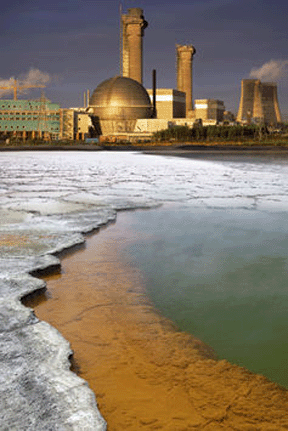
EDF’s Economic Statement on impact of Sizewell nuclear project – gives unproven, misleading evidence
 Stop Sizewell C 3rd Sept 2020, An independent review of EDF’s Economic Statement, assessing the impacts of Sizewell C to Suffolk’s local economy, has concluded that the project threatens “profitability and, in some cases, viability” of some local businesses, while others will be “at an immediate disadvantage when bidding for contracts”.
The report, Sizewell Economic Statement – Response, by highly-regarded independent research and analysis consultancy Development Economics, reveals multiple areas where EDF’s claimed benefits are over-optimistic, unproven or misleading, frequently omitting
evidence to support its figures or relying on “erroneous analysis”.
It concludes, critically, that EDF’s Economic Statement “fails to meet the minimum requirements of the legislation”, with no serious attempt to measure the deterrent effect on tourists and their expenditure, traffic congestion or competition for skills and labour.
The National Policy Statement EN-6 requires that applicants for major nuclear energy projects take into account ‘potential pressures on local and regional resources, demographic change and economic benefit’.
Workers and families sue U.S. Department of Energy contractors over illnesses from work at Piketon-area nuclear plant

 Former employees, families sue companies working on Piketon-area nuclear plant, https://www.dispatch.com/news/20200906/former-employees-families-sue-companies-working-on-piketon-area-nuclear-plant By Beth Burger
The Columbus DispatchThe lawsuit, filed last week, alleges workers and their families became ill due to the actions of U.S. Department of Energy contractors. The suit seeks a medical monitoring program to evaluate the multi-generational impact of radioactive contamination.
A lawsuit filed on behalf of former nuclear employees and their families accuses U.S. Department of Energy contractors of “poisoning workers and the people, land, air and water for miles” around the former Portsmouth Gaseous Diffusion Plant that was in southern Ohio.
The actions of DOE’s contractors released radioactive isotopes that “have created a situation akin to a creeping Chernobyl” and resulted in “injuries, sickness, disease, including cancers, damage to DNA, death, loss of and damages to property, and reduction in property values,” according to the lawsuit filed Thursday in U.S. District Court in Columbus.
The contamination likely spread in Pike, Scioto, Lawrence, Vinton and Adams counties in Ohio, according to the lawsuit.
Though the DOE is not named as a defendant in the case, its contractors are, including: Centrus Energy Corp., the United States Enrichment Corp., Lockheed Martin Corp., Uranium Disposition Services, BWXT Conversion Services, Mid-America Conversion Services, Bechtel Jacobs Co., Lata/Parallax Portsmouth LLC, FLUOR-BWXT Portsmouth LLC, Goodyear Tire and Rubber Co. and Martin Marietta Inc.
DOE spokeswoman Jessica Szymanski said Friday that the department does not comment on pending litigation.
The lawsuit is requesting a medical monitoring program that would evaluate the multi-generational impact of radioactive contamination.
“That is a major component of our request for relief,” said Nathan Hunter, one of the attorneys representing the plaintiffs, who noted that DNA damage could be transferred through generations.
There’s a workers’ compensation fund for nuclear workers, but that has failed the plaintiffs because of a host of issues, including falsified records, Hunter said.
The accusations are serious, and allege that DOE and the companies “actively deceived workers, the general public and regulators,” by suppressing critical information, including the release and spreading of nuclear poison, safety violations, arson, workplace exposures, and illegally transporting highly radioactive materials, as well as conspiring to destroy and falsify records.
Jeff Walburn worked in security at the plant for 31 years, and was hospitalized in 1994 because of damage to his lungs. He’s listed as a plaintiff.
“My life and family have been decimated by the nuclear scourge unleashed into the environment by these companies. These radioactive isotopes go into our bodies, creating cancers and genetic defects for generations,” he said in a released statement.
Charles “Chick” Lawson, a resident of Lucasville who was employed for 15 years in security and was the union safety representative and OHSHA investigator at the Portsmouth Gaseous Diffusion Plant, also is a plaintiff.
We are filing this lawsuit to expose the heinous actions and extensive cover-up by companies paid over a billion dollars to protect us,” he said in a released statement.
The lawsuit says that cancer rates in some affected areas are 700% greater than the national average. Scioto, Pike, Lawrence Vinton and Adams counties have the highest cancer rates in the state of Ohio, according to the lawsuit.
Pike County’s cancer rate was the second-highest in Ohio in 2019, according to the Ohio Department of Health. Vinton County had the highest rate of cancer, records show.
The lawsuit filed Thursday is the latest filed in connection to health issues associated with the former plant.
KILDARE OPINION SOUGHT ON NEW BRITISH NUCLEAR PLANT
 KILDARE OPINION SOUGHT ON NEW BRITISH NUCLEAR PLANT, Kildare Nationalist, SUNDAY, SEPTEMBER 06, 2020 UNDER provisions made at the United Nations, submissions are invited from interested parties in Kildare to comment on the development of a new nuclear power station planned for the east coast of England.Under the terms of the 1991 United Nations Convention, the Transboundary Environmental Public Consultation allows citizens in neighbouring nations have their say on certain public and private projects likely to have significant effects on the environment.
For this purpose, the member state of the UN in whose territory the project is intended to be carried out is required to send to its neighbours – no later than when informing its own public – a description of the project and any available information on its possible transboundary impact.
In this case, the Department of Environment, Planning and Local Government (DEPLG) was contacted by the British authorites in July about their plans to build a third reactor at the Sizewell nuclear power campus in Suffolk, to afford Irish citizens their chance to offer an opinion.
The letter from the UK’s Planning Inspectorate states that the Secretary of State has received an application to build two reactor units, giving a total site capacity of approximately 3,340MW, along with associated development required for the construction and operation of the Sizewell C Nuclear Power Station. …….
the Secretary of State decided to notify Ireland as if the development is likely to have significant adverse transboundary effects on the environment in this
State, as provided for in the UN Convention.
All documents related to the application are available to view on the Department of Environment’s website, and at the Planning Department, Kildare County Council – but by appointment only.
Submissions made in relation to the potential transboundary environmental effects of Sizewell C may be made in writing to the Planning Department, Kildare County Council, Aras Chill Dara, Naas, Co. Kildare or by e-mail to plandept@kildarecoco.ie by 28 October………….the Secretary of State decided to notify Ireland as if the development is likely to have significant adverse transboundary effects on the environment in this
State, as provided for in the UN Convention.
All documents related to the application are available to view on the Department of Environment’s website, and at the Planning Department, Kildare County Council – but by appointment only.
Submissions made in relation to the potential transboundary environmental effects of Sizewell C may be made in writing to the Planning Department, Kildare County Council, Aras Chill Dara, Naas, Co. Kildare or by e-mail to plandept@kildarecoco.ie by 28 October……..https://kildare-nationalist.ie/2020/09/06/kildare-opinion-sought-on-new-british-nuclear-plant/#.X1ViXHkzbIU
Risks of cyberattacks on nuclear reactors
 Homeland Preparedness News 7th Aug 2020, The Nuclear Threat Initiative’s NTI Index shows that only 47 percent of countries have a response plan in place for a cyberattack on a nuclear
facility. Further, NTI reveals that most of those nations do not have
adequate regulations for cybersecurity. The NTI Index found that only 34
percent receive a high score for cybersecurity.
More of Britain’s ageing nuclear power stations are likely to close early
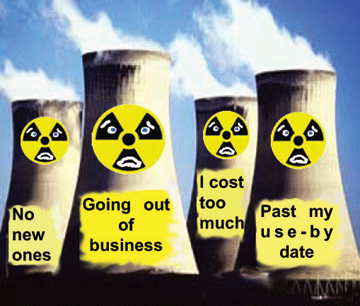 Times 6th Sept 2020, More nuclear power stations could close early as EDF wrestles with problems with patching up its ageing plants. The French power giant owns Britain’s fleet of eight nuclear power stations together with British Gas parent Centrica.
…………. just one new nuclear power station is being built, Hinkley Point C, in Somerset.
B in Somerset and Dungeness B in Kent.
happen sooner. It is currently not generating while its graphite core is inspected. EDF is due to make a decision on its future in November.
publication of a much-delayed energy white paper.
https://www.thetimes.co.uk/edition/business/nuclear-closures-pose-power-puzzle-d6bnnnrcs
Climate protestors stop Rupert Murdoch’s press in Britain
 Rupert Murdoch’s British papers delayed as climate protesters stop the presses, SMH 6 Sept, 20, London: Distribution of several British newspapers was disrupted on Saturday after climate change activists blockaded printworks used by Rupert Murdoch’s News UK, publisher of The Times and The Sun, drawing condemnation from Prime Minister Boris Johnson.Extinction Rebellion said nearly 80 people had blocked roads leading to two printworks, at Broxbourne in Hertfordshire, north east of London, and at Knowsley, near Liverpool. Hertfordshire police said they made 42 arrests and Merseyside police made 30.
The Murdoch-owned Newsprinters works also print the Daily Mail, the Daily Telegraph and the Financial Times. Campaigners said they had taken the action to highlight what they regard as the newspapers’ failure to accurately report on climate change. ……….
The blockade was part of more than a week of protests by Extinction Rebellion, which says an emergency response and mass move away from polluting industries and behaviours is needed to avert a looming climate cataclysm.
On Saturday it also protested in central London, including holding a “die-in” in front of Buckingham Palace, where demonstrators lay under white sheets to represent corpses. …….. https://www.smh.com.au/environment/climate-change/rupert-mudoch-s-british-newspapers-delayed-as-extinction-rebellion-protesters-stop-the-presses-20200905-p55sqr.html
Exelon’s threat to Illinois – aiming to get more tax-payer funding
|
Dive Brief:
|
|

Renewed concerns about safety as dig starts for new shaft at New Mexico’s nuclear Waste Isolatio Pilot Plant
 Groups Raise Concerns About New Shaft at US NuclearDump, By Associated Press, Wire Service Content Sept. 4, 2020
Crews at the U.S. government’s underground nuclear waste repository in New Mexico are starting a new phase of a contentious project to dig a utility shaft. https://www.usnews.com/news/best-states/new-mexico/articles/2020-09-04/groups-raise-concerns-about-new-shaft-at-us-nuclear-dump
ALBUQUERQUE, N.M. (AP) — Crews working at the U.S. government’s underground nuclear waste repository in New Mexico are starting a new phase of a contentious project to dig a utility shaft that officials say will increase ventilation at the site where workers entomb the radioactive remnants of decades of bomb-making.
Officials at the Waste Isolation Pilot Plant said this week that the $75 million project is a top priority and that work will be done round the clock five days a week, with an additional shift on Saturdays. The shaft will eventually span more than four-tenths of a mile and connect to an underground system of passageways.
After reaching a depth of about 60 feet (18 meters), workers now will be drilling small holes and using explosive charges to clear more rock.
Adequate ventilation at the repository has been a big issue since 2014, when a radiation release forced a temporary closure and contamination limited air flow underground where workers dispose of nuclear waste. That prompted the need for a new ventilation system so full-scale operations could someday resume.
The repository is at the center of a multibillion-dollar effort to clean up waste from decades of U.S. nuclear research and bomb-making. Over more than 20 years, tons of waste have been stashed deep in the salt caverns at the southern New Mexico site.
Watchdog groups are raising red flags, saying the work is being done before state environmental officials finish a process allowing the public weigh in and before they have issued a final permit. The New Mexico Environment Department in April granted federal officials temporary approval to start the work as part of a larger request to dig the shaft and passageways.
The Southwest Research and Information Center is among those opposing the project. The group filed legal challenges, saying environmental officials ignored existing regulations, past agency practices and case law when giving temporary approval for contractors to begin working.
The Environment Department has defended its decision, saying the temporary approval was limited to digging the shaft, not using it.
Don Hancock with the Southwest Research and Information Center said state officials essentially foreordained the permit request by allowing work to begin. He also said the state has not provided any technical basis for its decisions and that it reduced the amount of time the public had to comment on the project by delaying the release of a draft permit.
The group has suggested that the shaft, given its size and location, could be used to expand the repository. It says that creates potential for the government to send high-level and commercial waste to the site, along with new radioactive waste that will be generated by manufacturing plutonium cores for the nation’s nuclear arsenal.
Despite congressional limits on the amount and type of waste that can be shipped to the repository, Hancock and other critics said the state’s actions have favored the federal government while limiting the public’s ability to give their input.
The repository’s hazardous waste permit also is up for renewal this year, and more legal wrangling is expected.
Iran claims it’s identified saboteurs behind blast at nuclear site
this year and knows their motives for attacking the facility, an Iranian official said on Sunday.Atomic Energy Organization of Iran spokesman Behrouz Kamalvandi said during a television interview that the July incident at the Natanz facility was “an act of sabotage” and the investigation is still ongoing.
“As far as we know, they have identified the culprits and know their incentives and methods and actually, they have full knowledge over the issue,” Kamalvandi said, according to an English-language report on his remarks by the semi-official Fars News Agency. ……
Under the nuclear accord officially known as the Joint Comprehensive Plan of Action, Iran committed to limiting its nuclear program in exchange for sanctions relief.
But the JCPOA has been on life-support since the US withdrew from it and reimposed unilateral sanctions in 2018.
Iran has since taken small but escalatory steps away from compliance with the agreement, as it presses for the sanctions relief it was promised. Some of those steps are believed to have been at the Natanz nuclear site.
The US is currently engaged in a likely doomed bid to renew international sanctions against Iran at the UN, despite Trump’s withdrawal from the accord.https://www.timesofisrael.com/iran-claims-its-identified-saboteurs-behind-blast-at-nuclear-site/
1 This Month



Read the Public Inquiry Report, the Commissioners’ report, Surrendering Australia: The AUKUS Deception is available to download for free at aukuspublicinquiry.com. Or just watch the replay of the National Press Club Luncheon.

19 November – Webinar – The Reality of Reprocessing
Time: 11:00 AM Pacific Time (US & Canada) / 2:00 PM Eastern / 7:00 PM UK / 8:00 PM CET
Register for the Zoom Event Here


Shut down the radiation-damaged Heysham nuclear reactors now
To see nuclear-related stories in greater depth and intensity – go to https://nuclearinformation.wordpress.com

Say No to NASA’s Reckless Nuclear Reactor on the Moon
Say No to NASA’s Reckless Nuclear Reactor on the Moon
-
Archives
- November 2026 (119)
- October 2026 (302)
- September 2026 (339)
- August 2026 (330)
- July 2026 (355)
- June 2026 (287)
- May 2026 (306)
- April 2026 (356)
- March 2026 (251)
- February 2026 (267)
- January 2026 (308)
- December 2025 (358)
-
Categories
- 1
- 1 NUCLEAR ISSUES
- business and costs
- climate change
- culture and arts
- ENERGY
- environment
- health
- history
- indigenous issues
- Legal
- marketing of nuclear
- media
- opposition to nuclear
- PERSONAL STORIES
- politics
- politics international
- Religion and ethics
- safety
- secrets,lies and civil liberties
- spinbuster
- technology
- Uranium
- wastes
- weapons and war
- Women
- 2 WORLD
- ACTION
- AFRICA
- Atrocities
- AUSTRALIA
- Christina's notes
- Christina's themes
- culture and arts
- Events
- Fuk 2022
- Fuk 2023
- Fukushima 2017
- Fukushima 2018
- fukushima 2019
- Fukushima 2020
- Fukushima 2021
- general
- global warming
- Humour (God we need it)
- Nuclear
- RARE EARTHS
- Reference
- resources – print
- Resources -audiovicual
- Weekly Newsletter
- World
- World Nuclear
- YouTube
-
RSS
Entries RSS
Comments RSS

