Release of methane off East Siberian coast has been triggered,
Exclusive: expedition discovers new source of greenhouse gas off East Siberian coast has been triggered, Guardian, Jonathan Watts Global environment editor 28 Oct 20 Scientists have found evidence that frozen methane deposits in the Arctic Ocean – known as the “sleeping giants of the carbon cycle” – have started to be released over a large area of the continental slope off the East Siberian coast, the Guardian can reveal.High levels of the potent greenhouse gas have been detected down to a depth of 350 metres in the Laptev Sea near Russia, prompting concern among researchers that a new climate feedback loop may have been triggered that could accelerate the pace of global heating.
The slope sediments in the Arctic contain a huge quantity of frozen methane and other gases – known as hydrates. Methane has a warming effect 80 times stronger than carbon dioxide over 20 years. The United States Geological Survey has previously listed Arctic hydrate destabilisation as one of four most serious scenarios for abrupt climate change.
The international team onboard the Russian research ship R/V Akademik Keldysh said most of the bubbles were currently dissolving in the water but methane levels at the surface were four to eight times what would normally be expected and this was venting into the atmosphere.
“At this moment, there is unlikely to be any major impact on global warming, but the point is that this process has now been triggered. This East Siberian slope methane hydrate system has been perturbed and the process will be ongoing,” said the Swedish scientist Örjan Gustafsson, of Stockholm University, in a satellite call from the vessel.
The scientists – who are part of a multi-year International Shelf Study Expedition – stressed their findings were preliminary. The scale of methane releases will not be confirmed until they return, analyse the data and have their studies published in a peer-reviewed journal.
But the discovery of potentially destabilised slope frozen methane raises concerns that a new tipping point has been reached that could increase the speed of global heating.
The Arctic is considered ground zero in the debate about the vulnerability of frozen methane deposits in the ocean.
With the Arctic temperature now rising more than twice as fast as the global average, the question of when – or even whether – they will be released into the atmosphere has been a matter of considerable uncertainty in climate computer models.
The 60-member team on the Akademik Keldysh believe they are the first to observationally confirm the methane release is already under way across a wide area of the slope about 600km offshore………………
Temperatures in Siberia were 5C higher than average from January to June this year, an anomaly that was made at least 600 times more likely by human-caused emissions of carbon dioxide and methane. Last winter’s sea ice melted unusually early. This winter’s freeze has yet to begin, already a later start than at any time on record. https://www.theguardian.com/science/2020/oct/27/sleeping-giant-arctic-methane-deposits-starting-to-release-scientists-find
Santa Susana Field Laboratory site- historically radioactively polluted, but risks never being cleaned up
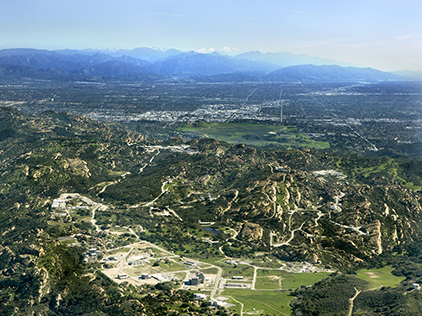
Yes, Santa Susana is a ‘landmark’ — as a historic environmental disaster, https://www.latimes.com/business/story/2020-10-27/hiltzik-santa-susana-environmental-landmark By MICHAEL HILTZIK, BUSINESS COLUMNIST OCT. 27, 2020
Among the points in dispute is what makes it so. To several local Native American tribes, including the Santa Ynez Band of Chumash Indians, the Ventura County site’s cave drawings and rock shelters bespeak a cultural heritage dating back centuries.
The time has come for us to make sure that we hold the polluters accountable for their legacy….We will make sure the site gets cleaned up and we will exercise our legal authority in pursuit of that.
To environmentalists and the site’s neighbors, it’s historic for the extent of its contamination by chemical and nuclear research performed there during the Cold War.
The Santa Susana Field Laboratory site is “one of the most toxic sites in the United States by any kind of definition,” Jared Blumenfeld, head of the California Environmental Protection Agency, told me. “It demands a full cleanup.”
Just such a cleanup should have been started years ago. The three entities controlling portions of the site — Boeing Co., the U.S. Department of Energy and NASA — reached agreements with the state in 2007 and 2010 binding them to restoring the site to “background” standards.
The term means removing contaminated soil and buildings so thoroughly that the area would be as pristine as if the polluting activities had never occurred.
That work was supposed to be completed by 2017. Yet much of it has not even started — and it may be thrown into further doubt by NASA’s nomination of the site to the historic register.
Why the cleanup has been stalled isn’t entirely clear, although one obstacle has been the state’s failure to complete an environmental impact report for the cleanup.
The report is a highly technical document on which public comments are still being collected, according to Meredith Williams, director of the state Department of Toxic Substances Control, which is overseeing the process. Williams says the document is now expected to reach completion next spring or summer.
Instead of establishing the government’s responsibilities conclusively, the 2007 and 2010 agreements became part of the battlefield trod over by state and federal agencies. As recently as Sept. 28, the DTSC crisply informed NASA that its published plans for a reduced cleanup violate the agreement.
The state agency “strongly urge[d]” NASA not to issue a formal announcement of the plans. Four days later, NASA did so anyway.
Santa Susana deserves to be recognized as another example of how powerful interests manage to dodge their responsibilities to clean up after themselves by exploiting legal delays and loopholes, to the detriment of local communities.
It’s on a par with the successful effort of Exide Technologies to avoid paying for the cleanup of pollution it caused around its battery recycling plant in Vernon, which we recently chronicled. That case involved a private firm. This one is even worse, because the entities dodging their responsibilities include agencies of the federal government.
The historical nomination by NASA, says Daniel O. Hirsch, a former environmental faculty member at UC Santa Cruz who has been following the Santa Susana saga for some 40 years and serves as president of the Committee to Bridge the Gap, an anti-nuclear group, could save Boeing, NASA and the Department of Energy hundreds of millions of dollars in cleanup expenses.
“The only people who would lose would be the public,” Hirsch says. “They would continue to face elevated cancer risk from contamination” migrating from the site.
The tribes have said in video statements that a historical designation need not interfere with the cleanup, but such a classification will give them a say in how it proceeds.
To understand the gravity of the situation — and why local residents remain agitated about the delay’s implications for their health — let’s consider the site’s noxious condition.
Over a period of 75 years, the Santa Susana Field Lab hosted what the Natural Resources Defense Council says were “hundreds of nuclear and rocket testing buildings and structures,” emitting radioactive isotopes including plutonium-239.
The soil and water table were contaminated by PCBs, heavy metals, tricholoroethylene “and a witches’ brew of other poisons,” as the NRDC put it.
Nuclear reactors at the lab suffered at least four major accidents between 1959 and 1969, including one partial meltdown, two episodes of fuel damage and a separate release of radioactive gases. The government typically kept these incidents secret for weeks, sometimes longer.
In a 2007 paper, researchers at the University of Michigan found the incidence rate of certain cancers, including thyroid, bladder and blood system cancers, to be more than 60% higher for residents living within two miles of the site in 1988-95 than for those more than five miles away.
The document that NASA filed this summer nominating the site for the National Register of Historic Places glosses over this history as though it never happened.
Absurdly, the nomination states that despite the activities of the government and Boeing, the area is “in a state similar to when the [tribes’] ancestors used and occupied the area.”
This summer, NASA nominated the lab site for inclusion on the national landmark registry, under the name Burro Flats Cultural District, citing its rich tribal history. A 12-acre portion of the site, encompassing the Burro Flats painted cave and a parcel traditionally used by Native Americans to observe the winter and summer solstices, has been on the National Register of Historic Places since 1974. NASA asserts that its archeological research justifies expanding the landmark to encompass the entire laboratory site.
Then, on Oct. 2, the agency formally announced that it was considering a scheme to clean up the site to only a fraction of what is required by the 2007 and 2010 agreements. That flouted the state’s Sept. 28 warning not to do so, lest it result in “necessary actions to enforce” the agreements.
The historical nomination is opposed by the Ventura County Board of Supervisors, the Natural Resources Defense Council and the Committee to Bridge the Gap generally because they see the move as subterfuge through which NASA can slink away from its cleanup responsibilities.
Given this chronicle, it’s hardly surprising that any action by the government inspires skepticism.
“NASA and the DOE have a mixed history, to be polite, and the neighborhood distrusts them immensely,” says Sam Cohen, a legal advisor to the Chumash tribe.
“It’s going to take years to clean up the land,” Cohen says. “We need to be at the table at the beginning or we’re going to be disappointed at the end.”
There are, as it happens, plenty of grounds for distrust. One is that the boundaries of the nominated land correspond exactly to the Santa Susana Field Lab property lines, even though it’s rare that any historical site be chosen with regard to ownership boundaries.
Another is that the proposed designation tracks suspiciously closely to a provision in the 2010 agreement reached by the federal government and the state, exempting from cleanup “Native American artifacts that are formally recognized as Cultural Resources” — which is what NASA is requesting.
These factors and others prompted the NRDC and Committee to Bridge the Gap to warn the state Historical Resources Commission, which must rule on any federal nomination to the historical register, that NASA’s move is “an attempt by the Trump administration to breach the SSFL cleanup agreements.”
Yet the commission bulled ahead, debating the issue at a meeting Aug. 14. At that meeting tribal representatives supported the nomination while a representative of the Ventura County Board of Supervisors, Hirsch and members of Hirsch’s group all spoke against it.
A NASA representative told the commission, however, that the proposed designation wouldn’t affect the cleanup at all. “NASA continues to be committed to a cleanup at Santa Susana Field Lab,” she said. The commission, apparently mollified, endorsed the designation unanimously.
But NASA’s critics noticed that the NASA representative, Rebecca Klein, chose her words carefully. “She said they were committed to ‘a cleanup,’” Hirsch observes. “She didn’t say they were committed to the 2010 agreement.”
NASA told me by email that the cleanup standards embodied in the agreement are not “scientifically and technologically achievable.” The standards cannot be met “even if we backfill all removed soil with the store-bought topsoil many of us use in our own yards and gardens,” agency spokeswoman Shannon Segovia told me. The agency says its proposed cleanup would remove up to 90% of the contamination as the agreement requires but involve removal of 70% less soil.
CalEPA’s Blumenfeld says the decision of how to perform the cleanup isn’t up to NASA. “The 2007 and 2010 agreements are legally binding and don’t leave a lot to the imagination,” he says. “They’re very descriptive and prescriptive to infinitesimal levels of detail.”
He adds that the government’s approach to Santa Susana is oddly bifurcated. The Department of Energy, which is largely responsible for the nuclear cleanup, has been relatively cooperative, having started to dismantle the radioactively contaminated buildings on the site.
NASA, however, “is in the camp of trying to spend as little money as possible to do as little work as possible.” It may see its historical nomination as a tool to undermine the 2010 agreement, “but it’s not going to achieve that,” Blumenfeld says.
As for Boeing, which inherited its share of the cleanup in 1996 when it acquired Rockwell International’s aerospace and defense businesses, also has dragged its feet, but its responsibility is currently subject to court proceedings.
All this leaves unexplained how ironclad legal agreements could be flouted with impunity for a decade or more. In the past, blame has settled upon the Brown administration for failing to pursue the cleanup aggressively.
Blumenfeld says that era is over. He says all the parties should understand that “we’re very serious about implementing the legally binding agreements and about our regulatory authority. … There’s this bizarre time in history that we’re trying to explain no longer exists where NASA feels like they get to set the cleanup standards and Boeing feels they get to set the cleanup standards.”
For years, he says, “there was the sense by the polluters that trying to push back would save money on the cleanup.” Polluters shirking their cleanup responsibilities is nothing new, he adds.
“The time has come for us to make sure that we hold the polluters accountable for their legacy. … We will make sure the site gets cleaned up and we will exercise our legal authority in pursuit of that. That hasn’t been the message that they’ve heard for the previous 10 years, but we’re changing it.”
Will that happen? Let’s hope that we don’t have to wait another 10 years to find out.
Tritium is what makes nuclear reactors so dangerous, not only in Fukushima but also in S. Korea

 http://english.hani.co.kr/arti/english_edition/e_editorial/967441.html By Kim Eun-hyoung, editorial writer, Oct.27,2020
Tritium exists in the natural world, but only in negligible amounts. It’s typically produced during the fission process inside nuclear reactors. Tritium is part of the coolant that lowers the temperature in the reactor core, which is heated by fission.
The contaminated water at the Fukushima reactor that the Japanese government seeks to release into the ocean contains tritium at levels that are 10 times higher than levels permitted by the South Korean government. That has terrified people not only in Japan but also in Korea.
The Japanese government says that the contaminated water doesn’t present a problem because it will be decontaminated through Tokyo Electric Power Company’s advanced liquid processing system (ALPS), before release. But the tricky part about releasing the contaminated water is tritium, which can’t be removed by ALPS because of the strong chemical bond it forms with water.
But Fukushima isn’t the only place affected by the risk of tritium. Heavy-water reactors are cooled with heavy water (deuterium oxide, 2H2O) instead of ordinary drinking water, producing a greater amount of tritium. There are four heavy-water reactors at Korea’s Wolsong plant, including Wolsong-1, which has been in the news recently after government auditors questioned a report about its economic viability, the justification given for shutting the reactor down earlier than planned.
Tritium is regarded as a low-risk radioactive substance, causing less harm than other types of radiation. For one thing, the radiation emitted by tritium is so weak that it can’t penetrate the outer layer of the skin. And even when it is absorbed by the body, its biological half-life — the time required for half the substance to leave the body — is only 12 days.
Even now, Wolsong-2, Wolsong-3, and Wolsong-4 account for 40% of the tritium released by all of Korea’s nuclear stations. Rates of thyroid cancer among women who live near the Wolsong nuclear plant are 2.5 times higher than in other areas, which some think is linked to tritium contamination. The question of nuclear power safety affects Korea in the same way as it affects Japan. It would be foolish and contradictory to view Japanese nuclear plants through the lens of safety and Korean nuclear plants through the lens of economic viability.
But such safety observations only apply to a single dose of radiation, such as an X-ray, and the actual risk depends on the intensity of exposure. That has led various countries to develop strict safety standards for the substance. The European Committee on Radiation Risk warns that internal radiation exposure can cause mutations that could lead to cancer.
EDF trucks enriched uranium to the unfinished Flamanville nuclear reactor. Why so much in advance of the need for it?
 Reuters 26th Oct 2020, A first truck responsible for transporting enriched uranium to the EPR
reactor in Flamanville (Manche) left Monday morning from the Framatome
plant in Romans-sur-Isère (Drôme), according to anti-nuclear associations
who denounce an EDF “maneuver” to “make it impossible to question”
the project.
Associations, including Greenpeace, France Nature
Environnement and several anti-nuclear collectives, believe in a press
release that “nothing guarantees” that the EPR “can work one day”
and therefore consider that the fact of storing fuel there now is “an
aberration”. They also consider that “the arrival of fuel in Flamanville
also questions the security of the site” and stress that this first
delivery opens “a ballet of trucks which will last several months”.
https://fr.reuters.com/article/idFRL8N2HH2HL
Greenpeace 26th Oct 2020, EDF has just obtained the authorization to transport new fuel to the
Flamanville EPR nuclear reactor site. A first truck left at 8 am Monday,
October 26 from Romans-sur-Isère, in Drôme, and arrived in the evening at
Flamanville, in Manche. In the coming weeks, these nuclear road convoys
will therefore multiply… As if the EPR were ready to start. Yet this is
far, very far from being the case. Why such a rush, when the EPR is
accumulating delays? EDF once again adopts the strategy of a fait accompli,
despite common sense.
https://www.greenpeace.fr/epr-de-flamanville-du-combustible-pour-un-projet-obsolete/
Iran building underground nuclear facility, replacing the damaged one.
Iran building underground nuclear facility: UN watchdog, SMH, By David Rising, October 28, 2020, Berlin: Inspectors from the UN’s atomic watchdog have confirmed Iran has started building an underground centrifuge assembly plant after its previous one exploded in what Tehran called a sabotage attack over the summer, the agency’s head said.
Iran also continues to stockpile greater amounts of low-enriched uranium, but does not appear to possess enough to produce a weapon, Rafael Grossi, director-general of the International Atomic Energy Agency, told the AP in an interview in Berlin.
Following the July explosion at the Natanz nuclear site, Tehran said it would build a new, more secure, structure in the mountains around the area. Satellite pictures of Natanz analysed by experts have yet to show any obvious signs of excavation at the site in Iran’s central Isfahan province……
Natanz had been targeted by the Stuxnet computer virus previously, which was believed to be a creation of the US and Israel. Iran has yet to say whom it suspects of carrying out the sabotage in the July incident. Suspicion has fallen on Israel as well, despite a claim of responsibility by a previously unheard-of group at the time.
Under the provisions of the landmark 2015 nuclear deal with world powers known as the Joint Comprehensive Plan of Action, Iran is allowed to produce a certain amount of enriched uranium for non-military purposes.
In return, Iran was offered economic incentives by the countries involved.
Since President Donald Trump pulled the US unilaterally out of the deal in 2018 and re-imposed sanctions, however, the other signatories — Germany, France, Britain, Russia and China — have been struggling to keep the deal alive.
Meanwhile, Iran has been steadily exceeding the deal’s limits on how much uranium it can stockpile, the purity to which it can enrich uranium and other restrictions to pressure those countries to come up with a plan to offset US sanctions.
Still though, Iran has continued to allow IAEA inspectors full access to its nuclear facilities, including Natanz, Grossi said………
Grossi personally visited Tehran in late August for meetings with top officials, and managed to break a months-long impasse over two locations thought to be from the early 2000s where Iran was suspected of having stored or used undeclared nuclear material and possibly conducted nuclear-related activities.
Inspectors have now taken samples from both of those sites, and Grossi said they are still undergoing lab analysis.
“It was a constructive solution to a problem what we were having,” he said. “And I would say since then we have kept the good level of cooperation in the sense that our inspectors are regularly present and visiting the sites.” https://www.smh.com.au/world/middle-east/iran-building-underground-nuclear-facility-un-watchdog-20201028-p569ht.html
Japan’s net zero emissions target should be combined with zero nuclear power
Japan’s net zero emissions target should be combined with zero nuclear power, October 28, 2020 (Mainichi Japan) ”…………… Under Japan’s basic energy plan, the country aims to raise the ratio of renewables to 22 to 24% by fiscal 2030. But this target is far from sufficient. As the government is currently working on a revision to the plan, it should drastically review the energy mix.
It is imperative to reconsider the nuclear power ratio said to account for 20-22% of Japan’s power mix. The government is aspiring to secure constant nuclear power output by replacing aging nuclear power stations and through other measures while moving ahead with reactivation of idled nuclear plants.
However, nuclear power complexes carry the risk of severe accidents. As it costs enormous money to secure safety at those facilities, the idea of labeling nuclear power as cheap energy is not globally accepted. The government has a responsibility to provide a road map for breaking Japan’s dependence on nuclear power.
In European countries, efforts to revive their economies severely hit by the novel coronavirus pandemic through environmental investment are underway. This initiative, called “green recovery,” can come into line with the principle of a “virtuous cycle of environment and economic growth” emphasized by Prime Minister Suga.
It is hoped that Japan will achieve a decarbonized society through improvement of renewable energy technologies and active investments in research and development of hydrogen energy and retrieval and storage of carbon dioxide.
It is also necessary to build a mechanism to guarantee the realization of the promise of net zero greenhouse gas emissions. In addition to discussions on a carbon tax, levied in accordance with the volumes of greenhouse gas emissions, the government is urged to consider specifying this goal in Japan’s Act on Promotion of Global Warming Countermeasures.
Hurdles for attaining the goal remain high and we have a limited time frame. It is urgently needed to craft a strategy to prevent the net zero target from ending up as a mere empty promise. https://mainichi.jp/english/articles/20201028/p2a/00m/0na/017000c
Columbus, Cincinnati, take legal action to block Ohio’s nuclear power plant bailout law
 Columbus, Cincinnati Suing To Block Rate Hike In Nuclear Power Plant Bailout Law https://www.wcbe.org/post/columbus-cincinnati-suing-block-rate-hike-nuclear-power-plant-bailout-law By JIM LETIZIA & ASSOCIATED PRESS 28 Oct 20, •The Cities of Columbus and Cincinnati are suing to block the state’s nuclear power plant bailout law at the center of a 60 million federal bribery probe from taking effect January 1st.
They cite the need to save consumers from higher bills the tainted legislation would impose. The suit claims the charge is an unconstitutional tax. Last year, opponents of the law argued the charge is not a tax when they attempted to put a repeal on the ballot. The cities are suing the state treasurer, the Public Utilities Commission Of Ohio chair and Akron-based FirstEnergy, the company behind the bribery scheme. Republican former Ohio House Speaker Larry Householder and four others have been indicted in the scandal. |
|
Two more cities opt out of Utah’s dubious small nuclear reactor project
|
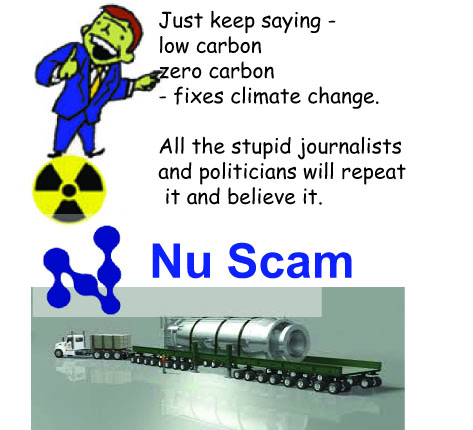
The $6 billion project has built in “off-ramps” for members of the Utah Associated Municipal Power Systems to bow out of participation at this stage, with a deadline for this exit set for Saturday. The 720-megawatt NuScale Power project is planned for construction at the U.S. Department of Energy’s Idaho National Laboratory, about 180 miles north of Salt Lake City. Earlier this month, the federal agency announced it will provide nearly $1.4 billion for the project to pay for one-time costs for a plant that is being billed as a first-of-its-kind, next-generation nuclear power technology. The infusion of money would be subject to yearly appropriations by Congress, but project backers say it has had bipartisan support under both the Trump and Obama administrations. The power association is made up of 47 members in Utah and throughout the Intermountain West that are independent utilities. Bountiful and Beaver are the latest to leave the Carbon Free Power Project, citing concerns over rising costs,…. Concerns over costs and utilities acting as “seed investors” have been raised by the Utah Taxpayers Association, which warns project delays and mounting costs may make members vulnerable. The project passed one regulatory hurdle in a design certification process before the U.S. Nuclear Regulatory Commission and is moving onto the next phase of licensing…… If successful, the Carbon Free Power Project would be the first globally to deploy the modular technology. Construction of the 12-modular unit is expected to start in 2025, with the first unit coming online in 2029. https://www.deseret.com/utah/2020/10/28/21536595/news-nuclear-power-project-utah-cities-bountiful-bow-out-of-planned-nuscale-plant-idaho-uamps |
|
The very real risks of radiation accidents on Earth, from nuclear reactors in space
 Ensuring Safety on Earth from Nuclear Sources in Space, Mirage News, 28 Oct 20, In early 1978, the world steeled itself as gravity pulled an uncontrolled satellite powered by a small reactor fueled with 45 kg of highly enriched uranium towards Earth. Since COSMOS 954’s impact point could not be predicted accurately, emergency responders had to assume that an inhabited area could be contaminated, and they feverishly prepared equipment and response procedures. This was the world’s first experience with the uncontrolled re-entry of a space object with radioactive materials. The radioactive materials launched into Earth orbit, or traveling in spacecraft, can potentially harm people or the environment in case of an accident and for which strict emergency response planning and effective information sharing at the international level are required. This was the topic of an IAEA webinar held last week for emergency response experts.
In the majority of nuclear and radiological emergencies there will be enough information to know the location of a potential release of radioactivity, but with space activities the exact location of impact cannot always be predicted. “The IAEA has developed arrangements to share information about any pending nuclear-powered satellite re-entry. Using the data, countries can quickly respond to protect the public and the environment from the radioactivity that might spread as a result of an accident,” said Frederic Stephani, Incident and Emergency Assessment Officer in the IAEA, during the webinar. COSMOS 954 eventually crashed in the Northwest Territories in Canada on 24 January 1978, scattering radioactive debris over a 600 km footprint and spreading radioactivity over 100 000 km2. The clean-up operation, called “Operation Morning Light,” jointly coordinated by Canada and the US, recovered 80 radioactive items…… accidents can occur during the launch, operation and end-of-service mission phases of space nuclear power source applications. These accidents could expose the nuclear power source to extreme physical conditions leading to a radioactive release into the Earth’s atmosphere. …. https://www.miragenews.com/ensuring-safety-on-earth-from-nuclear-sources-in-space/ |
|
Finland, stuck with increasingly costly Olkiluouti nuclear nightmare, plans and even worse expense, with small nucler reactors!
 Taz 26th Oct 2020, The European pressurized water reactor Olkiluoto 3 has long since developed into a Finnish BER – at least twelve years too late, three times as expensive as planned. And it’s far from being online. The same goes for the
new Hanhikivi project: years behind before construction began .
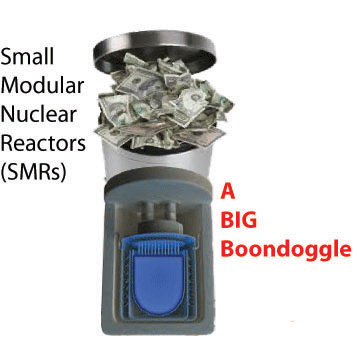
But the Finnish nuclear lobby is already planning another nuclear energy adventure: the construction of so-called Small Modular Reactors (SMR). Paul Dorfman of the UK UCL Energy Institute and co-author of an SMR study by the Nuclear
Consulting Group estimates that small reactors would provide increasingly expensive energy due to the cost of materials and personnel : the massive investments that would be required to create a supply chain so that replacing the economies of scale of large reactors with the advantage of series production would make the investment risk for SMR even higher than for standard reactors.
Britain to lose protection of the environment – as a result of Brexit
behalf of citizens is being undermined by the UK government. Ministers
promised that after Brexit, laws on air, water and waste would be policed
by an independent Office for Environmental Protection (OEP).
these laws were enforced by European courts, which prosecuted EU
governments that breached green rules. Ministers promised the OEP would be
similarly independent. But they now want to grant themselves powers to
“advise” the new body. These plans were revealed in a tabled amendment
to the Environment Bill. Critics fear ministers may counsel the OEP against
taking the government to court if it breaches laws.
Pressure on UK Prime Minister to show strong climate leadership
Business Green 28th Oct 2020, Pressure is mounting on Boris Johnson to come up with an ambitious
decarbonisation plan ahead of COP26 next year, with a major coalition of
health professionals, academics, faith and youth leaders today joining
calls from Conservative MPs and former world leaders for UK to demonstrate
strong climate leadership in the run up to the critical UN summit.
In a
series of letters to the Prime Minister today, various groups representing
millions of people in the UK and overseas urge the government to deliver a
“world-leading” climate plan to the UN in support of the Paris Agreement
“as early as possible this year” or well ahead of COP26 in November 2021.
Such a plan – or Nationally-Determined Contribution (NDC) in UN jargon –
should “at the very least” aligned with limiting global warming to 1.5C by
the end of the century and the UK’s 2050 net zero target, and should be
achieved entirely through domestic action without the use of international
carbon credits, according to the letter from faith groups.
https://www.businessgreen.com/news/4022373/pressure-mounts-pm-ambitious-uk-climate-plan-soon
Suspected COVID-19 outbreak declared at Canadian Nuclear Laboratories in Chalk River, Ontario.
The Renfrew County and District Health Unit (RCDHU) said it’s working closely with CNL to identify close contacts of the employees, who have been told to self-isolate at home and to get tested.
It also reminded those deemed high-risk contacts must self-isolate and monitor for symptoms for 14 days even if they’ve had a negative test, as it says COVID-19 could be incubating at the time of testing and that residents should not return to work, school or any public places during this time. …..
Three buildings at the Chalk River campus have been closed down for a thorough cleaning and 80 employees were sent home as a precaution. McGirl said, of those 80, two people have been told to self-isolate in addition to the two employees who tested positive. The names of all employees have been given to the RCDHU for contact tracing. …. https://ottawa.ctvnews.ca/suspected-covid-19-outbreak-declared-at-canadian-nuclear-laboratories-in-chalk-river-ont-1.5164185
Archbishop Tomasi has led the Vatican’s fight against nuclear weapons
|
Archbishop Tomasi has led the Vatican’s fight against nuclear weapons. Pope Francis is making him a Cardinal. America the Jesuit Review , Drew Christiansen, October 28, 2020 Sunday Oct. 25 was a double red-letter day for Silvano Maria Tomasi, C.S. Honduras had ratified the Treaty on Prohibition of Nuclear Weapons the day before, hastening a global nuclear weapons ban into force in January 2021. Helping shepherd that treaty through the United Nations had been one of the highlights of Archbishop Tomasi’s diplomatic career.Then at his noon Angelus meeting, Pope Francis announced the elevation of Archbishop Tomasi and 12 others as cardinals. Cardinal-elect Tomasi, a naturalized American citizen, was one of two Americans added to the college of cardinals, with Cardinal-elect Wilton Gregory of Washington. That announcement in combination with the treaty’s advancement was a moment of serendipity, the crowning of a rich career.
Among many international bodies joined by Archbishop Tomasi in a varied and vigorous career in diplomatic service to the Holy See were the United Nations Human Rights Council and the Conference on Disarmament. The U.N. Human Rights Council was the scene of many of the nuncio’s most important interventions on behalf of the rights of children and indigenous and migrant people, the right to development, in condemnation of human trafficking and in defense of a safe and healthy environment. The council was also the site of the most difficult moments of his tenure as the Holy See’s permanent observer to the United Nations and other international agencies in Geneva, addressing the church’s flawed response to the sex abuse crisis and facing the harsh judgments of the council and its members. It was with his colleagues in disarmament dialogues that he found the signature issue of his last years in diplomatic service, nuclear weapons abolition. Beginning in 2013, Archbishop Tomasi led the Holy See delegations to a series of international meetings on the humanitarian consequences of nuclear weapons that prepared the way for “the ban treaty.” After the U.N. conference had adopted the treaty, he worked with Cardinal Peter Turkson to prepare a Vatican conference to mark its passage. Before an audience of Nobel Peace Prize laureates, diplomats, civil society leaders and church peace activists, Pope Francis declared of nuclear weapons, “the threat of their use, as well as their very possession, is to be firmly condemned.”…….https://www.americamagazine.org/faith/2020/10/28/archbishop-tomasi-united-nations-vatican-nuclear-weapons-pope-francis-cardinal |
|
Super power: Here’s how to get to 100pct wind, solar and storage by 2030 — RenewEconomy

Deep disruption: New report from futurist Tony Seba and RethinkX says transition to 100pct renewables possible by 2030, and the “super” surplus of wind and solar can be used to power transport and industry. The post Super power: Here’s how to get to 100pct wind, solar and storage by 2030 appeared first on RenewEconomy.
Super power: Here’s how to get to 100pct wind, solar and storage by 2030 — RenewEconomy
A team led by renowned Stanford University futurist Tony Seba says most of
the world can transition to 100 per cent wind, solar and storage
electricity grids within the coming decade, in what they describe as the
fastest, deepest and most profound disruptions ever seen in the energy
industry.
The RethinkX team led by Seba, one of the few analysts to
correctly forecast the plunging cost of solar over the last decade,
predicts that the disruption caused solar, wind and lithium-ion battery
storage, or SWB, will be similar to the digital disruption of information
technology. “Just as computers and the Internet slashed the marginal cost
of information and opened the door to hundreds of new business models that
collectively have had a transformative impact upon the global economy, so
too will SWB slash the marginal cost of electricity and create a plethora
of opportunities for innovation and entrepreneurship.”
“Our analysis
shows that 100% clean electricity from the combination of solar, wind, and
batteries (SWB) is both physically possible and economically affordable
across the entire continental United States as well as the overwhelming
majority of other populated regions of the world by 2030.
“Adoption of
SWB is growing exponentially worldwide and disruption is now inevitable
because by 2030 they will offer the cheapest electricity option for most
regions. Coal, gas, and nuclear power assets will become stranded during
the 2020s, and no new investment in these technologies is rational from
this point forward.”
The analysis from Seba and the RethinkX team is just
the latest of a series of important reports that have been released in
recent weeks and months that look at the pace of technology change, the
energy transition and climate goals.
1 This Month

Read the Public Inquiry Report, the Commissioners’ report, Surrendering Australia: The AUKUS Deception is available to download for free at aukuspublicinquiry.com. Or just watch the replay of the National Press Club Luncheon.



19 November – Webinar – The Reality of Reprocessing
Time: 11:00 AM Pacific Time (US & Canada) / 2:00 PM Eastern / 7:00 PM UK / 8:00 PM CET
Register for the Zoom Event Here



Shut down the radiation-damaged Heysham nuclear reactors now
To see nuclear-related stories in greater depth and intensity – go to https://nuclearinformation.wordpress.com

Say No to NASA’s Reckless Nuclear Reactor on the Moon
Say No to NASA’s Reckless Nuclear Reactor on the Moon
-
Archives
- November 2026 (109)
- October 2026 (302)
- September 2026 (339)
- August 2026 (330)
- July 2026 (355)
- June 2026 (287)
- May 2026 (306)
- April 2026 (356)
- March 2026 (251)
- February 2026 (267)
- January 2026 (308)
- December 2025 (358)
-
Categories
- 1
- 1 NUCLEAR ISSUES
- business and costs
- climate change
- culture and arts
- ENERGY
- environment
- health
- history
- indigenous issues
- Legal
- marketing of nuclear
- media
- opposition to nuclear
- PERSONAL STORIES
- politics
- politics international
- Religion and ethics
- safety
- secrets,lies and civil liberties
- spinbuster
- technology
- Uranium
- wastes
- weapons and war
- Women
- 2 WORLD
- ACTION
- AFRICA
- Atrocities
- AUSTRALIA
- Christina's notes
- Christina's themes
- culture and arts
- Events
- Fuk 2022
- Fuk 2023
- Fukushima 2017
- Fukushima 2018
- fukushima 2019
- Fukushima 2020
- Fukushima 2021
- general
- global warming
- Humour (God we need it)
- Nuclear
- RARE EARTHS
- Reference
- resources – print
- Resources -audiovicual
- Weekly Newsletter
- World
- World Nuclear
- YouTube
-
RSS
Entries RSS
Comments RSS

