Britain’s enthusiasm for nuclear power stations is waning.
 Bloomberg 20th Nov 2020, Britain’s ambition to renew its aging fleet of nuclear power plants is losing momentum after the government offered few new details on how it will support additional projects. Prime Minister Boris Johnson’s
administration set aside 500 million pounds ($661 million) for small modular reactor projects but was silent on support for traditional
large-scale plants.
The issue gained urgency on Thursday as Electricite de France SA’s announced the closure of its Hinkley Point B reactors two
years early. The government’s latest thinking on how to replace its aging fleet of nuclear plants marks a dramatic shift from 2013, when David Cameron agreed to funding for new reactors at the Hinkley Point site with support from China. Since then, relations with China have deteriorated, electricity demand slumped and renewables such as wind and solar farms became much cheaper than new atomic plants.
https://www.bnnbloomberg.ca/nuclear-power-pushed-to-back-burner-in-u-k-s-green-energy-plan-1.1525271
Taiwanese protest plan to dump water from Japan nuclear plant into sea
|
Taiwanese protest plan to dump water from Japan nuclear plant into sea,Focus Taiwan 11/19/2020 Taipei, Nov. 19 (CNA) A group of Taiwanese staged a protest in Taipei on Thursday against a plan by the Japanese government to release more than a million tonnes of water into the ocean from the disabled Fukushima nuclear power plant, starting in 2022.
At the rally in front of the Ministry of Foreign Affairs (MOFA), some 20 supporters of the “Nuclear Go Zero” movement called on the ministry to push back, via diplomatic channels, against the Japanese government’s controversial plan. Tsai Ya-ying (蔡雅瀅), a lawyer affiliated with the Wild at Heart Legal Defense Association in Taiwan, said at the rally that releasing “contaminated” water from the disabled Fukushima Daiichi nuclear power would pose a risk to humans who might eat the many marine species that migrate in the warm current between Taiwan and Japan. Another protester, Tsai Chung-yueh (蔡中岳), deputy CEO of the environmental organization Citizen of the Earth, said contamination of the marine ecology could last for 30-40 years, if the water is dumped into the ocean……. At a regular press briefing Thursday, MOFA spokesperson Joanne Ou (歐江安) said the Japanese government has not yet made a final decision on the issue, and MOFA will seek clarification. She said the protesters have submitted a letter that has been passed on to the Taiwan-Japan Relations Association, which will relay their concerns to the Japanese government via Taiwan’s representative office in Tokyo. “MOFA is also concerned about the issue, as the maritime environment, ecological conservation, and health of our citizens may be at risk,” Ou said. (By Chang Hsiung-feng and Emerson Lim) Enditem/pc https://focustaiwan.tw/society/202011190015 |
|
USA revives plan for fast nuclear reactor, despite terrorism risks
|
Idaho is top pick for Energy Department nuclear test reactor, By KEITH RIDLER, BOISE, Idaho (AP) 20 Nov 20, — The U.S. government said Thursday that Idaho is its preferred choice ahead of Tennessee for a test reactor to be built as part of an effort to revamp the nation’s fading nuclear power industry by developing safer fuel and power plants. The U.S. Department of Energy said in an email to The Associated Press that the site that includes Idaho National Laboratory will be listed as its preferred alternative in a draft environmental impact statement planned for release in December. The Versatile Test Reactor, or VTR, would be the first new test reactor built in the U.S. in decades and give the nation a dedicated “fast-neutron-spectrum” testing capability. Some scientists decry the plan, saying fast reactors are less safe than current reactors. A news release by the Energy Department earlier Thursday listed both Idaho and Tennessee as possible locations without selecting one as being favored…… The department had a fast reactor, the Experimental Breeder Reactor II, operating in eastern Idaho until it was shut down in 1994 as the nation turned away from nuclear power. ……. Some scientists are wary of fast reactors, noting they’re cooled with harder to control liquid sodium and likely fueled by plutonium, increasing potential nuclear terrorism risks because plutonium can be used to make nuclear weapons….. https://apnews.com/article/environment-tennessee-nuclear-power-idaho-f70ae4dac811f90f1493231fe7edb7bd |
|
Large and small nuclear reactors should not be included in UK’s ‘clean, green’ 10 point plan

NFLA 18th Nov 2020, The UK & Ireland Nuclear Free Local Authorities (NFLA) has read with
interest, but concluded with real disappointment, the UK Prime Minister’s
10 Point Plan for a Green Industrial Revolution.
We see it as a missed opportunity when radical, appropriately funded action to tackle the climate
emergency is sorely needed. The 10-point plan is supposed to reset UK
Government policy as it prepares for the global climate change conference
taking place in Glasgow next year.
It is expected an Energy White Paper and
National Infrastructure Strategy will follow later this month.
Some of the 10 points the Government is taking forward include some welcome areas of
support – for example a major increase of offshore wind, supporting the
development of electric vehicles in conjunction with support for public
transport, cycling and walking strategies, laudable aims on energy
efficiency (despite completely inadequate resource for it), protecting and
restoring the natural environment and looking at ways to increase green
finance across the country.
However, the amount of new money committed to
such work is totally inadequate to claim this to be part of a new green
industrial revolution. NFLA is particularly disappointed with the
Government’s commitment to new nuclear, which, given the carbon footprint
in the construction period of building such reactors as Sizewell C, will
have next to no positive low carbon impact in the time required to be
getting to zero carbon.
Is nuclear power truly ‘green’ and ‘clean’ when it still creates large amounts of radioactive waste for which there is
still is no long-term management solution for?
The amount of public money required to deliver both small modular reactors, a nuclear fusion
experimental reactor and new large nuclear reactors at sites like Sizewell
and Bradwell is massive. Hinkley Point C alone is coming in at around
£22.5 billion.
Small modular reactors could require similar figures given
there is no agreed or approved design for them, or an established supply
chain that can deliver them in a cost-effective way. An experimental
nuclear fusion reactor requires billions more. In all three cases the
delivery of such projects is years away and completely diverts attention
for more effective alternatives.
Hinkley Point B nuclear reactor offline now, and will be shut down earlier than planned
 EDF confirms Hinkley Point B to be shut down earlier than planned
Cracks in reactor’s graphite core leads to decision to begin process no later than July 2022, Jillian Ambrose Energy correspondent, Fri 20 Nov 2020 . EDF Energy has confirmed it will begin shutting down the 45-year-old reactors at Hinkley Point B nuclear power plant in Somerset within the next two years, earlier than scheduled.
The “defuelling” will begin no later than July 2022, according to the French energy group.
The shutdown was scheduled for 2023, but cracks were discovered in the graphite core of the reactor.
…….. The power plant, which has been Britain’s most productive and whose operational life was extended, is offline for further inspections and is scheduled to return to service next year, pending approval from Britain’s nuclear safety watchdog…….
However, the scheduled start date has been delayed to between 2025 and 2026 owing to slow progress in agreeing with the government a guaranteed price for the electricity produced……
Boris Johnson’s 10-point climate plan, which was revealed on Tuesday, promised to advance large-scale nuclear projects and the developments of so-called “mini nuclear reactors” with a £525m support package.
But the plan failed to give the greenlight to EDF Energy’s planned followup to the Hinkley Point C project at the Sizewell site, which the firm hopes to build alongside a Chinese nuclear company.
The NIA said it hoped the government provided a clear path towards new nuclear capacity in an energy white paper, which is expected before Christmas. https://www.theguardian.com/uk-news/2020/nov/19/edf-confirms-hinkley-point-b-to-be-shutdown-earlier-than-planned
North Korea sparks new nuclear weapons fears
North Korea sparks new nuclear weapons fears, By Sarah Keane, 20 November 2020 NORTH Korea sparks new nuclear weapons fears as experts confirm uranium factory is now active
The International Atomic Energy Agency watchdog has spotted fresh activity at Kim Jong-un’s ‘secret’ uranium factories, sparking new nuke bomb fears….. https://www.euroweeklynews.com/2020/11/20/north-korea-sparks-new-nuclear-weapons-fears/
Saudi minister says nuclear armament against Iran ‘an option’
|
Saudi minister says nuclear armament against Iran ‘an option’
Saudi Arabia reserves the right to arm itself with nuclear weapons if Iran cannot be stopped from making one, says the minister. Aljazeera, 7 Nov 2020 Saudi Arabia reserves the right to arm itself with nuclear weapons if regional rival Iran cannot be stopped from making one, the kingdom’s minister of state for foreign affairs has said. “It’s definitely an option,” Adel al-Jubeir told the DPA news agency in a recent interview. If Iran becomes a nuclear power, he said, more countries would follow suit……. https://www.aljazeera.com/news/2020/11/17/saudi-minister-wont-rule-out-nuclear-armament-over-iran |
|
Mayor of London announces solar and energy efficiency projects funded by ‘Green New Deal’
Business Green 19th Nov 2020, A host of green projects in London are set to benefit from £10m in funding
announced yesterday as part of the capital’s ‘Green New Deal Fund’, which
the Mayor of London claims could create up to 1,000 new jobs. Announced
yesterday, Sadiq Khan said the first tranche of £10m in funding would be
invested in green projects such as solar panel installations and home
energy efficiency improvements, targeting inequalities exacerbated by the
Covid-19 pandemic such as fuel poverty by helping to improve energy
efficiency, cut energy bills, and improve living conditions.
https://www.businessgreen.com/news/4023653/mayor-london-ploughs-gbp10m-green-deal-projects
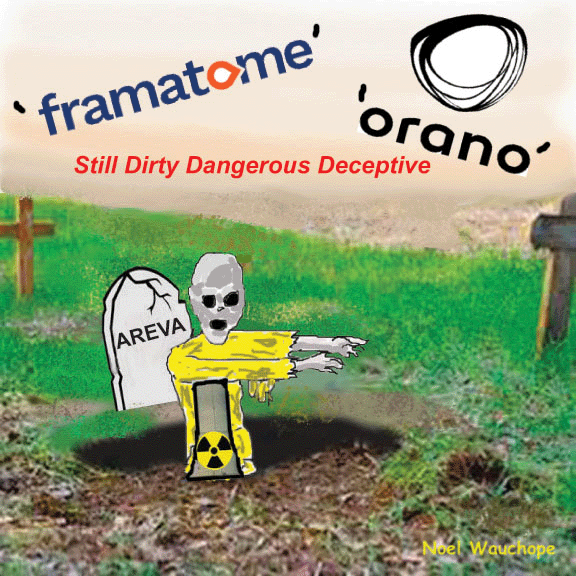
Bankrupt AREVA, resuscitated as ‘Framatome’, joins the the Sizewell C nuclear build Consortium
companies and organisations from across the UK working to design, supply
and construct the proposed nuclear power station in Suffolk, England.
Consortium, we are engaging new partnerships with British companies and
suppliers to support lifetime management of the country’s existing
nuclear facilities and new build projects,” said Marc Duret, managing
director of Framatome in the UK.
https://www.neimagazine.com/news/newsframatome-joins-sizewell-c-consortium-8368345
Cheap and effective, but solar energy is omitted from UK govt’s 10 point plan
 Energyst 19th Nov 2020, Despite being the most cost-effective electricity generating technology for
the foreseeable future according to the Government’s own forecasts, solar
was noticeably absent from the Prime Minister’s announcement, which is
largely a repackaging of policies already announced earlier this year.
While the Government has yet to make its ambitions for UK solar clear there
is lively activity taking place in other parts of the public sector. The
City of London has announced a new 15-year Power Purchase Agreement (PPA)
with developer Voltalia, which will see a 50MW solar park built in Dorset
to supply the City with clean power. STA chief executive Chris Hewett said,
“It is disappointing that Number 10 has yet to grasp the opportunity
presented by solar in the UK. Not only is it set to be the cheapest power
source for years to come, it also provides good jobs and business
opportunities up and down the country.
https://theenergyst.com/uk-solar-industry-body-criticises-lack-of-support-in-ten-point-green-plan/
First canister of used nuclear fuel loaded into Chernobyl storage facility

This storage dump will last for 100 years. But the wastes inside will lasr for 1000s of years . How crazyb is it to just keep on making this toxic trash?
World Nuclear News 19th Nov 2020, The first canister of used nuclear fuel was yesterday loaded into the
Interim Spent Nuclear Fuel Storage Facility (ISF-2) at the Chernobyl plant
in Ukraine. ISF-2 is the largest dry-type used fuel storage facility in the
world and has an operating life of at least 100 years.
https://www.world-nuclear-news.org/Articles/First-assemblies-loaded-into-new-Chernobyl-used-fu
UK: Both Hinkley Point B and Hunterston B nuclear power stations will close early due to cracks in graphite cores
 Times 20th Nov 2020, The Hinkley Point B nuclear power station will close by July 2022 at the
latest, EDF has announced, triggering renewed calls to invest in
replacement reactors. The Somerset plant started generating in 1976 and was
due to close in 2016 but in 2012 EDF secured an extension until March 2023.
However, the reactor developed cracks in its graphite core, which has
limited its operation. EDF said this summer that the Hunterston B plant in
Scotland, which also has cracks in the core, would close earlier than
planned, in January 2022. Tom Greatrex of the Nuclear Industry Association,
said it was “a reminder of the urgency of investing in new nuclear
capacity to hit net zero”.
The Biden- Harris administration can change nuclear weapons policy, make it safer, and much cheaper
 Whatever you think ails this nation, a new generation of ICBMs is not the answer, WP, by Tom Collina and William Perry, November 18, 2020 Tom Z. Collina is director of policy at Ploughshares Fund. William J. Perry was secretary of defense from 1994 to 1997. They are co-authors of the book “The Button: The New Nuclear Arms Race and Presidential Power from Truman to Trump.”
Are any of these challenges addressed by nuclear weapons? Clearly not. Yet the United States is planning to spend well over $1 trillion to rebuild its nuclear arsenal, complete with a new generation of intercontinental ballistic missiles.
The United States can move to a smaller but more secure second-strike nuclear force whose sole purpose is to deter nuclear attack. We do not need to spend hundreds of billions more in a dangerous and futile attempt to “prevail” in a nuclear conflict.
The Biden-Harris campaign has rightly stated that “the sole purpose of the U.S. nuclear arsenal should be deterring — and if necessary, retaliating against — a nuclear attack. As president, [Biden] will work to put that belief into practice, in consultation with our allies and military.”
The best policy would specifically rule out preemptive nuclear attacks, as such attacks have a high risk of starting nuclear war by mistake, and should not be considered under any circumstances. Similarly, a sole-purpose policy should prohibit launching nuclear weapons on warning of attack, as such launches increase the risk of starting nuclear war in response to a false alarm.
The Biden-Harris administration can make a sole-purpose policy more credible and further reduce the risk of accidental launch by retiring the ICBMs. ICBMs are most likely to be used first in response to a false alarm. They are highly unlikely to ever be used in retaliation, as most would be destroyed in any (highly unlikely) Russian nuclear attack against the United States. Thus, ICBMs have no logical role in a U.S. sole-purpose, deterrence-only policy.
This transformational nuclear policy would be win-win: It would free up federal resources to address more urgent needs and, at the same time, reduce nuclear dangers to the nation. In this time of crisis, change and opportunity, our government must have the courage to spend our federal dollars where they are needed most. https://www.washingtonpost.com/opinions/2020/11/17/how-biden-administration-could-create-win-win-situation-nuclear-policy/
The intractible problem of San Onofre’s, and indeed, America’s, nuclear waste

Mosko: Public Safety at Stake in Debate Over Nuclear Waste Storage at San Onofre, https://voiceofoc.org/2020/11/mosko-public-safety-at-stake-in-debate-over-nuclear-waste-storage-at-san-onofre/by SARAH MOSKO 18 Nov 20 SoCal Edison’s  spokesperson, John Dobken, authored an Oct. 20 editorial touting the dry nuclear waste storage system Edison chose when a radiation leak from steam generator malfunction forced permanent closure of the San Onofre Nuclear Generating Station (SONGS) in 2013. Ignoring for the moment the numerous obfuscations and omissions of critical facts, the essence of Dobken’s article is this: Edison wants to divert public attention away from the inadequacies of its dry canister storage system while promising that a deep geological national repository, as mandated in the Nuclear Waste Policy Act of 1982, will magically materialize before their storage canisters fail.
There’s plenty Dobken did not say that the public needs to know.
First off, we are nearly four decades past passage of the Nuclear Waste Policy Act and there is no tangible progress toward creation of a national repository operated by the Department of Energy. The cold hard reality is that no state wants it and, worse still, there is no feasible technology currently available to make a geological repository workable, according to the U.S. Nuclear Waste Technical Review Board. Plans for a geological repository at Yucca Mountain were rejected by Nevada, and subsequent proposals for “interim” storage sites in Texas and New Mexico are opposed by those states too.
Thus, the dream of a national repository remains in limbo for the foreseeable future, and it’s misleading to suggest otherwise. Also misleading is Dobken’s suggestion that, if needed, a failing canister could be transported to “a centralized Department of Energy facility” for repackaging in the future, as no such facility exits anywhere in the United States for this purpose.
Consequently, the plan throughout the country is to leave highly radioactive nuclear waste onsite indefinitely. The relevant 2014 report from the Nuclear Regulatory Commission (NRC) openly states that a repository might never become available. Like all other nuclear plant operators in the United States, Edison is saddled with a storage task never originally intended.
For dry storage, Edison chose thin-walled (just 5/8 inch thick), welded-shut stainless steel canisters which contrast sharply with the 10-19 inch thick-walled and bolted-shut casks many nuclear waste safety advocates in Orange, San Diego, and Los Angeles Counties are advocating for. Unlike the thick casks, SONGS’s canisters are vulnerable to stress corrosion cracking from numerous conditions, such as a salty marine environment like San Onofre. A 2019 Department of Energy report assigned “#1 Priority” to the risk of through-wall cracking in welded, stainless steel canisters in a moist salty environment.
The 73 Holtec canisters at SONGS are warranted for only 25 years, covering only manufacturing defects. This means the warranty excludes environmental conditions like earthquakes, salt air, water intrusion, seagull droppings, and any other corrosive damage to the canisters. Edison has not divulged what the warranty covers on the 51 older Areva canisters, which are already up to 17 years old. Dobken’s statement that the nuclear waste will become less radioactive in 100 years is meaningless in the timescale of the hundreds of thousands of years the waste will remain deadly to humans.
Dobken argues that the fact SONGS’s canisters are welded shut and can never be opened is a plus. This completely ignores the crucial safety requirement in the Nuclear Waste Policy Act that spent nuclear fuel storage containers be designed to be monitored inside and out and the contents retrievable from the containers. Edison purposely chose welded shut canisters, making it impossible to monitor or retrieve the fuel assemblies, which means the canisters can’t lawfully be accepted by the Department of Energy (DOE) for either an interim or permanent storage site.
In listing six other nations that also use welded-shut canisters (Brazil, Mexico, Slovenia, South Africa, Ukraine, United Kingdom), Dobken hopes readers won’t notice these are not countries the United States typically aims to emulate technologically. From that standpoint, a partial list of countries using thick-walled casks is more formidable: Belgium, Finland, France, Germany, Japan, Korea, Netherlands, Russia, Spain, and Switzerland. And, thick casks are used in the United States too, though thin-walled canisters are unfortunately most common.
In arguing that robotic camera technology – which Edison applied to the exterior of a sample of eight of 123 total canisters in 2019 – can be relied upon to detect defects like cracking, Dobken hides the fact that Edison has admitted that this methodology does not meet American standards for an inspection. This is because nuclear storage containers are pressure vessels, thus subject to standards set by the American Association of Mechanical Engineers for safe storage and transport of nuclear pressure vessels which explicitly require use of either magnetic particle or dye penetrant methodology to inspect for defects like cracking (ASME N3).
Edison used neither ASME-approved method simply because they can’t be applied to their canisters which are both too hot, too radioactive and inaccessible in their concrete storage overpacks. Furthermore, a robotic camera can never access the bottoms or inside walls of canisters to look for cracks originating there. Nor can it characterize cracking that might start on the exterior but proceeds laterally rather than straight through the canister wall.
Consequently, many nuclear safety advocates are arguing strenuously for retention of the cooling pools until a specialized dry fuel handling facility (aka “hot cell”) can be constructed onsite. This is because the only means to repackage the radioactive contents of a defective canister into another container is to perform the transfer within a cooling pool or hot cell.
Dobken correctly points out that NRC is nevertheless allowing decommissioned nuclear plants to destroy the cooling pools. This highlights a troublesome relationship between NRC and Edison which the public needs to understand. NRC has granted safety exemptions and waivers in dry storage systems nationwide which has allowed Edison to proceed with a canister system that is unsafe and cannot legally be accepted by DOE into either an interim storage site or permanent repository. Consequently, there is no plan to prevent or stop radioactive releases.
This liaison between NRC and Edison played out during the July 2020 meeting of the California Coastal Commission when NRC representative, Andrea Kock, remained mute as Edison cited the unapproved canister repair technology as justification for destroying the cooling pools. Though community nuclear waste safety advocates ardently cited factual objections, Kock’s silence no doubt helped shape the unanimous vote of the nine commissioners to grant Edison’s request. However, that two commissioners literally uttered “boos” despite casting “yes” votes speaks to doubts about Edison’s plan among the commission’s ranks.
Lastly, Dobken offers no defense for the fact that San Onofre had by far the worst safety record of any nuclear plant in the country during its pre-2012 operation, yet he cries foul any suggestion this should undermine public confidence in how Edison is currently handling dry storage. What’s not mentioned is that, in 2018, it took a conscience-driven whistleblower to expose a near-drop incident where a 54-ton canister loaded with radioactive waste was poised to plummet 18 feet while it was being lowered into its storage overpack. NRC’s subsequent investigation attributed the event to both design flaws and human error and cited Edison with the single most serious violation ever imposed on a spent fuel licensee.
Moreover, it was only because of this incident that Edison bothered to look at the canisters with the contrived robotic camera technology, revealing that essentially all the canisters get scraped/gouged during downloading into storage overpacks.
Dobken makes one point with which everyone agrees: “The public deserves the facts about spent nuclear fuel and its storage.” As the public listens to this debate over safe nuclear waste storage, both sides should be held accountable for underlying motivations. In asking Edison to opt for bolted-shut thick-walled casks with safety features lacking in thin-walled canisters, community safety advocates are seeking safety for their families and communities. Edison, on the other hand, will save untold $millions should the public be swayed to trust in Edison’s promises that their canister system won’t fail and that a national repository will materialize in time to save the day.
Sarah (Steve) Mosko is a local freelance journalist focused on solutions to environmental problems and social injustices.
Trump still has the awesome power to launch America’s nuclear arsenal
 By the Way, Donald Trump Could Still Launch Nuclear Weapons at Any Time The president’s responsibility for the US nuclear arsenal is a Cold War anachronism. The Trump era shows why it needs reform, Wired, .GARRETT M. GRAFF, SECURITY, 11.17.2020
THE NATION IS entering a particularly dangerous period of Donald Trump’s presidency. Still refusing to concede his election loss and angrily tweeting at all hours of the night, Trump faces the dwindling days of his administration, with all the authorities of the office intact and nothing left to lose. Among the authorities he’ll retain until his final minutes in office? The awesome and awful power to launch the United States’ nuclear arsenal on command.
Donald Trump’s “fire and fury” presidency has exposed all too clearly the intellectual fallacy at the heart of the nation’s nuclear plans: that the commander-in-chief will always be the most sober, rational, and conservative person in the room.
Many people assume, wrongly, that some other official has to agree with a presidential order to launch nuclear weapons; surely the White House chief of staff, the secretary of defense, the vice president, or maybe the general in charge of the nation’s nuclear forces has to concur with a presidential launch order, right? Nope. The president can choose to consult with those officials, or whoever else he may like, but from the dawn of the atomic age in the 1940s and 1950s, there has been no procedure to require any such second, concurring opinion in order to authorize a nuclear strike.
Advancing technologies and expanding arsenals have negated that fear; today’s nuclear submarines ensure a so-called “survivable deterrent” such that even under the most extreme surprise attack scenarios, the US could still destroy dozens of foreign targets and kill tens of millions of people.
Even as the underlying technology and need changed, the US has never revisited its launch strategy. It doesn’t have to be this way, though. There’s simply no need for the nation’s weapons to be placed on routine high-alert and left in the hands of a single individual. We shouldn’t have to worry whether presidential whims endanger our world and human civilization.
This isn’t the first wake-up call for the US. In the final days of Richard Nixon’s presidency, as Watergate consumed his administration from within, his top aides worried what he might do. Nixon was despondent and drinking heavily. Those around him raised fears about his mental state; during one meeting with members of Congress he’d reportedly emphasized the world-ending powers at his fingertips …………
The impending end of Donald Trump’s presidency and a new Biden administration provides an important opportunity to reform the nation’s launch authorities. The country should insist upon a new command-and-control system that ensures the same checks and balances that we insist upon elsewhere in the nuclear system, as well as the same checks and balances we insist on other aspects of government power. Such a move would dramatically improve the safety of the world.
Policymakers have sketched out some ideas for what a new system might look like in recent years………..https://www.wired.com/story/donald-trump-nuclear-weapons-system-reform/
1 This Month

Read the Public Inquiry Report, the Commissioners’ report, Surrendering Australia: The AUKUS Deception is available to download for free at aukuspublicinquiry.com. Or just watch the replay of the National Press Club Luncheon.



19 November – Webinar – The Reality of Reprocessing
Time: 11:00 AM Pacific Time (US & Canada) / 2:00 PM Eastern / 7:00 PM UK / 8:00 PM CET
Register for the Zoom Event Here



Shut down the radiation-damaged Heysham nuclear reactors now
To see nuclear-related stories in greater depth and intensity – go to https://nuclearinformation.wordpress.com

Say No to NASA’s Reckless Nuclear Reactor on the Moon
Say No to NASA’s Reckless Nuclear Reactor on the Moon
-
Archives
- November 2026 (109)
- October 2026 (302)
- September 2026 (339)
- August 2026 (330)
- July 2026 (355)
- June 2026 (287)
- May 2026 (306)
- April 2026 (356)
- March 2026 (251)
- February 2026 (267)
- January 2026 (308)
- December 2025 (358)
-
Categories
- 1
- 1 NUCLEAR ISSUES
- business and costs
- climate change
- culture and arts
- ENERGY
- environment
- health
- history
- indigenous issues
- Legal
- marketing of nuclear
- media
- opposition to nuclear
- PERSONAL STORIES
- politics
- politics international
- Religion and ethics
- safety
- secrets,lies and civil liberties
- spinbuster
- technology
- Uranium
- wastes
- weapons and war
- Women
- 2 WORLD
- ACTION
- AFRICA
- Atrocities
- AUSTRALIA
- Christina's notes
- Christina's themes
- culture and arts
- Events
- Fuk 2022
- Fuk 2023
- Fukushima 2017
- Fukushima 2018
- fukushima 2019
- Fukushima 2020
- Fukushima 2021
- general
- global warming
- Humour (God we need it)
- Nuclear
- RARE EARTHS
- Reference
- resources – print
- Resources -audiovicual
- Weekly Newsletter
- World
- World Nuclear
- YouTube
-
RSS
Entries RSS
Comments RSS

