Asia and Pacific powering ahead with decentralised renewable eneergy
The Asian Development Bank (ADB), United Nations Economic and Social Commission for Asia and the Pacific (ESCAP) and the United Nations Environment Program (UNEP) released the report “Green Growth, Resources, and Resilience” this week.
 On the road to green economies, Malaya Business Insights, 24 Feb12, Net metering is empowering electric consumers in the Philippines. The scheme is embodied in the Philippines’ Renewable Energy Act of 2008 – considered to be the most comprehensive renewable energy law in Southeast Asia.
It allows electric consumers to sell power to the grid at an approved feed-in tariff and buy power as necessary at the normal retail tariff. The feed-in tariff will provide a guaranteed fixed price for at least 12 years for electricity produced from emerging renewable resources: wind, solar power, ocean, run-of-river hydropower, and biomass.
With net metering, the consumer generates electricity at the point of use, and is able to supply excess electricity generated into the grid, either earning revenue or reducing net payable consumption.
Net metering provides a regulatory basis for distributed and decentralized energy systems and at the same time provides a powerful incentive for end-use efficiency improvements. Net metering can be combined with feed-in-tariffs to promote renewable energy generation in decentralized applications. Continue reading
Polynesian nuclear victims distrust French government on compensation
PACIFIC ISLANDS REPORT Pacific Islands Development Program/East-West Center With Support From Center for Pacific Islands Studies/University of Hawai‘i
TAHITI NUCLEAR ATOLL COMPENSATION CHANGES DISMISSED
French president’s amendments ‘an election-related move’ WELLINGTON, New Zealand (Radio New Zealand International, Feb. 15, 2012) – The Moruroa e tatou veterans group in French Polynesia is dismissive of a French decree loosening the compensation criteria for victims of the nuclear weapons tests. Continue reading
Polynesia’s radioactive pollution from France’s nuclear bomb tests
 France’s upper chamber approved a motion that provides for Mururoa and Fangataufa, currently under the control of the defence ministry, to be restored to the Polynesian public domain, though the bill stands little chance of becoming law. “We realise that they are the two largest nuclear dumps in an ocean environment. But in Oceania you cannot separate human beings from their ecosystem,” says the author of the bill, Senator Richard Tuheiva. “Restitution [of the atolls] is a way of soothing the psychological wounds [caused by the nuclear era].”
 about 5kg of plutonium is trapped in the sediment at the bottom of the Mururoa and Fangataufa lagoons, ……. There is no question of them returning to “normal” use.
 France urged to clean up deadly waste from its nuclear tests in Polynesia, Guardian UK, 7 Feb 2012, 193 nuclear tests carried out on the Mururoa and Fangataufa atolls between 1966 and 1996 have left a dangerous legacy. Continue reading
Worry over nuclear transport through Caribbean Sea
Hazardous waste through the Caribbean Sea a concern The Barbados Advocate, 1/23/2012 There is concern over the transportation of hazardous nuclear waste and other hazardous material through the Caribbean Sea which are potential threats to lives, health, the environment and our economies.
This comes from Ambassador Raymond Wolfe, speaking on behalf of the Caribbean Community (CARICOM) to the General Assembly’s Social, Humanitarian and Cultural Committee….
He said that the focus on shipping and maritime commerce must also include improved measures, regulations and standards governing maritime safety, the training of seafarers and the safety of navigation at sea, including the safety of shipping vessels… while CARICOM acknowledges the rights of Member States to use nuclear energy for peaceful purposes, there still remains a concern,” he stressed…….. http://www.barbadosadvocate.com/newsitem.asp?more=local&NewsID=22326
French Polynesia to regain islands, France to provide radiation protection
most of the radioactive material was transported into the upper atmosphere and dispersed.”….
in August 2006, an official report by the French government confirmed the link between an increase in cases of thyroid cancer on the atolls and France’s atmospheric nuclear tests.
French Senate OKs Return of Nuclear Test Atolls to French Polynesia PARIS, France, January 19, 2012 (ENS) http://www.ens-newswire.com/ens/jan2012/2012-01-19-01.html – The Senate of France has passed legislation that transfers two Pacific atolls used for atmospheric and underground nuclear testing back into the public
domain of French Polynesia….
…If the proposed legislation becomes law, the atolls would be returned to French Polynesia, but France would continue environmental remediation and monitoring of radiation
and geomechanics there “in a sustainable manner.” Continue reading
Fiji, Pacific Islands adopt International Renewable Energy Agency program
 Fiji, PICs go for renewable energy Fiji Times, Tevita Vuibau, January 21, 2012 FIJI has joined other Pacific Island countries (PICs) in adopting the Abu Dhabi Communique on Accelerating Renewable Energy Uptake for the Pacific.
According to a statement, Fiji adopted the communique at the conclusion of the Pacific leaders meeting, which preceded the second session of the International Renewable Energy Agency (IRENA) assembly.
Prime Minister Commodore Voreqe Bainimarama headed the country’s delegation to the meeting in Abu Dhabi in the United Arab Emirates.
As part of the communique, the Pacific Island countries resolved to use the large and under-utilised potential for renewable energy in the Pacific region….. He said it… was imperative that Fiji develop a meaningful relationship with IRENA. http://www.fijitimes.com/story.aspx?id=191377
Time France gave back its atomic test islands to their Pacific peoples
 The two atolls Moruroa and Fangataufa were ceded to France at no cost in 1964 to allow its military to begin testing its nuclear weapons.
The two islands were used as nuclear weapon testing sites in the late 1960s by the French government which made use of ship-based, bomb, and atmospheric detonation trials.
TAHITI LEADER PUSHES FOR RETURN OF NUCLEAR ATOLLS President calls for France to give back Moruroa and Fangataufa WELLINGTON, New Zealand (Radio New Zealand International, ) 19 Jan 12, Pacific Islands Development Program/East-West Center With Support From Center for Pacific Islands Studies/University of Hawai‘i – The French Polynesian president Oscar Temaru has called for street protests should France refuse to return the two atolls used for its nuclear weapons tests.
Mr. Temaru made the call as one of the territory’s senators, Richard Tuheiava, is to submit a proposed law in Paris seeking the atolls’ return and a review of the compensation offered for the tests’ impact. Continue reading
International Renewable Energy Agency (IRENA) to boost clean energy for Pacific region
Renewable resources are a competitive, low-cost alternative for fossil fuels for the Pacific, and some inspiring renewable energy goals are being set.
Today’s meeting – which included six Heads of State and IRENA Members in the Cook Islands, Federated States of Micronesia, Fiji, Kiribati, Marshall Islands, Nauru, Niue, Palau, Papua New Guinea, Samoa, Solomon Islands, Tonga, Tuvalu and Vanuatu – discussed IRENA’s proposed role in accelerating its deployment, opportunities for collaboration with
other stakeholders and development partners, and provided guidance on IRENA’s new proposals, ensuring that they accord with the Pacific Leaders’ policy goals and priorities.
IRENA meeting heralds new Regional Energy Era (Wam) Khaleej Times, 13 January 2012 ABU DHABI – A Pacific Leader’s Meeting held on Friday in Abu Dhabi by the International Renewable Energy Agency (IRENA) in advance of its Second Assembly, (January 14-15), issued a public communique confirming the Agency’s proposed work activities to accelerate renewable energy deployment in this important region, which is currently heavily dependent on fossil fuels. Continue reading
Renewables supply 39% of Philippines energy needs, and thousands of jobs
Aquino optimistic on renewable energy, Business World, Johanna D. Poblete, 13 Jan 12, PRESIDENT BENIGNO S.C. Aquino III is optimistic the Energy department will achieve an increase in the production of alternative renewable energy that would redound to an increase in employment by 2015.
He noted, for instance, that nearly 39% of the country’s energy requirements are now provided by renewable sources, namely, hydropower, geothermal, solar, wind and biomass.
“We project that the contribution of the biomass sector will increase from 39 megawatts of energy in 2010 to more than 300 megawatts by 2015,” Mr. Aquino said in his speech at the opening of the 1st Philippine International BioEnergy Conference on Thursday.
“Our projections also indicate that in achieving this goal, around 89,000 more jobs will be generated for Filipinos,” he added.
The President said that the development of the industry has a “multiplier effect” not just in terms of empowering consumers, but also by stimulating attendant sectors. “The effects of advancing the biomass sector will also reach close to 577,000 farm families who can benefit, for example, by gaining additional income [from] the sale of agriwaste or forest residues that
can be used in the development of biomass resources,” Mr. Aquino said…. http://www.bworldonline.com/content.php?section=Economy&title=Aquino-optimistic-on-renewable-energy&id=44991
Radiation study on muttonbirds in the Pacific
 Muttonbirds in radiation study Stuff.co.nz MICHAEL DALY, 22 Dec 11, New Zealand muttonbirds are being studied to see if they were affected by radiation from Japan’s damaged
nuclear power plant.
Samples are being taken from the birds as part of the research into the effects of radiation from the Fukushima plant, …. The research aims to determine the degree to which the mutton bird population was exposed to radiation.
Experts have said the Fukushima disaster was responsible for the largest single release of radioactivity into the ocean, threatening wildlife and fisheries in the region.
Millions of the birds, known as sooty shearwaters, come to this country to breed during the summer months before heading north during the colder southern months….Adams said it was planned to take tissue samples from birds in this country in late March or early April.
Sooty shearwaters had been chosen for the research mainly because they were one of the most abundant seabirds in the Pacific…. http://www.stuff.co.nz/national/6179864/Muttonbirds-in-radiation-study
Tiny Pacific island Tokelau to go %100 renewable energy – Durban report
 Tokelau to be first renewable energy nation Tokelau plans to use only renewable energy from next year. [ABC], Australia Network News, 9 Dec 2011 The tiny Pacific nation of Tokelau has told a UN conference it plans to use only renewable energy within a year. It would be the first country in the world to do so.
The head of the Tokelau Government, Foua Toloa, toldPacific Beat although his country is small, it has a powerful message.
“By September, 2012 – Tokelau will be the first nation 100 per cent renewable energy efficient, fulfilling our global obligation,” he said.
“We are making sure our voice is being heard here – especially the smallest of the small here in Durban”. Attending the UN conference in South Africa the Tokelau representatives have called for a legally-binding agreement of emission pledges from all countries. http://australianetworknews.com/stories/201112/3387536.htm?desktop
Philippines ditches nuclear power study
DoE shelves P100M nuclear safety study, Budget to be channeled to other energy programs, Amy R. Remo, Philippine Daily Inquirer, November 28th, 2011 The Department of Energy (DoE) has completely shelved its P100-million nuclear safety study and will instead channel the full amount to more important energy programs of the government.
Energy Secretary Jose Rene D. Almendras told the Inquirer that the bulk, or 40 percent, of the budget would go to the Fueling Sustainable Transport Program (FSTP). With the program, DoE hopes to reduce greenhouse gas emissions while providing cheaper alternatives to gasoline and diesel….. http://business.inquirer.net/32403/doe-shelves-p100m-nuclear-safety-study
Concern in northern Hawaiian island about radiation from Japan
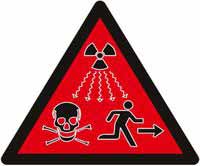 Why is the Pentagon involved in providing free health care clinics, up to 350 clinical and non-clinical medical personnel, for Kauai’s residents, the north island closest to Japan? Is the Pentagon concerned about radioactive cesium plumes carried by the wind currents across the Pacific Ocean from Fukushima’s nuclear meltdowns?
The big utility lobbyists that pay off our politicians are destroying our lands and our lives. When President Obama says nuclear power is safe, it doesn’t automatically make them safe.
Japan’s Nuclear Radiation and the Pentagon’s Free Medical Clinics in Kauai: Connection? BuzzFlash Blog, JACQUELINE MARCUS , 16 Nov 11 Climate change produced Japan’s catastrophic earthquake and tsunami. Although the corporate media and the U.S. government have swept the Fukushima nuclear disaster under the proverbial censorship rug, it’s important to remember that an earthquake measuring 9.0 on the Richter scale and the ensuing 50-foot high tsunami wave led to a meltdown of three of Japan’s Fukushima Daiichi nuclear reactors. Japan’s nuclear regulatory agency reported that 31 radioactive isotopes were released. In contrast, 16 radioactive isotopes were released from the A-bomb that hit Hiroshima Aug. 6, 1945. The agency also reported that radioactive cesium released was almost 170 times the amount of the A-bomb, and that the release of radioactive Iodine-131 and Strontium-90 was about two to three times the level of the A-bomb. And that information doesn’t include the unknown deadly amount of radioactive water from the Fukushima plants that are being perpetually dumped into the Pacific Ocean since the meltdowns occurred last March 2011….. Continue reading
New Zealand MP seeks inquiry on Australia’s nuclear shipments
Uranium passing through NZ ports, Sky News October 30, 2011 A Greens MP has called for an inquiry into Australian shipments of radioactive uranium passing through New Zealand waters and ports in breach of its anti-nuclear stance.
Fortnightly shipments of Australian yellowcake uranium, totalling five thousand tonnes annually, are being shipped through New Zealand ports, according to documents provided to the Sunday Star Times by Green MP Gareth Hughes.
The paperwork shows the Environmental Risk Management Authority (ERMA) was unaware of the shipments for 13 years, until late 2009.
That agency had since been replaced by the new Environmental Protection Authority, and an EPA spokeswoman told the newspaper that even though ERMA was unaware of the shipments, the regime that permitted them to pass through New Zealand’s ports had still followed international best practice…..
A spokesman for Prime Minister John Key told the Sunday Star Times yellowcake was ‘Australian dirt, which is essentially harmless’…..
Hughes is calling for an independent inquiry, saying the shipments had no place in a nuclear-free country.
‘Why did the authority fail to approve it for so long, do we have adequate safeguards and response strategies, and what role is New Zealand playing in the international nuclear cycle?’ he said. http://www.skynews.com.au/eco/article.aspx?id=679499&vId=
Cook Islands must develop renewable energy
The Cook Islands lacks major natural resources and regularly experiences natural disasters. Climate change spurred on by rapidly increasing levels of greenhouse gases is expected to heavily impact the region, with salt intrusion into ground water from rising seas a major concern.
Renewable Energy An Imperative For The Cook Islands, Renewable Energy News, by Energy Matters, 4 Oct 11 The Cook Islands, Japan and Pacific Islands Forum Secretariat have stated renewable energy is no longer an optional energy solution for the Pacific region, but an imperative.
Speaking at a signing ceremony for the Rakahanga $1m PV Project, a project designed to reduce the need for generator fuel, Cook Islands Prime Minister Hon Henry Puna, the Forum Deputy Secretary General and Ambassador of Japan said the region must invest heavily in renewable energy – and that investment must be backed by strong political will. Continue reading
1 This Month


PLEASE OPPOSE HR 8255 AND S.3639 – bills would accelerate satellite deployment, with no environmental review or safeguards – https://ncstd5li.quorum.us/campaign/169331/
To see nuclear-related stories in greater depth and intensity – go to https://nuclearinformation.wordpress.com
-
Archives
- September 2026 (194)
- August 2026 (330)
- July 2026 (355)
- June 2026 (287)
- May 2026 (306)
- April 2026 (356)
- March 2026 (251)
- February 2026 (267)
- January 2026 (308)
- December 2025 (358)
- November 2025 (359)
- October 2025 (375)
-
Categories
- 1
- 1 NUCLEAR ISSUES
- business and costs
- climate change
- culture and arts
- ENERGY
- environment
- health
- history
- indigenous issues
- Legal
- marketing of nuclear
- media
- opposition to nuclear
- PERSONAL STORIES
- politics
- politics international
- Religion and ethics
- safety
- secrets,lies and civil liberties
- spinbuster
- technology
- Uranium
- wastes
- weapons and war
- Women
- 2 WORLD
- ACTION
- AFRICA
- Atrocities
- AUSTRALIA
- Christina's notes
- Christina's themes
- culture and arts
- Events
- Fuk 2022
- Fuk 2023
- Fukushima 2017
- Fukushima 2018
- fukushima 2019
- Fukushima 2020
- Fukushima 2021
- general
- global warming
- Humour (God we need it)
- Nuclear
- RARE EARTHS
- Reference
- resources – print
- Resources -audiovicual
- Weekly Newsletter
- World
- World Nuclear
- YouTube
-
RSS
Entries RSS
Comments RSS
 nuclear-news