Filipino people against startup of Bataan Nuclear Power Plant (BNPP)
Petilla: PHL still not ready for nuclear power June 1, 2015 LINGAYEN, Pangasinan—The operation of the mothballed Bataan Nuclear Power Plant (BNPP) and the putting up of a similar one in any part of the country is next to impossible considering the mind-set of the Filipino people.
This in essence, is the opinion of Energy Secretary Carlos Jericho L. Petilla in reaction to the report that former Pangasinan Fifth District Rep. Mark Cojuangco, who is eyeing to run for governor of the province, has not abandoned his earlier call for the operation of the BNPP.
There was also a report that in order to prove that a nuclear plant is safe, he is willing to let one nuclear plant built next to his house in Sison, Pangasinan. http://www.businessmirror.com.ph/petilla-phl-still-not-ready-for-nuclear-power/
Distrust in New Zealand about Commission to study effects of Pacific nuclear bombing
Nuclear testing victims dubious about commission http://www.radionz.co.nz/international/pacific-news/274486/nuclear-testing-victims-dubious-about-commission The head of an organisation representing victims of nuclear testing in French Polynesia says a commission set up to assess the aftermath of the testing could just be a charade.

It was set up by France’s defence minister, and will be made up of 24 members and chaired by the French High Commissioner in Papeete.
The director of Moruroa e Tatou, which represents victims of testing on the atolls of Mururoa and Fangataufa, says 80-percent of the members suffer serious health conditions, including cancer.
Roland Oldham is questioning why more more evidence is needed.
“Why more more and more commissions…isn’t there enough proof now that it had a bad impact on the environment, and a bad impact on the health of polynesian people – itsn’t it enough proof?”
He says they will make themselves heard.
“As far as we’re concerned, we will be speaking with a very loud voice, because we have had enough of all these lies, of 40 years of lying, and if this commission’s just for another lie, then it’s just a waste of money and a waste of time.”
Mr Oldham says the first meeting will be held in two days.
New Zealand leads the world in nuclear thinking
 NZ leader in ‘nuclear thinking’ http://www.nzherald.co.nz/northern-advocate/news/article.cfm?c_id=1503450&objectid=11444033 By Lindy Laird May 6, 2015 New Zealand still punches above its weight in the fight for nuclear weapon disarmament, says Whangarei MP Shane Reti who has just returned from an international conference on the subject.
Mr Reti, the executive secretary of the New Zealand Parliamentarians for Nuclear Non-Proliferation and Disarmament, said the Kiwi delegation had no qualms about telling giants like the US to hurry up and decrease its nuclear arsenal.
He was in New York at the five-yearly United Nations review of the Nuclear Non-Proliferation Treaty (NPT) last week with Labour MP Phil Goff, who is the Parliamentary anti-nuclear weapons group’s chairman, and NZ Disarmament Ambassador Dell Higie.
“New Zealand is well recognised as leading the world in nuclear thinking.
“We have substantive countries coming to us and saying ‘we’re under the nuclear umbrella, could you speak for us?’,” Mr Reti said.
“We do tell our story, that gives us some leverage,” he said of New Zealand’s anti-nuclear history which includes banning US nuclear weapons-carrying or powered naval ships. But 45 years after the “P5″ nuclear nations – US, United Kingdom, France, China and Russia – agreed to the NPT, dubbed the “grand bargain”, their massive weapons stocks still exist. That grand bargain was essentially if those countries were allowed to keep their nuclear capability in the meantime, they would begin to disarm,” Mr Reti said.
“It’s turning out to be no bargain and nothing grand. It isn’t happening fast enough. The issue for New Zealand at the conference was ‘you need to keep your word’.”
“The ‘Nuclear 5′ are recalcitrant, and the rest of the world is restless,” he said.
Those five nations are also the permanent members on the UN security council. New Zealand and other delegates want the disarmament issue raised in the general assembly forum instead of that security council.
The international focus is shifting to the humanitarian perspective “that moves beyond balancing weapons and talks about body counts”, Mr Reti said. “It also supports, and embedding in legislation de-alerting, or ‘take the finger off the trigger’ – where hours or days instead of minutes are taken to consider launching any retaliatory missiles. In 1983 an electrical storm appeared on Russian screens as a US nuclear missile attack and a counter attack was only avoided because a Russian expert on duty that day demanded visual confirmation,” Mr Reti said.
“Geese flying in large formations have appeared on military screens as a nuclear missile launch.”
Nuclear power would be a ‘last resort’ for earthquake prone Indonesia: safer options preferred
Nuclear power a ‘last resort’, says VP The Jakarta Post, Jakarta | National | Tue, April 14 2015 Vice President Jusuf Kalla insists nuclear energy is a last resort for Indonesia, saying the country has alternative options more in line with the country’s geologic and sociological conditions for addressing the looming energy crisis.
“Nuclear is suitable only in Java, and this is a last resort. The sophisticated technology developed by Japan in building its nuclear energy [was not even foolproof], as its plant also leaked”, he said, in an apparent reference to the Fukushima nuclear meltdown in 2011. Such risk is very high for Indonesia, which would not be able to handle it extra cautiously,” he said in a seminar on energy diversification here on Tuesday…….He added it was difficult to build a nuclear power plant in the country because it would elicit strong protests from the public and environmentalists. – See more at: http://www.thejakartapost.com/news/2015/04/14/nuclear-power-a-last-resort-says-vp.html#sthash.1NRm8NuU.dpuf
– See more at: http://www.thejakartapost.com/news/2015/04/14/nuclear-power-a-last-resort-says-vp.html#sthash.1NRm8NuU.dpuf– See more at: http://www.thejakartapost.com/news/2015/04/14/nuclear-power-a-last-resort-says-vp.html#sthash.1NRm8NuU.dpuf
Appeal in Marshall Islands case against USA
 Marshall Islands Will Appeal in Nuclear Case Against US http://abcnews.go.com/US/wireStory/marshall-islands-appeal-nuclear-case-us-30067766 UNITED NATIONS — Apr 2, 2015, By CARA ANNA Associated Press The tiny Pacific nation of the Marshall Islands is persisting with an unprecedented lawsuit demanding that the United States meet its obligations toward getting rid of its nuclear weapons. It filed notice Thursday that it will appeal a federal judge’s decision to dismiss the case. Continue reading
Cyclone Pam – forerunner to more climate disaster for Vanuatu and the world
the Guardian’s campaign for divestment from fossil fuels is so important. If you haven’t signed it already, do so for Vanuatu. http://www.theguardian.com/commentisfree/2015/mar/19/developed-nations-sow-wind-vanuatu-reaps-whirlwind
 Developed nations have sown the wind, Vanuatu has reaped the whirlwind, Guardian, 19 Mar 15 Andrew Simms As emissions alter weather patterns, island nations are the bellwethers that show what our future will be if we fail to tackle climate change……..joint work in 2011 by the National Oceanic and Atmospheric Administration in the US and the UK’s Met Office concluded that a Texas heatwave was 20 times more likely to be caused by climate change than by natural weather variation. A winter warm spell in Britain the same year was 62 times more likely than in the 1960s. The Met Office’s Hadley Centre now confidently states that it “can identify any changed risk of such events”.
In time, more analysis will be done on Cyclone Pam, but Lonsdale’s personal experience and gut reaction fits a pattern of expectations described in the most recent and most comprehensive collation of science on extreme events in theIPCC’s Fifth Assessment Report. It concluded that: “The frequency of the most intense storms will more likely than not increase in some basins. More extreme precipitation near the centres of tropical cyclones making landfall is projected in North and Central America, east Africa, west, east, south and southeast Asia as well as in Australia and many Pacific islands.”
So, while the present is pretty bad for Vanuatu, in a warming world the future looks set to worsen. For this island nation, that is bitterly ironic. . Vanuatu is an archipelago in the western Pacific, famous for having no regular military. When it topped the index in 2006 its ecological footprint per person was no higher than those in non-industrialised countries like Mali and Swaziland, life expectancy matched that in Turkey, and life satisfaction levels were considered as high as New Zealand’s. It is democratic, rich in natural wealth but, being remote, exports little, avoiding the scramble of competing in global markets. It is also hugely culturally diverse with more than 100 languages spoken across its islands.
Small island states tend to do very well in the index topped by Vanuatu. Over countless generations and in the face of geographical isolation, many Pacific islands developed more cooperative economies and highly resilient farming methods. In a warming world they are bellwethers, and carry lessons for us all. If climate change renders small island states unliveable, the international community will sooner or later have to learn to accept and support environmental refugees. Though this would be tragic, remote island populations can, at least, relocate. However, blue island-planet populations cannot.
We will seal our own fate if we fail to learn to share and live within our overall environmental thresholds. There is a long way to go. The World Bank recently tweeted that climate change exacerbates the risk of already costly disasters. It’s a shame then, that as recently as 2012-13 the World Bank Group increased lending to $2.7bn for fossil fuel projects, including toward new oil and gas exploration.
It’s one more reason why the Guardian’s campaign for divestment from fossil fuels is so important. If you haven’t signed it already, do so for Vanuatu. http://www.theguardian.com/commentisfree/2015/mar/19/developed-nations-sow-wind-vanuatu-reaps-whirlwind
South Carolina – problem of nuclear wastes at coal plant
Nuclear waste, arsenic at SC coal plant raise concern BY SAMMY FRETWELL sfretwell@thestate.com March 7, 2015 HARTSVILLE, SC — Just a few hundred yards from Lake Robinson lies an old waste pond that, until this year, was among the least of Duke Energy’s worries in the Carolinas……..documents that have surfaced recently show the unlined 55-acre basin has leaked arsenic – and it has the unusual legacy of being a dump site for low-level nuclear waste. Both findings are producing new questions about how to cleanse the mess at Duke Energy’s H.B. Robinson power station……..
in the 1980s, at least 69,000 cubic meters of radiation-tinged sediment wound up in the coal ash pond from the nuclear plant, a rare occurrence because most power plants don’t include both coal-and nuclear-fired units.
State regulators in South Carolina said they knew of no other power plant site where atomic waste wound up in a coal ash pond. A spokesman for the Nuclear Regulatory Commission in Atlanta said the practice is rare…….http://www.thestate.com/2015/03/07/4031773_nuclear-waste-arsenic-at-sc-coal.html?rh=1
Asian and Pacific green Parties unite in aim for nuclear free region
 Green Parties call for a nuclear free region on anniversary of Fukushima, Global Greens 10 March, 2015 “……The Green Parties of the Asia Pacific region offer our sincere condolences for the tragedy suffered, and our solidarity with the people and Green Party of Japan.
We use this anniversary to remind the Governments of the world, that it is the responsibility of all nations to ensure the safety of our planet.
There is no doubt, the suffering for the Japanese people has been immense, especially for those living in and around Fukushima, and it is not yet over. The world has already witnessed suffering following nuclear disasters in Chernobyl (Ukraine), Khystym (Russia), Sellafield (United Kingdom), and Three Mile Island (USA). However, there are currently 71 new nuclear plants under construction around the world, the majority of which are in the Asia Pacific region (China 26, Taiwan 2, India 6, Japan 2, Pakistan 2, South Korea 5). (3)
It is time we fully committed to a nuclear-free world.
 Whether your country is listed as one of these constructing further nuclear plants or not, we are all implicated in the nuclear supply chain – through uranium mining, refining, power generation, radioactive waste, nuclear weapons, or through complicity by not discouraging the practice of our trading partners.
 Green Parties around the globe oppose the expansion of nuclear power and are working to rapidly phase it out. Nuclear energy is not the emissions-free solution that the world needs to address climate change, in fact, it is a net producer of greenhouse gases.(4)
As we have seen with Fukushima, the human and planetary costs are too high, and when examining the nuclear supply chain, it is simply ineffective at reducing emissions.
We need to stay focused on transitioning to clean renewable energy sources – these are not only safer, but offer a more equitable solution. We can achieve economic development with genuine quality of life through a sustainable smart green economy. Examples of this kind of development include community-based, co-operative, renewable energy operations complemented by reduced energy consumption through electricity saving government policies.
At this critical moment, we ask the people Asia Pacific to call on their governments to:
- Commit to a nuclear-free world.
- Move to clean equitable renewable energy solutions for your country
- Provide democratic process in citizens’ referenda on nuclear power.
- Ensure information transparency, participatory democracy, social and environmental justice for residents living near power plants and nuclear waste fields.
- Prioritise in decision-making the wellbeing of our planet and future generations.
Signatories:
The Asia-Pacific Greens Federation (APGF) Coordination Committee
The APGF’s members are:
- Australia: Australian Greens
- India: Uttarakhand Parivartan Party (UKPP)
- Indonesia: Sarekat Hijau (Indonesian Green Union)
- Japan: Greens Japan
- Korea, Republic of: Green Party Korea
- Mongolia: Mongolian Green Party
- Mongolia: Civil Will Green Party of Mongolia
- Nepal: Nepali Greens (Green Civil Society)
- New Zealand: Green Party of Aotearoa New Zealand
- Pakistan: Pakistan Green Party
- Taiwan: Green Party Taiwan http://www.globalgreens.org/news/green-parties-call-nuclear-free-region-anniversary-fukushima
Threats for oil drillers and others, in the Arctic’s submerged radioactive trash from Russia
The Norwegian government has spent more than $126 million on Russian nuclear safety projects in the last two decades, according to the Norwegian Radiation Protection Authority.
The 17,000 dumped containers are also a potential disaster, creating a minefield for oil companies looking to drill in the area, particularly because the exact locations of most of the containers are unknown.
The Soviet Union Dumped A Bunch of Nuclear Submarines, Reactors, and Containers into the Ocean https://news.vice.com/article/the-soviet-union-dumped-thousands-of-nuclear-submarines-reactors-and-containers-into-the-ocean By Laura Dattaro February 21, 2015 The 1986 Chernobyl disaster in Ukraine remains one of the worst nuclear incidents in history and highlighted the risks of generating power by splitting atoms. But it’s not the only nuclear waste the Soviet Union left behind. Scattered across the ocean floor in the cold waters of the Arctic are nuclear submarines and reactors dumped by the Soviets up until the early 1990s.

Now, as energy companies are seeking to drill in those same waters, the Russian government has shown an interest in cleaning up its nuclear waste. But after decades of sitting on the ocean floor, some of the most dangerous pieces may be too unstable to remove, leaving the potential for radioactive material to leak, which could disrupt commercial fisheries and destroy aquatic ecosystems.
“Taking reactors and cutting out the bottom of your ships and letting them sink to the bottom is about as irresponsible as you can get when it comes to radioactive waste,” Jim Riccio, a nuclear expert with Greenpeace, told VICE News. “We’ve had some weird [behavior] in this country where we haven’t been all that great with it but nothing that rose to the level of what the Soviets had done.” Continue reading
Russia’s sunken nuclear submarines pose danger in the Arctic
Discarded Russian submarines could cause a nuclear disaster in the Arctic JEREMY BENDER Business Insider, 14 Feb 15 The Arctic could become a site of future turmoil, and not just because of the emerging geopolitical tensions and militarization in the region.
Beyond concerns of a frozen conflict in the icy north, there is the additional fear that the Barents and Kara Seas could become the location of a slow-motion nuclear disaster. Until 1991 the Soviet Union used the seas as a junkyard where it would dispose of its nuclear waste.
Accordingto the Bellona Foundation, citing theNorwegian Radiation Protection Authorities (NRPA), the Soviet Union dumped “19 ships containing radioactive waste; 14 nuclear reactors, including five that still contain spent nuclear fuel; 735 other pieces of radioactively contaminated heavy machinery; 17,000 containers of radioactive waste,” and three nuclear submarines in the seas.
Disposing of nuclear waste and spent reactors at sea was actually a common practice around the world until the early 1970s. But the Soviet Union dumped a significant amount of material into bodies of water that were sometimes not that far from neighbouring countries.
Three scuttled nuclear submarines are the most dangerous of the disposals for the overall safety of the region — the K-27, the K-278, and the K-159, according to The Moscow Times. Of those, the K-27 is the one most likely to cause a Chernobyl-like event in which the casings of the reactors fail and dangerous amounts of radiation escape into the environment.
The K-27 is particularly risky, the BBC reports, due to its unique design. The submarine, which was launched in 1962, was experimentally developed with two previously untested liquid-metal cooled reactors. Soon after deployment the submarine began emitting high levels of radiation, poisoning its crew.
In 1981, the Soviet Union sunk the submarine in the Kara Sea. But the sub was scuttled at a depth of only 99 feet (30 meters), significantly below international guidelines………
“K-159 represents the biggest potential for emission, considering the levels of radioactivity in the reactors, compared with other dumped or sunken objects in the Kara Sea with spent nuclear fuel or radioactive waste,” Ingar Amundsen, the head of the NRPAtoldthe Barents Observer…….. http://www.businessinsider.com.au/potential-chernobyl-like-disaster-in-arctic-2015-2
Forgotten Pacific Island nuclear bomb atrocities – example Kalama Island and Sand Island
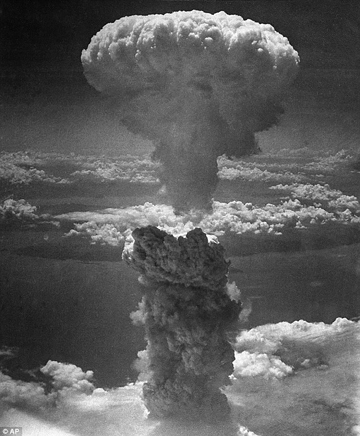
As with all Pacific nuclear test sites, the end of nuclear testing has not ended the nuclear hazard for the peoples of the Pacific. The US government must take responsibility for the full clean up of Johnston Atoll.
Cleaning up Johnston Atoll, Nautilus Institute, Nic Maclellan, 25 November 2005
From the beginning of the nuclear age, the peoples of the Pacific islands have borne the brunt of nuclear weapons testing by France, Britain and the United States. Seeking “empty” spaces, the Western powers chose to conduct Cold War programs of nuclear testing in the Pacific. Between 1946-1996, over 315 atmospheric and underground nuclear tests were conducted at ten different sites in the desert of Australia and the islands of the central and south Pacific. The nuclear powers showed little concern for the health and well-being of nearby island communities, and those civilian and military personnel who staffed the test sites.
Between 1946 and 1958, the US military conducted 67 nuclear tests at Bikini and Enewetak Atolls in the Marshall Islands. Less well known are the US nuclear tests on Johnston Atoll in 1962.
Johnston Atoll is located between the Marshall Islands and Hawai’i, and is known to the Kanaka Maoli people as Kalama Island. The island was claimed for the Kingdom of Hawai’i in July 1858, with the support of King Kamehameha.
With the US take-over in Hawai’i in 1898, Johnston effectively became a US possession, even though the Territory of Hawai’i continued to claim jurisdiction over Kalama Island and Sand Island (which made up the atoll) into the twentieth century. Continue reading
AUDIO: Marshall Islands loses nuclear lawsuit against USA
| AUDIO: Marshall Islands loses nuclear lawsuit against USA http://www.radioaustralia.net.au/international/radio/program/pacific-beat/marshall-islands-loses-nuclear-lawsuit-against-usa/1413323 |
The United States has dismissed a nuclear disarmament lawsuit brought about by Marshall Islands. Last month, the case was tentatively dismissed, but a decision last week has ruled the case had no grounds and any action by the courts would violate the “separation of powers” doctrine.
Meanwhile, the court battle to get a naturalised Marshall Islands citizen onto the ballot for the US elections in November will make its way to the High Court next week.
Editor of the Marshall Islands Journal Giff Johnson says the fight for nuclear disarmament may not be over in the US just yet.
Presenter: Richard Ewart
Speaker: Giff Johnson, Editor, Marshall Islands Journal
New Zealand steadfastly maintains its Nuclear Ban
“There is only one thing more dangerous than being attacked by nuclear weapons and that is being protected by them.”
NEW ZEALAND ROBUSTLY DEFENDS NUCLEAR BAN Eurasia Review FEBRUARY 1, 2015 BY NEENA BHANDARI The small Pacific island country of New Zealand has punched above its weight in the international disarmament debate. For nearly three decades it has pursued an active nuclear free policy, banning entry of US warships carrying nuclear weapons or propelled by nuclear power into its ports despite being part of the ANZUS Treaty.

NZ, along with the United States (US) and Australia, was amongst the three original signatory governments to the ANZUS treaty, a trilateral framework for security arrangements and cooperation, which was concluded in 1951.
From the mid-1960s to the mid-1980s, New Zealand opposed French nuclear tests in the Pacific. In 1983, the visit of the nuclear-powered frigate USS Texas sparked protests. Ordinary people spurred an anti-nuclear movement, which reached its peak in the mid-1980s and shaped NZ’s foreign policy and identity as a nation.
“It was an extremely broad campaign, which included professionals, neighbourhood groups, students, religious, non-religious, young and old. In many ways, it was the diversity and the non-hierarchical nature of the movement that was part of its appeal and strength. At one point there were over 300 local activist groups across the country,” says Marie Leadbeater, the author of `Peace, Power and Politics: How New Zealand became nuclear free
The defining moment came in July 1985 with the sinking of the Greenpeace flagship, Rainbow Warrior, which had been involved in protests over French nuclear testing. Continue reading
Fiji nuclear veterans wait for British compensation: British govt waits for them all to die off
Nuclear test veterans: Britain urged to compensate Fijians over 1950s Christmas Island tests http://www.radioaustralia.net.au/international/2015-02-03/nuclear-test-veterans-britain-urged-to-compensate-fijians-over-1950s-christmas-island-tests/1411869 Fijian veterans of British nuclear tests in the Pacific are hoping the British government will finally offer them help after the Fijian government offered compensation payments. Fiji’s prime minister, Frank Bainimarama, announced his government would provide about $A6,000 payments to 24 surviving Fijian soldiers who were on Christmas Island (now Kiribati), during British nuclear tests in the late 1950s.
“Fiji is not prepared to wait for Britain to do the right thing,” he said.
“We owe it to these men to help them now, not wait for the British politicians and bureaucrats.
“I have this great honour to award these survivors a modest token of what we can afford in Fiji to finally acknowledge the great injustice that was done to them almost six decades ago.”
The prime minister said his government had to step in because too many men had gone to their grave without justice.
“We need to erase this blight on our history,” he said.
“We need to lift the burden on our collective conscience.”
One of the veterans who will receive the payments is 78-year-old Paul Ah Poy.
He was a 21-year-old sailor attached to the Royal British Marines when he saw his first nuclear explosion on Christmas Island just kilometres from where he stood on a beach.
“They tell us ‘look, face west’, we face west, and [they] tell you to close your eyes, you don’t open your eyes because we’ll melt,” he said.
“We were all scared, they tell us ‘stop squirming’. But I couldn’t keep still.”
Mr Ah Poy spent two years on Christmas Island (Kiribati) and witnessed seven nuclear explosions altogether.
He told Pacific Beat it was not long before he noticed the impact on his health.
“[A] few months later my hair started to come off,” he said.
“My gums started to bleed and sometimes I would almost black out.
“I though that was part of growing up until when we got together and start exchanging stories.”
Long-lasting effects
Mr Ah Poy said the effect of his radiation poisoning exposure had been passed on to his two sons, who are unable to have children.
He and other nuclear test veterans have been campaigning for decades to have the British government pay them compensation.
They made several attempts at suing the government but Britain’s statute of limitations thwarted their legal action.
Nic Maclellan is co-author of book on the Fijian nuclear veterans called Kirisimasi.
He said Britain failed to follow in the footsteps of France and the United States, which had passed legislation to recognise there were hazards for personnel at the test sites.
“It’s Britain however, that consistently refuses to recognise people who are affected in Australia, from the British test between 1952 and 1957 and the subsequent … hydrogen bomb tests conducted in the Christmas Island, in what’s today Kiribati.”
Test veteran Paul Ah Poy said while he was grateful for the payments from the Fijian government, the amount was insufficient to address health problems.
He said he would use the money to help fund his son’s university education and pay his bills.
He remained hopeful, however, the British government would follow the Fijian government’s lead.
“I just hope they might give us something while we’re still alive,” he said.
“It will really help us at this time of our life.”
Fiji nuclear test veterans to be compensated by government
Fiji compensates nuke-test soldiers Rowan Callick Asia Pacific Editor Melbourne THE AUSTRALIAN JANUARY 30, 2015 FIJI will give $1.83 million today to the survivors among 70 soldiers exposed to radiation during British nuclear tests and to direct dependants of those who have died.
The servicemen sent to witness Operation Grapple on Christmas Island in 1958 were led by chief petty officer Ratu Inoke Bainimarama, the late father of prime minister and former military commander Frank Bainimarama, who will hand out cheques for $6300 to each of the 23 soldiers still alive. Dependants of the others will receive the same amount………..
The Fiji veterans are persisting with a legal case against the British government. http://www.theaustralian.com.au/news/world/fiji-compensates-nuke-test-soldiers/story-e6frg6so-1227201434006?nk=12eb6391f5cbbe65f220fb12fca19ba4
1 This Month
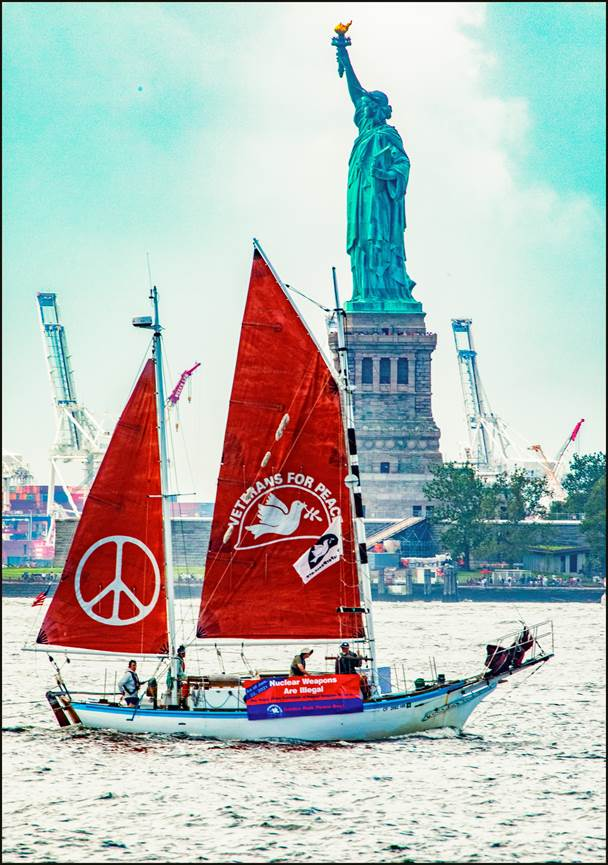
22,000+ miles voyaging for nuclear disarmament
and a radiation-free environment https://vfpgoldenruleproject.org/

of the week- – THE ONENESS of HUMANITY
We the Nuclear Free North

Cuba Is Not a Failed State – It Is a Besieged State
PETITION: “Global Appeal to Endorse Palestinian Right of Return of Refugees”
To see nuclear-related stories in greater depth and intensity – go to https://nuclearinformation.wordpress.com
-
Archives
- July 2026 (27)
- June 2026 (287)
- May 2026 (306)
- April 2026 (356)
- March 2026 (251)
- February 2026 (268)
- January 2026 (308)
- December 2025 (358)
- November 2025 (359)
- October 2025 (376)
- September 2025 (257)
- August 2025 (319)
-
Categories
- 1
- 1 NUCLEAR ISSUES
- business and costs
- climate change
- culture and arts
- ENERGY
- environment
- health
- history
- indigenous issues
- Legal
- marketing of nuclear
- media
- opposition to nuclear
- PERSONAL STORIES
- politics
- politics international
- Religion and ethics
- safety
- secrets,lies and civil liberties
- spinbuster
- technology
- Uranium
- wastes
- weapons and war
- Women
- 2 WORLD
- ACTION
- AFRICA
- Atrocities
- AUSTRALIA
- Christina's notes
- Christina's themes
- culture and arts
- Events
- Fuk 2022
- Fuk 2023
- Fukushima 2017
- Fukushima 2018
- fukushima 2019
- Fukushima 2020
- Fukushima 2021
- general
- global warming
- Humour (God we need it)
- Nuclear
- RARE EARTHS
- Reference
- resources – print
- Resources -audiovicual
- Weekly Newsletter
- World
- World Nuclear
- YouTube
-
RSS
Entries RSS
Comments RSS
 nuclear-news