Deadline looms for nuclear veterans and descendants study
The study lead by University of Otago associate professor David McBride will look into the connection between nuclear veterans and their children, who may have been affected by their parents’ exposure to radiation.
So far only 166 people had signed up, according to Mururoa Nuclear Veterans president Gavin Smith.
Mr Smith implored more to join, saying about 500 people went to the Christmas Island and were exposed to nuclear tests in the 1950s and about 500 went to Mururoa during the 1970s.
“Everyone who has a veteran father or grandfather that served there and has maybe deceased or may be living but mentioned nothing of it, I urge them to contact the University of Otago,” he said.
He said the study was crucial because veteran’s children may have been affected by their parents’ exposure to radiation, which could make their offspring more susceptible to conditions like leukaemia and auto-immune diseases.
“Our study is open to all nuclear veterans. If we don’t do it in our generation, it’s going to be an even bigger battle for the next generation.”
The group, which was established in 2013 to press the government to help families with nuclear related illnesses, had 135 members who served at the protest.
Of those, 56 had children or grandchildren with unexplained medical conditions.
Testing would begin next week at the University of Otago, with a timeframe and details on the study yet to be confirmed.
Legal action on The Marshall Islands’ leaky radioactive nuclear waste dome?
This Concrete Dome Holds A Leaking Toxic Timebomb | Foreign Correspondent
Leaking nuclear waste dome: Marshalls consider legal action https://www.rnz.co.nz/international/pacific-news/402002/leaking-nuclear-waste-dome-marshalls-consider-legal-action
But according to the Marshall Islands Nuclear Commission, more than 99 per cent of the waste has seeped into the atoll’s lagoon.
Commission’s chair Rhea Moss-Christian said the Marshall Islands was exploring legal remedies to obtain compensation from the US government.
“The political environment is always changing. We don’t know what the future brings. But as a nation that is still dealing with the impacts, we can’t afford to sit back and accept that there’s nothing further that can be done.”
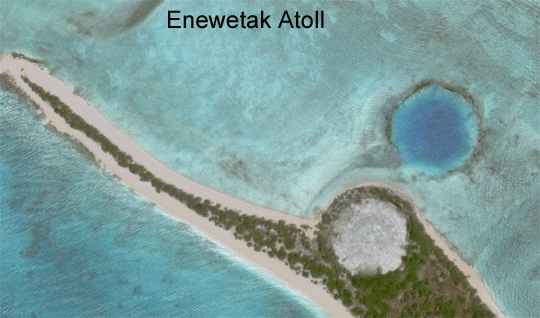
The Runit Dome on Enewetak atoll was used to store radioactive materials left over from US nuclear weapons testing during the 1940s and ’50s.
But according to the Marshall Islands Nuclear Commission, more than 99 per cent of the waste has seeped into the atoll’s lagoon.
Commission’s chair Rhea Moss-Christian said the Marshall Islands was exploring legal remedies to obtain compensation from the US government.
“The political environment is always changing. We don’t know what the future brings. But as a nation that is still dealing with the impacts, we can’t afford to sit back and accept that there’s nothing further that can be done.”
The Pacific Islands Forum Chair, Dame Meg Taylor, has called for an independent audit into the Runit Dome. Her UN counterpart, Antonio Guterres, has also raised concerns about the potential radioactive fallout.
The Nuclear Commission is due to start work in November on an impact study of the dome which will take up to three years.
The commission’s report highlighted a number of ongoing impacts of American nuclear weapons testing, including forced migration and high rates of cancer it said had been exacerbated by US refusal of requests for assistance with cancer treatment facilities.
“The absence of cancer care facilities and its link to forced migration are deplorable, and it means that the violence of the testing program continues despite the cessation of weapons testing,” the report said.
It also called for broader support with compensation for victims of nuclear testing, adding that Marshall Islands officials would raise nuclear justice in all official discussions with the US government.
According to the report, a US-funded Nuclear Claims Tribunal ended payments in 2009, leaving more than $US2.2 billion in unpaid compensation.
The Marshall Islands will also request UN agencies conduct its study of radiation levels in nuclear testing sites and their impact on communities.
Establishing a National Nuclear Archive would also be explored, as well as a memorial or monument “commemorate the hundreds of Marshallese who sacrificed their health and homeland for the U.S. nuclear weapons testing program”.
Ms Moss-Christian said the Marshall Islands’ election to the UN Human Rights Council earlier this month provided a new platform for seeking assistance.
“Compensation is definitely a priority for affected communities. There are also other forms of nuclear justice, and some of those areas are where the UN can step in and provide assistance,” she said.
Cutting through the nuclear advocacy’s nonsense – for the Philippines, nuclear benefits only Russia
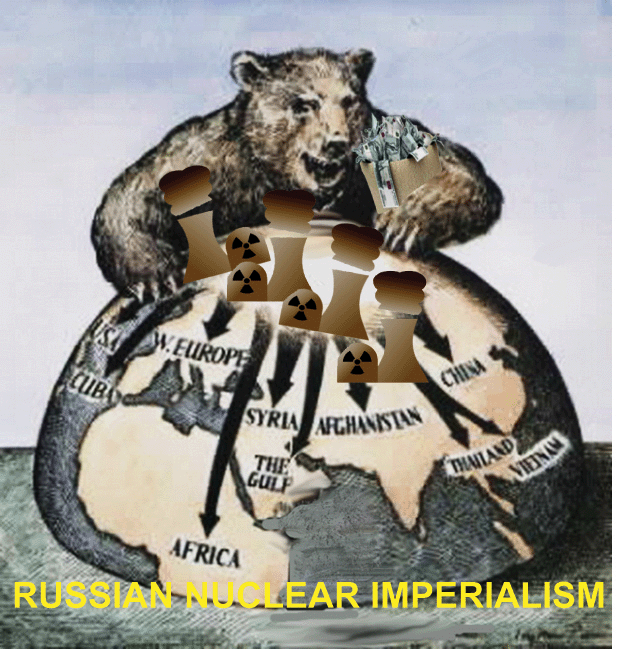
The supposed cost benefits of nuclear power are completely misrepresented by the nuclear advocacy.
Only Russia will benefit if PH goes nuclear, https://www.oilandgas360.com/only-russia-will-benefit-if-ph-goes-nuclear/ in Press by— 360 Feed Wire By BEN KRITZ, TMT, October 29, 2019 FOR the second time during the term of the current administration, fast-talking salesmen from Russia’s nuclear energy agency Rosatom have managed to convince a few impressionable officials here that the mighty atom is the answer to all the Philippines’ energy needs, especially if it is packaged in the product Rosatom has to offer.
The only people who will benefit from the Philippines’ adopting nuclear power will be the shareholders of Rosatom. Nuclear power is an economically and environmentally disastrous proposition for the Philippines, and no amount of persistence from the misguided nuclear advocacy can change that.
On October 17, Energy Secretary Alfonso Cusi announced the Department of Energy had signed a memorandum of intent with Rosatom for the latter to conduct feasibility studies on the possible deployment of so-called small modular reactors (SMRs) in the Philippines.
These reactors, which generate between 20 to 200 megawatts (MW) of power, can be mounted on floating platforms to provide electricity to island provinces, or slaved together like giant batteries to create larger land-based power plants.
Russia currently has one such floating plant in operation, a 21,000- metric ton barge carrying two 35-MW reactors and dubbed the Akademik Lomonosov. The craft, which will replace a coal plant and an old nuclear plant in Russia’s far east, can provide power to about 100,000 homes and has a crew of about 70.
The (weak) case for nuclear power
Hard on the heels of the announcement of the DoE’s agreement with Rosatom, local nuclear advocates took part in a “Stand Up for Nuclear” event held in Manila and other cities around the world on October 20. The event achieved what its organizers presumably hoped it would — the publication of a rash of news articles and opinion columns in the days following it, all touting the supposed benefits of nuclear power to the energy-challenged Philippines.
The arguments put forth in favor of nuclear power in general — which haven’t changed in years — and of SMRs in particular are rather shallow, but at first glance seem to be valid.
The benefits of nuclear power, according to its advocates, are that it does not produce harmful emissions, unlike conventional fossil-fueled power plants; it is an extremely efficient energy source, which results in lower power costs to consumers; it has a very good overall safety record, in spite of attention-grabbing disasters like Chernobyl and Fukushima; and it provides reliable baseload power to augment energy from intermittent sources like solar and wind power.
SMRs are touted as a good option for countries like the Philippines without well-developed nuclear capabilities or budgets to sustain them because they are small, versatile, relatively inexpensive, and less complicated than normal-scale nuclear plants. For example, unlike a conventional pressurized water or boiling water reactor, the cooling and steam generation water flows in most SMR designs are gravity-fed. This presumably makes them immune from the sort of loss-of-coolant accidents that led to the Three Mile Island, Chernobyl and Fukushima disasters.
All of these arguments are very positive-sounding, enough to convince many impressionable government officials and media commentators, whom the nuclear advocacy hopes have neither the time, inclination nor capacity to look critically at the facts, which tend to be a more than a little inconvenient.
Cutting through the nonsense
The first argument that “nuclear plants do not produce harmful carbon dioxide (CO2) emissions,” is true in a very literal sense, but it is not true that nuclear plants do not contribute to harmful emissions at all, as some advocates claim. All nuclear plants emit heat and water vapor to the atmosphere at the rate of 4.4 grams CO2-equivalent per kilowatt-hour (g CO2-e/kWh) of energy produced. While this is certainly very much less than a conventional power plant, it is not zero, and compares unfavorably with solar and wind power, which actually remove water vapor and heat flux to the atmosphere at the rate of -2.2 g CO2-e/kWh.
An even bigger environmental problem with nuclear power is that any nuclear reactor uses an enormous amount of fresh water and discharges a large amount of heated wastewater.
Because of the complicated chemistry within a nuclear reactor, seawater cannot be used, and even fresh water must be “scrubbed” to remove any impurities. In a country such as the Philippines, where fresh water supplies are increasingly constrained, any nuclear power facility is a problematic option.
The second argument, that nuclear energy is extremely efficient and therefore less expensive than other forms of power, is again only literally true in a narrow context.
Uranium as a fuel is incredibly efficient; one ton of uranium has the energy content of about 80,000 tons of coal. However, to obtain useable fuel a great deal of processing is necessary, which of course comes at an energy cost, and the amount of useful uranium to be used as nuclear fuel is quickly being depleted; US reserves of uranium have virtually disappeared, and reserves elsewhere in the world are estimated to last no more than 100 years.
The supposed cost benefits of nuclear power are completely misrepresented by the nuclear advocacy. A comparison between an existing nuclear plant and an existing coal plant, for example, would show that electricity derived from nuclear power is less costly on a per-MW basis, but power costs, as Filipino consumers have long been painfully aware, include all the costs associated with building and maintaining a power plant. The proper way to calculate comparative costs is through a formula called levelized cost of energy (LCOE), which takes into account construction costs, regulatory costs, fuel costs, available subsidies, and operating costs.
This is where nuclear power completely falls apart compared to other energy alternatives.
According to the 2018 report of Lazard (the go-to source for energy cost analysis), nuclear has a high-end LCOE of $189 per megawatt hour (MWh). Coal has an LCOE of $143/MWh; utility-scale solar of between $44/MWh and $48/MWh; and wind, $56/MWh. Of the various energy sources analyzed, only gas peaking plants and rooftop solar installations had a higher LCOE than nuclear power, at $208/MWh and $287/MWh, respectively.
And Lazard’s results may be a serious underestimate of the true cost of nuclear power. In the next installment, I’ll explain further why, despite supplying about 20 percent of the world’s electricity, nuclear power is one of the worst solutions for the Philippines, or any other country for that matter
National nuclear commission strategy for Marshall Islands
Marshalls endorses nuclear commission strategy, https://www.rnz.co.nz/international/pacific-news/401921/marshalls-endorses-nuclear-commission-strategy The Marshall Islands government has endorsed the adoption of a national nuclear commission strategy for the next three years.
The strategy honours the legacy of Marshallese nuclear heroes and heroines who fought and continue to demand accountability for their communities.
The strategy was mandated in the Marshall Islands parliament, or Nitijela, as part of the National Nuclear Commission Act of 2017.
It focuses on five broad themes for nuclear justice: compensation, health care, the environment, national capacity, and education and awareness.
From 1946 to 1958, the US used the Marshall Islands to test its nuclear weapons.
The commission also aims to establish an independent panel of scientists and specialists in fields related to radiation exposure, to provide the republic’s citizens access to trusted, independent science.
The commission’s chair, Rhea Moss-Christian, said the NNC strategy was a tool for all Marshallese, whether living in the islands or overseas, to use in their individual and collective efforts to respond to the devastation resulting from the US nuclear weapons testing program in the Marshall Islands.
“It is also a resource for our partners and friends outside the Marshall Islands to understand the nuclear testing impacts that persist today and how they can support the Marshallese people,” Ms Moss-Christian said.
Marshall Islands’ nuclear clean-up workers concerned about radiation leaking
|
Nuclear warning: Toxic waste equivalent to 2,000 Hiroshima bombs could be leaking in sea https://www.express.co.uk/news/science/1191538/nuclear-waste-cold-war-cleanup-hiroshima-us-news-nuclear-bomb
A CONCRETE dome filled with nuclear waste could be leaking into the ocean, with experts urging the US government to act urgently as humans “cannot wait”.By SEAN MARTIN, Wed, Oct 16, 2019 |Enewetak Atoll is a series of small islands in the South Pacific which the US government used to test its nuclear weapons following World War 2 from 1948 to 1958. Over a ten year period, 30 megatons of weapons – equivalent to 2,000 Hiroshima bombs – were dropped on the islands during the Cold War. When the US had finished its testing, it built a concrete barrier known as the Runit dome to store the debris of 43 nuclear explosions in a clean-up operation lasting from 1977 to 1980.
However, employees who worked on the clean-up believe the dome could be leaking radioactive waste into to the ocean.
In response, the US has invested $1,689,000 (£1.32m) in a mission to analyse the dome, but there are claims that it could be too late as the waste could have seeped into the ocean, which would have an effect on the marine ecosystem.
Paul Griego, a former radiochemist who worked on the cleanup operation from June 1977 to October 1978, said: “We need the very same funding and for the very same analysis – the dome can wait for radiochemical analysis but we are human and we cannot wait.
While the US government said staff were subjected to just low-levels of radiation and wore all the necessary protective gear, Mr Griego has said this was not the case. The 62-year old added: “We are certain we have the very same radionuclides in our bodies that that would be found in the dome. “We were bombarded with radiation while building the dome, we drank the contaminated water, inhaled the dust-filled air, absorbed contaminates though our skin, ate the fish we caught and more. “We are not only denied the diagnostic resources, we are denied healthcare to cover our radiation and toxin-related illnesses.
“The government’s refusal to provide radiochemical resources is malicious and feeds into the status quo. “It places the burden of proof of an illness on the individual rather than the moral responsibility of our government.” The mission saw more than 1,000 employees tasked with collecting contaminated soil and radioactive debris, which was then mixed with concrete and placed in a nuclear test crater, which was sealed in a concrete dome.
However, people who were on the scene said that the dome was not lined with concrete, and warn it could be seeping into the ocean. For this reason, the US will embark on an 18 month mission to analyse the dome to see if needs to be reinforced or perhaps completely removed. Doug Domenech, Assistant US Secretary of the Interior for Insular and International Affairs, said: “The US Departments of the Interior and Energy are partnering on this important analysis of Runit Dome so that we can be responsive to both Congress and concerns expressed by the Enewetak community in the Marshall Islands.”
|
|
Marshall Islands, victim of nuclear testing, now declares a Climate Emergency
 Marshall Islands, low-lying US ally and nuclear testing site, declares a climate crisis https://www.heraldmailmedia.com/news/nation/marshall-islands-low-lying-us-ally-and-nuclear-testing-site/article_4b37cc0d-040d-5b2a-b83e-1df6d71dfb74.html, By Susanne Rust Los Angeles Times (TNS), Oct 11, 2019
-
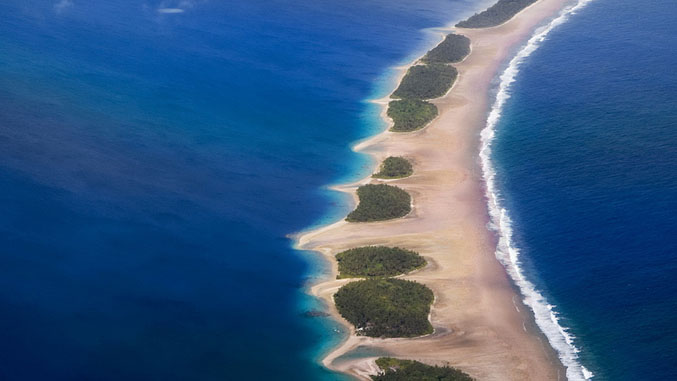
- The Marshall Islands, a low-lying chain of atolls and key U.S. ally in the Central Pacific, has declared a national climate crisis because of the mounting risk of sea-level rise, the nation’s president announced this week.
The nation’s parliament, the Nitijela, overwhelmingly supported a measure that calls upon the international community to step up its efforts to mitigate global warming and provide aid to nations unable to finance safeguards against rising seas.
“As one of only four low-lying coral atoll nations in the world, the failure of the international community to adequately respond to the global climate crisis of its own making holds particularly grave consequences,” wrote President Hilda Heine in a tweet Wednesday.
Low-lying coral atoll nations such as the Marshall Islands, Kiribati and Tuvalu in the Pacific and the Maldives in the Indian Ocean are particularly vulnerable to rising oceans, averaging just a few feet above sea level. There have already been episodes of “King Tide” flooding in the Marshall Islands, which consists of 29 coral atolls, located about 5,000 miles from Los Angeles and 2,000 from Hawaii.
A recent Intergovernmental Panel on Climate Change report warned that sea level could rise by 1 to 4 feet by 2100, potentially submerging many of these nations, and by 2050, making many uninhabitable.
The report echoes research sponsored by the Department of Defense, which found Kwajalein Atoll, where the U.S. leases a strategic military base, could become unlivable by 2030, if the Antarctic ice sheet were to melt. Mid-century inhabitability due to flooding, storm waves and ground water contamination by salt water was predicted in a more conservative model.
The resolution calls upon the Nitijela to “unite fully and unequivocally behind the science” and to recognize the rights of the Marshallese youth to grow up in a “climate safe future.”
It asks the international community to “consider additional ways to respond to and support the extreme vulnerability and special circumstances” unique to low-lying coral atoll islands, such as the Marshall Islands.
“Prolonged and unseasonal droughts are hitting us real hard, and saltwater is creeping into our freshwater lands,” said Heine last month at the United Nations Climate Action conference in New York. “We are on the very front line of climate change.”
The United States used the Marshall Islands as a nuclear testing ground during the Cold War, detonating 67 nuclear bombs on the nation between 1946 and 1958.
The U.S. is committing $10 million to the Pacific region for disaster resilience, weather forecasting and “to address environmental challenges,” said a U.S. State Department spokesperson Friday. “The United States recognizes that addressing environmental degradation and climate change is a priority in the Pacific — especially for the Marshall Islands — due to the threat posed by sea level rise and the region’s vulnerability to natural disasters.”
Senate to probe Philippine’s nuclear energy program
Gatchalian, chairman of the committee, filed a resolution for an inquiry on the status of the Department of Energy (DOE)’s Nuclear Energy Program Implementing Organization (NEPIO) in pursuit of his call for transparency in the government’s nuclear initiatives.
“A comprehensive, transparent and public discussion must be made on the merits of a national nuclear program taking into consideration the social, economic, environmental and technical effects and requirements of such a program,” he said.
He added that the development of a nuclear power program in any country requires three phases marked by a specific milestone and the completion of 19 infrastructure requirements, which necessitate specific actions during each of these three phases as indicated in the International Atomic Energy Agency (IAEA)’s milestones in the development of a national infrastructure for nuclear power.
The Philippines, according to the senator, is currently completing phase one, which commenced when the DOE issued Department Order 2016-10-0013 in 2016, creating the NEPIO, which is tasked to explore the development and inclusion of nuclear energy in the country’s electric power supply.
Phase two requires preparation for the contracting and construction of a nuclear power plant after a policy decision has been made, and its milestone is an invitation to bid or negotiate a contract for the power plant.
Meanwhile, phase three details the activities necessary to implement the first nuclear power plant, and its milestone is the commissioning and operation of such activities……..
The senator made the call during the hearing on the DOE’s proposed 2020 budget.
He pushed for the scrutiny of the nuclear energy program after a memorandum of intent was signed by Philippine and Russian officials during President Duterte’s visit to Moscow last week “to jointly explore the prospects of cooperation in the construction of nuclear power plants in the Philippines.”
A proposal to build a floating nuclear power plant in the country was also forwarded by Russia.
One of world’s worst nuclear disasters occurred in 1986 at the Chernobyl Nuclear Power Plant, which was blamed on a flawed Soviet reactor in Ukraine, at the time part of the Soviet Union.https://www.philstar.com/headlines/2019/10/14/1960013/senate-probe-philippines-nuclear-energy-program#Yu0jW87Rhm5T2TgI.99
US govt to fund study of Marshall Islands nuclear dome water
However, Marshall Islands officials say the lagoon water is already more contaminated than the dome itself, which has been leaking.
The money announced last week will fund a radiochemical analysis of the water surrounding the crater, and an engineering survey of the structure.
Pacific Island nations urge action on climate change at UN
Pacific Island nations urge action on climate change at UN, Pacific leaders want to remind the world what’s at stake for the most vulnerable – low lying nations – if nothing is done to combat climate change. (video) https://www.sbs.com.au/news/pacific-island-nations-urge-action-on-climate-change-at-un
A rude concrete sign indicates a deadly truth about nuclear radiation and cancer
|
Nuclear tomb leaking radioactive waste into oceans has ‘rude message’ beneath crumbling shell https://www.thesun.co.uk/tech/9986929/nuclear-tomb-radioactive-waste-message-shell/
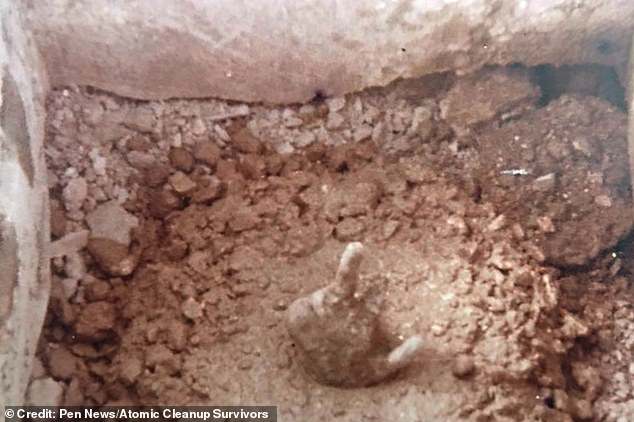
Harry Pettit, Senior Digital Technology and Science Reporter 23 Sep 2019, A CONCRETE tomb that’s haemorrhaging radioactive waste into the world’s oceans has a very rude hidden message beneath its shell. The men who built the dome in the 1970s sculpted a hand flipping the middle finger, which they buried inside the structure before it was sealed and left to crumble on a remote Pacific island. The Enewetak atoll in the South Pacific was used by the US government to test 30 megatons of atomic weapons – equivalent to 2,000 Hiroshima bombs – between 1948 and 1958. After 43 nuclear detonations, thousands of people were sent to clean the islands, shifting 3million cubic feet of contaminated soil and debris into a blast crater. He said: “The dome is a monumental size, so we wanted to put something inside there, but this was during the Cold War so the idea of an official time capsule wasn’t going to work. “So… a rubber glove? Well, we had plenty of those so that worked.” But if Mr Griego and his comrades left their mark on the island, it also left its mark on them. Our members were dying,” he said. “Dying of cancer. Given the damage wrought by the dome, the middle-finger message turned out to be more apt than anyone realised at the time. “The Runit salute turned out to be the right message in several ways,” said Paul, 62.
“One message is what’s happened to the men that were actually tasked to build this dome? What happens now to the Marshallese, the islanders? “What happens now to the Pacific Ocean, to the rest of the world? The dome is leaking and it has been leaking from the beginning.” The US government does not recognise those who worked to clean Enewetak as atomic veterans, so they cannot receive radiation exposure compensation from the Department of Veterans Affairs. |
|
Health research on descendants of Pacific nuclear veterans.
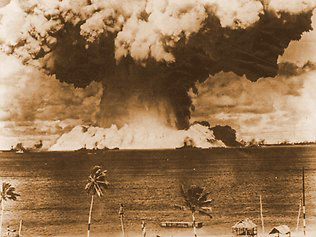 Pacific nuclear veterans’ descendants sought for study. https://www.odt.co.nz/news/national/pacific-nuclear-veterans-descendants-sought-study A search is underway for descendants of service personnel who witnessed a nuclear test at Mururoa Atoll to take part in a nationwide study.A Mururoa Nuclear Veterans Group wants all veterans who were deployed to Mururoa Atoll in 1973, and their families, to be part of a study as it’s believed their children may have been affected by their parents’ exposure to radiation.
The then Labour government sent a frigate to Mururoa Atoll, including then Cabinet Minister Fraser Colman, to protest against French nuclear testing there.
Mururoa Nuclear Veterans Group wants all people on the frigate, and their families to be part of a study as it’s believed their children may have been affected by their parents’ exposure to radiation. The group, which was established in 2013 to press the government to help families with nuclear related illnesses, had 135 members who served at the protest. Of those, 56 had children or grandchildren with unexplained medical conditions.
University of Otago associate professor David McBride, has been tasked with conducting the first medical testing of veterans’ children and grandchildren.
To establish whether genetic transfer of illnesses are related to exposure to nuclear radiation and create a registry “would be difficult but not impossible,” Mr McBride said.
Mururoa Nuclear Veterans Group vice-president, Tony Cox, was concerned veteran’s offspring could be more susceptible to conditions like leukaemia and auto-immune diseases.
“If we don’t do it now, when we die no one else is going to care. Their sickness and problems we consider is directly attributable to our service,” Mr Cox said.
“Be it Operation Grapple, Christmas Island, Mururoa, anywhere else … widows and children especially we are looking for.” The University of Otago will carry out the study from October or November this year, but a registry needs to be created for the study to work.
Mr Cox encouraged anyone with a nuclear testing background to come forward to take part in the study or identify themselves in order to be included in the registry.
Radiation Levels Higher in Marshall Islands Than in Chernobyl
Radiation Levels Higher in Marshall Islands Than in Chernobyl https://www.warhistoryonline.com/war-articles/veteran.html
This is where the United States tested atomic weapons in the 1940s and 1950s. Though it has been over sixty years since testing ended there, the islands are still more radioactive than Chernobyl and Fukushima, sites of two of the worst nuclear reactor disasters.
In a recent study, researchers tested the soil of these sites for plutonium-239 and plutonium-240. In some places, the islands had levels that were ten times higher than soil in the Chernobyl exclusion zone.
While the study was limited, the results indicate that a more thorough test is warranted. The surprising thing to the researchers was that they could not find any guidance from governments or from international organizations which indicated what a permissible level of plutonium would be.
The US tested radioactive weapons in the Marshall Islands even after dropping atomic bombs on Hiroshima and Nagasaki during World War II. At the time, the islands were a district of the Trus Territory of the Pacific Islands. The US ran this district on behalf of the United Nations.
The first tests were carried out on Bikini Atoll in 1946 and involved two bombs names Able and Baker. Over the next twelve years, the US tested 67 weapons on the Bikini and Enewetak atolls.
Those tests included one in 1951 code-named Ivy Mike – the first hydrogen bomb test. The largest hydrogen bomb test occurred in 1954 with the Castle Bravo test. Castle Bomb was over 1,000 times more powerful than Little Boy. Little Boy was the bomb that completely destroyed Hiroshima.
The radioactive damage from the tests was not contained to Bikini and Enewetak, though. Fallout from the test contaminated the Rongelap and Utirik atolls which are also part of the Marshall Islands. People on those islands became sick from the radiation levels.
In 2016, a study of background gamma radiation on the three northern atolls in the Marshall Islands, Bikini, Enewetak, and Rongelap, found elevated levels of the radiation. The study found that Bikini even had a higher level than had previously been reported.
That team returned to do more testing. They recently released the results of those studies in the PNAS journal. The studies focused on the Bikini, Enewetak, Rongelap, and Utirik Atolls in the northern part of the islands.
The studies found levels of gamma radiation that were significantly higher than the levels of a southern Marshall Island that the researchers used as a control.
Especially bad were the levels on Bikini and Naen islands. Those levels were found to be higher than the maximum exposure limit that the US and the Republic of the Marshall Islands had agreed to in the 1990s.
Along with Runi and Enjebi islands in the Enewetak Atoll, the islands were found to have radioactive plutonium levels in the soil that were higher than what has been found at Chernobyland Fukushima.
Ivana Nikolic-Hughes, director of the K1 Project at the Center for Nuclear Studies, stated that the researchers were surprised at the levels of external gamma radiation on Naen Island.
This island is on the outer edge of the Rongelap Atoll and was populated at the time of the Bravo test. The people were moved from the island, moved back and then moved away again, Nikolic-Hughes called it a “dreadful history” of treatment for the Rongelapese people.
A second study by the group used professional divers to collect 130 samples from the Castle Bravo Crater on the Bikini Atoll. Here, isotopes such as plutonium-239 and 240, americium-241 and bismuth-207 were much higher than they were on other Marshall Islands.
The researchers were interested in testing the crater because they feel it is a first step in determining how the testing of nuclear weapons has affected the ocean.
The third study tested over 200 fruits from the islands. They found many of the fruits contained higher levels of cesium-137 which would be deemed unsafe by several countries and international organizations.
The researchers hope the data gathered can be used to educate the residents of the Marshall Islands about the dangers there and inform them of whether it is safe to live on these islands or gather food from them.
Marshall Islands to survey leaking nuclear dome,
|
Marshall Islands to survey leaking nuclear dome, https://www.rnz.co.nz/international/pacific-news/395978/marshall-islands-to-survey-leaking-nuclear-dome , 5 Aug 19, The Marshall Islands government will survey a leaking nuclear-filled dome after growing international concern over the structure. The country’s Nuclear Commission said work is due to start by the end of the year studying the impact of the structure on Enewetak Atoll.It comes after the Pacific Islands Forum Secretary General, Dame Meg Taylor, called for an audit of the dome to determine if it was leaking.
Her UN counterpart, Antonio Guterres, has also raised concerns about the potential radioactive fallout. Nuclear Commission chairperson Rhea Moss-Christian says the survey will take around three years. “We just need to understand better what’s happening, what the status is. We already know that there’s the ground water beneath the dome is mixing with the lagoon water. All we know, based on DOE (US Department of Energy) studies is that the lagoon has more contamination than what is inside the dome.” Ms Moss-Christian said an ongoing US program monitoring the presence of nuclear waste in groundwater continued to be held up by a lack of funding being released by the Department of Interior. “We’ve been relying for years on the data provided by the US through the Department of Energy studies. And we haven’t had a clear enough picture for many years.” |
|
Bikini Atoll, site of nuclear bomb testing, still 10 times more radioactive than Chernobyl
After 61 Years, U.S. Testing Site For Nuclear Weapons Still 10 Times More Radioactive Than Chernobyl https://www.forbes.com/sites/davidbressan/2019/07/25/after-60-years-u-s-testing-site-for-nuclear-weapons-still-10-times-more-radioactive-than-chernobyl/#396a418e26be David Bressan
Between 1946 and 1958 the atolls of the Marshall Islands in the Pacific Ocean were testing ground for the United States nuclear arsenal. The first bomb, called Able, was detonated July 25, 1946, on Bikini Atoll. The first-ever American hydrogen bomb, with the code name Ivy Mike, was tested on Enewetak in 1951. The 1954 Castle Bravo hydrogen bomb was 1,000 times more powerful than Little Boy, the uranium bomb that destroyed the Japanese city of Hiroshima. In 12 years the U.S. tested 67 nuclear weapons on the Bikini and Enewetak Atolls. The craters formed by the explosions are visible from space; however, less obvious is the radioactive contamination of the entire area.
A survey conducted in 2015 found concentrations of radioactive plutonium-239 and -240 in the soil of Bikini and Enewetak almost ten times higher than levels in the Chernobyl exclusion zone, where thirty-three years ago the reactor experienced a catastrophic core meltdown, exploded and parts of the nuclear fuel were released. Levels of gamma radiation were also higher than previously reported on Bikini and significantly elevated on sites tested on Enewetak and Rongelap Atolls.. Radioactive fallout from the Castle Bravo test on March 1, 1954, also contaminated the nearby Rongelap and Utirik Atolls, prompting the evacuation of the local population. Still today some sites surpass the maximum exposure for radiation considered safe by experts. Apart the 67 tests, also a leaking nuclear waste repository is contributing to the radioactive pollution of the area.
On Runit Island, one of forty islands forming the Enewetak Atoll, sits “The Dome” – a 100 meters wide crater filled with 85,000 cubic meters of radioactive debris and waste and covered with half a meter of concrete. The dome sits on permeable rocks and in 2013 leaks of radioactive water were noted at the base of the structure. As sea levels are rising the entire site will be flooded, potentially causing widespread radioactive contamination, including plutonium-239.
New revelations on the very high radiation in the Marshall Islands
Nuclear isotopes on Marshall Islands up to 1000 times higher than Chernobyl or Fukushima https://www.news.com.au/technology/environment/nuclear-isotopes-on-marshall-islands-1000-times-higher-than-chernobyl-or-fukushima/news-story/eaacb5841fec37b39d8a907353dceb50, 17 July 19,Between Australia and Hawaii are islands where locals were banished due to nuclear testing. New research reveals the extent of the problem. Rohan Smith@ro_smith
Never mind Chernobyl and Fukushima.
New research shows a tiny island halfway between Australia and Hawaii has concentrations of nuclear material up to 1000 times higher than at two well-known meltdown locations in Ukraine and Japan.
Research carried out by Columbia University and published this week shows deadly plutonium levels are far higher than previously thought on the Marshall Islands. The group of 29 atolls was subject to 67 US nuclear tests between 1946 and 1958, with locals forced to flee as the country dropped bomb after bomb in paradise.
The United States entombed nuclear waste under a dome on the island of Runit that some believe is leaking into the Pacific Ocean. However the real impact of the contamination is only now being realised.
Researchers wrote that two atolls, Bikini and Enewetak, “were used as ground zero” and took the brunt of the impact.
On Enewetak, the first-ever hydrogen bomb was tested. But Bikini was the site of the world’s largest-ever hydrogen bomb test — known as Castle Bravo.
The tests, researchers say, “caused unprecedented environmental contamination and, for the indigenous peoples of the islands, long-term adverse health effects”.
Researchers tested levels of radioactive isotopes in soil and food sources and found “a real concern” on Runit where the huge dome was designed to contain radiation but is not working.
“The presence of radioactive isotopes on the Runit Island is a real concern, and residents should be warned against any use of the island,” researchers said.
“Moreover, wash-off of existing isotopes off the islands into the ocean from weathering and continued sea level rise continues to threaten, further contaminating the lagoon and the ocean at large.”
On Bikini, researchers found concentrations of particular radioactive material “were up to 15-1000 times higher than in samples from areas affected by the Chernobyl and Fukushima disasters”.
Though residents were banished from the Marshall Islands during the height of the Cold War, many have returned. The Los Angeles Times reports more than 600 people call Enewetak, Runit and Enjebi home.
Jan Beyea, a retired radiation physicist, told the newspaper: “Implicitly, I think these results might caution efforts to return because of the readings found.”
News.com.au previously reported rising sea levels were degrading the concrete dome at Runit, and the US Department of Energy concluded the “burial site” was leaking highly toxic waste.
Locals refer to it as “the poison” and have already been complaining of birth defects and high cancer rates.
After Castle Bravo, islanders more than 160km away mistook fallout for snow. It “caused skin burns, hair loss, nausea and eventually cancer” in many who were exposed, the Times reports.
The warnings from researchers clash with advice from the US Government, which signed a memorandum of understanding with the Republic of the Marshall Islands agreeing it was safe for those who wished to return home.
In the Marshall Islands, the most common cause of death is diabetes, which is related to a thyroid disorder. The second most common cause of death is cancer.
The population of the Marshall Islands is around 70,000 people, with local Marshallese people allowed to live and work in the US without a visa as part of the reparations for the nuclear testing that took place.
Over a third have already moved to the US. It is said when you leave the Marshall Islands, you buy a one-way ticket.
— Additional reporting by Phoebe Loomes
1 This Month

of the week – Shut Down Drone Warfare!


Tell the Ukrainian Government to Drop Prosecution of Peace Activist Yurii Sheliazhenko

Petition to revoke the licensing of the Near Surface Nuclear Disposal Facility (NSDF) at Chalk River. https://www.ourcommons.ca/petitions/en/Petition/Details?Petition=e-7247
To see nuclear-related stories in greater depth and intensity – go to https://nuclearinformation.wordpress.com
-
Archives
- March 2026 (244)
- February 2026 (268)
- January 2026 (308)
- December 2025 (358)
- November 2025 (359)
- October 2025 (376)
- September 2025 (257)
- August 2025 (319)
- July 2025 (230)
- June 2025 (348)
- May 2025 (261)
- April 2025 (305)
-
Categories
- 1
- 1 NUCLEAR ISSUES
- business and costs
- climate change
- culture and arts
- ENERGY
- environment
- health
- history
- indigenous issues
- Legal
- marketing of nuclear
- media
- opposition to nuclear
- PERSONAL STORIES
- politics
- politics international
- Religion and ethics
- safety
- secrets,lies and civil liberties
- spinbuster
- technology
- Uranium
- wastes
- weapons and war
- Women
- 2 WORLD
- ACTION
- AFRICA
- Atrocities
- AUSTRALIA
- Christina's notes
- Christina's themes
- culture and arts
- Events
- Fuk 2022
- Fuk 2023
- Fukushima 2017
- Fukushima 2018
- fukushima 2019
- Fukushima 2020
- Fukushima 2021
- general
- global warming
- Humour (God we need it)
- Nuclear
- RARE EARTHS
- Reference
- resources – print
- Resources -audiovicual
- Weekly Newsletter
- World
- World Nuclear
- YouTube
-
RSS
Entries RSS
Comments RSS
 nuclear-news