Oyster Creek nuclear plant aging and problematic
Nation’s oldest nuclear plant showing its age
Google News By WAYNE PARRY (AP) 10 Sept 09 LACEY TOWNSHIP, N.J. — As the nation’s oldest nuclear power plant shows its age, some call it Oyster Creak.The latest problems — a series of radioactive water leaks — were found just days after the Oyster Creek Nuclear Generating Station got a new 20-year license that environmentalists bitterly fought for four years. Continue reading
Nukes vs. Humanity
COMMENTARY: Nukes vs. Humanity
Huntington News By Tom H. Hastings Sept. 8, 2009
The decision to develop nukes was entirely secret, arrogating this existential threat to a tiny priesthood in one country—replicated more or less in every nation which has acquired these blasphemous things. This problem is self explanatory and so patently anti-democratic that it is simply necessary to continue to point it out. Nothing conceived in such opacity can be good for democracy. Continue reading
(Photos) Trucking nuclear weapons and wastes around USA
Trucks Carrying Nuclear Weapons Around the Counttry Revealed (Photos)
Huffington Post 09- 3-09
The idea of nuclear weapons being carted around in our highways, cities and neighborhoods doesn’t really put one’s mind at ease. However, the government has been transporting seriously dangerous stuff like enriched uranium and plutonium secretly without public warning.Friends of the Earth through the Freedom of Information Act has forced the Department Of Energy to release color photos of the trucks used to transport weapons. According to FOE, these are the first of such pictures that have been released in many years……………..
“The trucks carrying nuclear weapons and dangerous materials such as plutonium pass through cities and neighborhoods all the time and the public should be aware of what they look like. Release of these photos will help inform the public about secretive shipments of dangerous nuclear material that are taking place in plain view.” – Tom Clements, Southeastern Nuclear Campaign Coordinator with Friends of the Earth
Trucks Carrying Nuclear Weapons Around The Country Revealed (PHOTOS)
Coal on the outer as US goes green
Coal on the outer as US goes green
THE AUSTRALIAN Peter Beattie | September 05, 2009
“………Projects to build new coal-fired power stations are being abandoned from Florida to Utah. Money is pouring in for renewable energy and legislation is being enacted to support it……………. Continue reading
Regulatory decay allows more radioactive leaks from aging USA nuclear power plants
 Beyond Nuclear Bulletin, 4 Sept 09 More radioactive leaks from reactors like Dresden, Oyster Creek, Vermont Yankee and Indian Point are calling attention to a largely ignored Nuclear Regulatory Commission document dating back to 1979 when the agency first asked operators to periodically inspect pipes and tanks to prevent uncontrolled leaks.
Reactor operators are not inspecting the miles of buried and corroding pipes and tanks. NRC is instead allowing reactors a “leak first fix later” approach rather than use preventive inspections to maintain integrity of these radioactive waste management systems through preventive inspections. In addition to frequent intentional radioactive releases, these accidental and unmonitored spills and leaks onsite are contaminating water resources away from the reactors, jeopardizing public health.
The October 19, 1979 NRC technical circular entitled “Prevention of Unplanned Releases of Radioactivity” advises the nuclear industry to periodically inspect buried pipes specifically using hydrostatic testing equipment and procedures with the focus on the “prevention” of uncontrolled and unmonitored radioactive release pathways.
Reactors are getting older and more decrepit. Twenty-year license extensions are breezing through NRC approval without regard for the environmental cost and impacts from these uninspected and deteriorating systems. How has protecting water by preventing uncontrolled and unmonitored radioactive releases become less important to NRC as the nuclear power plants degrade?
Ban on nuclear power upheld in six US states
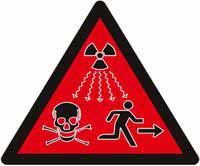 Attempts to Overturn Nuclear Bans Fail in Six States
West Virginia is not the only state that declined to overturn a ban on nuclear power this year.
The State Journal by Pam Kasey 3 Sept 09
West Virginia is not the only state that declined to overturn a ban on nuclear power this year.
As the U.S. Nuclear Regulatory Commission considers licensing applications for new nuclear generation in 14 states, attempts to overturn explicit or effective bans failed in six other states in 2009, according to the nonprofit Nuclear Information and Resource Service.
“Things will be even tougher for their state lobbyists in 2010 now that the freeze on Yucca Mountain has taken long-term waste disposal off the table,” said NIRS Executive Director Michael Mariotte.
The last new nuclear power generation unit to be ordered in the U.S. was in 1978, just before the partial core meltdown at Three Mile Island in 1979.
Since that time, first California and then about a dozen states passed laws that outright or effectively banned new nuclear generation.
West Virginia’s law is titled a ban in the state code, but functions as an effective ban…….. The code requires at least 24 months’ prior operation of a national facility “which safely, successfully and permanently disposes of any and all radioactive wastes associated with operating any such nuclear power plant, nuclear factory or nuclear electric power generating plant.”
That condition has never been met.
And because the federal government withdrew its support for the Yucca Mountain facility earlier this year, there is no process in place for it ever to be met.
http://www.statejournal.com/story.cfm?func=viewstory&storyid=65865
Giant uranium companies spinning nuclear to kids
Tenex to Launch Children Nuclear Academy
Gainesville, FL, USA, September 3, 2009 (PRESSbooth.ORG) — Sigma Transnational, Techsnabexport (Tenex) North American Associate Partner, announced that Russian’s Uranium Giant, Tenex, will soon launch the Children Nuclear Academy in the Southeastern region of USA. ……………………… The Russian Children Nuclear Academy project was launched in Russia in January 2002 on the initiative by the Institute of Pandeia textbook and Educational Society public association. See additional information at http://www.dya.ru
Since 2003, the JSC Techsnabexport (Tenex) has been the chief sponsor of the annual Russian scientific and educational projects so-called the “Power of the Future” contest…………. As part of Techsnabexport (Tenex) social responsibility, Tenex supports education, charity and other community involvement.
Colorado: town board vote might stop uranium mining
Uranium mining may get buried in Nunn
Powertech says its process is safe but a vote by Nunn’s town board could make permitting difficult.
The Denver Post, by Monte Whaley 3 Sept 09
NUNN — Opponents of a huge uranium- mining operation northwest of Greeley say they are ready for a showdown tonight before the Nunn town board. Coloradoans Against Resource Destruction — a citizens group formed in 2007 — wants the Nunn board to back a resolution against a plan by Powertech Uranium Corp. to extract uranium from the windy plains that surround Nunn and two other small towns, Wellington and Carr………… CARD claims the mining will damage air and water and bring other health problems. A negative vote by the Nunn board will make state and local officials more reluctant to approve any permits for Powertech’s Centennial Project, said the group’s spokeswoman, Jackie Adolph……….. “The time is now for the town board to speak for the overwhelming majority of residents who think uranium mining this close to the town represents unacceptable risks,” resident Dan Rapelje said.
The project, opponents say, may reap more jobs but would be a detriment to long-term economic growth in the area.
Shock of indigenous people on uranium exploration agreement
Lutselk’e shocked by chief’s support of Ur-Energy exploration
CBC NewsSeptember 3, 2009
Some residents in Lutselk’e, N.W.T., were surprised Wednesday to hear their leadership is supporting a uranium company that’s exploring for uranium in the Upper Thelon area.
Members of the Lutselk’e Dene First Nation, which has long opposed uranium mining there, say they were shocked when Chief Steve Nitah told CBC News the First Nation signed an agreement allowing Ur-Energy Inc. to conduct a small exploration project this summer at its Screech Lane property, just south of the Thelon Game Sanctuary.
……….. Lutselk’e residents have been apprehensive about uranium mining for good reason: toxic waste tailings from a uranium project there in the 1950s were reportedly dumped into nearby Stark Lake.
People in the area have said that as a result, fish in the lake have since become deformed and infested with parasites.
http://www.cbc.ca/canada/north/story/2009/09/03/lutselke-ur-reax.html
US Dept of Energy preventing tax-payer comment about nuclear loan money?
 The U.S. Department of Energy is attempting to fast track its nuclear loan guarantee program by drastically limiting the opportunity for the public to comment on changes to its regulations.
On August 7th, the U.S. Department of Energy (DOE) posted an announcement in the Federal Register in which it weakened the rules, as by moving taxpayers further back in the line of lenders who would be paid back in the event of nuclear project default. This puts taxpayers at increased risk of being left holding the bag for tens of billions of dollars in loan repayments when new nuclear projects go belly up.
Despite such astronomical financial risks, and the complex technical nature of the regulatory changes, DOE has allowed just 30 days for the submission of public comments. The month-long comment period just happened to coincide with the August Congressional recess, with watchdog groups as well as House and Senate Members and staff away on travel. Many could well remain unaware of the changes until Congress resumes the day after Labor Day – the very day comments are due – Tuesday, Sept. 8th.
Read the details on DOE’s proposed nuclear loan guarantees.
Anti-radiation pills for people living near nuclear plants
People who live, work near TMI pick up anti-radiation pills
by MONICA VON DOBENECK, Of The Patriot-News September 01, 2009,
“……………free doses of potassium iodide being distributed by the Pennsylvania Department of Health in case of a radioactive release. The potassium iodide pills can partially protect the thyroid gland from radiation exposure if there is a nuclear accident. They are being distributed over the next few days to anyone who lives or works within ten miles of the state’s five nuclear power plants………..Alice Gray, director of community health systems for the Department of Health, said the state last distributed the pills in 2002, but those expired Monday. The state has enough tablets for the 1.2 million people within the 10-mile radius of the five nuclear plants, she said. She did not know how many will take advantage of the free distribution.
The potassium iodide, or KI pills, protect the thyroid gland against radioactive iodine that may be released in an emergenc……………..The pills do not protect against other forms of cancer or illnesses caused by radiation…
….The state has five nuclear plants: Three Mile Island, Beaver Valley Power Station, Limerick Generating Station, Peach Bottom Atomic Power Station and Susquehanna Steam Electric Station.
People who live, work near TMI pick up anti-radiation pills – PennLive.com
No public scrutiny for Florida nuclear waste storage
Florida Power and Light’s “dark” business
“…………..As storage of nuclear waste continues to pose concern across the country, an FPL land use change at Turkey Point raises questions about potential safety and environmental risks
Poder 360 By Siobhan Morrissey Sept 09“…………….Plans for the dry cask storage facility have sparked controversy because the project has not been aired at public hearings. Instead, the project was moved along quickly and quietly, with the state Department of Environmental Protection (DEP) granting certification on May 18, roughly six weeks after receiving FPL’s application and without an opportunity for public input. Without fanfare, the approval slipped the notice of interested parties such as the Sierra Club, the Tropical Audubon Society and Clean Water Action. Miami-Dade County officials and environmentalists maintain the utility company and the regulatory agency did an end run to avoid public scrutiny……………
Currently, FPL places the spent nuclear fuel onsite in wet storage structures that resemble cavernous, stainless-steel-lined swimming pools. But it’s getting crowded in the pools, so the utility is resorting to dry cask storage.
“They’re simply running out of room in the spent fuel pools for the current two [reactor] units,” says Roger Hannah, a spokesman for the Nuclear Regulatory Commission. “You never want to get below a certain point [of capacity]. You have to start several years in advance.”…………………
But how did FPL manage to avoid a public discussion of the environmental concerns? FPL presented the proposed dry storage facility as an amendment to an existing certificate that DEP issued last October when the utility sought permission to ramp up its power output. In the industry, this is commonly known as “uprating.” FPL plans to begin increasing its power output at Turkey Point by 14 percent as early as 2011.
It’s a problem nuclear power plants across the country face,
Nuclear sites fear they’ll get USA nuclear waste dump
Nuclear sites fear they’re the alternative to Yucca Mountain
Kansas city.com By LES BLUMENTHAL McClatchy Newspapers 1 Sept 09
It is among the nastiest substances on earth: more than 14,000 tons of highly radioactive waste left over from the building of the nation’s nuclear weapons arsenal……………….Local leaders and lawmakers from the sites where the waste is now stored, however, are increasingly concerned the Energy Department will leave it in place, even though that might violate legally binding cleanup agreements.
There’s no backup plan for dealing with the waste. A promised commission to study the issue has yet to be appointed.
“We don’t want to become a long-term repository without even having a discussion,” said Gary Petersen of the Tri-City Industrial Development Council, near Hanford, Wash. “All of this waste is supposed to be going to Yucca. Without Yucca, everyone in the weapons complex has a problem.”
Jared Fuhriman, the mayor of Idaho Falls, the largest city near the Idaho National Laboratory, agreed.
“We are all concerned,” Fuhriman said. “Where are we going to store the waste we have?”
If Yucca is closed, a search for a new site for a national repository likely would start with the 31 states on the original list of potential locations. In addition to Hanford and the Idaho National Laboratory, the states with possible sites include Texas, Georgia, North Carolina, South Carolina, Mississippi and Pennsylvania……………..
The biggest concern has been the liquid waste, stored in aging and occasionally leaking underground tanks. Current plans call for the waste to be vitrified, or solidified into glass-like logs, and shipped to Yucca Mountain. The logs would be encapsulated in two-foot diameter, 14.5-foot-long stainless steel containers that would weigh about four tons each. The waste treatment plant would generate about 480 glass logs a year and somewhere between 10,000 and 15,000 by the time the last of the waste is processed.
Nuclear sites fear they’re the alternative to Yucca Mountain – Kansas City Star
US states fearful of becoming host to nuclear waste
S.C. among states fearing they’re the alternative to Nevada nuke site
Herald OnLine By Les Blumenthal– McClatchy Newspapers 30 August 09WASHINGTON — It is among the nastiest substances on earth: more than 14,000 tons of highly radioactive waste left over from the building of the nation’s nuclear weapons arsenal.As the Obama administration and Senate leaders move to scuttle a proposed repository for the waste in Nevada, the Hanford nuclear reservation in Washington state — along with federal facilities in Idaho and South Carolina — could become the de facto dump sites for years to come…………………….
Local leaders and lawmakers from the sites where the waste is now stored, however, are increasingly concerned that the Energy Department will leave it in place, even though that might violate legally binding cleanup agreements.
There’s no backup plan for dealing with the waste. A promised commission to study the issue has yet to be appointed.
S.C. among states fearing they’re the alternative to Nevada nuke site | The Herald – Rock Hill, SC
What About the Atomic Vets?
What About the Atomic Vets?
TimesUnion.com August 30, 2009 by Don Rittner
“………….When Saratoga’s John Delay was drafted into the army in 1956, at age 19, he thought his time would be spent like most post war GI’s – perform his assigned duties and go back home. What he didn’t know was that he would become a human guinea pig in a series of radiation experiments conducted by the U.S. Government. Many people have compared these experiments to the human atrocities of Germany and Japan during the second war.
It is estimated that at least 250,000 American soldiers were used as human guinea pigs during some 235 atomic tests conducted between 1946 and 1962 in the Marshall Islands* and State of Nevada to assess, among other things, psychological reaction and how soldiers and civilians would react in case of an all out atomic war. Hundreds of unsuspecting civilians became targets of various studies including the ingestion of very toxic plutonium and other materials. In Nevada and the Marshal Islands, soldiers were placed behind sand bags or in trenches not far from a nuclear blast, were forced to walk into ground zero, and even forced to fly their planes into atomic mushroom clouds. Additionally, some 750,000 civilians have been exposed to radionuclide fall-out.
MORE THAN 200 ATOMIC TESTS PERFORMED”,
The human experiments began with the largest “Operation Crossroad” at Bikini Atoll in 1946 (a proposed series of three shots: Abel, Baker and Charlie), exposing over 42,000 men to potential harmful levels of radiation from the Bikini Lagoon. The lagoon became filled with fission products from the second underwater shot, “Baker.”
Dr. Stafford Warren head of the radiology party found that after Abel and Baker, over 120 ships, the whole lagoon, and the island itself were contaminated to dangerous levels of radiation. He cancelled the third “Charlie” shot fearing lawsuits. More than 200 other tests would follow however under 19 different “operations.”……………………
….What is even worse is the roadblocks that have been set up to prevent these survivors from seeking compensation for themselves and their families. In 1984, Senator John W. Warner, a republican from Virginia attached an amendment to a bill that prevented those exposed to radiation, or otherwise injured as the result of working for the nuclear weapons contractors, from suing either the contractor or the U.S. government. The Warner Amendment came at the request of the Reagan Administration and three contractors in atomic weapons tests: The Lawrence Livermore National Laboratory in California, the Sandia National Laboratories and Los Alamos National Laboratories, both in New Mexico. The amendment resulted in the dismissal of a number of lawsuits brought by atomic veterans and civilians employed by the nuclear contractors as well as their widows. Coupled with the Feres Doctrine, a supreme court ruling that bars veterans from seeking damage from the government while on active duty, most of the survivor’s claims have been refused.
What About the Atomic Vets – Don Rittner – timesunion.com – Albany NY
1 This Month



19 November – Webinar – The Reality of Reprocessing
Time: 11:00 AM Pacific Time (US & Canada) / 2:00 PM Eastern / 7:00 PM UK / 8:00 PM CET
Register for the Zoom Event Here



Shut down the radiation-damaged Heysham nuclear reactors now
To see nuclear-related stories in greater depth and intensity – go to https://nuclearinformation.wordpress.com

Say No to NASA’s Reckless Nuclear Reactor on the Moon
Say No to NASA’s Reckless Nuclear Reactor on the Moon
-
Archives
- November 2026 (64)
- October 2026 (302)
- September 2026 (339)
- August 2026 (330)
- July 2026 (355)
- June 2026 (287)
- May 2026 (306)
- April 2026 (356)
- March 2026 (251)
- February 2026 (267)
- January 2026 (308)
- December 2025 (358)
-
Categories
- 1
- 1 NUCLEAR ISSUES
- business and costs
- climate change
- culture and arts
- ENERGY
- environment
- health
- history
- indigenous issues
- Legal
- marketing of nuclear
- media
- opposition to nuclear
- PERSONAL STORIES
- politics
- politics international
- Religion and ethics
- safety
- secrets,lies and civil liberties
- spinbuster
- technology
- Uranium
- wastes
- weapons and war
- Women
- 2 WORLD
- ACTION
- AFRICA
- Atrocities
- AUSTRALIA
- Christina's notes
- Christina's themes
- culture and arts
- Events
- Fuk 2022
- Fuk 2023
- Fukushima 2017
- Fukushima 2018
- fukushima 2019
- Fukushima 2020
- Fukushima 2021
- general
- global warming
- Humour (God we need it)
- Nuclear
- RARE EARTHS
- Reference
- resources – print
- Resources -audiovicual
- Weekly Newsletter
- World
- World Nuclear
- YouTube
-
RSS
Entries RSS
Comments RSS

