Florida’s new nuclear plants delayed – perhaps forever
Doubts cloud nuclear pay plan,Utility Products, Power Industry News, BY IVAN PENN, 14 Aug 11, Since 2009, Progress Energy customers have been paying for a nuclear plant that will not generate a kilowatt of power until 2016. Wait, make that 2018. Well, maybe 2021.
Now, more dismaying news. State consumer advocates say they have evidence the plant won’t open until 2027. Indeed, they openly wonder if the plant will ever be built. Continue reading
Serious safet problems in Hanford nuclear waste cleanup plans
The Hanford project is the most important environmental cleanup program in the nation. It seeks to prevent 56 million gallons of radioactive sludge in underground tanks, some of which are leaking, from contaminating the nearby Columbia River.
 Safety doubts raised at U.S. nuclear waste cleanup project, Engineers and scientists say equipment being installed by Bechtel Corp. at the Hanford site in Washington state poses risks, but the Energy Department is letting work continue. By Ralph Vartabedian, Los Angeles Times, August 14, 2011 The Energy Department has asserted that Bechtel Corp. underplayed safety risks from equipment it is installing at the nation’s largest nuclear waste cleanup project, according to government records. Continue reading
Death of feisty anti-nuclear fighter
Notable deaths around the nation, 14 Aug 11, “….Jackie Hudson, 76, of Bremerton, Wash., a nun and longtime nuclear weapons protester, died Aug. 3 of cancer. The Michigan native moved to Washington in 1993 but remained with the Dominican Sisters of Grand Rapids. She was released in June from a Georgia jail after demonstrating at an Oak Ridge, Tenn., nuclear facility. She was among three convicted in 2003 of damaging a Weld County, Colo., missile silo….” http://blog.oregonlive.com/lifestories/2011/08/notable_deaths_around_nation_w_22.html
The Public Counsel’s case against Progress Energy’s plan for nuclear plant costing
Doubts cloud nuclear pay plan, Utility Products, Power Industry News, BY IVAN PENN, 14 Aug 11, “……The Public Counsel’s case rests on the opinion of William Jacobs, a former nuclear plant site manager for Westinghouse. His 35 years of experience in electric power generation and doctoral degree in nuclear engineering have made him a go-to expert for power companies and public utility commissions around the country.
Jacobs makes six points to support his argument that Progress plans to delay construction of the Levy plant until 2027:
* Progress is diverting the attention of key Levy project managers to other activities. Among them: Jeff Lyash, former president and CEO of Progress Energy Florida, whom Jacobs describes as the Progress officer responsible for the Levy project.
* Progress’ own analysis shows that trends in fuel costs are making nuclear power relatively less cost effective than other sources.
* The trend in natural gas prices and lack of progress toward legislation regulating greenhouse gases increase the utility’s “enterprise risk.”
* Progress had hoped to find a partner to share ownership (and financial risk) of the project, but that has become less likely because of cost increases and regulatory delays.
* Public support for nuclear plants has diminished since the meltdown at Japan’s Fukushima plant.
* Finally, Progress, having considered all those factors, seems to be planning for the possibility of delaying the plant opening until 2027.
Jacobs based that last conclusion on the redacted “Scenario Analysis” Progress gave to the Public Counsel’s Office.
In written testimony to the PSC, Jacobs wrote that Progress Energy’s “actions continue to demonstrate doubt as to the likelihood of completion of the project on the current schedule – if at all.” Jacobs uses “if at all” three times in his report referring to the possibility of the plant never getting built.
Progress turned over an unredacted version of the “Scenario Analysis” only after Jacobs completed his report. But the Public Counsel’s office had to agree to keep it secret……. http://www.utilityproducts.com/news/2011/08/1478674934/doubts-cloud-nuclear-pay-plan.html
Palo Verde Nuclear Plant – emergency plans found wanting
planning only for a 10-mile evacuation zone around reactors is inadequate because it doesn’t take into consideration the possibility of having to evacuate a larger area and the consequences of civil disorder that might ensue from gridlocked roads in the scramble to flee…… emergency plans wrongly assume that a severe problem at a nuclear facility would not be accompanied by other emergencies.
Palo Verde nuclear response a worry, Palo Verde’s plans for evacuations debated, by Ryan Randazzo – Aug. 14, 2011, The Arizona Republic, People living within 10 miles of the Palo Verde Nuclear Generating Station west of Phoenix are well-aware they are in the evacuation zone of Arizona’s only nuclear power plant.
Those 11,545 residents get an annual calendar from the plant’s owners with instructions on what to do in the remote event of a disaster….. Continue reading
Nuclear fuels regulators in Colorado under the thumb of weapons maker General Atomics
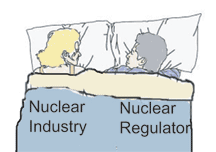 “Basically, the judgment of the nuclear fuels industry and its captive regulators in Colorado is not to be trusted when it comes to matters of health, safety, and a clean environment,”
General Atomics subsidiary wants to stop toxic pond tests, By David O. Williams, Real Aspen – August 14, 2011 Rather than seek an appropriate technological solution, managers of a decommissioned uranium processing mill near Cañon City want the state to let them stop testing a radioactive holding pond Continue reading
Cost of nuclear test refugees from Micronesia, the Marshall Islands, and Palau
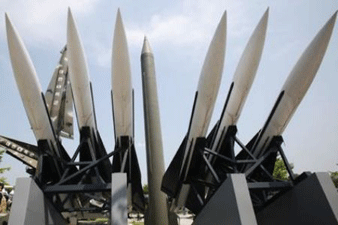
 Hawaii demanding assistance from the federal government, ETN News, Aug 14, 2011, The cost of providing Hawaii government services to Pacific island migrants has more than tripled over the last eight years, according to a state report completed this week.
Retired cook Calvin Nelson says that when he came to Hawaii from Kwajalein, after the United States had seized his home for a new missile range, he was told, “everything will be covered.” Him and thousands of other Micronesian immigrants need the kidney dialysis that kept him alive.
State government expenses to pay for services to migrants from Micronesia, the Marshall Islands, and Palau rose to US$115 million last year from US$32 million in 2002, the report said……..
Micronesia, the Marshall Islands, and Palau are beneficiaries of the Compact of Free Association. After the US used the Pacific islands for nuclear weapons testing from 1946 to 1958, it agreed in the 1986 pact to provide financial assistance and migration rights in exchange for the right to use defense sites.
People from the areas included in the compact suffer from higher rates of cancer and kidney disease, which come with expensive treatments such as chemotherapy and dialysis.
The federal government provides the state with only US$11 million each year to help the state cover the costs of the US treaty….http://www.eturbonews.com/24598/hawaii-demanding-assistance-federal-government
USA to cut funding for research on low level radiation and health?
many more people may have incurred fatal cancers from low doses, simply based on the statistical probably of those fatalities occurring across very large populations.
Budget Deal Could Crush Low-Dose Radiation Research, Forbes, by Jeff McMahon, 15 Aug 11, “…..The nation’s only Low-Dose Radiation Research program is likely to suffer a severe cut in funding not long after the United States was blanketed with low doses of radioactive fallout from the Fukushima nuclear disaster in Japan…….Dr. David J. Brenner, a professor in the Columbia University medical school’s Center for Radiological Research, in a recent editorial in The Bulletin of the Atomic Scientists. Continue reading
TVA’s multi billion nuclear reactor dollar gamble in Alabama
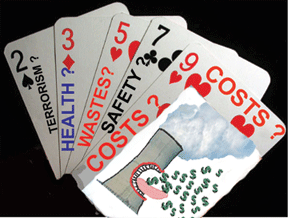 TVA gambles on Bellefonte nuclear reactors, Footprints, August 11th, 2011 › Nuclear, SACE Reports › Dr. Stephen A. Smith › Southern Alliance for Clean Energy has long been concerned with the Tennessee Valley Authority’s (TVA) push to add more nuclear reactors to their energy mix in spite of readily available energy efficiency and renewable energy alternatives. But TVA’s dogged pursuit to complete the nearly forty-year-old, antiquated Bellefonte site in Alabama is a unique and especially risky proposition. Simply put, finishing these two abandoned and degraded reactors is a multi-billion dollar bet TVA should not place. The risks to public health and safety, potential financial impacts to TVA ratepayers and U.S. taxpayers are too significant to ignore. Continue reading
Need to rewrite U.S. President’s guidance for use of nuclear weapons

Although the administration’s Nuclear Posture Review is widely said to reduce the role of nuclear weapons, it doesn’t actually reduce the role that nuclear weapons have today because all the adversaries in the current strategic nuclear war plan are exempt from the reduction. They are either nuclear weapon states, not members of the nuclear Non-Proliferation Treaty, or are in violation of their NPT obligations and have chemical or biological weapons. The new guidance would have to remove some of these adversaries from the war plan to reduce the role, or reduce the role that nuclear weapons are required to play against each of them. There are many ways this could be done:
- Reduce the numer of target categories that are held at risk with nuclear weapons.
- Reduce the damage expectancy to be a achieved against individual targets.
- Reduce the number of adversaries in the plan.
- Reduce the number and types of strike options against each adversary.
- Remove the requirement to plan for prompt launch of nuclear forces.
- Remove any requirement to plan for damage limitation strikes.
- End counterforce nuclear planning.
- End the requirement to maintain standing fully operational strike plans…….
we have a new op-ed in the Bulletin of the Atomic Scientists that describes what a new presidential directive could look like: A Presidential Policy Directive for a new nuclear path. http://www.fas.org/blog/ssp/2011/08/nuclearguidance.php
United States Army Going Green
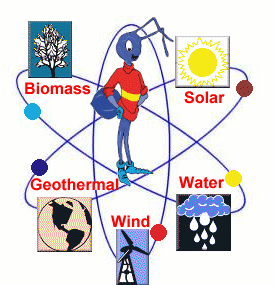 Army to build green-energy capabilities, Fierce Government August 12, 2011 — By Molly Bernhart Walker, The Army plans to launch large-scale renewable and alternative energy projects on Army installations, Army Secretary John McHugh said Aug. 10. The Army predicts it will invest up to $7.1 billion over the next 10 years to meet its energy goals; this will produce 2.1 million megawatt hours of power annually, the service estimated in a statement.
What Army envisions as “an economically viable, large-scale renewable energy infrastructure,” will begin with a task force, McHugh said, to address energy security, escalating fuel prices and compliance with green-government mandates. The Energy Initiatives Office Task Force, which will be part of the Office of the Assistant Secretary of the Army for Installations, Energy and Environment, will be fully operational by Sept. 15, he said……For more:- see the Army press release http://www.fiercegovernment.com/story/army-build-green-energy-capabilities/2011-08-12
The devious path of the nuclear lobby’s money trail

 Nuclear safety: A dangerous veil of secrecy, Aljazeera, Dorothy Parvaz 11 Aug 2011“….…A high-stakes game There’s no denying that there’s a lot of money – and power – riding on the nuclear industry.
The money trail can be tough to follow – Westinghouse, Duke Energy and the Nuclear Energy Institute (a “policy organisation” for the nuclear industry with 350 companies, including TEPCO, on its roster) did not respond to requests for information on funding research and chairs at universities.
But most of the funding for nuclear research does not come directly from the nuclear lobby, said M.V. Ramana, a researcher at Princeton University specialising in the nuclear industry and climate change. Most research is funded by governments, who get donations – from the lobby (via candidates, political parties or otherwise).
The Center for Responsive Politics – a non-partisan, non-profit elections watchdog group – noted that even as many lobbying groups slowed their spending the first quarter of the year, the Nuclear industry “appears to be ratcheting up its lobbying” increasing its multi-million dollar spending.
“In the United States, a lot of the money doesn’t come directly from the nuclear industry, but actually comes from the Department of Energy (DOE). And the DOE has a very close relationship with the industry, and they sort of try to advance the industry’s interest,” said Ramana. Indeed, nuclear engineering falls under the “Major Areas of Research” with the DOE, which also has nuclear weapons under its rubric. The DOE’s 2012 fiscal year budge request to the US Congress for nuclear energy programmes was $755m.
“So those people who get funding from that….it’s not like they (researchers) want to lie, but there’s a certain amount of, shall we say, ideological commitment to nuclear power, as well as a certain amount of self-censorship.” It comes down to worrying how their next application for funding might be viewed, he said…. http://english.aljazeera.net/indepth/features/2011/08/2011877118599802.html
Florida Power and light under scrutiny about planned nuclear costs
 FPL’s $18 Billion Nuclear-Reactor Plans Leak Unanswered Questions Before Florida PSC, FLAGLERLIVE, Jim Saunders, News Service of Florida, 12 Aug 11, The state Public Service Commission on Thursday quickly wrapped up a hearing about Florida Power & Light’s proposal to collect $196 million next year to pay for nuclear-power projects. The commission is scheduled to rule on the request Oct. 24. FPL is seeking to collect the money from customers to help upgrade nuclear plants in St. Lucie and Miami-Dade counties and to take initial steps toward adding two new reactors…..
FPL’s proposal faced a series of attacks from attorneys for consumers and business and environmental groups. In part, they questioned whether FPL will ever build two new nuclear reactors and whether the company increased costs by trying to do an upgrade project quickly.
Also, two of those attorneys told the Florida Public Service Commission that FPL used out-of-date information during a similar 2009 hearing about the upgrade project. Joe McGlothlin, an attorney for the Office of Public Counsel, accused the company of “willful withholding” of information that would have shown higher project costs….
The arguments came on the first of several days of hearings about more than $335 million in nuclear-project costs that FPL and Progress Energy Florida hope to collect from customers next year. The Progress case is expected to start next week, with the company seeking $141 million. All but about $5.6 million of that amount would go toward a plan to add two new reactors in Levy County.
Hoping to encourage more nuclear energy, Florida lawmakers in 2006 allowed utilities to incrementally collect costs from customers rather than waiting until after projects are finished. That has led to the possibility, however, that customers could spend hundreds of millions of dollars on initial costs for nuclear plants that never get built…..
James Whitlock, an attorney for the Southern Alliance for Clean Energy, said utility customers should not have to pay initial costs for the proposed Turkey Point reactors. He said FPL would use the money to try to get a license for the project but that new nuclear plants are not currently feasible.
“If the plant’s never built and never comes online, there won’t be any benefit (to customers),” Whitlock said….http://flaglerlive.com/26580/fpl-nukes-psc
Nuclear reactors’ impact on America’s fresh water supplies
 Nuclear Information and Resource Service, Michael Mariotte, 12 Aug 11, America’s aging power plants are not only the nation’s largest air polluters, they also withdraw more water than any other source, causing staggering aquatic impacts. And nuclear reactors are the largest water users of them all.
Power plants’ toll on fisheries rivals, and in some cases exceeds, that of the fishing industry. Fortunately, none of this damage is necessary because modern closed-cycle cooling systems recirculate cooling water, reducing withdrawals and fish kills by about 95 percent. Since 1972, Section 316(b) of the federal Clean Water Act has required power plants to use the Best Technology Available (BTA) to minimize the adverse environmental impacts of cooling water intake structures.
In 2001, EPA issued national regulations identifying closed-cycle cooling as BTA for new power plants. But many older reactors, typically although not exclusively those built more than 30 years ago, still rely on antiquated and damaging once-through cooling systems, which withdraw water directly from its source but do not recycle it. Instead the water is thrown back into its source at far higher temperatures than it was when taken in.
For more information on the environmental devastation caused by once-through cooling at nuclear reactors, see Licensed to Kill, a report published by NIRS and other groups in 2001 and available here.
The rule EPA proposed on April 20, 2011 would be a step backward in our collective efforts to safeguard America’s waters. Basically, EPA has chosen the path of least resistance by caving into industry pressure and punting this issue to state agencies–agencies that too often lack the resources and the ability to stand up to industry on this issue. And if the Nuclear Energy Institute gets its way, things will get even worse. What is needed is a clear rule focused on modernizing power plants by stopping the use of once-through cooling.
Urge EPA to stand up for our waters and wildlife. You can submit a comment here urging EPA to adopt a strong standard for modernizing power plant cooling systems in its final rule.
Legal challenges to Nuclear Regulatory Commission’s approval for new reactor
On Thursday, 26 public interest and environmental groups filed challenges to the NRC safety evaluation report.
NRC clears AP1000 nuclear reactor design; environmental groups balk, Tampa bay.com By Ivan Penn, Aug 11, 2011 A Nuclear Regulatory Commission report cleared the AP1000 reactor Progress Energy plans to use for its new plant, but environmentalists want further public review before the agency gives the unit final approval. Continue reading
1 This Month




Shut down the radiation-damaged Heysham nuclear reactors now
To see nuclear-related stories in greater depth and intensity – go to https://nuclearinformation.wordpress.com

Say No to NASA’s Reckless Nuclear Reactor on the Moon
Say No to NASA’s Reckless Nuclear Reactor on the Moon
-
Archives
- October 2026 (302)
- September 2026 (339)
- August 2026 (330)
- July 2026 (355)
- June 2026 (287)
- May 2026 (306)
- April 2026 (356)
- March 2026 (251)
- February 2026 (267)
- January 2026 (308)
- December 2025 (358)
- November 2025 (359)
-
Categories
- 1
- 1 NUCLEAR ISSUES
- business and costs
- climate change
- culture and arts
- ENERGY
- environment
- health
- history
- indigenous issues
- Legal
- marketing of nuclear
- media
- opposition to nuclear
- PERSONAL STORIES
- politics
- politics international
- Religion and ethics
- safety
- secrets,lies and civil liberties
- spinbuster
- technology
- Uranium
- wastes
- weapons and war
- Women
- 2 WORLD
- ACTION
- AFRICA
- Atrocities
- AUSTRALIA
- Christina's notes
- Christina's themes
- culture and arts
- Events
- Fuk 2022
- Fuk 2023
- Fukushima 2017
- Fukushima 2018
- fukushima 2019
- Fukushima 2020
- Fukushima 2021
- general
- global warming
- Humour (God we need it)
- Nuclear
- RARE EARTHS
- Reference
- resources – print
- Resources -audiovicual
- Weekly Newsletter
- World
- World Nuclear
- YouTube
-
RSS
Entries RSS
Comments RSS

