A new route to more nuclear bombs – Silex laser enrichment
 Laser advance may increase spread of nuclear bomb, SMH, William Broad, August 22, 2011 In a little-known effort, General Electric has successfully tested laser enrichment for two years and is seeking permission from the US government to build a $US1 billion ($960 million) plant that would make reactor fuel by the tonne.
That might be good news for the nuclear industry, but critics fear that if the work succeeds and the secret gets out, rogue states and terrorists could make bomb fuel in much smaller plants that are difficult to detect……. critics want a detailed risk assessment. Recently, they petitioned Washington for a formal evaluation of whether the laser initiative could backfire and speed the global spread of nuclear arms.
”We’re on the verge of a new route to the bomb,” said Frank von Hippel, a nuclear physicist who teaches at Princeton University. ”We should have learnt enough by now to do an assessment before we let this kind of thing out.” New varieties of enrichment are considered dangerous because they simplify obtaining the fuel……http://www.smh.com.au/technology/sci-tech/laser-advance-may-increase-spread-of-nuclear-bomb-20110821-1j4mm.html
Hillary Clinton’s pact with Japan to downplay Fukushima radiation risks

 Radiating Americans with Fukushima rain, food: Clinton’s secret pact, The National, Deborah Dupre , Human Rights ExaminerAugust 14, 2011 –Government agreed to downplay Fukushima radiation Fukushima is far from stabilized according to energy advisor veteran with 39 years of nuclear power engineering experience, Arnie Gundersen who told Solar IMG Saturday that Americans, not just in the northwest, are unaware of being rained on with Fukushima nuclear hot particles and eating Fukushima contaminated food because the US government has deliberately minimized the catastrophe, partially due to a pact Secretary of State Hillary Clinton signed with Japan. Gundersen, with a team of other scientists, intends to prove government statements about Fukushima are false. Continue reading
For New Jersey, wind and solar energy a better investment than nuclear power
As for nuclear, Tittel said. it’s too expensive to build, maintain, and operate. The cost of building a nuclear plant is three to four times more than wind and then you add the environmental and safety issues, he said.
“Wind and solar is a much better investment,”
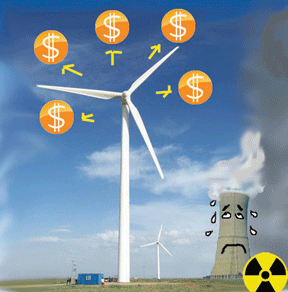 Wind And Solar Energy Overshadow Nuclear At Energy Master Plan Public Hearing, Toms River Patch, By Elaine Piniat 19 Aug 11, The public, environmental advocates, and stakeholders voice their opinions on the state’s Energy Master Plan. Wind and solar energy were the focus at a public hearing on the state’s Energy Master Plan held by Sen. Bob Smith (D- District 17) and Assemblyman John McKeon (D- District 27) at the Town Hall in Toms River.
“The New Jersey shore provides an appropriate setting for a vigorous discussion on clean energy, considering it is an ideal location for harnessing renewable sources like wind and solar…New Jersey has a unique opportunity to modernize our energy blueprint for the future,” Smith said prior to the hearing…… Continue reading
TVA to sell one nuclear reactor to pay for building another nuclear reactor
 TVA plans sale of nuclear power unit to fund new project, Knox News, By Josh Flory, August 18, 2011 TVA plans to sell assets including one of its nuclear power units in order to generate the billions in cash needed to finish the Bellefonte Nuclear Plant. Continue reading
Churches unite against uranium mining in Virginia
 The Interfaith Center said it will join forces with the Keep the Ban coalition and work with the faith-based community to keep Virginia free of uranium mining…..
Virginia Interfaith Center opposes uranium mining, Canadian Business, By AP | August 17, 2011, RICHMOND, Va. (AP) — The Virginia Interfaith Center for Public Policy announced its opposition Wednesday to ending a 1982 state ban on uranium mining.
The faith-based group, which has advocated for expanded health care for children and low-income families and battled predatory lending practices, said it joins environmental groups and others opposed to uranium mining. Continue reading
US Dept of Energy told – “No new uranium mining. Clean up the old”
Opponents not only want the DOE to reject new uranium mining in the area, they also want past contamination cleaned up.
DOE gets an earful on uranium mine leasing program near Telluride, Montrose, Colorado Independent, By David O. Williams | 08.17.11 Depends where you were last week when the U.S. Department of Energy (DOE) took feedback on its uranium mine leasing program in southwest Colorado. In some places like Telluride, according to media reports, the feds met with stiff resistance…..
Nuclear Regulatory Commission does not protect public from radioactive groundwater leaks
 The NRC’s decision on groundwater protection comes four months after an Asbury Park Press investigation documented hundreds of leaks and spills of radioactive water called tritium over the decades at plants, including Oyster Creek in Lacey. The NRC has never issued a fine against any plant.
NRC fails to change groundwater protection rules for nuclear plants, Activist says NRC needs to enforce its rules on radioactive water leaks and spills, Aug. 17, 2011 APP.com, Todd B. Bates:After years of criticisms that they were lax in dealing with radioactive leaks, spills and groundwater contamination at nuclear power plants, federal regulators have decided to let the industry keep policing itself.
The five-member U.S. Nuclear Regulatory Commission agreed to maintain the status quo and not add a tougher level of oversight Continue reading
Church group will lobby General Assembly to keep ban on uranium mining
Group will lobby General Assembly against uranium mining, WSJ By Anita Kumar, 17 Aug 11, Officials at the Virginia Interfaith Center for Public Policy say they will be mobilizing activists across the state to lobby the General Assembly to continue a moratorium on uranium mining in the state.
Trieste Lockwood, director of the group’s power and light program, said that mining could harm drinking water, residents’ health and the economy by damaging agricultural, tourism and fishing industries if there is an accident….
“The financial gain of one corporation is really simply not worth the longterm risks to so many people,” Lockwood said.
Radioactive Tritium in Connecticut River, from Vermont Yankee nuclear plant
Tritium has leaked from dozens of nuclear plants around the country, but it has been particularly problematic for Vermont Yankee as it seeks to renew its license….
Within weeks, the state Senate voted 26-4 to block the state Public Service Board from issuing a permit for the plant to operate after its initial 40-year license expires in March 2012. Vermont is the only state with a law requiring its Legislature to give the OK before regulators can issue a new nuclear plant permit.
Tritium from Vt. nuke plant in Connecticut River, Boston.com, By Dave Gram, Associated Press / August 17, 2011, MONTPELIER, Vt.—Radioactive tritium that leaked from the Vermont Yankee nuclear plant into surrounding soil and groundwater has now reached the nearby Connecticut River, the state Health Department said Wednesday as it released new river water test results….. Continue reading
Brown’s Ferry Nuclear Plant’s safety violations confirmed
NRC confirms earlier harsh safety finding for Browns Ferry Unit 1, August 17, 2011, By Brian Lawson, The Huntsville Times HUNTSVILLE, Alabama — Federal nuclear power regulators said in a letter released today they have confirmed their original finding that a malfunctioning valve at TVA’s Browns Ferry nuclear plant Unit 1 represented a significant safety violation.
The Nuclear Regulatory Commission, which in June rejected the Tennessee Valley Authority’s appeal of the finding, said it enlisted a group of NRC staff members who were not involved in the original assessment to review the findings.
The staff also found that the “red” finding, the NRC’s harshest grade was justified. Such a finding requires repair of the problem and will lead to more inspections at Browns Ferry….. http://blog.al.com/breaking/2011/08/nrc_confirms_earlier_harsh_saf.html
USA to cut military spending: will it be jobs cut or nuclear arsenal cut?
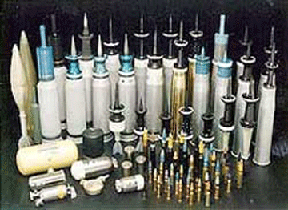 Factbox: For cuts, Pentagon must choose among weapons, personnel (Reuters) Reporting by David Alexander; Editing by Warren Strobel and Kieran Murray, 15 Aug 11– A decision to cut $350 billion in security spending over the next decade will force the Pentagon to make difficult trade-offs that could lead to layoffs, canceled weapons systems or a smaller nuclear arsenal……
NUCLEAR ARSENAL The U.S. government could make substantial savings by reducing the size of its nuclear arsenal. Under the New START nuclear arms treaty with Russia ratified this year, deployed nuclear warheads are due to be cut to 1,550 in seven years. In securing Senate approval, the administration promised to spend billions on modernizing the nuclear arsenal.
Analysts say the United States could save huge amounts of money by reducing the nuclear arsenal even further and eliminating one leg of the so-called triad of delivery systems — missiles, bombers and submarines.
The Sustainable Defense Task Force recommended cutting deployed nuclear warheads to 1,000 on seven nuclear submarines and 160 Minuteman missiles while eliminating the nuclear bomber force.It estimated savings of $113.5 billion through 2020….http://www.reuters.com/article/2011/08/15/us-usa-defense-cuts-idUSTRE77E4JH20110815
—
America’s costly problem of nuclear wastes
 AUDIO http://online.wsj.com/article/SB10001424053111904292504576484133479927502.html Nuclear Waste Piles Up—in Budget Deficit. WSJ, By MARK MAREMONT, 14 Aug 11
Imagine a football field packed 20 feet high with highly radioactive nuclear waste. That’s about the volume of the 65,000 metric tons of spent nuclear fuel stranded at dozens of nuclear sites across the U.S.
It isn’t just a potential public health hazard, as Japan’s recent nuclear disaster showed, but a growing burden on the federal government’s groaning finances. Continue reading
Nuclear engineering expert advises against Yucca Mt for nuclear waste
 Expert: Yucca not best place for storing nuclear waste, BY KEITH ROGERS, LAS VEGAS REVIEW-JOURNAL, Aug. 12, 2011 There are better places than Yucca Mountain to bury nuclear waste…..That’s what one expert on Energy Secretary Steven Chu’s Blue Ribbon Commission on America’s Nuclear Future believes.
The expert, Per Peterson, a University of California, Berkeley, nuclear engineering professor, said the choices range from stowing it in salt formations that stretch from Texas to Louisiana and that exist in New Mexico, or putting it down deep boreholes below the water table.
In either case, drinking water supplies would be spared of contamination because the water is either too saline already or there is no evident pathway to it, he said.
And, he said, the search should start for a new course on dealing with tens of thousands of tons of highly radioactive waste stored in pools and above ground at reactor sites, once destined for a maze of tunnels in Yucca Mountain, 100 miles northwest of Las Vegas…..http://www.lvrj.com/news/expert-yucca-not-best-place-for-storing-nuclear-waste-127623883.html?ref=883
Just the bare $115 billion to clean up USA’s Hanford nuclear waste
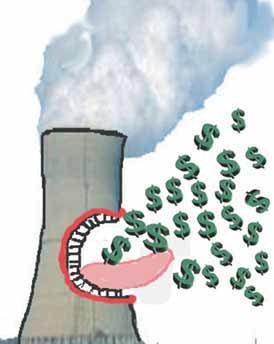 $115 billion needed to finish Hanford cleanup The News Tribune, BY ANNETTE CARY, TRI-CITY HERALD, 13 Aug 11, The Department of Energy has taken a look at all the environmental cleanup yet to be completed at the Hanford nuclear reservation and come up with a big price tag: $115 billion.
Japan and USA seek treaty to prevent having to pay international nuclear compensation
 Japan eyes global nuclear compensation treaty – report, Aug 14, 2011 Reporting by Chikako Mogi; Editing by Sanjeev Miglani, TOKYO (Reuters) – Japan is considering joining a U.S.-led global nuclear compensation treaty in a bid to fend off excessive overseas damage claims related to nuclear accidents, the Nikkei newspaper reported on Sunday, without citing sources.
The U.S., Morocco, Romania and Argentina have agreed to the Convention on Supplementary Compensation for Nuclear Damage, but the treaty needs at least five countries in order to go into effect.
The newspaper said Japan would start discussions with the United States in the coming week over the pact, which defines the rules for trials for damage claims in countries where accidents happen.
The move comes in the wake of a devastating accident in March at the Fukushima Daiichi nuclear power plant, which leaked radiation and exposed wide-ranging produces from vegetables, tea to water to excessive radioactive materials….http://af.reuters.com/article/worldNews/idAFTRE77D0C620110814
1 This Month




Shut down the radiation-damaged Heysham nuclear reactors now
To see nuclear-related stories in greater depth and intensity – go to https://nuclearinformation.wordpress.com

Say No to NASA’s Reckless Nuclear Reactor on the Moon
Say No to NASA’s Reckless Nuclear Reactor on the Moon
-
Archives
- October 2026 (302)
- September 2026 (339)
- August 2026 (330)
- July 2026 (355)
- June 2026 (287)
- May 2026 (306)
- April 2026 (356)
- March 2026 (251)
- February 2026 (267)
- January 2026 (308)
- December 2025 (358)
- November 2025 (359)
-
Categories
- 1
- 1 NUCLEAR ISSUES
- business and costs
- climate change
- culture and arts
- ENERGY
- environment
- health
- history
- indigenous issues
- Legal
- marketing of nuclear
- media
- opposition to nuclear
- PERSONAL STORIES
- politics
- politics international
- Religion and ethics
- safety
- secrets,lies and civil liberties
- spinbuster
- technology
- Uranium
- wastes
- weapons and war
- Women
- 2 WORLD
- ACTION
- AFRICA
- Atrocities
- AUSTRALIA
- Christina's notes
- Christina's themes
- culture and arts
- Events
- Fuk 2022
- Fuk 2023
- Fukushima 2017
- Fukushima 2018
- fukushima 2019
- Fukushima 2020
- Fukushima 2021
- general
- global warming
- Humour (God we need it)
- Nuclear
- RARE EARTHS
- Reference
- resources – print
- Resources -audiovicual
- Weekly Newsletter
- World
- World Nuclear
- YouTube
-
RSS
Entries RSS
Comments RSS

