Los Angeles – overwhelming call for more roodftop solar power
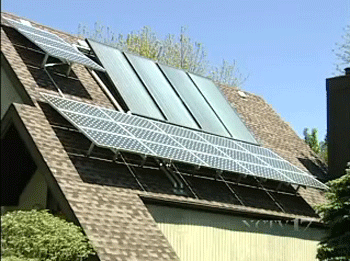 New Poll: Angelenos Overwhelmingly Support More Local Rooftop Solar Power Environmental Expert, City Council, LADWP Solar Action Puts L.A. on the Right Track in the Minds of Voters LOS ANGELES–(BUSINESS WIRE)-– A significant majority of voters in Los Angeles wants more local solar powering their city; in fact they want lots more. These are the findings of a new poll on L.A. attitudes toward renewable energy conducted by the public research firm Fairbank, Maslin, Maullin, Metz & Associates (FM3) for the Vote Solar Initiative.
Advocates are urging city and utility leaders to take note and keep taking bold steps to expand investment in a local solar power economy.
Key findings:
- A large majority of voters want LADWP to use more electricity generated from renewable sources like solar (87 percent) and wind (79 percent).
- Three-quarters (76 percent) of respondents specifically feel that LADWP should be doing more to expand the use of local rooftop solar in Los Angeles.
- Four out of five (81 percent) support LADWP increasing its local solar goal to 1,200 megawatts, ten percent of Governor Brown’s goal for local clean power. Support for this goal remains strong across the political spectrum, with majorities of Democratic, Republican and Independent voters all expressing support.
A memo detailing the survey findings is available here:
http://votesolar.org/wp-content/uploads/2012/05/Vot……… http://www.environmental-expert.com/news/new-poll-angelenos-overwhelmingly-support-more-local-rooftop-solar-power-292759
Savannah River Nuclear Site – inadequate radiation protection
NRC: SRS Saltstone facility’s radiation exposure may exceed limit in 10K years Aiken Standard 5/4/2012 By ANNA DOLIANITIS – Staff writer – email:adolianitis@aikenstandard.com A recent report released by the Nuclear Regulatory Commission expressed concern that the Saltstone Disposal Facility at the Savannah River Site may not meet the standards to prevent radiation exposure to the Site’s surrounding population in the long term….. Continue reading
At critical time, San Diego radiation monitor was not working
San Diego Radiation Monitor Not Working During Fukushima Crisis, Audit Reveals San Diego Reader, Matt Potter, May 3, 2012 An April 19 audit by the Inspector General of the United States Environmental Protection Agency has revealed that major components of the government’s radiation monitoring and reporting system, including an air sampling device in San Diego, were not functioning during last year’s Fukushima nuclear plant meltdown in Japan.
“On March 11, 2011, at the time of the Japan nuclear incident, 25 of the 124 installed RadNet monitors, or 20 percent, were out of service for an average of 130 days,” auditors said.
San Diego’s monitoring device was one of 11 said to be out of service for more than 140 days, according to the findings….. http://www.sandiegoreader.com/weblogs/news-ticker/2012/may/03/san-diego-radiation-monitor-not-working-during-fuk/
The thorny question of the importation of nuclear wastes for temporary management
Importation of foreign radioactive waste into the U.S. sets a bad precedent and may well serve to discourage other countries from developing safe techniques to manage their own waste

 US company applies to import radioactive waste from Mexico, incinerate it and return the ash Washington Post, 2 May 12, YAKIMA, Wash. — A waste management company has applied to the federal government for a license to import up to 500 tons of radioactive waste from Mexico to south-central Washington, where the waste will be incinerated and the resulting ash returned to Mexico.
This isn’t the first application to the Nuclear Regulatory Commission to import foreign radioactive waste, but it’s among several recent proposals that have generated little opposition because the waste won’t be permanently stored in the U.S. In 2009, a proposal to import thousands of tons of radioactive waste from Italy, treat it and ultimately store the remnants in Utah was abandoned following public outcry. Continue reading
USA’s consumer trap of paying in advance for nuclear reactors
 Progress Energy files for more recovery charges after nuclear project estimate soars and is further delayed http://enformable.com/2012/05/progress-energy-files-for-more-recovery-charges-after-nuclear-project-estimate-soars-and-is-further-delayed/
Progress Energy, the electric utility in Pinellas County and much of North and Central Florida, has filed its nuclear cost recovery charges with the state Public Service Commission to assist in continuing work on nuclear reactors which may never be built, or ever return to
service at the Levy and Crystal River sites….
Progress Energy’s charge if granted in full will have a tremendous impact on residential
homeowners, who would be expected to pay an extra fee of $5.09 on a 1,000-kilowatt-hour residential bill beginning next year, compared to the extra $2.86 in 2012. Continue reading
The confused issue of the ever-growing costs of nuclear power
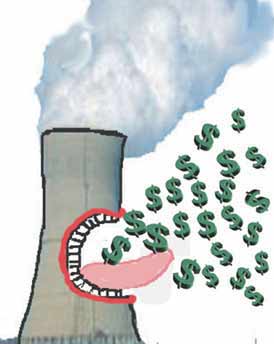 Does nuclear power have a negative learning curve? Think Progress By Joe Romm on Apr 6, 2011 ‘Forgetting by doing’? Real escalation in reactor investment costs Drawing on largely unknown public records, the paper reveals for the first time both absolute as well as yearly and specific reactor costs and their evolution over time. Its most significant finding is that even this most successful nuclear scale-up was characterized by a substantial escalation of real-term construction costs. Continue reading
Growth of renewable energy in USA
Who uses renewable power, in one map, Washington Post, by Brad Plumer, 05/02/2012 We keep hearing that renewable energy is booming in the United States, but where is it? Here’s a handy map from the U.S. Energy Information Administration showing how much electricity each state gets from wind, solar, biomass, and geothermal (but not hydropower):….

Why do some states do better than others? Policy helps. Some 30 states have laws that require utilities to get a certain portion of their power from renewable sources. (The Southeast is the big exception here.) The strictness of the laws varies from state to state, but by and large, states with stricter standards get more renewables. But simply having natural resources helps, too: Idaho, Wyoming, and South Dakota don’t have strict standards, but there’s so much wind up there that turbines are going up anyway….. Meanwhile, the EIA notes, if you include hydropower, some states in the Pacific Northwest look even better. Idaho gets 93 percent of its electricity from hydroelectric dams. Oregon gets 78 percent and Washington 82 percent…. The EIA has data on total renewable generation, not including hydropower, here (Excel file). The top states in 2012 on this metric were:
1. Texas
2. California
3. Iowa
4. Minnesota
5. Washington
6. Illinois http://www.washingtonpost.com/blogs/ezra-klein/post/where-americas-renewable-energy-is-in-one-map/2012/05/02/gIQAHNpPwT_blog.html

Court hearing about Yucca Mountain radioactive waste plan
 Federal appeals court hears arguments on plan to close Yucca Mountain nuclear dump, Washington Post, By Associated Press,May 2 WASHINGTON — Supporters of a proposed nuclear waste dump in Nevada urged a federal appeals court Wednesday to force the Nuclear Regulatory Commission to move forward on a licensing plan for the long-delayed project…
.. Washington state and South Carolina are among those that filed a lawsuit seeking to force the NRC to rule on the Yucca Mountain application. A decision is expected later this
year. http://www.washingtonpost.com/business/federal-appeals-court-hears-arguments-on-plan-to-close-yucca-mountain-nuclear-dump/2012/05/02/gIQA5iirwT_story.html
Controversial brachytherapy treatment for breast cancer
“It’s important for any woman really to discuss with her physician the risks and benefits of either approach,”
 More women need breasts removed after brachytherapy By Genevra Pittman NEW YORK May 1, 2012 (Reuters Health) – Women who got seed radiation as part of their breast cancer treatment were more likely to have an infection or breast pain than those who were treated with whole-breast irradiation, in a new study.
And more patients treated with the quicker and more local radiation technique, also called brachytherapy, went on to need a mastectomy as well — but there was no difference in their chance of dying in the few years after treatment. “The decision of whether a patient was treated with brachytherapy or whole-breast irradiation was the single most important factor in whether a patient had a mastectomy,” said study author Dr. Benjamin Smith, who called that result “surprising.” Continue reading
USA and Russia – just the bare 2,800 non-strategic nuclear warheads !
The report concludes that non-strategic nuclear weapons are neither the reason nor the solution for Europe’s security issues today but that lack of political leadership has allowed bureaucrats to give these weapons a legitimacy they don’t possess and shouldn’t have.
 2,800 Nuclear Warheads in Russian and U.S. Arsenal, According to New
Report http://blogs.ottawacitizen.com/2012/05/01/2800-nuclear-warheads-in-russian-and-u-s-arsenal-according-to-new-report/ May 1, 2012 From the Federation of American Scientists: A new FAS Special Report – Non-Strategic Nuclear Weapons – concludes that Russia and the United States combined possess an estimated 2,800 nuclear warheads for their non-strategic nuclear forces. Several thousand other non-strategic warheads have been retired and are awaiting dismantlement. Continue reading
Potential for clean energy at airports
Clean Energy At Airports Could Find Space Around Runways, Study Says HUFFINGTON POST 05/ 1/2012 From EarthTechling’s Beth Buczynski:  VIDEO a look at Denmark’s clean energy A new report by the U.S. Department of Agriculture shows that bustling airports could serve a vital new function, doubling as alternative energy factories.
The study findings, recently published in an Environmental Management article titled “Airports Offer Unrealized Potential for Alternative Energy Production [PDF],” indicate that airports might want to consider converting empty land into alternative fuel power plants where it is both economically and environmentally beneficial…… Alternative energy projects at major hubs like the Indianapolis and Denver airports, as well as smaller airports like the one in Chattanooga, Tenn., demonstrate the potential for benefits across the airport spectrum. Such efforts may be particularly beneficial for rural economic development, as many rural airport properties contain expansive grasslands that potentially could be converted to biofuel crops or other renewable energy sources… http://www.huffingtonpost.com/2012/05/01/clean-energy-airports-renewables-study_n_1468079.html
USA’s Nuclear Regulatory Commission’s pro nuclear enthusiasts, in turmoil
The NRC review, published last July, made about a dozen safety recommendations.
But the nuclear regulators chose not to enforce those same safeguards before granting a licence to two new reactors at an existing plant in Georgia.
 Jaczko – the sole commissioner to object to the licence – argued the new project should have been built to the higher standard.
Republicans in Congress have been gunning for Jaczko since then.
 The infighting that threatens to undermine US nuclear safety The Nuclear Regulatory Commission became more powerful post-Fukushima, but it has been beset by division and dissent, Guardian UK, 30 April 12,, Suzanne Goldenberg, US environment correspondent “……….the real drama, going largely unseen amid the infighting at the regulator, is over the future of America’s nuclear industry after the Fukushima disaster in Japan last year, nuclear experts say.
USA’s nuclear regulators put costs above safety
“If filtered vents are good enough for Sweden, if they are good enough for Germany, if they are good enough for France and for Switzerland,” “they should be good enough for us.”
 Nuclear Safety Advocates Accuse Industry And Regulators Of Foot-Dragging On Basic Safety Measure HUFFINGTON POST, Tom Zeller Jr.04/30/2012 “…… one seemingly straightforward emergency feature: Requiring a filtered vent in the concrete containment buildings surrounding nuclear reactors like the one at Pilgrim.
Such a vent would come into play in only the worst sort of emergency, when the usual means for keeping the reactor core cool are lost and things inside are heating up to the point of becoming explosive. Operators can then open the vent and exhale the pressure directly into the air. The filter would capture dangerous radioactivity, to prevent contamination of the surrounding area.
Until now, vents have been an optional feature for American plant operators, but in March, the Nuclear Regulatory Commission issued its first orders since undertaking a review of safety systems and procedures at American plants in the aftermath of the disaster in Japan. Among the orders was a requirement that reactors of similar pedigree to those used at Fukushima should have containment vents installed. For reactors that already have them, steps should be taken to ensure they operate in an emergency, officials declared.
To the dismay of Lampert and others, however, regulators have not required filters, Continue reading
Safety shortcomings at Hanford nuclear waste site
The radioactive waste is currently stored in 177 aging, underground tanks, many of which have leaked into the groundwater, threatening the neighboring Columbia River.
Energy Department audit finds nuclear plant vessels procured to 2005 fail to meet requirements The Republic, SHANNON DININNY, 30 April 12 YAKIMA, Wash. — The Energy Department and a contractor building a waste treatment plant at the nation’s most contaminated nuclear site procured and installed tanks that did not always meet requirements of a quality assurance program or the contract, a federal audit concluded Monday. Continue reading
The transition from nuclear energy, fossil fuels – to efficiency, renewables, and smart grids
The upshot of these events is an intensified focus on energy efficiency and renewables, two solutions that hold promise of bridging the supply-demand gap in the years ahead while simultaneously reducing the current heavy reliance on fossil fueled generation.
At the same time, new investments in smart grid technologies to manage demand and integrate renewable power supplies into the grid are increasing rapidly.

 Backfilling Nuclear Shutdowns With Efficiency And Renewables In Japan, Germany And California? Think Progress, Apr 29, 2012 by James Newcomb, via the Rocky Mountain Institute Electric utilities and policymakers in Japan and Germany have been scrambling for months to find ways to compensate for nuclear power plants shut down in the aftermath of Fukushima.
In both instances, fossil fuels are part of the stopgap solution to offset the declines in nuclear generation in the short term, but longer-term energy policies are shifting definitively toward efficiency and renewables. Now, the unexpected and indefinite shutdown of both units at the San Onofre Nuclear Generating Station in Southern California has raised questions about California’s short-term electricity supply options and long-term contingency plans. Continue reading
1 This Month



Shut down the radiation-damaged Heysham nuclear reactors now
To see nuclear-related stories in greater depth and intensity – go to https://nuclearinformation.wordpress.com

Say No to NASA’s Reckless Nuclear Reactor on the Moon
Say No to NASA’s Reckless Nuclear Reactor on the Moon
-
Archives
- October 2026 (256)
- September 2026 (339)
- August 2026 (330)
- July 2026 (355)
- June 2026 (287)
- May 2026 (306)
- April 2026 (356)
- March 2026 (251)
- February 2026 (267)
- January 2026 (308)
- December 2025 (358)
- November 2025 (359)
-
Categories
- 1
- 1 NUCLEAR ISSUES
- business and costs
- climate change
- culture and arts
- ENERGY
- environment
- health
- history
- indigenous issues
- Legal
- marketing of nuclear
- media
- opposition to nuclear
- PERSONAL STORIES
- politics
- politics international
- Religion and ethics
- safety
- secrets,lies and civil liberties
- spinbuster
- technology
- Uranium
- wastes
- weapons and war
- Women
- 2 WORLD
- ACTION
- AFRICA
- Atrocities
- AUSTRALIA
- Christina's notes
- Christina's themes
- culture and arts
- Events
- Fuk 2022
- Fuk 2023
- Fukushima 2017
- Fukushima 2018
- fukushima 2019
- Fukushima 2020
- Fukushima 2021
- general
- global warming
- Humour (God we need it)
- Nuclear
- RARE EARTHS
- Reference
- resources – print
- Resources -audiovicual
- Weekly Newsletter
- World
- World Nuclear
- YouTube
-
RSS
Entries RSS
Comments RSS

