Salem nuclear plant : no timeline for restarting it after Hurricane Sandy
 No timeline for restarting New Jersey nuclear reactor after high wave took out 5 of 6 water intake pumps during Sandy http://enenews.com/no-timeline-for-restarting-nj-reactor-after-high-wave-took-out-5-of-6-water-intake-pumps-during-sandy
November 3rd, 2012
By ENENews Title: No timeline for full power at New Jersey nuclear reactor
Source: Reuters
Date: Nov 3, 2012
Public Service Enterprise Group Inc’s provided no timeline for its Salem 1 nuclear plant to fully start-up after it shut down from superstorm Sandy.
PSEG had not yet connected the plant to the regional grid, but “grid stability is not an issue at this time,” Joe Delmar, a PSEG spokesman said on Saturday. […]
Title: Salem Unit 1, No Timeline For Restart
Source: SimplyInfo
Date: November 3rd, 2012
Reuters is reporting no timeline for restarting unit 1 at Salem after a high wave from hurricane Sandy took out 5 of the 6 water intake pumps. […] It is likely that the widespread outages still going on across the area mean there is less demand for power. It could also be that they are still repairing the intake pumps for Salem yet choose to not publicly disclose the status of this issue.
Hurricane Sandy and climate change
What Does Hurricane Sandy Show us about Shoreline Change? http://www.enn.com/climate/article/45168 5 Nov 12 Contrarians argue that Hurricane Sandy isn’t proof of climate change. But local scientists say the recent storm offers more damning evidence that Rhode Island’s weather and landscape are undergoing a long-term transformation — one with a steep cost in dollars and human health.
Perhaps the most significant and indisputable fact is that the Atlantic Ocean is warmer, so much so that a late-October storm didn’t lose steam over what should have been a colder sea. Instead, Sandy gained speed and strength as it headed north and became an enormous force of destruction. Continue reading
USA’s B61 bombs becoming even more astronomically expensive
Billions more needed to refurbish B61 nuclear bombs, Stars and Stripes By JOHN FLECK Albuquerque Journal, N.M. November 4, 2012 Technicians at the Pantex Plant in Texas, where nuclear bombs are disassembled for testing, prepare to start the evaluation process on a B61 nuclear bomb, the oldest in the arsenal. The B61 is about to undergo a major overhaul that the Pentagon estimates will cost up to $10 billion, or $25 million per bomb.
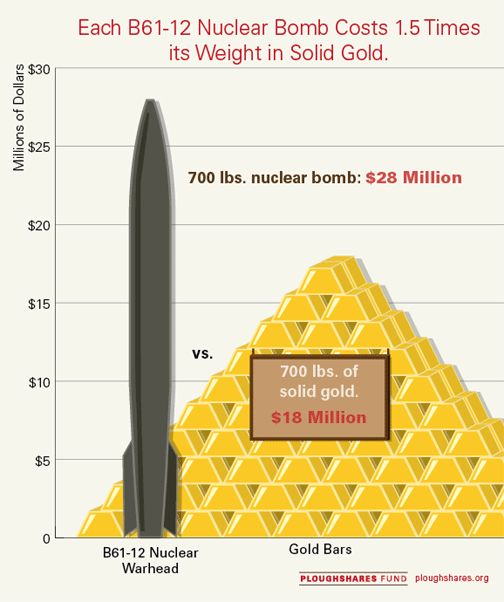
NATIONAL NUCLEAR SECURITY ADMINISTRATION The National Nuclear Security Administration, already under fire for billions of dollars of cost overruns, has underestimated by billions more how much it will cost to refurbish the nation’s stockpile of B61 nuclear bombs, according to an independent cost assessment commissioned by the agency. Continue reading
USA’s aging nuclear power plants in need of monitoring

 Expert: “There’s another nuclear disaster” if operators aren’t able to connect temporary equipment in flooding http://enenews.com/expert-theres-another-nuclear-disaster-if-operators-arent-able-to-connect-temporary-equipment-in-flooding November 1st, 2012
Title: U.S. nuclear energy safety questioned
Source: UPI
Author: LINYI ZHANG
Date: Nov. 1, 2012
The United States is headed toward a major nuclear disaster unless the government closely monitors aging power plants, safety advocates and activists said. […]
Tuesday’s historic hurricane brought the issue into sharp focus as Oyster Creek nuclear station — one of the oldest nuclear plants adjacent to the Oyster Creek in New Jersey using Mark I boiling water reactor [identical to the containment vessels used at Fukushima Daiichi] — declared an alert because of high water levels. The plant experienced power disruption but backup diesel fuel was able to provide power for cooling.
But experts said if future events become more severe, under-designed protections might fail. […]
If operators aren’t able to connect temporary equipment in flooding, “there’s another nuclear disaster,” said Dave Lochbaum, director of the nuclear safety program of Union of Concerned Scientists, a nuclear oversight group. […]
Oyster Creek nuclear plant did lose cooling of spent fuel during hurricane
NRC: Spent fuel pool cooling lost at NJ’s Oyster Creek nuclear plant during Hurricane Sandy http://enenews.com/nrc-spent-fuel-pool-cooling-lost-njs-oyster-creek-nuclear-plant-during-hurricane-sandy
November 2nd, 2012
Nuclear Regulatory Commission (h/t Anonymous tip):Nuclear Regulatory Commission (h/t Anonymous tip):
See also: Gundersen: I suspect we’re going to see reports of spent fuel pools heating up at New Jersey nuclear plants — The problem is reactors were in refueling mode (VIDEO)
Ameren, Westinghouse hanging out for money for those dud mini nuclear reactors
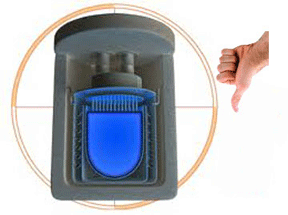 a bigger question is whether small-scale nuclear can compete economically, particularly in a world of relatively inexpensive natural gas.
Ameren, Westinghouse still waiting for decision on nuclear grant MENAFN – – Nov 02, 2012–-It was six months ago that Ameren Missouri and Westinghouse officials joined Gov. Jay Nixon on the lawn of the governor’s mansion to announce plans to pursue a first-of-its-kind mini nuclear reactor that would be built next to the utility’s Callaway plant.
The effort had bipartisan political support. Other Missouri electricity suppliers were on board, as well as the state’s university system. Everything seemed in place — almost.
The whole plan hinged on getting at least a share of a 452 million federal grant to advance commercialization of next-generation nuclear technology.
Today, a month after the Department of Energy was supposed to announce who would share the federal money, Ameren and Westinghouse are still waiting. And with the presidential election just days away, heightened scrutiny of energy technology subsidies, a growing budget deficit and a potential change in administrations are looming.
An Energy Department spokeswoman said applications are still under review. She didn’t say when a decision would be made. The companies have reason to be anxious. Continue reading
Call to end USA’s nuclear tax credit
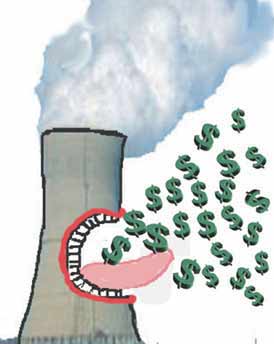 Why should nuclear power’s tax credit last more than a decade, when wind power’s tax credit must be renewed every couple of years? That makes no sense. Why should dangerous, dirty and expensive nuclear power receive that kind of support from taxpayers at all? It shouldn’t.
Act now: Support wind power; end the nuclear tax credit, 2 Nov 12
http://org2.democracyinaction.org/o/5502/p/dia/action/public/?action_KEY=12063
Nuclear Information and Resource Service November 2, 2012 Regardless of what happens in next week’s election, afterwards the current Congress is going to meet in a lame duck session and try to grapple with major federal tax, budget, jobs, and deficit issues. And they’re going to be looking for savings—both real and imagined—wherever they possibly can.
We’ve got an easy way for Congress to support tens of thousands of American jobs, and to reduce future budget deficits by billions of dollars. And our plan will also help prevent radioactive poisoning of our nation while building a nuclear-free, carbon-free energy future.
Tell Congress : End the nuclear power tax credit, renew the wind tax credit! Continue reading
American nuclear reactors similar to Fukushima ones do not have emergency filtered vents
A Hard Look at U.S. Reactor Hardware After Fukushima NYT, By MATTHEW L. WALD, 2 Nov 12 Over the objections of the nuclear industry, the staff of the Nuclear Regulatory Commission is planning to recommend the adoption of a new rule requiring American reactors similar to the ones at Fukushima Daiichi to install emergency vents with filters on them.
The filtered vents would be required on two of the oldest reactor designs sold by General Electric. The idea is that their containments could be opened early in an accident to vent a puff of slightly radioactive gas and explosive hydrogen and thus prevent a buildup in pressure or explosions as an accident unfolds. The reactors did not have such vents originally, but most of the oldest models, equipped with Mark I containments, added vents in the early 1990’s.
After the Fukushima accident of March 2011, the commission ordered that vents be added to Mark II reactors as well but told its staff to quickly study whether filtered ones were necessary.
The United States has 23 Mark I reactors, all of which now have vents, and eight Mark II reactors, none of which have vents. None have filtered vents….. Continue reading
USA nuclear reactors not prepared for very high storm surges
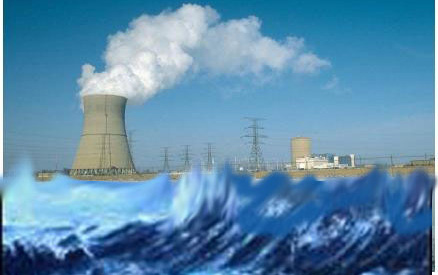 When the nuclear industry says that it can withstand conditions “beyond that historically reported,” we should want to know a lot more
United States came in second, behind Japan, as the country with the largest number of inadequately protected nuclear power plants. The 1938 New England hurricane triggered a storm surge as high as 25 to 30 feet, considerably higher than waves generated this week by Sandy. A wave that tall would easily overtake many nuclear plants on the East Coast, which on average lie about 20 feet above sea level, with minimal sea wall protection.
SANDY, FUKUSHIMA, AND THE NUCLEAR INDUSTRY New Yorker by Evan Osnos, November 2, 2012 When Hurricane Sandy hit the East Coast, it forced three nuclear reactors to shut down, including the Indian Point 3 plant along the banks of the Hudson, about twenty-five miles north of New York City. Three more reduced their output as a precaution. At
the nation’s oldest nuclear plant, the Oyster Creek facility, about thirty-three miles north of Atlantic City, operators faced an unusual event: wind, a rising tide, and the storm surge sent more water than normal into the plant’s water-intake system.
At the same time, the plant, which was already down for maintenance, lost its electrical
power from the grid. Operators called an “alert” that escalated the plant a step up from the lowest emergency level, and they turned to backup generators to keep cooling the reactor. Continue reading
New Jersey Nuclear plant only 10 miles from gas fires
Gas fires still burning 10 miles from NJ nuclear plant after Sandy — Official: Devastation can’t be seen from the air… It’s beyond imagination (PHOTOS) http://enenews.com/gas-fires-still-burning-10-miles-from-nj-nuclear-plant-official-the-devastation-is-nothing-that-could-be-seen-from-the-air-it-is-beyond-imagination
November 1st, 2012
Title:Title: New Jersey Natural Gas shutting off service to barrier islands
Source: The Star-Ledger
Author: Seth Augenstein
Date: November 01, 2012
The natural gas fires that have burned for days along the ravaged barrier islands, spanning from Bay Head south to Seaside Park [10 miles north of Oyster Creek Nuclear Generating Station] and also Long Beach Island, are about to be snuffed by New Jersey Natural Gas, the company said this afternoon. […]
Brick Township (Andrew Mills/The Star-Ledger)
The company cannot give an estimate of the number of fires that have burned in the devastated areas. […]
In Brick, roughly a half dozen natural gas fires have burned for three days — and are still going — on the township’s 3-mile stretch of barrier island […]
Authorities are now monitoring the gas fires as they wait for a chance to get into the storm-ravaged area. […]
Title: New Jersey Natural Gas to snuff gas fires on barrier islands
Source: The Asbury Park Press
Date: November 01, 2012 at 1:30 PM
[…] Over the past three days, New Jersey Natural Gas has plugged more than 1,300 leaks in those areas. […]
“Our crews did everything we could to save the system,” said Kathleen T. Ellis, chief operating officer of New Jersey Natural Gas. “We were only able to gain access to some of the most damaged areas within in the last 24 hours, and the devastation is nothing that could be seen from the air.
“It is beyond imagination,” Ellis said. “The only safe thing to do is shut down the system.” [.. Watch: ABC 10 miles from NJ nuke plant: We can hear gas lines hissing — Fire dept. says one spark and town could blow (VIDEO)
Unanswered questions about Oyster Creek nuclear power plant
 Oyster Creek Nuclear Alert: As Floodwaters Fall, More Questions Arise TruthOut , 01 November 2012 11:38By Gregg Levine, capitoilette | News Analysis New Jersey’s Oyster Creek Nuclear Generating Station remains under an official Alert, a day-and-a-half after the US Nuclear Regulatory Commission declared the emergency classification due to flooding triggered by Hurricane Sandy. An Alert is the second category on the NRC’s four-point emergency scale. Neil Sheehan, a spokesman for the federal regulator, said thatfloodwaters around the plant’s water intake structure had receded to 5.7 feet at 2:15 PM EDT Tuesday, down from a high of 7.4 feet reached just after midnight.
Water above 6.5 to 7 feet was expected to compromise Oyster Creek’s capacity to cool its reactor and spent fuel pool, according to the NRC. An “Unusual Event,” the first level of emergency classification, was declared Monday afternoon when floodwaters climbed to 4.7 feet.
Though an emergency pump was brought in when water rose above 6.5 feet late Monday, the NRC and plant owner Exelon have been vague about whether it was needed. As of this writing, it is still not clear if Oyster Creek’s heat transfer system is functioning as designed. Continue reading
First insurance companies, now even AMERICANS wake up to global warming!
On Oct. 17 the giant German reinsurance company Munich Re issued a prescient report titled Severe Weather in North America. Globally, the rate of extreme weather events is rising, and “nowhere in the world is the rising number of natural catastrophes more evident than in North America.” From 1980 through 2011, weather disasters caused losses totaling $1.06 trillion. Munich Re found “a nearly quintupled number of weather-related loss events in North America for the past three decades.”
 It’s Global Warming, Stupid Bloomberg Business Week By Paul M. Barrett November 01, 2012 Yes, yes, it’s unsophisticated to blame any given storm on climate change. Men and women in white lab coats tell us—and they’re right—that many factors contribute to each severe weather episode. Climate deniers exploit scientific complexity to avoid any discussion at all.
Clarity, however, is not beyond reach. Hurricane Sandy demands it: At least 40 U.S. deaths. Economic losses expected to climb as high as $50 billion. Eight million homes without power. Hundreds of thousands of people evacuated. More than 15,000 flights grounded. Factories, stores, and hospitals shut. Lower Manhattan dark, silent, and underwater.
An unscientific survey of the social networking literature on Sandy reveals an illuminating tweet (you read that correctly) from Jonathan Foley, director of the Institute on the Environment at the University of Minnesota. On Oct. 29, Foley thumbed thusly: “Would this kind of storm happen without climate change? Yes. Fueled by many factors. Is storm stronger because of climate change? Yes.”
Eric Pooley, senior vice president of the Environmental Defense Fund (and former deputy editor of Bloomberg Businessweek), offers a baseball analogy: “We can’t say that steroids caused any one home run by Barry Bonds, but steroids sure helped him hit more and hit them farther. Now we have weather on steroids.” Continue reading
San Onofre nuclear plant – back in function – NEVER? or years away
Edison Chairman Ted Craver left open the possibility that the generators might eventually be scrapped.
Craver said it’s not clear if the plant will ever return to full power. He added, “It appears complete replacement of the steam generators would take some years.”
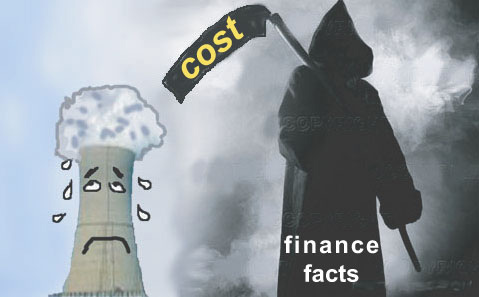 Bills for replacement power, repairs at troubled San Onofre, Calif., nuke plant reach $317M WP, By Associated Press,November 1 LOS ANGELES — Costs tied to the long-running shutdown at the San Onofre nuclear power plant in California have hit $317 million, and
it’s not clear if the ailing plant will return to full power, according to documents released Thursday. Continue reading
In this climate challenged world, nuclear lobbyists have nothing to crow about
Having a grid that simply survives a category 1 hurricane without a Fukushima-sized nuclear disaster is nothing to crow about.
The astronomical cost of restoring power to millions of consumers is real, as is the potential danger still posed by a number of crippled nuclear power plants.
Oyster Creek Nuclear Alert: As Floodwaters Fall, More Questions Arise TruthOut , 01 November 2012 Gregg Levine, capitoilette | News Analysis“……If you thought all of these problems would cause nuclear industry representatives to lay low for a while, well, you’d be wrong: “Our facilities’ ability to weather the strongest Atlantic tropical storm on record is due to rigorous precautions taken in advance of the storm,” Marvin Fertel, chief executive officer of the Nuclear Energy Institute, a Washington-based industry group, said yesterday in a statement.
Fertel went on to brag that of the 34 reactors it said were in Sandy’s path, 24 survived the storm without incident.
Or, to look at it another way, during a single day, the heavily populated eastern coast of the Unite States saw multiple nuclear reactors experience problems. And that’s in the estimation of the nuclear industry’s top lobbyist.
Or, should we say, the underestimation? Of the ten reactors not in Fertel’s group of 24, seven were already offline, and the industry is not counting them. So, by Fertel’s math, Oyster Creek does not figure against what he considers success. Power reductions and failed emergency warning systems are also not factored in, it appears. Continue reading
Nuclear Regulatory Commission’s careful censorship of the facts
 America’s nuclear safety under scrutiny after Oyster Creek’s Sandy alert US nuclear regulators model risk from seismic activity or flooding based on past history. That’s leaving way too much to luck Richard Schiffman guardian.co.uk, 1 November 2012 “…..The Huffington Post reported earlier this month that:
“According to the NRC’s own calculations … the odds of the dam near the Oconee plant [operated by Duke Energy in South Carolina] failing at some point over the next 22 years are far higher than were the odds of an earthquake-induced tsunami causing a meltdown at the Fukushima plant.”
This alarming news, however, was blacked out of the NRC’s public report. It was leaked by the lead author, Richard H Perkins, who said that his work had been censored because it revealed that:
“The NRC has been in possession of relevant, notable, and derogatory safety information for an extended period but failed to properly act on it.”
In another section of the report, about the Fort Calhoun nuclear plant in Nebraska, NRC redactors removed information indicating that the failure of the Oahe or Fort Randall dams could result in levels of rampaging water higher than the plant’s flood protection walls. The Nuclear Regulatory Commission evidently believes that it is better to hide the facts about nuclear risks than to fix the problem.
Critics allege that not only does the NRC withhold critical information, but also fails in many cases to enforce regulations that are already on the books. David Lochbaum warns:
“I’m most concerned about the NRC’s practice of allowing unsafe reactors to operate. UCS’s Nuclear Power Information Tracker shows 47 reactors that NRC knows to violate fire protection regulations and 27 reactors with seismic protection known to be less than the seismic hazards they face. These pre-existing vulnerabilities mean that the American public is protected more by luck than by skill.”
And if superstorm Sandy, and the increasing frequency of other extreme weather events in recent years is any evidence, America’s luck may be running out. http://www.guardian.co.uk/commentisfree/2012/nov/01/nuclear-safety-oyster-creek-sandy-alert?fb=native&CMP=FBCNETTXT9038
1 This Month
23-25 October – on Zoom – World BEYOND War’s annual global conferenc


Shut down the radiation-damaged Heysham nuclear reactors now
To see nuclear-related stories in greater depth and intensity – go to https://nuclearinformation.wordpress.com

Say No to NASA’s Reckless Nuclear Reactor on the Moon
Say No to NASA’s Reckless Nuclear Reactor on the Moon

-
Archives
- October 2026 (219)
- September 2026 (339)
- August 2026 (330)
- July 2026 (355)
- June 2026 (287)
- May 2026 (306)
- April 2026 (356)
- March 2026 (251)
- February 2026 (267)
- January 2026 (308)
- December 2025 (358)
- November 2025 (359)
-
Categories
- 1
- 1 NUCLEAR ISSUES
- business and costs
- climate change
- culture and arts
- ENERGY
- environment
- health
- history
- indigenous issues
- Legal
- marketing of nuclear
- media
- opposition to nuclear
- PERSONAL STORIES
- politics
- politics international
- Religion and ethics
- safety
- secrets,lies and civil liberties
- spinbuster
- technology
- Uranium
- wastes
- weapons and war
- Women
- 2 WORLD
- ACTION
- AFRICA
- Atrocities
- AUSTRALIA
- Christina's notes
- Christina's themes
- culture and arts
- Events
- Fuk 2022
- Fuk 2023
- Fukushima 2017
- Fukushima 2018
- fukushima 2019
- Fukushima 2020
- Fukushima 2021
- general
- global warming
- Humour (God we need it)
- Nuclear
- RARE EARTHS
- Reference
- resources – print
- Resources -audiovicual
- Weekly Newsletter
- World
- World Nuclear
- YouTube
-
RSS
Entries RSS
Comments RSS

