USA nuclear veterans exposed to radiation
 All personnel also wore film badges for detecting radiation levels. I never heard results of the radiation levels we were exposed to.
Although a little more than 900 of the tests were below ground, more than 200 resulted in the atmospheric dispersion of ionizing radiation particles, and there were more than 450,000 military personnel and 45,000 civilian scientists who witnessed and participated in these
nuclear event activities.
At present I serve as Washington state commander of the National Association of Atomic Veterans. There are approximately 50 of us in Washington. I help anyone filling claims to Veterans Affairs for health effects caused by exposure to airborne radiation. Many have suffered known cancers associated with exposure.
Monitored radiation from underwater a-bomb test in 1955
http://www.bellinghamherald.com/2012/11/11/2756906/monitored-radiation-from-underwater.html November 11, 2012 By PETE BESAS — I served in the U.S. Navy Air Force during the Korean War as an aviation electronics technician. In May 1955 I took part in atomic testing. “Operation Wigwam” was the world’s only deep-water atomic bomb detonation. Continue reading
New ways to store solar energy
Using rust and water to store solar energy as hydrogen e! science News, November 11, 2012 How can solar energy be stored so that it can be available any time, day or night, when the sun shining or not? EPFL scientists are developing a technology that can transform light energy into a clean fuel that has a neutral carbon footprint: hydrogen. The basic ingredients of the recipe are water and metal oxides, such as iron oxide, better known as rust. Kevin Sivula and his colleagues purposefully limited themselves to inexpensive materials and easily scalable production processes in order to enable an economically viable method for solar hydrogen production. The device, still in the experimental stages, is described in an article published in the journal Nature Photonics……
The results presented in the Nature Photonics paper represent a breakthrough in performance that has been enabled by recent advances in the study of both the iron oxide and dye-sensitized titanium dioxide, and both of these technologies are rapidly advancing. Sivula predicts that the tandem cell technology will eventually be able to attain an efficiency of 16% with iron oxide, while still remaining low cost, which is, after all, the attractiveness of the approach. By making it possible to store solar energy inexpensively, the system developed at EPFL could considerably increase the potential of solar energy to serve as a viable renewable energy source for the future.
Source: Ecole Polytechnique Fédérale de Lausanne
http://esciencenews.com/articles/2012/11/11/using.rust.and.water.store.solar.energy.hydrogen
Bonnie Raitt and thousands of others against Florida’s Nuclear Tax scam
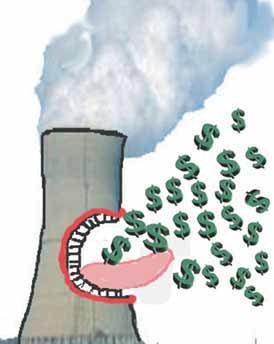 “It’s a complete scam that Florida’s big power companies, FPL and Progress Energy, are allowed to charge their customers in advance for extremely costly nuclear reactors that may never even be built — with no refund if they abandon the projects. While their shareholders are guaranteed a nice rate of return, Florida’s families and businesses are forced to shoulder the risk. It’s time the Florida legislature gets rid of that bad, anti-consumer law. What Florida and our country needs to pursue instead is truly safe, clean and affordable energy. I’d love to come back on tour and see a lot more solar power in the Sunshine State.” Bonnie Raitt
Floridians Take Action Opposing Nuclear Tax Clean Energy Footprints November 9th, 2012 Mandy Hancock From the Florida Supreme Court to Bonnie Raitt concerts, Florida’s controversial “nuclear tax ” is getting a lot of attention. Continue reading
Sun and wind saving money, and the environment, in USA sports stadiums
Stadiums increase renewable energy use Pro sports facilities are using green energy sources to help the environment and their own bottom lines. Nov. 9, 2012 ALISON BURDO, MEDILL NEWS SERVICE WASHINGTON, Nov. 9 (UPI) — Green is more than a team color for the Philadelphia Eagles. By the end of the year the team’s stadium, Lincoln Financial Field, will generate enough energy from 14 wind turbines and 11,000 solar panels to power every home game.
“One of the uses of such a high-profile enterprise is you can sometimes help show the way and lead by example,” said Eagles Vice President of Communications Rob Zeiger.
Construction of the wind turbines was to be completed this week. The 15-feet-tall structures were installed atop the north and south ends of the stadium, in direct view of the nearly 70,000 fans entering the “Linc” and the countless drivers passing the complex on I-95. Continue reading
Guilty plea for arson at nuclear submarine
Ex-worker pleads guilty in $450M nuclear-sub fire David Sharp, Philly.com. Associated Press , November 9, 2012, PORTLAND, Maine – A former shipyard worker who set a fire that caused about $450 million in damage to a nuclear-powered submarine pleaded guilty Thursday under an agreement that could send him to prison for nearly 20 years…..
http://www.philly.com/philly/news/nation_world/20121109_Ex-worker_pleads_guilty_in__450M_nuclear-sub_fire.html
Computer problem causes nuclear reactor shut-down
Pa. nuclear reactor shut down after computer system problem discovered, The Republic, THE ASSOCIATED PRESS November 09, 2012 BERWICK, Pa. — One of two reactors at a northeastern Pennsylvania nuclear plant was shut down Friday morning after a problem with the computer system that controls its level of water, power company officials said.
The Unit 2 reactor at PPL’s Susquehanna nuclear power plant was manually shut down by operators after operators began receiving “invalid data” on a screen, company spokesman Joe Scopelliti said….. http://www.therepublic.com/view/story/9b8f86ecd78f4764b1095c5902c4addc/PA–Reactor-Shutdown
Climate future is dangerous for nuclear power
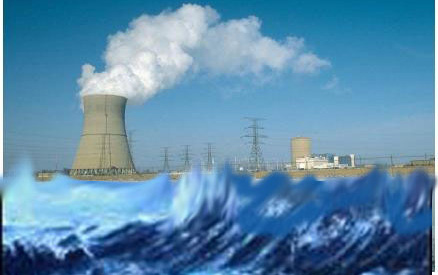 Nuclear Power and Superstorms Don’t Mix, Time, By Lucy Birmingham Nov. 07, 2012 Superstorm Sandy’s unexpected wrath makes a powerful case for revisiting Fukushima and the dangers to nuclear energy from natural disasters. As Sandy made landfall on Atlantic City, Oyster Creek nuclear power plant nearby was fortunately on a scheduled outage. But Indian Point 3 in Buchanan, N.Y., Nine Mile Point 1 in Scriba, N.Y., and Salem Unit 1 in Hancocks Bridge, N.J., all experienced shutdowns because of high water levels or electrical disruption. Last year, the dangerous Fukushima nuclear power plant meltdown was caused by similar conditions after tsunami waves flooded the plant and short-circuited both the regular and back-up electrical systems.
Equally dangerous are drought and record heat conditions the U.S. experienced last summer. In August, one of two reactors at the Millstone nuclear power plant near New London, Conn., not far from where I grew up, was shut down because water in Long Island Sound needed to cool the reactors got too warm. Cool water is necessary to produce electricity.
((MORE: Will We Be Seeing More Superstorms?)
Fukushima has been a worldwide wakeup call, particularly for the United States, the country with the largest number of reactors — 104. The lesson is glaringly obvious: when nature and nuclear energy collide the consequences can be lethal. Unfortunately, Japan is not offering an inspiring example of how to handle this threat. While all but two of the country’s 50 reactors remain offline, government and nuclear industry are proposing plant restarts and construction projects. This muddled move stands against the majority of Japanese citizens who have turned against nuclear power. As we face an increasingly volatile climate, the United States could conceivably lead the way in reducing dependence on nuclear energy.
(MORE: Is Post-Fukushima Japan Safe for Tourists?)
It’s estimated that superstorm Sandy will affect more than one fifth of Americans and cost up to $20 billion in damages. Imagine the addition of a major nuclear accident, potentially more lethal than Three Mile Island. The health, environmental and economic costs would be, simply put, insurmountable. It’s time to face the facts: Mother Nature rules. The best we can do is try to lessen the damage from her wrath. Phasing out nuclear power is the safe answer. : http://ideas.time.com/2012/11/07/nuclear-power-and-superstorms-dont-mix/#ixzz2Bgeqyigt
US military leaders plead Congress to pass Bills against nuclear terrorism
Senate, Grassley must take lead on preventing nuclear terrorism
http://thehill.com/blogs/congress-blog/foreign-policy/266845-senate-grassley-must-take-lead-on-preventing-nuclear-terrorism By Retired Maj. Gen. Roger R. Blunt (U.S. Army) – 11/08/12 We need every tool available to prevent nuclear terrorism.
Unfortunately, two treaties that have been awaiting Congressional approval for more than half a decade that will enhance our ability to protect nuclear materials and go after terrorists intent on using them are stalled in Congress. This is unacceptable.
Now that the election is over, one of the first orders of business when Congress returns
should be to get past the bickering and pass these two nonpartisan treaties our military leaders have been pleading for. Continue reading
Solar truck helping to provide electricity in New York
 Rolling Sunlight Helping New York Storm Victims http://www.energymatters.com.au/index.php?main_page=news_article&article_id=3454 by Energy Matters, 7 Nov 12, Greenpeace’s solar truck is in New York, generating electricity for some of those affected by Sandy.
Hundreds of thousands of people in states hit by Sandy are still without power and it may be quite some time before electricity supply is back to normal. Adding to the misery is the cold weather and a lack of fuel.
Greenpeace has sent in Rolling Sunlight to lend a bit of a helping hand.
Built in 2001, Rolling Sunlight is a mobile power station fitted with 2.4kW of solar panels and a 50kWh deep cycle battery storage system. The truck itself is powered with biodiesel. After reaching a site, Rolling Sunlight can start cranking clean electricity within 15 minutes.
The truck has been generating power in a variety of locations, including acommunity store in Rockaway. Residents have also been able to drop by to get a much-needed charge for their mobile phones.
“We are happy to work with the community relief effort to bring solar power to New York. Today, solar power can help bring a small degree of comfort and a cell phone charge to the people left without electricity in Sandy’s wake,” said Greenpeace climate campaigner Robert Gardner.
“Tomorrow, the same solar power can help us slow down the global warming that is supercharging storms like Sandy, and prevent us from further loading the dice toward even worse extreme weather.”
In a nation where the term “climate change” is such a thorny issue that the topic was never raised during the recent series of presidential debates, attitudes are rapidly changing as a result of the storm.
While in a blackout scenario grid connected home solar power systems are also crippled as a safety measure, the Next Big Thing for solar is energy storage for residential applications; which will allow households to still generate power in such circumstances and enable people to further reduce their dependence on the mains grid.
Nine Mile Point nuclear reactor remains shut
TV: Problem during reactor restart process at New York nuclear plant damaged by Sandy http://enenews.com/tv-problem-during-reactor-restart-process-at-ny-nuclear-plant-damaged-by-sandy
November 6th, 2012
Title: Nuclear industry studies Sandy’s impact on several reactors
Source: YNN (Syracuse)
Author: Candace Hopkins
Date: 11/05/2012
As Sandy barreled towards the northeast last week, staff at several nuclear plants were on high alert.
[…]
At Nine Mile, workers prepared the plants for high winds or power outages and extra manpower was called in. Monday night, high winds took down a pole, damaging the plant’s electrical grid. Unit two was forced to switch to its backup generator. Unit one was pushed offline altogether. Because of the planning, the staff was ready for the damage.
[…]
Nine Mile Point operators say the plants will be taking extra precautions to prepare equipment for high winds. Meanwhile, three other plants were also impacted by the storm. The NRC says the good news is no major damage was done.
Nine Mile Point One remains shut down after a secondary problem during the reactor restart process. Constellation Energy says it’s likely not related to Sandy. There was no threat to the public.
Russian nuclear submarine sheltered in Jacksonville, Florida, during Sandy storm
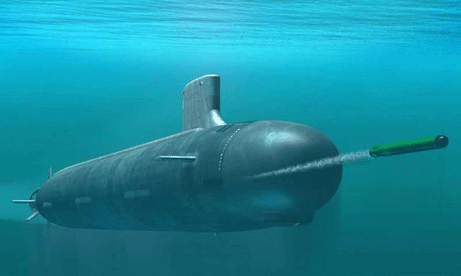 Russian nuclear sub given shelter near Florida during Sandy http://rt.com/usa/news/russian-nuclear-sub-gertz-097/ : 06 November, 2012, Defense officials say that a nuclear-powered Russian attack submarine sailed to within 200 miles of the United States last week and was granted safe harbor as Superstorm Sandy struck the East Coast.
According to a report published this week by defense commentator Bill Gertz, a Russian Sierra-2 class submarine was spotted recently not too far away from Kings Bay, Georgia, where the United States stations its own ballistic and cruise missiles, including six underwater-capable vessels also powered by nuclear energy. Continue reading
USA pressure on Japan to keep with nuclear energy
 U.S. needs Japan to remain nuclear, US expert says Relations in region not likely to change with Obama or Romney, even in China tiesJapan Times, By TAKASHI KITAZUME, 3 Nov 12 A “zero-nuclear” Japan will be a serious concern for the United States as its key ally both from economic and security standpoints, the chief of an influential U.S. think tank said at a recent seminar on Japan-U.S. relations.
The policy set out in September by Prime Minister Yoshihiko Noda’s Cabinet seeking to phase out nuclear power generation in Japan by the end of the 2030s — in response to strong anti-nuclear sentiments in the country following the triple meltdowns at Tokyo Electric Power Co.’s Fukushima No. 1 Nuclear Power Plant in March 2011 — is not viable given Japan’s vast economic needs, said John Hamre, president and CEO of the Center for Strategic and International Studies in Washington.
Hamre, a former deputy U.S. defense secretary, and his CSIS colleague Michael Green were speaking at a seminar organized by the Keizai Koho Center on Oct. 25 to discuss American policy on East Asia ahead of the U.S. presidential election as well as the imminent change in leadership in China.
Nuclear power generation in Japan over the past four decades has been an important part of Japan’s economic success that provided “a strong, reliable supply of base energy” for the historically energy-poor country, Hamre said.
While he said he understood that the Fukushima crisis shook people’s confidence in nuclear power — just as the 1979 Three Mile Island incident did for Americans — he noted there is “too much of a romantic idea about alternative energy in this country as a substitute for nuclear power.”
The Democratic Party of Japan-led government’s policy does not include a specific road map to achieve the goal, but assumes that renewable sources like wind and solar power will account for a greater portion of the nation’s energy mix in coming decades.
 Citing U.S. experience in wind and solar power generation, Hamre said the low efficiency and output of these sources that rely on natural conditions will not “replace the base capacity of nuclear power generation.”……
Hamre said. “There can’t be any romanticism about alternative energy. If you’re going to be a modern, sophisticated economy, you have to address this question of making nuclear power a legitimate source of energy.”
Hamre also said the policy poses a security concern from the viewpoint of international control for nonproliferation of nuclear materials…..
If Japan is to give up nuclear energy — and if nuclear power is to wither in the U.S. due to competition with cheap natural gas and in Europe as in the case of Germany — “the countries that have given us the security system are going to diminish, and who’s going to replace them?” he said. “Americans cannot afford from a security standpoint to have Japan abandon nuclear power. It’s too important to us.”.….. http://www.japantimes.co.jp/text/nb20121103d1.html
Fossil fuel lobby American Legislative Exchange Council aims to kill renewable energy
 Twenty-nine states have adopted renewable standards, and several of them were passed under leadership from Republican governors, such as Minnesota’s under Gov. Tim Pawlenty.
the policies still have a good level of bipartisan support.
American Legislative Exchange Council, (ALEC)’s proposal is “out to do one thing, and that’s to maximize the profits of fossil fuel industry and eliminate renewables from competition.
 Conservative group seeks to repeal state renewable standards Midwest Energy News, 11/05/2012 by Dan Haugen A highly influential conservative policy group with strong ties to the fossil fuel industry plans to make repealing state renewable policies a “high priority” in the coming year, potentially raising the stakes for legislative elections across the country. Continue reading
Another expensive legal fight over Vogtle nuclear power plant
 New $900 million Vogtle lawsuit filed, By Kristi Swartz, The Atlanta Journal-Constitution, 5 Nov 12 The main contractors building two nuclear reactors at Plant Vogtle filed a more than $900 million lawsuit against Georgia Power and other utility groups Thursday, escalating a fight over the project’s costs. Continue reading
Ocean life endangered by proposed seismic imaging project
California energy agencies have recommended and PG&E has proposed the Central Coastal California Seismic Imaging Project (the project). Using high-intensity seismic surveys in ocean waters, PG&E intends to study faults and their connections deep under the seafloor near the plant.
The project would put sea birds, fish, squid, and other ocean life at risk, undermine the safeguards of Marine Protected Areas that local residents worked hard to create, and affect human communities that depend on thriving ocean life.
Given that less harmful studies likely will address high priority uncertainties in the hazard assessment, we urge the Coastal Commission to follow the staff recommendation and deny the permit
Can Nuclear Safety Be Improved Without Sacrificing Ocean Life? NRDC Switchboard, Karen Garrison, November 5, 2012 I was just a child when scientists in St. Louis found radioactive material in thousands of baby teeth collected nationwide. People around the world were shocked to learn that fallout from nuclear testing had worked its way into the food chain, as dairy cows ingested radioactive material that landed on pastures. A test ban treaty is now in place, but decades later, we’re still living with the risks of nuclear power. Continue reading
1 This Month
23-25 October – on Zoom – World BEYOND War’s annual global conferenc


Shut down the radiation-damaged Heysham nuclear reactors now
To see nuclear-related stories in greater depth and intensity – go to https://nuclearinformation.wordpress.com

Say No to NASA’s Reckless Nuclear Reactor on the Moon
Say No to NASA’s Reckless Nuclear Reactor on the Moon

-
Archives
- October 2026 (219)
- September 2026 (339)
- August 2026 (330)
- July 2026 (355)
- June 2026 (287)
- May 2026 (306)
- April 2026 (356)
- March 2026 (251)
- February 2026 (267)
- January 2026 (308)
- December 2025 (358)
- November 2025 (359)
-
Categories
- 1
- 1 NUCLEAR ISSUES
- business and costs
- climate change
- culture and arts
- ENERGY
- environment
- health
- history
- indigenous issues
- Legal
- marketing of nuclear
- media
- opposition to nuclear
- PERSONAL STORIES
- politics
- politics international
- Religion and ethics
- safety
- secrets,lies and civil liberties
- spinbuster
- technology
- Uranium
- wastes
- weapons and war
- Women
- 2 WORLD
- ACTION
- AFRICA
- Atrocities
- AUSTRALIA
- Christina's notes
- Christina's themes
- culture and arts
- Events
- Fuk 2022
- Fuk 2023
- Fukushima 2017
- Fukushima 2018
- fukushima 2019
- Fukushima 2020
- Fukushima 2021
- general
- global warming
- Humour (God we need it)
- Nuclear
- RARE EARTHS
- Reference
- resources – print
- Resources -audiovicual
- Weekly Newsletter
- World
- World Nuclear
- YouTube
-
RSS
Entries RSS
Comments RSS

