Great? Shoot nuclear waste into deep space?
Disposal of Spent Nuclear Fuel and High-level Radioactive Waste
Source: ENVIRON International Corporation
Date: September 10, 2010
This material was prepared at the request of the Blue Ribbon Commission on America’s Nuclear Future (“the BRC”).

Disposal by shooting the wastes into deep space or the sun
Cost and the risk of an accident during launch has kept space disposal from being taken seriously. With the current cost of putting objects in orbit at around $10,000 per pound, and given that the U.S. inventory of spent fuel and high-level waste is of the order of 100,000 metric tons, not including the heavy shielding that would be required, the costs with present technology would be prohibitive, even if the risks of radioactive wastes crashing back to earth could be managed somehow.
But if one wanted to dispose of only the very long-lived waste, e.g., technetium-99, cesium-135, iodine-129, and the long-lived actinides, then the amounts are much more manageable, of the order of a few million kilograms for all current U.S. wastes. […]
Radioactive groundwater in Santa Susanna could take centuries to clean up
 Santa Susana groundwater cleanup could take centuries, official says, VC Star, By Mike Harris, April 18, 2013 The groundwater cleanup at the Santa Susana Field Laboratory, the site of a 1959 partial nuclear meltdown, could take centuries, a state official said Wednesday night.
The soil decontamination will take far less time, a few or more years, but might not be finished by a 2017 deadline, Mark Malinowski of the state Department of Toxic Substances Control told about 100 people during a cleanup update at the Grand Vista Hotel in Simi Valley.
“It’s a very aggressive schedule to get to 2017, and many things have to happen correctly in order to get there,” said Malinowski, the department’s cleanup team manager.
The groundwater cleanup will take “a lot longer … decades, possibly centuries to complete,” Malinowski said. “Groundwater is an extremely difficult thing to clean up. This contamination we’re dealing with did not happen overnight.”……
Boeing owns most of the 2,850-acre site, formerly the Rocketdyne nuclear and rocket engine test facility, in the hills between Simi Valley and the San Fernando Valley. The rest of the site is owned by the federal government and administered by NASA.
During a question-and- answer period, cleanup activists sharply questioned Malinowski’s statement that no significant contamination has been found beyond the site’s boundaries.
“I had to remind him that in 2008, they removed three football fields of contaminated soil off the adjacent Sage Ranch Park property,” William Bowling said. “And then last year, the EPA found radioactivity in a well on the campus owned by the American Jewish University, which also adjoins the site.
“They’re not giving the public the clear picture, which is that there is off-site contamination,” Bowling said. http://www.vcstar.com/news/2013/apr/18/santa-susana-soil-cleanup-may-not-make-2017-deadli/#ixzz2SI1pAhgC
Duke Energy pulls out of building 2 new nuclear reactors
 Duke Energy suspends licensing for nuclear reactors near Raleigh Charlotte Business Journal, by John Downey, 2 May 13, Duke Energy Corp. has asked federal regulators to suspend its application to build two 1,017-megawatt nuclear units at its Shearon Harris nuclear plant near Raleigh. Dhiaa Jamil, president of Duke Energy Nuclear, cites slowing growth in demand for electricity as the reason for the decision….. The decision is the latest sign that the once-touted “nuclear renaissance” is faltering in the United States. …. http://www.bizjournals.com/charlotte/blog/power_city/2013/05/duke-energy-suspends-licensing-for.html
USA’s present danger of nuclear spent fuel pools
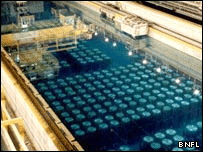 Congress needs to focus on how nuclear waste is stored now By Dave Lochbaum and Robert Cowin, Union of Concerned Scientists – 05/01/13 U.S. nuclear power plants have been generating electricity for more than 50 years, but the nuclear industry and the federal government have yet to figure out what to do with nuclear waste, which remains dangerously radioactive for thousands of years. On April 25, a bipartisan group of senators — Lamar Alexander (R-Tenn.), Dianne Feinstein (D-Calif.), Lisa Murkowski (R-Alaska) and Ron Wyden (D-Ore.) — released draft legislation addressing this intractable problem. Continue reading
A plastic bag,tape and broomstick fix for San Onofre nuclear leak
 ‘Plastic Bags, Tape, Broomsticks Fix San Onofre Nuclear Power Plant Leak’ April 30, 2013 http://www.blacklistednews.com/%E2%80%98Plastic_Bags,_Tape,_Broomsticks_Fix_San_Onofre_Nuclear_Power_Plant_Leak%E2%80%99/25680/0/38/38/Y/M.html … April 30, 2013 Source: 10 News ABC
An inside source gave Team 10 a picture snapped inside the San Onofre Nuclear Generating Station (SONGS) showing plastic bags, masking tape and broom sticks used to stem a massive leaky pipe.
San Onofre owner Southern California Edison (SCE), confirms the picture was taken inside Unit Three, but did not say when. The anonymous source said the picture was taken in December 2012.

Unit Three is the same unit that leaked radiation in January 2012. SONGS has been shutdown since then as a precaution.
“[Staff] identified a small leak in the water box and will perform maintenance per our scheduling process,” SCE spokeswoman Maureen Brown wrote in a statement. “In the meantime, plastic is in place to direct the water from the small leak to a drain.”(Team 10 took the picture to the Nuclear Regulatory Commission (NRC) to see what federal regulators had to say about the quick fix. See the commission’s response today on 10News at 5 p.m.)
“If that’s nuclear technology at work and that’s how we’re going to control leaks I think the public should know,” the inside source said.
More than one anonymous source talked about the picture with Team 10. They said the public has a right to know about the plant’s condition, as the NRC decides whether the plant will be allowed to restart.
Unit Two is the generator under consideration for restart – not Unit Three – where the picture was taken. Currently there are no plans to restart Unit Three.
Sources also pointed to what appears to be corrosion on the pipe as a sign of the power plant’s age.
They claim rust is rampant throughout SONGS — including what sources call a fire suppression pipe, which protects both units.
“There’s a pipe that runs along the security fence, from one side of the plant to the other side of the plant — it’s totally blistered,” one inside source told Team 10.
“To take an isolated picture and leap to some kind of conclusion about maintenance is a pretty big leap,” SCE’s Brown said in a phone conversation.
“We are dealing with unknown territory here which has never been explored before,” another inside source said. Two inside sources called restarting SONGS “risky.”
SCE disputes those claims and told Team 10 the plant is safe to restart.
Doubts about the NRC special team investigating San Onofre nuclear plant
 Unfortunately, many people do not see the NRC and such agencies which have an intimate relationship with the nuclear industry as impartial and reliable. As was the case with Fukushima, it could very well emerge that government agencies have been working with the nuclear companies in order to downplay the dangers of these incidents, but obviously I hope that is not the case here.
but with all of the lies surrounding the Fukushima incident, I find the nuclear industry and their supposed regulators to be highly dubious at best.
NRC dispatches Augmented Inspection Team after California nuclear facility fails test. End the Lie, By Madison Ruppert Editor of End the Lie, 1 May 13, After a safety test at the San Onofre Nuclear Generating Station near San Clemente, California (which we discussed in this episode of End the Lie Radio), resulted in a “significant issue,” the Nuclear Regulatory Commission (NRC) has moved to send out a so-called Augmented Inspection Team (AIT) to determine the cause of the failure. Continue reading
Los Angeles city Council warns on danger of San Onofre nuclear power plant
 Los Angeles to San Onofre: ‘Not So Fast!’ http://www.huffingtonpost.com/harvey-wasserman/los-angeles-to-san-onofre_b_3167482.html 04/29/2013 A unanimous Los Angeles City Council has demandedthe Nuclear Regulatory Commission conduct extended investigations before any restart at the San Onofre atomic power plant.
The move reflects a deep-rooted public opposition to resumed operations at reactors perched in a tsunami zone near earthquake faults that threaten all of southern California. Continue reading
Shortage of water a big threat to nuclear reactors
 Cooling systems for nuclear plants and power plants that burned coal, gas and oil accounted for 41 per cent of fresh water withdrawals and 49 per cent of all water withdrawals.
During the 2003 heat wave in France, which was responsible for more than 10,000 deaths, nuclear plants had to reduce their output, worsening the crisis. The rising temperature of river water meant they could not achieve sufficient cooling and still observe discharge limits
Nuclear and coal-fired power plants with OTC systems are especially vulnerable to droughts and heat waves because they rely on by far the largest volume of water withdrawals.
US energy supplies imperiled by water shortages, The Age May 1, 2013 – John Kemp Water and energy are inextricably linked.Power plants are the largest users of water in the United States, while substantial amounts of energy are needed to supply fresh water to homes, farms and factories and treat waste water prior to safe disposal.
Rising water consumption for hydraulic fracturing and production of biofuels, coupled with severe droughts in Texas in 2011 and across more than 60 per cent of the continental United States in 2012, have propelled that link up the policymakers’ agenda.
The threat to hydroelectric generation is obvious. But in 2007-2009, drought put the water supplies of 24 of the nation’s 104 reactors at nuclear plants at risk. In 2011, more than 3,000 megawatts of thermal generating capacity in Texas also was considered at risk of having to shut down if the drought persisted as reservoir levels plunged.
Texans were asked to conserve water to keep the lights on. The state was only spared blackouts because of high output from wind farms.
On April 25, the Energy and Natural Resources Committee of the US Senate held a hearing to explore the effect of drought on the energy sector and water management, reflecting lawmakers’ fears about the instability created by the tightening links between water and energy supplies. Continue reading
San Onofre nuclear plant at risk of Fukushima style meltdown
Nuclear station insider says San Onofre should stay closed http://rt.com/usa/san-onofre-nuclear-insider-652/ April 30, 2013 A safety engineer from the San Onofre nuclear power plant has warned that “there is something grossly wrong” with the plant and that it faces the prospect of a full or partial meltdown if it is restarted
The safety engineer, who has worked in the nuclear field for 25 years, told ABC 10 that due to broken tubes carrying scalding water, there could easily be a main steam line break, which would cause the nuclear reactor core to overheat and result in a Fukushima-like meltdown. Continue reading
US Energy Information Administration (EIA) shows a way ahead for Renewable Energy
How renewable energy could beat natural gas to the future http://qz.com/79953/how-renewable-energy-could-beat-natural-gas-to-the-future/ By Todd Woody @greenwombat April 30, 2013 We’ve taken the US Energy Information Administration (EIA) to task for its projections of future energy production and consumption that assumes the nation’s fossil fuel addiction will continue until the dinosaur juice runs dry.
Well, today the agency threw caution to the wind and focused on an alternative reality as part of its Annual Energy Outlook, due to be released on May 2. In the latest chapter, EIA examined what the world might look like in 2040 if current renewable energy incentives do not end in 2014 and 2016 as scheduled.
Under that scenario, green energy production grows, accounting for around 23% of total electricity generation in 2040, compared to 16% if business as usual continues. Given the skyrocketing growth in solar and wind generation over the past several years—half of America’s solar capacity was installed just in 2012—that forecast still seems conservative.
It doesn’t take into account, for instance, the likelihood that renewable energy will become cost competitive with fossil fuels, even without subsidies, due to technological breakthroughs and economies of scale. In fact, in some areas of the US with high electricity costs, such as California, that’s already starting to happen.
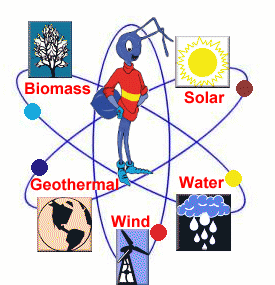 But here’s the interesting thing about even the EIA’s conservative forecast: The increase in renewable energy production starts to displace natural gas. (Nuclear power also takes a hit.) The agency estimates that electricity generation from natural gas-fired power plants would be 13% to 16% lower in 2040 compared to its standard forecasts. Not good news for all those investors betting on the shale gas boom. But good news for the planet. Carbon dioxide emissions from energy productions would declined between 1.7% and 2.8% compared to business as usual, according to the EIA. Electricity prices would also drop between 3.9% and 6.3%. (Good diagram)
Clean energy, economy, employment win for Colorado
Another Big Victory for Renewable Energy – This Time in the Rockies http://switchboard.nrdc.org/blogs/nlong/another_big_victory_for_renewa.html Noah Long, 29 April 13, Critical votes in The Colorado legislature late Friday night and yesterday represent yet another victory for renewable energy despite a national drive by the fossil fuel industry to roll back standards supporting increased clean power sources like wind and solar.
The Colorado House voted to increase rural renewable energy to 20 percent, doubling access for 100,000 Colorado customers. A version of the bill had already passed the Senate and is supported by Governor John Hickenlooper. A final vote is still necessary before it gets to the governor’s desk, but after these decisive votes, it should become law.
The move will bring clean energy, jobs and economic opportunity to rural Colorado. The increase could result in as many as 10,000 new wind, solar and renewable jobs.

The win for renewable energy in the heart of the Rockies sends a clear national message. Despite the fossil fuel industry’s attempt to roll back renewable energy standards around the country that require utilities to provide an increasing percentage of their power from renewable resources, voters continue to want more clean energy. Roll back attempts have failed in Kansas and North Carolina (more on NC, here). In Arizona, a lawmaker withdrew his proposal to reduce the renewables requirement on that state’s utilities.
Colorado — which will now get 20 to 30 percent of its energy from clean sources — is on pace to have the second highest renewable energy standard in the country- only behind California.
Non operational San Onofre nuclear plant costing $millions
Costs for idling California nuclear plant soar above $550M Fox news, April 30, 2013 LOS ANGELES – Costs tied to the idling of California’s San Onofre nuclear power plant have climbed to $553 million, while the majority owner raised the possibility Tuesday of retiring the plant if it can’t get one reactor running later this year.
The plant between San Diego and Los Angeles has not produced electricity since January 2012, when a tiny radiation leak led to the discovery of unusual damage to hundreds of tubes that carry radioactive water.
Edison International — the parent company of operator Southern California Edison — reported Tuesday that $109 million has been spent through March 31 on repairs and inspections, while $444 million was needed for replacement power…. The problems at San Onofre center on steam generators that were installed during a $670 million overhaul in 2009 and 2010. After the plant was shut down, tests found some generator tubes were so badly eroded that they could fail and possibly release radiation, a stunning finding inside the nearly new equipment.
The generators, which resemble massive steel fire hydrants, control heat in the reactors and operate something like a car’s radiator. At San Onofre, each one stands 65 feet high, weighs 1.3 million pounds and has 9,727 U-shaped tubes inside, each 0.75 inch in diameter. Hundreds of the tubes have been taken out of service because of damage or as a preventative step. http://www.foxnews.com/us/2013/04/30/costs-for-idling-california-nuclear-plant-soar-above-550m/#ixzz2S5Daz1Of
Groups band together to fight uranium mining near Grand Canyon
While uranium and radium are naturally-occurring radioactive materials, the Environmental Protection Agency (EPA) warns that once they are exposed or concentrated through mining, they become technologically-enhanced in such a way that renders them radioactive and capable of contaminating the surrounding soil and water.
Uranium Mine Just South Of Grand Canyon To Proceed Despite Ban By President Barack Obama http://www.natureworldnews.com/articles/1673/20130430/uranium-mine-south-grand-canyon-proceed-despite-ban-president-barack.htm By Tamarra Kemsley Apr 30, 2013 Uranium mining company Energy Fuels Resources announced its plans to reopen its mine situated six miles south of the Grand Canyon’s South Rim entrance, citing a ban imposed last year by President Barack Obama as void.
The company was given federal approval by the U.S. Forest Service who conducted an environmental study on the site more than 25 years ago in 1986.
In response, several groups, including the Grand Canyon Trust, Center for Biological Diversity, Sierra Club and Havasupai Tribe, have banded together to file suit against Forest Supervisor of the Kaibab National Forest Michael Williams as well as the Forest Service as a whole.
The plaintiffs cite the group’s failure to comply with environmental, mining, public land and historic preservations laws in giving the mine a green light, arguing that since the completion of the Environmental Impact Statements (EIS) in 1986 “significant new information and changed circumstances have emerged concerning the Mine’s operations and adverse environmental impacts.”
Despite such developments, the plaintiffs state the Forest Service “decided not to ‘supplement’ the 1986 EIS” or “require a modification” of the plan of operations put forth more than two decades ago. Among the developments that have occurred since the mine was first approved is the regulation of radon gas, a substance the plaintiffs fear will pollute the area should the mine go forward.
While uranium and radium are naturally-occurring radioactive materials, the Environmental Protection Agency (EPA) warns that once they are exposed or concentrated through mining, they become technologically-enhanced in such a way that renders them radioactive and capable of contaminating the surrounding soil and water.
Since 1879, the EPA reports, uranium mine workers began being diagnosed with lung diseases, including cancer and that workers today are directly exposed to radiation hazards.
According to The Guardian, the energy company’s spokesman has publicly disputed these claims, stating that the Forest Service “looked at that review with modern eyes” in determining once again that the regulations were adequate. He further pointed out that the mines are “tiny,” accounting for about 20 acres total.
However, as The New York Times reports, the Department of Energy and other agencies have evaluated nearly 700 mine sites in need of remediation – a project costing the government hundreds of millions of dollars and that some complain has been largely ineffective.
NRC rules against Texas nuclear plant expansion
NRC shoots down Texas nuclear plant expansion, Dallas News.com By James Osborne April 30, 2013 Plans to build two new reactors at the South Texas Project nuclear facility outside Bay City hit a road block Tuesday.
The U.S. Nuclear Regulatory Commission ruled that a partnership between NRG and Toshiba Corp. through the holding company Nuclear Innovation North America violated a U.S law prohibiting foreign control of nuclear power plants.
“At this point NINA from our perspective is foreign owned, controlled or dominated,” said NRC spokesman Scott Burnell. “Until such time as NINA can come up with a different corporate ownership structure we would not be able to approve their license.”…… http://bizbeatblog.dallasnews.com/2013/04/nrc-shoots-down-texas-nuclear-plant-expansion.html/
Republican-led House Florida House keeps nuclear upfront fees
The Republican-led House modified SB 1472 to add new hurdles to the unpopular nuclear cost recovery act but voted down amendments that would have required the companies to disclose how much of the monthly bill was going into the planning costs among other amendments.
They also rejected an amendment to put the so-called “nuclear cost recovery act” to a voter referendum, an amendment that would ban any development on a nuclear plant until there is a permanent disposal site for nuclear waste, and an amendment to repeal the proposal….. Since the act took effect in 2006, Progress Energy has charged customers more than $1 billion to expand the now-crippled Crystal River nuclear power plant and to start developing a new plant in Levy County….. Rep. Mike Fasano, R-New Port Richey, urged the House to reject the compromise language added to the House bill, saying it will allow utility companies to continue to profit from customers paying the nuclear fee even if the plant is never built.
“We weakened the bill,” he said. “Now what do utility companies have to be concerned about?”
A final vote on the bill is expected later this week. http://www.tampabay.com/news/politics/stateroundup/florida-house-rejects-attempts-to-repeal-nuclear-fees/2118425
1 This Month
23-25 October – on Zoom – World BEYOND War’s annual global conferenc


Shut down the radiation-damaged Heysham nuclear reactors now
To see nuclear-related stories in greater depth and intensity – go to https://nuclearinformation.wordpress.com

Say No to NASA’s Reckless Nuclear Reactor on the Moon
Say No to NASA’s Reckless Nuclear Reactor on the Moon

-
Archives
- October 2026 (199)
- September 2026 (339)
- August 2026 (330)
- July 2026 (355)
- June 2026 (287)
- May 2026 (306)
- April 2026 (356)
- March 2026 (251)
- February 2026 (267)
- January 2026 (308)
- December 2025 (358)
- November 2025 (359)
-
Categories
- 1
- 1 NUCLEAR ISSUES
- business and costs
- climate change
- culture and arts
- ENERGY
- environment
- health
- history
- indigenous issues
- Legal
- marketing of nuclear
- media
- opposition to nuclear
- PERSONAL STORIES
- politics
- politics international
- Religion and ethics
- safety
- secrets,lies and civil liberties
- spinbuster
- technology
- Uranium
- wastes
- weapons and war
- Women
- 2 WORLD
- ACTION
- AFRICA
- Atrocities
- AUSTRALIA
- Christina's notes
- Christina's themes
- culture and arts
- Events
- Fuk 2022
- Fuk 2023
- Fukushima 2017
- Fukushima 2018
- fukushima 2019
- Fukushima 2020
- Fukushima 2021
- general
- global warming
- Humour (God we need it)
- Nuclear
- RARE EARTHS
- Reference
- resources – print
- Resources -audiovicual
- Weekly Newsletter
- World
- World Nuclear
- YouTube
-
RSS
Entries RSS
Comments RSS

