USA’s new big bomb targets Iran’s nuclear site
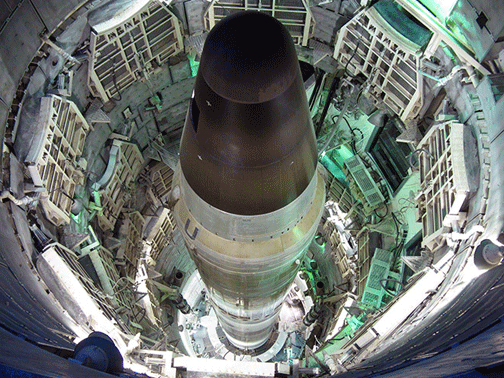 America’s New 30,000-lb MOP Bomb Is Specifically Geared For Iranian Nuclear Site BUSINESS INSIDER< ROBERT JOHNSON, MICHAEL KELLEY4 MAY 2013
Adam Entous and Julian Barnes at The Wall Street Journal (WSJ) report that not only has the MOP been refined for an Iranian strike, but it’s also being used to assure Israel the U.S. can keep Tehran from acquiring a nuclear bomb….. http://au.businessinsider.com/mop-bomb-massive-ordnance-penetrator-modified-for-iran-fordow-nuclear-site-2013-5
Share price before safety at Indian Point nuclear reactor
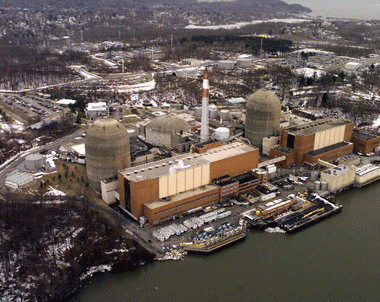 Entergy says no to NY plan for nuclear waste storage http://www.cnycentral.com/news/story.aspx?id=893794#.UYhtw6JwpLs by Laura Hand 05.05.2013 Stockholders give overwhelming no vote
Comptroller Thomas DiNapoli, speaking as trustee of the state’s pension fund, which has about $49million worth of Entergy stock, suggested cutting back on spent fuel pools, and instead storing the waste in dry-casks. DiNapoli says putting spent, cooled nuclear fuel in steel containers surrounded by inert gas is safer.
Entergy’s board said the proposal would limit company flexibility, and shareholders apparently agree. A preliminary count shows only 5% approve the change.
How radiation travelled from Bikini atom bomb test to San Franciso
Here’s how radiation from this atomic bomb test got to San Francisc0, 109, ESTHER INGLIS-ARKELL, 10 May 13, This nuclear blast went off in 1946 at Bikini Atoll in Micronesia. How did some of the radiation get back to the United States? Why, we imported it, of course! Has the radiation from nuclear testing abroad come back to haunt the United State via ocean currents and wind patterns? Probably. But we found a more direct way of getting it back home. If you look at the picture above, you’ll notice that there are a lot of boats grouped around the central cylinder of the blast. That close, they are tucked under the cloud.

Although it resembles a mushroom cloud, the sprawling cloud in the picture isn’t caused by the same forces. It’s actually the result of ionizing radiation moving through the atmosphere. The radiation ionizes the particles in the atmosphere, which then attract particles of water and cause large amounts of condensation – an actual cloud. The cloud and the radiation then rain down on the ships. (They are also exposed to direct radiation.)
Band-aid patch not good enough for Palisades Nuclear Power Plant
Palisades nuclear plant needs permanent fix, says director of Union of Concerned Scientists’ nuclear safety project, Michigan Live, By Yvonne Zipp | yzipp@mlive.com
In an “issue brief” released Friday, Lochbaum called for a permanent repair to the leaking safety injection refueling water tank that caused a shutdown at the Covert Township facility May 5.
“The NRC must take steps to ensure that a federal regulation developed to protect public health and safety is consistently being met rather than consistently being violated. ‘Patch and restart” may be great for generating revenue, but it is very bad for public safety,” Lochbaum wrote. “The community does not deserve another Palisades patch. It deserves an effective repair.”http://www.mlive.com/news/kalamazoo/index.ssf/2013/05/palisades_nuclear_plant_needs.html
USA army going for renewable energy in a big way
US Army steamrolls $7bn in renewable energy projects REneweconomy, By Tina Casey 10 May 2013 CleanTechnica The U.S. Army has just launched the first in a series of renewable energy contracts that will eventually total $7 billion by the end of this year, using power purchase agreements along with a standard procurement tool that is expected to crush any obstacles that are put in its path. That includes the notorious budget sequester as well as any objections from the anti-renewable energy crowd in Congress, which has already used the budget as an excuse to sink the Navy’s biofuel initiatives. So, let’s see what kind of firepower the Army has on its side.
The Army Renewable Energy Initiative Continue reading
Radiation spilling into Lake Michigan from Palisades nuclear power plant
Nuclear plant spills radiation into Lake Michigan Grist, By John Upton, 9 May 13
Last summer, a leaky tank led to the shutdown of the Palisades nuclear power plant in Michigan. So plant owner Entergy patched up the leak, fired back up the reactor, and hoped for the best.
Unfortunately, the best did not materialize.
The tank began leaking again. But no worries, thought the Einsteins at Entergy, it was only leaking a gallon a day. That was OK, they figured, because the NRC had allowed it to leak up to 38 gallons a day. As of Friday, they were still doing that whole “hoping for the best” thing.
But on Saturday the leaky drip turned into a gush, and all the hoping in the world couldn’t hold back the tide of spilling radioactive water. Nearly 80 gallons of water containing small amounts of radioactive tritium and possibly trace amounts of cobalt and cesium spewed into Lake Michigan, the Nuclear Regulatory Commission told the AP.
Early Sunday morning, the tank was ruled inoperable and the nuclear power plant began powering down. This is reportedly the ninth time that the facility has been shut down since 2011……..
What should be of concern to regulators and the public, Jackson said, is whether any nuclear power plant has enough of a culture of safety in place. That’s especially important because of the intense pressures in the electrical power industry to keep costs low.
USA could save $15 billion by buying fewer nuclear submarines
Getting a global, nuclear Navy WP, Tom Z. Collina, May 5 Walter Pincus wrote that the Navy faces a tough choice: It can buy 12 nuclear-armed submarines or it can maintain a global fleet, but not both. As a vice admiral put it, budget pressures could force the Navy down to “200 ships, at which point we may not be considered a global navy” [“Budget cuts could reshape the country’s ship supply, official says,” Fine Print, May 2].
The answer is to buy fewer nuclear subs. If the Navy buys eight Ohio-class replacement subs instead of 12, it could save $15 billion over 10 years and still deploy 1,000 nuclear warheads on submarines, as planned…… http://www.washingtonpost.com/opinions/getting-a-global-nuclear-navy/2013/05/05/6d1de0b0-b437-11e2-9fb1-62de9581c946_story.html
Palisades nuclear plant leaks radioactive water to the shores of Lake Michigan
 Local News: Radioactive leak from U.S. nuclear plant “got to the shore” — People on beaches a mile away — Officials downplaying seriousness of
 incident? (VIDEO) http://enenews.com/local-news-radioctive-leak-from-u-s-nuclear-plant-got-to-the-shore-most-likely-not-a-health-concern-officials-downplaying-seriousness-of-incident
Follow-up to: Nuclear plant spills radioactive water into Lake Michigan (AUDIO)
WSBT: Search for radioactive leak at Palisades nuclear plant[…] WSBT visited a park not far from the plant to hear from people on the beaches. […] Palisades sits about a mile down the beach […] “That’s not good, so I mean I get mad about ribbons and balloons, so radiation is obviously not thrilling either,” Larmee added. […] Groups opposing nuclear power plants, however, say regulators and the plant’s operator are downplaying the seriousness of the incident. “This plant is an accident waiting to happen, and it really needs to be permanently shut down before the worst happens there,” said Kevin Kamps of “Beyond Nuclear.” […]
WHTC: Nuclear Regulatory Commission officials said that 79 gallons of the tainted water had escaped, but by the time it got to the shore, it was highly diluted and posed no threat.
Businessweek: Saturday’s radiation leak “most likely … is not a public health concern,” [Alan Jackson, a radiation health physicist at Henry Ford Health System in Detroit] said. “What’s more a concern is why do these things keep happening?” “I would fixate on, ‘OK, you have this problem. Why aren’t you fixing it?’” he said.
Watch the broadcast here
Pentagon takes 17 officers off the nuclear missile job – safety issues
Pentagon removes 17 officers from duty to launch its most powerful nuclear missiles http://rt.com/usa/air-force-nuclear-missiles-010/ May 08, 2013 In an unprecedented action, the Air Force has removed 17 of its officers from a base at which they had the authority to control and launch nuclear missiles at the president’s command, thereby leaving the mission significantly understaffed. Continue reading
Julian Assange speaks about Bradley Manning
 An Interview With Julian Assange, the Nation, Chris Hedges, 8 May 13 “…..Assange spoke repeatedly about Manning, with evident concern. He sees in the young Army private a reflection of his own situation, as well as the draconian consequences of refusing to cooperate with the security and surveillance state.
Manning’s twelve-week military trial is scheduled to begin in June. The prosecution is calling 141 witnesses,  including an anonymous Navy SEAL who was part of the raid that killed Osama bin Laden. Assange called the Navy SEAL the “star diva” of the state’s “twelve-week Broadway musical.” Manning is as bereft of establishment support as Assange.
“The old media attempted to remove his alleged heroic qualities,” Assange said of Manning. “An act of heroism requires that you make a conscious act. It is not an unreasoned expression ofmadness or sexual frustration. It requires making a choice—a choice that others can follow. If you do something solely because you are a mad homosexual there is no choice. No one can choose to be a mad homosexual. So they stripped him, or attempted to strip him, of all his refinements.”
“His alleged actions are a rare event,” Assange went on. “And why does a rare event happen? What do we know about him? What do we know about Bradley Manning? We know that he won three science fairs. We know the guy is bright. We know that he was interested in politics early on. We know he’s very articulate and outspoken. We know he didn’t like lies.… We know he was skilled at his job of being an intelligence analyst. If the media was looking for an explanation they could point to this combination of his abilities and motivations. They could point to his talents and virtues. They should not point to him being gay, or from a broken home, except perhaps in passing. Ten percent of the US military is gay. Well over 50 percent are from broken homes. Take those two factors together. That gets you down to, say, 5 percent—5 percent on the outside. There are 5 million people with active security clearances, so now you’re down to 250,000 people. You still have to get from 250,000 to one. You can only explain Bradley Manning by his virtues. Virtues others can learn from.” ……”http://www.thenation.com/article/174227/interview-julian-assange#
Mainstream media joins in corporate cheering for war, and against freedom of speech
An Interview With Julian Assange, the Nation, Chris Hedges, 8 May 13″…….The press of a nation at war, in every conflict I covered, is an enthusiastic part of the machine, cheerleaders for slaughter and tireless mythmakers for war and the military. The few renegades within the press who refuse to wave the flag and slavishly lionize the troops, who will not endow them with a host of virtues including heroism, patriotism and  courage, find themselves pariahs in newsrooms and viciously attacked—like Assange and Manning—by the state.
As a reporter at The New York Times, I was among those expected to prod sources inside the organs of power to provide information, including top-secret information. The Pentagon Papers, released to the Times in 1971, and the Times’s Pulitzer-winning 2005 exposure of the warrantless wiretapping of US citizens by the National Security Council used “top secret” documents—a classification more restricted than the lower-level “secret” designation of the documents released by WikiLeaks. But as the traditional press atrophies with dizzying speed—effectively emasculated by Barack Obama’s use of the Espionage Act half a dozen times since 2009 to target whistleblowers like Thomas Drake—it is left to the renegades, people like Assange and Manning, to break down walls and inform the public.
The cables that WikiLeaks released, as disturbing as they were, invariably put a pro-unit or pro-US spin on events. The reality in war is usually much worse. Those counted as dead enemy combatants are often civilians. Military units write their own after-action reports and therefore attempt to justify or hide their behavior. Despite the heated rhetoric of the state, no one has provided evidence that anything released by WikiLeaks cost lives. Then–Secretary of Defense Robert Gates in a 2010 letter to Senator Carl Levin conceded this point. He wrote Levin: “The initial assessment in no way discounts the risk to national security. However, the review to date has not revealed any sensitive intelligence sources and methods compromised by the disclosure.”
The New York Times, The Guardian, El País, Le Mondeand Der Spiegel giddily printed redacted copies of some of the WikiLeaks files and then promptly threw Assange and Manning to the sharks. It was not only morally repugnant, but also stunningly shortsighted. Do these news organizations believe that if the state shuts down organizations such as WikiLeaks and imprisons Manning and Assange, traditional news outlets will be left alone? Can’t they connect the dots between the prosecutions of government whistle-blowers under the Espionage Act, warrantless wiretapping, monitoring of communications and the persecution of Manning and Assange? Don’t they worry that when the state finishes with Manning, Assange and WikiLeaks, these atrophied news outlets will be next? Haven’t they realized that this is a war by a global corporate elite not against an organization or an individual but against the freedom of the press and democracy?……..http://www.thenation.com/article/174227/interview-julian-assange#
USA’s renewable energy under attack from Koch bros, Heartland Institute

Over the past two years, the Koch brothers and their proxies have worked to undermine Maine’s RPS through a campaign co-sponsored by the Heartland Institute and ALEC.
Koch Brothers, ALEC Attack Maine Renewable Energy Standards http://www.desmogblog.com/2013/05/03/koch-brothers-alec-attack-maine-renewable-energy-standards 3 May 13, Maine’s clean energy legislation has spurred more than $2 billion in local investment and created at least 2,500 jobs in the Pine Tree State. That isn’t stopping some state lawmakers from trying to weaken and kill these laws, as the local political puppets do the will of their fossil fuel masters, the Koch brothers.
A quick reminder: there’s a coordinated national campaign to dismantle renewable portfolio standards (RPS) at the state level. Behind the campaign is the American Legislative Exchange Council (ALEC), who we’ve covered quite a bit before. Behind ALEC is the Heartland Institute and the Koch brothers. Continue reading
In Connecticut they’ll just keep storing more radioactive trash

it would be more sensible to just stop making the stuff
Conn. OK’s more waste storage at nuclear plant, Boston Globe ASSOCIATED PRESS MAY 03, 2013 The key problem facing nuclear plant operators, including Millstone in Connecticut, is the inability in Washington to decide what to do with radioactive waste. NEW BRITAIN, Conn. — State officials authorized the Millstone nuclear plant on Thursday to significantly expand nuclear waste storage capacity over the next 30 years.
Without a national site to take spent nuclear fuel, Millstone Power Station’s owner, Dominion Resources Inc., turned to Connecticut for permission to increase storage at the Waterford site. The nine-member council voted unanimously without discussion to allow Millstone to build concrete pads necessary for an expansion of its waste storage. Millstone is seeking to expand storage from 19 cask storage units now to 135 by 2045. However, Millstone’s application does not include a request to install the 135 casks, the Siting Council said.

Melanie Bachman, staff attorney for the council, said Millstone has authorization to install 49 casks and must seek permission for the remaining 86.
The Black Point Beach Club Association, a homeowners group in Niantic across Niantic Bay from Millstone, asked the Siting Council to reject the nuclear plant’s request. State officials are not accounting for possible problems at Millstone if sea level rises as projected because of climate change, the association said. It also urged the state to wait for guidance from the Nuclear Regulatory Commission.
‘‘All of the association’s members and all residents of Black Point are subject to potential mandatory evacuation orders and martial law and personal harm in the event of a serious accident at Millstone, including the proposed storage facility,’’ the group told the Siting Council.
Dominion is spending $11 million for preparation and other work, Holt said. The plant will move fuel from pools and move them into dry casks, which will be welded shut and moved to a concrete bunker. Fuel will be moved within two years, Holt said. http://www.bostonglobe.com/metro/2013/05/02/conn-oks-expanded-waste-storage-capacity-millstone-nuclear-plant-conn-approves-new-waste-storage-nuclear-plant/NZRUTzzGMvJ0LxVWhkccYM/story.html
The $billion cost of Repairs to the Oconee Nuclear Plant
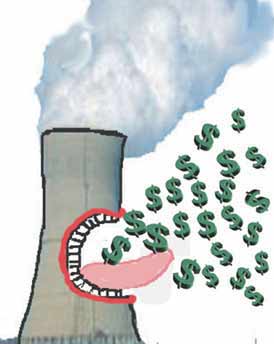 Will Repairs to the Oconee Nuclear Plant Cost Duke Energy a Billion Dollars?, http://www.huffingtonpost.com/philip-radford/will-repairs-to-the-ocone_b_3208859.html Philip Radford, 3 May 13 Duke Energy and government regulators have been hiding a not-so-little secret from the people of the Carolinas. Duke’s Oconee nuclear power plant, three aged nuclear reactors 30 miles from Greenville, SC, isat risk of a meltdown should an upstream dam fail. If that were to happen, a meltdown of all three reactors on the scale of the Fukushima meltdowns and subsequent containment failure are virtual certainties according to U.S. Nuclear Regulatory Commission (NRC) documents obtained by Greenpeace .
We’ve also received a tip that the cost to upgrade the Oconee nuclear plant site to address this triple meltdown threat would cost Duke Energy a billion dollars.
A billion dollars.
So at Duke Energy’s annual shareholder meeting yesterday in Charlotte, NC, I asked Duke CEO Jim Rogers a question about his company’s dangerous nuke plants and the billion dollar cost to protect and upgrade. Tellingly, Jim Rogers did not dispute the billion dollar price tag nor the need to better defend Oconee from flood waters….. It’s worth noting that Mr. Rogers didn’t deny the potential billion dollar price tag of the Oconee repairs. Even for Duke, that’s a serious amount of money.
I wonder if Duke’s shareholders know that the company could end up being on the hook for that kind of a pricey fix? Greenpeace appreciates Mr. Rogers acknowledging the threat to Oconee and the enormous expense of fixing it. If Rogers wants to do the most fiscally prudent thing for Duke’s investors, he should retire the reactors. Duke and its regulators have known about this threat for decades and have utterly failed to address it. While regulation of nuclear power can be very complex, the issue at Oconee is pretty simple to understand. As you can read here, the potential flood height at Duke Energy’s Oconee nuclear plant is well above the height of Oconee’s flood walls leaving important safety equipment vulnerable.
Does this sound familiar? It should. In Japan, the nuclear industry knew that the flood wall at Fukushima was too low and did nothing about it there either.
Other nuclear laden electric corporations face steep costs to upgrade old and dangerous reactors. Dominion recently testified that Fukushima fixes would cost their corporation between $30 and $40 million. But the billion dollar price tag to reduce the risks at Oconee is truly staggering. Rather than wasting a billion dollars on old reactors that will never be safe, Duke Energy should invest in renewable energy and efficiency. Wind turbines and solar panels don’t threaten the Carolinas with the prospect of nuclear meltdowns.
In last few days, high spike of radiation in air in Japan and West USA
 Fukushima pushes Japan over 26 times normal radiation http://www.agoracosmopolitan.com/news/headline_news/2013/05/02/5835.html 02 MAY 2013 BY : BY SADIA ARSHAD
- As of the sampling done four days ago, the radiation fallout level has spiked up to twenty six times its average level since the past year in Japan. The reading indicates 100.4 MBq/Km2. The average reading was at 3.85 MBq/Km2 until 26th April. The reason behind this sudden climb is not known as of yet.
The leak is suspected from the radioactive waste water from the water storage ponds at Fukushima I Nuclear Power Plant. The amount of radioactive material in the water sample taken from Pond No. 1 on 27th April has led to this discovery.
As per air samples taken by the United States Environmental Protection Agency at eighteen different collection points in the Pacific States, the average level of radioactivity in the air has also spiked to more than seven times the normal levels.
1 This Month
23-25 October – on Zoom – World BEYOND War’s annual global conferenc


Shut down the radiation-damaged Heysham nuclear reactors now
To see nuclear-related stories in greater depth and intensity – go to https://nuclearinformation.wordpress.com

Say No to NASA’s Reckless Nuclear Reactor on the Moon
Say No to NASA’s Reckless Nuclear Reactor on the Moon

-
Archives
- October 2026 (199)
- September 2026 (339)
- August 2026 (330)
- July 2026 (355)
- June 2026 (287)
- May 2026 (306)
- April 2026 (356)
- March 2026 (251)
- February 2026 (267)
- January 2026 (308)
- December 2025 (358)
- November 2025 (359)
-
Categories
- 1
- 1 NUCLEAR ISSUES
- business and costs
- climate change
- culture and arts
- ENERGY
- environment
- health
- history
- indigenous issues
- Legal
- marketing of nuclear
- media
- opposition to nuclear
- PERSONAL STORIES
- politics
- politics international
- Religion and ethics
- safety
- secrets,lies and civil liberties
- spinbuster
- technology
- Uranium
- wastes
- weapons and war
- Women
- 2 WORLD
- ACTION
- AFRICA
- Atrocities
- AUSTRALIA
- Christina's notes
- Christina's themes
- culture and arts
- Events
- Fuk 2022
- Fuk 2023
- Fukushima 2017
- Fukushima 2018
- fukushima 2019
- Fukushima 2020
- Fukushima 2021
- general
- global warming
- Humour (God we need it)
- Nuclear
- RARE EARTHS
- Reference
- resources – print
- Resources -audiovicual
- Weekly Newsletter
- World
- World Nuclear
- YouTube
-
RSS
Entries RSS
Comments RSS

