Nuclear power – it’s just not cost effective
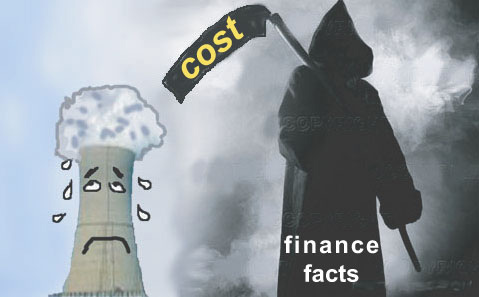 Activists See U.S. Nuclear Industry Starting to Crumble By Matthew Charles Cardinale ATLANTA, Georgia, Jun 27 2013 (IPS) -“……. The costs of nuclear power According to Mark Cooper, a senior research fellow for economic analysis at the Institute for Energy and the Environment at Vermont Law School, history has proved that nuclear power is not economical.
The industry likes to say once you build them, they just hum along and they’re cash cows, producing low cost electricity, and then the industry takes that claim and uses that as a pillar [on which] they try to build the case for new nuclear reactors,” Cooper told IPS.
The nuclear industry maintains that once construction is complete, plants are inexpensive to operate and “last forever”, according to Cooper.
“The reality of old reactors does not support those claims,” he argued, and “the construction costs for new nuclear reactors go through the roof.”
He said one-fifth of reactors built before 2013 that received commercial licenses have retired early and called the 60-year life span of reactors “inconsistent with reality”.
“When [reactors] age, they have the tendency of being more and more costly to keep online,” he added. “When they break, they are too expensive to fix,” he said, citing over two dozen reactors that have closed down for those reasons.
Subsidised construction
In his speech on global warming earlier this week, U.S. President Barack Obama pointed to nuclear reactors under construction in Georgia and South Carolina as examples of new clean energy supported by his administration.
As reported by IPS in 2008, Obama has long been supportive of – and received campaign contributions from – the nuclear industry, beginning with his term in the U.S. Senate.
However, through charges applied to their monthly energy bills, taxpayers in Georgia and South Carolina are shelling out in advance to heavily subsidise nuclear projects in those states, even as Georgia Power and Scana are guaranteed profits because of decisions made by their legislatures and public service commissions.
“At the great pain imposed on ratepayers in Georgia and South Carolina, they can finish those reactors,” Cooper said, but “those reactors will tell us nothing about building another one because they are so incredibly subsidised.”
He believed that other states would not adopt such an approach that shifts risk to taxpayers, predicting, “Summer in South Carolina and Vogtle in Georgia will be monuments for folly, not launch points for the future.” http://www.ipsnews.net/2013/06/activists-see-u-s-nuclear-industry-starting-to-crumble/
Us nuclear corporations regulate the regulators: Indian point has no license
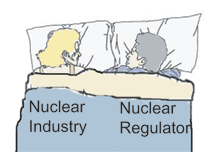 “The regulators are basically being regulated by the corporations that they’re supposedly overseeing,”
GERIATRIC NUCLEAR REACTORS COULD KILL US ALL, VICE NEWS, By Peter Rugh 26 June 13 In America, you need a license to drive an automobile, to operate heavy machinery, to hunt and fish, but apparently not to run a nuclear reactor. Entergy Corp. is slated to become the first company in history to operate a reactor without a license this fall. The Louisiana-based energy corporation’s rogue reactor is located at its Indian Point Energy Center in 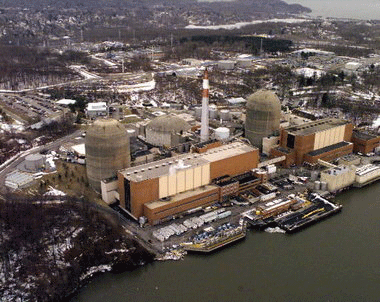 Buchanan, NY—just 24 miles from Manhattan. Entergy Corp’s license to run its Indian Point 2 reactor expires on September 28. The regulations of the Nuclear Regulatory Commission (NRC), which is charged with overseeing the civilian use of nuclear power, says it is prepared to grant the license but its hands are tied by legal challenges mounted by New York State and a federal court ruling last year. The ruling dismissed the agency’s radioactive waste management plans as inadequate.
Most of America’s nuclear plants were built in the 60s and 70s. They were given shelf lives of 40 years. It was assumed by the industry at the time of their construction that when the millennium rolled around there would be new plants up, running, and ready to replace the old fleet. But between then and now interest in nuclear power has waned due to cost and the public’s reaction to Three Mile Island, Chernobyl, and other nuclear calamities. Instead, the energy industry has sought to renew the licenses on the reactors they already operate, while keeping the cost of infrastructure improvements to a bare minimum. They’ve encountered little resistance from the NRC, which has approved 73 separate license renewals and only denied one single application in its history.
Meanwhile, the waste has piled up. The Nuclear Energy Institute, an industry policy group, estimates that US’s 104 commercial reactors have generated 69,720 metric tons of radioactive waste (spent-fuel) over the past four decades, with each plant chipping in approximately 2,000 to 2,300 metric tons each year. Nobody knows what to do with it all. Plant operators are, in a sense, shitting where they eat at the moment by storing nuclear waste onsite at the plants where it is generated. ….. Continue reading
Lobbying and “front groups” paid of for Entergy nuclear company
Despite the dangers of running an aging nuclear plant on two fault-lines beside America’s largest population center, the NRC has shown little will towards fulfilling it’s public safety mandate. Even if the agency is unable to legally relicense the two Indian Point reactors, Diane Screnci says that under timely renewal there is no time limit on how long the reactors can continue to operate. New Yorkers could be forced to live beside a radioactive Pandora’s Box indefinitely or at least until its nuclear lid is lifted.
 GERIATRIC NUCLEAR REACTORS COULD KILL US ALL, VICE NEWS, By Peter Rugh 26 June 13 “……….While the company [Entergy] has skimped on infrastructure upgrades at it’s aging plant, a report from the campaign finance watchdog Common Cause NY last month found that Entergy has spent approximately $40 million on lobbying and campaign contributions on a state and federal level since 2005 as its reactor licenses at Indian Point neared expiration. The report notes that Entegy has retained the public relations firm Burson Marstella, “self-described experts in ‘reputation and crisis management strategies,’ who have worked for such highly controversial clients as Union Carbide, Philip Morris, Blackwater, Foxconn, and Babcock & Wilcox (the firm that designed the Three Mile Island nuclear plant).”
Entergy has also set up two front groups to advocate on its behalf, according to Common Cause. SHARE (Safe Healthy Affordable Reliable Energy) targets communities of color in New York City by advocating for nuclear power as a way to reduce pollution and lower asthma rates while NY AREA (Affordable Reliable Energy Alliance) targets unions and environmental groups. Steets insisted that while Entergy executives serve on the boards of these organizations, they are independent of the corporation. Yet doppelgangers of these same groups exist elsewhere where Entergy operates reactors. Take Massachusetts, where company runs the Pilgrim nuclear plant near Plymouth. There’s a group called MASS AREA, whose publicity material nearly matches those of its New York counterpart. Continue reading
Savannah River Mixed Oxide Nuclear Fuel (MOX) a costly failure
Von Hippel last May joined three other scientists in advocating the burial alternative in a scientific journal article about Britain’s plutonium stocks. One co-author was Rodney Ewing, who Obama has since appointed to head a federal nuclear waste panel, and another was Allison MacFarlane, now chair of the Nuclear Regulatory Commission. The MOX plant, if it is completed, needs an NRC license……
Administration officials say the main purpose of their “strategic reassessment” is to reexamine the burial alternative. A DOE report in 2002 concluded it would cost hundreds of millions of dollars less than building the MOX plant.
Energy Department Nuclear Nonproliferation Program Plagued By Problems, HUFFINGTON POST , 24 June 13 A multibillion-dollar U.S.-led effort to stem the threat of a terrorist nuclear blast is slowly unraveling because of huge cost overruns at a federal installation in South Carolina and stubborn resistance in Moscow to fulfilling the program’s chief goal, according to U.S. officials and independent experts.
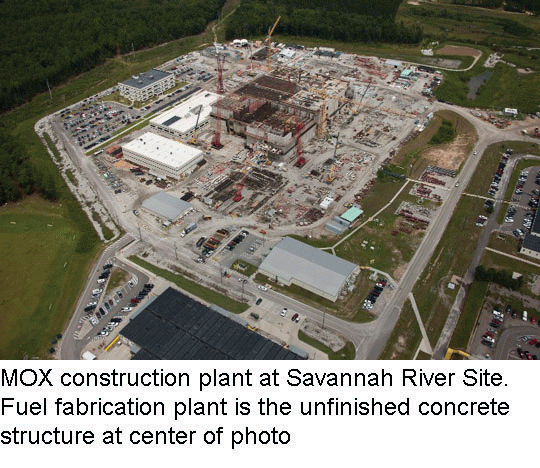
The 13-year old Energy Department program, authorized in agreements with Moscow spanning three presidents, is meant to transform excess plutonium taken from retired U.S. and Russian nuclear weapons into fuel for nuclear plants, so that it can’t be stolen and misused.
But that ambitious goal has been blocked by a tangle of technical, diplomatic and financial problems. The Obama administration is now considering cancelling the project, an idea that has provoked furious opposition from some Republican lawmakers who say it is vital to U.S. national security.
Its potential demise has provoked cheers from some leading arms control and nonproliferation experts, however. They say that as a result of little-noticed revisions to the underlying pact with Moscow on the plutonium’s disposal, the deal might actually wind up promoting Russia’s production of as much or more plutonium as it was supposed to eliminate. To keep its end of the bargain, the U.S. has spent more than a decade and $3.7 billion building a problem-plagued factory for making the plutonium-laced reactor fuel, located at the government’s Savannah River complex south of Aiken. Its construction and related costs have recently hit more than $680 million a year, but Congress is now considering a White House plan to shrink that spending substantially. Continue reading
Nuclear firms gave big bucks to US congressmen to promote MOX nuclear program
Energy Department Nuclear Nonproliferation Program Plagued By Problems Center For Public Integrity HUFFINGTON POST By Douglas Birch and R. Jeffrey Smith, 25 June 13 “…..For years, the plant has been kept alive by South Carolina’s mostly Republican congressional delegation, which includes many strident critics of federal spending, budget deficits, and mammoth public works projects – including Sen. Tim Scott (R.) and Rep. Joe Wilson (R.). On the issue of the MOX plant, which employs 2,100 workers, they have been hugely supportive.
Sen. Lindsey Graham (R-S.C.), joined others on Capitol Hill in January in asserting that “the time has come for the President to face up to the need to control federal spending.” Since then, Graham has lectured DOE officials at hearings on the diplomatic and security disaster that would ensue if the Savannah River project was halted.
With three other Republican senators, Graham pledged in a joint statement last month to hold up nominations and use the budget process “to ensure the [MOX] program moves forward.”
Graham declined to comment for this article. According to an analysis by the Center for Public Integrity of campaign donations and leadership committee receipts listed by the Center for Responsive Politics, Graham has received $46,500 since 2001 from three private firms with a stake in the MOX project. In total, the firms provided at least $437,000 in campaign funds during this period to members of the four congressional committees that decide the Energy Department’s annual budge
Rep. James Clyburn (D.-S.C.), who has long been a member of the House Democratic leadership and who has boasted about helping block Hobson’s challenge to the plant, collected $51,000 in political funding from the firms, whose lobbyists and officers also donated $40,000 to a golf charity he runs. Clyburn’s spokeswoman Hope Derrick said the congressman “is solely motivated by the best interests of the people and communities he serves in Congress.”
In the last three years alone, Areva and Shaw have spent a total of $6.3 million to lobby for their legislative interests, including efforts by at least four former congressmen and some former committee staffers that advocated spending on MOX and nuclear issues, according to an analysis by the Center for Public Integrity……”.http://www.huffingtonpost.com/2013/06/25/energy-department-nuclear-nonproliferation_n_
Obama’s Climate Action Plan : the facts
 Fact box on Obama’s climate action plan http://www.smh.com.au/business/carbon-economy/fact-box-on-obamas-climate-action-plan-20130625-2ov92.html#ixzz2XMRTluIq June 25, 2013 The White House on Tuesday released a plan to cut global carbon pollution and address the effects of climate change in three broad ways: cutting carbon pollution domestically, preparing the country to be resilient to climate impacts, and leading international efforts to target climate change.
Below are key highlights of the administration’s “Climate Action Plan:” (Read full report here.) Continue reading
USA Mayors’ unanimous call to redirect nuclear weapons spending to social benefit
Mayors unanimously voted to move military spending to domestic needshttp://www.examiner.com/article/mayors-unanimously-voted-to-move-military-spending-to-domestic-needs?CID=examiner_alerts_article JUNE 25, 2013 BY: DEBORAH DUPRE
At the 2013 annual United States Conference of Mayors in Las Vegas Monday, mayors unanimously adopted the Mayors for Peace resolution to end nuclear weapons and redirect military spending to domestic needs, a major step forward for human rights globally……he final resolution with the list of 30 sponsors can be read athttp://wslfweb.org/docs/uscmres2013.PDF.
Mayors for Peace is an international organization of cities, dedicated for the promotion of peace that was established in 1982.
In 2004, 2006 and each year since, the USCM has “adopted increasingly stronger resolutions calling on the president to commence negotiations for the elimination of nuclear weapons by 2020, as urged by Mayors for Peace, an international association headed by the mayors of Hiroshima and Nagasaki,” reports the Baltimore Sun.
“This year’s Mayors for Peace resolution calls on Congress to slash nuclear weapons spending and to redirect those funds to meet the urgent needs of cities,” the Sun says. “The resolution was adopted unanimously, without debate.”
Savannah River Nuclear Site the $billion “plutonium elimination” project
 Energy Department Nuclear Nonproliferation Program Plagued By Problems HUFFINGTON POST Center For Public Integrity | By Douglas Birch and R. Jeffrey Smith, 25 June 13 “….The government’s current estimate is that the plant will not begin operation before 2019, seven years late. Estimates of its operating costs over a 15 to 20 year period range from $8 billion to $12 billion, meaning that it could cost around $20 billion in total to create fuel rods from all 34 tons of the plutonium that Washington has promised to eliminate.
But even if the government finds buyers for the fuel – which seems doubtful – it will not recoup more than $2 billion of its expenses, according to the Congressional Research Service. At the current pricetag, eliminating each pound of plutonium at the U.S. plant may cost roughly $243,000, according to Matthew Bunn, a nuclear expert at Harvard.
So far, around $3.7 billion has been spent on the fuel factory, which could wind up an abandoned concrete shell in the middle of a pine forest. Another $700 million was used to design a related plutonium dismantlement facility that NNSA never built.
Those expenditures have helped make it the single most expensive U.S. nonproliferation project now under way, according to independent experts…..
New budget troubles arise
Austerity pressures in Washington have created new obstacles for the companies and their lobbyists, however. The Obama administration, after convening four high-level meetings about the MOX plant this spring, urged a 50 percent cut in its planned spending in fiscal year 2014, to just $320 million.
“Cost growth and fiscal pressure may make the project unaffordable,” the Energy Department said in its formal budget proposal to Congress. A spokesman for the department declined comment about the review now under way……..” .http://www.huffingtonpost.com/2013/06/25/energy-department-nuclear-nonproliferation_n_3498626.html
Obama’s offensive first nuclear strike policy
 Obama Prepares to Wage Offensive, First-strike Strategic Nuclear Warfare against Russia, China, Iran, North Korea and Syria http://www.globalresearch.ca/obama-prepares-to-wage-offensive-first-strike-strategic-nuclear-warfare-against-russia-china-iran-north-korea-and-syria/5340299 By Francis A. Boyle Global Research, June 24, 2013 I have now had the chance to read Obama’s recently released Report on Nuclear Employment Strategy of the United States, (June 21, 2013). The critical passage can be found on page 5:
 “The 2010 Nuclear Posture Review established the Administration’s goal to set conditions that would allow the United States to safely adopt a policy of making deterrence of nuclear attack the sole purpose of U.S. nuclear weapons. Although we cannot adopt such a policy today, the new guidance re-iterates the intention to work towards that goal over time.”
In other words, “nuclear deterrence” is not now and has not been the policy of the Obama administration going back to and including their 2010 Nuclear Posture Review as well. Since “nuclear deterrence” is not now and has never been the Obama administration’s nuclear weapons policy from the get-go, then by default this means that offensive first-strike strategic nuclear war fighting is now and has always been the Obama administration’s nuclear weapons policy.
This policy will also be pursued and augmented by means of “integrated non-nuclear strike options.” (Ibid).
Therefore the entire 2013 NPR and Obama’s recent nuclear arms “reduction” proposals must be understood within this context of the United States pursuing an offensive, strategic first-strike nuclear war-fighting capability as augmented by non-nuclear strike forces: Continue reading
Savannah River nuclear plant connected to unsuccessful diplomacy
Officials in Washington thought they had clinched a deal with Moscow to ensure that the Russian plutonium stockpile would shrink, only to discover after years of delay that Russia had other plans
How a Massive Nuclear Nonproliferation Effort Led to More Proliferation, The Atlantic, More than a decade of negotiations with Russia produced a clear winner, and it was not the United States. DOUGLAS BIRCH AND R. JEFFREY SMITHJUN 24 2013 SAVANNAH RIVER SITE, South Carolina “……The huge new nuclear fuel plant at Savannah River reached this shaky stage via a convoluted path. The idea behind it grew out of a crisis. Arms control agreements in the 1980s had left both the U.S. and the Soviet Union with huge stockpiles of fissile materials from dismantled warheads. The collapse of the Soviet economy left workers at vast weapons production complexes without heat, power or paychecks, a circumstance that threatened security and raised the risk of nuclear smuggling.
At least four times between 1994 and 2000, small amounts of smuggled plutonium were recovered by law-enforcement officials in Europe, the Caucasus and Central Asia, according to the International Atomic Energy Agency –all at the height of the Russian economic meltdown.
The United States and its allies worried these cases were the tip of an iceberg. Princeton physicist Frank von Hippel, a key player in the early push for a disposal agreement, recalls his surprise on visiting the huge Mayak nuclear complex in western Siberia in 1994. There, he found 30 metric tons of plutonium oxide from civilian reactors capable of being fashioned into bombs, stored in 12,000 tea-kettle-sized containers. A fence surrounded the reservation, but inside the gates all that stood between a thief and the plutonium was a padlock on the warehouse door and a nervous conscript guard.
A distinguished panel concluded in a special 2001 report for the Energy Secretary that the threat of diverted weapons materials from the former Soviet Union “is a clear and present danger, to the international community as well as to American lives and liberties.”
Nor has the risk of nuclear terror diminished since then, U.S. officials say. “Two decades after the end of the Cold War, we face a cruel irony of history –the risk of a nuclear confrontation between nations has gone down, but the risk of nuclear attack has gone up,” President Obama warned on the eve of an April 2010 global summit on nuclear security in Washington. Former vice president Dick Cheney told the American Enterprise Institute the following year that a terrorist with nuclear materials and know-how was “the most dangerous threat” the U.S. faced.
But even though the United States and Russia worked together to stem nuclear security problems in the 1990s, the two countries disagreed from the start about controlling plutonium. The U.S. view, initially, was that the best way to prevent the explosive from being used in new bombs was to lock it away in ceramic and glass.
Russia, though, was eager to tap the vast riches locked in its Cold War detritus. The country pressed to use its plutonium as fuel for a type of nuclear reactor that can actually produce more plutonium than it burns, in a form that is more easily used in nuclear explosives – a reactor known as a “breeder” that many Western experts say can promote a dangerous international trade in the nuclear explosive.
In a long struggle to resolve this disagreement, the Russians got the better of Washington, according to some experts who followed it closely. As a result, the South Carolina plant’s troubles partly reflect the fact that soaring U.S. national security ambitions were brought to earth by unsuccessful diplomacy. Officials in Washington thought they had clinched a deal with Moscow to ensure that the Russian plutonium stockpile would shrink, only to discover after years of delay that Russia had other plans…….” http://www.theatlantic.com/international/archive/2013/06/how-a-massive-nuclear-nonproliferation-effort-led-to-more-proliferation/277140/
USA scrambling to sell off nuclear technology to India
 India assures U.S. a share of nuclear pie, THE HINDU, 24 June 13 SANDEEP DIKSHIT India and the U.S. on Monday agreed to set a timeline for operationalising the civil nuclear agreement. The Fourth Strategic Dialogue co-chaired by U.S. Secretary of State John Kerry and External Affairs Minister Salman Khurshid here reviewed several issues ranging from the status of civil nuclear ties between the two countries through defence trade to education and cultural exchanges — through some 30 bilateral panels.
The two ministers felt further high-level meetings should be held to achieve convergence and progress, especially in strategic issues. An example of such meetings will be the visit of U.S. Vice President Joe Biden scheduled for mid-July………. At the press conference, Mr. Kerry almost let slip America’s chagrin at not having tasted the fruits of the India-U.S. civil nuclear agreement by drawing attention to the enormous domestic political capital invested by Democrats and Republicans to ensure New Delhi was given a special exemption by the Nuclear Suppliers Group (NSG).
The Kerry-Khurshid meeting set September as a possible timeline for resolving two issues that have thwarted Westinghouse from setting up six reactors in Gujarat. Another company GE will set up an equal number in Andhra Pradesh but its reactor design has not yet been cleared by the U.S. nuclear regulator. India had promised these multi-billion bonanzas in exchange for supporting its case at the NSG and the International Atomic Energy Agency……http://www.thehindu.com/news/national/india-assures-us-a-share-of-nuclear-pie/article4846708.ece
The development of MOX nuclear fuel, and the Global Nuclear Energy Partnership
an industrial-scale facility in America capable of turning plutonium into reactor fuel — a key step on the path to a revived breeder program.
The MOX plant was “the plutonium nose under the tent”
Ernest Moniz…his June 2000 deal, approved by the two country’s presidents, called for both sides to use the  plutonium mostly as a reactor fuel, as Moscow sought.
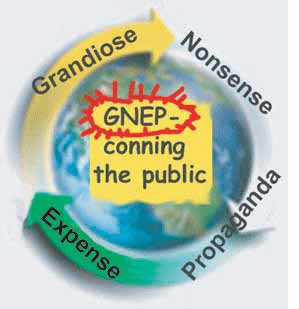 The George W. Bush administration subsequently embraced a plan to promote breeder reactors and the recycling of plutonium, not just domestically, but by other nuclear states including Russia, in a controversial program known as the Global Nuclear Energy Partnership. . Formal papers ordering the start of the MOX plant construction were signed in August 2007 by a former chief of the Bush-Cheney energy policy transition team, according to an internal Energy Department document.
How a Massive Nuclear Nonproliferation Effort Led to More Proliferation, The Atlantic, DOUGLAS BIRCH AND R. JEFFREY SMITHJUN 24 2013 SAVANNAH RIVER SITE, South Carolina “,……….Breeder reactors, in a kind of Atomic Age alchemy, can manufacture more plutonium than they consume, inspiring dreams of almost limitless energy. By generating fast-moving neutrons that transform the uranium mixed into their fuel into additional plutonium, they hold the promise of a significant energy reward: One gram of plutonium can produce more energy than a ton of oil. At one time or another, breeders have been pursued by every major nuclear nation. Continue reading
Radiation death ray plot to kill President Obama
 Obama is death ray target of Ku Klux Klan nut http://www.thesun.co.uk/sol/homepage/news/4978215/Obama-target-of-KKK-nuts-radiation-weapon.html#ixzz2XAvBNDjL By PETE SAMSON, US Editor 21st June 2013 TWO men have been arrested over a plot to kill US President Barack Obama with a home-made DEATH RAY.
Fanatics Glendon Scott Crawford, 49, and Eric Feight, 54, were nicked after a six-month FBI undercover operation. Mr Obama was among those said to have been targeted by the futuristic device that would have fired lethal doses of radiation.
Engineer Crawford, a member of the white supremacist group the Ku Klux Klan, told undercover agents his design was “Hiroshima on a light switch”. He said his plan was to hide the death ray inside a van and park it
near to a target. The device would be activated from a safe distance and according to an
arrest affidavit would “kill human targets silently and from a distance with lethal doses of radiation”.
He said whoever had the device could kill with little chance of being caught, according to the criminal complaint.
Crawford, of Schenectady, New York, said President Obama was on their hit-list because he had let Muslims into the US.
On the day after the Boston Marathon bombing in April he allegedly sent a text message saying: “Obama’s policies caused this.” The two men were investigated after trying to get funding for their plan. Last year Crawford walked into a synagogue and allegedly inquired about technology that could kill “Israel’s enemies while they slept”.
He later asked KKK leaders in North Carolina for money for his machine. Both the KKK and Jewish leaders tipped off the FBI.
Crawford was arrested as he tried to connect a remote activation device to an X-ray machine that undercover agents had given him after making it useless.
Prosecutor John Duncan said: “From our investigation, the device would have been able to emit X-ray radiation that would cause death.”
US electricity utilities see distributed energy as their killer
Solar panels could destroy U.S. utilities, according to U.S. utilities Grist By David Roberts
Solar power and other distributed renewable energy technologies could lay waste to U.S. power utilities and burn the utility business model, which has remained virtually unchanged for a century, to the ground That is not wild-eyed hippie talk. It is the assessment of the utilities themselves.
Back in January, the Edison Electric Institute — the (typically stodgy and backward-looking) trade group of U.S. investor-owned utilities — released a report [PDF] that, as far as I can tell, went almost entirely without notice in the press. That’s a shame. It is one of the most prescient and brutally frank things I’ve ever read about the power sector. It is a rare thing to hear an industry tell the tale of its own incipient obsolescence. Continue reading
No to Oak Ridge nuclear wastes – says Nevada Governor

 Nevada Gov. Tells Feds To Bury ‘Dirty Bomb’ Nuclear Waste Elsewhere June 21, 2013 CBS, LAS VEGAS (AP) — Nevada’s governor is telling the federal government the state doesn’t want highly radioactive waste of the type that could be used to build a “dirty bomb” buried in a shallow pit at the former national nuclear proving ground north of Las Vegas.
The federal Energy Department is reviewing Gov. Brian Sandoval’s letter opposing plans to ship about 400 canisters of waste from the Oak Ridge National Laboratory in Tennessee to the Nevada National Security Site, agency spokeswoman Aoife McCarthy said Friday.
Sandoval, a Republican former federal judge and state attorney general, accused the Energy Department of trying to set a dangerous precedent by exploiting a regulatory loophole to classify the waste as a low-level hazard so that it can be buried at the former test site about 65 miles northwest of Las Vegas. The governor said the material should be handled as high-level radioactive waste.
“This dangerous waste should be managed in the same manner as remote-handled transuranic waste,” Sandoval said, noting that the Energy Department provides hands-free handling and permanent deep-geologic storage of similar material at the Waste Isolation Pilot Plant near Carlsbad, N.M.
The governor also accused the Energy Department of failing to adequately address concerns of affected local governments and Indian tribes.
The Las Vegas Review-Journal reported (http://bit.ly/1982fbx) that Senate Democratic Majority Leader Harry Reid and U.S. Rep. Dina Titus, D-Nevada, are backing Sandoval…….
Even if the canisters meet a “legalistic definition” of low-level waste, Sandoval said in his letter, they aren’t suitable for shallow land burial at the Nevada National Security Site.
The governor noted that the canisters contain a high concentration of isotope uranium 235 and uranium 233 that would be a danger to workers and a potential source of dirty bomb material……. http://lasvegas.cbslocal.com/2013/06/21/nevada-gov-tells-feds-to-bury-dirty-bomb-nuclear-waste-elsewhere/
1 This Month
23-25 October – on Zoom – World BEYOND War’s annual global conferenc


Shut down the radiation-damaged Heysham nuclear reactors now
To see nuclear-related stories in greater depth and intensity – go to https://nuclearinformation.wordpress.com

Say No to NASA’s Reckless Nuclear Reactor on the Moon
Say No to NASA’s Reckless Nuclear Reactor on the Moon

-
Archives
- October 2026 (199)
- September 2026 (339)
- August 2026 (330)
- July 2026 (355)
- June 2026 (287)
- May 2026 (306)
- April 2026 (356)
- March 2026 (251)
- February 2026 (267)
- January 2026 (308)
- December 2025 (358)
- November 2025 (359)
-
Categories
- 1
- 1 NUCLEAR ISSUES
- business and costs
- climate change
- culture and arts
- ENERGY
- environment
- health
- history
- indigenous issues
- Legal
- marketing of nuclear
- media
- opposition to nuclear
- PERSONAL STORIES
- politics
- politics international
- Religion and ethics
- safety
- secrets,lies and civil liberties
- spinbuster
- technology
- Uranium
- wastes
- weapons and war
- Women
- 2 WORLD
- ACTION
- AFRICA
- Atrocities
- AUSTRALIA
- Christina's notes
- Christina's themes
- culture and arts
- Events
- Fuk 2022
- Fuk 2023
- Fukushima 2017
- Fukushima 2018
- fukushima 2019
- Fukushima 2020
- Fukushima 2021
- general
- global warming
- Humour (God we need it)
- Nuclear
- RARE EARTHS
- Reference
- resources – print
- Resources -audiovicual
- Weekly Newsletter
- World
- World Nuclear
- YouTube
-
RSS
Entries RSS
Comments RSS

