Cost overruns racing away at Monticello nuclear plant
 Monticello nuclear plant repairs surge $267 million over budget by: DAVID SHAFFER , Star Tribune July 15, 2013 The bill for upgrades to Monticello nuclear plant is expected to grow even more, which may affect utility’s rate hike request.MONTICELLO, MINN. – A major upgrade to Minnesota’s oldest nuclear power plant is finally finished — and way over budget.
Xcel Energy expects to restart its Monticello Nuclear Power Plant this week after a four-month shutdown that allowed workers to replace aging pumps and other equipment to keep the 43-year-old reactor running another two decades and to boost electric output by 12 percent.
But the cost of the work surged $267 million, or 83 percent, over its 2008 budget of $320 million. The Minneapolis-based electric and gas utility says the final costs will be even higher, but hasn’t publicly disclosed the amount.n the meantime, Xcel’s 1.2 million electric customers in Minnesota are being asked to pay for the cost overruns. This sort of nuclear-related expense is one of the major drivers behind Xcel’s requested rate hike that an administrative judge recently recommendedslashing to 4.7 percent. The Minnesota Public Utilities Commission will decide, probably this fall, how much more ratepayers will pay.
Utility officials declined to answer questions about the cost overruns, ……..
Just how much customers will have to bear remains unclear.
That’s partly because not all of the cost overruns have been disclosed. Under a state law, Xcel has classified its latest cost-overrun estimate as a “trade secret.” The estimate has been disclosed to regulators, however, and the Star Tribune last week petitioned to have it made public, but the PUC has not yet acted…….http://www.startribune.com/business/215458431.html
USA scandal of Uranium Center of Excellence taxpayer ripoff
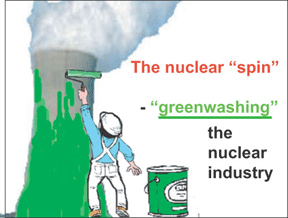 The “excellence” of this facility was that the radioactive garbage was green-washed as “recyclable,” and Ohio voters were also duped by the promise that it would bring hundreds of jobs, when the final tally was only two full-time inventory managers. I suppose that if spent fuel storage had been added, it would have been called the Center for Real Awesomeness with Plutonium.
Many of the same contractors who had been paid to haul the excellent garbage in were then paid a second time to haul the excellent garbage out in a less-than-excellent shell game that meant lucre for an elite group of crappy corporations.
 Uranium Titan Tumbles EcoWatch July 12, 2013 By Geoffrey Sea“…….Excellent Extortion Recent developments at Piketon and Paducah make no sense at all without understanding that the working national plan for how to deal with the outmoded gaseous diffusion plants and their massively contaminated sites has been to convert both into “national sacrifice” waste repositories. But you won’t find that plan in any Federal Register notices or Environmental Impact Reports. Rather, it’s the subtext of a hundred different records of decision and formal notifications. The new way to evade those nuisance environmental compliance requirements is for federal agencies and funded corporations to simply not announce what they intend to do. Continue reading
The disastrous history of U.S. Enrichment Corporation (USEC)
Despite public funding, no governmental process is contemplated for gathering or disseminating data on the commercial worthiness of USEC’s centrifuges, because that answer is already widely known: The technology at issue is forty years old and out of date…… doesn’t produce anything anymore and it never will
 the “American Centrifuge” project (ACP) was never more than a false front, a mechanism for wrangling government bailout after government bailout, while the rock-red company waited for a Republican administration that would approve its audacious waste storage plans.
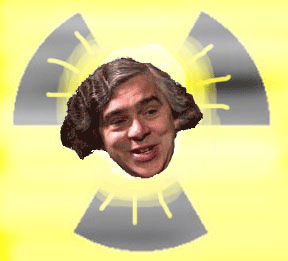 That team included Iraq War architect Richard Perle and a physics professor whose only claim to fame was in pushing centralized storage solutions for spent nuclear fuel. His name was Ernest Moniz. (left)
Uranium Titan Tumbles EcoWatch July 12, 2013 By Geoffrey Sea “……The Un-American Centrifuge Plant Created first as a government corporation in response to a mismanagement scandal at the U.S. Department of Energy (DOE) in the 1990s, USEC was privatized in 1998. The USEC Privatization Act, premised on delusional Thatcherite ideology, placed two solemn obligations on the respective parties in the split: The Department of Energy, though continuing to own the land and facilities with which USEC operates, had to stay out of the business of uranium enrichment; USEC, while free to conduct its business as a private corporation, had to use its free access to public land and resources to develop advanced uranium enrichment technology and improve the U.S. position in the global enrichment marketplace.
Now those statutory goals can only bring a ROFLMAO reaction. USEC has become a wholly-dependent ward of the Department of Energy, which effectively makes all the big “business” decisions that concern enrichment, and USEC has defaulted on any credible effort to deploy a domestic advanced enrichment technology. Yet the Privatization Act remains on the books, its provisions violated cavalierly but with no efforts at repeal, like metropolitan municipal laws about donkey carts and Sunday dancing.
The basic and shocking truth about USEC, Continue reading
Auditors shocked at rocketing costs for Uranium Processing Facility
 Auditors Slam Uranium Project’s Ballooning Expense http://news.yahoo.com/auditors-slam-uranium-projects-ballooning-expense-150204641.html Diane Barnes, Global Security Newswire 16 July 13, WASHINGTON –– When U.S. government contractors designing a $500 million nuclear-weapon facility last year said they would have to raise the roof, they didn’t exactly mean it was time to pump up the music.
An update to plans for the future Uranium Processing Facility at the Y-12 national security complex in Oak Ridge, Tenn., would increase its height by 13 feet — a move required for the building to hold all its intended contents. Problem was: officials offered no stab at how much the revision would cost.
The changes ended up costing well over half a billion dollars more, congressional auditors said last Friday. The site is to replace existing facilities that handle and store highly enriched uranium.
The Government Accountability Office blamed the additional $540 million price tag on a failure by the lead design firm to “adequately manage and integrate the design work” of four subcontractors. Construction of the building itself has not begun.
The unanticipated expense contrasted with a number of “overly optimistic assumptions” made by the National Nuclear Security Administration, which has overseen the project, and laid out in a 35-page GAO report.
The project’s maximum anticipated expense soared from $1.1 billion to $6.5 billion between 2004 and 2011, and the cost might increase further because the roof revision burned through nearly half of NNSA “contingency” funds. The nuclear weapons complex oversight agency — a semiautonomous branch of the Energy Department — “did not account for such a large sum of money being needed to address this risk,” the auditors said in their report to the Senate Appropriations Energy and Water Development Subcommittee.
The panel fears “NNSA will not be able to execute multiple, highly complex life-extension projects and construction projects concurrently under ambitious schedules,” lawmakers said in a report on spending legislation approved by the full committee in June.
The Energy Department last month informed Congress the facility will not start becoming operational until 2025, the Knoxville News Sentinelreported on Saturday.
USEC uranium scandal will make the Solyndra solar story look trivial
Uranium Titan Tumbles EcoWatch July 12, 2013 By Geoffrey Sea“……..USEC has certainly achieved some record-setting milestones. The $5 billion price tag on a completed commercial centrifuge plant (an estimate USEC has not bothered to update) would be approximately 350 times the total current market value of the entire company. It’s like a kite-flying club saying that it will build a B-2 bomber. The annual salary of CEO John Welch is about a third of the total value of his company, a rate of compensation justified only by his ability to keep a straight face when saying that he expects the government to give him a $2 billion loan guarantee. Say “Solyndra” a hundred times slowly after setting off a stink-bomb to get some sense of the magnitude of the incipient scandal when USEC finally bites the dust.
But no, that really isn’t fair to Solyndra. Solyndra may have been a case of the government picking winners and losers unwisely. USEC is a case of the government picking a loser intentionally over and over again, only because the privatized cash recipient has strategically and falsely promised jobs in the states and districts of powerful Members of Congress.
Once described in the Financial Times of London as “the trust fund baby of the American nuclear industry,” USEC has squandered every sequential $50-million allowance check from the feds on posh executive salaries and luxurious lobbying. Therefore, the allegedly-private company still needs a couple of billions from the government, just to make ends meat and ward off investment-fraud litigation. The company’s loan guarantee application, repeatedly submitted in the run-up to key elections, has already been twice denied because “USEC had nothing, absolutely nothing,” in the words of a former aide to U.S. Sen. Sherrod Brown (D-OH).
Even if USEC got that federal loan by some underworld device, criminal or demonic, it would need to raise at least an additional $3 billion to complete a new production plant, which Welch says, still straight-faced and with no supporting evidence, could come from a Japanese international bank. I suppose that would be in gratitude for USEC’s supply of nuclear fuel to the three reactors at Fukushima that melted down and are still leaking. Those silly Japanese and their short memories and spare cash………. http://ecowatch.com/2013/uranium-titan-tumbles/
US Dept of Energy warns on climate change damaging nuclear and coal plants
 Warming already taking toll on U.S. energy sector — DOE Hannah Northey, E&E reporter Greenwire: July 11, 2013 Rising temperatures, decreasing water availability, more severe storms and rising seas stemming from climate change are already affecting every part of the country’s energy sector, and those threats will only grow more severe in years to come, the Energy Department said today.
DOE in a new report outlines the effects a warming world with more chaotic and damaging 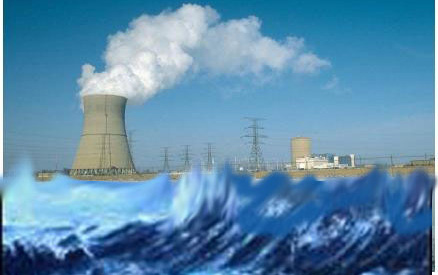 storms, wildfires and other natural disasters is having on oil and gas exploration, power plants, and an aging electric grid.
The outlook isn’t pretty.
The agency pointed to the unprecedented shutdown of a nuclear reactor because of rising seawater temperatures on the Connecticut coast last year, as well as the request by power plants to dump hotter-than-permitted water into nearby lakes and streams.
In another case, high temperatures and high demand last year caused a transformer and power line to trip in Arizona, triggering a cascading blackout that tripped the San Onofre nuclear plant offline, leaving millions of people without power.
Wildfires are threatening large swaths of the electric grid, and waning water resources are calling  into question just how much hydropower the United States can generate.
What the report also makes clear is that storms like Superstorm Sandy are only a taste of things to come……..
Coming years could bring more damage, DOE said, noting that last year was the warmest year since record keeping began in 1895 for the contiguous United States, and the hottest month for the nation was July 2012. Those higher temperature have ushered in heat waves, a longer wildfire season, decreased sea ice in the Alaskan Arctic sea and a longer growing season, DOE said.
 In many cases, historic drought conditions are combining with high temperatures to parch power plants throughout the country that need water to cool reactors, generate steam or produce hydroelectricity.
Higher temperatures are also putting pressure on the system in the form of demand as an increasing number of air conditioners pull power from the grid, causing even more devastating consequences during rolling blackouts and brownouts.
The report calls for a host of new, innovative methods to protect the grid, power plants, and oil and gas producers from the effects of climate change but doesn’t make specific recommendations or provide cost estimates…..http://www.eenews.net/stories/1059984249
Nuclear weapons insanity: America’s AIR-2 Genie rocket
it was basically a suicide device.
The craziest part about this? In the only live test during Operation Plumbob, the US Air Force put five guys directly under the blast to prove how “safe” it was to use over populated areas. P
And the US government made 3,000 Genies.
The Five Most Insane Nuclear Delivery Systems Jaolpnik MICHAEL BALLABAN, 14 July 13
“…….Earlier this week we looked at the giantSoviet nuclear gun. That thing is definitely batty, what with its giant cannon at one end and what was essentially a tank at the other end turning it into a self-propelled howitzer. The Americans had a crazy nuke gun, too, and for awhile it looked like maybe we’d just stand and shoot atomic cannons at each other.
The thing is though, with both of those artillery pieces the actual physics package was intended to reach at least 15 miles away before the thing actually exploded. And even then, that was waytoo close.
What would happen, then, if you wanted it to explode even closer?
The AIR-2 Genie was a doomsday rocket of absolute desperation.
genie_missile_test
With the Cold War in its deepest freeze but without the benefit of long-range ICBMs, American military planners thought the only way New York, Los Angeles, or Chicago would be bombed would be in massive waves of Soviet bombers. Unfortunately, if 100 of them come at you at once, you may not shoot them all down. And really, only one getting through your defenses is necessary for absolute devastation.
In 1958, when the AIR-2 was introduced, the problem was compounded by the fact that missile guidance systems still weren’t quite up to snuff. Directly hitting all of the bombers coming at you was going to be a near-impossible task. The solution was to launch one, single, solitary missile. That missile, completely unguided, with a nuclear bomb on board, would cause a big enough explosion to hopefully wipe out all the attackers. With a big enough boom, you wouldn’t need a guidance system.
Oh, and the range was only six miles. In case you’re forgetting, most nukes make a bigger boom than that, so it was basically a suicide device.
The craziest part about this? In the only live test during Operation Plumbob, the US Air Force put five guys directly under the blast to prove how “safe” it was to use over populated areas. P
And the US government made 3,000 Genies…….. http://jalopnik.com/the-five-most-insane-nuclear-delivery-systems-768180979
America must wake up to its growing nightmare of radioactive trash
If America chooses not to wake up to this reality, sooner or later it will cost us dearly: A spent fuel accident at San Onofre Nuclear Waste Dump could cost a trillion dollars. The spent fuel will need to be guarded for hundreds of millennia, but right now it is MOST important that it be guarded properly.
Shutting down ALL the reactors now, and properly securing ALL the waste immediately, is the only logical thing to do
 A spent fuel accident at San Onofre Nuclear Waste Dump could cost a trillion dollars. Deal with it. Salem News Ace Hoffman July 13th, 2013 ”……..For all intents and purposes Fukushima was a spent fuel accident. While it’s true that the reactors tripped after the earthquake and had only been shut off for a short while when the tsunami struck, it’s also true that even if the reactors had been off for years, the same basic sequence of events could have happened if water wasn’t circulated properly around the used fuel assemblies.
Spent fuel is incredibly deadly stuff, but in fact, Fukushima was not a “worst case scenario” by any means. An even larger catastrophe is still possible at Fukushima because of the fuel that’s still there in the spent fuel pools and dry casks, and because the melted blobs of “corium” (uranium and plutonium) can theoretically go critical again. Massive explosions of the corium blobs are also possible without a new criticality event, when/if they reach the local water table. And more than two years after the meltdowns, nobody knows precisely where the corium blobs are.
There are 23 reactors similar to Fukushima’s operating in America, and all other types of reactors have other dangers which make them just as capable of catastrophic accidents as those were, but in different ways. There are no “safe” reactors, and there is no safe way to store or transport the fuel. Continue reading
Nuclear waste casks filling up one aweek, and rate is increasing

it is crazy to keep making this radioactive trash
New dry casks are popping up around the country at the rate of about one a week these days. As spent fuel pools fill up, that rate will increase to a steady-state (for 100 reactors) of about 4 to 6 dry casks per week around the nation.
Each one, if its contents get out, could wipe out a small state
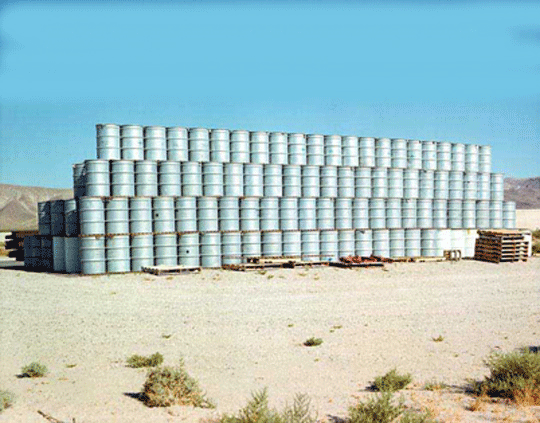
A spent fuel accident at San Onofre Nuclear Waste Dump could cost a trillion dollars. Deal with it. Salem News Ace Hoffman July 13th, 2013 “……..Nevertheless, some people, even some among those who helped shut down San Onofre because of the danger, now refuse to talk about moving the waste, primarily for one of two reasons:
First, they are concerned about transportation accidents — a reasonable fear. But consider this: Transport risks last for only a few days each trip, and there are a finite number of trips, because, thankfully, the reactors at San Onofre are permanently closed. So that’s a relatively limited risk. On the other hand, leaving the waste to sit dangerously in an earthquake/tsunami/growing population zone is a danger that lasts for decades or centuries, and possibly forever.
The other reason some people oppose transporting the waste away from San Onofre is that there’s nowhere to put it. Continue reading
San Onofre nuclear plant – doomed by its new steam generators
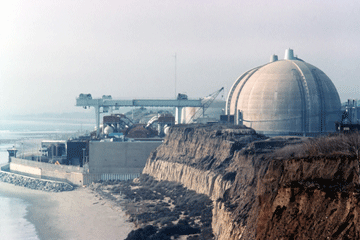 How San Onofre’s new steam generators sealed nuclear plant’s fate San Onofre’s replacement generators were supposed to extend the nuclear plant’s life and save money. The opposite ensued. LA Times, By Abby Sewell and Ken Bensinger July 13, 2013,
In March 2004, an attorney for Southern California Edisonsat before state utility regulators to propose what seemed like a great deal.
The San Onofre nuclear plant was approaching the end of its life span. But Edison wanted to invest $680 million in new steam generators, attorney Carol Schmid-Frazee told a judge presiding over a hearing at the California Public Utilities Commission’s San Francisco headquarters. The new equipment, she said, would give the 2,200-megawatt plant a new lease on life, providing cheap, reliable energy in Southern California for decades to come while also saving ratepayers nearly $2 billion.
Edison’s lawyer also issued an ominous warning: If regulators did not approve the upgrade, the plant would close, provoking “very serious problems with the California electric grid.”
The commission was persuaded, and Edison began remaking San Onofre.
But less than a year after the new steam generators came online, a tube in one of them sprang a radioactive leak, setting off a chain of events that ultimately led Edison to close the plant permanently…… http://www.latimes.com/news/local/la-me-07-14-san-onofre-tic-toc-20130714,0,5736015.story
Peaceful anti nuclear protestors arrested in Kansas City
Two dozen arrested in nuclear-plant protest KSHB.com 14 July 13 KANSAS CITY, Mo. – Two dozen people were arrested Saturday morning for trespassing at the entrance to the National Nuclear Security Administration’s new south Kansas City complex in a peaceful protest against the nuclear weapons that will soon be built there.
Scheduled for completion sometime next year, the plant at 150 Hwy and Botts Road will replace the current nuclear-bomb-parts plant at the Bannister Federal Complex at Bannister and Holmes, now operated by Honeywell Federal Manufacturing and Technologies. …The protestors were organized by the local chapter of PeaceWorks to coincide with Nuclear Abolition Week, July 6-13…. http://www.kshb.com/dpp/news/local_news/nearly-two-dozen-arrested-in-nuclear-plant-protest#ixzz2Z9cKfsUh
Nuclear wastes in dry cask storage – still very dangerous
 A spent fuel accident at San Onofre Nuclear Waste Dump could cost a trillion dollars. Deal with it. Salem News Ace Hoffman July 13th, 2013 “…….There are a total of about 75 sites in America with operating or closed nuclear reactors. Almost all have spent fuel stored on site. Most are under various airline routes. All are vulnerable to terrorism. San Onofre has repeatedly been cited as a likely terrorist target by elected officials because of the devastating damage an attack could do to the economy and lives of so many millions of people. Have the lessons of 9-11 truly been forgotten just 12 years later?
The time to solve the nuclear waste problem is now, not later. Once the waste has “cooled” enough to remove it from the pools, it is still incredibly hot (as much as 400 degrees Fahrenheit at the fuel rod’s surfaces) and stays hot for many years. The heat is produced mainly by the decay of fission products, emitting deadly gamma rays (hence the lead, steel, and cement shielding) as well as alpha and beta particles.
The spent nuclear fuel is in danger of fire by several methods, including, of all things, water intrusion, which can lead to zirconium cladding degradation along with splitting the water molecules into separate hydrogen and oxygen atoms. This chemical reaction created an explosive atmosphere three times at Fukushima, and is known to have happened in at least one dry cask here in the sStates — but it was discovered before an explosion occurred. Will we always be so lucky?
As the fission products decay, the spent fuel cools and becomes “safer.” However, it doesn’t become “safe” ever. Many of the most dangerous isotopes, such as cesium and strontium, have half-lives in the 30 year range, and are at their peak now. Thus, the importance of taking care of the “spent fuel problem” is highest now — much higher than, say, 30 years from now when about half the cesium and strontium will have decayed. So waiting makes no sense. The waste’s most virulent components are at their peak quantities right now, and an accident now would be the most devastating for the planet’s collective DNA — DNA which has already taken a terrible hit from weapons testing and use, from Chernobyl, from Fukushima, from 1000 other accidents and purposeful spills, and from continuing leaks at Hanford and other nuclear sites.
There is really only one logical conclusion, of course: It’s time to shutdown the reactors everywhere. In China, Russia, France, England, India, South Korea, and everywhere else, not just in southern California. Currently nuclear waste is stored in at least four locations in California. Those four sites need to be consolidated into one highly protected site, with earthen berms between EACH cask, and a “no-fly” zone and other considerations.
But how will consolidation be accomplished when communities are bullied into supporting flimsy, inadequate dry cask storage wherever the waste was produced, regardless of the danger?
Activists in Humboldt County and around Rancho Seco have accepted dry cask storage for years. Why shouldn’t southern California?
The answer is, because southern Californians understand, post-Fukushima, what the real dangers of spent fuel are……”. http://www.salem-news.com/articles/july142013/san-onofre-bdb-ah.php
U.S. government warns on climate change threat to nuclear and coal power plants
US power plants at risk from climate change, government says SMH, July 12, 2013 Power plants across the US are at increased risk of temporary shutdown and reduced power generation as temperatures and sea levels continue to rise and water becomes less available, the country’s Department of Energy said.
By 2030, there will be nearly $US1 trillion in energy assets in the Gulf region alone at risk from increasingly costly extreme hurricanes and sea-level rises, according to the Energy Department report on the impact of climate change on energy infrastructure.
“As President Obama said in his speech last month, climate change is happening,” said spokeswoman April Saylor in a statement. “As climate change makes the weather more extreme, we have a moral obligation to prepare the country for its effects.”
The report calls on federal, state and local governments to more urgently prepare critical infrastructure – particularly coal, natural gas and nuclear plants – for the compounded risks posed by floods, storms, wildfires and droughts…….
Greenpeace USA spokesman Robert Gardner said the administration’s focus should primarily be transitioning to wind and solar technology, not relying on fossil fuels and nuclear energy.
“The question is why the Department of Energy is really focusing on continuing the problem which has caused this tidal wave of global warming,” said Gardner. : http://www.smh.com.au/environment/climate-change/us-power-plants-at-risk-from-climate-change-government-says-20130712-2pv6h.html#ixzz2YxjjqAdb
American Medical Association wants action on radiation in seafoods
 American Medical Assn. Urges Testing Seafood For Radiation http://www.simplyinfo.org/?p=10663 July 11th, 2013 The American Medical Association has passed a resolution calling for the US to continue to monitor and publicly report radiation contamination in seafood. The original resolution included the language that cited Fukushima as a main reason for the concern and focused on the Pacific ocean. The final resolution broadened it to include all seafood.
The resolution was approved before the recent announcement that Fukushima Daiichi has been continually leaking contamination into the Pacific for the last 2+ years.
The resolution is a good step for public health. The current policy of the FDA does no ongoing seafood testing for radiation. That done soon after the Fukushima disaster was vague, using frozen fish of unknown catch date and fish with an unknown catch location within Japan. The FDA and USDA so far have not publicly released any seafood testing for products hauled places other than Japan. The current US contamination level before the government will intervene is 1200 bq/kg far higher than other countries including Japan.
Busting the nuclear industry’s propaganda fairy tale
As always in the face of failure, the industry puts forth new designs as a basis for new promises, now touting small modular reactors with the same fervour with which it touted large, partially modular reactors a decade ago. Congress finds a few hundred million to preserve these dreams even as its cutbacks shatter so many others.
A new movie, Pandora’s Promise (no film-maker familiar with nuclear history would include “promise” in a title intended to be pronuclear), recently screened at Sundance.Featuring the same old converts and straw men, it opened in cinemas a few weeks ago to tiny audiences and generally unenthusiastic reviews, especially from reviewers knowledgeable about nuclear power.
 In the astonishing persistence of the global appetite for false nuclear promises lies the critical importance of the World Nuclear Industry Status Report, published on Thursday.
Nuclear renaissance was just a fairy tale http://www.guardian.co.uk/environment/2013/jul/11/nuclear-renaissance-power-myth-us The promise of cheap, low-carbon power – with 31 new reactors in the US – was based on rhetoric and obedience. Anyone who doubts that should read the new status report on the industry Peter Bradford guardian.co.uk, 12 July 2013 Nuclear power requires obedience, not transparency. The gap between nuclear rhetoric and nuclear reality has been a fundamental impediment to wise energy policy decisions for half a century now.
For various reasons, in many nations the nuclear industry cannot tell the truth about its progress, its promise or its perils. Its backers in government and in academia do no better.
Rhetorical excess from opponents of nuclear power contributes to the fog, but proponents have by far the heavier artillery. In the US, during the rise and fall of the bubble formerly known as “the nuclear renaissance”, many of the proponents’ tools have been on full display. Continue reading
1 This Month
23-25 October – on Zoom – World BEYOND War’s annual global conferenc


Shut down the radiation-damaged Heysham nuclear reactors now
To see nuclear-related stories in greater depth and intensity – go to https://nuclearinformation.wordpress.com

Say No to NASA’s Reckless Nuclear Reactor on the Moon
Say No to NASA’s Reckless Nuclear Reactor on the Moon

-
Archives
- October 2026 (199)
- September 2026 (339)
- August 2026 (330)
- July 2026 (355)
- June 2026 (287)
- May 2026 (306)
- April 2026 (356)
- March 2026 (251)
- February 2026 (267)
- January 2026 (308)
- December 2025 (358)
- November 2025 (359)
-
Categories
- 1
- 1 NUCLEAR ISSUES
- business and costs
- climate change
- culture and arts
- ENERGY
- environment
- health
- history
- indigenous issues
- Legal
- marketing of nuclear
- media
- opposition to nuclear
- PERSONAL STORIES
- politics
- politics international
- Religion and ethics
- safety
- secrets,lies and civil liberties
- spinbuster
- technology
- Uranium
- wastes
- weapons and war
- Women
- 2 WORLD
- ACTION
- AFRICA
- Atrocities
- AUSTRALIA
- Christina's notes
- Christina's themes
- culture and arts
- Events
- Fuk 2022
- Fuk 2023
- Fukushima 2017
- Fukushima 2018
- fukushima 2019
- Fukushima 2020
- Fukushima 2021
- general
- global warming
- Humour (God we need it)
- Nuclear
- RARE EARTHS
- Reference
- resources – print
- Resources -audiovicual
- Weekly Newsletter
- World
- World Nuclear
- YouTube
-
RSS
Entries RSS
Comments RSS

