The historic peace ship, the Golden Rule, will sail again

 World War II U.S. naval commander. Appalled by the atomic bombing of Hiroshima, he became a Quaker and, in 1955, working with the American Friends Service Committee, sought to deliver a petition against nuclear testing to the White House. Rebuffed by government officials, Bigelow and other pacifists organized a small group, Non-Violent Action Against Nuclear Weapons, to employ nonviolent resistance in the struggle against the Bomb. After the U.S. government announced plans to set off nuclear bomb blasts near Eniwetok in the Marshall Islands―an island chain governed by the United States as a “trust territory” for the native people―Bigelow and other pacifists decided to sail a 30-foot protest vessel, the Golden Rule, into the nuclear testing zone. Explaining their decision, Bigelow declared: “All nuclear explosions are monstrous, evil, unworthy of human beings.”
South Dakota’s 270 abandoned, open-pit uranium mines.
South Dakota groups urging cleanup of uranium mines http://www.argusleader.com/story/news/2014/04/09/south-dakota-groups-urging-cleanup-uranium-mines/7499621/ Associated Press, @ap7 April 9, 2014 RAPID CITY — Some environmental groups plan to use Earth Day to call attention to old uranium mines in South Dakota and elsewhere.
Defenders of the Black Hills and Clean Up The Mines say they’ll announce a nationwide campaign to clean up all abandoned uranium mines in the United States.
The event is scheduled for April 22 near Hermosa.
The groups say South Dakota has at least 270 abandoned, open-pit uranium mines.
Obama’s efforts to get rid of some of USA’s costly nuclear missiles
 US will cut deployed nuclear missile force by 50 News Sentinel, By Robert Burns of The Associated Press Tuesday, April 8, 2014 WASHINGTON — The U.S. will keep its current force of 450 land-based nuclear missiles but remove 50 from their launch silos as part of a plan to bring the U.S. into compliance with a 2011 U.S.-Russia arms control treaty, the Pentagon said Tuesday.
The resulting launch-ready total of 400 Minuteman 3 intercontinental ballistic missiles would be the lowest deployed ICBM total since the early 1960s.
The decisions come after a strong push by members of Congress from the states that host missile bases — North Dakota, Wyoming and Montana — to not eliminate any of the silos from which the missiles would be launched. Fifty silos will be kept in “warm” status — empty of missiles but capable of returning to active use……..
Some question the value of retaining ICBMs, although President Barack Obama has committed to keeping them as part of the nuclear “triad” of forces that can be launched from land, sea and air. In addition to the 450 ICBM silos currently in use, the Air Force has four at Vandenberg Air Force Base, Calif., used only for test launches. They will remain.
The Pentagon said Tuesday it probably will cost about $300 million to implement all the announced changes required to comply with New START by 2018. About two-thirds of the cost will be for altering some of the missile tubes aboard Navy submarines so they can no longer launch ballistic missiles.
The nuclear sub fleet is far more costly to operate than either the land-based missiles or the bombers, but its strategic advantage is the relative invulnerability of the submarines while at sea, and thus their ability to survive a first strike.
The New START treaty also requires both Russia and the U.S. to reduce to 1,550 the number of nuclear warheads associated with the deployed missiles and bombers. The Pentagon has not spelled out how it will do that, but analysts have said they believe the breakdown will be: 1,090 warheads aboard subs, 400 on land-based missiles and the 60 bombers counting as one warhead each.
Obama announced last summer that the U.S. would be ready to reduce its total warheads by another one-third, to about 1,100, in a new round of negotiations with Russia. But there is scant chance of that happening anytime soon, especially with the crisis over Russian intervention in Ukraine. http://www.news-sentinel.com/apps/pbcs.dll/article?AID=/20140408/NEWS/140409697
Obama’s new nuclear weapons strategy
Obama’s new nuclear weaponshttp://theweek.com/article/index/259589/obamas-new-nuclear-weapons The U.S government today released a precise accounting of its strategic nuclear forces, something it is required to do by treaty, and it’s worth a careful read.
The world now knows that, by February of 2018, the U.S. will have approximately 400 intercontinental ballistic missiles, down from 450; 240 submarine-launched ballistic missiles, down about 50; and 60 nuclear-capable heavy bomber fighters (B-2As and B-52Hs), converting 30 B-52s to a non-nuclear role.
Since most of the nuclear payloads contain multiple warheads, the U.S. must also disclose the number of strategic nuclear weapons it will maintain on an alert status. As of 2018, that will be 1,550.
The good news: the number of viable nuclear warheads in the world will go down. President Obama has prioritized nuclear arms reduction, and the Senate in 2010 ratified a treaty with Russia that reduces to 700 the number of nuclear delivery vehicles. (The U.S. can keep an extra 100 platforms in storage.)
The timing is interesting, of course, but the decisions to reduce certain types of weapons is even more interesting. Of the three “guns,” the silo-based ICBMs are the oldest, the least efficient, and operated by missileers who have had well-publicized troubles with cheating and morale. But the cuts to that “leg” of the triad are much smaller, proportionally, than the cuts sustained by the Air Force’s nuclear fighter wings and the Navy’s ballistic missile submarines.
It may well be that the Obama administration decided to boost the confidence of the missileers, but the plan to keep most of the ICBMs might serve another purpose. It will require future administrations to cut the ICBM force more heavily, while giving nuclear planners more time to adapt the new set of platforms to existing targets. The composition of the nuclear force is unclassified; virtually everything else about nuclear war remains a state secret.
For example: cutting the number of strategic warheads will force a big change to the Joint Strategic Capabilities Supplement annex to the current nuclear war plan, OPLAN 8010-12 Strategic Deterrent and Force Employment, as well as to the exercises used to test forces on the plan and the intelligence that guides it. Also, the U.S. maintains a stockpile of battlefield nuclear weapons, which have “yields,” or explosive power equivalent to as little as 300 tons of TNT. Most are kept in storage in bunkers across the world. Their locations, types, and numbers are classified, although the U.S. admits to a force of at least 500 “battlefield” weapons.
The U.S. also keeps a big reserve of nuclear weapons material and equipment — the “nuclear strategic reserve,” which, while disassembled, do not count towards any of the treaty’s red lines. As of 2010, the reserve stock was equivalent to 2,800 weapons. These are intended (in nuclear doctrine) to hedge against strategic surprise, but the number is probably significantly higher than it needs to be, particularly if the classified target countries (China, North Korea, Russia, Iran, Syria) are no longer formally chartered enemies.
Though President Obama has changed the policy undergirding the employment of nuclear weapons, the exact language of the war plan, as well as the thresholds that might trigger the consideration for the use of nuclear weapons, remain classified, even though there is considerable ambiguity built into the precision. It is not known, for example, how flexible the U.S. can be in response to a conventional attack from a non-nuclear country, like Syria. After 9/11, a “WMD hedge” was built into the war plan, too. The U.S. does not rule out using nuclear weapons to respond to a terrorist attack from a non-state actor.
New lawsuit against TEPCO by US sailors exposed to radiation
 US sailors sue Japanese utility over radiation http://www.star-telegram.com/2014/04/07/5718177/us-sailors-sue-japanese-utility.html, Apr. 07, 2014 SAN DIEGO — Nearly 80 U.S. sailors are seeking $1 billion from the Tokyo utility that operates the Fukushima Dai-ichi nuclear power plant, alleging the company lied about the high level of radiation in the area where they were carrying out a humanitarian mission after a tsunami that touched off a nuclear crisis three years ago.
 A lawsuit filed in federal court in San Diego contends that Tokyo Electric Power Co. repeatedly said there was no danger to the crew when they were actually being blanketed with radiation that has since led to dozens of cancer cases and a child being born with birth defects, the Orange County Register reported Monday (http://bit.ly/PGRNQm ). The Japanese company says its “wholly implausible” military commanders would rely on safety information from the utility.
This is the second time the sailors have targeted the utility, the newspaper reported. Their 2012 suit was dismissed because it named the Japanese government, which owns the utility, and a judge said that put it beyond the reach of a U.S. court. An amended suit names only the utility, which runs the plant where three reactors went into meltdown and exploded in March 2011, sending radiation into the air.
The 79 sailors served on the San Diego-based aircraft carrier USS Ronald Reagan, which was ferrying food and water to the city of Sendai in the wake of a massive earthquake that triggered the tsunami.
In a motion to dismiss the new lawsuit, the Tokyo utility said that there was no way the commanders of the aircraft carrier would have relied on the utility to determine the safety of its sailors. It’s wholly implausible,” the company says in its response, “that military commanders in charge of thousands of personnel and armed with some of the world’s most sophisticated equipment, relied instead only on the press releases and public statements of a foreign electric utility company.”
Information from: The Orange County Register, http://www.ocregister.com
Subsidies for nuclear power, none for renewables – that’s Exelon’s goal
 Utility Exelon Wants to Kill Wind and Solar Subsidies While Keeping Nukes Exelon is fighting renewables because they beat nuclear at new market needs. Xcel and NextEra back renewables. greentech grid, Herman K. Trabish April 1, 2014
Exelon, the biggest owner of U.S. nuclear power, has renewed its fight to kill wind’s production tax credit — and if Exelon gets its way, solar’s investment tax credit may be next.
Sources say renewal of wind’s $0.023 per kilowatt-hour production tax credit (PTC), which expired at the end of 2013, will fight its way into the revision of the upcoming Senate Finance Committee’s tax extenders package…….
“This year, it’s the wind industry. Next year, it will be the solar industry,” said Joseph Dominguez, Exelon’s Sr. VP of Policy and Regulatory Affairs. “We’re just handling these subsidies piecemeal instead of looking at the problem more holistically.”……
Exelon says the reason for its opposition to wind’s PTC, for which its membership in the American Wind Energy Association (AWEA) was revoked, is because wind is driving out nuclear in the Midwest and other wind-rich markets……..http://www.greentechmedia.com/articles/read/Utility-Exelon-Trying-to-Kill-Wind-and-Solar-Subsidies-While-Keeping-Nukes
Nuclear Industry decides who will be on Nuclear Regulatory Commission
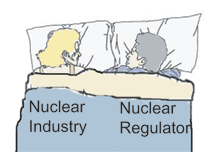 Nuclear Safety Requires New NRC Commissioners: Author, Jeff McMahon, Forbes 6 April 14 Americans remain at higher risk for a radiological disaster as long as the Nuclear Regulatory Commission remains under the influence of the nuclear-power industry, an expert on nuclear safety and security said in Chicago Thursday.
nominated to be a commissioner to the NRC has to be pre-approved by the nuclear industry,” said Edwin Lyman, a physicist turned senior scientist for the Union of Concerned Scientists. “In order to get a more independent mindset, you’ve got to break that stranglehold.”Lyman’s comments arrived amid criticism of the NRC for doing too little to implement seismic safety upgrades recommended after the Fukushima disaster three years ago………
Lyman blames industry influence over the NRC. The only two recent commissioners not approved by industry—former chair Gregory Jazcko, who resigned under pressure in 2012, and current chair Allison M. Macfarlane—had to be paired with industry favorites, Lyman said, to win Congressional approval.
Jazcko was paired with Peter B. Lyons, Macfarlane with the renomination of Kristine L. Svinicki…….
Underlying the planning done by the industry and NRC, Lyman said, is a mindset.
“If the nuclear industry, regulators, and politicians don’t abandon that ‘it-can’t-happen-here’ mindset, we’re going to be in trouble here sooner or later,” he said.
Asked how you change a mindset, Lyman said, “You may not be able to change a mindset, you may have to change the people.”http://www.forbes.com/sites/jeffmcmahon/2014/04/06/nuclear-safety-in-u-s-requires-nrc-commissioners/
Safety requirements are making USA’s nuclear reactors even more expensive
 Under Revised Quake Estimates, Dozens of Nuclear Reactors Face Costly Safety Analyses By MATTHEW L. WALD NYT, APRIL 5, 2014 WASHINGTON — Owners of at least two dozen nuclear reactors across the United States, including the operator of Indian Point 2, in Buchanan, N.Y., have told the Nuclear Regulatory Commission that they cannot show that their reactors would withstand the most severe earthquake that revised estimates say they might face, according to industry experts.
As a result, the reactors’ owners will be required to undertake extensive analyses of their structures and components. Those are generally sturdier than assumed in licensing documents, but owners of some plants may be forced to make physical changes, and are likely to spend about $5 million each just for the analysis…….
he Nuclear Regulatory Commission is presuming, for the time being at least, that plants built to the old standard do not present any immediate risk. But critics say that contradicts one of the recommendations made by a task force of commission senior staff members after the earthquake and tsunami in Japan three years ago, which caused three reactors to melt down at Fukushima Daiichi.
One recommendation was that the commission “re-evaluate and upgrade” the original design requirements.
Senator Edward Markey, Democrat of Massachusetts, a longtime critic of the commission, said in a statement: “The N.R.C. should be demanding implementation of seismic safety upgrades it called for following the Fukushima meltdowns, not merely more study of nuclear reactors that it knows are clearly at higher risk than was previously believed. What is needed is action to secure at-risk nuclear reactors, not merely more reports.”……..
Two industry experts said that across the central and eastern United States, plants at 24 sites reported that the new earthquake threat was larger than what they were designed to face. The commission has not released a total yet.
But Scott Burnell, a spokesman for the commission, said many reactors fell into that category, so many that there were not enough engineers to analyze them all simultaneously. The commission will group them in priority, he said…….http://www.nytimes.com/2014/04/06/nyregion/dozens-of-nuclear-reactors-must-prove-safety-under-revised-quake-estimates.html?hpw&rref=science&_r=0
Inadequate safeguards at New Mexico Nuclear Weapons Labs,
Audit Cites Deficiencies in New Mexico Labs, abc news, SANTA FE, N.M. April 7, 2014 (AP) A new federal audit has found Los Alamos and Sandia national laboratories failed to monitor nuclear weapons designs as well as the reliability of parts being used to build them, the Albuquerque Journal reported Sunday.
The U.S. Department of Energy Inspector General’s report states both sites could not consistently locate drawings for nuclear weapons and components in official repositories, according to the Journal (http://bit.ly/1lJ0E1C).
In the March 26 report, officials said they were concerned about incorrect parts being used for nuclear weapons.
Without safeguard and proper information, the National Nuclear Security Administration “loses confidence in its nuclear weapons stockpile,” officials said…….. http://abcnews.go.com/US/wireStory/audit-cites-deficiencies-mexico-labs-23215616
Vogtle Nuclear Plant’s huge loan guarantee, dwarfs Solyndra’s solar loan
 Why You’ve Heard of Solyndra, but not Vogtle, Climate Denial Crock of the Week with Peter Sinclair January 2, 2013 The Kochtopus media machine has made sure that the misfires of a burgeoning new industry, Solar energy, have become household names. Solyndra is the best example ofnon-scandals that Fox & Friends have tried hard to pump into something substantial.
Meanwhile, backed by a loan guarantee 15 times as large as the one Solyndra got, the new Vogtle Nuclear project has been quietly plowing ahead in Georgia. Inevitably, the same types of tiresome and monotonous glitches, snafus and gremlins so familiar to nuclear industry observers have been cropping up and bogging down the ill considered project.
Those still looking for a nuclear revival would do well to consider what those of us paying attention knew a long time ago. This stuff is just too damn complex, ponderous, and expensive to compete. But don’t expect to hear much about it on Fox & Friends.
Wall Street Journal:
The first newly licensed nuclear-power plant to be built in the U.S. in decades, the Vogtle project in Georgia, has run into construction problems and may be falling years behind schedule, according to an engineering expert advising the state.
The $14 billion plant is being closely watched by energy experts as a bellwether for the rebirth of the U.S. nuclear industry, because it involves a new type of nuclear reactor and a modular construction method that are supposed to reduce construction time and cost.
But a construction monitor warned in a report to the Georgia Public Service Commission this month that the plant, which will be operated by Southern Co. SO -1.21% on behalf of several utilities, was falling behind schedule because of what he called an unsatisfactory performance by its construction team………..
….. 4 nuclear units were planned for $660,000,000 fifteen (15) years later only 2 units were built, for $8,870,000,000. That’s more than $8 billion in cost overruns, or more than 13 times the original cost estimate. So per unit, that’s more than 26 times the original estimate, or more than $4 billion per unit.
And of course that $8,870,000,000 is in 1987 dollars. In 2012 dollars that would be about $17,976,000,000. Or about $9 billion a unit.
The stock excuse for nuclear contractors way back when was the staggering cost of constantly changing Nuclear building standards and regulations. Of course, one of the reasons those costs became so staggering is that many of these projects were still under construction when the Three Mile Island accident shone a bright spotlight on glaring design deficiencies that citizens groups and independent scientists had been shouting about for a decade. http://climatecrocks.com/2013/01/02/why-youve-heard-of-solyndra-but-not-vogtle/
Highly radioactive Hanford waste site at risk from earthquakes
America’s Most Contaminated Nuclear Site Is Vulnerable To Earthquakes http://io9.com/americas-most-contaminated-nuclear-site-is-vulnerable-1558490796 Mark Strauss 4 April 14 Nearly 2,000 capsules containing radioactive waste at the Hanford Nuclear Reservation need to be relocated. That’s because the site was built in an area that’s prone to earthquakes. How could this happen?
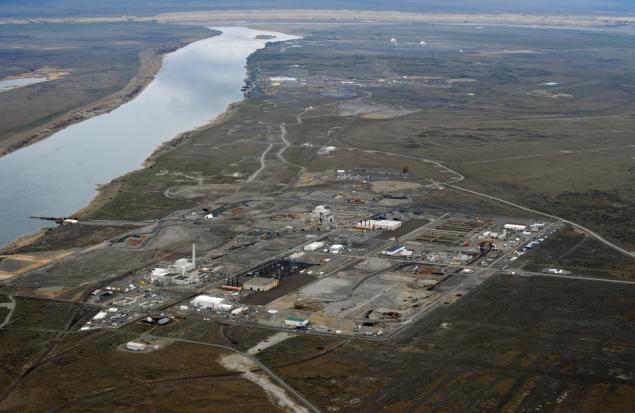
The 1,936 capsules contain radioactive cesium and strontium that was previously buried in underground tanks, and then later moved into “wet storage”—a 13-foot-deep pool of water that helps cool the corrosive-proof containers, which account for 32 percent of the radioactivity at Hanford.
And, now, according to this Inspector General report from the US Department of Energy, the capsules in the Waste Encapsulation and Storage Facility (WESF) need to be moved yet again:
The March 2011 tsunami and subsequent events at the Fukushima Dai-Ichi Nuclear Power Plant in Okuma and Futaba, Japan highlighted the vulnerabilities to nuclear facilities from possible seismic and natural disasters that are more severe than the facilities’ original design, or “beyond design threats.” One possible threat is a severe earthquake that may result in loss of power and/or loss of water in the WESF pool.
Making matters worse—yes, as usual, there’s a “worse”— the report notes that the storage facility has been in service for nine years beyond its design life. The age is beginning to show: the concrete in the WESF pool cells has begun to deteriorate due to years of radiation exposure.
So, it’s now incumbent upon the Energy Department to find a new temporary storage facility. I say “temporary” because we still don’t have a permanent nuclear waste repository. But, no worries, the government has set a goal to open such a facility…in 2048.
Utah’s renewable energy hat trick
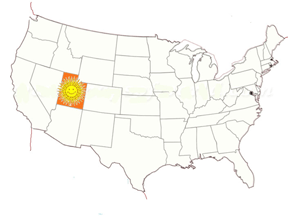 Utah embraces trio of renewable energy firsts By Amy Joi O’Donoghue, Deseret News, April 4 2014 SALT LAKE CITY — Utah turned a page in the renewable energy handbook this week, embracing a triad of “firsts” that is positioning the state for a future with fewer carbon emissions.
On Thursday, state officials joined Salt Lake County Mayor Ben McAdams and the Utah Clean Air Partnership to unveil the state’s first electric fast-charging station for public use along the Wasatch Front.
The direct current charging station has a 480-volt rate that is able to charge in 10 to 40 minutes and is a key step along the way to boosting the infrastructure for electric vehicle owners, McAdams said.
Earlier in the week, Scatec Solar announced plans to start construction later this year on an 80-megawatt solar plant in Iron County — a first in that area. When complete, it will deliver power to PacifiCorp and be the state’s largest commercial solar field.
And Wednesday, Utah Clean Energy was picked by the U.S. Department of Energy and the National Renewable Energy Laboratory to operate one of six new regional wind energy resource centers in the nation.
In the case of the local nonprofit advocacy organization, it will operate the Four Corners Wind Resource Center, guiding a consortium of industry, government and other groups to promote development of wind energy resources against a best-practices backdrop.
The hat trick in renewable energy signals a new momentum for some. “This says to me that market forces are moving forward,” said Samantha Mary Julian, director of theUtah Office of Energy Development. “We have been seeing one activity after the other. It is really cool and exciting. Utah is starting to take hold of renewable energy efficiencies and clean transportation.”…… http://www.deseretnews.com/article/865600250/Utah-embraces-trio-of-renewable-energy-firsts.html
Trade forecast for USA Renewable Energy sector
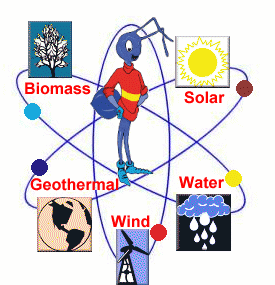 ACORE Releases Renewable Energy in America Outlook domestic fuel, April 4, 2014 by Joanna Schroeder The American Council On Renewable Energy (ACORE) has released The Outlook for Renewable Energy in America: 2014, jointly authored by U.S. renewable energy trade associations from the power, thermal, and fuel sectors. The Outlook assesses the renewable energy marketplace and forecasts the future of each renewable energy technology sector, from the perspectives of each of the associations, and provides a list of policy recommendations by the respective associations that would encourage continued industry growth.
“ACORE applauds the unity of the renewable industry community and this united front as reflected in The Outlook for Renewable Energy in America: 2014,” said ACORE President and CEO, Michael Brower. “The report demonstrates the many public and private sector opportunities that exist at the national, regional and local levels for continued industry advancement and investment; however, they are not one-size-fit-all solutions for every renewable technology.”
Bower noted that the articles in the report detail specific market drivers for the biofuel, biomass, geothermal, hydropower, solar, waste and energy sectors………….The Outlook for Renewable Energy in America: 2014 shows the potential of America’s renewable energy economy to extend beyond one fuel choice or pipeline, to provide the country with an unparalleled opportunity to reinvigorate the U.S. economy while protecting our environment. http://domesticfuel.com/2014/04/04/acore-releases-renewable-energy-in-america-outlook/
Legal action against Utah uranium mill
Environmental group sues uranium mill operator,http://www.heraldextra.com/news/local/environmental-group-sues-uranium-mill-operator/article_2293f9e6-bc40-11e3-8d5a-0019bb2963f4.html Annie Knox – Associated Press SALT LAKE CITY 4 April 14 — An environmental group is suing the operator of a southern Utah uranium mill, alleging it has hiked pollution levels in neighboring communities.
Grand Canyon Trust filed the suit in Utah federal District Court Wednesday against Energy Fuels Resources over operations at its San Juan County White Mesa Mill.
The group says the mill’s radon emissions in 2012 and 2013 surpassed federal standards and alleges the company ran more waste pits during that time than federal regulations allowed.
Trust attorney Anne Mariah Tapp says emissions from the nation’s last operating conventional uranium mill pose serious health risks.
Energy Fuels has announced plans to in summer halt processing ore from regional mines, including ones near the Grand Canyon, and possibly restart next year.
It did not immediately return phone messages Friday afternoon.
At long Last, some compensation to Navajo for uranium mining’s disastrous legacy
Navajo to benefit from $1B for uranium  cleanup http://www.chron.com/news/science/article/Navajo-to-benefit-from-1B-for-uranium-cleanup-5374413.php By FELICIA FONSECA, Associated Press | April 3, 2014 FLAGSTAFF, Ariz. (AP) — More than $1 billion is going to help clean up abandoned uranium mines that have left a legacy of disease and death on the Navajo Nation.
The money is part of a $5.15 billion settlement that the federal government reached with Anadarko Petroleum Corp. for the cleanup of thousands of long-contaminated sites nationwide. The settlement announced Thursday resolves a legal battle over Tronox Inc., a 2005 spinoff of Kerr-McGee Corp. that Anadarko acquired in 2006.
Kerr-McGee once operated about 50 uranium mines in the Lukachukai Mountains of northeastern Arizona near Cove and a uranium mill in Shiprock, N.M. Uranium waste was thrust over the mountain side and carried by rainwater across the land used by hikers, anglers, medicine men and Navajo shepherds, said David Taylor, an attorney with the Navajo Nation Department of Justice.
“I have a feeling of just deep appreciation for the Navajo children, who literally are playing in uranium piles today who aren’t going to have to do that in the future,” he said.
But, Taylor added: “The path before us is still monumental. We’ve got a good start now, and I hope we can build on that.”
The more than $1 billion will address about 10 percent of the tribe’s inventory of abandoned uranium mines. About 4 million tons of uranium ore were mined from the reservation from 1944 to 1986 for wartime weapons. Many families still live among the contamination and fear drinking water polluted by uranium. Navajo President Ben Shelly said the settlement will ease some concerns about public health.
About $1 billion of the money benefiting the Navajo Nation will be administered by the U.S. Environmental Protection Agency in San Francisco. Of that, nearly $87 million will be set aside specifically for two sites known as the Quivira Mines near Church Rock, N.M. The Navajo Nation separately will receive $43 million to address Shiprock mill, where uranium ore was processed near the San Juan River, the EPA said.
The federal government has been working for years with the Navajo Nation to address the more than 500 abandoned uranium mines on the reservation, but they’ve been hampered by the costs of remediation and the unwillingness of some companies to pay for cleanup of their previous operations.
Jared Blumenfeld, the EPA’s regional administrator in San Francisco, said federal agencies spent about $100 million as part of a five-year cleanup plan. The EPA is drafting a second, five-year plan, but the budget is expected to be much less, he said.
“The mess that’s on the Navajo Nation in terms of abandoned uranium mines should never have been put there, and all of us have been waiting for this day to start to make a big dent in the cleanup,” he said.
The mountainous sites near Cove rarely are visited, but a network of roads established for mining, logging and firewood gathering provide access. Tribal officials say Navajo medicine men gather plants and herbs for prayer and healing purposes from the mountains, and families set up summer camps where sheep graze nearby.
The federal government initially sought $25 billion to clean up decades of contamination at dozens of sites. A U.S. bankruptcy judge in New York ruled in December that Kerr-McGee improperly shifted its environmental liabilities to Tronox and should pay between $5.15 billion and $14.2 billion, plus attorneys’ fees.
Anadarko CEO Al Walker said the settlement eliminates the uncertainty of the dispute.
Blumenfeld said Navajos have struggled with the legacy of uranium contamination for too long. He said dozens of tribal members already have been trained in how to properly dispose of and transport contaminated waste, and they soon can be put to work.
“It’s one of those environmental justice burdens that has garnered a lot of attention and, thankfully, now it’s garnering a lot of money,” Blumenfeld said.
1 This Month
23-25 October – on Zoom – World BEYOND War’s annual global conferenc


Shut down the radiation-damaged Heysham nuclear reactors now
To see nuclear-related stories in greater depth and intensity – go to https://nuclearinformation.wordpress.com

Say No to NASA’s Reckless Nuclear Reactor on the Moon
Say No to NASA’s Reckless Nuclear Reactor on the Moon
-
Archives
- October 2026 (170)
- September 2026 (339)
- August 2026 (330)
- July 2026 (355)
- June 2026 (287)
- May 2026 (306)
- April 2026 (356)
- March 2026 (251)
- February 2026 (267)
- January 2026 (308)
- December 2025 (358)
- November 2025 (359)
-
Categories
- 1
- 1 NUCLEAR ISSUES
- business and costs
- climate change
- culture and arts
- ENERGY
- environment
- health
- history
- indigenous issues
- Legal
- marketing of nuclear
- media
- opposition to nuclear
- PERSONAL STORIES
- politics
- politics international
- Religion and ethics
- safety
- secrets,lies and civil liberties
- spinbuster
- technology
- Uranium
- wastes
- weapons and war
- Women
- 2 WORLD
- ACTION
- AFRICA
- Atrocities
- AUSTRALIA
- Christina's notes
- Christina's themes
- culture and arts
- Events
- Fuk 2022
- Fuk 2023
- Fukushima 2017
- Fukushima 2018
- fukushima 2019
- Fukushima 2020
- Fukushima 2021
- general
- global warming
- Humour (God we need it)
- Nuclear
- RARE EARTHS
- Reference
- resources – print
- Resources -audiovicual
- Weekly Newsletter
- World
- World Nuclear
- YouTube
-
RSS
Entries RSS
Comments RSS

