Los Alamos worker sold nuclear secrets
Los Alamos worker imprisoned for selling nuclear secrets CBS News, 21 Aug 14 A former contract employee at Los Alamos National Laboratory in New Mexico was sentenced to a year and a day in federal prison, the Justice Department said Wednesday.
Marjorie Roxby Mascheroni, 71, of Los Alamos, N.M., pleaded guilty to passing “classified nuclear weapons data to a person believed to be a Venezuelan government official,” and to lying to the FBI, the DOJ said in a statement.
Mascheroni is a Ph.D. physicist. Her husband was also a Los Alamos employee who pleaded guilty to similar charges. He has not been sentenced yet. Both were indicted in 2010……..http://www.cbsnews.com/news/los-alamos-worker-imprisoned-for-selling-nuclear-secrets-to-apparent-venezuelan-official/
USA Nuclear Regulatory Commission the victim of cyber attacks
 U.S. government’s nuclear watchdog victim of cyber attacks -report, Yahoo7 News
August 20, 2014, By Jim Finkle BOSTON (Reuters) – The U.S. Nuclear Regulatory Commission was “successfully hacked” three times in recent years in attacks involving tainted emails, according to an internal investigation on cyber attacks at the agency, Nextgov.com reported on Tuesday.
At least two of the attacks originated overseas, according to the report obtained by Nextgov, a rare public report with details of a cyber attack on the energy sector.
The publication said it obtained a copy of a report by the NRC’s Office of the Inspector General, which reviewed 17 suspected breaches from 2010 to 2013.
The report did not name the countries where the attacks originated or say if data had been stolen from the regulatory agency, which holds sensitive data on the nuclear power industry.
Reuters was not immediately able to access the report, which Nextgov said it obtained through a Freedom of Information request……..https://au.news.yahoo.com/a/24757967/u-s-governments-nuclear-watchdog-victim-of-cyber-attacks-report/
Lax security at Seabrook Nuclear Power Plant

 7News Investigates: Security at Seabrook Nuclear Plant 7 News Aug 19, 2014 by Cheryl Fiandaca SEABROOK, N.H. (WHDH) – Seabrook Station Nuclear Power Plant is one of the 107 nuclear facilities in the country considered to be a potential terrorist target by Homeland Security. Now a long time Seabrook employee has come forward telling 7News he thinks the plant is vulnerable.
“We’re not checking who’s coming on and off the property,” the employee, who asked to not be identified, said.
It seemed like no one was checking on three different days this summer when 7News videotaped cars coming and going through an unmanned employee gate at Seabrook Station.
No one approached the crews and security patrols never passed the area, even with the cameras no one questioned the 7News photographers and reporters.
The employee said it has been nearly a year since there was a person manning the employee entry.
“You’d be able to see where upgrades have been placed in, where defensive positions are, where alarmed fences are at.”………
“It doesn’t take a security expert to know that a nuclear power plant is a place that would be an attractive target and would cause unimaginable mayhem and injury,” Amore said…….An unmanned gate may not be the only concern: a recent study initiated by the defense department claims significant security gaps exist at the nation’s nuclear power plants. http://www.whdh.com/story/26311206/7news-investigates-security-concerns-at-seabrook-power-plant
Mississippi Public Service Commission refusing to take nuclear wastes
Presley to Obama: Mississippi doesn’t want nuclear waste POLITICAL LEDGER Geoff Pender, The Clarion-Ledger10 August 19, 2014 Public Service Commissioner Brandon Presley has forwarded to President Obama resolutions passed by the PSC in opposition to storing nuclear waste in Mississippi.
Last year, federal officials considering alternatives to plans to store the nation’s nuclear waste at Yucca Mountain, Nevada, mentioned Mississippi’s salt domes as a possible option. At the time, the Mississippi Energy Institute issued a report that said creating a nuclear waste center in Mississippi would “serve as a platform for significant opportunities … to develop a massive nuclear energy industry center in the state of Mississippi.”
Presley said that more recently, Assistant Secretary of Nuclear Energy Peter Lyons was quoted as calling Mississippi one of “the most public of potential hosts to express interest in taking high-level waste.”
Presley, Northern District commissioner with the three-member PSC, this week sent Obama recent unanimously-passed PSC resolutions opposing permanent nuclear waste storage in Mississippi, …….http://www.clarionledger.com/story/politicalledger/2014/08/19/nuclear-waste-presley-psc/14283689/
Expensive delays pile up for USA’s new nuclear plants in Georgia andSouth Carolina
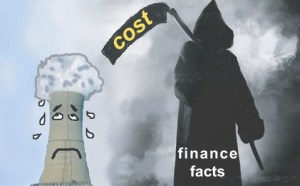
 Delays for SC nuclear plant further pressure industry; questions over potential delays in Ga. ATLANTA -Nanaimo daily news, 17 Aug 14, Expensive delays are piling up for the companies building new nuclear power plants, raising fresh questions about whether they can control the construction costs that crippled the industry years ago.
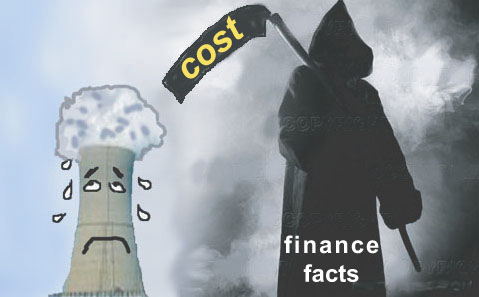
The latest announcement came this week from executives at SCANA Corp., which has been warned by its builders the startup of the first of two new reactors in South Carolina could be delayed two years or more. SCANA Corp. and plant co-owner Santee Cooper have not accepted that timeline from the companies designing and building the reactors, nor have they accepted responsibility for additional costs.
That announcement may well foreshadow more delays for a sister project in eastern Georgia, and they have caught the attention of regulators and Wall Street.
“Delays generally cause cost increases, and the question becomes who’s going to bear the costs?” said C. Dukes Scott, executive director of the South Carolina Office of Regulatory Staff, a watchdog agency that monitors SCANA Corp.’s spending.
None of this is helpful for the nuclear power industry, which had hoped its newest generation of plants in Georgia and South Carolina would prove it could build without the delays and cost overruns so endemic years ago. When construction slows down, it costs more money to employ the thousands of workers needed to build a nuclear plant. Meanwhile, interest charges add up on the money borrowed to finance construction.
A single day of delay in Georgia could cost $2 million, according to an analysis by utility regulators. Utility consumers often end up paying for these extra charges in the form of pricier electricity bills, unless the government intervenes and forces shareholders to absorb all or some of the losses………
Additional delays could prove unwelcome news for two pro-nuclear Republicans seeking re-election in November to Georgia’s Public Service Commission, H. Doug Everett and Lauren “Bubba” McDonald. -……….http://www.nanaimodailynews.com/business/delays-for-sc-nuclear-plant-further-pressure-industry-questions-over-potential-delays-in-ga-1.1316089#sthash.Yp8aLYvT.dpuf
Los Alamos nuclear weapons lab ‘s efforts to shut up a critic of nuclear war
 Did Los Alamos fire a researcher for questioning U.S. nuclear doctrine? Michael Hiltzik LOS ANGELES TIMES michael.hiltzik@latimes.com 15 Aug 14 Los Alamos may be a government laboratory with lots of classified secrets, but it also guarantees its researchers intellectual freedom on a par with that enjoyed by university professors. Political scientist James Doyle says that freedom was violated when he was fired last month after questioning U.S. nuclear weapons doctrine in a published article.
Doyle’s case was laid out in a lengthy piece by Douglas Birch of the Center for Public Integrity. A follow-up appears in the current issue of Science. Zaid says he’ll be appealing Doyle’s termination to the secretary of Energy and bringing it before other Washington officials who investigate allegations of retaliations against whistleblowers. So you can expect to hear more about it.
We’ve asked for a comment from the University of California, which is a major partner in the consortium that manages Los Alamos for the government and has three representatives on its board, including the board chairman, UC Regent Norman J. Pattiz, but haven’t received an answer.
Zaid, who says he represents other government whistleblowers, doesn’t buy the lab’s explanation. “It’s very easy for a government agency to independently justify any personnel action against someone,” he told us. But he questions how “someone with Doyle’s expertise, long-standing history with the lab, and stellar personal evaluations can suddenly be [laid off] as ‘non-essential.'”
The 8,100-word article at the center of the case appeared in Survival in February 2013 under the title, “Why Eliminate Nuclear Weapons?” Written on Doyle’s own time and presented explicitly as the author’s own views, it’s a sober and closely argued analysis of the postwar doctrine of “deterrence.”……
On the surface, Doyle’s argument that “nuclear weapons should be eliminated” parallels the Obama administration’s stated goal of “a world without nuclear weapons.” But it’s at odds with the defining mission of Los Alamos, which is devoted to weapons development……..
Doyle’s analysis should be heeded. The U.S. government’s nuclear doctrine must be updated to the 21st century. Mutually assured deterrence doesn’t work against the nonstate groups that pose the greatest threat to national security. More than ever, a world awash with nuclear weapons is in peril. http://www.latimes.com/business/hiltzik/la-fi-mh-antinuclear-article-20140815-column.html#page=1
More delays, more cost overruns for South Carolina nuclear power plants

SCE&G nuclear plants facing more delays, cost overruns, The State, South Carolina, BY RODDIE BURRIS rburris@thestate.com August 12, 2014 Two nuclear reactors under construction in Fairfield County are facing another significant delay, utility provider S.C. Electric & Gas confirmed.
The delay will put the $10 billion project at V.C. Summer Nuclear Power plant outside the 18-month contingency allowed by state regulators and likely will drive up the costs, but utility officials said they would not know how much until later this year…….. Continue reading
Native Americans, Environmentalists presssure Congress to clean up uranium mines
Enviros push Congress on abandoned uranium mine cleanup, Tucson Sentinel Aug 11, 2014, Matthew Seeman Cronkite News Service The people behind Clean Up the Mines understand that others have been trying for years to clean up abandoned uranium mines and have mostly met with limited success.
But they say that doesn’t mean they shouldn’t keep trying.
The grass-roots advocacy group launched in April with the goal of getting Congress to mandate cleanup of the more than 10,000 abandoned mines in the country, at least 500 of which are on the Navajo Nation.
“This needs to be a federal standard,” said Klee Benally, a Navajo who is a member of Clean Up the Mines. “It needs to be the highest that we can possibly have to address these toxic abandoned uranium mines.”
Key to that effort is a proposed piece of legislation, the Uranium Exploration and Mining Accountability Act, that would require a complete inventory of the thousands of abandoned mines in the U.S. It would be the first bill specifically addressing uranium mining, said Charmaine White Face, who drafted the proposal and is coordinator for Defenders of the Black Hills.
She said Clean Up the Mines formed after several native communities in South Dakota shared concerns that abandoned mines had contaminated their water supply……..http://www.tucsonsentinel.com/local/report/081114_uranium_clean_up/enviros-push-congress-abandoned-uranium-mine-cleanup/
Navajo struggle to get clean water, in land polluted by uranium mining
 With uranium poisoning wells, Navajos must drive miles to get drinking water
BUT MANY WHO ARE CONSTRICTED BY CIRCUMSTANCE STILL USE CONTAMINATED SUPPLIES
Brandon Loomis, The Republic | azcentral.com Uranium’s deadly flow 11 Aug 14
THE NAVAJO NATION ESTIMATES THAT 54,000 NAVAJOS HAUL WATER FROM UNREGULATED WELLS AND STOCK PONDS NUMBERING IN THE LOW THOUSANDS. “……….Twice a week, the Yazzies, 57-year-old Milton and 83-year-old Della, come down off their lonely hill on the Navajo Reservation’s western side and point themselves toward the city for the clean water they need to keep living. For ages, they drank from a well less than a mile from their home. Then they learned that poison lurked there.Uranium is gurgling up all over Navajo country.
At least three Yazzies have died of kidney ailments, a common result of chronic exposure to uranium. Federal environmental officials warned against drinking more. Milton learned to conserve, using an outhouse across their driveway and leaving the tank-supplied indoor plumbing to Della, because of her failing eyesight.
He begged the tribe, the feds, anyone who would listen, to build a pipeline through the sparsely populated Black Falls area, southeast of Cameron.
“I’ve been working so hard all these years to get good drinking water,” he said, “and it never came.”
Though they live out of anyone’s sight, the Yazzies are far from alone in their hardship……….http://www.azcentral.com/longform/news/arizona/investigations/2014/08/05/uranium-mining-poison-wells-safe-drinking-water/13635345/
Exposing the horrible effects of uranium mining on Navajo people
Uranium mining on Navajo Reservation: How we did this The Republic | azcentral.com August 10, 2014 Uranium mining for America’s Cold War nuclear arms buildup has proved a lasting scourge on the nation’s largest American Indian reservation, and one that the same government that demanded the ore has been slow to address.
As the last of the sickened Navajo miners are stricken with lung diseases, younger generations are coping with kidney disease and other ailments, wondering whether the radioactive wastes have also sickened them. Meanwhile, hundreds of abandoned mines remain hazards with a cleanup cost that will stretch into the billions of dollars. Photographer David Wallace first took an interest in the problem in 2010 while on assignment documenting solar-energy installations at off-the-grid homes on the Navajo Reservation. He heard of sick miners and residents, and in 2013 began contacting activists with Forgotten People, a Navajo social-justice group.
Later that year, Wallace began visiting the homes of a sick miner and some families who had long histories of exposure to uranium-contaminated water. In January 2014, environment reporter Brandon Loomis joined the project and the two made periodic daylong visits to homes and mines in the Cameron, Gray Mountain and Black Falls areas north of Flagstaff — a quadrant of the reservation that was heavily mined and remains hazardous to many residents……….
U.S. and Navajo officials say both momentum and funding are building to enable a thorough cleanup. At the current rate of progress, though, still more generations of Navajos will face threats from hundreds of abandoned mines in the decades to come.
David Wallace
Wallace is a two-time runner-up for the Arizona Press Club Photographer of the Year award and a two-time regional Emmy winner for his videos.
How to reach Wallace
Email: david.wallace@arizonarepublic.com.
Phone: 602-653-6228.
Twitter: @DavidWallce.
Brandon Loomis
Loomis is an environment reporter with more than two decades of experience covering land and water issues in the West. He joined The Arizona Republic in 2012 after similar assignments at newspapers in Alaska, Wyoming, Idaho and Utah, and is now on a nine-month fellowship with Marquette University.
How to reach Loomis
Email: brandon.loomis@arizonarepublic.com.
Twitter:@brandonloomis. http://www.azcentral.com/story/news/arizona/investigations/2014/08/06/uranium-mining-navajos-how-we-did-this/13681861/
A nuclear boondoggle exposed – Small Modular Reactors (SMRs)
Report: New Nuclear Power Technology Would Siphon Resources Away From Renewable Energy, PROGRESS ILLINOIS Ellyn Fortino Friday August 8th, 2014, “…….one nuclear financing expert argues in a new report that SMRs, which have yet to be built in the United States, would be no cheaper than their larger counterparts. Mark Cooper, a senior fellow for economic analysis at theInstitute for Energy and the Environment at the Vermont Law School, also warns that SMR development would suck up funding that could otherwise be used for what he says are more attractive energy options like wind and solar.
“Large reactors have never been economically competitive and there is no reason to believe that smaller reactors will fare any better,” Cooper said. “Giving nuclear power a central role in climate change policy would not only drain away resources from the more promising alternatives, it would undermine the effort to create the physical and institutional infrastructure needed to support the emerging electricity systems based on renewables, distributed generation and intensive system and demand management.”………
Although SMRs would be smaller in size, “creating an assembly line for SMR technology would require a massive financial commitment,” Cooper writes in his report, “The Economic Failure of Nuclear Power and the Development of a Low-Carbon Electricity Future: Why Small Modular Reactors Are Part of the Problem, Not the Solution.”

He projects it would cost between $72 billion and $90 billion by 2020 to fund the development of just two SMR designs and assembly lines.
The estimated price tag to invest in SMRs is roughly equivalent to 75 percent of the total projected investment in U.S. electricity generation over the same time period, the report noted. It is also “substantially more” than what is expected to be spent on renewables, Cooper said.
“This massive commitment reinforces the traditional concern that nuclear power will crowd out the alternatives,” he added.
SMRs themselves would also cost more, not less, than larger reactors, according to the report.
“The higher costs result from: lost economies of scale in containment structures, dedicated systems for control, management and emergency response, and the cost of licensing and security; operating costs between one-fifth and one-quarter higher; and decommissioning costs between two and three times as high,” Cooper noted.
SMRs are up against greater challenges than previous technologies because they are “a radical new technology that its advocates would like to have treated in a very different way with respect to safety and licensing,” Cooper explained.
“They would like to deploy lots of reactors close to population centers. That’s the way they can make their economics work,” he continued. “And they need to relax safety … They’ve asked for a number of changes in safety to try to drive down the cost, and even then they cannot compete on costs.”……
the industry’s hype around SMRs is now fizzling, Cooper explained. The “unproven” SMR technology has already experienced setbacks in the marketplace, he said, pointing to recent announcements from Babcock & Wilcox and Westinghouse Electric Co., another small-reactor industry leader developing a 225-megawatt SMR.
Babcock & Wilcox said last month that it is slowing the development of and funding for its mPower technology because the company cannot find major investors for the effort. Westinghouse — after being passed up twice by the DOE for SMR cost-sharing agreements — announced in February that it is shifting its attention away from small-reactor technology because it does not have a customer base for SMRs.
“They are cutting back for simple reasons: They can’t find customers. They can’t find investors,” Cooper said. “In a market economy like ours, that is a death knell, and so they have slashed their commitment to small modular reactors……….”http://progressillinois.com/quick-hits/content/2014/05/18/report-new-nuclear-power-technology-would-siphon-resources-away-renewa
Nuclear lobby wants EPA to promote its industry!
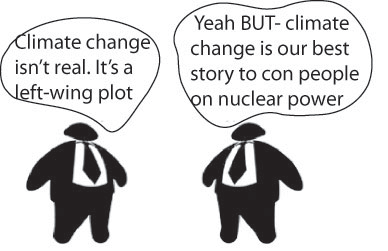 EPA rule not such a boon for nuclear after all — utilities Jean Chemnick, E&E reporter Greenwire: Friday, August 8, 2014 U.S. EPA’s greenhouse gas proposal for existing power plants doesn’t do enough to boost nuclear energy, advocates for the industry say.
Two months after EPA unveiled the proposal — and just over two months before the end of the public comment period — companies that have invested billions of dollars in the United States’ primary source of zero-carbon baseload energy say they are still reviewing the draft.
But while the industry has yet to reach a consensus position, some utilities say they are discouraged by the way the June 2 proposal treats new nuclear projects that are coming online or attempts to help existing facilities overcome the economic factors that threaten them with retirement. The agency has proposed tougher state carbon intensity targets for states that host nuclear in the hopes of encouraging them to provide incentives for the industry, but some advocates say it hasn’t rewarded states for past nuclear investment………
“We therefore propose that the emission reductions supported by retaining in operation six percent of each state’s historical nuclear capacity should be factored into the state goals for the respective states,” EPA states in the rule’s preamble. If states do not retain their nuclear fleets, they must make up that 6 percent zero-carbon energy through other measures, like new demand-side efficiency or renewable energy.
But utilities that have invested or are investing in nuclear facilities say that’s not enough……. the nuclear crediting mechanism needs to be improved to achieve EPA’s intended objective,” said Paul Adams, a spokesman for Exelon Corp., which operates the largest nuclear fleet in the nation. He called on EPA to finalize a rule that will “treat zero-carbon resources the same and ensure states do not double-count these resources.”……
But analysts say EPA faced a tough task when it came to deciding how the rule should treat nuclear energy. In contrast to wind and solar facilities, nuclear plants are so large, they say, that giving full credit for facilities that are already slated to come online could mean giving states like South Carolina a way to meet their targets without making any reductions elsewhere….http://www.eenews.net/stories/1060004265
The collapse of the Small Modular Nuclear Reactor hype – ominous for the nuclear industry
Report: New Nuclear Power Technology Would Siphon Resources Away From Renewable Energy, PROGRESS ILLINOIS Ellyn Fortino Friday August 8th, 2014 “………With the industry currently unable to garner enough customer and investor interest around SMRs, it is trying to save nuclear power by making a “desperate attempt to undermine the alternatives, which are succeeding,” Cooper added.
The nuclear energy industry “says, ‘Look, just get rid of their subsides. Gerry-rig the market so that we can stay in business. Avoid policies that will let (alternatives) stay in business … and then we’ll have a level playing field.’ But of course it doesn’t look anything like a level playing field,” he said.
Over the past 60 years, the nuclear energy industry has collected 10 times more subsidies than what renewables have received, Cooper said. Government funding for SMR research and development currently represents the smallest subsidy out of many received by the nuclear power industry, he added.
He said the U.S. nuclear energy industry is grappling with a “fundamental conflict.” After failing to bring online 90 percent of new reactors as part of a “nuclear renaissance” suggested by nuclear power advocates in the early 2000s, the hope was that SMR technology would rescue the industry. And since that has yet to happen, the industry is “now struggling to save the aging reactors… simply because they cannot compete against the alternatives available.”

“The death of the small modular reactor hype really is emblematic of the fundamental conflict that’s going on in the industry,” he said. “The near term will decide, not just the fate of nuclear power, but the fundamental approach that we take to addressing the challenge of climate change.”
Looking ahead, Cooper said he questions nuclear power’s place in the emerging “integrated, two-way electricity system based on decentralized alternatives.” In such a system, an “inflexible source of supply like nuclear does not have value,” he said, adding that nuclear power “becomes a burden on the flexible system rather than a benefit.”
Nuclear power, Cooper said, is not a smart “economic proposition” or “portfolio asset” for a low-carbon electricity future.
“And looking carefully at the urgency of dealing with climate change, it’s also the most costly, most risky approach to climate change,” he stressed. http://progressillinois.com/quick-hits/content/2014/05/18/report-new-nuclear-power-technology-would-siphon-resources-away-renewa
Massive, decaying, dangerous, weapons empire at Oak Ridge
Y-12: Poster child for a dysfunctional nuclear weapons complex Robert Alvarez, Bulletin of the Atomic Scientists 6 Aug 14 “……The United States halted production of new nuclear weapons in 1989, with the end of the Cold War. But the US nuclear weapons complex—composed of eight key facilities that have an annual budget exceeding $8 billion—has stumbled on, in the form of a massive, decaying empire that in many cases does its work poorly or dangerously, or both. The Y-12 National Security Complex is the poster child for much of what ails the weapons complex. Although Y-12 has not produced weapons for some 25 years, its annual budgets have increased by nearly 50 percent since 1997, to more than $1 billion a year.

For decades, the Energy Department—which manages the weapons complex through the National Nuclear Security Agency (NNSA)—has not been able to reconcile competing objectives at the 811-acre Y-12 site, whether they involve storage areas for HEU and other fissile materials, the restarting of old weapons facilities, environmental cleanup, the building of new weapons facilities, or the downsizing of the site. As a result, costs have significantly increased, and long-standing problems have continued, unresolved, for years that have run into decades. For every dollar spent to maintain and modernize the US nuclear weapons stockpile, nearly three dollars is spent “to provide the underlying infrastructure” for maintenance and modernization at Y-12.
Long-term secrecy and isolation have created a dangerous form of hoarding at Y-12; a panoply of severe hazards continues to build up, constantly awaiting ever more costly mitigation in the future. But the stark reality is that there are no more cans to kick down the road. Y-12 has inexorably caught up with its future. Its environmental and security problems are too threatening to leave unaddressed, and questions about its mission will have to be answered definitively in an age of budgetary austerity and relatively little need for new nuclear weapons…….
During its heyday, Y-12 produced some 1,000 CSAs per year. Now, its annual production capacity has dwindled to less than 100. Though the NNSA declares that Y-12 has multiple missions, including non-proliferation efforts that involve the downblending of HEU and the provision of fuel for the Navy’s nuclear-powered submarines, nearly 99 percent of its budget comes from funds dedicated to maintain the US nuclear weapons stockpile. More than anything, Y-12 serves to stockpile thousands of CSAs from discarded nuclear weapons, as well as depleted uranium, lithium, and other hazardous chemicals…….. the Government Accountability Office finds that “NNSA’s decision to retain many CSAs … poses significant challenges to Y-12’s ability to plan its disassembly workload.” Although exact numbers have been classified since the 1990s, there are likely several thousand excess CSAs, containing hundreds of tons of HEU, awaiting dismantlement at Y-12. ……
Around New Year’s Eve of 1996, a long-awaited vulnerability assessment of HEU storage at Energy Department sites was released. Y-12 had the most significant problems. Even though fires posed the greatest danger of radiation and chemical exposure to workers and the public, buildings, mostly constructed in the 1940’s, had deteriorated and had insufficient or non-existent fire-protection systems, despite the very real possibility of a truly catastrophic fire and resulting release of radiation. It wasn’t until 14 years later that a replacement facility for the aged wooden structure serving as the main HEU storage warehouse was opened; it cost five times the original construction estimate. That facility gained notoriety in August 2012, after nonviolent peace protestors, including an 84-year-old nun, penetrated its security barriers……..
From 1997 to 2006, there were 21 fires and explosions at Y-12 involving electrical equipment, glove boxes, pumps, waste containers, and nuclear and hazardous chemicals. Several resulted in worker injuries and destruction of property. ……….. In March 2014, a large portion of a concrete ceiling collapsedin a building that was once part of the weapons operation. It was a near miss: Foot-long concrete pieces bounced onto walkways and an area where welders had been working just a day before. …..
In April 2014, the NNSA released a “red team” report, led by the director of Oak Ridge National Laboratory, on the troubled UPF. The team’s most significant recommendation was to rethink a basic, “big-box” approach that would create a UPF to serve multiple functions in one structure. Instead, to hold the line at an estimated $6.5 billion for design and construction costs, the team recommended going back to the drawing board to effectively reduce the size and scope of the project. Meanwhile, in recognition of the growing hazards associated with a deteriorating infrastructure for storing “materials at risk,” the team recommended that greater emphasis should be given to safe consolidated storage of materials, deferred maintenance, and safety upgrading……….
Regardless of the wisdom of or need for an asteroid-protection program, the future of Y-12 should be focused on earthly realities: cleaning up the environment, decontamination and decommissioning of facilities, stabilizing nuclear and other hazardous materials, and the dismantlement of a large excess stockpile of weapons components. There is a very real need to replace the collapsing infrastructure at Y-12 with facilities that can accomplish these goals.
Protecting the planet from asteroids is a poor rationale for failing to deal with the environmental, safety, financial, and health challenges the Y-12 site poses to the people who live in the area, and to the country as a whole. http://thebulletin.org/y-12-poster-child-dysfunctional-nuclear-weapons-complex7361
The Future for Small Modular Nuclear Reactors s does not look promising
 NuClear News August 14 “………The Future for SMRs does not look promising
1 This Month
23-25 October – on Zoom – World BEYOND War’s annual global conferenc


Shut down the radiation-damaged Heysham nuclear reactors now
To see nuclear-related stories in greater depth and intensity – go to https://nuclearinformation.wordpress.com

Say No to NASA’s Reckless Nuclear Reactor on the Moon
Say No to NASA’s Reckless Nuclear Reactor on the Moon
-
Archives
- October 2026 (168)
- September 2026 (339)
- August 2026 (330)
- July 2026 (355)
- June 2026 (287)
- May 2026 (306)
- April 2026 (356)
- March 2026 (251)
- February 2026 (267)
- January 2026 (308)
- December 2025 (358)
- November 2025 (359)
-
Categories
- 1
- 1 NUCLEAR ISSUES
- business and costs
- climate change
- culture and arts
- ENERGY
- environment
- health
- history
- indigenous issues
- Legal
- marketing of nuclear
- media
- opposition to nuclear
- PERSONAL STORIES
- politics
- politics international
- Religion and ethics
- safety
- secrets,lies and civil liberties
- spinbuster
- technology
- Uranium
- wastes
- weapons and war
- Women
- 2 WORLD
- ACTION
- AFRICA
- Atrocities
- AUSTRALIA
- Christina's notes
- Christina's themes
- culture and arts
- Events
- Fuk 2022
- Fuk 2023
- Fukushima 2017
- Fukushima 2018
- fukushima 2019
- Fukushima 2020
- Fukushima 2021
- general
- global warming
- Humour (God we need it)
- Nuclear
- RARE EARTHS
- Reference
- resources – print
- Resources -audiovicual
- Weekly Newsletter
- World
- World Nuclear
- YouTube
-
RSS
Entries RSS
Comments RSS

