For the first time, radioactive strontium found in Vermont Yankee Nuclear plant groundwater
 State Finds Radioactive Material In Vermont Yankee Groundwater, VPR, By JOHN DILLON • FEB 9, 2015 The Vermont Health Department says for the first time it has found the radioactive isotope Strontium-90 in ground water at the Vermont Yankee nuclear plant in Vernon……..While the health department says there is no immediate risk to health, Commissioner Harry Chen says the discovery shows the need for the state to closely monitor the site now and in the future……
Vermont Yankee shut down at the end of December and is now beginning the decades-long decommissioning process. http://digital.vpr.net/post/state-finds-radioactive-material-vermont-yankee-groundwater
Vermont’s largest city , Burlington, now on 100% renewable energy
Burlington, Vermont Now Runs on 100 Percent Renewable Energy, Triple Pundit, Leon Kaye | Monday February 9th, Burlington, Vermont, has been making waves for becoming the first city in the U.S. to be powered 100 percent by renewables. (Some may say Greenburg, Kansas was the first, but we are talking about a town of 800 people versus 42,000 in Burlington.) Reliant on coal a generation ago, Vermont’s largest city has slowly revamped its energy portfolio, culminating in the purchase of a hydropower plant late last year.
This milestone may not be surprising considering Vermont’s progressive politics and buy-in from residents who overall supported the plan of the local utility,Burlington Electric. But the fact that Burlington has been able to do this without raising rates since 2009 — while saving the city about $20 million over the next 20 years — creates a case study for communities that are interested in investing in renewables but skittish about making such an aggressive move………http://www.triplepundit.com/2015/02/burlington-vermont-runs-100-renewable-energy
 The war on solar, which is real, is really a war over what kind of energy system we will have in the 21st century. Will it be the 21st century model we at GreenWorld and NIRS advocate, based on clean renewable energy, distributed generation and the rest? Or will it be a continuation of the 20th century model of large baseload power plants, whether they be coal or nuclear? That’s the fundamental issue and how it is resolved may well determine the future of our planet.
 Clean energy vs nuclear: the battle intensifies http://safeenergy.org/2015/02/06/clean-energy-vs-nuclear/ Michael Mariotte February 6, 2015
In theory, the USA’s “all of the above” energy policy has a certain amount of appeal: why should government pick winners and losers? Why not–since no one knows the future–as a matter of policy pursue all energy sources?
One obvious issue is the availability of sufficient resources to effectively support all energy sources.
But there is a much more fundamental problem that makes “all of the above” a PR tagline, not a real energy policy: some energy sources are simply incompatible with others.
Specifically, the 20th century “baseload” power approach of electricity generation and distribution–reliant on large nuclear and coal plants–does not work in a 21st century energy system based on clean, distributed generation, energy efficiency, and a smart grid.
That’s a problem, especially for those who want to end fossil fuels and view both nuclear power and renewables as having a role to play in fighting climate change. The choice isn’t clean energy versus coal; it’s clean energy versus fossil fuels and nuclear because the baseload power model–which is the only model in which nuclear works–prevents the integration of all but a small percentage of renewables into the grid.
Germany and some other European countries already have reached that point. And some U.S. states are getting there rapidly.
Naive nuclear backers may not understand this reality, but the nuclear utilities (which are the same, by the way, as the fossil fuel utilities) do understand it. That’s why the nuclear industry isn’t going after natural gas, which is its main competitor in many locations at the moment. Instead, as this long and well-done article, titled Why the nuclear industry targets renewables instead of gas, from Midwest Energy News points out, the nuclear industry is going after renewables–and in a big way.
Others, focused more on fossil fuels, have noticed the same trend from the flip side. The Institute for Energy Economics and Financial Analysis (IEEFA) this week points out that while the media has been obsessed with the notion of a “war on coal,” the real war going on is the war on solar power. While IEEFA takes on the issue from the viewpoint of the fossil fuel industry going after solar, remember: the nuclear and fossil fuel utilities are one and the same. Continue reading
For investors – the ‘nuclear renaissance’ is all but dead
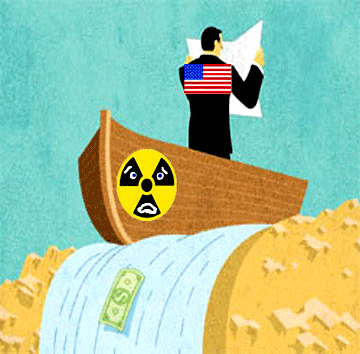 Nuclear Energy Renaissance Takes Another Blow and May Never Recover, The Motley Fool By Travis Hoium February 7, 2015 The nuclear renaissance some people hoped for took another big step backward this week when the Vogtle Nuclear Power Plant said it would be delayed another 18 months and cost at least $720 more than the $14.5 billion previously expected.
Nearly every nuclear plant that’s been proposed in the U.S. in the last decade has run into major cost overruns and delays, and without government support, the nuclear renaissance may already be dead. But the latest delay casts a shadow over an energy source that’s becoming increasing uncompetitive in today’s energy landscape.
What happened at Vogtle
The latest news from Southern Co.‘s (NYSE: SO ) subsidiary Georgia Power is that the Vogtle Plant will now be delayed until mid-2019 for the first reactor, and mid-2020 for the second. Costs could pile up to $720 million and could be as much as $1 billion.
Contractors Westinghouse Electric Co. and Chicago Bridge & Iron Co. alerted Southern Co. of the delays, adding to a long list of delays for Westinghouse plants that were supposed to help revitalize nuclear power in the U.S. Worse yet, it’s ratepayers, not Southern Co.’s shareholders, who will be footing most of the bill for this project, even if it’s never completed.
The kick in the gut to ratepayers
If you live in Georgia, the delay and additional cost will affect you more than you think. Under a plan called construction work in progress, or CWIP, Georgia Power gets to charge customers for the Vogtle plant before it’s even finished. Yes, today customers are paying an average of $6.60 per month for a plant that isn’t likely to produce any power until at least 2019. It’s a sweet deal for utilities, but one that’s becoming increasingly problematic for consumers.
What CWIP does is transfer the risk from the company building the nuclear plant to ratepayers. If the project is delayed or costs more than expected, Georgia Power still makes its money unless regulators intervene. In fact, without CWIP, we may not even be talking about nuclear plants being built in the U.S. If utilities had to take on the risk of nuclear themselves, they wouldn’t do it, something we’re already seeing across the country.
Nuclear energy’s problem in the U.S.
This isn’t the only nuclear plant running into these kind of issues. NRG Energy (NYSE: NRG ) abandoned a potential expansion of South Texas Nuclear Generating Station because of rising costs for nuclear plants and low cost natural gas. The project is still moving forward with regulatory approval, which partner Toshiba is funding, but it’s doubtful the plant will ever be built.
Duke Energy (NYSE: DUK ) canceled the Levy Nuclear Plant because of rising costs, but under CWIP, it still gets to keep a profit of about $150 million. Even Entergy closed the Vermont Yankee nuclear plant late last year because it wasn’t cost effective. Whether it’s new plants or upgrades to old plants, it’s costs that are sinking nuclear in the U.S. today.
In an analysis of the unsubsidized levelized cost of energy for various energy sources, investment bank Lazard found that nuclear energy would cost between 9.2 cents and 13.2 cents per kW-hr. Compare that to 6.1-8.7 cents/kW-hr for natural gas, 7.2-8.6 cents/kW-hr for utility scale solar, and 3.7-8.1 cents/kW-hr for wind energy.
Nuclear energy is also losing based on recent trends. The cost of solar and wind energy are falling rapidly, which is why over half of all energy generation installed in each of the last two years was solar or wind energy.
The nuclear renaissance is all but dead
Setbacks like the Vogtle Nuclear Plant faced this week have become all too predictable in the nuclear industry, and they’re the reason a nuclear renaissance is unlikely in the U.S. Costs have simply gotten too high, and low costs from competing energy sources like natural gas, solar, and wind will keep the industry from ever taking off.
For investors, the lesson comes down to where the energy industry and its costs are trending. Nuclear energy may seem like a great idea on the surface, but if costs are continually rising, it’s an energy source that’s doomed in this country. Solar energy, on the other hand, is cutting costs by double-digit percentage points per year and is now less costly than nuclear on a per kW-hr basis. Maybe it’s time to look at alternative energy more seriously, something utilities are already doing……….http://www.fool.com/investing/general/2015/02/07/nuclear-energy-renaissance-takes-another-blow-and.aspx
Chicago Mayor Rahm Emanuel joins coalition for renewable energy, and against nuclear
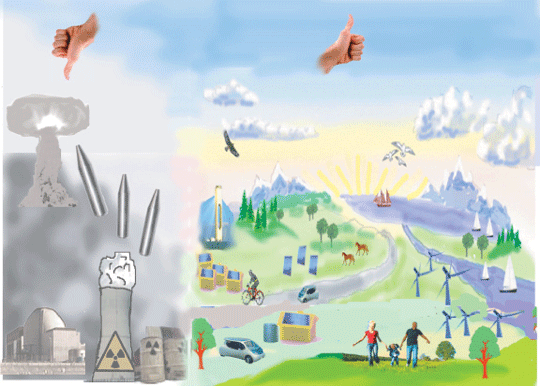 Emanuel lines up with Exelon critics to push clean-power agenda, Crains, Chicago Business 4 Feb 15 By STEVE DANIELS Chicago Mayor Rahm Emanuel is joining a new coalition of environmentalists, renewable energy companies and labor leaders to lobby Springfield for stronger policies favoring wind and solar power, as well as energy efficiency.
The Illinois Clean Jobs Coalition, whose formation was announced today at Testa Foods on the Southwest Side, notably didn’t include Exelon, the state’s largest power generator, which is preparing to lobby state lawmakers for a financial rescue plan for its six nuclear plants in Illinois.
Emanuel’s unusual participation in the group potentially sets up the mayor as a political foe of Exelon, which in the past has counted on Chicago politicians, notably Emanuel’s predecessor, Richard M. Daley, for political support at the state level.
Speaking at a press conference, Emanuel endorsed the group’s call to boost the state’s already-ambitious renewable energy goal to 35 percent of the power generated in the state by 2030. Current state law calls for 25 percent renewable power by 2025.
The coalition also wants state lawmakers to boost energy efficiency standards to a 20 percent reduction in power consumption by 2025. State law now calls for annual improvements in efficiency, with a mandate to cut power consumption by 2 percent this year.
Finally, the group calls for “market-based strategies” to reduce carbon. One way to do that would be with a new system of charging carbon emitters for the pollution they generate. “A new revenue stream could be used to invest in areas such as workforce development, low-income bill assistance and research and development into new clean energy technology,” the coalition says in a statement.
Adoption of this agenda will create tens of thousands of jobs in Illinois over the next decade, the group claimed……….http://www.chicagobusiness.com/article/20150204/NEWS11/150209897/emanuel-lines-up-with-anti-exelon-crowd-to-push-clean-power-agenda
Nuclear industry fears shift to decentralized electricity system – fights renewables, not gas
“One thing to understand about the nuclear industry is that nuclear is also the coal and natural gas industry”
These days natural gas-fired power is cheap, but wind is even cheaper.
Even if renewables make up only a small amount of generation, they represent a shift to a more decentralized energy system, less reliant on big baseload coal or nuclear power plants
Why the nuclear industry targets renewables instead of gas, Midwest Energy news, on 02/06/2015 by Kari Lydersen
Why attack renewables?……..“The fact of the matter is natural gas and wind power both compete with Exelon’s nuclear generation,” said Environmental Law & Policy Center director Howard Learner. “Exelon can’t do anything about the market price for natural gas, so Exelon is training its fire on trying to stop and hold off wind power and solar energy development.”
Some companies that own nuclear generation are also heavily invested in natural gas. Continue reading
NRC permits Emergency staff to be reduced at Vermont Yankee Nuclear Plant: questions remain
Emergency staff to be reduced at Vermont Yankee nuclear plant Sentinel Source, By Susan Smallheer Rutland Herald 6 Feb 15
Staff members from the Nuclear Regulatory Commission took to the web Thursday to try to answer dozens of questions about decommissioning the Vermont Yankee nuclear power plant.
During two webinars attended by about 125 people, the NRC staff members repeatedly dodged questions about the financing behind the decommissioning, saying the NRC’s decommissioning financial expert would be at a Feb. 19 NRC meeting in Brattleboro. The two NRC officials, Bruce Watson and Marc Ferdas, said Entergy Nuclear, the plant’s owner, is responsible financially for the plant’s decommissioning under the terms of its federal license to operate Vermont Yankee. But they didn’t give specifics on how a company would be held liable 60 years in the future if there were additional costs.
Vermont Yankee shut down Dec. 29 after more than 40 years in operation.
In a separate action, a directive approved Wednesday by the NRC gives permission for Vermont Yankee to reduce its emergency staffing from 13 to five.
With all the fuel rods removed from the reactor to the spent fuel pool, the NRC deemed it safe to cover emergency staffing with one shift manager, one certified fuel handler, one radiation protection technician and three non-certified operators, according to a news release from the NRC……..
, Entergy and the administration disagree over which activities will be financed by the decommissioning fund. The biggest and most expensive disagreement is how to pay for the handling and storage of spent nuclear fuel…….The NRC public meeting on Feb. 19 is from 6 to 9 p.m. at the Quality Inn in Brattleboro. It is open to the public. http://www.sentinelsource.com/news/local/emergency-staff-to-be-reduced-at-vermont-yankee-nuclear-plant/article_e7e5de73-1ee5-5b2a-bc8c-fff250fe725e.html
Nuclear companies lobby USA States to legislate against renewables and energy efficienct
Why the nuclear industry targets renewables instead of gas, Midwest Energy news, on 02/06/2015 by Kari Lydersen Cheap natural gas has upended the nation’s energy landscape and made aging nuclear power plants increasingly uncompetitive.
Yet the nuclear industry, which generates almost a fifth of the nation’s energy, has declared war not on gas but on wind and solar, which represent about 4 and 0.2 percent of our energy mix, respectively.
Nuclear generators have successfully fought against renewable and energy efficiency standards on the state level, and lobbied against tax incentives for wind and solar on the federal level. They’re in the process of securing changes in regional capacity markets that would benefit nuclear and harm solar and wind.
And as states develop their Clean Power Plans to fulfill the federal mandate to reduce carbon emissions, nuclear is often pitted against renewables.
In deregulated states like Illinois, Ohio, Michigan and Pennsylvania, nuclear generators have found it increasingly difficult to sell their power at a profit on open markets, because of competition primarily from gas but also from wind.
Meanwhile, energy efficiency and distributed solar generation have reduced demand for electricity and are part of a fundamental shift which could significantly shrink the role of large, centralized power plants……..
Chicago-based Exelon, the country’s largest nuclear generator, has said that three of its six Illinois plants could close if state lawmakers don’t provide “market-based solutions” to help them become more profitable. Continue reading
Will USA nuclear companies really be able to sell their reactors to India?
 Is the India nuclear agreement really the ‘breakthrough’ Obama promised? WP, By Annie Gowen and Steven Mufson February 4 NEW DELHI — President Obama stood alongside Prime Minister Narendra Modi in India’s capital just days ago and announced a “breakthrough understanding” that the two countries hoped would pave the way for U.S. firms to sell nuclear reactors to India.
But analysts and experts familiar with the negotiations say that the legal issues remain so complex that private U.S. companies may continue to shy away from new deals in India, despite the developing country’s fast-growing and dire power needs.
So far, the details of the agreement have been sketchy at best……….
 Analysts say the real test will be whether the two U.S.-Japanese companies sign commercial contracts with the Nuclear Power Corporation of India……..
The key issue will be whether the conflict between international and Indian law can be waved away by a memorandum from India’s attorney general. The memorandum would have to say that the 2010 liability law “doesn’t mean what it says,” said a Washington lawyer familiar with the issues, speaking on the condition of anonymity to protect his professional relationships.
A second obstacle has been the requirement in the Hyde Act of 2006 that the Indian government and an independent auditor annually provide information about the form, amounts and location of any uranium supplied to India to make sure it is not diverted for military use……..
India is a special case — and nonproliferation experts have special concerns about it. India’s first nuclear reactor dates to 1956; the country has 21 reactors at seven power plant sites.
The United States and Canada withdrew support for the nuclear program after the country exploded a nuclear device in 1974, and the United States and Japan imposed sanctions after the 1998 tests.
Members of Congress will want to be sure that India cannot skirt the Bush-era legislation and did not simply wear down American negotiators to achieve the present agreement………
Even if the thorny details of the liability question are worked out — a big “if,” analysts say — American companies still face the political realities of India. Although the government concedes that nuclear power must remain part of the country’s energy mix, particularly to counter rising greenhouse gas emissions, nuclear power plants remain unpopular with local residents, and acquiring land to build plants can take years.
In the end, said M.K. Bhadrakumar, a former Indian ambassador who is now an analyst, the “breakthrough” touted by Obama and Modi may end up being more of a diplomatic success than a commercial breakthrough………http://www.washingtonpost.com/world/is-the-india-nuclear-agreement-really-the-breakthrough-obama-promised/2015/02/04/bc0b0dd2-abc1-11e4-8876-460b1144cbc1_story.html
Activists unite to fight the ‘vampire’ technologies of fracking and nuclear
 Anti-Fracking and No Nukes Activists Join Forces Demanding Renewable Energy Revolution
These two vampire technologies suck the energy out of our planet while permanently poisoning our air, water, food and livelihoods.
The human movements fighting them have been largely separate over the years.
No more.
In the wake of Fukushima, the global campaign to bury atomic power has gained enormous strength. All Japan’s 54 reactors remain shut. Germany is amping up its renewable energy generation with a goal of 80 percent or more by 2050. Four U.S. reactors under construction are far over budget and behind schedule. Five old ones have closed in the last two years.
In New England and elsewhere, as the old nukes go down, safe energy activists shift their attention to the deadly realities of fossil fuel extraction.
The issues are familiar. Fracking in particular poisons our water and spews out huge quantities of lethal radiation. Ironically, in Ohio and elsewhere, the seismic instability it creates threatens atomic reactors still in operation.
In California, the burgeoning movement to shut the two remaining nukes at Diablo Canyon has run parallel with the powerful grassroots opposition to fracking. In both cases, water issues in this drought-plagued state have moved front and center.
Now the gap is being bridged. In a passionate hour-long dialog on saving our Earth, long-time anti-fracking activist David Braun speaks with Linda Seeley of the San Luis Obispo Mothers for Peace, the legendary grassroots group that has fought Diablo Canyon for more than four decades.
In their Solartopian radio conversation, and in a call to convene this coming spring, we see the seeds of an intertwined alliance that can help save our Earth: http://prn.fm/solartopia-green-power-wellness-hour-02-03-15/
Nuclear power , highly subsidised, but still not cost-effective or compatible with a clean energy future.
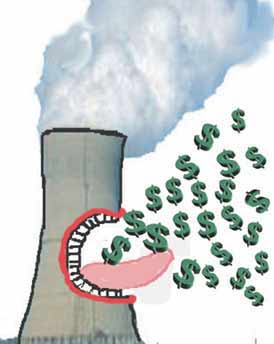 Let’s not forget, either, that nuclear power has some of the largest per kilowatt-hour subsidies of any electricity source.
Big, Expensive Power Plants Undermine a Clean Energy Future http://cleantechnica.com/2015/02/04/big-expensive-power-plants-undermine-clean-energy-future/ February 4th, 2015 by John Farrell – (excellent charts and diagrams) Originally published on ilsr.org.
With the rich history of cost overruns in the nuclear industry, Xcel Energy and Minnesota regulators shouldn’t have been surprised when the retrofit cost for the Monticello nuclear power plant ballooned to more than twice the original estimate. Regulators asked tough questions last year about whether the cost overruns were the responsibility of poor management and the definitive answer came back this week: yes.
This example only reinforces why nuclear power (and other large-scale power generation) isn’t cost-effective or compatible with a clean energy future. Continue reading
Entergy Corp cannot stop hearings on summer closing of Indian Point nuclear facility – judge rules
 Judge allows hearings on summer closings of New York nuclear plant Planet Ark 05-Feb-15 USA Scott DiSavino A judge in New York has ruled Entergy Corp cannot stop hearings on the state’s plan to shut the company’s Indian Point nuclear power plant for part of the summer to protect fish in the Hudson River.
In a ruling late Tuesday, an administrative law judge at the state Department of Environmental Conservation (DEC) rejected Entergy’s latest attempt to stop the state from shutting the plant, at least for part of the summer.
The ruling was the latest salvo in an eight-year battle between Entergy, which wants to run Indian Point for another 20 years, and the state, which wants the plant shut……….
The judge, Maria Villa, made the ruling on Entergy’s attempt to quash the DEC’s 2013 proposal that Indian Point shut for at least 42 days each year, between May 10 and Aug. 10, during prime fish migrations……
The hearings are expected to continue through 2015.
Indian Point withdraws up to 2.5 billion gallons of water a day from the Hudson to cool equipment, and then discharges it back into the river a little warmer than before.
Environmental groups and the DEC have long argued Indian Point’s water intake system kills about a billion fish, fish eggs and larvae each year, and that the plant should install cooling towers to reduce the use of river water by recycling it……..http://planetark.org/enviro-news/item/72785
Complicated nuclear weapons problems for USA’s new secretary of defense-in-waiting
 VOICE The Nuclear Trials of Ashton Carter The new secretary of defense-in-waiting faces some complicated decisions when it comes to the modernization of America’s nuclear triad. FP, BY JEFFREY LEWIS FEBRUARY 5, 2015
“………Carter inherits a mess. In November, the Pentagon received two reviews of the Department of Defense’s nuclear enterprise. Outgoing Secretary of Defense Chuck Hagel pledged more money and high-level attention to the nuclear mission after a series of embarrassing stories that undermine public confidence in the stewardship of the nation’s nuclear stockpile. Implementing those changes will land in Carter’s lap.
It will not be an easy task. The pair of reviews were, depending on how one counts them, the ninth and tenth separate review ordered to stop the series of humiliations visited upon the nation’s nuclear stewards in the past seven years.
A partial list of embarrassing stories includes: the so-called “munitions transfer incident” in which six nuclear weapons were mistakenly flown across the country; an accidental shipment of Minuteman III nosecones to Taiwan; the removal of the commander of the intercontinental ballistic missile (ICBM) force for an epic bender involving a Beatles cover band at a Mexican restaurant in Moscow; the reprimand of the number two official at U.S. Strategic Command who is the subject of a criminal probe involving gambling with fake casino chips; the court-marshal of a launch officerinvolved with a drug ring — as well as a plethora of other embarrassments ranging from widespread cheating on examinations, poor marks in unit assessments, and violations of security procedures including launch officerssleeping with the door to the command capsule propped…….
American nuclear posture has remained essentially unchanged since the Cold War. There was, during the early years of the Clinton administration, a brief moment when something different seemed possible. The Clinton administration undertook a comprehensive review of defense policy after the end of the Cold War called the Bottom-Up Review. As a kind of complement, the administration also conducted the first Nuclear Posture Review (NPR). ……..
 The problem is that just outside of 10 years, the United States will be simultaneously purchasing the following systems:
- A new ballistic missile submarine (called SSBN-X) with procurement stretching overFY21-35. Cost: $77-102 billion.
- A new ICBM, with procurement stretching over FY 2027-2034. Cost: $80-120 billion.
- A new long-range strike bomber (LRS-B) that will be in service “by the mid-2020s” with procurement stretching into the 2030s. Cost: $55 billion, plus a few tens of billion in R&D.
- A new long-range standoff cruise missile (LRSO) that no one thinks will survive austerity.Cost: $20-30 billion, including that of a new warhead.
Oh, and let’s not forget that the Air Force will also be spending between $8-10 billion per year through 2037 on procuring F-35 aircraft.
People who don’t want to admit that the current nuclear modernization plan is impossible like to imply that my estimates are somehow off. That’s what I don’t make my own estimates. I am simply curating the estimates by the Department of Defense, the services, or independent government entities like Government Accountability Office or Congressional Budget Office. (Go ahead, click on the links.) When you put the plans next to one another, it is immediately clear there isn’t enough money.
Defense Department officials are already calling this period in the late 2020s a “modernization mountain” — a period when the United States will be attempting to simultaneously replace all three legs of the triad, in addition to purchasing new fighters. I have already written that I think our effort to climb the modernization mountain ends like Jon Krakauer’s Into Thin Air. ……..https://foreignpolicy.com/2015/02/05/nuclear-triad-modernization-strategic-defense-ashton-carter-pentagon/
Roodfop solar will get a boost from high efficiency concentrating solar cells
High efficiency concentrating solar cells move to the rooftop, EurekAlert, 5 Feb 15 ULTRA-HIGH EFFICIENCY SOLAR CELLS SIMILAR TO THOSE USED IN SPACE MAY NOW BE POSSIBLE ON YOUR ROOFTOP THANKS TO A NEW MICROSCALE SOLAR CONCENTRATION TECHNOLOGY DEVELOPED BY AN INTERNATIONAL TEAM OF RESEARCHERS.
“Concentrating photovoltaic (CPV) systems leverage the cost of high efficiency multi-junction solar cells by using inexpensive optics to concentrate sunlight onto them,” said Noel C. Giebink, assistant professor of electrical engineering, Penn State. “Current CPV systems are the size of billboards and have to be pointed very accurately to track the sun throughout the day. But, you can’t put a system like this on your roof, which is where the majority of solar panels throughout the world are installed.”
Giebink notes that the falling cost of typical silicon solar cells is making them a smaller and smaller fraction of the overall cost of solar electricity, which also includes “soft” costs like permitting, wiring, installation and maintenance that have remained fixed over time. Improving cell efficiency from about 20 percent for silicon toward greater than 40 percent with multi-junction CPV is important because increasing the power generated by a given system reduces the overall cost of the electricity that it generates………http://www.eurekalert.org/pub_releases/2015-02/ps-hec020515.php
Arizona close to classing nuclear power as RENEWABLE energy!
 AZ Senate Committee Says Nuclear Power Is a Renewable Energy Resource http://blogs.phoenixnewtimes.com/valleyfever/2015/02/senate_committee_declares_nuclear_power_a_renewable_energy_resource.php By Miriam Wasser Tue., Feb. 3 2015Arizona is one step closer to officially declaring nuclear power a renewable-energy source. (Yes, you read that correctly.)
The Senate Committee on Water and Energy narrowly passed SB 1134, a bill that classifies “nuclear energy from sources fueled by uranium fuel rods that include 80 percent or more of recycled nuclear fuel and natural thorium reactor resources under development” to be a renewable-energy source.
Environmentalists are not happy, and frankly, no one who cares about linguistics should be either.
A renewable resource doesn’t get depleted with use: the sun keeps shining if we harvest solar power, the wind keeps blowing if we erect turbines, the earth keeps producing heat if we harness geothermal power. But nuclear?
Sandy Bahr, chapter director of the Arizona Sierra Club, said “the very nature of mining”–which must be done to get nuclear material–“is that you are depleting a resource.” Thus, nuclear energy cannot be called renewable.
As it stands now, the Arizona Administrative Code R14-2-1801 says nuclear and fossil fuels are not renewable resources. But Senator Steve Smith, a Republican from District 23, and the main sponsor of SB 1134, would like that to be changed.
He told the committee that by not recycling nuclear fuel rods like some European countries do, Arizona is missing out on a lot of potential energy. “Basically we just want to burn that energy twice,” he said, and should Arizona decide to incorporate that technology in the future, this bill would allow us to count that as a renewable energy source.
After a handful of citizens and energy industry officials spoke for or against the bill, it was in the hands of the committee. Senator Lynne Pancrazi said she considers nuclear an “alternative energy,” but “can’t agree that nuclear is renewable;” Senator David Bradley said he “[appreciates] the fact that technology is allowing us to use rods a few times, but that doesn’t make it a renewable;” and Senator Sylvia Allen said they could argue back and forth about the definitions of renewable and recyclable, but that it isn’t the point of the bill.”
What is the point of the bill, then, Senator Allen?
In the end, SB 1134 passed by one vote. “Luckily, it has a ways to go,” Bahr told New Times.
The bill still needs to get through the rules committee, the Senate, and the House of Representatives, which rejected a similar bill last year. “We’ll see about this year, though” she said.
After the committee session, New Times caught up with Senator Smith and asked about his bill. What, for instance, is the difference between recyclable resources and renewable ones. He paused for moment, and then smiled. When it comes to nuclear materials, he said,”we have so much that can be reused that it’s almost renewable!”
1 This Month
23-25 October – on Zoom – World BEYOND War’s annual global conferenc

To see nuclear-related stories in greater depth and intensity – go to https://nuclearinformation.wordpress.com

Say No to NASA’s Reckless Nuclear Reactor on the Moon
Say No to NASA’s Reckless Nuclear Reactor on the Moon
-
Archives
- October 2026 (160)
- September 2026 (339)
- August 2026 (330)
- July 2026 (355)
- June 2026 (287)
- May 2026 (306)
- April 2026 (356)
- March 2026 (251)
- February 2026 (267)
- January 2026 (308)
- December 2025 (358)
- November 2025 (359)
-
Categories
- 1
- 1 NUCLEAR ISSUES
- business and costs
- climate change
- culture and arts
- ENERGY
- environment
- health
- history
- indigenous issues
- Legal
- marketing of nuclear
- media
- opposition to nuclear
- PERSONAL STORIES
- politics
- politics international
- Religion and ethics
- safety
- secrets,lies and civil liberties
- spinbuster
- technology
- Uranium
- wastes
- weapons and war
- Women
- 2 WORLD
- ACTION
- AFRICA
- Atrocities
- AUSTRALIA
- Christina's notes
- Christina's themes
- culture and arts
- Events
- Fuk 2022
- Fuk 2023
- Fukushima 2017
- Fukushima 2018
- fukushima 2019
- Fukushima 2020
- Fukushima 2021
- general
- global warming
- Humour (God we need it)
- Nuclear
- RARE EARTHS
- Reference
- resources – print
- Resources -audiovicual
- Weekly Newsletter
- World
- World Nuclear
- YouTube
-
RSS
Entries RSS
Comments RSS

