Stanford experts warn on the nuclear risks for Waste Isolation Pilot Plant in southeastern New Mexico.
“These accidents during the first 15 years of operation really illustrate the challenge of predicting the behavior of the repository over 10,000 years,”
The Stanford experts also suggest more attention to how the buried materials may interact with each other, particularly with salty brine, over centuries.
Buried nuclear waste risky, say Stanford experts http://news.independence-card.com/buried-nuclear-waste-risky-say-stanford-experts/ Stanford Report, January 15, 2016 Radioactive material from the laboratories that design America’s nuclear weapons will have to be buried and kept away from humans for at least 10,000 years. But three Stanford experts say the safety analysis of this project needs to be revised to reflect new strategies that aim to substantially increase the amounts of plutonium to be disposed of. By Dan Stober
The Department of Energy’s long-term plan for dealing with material contaminated with plutonium and heavier elements from the U.S. weapons program is to bury it underground at the Waste Isolation Pilot Plant in southeastern New Mexico.
The Energy Department’s plan aims to safeguard nuclear material for the next 10,000 years. But three Stanford nuclear scientists point out in a new commentary article in the journal Nature that the Waste Isolation Pilot Plant (WIPP) was not designed to hold as much plutonium as is now being considered for disposal there. And, in fact, the site has seen two accidents in recent years.
“These accidents during the first 15 years of operation really illustrate the challenge of predicting the behavior of the repository over 10,000 years,” said Rod Ewing, the Frank Stanton Professor in Nuclear Security at Stanford and a senior fellow at the Center for International Security and Cooperation.
What’s more, there’s more plutonium proposed for disposal at WIPP in the future, a result of treaties with the former Soviet Union and now Russia to decrease the number of nuclear weapons by dismantling them.
A recent assessment of what to do with the plutonium from dismantled weapons has proposed that the material be diluted and disposed of at WIPP. But this analysis does not include a revision of the safety analysis for the site, wrote Ewing and his two Stanford co-authors in the Department of Geological Sciences, postdoctoral scholar Cameron Tracy and graduate student Megan Dustin.
They call on the U.S. Department of Energy, which operates WIPP, to take another look at the safety assessment of the site. Particular emphasis should be on the estimates of drilling activity in the oil-rich Permian Basin, where WIPP is located, and on the effects of such a huge increase in the plutonium inventory for the pilot plant.
“The current regulatory period of 10,000 years is short relative to the 24,100-year half-life of plutonium-239, let alone that of its decay product, uranium-235, which has a half-life of 700 million years,” the researchers wrote.
“We cannot be certain that future inhabitants of the area will even know WIPP is there,” they added. As a result, it is important to understand the impact of future drilling in the area.
The waste is stored 2,150 feet below the surface in hundreds of thousands of plastic-lined steel drums in rooms carved out of a 250-million-year-old salt bed. The repository is at about half of its planned capacity and slated to be sealed in 2033.
The researchers question some of the assumptions used in the safety studies. For example, to determine the odds of oil drilling in the future, the study uses a 100-year historical average drill rate, even though drilling has intensified in recent decades, throwing this assumption into question.
The Stanford experts also suggest more attention to how the buried materials may interact with each other, particularly with salty brine, over centuries. A single storage drum may contain a variety of materials, such as lab coats, gloves and laboratory instruments; thus, the chemistry is complex.
Ewing said that the complacency that led to the accidents at WIPP can also occur in the safety analysis. Therefore, he advises, it is important to carefully review the safety analysis as new strategies for more plutonium disposal are considered.
Major disaster: radioactive material constantly being emitted from LA gas blowout

 Experts: Multiple types of radioactive material constantly being emitted from LA gas blowout — “I’d be running like hell” — “We are getting higher and higher levels…it’s accumulating” — “Poisons spreading through entire San Fernando Valley” home to 2 million people — “Thousands getting sick… it really is a major, major disaster” (AUDIO) http://enenews.com/experts-multiple-types-radioactive-material-being-continuously-emitted-la-gas-blowout-accumulating-getting-higher-higher-levels-poisons-all-moving-down-spreading-entire-san-fernando-valley-th?utm_source=feedburner&utm_medium=email&utm_campaign=Feed%3A+ENENews+%28Energy+News%29Follow up to: Radioactive material reportedly now being released from massive gas blowout in LA — Byproduct of Uranium — Expert: “A lot” has been detected… Very dangerous (VIDEO)
Interviews from Nuclear Hotseat hosted by Libbe HaLevy, Jan 13, 2016 (emphasis added):
Kevin Kamps, Beyond Nuclear’s nuclear waste watchdog (8:30 in): “Another important thing that is very significant is that the radon is continually resupplied… Radon is going to beconstantly generated by the uranium contained in the methane… So really you’ve got achronic constant supply of hazardous radon gas coming out of this breach in California.”
Cindy Folkers, Beyond Nuclear‘s expert on ionizing radiation (16:00 in): “I’m absolutely astounded that they are not measuring for radon that I know of… I can’t believe that they’re not measuring for radon… [Radon] also decays to a number of what are called radon progeny which includes a number of short-lived radioactive substances, some of which are lead and polonium. Both of those can be very biologically damaging… There is question as to the kind of doses that they would be getting of radon, but it still is really very much a worry… I feel like — doing the research that I’ve done — that we are not getting the full story of what’s happening there.”
Richard Mathews, candidate for California State Senate who studied physics & astronomy at CALTECH (32:00 in): “People are really concerned about this, people are seriously getting sick… Thousands of people are getting sick from this — and it really is a major, major disaster… Methane floats away and spreads around the whole world… All the contaminants that are in with the methane are heavier than the air and that includes… benzene and toluene, hydrogen sulfide — all of those are heavier than air — they tend to stay close to the ground and move downhill. This is happening in the hills above the San Fernando Valley [home to nearly 2 million people] and so the poisons are all moving down into the San Fernando Valley and spreading through the entire San Fernando Valley… As the radon and other substances flow around, they are accumulating. They are not easily blown out of the valley, and we are getting higher and higher levels… The lead is going to be around for decades… The initiallead that you get is radioactive. This will be a continuing problem… It could spread through the entire San Fernando Valley… The damage that the radon does stays in your body… andshows up as cancer a decade after, maybe even 80 years later. So we really need to follow through.”
Terry Lodge, attorney (50:00 in): “You have a massive release, probably, of radon going on — and there may actually also be radium particulate… I’d be taking very rapid steps [if I lived in the area], I’d be running like hell. And the reason is, I suspect that there’s little by way of emergency anticipation — what could possibly go wrong? We have this vast underground storage facility… There are not radiation monitors… the problem is sort of the Three Mile Island problem… the radiation emission went way off the meter… there were no redundant rings, there was no monitoring certain distances outside the plant boundary. You don’t even have that at Porter [Ranch]… They don’t know how much radon is being dispersed… [Radon] can be concentrated by rainfall, concentrated by humidity, and inversions… There needs to be some type of soil sampling… air, and all that… So the problem is that radon is around in the Porter Ranch situation — nobody’s prepared for it. They’re not talking about it now — this may months into the crisis.”
US nuclear corporation salivates at thought of selling reactors to India
 Ahead Of PM Modi’s Trip To US, Hopes For A Major Nuclear Reactor Deal, NDTV
A Westinghouse team is already in India to negotiate the deal, Chief Executive Daniel Roderick told news agency Reuters, but talks are likely to go down to the wire, as the crucial issue of nuclear liability insurance for suppliers remains unresolved. The aim, however, was to make a “commercially significant announcement” during PM Modi’s expected US visit in March and sign a final contract later in the year, Mr Roderick said.
A US diplomat said the United States had invited PM Modi to the March 31-April 1 Nuclear Security Summit and that Washington was thinking of turning the trip into a full-fledged official visit, which would give the Indian leader a similar reception as Chinese President Xi Jinping.
The Westinghouse contract would give a big boost to India’s $150 billion nuclear power programme…….
India has given two sites to US companies – Westinghouse and a nuclear venture between General Electric Co and Hitachi – to build six reactors each. http://www.ndtv.com/india-news/ahead-of-pm-modis-trip-to-us-hopes-for-a-major-nuclear-reactor-deal-1266211
Obama funding “new nuclear”
President Obama’s 2016 budget includes more than $900 million for the DOE to support U.S. civilian nuclear energy. The DOE also has $12.5 billion in remaining loan guarantee authority for advanced nuclear projects through Title 17.

DOE Funds Advanced Pebble-Bed and Molten-Salt Nuclear Reactor Development The DOE pushes nuclear research, deployments and some regulatory reform.GreenTech Media by Eric Wesoff January 15, 2016 Last week, small modular reactor startup Terrestrial Energy closed $8 millionin funding for its proprietary Integral Molten Salt Reactor design.
Earlier this week, a bipartisan bill won approval by the U.S. House of Representative’s Committee on Science, Space and Technology to drive R&D funding for nuclear power in the U.S. According to The Hill, “The bill directs the Department of Energy to prioritize nuclear energy research that utilizes private sector funding.” The legislation encourages private firms to partner with the national labs to study nuclear reactor technology, and calls for the DOE to “complete a research reactor within the next 10 years.”
And this morning, the DOE announced the selection of two companies, X-energy and Southern Company, “to further develop advanced nuclear reactor designs.” These awards originate from the Gateway for Accelerated Innovation in Nuclear(GAIN) program.
DOE’s initial funding will be $6 million for each project, with both firms providing cost-share. The potential “multi-year cost-share value for this research is up to $80 million,” and it is aiming for a demonstration project in about 20 years, according to the DOE.
The advanced nuclear power projects receiving awards are: Continue reading
Fact sheet on the cover-up of LA’s Nuclear Secret- radioactively polluted Brandeis-Bardin Institute
 LA’s Nuclear Secret: Camp Cover-Up Fact Sheet NBC4 14 Jan 16 KNBC has received a lot of emails since we aired two reports in November 2015 about contamination found at The Brandeis-Bardin Institute near Simi Valley. Viewers have asked us to summarize our in-depth investigation, the voluminous amount of data we gathered, and to clarify the main questions we have posed to the owners of Brandeis, the American Jewish University, for which we have not yet received answers. So we’ve prepared this fact sheet summarizing our investigation.
KNBC’s investigation concerning The Brandeis-Bardin Institute (BBI) began after we aired a September 2015 report about the history of nuclear accidents at the Santa Susana Field Lab. After that report, KNBC received emails from people with long associations to BBI, urging us to investigate contamination on Brandeis land. Those people included two former BBI directors, three former senior managers, and former board members. They all told us they had asked former BBI Board chairs — Helen Zukin and Judge Joseph Wapner — if they could see the decades of environmental tests that had been conducted, but were told they could not see that data.
The Brandeis-Bardin Institute is next door to the Santa Susana Field Lab, where a partial nuclear meltdown occurred in 1959, as well as other nuclear accidents, and where decades of rocket testing occurred between 1947 and 2006. These activities resulted in contamination of Santa Susana, as documented by the US EPA, the US Department of Energy, and Boeing.
Environmental tests have found radioactive and chemical contamination has migrated from Santa Susana to Brandeis, contaminating its soil and water. Since at least 1991, BBI had its own consultant routinely testing its water, soil and vegetation. AJU has said in recent statements that based on these tests, “Brandeis-Bardin is safe.” AJU has declined to share with KNBC, or the public, many of those tests done by its consultant.
The former BBI associates who contacted KNBC said their concerns began in 1995, when Brandeis filed a federal lawsuit against the owners of Santa Susana, including Rocketdyne — alleging that “harmful” radioactive materials and toxic chemicals from the Field Lab had contaminated Brandeis soil and water. Brandeis settled that suit confidentially in 1997. Read that lawsuit here and the settlement here.
KNBC retrieved records from the lawsuit, and found documents such as a 1997 report prepared for BBI by its longtime environmental consultant, Joel Cehn. In that report, based on years of tests, Cehn wrote: “Brandeis property is contaminated, at both the surface and subsurface, with radiological and chemical contaminants.” “The levels of contamination are highest at the southern end of the property …” “Contaminated ground water is moving toward the center of the Brandeis property.” “Soil on the Brandeis property is contaminated with (radioactive) tritium, strontium-90 and dioxins.” “During rainwater runoff this (contaminated) soil is carried to the central and northern areas of the Brandeis property.” Read Cehn’s full report here.
Scientists from state and federal agencies told KNBC that when those radioactive contaminants land in soil in places like Brandeis, they remain “hot” or radioactive for up to hundreds of thousands of years.
Documents reviewed by KNBC suggest that there may be years of environmental tests done at BBI, conducted by their consultant Joel Cehn, that haven’t been made public by AJU, including:………
Among the questions we want to ask AJU:
- Has AJU released all tests its consultant has ever done on BBI land and water? If not, why?
- AJU said on December 2, 2015 it is hiring “additional independent consultants” to do more environmental testing. Who will choose these consultants and what the process will be to select them?
- Would AJU allow the US EPA to test Brandeis soil, water, and vegetation, anywhere on the property? Ventura County Supervisor Linda Parks told NBC she believes the EPA is the only reliable government entity to do testing.
- Were children or adults at BBI in 1959, and in four decades that followed, ever at risk from radioactive fallout from the ’59 meltdown, from other nuclear accidents, from the burning of radioactive waste at Santa Susana, or from the thousands of rocket tests there that emitted toxic fumes? AJU says on its website “AJU acquired the Brandeis-Bardin property after conducting due diligence.”……….
Citizens Climate Lobby actually promotes nuclear power
At least some Clean Energy laws have been coopted, taken over, or pushed by huge corporations that hide behind the scenes, but pull the strings of political, media and non profits through various mechanisms.
New Study Exposes True Extent, Influence Of Climate Denial Echo Chamber For First Time, Indigenous Press Conference Demanding True Climate Solutions at COP21, New York AG Subpoenas ExxonMobil
http://agreenroad.blogspot.com/2015/12/new-study-exposes-true-extent-influence.html
NASA, PBS, EPA, Alaska Inuits And Dr John Church Explain Ocean Level Rise And Very Fast, Massive Carbon Dioxide, CO2, Methane, And Nitrous Oxide Global Warming Gas Increase
http://agreenroad.blogspot.com/2013/01/nasa-and-dr-john-church-explain-ocean.html
WHAT IS THE FEE AND DIVIDEND CARBON TAX LAW? Continue reading
Simulated pre-emptive nuclear strike on North Korea in the planning?

 US and South Korea plan simulated nuclear strike on North Korea http://www.telegraph.co.uk/news/worldnews/asia/northkorea/12099482/US-and-South-Korea-plan-simulated-nuclear-strike-on-North-Korea.htmlUpdated plans would help them prepare their defenses against a potential nuclear strike from Pyongyang By Julian Ryall, Tokyo. 14 Jan 2016
In November, the two governments agreed upon an updated set of plans to defend South Korea from missile, nuclear, chemical and biological threats. Known as the 4D Operational Concept, the plans are designed to detect, disrupt, destroy and defend the South from threats posed by the North.
The additional capability would be on top of the military hardware that South Korea has asked its closest security partner to provide.
In the wake of Pyongyang’s fourth underground nuclear test on January 6, however, Seoul and Washington are examining the possibility of conducting manoeuvers to extend the reach of the plan, the Chosun Ilbo reported on Thursday. The two countries are discussing ways to reflect parts of the 4D concept during the joint annual exercises in March and then to develop it as a full scale operational system”, an official of the defence ministry in Seoul told the newspaper.
Analysts say the two governments – along with others in the region – will have drawn up contingency plans for a number of possible scenarios on the Korean peninsula, including indications of an imminent nuclear strike, an invasion of the South with conventional forces or the collapse of Kim Jong-un’s regime.
One situation that military planners are particularly concerned about would be the current regime imploding but a number of factions – potentially armed with nuclear or other non-conventional weapons – jostling for power.
“North Korean assets that are capable of waging nuclear war will obviously be of the highest priority”, Lance Gatling, a defence analyst and president of Nexial Research Inc., told the Telegraph.
“These will be the mobile launch tractors that the North has for its tactical medium-range ballistic missiles, which can reach targets in South Korea and Japan”, he said.
“They will also be targeting the openings to underground facilities where weapons are stored in preparation for launch, although it can be very difficult to find all these sites”.
The US has said it will “not accept North Korea as a nuclear armed state”.
Pyongyang has in the past condemned joint US-South Korean military exercises as provocation and preparations for an invasion of the North. It is likely to react angrily to suggestions that its perceived enemies are preparing a first-strike capability.
Iraq war is a bonanza for US weapons salesmen
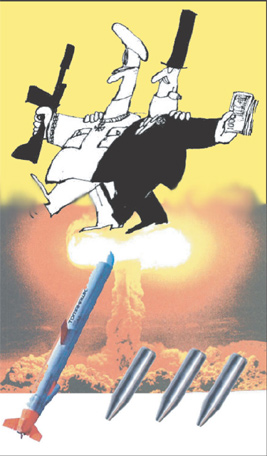 Even as the Obama administration stumbles and bumbles along in search of a magical political strategy in Iraq that would make sense of everything, American weapons-makers can expect a bountiful future. In the meantime, Washington is putting forces in place that, by doing more of the same for the third time in a disintegrating Iraq in the middle of a fracturing region, guarantee more of the same. In that sense, you might say that American forces are partly in place to help promote the investment. If one needed an example of how the military-industrial complex works today, that might be it. Every mistake by Washington is a boon for future arms sales.
Once Again, American Weapons-Makers Are Making a Killing in Iraq Our battle with ISIS lacks goals and direction, but that doesn’t mean there isn’t a profit to be made.Mother Jones—By Peter Van Buren Fri Jan. 16,his story first appeared on the TomDispatch website.
The current American war in Iraq is a struggle in search of a goal. It began in August as a humanitarian intervention, morphed into a campaign to protect Americans in-country, became a plan to defend the Kurds, followed by a full-on crusade to defeat the new Islamic State (IS, aka ISIS, aka ISIL), and then… well, something in Syria to be determined at a later date.
At the moment, Iraq War 3.0 simply drones on, part bombing campaign, part mission to train the collapsed army the US military created for Iraq War 2.0, all amid a miasma of incoherent mainstream media coverage. American troops are tiptoeing closer to combat (assuming you don’t count defensive operations, gettingmortared, and flying ground attack helicopters as “combat”), even as they act likearchaeologists of America’s warring past, exploring the ruins of abandoned US bases. Meanwhile, Shia militias are using the conflict for the ethnic cleansing of Sunnis and Iran has become an ever-more significant player in Iraq’s affairs. Key issues of the previous American occupation of the country—corruption,representative government, oil revenue-sharing—remain largely unresolved. The Kurds still keep “winning” against the militants of IS in the city of Kobani on the Turkish border without having “won.”…….
there is one bright side to the situation. If you can’t create Victory in Iraq for future VI Day parades, you can at least make a profit from the disintegrating situation there.
Team America’s Arms Sales Force
In the midst of the December holiday news-dumping zone, the US Defense Security Cooperation Agency (DSCA) quietly notified Congress of several pending arms deals for Iraq. DSCA is the Pentagon office responsible for coordinating arms agreements between American defense contractors and foreign buyers.
Before those thousands of not-boots-on-the-ground troops started hemorrhaging back into Iraq late last year, DSCA personnel made up a significant portion of all US military personnel still there. Its staff members are, in fact, common in US embassies in general. This shouldn’t be surprising, since the sales of weaponry and other kinds of war equipment are big business for a range of American companies, and the US government is more than happy to assist. In fact, there is even ahandbook to guide foreign governments through the buying process.
The DSCA operates under a mission statement which says the “US may sell defense articles and services to foreign countries and international organizations when the President formally finds that to do so will strengthen the security of the US andpromote world peace.” While the Pentagon carries out the heavy lifting, actual recommendations on which countries can buy US gear are made by the secretary of state, and then rubber-stamped by Congress………
Would You Like the Extended Warranty?
Iraqis have a saying: “The rug is never sold.” It means that there’s always more money to be made from any transaction. General Dynamics would agree. Arms sales work remarkably like consumer electronics (and Iraqi carpets). Want the extended warranty for your new smartphone? Extra battery? Accessories? Insurance against loss or damage? Suddenly the cost of your phone doubles.
Same for tanks. The M1 is a complex beast. You’ll need to pay General Dynamics for trainers to teach your guys to operate its systems. You’ll need lots of spare parts, especially operating in the desert. And it won’t be long before you’ll want to do some upgrades—maybe better computers or a faster engine. The US is currently working on “urban warfare” upgrades for the 140 M1s the Iraqis have hung onto. In the defense world, these after-sales are known as the “tail.” And the longer the tail, the bigger the profits.
For example, built into the contract for the new M1 tank sale is the provision that “approximately five US Government and one hundred contractor representatives [will] travel to Iraq for a period of up to five years for delivery, system checkout, program support, and training.” And that isn’t going to come cheap from General Dynamics, though the five government employees may be a bargain financed by American taxpayers.
None of this even touches on the potential for repeat sales. ………..
from any point of view except General Dynamics’s, the Islamic State’s, or maybe the Iranians’, these tank sales don’t add up.
Call Your Broker
It’s easy enough to toss around terms like “military-industrial complex” and equally easy to slip from there into what some might consider blood-for-oil conspiracy theories or suggestions that Iraq War 2.0 was all about the mega-contractor Halliburton’s bottom line. While oil and Halliburton were certainly part of that past war’s calculus, they can no more account for it than the piles of money General Dynamics is about to make selling tanks can alone account for Iraq War 3.0.
Still, it’s hard to ignore the way defense companies find themselves buried in cash from selling weapons that aren’t needed to people who can’t use them, sales that are, in the end, likely to harm, not help, America’s geopolitical interests. Perhaps it is better to see the immediate profits from such deals as just a part of a muchbigger process, one that demands America have enemies to crusade against to ensure the survival of the national security state.
To such a “wartime” paradigm one just needs to plug in new bad guys from time to time, which is proving an ever-easier venture, since each of our previous wars and conflicts seems to offer a remarkably helpful hand in creating them. In this way, radical Islam has proven, with Washington’s help, a worthy successor to the Soviet Union, itself once a superb money-making venture and a great way to build a monumental national security state.
Even as the Obama administration stumbles and bumbles along in search of a magical political strategy in Iraq that would make sense of everything, American weapons-makers can expect a bountiful future. In the meantime, Washington is putting forces in place that, by doing more of the same for the third time in a disintegrating Iraq in the middle of a fracturing region, guarantee more of the same. In that sense, you might say that American forces are partly in place to help promote the investment. If one needed an example of how the military-industrial complex works today, that might be it. Every mistake by Washington is a boon for future arms sales.
So if you’ve got money to invest in General Dynamics, you might want to call your broker. http://www.motherjones.com/politics/2015/01/iraq-military-win-business-not-war
USA’s Nuclear Regulatory Commission at risk of being hacked
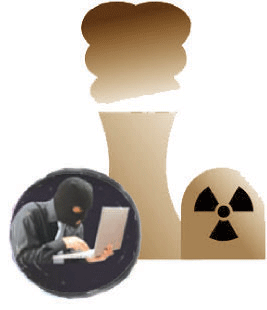 Nuclear commission risks being hacked because of organizational issues: watchdog report http://www.washingtontimes.com/news/2016/jan/13/nuclear-commission-risks-being-hacked-because-of-o/ By Andrew Blake – The Washington Times – Wednesday, January 13, 2016
Computer networks used by the U.S. Nuclear Regulatory Commissionpose a real possibility of being exploited by hackers as a result of inadequate organization among security personnel, a federal report found this week.
The NRC’s inspector general said in a 18-page assessment released on Tuesday that its Security Operations Center, or SOC, isn’t “optimized to protect the agency’s network in the current cyber threat environment.”
Weeks after new reports revealed that hackers had successfully compromised a hydroelectric dam in New York City in 2013, the government watchdog said the NRC’s unclassified computer networks risk being breached because the agency has failed to structure itself in a way that would ensure any unauthorized intrusions are handled appropriately.
NRC staffers told the inspector general that the SOC “does not meet agency needs” and singled out a lack of proactive analyses and timely, detailed reports that could otherwise provide the information necessary to keep its networks properly protected.
“There are no performance goals,” the watchdog found, meaning the NRCcannot possibly assess “whether agency needs are being met.”
More specifically, the report faulted “generic” contracts that have yielded “differing expectations” with respect to roles and responsibilities, as well as “inadequate definitions in agency policies and undifferentiated functional descriptions between different entities responsible for securing NRC’s network.”
“This occurs because although the contract performance criteria are aligned with National Institute of Standards and Technology and NRCinternal guidance, the contract does not clearly define SOC performance goals and metrics that can be used to determine whether agency needs are being met,” the inspector general concluded following a five-month audit of the NRC’s headquarters in Rockville, Maryland.
To keep the NRC’s unclassified networks safe from hackers, the agency must ensure that organizational roles and responsibilities are more clearly defined, the watchdog said.
In the meantime, the inspector general acknowledged in a footnote that the nuclear sector has not been spared from cyberattacks: While federal data has suggested a 9.7 percent surge between 2013 and 2014 with regards to computer security incidents across the board, the NRCexperienced an 18 percent increase in hack attacks during that same span, including instances in which hackers had attempted to gain unauthorized access through malicious code injections, social engineering, policy violations or other attempts.
“A dynamic cyber threat environment demands a high-performing SOC,” the inspector general wrote. “The sophistication and frequency of malicious activity targeting NRC has increased. These forces, combined with the need for NRC users to stay connected with stakeholders and partners through the Internet, make effective information security a critical capability.”
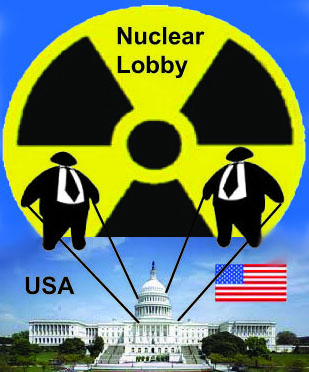
Nuclear lobby getting its way in USA Congress?
The Nuclear Energy Innovation Capabilities Act (H.R. 4084) directs the Department of Energy (DOE) to work with private companies and researchers to develop new nuclear reactors. The bill will help private investors demonstrate novel reactor concepts and designs such asmolten-salt or pebble-bed reactors……..
Against all reason, Republican hawks still trying to sabotage Iran nuclear agreement
 Opponents of Iran Nuclear Deal Just Won’t Quit http://www.huffingtonpost.com/alan-elsner/opponents-of-iran-nuclear_b_8962566.html?ir=Australia Opponents of the Joint Comprehensive Plan of Action (JCPOA) between Iran and six world powers to deal with Iran’s nuclear program mounted a massive campaign last summer, spending tens of millions of dollars to sabotage the agreement.
They failed — but they have not quit.
Days after reports that Iran has dismantled one of the most dangerous parts of its program by removing the core of its heavy-water reactor in Arak and filling it with cement, Republicans in the House of Representatives are mounting a new attempt to kill the agreement that has already made the world much safer.
The “Iran Terror Finance Transparency Act” would prevent the President from lifting sanctions imposed on Iranian individuals and entities unless the Administration can “certify the entity is not a terror financier, human rights abuser or involved in the proliferation of weapons of mass destruction.”
President Obama has already vowed to veto the bill, should it reach his desk, for the simple reason that it tangles up an agreement on Iran’s nuclear program with other issues that have nothing to do with it. The new bill is simply a poison pill, designed to kill the nuclear deal.
The deal was designed to do one very important thing — make the world safe from the threat of a nuclear-armed Iran. It does not aim to tackle Iran’s role in regional conflicts, or its sponsorship of terrorist groups or its domestic human rights abuses.
There are separate sanctions imposed on Iran to confront those issues, all of which will remain in place. And the United States and its partners should remain vigilant and take appropriate action when faced with Iranian provocations — like the ballistic missile test they conducted last October which violated UN Security Council resolutions. But none of these factors have anything to do with the nuclear deal.
If the latest bill passed, the White House warned, the legislation “could result in the collapse of a comprehensive diplomatic arrangement that peacefully and verifiably prevents Iran from acquiring a nuclear weapon.”
That would lead to the end of international inspections and monitoring of Iranian nuclear facilities and leave Iran free to restart its program. It would “lead to the unraveling of the international sanctions regime against Iran, and deal a devastating blow to America’s credibility as a leader of international diplomacy,” the White House said.
Republicans have the votes to pass this bill in the House. It will be more interesting to see how it fares in the Senate, where prominent Republicans expected to face strong Democratic challengers this year, like Mark Kirk of Illinois and Ron Johnson of Wisconsin, have been strong backers of previous efforts to sabotage the agreement.
What opponents don’t get is that the nuclear deal is already proving itself. The Iranians have moved faster than most experts believed would happen to fulfill their part of the agreement. Notably, they shipped 25,000 pounds of low-enriched uranium to Russia, leaving them without enough material for a bomb.
“This step is vital because it is irreversible, since the low-enriched uranium is never coming back and would instead need to be produced again,” said Ilan Goldenberg, who directs the Middle East security program at the Center for a New American Security, writing in The National Interest.
The Iranians have also removed centrifuges as required and allowed intrusive inspections of its facilities, as laid down by the JCPOA. And now they are rendering the Arak plant harmless.
It will soon be time for the United States and its partners to live up to their side of the agreement. Once the designated international authorities confirm that Iran has met its obligations, the international community must begin to lift sanctions originally imposed because of Iran’s nuclear program.
Opponents can be expected to continue their campaign to kill the agreement one way or another. That’s why supporters, and all those who believe in diplomatic solutions to tough international problems, must remain vigilant, ready to take political action whenever needed to preserve this important breakthrough.
Wisconsin Assembly approves lifting nuclear moratorium
Assembly approves lifting nuclear moratorium http://www.startribune.com/assembly-to-vote-on-lifting-nuclear-moratorium/364957481/ Associated Press JANUARY 12, 2016 MADISON, Wis. — The state Assembly has approved a bill that would lift Wisconsin’s ban on new nuclear power plants.Right now, state regulators can’t approve a new nuclear power plant unless a federal facility for storing waste from nuclear plants nationwide exists and such a plant wouldn’t burden ratepayers. No central federal repository exists, leaving nuclear plants to store their waste on-site.
The bill would erase the storage facility and ratepayer clauses from state law, clearing the way for new plants. The bill’s author, Republican Rep. Kevin Peterson, maintains nuclear power is an affordable option as the state faces new federal rules on greenhouse gas emissions.
The Assembly approved the bill on a voice vote Tuesday. It goes next to the state Senate.
Wisconsin could get nuclear waste dump if moratorium is lifted on new reactors
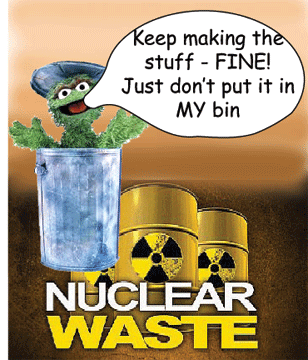 Al Gedicks: Bill would invite radioactive waste dump to Wisconsin Wisconsin State Journal , 12 Jan 16 LA CROSSE — The Wisconsin Assembly plans to take up a bill today lifting a moratorium on new nuclear reactors.
Under current law, the state cannot approve another nuclear power plant unless there is a federally licensed repository for high-level nuclear waste, and the plant wouldn’t burden ratepayers. The nuclear industry can’t meet these common-sense conditions that have protected Wisconsin citizens for 33 years, so it wants to repeal the law.
If Wisconsin’s moratorium on building nuclear power plants is repealed, the U.S. Department of Energy (DOE) will have all the more reason to reconsider the granite bedrock of Wisconsin’s Wolf River Batholith as a permanent nuclear waste repository. The DOE is desperate to find a host for a permanent geologic repository for nuclear waste because of the failed attempt to site such a repository on the lands of the Western Shoshone Indians in Nevada.
The legislative sponsors of the repeal seem to be unaware that the moratorium was enacted to protect Wisconsin citizens from becoming the host to a permanent geologic nuclear waste repository.
In the 1980s, the DOE ranked Wisconsin’s Wolf River Batholith as one of the top three options for a high-level nuclear waste repository.
The proposed facility would be located somewhere in a 1,000-square-mile watershed that includes Langlade, Shawano, Waupaca, Menominee, Portage, Marathon and Oconto counties. The area also contains the reservation land of three tribes — the Stockbridge-Munsee, Menominee, Ho-Chunk and the ceded treaty lands where 11 bands of the Lake Superior Chippewa retain extensive hunting, fishing and gathering rights.
Wisconsin citizens and American Indian tribes were overwhelmingly opposed to becoming nuclear guinea pigs for the DOE. In a 1983 statewide referendum, 89 percent voted against a nuclear waste disposal site in Wisconsin.
After massive public opposition at public hearings in the potentially affected communities, the DOE said it would indefinitely postpone the search for a second nuclear waste site……..
Regardless of what the nuclear industry and its proponents say, there is no known way to safely dispose of this waste, which remains dangerously radioactive for thousands of years.
The only existing geologic repository for nuclear waste in this country is the Waste Isolation Pilot Plant in Carlsbad, New Mexico. This site was considered the model of safe nuclear waste storage.
But on Valentine’s Day 2014, plutonium and other radioactive elements were accidentally released into the atmosphere from the site, exposing 22 workers to small amounts of radiation. The plant has been closed since the accident.
There is no good reason to expose Wisconsin communities and Indian tribes to the risks of radioactive contamination when there are nuclear-free and carbon-free renewable energy technologies that are truly cleaner, safer, faster and cheaper. http://host.madison.com/wsj/opinion/column/al-gedicks-bill-would-invite-radioactive-waste-dump-to-wisconsin/article_a44c0713-e13b-5ab9-b1f7-d8f9a7132c42.html
Census shows rapid growth of solar industry jobs in USA
 USA National Solar Jobs Census 2015 Released http://www.energymatters.com.au/renewable-news/solar-jobs-census-em5291/ January 13, 2016
The U.S. solar workforce grew to a total of nearly 209,000 last year; adding more than 35,000 workers – the third consecutive year in which growth exceeded 20%.
The Solar Foundation’s National Solar Jobs Census 2015 states the workforce has increased by 123% since 2010.
“The solar industry has once again proven to be a powerful engine of economic growth and job creation,” said Andrea Luecke, President and Executive Director of The Solar Foundation. ” Our Census findings show that one out of every 83 new jobs created in the U.S. over the last 12 months was in the solar industry – 1.2% of all new jobs.”
The USA’s solar workforce is now three times the number employed in the coal mining industry and also larger than the oil and gas extraction industry.
Last year, solar industry employment grew 12 times faster than the overall US workforce.
In addition to direct employment, the US solar industry supports an additional 610,650 ancillary jobs throughout the supply chain.
When the first Census was run in 2010, the USA had installed 929MW of solar capacity that year. Last year, 7,430MW of capacity was added.
The installation sector represented the bulk of jobs in the US solar industry in 2015.
Installation – 119,931
Manufacturing – 30,282
Sales and distribution – 24,377
Project development – 22,452
All others – 11,816
Employment in all sectors grew in 2015, with the exception of solar manufacturing. However, manufacturing jobs are expected grow by 3,800 positions in 2016; supported by industry construction activity.
Approximately 90% of all solar workers are 100% dedicated to solar activities; a percentage that has been effectively unchanged since 2013.
Jobs in the solar industry continue to pay above the median wage of all occupations in the USA.
Looking ahead, a further 14.7% increase in positions is expected this year – an extra 30,000 jobs – bringing the total of U.S. solar workers to 239,625 by the end of 2016. It could perhaps be even higher as Census data collection was completed before the extension of the 30% Federal Investment Tax Credit (ITC) was announced.
The sixth annual National Solar Jobs Census can be viewed in full here (PDF).
St Louis residents have no faith in Planned Barrier Between Fire, Nuclear Waste Dump
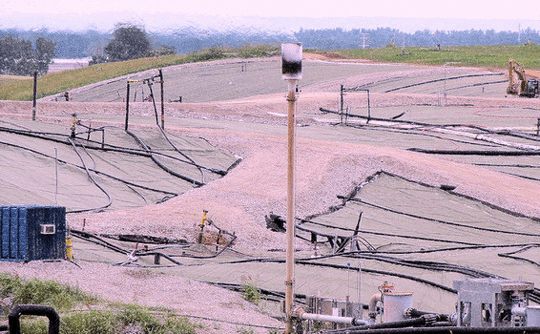 Residents Frustrated With Planned Barrier Between Fire, Nuclear Waste Dump In St. Louis http://www.ibtimes.com/residents-frustrated-planned-barrier-between-fire-nuclear-waste-dump-st-louis-2258034 BY ADAM LIDGETT @ADAMLIDGETT ON 01/09/16 While the U.S. Environmental Protection Agency plans to go ahead with the building of a firebreak between an underground fire and a nuclear-waste site in suburban St. Louis, area residents indicated they are frustrated by the situation, Al Jazeera reported Saturday. A number of them said the plan to construct the wall is not enough and that there should be a more-permanent solution to the problem.
“It’s looking more and more like removal is the only way to guarantee [a safe solution],” Dawn Chapman, who lives close to the waste site, told Al Jazeera. “Life’s over for [people] in this community. They can’t live where they are. They can’t enjoy it.’”
In 2010, an underground fire was detected in a landfill near St. Louis. It posed a pretty big problem in and of itself, but it was compounded by its proximity to another landfill containing Cold War-era nuclear material. The fire at the Bridgeton Landfill is smoldering only about 1,000 feet from tons of radioactive material in the West Lake Landfill, St. Louis Public Radio reported. A firebreak was proposed in 2013, but the EPA wanted then to conduct more tests to determine the amount of radioactive material at the site.
“The only way to guarantee the radioactive content will never come in contact with the subsurface fire in the future is to remove the radioactive material,” Ed Smith, a representative of the Missouri Coalition for the Environment, told Al Jazeera. “We’ve watched the EPA work on the barrier plan now for almost two years whereas they could have been planning for the removal of the radioactive waste.”
It’s unknown how much radioactive waste — dumped there in 1973 as residue of the Manhattan Project — is at the site. Some experts said the contamination could be unprecedented. “We are now working through the highly complex details of implementing our decision and the associated legal steps,” EPA Acting Regional Administrator Mark Hague said in a statement cited by St. Louis Public Radio. “Once the plan is finalized, we are committed to providing this information to the public. EPA will use all available enforcement authorities to ensure implementation of this work.”
1 This Month
15 October. Joint Appeal for Nuclear Abolition Day -presentation to the UN on October 15 will be live on UNWebTV
Endorse the Nuclear Abolition Day Appeal
23-25 October – on Zoom – World BEYOND War’s annual global conference

To see nuclear-related stories in greater depth and intensity – go to https://nuclearinformation.wordpress.com
-
Archives
- October 2026 (139)
- September 2026 (339)
- August 2026 (330)
- July 2026 (355)
- June 2026 (287)
- May 2026 (306)
- April 2026 (356)
- March 2026 (251)
- February 2026 (267)
- January 2026 (308)
- December 2025 (358)
- November 2025 (359)
-
Categories
- 1
- 1 NUCLEAR ISSUES
- business and costs
- climate change
- culture and arts
- ENERGY
- environment
- health
- history
- indigenous issues
- Legal
- marketing of nuclear
- media
- opposition to nuclear
- PERSONAL STORIES
- politics
- politics international
- Religion and ethics
- safety
- secrets,lies and civil liberties
- spinbuster
- technology
- Uranium
- wastes
- weapons and war
- Women
- 2 WORLD
- ACTION
- AFRICA
- Atrocities
- AUSTRALIA
- Christina's notes
- Christina's themes
- culture and arts
- Events
- Fuk 2022
- Fuk 2023
- Fukushima 2017
- Fukushima 2018
- fukushima 2019
- Fukushima 2020
- Fukushima 2021
- general
- global warming
- Humour (God we need it)
- Nuclear
- RARE EARTHS
- Reference
- resources – print
- Resources -audiovicual
- Weekly Newsletter
- World
- World Nuclear
- YouTube
-
RSS
Entries RSS
Comments RSS

