Democratic congressional leaders are working to stop War Powers Resolution opposing Trump’s criminal Iran war.

Walt Zlotow, West Suburban Peace Coalition Glen Ellyn IL , 26 Feb 26
Senate Minority leader Chuck Schumer and House Minority Leader Hakeem Jeffries are horrified that a bipartisan War Powers Resolution to stop Trump’s planned criminal war on Iran might actually come to a vote this week.
The last thing they want is for Democrats, including themselves, to go on record to stop Trump from his dastardly planned attack. Why? Both leaders, like many fellow Democrats, support the likely upcoming Trump attack but are loathe to admit such. They either truly believe the nonsense Iran is seeking nuclear weapons and represents a threat to the homeland…or they are simply aligning themselves with Israel’s interests, not America’s, due to the millions pumped into Democratic campaign coffers by the Israel lobby.
Neither Schumer nor Jeffries utter a word about their pro Israel, pro Iran war beliefs. They know a large majority of voters reject Trump’s rush to war to cater to Israel’s military interests over America’s national security interests. Schumer and Jeffries stay silent so Trump can self-destruct when US body bags arrive home from Iran’s missile killing fields.
Unlike pro Israel Republican lawmakers who brag about their fealty to Israel and the need to topple Iran into failed state status, Democratic lawmakers want it both ways. Destroy Iran while laying the blame for all the lethal blowback killing Americans on Trump’s doorstep.
Schumer and Jeffries had no issue supporting the War Powers Resolution to stop Trump from invading Venezuela to kidnap its president. That resolution neither affected Israel nor was likely to incur massive US casualties. Voting for the resolution, bound to fail due to solid Republican support, brought no political fallout.
Schumer and Jeffries will not publically oppose bringing the Iran War Powers Resolution to a vote. They can’t leave any fingerprints on their opposition to it. Behind the scenes they offer process concerns, objections and caucus unity arguments to slow down the march to a vote; indeed possibly prevent it before Trump launches possible the most catastrophic war this century.
Chuck Schumer and Hakeem Jeffries want their cake and eat it too. Destroy Iran and the Trump presidency by remaining AWOL from the most critical issue they have ever faced. You cannot get more cynical than the Schumer, Jeffries tag team allowing Trump to blunder into catastrophic war to serve a foreign government.
US-UK tech talks restart with a focus on nuclear projects.
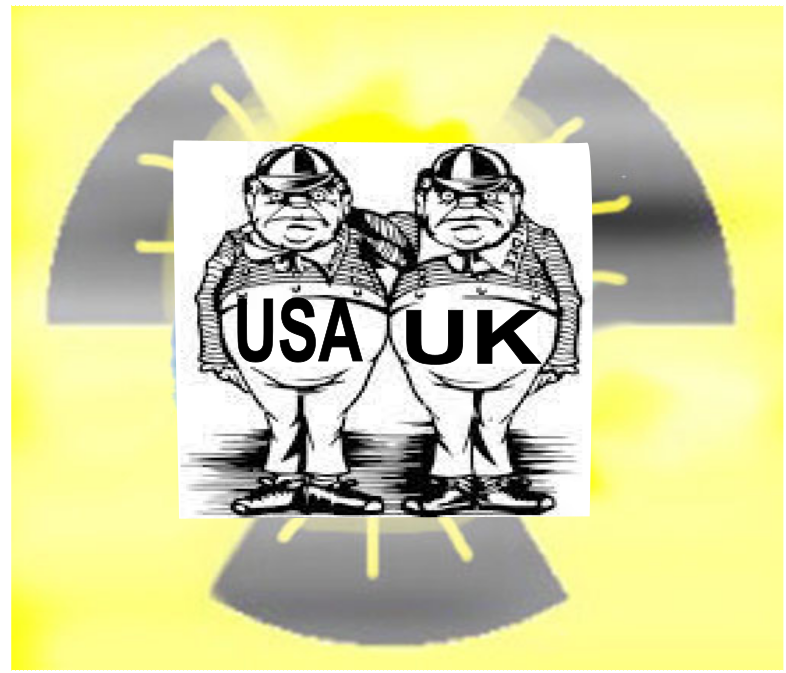
London and Washington have tentatively restarted work on their
multibillion-pound “tech prosperity deal”, which was paused last year
after President Donald Trump piled pressure on the UK to cede ground in
wider trade talks.
Senior US and UK officials have initiated discussions
about collaboration on civil nuclear technologies and on hosting a joint
summit on fusion technologies, according to multiple people briefed on the
talks. They described the deal as “unsticking”. The US-UK “tech
prosperity deal”, which was announced in September last year during
Trump’s state visit, aimed to spur co-operation between the two countries
in areas including AI, quantum computing and nuclear energy.
UK Prime Minister Sir Keir Starmer said at the time that the two nations were
embarking upon a “golden age of nuclear” energy, with more
transatlantic co-operation and speedier regulatory approvals for atomic
projects. The deal was touted by the UK as including £31bn worth of
investment from America’s top technology companies.
However, the US
suspended the deal in early December, with UK officials claiming the Trump
administration was pushing for wider trade concessions outside the tech
partnership. One of the projects announced was an agreement between UK
energy company Centrica and US nuclear group X-energy to build advanced
high-temperature, gas-cooled reactors in Hartlepool. Aerospace and
engineering company Rolls-Royce also said it had entered the US regulatory
process for its small modular reactors, signalling its intent to roll them
out in the US.
The tech deal was paused late last year after US officials
became increasingly frustrated with the UK’s lack of willingness to address
so-called non-tariff barriers in its wider trade negotiations, including
regulations governing food and industrial goods.
FT 25th Feb 2026, https://www.ft.com/content/0992b6d0-5d10-4a7a-a505-6cda84946e6d
SpaceX and Blue Origin abruptly shift priorities amid US Golden Dome push

Thursday, Feb 19, 2026, https://www.defensenews.com/space/2026/02/19/spacex-and-blue-origin-abruptly-shift-priorities-amid-us-golden-dome-push/?utm_source=sailthru&utm_medium=email&utm_campaign=dfn-space
Just a year ago, SpaceX majority owner Elon Musk dismissed going to the moon as a “distraction.” Now, SpaceX and Jeff Bezos’ Blue Origin are racing toward it, and the Pentagon may be the reason why.
Within weeks of each other, the two largest U.S. commercial space companies abruptly shifted their priorities toward lunar development. The moves came as the Department of Defense accelerates plans for a next-generation missile shield known as the Golden Dome, raising questions about whether America’s return to the moon is as much about defense as it is exploration.
In early February, SpaceX announced it would redirect plans for a future city on Mars to establishing one on the moon. The reversal was striking, as Musk previously insisted Mars was the only meaningful destination.
Just days prior to this announcement, Blue Origin quietly paused its New Shepard tourism program for at least two years to increase focus on lunar development, framing the move as part of the nation’s goal of returning to the moon.
However, the timing may suggest a more strategic approach.
In December 2025, the White House issued an executive order calling for a missile shield prototype by 2028, critical for the Golden Dome initiative.
This order also set a timeline for an American lunar return by 2028, with elements of a permanent moon presence targeted for 2030.
Defense officials, such as Space Force Vice Chief of Operations Gen. Shawn Bratton, have emphasized that commercial partnerships will be essential to achieving these goals.
SpaceX is reportedly in line for a $2 billion Pentagon contract to build a 600-satellite constellation supporting Golden Dome tracking and targeting, though the award has not been formally confirmed.
The project would rely on low Earth orbit satellites capable of rapid, near-real-time missile detection. Such systems improve coverage, but remain vulnerable to anti-satellite attacks from adversaries.
The company’s shift to the moon could change that equation. Lunar-based infrastructure would sit far beyond the reach of most anti-satellite capabilities, offering more resilient communications and sensing layers.
In this scenario, the moon could become a strategic “high ground,” which could offer the Pentagon a more durable and far-reaching view for missile detection and surveillance.
Just 15 days before Blue Origin announced its shift toward the moon, the Missile Defense Agency added the company to its $151 billion SHIELD contract, a Pentagon program allowing firms to compete for Golden Dome-related work.
While no specific awards are guaranteed, the timing is noteworthy. Blue Origin is now putting lunar logistics front and center, pausing the New Shepard program to focus resources on that effort.
The company’s Blue Ring vehicle is designed for orbital maneuvering and refueling, capabilities that could one day support sensor deployment and flexible positioning beyond Earth’s orbit, where they are less vulnerable to attack and can provide broader global coverage.
Meanwhile, its Blue Moon MK1 and MK2 landers can deliver multi-ton payloads to the lunar surface, which could be enough to deploy communications systems, sensors or other infrastructure to remote locations, potentially supporting Golden Dome-like operations.
Taken together, these developments could suggest a broader transformation in the strategic landscape of space, one that increasingly intersects with homeland defense and global security.
Schumer, Jeffries blink…Senate, House to vote on War Powers Resolution next week to stop Trump’s criminal war on Iran

Walt Zlotow West Suburban Peace Coalition, 27 Feb 26
The two Democratic leaders in Congress failed in their attempt to quash a bi partisan War Powers Resolution demanding Trump hold off any war on Iran till he makes the case before Congress. That’s not just morally required, it’s constitutionally required.
Senate Minority Leader Chuck Schumer and House Minority Leader Hakeem Jeffries would much prefer Congress to remain constitutionally silent. They both would like to see Trump demolish Iran on behalf of Israel, while self-destructing his presidency when the toll of senseless war visits the homeland. But they’re now on board, bowing to pressure from congressional Democratic peace advocates and the majority of Americans who loathe the rush to war to serve Israel’s regional hegemonic interests, not America’s national security interests.
Alas, the vote next week could be seven long days from now, plenty of time for Trump to act unilaterally, the Congress, the Constitution, the American people be damned.
National analysis of cancer mortality and proximity to nuclear power plants in the United States
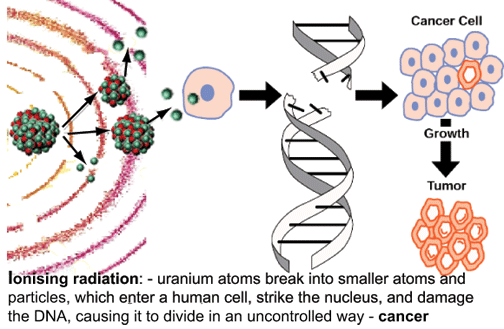
Nature Communications volume 17, Article number: 1560 (2026) , 23 February 2026 [Excellent graphics and tables]
Abstract
Understanding the potential health implications of living near nuclear power plants is important given the renewed interest in nuclear energy as a low-carbon power source. Here we show that U.S. counties located closer to operational nuclear power plants have higher cancer mortality rates than those farther away.
Using nationwide mortality data from 2000-2018, we assess long-term spatial patterns of cancer mortality in relation to proximity to nuclear facilities while accounting for socioeconomic, demographic, behavioral, environmental, and healthcare factors. Cancer mortality is higher across multiple age groups in both males and females, with the strongest associations among older adults, males aged 65–74 and females aged 55–64. While our findings cannot establish causality, they highlight the need for further research into potential exposure pathways, latency effects, and cancer-specific risks, emphasizing the importance of addressing these potentially substantial but overlooked risks to public health.
…………………………………………………………….Nuclear power plants emit radioactive pollutants that can disperse into the surrounding environment, leading to potential human exposure through inhalation, ingestion, and direct contact. These pollutants can be transported through air, water, and soil, contributing to long-term environmental contamination1. Populations residing near nuclear power plants may experience low-level chronic exposure to ionizing radiation via environmental release pathways. While our study does not include dosimetry, ionizing radiation is a well-established carcinogen2,3,4,5,6,7 and thus motivates investigation into proximity-based exposure patterns.
………………………Despite the importance and prevalence of nuclear power plants in the U.S., epidemiologic research regarding their health impacts remains rare. Most U.S. studies have focused on individual plants or limited regions, with only a few national assessments to date – many of which relied on fixed distance cutoffs to classify exposed populations8,9,11,12,19,21,22,23,24,25. These studies often focus on a single facility and its surrounding communities, which restricts their statistical power to detect effects and ability to capture broader exposure patterns. Furthermore, differences in study design, exposure assessment methods, and geographic scope make it difficult to draw generalizable conclusions.
In this work, we assess the association between county-level proximity to nuclear power plants and cancer mortality across the United States from 2000 to 2018. We find that counties located closer to operational nuclear power plants have higher cancer mortality rates, with stronger associations observed among older adults. These associations remain consistent across multiple sensitivity analyses and proximity definitions. The results highlight spatial patterns of cancer risk in relation to nuclear power generation and emphasize the importance of evaluating potential long-term health implications of nuclear energy infrastructure in population-scale studies…………………………………………………………………………………………………………………………………………………………………. https://www.nature.com/articles/s41467-026-69285-4
‘Making America Unsafe Again’: Alarm Over Environmental Review Exemption for Nuclear Reactors
“I think the DOE’s attempts to cut corners on safety, security, and environmental protections are posing a grave risk to public health, safety, and our natural environment,” said one expert.
By Jessica Corbett, February 18, 2026, https://worth.com/trump-nuclear-safety-changes/
ess than a week after NPR revealed that “the Trump administration has overhauled a set of nuclear safety directives and shared them with the companies it is charged with regulating, without making the new rules available to the public,” the U.S. Department of Energy announced Monday that it is allowing firms building experimental nuclear reactors to seek exemptions from legally required environmental reviews.
Citing executive orders signed by President Donald Trump in May, a notice published in the Federal Register states that the DOE “is establishing a categorical exclusion for authorization, siting, construction, operation, reauthorization, and decommissioning of advanced nuclear reactors for inclusion in its National Environmental Policy Act (NEPA) implementing procedures.”
NEPA has long been a target of energy industries and Republican elected officials, including Trump. The exemption policy has been expected since Trump’s May orders—which also launched a DOE pilot program to rapidly build the experimental reactors—and the department said in a statement that even the exempted reactors will face some reviews.
“The U.S. Department of Energy is establishing the potential option to obtain a streamlined approach for advanced nuclear reactors as part of the environmental review performed under NEPA,” the DOE said. “The analysis on each reactor being considered will be informed by previously completed environmental reviews for similar advanced nuclear technologies.”
“The fact is that any nuclear reactor, no matter how small, no matter how safe it looks on paper, is potentially subject to severe accidents.”
However, the DOE announcement alarmed various experts, including Daniel P. Aldrich, director of the Resilience Studies Program at Northeastern University, who wrote on social media: “Making America unsafe again: Trump created an exclusion for new experimental reactors from disclosing how their construction and operation might harm the environment, and from a written, public assessment of the possible consequences of a nuclear accident.”
Foreign policy reporter Laura Rozen described the policy as “terrifying,” while Paul Dorfman, chair of the Nuclear Consulting Group and a scholar at the University of Sussex’s Bennett Institute for Innovation and Policy Acceleration, called it “truly crazy.”
As NPR reported Monday:
Until now, the test reactor designs currently under construction have primarily existed on paper, according to Edwin Lyman, director of nuclear power safety at the Union of Concerned Scientists, a nonprofit environmental advocacy group. He believes the lack of real-world experience with the reactors means that they should be subject to more rigorous safety and environmental reviews before they’re built.
“The fact is that any nuclear reactor, no matter how small, no matter how safe it looks on paper, is potentially subject to severe accidents,” Lyman said.
“I think the DOE’s attempts to cut corners on safety, security, and environmental protections are posing a grave risk to public health, safety, and our natural environment here in the United States,” he added.
Lyman was also among the experts who criticized changes that NPR exposed last week, after senior editor and correspondent Geoff Brumfiel obtained documents detailing updates to “departmental orders, which dictate requirements for almost every aspect of the reactors’ operations—including safety systems, environmental protections, site security, and accident investigations.”
While the DOE said that it shared early versions of the rules with companies, “the reduction of unnecessary regulations will increase innovation in the industry without jeopardizing safety,” and “the department anticipates publicly posting the directives later this year,” Brumfiel noted that the orders he saw weren’t labeled as drafts and had the word “approved” on their cover pages.
In a lengthy statement about last week’s reporting, Lyman said on the Union of Concerned Scientists website that “this deeply troubling development confirms my worst fears about the dire state of nuclear power safety and security oversight under the Trump administration. Such a brazen rewriting of hundreds of crucial safeguards for the public underscores why preservation of the Nuclear Regulatory Commission (NRC) as an independent, transparent nuclear regulator is so critical.”
“The Energy Department has not only taken a sledgehammer to the basic principles that underlie effective nuclear regulation, but it has also done so in the shadows, keeping the public in the dark,” he continued. “These long-standing principles were developed over the course of many decades and consider lessons learned from painful events such as the Chernobyl and Fukushima disasters. This is a massive experiment in the deregulation of novel, untested nuclear facilities that could pose grave threats to public health and safety.”
“These drastic changes may extend beyond the Reactor Pilot Program, which was created by President Trump last year to circumvent the more rigorous licensing rules employed by the NRC,” Lyman warned. “While the DOE created a legally dubious framework to designate these reactors as ‘test’ reactors to bypass the NRC’s statutory authority, these dramatic alterations may further weaken standards used in the broader DOE authorization process and propagate across the entire fleet of commercial nuclear facilities, severely degrading nuclear safety throughout the United States.”
Proximity to nuclear power plants associated with increased cancer mortality

The study found that U.S. counties located closer to nuclear power plants experienced higher cancer mortality rates, even after accounting for socioeconomic, environmental, and health care factors. The researchers estimated that over the course of the study period, roughly 115,000 cancer deaths across the U.S. (or about 6,400 deaths per year) were attributable to proximity to NPPs.
By Maya Brownstein, February 23, 2026, https://hsph.harvard.edu/news/proximity-to-nuclear-power-plants-associated-with-increased-cancer-mortality/
Boston, MA—U.S. counties located closer to operational nuclear power plants (NPPs) have higher rates of cancer mortality than those located farther away, according to a new study led by Harvard T.H. Chan School of Public Health.
The study is the first of the 21st century to analyze proximity to NPPs and cancer mortality across all NPPs and every U.S. county. The researchers emphasized that the findings are not enough to establish causality but do highlight the need for further research into nuclear power’s health impacts.
The study was published Feb. 23, 2026, in Nature Communications.
Numerous studies on the potential link between NPPs and cancer have been conducted around the world, with conflicting results. In the U.S., these studies have been rare and limited in their scope, focused on a single NPP and its surrounding community.
To expand the evidence base, the researchers conducted a national assessment of NPPs and cancer mortality between 2000 and 2018 using “continuous proximity.” They used advanced statistical modeling that captured the cumulative impact of all nearby NPPs, rather than just one. The locations and dates of operation of U.S. NPPs—as well as some nearby in Canada—were obtained from the U.S. Energy Information Administration, and county-level data on cancer mortality was obtained from the Centers for Disease Control and Prevention. The researchers controlled for potential confounders in each county, including educational attainment, median household income, racial composition, average temperature and relative humidity, smoking prevalence, BMI, and proximity to the nearest hospital.
The study found that U.S. counties located closer to nuclear power plants experienced higher cancer mortality rates, even after accounting for socioeconomic, environmental, and health care factors. The researchers estimated that over the course of the study period, roughly 115,000 cancer deaths across the U.S. (or about 6,400 deaths per year) were attributable to proximity to NPPs. The association was strongest among older adults.
“Our study suggests that living near a NPP may carry a measurable cancer risk—one that lessens with distance,” said senior author Petros Koutrakis, Akira Yamaguchi Professor of Environmental Health and Human Habitation. “We recommend that more studies be done that address the issue of NPPs and health impacts, particularly at a time when nuclear power is being promoted as a clean solution to climate change.”
The researchers noted that the results are consistent with the results of a similar study they conducted in Massachusetts, which identified elevated cancer incidence among populations living closer to NPPs.
They also noted some limitations to the study, including that it did not incorporate direct radiation measurements and instead assumed equal impact by all NPPs.
Article information
“National Analysis of Cancer Mortality and Proximity to Nuclear Power Plants in the United States,” Yazan Alwadi, Barrak Alahmad, Carolina L. Zilli Vieira, Philip J. Landrigan, David C. Christiani, Eric Garshick, Marco Kaltofen, Brent Coull, Joel Schwartz, John S. Evans, Petros Koutrakis, Nature Communications, February 23, 2026, doi: 10.1038/s41467-026-69285-4
Fuel shortage threatens US nuclear resurgence, warns top supplier.
Centrus Energy says rising demand and ban on Russian imports risks uranium
enrichment ‘supply gap’.
One of the largest suppliers of enriched
uranium fuel to US nuclear power plants has warned of a looming supply
crunch because of fast-rising demand and a ban on Russian imports. Centrus
Energy chief executive Amir Vexler told the FT the company is racing to
build enrichment capacity at its Ohio plant to meet a $2.3bn backlog in
sales of enriched uranium to customers.
But the restart of several US
nuclear plants and upgrading of the reactor fleet to boost electricity
output would put pressure on the handful of western suppliers of enriched
uranium — a critical component in nuclear fuel, he said.
FT 23rd Feb 2026,
https://www.ft.com/content/717ed9ab-d6c0-4d4f-b2c6-386edfa5e71c
Lies Of Omission As Fresh American War Crimes Loom

The US has been at war for 222 out of 239 years since 1776. The country is hardly going to stop now, especially not with the stars aligning for a project the US-Israel-Zionist axis has been desperate to undertake for nearly 50 years.
And despite the fact that a nation at almost constant war is going to attack a country that last initiated a war nearly 300 years ago, the US and Israel are going to pose as the saviours and pacifiers.
Do not panic, February 22, 2026 , Nate Bear
The US has amassed the largest military force in the Middle East since the invasion of Iraq almost 23 years ago and is poised once again to commit mass murder and gleefully perpetrate an astonishing amount of war crimes.
Yesterday a huge number of planes, from fighter jets to air-to-air refuelling tankers to command and control planes, left the US en route to the Middle East. The planes had stop-overs on US military bases in England and Germany, because no imperial war crime is ever complete without the involvement of Europe.
A US attack on Iran, a flagrant violation of international law, if such a thing is even worth mentioning any more, appears imminent.
Why? For Israel, for oil, for power projection, for Trump’s legacy. Because the logic of the military-industrial complex demands that $1 trillion dollars a year and an astonishing array of killing machinery doesn’t just sit idle.
Because this is what empires do.
Because the US is violence.
And there is no more stunning display of American violence than a big war.
The US has been at war for 222 out of 239 years since 1776. The country is hardly going to stop now, especially not with the stars aligning for a project the US-Israel-Zionist axis has been desperate to undertake for nearly 50 years.
And despite the fact that a nation at almost constant war is going to attack a country that last initiated a war nearly 300 years ago, the US and Israel are going to pose as the saviours and pacifiers.
The leaders of these countries will self-anoint themselves as such, while western media will subject their readers and viewers to a dizzying display of propaganda to enable the murders and wash the crimes.
The groundwork
But the propaganda won’t start from the day of the attack.
The truth is, we wouldn’t be in this situation without the groundwork laid by the media over the years.
We wouldn’t be on the verge of another major US war without the often subtle lies of omission that have characterised western reporting on Iran for decades, and have been especially evident in recent months.
Let’s go through some of them.
Shifting narratives
Firstly, and importantly, the premise for an attack.
Last June Trump said the US had ‘obliterated’ Iran’s nuclear sites.
But now, eight months later, the US apparently needs to do a much bigger war to take out Iran’s nuclear programme.
No one will ask the obvious question.
The premise, that Iran’s nuclear programme is a threat, will stand tall and uninterrogated in the mind of the propagandised western media consumer who just eight months ago was told it had all been destroyed.
Loaded terms
“Iran’s nuclear programme.”
The words themselves are loaded with an intent that is rarely examined or explained.
They never come with any context and are purposefully designed to shut down any critical thinking, as I’ve written about before.
Western media never explains that Iran is one of the world’s biggest producers of radiopharmaceuticals used for cancer diagnostics and treatments. And to diagnose cancer and make cancer drugs, you need medical isotopes. And you can’t make medical isotopes without enriching uranium. Iran is in the top five global exporters of radioactive drugs, supplying fifteen countries, including European countries, with nuclear medicines. And sanctions on Iran prohibit the import of radiopharmaceuticals.
So without its deliberately misrepresented “nuclear programme” Iran would find it hard, if not impossible, to diagnose and treat people with cancer and other illnesses.
The nuclear deal
Media never explains this and also never explains the background to US threats towards Iran over this programme. Amid all the coverage of talks and possible deals, Western media never mentions the fact that in 2018 Trump himself ripped up a deal, signed in 2016, that was working just fine.
That agreement, ratified by the UN Security Council, facilitated regular site inspections and allowed Iran to manufacture nuclear material for medicine and energy. The media will never remind us of this, nor that the last inspection by the International Atomic Energy Agency reported Iran to be in full compliance with their obligations.
We are never told that Trump, under pressure from his Zionist backers to manufacture a crisis which could move the US and Israel towards war, and eager to undo a rare Obama success, deliberately created a problem to solve.
And as we’re about to find out, there was never any intention of solving it peacefully.
But media will keep up the pretence that these were good faith negotiations that broke down because of Iran’s demands. And they won’t tell us those demands included being able to diagnose and treat cancer.
Unilateralism
The fact of the US unilaterally withdrawing from the previous deal is also a key omission in the coverage……………………………………………………..
Israel’s nukes
Talking of rogue states, the media will never examine the foundational premise underlying the whole issue of Iranian nuclear capability.
They’ll never question why Israel is allowed to have a nuclear weapon but Iran isn’t. They’ll never lead readers or viewers to question why the region’s preeminent aggressor, a perpetrator of genocide and a constant violator of laws and norms, is the one trusted with the most destructive weapon in human history.
Because then they’d have to frame Israel as the aggressor.
Then they’d have to explain how empire works.
Then they’d have to examine glaring double standards and hypocrisies and introduce people to critical thinking which doesn’t lead to reflexive cheerleading for empire.
And that is a big no-no.
It is, after all, much easier to manufacture consent for war if a large chunk of the population thinks you’re the good guys doing freedom and peace things.
New pretexts
If you’ve been following the news, you might be aware that the latest talks go beyond the nuclear programme and introduce new pretexts for war, one of which is Iran’s ballistic missile programme.
Israel, having been shocked at Iran’s ability to strike its territory last June, wants the new deal to include the elimination of all Iran’s long-range missiles.
When the US and Israel attack, we’ll be told that it’s Iran’s fault. We’ll be told that wanting to retain defensive capability in the face of an expansionist, genocidal enemy loudly committed to your destruction is an irrational position.
The Guardian among others have already started pushing this line.
By contrast, we won’t be asked to think about why Israel can have any weapon it likes.
We won’t be asked to think about why the US would go to war to stop a country being able to defend itself from Israel.
This will just be presented as the natural order of things.
American violence
The coming war on Iran will be a completely illegal war of unprovoked aggression committed by the US against a country 4500 miles away which poses zero threat………………………………………………………………………………………………… https://www.donotpanic.news/p/lies-of-omission-as-fresh-american
Israel and American Hawks are pushing US to Iran War with Catastrophic Consequences.

Former U.S. Ambassador to Saudi Arabia, Chas Freeman, observes in an on-line interview, that “to be hated means that one does hateful things” and Israel’s leaders are behaving badly”.He noted that what Netanyahu means by peace is pacification [of Arab nations]. It is delusional and [shows] a complete lack of understanding of one’s enemies”.
Hugh J. Curran, INFORMED COMMENT, 02/22/2026
Orono, Maine – It seems clear that Israeli proponents of conflict in the Middle East, as well as supporters in the US media and politics, are determined to take America to war with Iran. This observation was forcefully stated by the global affairs analyst, Patrick Henningsen, who has recently returned from Iran.
The causes of the protests have not so much to do with the regime itself but with economic conditions, including an inflation rate of 42% in December, 2025 while food prices rose by 72% and medical costs increased by 50%. The Iranian Rial has suffered sharp depreciation with poor fiscal policies and mismanagement being causes, although numerous sanctions have been taking a serious toll on Iran’s economy and its people.
Israel and the U.S. claim that Iran “poses an existential threat and therefore must give up its ballistic missile program, which is its primary deterrent”. In addition, Trump has renewed a claim that Iran cannot have a nuclear weapon although they are not planning such a program according to Iran sources and U.S. intelligence assessments.
An additional justification for war is that thousands of protestors were injured or killed in recent demonstrations in Iran. Mai Sato, the U.N. Special Rapporteur on Iran has cited “around 5000 deaths” while the “Human Rights Activists News Agency” states that there were 7,015 deaths. The Iran state media reports that 3117 died, including over 100 officers. Others report a “spiral of disinformation”, promoted by supporters of the former Shah’s son, Reza Pahlavi, who have grossly inflated the numbers.
Former CIA director, Mike Pompeo was quoted in the Jerusalem Post as saying that “every Mossad agent walks beside them [Iranian demonstrators] Mossad encouraged the anti-regime protestors: “Go out together into the streets. The time has come, “Mossad operatives are with the protestors “not only from a distance. We are with [them] in the field.”
Other extreme conservative views that have gained recent attention include those of Sen. Lindsey Graham: “The best answer to all the problems created by Iran is regime change ………………………
Israel’s Netanyahu has been, for some time, promoting conflict with Iran and is once again attempting to persuade American leaders to engage in an attack in order to bring about regime change in the Islamic Republic.
A writer for Israel’s Haaretz News has warned that the U.S. ”is approaching the precipice without articulating a vision as to what will follow …[and is] plunging toward a large-scale war against the Islamic Republic of Iran”
Iran is receiving support from China which has become dependent upon the 1.5 million barrels of oil being shipped daily. Henningsen noted that “Iran possesses advanced missile technology, including newer hypersonic generations not yet deployed, improved targeting systems capable of hitting moving naval targets, proprietary guidance systems, and Chinese-assisted navigation technology”. Despite these defenses, “it’s… clear that the Neocons and Israeli operatives in US media and politics seem determined to take America,…to war.” And this, in spite of the dire consequences, which are likely to be devastating, not only to Iran but also to Israel itself.
Former U.S. Ambassador to Saudi Arabia, Chas Freeman, observes in an on-line interview, that “to be hated means that one does hateful things” and Israel’s leaders are behaving badly”.He noted that what Netanyahu means by peace is pacification [of Arab nations]. It is delusional and [shows] a complete lack of understanding of one’s enemies”. Ambassador Freeman observes that: “Israel is an apartheid state and is enabling dictatorial decisions that are not the “will of the people”. The leaders believe in their own propaganda, but they are not hated because they are Jews but because of their behavior in the destruction of Gaza as well as their targeted assassinations. https://www.juancole.com/2026/02/american-catastrophic-consequences.html
“Dumping Radioactive Wastewater into the Hudson River”
A U.S. District Court judge has allowed Holtec International to move forward with plans to dump more than a million gallons of radioactive wastewater from the closed Indian Point nuclear plants into the Hudson River, ruling that federal authority over nuclear discharges overrides New York State’s “Save the Hudson” Act.
Guests Deborah Porder, Michel Lee, and S.D. Smith (“Owl”), all attorneys involved in the issue, explore the environmental, legal, economic, and health implications of the radioactive wastewater dumping.
Owl, attorney general to the Ramapough Munsee Lenape Nation, underscores the Hudson’s tidal, fjord-like dynamics, explaining how contamination can spread widely and persist over long timescales, cycling through ecosystems and into human bodies. He frames the issue as part of a broader pattern of industrial decision-making that prioritizes short-term gain over long-term environmental integrity.
Michel Lee of United for Clean Energy explains that a key component of the radioactive wastewater—tritium—combines into water and, inside a body, distributes to cells and incorporates into tissues causing prolonged internal radiation exposure.
Deborah Porder of the Stop Holtec Coalition focuses on public health impacts, including elevated cancer risks and adverse pregnancy outcomes near nuclear facilities, noting that tritium can cross the placenta and enter breast milk.
The panel also raises concerns about halted federal cancer studies, the economic viability of nuclear power compared to renewables, and the risk caused by Holtec to the public. Together, they call for strong regulatory oversight, public engagement, and a move away from nuclear power to safe, green, clean energy sources.
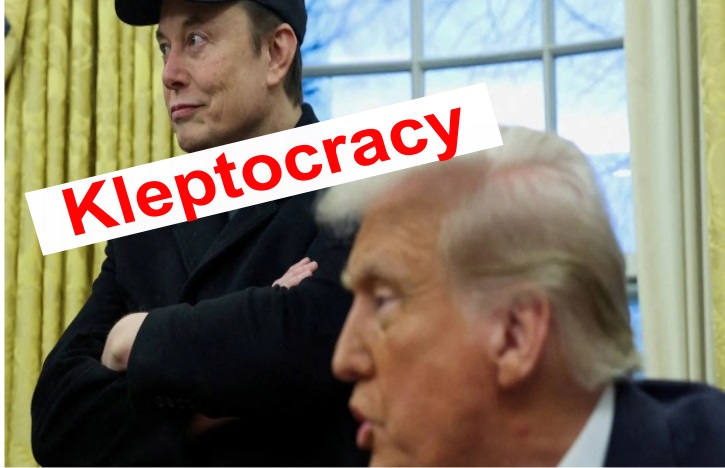
Murica: US throws pennies at massive UN debt
Sat, 21 Feb 2026 , https://www.sott.net/article/504763-Murica-US-throws-pennies-at-massive-UN-debt
Washington still reportedly owes the intergovernmental organization billions of dollars in mandatory funding
The US has paid $160 million towards the more than $4 billion it owes the UN in the first payment since President Donald Trump’s return to the White House.
The UN faces a mounting financial crisis, while the US president positions his Gaza Board of Peace to “oversee” the global body. Some experts have already warned that the initiative could undermine the UN.
Washington’s latest contribution is a “partial payment of its past dues,” Reuters cited a UN spokesperson as saying on Thursday.
The money is a small fraction of the $2.19 billion the US reportedly owes for the UN regular budget and $2.4 it owes for current and past peacekeeping missions. The US is responsible for around 95% of the overdue payments to the UN’s regular budget, Reuters quoted the organization’s spokesperson as saying.
Secretary-General Antonio Guterres has warned that the UN is facing a looming crisis which could end in “imminent financial collapse,” unless member states started making mandatory payments or the organization overhauled its financial rules.
The US, the organization’s biggest contributor, cut voluntary funding to multiple UN programs and cut aid spending last year, as part of Trump’s ‘America First’ policy pivot. In December, Washington pledged $2 billion for the UN’s humanitarian programs, warning it to “adapt or die.” By comparison, the US had contributed $14.1 billion in 2024.
In a speech on Thursday, Trump again criticized the UN as ineffective.
“The United Nations… is going to be much stronger and the ‘Board of Peace’ is going to almost be looking over the United Nations and making sure it runs properly,” he said at the inaugural Board of Peace event in Washington.
The board would help the struggling UN “money-wise” and make sure it’s “viable,” he said.
The Board of Peace was established to guide the stabilization of Gaza following the Israel-Hamas war. UN experts, however, have argued that oversight by such a body is “reminiscent of colonial practices,” due to it being chaired by Trump, rather than being under transparent multilateral or UN control.
Comment: The US behaves like a customer who goes into a restaurant, orders the most expensive meal and after gorging itself, complains about the food while commanding the staff around and growling at the other guests in the restaurant. When presented with the bill it throws a $5 dollar note to the waiter while leaving the restaurant in a huff without paying the main bill while yelling loudly how ungrateful the restaurant was for the honor to have their visit.
Democrats Aren’t Resisting Trump’s Iran War Because They Secretly Support It.
Caitlin Johnston, Feb 20, 2026, https://www.caitlinjohnst.one/p/democrats-arent-resisting-trumps?utm_source=post-email-title&publication_id=82124&post_id=188566363&utm_campaign=email-post-title&isFreemail=true&r=1ise1&triedRedirect=true&utm_medium=email
The Wall Street Journal reports that the US has been gathering the most air power seen in the middle east since the Iraq invasion in 2003.
CNN says the US military is prepared to strike Iran as early as this weekend.
A Trump advisor has reportedly told Axios that “The boss is getting fed up. Some people around him warn him against going to war with Iran, but I think there is 90% chance we see kinetic action in the next few weeks.”
The US is by every indication headed straight toward war with Iran, and Trump’s ostensible opposition has conspicuously little to say about it. We’re seeing some pushback from House Democrats like Ro Khanna, but party leaders like Hakeem Jeffries and Chuck Schumer are completely missing from the scene on this issue of unparalleled urgency.
Democratic Party leaders are doing nothing to oppose Trump’s war plans for Iran because they support those plans. They just don’t want to be the ones pulling the trigger.
When the attack begins they’ll do the same thing they did with Venezuela: publicly finger-wag about rules and protocol while providing no meaningful resistance and privately being glad the empire took out another unauthorized leader.
Democratic Party empire managers love Trump. They love having a bad cop who’s willing to get his hands dirty and slit the throats that need slitting while they sit back looking pretty and fundraise off his depravity.
Democrats hate having to be the bad guy. They hated trying to come up with excuses for why it was fine for Biden to aggressively back a live-streamed genocide in Gaza, and they were relieved to finally hand off that PR nightmare to Trump. They wanted to lose in 2024, and they were glad when they did.
Now they get to just coast along and let Trump take the blame for all the imperial depravity.
On Wednesday, Democratic Senator Mark Warner told MS NOW’s Katy Tur that “I think it’s appropriate that the president has all the options on the table” with regard to war with Iran, complaining only that Trump was too incompetent to strike last month when Iranian domestic turmoil was at its peak.
Warner said that “seeing regime change in Iran would make sense” and made it clear that he would like to see the Iranian government removed, with his only criticism being that Trump was going about obtaining it in a clumsy and impolite way.
“First of all, remember the president said in our previous bombing that we had obliterated Iran’s nuclear program,” Warner said. “While clearly our military did an exquisite job, we did not obliterate Iran’s nuclear program, number one. Number two, if the president is calling for regime change in Iran — and Iran is an awful regime — but he should make the case to the American public and to the world of how we’re going to go about doing that.”
This is such a perfect example of the Democratic Party’s relationship with all of Trump’s most depraved agendas. Here’s this monstrous warmonger, poised to unleash violence in the middle east of potentially devastating consequence, and all Warner can do is hem and haw about proper war etiquette and criticize the president for failing to drop enough bombs on Iran’s nuclear energy infrastructure.
The United States has two right wing war parties: the polite one and the rude one. No party or faction which advances peace and human interests is allowed to flourish at the heart of the empire.
Trump is responsible for the war crimes of his administration, and he belongs in a cell in The Hague. But these Republican swamp monsters wouldn’t be able to do the damage they do without the assistance of the Democratic Party.
A Dangerous Equation: Trump’s Iran Plans and the Democrats Who Expect to Benefit
SCHEERPOST, February 22, 2026 , by Joshua Scheer
Recent reporting suggests that President Donald Trump privately envisions a bold “regime change” in Iran, seeing it as a historical legacy project. Sources indicate he has pressed military planners for contingency strategies that could allow major attacks while keeping potential chaos politically manageable for the midterms.
At the same time, some Democratic leaders appear less focused on preventing war than on the political calculus of who would bear the consequences. Internal discussions reveal a tension: a portion of the party sees a potential conflict as both strategically and politically advantageous if Trump ends up owning the fallout. Meanwhile, a few members of Congress, including Reps. Ro Khanna and Thomas Massie, have pushed for a War Powers resolution to require public accountability.
This coverage raises pressing questions about political expediency versus ethical responsibility in decisions that could imperil thousands of lives abroad and American service members. The stakes are high, and the calculation of winners and losers in Washington may come at a catastrophic human cost………………………………………………………… https://scheerpost.com/2026/02/22/a-dangerous-equation-trumps-iran-plans-and-the-democrats-who-expect-to-benefit/
A $33 billion nuclear bailout is coming to your electric bill.

the “advanced” nuclear power plants being promoted today are decades-old designs that didn’t work then and are now being wheeled out as new-and-improved nuclear power plants.
By Karl Grossman, Feb 20, 2026, https://riverheadlocal.com/2026/02/20/a-33-billion-nuclear-bailout-is-coming-to-your-electric-bill/
$33 billion.
That’s the amount of money the New York State Public Service Commission—its members appointed by the state’s governor—has just approved for you as an electric ratepayer, and every other ratepayer in the state including all businesses and non-profit institutions, to pay from 2029 to 2049 to bail out four nuclear power plants upstate.
The $33 billion would be included as a charge in the bills electric utilities send to all the state’s ratepayers.
In 2017, the PSC approved a $7.6 billion 12-year bail-out of the plants, which their owners had wanted to shut down because they said they were not economical.
They include the oldest nuclear power plant of the 94 now operating in the United States, the Nine Mile Point 1 nuclear power plant in upstate Oswego, which began operating in 1969, and the second-oldest nuclear plant running in the nation, the R.E. Ginna plant, near Rochester.
Nuclear power plants, when they were first introduced in the U.S. in the 1950s, were licensed for 40 years. After 40 years, it was determined that internal parts, especially metals, would become so embrittled by radioactivity that the plants would not be safe to operate.
Now, our money, to the tune of $33 billion, would be used in the coming two decades to keep Nine Mile Point 1, having run in 2026 for 57 years, and Ginna, running for 56 years, going far longer.
If there is an accident at any of these plants, upstate is not that far from Suffolk County, as the radioactivity would blow in the wind. A check on Google says they are in the range of 200 air miles, and a little more depending on what part of Suffolk.
Consider taking a drive in a 57-year-old automobile upstate, or anywhere. How confident would you be in its mechanical ability?
But Hochul is totally enamored of nuclear power. She seemingly believes that the Chernobyl, Three Mile Island and Fukushima disasters never happened. She has been calling for New York State to become the “center” of a nuclear revival in the U.S.
As she said in her “State of the State” address last month, in 2025 “I took the bold step of greenlighting the first nuclear power project in a generation….We set a goal of building one gigawatt of nuclear power,” the equivalent of one large nuclear power plant. She went on that for 2026, it’s “go big” on nuclear power. “So I’ve decided to raise the bar to five gigawatts. That’s more nuclear energy than has been built anywhere in the United States in the last 30 years.”
She is pushing particularly so-called “advanced” nuclear power plants—even though, as a comprehensive analysis by the Union of Concerned Scientists, and other studies, have found they are not “advanced.”
“If nuclear power is to play an expanded role in helping address climate change, newly built reactors must be demonstrably safer and more secure than current generation reactors. Unfortunately, most ‘advanced’ nuclear reactors are anything but,” concluded its report.
“Not So Advanced: Hype vs. Reality for Nuclear Technology,” was the headline of a piece from the Natural Resources Defense Council.
But, as Hochul declared recently, “This is not your grandmothers’ and your grandfathers’ nuclear. This is advanced. This is state-of-the-art. This is safe.”
In fact, the “advanced” nuclear power plants being promoted today are decades-old designs that didn’t work then and are now being wheeled out as new-and-improved nuclear power plants.
Meanwhile, Hochul also keeps insisting that nuclear power is “zero-emission” and thus an antidote to climate change. But the nuclear-fuel-cycle—mining, milling and enrichment of nuclear fuel—is heavily carbon-intensive, and nuclear power plants also emit carbon, a radioactive form of carbon, Carbon-14.
She is fond of old nuclear plants, too, like the four upstate plants the $33 billion bail-out would keep running. “They’re all up on Lake Ontario and one is actually the oldest operating nuclear facility in the United States going strong and safe since 1969,” Hochul claims
Of the bail-out and Hochul’s push for nuclear power, Laura Shindell, the New York State director of the organization Food & Water Watch, says: “It’s outrageous that New Yorkers will once again be forced to bail out this toxic, money-burning industry with billions and billions more in the coming years. Despite decades of evidence that nuclear power is both inherently dangerous and cost-foolish, Governor Hochul insists on throwing good money after bad, with everyday families footing the bill. We’re fed up with the governor’s repeated failure to deliver on promises of clean, affordable energy for this state. She claims she cares about affordability, and then approves this rate increase.”
Says Avni Pravni-Buck, deputy director of Alliance for a Green Economy: “Governor Hochul and her Public Service Commission have locked New Yorkers into an expensive and inefficient scheme to enrich Constellation Energy, while taking New York further away from our renewable energy and climate goals. Every dollar spent on Constellation’s reactors is a dollar that could have gone to building renewable energy and storage, which is cheaper, cleaner, and better for our electricity grid. We’re dismayed to hear that electric ratepayers will now be footing a $33 billion bailout for the upstate nuclear reactors, without any forward-looking plan to transition to renewable resources…”
Tim Judson, executive director of the Nuclear Information and Resource Service, says: “New York’s nuclear bailout program has always been a classic ‘bridge-to-nowhere’—forcing households and businesses to fork over pots of gold, only to leave us with an ever-growing pile of radioactive waste. Since 2017, we have been charged over $4 billion to prop up old, uneconomical nuclear power plants—12 times more than we have spent on incentives for renewable energy. The bailout program was supposed to be expensive but temporary, a $7 billion ‘bridge to renewable energy.’ Here we are years down the road, and the PSC has decided not only to make the bailout basically permanent, but to dramatically increase the cost to $33 billion over an extra 20 years. New York needs to pull the plug on it.”
A true green energy path is before us. This is not it.
1 This Month


Tell the Ukrainian Government to Drop Prosecution of Peace Activist Yurii Sheliazhenko

Petition to revoke the licensing of the Near Surface Nuclear Disposal Facility (NSDF) at Chalk River. https://www.ourcommons.ca/petitions/en/Petition/Details?Petition=e-7247


of the week – STOP SMALL MODULAR REACTORS IN CANADA
To see nuclear-related stories in greater depth and intensity – go to https://nuclearinformation.wordpress.com
-
Archives
- March 2026 (204)
- February 2026 (268)
- January 2026 (308)
- December 2025 (358)
- November 2025 (359)
- October 2025 (376)
- September 2025 (258)
- August 2025 (319)
- July 2025 (230)
- June 2025 (348)
- May 2025 (261)
- April 2025 (305)
-
Categories
- 1
- 1 NUCLEAR ISSUES
- business and costs
- climate change
- culture and arts
- ENERGY
- environment
- health
- history
- indigenous issues
- Legal
- marketing of nuclear
- media
- opposition to nuclear
- PERSONAL STORIES
- politics
- politics international
- Religion and ethics
- safety
- secrets,lies and civil liberties
- spinbuster
- technology
- Uranium
- wastes
- weapons and war
- Women
- 2 WORLD
- ACTION
- AFRICA
- Atrocities
- AUSTRALIA
- Christina's notes
- Christina's themes
- culture and arts
- Events
- Fuk 2022
- Fuk 2023
- Fukushima 2017
- Fukushima 2018
- fukushima 2019
- Fukushima 2020
- Fukushima 2021
- general
- global warming
- Humour (God we need it)
- Nuclear
- RARE EARTHS
- Reference
- resources – print
- Resources -audiovicual
- Weekly Newsletter
- World
- World Nuclear
- YouTube
-
RSS
Entries RSS
Comments RSS
 nuclear-news