USA Congress Republicans denounce a carbon tax
13 June 2016 by dana1981On Friday, the US House of Representatives voted on a Resolution condemning a carbon tax. As The Hill reported:
The oil industry is scared of a carbon taxExxonMobil officially supports a carbon tax, but the company did not comment on the House Resolution prior to the vote. Meanwhile, the American Petroleum Institute, which is a key lobbying group of the oil industry, including ExxonMobil, publicly supported the anti-carbon tax resolution, as did Koch Companies Public Sector, LLC. Senator Sheldon Whitehouse (D-RI) suspects that the Resolution itself originated from the oil industry:
Since 2009, ExxonMobil has contributed at least $1.7 million to members of Congress who voted in favor of the resolution, according to an analysis by ClimateTruth.org. There are some indications that GOP leadership pressured House Republicans to vote for the Resolution. They certainly succeeded: of the 8 Republicans who are members of the bipartisan Climate Solutions Caucus, whose purpose is to craft optimal climate changepolicies, 7 voted for the Resolution. Only Rep. David Jolly (R-FL) withstood the pressure, voting “Present.” Ultimately, 231 of the 246 Republican members of the House (94%) expressed their unwillingness to consider a carbon tax by voting for the Resolution. Why the House Republicans are wrongIt’s odd that not a single House Republican voted against the Resolution, because as long as the revenue is returned to taxpayers (also known as “revenue neutrality”), many conservatives support a carbon tax. This concept is supported by free market, libertarian, and conservative think tanks like the R Street Institute, the Niskanen Center, and the American Enterprise Institute (AEI). AEI resident scholar Aparna Mathur said of the vote:
Polls show that about half of Republican voters support a carbon tax if revenues are rebated to taxpayers. It’s also supported by the non-partisan grassroots organization Citizens’ Climate Lobby (CCL), whose advisory board includes Ronald Reagan’s former Secretary of State, George Shultz. CCL issued a point-by-point response to the carbon tax “pitfalls” listed in the House resolution……..http://www.skepticalscience.com/grand-oil-party-republicans-denounce-carbon-tax.html |
The American President’s Nuclear Codes
 Nuclear codes: A president’s awesome power By Mark Hertling June 10, 2016 CNN The military aides who carry it call it “the football.” The more accurate name is the “president’s emergency response satchel.” But no matter what it is called, the contents of this small metal briefcase contained within a black leather satchel is always within a few feet of the president of the United States.

USA not yet able to get India into the Nuclear Suppliers Group
 Nuclear Suppliers Group Meeting On India’s Membership Ends Inconclusive http://www.ndtv.com/india-news/nuclear-suppliers-group-meeting-on-indias-membership-ends-inconclusive-1417783 Agencies | June 10, 2016 VIENNA:
HIGHLIGHTS
- No decision on India’s application to enter NSG in Vienna meeting
- Application to be taken up in meeting in Seoul on June 20
- Countries led by US support India’s bid, others led by China oppose
India’s application is now expected to be taken up in a meeting in Seoul on June 20.
The US-led push for India to join the club of countriescontrolling access to sensitive nuclear technology had made some headway on Thursday as several opponents appeared more willing to work towards a compromise, but China has consistently remained defiant.
The Nuclear Suppliers Group or NSG aims to prevent the proliferation of nuclear weapons by restricting the sale of items that can be used to make those arms. It was set up in response to India’s first nuclear test in 1974.
India already enjoys most of the benefits of membership under a 2008 exemption to NSG rules granted to support its nuclear cooperation deal with Washington, even though India has developed atomic weapons and never signed the nuclear Non-Proliferation Treaty, the main global arms control pact.
After meeting with Prime Minister Narendra Modi at the White House on Thursday, President Barack Obama pledged America’s backing for India to be given a seat in the NSG.
But China on Thursday maintained its position that the Non-Proliferation Treaty is central to the NSG, diplomats said.
Radionuclides from Fukushima reach Hawaiian Islands
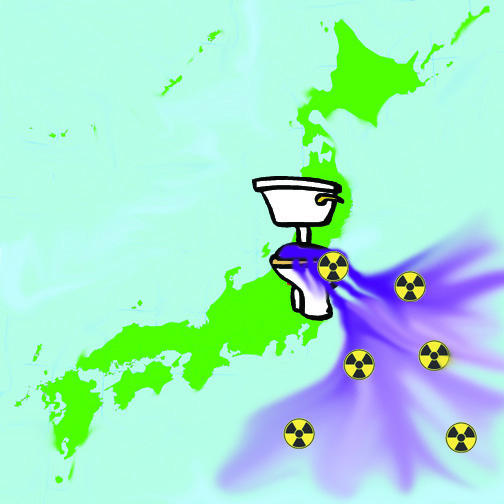 Element from Fukushima plant reaches island cattle; But research finds levels are nothing to be alarmed about http://hawaiitribune-herald.com/news/local-news/element-fukushima-plant-reaches-island-cattle-research-finds-levels-are-nothing-be June 10, 2016 By MAX DIBLE West Hawaii Today KAILUA-KONA — It took only one week for radionuclides to infiltrate the atmosphere above the Hawaiian Islands after they were released from damaged reactors at the Fukushima Daiichi Nuclear Power Plant following the Tohoku earthquake and tsunami March 11, 2011.
By early April of that year, researchers from the University of Hawaii at Manoa began collecting ocean water and sediments to provide a baseline for cesium levels. Cesium is an alkaline earth element and a beta radiation emitter, meaning as it decays it emits electrons that can damage cell structures within the human body.
Establishing a baseline was critical, as data from government-monitored cesium tests from the 1960s through the early 1980s were the most recent available. That monitoring was administered to measure the effects of nuclear weapons testing by the United States in the Pacific following World War II.
Tests by the UH-Manoa research team continued every month through 2011 and were administered every three to six months in subsequent years. They were expanded to include tests on algae, lichen, coconuts, fish and mushrooms. An update on the research was posted on the university’s news website last Friday.
“The conclusion is pretty much that all is safe,” said Henrietta Dulai, associate professor in the Marine and Environmental Geology Division of the UH-Manoa Department of Geology and Geophysics. Dulai oversaw a small research team that included graduate students Hannah Azouz and Trista McKenzie. “Tests are still ongoing, but we do not expect any significant levels at all.”
Ocean currents that might have carried radioactive materials from Japan to Hawaiian shores never made direct contact with the near-shore environment of the Hawaiian Islands, and so ocean water and sediment samples collected by the researchers off Oahu never showed a spike in cesium levels.
However, Dulai said elevated levels were found in ocean water farther north around the Midway Islands and have been detected off the West Coast of the United States and Canada, reaching as far north as Alaska.
While the immediate surrounding oceans were spared, the Hawaiian Islands didn’t escape the disaster totally unscathed.
“The Department of Health monitored precipitation and the atmosphere and also milk,” Dulai said. “They found positive (cesium) hits in all of these.”
Dulai and her team were curious as to why they found nothing in their samples despite the state DOH detecting elevated cesium levels in the atmosphere. The team began collecting samples on precipitation gradients on Oahu and Hawaii Island, where it did locate elevated cesium levels.
A correlation was established between areas of higher rainfall and higher cesium levels in the soil. At higher elevations, more rainfall occurred and more cesium was absorbed by the soil. This is what led to elevated cesium levels detected in milk from grazing cattle.
It turned out that the topography of the islands captured the clouds and to a large extent spared the oceans from excess radioactivity, as cesium deposits from rainfall tended to accumulate on land. While this news might sound concerning, Dulai said residents of the Hawaiian Islands need not be alarmed.
“The natural radioactivity in the soil is orders of magnitude higher than this added cesium level,” Dulai explained. “The added cesium is a tiny fraction of what is there naturally or what was deposited during the nuclear weapons testing.”
Contamination in seafood and mushrooms also was found to be “orders of magnitude below” any health limits set by the FDA. Fish were a primary concern because they migrate, so while they wouldn’t have picked up extra cesium in Hawaiian waters, they might have been contaminated in waters from where they migrated.
Dulai and her team’s research will continue, as will monitoring done by the DOH, according to its website. The website states surveys since May 2011 conducting shoreline surveillance “remain consistent with normal background levels.”
The department also continues to monitor air, precipitation and drinking water using the Environmental Protection Agency’s RadNet system.
Email Max Dible at mdible@westhawaiitoday.com.
New Jersey nuclear reactors can continue guzzling water from Delaware River
 Power stays on: Permit allows 2 N.J. nuclear reactors to keep operating By Bill Gallo Jr. | For NJ.com June 10, 2016 LOWER ALLOWAYS CREEK TWP. — New Jersey Friday granted a five-year permit that will allow PSEG Nuclear to continue to draw billions of gallons of water from the Delaware River to cool two of its nuclear reactors in Salem County.
The Department of Environmental Protection’s permit does not require the plant’s operator, PSEG Nuclear, to build cooling towers at its Artificial Island generating site in Lower Alloways Creek Township, something environmental groups have long urged.
Without this permit, officially known as the New Jersey Pollutant Discharge Elimination System Permit, the two plants, Salem 1 and 2, might have been forced to shut down…….
Salem 1 and 2, when operating at full power, use 3 billion gallons of water a day from the Delaware River. The water is drawn in, circulated through the plants’ “open loop”cooling systems and discharged back into the river………
Environmentalists have long criticized the plants saying they are causing the death of marine life which is being caught on screens at the point of water intake or by actually being sucked into and through the cooling system…….
Bill Gallo Jr. may be reached at bgallo@njadvancemedia.com. http://www.nj.com/salem/index.ssf/2016/06/power_stays_on_permit_allows_2_nj_nuclear_reactors.html
6 USA nuclear stations to have guards with assault rifles
 Security Guards at San Onofre, 5 Other Nuclear Power Plants Now Allowed to Carry Assault Rifles, JUNE 8, 2016, BY LOS ANGELES TIMES, U.S. nuclear regulators have granted Southern California Edison permission to arm private security guards at the defunct San Onofre power plant with assault rifles and “ammunition feeding devices.”
The Nuclear Regulatory Commission granted Edison and five other nuclear power plants the special exemptions as a way to secure the facilities and the spent nuclear waste they store on-site…….http://ktla.com/2016/06/08/security-guards-at-san-onofre-5-other-nuclear-power-plants-now-allowed-to-carry-assault-rifles/
Increasing illness among US sailors exposed to radiation near Fukushima
 Spike in number of US sailors dying after Fukushima radiation exposure — Now over 400 veterans suffering serious illnesses — Former Japan Prime Minister breaks down crying, “This can’t be ignored any longer… The number of sick people is increasing and their symptoms are worsening” (VIDEOS) http://enenews.com/spike-number-sailors-dying-after-fukushima-radiation-exposure-400-veterans-suffering-serious-illnesses-former-japan-prime-minister-breaks-down-crying-be-ignored-longer-number-sick-people-increas?utm_source=feedburner&utm_medium=email&utm_campaign=Feed%3A+ENENews+%28Energy+News%29
Kyodo, May 19, 2016: Former Prime Minister Junichiro Koizumi has thrown his support behind a group of former U.S. sailors suing the operator of the Fukushima No. 1 nuclear plant… Speaking at a news conference Tuesday in Carlsbad, California, with some of the plaintiffs, Koizumi said, “Those who gave their all to assist Japan are now suffering from serious illness… I learned that the number of sick people is still increasing, and their symptoms are worsening,” he told the news conference… According to lawyers for the group, seven of its members have died so far, including some from leukemia [Three deaths had been reported as of last July].
Asahi Shimbun, May 19, 2016: Former Prime Minister Junichiro Koizumi broke down in tears as he made an emotional plea of support for U.S. Navy sailors beset by health problems… More than 400 veterans who were part of a mission called Operation Tomodachi… filed a mass lawsuit in California against [TEPCO]. They are seeking compensation and an explanation for theirhealth problems… Koizumi said: “U.S. military personnel who did their utmost in providing relief are now suffering from serious illnesses. We cannot ignore the situation.” Apparently overcome with emotion, Koizumi started crying… Theodore Holcomb [was] diagnosed with synovial sarcoma, a rare form of cancer. He died in 2014 at age 35. TheDepartment of Veterans Affairs later cut off a study into the causal relationship between his exposure to radiation and his illness… Ron Wright, 26, worked on the deck [and] developed a swelling of the testicles and underwent surgery four times… A military doctor told him there was no relationship between his illness and exposure to radiation.
CBS San Diego, May 18, 2016: Sick sailors meet with Japan’s former prime minister… The USS Reagan sailed through a nuclear plume and crews had to spend hours decontaminating the vessel. Sailors now say they are suffering from radiation exposure. “Honestly, I just want to feel better,” said Chad Holt, who served on the USS Ronald Reagan… “A lot of people, they can’t physically see something wrong with you. They think there is nothing wrong with you. That is not the case what we are living with on a daily basis,” said Daniel Hair, who is now retired from the Navy… “I realized this is something that can’t be skipped over, can’t be ignored any longer. The three claims of being safe, cheap and clean were all lies,” [Koizumi] said.
NBC San Diego, May 18, 2016: Many of the sailors say doctors refused to connect their illnesses with the radiation exposure. “You have to experience it,” said William Zeller. “You have to experience the doctor telling you to your face. You have to experience the years of pain when everyone tells you ‘You know you’re fine.’”… “I realize this is not something that can be just skipped over and can’t be ignored any longer,” [Koizumi] said. “Everyone played a role in not shedding more light on this problem…” Koizumi said… The sailors’ attorney said they have won their case against Tokyo Electric Power Company twice, however the company has appealed the judge’s decisions. It is still unclear how exactly the sailors will be compensated…
San Diego Union Tribune, May 17, 2016: Koizumi [said] he believes the service members’ illnesses, reported to include leukemia and tumors, were caused by the 2011 exposure, despite U.S. government findings to the contrary… Koizumi said the Japanese government and [TEPCO] should support the radiation-exposed U.S troops financially and “across the board.”
Secure Nuclear Waste Coalition formed to call public to action on San Onofre nuclear waste danger
 New group wants action on nuclear waste storage at San Onofre, Orange County Register, eritchie@ocregister.com June 8, 2016 LAGUNA BEACH – Earthquakes, tsunamis or terrorism.
That’s what a newly created group of scientists, medical experts, activists and elected officials from Orange and San Diego counties say pose ominous threats to the more than 10 million people living within a 50-mile radius of the shuttered San Onofre Nuclear Generating Station.
“If one of those events happen, the amount of radiation could be 89 times more than what was released at Chernobyl,” said Rita Conn, a spokeswoman for the newly created Secure Nuclear Waste Coalition and chairwoman of Let Laguna Vote, a nonpartisan organization dedicated to government transparency.
On Wednesday, Conn kicked off a Secure Nuclear Waste Coalition educational forum and called the public to action.
Members of the group include Mayor Pam Patterson from San Juan Capistrano; Nina Babiarz of Nuclear Waste Transportation; Charles Langley, executive director of the Public Watchdogs; Robert Pope, a geologist; and Dr. William Honigman.
Panelists told more than 200 people inside a packed Laguna Beach City Council chambers that plans by Southern California Edison to temporarily bury millions of pounds of nuclear waste 42 yards from the ocean at San Onofre State Beach must be stopped.
The experts testified about the dangers the public faces by potential exposure to radiation or radiation leaks. They questioned the lack of security at the shuttered plant. They discussed the potential for it to become a terrorist target.
“There is an obscene level of unpreparedness,” Honigman said. “How do we deal with radiation exposure on a massive level?”
They advocated that Edison move the spent nuclear fuel rods to a temporary storage site in West Texas or New Mexico – an idea being explored by lawmakers and regulators.
They criticized the California Coastal Commission’s approval of a “concrete monolith” to house spent fuel in temporary, dry-cask storage at the site. The contained radioactive material is expected to remain in place until 2049.
“Edison must not be allowed to store the highly radioactive fuel rods in the ‘experimental’ … thin-walled stainless steel canisters that have never been used in the damp marine environment, have no proven track record, no means to support transport and no means to inspect for radiological leaks,” Conn said.
The California Coastal Commission last year approved plans for the temporary burial of the San Onofre nuclear waste – which has been stored in liquid tanks – after political paralysis prevented the federal government from coming up with a permanent burial solution for the nation’s nuclear waste……..http://www.ocregister.com/articles/waste-718742-nuclear-san.html
Hanford deception over the true extent of radiation caused illness among nuclear workers
Hanford continues to mislead workers about toxic vapors K5, Susannah Frame, KING June 08, 2016 After a 33 year career at Hanford working in the tank farms, Abe Garza of Richland is off the job and he’ll never work again. He has permanent lung damage and brain damage from exposure to toxic chemical vapors at the jobsite. On some days the gasping for air and coughing is so violent he passes out.
“It feels like an elephant is sitting on my chest,” said Garza.
The damage to his brain has left him unable to drive and remember simple tasks. Once an avid reader of classic novels and books on mathematics, it’s now difficult for Garza to read any kind of material. According to his wife, the chemical exposures have turned their lives upside down.
“(It’s) devastate our lives,” said Garza’s wife, Bertolla Bugarin.
Garza is one of an unknown number of current and former Hanford workers who suffer debilitating health effects because of a decades old problem of chemical vapors venting from underground nuclear waste tanks at the former plutonium production facility. Since April 28, 51 workers, a record number, have suspected they’ve been exposed to vapors. Some are still too sick to return to work, mostly due to breathing problems.
Despite findings by doctors that workers such as Abe Garza are sick as a direct result of exposure to chemical vapors, top managers from the U.S. Dept. of Energy, which owns Hanford, and its contractor in charge of the tank farms, Washington River Protection Solutions (WRPS), report their testing of the airspace after exposures always shows very small amounts of chemical concentrations.
“Air samples taken yesterday in two areas where odors were reported indicated chemical concentrations well below regulatory standards,” said WRPS spokesperson Rob Roxburgh in a statement on May 5, 2016 after nine people went to the onsite medical clinic due to suspected exposures in two separate locations.
This has been the message from management to the workforce for decades at Hanford. In his 33 year career, Garza said he was consistently reassured in trainings that chemical vapors were in control at the site and always measured at acceptable levels. He said the chemical hazard trainers never mentioned readings of chemical concentrations measured at unsafe levels.
“I’ve never heard anybody say anything about that,” said Garza. “When they tell you what’s safe you would think that that’s (the truth).”
Records obtained by KING 5 show dozens of readings over the years show measurements far above acceptable levels. Some examples include: mercury, which can cause brain damage, measured in 2009 at 473 percent above occupational limits. Also in 2009, furan, a carcinogen, measured at 3145 percent above occupational limits. Ammonia, which can cause glaucoma and lung damage, was measured at more than 1800 percent above the limit. A known cancer-causing chemical called nitrosodimethylamine was recorded at 13,000 percent above the legal limits in 2005.
And on October 21, 2015 in what is known as the C-Farm of underground tanks, routine sampling found emissions “above (the) action level”, which prompted managers to “access restriction” they deemed as necessary “to prevent worker exposure to an uncharacterized chemical hazard.”
Garza and Bugarin said they feel betrayed information like this was never passed along to the workforce. The data is important they said because in many areas at Hanford it is up to the employees to choose what type of personal protective equipment they will wear on a given day.
“I’m most mad about Hanford lying to the employees that it is not dangerous out there. And that they are safe. That’s what I am most made about,” said Bugarin. “It’s a lie. It’s impossible for that to be. It’s scientifically impossible to have normal levels all the time. You’re in the most toxic site in the United States. It’s almost as insult to anybody with (any) intelligence.”……“If it were up to me, I would probably prosecute if I could the people that are allowing this, which is upper management or Washington River Protection (Solutions). Somebody needs to be held accountable at whatever level to stop this,” said Bugarin.
On June 1 KING 5 wrote to representatives of the US Dept. of Energy and Washington River Protection Solutions for comment on this story. Questions were submitted via email regarding dimethylmercury, including an inquiry into why the contractor was no longer testing for it. No one responded to the email. http://www.king5.com/news/local/hanford-continues-to-mislead-workers-about-toxic-vapors/236432342
Gloabl nuclear industry problems shown up in Illinois political battle over government subsidy
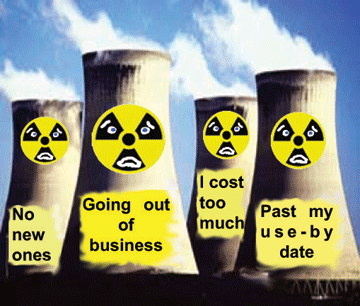 Illinois Power Plant Closings Reveal Worldwide Nuclear Issues, Clean Technica June 9th, 2016 by Sandy Dechert The many-sided battle over nuclear power continues with a clear break over politics in Illinois. The company and the government are dancing around the issues currently, with the industry essentially taking the position that government (read: the people) should subsidize the waning years of nuclear installations, or else. That state’s legislature adjourned its spring session last week without extending subsidies for nuclear power (the Next Generation Energy Plan advocated by the nuclear industry).
In return, Exelon Corporation—the nation’s largest nuclear power supplier—announced that it would have to close two of the state’s best-performing plants. It has said that the Clinton Power Station will close next June, and the Quad Cities Generating Station will close a year later. Despite their high scores, they have apparently lost $800 million over the past seven years. Exit papers are in preparation.
Joe Dominguez, executive vice president for governmental and regulatory affairs and public policy at Exelon, describes his company’s bottom line:
“We think that the costs of new nuclear right now are not competitive with other zero-carbon technologies, renewables, and storage that we see in the marketplace…. Right now we just don’t have any plans on the board to build any new reactors.”
Renewables broke all world records in 2015, say the United Nations Environment Programme and Bloomberg New Energy Finance. Also, renewables (excluding large hydro) accounted for more than half of new power generation capacity for the first time last year.Including large hydro, renewables’ share of all global electricity generation rose to more than 20%.
The human cost of closing the two Illinois plants includes 4,200 direct and indirect jobs and over $1.2 billion in economic activity annually. An earlier state report that Exelon quotes estimates that wholesale energy costs would rise in the region by $439 million to $645 million annually because of the plant closures. Exelon claims consumers will have to pay about $0.25 monthly to sustain the plants. Critics charge it will hike electric bills by about $3.00. Exelon has its eye on three other American closures, and Entergy is considering two at last report.
Industry-Wide Issues
Although this squabble has plagued Illinois for years, it brings up some nuclear issues that impact on the larger energy scene, both nationally and worldwide. These include not only competition from renewable energy but also unique financial factors, extension of design limits for the plants, decreasing reliability as reactors age, stability of the power grid, inadequate measures for disposal of radioactive waste. For all of these, potential near-term usefulness in slowing climate change—by limiting carbon releases associated with other forms of electric power generation—should be a major consideration……….
No commercial plants have been built in this country during the past 20 years. Eight have remained “under construction” during this time. These are mostly in the South, which still retains a protective regulatory environment. Only two are already scheduled to come online. In 2015, TVA Bellefonte ceased construction.
And decommissioning involves even greater expenses in the short term than keeping unprofitable plants afloat. Some of this huge expense (including the vital component of all project management, which the NRC’s Office of Nuclear Material Safety and Safeguards carries out) involves using more public funds…………..https://cleantechnica.com/2016/06/09/illinois-power-plant-closings-reveal-worldwide-nuclear-issues/
Scientists, city leaders, local community warn against burial of nuclear waste near San Onofre State Beach.
 Local Leaders, Scientists Sounding Alarm Over Possible Nuclear Disaster In Southland http://losangeles.cbslocal.com/2016/06/08/local-leaders-scientists-sounding-alarm-over-planned-nuclear-waste-dumping-in-san-onofre-state-beach/ June 8, 2016 LAGUNA BEACH (CBSLA.com) — A standing-room-only public forum was held Wednesday night to warn the community about Southern California Edison’s plans to bury radioactive waste near San Onofre State Beach.
If nothing is done, the utility will be allowed to bury 2,000 tons of high-level nuclear waste in canister less than an inch thick 100 feet from the beach, according to the newly formed Secure Nuclear Waste Coalition, made up of scientists, city leaders and people who live near the San Onofre nuclear plant.
“Each canister contains a Chernobyl’s worth of radiation, and there’s 50 of them. And they want to put 100 more without dealing with the fact that ocean air is going to cause them to crack and potentially and even explode,” Donna Gilmore said.
The California Coastal Commission approved the beachfront nuclear waste burial on October 6, 2015.
The group told those living within the 50-mile evacuation zone from San Diego to Long Beach that even though the San Onofre nuclear- generating station has been shut down, the real danger still lies in the still highly radioactive spent nuclear fuel that will remain on site for years.
“They have been called rightfully so – bombs in our backyard,” warned Rita Conn of the coalition.
Edison has maintained the shuttered nuclear power plant and the spent fuel rods stored there are safe. But some fear Southern California is one earthquake, one tsunami or one terrorist attack away from a nuclear disaster.
“Whether it’s mother nature, human error or terrorism, anything could close down the 7th largest economy of the United States for the next 10,000 years,” Laguna Beach resident Marni Magda said.
“If we don’t do anything about it, people are just going to have their heads in the sand and heaven forbid, something terrible happens,” Donna Tiab warned.
A call to Southern California Edison for comment Wednesday night was not returned.
Rockland County Lawmakers Want Shutdown of Dangerous Indian Point Nuclear Station
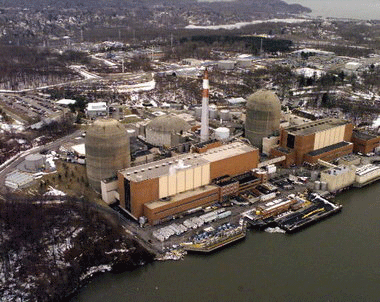 VOICE OF THE LEGISLATIVE MAJORITY: Shut Down Indian Point
http://www.rocklandtimes.com/2016/06/09/voice-of-the-legislative-majority-shut-down-indian-point/June 9th, 2016 By Legislator Alden H. Wolfe (D- Montebello) Chairman, Rockland County Legislature
From the moment the Indian Point nuclear power plants went on line, safety issues began to emerge. Malfunctions and faulty parts caused the plants to be closed, and later restarted. As the Hudson Valley population grew and the problems at Indian Point increased, the reality of the potential for a catastrophic disaster became clearer and clearer.
Sadly, the Indian Point facility continues to suffer more failures than ever before. In the last year alone, there have been seven plant shutdowns. At this point, there is undoubtedly only one solution: Indian Point must be shut down immediately.
This week, I stood with other governmental and environmental leaders in Westchester to call for the shutdown of the plant, and to raise awareness about continuing dangerous conditions that exists in the plant.
One of the critical components of a nuclear plant is its cooling capability. Carefully laid metal plates channel cooling water through the reactor at a rate of 250,000 gallons per minute. The water flows through the core of the plant, cooling it and preventing a nuclear meltdown. The plates need to be arranged in such a way to control the amount and speed of the water that flows in the plant. Any deviation from those parameters could create a devastating meltdown endangering hundreds of thousands of lives.
The plates are kept in place by bolts known as “baffle-former assembly bolts.” The Indian Point Unit 2 nuclear reactor has 832 of these bolts, and each one is essential to keeping the metal plates secure. Nationally, roughly 1 – 3 percent of bolts at the average nuclear power plant are broken or missing. At Indian Point, that number is an astounding 27 percent.
Two hundred and twenty seven of the 832 bolts that are the difference between life and death are broken or missing at Indian Point. According to the Nuclear Regulatory Commission, that is “the largest seen to date at a U.S. reactor.” Shockingly, these failures occurred under the watchful eye of the NRC, which now declares the reactor safe to restart once the bolts are replaced. What other critical safety component will be the next to fail at this aging plant?
As if the threat of loss of life weren’t enough, last month it was estimated that in the event of a nuclear meltdown, it would take 1.5 million workers and as much as $1 trillion – with a T – to decontaminate the affected areas.
Indian Point is a powder keg. Every minute it operates is another risk to all of us, and it is a risk we should no longer allow. The Legislature will continue to work with those committed to closing Indian Point to put an end to this unnecessary gamble with our lives.
USA: “NewNuclear” lobbyists want changed regulations and more tax-payer funding
Advanced Nuclear Reactor Framework Needed, Industry Says, Bloomberg BNA From Energy and Climate Report By Rebecca Kern June 8 — The Nuclear Regulatory Commission needs to develop a regulatory framework specifically for advanced nuclear reactors and review applications for them efficiently, vendors that are developing the next-generation nuclear reactors told the agency.

The current regulatory process for all 100 operating nuclear reactors in the U.S. is meant for light water reactor technology. Companies developing advanced non-light reactors say the current framework doesn’t apply to their technologies, which are cooled by substances other than water—such as sodium, gas, molten salt and lead…….
Jennifer Uhle, director of NRC’s Office of New Reactors, told Bloomberg BNA June 8 that the NRC can review non-light water reactors under its current light water reactor framework, but it is considering developing a new non-light water reactor framework that would be more efficient. So far the agency hasn’t received any applications for these types of reactors.
The most mature advanced non-light water technologies—sodium-cooled and gas-cooled reactors—are still at least 15 years away from the commercial market, John Kelly, DOE’s deputy assistant secretary for nuclear reactor technologies, told Bloomberg BNA June 8. Other advanced non-light water technologies, such as molten salt reactors, are at least 20 years away from the market, Kelly said.
Need for More DOE Funding
DOE is providing funding for these reactor designs. DOE awarded X-energy and Southern Company Services competitive advanced non-light water grants in January for X-energy’s pebble bed high temperature gas-cooled and Southern’s molten-chloride fast reactor designs.
“DOE funding for industry is definitely needed, alongside funding for test facilities,” Rita Baranwal, director of technology development at Westinghouse Electric Co., said at the workshop.
Additionally, the industry and government need to work together more closely to encourage innovation in advanced reactor designs, Baranwal said. She commended the work DOE has done to establish the Gateway for Accelerated Innovation in Nuclear (GAIN) initiative, which aims to provide the nuclear industry with access to technical, regulatory and financial support to speed the commercialization of new advanced nuclear reactor designs…….
To contact the reporter on this story: Rebecca Kern in Washington atrkern@bna.com
To contact the editor responsible for this story: Larry Pearl atlpearl@bna.com http://www.bna.com/advanced-nuclear-reactor-n57982073849/
Alarm sounded on Southern California Edison’s plan for nuclear waste burial near beach
Local Leaders, Scientists Sounding Alarm Over Possible Nuclear Disaster In Southland http://losangeles.cbslocal.com/2016/06/08/local-leaders-scientists-sounding-alarm-over-planned-nuclear-waste-dumping-in-san-onofre-state-beach/ June 8, 2016 LAGUNA BEACH (CBSLA.com) — A standing-room-only public forum was held Wednesday night to warn the community about Southern California Edison’s plans to bury radioactive waste near San Onofre State Beach.
If nothing is done, the utility will be allowed to bury 2,000 tons of high-level nuclear waste in canister less than an inch thick 100 feet from the beach, according to the newly formed Secure Nuclear Waste Coalition, made up of scientists, city leaders and people who live near the San Onofre nuclear plant.
“Each canister contains a Chernobyl’s worth of radiation, and there’s 50 of them. And they want to put 100 more without dealing with the fact that ocean air is going to cause them to crack and potentially and even explode,” Donna Gilmore said.
The California Coastal Commission approved the beachfront nuclear waste burial on October 6, 2015.
The group told those living within the 50-mile evacuation zone from San Diego to Long Beach that even though the San Onofre nuclear- generating station has been shut down, the real danger still lies in the still highly radioactive spent nuclear fuel that will remain on site for years.
“They have been called rightfully so – bombs in our backyard,” warned Rita Conn of the coalition.
Edison has maintained the shuttered nuclear power plant and the spent fuel rods stored there are safe. But some fear Southern California is one earthquake, one tsunami or one terrorist attack away from a nuclear disaster.
“Whether it’s mother nature, human error or terrorism, anything could close down the 7th largest economy of the United States for the next 10,000 years,” Laguna Beach resident Marni Magda said.
“If we don’t do anything about it, people are just going to have their heads in the sand and heaven forbid, something terrible happens,” Donna Tiab warned.
A call to Southern California Edison for comment Wednesday night was not returned.
Strong protest call for shutdown of Indian Point nuclear station
Protesters call for shutdown of Indian Point, lohud Thomas C. Zambito, The Journal News June 9, 2016 Judy Allen listened as a federal safety official detailed the Nuclear Regulatory Commission’s conclusion that Indian Point could shut down in time if a gas pipeline under construction nearby ruptured.
And she wasn’t buying it.
“You no longer have any credibility,” Allen, of Putnam Valley, told a panel of NRC officials who gathered in Tarrytown on Wednesday to deliver their annual assessment of Indian Point’s safety record.
“You have become a lapdog for (Indian Point owner) Entergy,” she added. “Putting a 42-inch gas pipeline next to Indian Point is pure insanity. I wish I had enough money in my piggybank to sue you.”
There was little common ground to be found Wednesday night when competing sides in the debate over Indian Point’s future stepped up to the microphone at the DoubleTree Hotel and weighed in on the NRC’s decision to give the nuclear power plant a passing grade in its annual safety assessment…….
decision by federal safety regulators to approve a plan by Spectra Energy to expand a natural gas pipeline that runs north from Pennsylvania to New England, touching several communities bordering Indian Point.
The decision has led to regular protests in the towns along the pipeline route. Last month, two protesters were arrested after they locked themselves inside an environmentally-friendly shipping container positioned outside a construction site in Peekskill……..
The hearing comes at a critical time for Indian Point.
On Monday, Gov. Andrew Cuomo renewed his call for the plant’s shutdown.
“Indian Point is the nuclear power plant that is the closest to the most densely populated area on the globe,” Cuomo told reporters in Poughkeepsie on Monday. “It has had a series of mishaps. We know we can find replacement power. Why you would allow Indian Point to continue to operate defies common sense, planning and basic sanity.”
Cuomo is pushing the state Public Service Commission to get behind a clean-energy plan that would force the state to rely on renewables like solar and wind power for 50 percent of its electricity over the next 15 years.
Cuomo is also pushing a slate of financial incentives for three upstate nuclear power plants struggling to make money in an economically-depressed part of the state. But the incentives wouldn’t apply to Indian Point…….http://www.lohud.com/story/tech/science/environment/2016/06/08/protesters-call-shutdown-indian-point/85613178/
-
Archives
- October 2026 (120)
- September 2026 (339)
- August 2026 (330)
- July 2026 (355)
- June 2026 (287)
- May 2026 (306)
- April 2026 (356)
- March 2026 (251)
- February 2026 (267)
- January 2026 (308)
- December 2025 (358)
- November 2025 (359)
-
Categories
- 1
- 1 NUCLEAR ISSUES
- business and costs
- climate change
- culture and arts
- ENERGY
- environment
- health
- history
- indigenous issues
- Legal
- marketing of nuclear
- media
- opposition to nuclear
- PERSONAL STORIES
- politics
- politics international
- Religion and ethics
- safety
- secrets,lies and civil liberties
- spinbuster
- technology
- Uranium
- wastes
- weapons and war
- Women
- 2 WORLD
- ACTION
- AFRICA
- Atrocities
- AUSTRALIA
- Christina's notes
- Christina's themes
- culture and arts
- Events
- Fuk 2022
- Fuk 2023
- Fukushima 2017
- Fukushima 2018
- fukushima 2019
- Fukushima 2020
- Fukushima 2021
- general
- global warming
- Humour (God we need it)
- Nuclear
- RARE EARTHS
- Reference
- resources – print
- Resources -audiovicual
- Weekly Newsletter
- World
- World Nuclear
- YouTube
-
RSS
Entries RSS
Comments RSS

