Renewables beat nuclear on economics, as Wall Street now finds
New Wind & Solar Lower Greenhouse Gas Emissions & Cost Less Than Keeping Aging Nuclear Power Plants Running, Clean Technica July 5th, 2016 by Christopher Arcus Recently, we have seen a spate of older nuclear reactors shut down by their owners for economic reasons. One of the first bellwethers of this trend was the Kewaunee power plant closure. While the public at large may not be aware, nuclear power plant owners are aware of the increasing costs of aging reactors and have responded accordingly. A recent quote from the head of Dominion following the Kewaunee closing tells the story. Thomas Farrell II, chairman, president, and CEO of Dominion, stated:
“This decision was based purely on economics. Dominion was not able to move forward with our plan to grow our nuclear fleet in the Midwest to take advantage of economies of scale.”

This story has been repeated as a succession of older nuclear power plants have announced closure, among them: Diablo Canyon, Crystal River, San Onofre, Fitzpatrick, Fort Calhoun,Vermont Yankee, Clinton, Quad Cities, and Pilgrim.
Wall Street Wakes Up
USA nuclear bombers fly near South Korea
U.S. sends 2 nuclear bombers to fly in skies near S. Korea last month http://english.yonhapnews.co.kr/national/2016/07/03/33/0301000000AEN20160703004100315F.html SEOUL, July 3 (Yonhap) — The United States sent two B-52 nuclear bombers to fly in skies near South Korea last month, military officials said Sunday, a move seen as a display of force against North Korea.
The U.S. strategic bombers from Andersen Air Force Base in Guam conducted flights in skies near the Korean Peninsula and Japan between June 13 and 20, the officials said.
The move was part of the U.S. Air Force’s efforts to check its military capacity in the Asia-Pacific region, they added.
In January the U.S. flew its strategic bunker-busting B-52 bomber across the skies of South Korea in response to North Korea’s fourth nuclear test.
The B-52 Stratofortress, armed with long-range nuclear air-to-ground missiles, conducted a low-level flight over the U.S. Osan Base, some 55 kilometers south of the capital Seoul.
The June flight of the B-52 bombers appeared to be detected by North Korea.
Pyongyang insisted that a formation of B-52s was busy conducting a “nuclear bomb-dropping drill” on June 17.
On June 23, North Korea claimed the successful launch of what it called a Hwasong-10 intermediate range ballistic missile, known as the Musudan missile to other countries, saying that it has the capacity to strike U.S. forces in the Pacific region.
Stop nuclear plant subsidies- call to New York Governor Cuomo
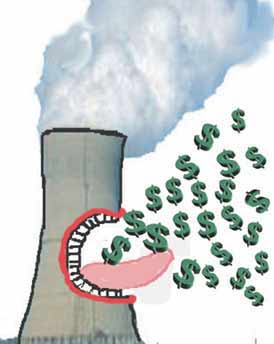
 Group asks Cuomo to oppose nuclear plant subsidies, WRVO Public Media, 5 July 16 By PAYNE HORNING More than 100 organizations across New York and the country are sending a letter to Gov. Andrew Cuomo asking the state not to subsidize nuclear power plants.
The New York Public Service Commission is considering passing a nuclear tax credit plan this summer that would aid the financially struggling nuclear plants in upstate,as Cuomo asked them to do earlier this year. It’s part of his “Reforming Our Energy Vision” plan that aims to double the amount of renewable energy the state uses to 50 percent by 2030.
The plan calls for zero-emission credits would reward the plants for producing carbon dioxide-free electricity, similar to how New York subsidizes renewable energy sources like wind and solar. Supporters of the credits say the plants can help New York meet its green energy goals because they produce carbon-free electricity, but those who signed the letter, like Sierra Club member Linda DeStefano, say nuclear plants are too dangerous to keep around.
“People have been saying things like ‘nuclear is a bridge to safer, renewable energy,’ but if you keep saying it’s a bridge and you keep re-licensing these very old, especially dangerous nuclear reactors, you’re never going to get where you need to be,” DeStefano said. “In the meantime, you’re putting the whole upstate area in danger of a catastrophic meltdown as it happened in Fukushima, Japan.”
The letter, organized by the Alliance for a Green Economy (AGREE), calls for investment in renewable energy sources like wind and solar instead, but the Nine Mile Point Nuclear Plant in Oswego County said without these credits, they will have to close like the neighboring FitzPatrick plant plans to do next year. That would mean the loss of more than 1,600 jobs in Oswego County alone, which suffers from one of the worst unemployment rates in the state.
However, the letter contends that the money that would be used to subsidize nuclear power plants, which they estimate to be about $3.5 billion, could better be spent by subsidizing the communities losing those jobs instead.
“Instead of supporting nuclear subsidies, we respectfully request a nuclear decommissioning and just transition process that will protect the environment, retrain workers, and provide a smooth path for nuclear-reliant communities to benefit from the clean energy economy,” the letter says. “We urge your administration to fight for a decommissioning process that begins immediately to clean up and isolate the dangerous radioactive materials at New York’s nuclear sites. Doing so could preserve at least half of the nuclear workforce, and would ensure that the billions of dollars already set aside for decommissioning in New York starts getting pumped into local economies. Workers not employed for decommissioning should be supported through retraining programs and transitional wage support.”
They note that New York is already taking steps to mitigate the economic damage for these nuclear plant communities, by investing $30 million into a pot for lost tax revenues. And, they argue that more renewable energy jobs could be created for less money.
“For example, the planned Solar City factory in Buffalo, the 1366 Technologies factory near Rochester, and the Soraa LED lightbulb factory in Syracuse will collectively create approximately 6,420 long-term jobs,” the letter says. “The state investment in these facilities will be approximately $937 million. By comparison, the nuclear subsidies in the CES could cost over $3.5 billion to preserve fewer than 2,500 nuclear jobs.”……..http://wrvo.org/post/group-asks-cuomo-oppose-nuclear-plant-subsidies#stream/0
Bond sale for nuclear construction as its costs soar
Santee Cooper greenlights $831M bond sale to fund nuclear construction, Utility Dive By Robert Walton | July 5, 2016
Dive Brief:
- The Santee Cooper Board of Directors has taken steps to lock in the cost of developing two new units at the V.C. Summer Nuclear Station by taking a fixed price option as part of an amended Engineering, Procurement and Construction Agreement.
- The board also approved the sale of $831 million in revenue obligation bonds, primarily to fund nuclear deveopment but with a portion going to refinance existing utility debt.
- Under the fixed price option, Santee Cooper’s cost of the facility’s costs will total $6.2 billion, 20% more than the utility estimated in 2012, the Post and Courier noted. Santee Cooper is developing the plant alongside South Carolina Electric & Gas Co. ……
The decision follows revelations that development costs at the facility are rising. SCE&G last month informed state regulators that its share of the development of two new nuclear units had increased significantly, rising about $852 million to reach $7.7 billion, with the total price tag coming in at around $14 billion. SCE&G attributed the ballooning costs to its choice of a fixed price option to construct reactors.
Santee Cooper owns 45% of the nuclear expansion project, and SCE&G owns 55%. In the fall, the the two utilities negotiated an amended EPC agreement with Westinghouse Electric Co. LLC, which Santee Cooper said including terms to incentivize schedule adherence and shift financial risk to Westinghouse for any additional delays in the current scope of work……..http://www.utilitydive.com/news/santee-cooper-greenlights-831m-bond-sale-to-fund-nuclear-construction/422007/
Nuclear lobby strategy – teach the teachers how good nuclear power is
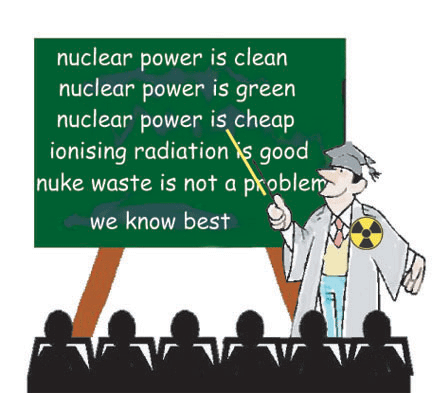 Teachers from two states go nuclear at educational summer institute, Augusta Chronicle By Mel Buckner
In each case, career opportunities were discussed……In addition, the evening programs included a panel discussion of local educational opportunities, led by Mindy Mets, the nuclear workforce initiative program manager for the Savannah River Site Community Reuse Organization, and a challenging presentation by Capt. Kevin Byrne, commanding officer of the Naval Nuclear Power Training Command at the Navy Nuclear Power School.
The institute included a series of workshop sessions over the three days to emphasize atomic and nuclear fundamentals; power generation fundamentals; nuclear technology applications; risk (real vs. perceived); and nuclear workforce opportunities ……
Lodging (if needed) and meals were provided at the University of South Carolina Aiken along with free educational resources and teacher guides for classroom presentations. In addition, each participant received two $25 gift cards to help cover travel expenses.
SSNI IS LED BY Citizens for Nuclear Technology Awareness, a local nonprofit organization whose mission is to provide education and information on nuclear subjects for the public. Other sponsors include the American Nuclear Society – Savannah River and Columbia, AREVA, Atkins, Georgia Power Co./Plant Vogtle, SCE&G, SRSCRO, SUNRISE Universities, USC Aiken and the Aiken Rotary Club.
(The writer – a retired program manager from the Savannah River National Laboratory – is a member of the Citizens for Nuclear Technology http://chronicle.augusta.com/opinion/opinion-columns/2016-07-03/teachers-two-states-go-nuclear-educational-summer-institute#
Drones observed flying over troubled Savannah River Nuclear Site
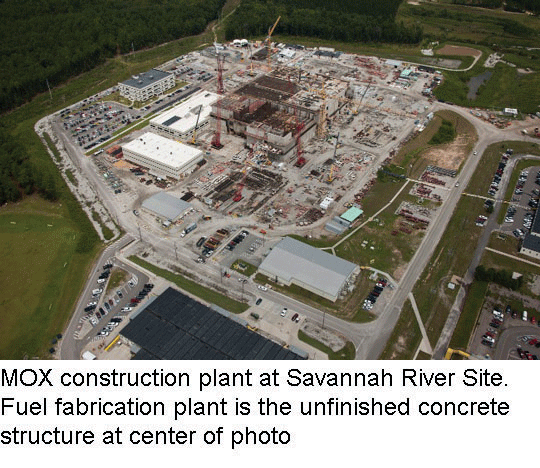 FBI investigating unidentified drones over S. Carolina nuclear site Rt.com 1 July 16 Federal law enforcement has begun a probe into reports of drones flying over the US Department of Energy’s Savannah River Site in South Carolina. Nuclear waste is treated at the site, and nuclear weapons materials are stored and processed there.
Several sightings of unmanned aerial vehicles, or drones, over the Savannah River Site (SRS) have been reported by site security in the month of June, the US Department of Energy announced Thursday.
Monte Volk, a spokesman for SRS, told The State it is yet unknown who is behind the flights or why they are occurring.
“The protective force at Savannah River Site (SRS) has confirmed several sightings of Unmanned Aerial Systems (UAS) flying in SRS airspace in June. SRS takes these reports very seriously and is coordinating with appropriate federal, state, and local authorities,” the Energy Department said in a statement.

There is no “no-fly zone” over SRS, Volk told WRDW, though there are some altitude guidelines enforced by the US Federal Aviation Administration (FAA), which has cautioned drone pilots about flying UAVs in airspace around nuclear facilities and other protected areas.
“Drones flying over any critical infrastructure, government facility, military base — with the environment we are living in today — would be a concern to law enforcement and homeland security officials,’’Mark Keel, chief of the South Carolina State Law Enforcement Division, told The State. Keel added that the drone reports “have got our attention.”
SRS covers 310 square miles of South Carolina’s Aiken, Barnwell, and Allendale counties near the Savannah River. ……..
A prominent activist and critic of the site told The State he had been interviewed by FBI agents about the drone flights. Tom Clements, of the non-profit group Savannah River Site Watch, said he has taken and published photographs of the site for years, but that those photographs were obtained using an airplane in full compliance with FAA rules.
South Carolina is currently suing the Department of Energy over its handling and construction of the Mixed Oxide Fuel Fabrication Facility, which was approved by Congress in 1998. The site has been part of a 2000 deal between the US and Russia in which both nations agreed to dispose of 34 tons of plutonium. Yet since that pledge, the mixed oxide facility’s costs have ballooned while delays have pushed its completion to a date unknown…….
Like operators of hobby drones, commercial drone pilots must keep their UAS within sight. Registered, security-cleared operators at least 16 years of age will be required to keep drones away from airspace where people are directly below, away from the underside of covered structures, and below 400 feet (122 meters) in altitude. Drones must also stay at least 400 feet away from a building or tower. https://www.rt.com/usa/349189-savannah-fbi-nuclear-drones/
Federal court considers South Carolina’s suit over Mixed Oxide Fuel nuclear fiasco
 Judge considers nuclear fuel dispute between S.C., Energy Dept. Savannah Now, By MEG KINNARD 1 July 16 COLUMBIA, S.C. — It’s now up to a federal judge to decide if South Carolina’s lawsuit against the federal government over an unfinished plutonium processing project should be dismissed, or if the state’s pursuit of millions of dollars in fees should move forward.
During a hearing in federal court in Columbia, attorney Randy Lowell said that the law is clear that the government owes South Carolina millions of dollars in fees and also must remove plutonium from the state because the processing plant wasn’t operational on time.
“All of this is a problem of their own creation,” Lowell, representing the state, said during a 90-minute hearing.
South Carolina in February sued the U.S. Department of Energy over the mixed oxide fuel project at the Savannah River Site, a sprawling former nuclear weapons plant along the South Carolina-Georgia border. The multi-billion-dollar project was intended to help the United States fulfill an agreement with Russia to dispose of at least 34 metric tons apiece of weapons-grade plutonium, an amount that’s enough for about 17,000 nuclear warheads.
The plant is years behind schedule and billions over budget. Because the facility wasn’t operational by a Jan. 1, 2016, deadline, the federal government was supposed to remove 1 metric ton of plutonium from South Carolina or pay fines of $1 million a day — up to $100 million yearly — until either the facility meets production goals or the plutonium is taken elsewhere for storage or disposal.
Lowell argued that the government has given South Carolina repeated assurances that no plutonium would enter the state without a pathway out – like the production of mixed-oxide fuel, which would be sold to commercial power producers – thus keeping the state from being a permanent home for the materials.
But that hasn’t happened, Lowell said. He asserted that the government is in breach of the law governing the project.
“The whole purpose of the statute is to ensure that we are not the dumping ground,” he said.
Attorneys for the federal government argue that, while the mixed-oxide facility isn’t up and running, the Energy Department is already pursuing an alternate way to process the plutonium and send it out of state for permanent storage……..http://savannahnow.com/news/2016-06-30/judge-considers-nuclear-fuel-dispute-between-sc-energy-dept
US solar power market hits all-time high
 Here comes the sun: US solar power market hits all-time high, Guardian, Matt Weiser, 29 June 16
After a rocky start, the American solar market is taking off and growing faster than coal and natural gas power. What will it take to make it go truly mainstream?
Solar energy in the US has had a rocky existence. Ever since Ronald Reagan symbolically removed Jimmy Carter’s solar panels from the White House roof in 1986, federal policy has been unpredictable, such that manufacturers and consumers could never depend on reliable incentives to produce and install solar energy systems.
Remarkably, the US solar energy industry is now entering what may be its most prosperous decade ever, thanks to a new wave of federal and state policies and positive economics in the industry, both at home and abroad.
“I think it will actually be bigger than people are projecting,” says Jigar Shah, president and co-founder of Generate Capital, a clean energy investment firm based in San Francisco. “The solar industry is booming right now.”
The US solar industry expects to install 14.5 gigawatts of solar power in 2016, a 94% increase over the record 7.5 gigawatts last year, according to a new market report by GTM Research and the Solar Energy Industries Association. Revenues from solar installations also increased 21% from 2014 to more than $22bn in 2015.
For the first time, more solar systems came online than natural gas power plants – the top source of electricity in the US – in 2015, as measured in megawatts, said Justin Baca, vice president of markets and research at the Solar Energy Industries Association. This year, new solar is expected to surpass installations of all other sources, said the US Energy Information Administration.
The rise of solar energy use, especially by homes and businesses with panels on their roofs, is gradually transforming the electricity industry. For more than a century, power plant owners and utilities have controlled the energy delivery service, and some of them enjoy a monopoly.
“We were just a tiny little speck 10 years ago, and now we are really up there with the major established generating technologies,” said Baca. “It’s amazing.”
Sunny path
What’s behind all this? A federal tax credit has played a key role: it enables home and business owners to take off 30% of the price of their solar energy systems from their income taxes. Congress renewed the tax credit last December.
Another factor is cost. It is simply a lot cheaper to install solar these days, largely because cost of components have declined considerably. The wholesale price of a solar panel today is about $0.65 per watt, compared with $0.74 per watt a year ago and $4 per watt in 2008…….
The tariffs and increasing domestic demand have boosted manufacturing jobs in the US, which is now one of the top five nations for solar panel producers behind China, Singapore, Taiwan and Malaysia.
“Now the market’s so large you can actually sustain the large manufacturing plants and support the product locally,” said Shah.
One example is SolarCity, which is building a giant new solar panel factory in Buffalo, New York. The facility, expected to be in operation later this year, plans to employ 3,500 people. It will produce panels primarily for SolarCity’s own projects around the world……..https://www.theguardian.com/sustainable-business/2016/jun/28/solar-power-energy-us-utilities-environment-climate-change
Nuclear power generation no longer makes sense: renewables set to boom in California
 As Nuclear Plants Shut Down, Renewable Energy Could Boom A California utility wants to close the state’s last nuclear power plant and replace it with solar and wind farms. Take Part JUN 29, 2016 Taylor Hill is an associate editor at TakePart covering environment and wildlife. “…….The shutdown has implications nationwide, as it shows how dozens of other aging nuclear plants could also be closed in favor of cheap natural gas or renewable energy…….
“Given these and other uncertainties, the parties cannot, and it would be a mistake to try to, specify all the necessary replacement procurement now,” PG&E stated in the proposal to shutter Diablo Canyon.
The boom in rooftop solar systems will also help meet electricity demand, said Geisha Williams, president of PG&E. Photovoltaic panels installed on the roofs of homes and businesses account for an estimated 5 percent of California’s electricity generation.
“You don’t need [Diablo Canyon],” Williams told KQED. “There’s been so much energy efficiency. There’s been so much power that’s been generated by customers on their own private solar rooftop.”
The nuclear power decline could be a turning point for solar.
“To the extent that any capacity is retired—nuclear or otherwise—it’s an opportunity for new solar development,” said Shayle Kann, senior vice president of research for Greentech Media.
Hillary Clinton, the presumptive Democratic presidential nominee, is calling for solar capacity to grow from 26 gigawatts to 140 gigawatts by the end of 2020 and for half a billion solar panels to be installed by the end of her first term if she is elected…….
The cost of producing electricity from photovoltaic panels is expected to drop by 59 percent worldwide by 2025, according to a new report from the International Renewable Energy Agency, making solar cheaper than fossil fuels.
“The fact is that we live in a world where technologically, financially, environmentally, and ethically, nuclear power generation no longer makes sense,” Dorsey said……http://www.takepart.com/article/2016/06/29/solar-nuclear-california-future
South Carolina versus US Dept of Energy in court about mixed oxide fuel project
 SC, Dept. of Energy in court about nuclear fuel lawsuit http://abcnews4.com/news/local/sc-dept-of-energy-in-court-about-nuclear-fuel-lawsuit
 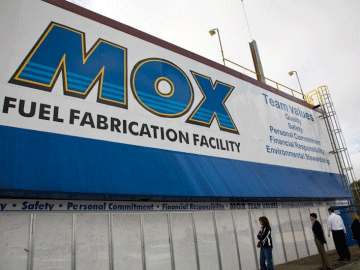 BY MEG KINNARD, THE ASSOCIATED PRESS , JUNE 30TH 2016 COLUMBIA, S.C. — Attorneys for the federal government and the state of South Carolina are in court arguing about a lawsuit concerning an unfinished plant to turn old plutonium into commercial nuclear reactor fuel.
A federal judge in Columbia is hearing arguments Thursday in South Carolina’s lawsuit against the U.S. Department of Energy over the mixed oxide fuel project at the Savannah River Site near Aiken.
South Carolina is suing the federal government because the project is well past its start date. The state is seeking daily fines of up to $1 million, as well as the removal of plutonium from the state.
The federal government is asking that the lawsuit be dismissed, saying that such issues are best handled in a different type of court.
Floating solar panels – the go for drought-stricken US lakes
Floating solar is a win-win energy solution for drought-stricken US lakes
Sunbaked southwest US is a prime spot for floatovoltaic projects, where they could produce clean energy and prevent evaporation in major man-made reservoirs, reports Environment 360, Guardian, Philip Warburg , 1 July 16 The Colorado River’s two great reservoirs, Lake Mead and Lake Powell, are in retreat. Multi-year droughts and chronic overuse have taken their toll, to be sure, but vast quantities of water are also lost to evaporation. What if the same scorching sun that causes so much of this water loss were harnessed for electric power?

Installing floating solar photovoltaic arrays, sometimes called “floatovoltaics,” on a portion of these two reservoirs in the southwestern United States could produce clean, renewable energy while shielding significant expanses of water from the hot desert sun.
The dual energy and environmental benefits of floating solar arrays are already beginning to earn the technology a place in the global clean energy marketplace, with floatovoltaic projects now being built in places as diverse as Australia, Brazil, China, England, India, Japan, South Korea, and California. And nowhere could they prove as effective as on lakes Mead and Powell, the two largest man-made reservoirs in the US.
The US Bureau of Reclamation estimates that800,000 acre-feet of water – nearly six percent of the Colorado River’s annual flow – is baked off Lake Mead’s surface by the searing desert sun during an average year. Lake Powell loses about860,000 acre-feet annually to evaporation and bank seepage. Since floatovoltaics can reduce evaporation in dry climates by as much as 90%, covering portions of these two water bodies with solar panels could result in significant water savings.
Extrapolating from the spatial needs of floating solar farms already built or designed, the electricity gains from installing floatovoltaics on just a fraction of these man-made desert lakes could be momentous. If six percent of Lake Mead’s surface were devoted to solar power, the yield would be at least 3,400 megawatts of electric-generating capacity – substantially more than the Hoover Dam’s generating capacity of 2,074 megawatts.
This solar infusion could give the power-hungry Southwest a major boost in renewable electricity, and at least some of that power could piggyback on underused transmission lines built for the Hoover Dam…….https://www.theguardian.com/environment/2016/jun/30/floating-solar-is-a-win-win-energy-solution-for-drought-stricken-us-lakes
Women’s Action for New Directions honours Dr Helen Caldicott
 the Smithsonian has named Dr. Caldicott one of the most influential women of the 20th century.
#WomanCrushWednesday: Dr. Helen Caldicott http://www.wand.org/2016/06/29/womancrushwednesday-dr-helen-caldicott/ by Honora Gibbons, WAND Intern, Arlington, MA Dr. Helen Caldicott holds a special place in our hearts and history at WAND as our founder. Over her long career, she has demonstrated tremendous passion, skill, and dedication for consistently raising and calling citizens to action on the pressing nuclear and environmental issues of our time.
Caldicott was born in Melbourne, Australia. She earned her medical degree from the University of Adelaide Medical School. Her anti-nuclear stance is rooted in her identity as a physician and as a mother. As Caldicott spoke publicly on the health hazards of radiation, she rose to prominence as an activist for nuclear disarmament.
In the 1970s, Dr. Caldicott moved to the United States, joining Boston’s Children’s Hospital and briefly teaching pediatrics at Harvard Medical School. In 1979, the Three Mile Island nuclear disaster occurred, the worst nuclear power accident in U.S. history. Following this, in 1980, Caldicott resigned from her medical career in order to dedicate herself fully to the prevention of nuclear warfare and dependency on nuclear power. From then on, she worked to call attention to the world’s growing reliance on nuclear power and the dangers of the nuclear arms race.
In 1981, Caldicott founded Women’s Action for Nuclear Disarmament in Arlington, MA. (Following the end of the Cold War in 1991, WAND changed its name to Women’s Action for New Directions.) Her years of service are a constant reminder and inspiration to WAND women that peace can be attained through relentless and well-informed collective action.
For her decades of work Helen has received many honors and awards, including twenty one honorary doctoral awards and nomination for a Nobel Peace Prize by Linus Pauling, himself a Nobel Laureate. Additionally, the Smithsonian has named Dr. Caldicott one of the most influential women of the 20th century.
Helen Caldicott has contributed much through her nuclear disarmament activism and research. The highlights of these contributions are her numerous publications, including her books: Nuclear Madness,Missile Envy, and If You Love This Planet: A Plan to Heal the Earth. She is also the subject of manyfilms which have received notable critical acclaim.
Caldicott currently divides her time between Australia and the United States, often lecturing and participating in community outreach, still determined to stress the danger of our nuclear-dependent world. Caldicott exemplifies these efforts through her organization, The Helen Caldicott Foundation, which hosts symposiums and educational outreach programs in order to promote a nuclear energy- and weapons-free world.
At a recent event for the Massachusetts Peace Action Distinguished Peacebuilders Series, Dr. Helen Caldicott spoke in Cambridge, Massachusetts on the imperative need to disarm nuclear weapons worldwide. In her talk titled “Courting Armageddon,” Caldicott discussed the ways in which the international community has insufficiently addressed nuclear weapons-related catastrophes, including the 1945 bombings of Hiroshima and Nagasaki. According to Dr. Caldicott, the world has since increased its dependency on nuclear weapons and nuclear power. “We are closer to a nuclear war today than we ever were during the Cold War,” Caldicott urged.
Dr. Helen Caldicott is a trailblazer and role model, not only for the women at WAND, but for women everywhere who seek to make the world a healthier, safer, more peaceful place.
A brief history of WAND can be found on our website:
http://www.wand.org/about/brief-history-of-wand/a-brief-history-by-sayre-sheldon/
For more information on Helen, visit:
http://www.helencaldicott.com/about/
Mainstream media stays silent about about nuclear hazards, and rising cancer rates
 As the utility companies and government agencies continue to downplay the severity of these situations, the residents who live the closest to these spots are already feeling the effects.
According to a recent report, Radiation and Public Health Project researchers compared the state and national cancer data from 1988-92 with three other five-year periods (1993-97, 1998-02, and 2003-07). The results, published in 2009, show the cancer rates going from 11 percent below the national average to 7 percent above in that time span. Unexpected increases were detected in 19 out of 20 major types of cancer. Thyroid cancer registered the biggest increase, going from 13 percent below the national average to 51 percent above.
While the U.S. war machine spends hundreds of billions of dollars per year waging war against humanity, Americans at home are dying from a crumbling nuclear infrastructure. The realization that multiple nuclear disasters are currently unfolding across the country, while the mainstream media remains silent, speaks to the fact that most media is owned by the same benefactors that have a vested interest in maintaining the status quo.
There’s No Covering Up This One — Visible Pollution Leaking From NY Nuclear Plant, Activist Post, By Matt Agorist, 1 July 16 US Coast Guard officials have cordoned off a portion of Lake Ontario this week, after aerial spotters found a visible “sheen” that is coming from a nuclear power plant in upstate New York.
The Coast Guard Auxiliary aircrew first noticed the sheen on Sunday. Shortly after, a boat crew from the Oswego station tested the sheen and a “temporary safety zone” was put in place.
The Free Thought Project spoke to the Coast Guard Sector Buffalo Command Center on Tuesday and confirmed that the zone was still closed off, and there is no information as to when it will reopen.
The oil sheen is said to be coming from the vent for the hydrogen seal system of the Fitzpatrick plant is in Scriba, New York, approximately 10 miles northeast of Oswego……..
It appears that this Fitzpatrick leak is likely the least worrisome of current leaks popping up around the country.
Although the media spotlight is rarely shined upon America’s aging nuclear infrastructure, U.S. nuclear power plants are decaying rapidly, precipitating numerous nuclear environmental disasters across the country.
To give you an idea of the scope of the crisis facing America’s aging nuclear infrastructure, a startling investigation by the Associated Press found radioactive tritium leaking from three-quarters of all commercial nuclear power sites in the United States.
As The Free Thought Project reported last month, a major nuclear disaster is unfolding in Washington state at what is known as the Hanford nuclear site. There have been reports that the Hanford has been leaking massive amounts of radioactive material for over two weeks. Continue reading
America’s future in renewables: nuclear can’t compete on costs nor on safety
Our future is in green energy not aging, costly nuclear plants Seattle Times, June 29, 2016 By Robert McCullough “……..The nuclear station, now called the Columbia Generating Station (CGS), was once known as Washington Public Power Supply System No. 2. This is a relic of an energy plan begun in the 1960s and built with technology from the 1970s. It is an 8-track tape player in an iPad world. The prices of electric power have plummeted over the years as renewables have sharply declined in price, natural gas is facing a glut and new technologies from LED lighting to rooftop solar have arrived.
Why is the plant so expensive? It is in a poor location — competing with far less costly renewable resources like wind and hydroelectricity. When the wind blows and the rivers surge, we have to turn off these resources, since the nuclear plant can’t adjust its output like alternative-energy resources. We have no storage solution for the nuclear waste that is being stored in its elevated spent fuel pool and in dry casks outside the plant. The plant is a singleton, rather than having twin units — there are strong economies of scale for twin plants that share repair and operating resources.
However, even more efficient, better-located nuclear plants are closing across the U.S. — recent announcements indicate plants closing in Illinois, New York, California, Massachusetts, and Nebraska. These plants are not closing because they are ailing. They are closing because the costs of aging nuclear is simply much higher than cleaner and simpler technologies.
The Nebraska closure is a case in point. Last week, the Omaha Public Power District, a public power entity comparable to Energy Northwest, announced the closure of the Fort Calhoun Nuclear Station on economic grounds. This was a thoughtful, well-considered opinion that weighed the costs over the rhetoric…….
Short term tombs for radioactive trash, in Texas
Why a West Texas Nuclear Dump May Be a Short-Term Fix, KUT org By MICHAEL O’BRIEN, 28 JUNE 16, “…….Waste Control Specialists in Andrews County — currently storing contaminated rags, gloves, and other low-level nuclear waste — submitted an application in April which would allow them to receive high-level spent fuel.
The fuel would sit on-site, entombed in concrete-steel casks, until the DOE comes up with a permanent solution……..the majority of spent fuel sits near the reactor in 45-foot deep, industrial grade pools.
Spent fuel is so hot when it comes out of the reactor that it has to sit submerged for a few years before it can be safely transported or even placed in those casks……
The Nuclear Regulatory Commission’s (NRC) official stance is that the pools are so safe that there is no reason to spend billions of dollars moving all the spent fuel – the spent fuel cool enough to even move – into the dry-casks.
But the National Academy of Sciences warns that the NRC has under-estimated the risk. In May, the Academy published the final phase of its report on Fukushima and nuclear safety where it recommends “expediting” the spent fuel out of the pools and into the casks.
The pools are more vulnerable to accident or sabotage than the casks, the report states. The pools also hold much more fuel than does an individual cask – just one ruptured pool could cause a devastating radioactive fire capable of contaminating thousands of square miles……The heavily-guarded pools will continue to hold decades worth of spent fuel until the DOE comes up with a permanent storage solution or the NRC changes its guidelines. http://kut.org/post/why-west-texas-nuclear-dump-may-be-short-term-fix
-
Archives
- October 2026 (120)
- September 2026 (339)
- August 2026 (330)
- July 2026 (355)
- June 2026 (287)
- May 2026 (306)
- April 2026 (356)
- March 2026 (251)
- February 2026 (267)
- January 2026 (308)
- December 2025 (358)
- November 2025 (359)
-
Categories
- 1
- 1 NUCLEAR ISSUES
- business and costs
- climate change
- culture and arts
- ENERGY
- environment
- health
- history
- indigenous issues
- Legal
- marketing of nuclear
- media
- opposition to nuclear
- PERSONAL STORIES
- politics
- politics international
- Religion and ethics
- safety
- secrets,lies and civil liberties
- spinbuster
- technology
- Uranium
- wastes
- weapons and war
- Women
- 2 WORLD
- ACTION
- AFRICA
- Atrocities
- AUSTRALIA
- Christina's notes
- Christina's themes
- culture and arts
- Events
- Fuk 2022
- Fuk 2023
- Fukushima 2017
- Fukushima 2018
- fukushima 2019
- Fukushima 2020
- Fukushima 2021
- general
- global warming
- Humour (God we need it)
- Nuclear
- RARE EARTHS
- Reference
- resources – print
- Resources -audiovicual
- Weekly Newsletter
- World
- World Nuclear
- YouTube
-
RSS
Entries RSS
Comments RSS

