Implementing storage technologies – necessary in transition from nuclear power
 As nuclear power plants close, states need to bet big on energy storage Skeptical Science 9 August 2016 by dana1981 Eric Daniel Fournier, Post Doctoral Researcher, Spatial Informatics, University of California, Los Angeles and Alex Ricklefs, Research Analyst in Sustainable Communities, University of California, Los Angeles This article was originally published on The Conversation . Read the original article.
“……due to negative opinion and costly renovations, we are now observing a trend whereby long-running nuclear power plants are shutting down and very few new plants are being scheduled for construction in the United States.
Utilities are moving toward renewable electricity generation, such as solar and wind, partially in response to market forces and partially in response to new regulations that require utilities to reduce greenhouse gas emissions. In California, in particular, the shift toward renewable energy for market and environmental reasons, along with the public’s negative perception of nuclear energy, has caused utilities to abandon nuclear power.
While opponents can view the shutdown of nuclear power plants as a health and environmental success, closing nuclear plants intensifies the challenges faced by utilities to meet electricity consumption demand while simultaneously reducing their carbon footprint. PG&E, for example, has pledged to increase renewable energy sources and energy efficiency efforts, but this alone will not help them supply their customers with electricity around the clock. What can be used to fill the sizable gap left by Diablo Canyon’s closing?
Solar and wind energy sources are desirable as they produce carbon-free electricity without producing toxic and dangerous waste byproducts. However, they also suffer from the drawback of being able to produce electricity only intermittently throughout the day. Solar energy can be utilized only when the sun is out, and wind speeds vary unpredictably.
In order to meet customer electricity demand at all hours, energy storage technologies, alongside more renewable sources and increased energy efficiency, will be needed.
Enter energy storage
Energy storage has long been touted as the panacea for integrating renewable energy into the grid at large scale. Replacing the power generation left by Diablo Canyon’s closing will require expansive additions to wind and solar. However, more renewable energy generation will require more storage.
There are many different energy storage technologies currently available or in the process of commercialization, but each falls into one of four basic categories: chemical storage as in batteries, kinetic storage such as flywheels, thermal storage and magnetic storage.
The different technologies within each of these category can be characterized and compared in terms of their:
- power rating: how much electrical current produced
- energy capacity: how much energy can be stored or discharged, and
- response time: the minimum amount of time needed to deliver energy. [excellent graphs provided here on original]
The key challenge that utilities are now faced with is how to integrate energy storage technologies for specific power delivery applications at specific locations.
This challenge is further complicated by the electric power transmission system and consumer behaviors that have evolved based on a energy supply system dominated by fossil fuels. Additionally, storage technologies are expensive and still developing, which makes fossil fuel generators look more economically beneficial in the short term.
Implementing storage technologies
Currently in California, energy storage is effectively provided by fossil fuel power plants. These natural gas and coal-powered plants provide steady “baseload” power and can ramp up generation to meet peaks in demand, which generally happen in the afternoon and early evening.
A single energy storage device cannot directly replace the capacity potential of these fossil fuel sources, which can generate high rates of power as long as needed.
The inability to perform a like-for-like replacement means that a more diversified portfolio strategy toward energy storage must be adopted in order to make a smooth transition to a lower carbon energy future. Such balanced energy storage portfolio would necessarily consist of some combination of:
- short-duration energy storage systems that are capable of maintaining power quality by meeting localized spikes in peak demand and buffering short term supply fluctuations. These could include supercapacitors, batteries and flywheels that can supply bursts of power quickly.
- Lower speed energy storage that can supply a lot of power and store a lot of energy. These systems, such as pumped hydro and thermal storage with concentrated solar power, are capable of shifting the seasonality of solar production and servicing the unique power requirements for large scale or sensitive power users in the commercial and industrial sectors.
This set of storage technologies would have to be linked up in a kind of chain, nested and tiered by end use, location and integration into the grid. Additionally, management systems will be needed to control how the storage technologies interact with the grid.
Currently without sufficient energy storage in place, utilities now use natural gas to fill in the gaps in electricity supply from renewable sources. Utilities use “peaker” plants, which are natural gas-fueled plants that can turn generation up or down to meet electricity demand, such as when solar output dips in the late afternoon and evening, while producing air pollution and greenhouse gas emissions in the process.
With natural gas consumption for electricity generation on the rise, would it be better to keep nuclear power while energy storage technologies mature? Although less polluting than coal, natural gas produces greenhouse gas emissions and has the potential to causeenvironmentally dangerous leaks, as seen in Aliso Canyon.
With nuclear, it is still not clear what to do with nuclear waste, and the disaster at Japan’s Fukushima nuclear power plant in 2011 highlights how catastrophically dangerous nuclear power plants can be.
Regardless of which situation you believe is best, it is clear that energy storage is the major limitation to achieving a carbon-free electricity grid.
California’s commitment to renewable energy sources has helped shift the state to using less fossil fuels and emitting less greenhouse gases. However, careful planning is needed to ensure that energy storage systems are installed to take over the baseline load duties currently held by natural gas and nuclear power, as renewables and energy efficiency may not be able to carry the burden.
Subsidizing Nuclear Will Only Make Our Grid Problems Worse

 http://www.forbes.com/sites/ucenergy/2016/08/11/subsidizing-nuclear-will-only-make-our-grid-problems-worse/2/#20c51fcc386e Steve Cicala, While low natural gas prices are something to celebrate for consumers, the mood among the owners of America’s nuclear power fleet is not so cheerful as low energy prices threaten their bottom line. In turn, the owners of nuclear plants are threatening to shut down unless the government (and ultimately the ratepayer) steps in to close the shortfall. They have even announced plant closings to show they mean business.
Ordinarily, this kind of thing might be left solely up to markets to sort out. But with nuclear accounting for almost 60% of the carbon-free electricity in the United States, it’s fair to say that losing nuclear plants make it a lot tougher to meet goals to avoid catastrophic climate change. So there is a compelling case that there is a public interest at stake with the potential closure of these plants.
The result: a high-stakes game of chicken is playing out between producers, consumers, and state regulatory commissions in capitols across the country to keep these plants open. New York made history last week when it decided it couldn’t do without nuclear and gave in to providing subsidies. The news came just a couple months after California decided the opposite—putting all its chips into renewables. Illinois continues to wrestle with the very same decision but has yet to place its bet.
First, if the amount of the subsidy is tied to how much the operator requests, you should assume that they’re going to ask for more than they need (obvious, I hope).
Second, the companies at the center of these negotiations have multiple plants, so they make decisions on a particular plant keeping in mind the impact of that decision on the rest of its fleet. Closing a plant in one state after being denied subsidies is a way of signaling to regulators in other states that they seriously risk suffering the same fate. This means that companies may close profitable plants (and pay the cost), because it maximizes the total subsidy they will receive across all of their plants. It also means that firms may actually be eager to close plants as a means of driving up the price of electricity that their remaining plants will receive. Thus, their demands are less about unprofitability than about market power.
The final strategic consideration in these negotiations is about option value. Firms should be willing to endure periods of losses if keeping the plant open preserves the ability to make it all back and more when times are good. Thus, a subsidy that covers the operating cost of the plant is paying more than what the plant actually requires to make staying open in its best interest. It’s making the plant profitable in every year, rather than on average from now until the end of its useful life. Firms would love to be profitable every year, but only require the expectation of future profitability to stay open for business.
So should regulators take the industry at its word?
It’s important to note that—in spite of announced or actual “closing” of plants—hardly a screw has been removed from any of the nuclear plants recently “retired.” Decommissioning is a long-term process with many opportunities to change course as long as the operating license remains valid. This makes announcing closure a lot like convincing a child you’ll leave without them if they don’t get in the car: “I’m putting my shoes on….I’m putting my coat on…I’m getting the keys…I really mean it…” Regulators should not be so naïve.
Although pitched as temporary, urgent subsidies to expedite passage, these negotiations should be viewed as setting a long-term policy approach. If, in five years, natural gas prices remain low and renewables continue to expand (as there’s every reason to believe), we’ll be right back at the negotiating table with an industry on proclaimed life support. There are few policies that deliver less innovation than guaranteed payment, no matter the prevailing economics of the industry.
Is there a better approach? Let’s put aside finally putting a price on carbon (the easy way). I’ve crunched some numbers for Illinois’ Clinton Nuclear Power Station, which Exelon EXC -1.14% recently declared will “close.” It appears the root of the problem is less about low natural gas prices or the growth in renewablesthan our woefully inadequate transmission system.
Lack of transmission capacity underlies nuclear’s inability to recover their fixed operating costs in two ways. When demand is high, a congested system prevents distant nuclear generators from delivering power to profitable markets, leaving them on the sidelines upstate instead of making money in the city (note that it’s security, not economics that threatens to close the Indian Point plant in downstate New York).
The Clinton plant is an example of what nuclear has to look forward to without transmission capacity to deliver wind power to market. In the chart above, I plot the congestion loss at Clinton against hourly wind generation in 2015 (controlling for demand). In other words, this is by how many dollars per megawatt-hour Clinton is earning below the broader Illinois market, and how it varies with the amount of wind being generated on the wider Midwest system. A future with increased wind generation is not a bright one for the Midwestern nuclear fleet.
Of course, transmission infrastructure is not free—but regulators should be deciding between those one-time costs remedying the cause of a $70 million shortfall per year at Clinton alone, or writing a check every year for the foreseeable future to paper over the real problem.
Want to learn more? Listen to my Off the Charts podcast. And, follow me at@SteveCicala.
U.S. electricity consumers could end up paying more than $2.5 billion for nuclear plants that never get built.
 Customers Could Pay $2.5 Billion for Nuclear Plants That Never Get Built http://www.bloomberg.com/news/articles/2016-08-08/customers-could-pay-2-5-billion-for-nukes-that-never-get-built, Mark Chediak markchediak August 9, 2016 —
-
Only two of 18 plants proposed since 2007 under construction
-
At least seven states allow billing before building starts
-
U.S. electricity consumers could end up paying more than $2.5 billion for nuclear plants that never get built.
Utilities including Duke Energy Corp., Dominion Resources Inc. and NextEra Energy Inc. are being allowed by regulators to charge $1.7 billion for reactors that exist only on paper, according to company disclosures and regulatory filings. Duke and Dominion could seek approval to have ratepayers pony up at least another $839 million, the filings show.
The practice comes as power-plant operators are increasingly turning to cheaper natural gas and carbon-free renewables as their fuels of choice. The growth of these alternatives is sparking a backlash from consumers and environmentalists who are challenging the need for more nuclear power in arguments that have spilled into courtrooms, regulatory proceedings and legislative agendas.
“Anything that hasn’t gotten off the ground yet isn’t getting built,” said Greg Gordon, a utility analyst at Evercore ISI, a New York-based investment advisory firm. “There is no economic rationale for it.” - Only two of 18 nuclear projects proposed since 2007 are under construction. Those units, being built by Southern Co. in Georgia and Scana Corp. in South Carolina, are billions of dollars over budget and years behind schedule. In the meantime, the price of natural gas has dropped 38 percent since 2010. It’s now used to generate more than a third of the nation’s power, up from 24 percent six years ago.
- Utilities that are moving forward with their nuclear plans say they want to preserve the option to build if market or regulatory conditions change. Nuclear power offers around-the-clock, carbon-free electricity that becomes more valuable if federal rules limiting greenhouse gases take hold, the utilities say.“One way to mitigate these risks is to spend money now, so that you have a license to build a nuclear plant if and when you need to,” said Richard Myers, vice president of the Nuclear Energy Institute, an industry trade group.
Critics of policies that allow utilities to bill for planned reactors say they’re likely unneeded, and the practice shifts upfront financial risks from shareholders to customers.
“The rich get richer and the ratepayers get poorer,” said Mark Cooper, a research fellow at Vermont Law School who submitted testimony in July opposing Dominion’s planned reactor in Virginia on behalf of the Virginia Citizens Consumer Council.
Duke fell 1 cent to $84.73 in New York. NextEra rose 8 cents to $126.07 and Dominion fell 26 cents to to $74.73.
-
Nuke Spending
Money collected from ratepayers so far has gone for items including federal licensing, permitting, land purchases, financing and equipment. Nuclear developers have sunk at least $1.2 billion of their own cash into proposals where they aren’t allowed or won’t ask to recover expenses from consumers, the disclosures and filings show.
At least seven states including Florida allow utilities to collect nuclear licensing and planning costs from customers before any construction begins.
In Virginia and Florida, utilities are seeing increased scrutiny of their plans. The Virginia attorney general has raised concerns about the rising expense of Dominion’s proposed new reactor at its North Anna facility, estimating the total cost at $19 billion.
“If Dominion proceeds on this ruinous path, it will extract $6 billion to $12 billion in needlessly higher energy bills,” said Irene Leech, president of the Virginia Citizens Consumer Council.
Shareholder Vote
In May, Dominion faced a shareholder resolution that would have required the company to analyze the financial risks of not getting regulatory approval for the new reactor. The proposal didn’t pass.
- Dominion intends to spend $647 million to get a federal nuclear license next year and $302 million of that has already been collected from ratepayers.“We’ve done a lot of work for licensing North Anna 3, which is prudent and valuable to our customers to maintain a diverse, carbon-free baseload source of electricity,” said Richard Zuercher, a Dominion spokesman.
- In Florida, multiple efforts in the state legislature to repeal a law that allows advanced collection of nuclear costs have failed.“I just never thought nuclear power plants made sense,” said Florida State Representative Michelle Rehwinkel Vasilinda, a Democrat, who has proposed bills to overturn the advance fee collection law.
In February, a federal lawsuit was filed on behalf of consumers that seeks to overturn the Florida statute and recover fees charged by Duke and NextEra for nuclear power plants that might not be completed. The suit alleges the companies overcharged customers for projects including Duke’s proposal for two reactors in Levy County and NextEra’s plan for two units at Turkey Point.
Legal Action
Duke and NextEra have asked a judge to dismiss the suit. Four other lawsuits challenging the state law have been rejected by Florida courts, said Rita Sipe, a Duke spokeswoman. The suits were filed on behalf of an environmental group and customers, according to court records.
As part of an agreement with Florida regulators in 2013, Duke was allowed to collect $926 million from customers to cover expenses including land and equipment purchases for its Levy facility, Sipe said. Duke also canceled its engineering, procurement and construction contract for the site in 2013.
- The company is pursuing a federal license for the plant but won’t charge customers for the costs of doing so, said Chris Fallon, vice president for nuclear development for Duke. The company sees the option to build as a hedge against pending environmental rules and possible natural gas price hikes, Fallon said.
Carolina Plants
Separately, Duke said it hasn’t decided if it will ask regulators for permission to collect $494 million in planning expenses for two proposed reactors in South Carolina.
Regulators have allowed NextEra to recoup $282 million of federal licensing costs for two new units at its Turkey Point facility, said Peter Robbins, a company spokesman. NextEra doesn’t see getting a license until the end of 2017 and will delay pre-construction work until at least 2020, Robbins said.
Critics say the issue is still whether companies should be allowed to bill for facilities that may never get finished.
“Customers can get stuck with the bill long before a single kilowatt of power is produced and may never recoup anything if the nuclear project is later abandoned,” said Jeremiah Lambert, an energy attorney and author of “The Power Brokers,” a history of the electric power industry.
Following $1 billion subsidy, Exelon buys failing Fitzpatrick nuclear station
 Exelon buys upstate New York nuclear plant http://thehill.com/policy/energy-environment/290879-exelon-buys-upstate-new-york-nuclear-plant Exelon Generation has agreed to buy an upstate New York nuclear power plant that seemed on the verge of closing just last year.
Entergy Corp. will sell its James A. FitzPatrick plant outside of Syracuse to Exelon for $110 million, officials announced on Tuesday. The companies expect regulatory approval by early next year, when Exelon plans to refuel the plant.
In a statement, Exelon President and CEO Chris Crane specifically thanked New York Gov.Andrew Cuomo (D) for his work on the Clean Energy Standard.
“We look forward to bringing Fitzpatrick’s highly-skilled team of professionals into the Exelon Generation nuclear program, and to continue delivering to New York the environmental, economic and grid reliability benefits of this important energy asset,” Crane said.
In a statement announcing the deal Tuesday, Cuomo said the deal is important for both the local economy and the state’s environmental policies.
“This state needs a clean energy policy that is realistic and can be implemented before we destroy this planet and I believe that nuclear plays an important rule in that clean energy policy,” he said, according to a video of his speech from the Syracuse Post-Standard. Entergy in November said it would be forced to close the 838-megawatt FitzPatrick plant by 2017, citing cheap natural gas and state policies that made nuclear plants expensive to operate.
Officials and the nuclear industry had looked for ways to keep the plant operating. The state’s Public Service Commission last week approved a clean energy standard requiring half the state’s electricity to come from renewable sources by 2030, and provided $1 billion over two years to subsidize FitzPatrick and two other nuclear plants in the state.
Exelon and Entergy have been negotiating a potential sale of the plant since last year. Regulatory agencies — including the Public Service Commission and the federal Nuclear Regulatory Commission — still need to sign off on the deal.
USA Dept of Energy not protecting nuclear whistleblowers
 Is the Energy Department doing enough to protect nuclear whistleblowers? BY LINDSAY WISE wise@mcclatchydc.com WASHINGTON , 9 Aug 16 Changes announced by the U.S. Department of Energy to strengthen protections for nuclear whistleblowers don’t go far enough to fix deep-rooted problems unearthed in a recent audit, lawmakers and worker advocates say.
The audit, released last month, found that the DOE’s nuclear program rarely holds its civilian contractors accountable for unlawful retaliation against contract employees who raise concerns about health, safety, fraud and waste.
The lack of enforcement has led to the creation of chilled work environments at nuclear sites across the country, according to the audit performed by the Government Accountability Office at the request of three Democratic senators: Claire McCaskill of Missouri, Ron Wyden of Oregon and Ed Markey of Massachusetts.
The senators had asked the GAO in 2014 to look into persistent incidents of retaliation against whistleblowers reported at the Hanford nuclear reservation in Washington state.
Over the next two years, the probe expanded to review the handling of 87 contractor employee complaints filed at 10 of the DOE’s largest nuclear facilities, including Savannah River Site near Aiken, South Carolina.
One whistleblower, Sandra Black, said she was fired from her job as head of the employee concerns program at the Savannah River Site, also known as SRS, after she cooperated with GAO officials on the audit.
Steven Croley, the Department of Energy’s general counsel, did not mention the audit last week when he announced steps to strengthen protections for nuclear whistleblowers on the department’s website. Croley wrote in a blog post that the department plans to issue detailed guidance to its personnel to clarify “if and when” the agency will reimburse contractors’ legal costs in whistleblower cases.
The Department of Energy paid more than $62 million in legal fees for contractors in 36 settlements from 2009 to 2013, even though there was no documented evidence that the costs were allowable under department policy, according to another audit released in February by the DOE’s inspector general. Three of those cases involved whistleblower complaints……..
Nuclear safety watchdogs complain the reforms outlined by Croley are neither new nor effective. “It is the same thin gruel offered up for the past 30 years, dressed up as news,” said Tom Carpenter, director at Hanford Challenge, a regional public interest group in Seattle.
The DOE put similar reforms in place in the 1990s – including a zero tolerance policy for reprisals and a proposed limit on the reimbursement of contractors’ legal defense costs – but those measures failed to address the problem,
Specifically, the reform about civil penalties has limited value, Carpenter said. He pointed out that the DOE has had the power to bring civil penalties against contractors for whistleblower retaliation for decades, but has only done so twice in 30 years, as noted in the recent audit.
Carpenter also worries that the DOE seems to be narrowing the application of this provision to only include whistleblowers who raise nuclear safety or radiation issues, and not concerns about chemical vapor exposures, fraud, waste and abuse, violations of environmental regulations, etc.
“DOE keeps touting their broken programs to protect whistleblowers as if they actually work,” Carpenter said…. http://www.mcclatchydc.com/news/politics-government/congress/article94458847.html
US Dept Energy ordered by court to hand over Idaho nuclear waste documents
 Court orders feds to turn over Idaho nuclear waste documents http://www.seattletimes.com/nation-world/court-orders-feds-to-turn-over-idaho-nuclear-waste-documents/ August 9, 2016 By KEITH RIDLER The Associated Press
BOISE, Idaho (AP) — A federal judge has ordered the U.S. Department of Energy to make available to the court documents sought by former Idaho Gov. Cecil Andrus involving nuclear waste shipments to eastern Idaho.
U.S. District Court Judge B. Lynn Winmill on Monday ordered the agency to produce the documents within a week so Winmill can determine whether to make them public.
Andrus filed a lawsuit in September after Energy Department officials responded to Andrus’ Freedom of Information Act request with heavily redacted documents. Andrus wants information on research shipments of spent nuclear fuel to the Idaho National Laboratory that require a waiver to a 1995 agreement.Andrus says the waiver would make the state a nuclear waste repository.
Energy Department officials didn’t immediately respond to inquiries from The Associated Press on Tuesday.
New York “s Clean Energy standard drafted with an effort to avoid legal challenges about nuclear subsidy
 NY Attempts to Thread Legal Needle with Clean Energy Standard, Nuke Incentives, RTO Insider,
The U.S. Supreme Court cast a long shadow as New York regulators drafted the Clean Energy Standard and its incentives to preserve upstate nuclear power plants.
Audrey Zibelman, chair of the state Public Service Commission, said that the order adopted last week was drafted to avoid legal challenges that could jeopardize the standard’s goal of generating 50% of the state’s power from renewable resources by 2030. PSC lawyers feared challenges to the zero-emission credit (ZEC) program for nuclear plants and the way in which renewable energy development is encouraged. (See New York Adopts Clean Energy Standard, Nuclear Subsidy.)……
ZEC Pricing
New York has priced ZECs based on EPA’s social cost of carbon, minus prices for carbon allowances sold under the nine-state Regional Greenhouse Gas Initiative, in which New York participates. Load-serving entities must purchase ZECs, which recognize the carbon-free attribute of nuclear power, proportionate to their annual energy sales.
Although it was designed to be similar to the REC procurement, the ZEC program may face a legal challenge that the mandate would suppress energy and capacity prices.
A group of power generators advanced that argument during the public comment period last month.
The comments were “a dry run driving right at the heart of ZEC,” said David Appelbaum, an attorney for the New York Power Authority. “They’re going to try to derail this. I don’t know if they’re going to be successful.”
The suppliers, 11 power generators and marketers, say the ZEC proposal violates the Federal Power Act and impinges on FERC jurisdiction over wholesale markets. “It conflicts with FERC’s policy that the NYISO’s capacity market provide the necessary price signals to encourage maintenance of existing, and development of new, facilities to meet reliability needs,” the suppliers contend. “But for the artificial price suppression, prospective new generators that may have been economic may forego entry, and existing generators that may have been economic may prematurely retire.”
The PSC order sought to head off this line of attack. The proposal “does not establish wholesale energy or capacity prices; it only establishes pricing for attributes completely outside of the wholesale commodity markets administered by NYISO,” the order states. “To the contrary, it addresses a well recognized externality that otherwise would lead to economic inefficiencies with respect to the costs incurred due to environmental damage, in particular, climate change.”
John Reese, the senior vice president of Eastern Generation, one of the suppliers, told RTO Insider on Monday that no decisions on any appeal have been made.
“We continue to look at all of the options, so we are in the process of deciding what is the best action to take,” he said. http://www.rtoinsider.com/new-york-clean-energy-standard-30101/
America’s modernised thermonuclear aircraft bombs to be based in Europe
 Guess Where the US Will House Its New Modernized Nuclear Weapons Arsenal? http://www.globalresearch.ca/guess-where-the-us-will-house-its-new-modernized-nuclear-weapons-arsenal/5539984 By Sputnik Global Research, August 07, 2016
NNSA, the agency responsible for the military use of nuclear technology, has given the go ahead for the production of the upgraded B61-12 thermonuclear aircraft bomb.It said production of the first upgraded B61-12 nuclear bombs will begin in fiscal year 2020. All remaining bombs will be adapted by 2024.
Authorizing the B61-12 warhead life-extension program (LEP) is the final development phase prior to actual production.
According to reports, unlike the free-fall gravity bombs it will replace, the B61-12 is a guided nuclear bomb. A new tail kit assembly, made by Boeing, enables the bomb to hit targets far more precisely than its predecessors.
Using “Dial-a-yield” technology, the bomb’s explosive force can be adjusted before launch from a high of 50,000 tons of TNT equivalent to a low of 300 tons.
The B61-12 will have both air- and ground-burst capability. The capability to penetrate below the surface has significant implications for the types of targets within the bomb’s reach.
The B61-12 will initially be integrated with B-2, F-15E, F-16, and Tornado aircraft. From the 2020s, the weapon will also be integrated with, first, the F-35A bomber-fighter F-35 and later the LRS-B next-generation long-range bomber.
The B61-12 will replace the existing B61-3, —4, —7, and —10 bomb designs. It is thought that approximately 480 B61-12s will be produced through the mid-2020s.Currently around 200 B61 bombs are deployed in underground vaults inside around 90 protective aircraft shelters at six bases in five NATO countries (Belgium, Germany, Italy, the Netherlands, and Turkey). [These bases currently house the B61 arsenal, which when decommissioned would be replaced by state of the art B61-12, M. Ch, GR Editor]
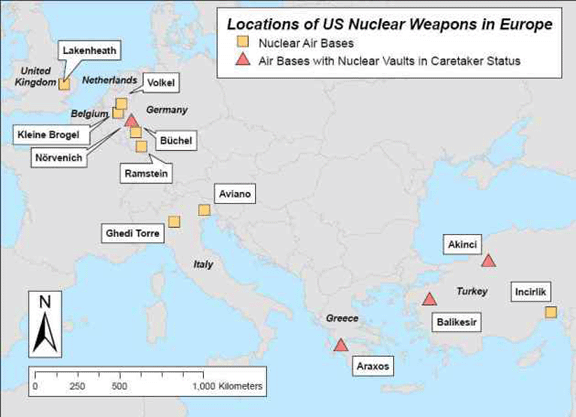
In September last year German television station ZDF cited a Pentagon budget document saying that the US Air Force would deploy modernized B61 nuclear bombs to Germany’s Buchel air force base replacing the 20 weapons already at the site.
“In other words, the American modernized thermonuclear aircraft bomb has been primarily, and for the nearest quarter of a century, destined to Europe. Washington however does not specify how and from whom the modernized nuclear bombs are going to defend the continent,” says an analytical articleon the RIA Novosti website.
“However it is easy to guess that the thermonuclear bombs will be first of all used for the ‘deterrence” of Russia and the rest of Europe will fall hostage to the circumstances orchestrated from across the ocean,” the website adds. Back in September 2015, Kremlin spokesman Dmitry Peskov characterized the move as a potential “violation of the strategic balance in Europe,” that would demand a Russian response.
“This could alter the balance of power in Europe,” Peskov then said.
“And without a doubt it would demand that Russia take necessary countermeasures to restore the strategic balance and parity.”
Bombing of Hiroshima and Nagasaki – America’s immoral sleep goes on

Hiroshima: the Crime That Keeps on Paying, But Beware the Reckoning, CounterPunch ,by DIANA  JOHNSTONE , AUGUST 5, 2016“……..The decision to destroy Hiroshima and Nagasaki was a political not a military decision. The targets were not military, the effects were notmilitary. The attacks were carried out against the wishes of all major military leaders. Admiral William Leahy, chairman of the Joint Chiefs of Staff, wrote in his memoirs that “the use of this barbarous weapon at Hiroshima and Nagasaki was of no material assistance in our war against Japan. The Japanese were already defeated and ready to surrender…” General Eisenhower, General MacArthur, even General Hap Arnold, commander of the Air Force, were opposed. Japan was already devastated by fire bombing, facing mass hunger from the US naval blockade, demoralized by the surrender of its German ally, and fearful of an imminent Russian attack. In reality, the war was over. All top U.S. leaders knew that Japan was defeated and was seeking to surrender.
The decision to use the atom bombs was a purely political decision taken almost solely by two politicians alone: the poker-playing novice President and his mentor, Secretary of State James F. Byrnes…….
the U.S. atom bombs got full credit for ending the war.
But that is not all.
The demonstrated possession of such a weapon gave Truman and Byrnes such a sense of power that they could abandon previous promises to the Russians and attempt to bully Moscow in Europe. In that sense, the bombs on Hiroshima and Nagasaki not only gratuitously killed hundreds of thousands of civilians. They also started the Cold War.
Hiroshima and the Cold War
A most significant observation on the effects of the atomic bomb is attributed to General Dwight D. Eisenhower. As his son recounted, he was deeply depressed on learning at the last minute of plans to use the bomb. Shortly after Hiroshima, Eisenhower is reported to have said privately:
“Before the bomb was used, I would have said yes, I was sure we could keep the peace with Russia. Now, I don’t know. Until now I would have said that we three, Britain with her mighty fleet, America with the strongest air force, and Russia with the strongest land force on the continent, we three could have guaranteed the peace of the world for a long, long time to come. But now, I don’t know. People are frightened and disturbed all over. Everyone feels insecure again.”[2]
As supreme allied commander in Europe, Eisenhower had learned that it was possible to work with the Russians. US and USSR domestic economic and political systems were totally different, but on the world stage they could cooperate. As allies, the differences between them were mostly a matter of mistrust, matters that could be patched up.
The victorious Soviet Union was devastated from the war: cities in ruins, some twenty million dead. The Russians wanted help to rebuild. Previously, under Roosevelt, it had been agreed that the Soviet Union would get reparations from Germany, as well as credits from the United States. Suddenly, this was off the agenda. As news came in of the successful New Mexico test, Truman exclaimed: “This will keep the Russians straight.” Because they suddenly felt all-powerful, Truman and Byrnes decided to get tough with the Russians.
Stalin was told that Russia could take reparations only from the largely agricultural eastern part of Germany under Red Army occupation. This was the first step in the division of Germany, which Moscow actually opposed.
Since several of the Eastern European countries had been allied to Nazi Germany, and contained strong anti-Russian elements, Stalin’s only condition for those countries (then occupied by the Red Army) was that their governments should not be actively hostile to the USSR. For that, Moscow favored the formula “People’s Democracies” meaning coalitions excluding extreme right parties.
Feeling all-powerful, the United States sharpened its demands for “free elections” in hope of installing anti-communist governments. This backfired. Instead of giving in to the implicit atomic threat, the Soviet Union dug in its heels. Instead of loosening political control of Eastern Europe, Moscow imposed Communist Party regimes – and accelerated its own atomic bomb program. The nuclear arms race was on.
“Have Our Cake and Eat It”……..
The bombs on Hiroshima and Nagasaki plunged the United States leadership into a moral sleep from which it has yet to awaken. http://www.counterpunch.org/2016/08/05/hiroshima-the-crime-that-keeps-on-paying-but-beware-the-reckoning/
Will USA’s nuclear Waste Isolation Pilot Plant really be ready by December?
Don Hancock, a nuclear waste expert with the nonprofit Southwest Research and Information Center, is skeptical officials will make the December 2016 deadline. He thinks it could take several million dollars more and a few more years to fully reopen WIPP.
“DOE was overly optimistic about scheduling and overly optimistic about costs,” Hancock said. “Unfortunately, DOE continues to not learn from its past. This is not unique to WIPP.”
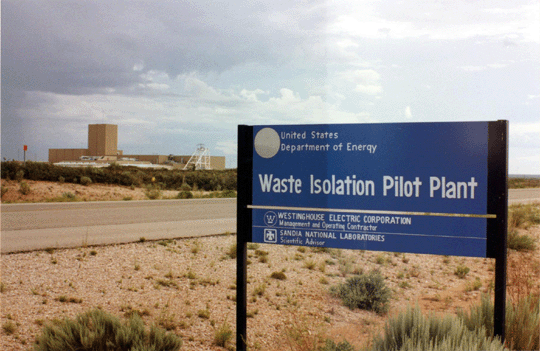 Feds: Highly likely nuclear dump will open in December http://www.houstonchronicle.com/news/article/Fed-says-it-is-80-percent-certain-WIPP-to-open-in-9126263.php August 6, 2016 SANTA FE, N.M. (AP) — The U.S. Department of Energy says it is 80 percent confident that the federal government’s only underground nuclear waste repository will partly reopen in December.
The New Mexico plant has been closed since February 2014, when an inappropriately packed container of waste from Los Alamos National Laboratory ruptured and contaminated part of the facility.
The closure derailed cleanup at federal sites around the nation and recovery is costing the Energy Department hundreds of millions of dollars.
A Government Accountability Office audit released this week said the agency knew it had only a 1 percent chance of meeting that March 2016 deadline.
In 2015, the agency admitted it couldn’t safely reopen the Waste Isolation Pilot Plant, even for limited operations, until at least December 2016 — and at a higher cost. Now auditors say even the revised cost estimate was flawed. The agency “did not follow all best practices for cost and schedule estimates,” federal auditors found, including having an independent analyst review them.
The report says the Energy Department also admitted in May 2015 that the pressure to meet the March 2016 deadline “contributed to poor safety practices in WIPP recovery efforts.”
The result of missteps in the process of reopening the facility, according to auditors, was a nine-month delay and a price tag $64 million higher than the original cleanup estimate. The Energy Department initially estimated it would cost $242 million to restore WIPP for limited waste disposal and an additional $77 million to $309 million to install a new ventilation system critical to providing clean air to workers.
The delays led to an additional $61.4 million in operating costs at WIPP, and the cost to prepare the facility for limited activity went up another $2 million.
Don Hancock, a nuclear waste expert with the nonprofit Southwest Research and Information Center, is skeptical officials will make the December 2016 deadline. He thinks it could take several million dollars more and a few more years to fully reopen WIPP.
“DOE was overly optimistic about scheduling and overly optimistic about costs,” Hancock said. “Unfortunately, DOE continues to not learn from its past. This is not unique to WIPP.”
AREVA- not making money from nuclear build, but cleaning up from waste cleanup?
New facility in Moyock makes massive spent nuclear fuel storage casks By Jeff Hampton The Virginian-Pilot MOYOCK, N.C., 7 Aug 16 Marlin Stoltz put on a hard hat and bright yellow vest before walking out into the four-acre work area of the Moyock Casting Facility, a new operation in the business of spent nuclear fuel storage.
A line of concrete cases, each 21 feet long and weighing 100 tons, rested along a rail spur, ready for shipment. Several men stood atop a steel form where hydraulic power vibrated and settled four truckloads of concrete for the next case. A concrete plant operated less than 100 yards away.
“This allows us to work very efficiently,” said Stoltz, supervisor of the Moyock Casting Facility and a deputy of the services business line for parent company Areva TN, a division of Areva, Inc, based in Charlotte.
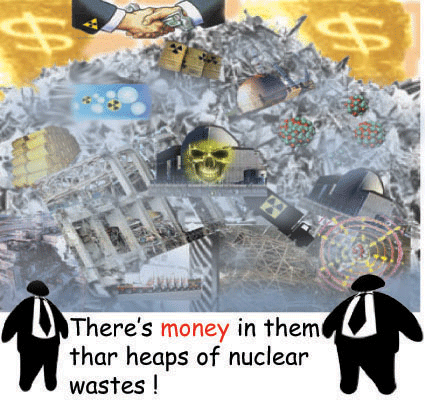
Areva, Inc. has operations within the entire nuclear cycle, including uranium mining.
The Moyock facility with 25 employees opened in January. It makes concrete modules that encase steel canisters containing spent nuclear fuel. From here, the modules head to nuclear plants elsewhere……
demand for spent fuel storage remains strong, Stoltz said. The Moyock plant means to deliver.
“The back end of the business is growing,” he said. http://pilotonline.com/news/local/new-facility-in-moyock-makes-massive-spent-nuclear-fuel-storage/article_82fb08bd-19f9-5c03-b976-47eeeb130604.html
The ever increasing danger of nuclear apocalypse: the Pentagon’s plan
policy of nuclear bombing of targeted cities is still on the drawing board of the Pentagon. While today’s list of targets remains classified, cities in Russia, China, the Middle East, North Korea are on the target list.
What we are dealing with is the criminalization of the State, whereby officials in high office are complicit in fostering the pre-emptive use of nuclear weapons.

Remember Hiroshima: No Danger of Nuclear War? The Pentagon’s Plan to Blow up the  Planet http://www.globalresearch.ca/there-is-no-danger-of-nuclear-war-or-is-there/5500276 By Prof Michel Chossudovsky Global Research, August 05, 2016 More than 2000 nuclear explosions have occurred since 1945 as part of nuclear weapons’ testing.
Officially only two nuclear bombs (Hiroshima and Nagasaki, 6 and 9, August 1945) have been used in an act of war.
The media consensus is that a nuclear holocaust is an impossibility.
Should we be concerned?
Publicly available military documents confirm that nuclear war is still on the drawing board of the Pentagon.
Compared to the 1950s, however, today’s nuclear weapons are far more advanced. The delivery system is more precise. In addition to China and Russia, Iran, Syria and North Korea are targets for a first strike pre-emptive nuclear attack.
Let us be under no illusions, the Pentagon’s plan to blow up the planet using advanced nuclear weapons is still on the books.
War is Good for Business: Spearheaded by the “defense contractors” (Lockheed Martin, Northrop Grumman, Boeing, British Aerospace et al), the Obama administration has proposed a one trillion dollar plan over a 30 year period to develop a new generation of nuclear weapons, bombers, submarines, and intercontinental ballistic missiles (ICBM) largely directed at Russia and China.
A new arms race is unfolding. Russia has in turn responded to US threats through a major modernization of its strategic nuclear weapons arsenal.
Political Insanity
The use of nuclear weapons is casually endorsed by presidential candidate Hillary Clinton, who believes that nuclear weapons are instruments of peace-making. Her election campaign is financed by the US military industrial complex which produces the WMDs.
Meanwhile, scientists on contract to the Pentagon have endorsed the use of tactical nuclear weapons, which are said to be “harmless to the surrounding civilian population because the explosion is underground.” The tactical nukes are bona fide thermonuclear weapons, with an explosive capacity between one third and six times a Hiroshima bomb. They have been cleared for battlefield use (in the conventional war theater) by the US Senate and their use does not require the approval by the Commander in Chief.
The people at the highest levels of government who make decisions regarding the use of nuclear weapons haven’t the foggiest idea as to the implications of their actions.
Cold War versus Post Cold War Nuclear Doctrine
A recently released classified Pentagon document (1959) confirms that during the Cold War, 1200 cities extending from Eastern Europe to the Far East were targeted for systemic destruction.
According to 1956 Plan, H-Bombs were to be Used Against Priority “Air Power” Targets in the Soviet Union, China, and Eastern Europe.
Major Cities in Soviet Bloc, Including East Berlin, Were High Priorities in “Systematic Destruction” for Atomic Bombings. (William Burr, U.S. Cold War Nuclear Attack Target List of 1200 Soviet Bloc Cities “From East Germany to China”, National Security Archive Electronic Briefing Book No. 538, December 2015
Today’s List of Targeted Cities
This policy of nuclear bombing of targeted cities is still on the drawing board of the Pentagon. While today’s list of targets remains classified, cities in Russia, China, the Middle East, North Korea are on the target list. An Associated Press report quoting Pentagon sources (June 4, 2015) confirms that:
The Pentagon has been actively considering the use of nuclear missiles against military targets inside Russia, … Three options being considered by the Pentagon are the placement of anti-missile defenses in Europe aimed at shooting Russian missiles out of the sky; a “counterforce” option that would involve pre-emptive non-nuclear strikes on Russia military sites; and finally, “countervailing strike capabilities,” involving the pre-emptive deployment of nuclear missiles against targets inside Russia.
The AP states: “The options go so far as one implied—but not stated explicitly—that would improve the ability of US nuclear weapons to destroy military targets on Russian territory.” In other words, the US is actively preparing nuclear war against Russia.
Robert Scher, one of Carter’s nuclear policy aides, told Congress in April that the deployment of “counterforce” measures would mean “we could go about and actually attack that missile where it is in Russia.” According to other Pentagon officials, this option would entail the deployment of ground-launched cruise missiles throughout Europe.
The criminality and recklessness of the foreign policy of Washington and its NATO allies is staggering. A pre-emptive nuclear strike against Russian forces, many of them near populated areas, could claim millions of lives in seconds and lead to a nuclear war that would obliterate humanity.
Even assuming that the US officials threatening Russia do not actually want such an outcome, however, and that they are only trying to intimidate Moscow, there is a sinister objective logic to such threats.” (Niles Williamson, Military Madness: US Officials Consider Nuclear Strikes against Russia, World Socialist Website, June 5, 2015, emphasis added)
Nuclear Tests Worldwide
Over 2000 Nuclear Tests have been conducted since 1945.
Five “Non-Nuclear States” (Netherlands, Belgium, Italy, Germany, Turkey)
Possess and Deploy Nuclear Weapons
Five non-nuclear states (Belgium, Netherlands, Germany, Italy, Turkey) have deployed the B61 tactical (thermonuclear) against targets in the Middle East and the Russian Federation.. The latest and more advanced version is the B61-12, which is contemplated to replace the older B61 version.
Today’s Potential Targets for US Nuclear Attacks
Are countries in the Middle East potential targets for a nuclear attack? (For further details, see Michel Chossudovsky, Dangerous Crossroads: Is America Considering the Use of Nuclear Weapons against Libya? Global Research, April 2011).
The tactical nuclear weapons were specifically developed for use in post Cold War “conventional conflicts with third world nations”. In October 2001, in the immediate wake of 9/11, Defense Secretary Donald Rumsfeld envisaged the use of the B61-11 tactical nuclear bomb in Afghanistan. The targets were Al Qaeda cave bunkers in the Tora Bora mountains.
Rumsfeld stated at the time that while the “conventional” bunker buster bombs “‘are going to be able to do the job’, … he did not rule out the eventual use of nuclear weapons.” (Quoted in the Houston Chronicle, 20 October 2001, emphasis added.)
The use of the B61-11 was also contemplated during the 2003 bombing and invasion of Iraq as well as in the 2011 NATO bombings of Libya.
In this regard, the B61-11 was described as “a precise, earth-penetrating low-yield nuclear weapon against high-value underground targets”, which included Saddam Hussein’s underground bunkers:
”If Saddam was arguably the highest value target in Iraq, then a good case could be made for using a nuclear weapon like the B61-11 to assure killing him and decapitating the regime” (Defense News, December 8, 2003).
The 1996 Plan to Nuke Libya
The B61-11 tactical nuclear weapon was slated by the Pentagon to be used in 1996 against Libya: “Five months after [Assistant Defense Secretary] Harold Smith called for an acceleration of the B61-11 production schedule, he went public with an assertion that the Air Force would use the B61-11 [nuclear weapon] against Libya… “(http://www.nukestrat.com/us/afn/B61-11.htm,)
“Senior Pentagon officials ignited controversy last April [1996] by suggesting that the earth-penetrating [nuclear] weapon would soon be available for possible use against a suspected underground chemical factory being built by Libya at Tarhunah. (David Muller, Penetrator N-Bombs, International Action Center, 1997)
Tarbunah has a population of more than 200,000 people, men, women and children. It is about 60 km East of Tripoli. Had this “humanitarian bomb” (with a ”yield” or explosive capacity of two-thirds of a Hiroshima bomb) been launched on this “suspected” WMD facility, it would have resulted in tens of thousands of deaths, not to mention the nuclear fallout… The man behind this diabolical project to nuke Libya was Assistant Secretary of Defense Harold Palmer Smith Junior. “Even before the B61 came on line, Libya was identified as a potential target”. (Bulletin of the Atomic Scientists – September/ October 1997, p. 27 )
Concluding Remarks
What we are dealing with is the criminalization of the State, whereby officials in high office are complicit in fostering the pre-emptive use of nuclear weapons. The media has camouflaged the implications of America’s post Cold war nuclear doctrine, which was formulated in a secret meeting at US Strategic Command Headquarters on Hiroshima Day, August 6, 2003.
On August 6, 2003, on Hiroshima Day, commemorating when the first atomic bomb was dropped on Hiroshima (August 6 1945), a secret meeting was held behind closed doors at Strategic Command Headquarters at the Offutt Air Force Base in Nebraska.
Senior executives from the nuclear industry and the military industrial complex were in attendance. This mingling of defense contractors, scientists and policy-makers was not intended to commemorate Hiroshima. The meeting was intended to set the stage for the development of a new generation of “smaller”, “safer” and “more usable” nuclear weapons, to be used in the “in-theater nuclear wars” of the 21st Century.
In a cruel irony, the participants to this secret meeting, which excluded members of Congress, arrived on the anniversary of the Hiroshima bombing (August 6) and departed on the anniversary of the attack on Nagasaki (August 9). (Michel Chossudovsky, Towards a World War III Scenario, The Dangers of Nuclear War, Global Research, Montreal, 2012)
The Hiroshima Day 2003 meetings had set the stage for the “privatization of nuclear war”. Corporations not only reap multibillion-dollar profits from the production of nuclear bombs, they also have a direct voice in setting the agenda regarding the use and deployment of nuclear weapons.
All the safeguards of the Cold War era, which categorized the nuclear bomb as “a weapon of last resort”, have been scrapped. “Offensive” military actions using nuclear warheads are now described as acts of “self-defense”. During the Cold War, the doctrine of Mutually Assured Destruction (MAD) prevailed, namely that the use of nuclear weapons against the Soviet Union would result in “the destruction of both the attacker and the defender”.
In the post Cold war era, US nuclear doctrine was redefined. There is no sanity in what is euphemistically called US foreign policy. At no point since the first atomic bomb was dropped on Hiroshima on August 6th, 1945, has humanity been closer to the unthinkable…
Stay informed, spread the word far and wide. To reverse the tide of war, the broader public must be informed. Post on Facebook/Twitter.
Confront the war criminals in high office.
What we really need is real “Regime Change in America”.
How to know if a nuclear bomb works without setting it off
The Nuclear Button U.S. Presidents Can Push at Will , Bloomberg Eric Roston eroston , 5 Aug 16 As President Barack Obama counts down his last months in office, he has returned to one of his earliest and most ambitious promises, one he fully articulated in Prague in 2009: “I state clearly and with conviction America’s commitment to seek the peace and security of a world without nuclear weapons.“
In the tumultuous years since, it’s probably become clear to him the only way America can rid the world of nuclear weapons would involve the (until recently) unspeakable prospect of using them. Proposals for radical reductions have been largely stymied by political realities at home and growing threats abroad. The deal Obama did make with Iran infuriated Republicans (and some Democrats). Now he’s going around the first branch again: He is asking the United Nations to help him revisit the Comprehensive Nuclear Test Ban Treaty, which turns 20 next month. White House National Security Council spokesman Ned Price says the administration wants to strengthen detonation detection as well as support for nations that already ban tests.
Republicans in the U.S. Senate, who have consistently blocked treaty ratification, are far from amused—a situation made worse when you throw in the prospect of UN involvement in American national security matters. In the two decades since President Bill Clinton signed the treaty, the U.S. has studiously avoided any testing. Republican opponents nevertheless maintain that tying America’s hands threatens the national interest (tests are underground—above-ground explosions generally ceased in 1963 under a separate accord).
But all the old arguments being dusted off for the latest battle seem to ignore a key fact that may moot the entire debate, at least over U.S. testing: Advances in technology have made live testing pointless. We can do it all in the lab.
Nuclear bombs have a special status. They are the president’s weapons. Obama’s longstanding position, that the U.S. can design, build, and maintain nuclear weapons without testing them, raises at least one practical question: Without actual explosions, how will he know his weapons work?
Two advances in science and technology help answer the question: simulation and seismic monitoring. Let’s dip into the deep past for a minute………
Now the Energy Department’s National Laboratories sign off on the safety and war-readiness of U.S. weapons through monitoring, simulation, and maintenance. Ironically, “Trinity” is not only a haunting national landmark in New Mexico, but also the name of a supercomputer at Los Alamos National Laboratory capable of performing 40 quadrillion calculations a second.
Another reason Obama’s proposal shouldn’t be viewed as a new security initiative is tied to monitoring. In January, nuclear experts quickly knew that the quakes coming from North Korea were caused by a bomb, but not a hydrogen bomb. The seismic signal was nearly identical to earlier atomic tests.
Some 76 countries host about 170 seismic monitoring stations that listen 24 hours a day for disturbances on land. Complementary systems listen to the oceans and sniff for radioactivity. Any expansion of monitoring would make it easier to discern the characteristics of a detonated device, but the world is pretty well covered as it is.
Despite political obstacles, scientists have made nuclear weapons testing increasingly harmless to humans and the environment. The countries what benefit from such advances, especially those that signed the Comprehensive Nuclear Test Ban Treaty, are probably less interested in what the U.S. does about making sure testing stays in the lab than they are about who gets the real nuclear button come November.
—With assistance by Toluse Olorunnipa in Washington. http://www.bloomberg.com/news/articles/2016-08-05/the-nuclear-button-u-s-presidents-can-push-at-will
Consumer-funded nuclear bail out will have an unprecedented impact on the nuclear power industry
Impacts of NY’s Nuclear Power ‘Bail Out’ and Solar, Wind Boost, Epoch Times, By Tara MacIsaac, Epoch Times | August 3, 2016
It includes what has been called a consumer-funded bail out of upstate New York’s struggling nuclear power plants.
Nuclear energy is treated in the state’s plan as a bridge to a renewable energy future. The commission said nuclear is necessary to maintain stability in the power grid as New York makes the transition toward the standard’s goal of 50 percent renewable energy by 2030.
By subsidizing nuclear power alongside solar and wind, the state is making a bold statement about the value of nuclear reactors as zero-emission energy sources. This could ripple to other states, inspiring similar initiatives to revive the sputtering nuclear industry.
Impacts of the clean energy plan on the nuclear, solar, and wind industries will affect New Yorkers in many ways………
How It Works
Electricity providers will be required to obtain a targeted number of renewable energy credits (RECs) and zero-emissions credits (ZECs) each year.
A REC is created each time 1 megawatt-hour (MWh) of electricity is generated by a renewable resource. RECs can then be sold and traded among providers. ZECs, on the other hand, are related solely to the nuclear plants. These credits are created when zero-emission nuclear power is generated.
So the state awards ZECs to the nuclear companies, which the energy providers must buy from them. The costs of the ZECs that electricity providers purchase will be passed on to the consumer, baked into the supply charges on consumers’ bills.
How It Will Affect Consumers
The nuclear industry is having trouble competing with low natural gas prices. ZECs essentially force state residents and businesses to pay above-market rates for nuclear energy.
But the governor’s office and Public Service Commission Chair Audrey Zibelman suggested a back door may be opened for New Yorkers opposed to supporting nuclear energy.
A press release from Cuomo’s office stated that consumers may be offered a 100 percent renewable energy option. The idea is that consumer demand for 100 percent renewable energy could naturally encourage the development of new renewable energy facilities.
“If it does that,” Zibelman said at the commission hearing on Aug. 1, “then I think it’s fair to say to those customers, if you truly don’t want to buy nuclear, we will allow you not to be required to contribute to that program.
“We’re asking staff to look at that and we’ll see how we can make that happen.”
In addition to providing various options for consumers, Zibelman said clear labeling will be important. “What I would like to know, as a consumer, [is] that if I’m … buying what is a ‘green product’ … are those megawatts really green,” she said. If it’s only 50 percent renewable, for example, the consumer will be told so in clear terms……..http://www.theepochtimes.com/n3/2130861-impacts-of-nys-nuclear-power-bail-out-and-solar-wind-boost/
Nuclear industry revs up for a new political lobbying campaign
Nuclear trade group shakes up leadership http://thehill.com/policy/energy-environment/290405-nuclear-trade-group-shakes-up-leadership By Timothy Cama – 08/04/16
The nuclear power industry’s Washington trade group is shaking up its leadership and consolidating numerous executive positions.
The Nuclear Energy Institute (NEI) said Thursday that it’s consolidating its governmental affairs, communications and policy offices into one operation.
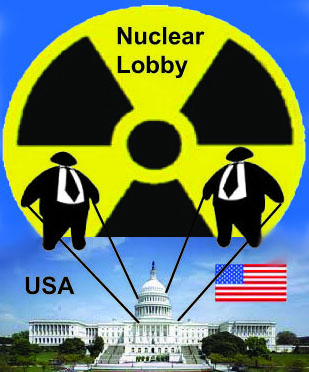
The moves come at a pivotal time for the nuclear industry, when many of the fewer than 100 reactors in the country are closing due to increasing costs and competition from cheap natural gas and only a small handful of new plants are being constructed or even planned.
“The nuclear energy industry is facing one of the most transformational periods in its history. Additionally, 2017 and 2018 lie ahead as a critical window for us,” Marvin Fertel, NEI’s president, said in a statement.
“The new presidential administration will be in place, providing a valuable opportunity to change the dialogue on the importance of nuclear energy to our economic and environmental goals. Given the change in leadership and looking at this pivotal period for our industry, we are acting now to better position NEI to have enduring impact in the political and policy arena.”
Fertel himself is retiring at the end of the year.
The shakeup is happening as the industry has a number of important matters on which they are pressing lawmakers to act. The industry’s congressional allies are expected next year to make a new push to enact nuclear waste legislation that could lead to construction of the Yucca Mountain waste site in Nevada, along with short-term disposal areas.
The industry is also pushing for renewal of a tax credit for newly built nuclear plants that has not yet been used.
The NEI spent about $2.35 million in federal lobbying last year, according to disclosures it provided to Congress.
-
Archives
- October 2026 (120)
- September 2026 (339)
- August 2026 (330)
- July 2026 (355)
- June 2026 (287)
- May 2026 (306)
- April 2026 (356)
- March 2026 (251)
- February 2026 (267)
- January 2026 (308)
- December 2025 (358)
- November 2025 (359)
-
Categories
- 1
- 1 NUCLEAR ISSUES
- business and costs
- climate change
- culture and arts
- ENERGY
- environment
- health
- history
- indigenous issues
- Legal
- marketing of nuclear
- media
- opposition to nuclear
- PERSONAL STORIES
- politics
- politics international
- Religion and ethics
- safety
- secrets,lies and civil liberties
- spinbuster
- technology
- Uranium
- wastes
- weapons and war
- Women
- 2 WORLD
- ACTION
- AFRICA
- Atrocities
- AUSTRALIA
- Christina's notes
- Christina's themes
- culture and arts
- Events
- Fuk 2022
- Fuk 2023
- Fukushima 2017
- Fukushima 2018
- fukushima 2019
- Fukushima 2020
- Fukushima 2021
- general
- global warming
- Humour (God we need it)
- Nuclear
- RARE EARTHS
- Reference
- resources – print
- Resources -audiovicual
- Weekly Newsletter
- World
- World Nuclear
- YouTube
-
RSS
Entries RSS
Comments RSS

