According to the update, the Energy Department has a town hall meeting planned for Oct. 13 in Carlsbad, New Mexico, to discuss recent ground control issues……..http://www.aikenstandard.com/article/20161008/AIK0101/161009624
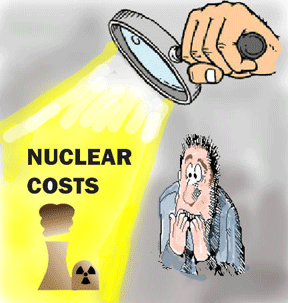
The R Street Institute’s “sober assessment” of nuclear power costs
 Nordea Bank taps BNY Mellon as US debt, equity portfolios custodian, SNL, October 12, 2016
|
USA’s Nuclear Regulatory Commission’s Safety Directives

 Nuclear (Information) Power, UCS, DAVE LOCHBAUM, DIRECTOR, NUCLEAR SAFETY PROJECT | OCTOBER 18, 2016 DISASTER BY DESIGN/SAFETY BY INTENT #54
Safety by Intent
Robin Morgan wrote that “Knowledge is power. Information is power.”
Among many lessons learned from the March 1979 core meltdown at Three Mile Island was the need to collect, assess, and disseminate relevant operating experience in a timely manner. In other words, nuclear information has the power to promote nuclear safety, but only when that information is shared so as to replicate good practices and eradicate bad ones. Both the Nuclear Regulatory Commission (NRC) and the nuclear industry undertook parallel efforts after Three Mile Island to improve operating experience efforts.
NRC’s Information Sharing
The centerpiece of the NRC’s operating experience efforts is its generic communications program. The NRC instituted this program before the Three Mile Island accident, but took steps following the accident to expand the program and to shorten the time between events and advisories. The NRC also lowered the threshold used to screen the information to share more operating experience with plant owners.
The NRC has issued thousands of generic communications since the Three Mile Island accident.Bulletins and Generic Letters typically alert owners to a potential problem and require them to either confirm their facilities are not vulnerable or implement measures to reduce vulnerabilities.Regulatory Issue Summaries and Information Notices typically apprise owners about operating experience but do not require that the owners take specific actions in response.
Examples illustrating these various generic communications are:
- Bulletin 2003-01, “Potential Impact of Debris Blockage on Emergency Sump Recirculation at Pressurized Water Reactors,” warned owners that a rupture inside containment of a pipe filled with steam or water could generate large amounts of debris as the high pressure fluid jetting from the broken pipe ends scoured coatings off equipment, insulation off piping, and even paint off walls…….
- Generic Letter 2007-01, “Inaccessible or Underground Power Cable Failures that Disable Accident Mitigation Systems or Cause Plant Transients,” warned owners about a rash of unexpected failures of electrical cables. Many of the electrical cables had been qualified for 40 years of service, but failed before the end of their qualified lifetimes due to submergence in water. Several of the failed cables had been routed through underground metal conduits and buried concrete trenches. Groundwater or rainwater leaked into the conduits and trenches, subjecting the cable insulation to more rapid deterioration than anticipated………
- Information Notice 2011-13, “Control Rod Blade Cracking Resulting in Reduced Design Lifetime,” warned owners of boiling water reactors about experience at a foreign nuclear plant. Workers discovered severe degradation of the control rods caused by irradiation-assisted stress-corrosion cracking. …….
- Regulatory Issue Summary 2015-11, “Protective Action Recommendations for Members of the Public on Bodies of Water,” reminded owners of their obligations under Appendix E, “Emergency Planning and Preparedness for Production and Utilization Facilities,” to 10 CFR Part 50. Specifically, the regulatory issue summary reinforced the NRC’s expectation that owners’ emergency plan measures account for all affected members of the public whether on land or on water.
- Regulatory Issue Summary 2014-12, “Decommissioning Fund Status Report Calculations—Update to Low-Level Waste Burial Charge Information,” informed owners that they could use data in Revision15 of NUREG-1307, “Report on Waste Burial Charges: Changes in Decommissioning Waste Disposal Costs at Low-Level Waste Burial Facilities,” in preparing periodic funding status reports required by 10 CFR 50.75(f). Owners are required to estimate the cost of decommissioning their facilities based on (1) labor rates, (2) energy costs, and (3) low-level waste disposal costs. The U.S. Department of Labor periodically publishes data on labor and energy costs that owners can use. The regulatory information summary identified a source of low-level waste disposal cost data acceptable to the NRC.
Nuclear Industry’s Information Sharing
The nuclear industry formed the Institute for Nuclear Power Operations (INPO) in December 1979 as part of its responses to the Three Mile Island accident. Information sharing is one of several functions performed by INPO to support the nuclear industry……..
UCS’s Disaster by Design/ Safety by Intent series of blog posts is intended to help readers understand how a seemingly unrelated assortment of minor problems can coalesce to cause disaster and how effective defense-in-depth can lessen both the number of pre-existing problems and the chances they team up.
http://allthingsnuclear.org/dlochbaum/nuclear-information-power
USA edges closer towards nuclear war with Russia
 US citizens warned to prepare for NUCLEAR WAR over claims attack warning upgraded THE US could be edging ever closer to nuclear war with Russia after upgrading its attack defence readiness, it has been claimed. http://www.express.co.uk/news/world/721603/US-nuclear-attack-warning-upgraded-DEFCON-3-Vladimir-Putin-Russia-WW3 By VICKIIE OLIPHANT Oct 16, 2016 DEFCON is an alert system used by the US military to indicate the current threat of nuclear war.
The system has five states of alert, increasing in severity from DEFCON 5 – the least severe – to DEFCON 1 – the highest level. Currently, the levels is understood to be at 5.
But conspiracy theorists have warned the threat has secretly been upgraded two levels to DEFCON 3 – meaning the US could mobilise troops in as little as 15 minutes. The level was last upgraded to 3 in the aftermath of September 11, 2001 – with standby ordered for a potential rise to DEFCON 2.
Now website DEFCON warning system claim it has been upgraded again in a terrifying revelation.
While there are currently no imminent threats to the US, it claimed the situation is “fluid and can change rapidly.” However it also highlighted the dying relationship between the US and Russia, citing concerns of all-out warfare between the bitter rivals. A statement posted on its website read: “Tensions between Russia and the United States have reached levels beyond the cold war in the recent week.
“The situation between Russia and the United States is extremely fluid at the moment. In all likelihood as dynamic as at times during the Cuban Missile Crisis of 1962.
“At this time, the DEFCON Warning System feels that an increase to DEFCON 3 would be a prudent move.” Russian citizens have been encouraged to find bomb shelters and gas masks today, as state-sponsored infomercials on television gave out guidelines on how people should prepare for a nuclear attack.
President Vladimir Putin meanwhile has ordered the evacuation of 40 million people in a military drill.He also transferred nuclear-capable Iskander ballistic missiles to one of its strategic Baltic regions last week, in what officials claim was part of regular military manoeuvres.
However many world leaders fear the moves are being carried out in preparation for war. The conspiracy theory site warned citizens to prepare for any potential conflict, saying: “This is a very sensitive situation which has the potential to spiral out of control.
“It is recommended that all citizens learn the steps to be taken in the event of nuclear war.”
Theorists have even claimed a move to DEFCON 2 is being muted, based on Putin’s call for Russians to return home.
Though the threat of war seems to be rising, the DEFCON level indication reported by the website is only speculation. The US military do not share the actual DEFCON status with the public for obvious security reasons.
The American point of view on USA-Russia crisis over Syria
Throughout her campaign, Clinton has repeatedly called for a no-fly or “safe zone” for Syrian civilians, without providing a detailed explanation as to what that would entail. But her advisors have suggested that it could involve the United States shooting down Syrian aircraft, forcing Russia to choose between defending Assad or working with Washington. In discussing the no-fly-zone idea, Clinton has not acknowledged the presence of an advanced Russian S-400 air defense system in Syria, which potentially could be used against U.S. aircraft enforcing a no-fly zone
Putin Throws Out the Old Nuclear Rules, Rattling Washington, FP, Washington and Moscow used to keep arms control separate from other crises around the world. But that era is over and the next president will have to decide how to deal with it. BY , OCTOBER 16, 2016
Russian President Vladimir Putin’s nuclear saber-rattling and military brinksmanship have upended the rules that long governed relations between Moscow and Washington, presenting the United States with a dangerous dilemma.
The next U.S president will inherit an increasingly fraught relationship with Russia in which Washington’s attempts to deter Putin have mostly failed. Moscow’s decision this month to pull out of a landmark agreement on disposing tons of weapons-grade plutonium, coupled with reports last week that Russia deployed new nuclear-capable missiles to Kaliningrad on the Baltic Sea, underscore how Putin is flexing Russia’s power in new and often unpredictable ways.
U.S. and European officials are increasingly alarmed over Putin’s willingness to risk military confrontation and threaten to use his country’s nuclear arsenal over issues the West sees as unrelated and separate. That makes it devilishly difficult for the United States and its European allies to find an effective response to Putin’s audacious tactics that in recent years range from Russia’s annexation of Crimea, to its air war in support of the Syrian regime, to Moscow’s suspected hacking of America’s presidential election.
“It very much feels like we are entering a very troubled and dangerous phase in this bilateral relationship,“ said Julianne Smith, a former senior Pentagon official who oversaw NATO policy and a former senior advisor to Vice President Joe Biden. “The next president will face some big strategic choices,” said Smith, who now advises Democratic presidential candidate Hillary Clinton on Europe and Russia.
President Barack Obama’s successor will have to choose from a range of unpleasant and risky options when it comes to handling a resurgent Russia, current and former officials said. A more conciliatory stance, aimed at cutting a grand bargain with Russia focused on Ukraine, would defuse tensions in the short term but at the cost of ultimately emboldening Putin. A more hawkish line — like the one championed by Clinton, who is leading nationwide polls — would risk escalation, with the chance of a military showdown in Syria or the Baltics……….
In the Kremlin’s decree this month declaring Russia would no longer cooperate with the United States on a 2009 agreement to dispose of weapons-grade plutonium, Moscow said it would consider reviving the agreement only if the United States scaled back its military presence near Russia’s border, lifted all sanctions against Russia, and paid Moscow compensation for the economic losses caused by the sanctions.
U.S. officials said they were disappointed by Moscow’s decision and dismayed at what they consider a worrisome pattern of behavior……..
The United States says Russia has flouted a 1987 arms control treaty, negotiated by then-U.S. President Ronald Reagan and Soviet leader Mikhail Gorbachev, which called for the elimination of all ground-launched ballistic and cruise missiles with ranges of 500 to 5,500 kilometers. The treaty helped bring an end to the Cold War and served as a crucial foundation for arms control efforts.
After signing the New START arms control accord in 2010, Russia has rebuffed overtures from Obama during the past six years to negotiate further reductions in nuclear weapons. The treaty expires in 2021, and without a new deal, the gains in arms control over the last 25 years would be endangered. Putin’s government also has backed away from mutual efforts launched in the 1990s to secure nuclear material. In March, Russia declinedto attend the Nuclear Security Summit in Washington…….
Against the sharp deterioration in U.S.-Russian relations, finding a new way to moderate mounting tensions between the two countries will be left to the next U.S. administration. In Syria, Russia’s deployment of fighter aircraft squadrons and artillery in 2015 blindsided the Obama administration, and has succeeded in shifting the tide of the war in favor of Syrian President Bashar al-Assad’s regime. The intervention has enabled Russia to set the agenda in Syria, reducing Washington’s influence and drastically limiting U.S. options for any military action.
When lawmakers last month asked the chairman of the Joint Chiefs of Staff, Gen. Joseph Dunford, about the possibility of the United States setting up a no-fly zone in Syria, he said it “would require us to go to war with Syria and Russia.”
Throughout her campaign, Clinton has repeatedly called for a no-fly or “safe zone” for Syrian civilians, without providing a detailed explanation as to what that would entail. But her advisors have suggested that it could involve the United States shooting down Syrian aircraft, forcing Russia to choose between defending Assad or working with Washington. In discussing the no-fly-zone idea, Clinton has not acknowledged the presence of an advanced Russian S-400 air defense system in Syria, which potentially could be used against U.S. aircraft enforcing a no-fly zone………….. http://foreignpolicy.com/2016/10/16/putin-throws-out-the-old-nuclear-rules-rattling-washington-clinton-trump-arms-control/
For auction – Abandoned nuclear reactor complex in Alabama
TVA sets auction date for Bellefonte nuclear power plant, Abandoned twin-reactor complex in Alabama to go on block Nov. 14, Times Free Press,
October 14th, 2016
TVA said Friday it has set an auction date of Nov. 14 at 9 a.m. central time to sell its unfinished Bellefonte nuclear power plant. Concentric Energy Advisors Inc., a property consulting firm TVA hired this spring to market the 1,400-acre power plant site on the Tennessee River in Hollywood, Ala., will conduct the sale at the plant site.
TVA directors declared the unfinished nuclear plant to be surplus property earlier this year — 43 years after construction began on the twin-reactor complex. TVA said in a statement Friday the “primary goal in selling the site is to provide the best long-term economic return to the surrounding communities.” The minimum bid price is $36.4 million, which is the appraised value of the riverfront property, but the bids will be evaluated on both the price offered and the economic gains any sale would generate for the region.
TVA has invested more than $5 billion in capital and interest costs at Bellefonte since work began on two Babcock and Wilcox reactors in 1973. Work was suspended in the 1980s when TVA’s growth in power demand slowed and TVA determined it didn’t need either of the 1,200-megawatt units…….http://www.timesfreepress.com/news/business/aroundregion/story/2016/oct/14/tva-sets-bellefonte-nuclear-plant-auction-date-next-month/392167/
Establishment of a no-fly zone (NFZ) in Syria? A step towards allout war?
Going Beyond Propaganda. Nuclear Conflict, Deception or Real Threat? Pentagon: A “Preemptive” Nuclear Strike against Russia is still Valid By Federico Pieraccini Global Research, October 16, 2016 The events in the Middle East, Syria and Aleppo are the focus of global attention. Rarely has a battle been so decisive to the outcome of a war and the fate of hundreds of millions of people around the world
Indigenous forum addresses horrors of nuclear legacy in USA
 Nuclear Standoff, CounterPunch, OCTOBER 14, 2016 “…….This week, as if in sync with the Marshall Islanders, a group called the Native Community Action Council convened the Native American Forum on Nuclear Issues, addressing half a century of lingering horror at another nuclear testing site, in Nevada. The forum addressed such issues as abandoned uranium mines and the proposed high-level nuclear waste disposal site under Yucca Mountain, “in the heart of the Western Shoshone Nation (and) a sacred site for Shoshone and Paiute peoples,” according to the organization’s press release.
“Because of U.S. nuclear testing in Nevada, the Western Shoshone Nation is already the most bombed nation on earth’” the release continues. “They suffer from widespread cancer, leukemia, and other diseases as a result of fallout from more than 1,000 atomic explosions on their territory.”
This is the reality we ignore. We’ve been ignoring it for the last 70 years and, indeed, much longer. We’ve reached the end of our ability to treat the planet, and much of its people, as disposable. Much of humanity knows this, but its leaders are refusing to listen. The human conscience is dismissed on a technicality. http://www.counterpunch.org/2016/10/14/nuclear-standoff/
People and planet endangered by the Trans Pacific Partnership
TPP would allow firms to turn to secretive international tribunals where they can sue governments for millions or billions of dollars if environmental or other public interest regulations interfere with expected future profits
The TPP undermines sound climate policy. The TPP would ramp up global warming by increasing U.S. coal, oil and gas exports to the world

7 ways the Trans Pacific Partnership threatens people and the planet, FOE USA, by Bill Waren, senior trade analyst, 13 Oct 16, The Trans Pacific Partnership trade deal is not so much about trade as it is about deregulation and forcing governments to pay corporations and wealthy investors for the cost of complying with environmental and other public interest safeguards. The TPP broadly restricts the policy space for governments to take effective environmental and climate action.
Unlike most international agreements, tribunals of trade lawyers would effectively enforce the TPP. Such tribunals could impose retaliatory sanctions like higher tariffs on the non-complying countries’ exports or award money damages that can run into millions or even billions of dollars.
Trade tribunals often treat environmental and public health regulations as trade barriers.
Until about twenty years ago, trade deals focused on reducing trade barriers like tariffs and quotas. Today’s trade deals, by contrast, focus on curbing the authority of democratic governments and legitimate courts to regulate the global marketplace. Trade tribunals often treat environmental and public health regulations as trade barriers. Trade deals like the TPP focus on dismantling many regulations that are alleged to interfere with the profits of multinational corporations and wealthy foreign investors.
Multinational corporations have lined up behind the TPP, as have Wall Street banks and Big Oil. But over 1,500 public interest organizations, such as internet freedom groups, faith-based organizations, labor unions, women’s & LBGT advocates and environmentalists, are standing up to oppose TPP……
Here are seven ways that the Trans Pacific Partnership trade deal threatens people and the planet:
1) TPP investment tribunals subvert democracy. TPP would allow firms to turn to secretive international tribunals where they can sue governments for millions or billions of dollars if environmental or other public interest regulations interfere with expected future profits. This would discourage government action like restricting oil and gas drilling, imposing pollution controls, and limiting the use of fracking (hydraulic fracturing). TransCanada, for example, is using a similar provision in the North American Free Trade Agreement to sue the U.S. for $15 billion for stopping construction of the Keystone XL pipeline.
2) The TPP undermines sound climate policy. The TPP would ramp up global warming by increasing U.S. coal, oil and gas exports to the world. The TPP is designed to protect “free trade” in such dirty energy products shipped out of West Coast ports. The result would be worsened climate change from carbon emissions across the Pacific.
3) The TPP deal threatens bees. …….
4) TPP threatens deregulation of chemical safety standards…..
5) TPP undercuts prudent food safety regulations. ….
6) TPP encourages GMOs……
7) TPP puts family farms at risk. …….
If you want to join the fight against the TPP, contact Bill Waren at wwaren@foe.org. https://medium.com/economic-policy/7-ways-the-trans-pacific-partnership-threatens-people-and-the-planet-ad49815f337b#.u2u3a5pif
Cuomo’s nuclear plant bailout lets Exelon and Entergy rip off US taxpayers
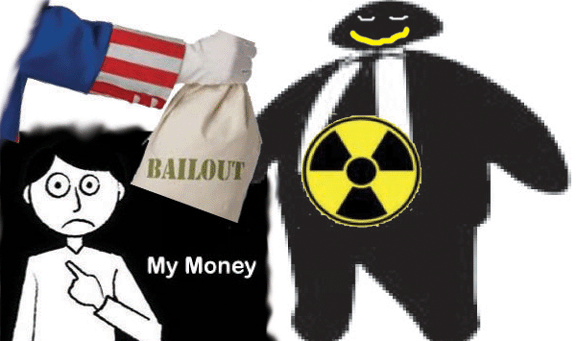 Cuomo wrong on nuclear plant bailout: View, Lohud.com Michael Shank October 12, 2016
New York state sets a trap with its plan to boost upstate nuclear plants by tacking on a fee to utility customers’ bills Bailouts are common in government — at the federal and state level and regardless of political party — and that’s what is happening now in New York for the nuclear industry.
New York’s nuclear bailout is merely the latest example of business getting off scot-free while taxpayers pick up multi-billion-dollar tabs. Gov. Andrew Cuomo is planning to bail out the aging and money-losing Ginna, FitzPatrick and Nine Mile Point nuclear plants, some of America’s oldest nuclear plants owned by Exelon and Entergy, with nearly $8 billion of New Yorkers’ hard-earned money (and another $2.8 billion if energy prices fall).
That decision was made after Exelon alone spent $430,000 in lobbying Albany over the past two years. In the same amount of time, Entergy spent $1.7 million lobbying New York state. Money talks…….
The New York nuclear bailout falls into the same trap that riddled financial industry and auto industry bailout schemes. There’s little corrective action that’s encouraged, or regulated, and so the industry is allowed to continue making the same mistakes — all at a significant cost to our economy. Nothing could be more inefficient. The most common nuclear industry bailout props up companies operating old plants — in desperate need of repair, emitting radioactive waste, leaking toxic material often and keeping cooling systems that kill massive amounts of marine life — with no conditions. And it’s done using taxpayer dollars to prop up companies — such as Fortune 100 Company Exelon with $34 billion in annual revenues — that aren’t in need of extra revenue……
Neither New York’s nuclear industry nor the utilities industry should be passing on these costs to taxpayers, nor should state governments be picking up the corporate tab. These are costs that companies should cover, not citizens. http://www.lohud.com/story/opinion/contributors/2016/10/12/cuomo-nuclear-plant-bailout/91945160/
Washington State seeks legal protection for the health of nuclear workers
 Washington State Seeks to Protect Nuclear Site Workers http://abcnews.go.com/US/wireStory/washington-state-seeks-protect-nuclear-plant-workers-42759576 By THE ASSOCIATED PRESS Washington state asked a federal judge Wednesday to issue an injunction requiring the U.S. Department of Energy and its contractor to take steps to protect workers at a major nuclear waste storage site.
Washington state Attorney General Bob Ferguson says more than 50 workers at the Hanford Nuclear Reservation have been exposed to toxic vapors and the “culture of indifference to worker safety must end.”
From January through July, Hanford workers reported suspicious smells or symptoms that indicate exposure to chemical vapors, according to The Tri-City Herald. ( http://bit.ly/2dVsCtf )
U.S. District Chief Judge Thomas Rice in Spokane heard arguments on the safety issue and the federal agency’s motion to dismiss the lawsuit. Rice said he would rule at a later date.
Lawyers for the Energy Department have argued in motions that the state lacks standing to bring the lawsuit. Hanford Challenge, an advocacy group, and the United Association of Plumbers and Steamfitters Local Union 598 are also plaintiffs in the lawsuit.
The agency has said the plaintiffs in the case have not shown harm to Hanford workers from vapors. It has argued that symptoms like headaches are common and don’t necessarily indicate exposure to vapors.
The state called that claim astounding.
The trial for the case is set for Sept. 18, 2017, but Ferguson said workers can’t wait that long to have a safe workplace.
The injunction would force the agency and its contractor, Washington River Protection Solutions, to provide supplied air for all workers within certain areas. The state also seeks the installation of additional monitoring and alarm equipment to warn workers when toxic vapors are being emitted.
Hanford’s 177 underground storage tanks contain more than 50 million gallons of toxic waste, the byproducts of decades of plutonium production, Ferguson said in a statement. Over a few days in late April and May, at least 48 workers were exposed to vapors from the tanks, and more were exposed in June.
The longterm effects are not known, he said.
Nuclear-powwered USS Ronald Reagan to join U.S.-South Korean joint naval drills
The large-scale naval drills, known as Invincible Spirit, kicked off Monday and are due to run for six days, the South’s navy said in a statement.
On Monday, the allies carried out exercises involving ship-to-ground and submarine-to-ground cruise missiles with average flight ranges of up to 1,000 km, the South Korean Defense Ministry said.
The exercises come just days after reports that the North may be making preparations for a sixth nuclear test or a long-range rocket launch…….
The reclusive nation [North Korea] also stoked concern in August when it claimed to have successfully test-fired a submarine-launched ballistic missile (SLBM). North Korean leader Kim Jong Un called that test “the greatest success” after the missile landed in Japan’s air defense identification zone, flying about 500 km — its longest test-flight by a weapon of that type.
The SLBM test has left the United States, South Korea and Japan worried that further developmental successes could give the North a difficult-to-detect weapon that would pose a serious security threat to all of them.
The U.S. and its Asian allies have responded to the North’s tests by showing off their own military muscle.
Late last month, the U.S. and South Korea conducted joint naval exercises in the Sea of Japan after Washington earlier in the month flew two supersonic bombers over the South — with one landing on the Korean Peninsula for the first time in 20 years.
One of the bombers also flew the closest a B-1B strategic bomber had ever flown to the border between the North and South. It was the second time in less than a month that the U.S., which has about 28,500 troops in South Korea, had flown bombers over the country. http://www.japantimes.co.jp/news/2016/10/10/asia-pacific/u-s-south-korean-joint-naval-drills-kick-off-nuclear-powered-uss-ronald-reagan-set-take-part/#.V__uQeV97Gg
America’s militarisation of the Pacific should stop
Washington Should Stop Militarizing the Pacific OCT. 9, 2016 WASHINGTON — Americans often assume that Chinese 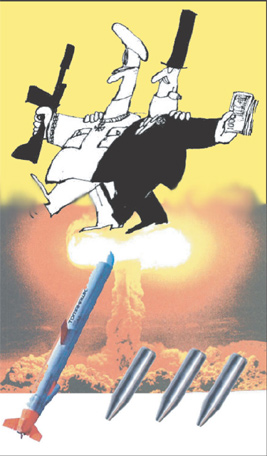 military aggression is increasing the likelihood of a clash between China and the United States. But many policy makers in Washington ignore that Beijing has good reason to be troubled by the United States’ military footprint in its neighborhood. President Obama’s “pivot” to Asia — which includes doubling down on Washington’s already-robust military presence in the region — further stokes the potential for conflict between China and the United States.
In USA Over 10 GW of utility-scale solar is under construction
Over 10 GW of utility-scale solar is under construction in the United States http://www.pv-magazine.com/news/details/beitrag/over-10-gw-of-utility-scale-solar-is-under-construction-in-the-united-states_100026373/#axzz4MoKxV81R05. OCTOBER 2016 | TOP NEWS, MARKETS & TRENDS | BY: CHRISTIAN ROSELUND
Eight states have more than 400 MW-DC of projects under construction each, showing increasing market diversification. The U.S. utility-scale market has long been set for a breakout year in 2016, due to the formerly pending expiration of the U.S. Investment Tax Credit (ITC). But figures on exactly how much solar will get installed have been hard to pin down.
GTM Research has documented a boom in project starts, and according to the company’s Utility PV Market Tracker service there is currently 10.1 GW-DC of utility-scale solar PV under construction nationwide. This includes 8.6 GW of solar projects being built in the top 10 state markets – more PV than was put online in the entire year 2015 across all market segments.
Among this, the company also lists eight states where more than 400 MW-DC of solar is currently under construction. These include not only California and Texas – which each have over 1 GW under construction – but also states that a few years ago had small to non-existent markets, such as Georgia, Florida and Utah.
GTM Research notes that this has been building for some time. “States don’t go from zero to 1 GW, so a lot of the places where we’re seeing diversification, there is only a small amount being developed, but it is indicative of more to come,” GTM Research Solar Analyst Colin Smith told pv magazine.
In at least two of the top eight states – North Carolina and Utah – projects are being driven by PURPA, a 1978 law which mandates that utilities must buy electricity from independent power producers if they can match the price that the utility would otherwise pay for generation.
Rounding out the eight states with more than 400 MW under construction are Nevada and Arizona. Both of these states have seen regulatory set-backs for distributed solar in recent years, and in both utilities are instead pursuing large-scale solar.
Third ceiling collapse at Nuclear Waste Isolation Pilot Plant
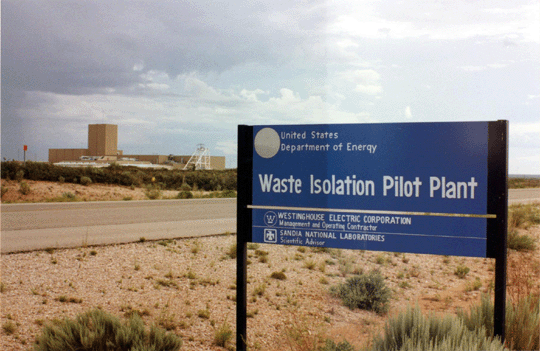 Waste Isolation Pilot Plant sees third ceiling
collapse, Aiken Standard, By Thomas Gardinert gardiner@aikenstandard.com Oct 8 2016 New Mexico’s Waste Isolation Pilot Plant has suffered its third ceiling collapse.
The first collapse was discovered Sept. 27, and the following two happened this past week. The third collapse was identified on Friday morning and was found to have followed the cave-in earlier in the week.
According to a WIPP update sent Friday evening, the area of the collapse continues to remain restricted for workers and employees. According to SRS Watch Director Tom Clements, who has been inside the facility, material regularly comes off of the walls and ceiling.
WIPP is an underground facility, cut into salt beds. Over time, groundwater and other natural forces are designed to form the salt deposits around the waste containers. He said the facility was designed to encase the nuclear waste buried there to permanently dispose of the material…
The WIPP facility was shut down in 2014 after a containment leak and an underground salt-truck fire. The facility is set to reopen in December 2016 and shipments are expected to resume in the fall of 2017.
WIPP is the intended resting place for some of the nuclear material at South Carolina’s Savannah River Site near Aiken. The Energy Department is currently disposing of plutonium through a process called dilute and dispose. That material is among those eventually intended for WIPP disposal.
According to the WIPP update, emergency evacuation routes were also out of date. The routes were still based on the facility before sections were closed, including the areas where the cave-ins occurred. The update said, “The Department of Energy identified a deficiency in the WIPP Mine Escape and Evacuation Plan, which still relied on evacuation routes established before some areas had been posted as prohibited. NWP had identified compensatory measures – immediate changes that could be made while the Evacuation Plan is formally updated.”
America’s enormous splurge on Defense leaves little funding for Climate Change action
We Have Money to Fight Climate Change. It’s Just That We’re Spending It on Defense, Reader Supported News , By Kenneth Pennington, Guardian UK,08 October 16
Stopping one fighter plane program would save enough to build wind farms to power 320,000 homes. We need to drastically reassess our priorities
One year ago this week, I was sitting in a cramped hotel room with 15 other staffers in Las Vegas for Bernie Sanders’ first debate for the presidential nomination. The question came from CNN: “What is the greatest national security threat?” Pundits criticized and mocked him for weeks after he answered “climate change”. But he was right.
And it’s not just Sanders pointing out the imminent threat posed by climate change to global and national security. CIA analysts and our nation’s military strategists are rightfully naming it as a contributor to refugee flows, the spread of disease, and conflicts over basic resources like food and water.
In 2014, 17.5 million people were displaced by climate-related disasters. Those numbers will continue to rise dramatically in the coming decades, according to climate displacement program manager Alice Thomas of Refugees International.
Our nation’s defense officials know global warming’s destructive forces could undermine fragile governments in unstable regions of the world where extremist ideologies can take root. Yet mainstream Republican avoidance of reality on the science of climate change impedes the necessary reassignment of resources to meet the challenges posed.
Now a new report from the Institute of Policy Studies provides the most accurate calculation of government spending on climate security to date. The picture isn’t pretty. We’re spending 28 times as much on military security than climate security. A public sector investment of $55bn per year is required to meet the challenge, according to the study. With $21bn in the 2017 budget, a shortfall of $34bn is left.
That may seem like an insurmountable hill to climb. It’s not! As the IPS report points out, plenty of money lies untouched in the nation’s bloated military budget……….
Republicans should take heed of former GOP President Dwight Eisenhower’s words of wisdom:
Every gun that is made, every warship launched, every rocket fired signifies, in the final sense, a theft from those who hunger and are not fed, those who are cold and are not clothed. This world in arms is not spending money alone. It is spending the sweat of its laborers, the genius of its scientists, the hopes of its children.
Let’s steward our resources wisely. Let’s choose climate over combat. http://readersupportednews.org/news-section2/318-66/39569-we-have-money-to-fight-climate-change-its-just-that-were-spending-it-on-defense
-
Archives
- October 2026 (112)
- September 2026 (339)
- August 2026 (330)
- July 2026 (355)
- June 2026 (287)
- May 2026 (306)
- April 2026 (356)
- March 2026 (251)
- February 2026 (267)
- January 2026 (308)
- December 2025 (358)
- November 2025 (359)
-
Categories
- 1
- 1 NUCLEAR ISSUES
- business and costs
- climate change
- culture and arts
- ENERGY
- environment
- health
- history
- indigenous issues
- Legal
- marketing of nuclear
- media
- opposition to nuclear
- PERSONAL STORIES
- politics
- politics international
- Religion and ethics
- safety
- secrets,lies and civil liberties
- spinbuster
- technology
- Uranium
- wastes
- weapons and war
- Women
- 2 WORLD
- ACTION
- AFRICA
- Atrocities
- AUSTRALIA
- Christina's notes
- Christina's themes
- culture and arts
- Events
- Fuk 2022
- Fuk 2023
- Fukushima 2017
- Fukushima 2018
- fukushima 2019
- Fukushima 2020
- Fukushima 2021
- general
- global warming
- Humour (God we need it)
- Nuclear
- RARE EARTHS
- Reference
- resources – print
- Resources -audiovicual
- Weekly Newsletter
- World
- World Nuclear
- YouTube
-
RSS
Entries RSS
Comments RSS

