To acknowledge our interconnectedness is to acknowledge the need for caution, restraint, and, yes, rules. Almost a hundred days into Trump’s Presidency, it’s obvious that he has no agenda or coherent ideology. But two qualities that clearly have no place in his muddled, deconstructive Administration are caution and restraint. As a result, the planet, and everything on it, will suffer.
The flaw in Trump’s North Korea sabre-rattling
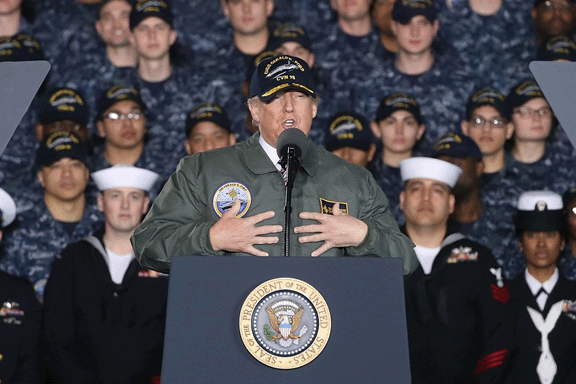 Trump’s North Korea sabre-rattling has a flaw: Kim Jong-un has
  nothing to lose
Strategy of sending in the US navy and attacking Syria and Afghanistan likely only to boost Pyongyang’s nuclear resolve, Guardian, Tom Phillips in Beijing and Justin McCurry in Tokyo, 16 APR 17, In the lead-up to North Korea’s latest missile test, Donald Trump had battled to convince Kim Jong-un he was picking a fight with the wrong guy.
The US president pounded Syria with 59 Tomahawk missiles and then ordered a naval “armada” into the waters around the Korean peninsula. He dropped the “mother of all bombs” on eastern Afghanistan and used Twitter to hammer home his message.
“North Korea is looking for trouble,” the US president tweeted last week as Kim’s technicians made the final preparations for Sunday’s botched but nevertheless defiant test.
But experts say Pyongyang’s latest act has underlined the futility of the billionaire’s efforts to bully Kim Jong-un into abandoning his nuclear ambitions.
“There is a problem with playing the military threat [card] with North Korea because they are inclined to call the bluff,” said John Delury, a North Korea expert from Yonsei University in Seoul. “I’m not saying they tested because of the threats. But bringing a naval strike group doesn’t help if your goal is to put off a test. If anything you are increasing the odds.”…….
Delury claimed Trump’s sabre-rattling rhetoric and erratic use of force would only strengthen Kim’s determination to develop an effective nuclear deterrent that might spare him the fate of Saddam Hussein or Muammar Gaddafi.
“It’s really just playing Pyongyang’s game. It is a waste of time and the Trump administration should move onto a more promising avenue to solve the problem … Since they have nothing to lose and we have everything to lose, they win every game of chicken.”
Leonid Petrov, a North Korea specialist at the Australian National University, said that with its latest missile launch “the message from North Korea is that despite US posturing they are not going to abandon their missile programme”.
Petrov said he was not surprised Kim Jong-un had chosen not to commemorate the 105th anniversary of the birth of the founder of North Korea, his grandfather Kim Il-sung, with an anticipated sixth nuclear test.
“Given the physical damage that would cause to nearby areas, it would have been unusual for a loyal, filial grandson to order a nuclear test on such an auspicious day,” he said.
But when that test does come it would prove the day of reckoning for Trump’s more aggressive approach towards North Korea. “If the US responds with an attack, that would confirm Kim’s claims that he is surrounded by hostile forces that are determined to carry out a pre-emptive strike,” Petrov said.
“The moment of truth for the US will be whether it strikes [in response to a nuclear test] and provokes a resumption of the Korean war at the expense of South Korean security, or stands down and betrays its weakness.”
“What would the US do? Withdraw, hang around or strike?” Petrov asked. “The ball is in the Americans’ court.” https://www.theguardian.com/world/2017/apr/16/north-korea-missile-test-donald-trump-kim-jong-un-has-nothing-to-lose
Donald Trump considers ‘utterly destroying’ North Korea’s nuclear sites
 Trump reportedly considering ‘utterly destroying’ North Korea’s nuclear sites on April 17, 2017,
The former official in the Bush administration, who knows of the Pentagon battle plans is quoted as saying: “Trump is pushing the Chinese hard, but in his gut he ultimately feels he will have to take a strong step himself”.
“There are plans to destroy the missile sites and the military have strong confidence in what they know.
“They wouldn’t launch a pre-emptive strike if there is an underground nuclear explosion but they would if the president thought they were launching an intercontinental ballistic missile.”……https://au.news.yahoo.com/world/a/35057503/us-president-donald-trump-reportedly-considering-utterly-destroying-north-koreas-nuclear-sites/#page1
Trump insists he is working with China, on North Korea
‘We have no choice’: Trump sends stern warning to North Korea amid discussion with China By
9NEWS , 17 Apr 17 The United States has slammed North Korea’s latest missile test as a provocation and insisted it is working closely with China to resolve a crisis that Washington sees as reaching a critical stage.
US President Donald Trump threatened the rogue statue with military prowess, overnight tweeting “our military is building and is rapidy becoming stronger than ever before”.
“Frankly, we have no choice,” he wrote.
Amid broader fears that North Korea may again test a nuclear bomb, the Pentagon said yesterday’s “provocative” missile launch was a failure, with the weapon blowing up almost immediately after its early morning take-off near Sinpo on North Korea’s east coast.
Following the test, US National Security Adviser H.R. McMaster told ABC News: “There’s an international consensus now – including the Chinese and the Chinese leadership – that this is a situation that just can’t continue.”
Amid sharply heightened tensions, Mr McMaster said the US and allies were studying all actions “short of a military option,” though the Trump administration has not ruled that out.
North Korea watchers remained on high alert, as leader Kim Jong-un was reportedly poised to conduct a sixth nuclear test……..http://www.9news.com.au/national/2017/04/16/08/55/north-korea-attempts-to-launch-missile-but-fails
Simultaneous North Korean and American nuclear weapons tests. Double standards?
 America’s Peace Making Nukes vs. North Korea’s WMD: Simultaneous Nuclear Weapons Tests by U.S. and North Korea, By Prof Michel Chossudovsky Global Research, April 15, 2017 Double Standards? Whereas President Donald Trump threatens to wage a preemptive attack against North Korea if Pyongyang goes ahead with its nuclear weapons tests, the National Nuclear Security Administration (NNSA) and the US Air Force have announced the carrying out of tests of America’s controversial state of the art B61-12 gravity nuclear bomb.

America field tests New Nuclear Bomb
US Conducts Successful Field Test Of New Nuclear Bomb http://www.globalresearch.ca/us-conducts-successful-field-test-of-new-nuclear-bomb-2/5585314 By Tyler Durden Global Research, April 16, 2017 Zero Hedge With the world still abuzz over the first ever deployment of the GBU-43/B “Mother Of All Bombs” in Afghanistan, where it reportedly killed some 36 ISIS fighters, in a less noticed statement the US National Nuclear Security Administration quietly announced overnight the first successful field test of the modernized, “steerable” B61-12 gravity thermonuclear bomb in Nevada.
Apple might save Toshiba, and so help build New Nuclear Plants
Will Apple’s Overseas Billions Help Westinghouse Complete New Nuclear Plants?, Forbes, Rod Adams , 15 Apr 17 A Friday report from NHK, Japan’s public broadcasting company, announced that Apple might join Foxconn in a coordinated bid for a majority stake in Toshiba, the world’s second largest supplier of flash memory chips. None of the companies involved has confirmed the report…..
Apple Has Some Of the World’s Deepest Pockets
As of the end of December 2016, Apple reported a cash balance of $241 billion with 94% of it – $230 billion – overseas. It has continued to add to that growing pile of cash overseas mainly because it has not paid U.S. corporate taxes on the related earnings. Repatriating it under current provisions in the tax code would require a large payment to the federal government…..
Overseas Investments Logically Escape U.S. Taxman
Like any well-managed company, Apple is not counting on the government making any changes to current law. It’s logical to believe that the company might be seriously investigating the possibility of direct investments or acquisitions in companies that are headquartered outside the U. S…….
Direct overseas investments would deploy the cash pile into a use that might be more lucrative than collecting the tiny amounts of interest currently paid to all savers, including large, successful corporations.
Apple has a long standing working relationship with Toshiba and most likely has a number of fans within Toshiba. In 2005, during the exciting stages of the iPod era, Apple made a long term purchase commitment – which came with a substantial cash advance – that enabled Toshiba and other flash memory suppliers to make the investments that have led to a technological revolution and a reliably profitable business segment.
Both Apple and Toshiba have profited from the relationship over the years. In 2011, Apple stopped buying flash memory from Samsung, indicating that its components no longer met the company’s evolving requirements as it improved its products. That decision shifted more sales volume to Toshiba…….
How Would This Investment Help Electricity Customers In Georgia And South Carolina?
Several years ago Toshiba, as Westinghouse’s large, profitable and then stable parent company, provided substantial guarantees in the case of cost overruns for both the Vogtle and Summer projects. Each of those projects, one in Georgia and one in South Carolina involves the construction of two of Westinghouse’s flagship AP1000 nuclear power plants. According to recent document filings, the total amount of Toshiba’s guarantees is about $4 billion.
Toshiba would like to complete the projects and successfully demonstrate the value of the AP1000 technology. Even though the company has indicated that it no longer wants to be in the nuclear plant construction business, it is still very interested in being a part of the nuclear power plant engineering, manufacturing, fuel supply, and services business. That business line will have a much greater potential for future profits after the first units begin operating.
Both Southern Company’s Georgia Power unit and SCANA, as the lead utilities in each consortium building the power plants, are in an evaluation phase to determine if the plants can and should be finished…..
neither of the state utility regulators will allow project completion if the costs seem prohibitive and if the burden of the cost overruns places an excessive burden on their electricity customers.
Though the cost overrun guarantee from Toshiba will apparently survive the Westinghouse bankruptcy, it may end up near the end of the creditor line if Toshiba itself must seek bankruptcy protection…..
North Korea’s nukes evil? America’s nukes peaceful?
America’s Peace Making Nukes vs. North Korea’s WMD: Simultaneous Nuclear Weapons Tests by U.S. and North Korea By Prof Michel Chossudovsky Global Research, April 15, 2017 “………North Korea versus the United States
US public opinion is routinely led to believe that US nukes are harmless (safe for civilians). The devastating consequences (amply documented) of the use of nuclear weapons is carefully obfuscated. In contrast to the nukes developed by North Korea, the US Department of Defense considers both the B61-11 and the new B61-12 as”harmless to the surrounding civilian population because the explosion is underground“, according to “scientific opinion” on contract to the Pentagon.http://www.globalresearch.ca/americas-peace-making-nukes-vs-north-koreas-wmd-simultaneous-nuclear-weapons-tests-by-u-s-and-north-korea/5585140
While the DPRK’s nukes are considered as bona fide Weapons of Mass Destruction (WMD) and a Threat to Global Security, America’s tactical mini-nukes are categorized as “peace-making bombs”. They’re harmless to civilians according to the military manuals; let’s go head and use them as part of a pre- emptive “humanitarian” war under an R2P mandate (“Responsibility to Protect”).
Lest we forget, the DPRK has been threatened by the US with nuclear war for more than half a century. Barely a few years after the end of the Korean War (1950-53), the US initiated its deployment of nuclear warheads in South Korea. This deployment in Uijongbu and Anyang-Ni had been envisaged as early as 1956.
Trump-Style Political Insanity
All the safeguards of the Cold War era, which categorized the nuclear bomb as “a weapon of last resort”, have been scrapped. “Offensive” military actions using nuclear warheads are now described as acts of “self-defense”.
In the post Cold war era, US nuclear doctrine was redefined. There is no sanity under the Trump administration as to what is euphemistically called US foreign policy. Trump hasn’t the foggiest idea as to the consequences of nuclear war. Nor does he have an understanding of the workings of US foreign policy.
At no point since the first atomic bomb was dropped on Hiroshima on August 6th, 1945, has humanity been closer to the unthinkable… (Image of Hiroshima in the wake of the bombing)
Stay informed, spread the word far and wide. To reverse the tide of war, the broader public must be informed. Post on Facebook/Twitter.
Confront the war criminals in high office.http://www.globalresearch.ca/americas-peace-making-nukes-vs-north-koreas-wmd-simultaneous-nuclear-weapons-tests-by-u-s-and-north-korea/5585140
Trump administration plans to eliminate climate data collection
Scientists Fear Climate Data Gap as Trump Aims at Satellites, NYT APRIL 10, 2017 Among the sweeping cuts in the Trump administration’s 53-page budget blueprint released last month, one paragraph stood out to climate researchers. It proposed eliminating four of NASA’s climate science missions, including instruments to study clouds, small airborne particles, the flow of carbon dioxide and other elements of the atmosphere and oceans.
Experimental deep bore project under consideration
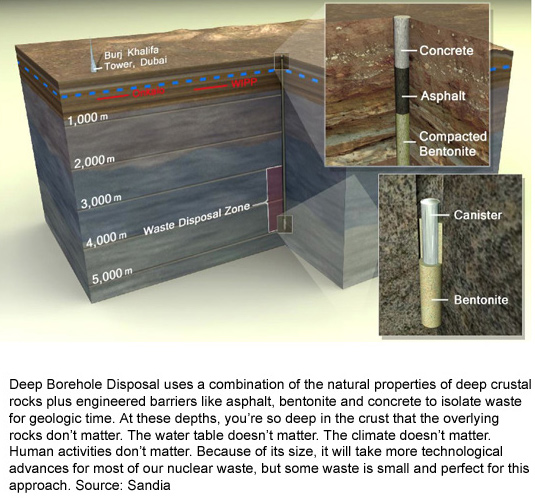 County commissioners weigh nuclear waste storage project http://www.wral.com/county-commissioners-weigh-nuclear-waste-storage-project/16647314/ ALAMOGORDO, N.M. — County commissioners in southern New Mexico are in debate over a federal project that aims to determine whether nuclear waste can be stored far underground.
The Otero County Commission discussed a proposed resolution in opposition of the project Thursday, but the panel decided to hold off on taking any action, The Alamogordo Daily News reported (http://bit.ly/2oaS2oL).
Commissioners say they have received comments from residents both for and against the project, which involves the drilling of narrow, vertical holes deep into the ground to test whether they can hold disposed nuclear material.
The U.S. Department of Energy is paying for the testing by New Mexico-based TerranearPMC and has said no nuclear waste will be involved.
Fred Stong, director of FIRST Robotics New Mexico, voiced his support for the project during Thursday’s meeting, saying he would like to see it continue because there are many residents who support science and technology.
“There is no waste in this program. This is a wonderful geographical opportunity,” Stong said. “Our job is to bring technology in, not drive away technology from this community.” But resident Bobby Jones said the federal government’s plan was too risky and he doesn’t “support the project because of what might happen afterwards.”
TerranearPMC CEO Kenneth Fillman said he shares residents’ concerns and an environmental assessment will be conducted before the company moves forward with the project.
The Otero County Commission meeting came the same day Harding County passed a resolution opposing a similar borehole project in neighboring Quay County.
Pre-emptive strike by USA on North Korea is on the cards, if North Korea conducts nuclear weapons test,
 US prepared to launch pre-emptive strike if North Korea conducts nuclear weapons test, reports say, news.com.au, 14 Apr 17 Senior US intelligence officials have reportedly told NBC News the US is prepared to launch a pre-emptive strike with conventional weapons against North Korea if the country appears set to follow through with a nuclear weapons test.
Speculation has been building that the rogue state could be planning to conduct its sixth nuclear test, with reports of activity at the Punggye-ri nuclear test site ahead of Saturday’s 105th anniversary of the birth of the country’s founder Kim Il-Sung.
Citing intelligence officials, NBC News reported that the US had positioned two destroyers in the region, one around 480km from the nuclear test site. The destroyers are capable of shooting Tomahawk cruise missiles.
“US officials, mindful of such concerns here, repeatedly reaffirmed that (the US) will closely discuss with South Korea its North Korea-related measures,” foreign minister Yun Byung told a special parliamentary meeting.
US President Donald Trump today vowed that the “problem” of North Korea “will be taken care of”.”North Korea is a problem, the problem will be taken care of,” Mr Trump said.
Separately on Twitter he expressed confidence China, Pyongyang’s sole ally, would “properly deal with North Korea.”But, “if they are unable to do so, the U.S., with its allies, will! U.S.A.”
Asked on Thursday whether the bomb dropped in Afghanistan – a GBU-43/B Massive Ordnance Air Blast bomb better known by its nickname, the “Mother Of All Bombs” – was a warning to Pyongyang, Mr Trump demurred. “I don’t know if this sends a message to North Korea,” he said. “It doesn’t make any difference if it does or not.”
The Voice of America, quoting US government and other sources, said North Korea “has apparently placed a nuclear device in a tunnel and it could be detonated Saturday AM Korea time.”
A US monitoring group, 38North, has described the Punggye-ri test site as “primed and ready.”
The North is under multiple sets of United Nations sanctions over its nuclear and ballistic missile programs…….http://www.9news.com.au/world/2017/04/14/09/06/us-prepared-to-launch-pre-emptive-strike-if-north-korea-conducts-nuclear-weapons-test-reports-say
Trump’s unpopularity: is it spurring him on to make missile strikes?
 Is Trump Turning to Missile Strikes to Salvage His Failing Presidency? Truth Out, , April 14, 2017 By Michael Meurer, Truthout | News Analysis Donald Trump’s April 6 missile strike against a Syrian airfield, purportedly in response to photos of injured children from President Bashar al-Assad’s April 3 sarin nerve gas attack against his own people in Idlib province, was not only a dizzying reversal of policy in only three days, but also a possible harbinger of things to come, most likely in Iran.
The missile strike came just two days after the release of a Quinnipiac University poll showing Trump’s approval rating at a historically unprecedented 35 percent for a presidency less than 90 days old. His 3 to 1 negative rating was mirrored in a March 29 Gallup poll. In response, his aides cooked up something they billed as “leadership week” to introduce Trump as Commander-in-Chief as he was also meeting with Chinese President Xi Jinping.
Iran is Assad’s strongest backer next to Russia. Any military engagement in Syria increases the chance of direct conflict with Iran. And under Trump, the US is already engaged in a series of aggressive actions against Iran that may be designed to trigger a war.
The Danger of Trump’s Failing Presidency As Trump’s knee-jerk decision to strike “the pose he needs in the narrative du jour” by attacking Syria clearly demonstrates, there is palpable danger that the precedent of provoking war for purely political reasons that was established under the presidency of George W. Bush could be reproduced under Trump in a much more condensed timeframe.
Fearing a descent into unelectability as Bush’s approval ratings plummeted in 2002-2003, Karl Rove, Dick Cheney and the White House Iraq Group manufactured the political strategy of making Iraq a nuclear weapons threat and declaring war in early 2003 to improve Bush’s chance of election in 2004. It took Bush two years of declining polls before he resorted to war as a political remedy.
Trump’s approval ratings have collapsed to historically unprecedented levels after less than three months in office. His disapproval ratings are already approaching 60 percent.
Having surrounded himself with hawkish generals, there is a risk that Trump will use war as a political remedy much more quickly than Bush did if current public opinion trends continue. The Syria attack may be the first in what could quickly become an escalating series of foreign policy aggressions………..
If this sounds alarmist, it is because it needs to be. The Iraq War that was started in order to salvage the failing presidency of George W. Bush has now destabilized half the planet half the planet. It was created with the same kind of bombast and threat inflation that is already coming out of the Trump administration. This is not a lesson that the US and the rest of the world can afford to learn anew.
Sen. Ben Sasse (R-Nebraska) has correctly observed that the Trump presidency has created “a civilization-warping crisis of public trust.” This crisis will continue to deepen even among his core supporters as Trump leaves a trail of abandoned campaign promises and investigations widen into his financial conflicts of interest and Russian connections. Trump’s false allegations of treasonous wiretapping by a former president may also spur an investigation, with legal scholars saying they constitute an impeachable offense.
Some polls show nearly 50 percent public approval for Trump’s impeachment.
Impeachment would only be a start in the long and difficult process of rebuilding a republican civic society driven by citizens, not ideologically deranged billionaires. But without it, there may be nothing left to rebuild. http://www.truth-out.org/news/item/40201-is-trump-turning-to-missile-strikes-to-salvage-his-failing-presidency
EARTH DAY IN THE AGE OF TRUMP
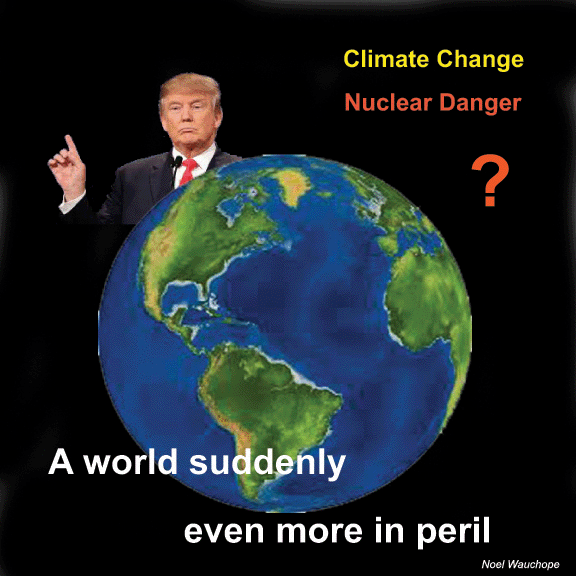 New Yorker, By Elizabeth Kolbert April 12, 2017 Next week, millions of Americans will celebrate Earth Day, even though, three months into Donald Trump’s Presidency, there sure isn’t much to celebrate. A White House characterized by flaming incompetence has nevertheless managed to do one thing effectively: it has trashed years’ worth of work to protect the planet. As David Horsey put it recently, in the Los Angeles Times, “Donald Trump’s foreign policy and legislative agenda may be a confused mess,” but “his administration’s attack on the environment is operating with the focus and zeal of the Spanish Inquisition.”
The list of steps that the Trump Administration has already taken to make America polluted again is so long that fully cataloguing them in this space would be impossible. Here’s a sample:
In March, the Environmental Protection Agency and the Transportation Department announced their intention to roll back fuel-economy standards for cars that were set to go into effect in 2022.
Earlier this month, the E.P.A. announced its plans to review—and presumably revoke—President Obama’s Clean Power Plan, a set of regulations aimed at reducing pollution from power plants. The Clean Power Plan would not only have cut carbon emissions by almost nine hundred million tons a year but also, according to E.P.A. figures, prevented more than thirty-five hundred premature deaths and ninety thousand asthma attacks annually. The plan is central to the commitments that the United States made under the Paris climate accord, which the Administration may or may not formally abrogate, but which it has apparently already informally abandoned.
Meanwhile, the Administration has proposed slashing the E.P.A.’s budget by thirty-one per cent, which is even more than it has proposed chopping the State Department’s budget (twenty-nine per cent) or the Labor Department’s (twenty-one per cent). The proposed cuts would entail firing a quarter of the agency’s workforce and eliminating many programs entirely, including the radiation-protection program, which does what its name suggests, and the Energy Star program, which establishes voluntary efficiency standards for electronics and appliances…….
How is it that a group as disorganized as the Trump Administration has been so methodical when it comes to the (anti) environment? The simplest answer is that money focusses the mind. Lots of corporations stand to profit from Trump’s regulatory rollback, even as American consumers suffer. Auto manufacturers, for example, had argued that the 2022 fuel-efficiency standards were too expensive to meet. (This is the case even though, when they accepted a federal bailout, during the Obama Administration, the car companies said that the standards were achievable.) Similarly, utilities have argued that the power-plant rules are too costly to comply with. Coal companies will probably benefit from the rollbacks. So, too, will oil companies, and perhaps also ceiling-fan manufacturers, though, in the case of the appliance standards, the affected manufacturers were at the table when the proposed regulations were drafted.
But, while money is clearly key, it doesn’t seem entirely sufficient as an explanation. There’s arguably more money, in the long run, to be made from imposing the regulations—from investing in solar and wind power, for example, and updating the country’s electrical grid. Writing recently in the Washington Post, Amanda Erickson proposed an alternative, or at least complementary, explanation. Combatting a global environmental problem like climate change would seem to require global coöperation. If you don’t believe in global coöperation because “America comes first,” then you’re faced with a dilemma. You can either come up with an alternative approach—tough to do—or simply pretend that the problem doesn’t exist.
“Climate change denial is not incidental to a nationalist, populist agenda,” Erickson argues. “It’s central to it.” She quotes Andrew Norton, the director of the International Institute for Environment and Development, in London, who observes, “Climate change is a highly inconvenient truth for nationalism,” as it “requires collective action between states.” This argument can, and probably should, be taken one step further. The fundamental idea behind the environmental movement—the movement that gave us Earth Day in the first place—is that everything, and therefore everyone, is connected……
For the first time, USA drops largest Non-Nuclear Bomb, in Afghanistan
US Forces Just Dropped Their Largest Non-Nuclear Bomb For The First Time, Gizmodo, Adam Clark Estes Apr 14, 2017,Citing military sources, CNN reports the United States just dropped a 9.14m-long bomb with a blast yield equivalent to 11 tons of TNT on suspected ISIS targets in Afghanistan. Nicknamed MOAB (short for “Mother of All Bombs”), the weapon is the largest non-nuclear bomb in America’s arsenal. This is the first time a MOAB has been used in combat.
Nuclear contractors not turning up for work amid Westinghouse woes
 https://www.energyvoice.com/other-news/136569/nuclear-contractors-not-turning-work-amid-westinghouse-woes/ by Bloomberg – 14/04/2017The company contracted to build Scana Corp.’s two nuclear reactors in South Carolina went bankrupt. Scana’s credits ratings are, as a result, at risk of downgrades. Its shares have plunged.
And now some of the people hired to help finish the reactors aren’t showing up for work.
In a meeting Wednesday, Scana executives assured South Carolina regulators that work continues on the two reactors being installed at its V.C. Summer plant, despite Toshiba Corp.’s Westinghouse Electric unit filing for Chapter 11 last month. But the Cayce, South Carolina-based utility owner also said Westinghouse is cutting weekend and overtime work and that contractor Fluor Corp. has seen a “high incidence” of new hires failing to show up for training since Westinghouse went bankrupt.
“We’re monitoring this aspect of the project to see if that trend continues,” Stephen Byrne, a senior vice president at Scana, said, based on a transcript released by the state Public Service Commission Thursday. “Work continues on-site without substantial disruption,” he said, adding that about $120 million a month is being paid to keep up construction.
Westinghouse’s bankruptcy has thrown the fate of both Scana’s reactors and Southern’s Vogtle nuclear project in Georgia into question. Westinghouse has estimated that finishing the plants may cost another $4 billion that it can’t collect from Southern and Scana. The projects are already years behind schedule and billions of dollars over budget. Byrne identified Fluor and Bechtel as two companies capable of finishing Scana’s project should Westinghouse drop out as lead contractor.
Fluor didn’t immediately respond to a request for comment.
Scana Chief Financial Officer Jimmy Addison said during Wednesday’s meeting that the company was recently told by Westinghouse that its V.C. Summer project accounts for $1.5 billion of those estimated cost overruns. Should Westinghouse walk away from its obligations, the utility may collect about $1.7 billion worth of damages from it and could seek compensation directly from Toshiba.
“Toshiba has a number of very valuable businesses, the most prominent of which is its flash memory business — in fact, they invented the flash memory and are Apple’s principal flash memory supplier,” Addison said. “Our assessment is that there is substantial at Toshiba to support our claim for damages if Westinghouse fails to pay.”
Scana is in the middle of a 30-day evaluation period during which it’s reviewing its options for the V.C. Summer project. The company’s considering continuing construction, abandoning plans for one of the two reactors or dropping the project altogether and seeking recovery under state law.
The entire project is about one-third complete, Byrne said.
California could get catastrophic sea level rise
 Sea-level rise in California could be catastrophic, study says http://www.sfgate.com/bayarea/article/Sea-level-rise-in-California-will-be-bad-to-11069686.php By Kurtis Alexander, April 12, 2017
 A state-commissioned report on climate change released Wednesday raises the stakes for fighting global warming, offering a clearer and, in some cases, more catastrophic picture of how much sea levels will rise in California.
The Bay Area will see the ocean swell as much as 3.4 feet by 2100 if significant action isn’t taken, the report says. The scientists who produced the study pegged the prospect of that outcome at 67 percent. Tougher action on greenhouse gases would mean a lesser rise of up to 2.4 feet, the study says.
The scope of the likely rise is largely in line with earlier estimates, but not completely. One worst-case scenario says ocean levels could rise 10 feet by century’s end, which would swamp countless homes, roads, harbors and even airports along the coast.
“We have learned that the potential for a higher sea level is greater than we thought,” said Gary Griggs, a professor of Earth sciences at UC Santa Cruz and one of seven climate experts who prepared the report.
The 71-page document was requested by the California Natural Resources Agency and the California Ocean Protection Council, in collaboration with the governor’s office, to help state and local officials plan for rising seas.
The report, an update of a 2013 state analysis, lays out expected ocean levels through 2150 for a number of locations and scenarios varying with the amount of greenhouse gas emissions globally.
Last year, nearly 200 nations committed in Paris to curb greenhouse gases enough so that the Earth’s temperature wouldn’t rise more than 2 degrees Celsius. The emission targets are not binding, however, and many scientists predict that President Trump’s executive order aimed at repealing Obama administration limits on coal-fired power plant pollution will prevent the U.S. from reaching its target.
The new analysis for California is based largely on recent, better information on ice melt at the Earth’s poles.
The main drivers of rising seas to date have been melting glaciers and the expansion of water that naturally occurs as temperatures warm. However, thawing ice sheets will soon become the primary contributor, according to the state-commissioned study.
The report indicates that Greenland has enough ice to raise global sea level by 24 feet while Antarctica has enough to lift oceans 187 feet. Glaciers, meanwhile, contain only enough ice to raise seas 1.5 feet.
While these continent-size masses of ice are not expected to completely melt, even a small amount of liquefaction could have big effects, particularly for California.
Because the ocean at the poles is lifted by strong gravitational forces, when that ice thaws and water is released toward the tropics, the liquid relaxes and spreads out, according to Griggs.
“It turns out for Antarctica, the biggest impact is along the California coast,” he said. For every foot of global sea-level rise caused by melting ice in the western Antarctic, California will see the the ocean rise about 1.25 feet, according to the report.
The report emphasizes the importance of preparing for the spike.
“California leads the way in both addressing climate change and protecting our coastal and ocean communities and resources,” Jenn Eckerle, deputy director of the Ocean Protection Council, said in a statement. “Our statewide policy on sea-level rise is another example of that leadership. We provide guidance to state agencies and local governments for incorporating sea-level rise projections into planning, permitting, investment, and other decisions.”
Kurtis Alexander is a San Francisco Chronicle staff writer. Email: kalexander@sfchronicle.com Twitter: @kurtisalexander
Rising Reality series
Read Chronicle urban design critic John King’s stories on the challenges posed by sea-level rise in the Bay Area: http://projects.sfchronicle.com/2016/sea-level-rise/
1 This Month





PLEASE OPPOSE HR 8255 AND S.3639 – bills would accelerate satellite deployment, with no environmental review or safeguards – https://ncstd5li.quorum.us/campaign/169331/
To see nuclear-related stories in greater depth and intensity – go to https://nuclearinformation.wordpress.com
-
Archives
- October 2026 (81)
- September 2026 (339)
- August 2026 (330)
- July 2026 (355)
- June 2026 (287)
- May 2026 (306)
- April 2026 (356)
- March 2026 (251)
- February 2026 (267)
- January 2026 (308)
- December 2025 (358)
- November 2025 (359)
-
Categories
- 1
- 1 NUCLEAR ISSUES
- business and costs
- climate change
- culture and arts
- ENERGY
- environment
- health
- history
- indigenous issues
- Legal
- marketing of nuclear
- media
- opposition to nuclear
- PERSONAL STORIES
- politics
- politics international
- Religion and ethics
- safety
- secrets,lies and civil liberties
- spinbuster
- technology
- Uranium
- wastes
- weapons and war
- Women
- 2 WORLD
- ACTION
- AFRICA
- Atrocities
- AUSTRALIA
- Christina's notes
- Christina's themes
- culture and arts
- Events
- Fuk 2022
- Fuk 2023
- Fukushima 2017
- Fukushima 2018
- fukushima 2019
- Fukushima 2020
- Fukushima 2021
- general
- global warming
- Humour (God we need it)
- Nuclear
- RARE EARTHS
- Reference
- resources – print
- Resources -audiovicual
- Weekly Newsletter
- World
- World Nuclear
- YouTube
-
RSS
Entries RSS
Comments RSS

