Rejection of subsidies for coal and nuclear power is a win for fact-basedpolicymakingEllen Hughes-Cromwick, Senior Economist and Interim Associate Director of Social Science and Policy, University of Michigan Energy Institute, University of Michigan Energy Secretary Rick Perry has repeatedly expressed concern over the past year about the reliability of our national electric power grid. On Sept. 28, 2017, Perry ordered the Federal Energy Regulatory Commission to revise wholesale electricity market rules to help ensure “… a reliable, resilient electric grid powered by an ‘all of the above’ mix of generation resources.” Perry’s proposal included an implicit subsidy to owners of coal and nuclear power plants, to compensate them for keeping a 90-day fuel supply on-site in the event of a disruption to the grid.
On Jan. 8, FERC issued a statement, supported by all five commissioners, terminating Perry’s proposal. The commissioners held that paying generators to store fuel on-site would only benefit some fuel types. And although coal and nuclear plants are retiring in large numbers, commissioners were not persuaded that this was due to unfair pricing in power markets.
In my view, FERC made an appropriate and well-grounded decision. The commission opted to gather more information and examine many possible approaches to improving reliability, instead of rubber-stamping a directive that had not been fully vetted. The commission’s action is a good example of the kind of evidence-based policymaking that Americans should expect from the federal government………
Look at the evidence
Whether FERC commissioners know it or not, their approach follows many recommendations set forth recently by a national Commission on Evidence-Based Policymaking. This panel was created in 2016 through legislation co-sponsored by House Speaker Paul Ryan and Senator Patty Murray of Washington. Its task was to examine how federal agencies use data, research and evaluation to build evidence, and to strengthen those efforts in order to make better policies……..
House Bill 1723, initially sponsored by Rep. Larry Haler, R-Richland, died in the legislative process last year. But it’s chances of passing are improved this year.Susannah Frame January 11, 2018The Washington state Senate Labor and Commerce Committee on Wednesday revived a bill to help sick Hanford workers.
House Bill 1723, initially sponsored by Rep. Larry Haler, R-Richland, died in the legislative process last year. It would give workers who come down with certain illnesses the presumption that their exposures to chemicals, heavy metals and/or radiation at the nuclear cleanup site caused their diseases such as cancer, toxic encephalopathy (dementia) and lung disease. That presumption is meant to help them get their worker compensation claims accepted.
In the 2017 KING 5 Investigators series “Sick and Forgotten at Hanford,” the reporters exposed that at Hanford, worker comp claims are rejected at a rate 52 percent higher than the state average, even though Hanford is the most dangerous and toxic worksite in the state, and the country.
Sen. Karen Keiser, D-Kent, gave the measure new life by calling a hearing on the bill where the committee she chairs took public testimony.
“The Washington state citizens and these nuclear veterans need these protections. We’ve had three-and-a-half decades of leaving them out in the cold, and I hope that you will consider passing this legislation,” said Nick Bumpous of Local 598, the pipefitters union.
Keiser expects to easily pass the bill out of committee, then on to the Senate floor for a full vote. After that, her office said they hope to fast track it to Governor Jay Inslee’s office for his signature.
I was devastated last year (when the bill died). Hope was dangled in front of my face, and it felt like defeat like Hanford had won again,” said Melinda Rouse, whose husband, Lonnie, has been diagnosed with dementia due to exposure to chemicals and metals such as mercury.
The Rouses have been fighting the U.S. Department of Energy and its worker compensation contractor, Penser, for 10 years.
“So now all I can say is justice will finally be served. Someone has finally heard us (and if this passes) it will be a miracle.”
Challenging Trump’s Language of Fascism TruthOut January 09, 2018, By Henry A. Giroux, Truthout | News AnalysisGeorge Orwell warns us in his dystopian novel 1984 that authoritarianism begins with language. Words now operate as “Newspeak,” in which language is twisted in order to deceive, seduce and undermine the ability of people to think critically and freely. As authoritarianism gains in strength, the formative cultures that give rise to dissent become more embattled along with the public spaces and institutions that make conscious critical thought possible.
Words that speak to the truth, reveal injustices and provide informed critical analysis begin to disappear, making it all the more difficult, if not dangerous, to hold dominant power accountable. Notions of virtue, honor, respect and compassion are policed, and those who advocate them are punished.
I think it is fair to argue that Orwell’s nightmare vision of the future is no longer fiction. Under the regime of Donald Trump, the Ministry of Truth has become the Ministry of “Fake News,” and the language of “Newspeak” has multiple platforms and has morphed into a giant disimagination machinery of propaganda, violence, bigotry, hatred and war. With the advent of the Trump presidency, language is undergoing a shift in the United States: It now treats dissent, critical media and scientific evidence as a species of “fake news.” The administration also views the critical media as the “enemy of the American people.” In fact, Trump has repeated this view of the press so often that almost a third of Americans believe it and support government-imposed restrictions on the media, according to a Poynter survey. Language has become unmoored from critical reason, informed debate and the weight of scientific evidence, and is now being reconfigured within new relations of power tied to pageantry, political theater and a deep-seated anti-intellectualism, increasingly shaped by the widespread banality of celebrity culture, the celebration of ignorance over intelligence, a culture of rancid consumerism, and a corporate-controlled media that revels in commodification, spectacles of violence, the spirit of unchecked self-interest and a “survival of the fittest” ethos.
Under such circumstances, language has been emptied of substantive meaning and functions increasingly to lull large swaths of the American public into acquiescence, if not a willingness to accommodate and support a rancid “populism” and galloping authoritarianism. he language of civic literacy and democracy has given way to the language of saviors, decline, bigotry and hatred. One consequence is that matters of moral and political responsibility disappear, injustices proliferate and language functions as a tool of state repression. The Ministry of “Fake News” works incessantly to set limits on what is thinkable, claiming that reason, standards of evidence, consistency and logic no longer serve the truth, because the latter are crooked ideological devices used by enemies of the state. “Thought crimes” are now labeled as “fake news.”
The notion of truth is viewed by this president as a corrupt tool used by the critical media to question his dismissal of legal checks on his power — particularly his attacks on judges, courts, and any other governing institutions that will not promise him complete and unchecked loyalty. For Trump, intimidation takes the place of unquestioned loyalty when he does not get his way, revealing a view of the presidency that is more about winning than about governing. One consequence is myriad practices in which Trump gleefully humiliates and punishes his critics, willfully engages in shameful acts of self-promotion and unapologetically enriches his financial coffers. ………
With the rise of casino capitalism, a “winner-take-all” ethos has made the United States a mean-spirited and iniquitous nation that has turned its back on the poor, underserved, and those considered racially and ethnically disposable. It is worth noting that in the last 40 years, we have witnessed an increasing dictatorship of finance capital and an increasing concentration of power and ownership regarding the rise and workings of the new media and mainstream cultural apparatuses. These powerful digital and traditional pedagogical apparatuses of the 21st century have turned people into consumers, and citizenship into a neoliberal obsession with self-interest and an empty notion of freedom. ……….
Trump appropriates crassness as a weapon. In a throwback to the language of fascism, he has repeatedly positioned himself as the only one who can save the masses, reproducing the tired script of the savior model endemic to authoritarianism. In 2016 at the Republican National Convention, Trump stated without irony that he alone would save a nation in crisis, captured in his insistence that, “I am your voice, I alone can fix it. I will restore law and order.”……….
There is more at work here than an oversized, if not delusional ego. Trump’s authoritarianism is also fueled by braggadocio and misdirected rage. There is also a language that undermines the bonds of solidarity, abolishes institutions meant to protect the vulnerable, and a full-fledged assault on the environment………
Trump is the master of manufactured illiteracy, and his public relations machine aggressively engages in a boundless theater of self-promotion and distractions — both of which are designed to whitewash any version of the past that might expose the close alignment between Trump’s language and policies and the dark elements of a fascist past.
Trump revels in an unchecked mode of self-congratulation bolstered by a limited vocabulary filled with words like “historic,” “best,” “the greatest,” “tremendous” and “beautiful.” As Wesley Pruden observes:
Nothing is ever merely “good,” or “fortunate.” No appointment is merely “outstanding.” Everything is “fantastic,” or “terrific,” and every man or woman he appoints to a government position, even if just two shades above mediocre, is “tremendous.” The Donald never met a superlative he didn’t like, himself as the ultimate superlative most of all.
Trump’s relentless exaggerations suggest more than hyperbole or the self-indulgent use of language. This is true even when he claims he “knows more about ISIS than the generals,” “knows more about renewables than any human being on Earth,” or that nobody knows the US system of government better than he does. There is also a resonance with the rhetoric of fascism. As the historian Richard J. Evans writes in The Third Reich in Power:
The German language became a language of superlatives, so that everything the regime did became the best and the greatest, its achievements unprecedented, unique, historic, and incomparable…..
Trump’s language, especially his endorsement of torture and contempt for international norms, normalizes the unthinkable, and points to a return to a past that evokes what Ariel Dorfman has called “memories of terror … parades of hate and aggression by the Ku Klux Klan in the United States and Adolf Hitler’s Freikorps in Germany…. executions, torture, imprisonment, persecution, exile, and, yes, book burnings, too.” Dorfman sees in the Trump era echoes of policies carried out under the dictator Pinochet in Chile…………
Trump’s fascistic language also fuels the rhetoric of war, toxic masculinity, white supremacy, anti-intellectualism and racism. What was once an anxious discourse about what Harvey Kaye calls the “possible triumph in America of a fascist-tinged authoritarian regime over liberal democracy” is no longer a matter of speculation, but a reality……..
Trump’s language is not his alone. It is the language of a nascent fascism that has been brewing in the US for some time. It is a language that is comfortable viewing the world as a combat zone, a world that exists to be plundered. It is a view of those deemed different as a threat to be feared, if not eliminated. Frank Rich is correct in insisting that Trump is the blunt instrument of a populist authoritarian movement whose aim is “the systemic erosion of political, ethical, and social norms” central to a substantive democracy. And Trump’s major weapon is a toxic language that functions as a form of “cultural vandalism” that promotes hate, embraces the machinery of the carceral state, makes white supremacy a central tenant of governance, and produces unthinkable degrees of inequality in wealth and power…….
The current struggle against a nascent fascism in the United States is not only a struggle over economic structures or the commanding heights of corporate power. It is also a struggle over visions, ideas, consciousness and the power to shift the culture itself.
Progressives need to formulate a new language, alternative cultural spheres and fresh narratives about freedom, the power of collective struggle, empathy, solidarity and the promise of a real socialist democracy. We need a new vision that refuses to equate capitalism and democracy, normalize greed and excessive competition, and accept self-interest as the highest form of motivation. We need a language, vision and understanding of power to enable the conditions in which education is linked to social change and the capacity to promote human agency through the registers of cooperation, compassion, care, love, equality and a respect for difference…….
The decision by the Federal Energy Regulatory Commission (FERC) was handed down in a unanimous verdict by its five members, a majority of whom belong to the president’s Republican Party.
Energy Secretary Rick Perry had in September proposed providing federal aid to nuclear and coal power plants with at least 90 days’ worth of production capacity, arguing the move was necessary to make the national grid more resilient in case of extreme events.
Both sectors have seen their share of the energy market diminish in recent years, losing out to oil, natural gas and renewables — which had all opposed Perry’s plan.
There are currently only two nuclear reactors under construction in the US, in addition to the 99 in service. Coal is also facing a crisis, and Trump made reversing its decline a major campaign pledge.
In announcing its decision, FERC cited an existing department study’s findings that “changes in the generation mix, including the retirement of coal and nuclear generators, have not diminished the grid’s reliability or otherwise posed a significant and immediate threat to the resilience of the electric grid.”
But it sought suppliers to provide within 60 days reports related to resilience concerns and issues the commission had identified.
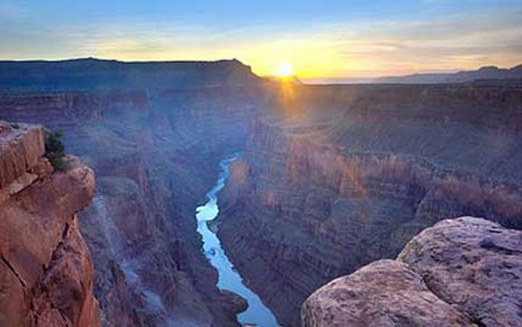
Will Trump Dump on Grand Canyon? Experts Say Risk of Uranium Mining Not Worth Reward MIRIAM WASSER Phoenix New Times JANUARY 11, 2018 “……… In 2012, President Barack Obama’s administration put a 20-year freeze (called a mineral withdrawal) on all new mining claims in 1 million acres around the Grand Canyon. A handful of mines with valid existing rights, like Canyon Mine, were grandfathered in and permitted to move ahead with operations.
The reason for the withdrawal was simple: Scientists didn’t know enough about the complex hydrology of the area to say whether mining could cause irreparable damage. And with the entire Grand Canyon ecosystem and tourism industry at stake — not to mention the Havasupai who live in the park and the millions of people who live downstream from the Colorado River — there was overwhelming public support for the decision.
Fast-forward to the present day, however, and there are signs that the moratorium may not survive Donald Trump’s presidency.
His administration has spent the last year systematically trying to undermine his predecessor’s environmental policies, an agenda that has included reducing regulations and opening up vast areas of public land for mining, drilling, and fracking.
In the case of uranium, “they’re just doing it because they can,” says Chris Mehl of Headwaters Economics, an independent nonprofit research group that studies western land management. “They’re offering an opportunity for a product that is at or near historic low prices”….
As any economist will tell you, sometimes it’s worth taking a big risk in order to get a big reward. But when it comes to reversing the 2012 withdrawal, the potential benefits seem small and the risks seem huge.
Much has been written about the health and environmental hazards posed by uranium mining near the Grand Canyon; what’s missing is the economic side of the story.
For years, Phoenix New Times has heard that uranium mining in the area is not only environmentally irresponsible, but makes no economic sense. These critics include scientists, conservationists, local politicians, and even leaders in the nuclear power industry. They say that while intuitively, we might think that more mining would be good for the local economy, it turns out this isn’t the case.
Given that the whole point of “revising” the withdrawal is to bolster domestic energy production to create jobs, secure energy independence, and help the economy, New Times decided to investigate the economics of uranium mining in the area.
To do this, we spoke with more than a dozen experts in fields like hard-rock mining, mineral economics, hydrology, environmental law, and nuclear power. We analyzed global uranium market trends and data, learned about unconventional mining techniques, and spoke with local politicians who are familiar with the northern Arizona economy.
We also consulted reports from various federal agencies, think tanks, trade groups, the Government Accountability Office, the World Nuclear Association, and the International Atomic Energy Association’s biennial report about the state of the global uranium market, The Uranium Red Book.
Tellingly, no expert or document made the argument that acquiring uranium from within the 2012 withdrawal is a matter of national security. No one said we needed it to keep the lights on now or in the foreseeable future. The world is flush with uranium that’s cheaper to mine and the U.S. Department of Energy has huge stockpiles of enriched and raw uranium that could be used in a pinch, we were told, again and again.
And finally, no one said that it would do much for the local economy. Some suggested that at best, it could create temporary jobs, though most felt that because of the stop-and-go nature of uranium mining, and the fears mining stokes about a radioactive accident, it would be more likely to cause harm than good.
GOP voters support green energy, oppose coal, nuclear bailouts, statewide poll finds http://www.cleveland.com/business/index.ssf/2018/01/gop_voters_support_green_energ.html, A state-wide poll of conservative Ohio voters finds that 85 percent would pay something extra in their monthly bills for power generated by renewable technologies such as wind and solar. Nearly half of those polled said they would be willing to pay between $10 and $20 extra every month for green power. The release of the polling results by the Ohio Conservative Energy Forum comes as state lawmakers begin hearings on legislation mandating renewable energy, minimum property setback rules for wind turbines, as well as new subsidies for old coal and nuclear power plants.
CLEVELAND, Ohio — Conservative Ohio voters, whether Independent or Republican, are tired of utilities asking for special charges for coal and nuclear power plants, support mandatory energy-efficiency programs, favor home solar systems and are willing to pay higher monthly bills for renewable energy.
These are findings in a poll commissioned by the Ohio Conservative Energy Forum reveal grassroot attitudes are at odds with the speeches and actions of GOP legislative leaders during the past several years.
GOP lawmakers have repeatedly tried to kill state renewable standards, only to see Gov. John Kasich veto the legislation. Republican leadership has also tried to create extra charges on behalf of utilities that own old coal and nuclear power plants and find it difficult to compete with wind farms and gas turbine power plants.
Kasich, while touring a new gas turbine power plant last fall, specifically spoke against new state-created fees that FirstEnergy has been seeking for its Davis-Besse and Perry nuclear power plants.
Public Opinion Strategies, a Colorado-based polling company widely used by Republican candidates, including those in the Ohio House and Senate, interviewed 400 conservative Republican and Independent voters between Dec. 7 and Dec. 11. The margin of error is 4.9 percent.
The results show that support for green issues has grown since the company did an initial survey in the fall of 2016, said Lori Weigel, a partner in the polling firm.
Key points in the survey results include:
Conservative voters generally support an “all of the above” position on how electricity is generated, not wanting to limit the newer technologies.
About a quarter of those surveyed think at least half of the power sold in Ohio should come from renewable sources, while four in 10 think 51 percent to 100 percent should be generated by renewable technologies.
Two-thirds of the voters who were asked how they felt about monthly surcharges to keep old coal power plants running said they opposed such charges. Surcharges for FirstEnergy’s nuclear fleet were rejected by a larger margin, 69 percent.
A significant plurality, 43 percent, believe that increasing wind and solar installations in Ohio will create jobs. Amazon and Facebook have repeatedly stressed that they want to power their facilities with renewable energy.
Conservatives are willing to pay higher monthly bills for green power, with 27 percent saying they would pay $10 a month extra and another 14 percent willing to pay $20 a month extra.
The willingness to support green energy with higher monthly bills is evident across all income levels, with nine out of 10 voters earning less than $40,000 annually saying they would be willing to pay more.
Nearly eight out of 10 conservative voters indicated they would be willing to tell Republican candidates to support energy efficiency policies and the growth of wind and solar in the state.
Overall, 82 percent said they would support energy efficiency programs, 60 percent said they would support rules requiring more green energy in the state, 87 percent net metering rules that require utilities to pay customers with solar arrays for extra power they generate, and 76 percent said they support increasing research and development into better battery storage systems.
Sen. Matt Dolan, R-Chagrin Falls, who did not see the poll but has sponsored a bill to amend the state’s current restrictive wind turbine property setback rules, said he thinks voter support for wind and solar will be even stronger “when the economics of moving toward renewables are revealed.
“When you talk to CEOs today, they are asking about your taxes, workforce development, regulations and energy. And they have added a question about energy. It used to be just about reliability. Now it’s about source, where is the energy coming from.
“What this poll helps me be able to argue is that this is no longer a political issue. This is the direction of our state, where we need to invest.”
Michael Hartley, a consultant with the Ohio Conservative Energy Forum, said the group is now talking to policy makers in the legislature and the Kasich administration about the poll results.
“The poll clearly shows that conservatives support energy efficiency policies and see it as a way to create more jobs and move Ohio forward,” he said.
Current state law requires that 12.5 percent of the electricity sold by power companies be from renewable technologies by 2027. Using information on file at the Public Utilities Commission of Ohio, Hartley said the cost of providing renewable energy to customers currently averages $4.44 a year, state-wide.
The extra cost for Cleveland Electric Illuminating customers is 6 cents per month, or 72 cents a year. Ohio Edison customers pay an extra 7 cents per month and Toledo Edison customers an extra 11 cents a month.
Federal nuclear watchdog agency publishes government shutdown plan, Brittany Crocker, USA TODAY NETWORK – TennesseeKnox News, Jan. 9, 2018A federal oversight board charged with protecting workers and communities surrounding nuclear weapons complexes like Oak Ridge’s Y-12 National Security Complex has published a plan for closing out the agency if the government shuts down.
The Defense Nuclear Facilities Safety Board is made up of five nuclear safety experts who provide analysis, advice and recommendations on public health and safety to the secretary of energy.
Congress has until Jan. 19 to pass a spending bill that will keep the government funded through the fiscal year. The board is ensuring it’s prepared for the worst, according to a December letter to the White House’s management and budget office.
The board told the Office of Management and Budget it would take just half a day to completely shut down its operations and let go all but 14 of its 117 employees, a number that does not include the five sitting board members.
“If the board reaches the point where no funding is available, normal oversight activities will cease, including receiving safety complaints from workers at DOE sites and the public,” the plan said.
At that point, according to the plan, board Chairman Sean Sullivan could designate resident inspectors to continue working at nuclear sites like Y-12, along with a few administrative staff members. He also would retain the ability to recall the staff in case of an emergency at a nuclear facility.
Under fire
The letter provides a chilling insight into what could result from government attempts to curtail the board’s watchdog role over the already $10.8 billion-per-year nuclear weapons program the Trump administration has considered expanding.
Sullivan, who was appointed board chairman by Trump, has sought to limit the board’s advisory role, garnering the opposition of his fellow board members.
In May, Sullivan voted against a board letter to Energy Secretary Rick Perry advising against the removal of certain safety occurrence reporting requirements that affect Department of Energy nuclear sites.
Aiken Standard 7th Jan 2018, South Carolina’s $1million daily penalty tally against the Department of
Energy started over Jan. 1, and state leaders said they will pursue payment of the daily penalty as well as claims for penalties accrued in 2016 and 2017.
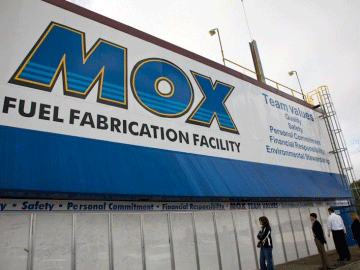
According to federal law, the DOE was required to finish the Mixed Oxide Fuel Fabrication Facility at the Savannah River Site in Aiken County by 2014, or remove at least one metric ton of plutonium from the state by Jan. 1, 2016. When the Energy Department failed to meet those deadlines, a $1 million daily penalty was instated. The penalties add up to a maximum of
$100 million annually for each of the first 100 days of the year. When the fees reach the maximum mark, state leaders said residents can expect to see a claim follow quickly thereafter. https://www.aikenstandard.com/news/clock-resets-for-m-a-day-fine-against-doe-for/article_160b5366-f258-11e7-acdd-9b750ce012c1.html
Nikki Haley: Trump aimed to ‘keep Kim on his toes’ with ‘nuclear button’ tweet, Guardian, Martin Pengelly, 8 Jan 18 US ambassador to UN defends president’s rhetoric on North Korea
Haley: ‘It’s not us that’s going to be destroyed, it’s you’
Rare progress has recently been made over the Korean standoff, with North and South agreeing to begin their first talks for two years on Tuesday in the South Korean side of the village of Panmunjom in the demilitarised zone.The forthcoming Winter Olympic Games in Pyeongchang will dominate the agenda but officials have indicated other issues may also be discussed.Trump, however, showed a characteristic disregard for diplomatic niceties when he wrote on Tuesday: “North Korean Leader Kim Jong Un just stated that the ‘Nuclear Button is on his desk at all times’.
“Will someone from his depleted and food starved regime please inform him that I too have a Nuclear Button, but it is a much bigger & more powerful one than his, and my Button works!”The tweet was written the day before the Guardian published extracts of a book in which White House staffers question the president’s mental capacity for his job, setting off a political firestorm.In an opinion piece for the Guardian on Sunday, Bandy Lee, an assistant clinical professor at the Yale School of Medicine who has briefed members of Congress on the risks associated with the president’s behaviour, wrote: “Trump views violence as a solution when he is stressed and desires to re-establish his power.
“Paranoia and overwhelming feelings of weakness and inadequacy make violence very attractive, and powerful weapons very tempting to use – all the more so for their power.
Connecticut lawmakers: ‘Status quo unacceptable’ on nuclear waste policy, The Day January 06. 2018 By Benjamin Kail Day staff writerb.kail@theday.comBenKail Waterford — All the nuclear fuel spent creating electricity at the Millstone Power Station since the 1970s remains on site — either in cooling pools that reduce radioactivity, or entombed in 31 massive, leak-tight concrete and steel canisters.
But that fuel is supposed to be about 2,700 miles west of Waterford, according to federal law.
The Nuclear Waste Policy Act of 1982 tasked the Department of Energy with siting, building and maintaining an underground repository for the nation’s spent nuclear fuel. In 1987, lawmakers designated Yucca Mountain, a dry, remote spot in Nevada, as the permanent home for the country’s nuclear waste.
The law set in motion an ongoing procedural, political and legal battle over where to bury tens of thousands of tons of radioactive waste from 100-plus sites across more than three dozen states.
Millstone spokesman Ken Holt said Thursday that plant owner Dominion Energy maintains the federal government is obligated “to take possession of the used fuel at all nuclear power plants, including Millstone.”
Keeping nuclear waste on site in spent fuel pools or the dry cask storage “stores the fuel safely until the government is ready to accept it,” Holt said……..
nuclear advocates and Connecticut lawmakers say it’s vital to create long-term storage solutions in the interests of national security and cost savings. And there’s a renewed push, in the Trump administration and Congress, to make that happen.
By missing its 1998 deadline to accept nuclear waste at the permanent repository site promised 30 years ago, the federal government has had to fork out more than $6 billion in settlements and judgments to energy companies for incurred storage costs.
That funding comes from the U.S. Treasury Department Judgment Fund, a permanent account to cover damage claims against the government that doesn’t hit taxpayers directly through the budget process but still racks up the deficit, according to the NRC and lawmakers.
“There’s got to be a safer, much more cost-effective way than having this stuff pile up and require expensive surveillance in well over 100 locations across the country,” Rep Joe Courtney, D-2nd District, said Friday. “There’s a strong feeling that the status quo is unacceptable. It’s not fair to the sites around the country to have to be a host community for the material. It’s time to get this national disposal system underway.”……
President Donald Trump’s initial 2018 budget hopes to breathe new life into the Yucca Mountain plan this spring, calling for investments of $110 million into the project, along with $30 million for its NRC licensing process and $10 million for interim waste storage.
Lawmakers backed those appropriations in the U.S. House in recent months, but the funding has stalled in the U.S. Senate.
Meanwhile, Rep. John Shimkus, R-Ill., introduced the Nuclear Waste Policy Amendments Act last year, picking up more than 100 co-sponsors, including Courtney.
The bill would eliminate permitting hurdles that have held up Yucca Mountain; ensure funding for the repository program isn’t subject to the annual appropriations process; and allow the DOE to contract with private companies looking to establish NRC-licensed interim storage sites while Yucca Mountain is debated.
The measure cleared the House Energy and Commerce Committee this past summer in a bipartisan 49-4 vote……..
The NRC remains in the early stages of reviewing an application from New Jersey-based Holtec International to construct and operate an interim storage repository in New Mexico.
A Texas company, Waste Control Specialists, has proposed an interim storage site in west Texas. But the company asked the NRC to put its application review on hold, citing licensing costs “significantly higher than we originally estimated.”……… http://www.theday.com/article/20180106/NWS01/180109574
COLUMBIA — The main question as the South Carolina General Assembly convenes Tuesday is how many other issues will lawmakers tackle outside of fixes for the Fairfield County nuclear plant debacle.
The $9 billion fiasco is expected to dominate the 2018 session with legislators considering everything from cutting off customer payments for the unfinished reactors to selling state-owned power provider Santee Cooper…
Nuclear fallout: A pair of South Carolina utilities created a crisis last summer when they abandoned the massive project to build two nuclear power reactors. Aborting the project cost more than 6,000 workers their jobs and left nearly 2 million electric customers on the hook for paying for the partially built reactors.
The House and Senate swiftly created special panels that drew up proposals to force utilities to pay back customers and revamp state regulators. The House went as far as to have committees meet before the General Assembly convened so the bills would be on the floor ready for a vote. (That is expected the second week of the session. Last year’s budget vetoes go first.)
The legislation, if passed, could bankrupt SCANA Corp., an investor-owned utility that was the project’s majority partner, or kill a deal for Virginia’s Dominion Energy to buy SCANA, according to the utilities. Lawmakers insist their top priority is protecting customers from paying for reactors that will never produce any electricity after SCANA deceived the public about the work delays and cost overruns.
Unusual Event’ Declared At Oyster Creek Nuclear Plant, Low water levels in plant’s water intakes were apparently caused by weather conditions from the recent storm Lacey Patch, By Patricia A. Miller, Patch Staff| LACEY TOWNSHIP, NJ– Control room operators at the Oyster Creek Nuclear Plant declared an “unusual event” early Saturday morning when water levels in the plant’s water intakes dipped too low, a spokesman for the Nuclear Regulatory Commission said.
Control room operators reduced reactor power to about 70 percent in response to the lower-than-normal water intake levels and will continue to monitor and evaluate conditions throughout the day, spokesman Neil Sheehan said
An “unusual event” is the lowest of the NRC’s four levels of emergency classification, he said.
Water from the intake canal is used for cooling purposes, doesn’t flow through radioactive materials and is discharged at higher temperatures to the outfall portion of the canal, Sheehan said.
PSEG NUCLEAR SUBSIDY BILL KILLED IN LAME-DUCK SESSION, NJ Spotlight, TOM JOHNSON | JANUARY 4, 2018“………..A controversial bill to subsidize nuclear power plants apparently is dead — at least in the lame-duck session scheduled to end next week, with opposition from too many quarters finally taking a toll.
The legislation, pushed by Public Service Enterprise Group for more than a year, would have asked ratepayers to pony up $300 million annually to help prop up the company’s three nuclear units in South Jersey.
The bill (S-3560), up for a vote in the Senate today, faltered in the lower house when Assembly Speaker Vincent Prieto, a Democrat from Secaucus, balked at posting it. His decision came after a meeting with Gov.-elect Phil Murphy yesterday and rising concern among some lawmakers over the bill being rushed through in the last days of the current session…..http://www.njspotlight.com/stories/18/01/03/pseg-nuclear-subsidy-bill-killed-in-lame-duck-session/
But there is just too much at stake to treat it like a game. The utility industry’s ramped-up efforts to block renewable energy and horde billions of our clean energy dollars to prop up old nukes risks both climate and nuclear disaster. Most of these proposals have been failing, thanks to the dogged persistence of grassroots activists and clean energy groups–and, it must be said, the outrageous sticker price of subsidies the industry needs. In fact, just this week, the two-year saga of FirstEnergy’s $8 billion nuclear-plus-coal bailout plan seems to have ended, with what amounts to a consolation gift to a couple FirstEnergy utility companies. Still an outrageous corporate giveaway, but no subsidies for nuclear or coal, even after it seemed like a done deal a few months ago.
But New York Governor Cuomo’s decision in August to award a 12-year, $7.6 billion subsidy package to four aging reactors–including reversing Entergy’s decision to close the FitzPatrick reactor this coming January–has put wind into the industry’s sails. Even that chapter isn’t over, with lawsuits already being filed and several more expected. And environmental groups this week launched a new campaign to get Governor Cuomo to smell the coffee and cancel what will not only be the largest corporate give-away in the state’s history, but relegate clean energy to second-class status behind old nukes.
The lingering uncertainty hasn’t stopped the industry PR and lobbying machines, though–after all, billions of dollars in free money is at stake! Exelon, FirstEnergy, and other companies touted New York as a national model, and began urging states from Connecticut to Illinois to follow suit. Having to get each state to line up is going to be a tall order. In addition to FirstEnergy’s failed Ohio bailout, Exelon hasn’t been able to sell a much smaller five-year, $1.5 billion subsidy in Illinois. And nukes in Connecticut and New Jersey are still making millions in profits each year, without heaping billions more in subsidies onto ratepayers’ utility bills.
So the industry has started pushing for a national bailout. NIRS thought we should take a look at what that might cost. Next week, we will publish a short report showing that a federal nuclear subsidy based on the EPA’s estimate of the social cost of carbon (as New York approved) would be massively expensive: up to $280 billion by 2030. Even if it were only applied to reactors that are already becoming unprofitable–more than half of the nukes in the country, according to a recent report–it would total at least $160 billion. In Illinois and Pennsylvania alone, it would cost ratepayers in each state $30 billion.
NIRS is launching a petition to the next President urging the new administration to say no to a national nuclear bailout, and to end subsidies for nuclear and fossil fuels. We hope you’ll sign the petition and help us get to our goal of 100,000 signatures. Whoever wins the election in November needs to know that another nuclear bailout isn’t going to fly with the American people.
There is no nuclear bridge to a clean energy future. If we are going to make good on the global climate treaty and prevent runaway global warming, we need to go all in on renewable energy (and efficiency!) and not waste our time and money propping up dirty energy sources. Nobody is even talking about putting the kind of money a national nuclear bailout would cost into climate action. But if we did, we could get off nuclear and fossil fuels in a generation. And maybe save the world.
The CDC is now officially planning for a nuclear attack, Quartz, BY Karen Hao 5 Jan 17, Welcome to 2018. It’s been an apocalyptic start to the new year. And according to the US Centers for Disease Control and Prevention, the worst could be yet to come.
The agency wants the American public to get ready for the possibility of a nuclear strike, reports Politico, and it has posted a notice for a Jan. 16 briefing titled “Public Health Response to a Nuclear Detonation.” The session in Atlanta, Georgia will include experts on radiation and disaster preparedness and discuss what federal, state and local governments are doing to prepare……https://qz.com/1172895/the-cdc-is-holding-a-briefing-to-prepare-the-public-for-a-nuclear-attack/