NNSA announces decision on pit production, L A Monitor, May 11, 2018, Los Alamos National Laboratory will share production of plutonium pits with the Savannah River Site in South Carolina, the Nuclear Weapons Council and National Nuclear Security Administration announced Thursday.
LANL will maintain production of 30 plutonium pits per year, while the Savannah River Site will produce 50 pits per year.
“To achieve DoD’s 80 pits per year requirement by 2030, NNSA’s recommended alternative repurposes the Mixed Oxide Fuel Fabrication Facility at the Savannah River Site in South Carolina to produce plutonium pits while also maximizing pit production activities at Los Alamos National Laboratory in New Mexico,” according to Thursday’s release.
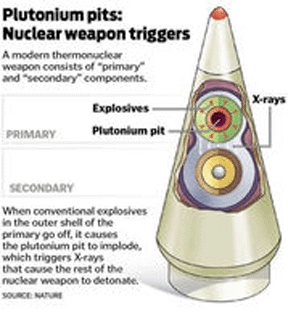
……. Plutonium pits are the size of a softball and are used as trigger mechanisms for nuclear weapons…..
The NNSA was given a mandate by Congress to manufacture 80 plutonium pits per year by 2030 as part of a nuclear weapons modernization plan. The NNSA has been studying which site would best be able to accommodate the manufacture of plutonium pits. ……
Nuclear Watch New Mexico criticized the decision as purely political.
“First, in Nuclear Watch’s view, this decision is in large part a political decision, designed to keep the congressional delegations of both New Mexico and South Carolina happy,” said Nuclear Watch Executive Director Jay Coghlan. “New Mexico Senators Tom Udall and Martin Heinrich are adamantly against relocating plutonium pit production to South Carolina. On the other hand, South Carolina Senator Lindsay Graham was keeping the boondoggle Mixed Oxide (MOX) program on life support, and this pit production decision may help to mollify him.
Coghlan said he believes the split plan will ultimately fail.
“NNSA has already tried four times to expand plutonium pit production, only to be defeated by citizen opposition and its own cost overruns and incompetence,” Coghlan said. “But we realize that this fifth attempt is the most serious.
“However, we remain confident it too will fall apart, because of its enormous financial and environmental costs and the fact that expanded plutonium pit production is simply not needed for the existing nuclear weapons stockpile. We think the American public will reject new-design nuclear weapons, which is what this expanded pit production decision is really all about.”
Greg Mello, executive director of the Los Alamos Study Group, took a more pragmatic view. ……
“Pit production isn’t needed for decades, even for a large arsenal, but Congress has demanded it, so the bulk of the work will leave LANL. The R and D (research and development) work will stay behind. This transition is many years down the road. Pit production will always be difficult, expensive and dangerous wherever it’s done.”
A fact sheet about the decision can be found here. http://www.lamonitor.com/content/nnsa-announces-decision-pit-production
May 12, 2018
Posted by Christina Macpherson |
- plutonium, USA, weapons and war |
Leave a comment
One of the six toes, on one of the feet, of the Yucca Dump Mutant Zombie (see image, right on original), twitched yesterday. By a lopsided vote of 340 to 72, the U.S. House of Representatives voted in favor of “Screw Nevada 2.0,” a reprise of the 1987 “Screw Nevada” bill, that singled out Yucca Mountain for the country’s highly radioactive waste dump-site in the first place
This was the biggest vote on nuclear waste in the U.S. House in 16 years, and seeks to overturn the Obama administration’s wise 2010 cancellation of the unsuitable Yucca Mountain Project. In addition to approving H.R. 3053, the Nuclear Waste Policy Amendments Act of 2018, the House, “in its wisdom” (or lack thereof!), similarly voted down an amendment offered by Dina Titus (Democrat-NV), that would have required consent-based siting for a dump like Yucca, per the 2012 recommendations by the Blue Ribbon Commission on America’s Nuclear Future.
Thank you to everyone who contacted their U.S. Rep. urging opposition to H.R. 3053. Please
check this link for more info., including to see how your U.S. Rep. voted on the Titus amendment, and the overall bill. Then
please thank or “spank” (express your disappointment to) your U.S. Rep., accordingly, and point out:
the high-risk “Mobile Chernobyl” impacts of shipping 110,000 metric tons (an increase from the current legal limit of 70,000) of highly radioactive waste, by truck, train, and/or barge, through
44 states, dozens of major cities, and 330 of 435 U.S. congressional districts, if H.R. 3053 becomes law. In addition to expediting the opening of the Yucca dump, by gutting due process and environmental and safety regulations, H.R. 3053 would authorize centralized interim storage facilities (CISFs, or de facto permanent, surface storage, “parking lot dumps”), as targeted at Holtec/ELEA, NM and WCS, TX. Re: Holtec/ELEA
please continue submitting environmental scoping public comments to the U.S. Nuclear Regulatory Commission by the
May 29th deadline —
see how, and for more info., at this link. And please also contact both your U.S. Senators, urging them to oppose bad, dangerous nuke waste dumps targeted at NM, NV, and/or TX, and the inevitable Mobile Chernobyls they would launch:
call your U.S. Senators via the Capitol Switchboard at (202) 224-3121, and fill out and submit Food & Water Watch’s webform! To learn more about the
Yucca dump scheme,
CISF proposals, and
nuclear waste transport risks, please see the corresponding Beyond Nuclear website sub-sections.
May 12, 2018
Posted by Christina Macpherson |
politics, USA, wastes |
1 Comment
 “No follow up” from Trump over staying in climate pact-UN by Reuters, 9 May 2018 The rules of the Paris Agreement mean that Trump cannot formally pull out before November 2020, around the time of the next U.S. presidential election
* UN’s Espinosa asked Washington for conditions for staying
* Says still hopes U.S. may stay in Paris pact
* Nearly 200 nations working on ‘rule book’ for 2015 pact
By Environment Correspondent Alister Doyle BONN, Germany, May 9 (Reuters) – U.S. President Donald Trump has yet to outline what changes he wants in a 2015 global climate agreement as the price for dropping his plan to quit, the United Nations’ climate chief said on Wednesday.
Patricia Espinosa said she had asked Washington for its demands after Trump announced last June that he planned to quit the landmark 2015 Paris Agreement, which aims to end the fossil fuel era this century with a shift to cleaner energies.
“There has not been a follow-up” from Washington, she told Reuters during negotiations in Bonn among almost 200 nations on a “rule book” for the 2015 agreement.
Espinosa, a former Mexican foreign minister who leads the U.N. Climate Change Secretariat, said she had stressed that the pact was flexible, allowing all countries to set their own targets for reducing greenhouse gas emissions.
“I would not like to see the U.S. leaving. I certainly hope there is a reconsideration of this decision,” she said of Trump’s plan to pull out.
Trump doubts the view of mainstream science that man-made greenhouse gases are raising global temperatures.
The rules of the Paris Agreement mean that Trump cannot formally pull out before November 2020, around the time of the next U.S. presidential election.
In announcing the U.S. withdrawal, Trump said Paris was a bad deal that would harm the U.S. economy, but added: “We will see if we can make a deal that’s fair. And if we can, that’s great. And if we can’t, that’s fine.”……..
The Bonn meeting, which ends on Thursday, is working on rules for the Paris Agreement due to be in place by the end of the year, such as how to measure and account for greenhouse gas emissions and climate finance for developing nations that is meant to reach $100 billion a year by 2020.
“A good set of rules … should be a way to give comfort and confidence to the concerns they (the United States) could have,” said Espinosa.
Asked if she would be happy for the United States to stay, while watering down deep cuts in emissions promised by former President Barack Obama, Espinosa said: “I think we should not choose between those two scenarios.” (Reporting By Alister Doyle Editing by Gareth Jones) http://news.trust.org/item/20180509154353-w3u79/
May 12, 2018
Posted by Christina Macpherson |
climate change, politics international, USA |
Leave a comment

 Zion’s effort to shed lakefront nuclear waste backed by U.S. House vote, Chicago Tribune, Frank Abderholden Contact Reporter, News-Sun , 10 May 18
A bill on nuclear waste policy that would restart the Yucca Mountain depository in Nevada was approved by the the U.S. House of Representatives Thursday, including an amendment introduced by U.S. Rep. Brad Schneider that also calls for a task force to be created to help communities like Zion that have stranded nuclear waste.
The 10th District Democrat said the amendment requires the secretary of energy to assemble a stranded nuclear waste task force that would identify existing resources and funding opportunities throughout the federal government to assist communities in the decommissioning process.
“For too long, communities like Zion have been saddled with housing our nation’s stranded nuclear waste while the federal government has failed to meet its legal obligation to find a permanent repository,” Schneider said in a statement following Thursday morning’s vote on Capitol Hill.
His amendment calls for the Department of Energy to complete the study in 180 days and report back to Congress with its findings.
“The project will be physically completed with (deactivation and decommissioning) in 2018,” Walker said last year. Although the federal government designated decades ago that the waste would go to Yucca Mountain in Nevada for permanent storage, the facility has not yet opened, and Zion is stuck with the waste until a solution can be found.
“I am very pleased this amendment passed the House, appreciate the bipartisan support from my colleagues and urge the Senate to take up this matter urgently,” Schneider said.
H.R. 3053, the Nuclear Waste Policy Amendments Act of 2018, was described by Schneider as “an important step forward,” but he added that more needs to be done for communities forced to store nuclear waste.
“I will continue to work with Mayor Al Hill, the city of Zion and my colleagues in Congress to get communities shouldering this burden the federal help they are owed,” Schneider said.
He added that the spent fuel stored in dry casks along the lakefront — an amount estimated last year at 1,025 metric tons — presents both “an extreme environmental hazard, and a severe burden on the quality of life of the residents of Zion — deterring economic investment, depressing home values and driving up property taxes to fill the local revenue void.”
……… “We just want them to get (the waste) out of here,” Hill said. “We are pleased with any program that will give us an opportunity to get the spent fuel rods out of our community.”
Adding that “we are pushing a large stone up a steep hill,” Hill said he believes “the federal government has not lived up to its contract with the utilities” on having a place to put the spent fuel rods.
“We lived up to our end of the contract,” he said.
While the power plant operated, ratepayers paid into a trust fund set up for the plant’s decommissioning. The $820 million fund was turned over to EnergySolutions when it took over the work in Zion following the plant’s 1998 deactivation. At the end of the project, any remaining funds are designed to be turned back over to Exelon.
According to the Associated Press, the House voted 340-72 Thursday morning to revive the mothballed nuclear waste dump at Nevada’s Yucca Mountain despite opposition from home-state lawmakers…… http://www.chicagotribune.com/suburbs/lake-county-news-sun/news/ct-lns-zion-nuclear-waste-yucca-mountain-st-0511-story.html
May 12, 2018
Posted by Christina Macpherson |
USA, wastes |
Leave a comment

 House hands off nuclear waste storage bill to Senate, https://www.utilitydive.com/news/house-hands-off-nuclear-waste-storage-bill-to-senate/523291/, Iulia Gheorghiu, 11 May 18
Dive Brief:
- The House of Representatives on Thursday passed 340-72 H.R. 3053, sponsored by Rep. John Shimkus, R-Ill., which seeks to restart the process to build a permanent repository for commercial nuclear waste at Yucca Mountain, Nev.
- The bill would also allow the Department of Energy (DOE) to consolidate and store nuclear waste temporarily, as the agency is currently unable to consider interim storage before the development of a permanent repository.
- The legislation has been strongly opposed by the Nevada delegation — Sen. Harry Reid, D-Nev., once referred to the policy to permanently store nuclear waste at Yucca Mountain as the “Screw Nevada bill.” Sen. Dean Heller, R-Nev., called H.R. 3053 “dead on arrival in the Senate” in a statement last June.
Dive Insight:
Opposition in the House came mainly from states that would be most impacted by the transportation of nuclear waste to the permanent storage site, led by Nevada representatives. Earlier this month, Rep. Dina Titus, D-Nev., called the bill “Screw Nevada 2.0” when speaking on the House floor.
On Tuesday, the Rules Committee arranged for only one of the amendments from Nevada’s representatives to be considered on the floor, from Titus. Her substitute amendment, which was rejected 80-332, sought to establish a consent-based siting process to determine a permanent repository. Consent-based siting would have placed an almost-insurmountable barrier to selecting Yucca Mountain as a permanent storage site.
The House bill had bipartisan backing and supported the buildout of interim nuclear storage, a policy that the Obama administration had also supported. Legislative efforts to reach a conclusion on permanent storage at Yucca Mountain have been stalled time and time again. But the bill has also gained momentum as more nuclear reactors near retirement and commercial nuclear waste accumulates.
The biggest challenge for the bill will be Sen. Heller’s block, confirmed Matthew Wald, senior communications adviser for the Nuclear Energy Institute, a trade group. Heller is currently blocking consideration of two Nuclear Regulatory Commission nominees who support Yucca Mountain as a permanent waste repository, according to Roll Call.
As it stands, the DOE is on the hook for a solution to permanent nuclear waste storage. The agency was supposed to begin collecting spent nuclear fuel rods in 1998 and remains responsible for storing them. Nuclear companies had been paying the agency through the Nuclear Waste Fund for the development of a permanent storage site, but the legislative stalls regarding Yucca Mountain have immobilized the DOE.
As a result, the agency is an easy legal target for the nuclear waste storing duties it has failed to perform under contract. Taxpayers pay about $800 million in damages to nuclear companies every year the government does not act, according to an estimate of legal judgments done by NEI.
When looking for the smartest, easiest, most productive solutions, there are better answers than what DOE is currently doing with nuclear waste: “babysitting this stuff in more than 100 different locations,” as NEI’s Wald put it.
A preferable alternative, according to NEI, would be centralizing interim storage for the spent nuclear fuel, much of which is housed on-site at retired nuclear plants. Interest exists among corporate groups to reprocess the spent nuclear fuel or store it temporarily.
The NRC issued a license in 2006 to Private Fuel Storage, LLC, a nuclear power utility consortium, to build temporary above-ground storage for spent nuclear fuel rods in Utah. The consortium needed approval from additional agencies and the operation never took off, although the NRC license is valid until 2026. Utah regulations ultimately made it very difficult to get fuel to the interim storage site, Wald told Utility Dive.
NRC has received other similar licensing requests, including a 2017 proposal for temporary storage in New Mexico from Holtec International.
Holtec sees the passage of H.R. 3050 as a good step towards interim and long-term solutions for nuclear waste storage.
“We believe this is a critical step for the future of nuclear power, including for innovative new reactors such as our SMR-160,” Joy Russell, Holtec’s vice president of corporate business development, wrote Utility Dive in an email.
May 12, 2018
Posted by Christina Macpherson |
politics, USA, wastes |
Leave a comment
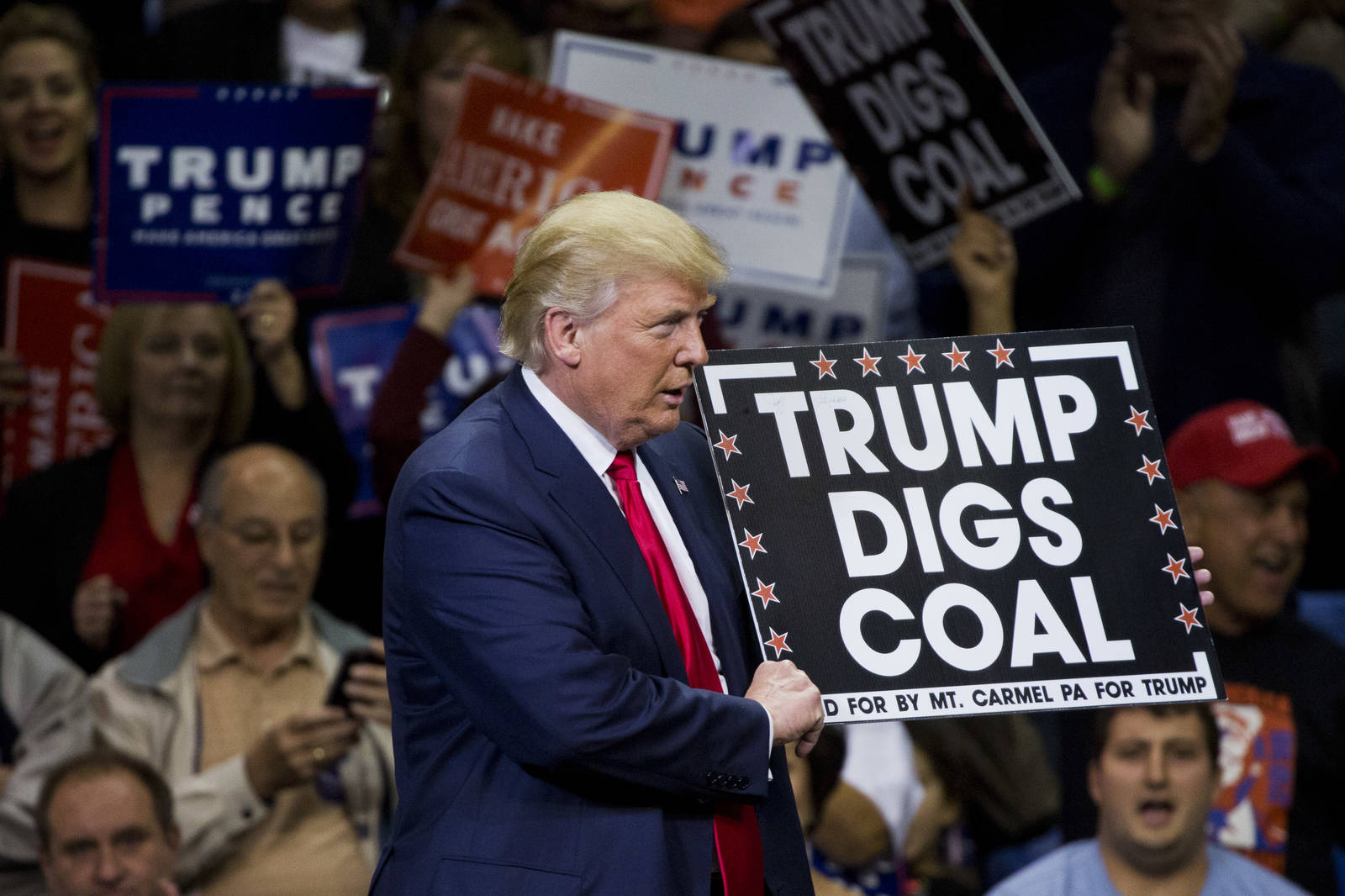
 DOE looking ‘very closely’ at Cold War-era law to boost coal, nuclear production, The Hill, BY MIRANDA GREEN – 05/09/18
Energy Secretary Rick Perry confirmed that the Trump administration is looking into using a Cold War-era law to prop up struggling U.S. coal and nuclear power plants.
Speaking to the House committee on Science, Space and Technology Wednesday, Perry named the Defense Production Act as something the Department of Energy (DOE) is “looking very closely at” as a way to secure the nation’s energy grid.
It was reported in April that the Trump administration was considering utilizing the 68-year-old law, which was passed by Congress in the midst of the Korean War, as a way to nationalize the energy industry.
Bloomberg reported that White House aides were looking into how to best implement the policy, which gives the government broad latitude to nationalize private industry in the name of security.
The law could allow the administration to provide help to the industries in the form of loans and loan guarantees or purchase commitments. It could also be used to help specific regions or plants.
Perry’s announcement was the first confirmation that the act is strongly being considered as the administration seeks to help the coal and nuclear industries…….http://thehill.com/policy/energy-environment/386891-doe-looking-very-closely-at-using-cold-war-era-law-to-boost-coal
May 12, 2018
Posted by Christina Macpherson |
politics, USA |
1 Comment
On Wednesday, White House Press Secretary Sarah Sanders told reporters the United States is ready to announce an additional set of sanctions against Iran as early as next week in response to its alleged development of nuclear weapons.
President Donald Trump on Tuesday announced that the United States was withdrawing from the 2015 Joint Comprehensive Plan of Action (JCPOA), signed by the P5+1 and EU, which ensures Iran’s nuclear program remains peaceful in exchange for sanctions relief. In addition, the US Treasury said it would reimpose the highest-level economic sanctions possible on Iran.
In the week prior to Trump’s decision Israeli Prime Minister Benjamin Netanyahu in an internationally-broadcast address presented old intelligence and tried to claim that Tehran was continuing to develop nuclear weapons.
In fact, Iran has remained compliant under the conditions of the JCPOA as verified by the IAEA in 11 reports since January 2016 — a reality US Secretary of State Michael Pompeo even admitted during his confirmation hearings.
Israeli, Saudi Victory
Retired US Army Major and historian Todd Pierce told Sputnik that Trump’s announcement was a triumph for the leaders of Israel and Saudi Arabia, both of whom want the United States to confront Iran.
“Trump has placed US foreign policy in the hands of the coalition of Israel under Netanyahu and Saudi Arabia under [Crown Prince] Mohammad bin Salman, which his son in law Jared Kushner helped bring together to collectively wage war against Iran and Syria,” he said.
Trump’s statement on why he was pulling out of the international nuclear agreement with Iran was expressed in terms that made it sound like Trump was determined to go to war, Pierce observed.”Constructively, in effect, Trump’s talk sounded like a declaration of war against Iran, with the first step being to tighten up the ‘blockade’ of Iran, meaning in the 21st century version of that, US sanctions,” Pierce said.
Trump’s address was also notable for how closely it followed the arguments made eight days earlier by Netanyahu in his efforts to persuade the US government and Congress to scrap the agreement, Pierce pointed out.
Trump, like his ally and friend Netanyahu had shown scant regard for factual accuracy in his presentation.Trump was not an extremist or aberration in setting such policies but was fulfilling goals that had been followed for decades, Pierce pointed out.
Tehran Undaunted
Global peace activist and expert on the medical dangers of nuclear energy, Dr. Helen Caldicott, told Sputnik that she expected Tehran to continue honoring its commitmentsunder the 2015 nuclear accord.
“I think there will not be a nuclear arms race in the Middle East despite the fact that Israel was vehemently opposed to the treaty and surreptitiously lobbied against it with the powers that be in the US,” Caldicott said.
Caldicott, founder of Physicians for Social Responsibility, the organization that was the co-winner of the 1985 Nobel Peace Prize, noted that Iranian President Hassan Rouhani had pledged to remain in the accord.
“Rouhani says that Iran will abide by the JCPOA, a stand which I intuitively had predicted,” she said. “It also seems clear that the European nations will definitely not abide by Trump’s terms of increased sanctions, after begging him to comply.”
The United States still needed to realize that Russia was not an ideological enemy of the West any more the way the Soviet Union had been throughout the Cold War, Caldicott maintained.
“If America could come to its senses and decide that all nuclear weapons are useless symbols of annihilation and have absolutely nothing to do with ‘defense’ it could lead the world to sanity, survival and nuclear disarmament,” she said.
Saudi Foreign Minister Adel Jubeir said on Wednesday that the country may start development of nuclear weapons if Iran continues its nuclear program.
Caldicott is the author of many books, including “The New Nuclear Danger: George W. Bush’s Military Industrial Complex” and “War in Heaven:” The Arms Race in Outer Space.” The Smithsonian Institution has named her one of the most influential women of the 20th century.
May 11, 2018
Posted by Christina Macpherson |
Iran, Israel, politics international, Saudi Arabia, USA |
Leave a comment
 US engineering giant sees ‘tremendous opportunity’ in Saudi nuclear energy plans https://www.cnbc.com/2018/05/10/bechtel-executive-us-firms-should-be-involved-in-
 saudi-nuclear-plans.html –Saheli Roy Choudhury
- A senior executive at engineering giant Bechtel told CNBC on Thursday that U.S. businesses should be involved in Saudi Arabia’s civilian nuclear energy ambitions.
- The presence of American firms would likely be welcomed by the Saudis and should also be welcomed by the U.S. government, according to Stuart Jones, regional president for Europe and Middle East at Bechtel.
- Saudi Arabia has plans to construct 16 nuclear power reactors over the next 20 to 25 years, costing more than $80 billion.
May 11, 2018
Posted by Christina Macpherson |
business and costs, marketing, Saudi Arabia, USA |
1 Comment
 The Trump decision: dangerous, irresponsible, and full of implications for North Korea https://thebulletin.org/commentary/trump-decision-dangerous-irresponsible-and-full-implications-north-korea11802 EXPERT COMMENTARY 9 MAY 2018, Kelsey Davenport, director for nonproliferation policy, Arms Control Association
Trump’s decision to reimpose sanctions on Iran clearly violates the multilateral Iran nuclear deal, known officially as the Joint Comprehensive Plan of Action (JCPOA). While the move is unsurprising—given Trump’s failure to recognize the nonproliferation value of the deal and frequent threats to walk away—it is dangerous and irresponsible, and it risks manufacturing a nuclear crisis that the international community cannot afford.
There was no legitimate reason for Trump to reimpose sanctions. For the past two years, the nuclear deal has verifiably restricted Iran’s nuclear program and subjected it to intrusive monitoring and verification. Even critics of the deal, such as Secretary of State Mike Pompeo, have admitted that there is no evidence that Iran is in violation of the agreement.
Trump’s main criticism—that the deal paves the way to an Iranian nuclear weapon in 10 years—is based on a flawed analysis that discounts the value that the permanent monitoring mechanisms and prohibitions put in place by the deal possess. They are a bulwark against nuclear weapons development.
By violating the deal, Trump has only isolated the United States and undermined Washington’s credibility. His “plan B” —to negotiate a “better deal” with Iran— is completely unrealistic. After this clear demonstration that the United States cannot be counted on to implement an agreement in good faith, Trump will hard pressed to gain any support for sanctions, let alone new talks. As a result, Trump is inciting a proliferation crisis, rather than working with allies to develop a long-term diplomatic strategy that would build on the agreement in the years ahead and address Iran’s malign activities outside of the accord.
Despite Trump’s reckless decision to reimpose sanctions, it would be premature to declare the nuclear deal dead. The JCPOA is a multilateral agreement endorsed by the UN Security Council and Washington’s P5+1 partners—China, France, Germany, Russia, and the United Kingdom—which have pledged to implement the deal, irrespective of US actions. And these states and the European Union have powerful tools at their disposal to block the secondary effects of US sanctions.
It will be critical that these states move quickly to insulate legitimate business from US sanctions, demonstrating to Iran that there is still an incentive—trade with Europe and other developed economies—to continue abiding by the nuclear commitments made under the accord. Failure to ensure that Iran has international trading opportunities will make it more likely that Tehran will respond to Trump’s violation by breaching the nuclear limits. While Iran is unlikely to dash for a bomb, Iranian officials have left the door open to restart uranium enrichment to 20 percent uranium 235, a level of fissionable material currently prohibited by the deal. If Iran choses this path it would destabilize the region and increase the risks of conflict.
Trump’s decision has nonproliferation consequences beyond Iran. Trump is about to sit down at an important summit with North Korean leader Kim Jong-un to discuss denuclearization of the Korean peninsula. Violating the Iran deal undermines US credibility in those negotiations and sends a message to Kim Jong-un that even if an agreement is reached and North Korea abides by its terms, there’s no guarantee that Washington will fulfill its commitments. This is a dangerous precedent to set and risks this historic opportunity to de-escalate tensions with North Korea.
May 11, 2018
Posted by Christina Macpherson |
Iran, North Korea, politics international, USA |
Leave a comment
 Singapore will host U.S.-North Korea summit, nuclear issue to dominate Steve Holland, Matt Spetalnick WASHINGTON (Reuters), 11 May 18 Leaders of the United States and North Korea will meet for the first time when President Donald Trump and Kim Jong Un hold a summit on June 12 in Singapore where the U.S. side will try to persuade Pyongyang to give up its nuclear weapons.
…….. “The highly anticipated meeting between Kim Jong Un and myself will take place in Singapore on June 12th. We will both try to make it a very special moment for World Peace!” Trump wrote on Twitter…….
Trump is embarking on this high-stakes meeting with Kim after sending shockwaves through the world on Tuesday when he announced that the United States was pulling out of a 2015 accord imposing international oversight of Iran’s nuclear program.
The move raised questions over whether North Korea might now be less inclined to negotiate its own nuclear deal with Washington.
Trump and Japanese Prime Minister Shinzo Abe spoke by telephone on Wednesday and the White House said the two leaders “affirmed the shared goal of North Korea abandoning its illicit weapons of mass destruction and ballistic missile programs” and remained committed to cooperating with South Korea.
Japan worries that it could be the target of any first-use of nuclear weapons by Pyongyang.
……… Kim recently promised to suspend missile tests and shut a nuclear bomb test site.
North Korea is still technically at war with the United States and its ally South Korea because the 1950-53 Korean War ended in a truce, not a treaty.
The choice of Singapore will put the summit on friendly turf for Trump, as the island nation is a strong U.S. ally and the U.S. Navy frequently visits its port.
The wealthy financial and shipping hub is seen as a gateway between Asia and the West and has been called the “Switzerland of Asia,” in contrast to North Korea’s isolated economy that its leaders now want to modernize.
Nonetheless, Human Rights Watch has described Singapore as having a “stifling” political environment with severe restrictions on “basic rights.”……… https://www.reuters.com/article/uk-northkorea-usa/singapore-will-host-us-north-korea-summit-nuclear-issue-to-dominate-idUSKBN1IB240
May 11, 2018
Posted by Christina Macpherson |
North Korea, politics international, USA |
Leave a comment
 Trump withdraws from the Iran nuclear deal. What now? Bulletin of the Atomic Scientists, John Mecklin May 18
With his decision today to withdraw the United States from the Iran nuclear deal, US President Donald Trump has put the long-term future of the deal in doubt, at the very least. In a televised announcement from the White House, Trump said the United States would reimpose the “highest level” of economic sanctions against Iran and would hold other nations accountable for violating those sanctions. During his truculent presentation, Trump asserted that the Iran nuclear deal—known officially as the Joint Comprehensive Plan of Action, or JCPOA—was “horrible” and “one-sided.” Even if Iran complied with the terms of the “decaying and rotten structure” of the JCPOA, the president claimed, it could move to the verge of creating nuclear weapons in “a very short time” even as it continued to build nuclear-capable missiles and support terrorism across the Middle East and the world. (The president’s claims run counter to the assessments of the numerous international security experts who note that the JCPOA’s intrusive inspection regime and other components would prevent Iran from acquiring nuclear weapons indefinitely.)
As he announced US withdrawal from the Iran deal, Trump threatened dire consequences for Iran if it resumed work toward nuclear weapons. At the same time, he asserted that his administration would work with allies toward a new deal that he was “ready, willing and able” to negotiate with Iran. Iran has previously insisted it will not renegotiate the JCPOA.
In the immediate aftermath of Trump’s decision, it was unclear how Iran, the other five countries that agreed to the JCPOA—Russia, China, the UK, France, and Germany—and the rest of the world would respond over the long term. The Bulletin invited a wide variety of top international security experts to provide comments on Trump’s decision and its potentially wide-ranging ramifications. Their responses are published below, in hopes they will help the international community find the best possible path forward. ………. https://thebulletin.org/trump-withdraws-iran-nuclear-deal-what-now11791
May 11, 2018
Posted by Christina Macpherson |
Iran, politics international, USA |
Leave a comment
 How America Jump-Started Iran’s Nuclear Program, History, BY BECKY LITTLE // MAY 9, 2018
For several decades now, the U.S. has sought to deter Iran from developing nuclear weapons. But ironically, the reason Iran has the technology to build these weapons in the first place is because the U.S. gave it to Iran between 1957 and 1979. This nuclear assistance was part of a Cold War strategy known as “Atoms for Peace.”
The strategy’s name comes from Dwight Eisenhower’s “Atoms for Peace” speech, given before the United Nations General Assembly in 1953. In it, he suggested that promoting the non-military use of nuclear technology could discourage countries from using it to create nuclear weapons, or “Atoms for War.”
The speech came only eight years after the invention of the atomic bomb, at a time when the U.S. was anxious to keep these new and frightening weapons from proliferating around the world. Strange as it sounds, President Eisenhower viewed his “Atoms for Peace” strategy partly as a form of arms control.
“He thought that sharing nuclear technology for peaceful purposes would reduce the incentives of countries to want to make nuclear bombs,” says Matthew Fuhrmann, a political science professor at Texas A&M University and author of Atomic Assistance: How “Atoms for Peace” Programs Cause Nuclear Insecurity. ……..
the U.S. provided nuclear assistance to countries it wanted to influence, such as Israel, India, Pakistan, and Iran.
At the time, the U.S. was closely allied with Iran’s Shah, Mohammad Reza Pahlavi. So closely, in fact, that when Iran toppled the Shah’s monarchy and democratically elected a prime minister, the CIA staged a 1953 coup d’état that put the Shah back in power. Part of the reason the U.S. valued Iran as an ally was because of its strategic location bordering the Soviet Union. During the early part of the Cold War, the U.S. set up a base in Iran to monitor Soviet activity.
In this context, the United States’ nuclear cooperation with Iran “was, in part, a means to shore up the relationship between those countries,” Fuhrmann says. The cooperation lasted until 1979, when the the Iranian Revolution ousted the Shah and the U.S. lost the country as an ally.
All of the nuclear technology the U.S. provided Iran during those years was supposed to be for peaceful nuclear development. But the “Atoms for Peace” strategy ended up having some unintended consequences.
“A lot of that infrastructure could also be used to produce plutonium or weapons-grade, highly-enriched uranium, which are the two critical materials you need to make nuclear bombs,” Fuhrmann says. In effect, the U.S. laid the foundations for the Iranian nuclear weapons program.
Iran first became seriously interested in creating nuclear weapons during the 1980s Iran-Iraq War. It tried unsuccessfully to develop them in the late ‘90s and early 2000s. Still, Iranian nuclear development remains an international concern, especially now that Trump has withdrawn the U.S. from the 2015 Iranian nuclear deal, known as the Joint Comprehensive Plan of Action.
In the weeks leading up to Trump’s decision, Israeli Prime Minister Benjamin Netanyahu tried to convince him to exit the deal by arguing that Iran was still pursuing nuclear weapons. Other policy experts and world leaders have rejected this claim, and Fuhrmann says he’s seen no evidence that “Iran has violated the deal, or that Iran has done anything since 2003 … to build nuclear bombs.”
However, now that the U.S. has withdrawn from the nuclear deal, Fuhrmann worries “Iran is going to have incentives to do those things, whereas under the deal, those incentives were greatly reduced.” https://www.history.com/news/iran-nuclear-weapons-eisenhower-atoms-for-peace

May 11, 2018
Posted by Christina Macpherson |
history, Iran, USA |
Leave a comment
 House approves bill to revive Nevada nuclear waste dump WP, By Matthew Daly | AP May 10 WASHINGTON — The House on Thursday approved an election-year bill to revive the mothballed nuclear waste dump at Nevada’s Yucca Mountain despite opposition from home-state lawmakers.
Supporters say the bill would help solve a nuclear-waste storage problem that has festered for more than three decades. More than 80,000 metric tons of spent fuel from commercial nuclear power plants sit idle in 121 communities across 39 states.
The bill would direct the Energy Department to continue a licensing process for Yucca Mountain while also moving forward with a separate plan for a temporary storage site in New Mexico or Texas.
The House approved the bill, 340-72, sending the measure to the Senate, where Nevada’s two senators have vowed to block it.
“The House can vote all they want to revive #YuccaMountain, but let’s be clear – any bill that would turn Nevadans’ backyards into a nuclear waste dump is dead on arrival,” Democratic Sen. Catherine Cortez Masto tweeted. “Yucca will never be anything more than a hole in the ground.”
……. “The House can vote all they want to revive #YuccaMountain, but let’s be clear – any bill that would turn Nevadans’ backyards into a nuclear waste dump is dead on arrival,” Democratic Sen. Catherine Cortez Masto tweeted. “Yucca will never be anything more than a hole in the ground.”
……..While the fight over Yucca resumes, lawmakers say they hope to make progress on a plan to temporarily house tons of spent fuel that have been piling up at nuclear reactors around the country. Private companies have proposed state-of-the-art, underground facilities in remote areas of west Texas and southeastern New Mexico to store nuclear waste for up to 40 years.
The nuclear industry has said temporary storage must be addressed since the licensing process for Yucca Mountain would take years under a best-case scenario. https://www.washingtonpost.com/politics/federal_government/house-takes-up-bill-to-revive-nevada-nuclear-waste-dump/2018/05/10/87ec7cac-540b-11e8-a6d4-ca1d035642ce_story.html?noredirect=on&utm_term=.68
May 11, 2018
Posted by Christina Macpherson |
politics, USA, wastes |
Leave a comment
 US, Australia fight push to bar fossil fuel interests from climate talks https://reneweconomy.com.au/us-australia-fight-push-bar-fossil-fuel-interests-climate-talks-14266/ By Natasha Geiling on 11 May 2018 ThinkProgress
For nine days, representatives from governments across the globe have been meeting in Bonn, Germany, to hammer out details of the Paris climate agreement.
But participating at the talks alongside diplomatic representatives and environmental groups are some perhaps unexpected parties — like the U.S. Chamber of Commerce, which has long opposed climate regulations and is a vocal proponent of fossil fuels.
A coalition of developing nations in Africa and Latin America had hoped to draw attention to the influence that the fossil fuel industry maintains over the climate negotiation process with a formal acknowledgement of conflicts of interest at the conclusion of the talks in Bonn this week.
But developed nations — led largely by the United States — succeeded in preventing such a formal acknowledgement from being included in the meeting’s final notes.
Conflicts of interest within the United Nations Framework Convention on Climate Change (UNFCC) — the international treaty that dictates the UN’s annual climate conferences — aren’t a new phenomenon.
In 2015, companies like Engie — a utility company that gets more than 70 percent of its energy output from fossil fuels — were financial sponsors of the Paris climate talks.
But this year, developing nations — alongside environmental groups — have been working to make eliminating conflicts of interest a central part of the climate negotiations moving forward, much to the chagrin of countries like the United States and Australia.
“Every institution, especially of this scale, has some kind of policy to identify and mitigate internal conflict of interests,” Jesse Brag, media director for Corporate Accountability, which has been campaigning to make conflicts of interest within the United Nations climate negotiations a central issue since 2015, told ThinkProgress.
“Right now, there is no acknowledgement [within the UNFCCC] that there could be problems that arise from the financial interests of businesses and NGOs operating here.”
There are a few ways in which fossil fuel companies — or industry groups that represent fossil fuel companies — have already influenced UN climate negotiations.
At the Paris climate negotiations in 2015, for instance, fossil fuel companies that sponsored the talks were given access to “communications and networking” areas in rooms where negotiations were taking place.
The text of the Paris climate agreement, which calls for limiting global warming to “well below 2 degrees Celsius” (3.6 degrees Fahrenheit) doesn’t mention the term “fossil fuels” once, despite the fact that burning fossil fuels is the primary action driving climate change.
And the UNFCCC’s Climate Technology Network, which promotes the adoption of low carbon technology in developing countries, includes a member of the World Coal Association.
Developing nations, alongside NGOs like Corporate Accountability, had hoped to get parties on the record this year acknowledging that conflicts of interest exist within the climate negotiations.
They had also hoped that such acknowledgement would be followed by policy suggestions aimed at helping root out conflicts of interest within the process.
That effort was largely waylaid due to intense opposition from the United States, which refused to allow any mention of conflicts of interest or fossil fuel companies into the meeting’s official notes.
But a coalition of governments representing 70 percent of the world’s population — largely from developing countries in Latin America and Africa — did succeed in getting parties to agree to keep talking about the issue at climate negotiations next year.
That might seem like a small victory, but Bragg argues it’s an important signal that the culture of the talks — as well as general recognition of the issue of conflicts of interest within the negotiations — is starting to change.
“Three years ago, no one wanted to talk about the fossil fuel industry’s role in climate denial in these talks,” Bragg said. “Now, it’s a discussion that is happening in every area of these halls. As the process advances, so does the culture around what needs to be done.”
It is unsurprising that the United States — which is still a party to the UNFCCC even as President Trump has promised to withdraw from the Paris climate agreement — would oppose efforts to draw attention to conflicts of interest between environmental treaties and fossil fuel companies.
Under the Trump administration, several high-profile environmental regulator posts have been filled by people who previously represented the industries that they now oversee.
Environmental Protection Agency (EPA) Deputy Administrator Andrew Wheeler, for instance, came to the EPA after working as a lobbyist for Murray Energy, the largest privately-owned coal firm in the United States.
Nancy Beck, who is currently the highest-ranking political appointee at overseeing regulation of the chemical industry at the EPA, used to work for the American Chemical Council , the chemical industry’s main lobbying organization.
And over at the Department of the Interior, Deputy Secretary David Bernhardt came to the agency after working for years as a lobbyist in the natural resources department of the firm Brownstein Hyatt Farber Schreck.
May 11, 2018
Posted by Christina Macpherson |
AUSTRALIA, climate change, politics international, USA |
Leave a comment