The nuclear industry’s cunning strategy to pass its clean-up costs to the tax-payer

 The nuclear bailout nobody’s talking about, https://highlandcountypress.com/Content/In-The-News/In-The-News/Article/The-nuclear-bailout-nobody-s-talking-about-/2/20/60902, By Marty Schladen, Ohio Capital Journal, 19 Oct 20, https://ohiocapitaljournal.com/
Ohio state government continues to be gripped by an alleged $61 million bribery scandal involving a billion-dollar nuclear bailout.
But while the effort for that bailout was brewing as part Akron-based FirstEnergy’s strategy to prop up and spin off unprofitable nuclear power plants, another part of the strategy might have resulted in an additional — and potentially larger — bailout in a separate venue.
And, some observers warn, many more such bailouts throughout the country might be on the way.
In February, seven months after Gov. Mike Dewine signed the $1.3 billion ratepayer bailout that mostly would subsidize two Northern Ohio nuclear plants, FirstEnergy might have gotten an even bigger break in U.S. bankruptcy court. That’s when Judge Alan M. Koschik signed off on a settlement that largely excused FirstEnergy from footing part of the bill to clean up the aging nuclear plants in Ohio and another in Pennsylvania that it had bequeathed to to its successor, now known as Energy Harbor, in the event that company goes belly up.
If the new company can’t make a go of it with the nuclear and coal plants that had been owned by FirstEnergy, taxpayers could well be on the hook for whatever part of the estimated $10 billion nuclear cleanup that Energy Harbor and a trust fund it’s required to maintain can’t.
Those are cleanups that, for financial reasons, will take 60 years — decades during which the crumbling cooling tower of the company’s Davis-Besse plant, for example, will loom over the Lake Erie shoreline in view of South Bass Island, one of Ohio’s premier tourist attractions.
Energy Harbor’s “financial future doesn’t look bright and when we say (FirstEnergy) needs to set aside money for (shutting down and cleaning up the plants), their response is going to be, ‘The bankruptcy court approved the reorganization, FirstEnergy isn’t on the hook anymore,’” said Margrethe Kearney, senior staff attorney at the Environmental Law & Policy Center, which is appealing the bankruptcy ruling to the 6th U.S. Circuit Court of Appeals in Cincinnati. “This is a way that bankruptcy is increasingly being used by companies — to shed their environmental liability.”
And, Kearney said, companies across the country that own nuclear generators likely will try to use the bankruptcy to ease looming cleanup costs off of their books and onto the backs of taxpayers.
“Especially here in the Midwest we have a lot of nuclear power plants, a lot of them are coming to the end of their useful life, most of them are out of the money, so it doesn’t really make sense to invest in them because natural gas and renewable energy is less expensive and we’re going to have a real crisis when it comes to the decommissioning of power plants and the financial ability to pay for them,” she said.
A doozy of a scandal
The Ohio Capitol was rocked in July when the FBI arrested then-House Speaker Larry Householder and four associates in what U.S. Attorney David DeVillers said was “likely the largest bribery and money-laundering scheme ever in the state of Ohio.”
DeVillers alleged that $61 million flowed from FirstEnergy and related companies through 501(c)(4) dark money groups and into campaigns of House candidates who later elected Householder speaker, a perch from which he shepherded House Bill 6, the $1.3 billion bailout, to passage. (House Bill 6 was cosponsored by Hillsboro Republican State Rep. Shane Wilkin and Rep. Jamie Callender, a Lake County Republican.)
The money also funded a nasty, xenophic campaign to block a voter initiative to repeal HB 6, while Householder and his associates simultaneously lined their own pockets with some of the loot, DeVillers said.
It wasn’t the only such scandal to break in July. In Illinois, Commonwealth Edison and parent company Exelon admitted to an eight-year bribery scheme targeting people around Illinois House Speaker Michael Madigan, who hasn’t been charged. One of the things the company received from the legislature during that period was a $2.35 billion bailout of two struggling nuclear power plants in that state.
In Ohio, nobody from FirstEnergy has been charged. But DeVillers in July said his investigation was far from over.
In September, Ohio Attorney General Dave Yost named FirstEnergy and associated companies as defendants in a civil suit. Among other things, it demanded that bailout funds be blocked and that the companies that funded the HB 6 scheme either fire the officials involved or see the companies themselves dissolved.
Who was in charge?
The funds promised by HB 6 were far from the first ratepayer largesse enjoyed by companies related to FirstEnergy, whose name graces the stadium in which the Cleveland Browns play. Last year, Ohio Rep. Mark Romanchuk, R-Ontario, said the company’s Ohio nuclear plants had received $10.2 billion in state subsidies since 1999.
The attorney general’s lawsuit says that four years ago, what to do about the failing nuclear plants was at the heart of what he said was a corrupt scheme to obtain a bailout.
“In late 2016, FirstEnergy Corp. had a problem,” the suit says. “The nuclear power generation plants it owned through its subsidiary FirstEnergy Solutions Corp. had turned from assets to liabilities.”
It also said that by spinning off the plants, passing the bailout and sending its former subsidiary through bankruptcy, FirstEnergy did lasting harm to the state. That’s because, the suit said, FirstEnergy had potentially shifted some of the burden to clean up the Perry and Davis-Besse reactors in Ohio from itself and onto the taxpayers.
“Ohio’s environmental future has been damaged, because the costs for the ultimate decommissioning of the nuclear plants are now secured by Energy Harbor, a company with far smaller capitalization than FirstEnergy Corp.,” the suit said. “To the extent that decommissioning and environmental repair costs exceed Energy Harbor’s ability to pay, those costs will be borne by Ohio through its ratepayers or taxpayers — a scenario that already played out once in the FirstEnergy Solutions’ bankruptcy plan that created Energy Harbor.”
Yet, FirstEnergy maintains that after 2016 its leaders had no control over the former subsidiary that owns nuclear as well as coal plants in Ohio and Pennsylvania.
“FirstEnergy leadership has not had any decision-making power regarding the strategic direction of FES since November 2016, and FirstEnergy and Energy Harbor are now separate, unaffiliated companies,” FirstEnergy spokeswoman Jennifer Young said in September after the Ohio attorney general’s lawsuit was filed.
However, that claim seems hard to credit because FirstEnergy CEO Chuck Jones is also CEO of FirstEnergy Services.
Until June, First Energy Services provided the power plant-owning company that became Energy Harbor with many — if not all — of the services one would associate with running it. They include “administrative, management, financial, compliance, ethical, external affairs, and political and regulatory advocacy services. ”
For her part, Young said that the companies are independent because they have separate boards.
Long-term strategy
In late 2016, as FirstEnergy was spinning off the company that after bankruptcy became Energy Harbor, Jones announced a strategy of seeking a bailout for the spun-off company’s failing nuclear assets.
“We are advocating for Ohio’s support for its two nuclear plants, even though the likely outcome is that FirstEnergy won’t be the long-term owner of these assets,” Jones said.
In an affidavit supporting criminal charges against the former Ohio speaker and others, FBI Special Agent Blane Wetzel introduces the case for a criminal conspiracy by referring back to that time.
“In 2016, (FirstEnergy) Corp.’s nuclear generation future looked grim,” it said. “In its November 2016 annual report to shareholders, Ohio-based (FirstEnergy) Corp. and its affiliates reported a weak energy market, poor forecast demands, and hundreds of millions of dollars in losses, particularly from its nuclear energy affiliate…
“Given this backdrop, (FirstEnergy) announced future options for its generation portfolio as follows: ‘legislative and regulatory solutions for generation assets’; asset sales and plant deactivations; restructuring debt; and/or seeking protection under U.S. bankruptcy laws for its affiliates involved in nuclear generation.”
On March 31, 2018, Energy Harbor predecessor FirstEnergy Solutions exercised one of those options when it filed for Chapter 11 protection in the U.S. Bankruptcy Court of the Northern District of Ohio.
Broad immunity
By the time FirstEnergy Solutions emerged from bankruptcy in February, it had a new name, Energy Harbor, and it had largely released its former parent company, FirstEnergy Corp., from any responsibility to clean up the nuclear plants it used to own.
“It makes it really difficult to get into the pockets of the parent if the subsidiary runs out of money,” Kearney, of the Environmental Law and Policy Center said of the settlement.
In fact, the release worked out between FirstEnergy, a primary creditor, and its former subsidiary was so broad that Judge Koschik disallowed part of it, saying it would make the overall settlement legally unconfirmable.
“The only (nuclear cleanup) ‘mechanism’ offered by (Energy Harbor) is its own assumption of these long-term environmental obligations and a promise that as a reorganized debtor with new capital structure facilitated by (FirstEnergy Corp.), it will stalwartly stand by and satisfy these claims if and when they arise,” Koschik wrote.
FirstEnergy and its former subsidiary modified the “third-party releases” and Koschik signed off on the overall settlement.
But he did so without allowing Kearney’s group to put on testimony from an expert witness, Peter Bradford, a former commissioner with the U.S. Nuclear Regulatory Commission. Bradford planned to testify that there were expenses far in excess of what the commission — which is responsible only for the cleanup of radioactive material — requires nuclear operators to pay into a trust fund, Kearney said.
Koschik’s refusal to hear from Bradford is a big part of why the Environmental Law and Policy Center and associated groups are appealing the bankruptcy settlement, although they also have briefed the appellate court on the federal criminal and state civil actions surrounding the HB 6 bailout scandal.
“We are asking to have our expert heard on the nuclear decommissioning issues,” Kearney said. “That doesn’t mean that the entirety of the bankruptcy proceeding will be reopened.”
Cleanup of the century
Asked last week about what it would cost to clean up its former nuclear plants in Ohio and Pennsylvania, FirstEnergy’s Young said, “FirstEnergy’s liabilities related to nuclear decommissioning are hypothetical and comparable to any former owner of nuclear generating facilities. The bankruptcy did not change that. The other questions you asked about decommissioning would need to be directed to Energy Harbor since they are the current owners and operators of the plants and are primarily liable for decommissioning. As you’ll recall, Energy Harbor is a separate company now unaffiliated with FirstEnergy.”
Calls and emails to two Energy Harbor spokesmen were unanswered.
Young said that as of June, Energy Harbor’s nuclear decommissioning trust funds were worth about $2 billion.
The cleanup envisioned for Perry and Davis-Besse plants in Ohio and the two Beaver Valley units in Pennsylvania would extend for the better part of a century — from 2021 through 2083, according to 2018 studies performed for FirstEnergy as part of the bankruptcy. Kearney said the longevity of the process isn’t because the cleanup is so complex. It’s because the money in the trust fund isn’t enough to pay for it now, so it needs time to grow.
However, based on the estimates commissioned by FirstEnergy, it’s hard so see how $2 billion would be enough. They list four categories of costs associated with the cleanup:
• Decommissioning, including a 17% contingency;
• Hefty NRC license-termination fees (fees are a major source of the agency’s funding);
• Spent-fuel management; and
• Non-nuclear demolition.
Taken together, the combined estimated cost to shut down and clean up all the facilities is $9.6 billion in 2014 dollars. And not nearly all of the $2 billion in the trust fund will be allowed to grow until 2074 to meet it.
The total cost to clean up Beaver Valley Unit 2, for example, is estimated at just under $2 billion, or about 20% of the total.
The timeline in the estimate calls for about an eighth of that — $233 million — to be spent through 2026 preparing for a 48-year “dormancy” period. The estimate says that it will cost between $6 million and $7 million a year for the first 33 years and $3 million to $4 million a year for the next 15.
In other words, if Energy Harbor were to stop paying into the trust fund tomorrow, far less than $2 billion will be allowed to grow until the final cleanup starts in 2075.
The estimates were financed by an interested party, FirstEnergy. But even if they weren’t, Kearney stressed that they could be significantly off — especially since they’re drawn out over such a long period. She said, however, “That $2 billion represents about half of the (overall) estimated cleanup costs.”
The uncertainty over how much the nuclear cleanups will cost and whether Energy Harbor can pay for them makes it unjust that its bankruptcy let FirstEnergy off the hook — especially in light of the criminality alleged in Ohio’s other nuclear bailout, the state’s official consumer representative said.
“An inadequate funding of the future decommissioning costs for the Davis-Besse and Perry nuclear power plants would also be of concern to Ohioans who, one way or another, may ultimately be asked to pay the tab for any shortfall in funding of these costs,” the Office of the Ohio Consumer Counsel said in a brief filed with the 6th Circuit. “Such a result would be objectionable for consumers.”
The OCC needn’t have limited his claims to the potential burden to Ohioans. As things stand now, if Energy Harbor can’t cover the cost of the cleanup, it will fall on all U.S. taxpayers.
Read the federal complaint
https://assets.documentcloud.org/documents/6999130/Ohio-House-complaint.pdf
Marty Schladen has been a reporter for decades, working in Indiana, Texas and other places before returning to his native Ohio to work at The Columbus Dispatch in 2017. He’s won state and national journalism awards for investigations into utility regulation, public corruption, the environment, prescription drug spending and other matters.
American election. Joe Biden’s climate plan would give the world a fighting chance

 BBC 18th Oct 2020, Who occupies the White House for the next four years could play a critical role in the fight against dangerous climate change, experts say. Matt McGrath weighs the likely environmental consequences of the US election.
Scientists studying climate change say that the re-election of Donald Trump could make it “impossible” to keep global temperatures in check. They’re worried another four years of Trump would “lock in” the use of fossil fuels for decades to come – securing and enhancing the infrastructure for oil and gas production rather than phasing them out as environmentalists want. Joe
Biden’s climate plan, the scientists argue, would give the world a fighting chance.
Considering the future of the Iran nuclear deal
 deal alive.
The deal, which imposes limitations on Iran’s civilian nuclear enrichment program, was agreed in July 2015 between the Iranians and the P5+1 group — China, Britain, France, Germany, Russia and the United States — and implemented six months later. The deal was struck when the Obama administration was in the White House following years of negotiations. The JCPOA gave Iran relief from international economic sanctions in return for dismantling major parts of its nuclear program and giving access to its facilities for inspection.
Yet ever since Donald Trump was elected president of the United States in November 2016, the future of the JCPOA has hung in the balance. Trump made it a campaign promise to pull out of the Iran deal. He kept his word and officially withdrew the United States from the JCPOA in May 2018, saying the deal is “defective” and did not address Iran’s ballistic missile program or its interference in the affairs of other countries in the Middle East.
Washington has since reinstated US sanctions on Iran and sought to penalize any nation doing trade with the Iranians, which has led to widespread criticism. In response, Iran has resumed its uranium enrichment at the Fordow nuclear plant, which is banned under the JCPOA.
The events surrounding the Iran deal have seen their ups and downs, but one thing is for sure: The collapse of the JCPOA is in no one’s best interest………….
Considering that US–Iran diplomatic relations are a nonstarter under the Trump administration, the result of the US presidential election on November 3 will be critical. President Trump has promised to reach a new deal with Iran “within four weeks” if he is reelected. If he wins, his administration would have to reshape its approach toward Iran in a constructive way to meet the timeline he has set. On the other hand, if Democratic nominee Joe Biden wins, his administration would likely rejoin the JCPOA, as well as seek additional concessions from Tehran. In a recent op-ed for CNN, Biden stated, “If Iran returns to strict compliance with the nuclear deal, the United States would rejoin the agreement as a starting point for follow-on negotiations.”
Biden served as the vice president under the previous Obama administration, which, together with the P5+1 group, negotiated the JCPOA back in 2015. Therefore, it is safe to say that the future of the nuclear deal might just rest on the outcome of the US election.
A Regional Arms Race
For now, however, the US withdrawal from the JCPOA has weakened the impact of the accord. More importantly, the near-collapse of the deal could have a direct impact on the next Non-Proliferation of Nuclear Weapons Review Conference in 2021, potentially drawing criticism from non-nuclear-weapon states that may wish to pursue civilian programs of their own.
The JCPOA is not only important for global nonproliferation efforts, but also for stability in the Middle East. The complete failure of the deal would have severe implications. ………
Sanctions on Iran
On August 20, France, Germany and the UK issued a joint statement saying they do not support the US request for the UN Security Council to initiate the “snapback mechanism” of the JCPOA, which would reimpose the international sanctions against Iran that were lifted in 2015. As the US is no longer a party to the JCPOA, it has limited influence over its enforcement. Therefore, the Security Council rejected the US move.
The Iranian economy was already fragile before President Trump withdrew from the JCPOA, and US-enforced sanctions are further complicating the situation. High living costs, a deep recession and plummeting oil exports are just the tip of the iceberg………..
Nuclear Nonproliferation
With all of this in mind, it is vital that the remaining parties to the JCPOA continue with constructive dialogue to try to uphold the agreement. Everyone benefits from the deal, and its success depends on each side’s fulfillment of their responsibilities and commitments, particularly Iran’s full compliance.
Most importantly, the Joint Comprehensive Plan of Action is necessary for the future of nuclear nonproliferation. If the deal collapses, then the world enters uncharted territory. https://www.fairobserver.com/region/middle_east_north_africa/elif-beyza-karaalioglu-jcpoa-iran-nuclear-deal-us-sanctions-iranian-news-middle-east-world-news-78178/
USA aiming to beat Russia, China etc, in marketing nuclear reactors to Poland
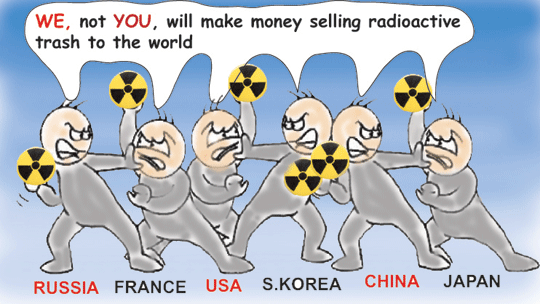 US to cooperate on Poland’s nuclear plans, Argus 9 October 2020, The US and Poland are set to sign an agreement to co-operate on Poland’s nuclear development programme, envisaging construction of 6-9GW of nuclear generation capacity, with the first unit to start in 2033.US secretary of energy Dan Brouillette and Poland’s secretary of energy infrastructure Piotr Naimski today agreed to sign a long-term agreement between the governments of both countries to co-operate on Polish nuclear development. US to cooperate on Poland’s nuclear plans, Argus 9 October 2020, The US and Poland are set to sign an agreement to co-operate on Poland’s nuclear development programme, envisaging construction of 6-9GW of nuclear generation capacity, with the first unit to start in 2033.US secretary of energy Dan Brouillette and Poland’s secretary of energy infrastructure Piotr Naimski today agreed to sign a long-term agreement between the governments of both countries to co-operate on Polish nuclear development.
The agreement, which had been already signed by the US side and is to be signed by Poland in the near future, provides that over the next 18 months the countries will work together on a financial and technical report on Poland’s nuclear power programme. This report will be the basis for US long-term involvement and for the Polish government to take final decisions on construction of nuclear power plants in the country, the US Department of Energy said……….. Earlier this year a Polish nuclear consortium led by government-controlled PGE sold its stakes in the PGE EJ 1 subsidiary, which initially was to be developing nuclear plants. In 2009 PGE said it planned to develop 6GW of nuclear capacity. Since then the company has struggled to come up with a financing model, and it recently opted to abandon its nuclear plans and focus on renewables. Under the current financing model, Poland plans to set up a joint venture with strategic foreign investors for development of the plants, with the Polish government maintaining at least 51pc. Tentative partners, beyond US companies, include firms from France and South Korea. https://www.argusmedia.com/en/news/2151529-us-to-cooperate-on-polands-nuclear-plans |
|
Anti-science in America – climate denial to coronavirus denial
 America re-discovers anti-science in its midst, Environmental Health News,16 Oct 20
Fauci, Birx, Redfield & Co. are in the middle of a political food fight. They could learn a lot from environmental scientists.
Let’s start with the story of a scientist who beat back a powerful global denial movement without any help from social media or modern, sophisticated organizing campaigns.
It took Galileo 359 years to wrangle an apology out of the Vatican for his heretical belief that the Earth revolved around the sun.
I’m glad he didn’t take it personally. Science denial is neither new nor purely American—but we sure are finding ways to make it lethal and lasting.
Climate scientists have been dealing with anti-science, largely unnoticed by the general public, for 20 years. Doctors face a growing wave of anti-vaccination zealots. Now a pandemic with a seven-figure global death toll and a stranglehold on the world’s economy has opened the doors wide for some multi-front anti-science blowback.
Americans, many refusing to wear masks and ignoring social distancing guidelines, appear to be gathering at frat parties, raves, political rallies, nightclubs and more in defiance of what credentialed experts say are the most vital ways to restrict the spread of COVID-19.
Major sporting events, notably college football, are backing down from previously self-imposed restrictions.
And, lo and behold, positive test rates are going back up in a big way.
Past is deadly prologue
Here are a couple recent, high profile examples of anti-science fervor in the U.S.:………
But nothing in science can quite match the decades-long assault on climate science and climate scientists. On the high end, there are PR campaigns backed by fossil fuel money, well-heeled litigation, and unhinged attacks from national pols and pundits. Then, there are the confounding, face-palming antics of the Coal Rollers—pickup truck owners who modify their rides with “Prius Repellent”—thick sooty black smoke intended to make a bizarre anti-science, pro-climate denial statement. Yes, people do this.
Penn State’s Michael Mann is arguably the highest-profile climate scientist in the U.S. Let’s make a minor leap of faith and say Mann’s climate stature is the closest equivalent to Dr. Anthony Fauci’s standing on coronavirus.
Right now, Dr. Fauci’s main public tormentor is President Trump. Their conflicts are tame compared to the deniers’ gang-up on Mann, which has lasted more than a decade and may offer Fauci a few tips on being a scientist in the middle of a political peeing match…….
Make no mistake, Fauci’s a heroic public servant in an awful bind who, as far as I know, may not even be interested in the killer tell-all book that now resides in his head.
But after COVID-19 is finally conquered, Mike Mann and a thousand others will still be getting bashed, and the worst impacts of climate change will still be ahead of us.
Peter Dykstra is our weekend editor and columnist and can be reached at pdykstra@ehn.org or @pdykstra.
Small Nuclear Reactors on the moon- desperate hope for the failing nuclear industry

While our species’ insatiable scientific curiosity has undoubtedly led to some beneficial inventions, it has also drawn us inexorably towards our own downfall. Our zeal to create the atomic bomb ignored logic, ethics, consequences and the fundamentals of human rights.
The bomb brought us so-called civil nuclear power reactors, the ugly and irresponsible spawn of a weapon that leaves us perched perpetually on the precipice of extinction. But there is nothing “civil” about nuclear power.
At the dawn of the nuclear energy age, not a thought was given to the legacy of deadly radioactive waste it would produce. That can was kicked summarily down the road. Now we are far down that road and no solution has been arrived at, while we ignore the one obvious one: stop making more of it!
So now comes the news that the US wants to put nuclear power reactors on the Moon.
In the news stories that followed the announcement, replete with the usual excitement about space exploration (never mind the cost and bellicose implications) there was not one single mention of the radioactive waste these reactors would produce.
The problem, like the waste itself, will simply be kicked into some invisible crater on the dark side of the Moon.
NASA, the US Department of Energy and assorted nuclear labs are pushing the small modular reactor for nuclear projects on the 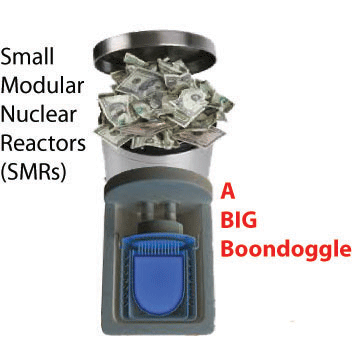 Moon and Mars. Desperate to stay relevant and to continue gobbling up taxpayer dollars, this is music to the failing nuclear industry’s ears. Financially disastrous and technically unresolved on Earth, the SMR, say these “experts”, is ideally suited to the needs of humans living for extensive periods in space.
Since each of these mini-reactors will likely have an uninterrupted output of only 10 kilowatts, it will take multiple reactors on the Moon or Mars to fulfill the necessary functions for their human inhabitants.
Needless to say, so far there is no certified design, no test reactor, no actual reactor, and no fool-proof way to send such a reactor to the Moon. (Rockets have an unfortunate habit of sometimes blowing up on — or shortly after — launch.) Nevertheless, the year 2026 is the ambitious target date for all systems go. In keeping with the theme, “pie in the sky” springs to mind.
While no reactor design has been identified, it will most likely need to use highly enriched uranium (HEU) which puts the reactor firmly in violation of non-proliferation standards. As Dr. Edwin Lyman of the Union of Concerned Scientists told PBS Newshour, “This may drive or start an international space race to build and deploy new types of reactors requiring highly enriched uranium.”
Given the utility of HEU for nuclear weapons use, and the probes currently being sent to the Moon and Mars by “unfriendly” countries such as China and the United Arab Emirates, it does not take much of an imagination to envisage the temptation for theft by force. Will the US deploy guards around its lunar reactors.? Will we see terrorism on the Moon, even war?
What is this really all about? Profit? Prestige? Proliferation? The Idaho National Laboratory, which is eager to develop the lunar SMR prototype, sees this as an opportunity to emphasize “the United States’ global leadership in nuclear innovation,” the lab’s John Wagner told Newshour.
This echoes the mantra parroted by almost every federal institution and corporation seeking to justify some new and exorbitant nuclear expense: we cannot let China and Russia take over; the US must retain — or regain — pre-eminence in the nuclear sector and in space. And so on.
It’s not being cute to call this lunacy. With the ever-expanding crises on Earth, caused by the ravaging effects of climate change as well as the current pandemic, spending exorbitant sums to stick reactors on the Moon or Mars is more than madness; it is morally irresponsible. It abandons most of us on Earth to our fate, while, just maybe, possibly, someday, a handful of people will head off to the Red Planet. Never to return.
Yet undeterred by immorality and expense, and apparently without the slightest concern for the radioactive dirt pile these reactors will produce, NASA and the Department of Energy are eagerly soliciting proposals.
And what will these lunar reactors do? They will enable “capability for a sustained lunar presence, particularly for surviving a lunar night,” NASA’s Anthony Calomino told Space News. “The surface of the moon provides us an opportunity to fabricate, test and flight qualify a space fission system,” he said.
The Moon is seen as our launchpad to Mars. Now, it seems, it will also become our latest nuclear dustbin. If there is a meltdown, or a cascade of accidents among the cluster of small identical reactors there, all of which could suffer the same failure at the same time, it will become our next nuclear wasteland.
I am happy to say “goodnight moon.” But I don’t wan’t to say “goodbye.”
USA spends taxpayers’ money on weapons, endless wars, not health – coronavirus chaos is the result
 The US Chose Endless War Over Pandemic Preparedness. Now We See the Effects. C.J. The US Chose Endless War Over Pandemic Preparedness. Now We See the Effects. C.J.  Polychroniou, Truthout, October 18, 2020 Polychroniou, Truthout, October 18, 2020 United States has the longest record of war-fighting in modern history. Why that is the case is not a question that has an easy answer; suffice to say, however, that militarism and violence run like a red thread throughout U.S. political history, with enormous costs both for the domestic economy and the world at large, as a recently published book by David Vine makes plainly clear. In fact, the militarist mentality is strongly reinforced by the Trump administration in spite of the fact that the current president claims to have an aversion to “endless wars.” In this exclusive Truthout interview, Vine, a professor of anthropology at American University in Washington, D.C., addresses critical questions about U.S. war culture and Trump’s own contribution to the violence that has always been foundational to U.S. culture. C.J. Polychroniou: Your latest book, The United States of War: A Global History of America’s Endless Conflicts, from Columbus to the Islamic State, is a detailed survey of the U.S.’s obsession with militarism and war. Have you come to a definite conclusion or explanation as to why the United States has been at war for about 225 of the 243 years since its independence?
David Vine: There is, of course, no simple answer to this incredibly important question. According to my research, the U.S. military has been at war or engaged in other combat in all but 11 years of U.S. history — 95 percent of the years the United States has existed. My book shows how the huge collection of U.S. military bases abroad provides a key — or a kind of lens — to help understand why the United States has been fighting almost without pause since 1776. . Bases abroad, bases beyond U.S. borders show how U.S. political, economic and military leaders — shaped by the forces of history, capitalism, racism, patriarchy, nationalism and religion — have used taxpayer money to build a self-perpetuating system of permanent, imperialist war revolving around an often-expanding collection of extraterritorial military bases. These bases have expanded the boundaries of the United States, while keeping the country locked in a state of nearly continuous war that has largely served the economic and political interests of elites and left tens of millions dead, wounded and displaced. To be clear, my argument is not that U.S. bases abroad are the singular cause of this near-endless fighting. Indeed, my book shows how the answer to why the U.S. government has fought so constantly lies in the capitalist profit-making desires of businesses and elites, in the electoral interests of politicians, and in the forces of racism, militarized masculinity, nationalism and missionary Christianity, among other dynamics. U.S. bases abroad, however, have played a key and long overlooked role in the pattern of near-constant U.S. fighting: that is, since independence, bases that U.S. leaders have built beyond the borders of the United States not only have enabled wars but also have made offensive imperialist wars more likely. While U.S. leaders often portray bases abroad as defensive in nature, the opposite is generally the case: bases built on the territory of other peoples have tended to be offensive in nature, providing a launchpad for yet more wars. This has tended to create a pattern in which bases abroad have led to wars that have led to the construction of new bases abroad that have led to new wars that have led to new bases and so on. Can you offer us a quick assessment of the overall costs of the “global war on terror?” It’s impossible to capture the immensity of the catastrophe that the so-called “global war on terror” has inflicted……….. Alongside the human damage, the financial costs of the so-called war on terror are so large, they’re nearly incomprehensible. As of October 2020, the U.S. government has spent or obligated a minimum of $6.4 trillion on the post-2001 wars, including the costs of future veterans’ benefits and interest payments on the money borrowed to pay for the wars. The actual costs are likely to run hundreds of billions or trillions more, depending on when we force our politicians to bring these seemingly endless wars to an end. While it’s incredibly hard to fathom $6.4 trillion in taxpayer funds vanished, the catastrophe is compounded when we consider how else the U.S. government could have spent such incredible sums of money. What could these trillions have done to provide universal health care, to rebuild public schools, to build affordable housing, to end homelessness and hunger, to rebuild crumbling civilian infrastructure, to prepare for pandemics? In addition to the 3-4 million who have likely died in the wars the U.S. government has fought since 2001, how many more have died because of the investments the U.S. government did not make? These are questions that, I have to say, should make us weep……….. Clearly there is a deep connection between the war machine and the U.S. government’s failure to protect the country against COVID. ………….. President Eisenhower was exactly right when he called this kind of diversion of funds a “theft.” He said, “Every gun that is made, every warship launched, every rocket fired signifies, in the final sense, a theft from those who hunger and are not fed, those who are cold and are not clothed.” Today, every gun that is made signifies a theft from those with COVID, from those who might contract COVID, from all of us……… https://truthout.org/articles/the-us-chose-endless-war-over-pandemic-preparedness-now-we-see-the-effects/?eType=EmailBlastContent&eId=89a28ac1-0d1a-4b33-ab5b-4666e96877f5 |
|
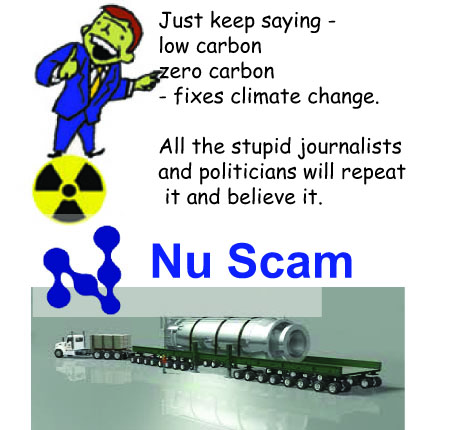
Hypocrisy prize to U.S. International Development Finance Corporation (DFC), for pretending that NuScam’s Small Nuclear Reactors are ”foreign aid”

|
DFC Convenes U.S., African Leaders for Investment Conference, U.S. International Development Finance Corporation (DFC), October 16, 2020 Announces new efforts aimed at bolstering agency’s reach across continent. WASHINGTON – Today, U.S. International Development Finance Corporation (DFC) and the Atlantic Council hosted the virtual Investing in Africa’s Future conference to bring together African heads of state, senior U.S. government officials, African development finance institutions and others to announce new efforts to promote and strengthen U.S. trade and investment in Africa, in support of the Administration’s Prosper Africa Initiative…….. DFC made the following announcements during the summit: …………
LOI for Nuclear in South Africa: In July 2020, DFC updated and modernized its nuclear energy policy—ending its prohibition on supporting nuclear power in order to help meet the energy needs in the developing world. DFC signed a Letter of Intent to support NuScale, a U.S. nuclear energy technology firm, to develop 2,500 MW of nuclear energy in South Africa. If successful, NuScale would be the first U.S. nuclear energy IPP on the continent and would help support energy resilience and security in one of Africa’s leading economies and a key partner on the continent for the United States Government……….. https://www.dfc.gov/media/press-releases/dfc-convenes-us-african-leaders-investment-conference
|
|
The biggest radioactive spill in US history
The biggest radioactive spill in US history https://www.vox.com/21514587/navajo-nation-new-mexico-radioactive-uranium-spill How the US poisoned Navajo Nation. By Ranjani Chakraborty and Melissa Hirsch Oct 13, 2020, (Excellent photography) For decades, Navajo Nation was a primary source for the United States’ uranium stockpile during the nuclear arms race. It was home to more than 700 uranium mines, which provided jobs to Navajo residents. But the mining industry came with impending peril. Cases of lung cancer and other diseases began cropping up in a community that had previously had few of them. Land, air, and water was poisoned. And on July 16, 1979, the mining led to the biggest radioactive spill in US history.
Watch the video above to hear from residents in Church Rock, New Mexico, who’ve lived with the effects of the spill. More than 40 years later, the site still hasn’t been properly cleaned up, and residents continue to face illnesses, tainted water, and the loss of livestock. Today, with the Environmental Protection Agency’s new plan for cleanup, they’re worried it could wipe out their entire community.
If you want to learn more about mining in Navajo Nation, check out Doug Brugge, Esther Yazzie-Lewis, and Timothy Benally’s book on the subject. Or the feature documentary The Return of Navajo Boy by Groundswell Educational Films.
Putin’s proposal for 12 month renewal of NewSTART arms control treaty is rejected by USA
US rejects Putin’s proposal on nuclear disarmament treaty as ‘nonstarter’ American Military News, 18 Oct 20, The United States says Russian President Vladimir Putin’s proposal to extend the New START nuclear disarmament treaty without freezing nuclear warheads is a “nonstarter.”
Putin proposed extending the bilateral treaty for one year without preconditions to keep it from expiring and to allow talks to revive it to continue.
Putin also instructed Foreign Minister Sergei Lavrov at a meeting with permanent members of Russia’s Security Council on October 16 to work out Russia’s position on New START and inform the United States of developments.
The issue of the New START treaty comes less than three weeks before the U.S. presidential election.
Democratic challenger Joe Biden supports extending New START “to use that as a foundation for new arms-control arrangements.” If Biden wins, the treaty will expire just weeks after he is inaugurated.
Biden calls the treaty — which was negotiated when he was vice president under President Barack Obama — an “anchor of strategic stability between the United States and Russia.”……..
On October 13, more than 75 lawmakers across Europe called on the United States to extend New START before its expiration.
Ask pro-HB 6 lawmakers seeking reelection what they plan to do about the nuclear bailout bill
 Ask pro-HB 6 lawmakers seeking reelection what they plan to do about the nuclear bailout bill https://www.cleveland.com/opinion/2020/10/ask-pro-hb-6-lawmakers-seeking-reelection-what-they-plan-to-do-about-the-nuclear-bailout-bill.html Oct 18, 2020, By Thomas Suddes, cleveland.com
House Bill 6, which Ohio’s House and Senate passed last year, requires Ohio’s electricity consumers to bail out two nuclear power plants formerly owned by FirstEnergy Corp. – Perry, in Lake County, and Davis-Besse, in Ottawa County.
HB 6 also requires electricity customers to subsidize two coal-burning power plants, one of them in Indiana. Evidently, our General Assembly has solved all Ohio’s problems and now has the time, not to mention the wisdom, to address an Indiana problem.
True, Ohio’s House and Senate usually favor utilities over consumers. That’s not news. But this was: In July, a federal grand jury indicted then-House Speaker Larry Householder, a Republican from Perry County’s Glenford, and four other Statehouse figures because of an alleged racketeering conspiracy, “involving approximately $60 million,” to pass HB 6 – “a billion-dollar nuclear plant bailout.” (Householder and the others are presumed innocent unless convicted.)
Oh yes, the Senate will consider repealing HB 6 – but only after the House repeals it. There’s no reason why the Senate (led by President Larry Obhof, a Medina Republican who voted “yes” on HB 6) can’t repeal HB 6 before the House does. Maybe the real reason is that GOP senators think the House will never repeal it.
About all that Ohio electricity consumers can do is ask those members of the General Assembly who voted “yes” on House Bill 6 whether they will now vote to repeal it.
These Greater Cleveland House members also voted “yes” on HB 6 and are asking voters to reelect them: Republican Reps. Thomas F. Patton, of Strongsville; Jamie Callender, of Concord Township (HB 6′s co-sponsor); Diane V. Grendell, of Chesterland (whose district includes parts of Geauga and Portage counties); Darrell Kick, of Loudonville (whose district includes Ashland County and part of Medina County); Scott Oelslager, of North Canton; Bill Roemer, of Richfield; Dick Stein of Norwalk (whose district includes part of Lorain County); and Scott Wiggam, of Wooster.
Even if legislators run unopposed, they’re still answerable to residents of their districts.
If HB 6 is such great legislation, why did it only attract 51 “yes” votes in the 99-member House – just one more “yes” vote than the 50-vote constitutional minimum?
And why did 15 of the House’s 61 Republicans – one in four – vote “no” on HB 6 even though then-GOP leader Householder wanted it passed?
Finally: Why would anybody allegedly spend $60 million in dark money to pass a bill that’s supposed to be such a great deal for Ohio electricity consumers – unless it isn’t?
South Africa the first sucker to get American experimental nuclear reactor + $billions in bribes?
 US firm ‘aims to build a nuclear power plant’ in South Africa, https://www.thesouthafrican.com/news/us-firm-aims-to-build-a-nuclear-power-plant-in-south-africa/What pandemic? An American investment group is looking to pump billions into South Africa, with one eye on a new nuclear power plant for Mzansi.by Tom Head 2020-10-18 US firm ‘aims to build a nuclear power plant’ in South Africa, https://www.thesouthafrican.com/news/us-firm-aims-to-build-a-nuclear-power-plant-in-south-africa/What pandemic? An American investment group is looking to pump billions into South Africa, with one eye on a new nuclear power plant for Mzansi.by Tom Head 2020-10-18
The future of South Africa’s energy supply could be shaped by a cash injection from the United States of America. The government, in their ongoing discussions with NEDLAC and foreign investors, has entertained the idea of letting an international development firm finance and build a new nuclear power plant in Mzansi.
AN AMERICAN NUCLEAR POWER PLANT IN SOUTH AFRICA?As Bloomberg has confirmed, The US International Development Finance Corp (DFC) has signed a letter of intent to support plans laid out by NuScale, an American technology group that are ready to kick on with this project. Amongst the billions of dollars they’ve pledged to South Africa, a ‘secure, reliable energy supply through the construction of new nuclear plants’ is their major priority. A CONTINENTAL FIRST FOR SOUTH AFRICA?
The DFC released a statement last week, confirming that they would be pioneering in their ambitious blueprint. Should a new nuclear plant get the green light, this would be the first IPP funded by the USA throughout the whole of Africa. The future of South Africa’s energy supply could be shaped by a cash injection from the United States of America. The government, in their ongoing discussions with NEDLAC and foreign investors, has entertained the idea of letting an international development firm finance and build a new nuclear power plant in Mzansi. further R4.5 billion would be spent on public transport development over the next 12 months. |
Washington State touted for ”new generation” nuclear power – (some time in the distant future)
 Feds: Washington nuclear operator to develop new plants, Lexington Herald Leader, BY NICHOLAS K. GERANIOS ASSOCIATED PRESS, OCTOBER 15, 2020SPOKANE, WASH. Feds: Washington nuclear operator to develop new plants, Lexington Herald Leader, BY NICHOLAS K. GERANIOS ASSOCIATED PRESS, OCTOBER 15, 2020SPOKANE, WASH.
The federal government has chosen the operator of a nuclear power plant near Richland to help develop the next generation of nuclear energy facilities, raising the possibility of a new reactor in central Washington state. The U.S. Department of Energy this week announced that Energy Northwest, which operates the only nuclear power plant in the Northwest, will be part of a team developing the next generation of nuclear energy plants. The announcement prompted Republican U.S. Rep. Dan Newhouse, who represents the area in Congress, to applaud the recipients of Advanced Reactor Demonstration Program funds. “The selection of these projects is an absolute game-changer for our state and makes it official: Tri-Cities, Washington is a global leader in nuclear energy innovation,” Newhouse said. However, a spokesman for Energy Northwest warned that the decision on where to build new commercial nuclear power plants is years away. `There are no plans currently to site anything,″ Jason Herbert said, while adding that land owned by Energy Northwest in the Tri-Cities area includes “potential sites″ for a new reactor. Energy Northwest operates the Columbia Generating Station, which was completed in 1984 and is the last remaining nuclear power plant in the Northwest. The Department of Energy this week announced that Energy Northwest would partner with X-energy and TerraPower-GE Hitachi in developing new reactor technology. The Advanced Reactor Demonstration Program is designed to help private industry demonstrate advanced nuclear reactors in the United States, using $230 million appropriated by Congress. If built in Washington, Energy Northwest would expect to own and operate the new nuclear plant, the company said. The Tri-Cities region, which includes Richland, has a long history in the nuclear industry, dating back to its selection by the Manhattan Project in World War II as a site to help develop the atomic bomb. https://www.kentucky.com/news/business/article246476415.html |
|
USA marketing NuScam small nuclear reactors to Africa
US to support new nuclear power project in South Africa https://businesstech.co.za/news/energy/441510/us-to-support-new-nuclear-power-project-in-south-africa/, Bloomberg17 October 2020 The United States International Development Finance Corp. pledged to support NuScale Power LLC, a US nuclear energy technology firm, to develop 2,500 megawatts of power in South Africa.
South Africa’s government drafted an economic recovery plan in conjunction with business and labour groups several months ago in a bargaining forum known as the National Economic Development and Labour Council, in the wake of the coronavirus pandemic.A version of the strategy that was discussed by the cabinet this week, and seen by Bloomberg, includes suggestions to secure reliable energy supply through the construction of new nuclear plants.
The draft envisages R23 billion ($1.4 billion) being allocated to galvanize private investment in infrastructure and R4.5 billion being spent on public transport over the next 12 months, but provides scant detail on where the money will come from.
The DFC, which ended its prohibition on supporting nuclear power in July, signed a letter of intent to support NuScale’s bid for South Africa’s independent power producer program, the development bank said in an emailed statement on Friday.
“If successful, NuScale would be the first US nuclear energy IPP on the continent and would help support energy resilience and security in one of Africa’s leading economies,” the DFC said.
Australia – climate doomed if Trump wins this election
 This is a cautionary tale for Australia. In both the US and Australia, conservative politicians
 seem more eager to bail out dirty polluters than protect the public
For Australia’s sake, I hope Trump’s climate science denialism loses. https://www.theguardian.com/commentisfree/2020/oct/17/for-australias-sake-i-hope-trumps-climate-science-denialism-loses, Michael Mann US policy has emboldened Scott Morrison to be less ambitious on climate, just when so much is at stake.
Anyone in Australia who witnessed the Black Summer bushfires (as I did), and anyone in the US who experienced the thick smoke from our western wildfires (as I have), knows how much damage climate change is already doing. The stark reality is that worldwide efforts to avert ever-more catastrophic climate change impacts lie in the balance in the 2020 US election.
Donald Trump will go down in history bearing substantial responsibility for the deaths of over 200,000 Americans due to his rejection of the advice of public health experts and his refusal to endorse policies such as social distancing and mask-wearing that could have saved many thousands of lives. But his rejection of the science of climate change sets the stage for a far greater toll. Far more human lives will be lost from the impacts of climate change if we fail to act.
Whether or not Trump gets re-elected – and how other countries like Australia respond to the outcome of the US election – could determine the fate of our planet. Indeed, I’ve stated that a second Trump term might well be “game over for the climate” if it leads to the collapse of international efforts to act.
The damage caused by Trump’s climate denial is painfully visible within the US as we endure climate change-fuelled extreme weather events, including unprecedented wildfires in the west and unprecedented hurricanes in the east. But the damage can be felt around the world. Trump has proudly, and shamelessly, trumpeted his climate denialism on the global stage, joining with petrostates such as Russia, Saudi Arabia and Brazil in opposing international climate efforts.
Indeed, Trump’s actions have emboldened Australia to be less ambitious on climate too, prime minister Scott Morrison following Trump’s lead in promoting climate denial, coddling fossil fuel interests and blocking efforts to support a clean, renewable energy transition.
By pulling the US out of the Paris agreement (one of the first and only campaign promises he kept) Trump ceded America’s leadership on the defining challenge of our time. Thus far, other countries have fortunately filled the leadership void, at least temporarily. The EU and China, with its new net-zero pledge, have stepped up to the plate, recognising that they will benefit from the opportunities of a clean energy economy and better protect their citizens from dangerous climate change impacts.
But nobody stands to benefit more from climate action, or lose more if we fail to act, than Australia. Having spent a sabbatical leave down under earlier this year, aimed at collaborating with scientists in Australia to study the impact of climate change on extreme weather events, I instead witnessed those impacts first-hand. I saw the muted beauty of the Blue Mountains when shrouded in wildfire smoke. If Trump is re-elected, and we collectively continue down a path of insufficient climate action, it may not be long before those fires rage year-round, and the Blue Mountains are lost in a perpetual grey and dismal haze.
It’s the same with the vibrant sea life of the Great Barrier Reef, which I was fortunate enough to witness with my family during my time in Australia. The delicate ecosystems of the GBR are already on the ropes, with fossil fuels pushing up temperatures in the ocean to the point where bleachings occur with such frequency and ferocity that corals simply cannot recover. Research released this week found that the reef has lost half its coral, largely due to warming oceans caused by climate change. Add the impact of ocean acidification from increasing carbon emissions, and we could sadly, within a decade or two, be reading the GBR’s obituary for real.
It doesn’t have to be like that. For one thing, renewable energy costs are plummeting while the technology just keeps getting more efficient and better, so dirty energy no longer makes economic sense. For example, on one recent Sunday, all the electricity demand for the entire state of South Australia was met by solar power alone, and every state and territory in Australia has committed to go carbon neutral by 2050. Here in the US, we’ve seen a record number of cities and states stepping up on climate goals too, knowing clean energy is good for their communities’ health, resilience and prosperity.
Policymakers must accelerate the shift to clean energy that is already under way. As we’ve learned in the Trump-era, some fossil fuels are too far gone for even the most determined polluter-in-chief to save. Though another term would give Trump time to defend his environmental rollbacks in court and solidify his dirty energy policies, he has already failed to save coal from market forces, and another four years isn’t going to reverse the long-term decline of the industry.
This is a cautionary tale for Australia. In both the US and Australia, conservative politicians seem more eager to bail out dirty polluters than protect the public, denying politically inconvenient science in order to offer lavish payouts to help unprofitable fossil fuel companies.
If we are to avert catastrophic warming, we must do just the opposite, providing financial incentives for renewables and disincentives for fossil fuels. That will level the playing field, and accelerate the clean energy transition.
We must take the earliest exit possible off the fossil fuel highway. By trying to squeeze out the last drop of fossil fuel industry profits, the Morrison government could well be on its way to bleaching the life from Australia’s coral reefs and blighting the blue of its mountains.
There is some good news, however. Regardless of whom Americans vote for – and for the sake of the planet, I hope it’s Joe Biden and the Democrats – Australians can still work together for structural change at home. You can’t solve it alone, but we also can’t solve it without you. Australia has seen that the sun can power an entire state’s electricity for a day. Now it’s time to make that happen every day.
Australia must distance itself from the handful of bad petrostate actors who have sabotaged global climate action and rejoin the coalition of the willing, when it comes to the battle to save our planet.
• Michael E. Mann is distinguished professor of atmospheric science at Pennsylvania State University. He is author of the upcoming book The New Climate War: The Fight to Take Back Our Planet, due out in January (Public Affairs Books)
1 This Month
26 April – Chernobyl: Inside the Meltdown airs on National Geographic on Sunday 26th April from 4pm

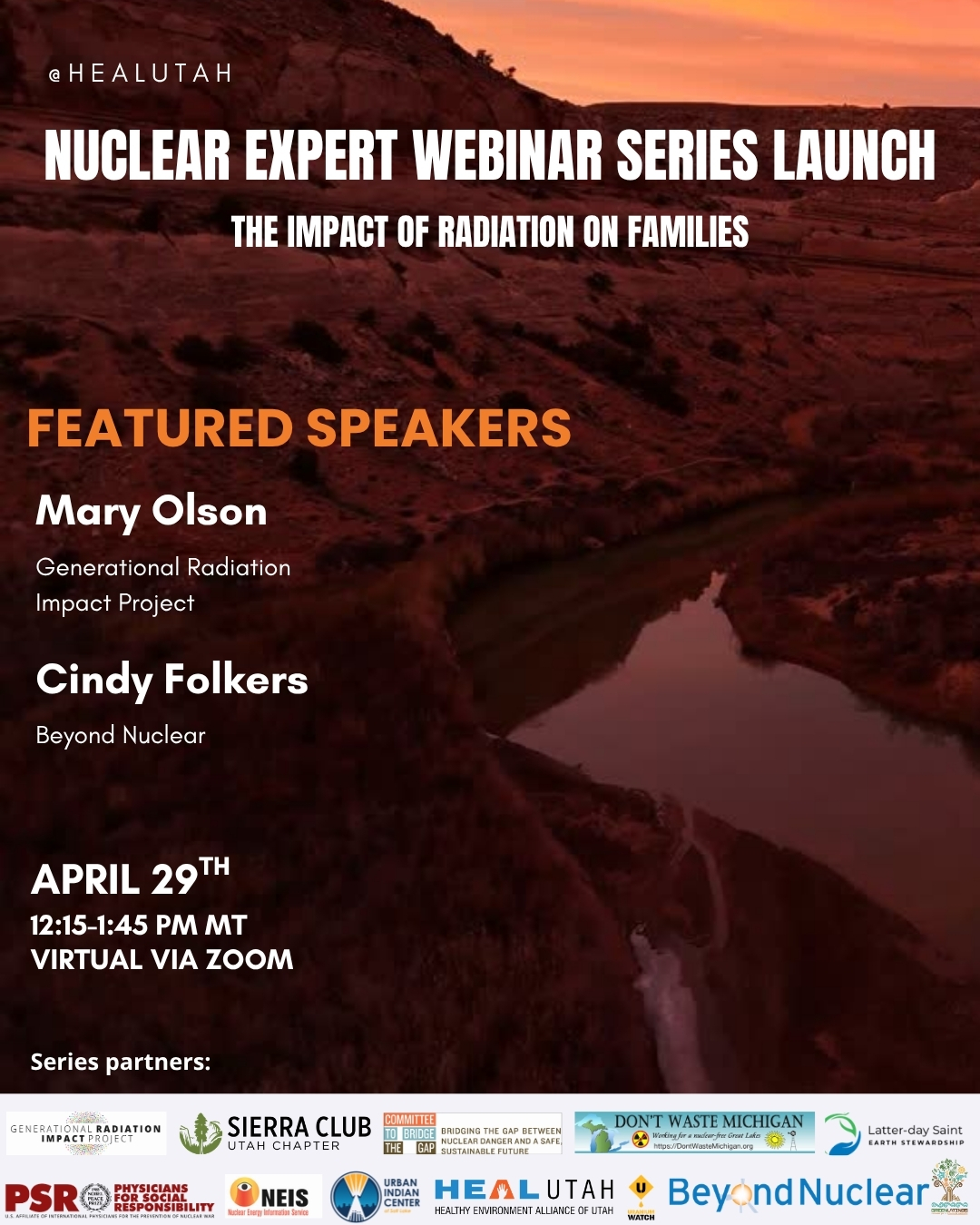
29 April – Nuclear Expert Webinar #1 – Radiation Impacts on Families with Mary Olson and Cindy Folkers
- 12:15 PM MT – 1:45 PM MT
- Location: Virtual – REGISTER TODAY

4 May -West Suburban Peace Coalition to discuss Iran war at May Educational Forum
Monday, May 4, 7:00 – 8:00 PM Central Standard Time
Title: : How Trump’s Narrative Tries to Shape the Reality of the War on Iran.
Contact Walt Zlotow, zlotow@hotmail.com 630 442 3045 for further information
14 May – online event From Bombs to Data Centres: the Face of Nuclear Colonialism

Pine Ridge Uranium is the real threat, not Tehran- Tell Burgum: Stop the Extraction.
Chernobyl: The Lost Tapes – A good documentary on Chernobyl on SBS available On Demand for the next 3 weeks– https://www.sbs.com.au/ondemand/tv-program/chernobyl-the-lost-tapes/2352741955560
To see nuclear-related stories in greater depth and intensity – go to https://nuclearinformation.wordpress.com
-
Archives
- May 2026 (12)
- April 2026 (356)
- March 2026 (251)
- February 2026 (268)
- January 2026 (308)
- December 2025 (358)
- November 2025 (359)
- October 2025 (376)
- September 2025 (257)
- August 2025 (319)
- July 2025 (230)
- June 2025 (348)
-
Categories
- 1
- 1 NUCLEAR ISSUES
- business and costs
- climate change
- culture and arts
- ENERGY
- environment
- health
- history
- indigenous issues
- Legal
- marketing of nuclear
- media
- opposition to nuclear
- PERSONAL STORIES
- politics
- politics international
- Religion and ethics
- safety
- secrets,lies and civil liberties
- spinbuster
- technology
- Uranium
- wastes
- weapons and war
- Women
- 2 WORLD
- ACTION
- AFRICA
- Atrocities
- AUSTRALIA
- Christina's notes
- Christina's themes
- culture and arts
- Events
- Fuk 2022
- Fuk 2023
- Fukushima 2017
- Fukushima 2018
- fukushima 2019
- Fukushima 2020
- Fukushima 2021
- general
- global warming
- Humour (God we need it)
- Nuclear
- RARE EARTHS
- Reference
- resources – print
- Resources -audiovicual
- Weekly Newsletter
- World
- World Nuclear
- YouTube
-
RSS
Entries RSS
Comments RSS
 nuclear-news