Another city leaves small nuclear reactor project – unanimous vote by Murray City Council, Utah
 Murray City votes to withdraw from nuclear power project, Salt Lake Tribune, By Taylor Stevens– 23 Oct 20, The Murray City Council voted unanimously this week to back out of a first-of-its-kind nuclear power project that has the support of a number of Utah municipalities.
It’s the fourth Utah city to exit the small modular nuclear reactor pursuit over the last few months amid pressure from opponents who have raised concerns about environmental and financial risks of the proposed 12-module plant, which would be located at Idaho National Laboratory in Idaho Falls and produce a total 720 megawatts of electricity.
During the city’s Tuesday council meeting, Murray Power Manager Blaine Haacke outlined several advantages of the project, including the potential that it could fill the energy gap that will be left when the Hunter Power Plant in Castle Dale goes offline in the coming years.
He told the council that he expects UAMPS will carry the project forward without Murray. But he said the association’s members will meet during the first week of November to make a final decision, after they find out how many cities have exited.
Largest wildfires in Colorado’s history
|
Colorado is fighting its largest wildfire in history. Other massive blazes are close behind.Three of the four largest fires in Colorado history have ignited since July. Vox , By Umair Irfan Oct 22, 2020 The Cameron Peak Fire near Rocky Mountain National Park has become the largest wildfire in Colorado history, growing to almost 207,000 acres this week. The fire was 55 percent contained as of Wednesday afternoon.
It was quickly joined this week by the East Troublesome Fire to its southwest. Over a period of 24 hours, the East Troublesome Fire grew six times in size to more than 125,000 acres as of Thursday. The blaze, which is burning at an elevation of 9,000 feet and across both sides of the continental divide, forced Rocky Mountain National Park to close. It’s now the fourth-largest fire in Colorado history. ……………
What’s fueling Colorado’s fires this yearIt’s an increasingly familiar story. Like the epic wildfires this year across California, Oregon, and Washington, the wildfires in Colorado arose amid a year of extreme heat and dryness. Heat waves baked the state this summer and persisted into the fall. The high temperatures increased the evaporation of moisture from vegetation, leaving plants dry and ready to burn. There was also less rainfall. Over the past month, precipitation was less than 10 percent of what is typical. “By the end of September, nearly 100% of the state was experiencing some level of drought, up from 51% since the beginning of the calendar year,” according to the Colorado Climate Center’s Monthly State of the Climate report. The state is on track to have its second-driest year on record……….
r, humans have been making fire risks worse. That’s in part due to climate change, which is changing weather patterns and driving some of the aridity in Colorado’s forests. “Our 2020 wildfire season is showing us that climate change is here and now in Colorado,” said Jennifer Balch, director of the Earth Lab and an associate professor of geography at the University of Colorado Boulder, in an email. “Warming is setting the stage for a lot of burning across an extended fire season.”…………. https://www.vox.com/2020/10/19/21522994/cameron-peak-calwood-colorado-wildfire-fire-record-east-troublesome-lefthand-canyon
|
|
USA Nuclear Regulatory Commission to effectively deregulate massive amounts of radioactive wastes

PEER 21st Oct 2020, The Nuclear Regulatory Commission is finalizing a year-long drive to functionally deregulate disposal of massive amounts of radioactive waste.
NRC’s plan would allow commercial nuclear reactors to dump virtually all their radioactive waste, except spent fuel, in local garbage landfills, which are designed for household trash not rad-waste, according to commentsfiled today by Public Employees for Environmental Responsibility (PEER).
https://www.peer.org/deregulation-rad-waste-disposal-plows-ahead/
Jesuit priest sentenced for peacful civil disbedience in protest against nuclear weapons
 JESUIT FR. STEVE KELLY SENTENCED FOR NONVIOLENT CIVIL DISOBEDIENCE AT U.S. NUCLEAR WEAPON FACILITY JESUIT FR. STEVE KELLY SENTENCED FOR NONVIOLENT CIVIL DISOBEDIENCE AT U.S. NUCLEAR WEAPON FACILITY
Ignation Solidarity Network, BY ISN STAFF | October 22, 2020 Father Steve Kelly, S.J., a 71-year-old Jesuit priest and member of the nonviolent civil disobedience group that came to be known as the “Kings Bay Plowshares 7,” was sentenced by a U.S. District Court judge to 33 months in jail, three years’ probation and restitution fees on October 15. Due to the fact that Fr. Kelly already served 30 months and under federal law is owed 54 days a year of “good time credit,” his sentencing, in essence, discontinued his incarceration in a federal prison facility. The sentence stems from April 4, 2018, the 50th anniversary of the assassination of Dr. Martin Luther King, Jr., when Fr. Kelly and six other Catholic activists, all lay people—Mark Colville, Clare Grady, Martha Hennessy, Elizabeth McAlister, Patrick O’Neill, and Carmen Trotta—set out late at night to practice their faith and witness for peace among the people working with nuclear weapons inside the U.S. Navy Kings Bay nuclear submarine base on the south Georgia coast. Once inside, they split into three groups to hang banners, pour blood, spraypaint religious sayings, block off an administrative building with crime scene tape, and hammer on replicas of the nuclear missiles deployed on the Trident submarines based at Kings Bay. The declaration of a National Emergency in mid-March led federal courts around the country to curtail business and restrict access. In southeast Georgia, the federal court put most proceedings on hold, first until April 17 and later through the end of May, further delaying the sentencing of the seven. Following a three-day jury trial in October 2019, the seven were convicted of misdemeanor trespass and three felonies: the destruction of government property, depredation of government property on a military installation, and a conspiracy to do these things. Fr. Kelly was returned to the Glynn County Detention Center following the trial. Release on bail was unavailable to Fr. Kelly due to his unresolved federal probation violation from an earlier disarmament action in Washington state. When the group was convicted, the court had set forth a clear timeline for the completion of pre-sentencing reports in anticipation of sentencing last winter. Those deadlines slipped by as draft reports for each of the defendants were prepared…………. In reflecting on the April 4, 2018, action, Fr. Kelly said: “In order to use my limited time, I will, along with others, try to embody the vision given to us through the prophet Isaiah. It is a conversion of weapons to devices for human production. The gift of Isaiah 2:4 is an economic, political, and moral conversion of the violence of nuclear annihilation. With others, I hope to be instruments in God’s hands for showing a way out of the escalation, the proliferation of this scourge of humanity. I feel strongly that Martin Luther King, Jr., would agree with the principle I attribute to Gandhi that we cannot be fully human while one nuclear weapon exists.” [Kings Bay Plowshares 7, Religion News Service] https://ignatiansolidarity.net/blog/2020/10/22/jesuit-fr-steve-kelly-sentenced-for-nonviolent-civil-disobedience-at-u-s-nuclear-weapon-facility/ |
|
The cruel and lonely death of an American nuclear weapons scientist
And if you’re a believer that violent ends produce restless spirits, the Presidio is full up with phantoms as a result.
The most haunted place is said to be Letterman Army Hospital, once the base’s largest medical facility
In looking for Presidio ghost stories, though, we stumbled across a far stranger tale than any haunting: the real-life demise of a nuclear scientist — a chapter of the Cold War, as far as we can tell, untold since 1953.
The brain tumor presented a particular problem for the Atomic Energy Commission: It had the potential to cause erratic behavior and uncontrolled verbal outbursts. They were fearful that as he lost control of his mental faculties, Twitchell would begin spilling nuclear secrets. He knew “as much about atomic energy as any one man,” an anonymous source in the commission would later tell the Oakland Tribune.
So they built a secret ward just for Twitchell. At the cost of $100,000 — nearly $1 million today — construction began at the Letterman Army Hospital in San Francisco’s Presidio for the unusual patient. Once finished, all doctors and nurses who might interact with Twitchell were given rigorous screenings for any national security issues. In the end, only one male nurse was trusted to primarily care for Twitchell. A guard stood watch outside the room at all times.
Unbeknownst to the other military patients at the hospital, a civilian lay dying in his own wing. “He was the hospital’s hush-hush case,” the San Francisco Examiner reported.
An anonymous source told the Tribune this was standard protocol to keep scientists from blabbing while “unbalanced, anesthetized or under the influence of dentists’ ‘laughing gas.'” Although expensive, it was the only way to maintain national security.
How the iconic domes of San Onofre nuclear station will be dismantled

|
|
How and when the twin domes at San Onofre nuclear plant will come down, Key pieces of the reactor vessels will be
 removed via underwater operations San Diego Union Tribune. By ROB NIKOLEWSKI, OCT. 23, 2020 removed via underwater operations San Diego Union Tribune. By ROB NIKOLEWSKI, OCT. 23, 2020
They are perhaps the most distinctive features of the San Onofre Nuclear Generating Station — the pair of containment domes from Units 2 and 3, rising nearly 200 feet above the ground on the northern edge of San Diego County that every motorist sees on the drive along Interstate 5.
But in about six years, the twin domes will be gone — obliterated — provided the schedule holds true for dismantling the now-shuttered plant, known as SONGS. Taking down the domes is part of a much larger project that will remove all but just a few structures at the plant, which produced electricity from 1968 to late 2012 and is being decommissioned by the federal government’s Nuclear Regulatory Commission. Southern California Edison operates the facility but the massive job of taking the plant apart — and removing the heavy equipment inside it — is being done by a general contractor named SONGS Decommissioning Solutions. The group is a joint venture of the Los Angeles-based infrastructure and engineering company AECOM and Energy Solutions, a Salt Lake City firm that specializes in disposing of nuclear material. ……….. The costs for dismantling SONGS will come from about $4.5 billion in existing decommissioning trust funds. The money has been collected from ratepayers and invested in dedicated trusts. According to Edison, customers have contributed about one-third of the trust funds while the remaining two-thirds have come from returns on investments made by the company…….. What will be left at SONGS? When the eight-year dismantlement project is completed, all that will remain will be the two dry storage sites; a security building with personnel to look over the waste; a seawall 28 feet high, as measured at average low tide at San Onofre Beach; a walkway connecting two beaches north and south of the plant, and a switchyard with power lines……. The canisters of nuclear waste remain between I-5 and the Pacific because the federal government has not found a place to put all the used-up commercial fuel that has stacked up at some 121 sites in 35 states. There are some 80,000 metric tons of waste from commercial nuclear plants across the country. SONGS accounts for 1,609 metric tons, or about 3.55 million pounds. https://www.sandiegouniontribune.com/business/story/2020-10-23/twin-domes-at-san-onofre-nuclear-plant-expected-to-come-down-in-2026 |
|
Russian hacking group Energetic Bear have hacked nuclear stations, now threaten USA election
 Russians Who Pose Election Threat Have Hacked Nuclear Plants and Power Grid . The hacking group, Energetic Bear, is among Russia’s stealthiest. It appears to be casting a wide net to find useful targets ahead of the election, experts said. NYT, By Nicole Perlroth, Oct. 23, 2020
Cybersecurity officials watched with growing alarm in September as Russian state hackers started prowling around dozens of American state and local government computer systems just two months before the election.
The act itself did not worry them so much — officials anticipated that the Russians who interfered in the 2016 election would be back — but the actor did. The group, known to researchers as “Dragonfly” or “Energetic Bear” for its hackings of the energy sector, was not involved in 2016 election hacking. But it has in the past five years breached the power grid, water treatment facilities and even nuclear power plants, including one in Kansas………
Energetic Bear typically casts a wide net, then zeros in on a few high-value targets. In Germany and the United States, the group has infected websites popular in the energy sector, downloading malware onto the machines of anyone who visited the sites, then searching for employees with access to industrial systems.
In other attacks, it has hijacked the software updates for computers attached to industrial control systems. It has also blasted targets with phishing emails in search of employees, or co-workers, who might have access to critical systems at water, power and nuclear plants.
And it has done so with remarkable success. A disturbing screenshot in a 2018 Department of Homeland Security advisory showed the groups’ hackers with their fingers on the switches of the computers that controlled the industrial systems at a power plant.
The group has thus far stopped short of sabotage, but appears to be preparing for some future attack. The hackings so unnerved officials that starting in 2018, the United States Cyber Command, the arm of the Pentagon that conducts offensive cyberattacks, hit back with retaliatory strikes on the Russian grid…………… https://www.nytimes.com/2020/10/23/us/politics/energetic-bear-russian-hackers.html
America pushes other nations to withdraw from the Treaty on the Prohibition of Nuclear Weapons
 US urges countries to withdraw from UN nuke ban treaty
UNITED NATIONS (AP) 22 Oct 20 — The United States is urging countries that have ratified a U.N. treaty to ban nuclear weapons to withdraw their support as the pact nears the 50 ratifications needed to trigger its entry into force, which supporters say could happen this week.The U.S. letter to signatories, obtained by The Associated Press, says the five original nuclear powers — the U.S., Russia, China, Britain and France — and America’s NATO allies “stand unified in our opposition to the potential repercussions” of the treaty.
It says the treaty “turns back the clock on verification and disarmament and is dangerous” to the half-century-old Nuclear Nonproliferation Treaty, considered the cornerstone of global nonproliferation efforts.
“Although we recognize your sovereign right to ratify or accede to the Treaty on the Prohibition of Nuclear Weapons (TPNW), we believe that you have made a strategic error and should withdraw your instrument of ratification or accession,” the letter says.
The treaty requires that all ratifying countries “never under any circumstances … develop, test, produce, manufacture, otherwise acquire, possess or stockpile nuclear weapons or other nuclear explosive devices.” It also bans any transfer or use of nuclear weapons or nuclear explosive devices — and the threat to use such weapons — and requires parties to promote the treaty to other countries.
Beatrice Fihn, executive director of the International Campaign to Abolish Nuclear Weapons, the 2017 Nobel Peace Prize-winning coalition whose work helped spearhead the nuclear ban treaty, told The Associated Press Tuesday that several diplomatic sources confirmed that they and other states that ratified the TPNW had been sent letters by the U.S. requesting their withdrawal.
She said the “increasing nervousness, and maybe straightforward panic, with some of the nuclear-armed states and particularly the Trump administration” shows that they “really seem to understand that this is a reality: Nuclear weapons are going to be banned under international law soon.”
Fihn dismissed the nuclear powers’ claim that the treaty interferes with the Nuclear Nonproliferation Treaty as “straightforward lies, to be frank.”
“They have no actual argument to back that up,” she said. “The Nonproliferation Treaty is about preventing the spread of nuclear weapons and eliminating nuclear weapons, and this treaty implements that. There’s no way you can undermine the Nonproliferation Treaty by banning nuclear weapons. It’s the end goal of the Nonproliferation Treaty.”
The NPT sought to prevent the spread of nuclear arms beyond the five original weapons powers. It requires non-nuclear signatory nations to not pursue atomic weapons in exchange for a commitment by the five powers to move toward nuclear disarmament and to guarantee non-nuclear states’ access to peaceful nuclear technology for producing energy.
U.N. Secretary-General Antonio Guterres called the nuclear weapons ban treaty “a very welcome initiative.”
“It is clear for me that we will only be entirely safe in relation to nuclear weapons the day where nuclear weapons no longer exist,” he said in an interview Wednesday with AP. “We know that it’s not easy. We know that there are many obstacles.”
He expressed hope that a number of important initiatives, including U.S.-Russia talks on renewing the New Start Treaty limiting deployed nuclear warheads, missiles and bombers and next year’s review conference of the Nuclear Nonproliferation Treaty, “will all converge in the same direction, and the final objective must be to have a world with no nuclear weapons.”
“That the Trump administration is pressuring countries to withdraw from a United Nations-backed disarmament treaty is an unprecedented action in international relations,” Fihn said. “That the U.S. goes so far as insisting countries violate their treaty obligations by not promoting the TPNW to other states shows how fearful they are of the treaty’s impact and growing support.”
The treaty was approved by the 193-member U.N. General Assembly on July 7, 2017 by a vote of 122 in favor, the Netherlands opposed, and Singapore abstaining. Among countries voting in favor was Iran. The five nuclear powers and four other countries known or believed to possess nuclear weapons — India, Pakistan, North Korea and Israel — boycotted negotiations and the vote on the treaty, along with many of their allies.
The treaty currently has 47 ratifications and needs 50 ratifications to trigger its entry into force in 90 days.
Fihn said there are about 10 countries that are trying very hard to ratify to get to 50, “and we know that there are a few governments that are working towards Friday as the date. … We’re not 100 percent it will happen, but hopefully it will.”
Friday has been an unofficial target because it is the eve of United Nations Day on Oct. 24 which marks the anniversary of the entry into force in 1945 of the U.N. Charter. The day has been observed since 1948 and this year is the 75th anniversary of the founding of the U.N.
Fihn stressed that the entry into force of the treaty will be “a really big deal” because it will become part of international law and will be raised in discussions on disarmament, war crimes and weapons.
“And I think that over time pressure will grow on the nuclear-armed states to join the treaty,” she said.
Two-thirds of voters support Biden climate plan
  Poll: Two-thirds of voters support Biden climate plan, The Hill, BY REBECCA BEITSCH – 10/20/20 New polling indicates Democratic presidential nominee Joe Biden’s climate plan is doing well with voters even as they are split on their support for fracking.Results from a Tuesday survey conducted by The New York Times and Sienna College found that 66 percent of voters said they support Biden’s $2 trillion climate plan. Poll: Two-thirds of voters support Biden climate plan, The Hill, BY REBECCA BEITSCH – 10/20/20 New polling indicates Democratic presidential nominee Joe Biden’s climate plan is doing well with voters even as they are split on their support for fracking.Results from a Tuesday survey conducted by The New York Times and Sienna College found that 66 percent of voters said they support Biden’s $2 trillion climate plan.
Biden has made the plan part of his economic stimulus efforts, a way to create jobs while transitioning to clean energy. He calls for reaching net-zero emissions by 2050, with the electric sector doing so by 2035. President Trump has not released a formal climate plan, and the poll did not cover his position on climate change. But the results also show voters are split on fracking — a favorite talking point of Trump’s. ……. https://thehill.com/policy/energy-environment/521940-poll-two-thirds-of-voters-support-biden-climate-plan |
|
Hard to save the Iran nuclear deal, even if Biden wins the U.S. election.
Even if Biden wins US election, time is running out to save Iran nuclear deal
Events in the US are being watched closely as Iran’s presidential election looms in early 2021, Guardian, Patrick Wintour Diplomatic editor, Wed 21 Oct 2020 Even if Joe Biden triumphs at the polls, Iran’s weakened government may only have a few months to negotiate a revived nuclear deal before facing its own electoral challenge by hardliners who oppose any engagement with the west.
The narrow window has prompted calls for Biden to offer a phased approach to rejoining the Iran nuclear deal abandoned by Donald Trump in 2018, in order to show progress before the Iranian presidential election.
Iran’s reformists and centrists remain severely damaged by the failure of the original agreement to deliver economic benefits to ordinary Iranians.
Once Trump left the deal, he imposed maximum economic pressure on Tehran, blocking Iran’s oil exports, and leaving advocates of engagement with the US struggling to defend their strategy. In a recent interview in Kar Va Kargar the foreign minister Javad Zarif insisted the foreign ministry had not been naive to negotiate with the Americans, but said Trump had “blown up the entire negotiating room”.
Iran’s current president, Hassan Rouhani, was also an advocate of the deal, known as the Joint Comprehensive Plan of Action, but is standing down after two four-year terms. A range of conservatives, including members of the powerful Iranian Revolutionary Guards Corps, are preparing to stand, advocating either closer ties with China or a stronger self-reliant economic policy.
The reformist movement has not yet decided whether to put up a candidate or instead back a technocratic figure such as Ali Larijani, the former Speaker who is currently assisting Rouhani in framing a 25-year strategic partnership with China.
Reformists were trounced in spring parliamentary elections marked by a record low turn-out. The chances of persuading the disillusioned middle class to vote in the presidential election may in part depend on finding a credible candidate who can raise hopes of a resumption of talks with the west.
Biden has so far promised that “if Iran returns to strict compliance with the nuclear deal, the US would rejoin the agreement as a starting point for follow-on negotiations”.
But even if he does win, Biden would not take office until 20 January, leaving only a short time for reformists to convince Iranians that the path of engagement is worth trying again.
Some analysts say a Biden victory could be enough to change the mood in Iran – and certainly the elections are being watched with fascination in Tehran……. https://www.theguardian.com/us-news/2020/oct/21/even-if-biden-wins-us-election-time-is-running-out-to-save-iran-nuclear-deal
Very dubious claims made by proponents of NuScam’s small nuclear reactor plans
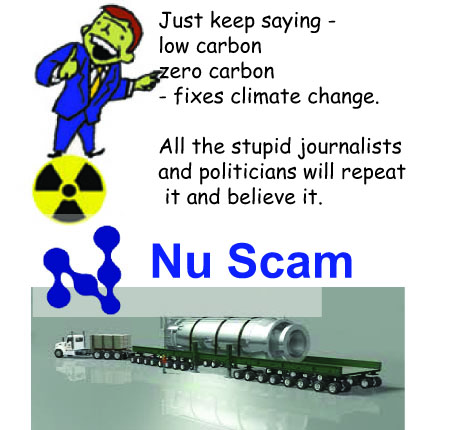 Small Nuclear Reactors Would Provide [a dubious claim] Carbon-Free Energy, but Would They Be Safe? Inside Climate News, Jonathan Moens, -21 Oct 20 Regulators have approved designs for 12 small reactors to be built in Idaho, but opponents say the project is dangerous and too late to fight climate change. “……… Last month, U.S. officials approved NuScale Power’s designs for 12 small nuclear reactors to be built in Boise, Idaho. The reactors could make use of the water, transmission lines and general infrastructure of former coal-powered plants in the West to produce clean energy, said Jose Reyes, co-founder of the company.
NuScale said the energy produced by its reactors would generate enough electricity to power about 50,000 homes across six Western states. The Utah Associated Municipal Power Systems, an energy cooperative, would be the first to build the reactors on a federal site at the Idaho National Laboratory.
The NuScale Power initiative has met with opposition from local environmental groups, who say that nuclear power is a dangerous and unsustainable energy source.
In addition, the highly radioactive waste from nuclear reactors must be securely stored indefinitely to prevent accidents, and contains plutonium and uranium that can be reprocessed into nuclear weapons. “We see this project as a way to create a whole new generation of high level radioactive waste,” said Scott Williams, executive director of Healthy Environment Alliance of Utah, a nuclear watchdog. ……
The designs underwent a public health and safety review by the Nuclear Regulatory Commission. But some scientists think they still aren’t safe enough. In a public statement, Edwin Lyman, director of nuclear power safety with the Union of Concerned Scientists, cited a report by a senior engineer at the Nuclear Regulatory Commission expressing concern that the cooling process might inadvertently cause “catastrophic” core damage to the reactors.
Other scientists worry that NuScale may be getting ahead of itself by not having a planning protocol for a radioactive emergency that affects areas around the site.
“In the event of an accident, the people around there will not have rehearsed how to do an evacuation,” said M.V. Ramana, a professor in the School of Public Policy and Global Affairs at the University of British Columbia. …….
Too Late in a Climate Crisis?
The municipal power systems cooperative still needs to obtain a license to build and begin operating the reactors. To do so, the project will undergo an additional site-specific review to consider the potential ecological, geographic and residential impact the technology may have on the area, said George Griffith, lead technician at the Idaho National Laboratory.
The delay means that while NuScale will be ready to manufacture modular reactors by around 2024, it will take an additional five to six years for them to be operational at the Idaho site, said Reyes.
Some experts, however, question whether 2029 is too late for the technology to be relevant in a time of climate crisis…….
Ramana, of the University of British Columbia, said, “While the overall capital cost [for small modular reactors] might be smaller, they also generate smaller amounts of electricity.” He outlined his concerns in a report released in September urging the Utah energy cooperative to “end their pursuit of small modular reactors.”
Ramana made clear that while devastating incidents associated with nuclear power plants might seem unlikely, we need to remain cautious.
“The lesson we should learn from all the many nuclear and other accidents that have happened with hazardous technologies, is a little bit of humility,” he said. https://insideclimatenews.org/news/20102020/small-nuclear-reactors-carbon-free-energy
60 years since nuclear war very nearly happened
Nearly 60 years ago this week, we were one argument away from nuclear war, Lessons from the Cuban Missile Crisis remain important, yet Americans largely ignore foreign policy. Deseret News, By Arthur Cyr, Columnist Oct 20, 2020 The Cuban Missile Crisis occurred more than a half century ago, but the lessons remain important. Nuclear arms control talks between Moscow and Washington have derailed, and UN arms embargo of Iran has ended.
Current dangers of fatal military miscalculation may equal the height of the Cold War. In the United States, our military presence in the Mideast fuels fitful debate but not sustained discussion of serious strategic risks involved.
During Oct. 22-28, 1962, the Cuba crisis dominated world attention, as Washington and Moscow sparred on the edge of thermonuclear war. Lessons include difficulty of securing accurate intelligence and the unpredictability of events.
On Oct. 14, 1962, U.S. reconnaissance photos revealed the Soviet Union was placing offensive nuclear missiles in Cuba, despite contrary assurances. On Oct. 16, after thorough review and analysis, National Security Adviser McGeorge Bundy informed President John F. Kennedy……….
The initial pressure for military attack dissipated. Kennedy deftly delayed intense pressures for war, while avoiding angry confrontation.
Lessons of the crisis include the importance of disciplined objective intelligence analysis, and communicating with opponents. Then and now, U.S. presidential leadership is essential.
Today, U.S. troops are in the Mideast close to forces from Russia, Iran, Israel, Syria, Turkey and various armed insurgent groups. Yet Americans remain preoccupied with domestic concerns and largely ignore foreign policy.
Cuban Missile Crisis lessons remain important, ignored at great peril.
Arthur I. Cyr is Clausen Distinguished Professor at Carthage College and author of “After the Cold War.” Contact acyr@carthage.edu https://www.deseret.com/opinion/2020/10/20/21525956/cold-war-cuban-missile-crisis-jfk-nuclear-weapons
Alarm about dangerous transit of radioactive material through Fort Worth.
Nuclear Waste Heading to Cowtown? Activists are sounding the alarm about potentially dangerous transit of radioactive material through Fort Worth. Fort Worth Weekly, By Edward Brown October 21, 2020 Like most large U.S. cities, Fort Worth is intersected by multiple rail lines that were first laid well over a century ago. Trains do much of the heavy lifting in this country, and that work sometimes requires carrying hazardous materials that (if released through an accident or leak) could contaminate the surrounding environment with potentially costly and deadly results.
One such fiery derailment occurred last year in Fort Worth when tankers carrying ethanol derailed during heavy rainfall and created a fire that incinerated three horses holed up in a nearby barn. The potential transportation of highly radioactive waste through Fort Worth as part of a proposal by the United States Nuclear Regulatory Commission (NRC) has alarmed local environmental and civic activists who fear that the transit of radioactive materials through Cowtown isn’t worth the risk.
According to the NRC, the proposal would allow transportation of spent nuclear fuel, which is highly radioactive and potentially deadly, from East Coast nuclear power plants to Andrews County, which is located in West Texas near Odessa. The commission recently closed the public comment portion of the proposal, and a document released by the NRC said a final decision would be released by May of next year.
To draw attention to the potential transportation of nuclear waste through Fort Worth, several environmental and civic activists recently held a press conference at Rogers Roundhouse, located north of Fort Worth Zoo and near Davidson Yard, where 50 miles of tracks handle about 1,800 cars a day. ……
Susybelle Gosslee with the League of Women Voters of Texas, a nonpartisan civic organization, said Fort Worth has nothing to gain and everything to lose by allowing radioactive waste to pass near hospitals, schools, families, and children. …….
“There are some times when waste has to be moved 25 miles away but not 2,000 miles away,”…..https://www.fwweekly.com/2020/10/21/nuclear-waste-heading-to-cowtown/
USA: Millions of jobs in clean energy and infrastructure – analysis finds.
“We don’t have to choose between a strong economy or a healthy environment—we can have both,” says an EPI data analyst. Common Dreams, byJessica Corbett, staff writer – 20 Oct 20, Pursuing trade and industrial policies that boost U.S. exports and eliminate the trade deficit while investing $2 trillion over four years in the nation’s infrastructure, clean energy, and energy efficiency improvements could support 6.9 to 12.9 million “good jobs” annually by 2024, according to an analysis published Tuesday.
$40 billion cost to Poland for nuclear power – $18 billion to USA for starters
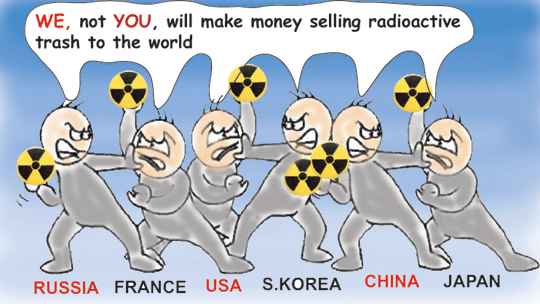 Poland Strikes $18 Billion Nuclear Power Deal With U.S. Oil Price, By Charles Kennedy – Oct 20, 2020, The United States and Poland closed a nuclear power deal potentially worth $18 billion as the Central European country seeks to reduce its reliance on coal and Russian natural gas……….
The agreement closed this week stipulates that over the next 18 months, the parties will develop a program for the construction of the reactors and how they will be financed. Per plans, the first reactors should come online in 2033. The whole program could end up costing Warsaw some $40 billion, of which at least $18 billion would go towards acquiring U.S. nuclear technology, according to a U.S. government official……. https://oilprice.com/Latest-Energy-News/World-News/Poland-Strikes-18-Billion-Nuclear-Power-Deal-With-US.html
1 This Month
26 April – Chernobyl: Inside the Meltdown airs on National Geographic on Sunday 26th April from 4pm
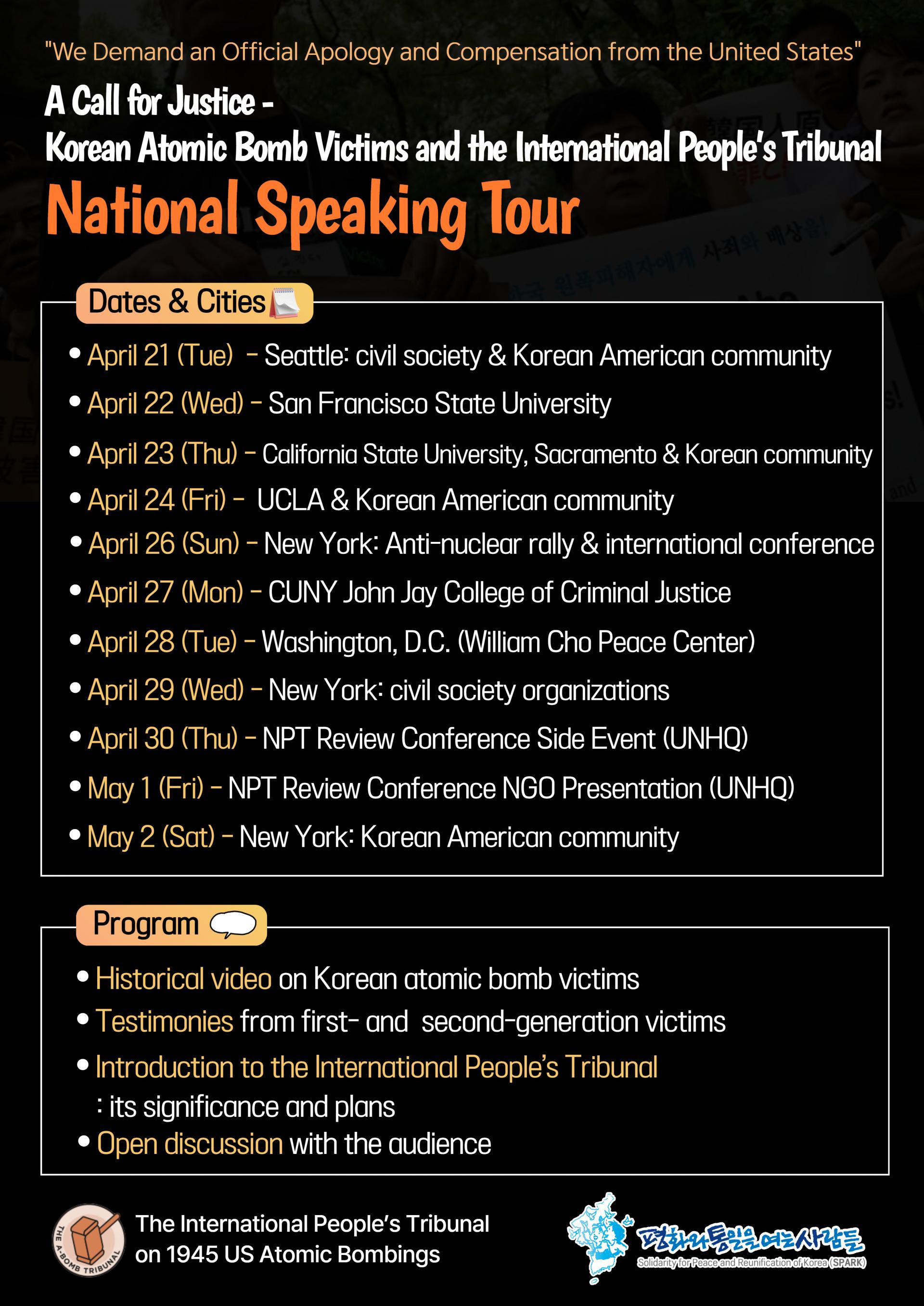
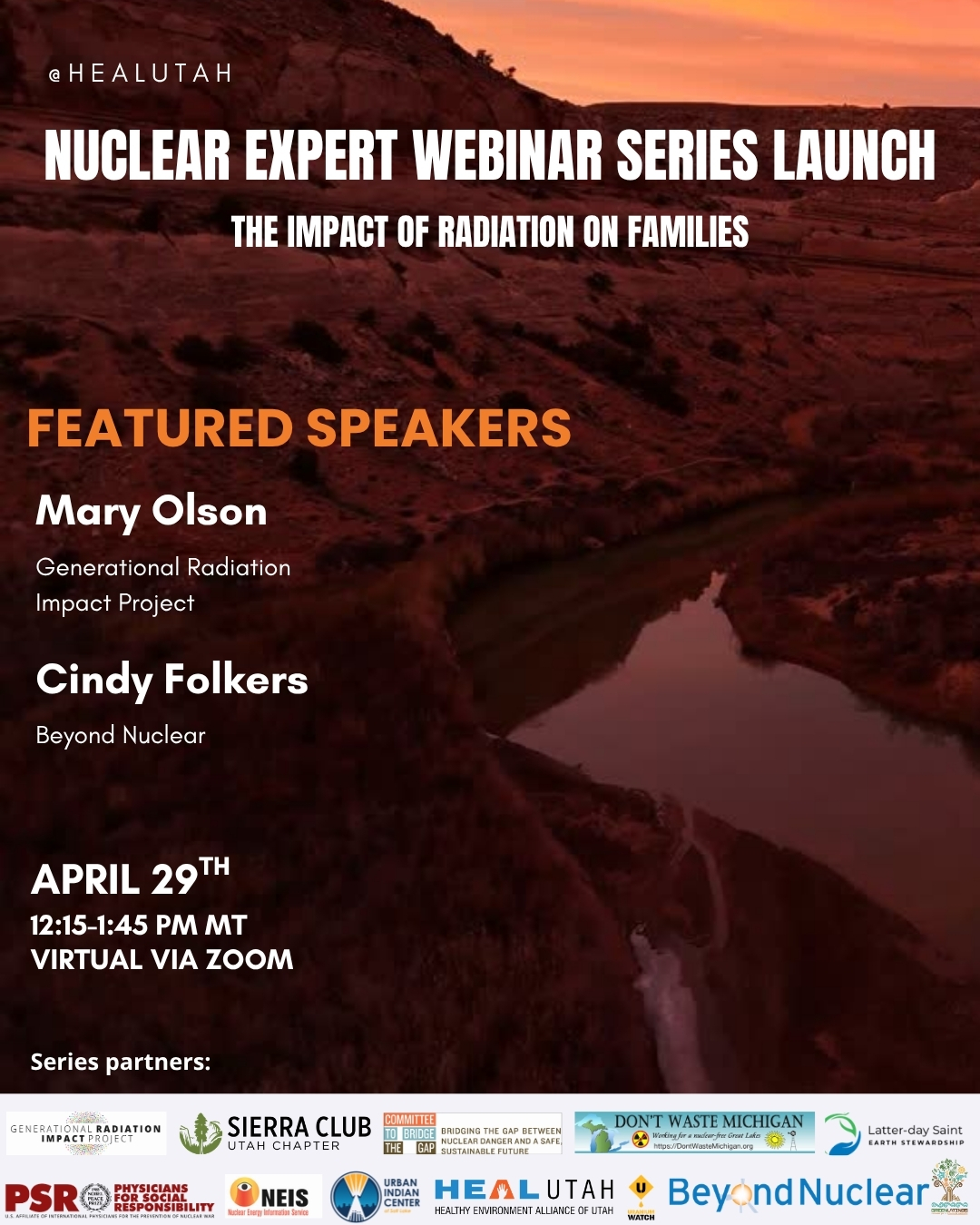
29 April – Nuclear Expert Webinar #1 – Radiation Impacts on Families with Mary Olson and Cindy Folkers
- 12:15 PM MT – 1:45 PM MT
- Location: Virtual – REGISTER TODAY

4 May -West Suburban Peace Coalition to discuss Iran war at May Educational Forum
Monday, May 4, 7:00 – 8:00 PM Central Standard Time
Title: : How Trump’s Narrative Tries to Shape the Reality of the War on Iran.
Contact Walt Zlotow, zlotow@hotmail.com 630 442 3045 for further information
14 May – online event From Bombs to Data Centres: the Face of Nuclear Colonialism

Pine Ridge Uranium is the real threat, not Tehran- Tell Burgum: Stop the Extraction.
Chernobyl: The Lost Tapes – A good documentary on Chernobyl on SBS available On Demand for the next 3 weeks– https://www.sbs.com.au/ondemand/tv-program/chernobyl-the-lost-tapes/2352741955560
To see nuclear-related stories in greater depth and intensity – go to https://nuclearinformation.wordpress.com
-
Archives
- May 2026 (12)
- April 2026 (356)
- March 2026 (251)
- February 2026 (268)
- January 2026 (308)
- December 2025 (358)
- November 2025 (359)
- October 2025 (376)
- September 2025 (257)
- August 2025 (319)
- July 2025 (230)
- June 2025 (348)
-
Categories
- 1
- 1 NUCLEAR ISSUES
- business and costs
- climate change
- culture and arts
- ENERGY
- environment
- health
- history
- indigenous issues
- Legal
- marketing of nuclear
- media
- opposition to nuclear
- PERSONAL STORIES
- politics
- politics international
- Religion and ethics
- safety
- secrets,lies and civil liberties
- spinbuster
- technology
- Uranium
- wastes
- weapons and war
- Women
- 2 WORLD
- ACTION
- AFRICA
- Atrocities
- AUSTRALIA
- Christina's notes
- Christina's themes
- culture and arts
- Events
- Fuk 2022
- Fuk 2023
- Fukushima 2017
- Fukushima 2018
- fukushima 2019
- Fukushima 2020
- Fukushima 2021
- general
- global warming
- Humour (God we need it)
- Nuclear
- RARE EARTHS
- Reference
- resources – print
- Resources -audiovicual
- Weekly Newsletter
- World
- World Nuclear
- YouTube
-
RSS
Entries RSS
Comments RSS
 nuclear-news