Senator Markey urges the NRC to improve safety and security of nuclear decommissioning process.
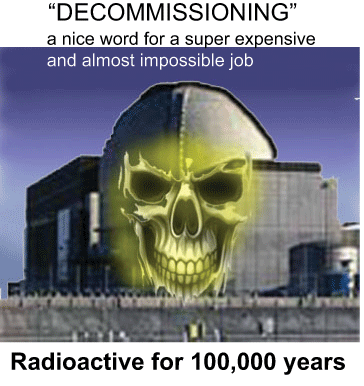
SENATOR MARKEY URGES THE NRC TO IMPROVE SAFETY AND SECURITY OF NUCLEAR DECOMMISSIONING PROCESS, https://www.markey.senate.gov/news/press-releases/senator-markey-urges-the-nrc-to-improve-safety-and-security-of-nuclear-decommissioning-process In a letter, Markey requests stricter safeguards as 23 nuclear power plants, including the Pilgrim Nuclear Power Station, undergo decommissioning in the U.S.
Washington (June 25, 2021) – Senator Edward J. Markey (D-Mass.), Chair of the Subcommittee on Clean Air, Climate, and Nuclear Safety in the Senate Committee on Environment and Public Works, today sent a letter to the Nuclear Regulatory Commission (NRC), urging the agency to address safety and security concerns before approving the draft rule, “Regulatory Improvements for Production and Utilization Facilities Transitioning to Decommissioning,” and putting out a proposed rule for public comment. “The Nuclear Regulatory Commission must prioritize the safety and security of the nuclear plants it oversees,” said Senator Markey. “As currently written, the proposed rule would allow the NRC and plant operators to cut corners on safety and limit public participation, which is critical to the decommissioning process. The communities around our nuclear plants deserve better than this.”
A copy of the letter can be found HERE.In his letter, Senator Markey requests that the NRC:
- propose a defined and exact set of rules on how plants should navigate the decommissioning process;
- improve public participation during the NRC’s consideration of any license transfers requested in connection with a nuclear plant’s decommissioning process;
- acknowledge and address the fact that spent fuel could remain onsite for long periods of time, perhaps indefinitely; and
- reevaluate its proposal to reduce financial protections for offsite and onsite liability claims for plants that are in the process of decommissioning.
Senator Markey also requests that the NRC ensure that the twenty-three nuclear reactors, such as Pilgrim Nuclear Power Station, that have already begun the decommissioning process adapt their operations to reflect stronger standards. The NRC should also establish the proper checks to ensure the safety and security of the eight additional nuclear power plants that have already declared their intent to decommission. Senator Markey has consistently urged the NRC to prioritize safety and public participation in the nuclear decommissioning process. Last Congress, Senator Markey reintroduced the Dry Cask Storage Act, which was aimed at improving the storage of spent nuclear fuel at nuclear plants across the nation.
As the Pilgrim Power Station commenced its decommissioning process, Senator Markey continued to fight to ensure that the NRC prioritized safety and public participation. In August 2019, Senators Markey and Elizabeth Warren (D-Mass.), and Representative William Keating (MA-09) wrote to the NRC to urge it to delay ruling on the proposed license transfer for Pilgrim from Entergy Nuclear Operations, Inc. to Holtec International until after the Commission considered and ruled on extant petitions and motions. In October 2018, Senator Markey and Rep. William demanded clear details from Holtec and Entergy about the safety and security issues involved in the ownership, transfer, and eventual decommissioning of the power plant.
U.S. Democrats launch bill allowing existing nuclear plants tax credit

U.S. Democrats launch bill allowing existing nuclear plants tax credit
Reuters WASHINGTON, June 24 (Reuters) 25 June 21, – Five Democrats in the U.S. Senate introduced a bill on Thursday that would allow some existing nuclear power plants to receive a tax credit equal to an incentive already given to operators of wind power turbines.
The bill, led by Senator Ben Cardin, provides a production tax credit of $15 per megawatt hour for existing nuclear plant owners or operators in states such as New York, Illinois, and Pennsylvania which have deregulated power markets. Cardin’s state, Maryland, has two reactors at Exelon Corp’s (EXC.O) Calvert Cliffs plant…………………….. https://www.reuters.com/world/us/us-democrats-launch-bill-allowing-existing-nuclear-plants-tax-credit-2021-06-24/
Physicians raise doubts on environmental and safety risks of extending life of Wisconsin’s ageing nuclear plant. Federal Licensing Board to consider.
Federal Licensing Board Considers Challenge To Wisconsin’s Last Nuclear Plant
Wisconsin-Based Physicians Group Argues Point Beach Nuclear Plant Needs To Address Environmental Impact, Safety Concerns, Wisconsin Public Radio, By Hope Kirwan, Wednesday, June 23, 2021,
A Wisconsin advocacy group argued Tuesday that the state’s last operational nuclear power plant shouldn’t have their license extended given the environmental impact and safety concerns about the aging infrastructure.
Physicians for Social Responsibility Wisconsin (PSR), an anti-nuclear nonprofit group of health care professionals based in Madison, filed a petition in March challenging the application to renew Point Beach Nuclear Plant’s licenses for an additional 20 years.
The Two Rivers power plant is owned by NextEra Energy and its current licenses expire in 2030 and 2033.
The U.S. Nuclear Regulatory Commission’s Atomic Safety and Licensing Board held a remote hearing Tuesday to consider the nonprofit group’s challenge.
Terry Lodge, an attorney representing PSR, argued the nuclear power plant has caused “50 years of carnage” to fish, fish larvae and some migratory birds because the plant pulls water from Lake Michigan.
“There’s considerable local kill that occurs,” Lodge said during the hearing. “So long as this system is allowed to operate as it does, it is inevitable, with the uptake of approximately a billion gallons a day for purposes of cooling the two units at Point Beach.”
Lodge also claimed NextEra Energy didn’t adequately consider utility-scale solar energy systems as an alternative to continuing to operate the nuclear power plant. They argue solar technology will continue to progress before Point Beach’s current license expires and will be a more environmentally-friendly alternative to nuclear power.
“There is a fixation that is manifest in the Point Beach application that centralized, large baseload power units are somehow the most satisfactory and effective way of addressing the electric power needs in their jurisdiction. That is very false and in fact, Point Beach is an obstacle to the future,” Lodge said.
Lodge argued the 50-year-old plant hasn’t done sufficient testing or safety improvements to ensure there is a low probability of a reactor or turbine failure……..
After several hours of questioning both the utility and the doctors’ group during Tuesday’s hearing, the three-member licensing board is expected to issue a decision within 45 days. https://www.wpr.org/federal-licensing-board-considers-challenge-wisconsins-last-nuclear-plant
Duke Energy planning for a fleet of 80 year-old nuclear reactors
Duke Wants to Run Its Nuclear Plants Until They’re 80 Years Old, 22 June 2021,
- Joins Exelon, Dominion, NextEra to run world’s oldest fleet
- Duke has 11 reactors at six sites in North and South Carolina
One of the biggest power companies in the U.S., is planning to run its fleet of 11 nuclear reactors until they’re 80 years old.
The company filed an application with the U.S. Nuclear Regulatory Commission to renew the license for its Oconee power plant for 20 years, Charlotte-based Duke said in statement Monday. The South Carolina facility began producing power in 1973 and the extensions would keep the three reactors in service until 2053 and 2054.
The company plans to submit similar extension requests for its five other nuclear plants in the Carolinas, which all went into service in the 1970s and 1980s. Duke is part of a growing number of U.S. nuclear owners that are planning to keep their reactors in service for eight decades. Exelon Corp., Dominion Energy Inc. and NextEra Inc. have already been granted similar extensions, creating what will eventually be the world’s oldest nuclear fleet……….
Justice demanded for the ‘Atomic Marines’ of America’s botched Bikini Atoll nuclear test
The ‘Atomic Marines’ of America’s botched Bikini Atoll nuclear test demand justice. After being sworn to secrecy about their Cold War mission, the men are now finally speaking out ahead of ‘Burning Sky’, a documentary which premieres on PBS America on Wednesday 23 June. As part of a series of top-secret nuclear tests codenamed Operation Castle, on 1 March 1954 the US military carried out a trial known as “Castle Bravo”, detonating a 15-megaton hydrogen bomb on Bikini Atoll in the Marshall Islands. Delivered to the West Pacific on the USS Curtiss by marines who had taken an oath of secrecy, the device was 1,000 times more powerful than the bomb dropped on Hiroshima in 1945 – and, due to an error in calculation, two-and-a-half times more destructive than expected. iNews 23rd June 2021 https://inews.co.uk/news/long-reads/the-atomic-marines-of-americas-botched-bikini-atoll-nuclear-test-demand-justice-1066321 |
Nuclear Regulatory Commission launches special investigation at Southern Georgia Vogtle 3 nuclear unit
U.S. NRC launches investigation at Southern Georgia Vogtle 3 nuclear unit, June 21 (Reuters) – The U.S. Nuclear Regulatory Commission (NRC) said Monday it launched a special inspection at Southern Co’s (SO.N) Vogtle nuclear power plant in Georgia to identify what led to remediation work at the third unit, which is under construction.
The NRC said its team will focus on the electrical cable raceway system, which is designed to prevent a single event from disabling redundant safety-related equipment.
Southern has said the two units under construction at Vogtle, which are billions of dollars over budget and years behind schedule, were on track to enter service next year with Unit 3 in January and Unit 4 by its regulatory-approved in service date of November 2022. …………
When Georgia approved the Vogtle expansion in 2009, the two 1,117-megawatt Westinghouse AP1000 reactors were expected to cost about $14 billion and enter service in 2016 and 2017.
Some analysts estimate costs have ballooned to more than $27 billion due to delays related to a nuclear accident at Japan’s Fukushima plant in 2011 and the 2017 bankruptcy of Westinghouse, the project’s former contractor.
Southern estimated the capital cost for its 45.7% share of the new Vogtle reactors at about $8.7 billion.Reporting by Scott DiSavino Editing by Marguerita Choy https://www.reuters.com/business/energy/us-nrc-launches-investigation-southern-georgia-vogtle-3-nuclear-unit-2021-06-21/
Biden and Putin agree: ‘Nuclear war cannot be won and must never be fought’
Biden and Putin agree: ‘Nuclear war cannot be won and must never be fought’ DW, 17 June 21
US President Joe Biden and Russian President Vladimir Putin have concluded a high-stakes summit aimed at cooperation but dominated by deep disagreements.
US President Joe Biden and his Russian counterpart Vladimir Putin have ended their highly anticipated summit in Geneva.
The leaders’ first in-person meeting since Biden became president took place at a lakeside villa amid soaring tensions between their two countries.
As talks ended after less than the five hours either side thought they would need, Biden gave a thumbs up. Members of the US team said the meeting had been “quite successful.”
After the meeting, the two sides released a joint statement on one of the main topics of discussion, nuclear proliferation. The statement read, “Nuclear war cannot be won and must never be fought.”
DW Moscow correspondent Emily Sherwin said, “Biden managed to walk a fine line with Putin,” recognizing Russia’s desire to be seen as a major geopolitical power.
The joint US-Russian statement said progress on shared goals could be achieved, “even in periods of tension,” going on to state, “The United States and Russia will embark together on an integrated bilateral Strategic Stability Dialogue in the near future that will be deliberate and robust.”
The statement added that the countries “seek to lay the groundwork for future arms control and risk reduction measures.” …………………… https://www.dw.com/en/biden-and-putin-agree-nuclear-war-cannot-be-won-and-must-never-be-fought/a-57921072
U.S. Space Force wants to use directed-energy weapons for space superiority,
 |
The Space Force wants to use directed-energy weapons for space superiority,
|
Nathan Strout, 17 June 21, WASHINGTON — The head of the Space Force acknowledged that the U.S. is developing the “appropriate” directed-energy systems to maintain American space superiority, although he declined to provide details in the unclassified setting of a June 16 congressional hearing.
Noting that directed-energy systems could be a possible defensive tool for American satellites, Rep. Jim Langevin, D-R.I., asked Chief of Space Operations Gen. Jay Raymond whether the United States was adequately developing a directed energy portfolio “to be an effective capability for space dominance.”
“Yes sir, we are,” Raymond responded, suggesting that they discuss the issue in more detail in a classified setting. “We have to be able to protect these capabilities that we rely so heavily on.”
n a statement to C4ISRNET, a Space Force spokesperson said, “General Raymond has stated many times that China and Russia have directed energy capabilities that are designed to damage or destroy our satellites. His response to Congressman James Langevin’s question was confirming that our architecture developments in the face of these threats are appropriate.”
The Missile Defense Agency has explored using space-based lasers to intercept ballistic missiles in the past, and other nations have fielded ground-based laser dazzling weapons that can blind on orbit sensors. However, the Space Force has been effectively mum on what weapon systems — conventional or directed energy — it is developing to protect its satellites or defeat enemy satellites. Raymond’s acknowledgement at the hearing might be the first time he’s publicly confirmed the directed energy systems are under development.
The government cited the development of anti-satellite (ASAT) weapons by China and Russia as a justification for the creation of Space Command and the Space Force, and since their establishment military space leaders have been quick to criticize ASAT development and testing. U.S. Space Command’s Gen. James Dickinson has heavily criticized direct-ascent missile tests by Russia, which demonstrated the ability to take out satellites in low Earth orbit and the potential to cause dangerous space debris. Perhaps more concerning is a mysterious Russian satellite that has shown the ability to fire a projectile in space. Raymond refers to the spacecraft as an on-orbit weapon system.
Russia has made space a war-fighting domain by testing space-based and ground-based weapons intended to target and destroy satellites. This fact is inconsistent with Moscow’s public claims that Russia seeks to prevent conflict in space,” said Dickinson after a Russian ASAT test in December. “Space is critical to all nations. It is a shared interest to create the conditions for a safe, stable and operationally sustainable space environment.”
However, the Space Force — and the Air Force before it — have always been secretive about what ASAT weapons the U.S. military has or is developing. The one with the most public details is the Counter Communications System, a transportable system that can jam enemy satellites. And while the Air Force is developing laser weapons, it’s not clear what plans — if any — there are to attach them to space systems or direct them at enemy satellites. The U.S. also has missiles that can reach satellites in low Earth orbit.
Reports from the intelligence community and observers have highlighted the development of kinetic weapons — such as those mentioned above — as well as non-kinetic weapons — such as ground-based jammers or laser systems that can effectively blind satellite sensors — by nations deemed American adversaries.
In a report earlier this year, the Center for Strategic and International Studies suggested that the Space Force develop orbital laser weapons to defend American satellites. Titled “Defense Against the Dark Arts in Space,” the report lays out the various types of ASAT weapons and describes several ways the Space Force could defend against them. That includes passive defenses, like building a redundant space architecture that could survive the loss of one or even multiple satellites, and active defenses, such as satellite-mounted lasers that could blind incoming threats.
The U.S. has invested heavily in building passive defenses, such as a distributed architecture like the one described in the report, but it’s less forthcoming on its active defenses. Other nations are less secretive. Most notably, France has stated that it could equip its satellites with weapons — possibly lasers — to defend themselves from adversaries.
While Raymond’s brief comments didn’t give any insight into what the U.S. is developing in regards to directed energy systems for space, they didn’t rule out the types of weapons laid out in the CSIS report.
“It was a limited exchange, but the context of the statements and the statements themselves certainly leave the door open to nonkinetic defensive space capabilities of some kind,” said Todd Harrison, director of the CSIS Aerospace Security Project. “As we noted in our report, on-board electronic countermeasures, such as laser dazzlers and radar jammers, can be an effective way to defend satellites against certain types of kinetic attacks. And it has the advantage of protecting satellites without producing space debris, which is important to the long-term viability of the space domain for all users, not just the U.S. military.”
Renewable energy consumption grew in 2020 as fossil fuels and nuclear shrank.

Sunrise brief: Renewable energy consumption grew in 2020 as fossil fuels and nuclear shrank, PV Magazine , 17 June 21,
Also on the rise: Black & Veatch unit sets financing for 137 MW Texas project, Rockefeller Foundation partners to fund distributed renewable projects in Africa, and DroneBase closes a funding round as it expands its solar presence.JUNE 16, 2021 DAVID WAGMAN Consumption of renewable energy grew for the fifth year in a row in 2020, reaching a record high of 11.6 quadrillion British thermal units (Btu), or 12% of total U.S. energy consumption.
The Energy Information Administration (EIA) reported the data and said that renewable energy was the only source that increased in 2020 from 2019; fossil fuel and nuclear consumption declined.
Hydroelectric power accounted for about 22% of U.S. renewable energy consumption. Consumption has remained relatively flat since the 1970s, but fluctuates with seasonal rainfall and drought conditions.
Financing set for Texas solar project
Black & Veatch unit Diode Ventures said it reached financial close on the Grizzly Ridge Solar Project, a 137.7 MW solar project located in Hamilton County, Texas, southwest of Fort Worth. The project was co-developed with RKB Energy. Details of the financing were not disclosed.
Once complete, Grizzly Ridge will provide energy to the ERCOT North Zone, a growing economy and power market where there is high demand for all forms of electricity.
The project has an executed interconnection agreement with Brazos Electric Cooperative, the transmission service provider. The area will undergo an upgrade from 69 kV to 138 kV. Diode also is in discussions to add an on-site battery energy storage system to the project.
Rockefeller Foundation partners to bolster renewables
The International Finance Corp., the private sector arm of the World Bank Group, and The Rockefeller Foundation announced a partnership to deploy $150 million of capital in blended finance to leverage up to $2 billion of private sector investment in distributed renewable energy.
The two will prioritize countries in Sub-Saharan Africa and other regions, where both organizations have identified immediate opportunities.
By blending philanthropic and private investment funding, the Rockefeller Foundation and IFC hope to de-risk capital investment in distributed renewable projects in emerging markets and help to address global energy access needs.
An initial “rapid deployment” phase will distribute $30 million in blended concessional finance and grant capital to leverage an active pipeline of distributed renewable energy projects developed by IFC. The funding will go toward IFC’s prototype scaling mini-grid program in addition to distributed renewable energy generation, battery energy storage, and other clean energy technologies to facilitate access………. https://pv-magazine-usa.com/2021/06/16/sunrise-brief-renewable-energy-consumption-grew-in-2020-as-fossil-fuels-and-nuclear-shrank/
Countering a love letter to the nuclear industry

We’re not in the business of debating paid shills.
Countering a love letter to the nuclear industry https://thecoastnews.com/commentary-countering-a-love-letter-to-the-nuclear-industry/by commentaryJune 18, 2021
By Bart Ziegler
In his May 27 commentary, “Correcting the record on SONGS,” Al Bates writes a love letter to the nuclear industry. Bates fiercely defends the safety measures at San Onofre’s nuclear waste storage facilities. This impassioned defense comes from — you guessed it — a career man in the nuclear industry who took that nuclear engineering degree straight to San Onofre for a job starting in 1980.
We’re not in the business of debating paid shills.
But we stand by the point we made in April to the Encinitas Environmental Commission — that San Onofre needs a facility where nuclear waste canisters can be repaired and replaced without exposing the environment to deadly, radioactive contamination.
This month, to Protect Our Coast, we are bringing Southern California Edison and the California Coastal Commission to court to demand such a facility. Call it a Plan B. Find out how you can support this case by visiting our website.
While Bates and company are quick to obfuscate with technical hairsplitting, we present simple truths:
- Edison is storing 3.6 million pounds of spent nuclear fuel just 100 feet from the ocean;
- Sea levels are rising;
- Climate change increases risks associated with nuclear waste storage;
- Waste canisters at San Onofre are prone to corrosion and cracking;
- No one has a plan to move the waste; and
- Scientific information that Bates says we’re missing can be found on our website.
Learn more at www.samuellawrencefoundation.org. Bart Ziegler is president of the Samuel Lawrence Foundation.
Tough when even a pro nuclear voice has to deplore the corruption in the nuclear industry
FirstEnergy Scandal Could Do Irreparable Harm To Nuclear Power. Forbes , 16 June 21,
Ohio’s Republican-dominated state legislature stood firm against its former speaker of the house: Rep. Larry Householder, who was indicted last July along with others for allegedly taking bribes to protect the state’s nuclear power industry. Two of the accused have already pled guilty. The beneficiary of the $1 billion state bailout, FirstEnergy FE-1.6% Corp., is reportedly in talks with prosecutors.
Unfortunately for the nuclear industry, this event cannot be viewed in isolation: it will have a rippling effect that will no doubt jar an industry that is perpetually trying to regain its balance. Once the case fully comes to light, the fallout from it could be much worse than any preceding event — a reference to Three Mile Island and the San Onofre Nuclear Station in Southern California,
“FirstEnergy also admits it paid $250,000 to Generation Now in March of 2017″ when the alleged scheme began, says the Energy and Policy Institute. Altogether, the utility admits to paying $56.6 million. “Longstreth and Generation Now were both indicted alongside Householder last year, and have since pleaded guilty to participating in a racketeering conspiracy.”
Prosecutors allege that “Company A” is at the heart of the matter — an entity that everyone knows: FirstEnergy. It is now alleged to have taken monies from its regulated transmission and distribution units in multiple states and to have given it to this shadowy group called Generation Now. ………
At issue is an Ohio law calling for a $1.3 billion rescue package — a measure that essentially taxes every electricity consumer and then directs that money to bail out FirstEnergy’s nuclear operations. The $60 million alleged bribes also helped beat back a voter initiative that would have thrown out that law.
The Damage Done
FirstEnergy, realizing this event has soiled its reputation, fired some key executives — ranging from the ethics officer to the chief executive officer, Charles Jones. Prosecutors alleged that Jones and Householder had 84 phone contacts between 2017 and 2019. While both men deny wrongdoing, FirstEnergy’s annual financial filings said that it was discussing a “deferred prosecution” — an agreement in which prosecutors grant amnesty if certain requirements are met. For starters, the utility would have to pay back customers for the monies it took from them and then misappropriated.
“This is likely the largest bribery, money laundering scheme ever perpetrated against the people of the state of Ohio,” said then-U.S. Attorney David DeVillers, at the time of the indictments. “This was bribery, plain and simple. This was a quid pro quo. This was pay to play.” The prosecution alleges that the payments were tantamount to “bags of cash” that went unregulated and unreported. …..
U.S. wants nuclear deal done before Iran’s new president takes power
U.S. wants nuclear deal done before Iran’s new president takes power, Dave Lawler Axios, 17 June 21, The Biden administration wants to finalize a deal with Iran to return to the 2015 nuclear deal in the six weeks remaining before a new Iranian president is inaugurated, a U.S. official tells Axios.
Key quote: The official said it would be “concerning” if talks dragged on into early August, when Iran’s transition is due to take place. “If we don’t have a deal before a new government is formed, I think that would raise serious questions about how achievable it’s going to be,” the official said.
Driving the news: Conservative judiciary chief Ebrahim Raisi, a close ally to Supreme Leader Ali Khamenei, is the clear favorite to win Friday’s presidential election in Iran. No prominent members of the reformist camp were permitted to run, meaning the more moderate President Hassan Rouhani will almost certainly hand power to a hardliner.
- Analysts and some diplomats involved in the negotiations have long said it would be easier to reach a deal with the outgoing administration than with a newly inaugurated government, particularly one led by Raisi.
- Six rounds of talks have been held so far in Vienna, with the U.S. not in the room but negotiating indirectly through EU intermediaries.
State of play: Iran’s top negotiator, Abbas Araghchi, said this week that while a deal wouldn’t be possible in the current round of talks, Iran had no interest in “wasting time” and the elections wouldn’t be a factor………….https://www.axios.com/us-iran-nuclear-deal-talks-raisi-inauguration-ed00555e-db84-4d26-9e2b-1ad8b21f9fc5.html
The real welfare cheats are weapons makers.
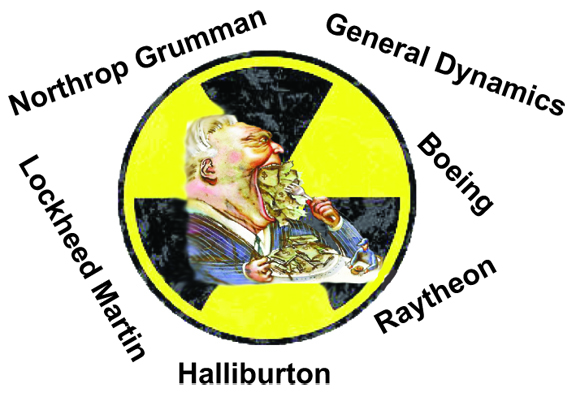
We’re squabbling over Social Security, while the government lavishes infinitely more money on the arms industry. The Nation, By Rebecca Gordon 16 June 21, ”……………………………..President Joe Biden remains super-glued to the same old post–World War II agreement between the two major parties: They can differ vastly on domestic policies, but they remain united when it comes to projecting US military power around the world and to the government spending that sustains it. In other words, the US “national security” budget is still the third rail of politics in this country…………………………….

WELFARE FOR WEAPONS MAKERS
Of course, there’s a second high-voltage, untouchable rail in American politics and that’s funding for the military and weapons manufacturers. It takes a brave politician indeed to suggest even the most minor of reductions in Pentagon spending, which has for years been the single largest item of discretionary spending in the federal budget.
It’s notoriously difficult to identify how much money the government actually spends annually on the military. President Trump’s last Pentagon budget, for the fiscal year ending on September 30, offered about $740 billion to the armed services (not including outlays for veteran services and pensions). Or maybe it was only $705.4 billion. Or perhaps, including Department of Energy outlays involving nuclear weapons, $753.5 billion. (And none of those figures even faintly reflected full national security spending, which is certainly well over a trillion dollars annually.)
Most estimates put President Biden’s 2022 military budget at $753 billion—about the same as Trump’s for the previous year. As former Senator Everett Dirksen is once supposed to have said, “A billion here, a billion there, and pretty soon you’re talking real money.”
Indeed, we’re talking real money and real entitlements here that can’t be touched in Washington without risking political electrocution. Unlike actual citizens, US arms manufacturers seem entitled to ever-increasing government subsidies—welfare for weapons, if you like. Beyond the billions spent to directly fund the development and purchase of various weapons systems, every time the government permits arms sales to other countries, it’s expanding the coffers of companies like Lockheed-Martin, Northrup-Grumman, Boeing, and Raytheon Technologies. The real beneficiaries of Donald Trump’s so-called Abraham Accords between Israel and the majority Muslim states of Morocco, the United Arab Emirates, Bahrain, and Sudan were the US companies that sell the weaponry that sweetened those deals for Israel’s new friends.
When Americans talk about undeserved entitlements, they’re usually thinking about welfare for families, not welfare for arms manufacturers. But military entitlements make the annual federal appropriation of $16.5 billion for Temporary Aid to Needy Families (TANF) look puny by comparison. In fact, during Republican and Democratic administrations alike, the yearly federal outlay for TANF hasn’t changed since it was established through the 1996 Personal Responsibility and Work Opportunity Reconciliation Act, known in the Clinton era as “welfare reform.” Inflation has, however, eroded its value by about 40 percent in the intervening years.
And what do Americans get for those billions no one dares to question? National security, right?
But how is it that the country that spends more on “defense” than the next seven, or possibly 10, countries combined is so insecure that every year’s Pentagon budget must exceed the last one? Why is it that, despite those billions for military entitlements, our critical infrastructure, including hospitals, gas pipelines, and subways (not to mention Cape Cod steamships), lies exposed to hackers?
And if, thanks to that “defense” budget, we’re so secure, why is it that, in my wealthy home city of San Francisco, residents now stand patiently in lines many blocks long to receive boxes of groceries? Why is “national security” more important than food security, or health security, or housing security? Or, to put it another way, which would you rather be entitled to: food, housing, education, and health care, or your personal share of a shiny new hypersonic missile?
But wait! Maybe defense spending contributes to our economic security by creating, as Donald Trump boasted in promoting his arms deals with Saudi Arabia, “jobs, jobs, jobs.” It’s true that spending on weaponry does, in fact, create jobs, just not nearly as many as investing taxpayer dollars in a variety of far less lethal endeavors would. As Brown University’s Costs of War project reports:
And if, thanks to that “defense” budget, we’re so secure, why is it that, in my wealthy home city of San Francisco, residents now stand patiently in lines many blocks long to receive boxes of groceries? Why is “national security” more important than food security, or health security, or housing security? Or, to put it another way, which would you rather be entitled to: food, housing, education, and health care, or your personal share of a shiny new hypersonic missile?
Rebecca GordonRebecca Gordon, a TomDispatch regular, teaches in the philosophy department at the University of San Francisco. She is the author of American Nuremberg: The U.S. Officials Who Should Stand Trial for Post-9/11 War Crimes (Hot Books, April 2016). Her previous books include Mainstreaming Torture: Ethical Approaches in the Post-9/11 United States and Letters from Nicaragua.
https://www.thenation.com/article/economy/the-real-welfare-cheats-are-war-profiteers/
Why Utah really does not need Bill Gates’ small nuclear reactors

What Bill Gates and co. would like us to forget is that even the these geewhiz new small reactors are still based on that old carbon-releasing fuel chain –
Yes, there is a need to clean up our power generation to curb climate change — the sooner the better. But Williams points to a recent study that determined the lifecycle emissions with nuclear — mining, milling, transporting and storing the fuel and building and decommissioning the plants — far exceed other alternative energy sources.
Cox is eager for a nuclear future. Utahns should tell him why we’re not, says Robert Gehrke, https://www.sltrib.com/news/politics/2021/06/14/cox-is-eager-nuclear/ With safer, cleaner, cheaper alternatives, nuclear power may not make the most sense for Utah, By Robert Gehrke , June 15, 2021,
In Wyoming last week, an announcement was made that could mark a resurgence in the long-stymied nuclear energy industry.
Officials announced plans to build a new 345 megawatt nuclear power plant in the state that could, at its peak, generate enough electricity for all of the households in Wyoming with room to spare.
What makes this announcement different is the array of power players behind the project. It’s a partnership between Warren Buffett-owned Pacificorp and Bill Gates-owned Terrapower that has the backing of President Joe Biden’s Energy Department and Wyoming Gov. Mark Gordon.
It also has the support of Utah Gov. Spencer Cox, who praised the project as “a huge announcement” that “will have big implications for Utah in the future.”
“We look forward to similar partnerships in the years to come,” the governor said.
It’s not necessarily a new position. Cox’s predecessor, Gov. Gary Herbert, supported nuclear energy, as did his predecessor, Gov. Jon Huntsman.
But the Wyoming announcement ups the stakes dramatically, moving it from concept to something more concrete and forcing Utahns to confront critical questions nagging nuclear power: Is it safe? Is it cost-effective? And is it right for Utah?
Safety has always been the issue dogging nuclear power. Whether it’s Three Mile Island or Chernobyl or Fukushima, you surely have some nuclear disaster as a touchstone framing you perception of the energy.
The good news, according to Michael Simpson, chair of the Material Science and Engineering department at the University of Utah, is that the Natrium reactors that Terrapower hopes to build in Wyoming are generally safer than the old water-cooled reactors.
The Terrapower plant would be cooled with sodium, which transfers heat better than water, meaning it is less likely to melt down (like Chernobyl) or explode (like Fukushima).
Years ago, Simpson said, researchers at the Idaho National Laboratory did an experiment with a sodium-cooled reactor where they shut off the sodium coolant and instead of heating, the reactor slowly cooled and the reaction stopped.
Others dispute the safety claims, however. Earlier this year, the Union of Concerned Scientists issued a report that said the sodium reactors are unproven and raise other safety issues — for example, the sodium can burn if exposed to air.
“When it comes to safety and security, sodium-cooled fast reactors and molten salt-fueled reactors are significantly worse than conventional light-water reactors,” said Edwin Lyman, director of nuclear power safety for UCS.
Then there is the waste issue. The proponents of the sodium reactors contend that they would burn more of the fuel, producing less waste. Again, UCS disputes that and argues the waste that would be generated would pose nuclear proliferation and possible terrorism risks.
Then there’s the economics of nuclear power.
Recently, South Carolina completely scrapped a water-cooled nuclear plant that had been in the works for years. Some $9 billion was squandered sparking lawsuits by investors and ratepayers demanding their money back.
Rocky Mountain Power’s own figures released in 2019 put the cost of nuclear power at $95 per megawatt hour, compared to around $25 to $30 per hour for solar. Some cost projections are lower, some are higher, but none put nuclear in the same ballpark as solar, raising the obvious concern that we’ll be on the hook for the added expense one way or another — either as ratepayers or as taxpayers subsidizing the more costly power source.
There’s also a larger question, according to Scott Williams, executive director of HEAL Utah, an environmental group that has opposed nuclear power: Do we need it?
Yes, there is a need to clean up our power generation to curb climate change — the sooner the better. But Williams points to a recent study that determined the lifecycle emissions with nuclear — mining, milling, transporting and storing the fuel and building and decommissioning the plants — far exceed other alternative energy sources.
But the TerraPower reactor isn’t expected to come online until 2028 and, as we saw in South Carolina, when it comes to building nuclear power plants, the projections often are unrealistically optimistic.
With battery technology improving and rooftop solar expanding and getting cheaper, there’s no reason to gamble on nuclear, Williams said, other than centralized generation benefits Rocky Mountain’s shareholders.
“It just doesn’t make sense,” he said. “If you’re looking at it objectively, to say it’s better to put a bunch of money into a technology that not only isn’t proven, but has been proven to fail time and time again.”
And we have to take into account our state’s history with nuclear energy that is nothing short of radioactive itself, from the miners and uranium mill workers sickened by their exposure to radiation, to the thousands upon thousands of Utah Downwinders stricken with various cancers as a result of nuclear weapons testing in Nevada, to the decade-long battle to beat back a nuclear waste storage facility in Utah’s desert.
So do we scrap the whole nuclear idea? Not necessarily.
But if Utah wants to venture down the nuclear energy path, these questions and a host of others have to be thoroughly researched and addressed. We’re not there yet and until we are, the cheerleading from the Biden administration and Gov. Cox feels premature.
50 Years After Pentagon Papers, Ellsberg Reveals U.S. Weighed 1958 Nuclear Strike on China over Taiwan,
50 Years After Pentagon Papers, Ellsberg Reveals U.S. Weighed 1958 Nuclear Strike on China over Taiwan, Democracy Now, JUNE 14, 2021,
As President Biden meets with leaders of NATO countries, where he is expected to continue stepping up rhetoric against China and Russia ahead of his meeting with Russian President Vladimir Putin this Wednesday in Geneva, we speak with famed Pentagon Papers whistleblower Daniel Ellsberg about why he recently released another classified document showing that U.S. military planners in 1958 pushed for nuclear strikes on China to protect Taiwan from an invasion by communist forces.
The top-secret study revealed the U.S. military pressed then-President Dwight Eisenhower to prepare a nuclear first strike against mainland China during the Taiwan Strait crisis of 1958. Taiwan “could really only be defended, if at all, by the U.S. initiating nuclear war against China,” says Ellsberg. The document also shows that U.S. military planners were ready to accept the risk that the Soviet Union would launch its own nuclear retaliation, including against Japan. Although Ellsberg’s online release of the document was publicized in May, he reveals that he shared the same information with Japan decades earlier. “I had given the entire study to the Japanese Diet,” Ellsberg says.
Transcript…………………..
https://www.democracynow.org/2021/6/14/daniel_ellsberg_leak_us_nuclear_plans
-
Archives
- October 2026 (112)
- September 2026 (339)
- August 2026 (330)
- July 2026 (355)
- June 2026 (287)
- May 2026 (306)
- April 2026 (356)
- March 2026 (251)
- February 2026 (267)
- January 2026 (308)
- December 2025 (358)
- November 2025 (359)
-
Categories
- 1
- 1 NUCLEAR ISSUES
- business and costs
- climate change
- culture and arts
- ENERGY
- environment
- health
- history
- indigenous issues
- Legal
- marketing of nuclear
- media
- opposition to nuclear
- PERSONAL STORIES
- politics
- politics international
- Religion and ethics
- safety
- secrets,lies and civil liberties
- spinbuster
- technology
- Uranium
- wastes
- weapons and war
- Women
- 2 WORLD
- ACTION
- AFRICA
- Atrocities
- AUSTRALIA
- Christina's notes
- Christina's themes
- culture and arts
- Events
- Fuk 2022
- Fuk 2023
- Fukushima 2017
- Fukushima 2018
- fukushima 2019
- Fukushima 2020
- Fukushima 2021
- general
- global warming
- Humour (God we need it)
- Nuclear
- RARE EARTHS
- Reference
- resources – print
- Resources -audiovicual
- Weekly Newsletter
- World
- World Nuclear
- YouTube
-
RSS
Entries RSS
Comments RSS

