Former CEO of failed V.C. Summer nuclear project pleads guilty to fraud charges
 Former SCANA CEO pleads guilty to fraud charges for failed nuclear power project, https://abcnews4.com/news/local/former-scana-ceo-pleads-guilty-to-fraud-charges-for-failed-nuclear-power-project by Tony Fortier-Bensen, Wednesday, November 25th 2020 COLUMBIA, SC (WCIV)
The former chief executive officer of SCANA pleaded guilty on Tuesday to fraud charges for the failed V.C. Summer project in Fairfield County.
Kevin Marsh pleaded guilty to one count of conspiracy and one count of obtaining false property by false pretenses, according to a plea agreement.
The agreement also said that Marsh would serve 18 to 36 months and has agreed to pay $5 million in restitution.
In June, retired SCANA chief operating officer Steve Byrne entered a guilty plea for his actions in relation to the failed nuclear power plant.
The U.S Attorney’s office alleges Byrne and Marsh conspired with other SCANA executives to deceive state and federal government overseers, stock holders and power customers in order to keep funding coming in to build two nuclear reactors at the V.C. Summer Nuclear Station.
The expansion project cost Santee-Cooper and the defunct South Carolina Electric & Gas over $9 billion before the two entities abandoned the project in July 2017.
In addition, Marsh agreed to waive indictment and arraignment and work with authorities to provide further information on the failed project.
Under the plea agreement, Marsh could be sentenced to serve 18 to 36 months in prison. Marsh has also agreed to pay $5 million in restitution.
Trump administration pulls out of Open Skies treaty with Russia,
|
Trump administration pulls out of Open Skies treaty with Russia, THe Hill, BY DOMINICK MASTRANGELO – 11/22/20 The Trump administration has officially withdrawn from the Open Skies treaty, six months after starting the process to leave.“On May 22, 2020, the United States exercised its right pursuant to paragraph 2 of Article XV of the Treaty on Open Skies by providing notice to the Treaty Depositaries and to all States Parties of its decision to withdraw from the Treaty, effective six months from the notification date,” State Department deputy spokesman Cale Brown said in a statement.
“Six months having elapsed, the U.S. withdrawal took effect on November 22, 2020, and the United States is no longer a State Party to the Treaty on Open Skies,” Brown added. The post-Cold War agreement was struck to allow nations to conduct flyovers of other allies in an attempt to collect military data and other intelligence on neighboring foreign enemies. In a statement issued on Sunday, Sen. Bob Menendez (D-N.J.) called the administration’s withdrawal “reckless” and encouraged President-elect Joe Biden‘s administration to rejoin the pact once he is inaugurated. ………. https://thehill.com/homenews/administration/527056-us-withdraws-from-open-skies-treaty-with-russia |
|
Influence of weapons makers on U.S. policy, whether a Democrat or Republican administration
 A Washington Echo Chamber for a New Cold War, Reader Supported News, By Cassandra Stimpson and Holly Zhang, TomDispatch, 20 November 20
 ar: what is it good for? Apparently, in Washington’s world of think tanks, the answer is: the bottom line.
In fact, as the Biden presidency approaches, an era of great-power competition between the United States and China is already taken for granted inside the Washington Beltway. Much less well known are the financial incentives that lurk behind so many of the voices clamoring for an ever-more-militarized response to China in the Pacific. We’re talking about groups that carefully avoid the problems such an approach will provoke when it comes to the real security of the United States or the planet. A new cold war is likely to be dangerous and costly in an America gripped by a pandemic, its infrastructure weakened, and so many of its citizens in dire economic straits. Still, for foreign lobbyists, Pentagon contractors, and Washington’s many influential think tanks, a “rising China” means only one thing: rising profits.
Defense contractors and foreign governments are spending millions of dollars annually funding establishment think tanks (sometimes in secret) in ways that will help set the foreign-policy agenda in the Biden years. In doing so, they gain a distinctly unfair advantage when it comes to influencing that policy, especially which future tools of war this country should invest in and how it should use them.
Not surprisingly, many of the top think-tank recipients of foreign funding are also top recipients of funding from this country’s major weapons makers. The result: an ecosystem in which those giant outfits and some of the countries that will use their weaponry now play major roles in bankrolling the creation of the very rationales for those future sales. It’s a remarkably closed system that works like a dream if you happen to be a giant weapons firm or a major think tank. Right now, that system is helping accelerate the further militarization of the whole Indo-Pacific region.
In the Pacific, Japan finds itself facing an increasingly tough set of choices when it comes to its most significant military alliance (with the United States) and its most important economic partnership (with China). A growing U.S. presence in the region aimed at counterbalancing China will allow Japan to remain officially neutral, even as it reaps the benefits of both partnerships.
To walk that tightrope (along with the defense contractors that will benefit financially from the further militarization of the region), Japan spends heavily to influence thinking in Washington. Recent reports from the Center for International Policy’s Foreign Influence Initiative (FITI), where the authors of this piece work, reveal just how countries like Japan and giant arms firms like Lockheed Martin and Boeing functionally purchase an inside track on a think-tank market that’s hard at work creating future foreign-policy options for this country’s elite.
How to Make a Think Tank Think
Take the prominent think tank the Center for Strategic and International Studies (CSIS), which houses programs focused on the “China threat” and East Asian “security.” Its Asia Maritime Transparency Initiative, which gets funding from the governments of Japan and the Philippines, welcomes contributions “from all governments in Asia, as well as corporate and foundation support.”
Unsurprisingly, the program also paints a picture of Japan as central “to preserving the liberal international order” in the face of the dangers of an “increasingly assertive China.” It also highlights that country’s role as Washington’s maritime security partner in the region. There’s no question that Japan is indeed an important ally of Washington. Still, positioning its government as a lynchpin in the international peace (or war) process seems a dubious proposition at best.
CSIS is anything but alone when it comes to the moneyed interests pushing Washington to invest ever more in what now passes for “security” in the Pacific region. A FITI report on Japanese operations in the U.S., for instance, reveals at least 3,209 lobbying activities in 2019 alone, as various lobbyists hired by that country and registered under the Foreign Agents Registration Act targeted both Congress and think tanks like CSIS on behalf of the Japanese government. Such firms, in fact, raked in more than $30 million from that government last year alone. From 2014 to 2019, Japan was also the largest East Asian donor to the top 50 most influential U.S. think tanks. The results of such investments have been obvious when it comes to both the products of those think tanks and congressional policies.
Think-tank recipients of Japanese funding are numerous and, because that country is such a staunch ally of Washington, its government can be more open about its activities than is typical. Projects like the Carnegie Endowment for International Peace’s “China Risk and China Opportunity for the U.S.-Japan Alliance,” funded by the Japanese Ministry of Foreign Affairs, are now the norm inside the Beltway. You won’t be surprised to learn that the think-tank scholars working on such projects almost inevitably end up highlighting Japan’s integral role in countering “the China threat” in the influential studies they produce. That threat itself, of course, is rarely questioned. Instead, its dangers and the need to confront them are invariably reinforced.
Another Carnegie Endowment study, “Bolstering the Alliance Amid China’s Military Resurgence,” is typical in that regard. It’s filled with warnings about China’s growing military power — never mind that, in 2019, the United States spent nearly triple what China did on its military, according to the Stockholm International Peace Research Institute. Like so many similarly funded projects inside the Beltway, this one recommended further growth in military cooperation between the U.S. and Japan. Important as well, it claimed, was developing “the capability to wage combined multidomain joint operations” which “would require accelerating operational response times to enhance firepower.”
The Carnegie project lists its funding and, as it turns out, that foundation has taken in at least $825,000 from Japan and approximately the same amount from defense contractors and U.S. government sources over the past six years. And Carnegie’s recommendations recently came to fruition when the Trump administration announced the second-largest sale of U.S. weaponry to Japan, worth more than $23 billion worth.
If the Japanese government has a stake in funding such think tanks to get what it wants, so does the defense industry. The top 50 think tanks have received more than $1 billion from the U.S. government and defense contractors over those same six years. Such contractors alone lobby Congress to the tune of more than $20 million each election cycle. Combine such sums with Japanese funding (not to speak of the money spent by other governments that desire policy influence in Washington) and you have a confluence of interests that propels U.S. military expenditures and the sale of weapons globally on a mind-boggling scale.
A Defense Build-Up Is the Order of the Day
An April 2020 report on the “Future of US-Japan Defense Collaboration” by the Atlantic Council’s Scowcroft Center for Strategy and Security offers a typical example of how such pro-militarization interests are promoted. That report, produced in partnership with the Japanese embassy, begins with the premise that “the United States and Japan must accelerate and intensify their long-standing military and defense-focused coordination and collaboration.”
Specifically, it urges the United States to “take measures to incentivize Japan to work with Lockheed Martin on the F-2 replacement program,” known as the F-3. (The F-2 Support Fighter is the jet Lockheed developed and produced in partnership with Mitsubishi Heavy Industries for the Japanese Defense Forces.) While the report does acknowledge its partnership with the embassy of Japan, it fails to acknowledge that Lockheed donated three quarters of a million dollars to the influential Atlantic Council between 2014 and 2019 and that Japan generally prefers to produce its own military equipment domestically.
The Atlantic Council report continues to recommend the F-3 as the proper replacement for the F-2, “despite political challenges, technology-transfer concerns,” and “frustration from all parties” involved. This recommendation comes at a time when Japan has increasingly sought to develop its own defense industry. Generally speaking, no matter the Japanese embassy’s support for the Atlantic Council, that country’s military is eager to develop a new stealth fighter of its own without the help of either Lockheed Martin or Boeing. While both companies wish to stay involved in the behemoth project, the Atlantic Council specifically advocates only for Lockheed, which just happens to have contributed more than three times what Boeing did to that think tank’s coffers.
A 2019 report by the Hudson Institute on the Japan-U.S. alliance echoed similar sentiments, outlining a security context in which Japan and the United States should focus continually on deterring “aggression by China.” To do so, the report suggested, American-made ground-launched missiles (GCLMs) were one of several potential weapons Japan would need in order to prepare a robust “defense” strategy against China. Notably, the first American GCLM test since the United States withdrew from the Cold War era Intermediate-Range Nuclear Forces Treaty in 2019 used a Lockheed Martin Mark 41 Launch System and Raytheon’s Tomahawk Land Attack Cruise Missile. The Hudson Institute had not only received at least $270,000 from Japan between 2014 and 2018, but also a minimum of $100,000 from Lockheed Martin.
In 2020, CSIS organized an unofficial working group for industry professionals and government officials that it called the CSIS Alliance Interoperability Series to discuss the development of the future F-3 fighter jet. While Japanese and American defense contractors fight for the revenue that will come from its production, the think tank claims that American, Japanese, and Australian industry representatives and officials will “consider the political-military and technical issues that the F-3 debate raises.” Such working groups are far from rare and offer think tanks incredible access to key decision-makers who often happen to be their benefactors as well.
All told, between 2014 and 2019, CSIS received at least $5 million from the U.S. government and Pentagon contractors, including at least $400,000 from Lockheed Martin and more than $200,000 from Boeing. In this fashion, a privileged think-tank elite has cajoled its way into the inner circles of policy formation (and it matters little whether we’re talking about the Trump administration or the future Biden one). Think about it for a moment: possibly the most crucial relationship on the planet between what looks like a rising and a falling great power (in a world that desperately needs their cooperation) is being significantly influenced by experts and officials invested in the industry guaranteed to militarize that very relationship and create a twenty-first-century version of the Cold War.
Any administration, in other words, lives in something like an echo chamber that continually affirms the need for a yet greater defense build-up led by those who would gain most from it.
Profiting from Great Power Competition……. https://readersupportednews.org/opinion2/277-75/66316-a-washington-echo-chamber-for-a-new-cold-war
Slowly moving lawsuit on the health impacts of a national nuclear laboratory
 BNL lawsuit and the impacts of national nuclear laboratory
Brookhaven National Laboratory “continues to show almost no regard for its neighbors…Is this any way for a government-funded agency to treat its neighbors?” Nation of Change, By Karl Grossman, November 20, 2020
BNL after negotiations agreed to settlements of approximately $600,000 for the first two groups of plaintiffs, each with about 18 persons. However, last month a settlement was not agreed to involving the final group of 18 plaintiffs, and New York State Supreme Court Justice Joseph Farneti ordered that a trial be scheduled.
It accuses BNL of “failure to observe accepted relevant industry standards in the use, storage and disposal of hazardous and toxic substances” and says BNL itself had been “improperly located” by the U.S. Atomic Energy Commission “on top of an underground aquifer which supplies drinking water to a large number of persons.”
Lead attorneys are A. Craig Purcell of Smithtown, Long Island who is a former president of the Suffolk County Bar Association, and Richard J. Lippes, whose Buffalo, New York law firm successfully represented residents of the Love Canal neighborhood near Niagara Falls, severely polluted by the Hooker Chemical Co.
The lawsuit’s title is Osarczuk, et. al, vs. Associated Universities. Barbara Osarczuk had lived in North Shirley, just outside the BNL boundaries, for 28 years and attributed her thyroid and breast cancer to BNL.
A book on radioactive pollution from BNL causing health impacts to residents of Shirley was published in 2008. Welcome to Shirley: A Memoir from an Atomic Town was authored by Kelly McMasters of Hofstra University, who grew up in Shirley. The book was the basis of the 2012 TV documentary Atomic States of America.
As Professor McMasters has related in an interview: “I do believe there was a watershed moment in 1960, after the first radioactive leaks occurred, that the federal government or the scientists themselves should have realized that Shirley was the fastest growing town in the county, with a population that doubled within ten years, and that the middle of one of the largest sole-source drinking water aquifers in the country was not the best place for a nuclear laboratory.” http://www.smithmag.net/memoirville/2008/05/11/interview-kelly-mcmasters-welcome-to-shirley-a-memoir-from-an-atomic-town/
Purcell declares that the lawsuit, “now, nearly 25 years later…has still not been resolved despite Judge Farneti’s urging that the interests of justice would be better served by a fair and final resolution.” BNL and its lawyers “continue to nickel and dime their neighbors to this very day.” He charges that BNL “continues to show almost no regard for its neighbors…Is this any way for a government-funded agency to treat its neighbors?” https://www.nationofchange.org/2020/11/20/bnl-lawsuit-and-the-impacts-of-national-nuclear-laboratory/?fbclid=IwAR0Q0RKD6eJuJL4jNn19c-afztaMbdVNA2btXEzW16z0My0KtQW6TiWPKJY
How a nuclear weapons officer came to support the Treaty Prohibiting Nuclear Weapons
If Reagan were still alive, he would be taking a leadership role, along with Pope Francis, in trying to get other nations, especially those with nuclear weapons to ratify the TPNW.
 How I Came to Support the Treaty Prohibiting Nuclear Weapons, https://www.justsecurity.org/73430/how-i-came-to-support-the-treaty-prohibiting-nuclear-weapons/, by Lawrence Korb, November 19, 2020 About three years ago, in November 2017, I was honored to be one of about a 100 people invited by the Vatican to an international symposium, “Prospects for a World Free of Nuclear Weapons and for Integral Disarmament.” It was the first global gathering conducted after 120 nations at the United Nations approved the Treaty on the Prohibition of Nuclear Weapons (TPNW).This treaty, which is the first legally binding international agreement to comprehensively prohibit nuclear weapons, was adopted by the U.N. on July 7, 2017, and needed 50 countries to ratify it in order for it to come into force. The purpose for the treaty was to get world leaders and citizens to consider nuclear weapons as immoral and illegal as chemical and biological weapons, whose use the U.N had previously prohibited. How I Came to Support the Treaty Prohibiting Nuclear Weapons, https://www.justsecurity.org/73430/how-i-came-to-support-the-treaty-prohibiting-nuclear-weapons/, by Lawrence Korb, November 19, 2020 About three years ago, in November 2017, I was honored to be one of about a 100 people invited by the Vatican to an international symposium, “Prospects for a World Free of Nuclear Weapons and for Integral Disarmament.” It was the first global gathering conducted after 120 nations at the United Nations approved the Treaty on the Prohibition of Nuclear Weapons (TPNW).This treaty, which is the first legally binding international agreement to comprehensively prohibit nuclear weapons, was adopted by the U.N. on July 7, 2017, and needed 50 countries to ratify it in order for it to come into force. The purpose for the treaty was to get world leaders and citizens to consider nuclear weapons as immoral and illegal as chemical and biological weapons, whose use the U.N had previously prohibited.
Pope Francis himself was very invested in the issue. He gave the keynote address in which he condemned not only the threat of their use, but also the possession of nuclear weapons and warned that nuclear deterrence policies offered a false sense of security. He also personally thanked each of the attendees individually. The majority of those attending the conference, especially those who had personal experience with these weapons, including survivors of nuclear attacks, found it hard to believe that the majority of nations would not move in the direction of ratifying and implementing the treaty. However, approximately three years later, and in spite of opposition by several major powers, including the United States, that is exactly what happened,. Earlier this year, on Oct. 24, Honduras became the 50th nation, of the 85 who had signed the treaty, to ratify it. This brought the treaty to the legal threshold required for TPNW to enter into force. As a result, on January 22, 2021, some 75 years after nuclear weapons were first used, TPNW will become international law and prohibit participating nations from developing, possessing, testing, using or threatening to use nuclear weapons, or allow them to be stationed on their territory or assist others to do so. While this is a step in the right direction, there is much more work to be done. None of the nine nuclear States, including the United States, have signed the treaty, let alone ratified it. The United States not only did not sign the treaty, but the Trump administration actually sent a letter to other governments that have signed or ratified it urging them to reverse their decision for making what they labeled a strategic error. Moreover, the United States has still not ratified the Comprehensive Nuclear Test Ban Treaty (CTBT) passed about 15 years ago. The U.S. position on this issue is not surprising. For too long, too many people in the U.S. military, in government, and in the general public have not fully contemplated how disastrous using these weapons was and could be. I saw this myself in and outside of government. Growing up in New York City in the 1950s, I and my fellow classmates routinely participated in duck-and-cover drills to prepare us for a nuclear attack, but did not think much about them. These drills were so routine that they did not appear to be any more important than our physical education classes in the gym. I joined the Navy in the summer of 1962 and was halfway through Officer Candidate School (OCS) when the Cuban Missile Crisis occurred. Although we now know how close the United States came to actually having a nuclear exchange with the former Soviet Union, the seriousness of the crisis did not appear to register on me or my fellow servicemembers. After getting my commission and wings in 1963, I was undergoing training in San Diego to get ready to join Patrol Squadron One.who carried out maritime patrol, anti-submarine warfare, and other responsibilities. A speaker at one of our sessions was Navy Admiral Frederick Ashworth, who was the atomic weaponeer onboard the B-29 carrying the Batman nuclear weapon in 1945. According to the admiral, the crew of the B-29 had to have a visual sighting of the target before dropping it. But when the B-29 Superfortress went to its first target, Kokuna, it was shrouded in clouds and haze, so they diverted to Nagasaki, the backup target. When they arrived there, this city was also covered in clouds. Since they had to drop the bomb by 11 a.m. or abort the mission, the situation raised concerns among the crew. None of them wanted to return to their base still carrying the bomb or drop it under these conditions. However, during his talk, the admiral jokingly claimed that just before 11 a.m. the heavens opened up and they had enough visual sighting to enable them to drop the bomb on the intended target. Unfortunately, neither myself, nor my colleagues, showed much concern about the admiral speaking so cavalierly about dropping a nuclear weapon in the wrong place on such a large city. When I got to my squadron, I was assigned as the nuclear weapons duty officer for my crew and routinely had to supervise loading dummy, or inert, nuclear weapons on our plane. My squadron mates and I never thought much about it. Moreover, we were never told where the real bombs were or what our targets might be. Nor did we seem to care. When my squadron deployed to Iwakuni, Japan, in 1964, I decided to visit Hiroshima but could not get any of my squadron mates to come along. Seeing that city even 19 years after the bombing was overwhelming. I followed it up with a visit to Nagasaki, where I discovered that despite what the admiral had said, the bomb did not come anywhere close to its intended target. In fact, it exploded almost on top of a Catholic church, about two miles from where it was supposed to hit. During my time serving in the Reagan administration, I came to realize that the only nuclear strategy we had was massive retaliation, which would have made the attacks on Hiroshima and Nagasaki seem almost trivial. But my admiration for President Ronald Reagan on this issue grew when I realized that his often-mocked Strategic Defense Initiative (SDI or Star Wars), was an attempt by him not to have to rely on massive retaliation to respond to a Soviet nuclear attack, even if it involved a small number of weapons. In fact, the president decided that he needed SDI during the 1980 presidential campaign when he discovered that the only option a president had to even a small nuclear attack was Mutually Assured Destruction (MAD). My admiration for him on this issue was further enhanced when he and Mikhail Gorbachev, the former leader of the Soviet Union, almost agreed to get rid of all nuclear weapons at their conference in Reykjavík, Iceland, a position that was openly criticized by many members of the nuclear priesthood, the group of strategists in government who actually contemplate how best to use nuclear weapons. They did agree to the elimination of all intermediate range nuclear weapons and laid the foundation for the Strategic Arms Reduction Treaty (START). In many ways Reagan was actually following in the footsteps of some of his predecessors, going back to President Dwight Eisenhower. Unfortunately, our current president does not seem to realize how disastrous a nuclear bomb attack can be. Not only is he tearing up all of our nuclear agreements but he reportedly contemplated restarting nuclear testing. Too bad he’s never visited Hiroshima or Nagasaki. If Reagan was still alive, he would be taking a leadership role, along with Pope Francis, in trying to get other nations, especially those with nuclear weapons to ratify the TPNW. And, at a minimum, to get the United States back into the arms control agreements from which the Trump administration has withdrawn, something President-elect Joe Biden has pledged to do. Like the framers of TPNW, Reagan believed, and said publicly, that a nuclear war cannot be won and must never be fought. The world needs to listen to the words of Reagan and the Pope in order to accelerate progress toward eliminating nuclear weapons. |
|
Concerns in Utah cities about costs and safety of NuScam’s small nuclear reactor scheme
|
Following the withdrawal of seven Utah cities from the Carbon Free Power Project before the October deadline, the Southern Utah cities have passed resolutions to cap financial obligation for the first phase of licensing…….. Not all are completely sold on the safety of this power plant. Scott Williams, the executive director of Healthy Environment Alliance of Utah, told St. George News that one of the major issues with this project has to do with the lack of transparency, as UAMPS is exempt from the Open and Public Meetings Act. “We don’t get minutes. We don’t get agendas.” he said……. The next off-ramp for cities to withdraw will be near the end of the 2021 or early 2022 after the next licensing phase. UAMPS has also talked about possibly downsizing the project from 12 modules to four or six modules……. Environmentally devastating’ When it comes to potential environmental impacts, Williams said the number one problem is highly radioactive waste. “We’ve been building nuclear reactors around the country since the 60s, and all of that highly radioactive fuel is just sitting at those power plants with nowhere to go.”….. “We just think we shouldn’t generate anymore high-level nuclear waste until we have a safe, environmentally responsible way to deal with it.” Second to this, he said, is the whole process of creating nuclear fuel. All of the stages – mining, milling and enrichment – present health hazards to people. “Southeastern Utah is full of abandoned uranium mines that create radioactive exposure to the populations down there, and they’re not being cleaned up,” he said, adding that these mines are almost all in San Juan County. “The entire Navajo Nation is full of them. In fact, we’re just putting a map together; There’s hundreds of them on the Navajo Reservation.” Much of the mine tailings were put near Moab, he added, and for some 40 years they have been in the process of moving these tailings away from the Colorado River up to a place near Interstate 70, which has cost billions of dollars of taxpayers’ money. This project, the Moab Uranium Mill Tailings Remedial Action Project, is being administered by the U.S. Department of Energy and is about 68% complete with efforts to move 16 million tons of uranium tailings from the banks of the Colorado River to a permanent disposal site 32 miles north, near Crescent Junction. The final possible implication of the project, Williams said, would be in the case of an accident at the facility, which would be “environmentally devastating.” “UAMPS and NuScale say this plant is meltdown-proof, but they’ve never actually built one of these modules before, so it’s all theoretical at this point.” So if not nuclear, what’s the best option? Aside from wind, solar and hydro (that’s already established), he said there is new technology coming to the scene that will be here before this power plant is finished. This technology includes utility-scale or home-based battery storage for intermittent power sources. Investing in energy efficiency is also integral, as well as making use of wasted power through grid integration. But what it really comes down to, he said, is a shift in public perception. “A lot of the people who are proponents of this nuclear plant are still thinking about energy the way we’ve been producing it in the past, and they say, ‘Battery storage will never be economically competitive.’ But they said that about solar 10 years ago, and it’s become cheaper faster than any of them could have predicted.”https://www.stgeorgeutah.com/news/archive/2020/11/21/asd-environmentally-devastating-or-really-really-safe-southern-utah-cities-set-financial-caps-for-nuclear-power-project/#.X7rBxGgzbIU |
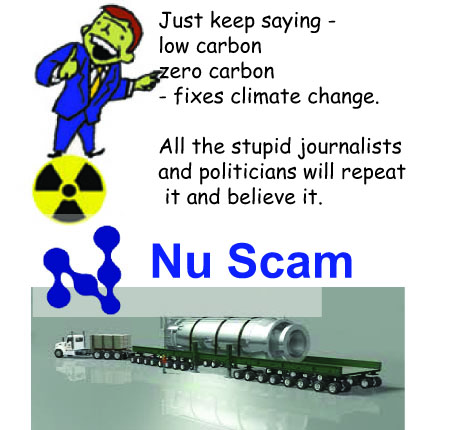
30 more years for Wisconson’s old nuclear power station? Is this a good idea?
NextEra Energy has submitted an application to the Nuclear Regulatory Commission seeking to add 20 years to the licenses for the Point Beach Nuclear plant in Two Rivers, according to a document filed with state regulators…….
Hundreds of casks of nuclear waste are being stored at sites across Wisconsin and neighboring states, costing taxpayers millions of dollars as the federal government struggles to open a permanent storage facility.
Under the agreement, the utility is paying $52.66 per megawatt-hour this year, about 1.8 times the average wholesale price for electricity in the Midwest, according to data from the Energy Information Administration. By 2023, the cost rises to $122.45 per megawatt hour……
Point Beach is the only one of Wisconsin’s three nuclear power plants still in operation.
Decommissioning is nearly complete at the La Crosse Boiling Water Reactor, a 50-megawatt demonstrator plant built by the federal government in 1967 and shut down in 1987. The 1,772-megawatt Kewaunee Power Station was shut down in 2013. Decommissioning is scheduled to begin in 2069, according to the NRC.
As of April, there were 50 dry casks of radioactive waste being stored at Point Beach until the federal government can develop a permanent storage plan. https://journaltimes.com/news/state-and-regional/wisconsins-nuclear-power-plant-operator-seeks-30-more-years/article_da04bd52-ca1b-5401-92a7-d860ab058602.html
The US has a unique opportunity to put the world back on the path to nuclear weapons zero

|
Restoring Momentum Toward Nuclear Zero, https://fellowtravelersblog.com/2020/11/16/restoring-momentum-toward-nuclear-zero/ON NOVEMBER 16, 2020 BY FELLOWTRAVELERSFPBLOGIN ARTICLES, POLICY BRIEF 2020, Second in a series of policy briefs laying out clear steps to re-think and re-orient US foreign policy. By John Carl Baker
Takeaway: Pass the No First Use Act, cancel the new ICBM, and begin negotiating with Russia toward deep reductions in both countries’ outsized arsenals. The world faces a renewed nuclear arms race. All nine nuclear-armed states–China, France, India, Israel, North Korea, Pakistan, Russia, the United Kingdom, and the US—are modernizing their arsenals and adding new capabilities. Nuclear superpowers the US and Russia control 91% of the world’s 13,000 nuclear warheads and together keep well over 3,000 deployed – more than enough to end human civilization. The US nuclear posture needlessly inflames this volatile international situation. The president holds unilateral launch authority and the US still reserves the right to launch a nuclear first strike. The US possesses hundreds of ground-based Intercontinental Ballistic Missiles (ICBMs) that are kept on alert in anticipation of a completely unrealistic surprise attack. These ICBMs drastically reduce presidential decision time (approximately ten minutes) and increase the chance of a mistaken launch. Close calls have happened in the past. US policy has also done little to keep the guard rails from falling off the international arms control regime. The US left the Anti-Ballistic Missile Treaty (ABM) in 2002 and the Intermediate Nuclear Forces Treaty (INF) in 2019. It announced its intent to leave the Open Skies Treaty the following year. If New START is not extended by February 2021, there will be no constraints on the US and Russian arsenals for the first time since 1972. At the same time, the United Nations review process created by the Treaty on the Nonproliferation of Nuclear Weapons (NPT) remains broken. Article 6 of the NPT obligates the nuclear-armed signatories to pursue disarmament, a provision they are not upholding. Global frustration with the lack of progress has led in part to the United Nations Treaty on the Prohibition of Nuclear Weapons (TPNW), which will ban nuclear weapons under international law in January 2021. Renewing US Leadership on Disarmament The US can increase nuclear stability and lead the world back toward disarmament by taking the following bold actions: Reform the Nuclear Posture: The US should declare that deterrence—not warfighting—is the sole purpose of the nuclear arsenal. Congress should establish that the US will never use nuclear weapons first by passing the No First Use Act introduced by Rep. Adam Smith and Sen. Elizabeth Warren. Congress can also develop legislation to distribute launch authority among more individuals than just the US president. Nearly any alternative is preferable to the current unilateral arrangement. Negotiate Arsenal Reductions: The US and Russia should extend New START and immediately begin negotiations toward a follow-on agreement that seeks major mutual reductions. There is simply no reason for each country to have thousands of warheads when their nearest peer competitor (China) has only a few hundred. Addressing this disparity could bring China into the arms control regime and would demonstrate to the world that the US takes its disarmament obligations under the NPT seriously. Retire Missiles: Congress should cancel the new ICBM, also called the Ground-Based Strategic Deterrent (GBSD), and begin phasing out land-based missiles for good. This will save substantial public dollars (an estimated $264 billion over the lifetime of the GBSD) and dramatically lower the risk of nuclear war. A system without land-based ICBMs will be far more stable, with increased decision time if there are reports of an incoming attack. Submarines and bombers will still be available to launch retaliatory strikes if need be. Phasing out ICBMs is also popular: a University of Maryland study found that 61% of Americans, including 53% of Republicans, support the idea. The US has a unique opportunity to put the world back on the path to nuclear zero. Through common sense policy changes, the US can lower nuclear risks, demonstrate a commitment to disarmament, and repair relations with the international community. The stakes could not be higher and the time for action is now. John Carl Baker is a senior program officer at Ploughshares Fund. Baker’s writing on nuclear weapons issues has appeared in the Bulletin of the Atomic Scientists, New Republic, Defense One, and elsewhere. Follow him on Twitter at @johncarlbaker. |
|
Ohio likely to require nuclear reactor audit before renewing bailout
 Ohio likely to require nuclear reactor audit before renewing bailout -analysts https://uk.reuters.com/article/instant-article/idUKL1N2I61D0 Banking and Financial News Scott DiSavino, NEW YORK, Nov 20 (Reuters) – Ohio’s legislature will likely require the owner of two nuclear power reactors to prove they need financial assistance to remain in service following a bribery scandal related to passage of the state’s 2019 nuclear bailout, analysts said on Friday.FirstEnergy Corp lobbied state officials to provide more than $1 billion to fund the continued operation of its Davis-Besse and Perry reactors. Ohio likely to require nuclear reactor audit before renewing bailout -analysts https://uk.reuters.com/article/instant-article/idUKL1N2I61D0 Banking and Financial News Scott DiSavino, NEW YORK, Nov 20 (Reuters) – Ohio’s legislature will likely require the owner of two nuclear power reactors to prove they need financial assistance to remain in service following a bribery scandal related to passage of the state’s 2019 nuclear bailout, analysts said on Friday.FirstEnergy Corp lobbied state officials to provide more than $1 billion to fund the continued operation of its Davis-Besse and Perry reactors.
The Ohio reactors are now owned by Energy Harbor, which emerged from the bankruptcy of FirstEnergy’s FirstEnergy Solutions unit in February. The reactors likely still need financial help to keep operating. FirstEnergy was not alone in seeking state funding for its reactors. Nuclear plants in Illinois, New York, New Jersey and Connecticut also received subsidies in recent years. n Ohio, however, the U.S. Federal Bureau of Investigation (FBI) arrested Larry Householder, Speaker of the Ohio House of Representatives, in July, alleging bribery related to the passage of the state’s nuclear subsidy law, known as House Bill 6 (HB6). In an effort to undue damage done by the scandal, Ohio politicians have proposed new legislation that could remove or reduce the nuclear subsidies in HB6. “Ultimately, the subsidies may be reduced following the audit but we are skeptical they’ll go to zero when all is said and done,” said Josh Price, senior analyst at Height Capital Markets. FirstEnergy shares fell over 3% on Friday to their lowest since September. Earlier this week, the FBI also raided a home owned by Sam Randazzo, chairman of the Public Utilities Commission of Ohio (PUCO). Randazzo resigned on Friday, according to the state governor’s office. Officials at the PUCO had no comment. Energy Harbor was not immediately available for comment. FirstEnergy said its “Board will continue to take decisive action to address this matter,” noting it is in the “best interest” of Ohio and the nation to maintain clean and reliable nuclear power. Reporting by Scott DiSavino Editing by Marguerita Choy |
A New U.S. Missile Defense Test May Have Increased the Risk of Nuclear War
A New U.S. Missile Defense Test May Have Increased the Risk of Nuclear War, Carnegie Endowment for International Peace
A November 2020 U.S. missile defense test stands to upend strategic stability and complicate future arms control. The test marks a crossing of the Rubicon, with irreversible implications.
Ultimately, the consequences of the technical demonstration in FTM-44 will be challenging to reverse. This genie has left the bottle and the consequences for future arms control and strategic stability will be significant. https://carnegieendowment.org/2020/11/19/new-u.s.-missile-defense-test-may-have-increased-risk-of-nuclear-war-pub-83273
Lack of safety documents in Los Alamos National Laboratory’s handling of radioactive wastes.
  CCNS Asks Why LANL’s Area G Waste Handling Lacks Proper Safety Documents, http://nuclearactive.org/ 20 Nov 20, On Wednesday, Chris Roscetti, the Technical Director for the Defense Nuclear Facilities Safety Board, raised more red flags about the fact that Los Alamos National Laboratory (LANL) handles, treats and stores radioactive and hazardous waste without the proper paperwork in place. He was speaking during a virtual meeting of the Northern New Mexico Citizens’ Advisory Board. DNFSB POWERPOINT . CCNS Asks Why LANL’s Area G Waste Handling Lacks Proper Safety Documents, http://nuclearactive.org/ 20 Nov 20, On Wednesday, Chris Roscetti, the Technical Director for the Defense Nuclear Facilities Safety Board, raised more red flags about the fact that Los Alamos National Laboratory (LANL) handles, treats and stores radioactive and hazardous waste without the proper paperwork in place. He was speaking during a virtual meeting of the Northern New Mexico Citizens’ Advisory Board. DNFSB POWERPOINT .
Some paperwork has remained unresolved for years. For example, since at least 2016, LANL does not have compliant safety documents for nuclear facilities, such as the Area G dump. These documents, called documented safety analysis, serve to identify and analyze the hazards associated with the work. Nuclear facilities are required to respond to the analyses in ways that will protect workers, the public and the environment. Some elements of safety documents include fire protection calculations, computer modeling for the dispersion of contaminants, and analyses of the efficiency of the operating controls to prevent releases. The Area G safety documents have languished since 2016 – even though LANL continues to handle, treat, and store plutonium-contaminated and hazardous waste there. Roscetti said there are about 3,100 drums containing radioactive and hazardous waste sitting above ground at Area G. These wastes are destined for the Waste Isolation Pilot Plant (WIPP), but need to be treated or repackaged before shipment. In fiscal year 2020, LANL sent 54 shipments to WIPP. Most of these shipments were newly-generated waste from the fabrication of the triggers for nuclear weapons, or plutonium pits. Each shipment to WIPP can hold 42 55-gallon steel drums
Based on the current shipping rate, if all 3,100 above-ground drums were sent to WIPP at a maximum of 42 drums per shipment, it would take about 18 months. But the amount of radioactivity in each drum dictates how many drums make up each shipment. In the meantime, newly generated waste would be shipped into Area G. In recent virtual meetings, LANL officials have been announced its plans to begin retrieving thousands of buried containers at Area G. Those drums would most likely need to be repackaged before shipment to WIPP. But again, the safety documents have not been developed and approved. Safety documents address not only the repackaging and shipping operations, but also the delicate retrieval operations. There is evidence that some drums have corroded.
CCNS asks why LANL is allowed to continue to operate Area G when safety basis documents have not been properly updated – in the case of Area G, nearly five years…….. http://nuclearactive.org/
|
|
USA revives plan for fast nuclear reactor, despite terrorism risks
|
Idaho is top pick for Energy Department nuclear test reactor, By KEITH RIDLER, BOISE, Idaho (AP) 20 Nov 20, — The U.S. government said Thursday that Idaho is its preferred choice ahead of Tennessee for a test reactor to be built as part of an effort to revamp the nation’s fading nuclear power industry by developing safer fuel and power plants. The U.S. Department of Energy said in an email to The Associated Press that the site that includes Idaho National Laboratory will be listed as its preferred alternative in a draft environmental impact statement planned for release in December. The Versatile Test Reactor, or VTR, would be the first new test reactor built in the U.S. in decades and give the nation a dedicated “fast-neutron-spectrum” testing capability. Some scientists decry the plan, saying fast reactors are less safe than current reactors. A news release by the Energy Department earlier Thursday listed both Idaho and Tennessee as possible locations without selecting one as being favored…… The department had a fast reactor, the Experimental Breeder Reactor II, operating in eastern Idaho until it was shut down in 1994 as the nation turned away from nuclear power. ……. Some scientists are wary of fast reactors, noting they’re cooled with harder to control liquid sodium and likely fueled by plutonium, increasing potential nuclear terrorism risks because plutonium can be used to make nuclear weapons….. https://apnews.com/article/environment-tennessee-nuclear-power-idaho-f70ae4dac811f90f1493231fe7edb7bd |
|
The Biden- Harris administration can change nuclear weapons policy, make it safer, and much cheaper
Whatever you think ails this nation, a new generation of ICBMs is not the answer, WP, by Tom Collina and William Perry, November 18, 2020 Tom Z. Collina is director of policy at Ploughshares Fund. William J. Perry was secretary of defense from 1994 to 1997. They are co-authors of the book “The Button: The New Nuclear Arms Race and Presidential Power from Truman to Trump.”
Are any of these challenges addressed by nuclear weapons? Clearly not. Yet the United States is planning to spend well over $1 trillion to rebuild its nuclear arsenal, complete with a new generation of intercontinental ballistic missiles.
The United States can move to a smaller but more secure second-strike nuclear force whose sole purpose is to deter nuclear attack. We do not need to spend hundreds of billions more in a dangerous and futile attempt to “prevail” in a nuclear conflict.
The Biden-Harris campaign has rightly stated that “the sole purpose of the U.S. nuclear arsenal should be deterring — and if necessary, retaliating against — a nuclear attack. As president, [Biden] will work to put that belief into practice, in consultation with our allies and military.”
The best policy would specifically rule out preemptive nuclear attacks, as such attacks have a high risk of starting nuclear war by mistake, and should not be considered under any circumstances. Similarly, a sole-purpose policy should prohibit launching nuclear weapons on warning of attack, as such launches increase the risk of starting nuclear war in response to a false alarm.
The Biden-Harris administration can make a sole-purpose policy more credible and further reduce the risk of accidental launch by retiring the ICBMs. ICBMs are most likely to be used first in response to a false alarm. They are highly unlikely to ever be used in retaliation, as most would be destroyed in any (highly unlikely) Russian nuclear attack against the United States. Thus, ICBMs have no logical role in a U.S. sole-purpose, deterrence-only policy.
This transformational nuclear policy would be win-win: It would free up federal resources to address more urgent needs and, at the same time, reduce nuclear dangers to the nation. In this time of crisis, change and opportunity, our government must have the courage to spend our federal dollars where they are needed most. https://www.washingtonpost.com/opinions/2020/11/17/how-biden-administration-could-create-win-win-situation-nuclear-policy/
The intractible problem of San Onofre’s, and indeed, America’s, nuclear waste

Mosko: Public Safety at Stake in Debate Over Nuclear Waste Storage at San Onofre, https://voiceofoc.org/2020/11/mosko-public-safety-at-stake-in-debate-over-nuclear-waste-storage-at-san-onofre/by SARAH MOSKO 18 Nov 20 SoCal Edison’s  spokesperson, John Dobken, authored an Oct. 20 editorial touting the dry nuclear waste storage system Edison chose when a radiation leak from steam generator malfunction forced permanent closure of the San Onofre Nuclear Generating Station (SONGS) in 2013. Ignoring for the moment the numerous obfuscations and omissions of critical facts, the essence of Dobken’s article is this: Edison wants to divert public attention away from the inadequacies of its dry canister storage system while promising that a deep geological national repository, as mandated in the Nuclear Waste Policy Act of 1982, will magically materialize before their storage canisters fail.
There’s plenty Dobken did not say that the public needs to know.
First off, we are nearly four decades past passage of the Nuclear Waste Policy Act and there is no tangible progress toward creation of a national repository operated by the Department of Energy. The cold hard reality is that no state wants it and, worse still, there is no feasible technology currently available to make a geological repository workable, according to the U.S. Nuclear Waste Technical Review Board. Plans for a geological repository at Yucca Mountain were rejected by Nevada, and subsequent proposals for “interim” storage sites in Texas and New Mexico are opposed by those states too.
Thus, the dream of a national repository remains in limbo for the foreseeable future, and it’s misleading to suggest otherwise. Also misleading is Dobken’s suggestion that, if needed, a failing canister could be transported to “a centralized Department of Energy facility” for repackaging in the future, as no such facility exits anywhere in the United States for this purpose.
Consequently, the plan throughout the country is to leave highly radioactive nuclear waste onsite indefinitely. The relevant 2014 report from the Nuclear Regulatory Commission (NRC) openly states that a repository might never become available. Like all other nuclear plant operators in the United States, Edison is saddled with a storage task never originally intended.
For dry storage, Edison chose thin-walled (just 5/8 inch thick), welded-shut stainless steel canisters which contrast sharply with the 10-19 inch thick-walled and bolted-shut casks many nuclear waste safety advocates in Orange, San Diego, and Los Angeles Counties are advocating for. Unlike the thick casks, SONGS’s canisters are vulnerable to stress corrosion cracking from numerous conditions, such as a salty marine environment like San Onofre. A 2019 Department of Energy report assigned “#1 Priority” to the risk of through-wall cracking in welded, stainless steel canisters in a moist salty environment.
The 73 Holtec canisters at SONGS are warranted for only 25 years, covering only manufacturing defects. This means the warranty excludes environmental conditions like earthquakes, salt air, water intrusion, seagull droppings, and any other corrosive damage to the canisters. Edison has not divulged what the warranty covers on the 51 older Areva canisters, which are already up to 17 years old. Dobken’s statement that the nuclear waste will become less radioactive in 100 years is meaningless in the timescale of the hundreds of thousands of years the waste will remain deadly to humans.
Dobken argues that the fact SONGS’s canisters are welded shut and can never be opened is a plus. This completely ignores the crucial safety requirement in the Nuclear Waste Policy Act that spent nuclear fuel storage containers be designed to be monitored inside and out and the contents retrievable from the containers. Edison purposely chose welded shut canisters, making it impossible to monitor or retrieve the fuel assemblies, which means the canisters can’t lawfully be accepted by the Department of Energy (DOE) for either an interim or permanent storage site.
In listing six other nations that also use welded-shut canisters (Brazil, Mexico, Slovenia, South Africa, Ukraine, United Kingdom), Dobken hopes readers won’t notice these are not countries the United States typically aims to emulate technologically. From that standpoint, a partial list of countries using thick-walled casks is more formidable: Belgium, Finland, France, Germany, Japan, Korea, Netherlands, Russia, Spain, and Switzerland. And, thick casks are used in the United States too, though thin-walled canisters are unfortunately most common.
In arguing that robotic camera technology – which Edison applied to the exterior of a sample of eight of 123 total canisters in 2019 – can be relied upon to detect defects like cracking, Dobken hides the fact that Edison has admitted that this methodology does not meet American standards for an inspection. This is because nuclear storage containers are pressure vessels, thus subject to standards set by the American Association of Mechanical Engineers for safe storage and transport of nuclear pressure vessels which explicitly require use of either magnetic particle or dye penetrant methodology to inspect for defects like cracking (ASME N3).
Edison used neither ASME-approved method simply because they can’t be applied to their canisters which are both too hot, too radioactive and inaccessible in their concrete storage overpacks. Furthermore, a robotic camera can never access the bottoms or inside walls of canisters to look for cracks originating there. Nor can it characterize cracking that might start on the exterior but proceeds laterally rather than straight through the canister wall.
Consequently, many nuclear safety advocates are arguing strenuously for retention of the cooling pools until a specialized dry fuel handling facility (aka “hot cell”) can be constructed onsite. This is because the only means to repackage the radioactive contents of a defective canister into another container is to perform the transfer within a cooling pool or hot cell.
Dobken correctly points out that NRC is nevertheless allowing decommissioned nuclear plants to destroy the cooling pools. This highlights a troublesome relationship between NRC and Edison which the public needs to understand. NRC has granted safety exemptions and waivers in dry storage systems nationwide which has allowed Edison to proceed with a canister system that is unsafe and cannot legally be accepted by DOE into either an interim storage site or permanent repository. Consequently, there is no plan to prevent or stop radioactive releases.
This liaison between NRC and Edison played out during the July 2020 meeting of the California Coastal Commission when NRC representative, Andrea Kock, remained mute as Edison cited the unapproved canister repair technology as justification for destroying the cooling pools. Though community nuclear waste safety advocates ardently cited factual objections, Kock’s silence no doubt helped shape the unanimous vote of the nine commissioners to grant Edison’s request. However, that two commissioners literally uttered “boos” despite casting “yes” votes speaks to doubts about Edison’s plan among the commission’s ranks.
Lastly, Dobken offers no defense for the fact that San Onofre had by far the worst safety record of any nuclear plant in the country during its pre-2012 operation, yet he cries foul any suggestion this should undermine public confidence in how Edison is currently handling dry storage. What’s not mentioned is that, in 2018, it took a conscience-driven whistleblower to expose a near-drop incident where a 54-ton canister loaded with radioactive waste was poised to plummet 18 feet while it was being lowered into its storage overpack. NRC’s subsequent investigation attributed the event to both design flaws and human error and cited Edison with the single most serious violation ever imposed on a spent fuel licensee.
Moreover, it was only because of this incident that Edison bothered to look at the canisters with the contrived robotic camera technology, revealing that essentially all the canisters get scraped/gouged during downloading into storage overpacks.
Dobken makes one point with which everyone agrees: “The public deserves the facts about spent nuclear fuel and its storage.” As the public listens to this debate over safe nuclear waste storage, both sides should be held accountable for underlying motivations. In asking Edison to opt for bolted-shut thick-walled casks with safety features lacking in thin-walled canisters, community safety advocates are seeking safety for their families and communities. Edison, on the other hand, will save untold $millions should the public be swayed to trust in Edison’s promises that their canister system won’t fail and that a national repository will materialize in time to save the day.
Sarah (Steve) Mosko is a local freelance journalist focused on solutions to environmental problems and social injustices.
Trump still has the awesome power to launch America’s nuclear arsenal
 By the Way, Donald Trump Could Still Launch Nuclear Weapons at Any Time The president’s responsibility for the US nuclear arsenal is a Cold War anachronism. The Trump era shows why it needs reform, Wired, .GARRETT M. GRAFF, SECURITY, 11.17.2020
 THE NATION IS entering a particularly dangerous period of Donald Trump’s presidency. Still refusing to concede his election loss and angrily tweeting at all hours of the night, Trump faces the dwindling days of his administration, with all the authorities of the office intact and nothing left to lose. Among the authorities he’ll retain until his final minutes in office? The awesome and awful power to launch the United States’ nuclear arsenal on command.
Donald Trump’s “fire and fury” presidency has exposed all too clearly the intellectual fallacy at the heart of the nation’s nuclear plans: that the commander-in-chief will always be the most sober, rational, and conservative person in the room.
Many people assume, wrongly, that some other official has to agree with a presidential order to launch nuclear weapons; surely the White House chief of staff, the secretary of defense, the vice president, or maybe the general in charge of the nation’s nuclear forces has to concur with a presidential launch order, right? Nope. The president can choose to consult with those officials, or whoever else he may like, but from the dawn of the atomic age in the 1940s and 1950s, there has been no procedure to require any such second, concurring opinion in order to authorize a nuclear strike.
Advancing technologies and expanding arsenals have negated that fear; today’s nuclear submarines ensure a so-called “survivable deterrent” such that even under the most extreme surprise attack scenarios, the US could still destroy dozens of foreign targets and kill tens of millions of people.
Even as the underlying technology and need changed, the US has never revisited its launch strategy. It doesn’t have to be this way, though. There’s simply no need for the nation’s weapons to be placed on routine high-alert and left in the hands of a single individual. We shouldn’t have to worry whether presidential whims endanger our world and human civilization.
This isn’t the first wake-up call for the US. In the final days of Richard Nixon’s presidency, as Watergate consumed his administration from within, his top aides worried what he might do. Nixon was despondent and drinking heavily. Those around him raised fears about his mental state; during one meeting with members of Congress he’d reportedly emphasized the world-ending powers at his fingertips …………
The impending end of Donald Trump’s presidency and a new Biden administration provides an important opportunity to reform the nation’s launch authorities. The country should insist upon a new command-and-control system that ensures the same checks and balances that we insist upon elsewhere in the nuclear system, as well as the same checks and balances we insist on other aspects of government power. Such a move would dramatically improve the safety of the world.
Policymakers have sketched out some ideas for what a new system might look like in recent years………..https://www.wired.com/story/donald-trump-nuclear-weapons-system-reform/
1 This Month
26 April – Chernobyl: Inside the Meltdown airs on National Geographic on Sunday 26th April from 4pm

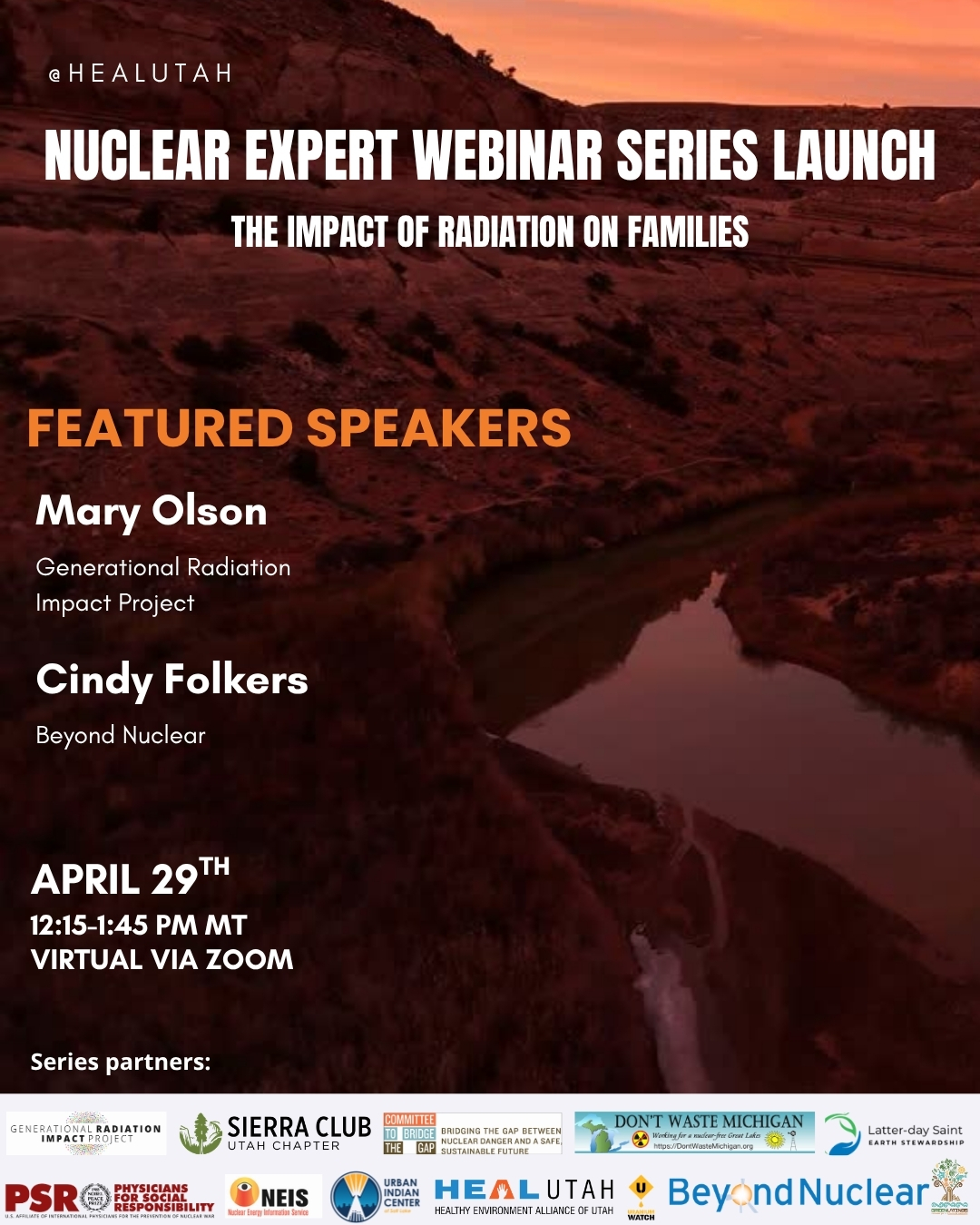
29 April – Nuclear Expert Webinar #1 – Radiation Impacts on Families with Mary Olson and Cindy Folkers
- 12:15 PM MT – 1:45 PM MT
- Location: Virtual – REGISTER TODAY

4 May -West Suburban Peace Coalition to discuss Iran war at May Educational Forum
Monday, May 4, 7:00 – 8:00 PM Central Standard Time
Title: : How Trump’s Narrative Tries to Shape the Reality of the War on Iran.
Contact Walt Zlotow, zlotow@hotmail.com 630 442 3045 for further information
14 May – online event From Bombs to Data Centres: the Face of Nuclear Colonialism

Pine Ridge Uranium is the real threat, not Tehran- Tell Burgum: Stop the Extraction.
Chernobyl: The Lost Tapes – A good documentary on Chernobyl on SBS available On Demand for the next 3 weeks– https://www.sbs.com.au/ondemand/tv-program/chernobyl-the-lost-tapes/2352741955560
To see nuclear-related stories in greater depth and intensity – go to https://nuclearinformation.wordpress.com
-
Archives
- May 2026 (12)
- April 2026 (356)
- March 2026 (251)
- February 2026 (268)
- January 2026 (308)
- December 2025 (358)
- November 2025 (359)
- October 2025 (376)
- September 2025 (257)
- August 2025 (319)
- July 2025 (230)
- June 2025 (348)
-
Categories
- 1
- 1 NUCLEAR ISSUES
- business and costs
- climate change
- culture and arts
- ENERGY
- environment
- health
- history
- indigenous issues
- Legal
- marketing of nuclear
- media
- opposition to nuclear
- PERSONAL STORIES
- politics
- politics international
- Religion and ethics
- safety
- secrets,lies and civil liberties
- spinbuster
- technology
- Uranium
- wastes
- weapons and war
- Women
- 2 WORLD
- ACTION
- AFRICA
- Atrocities
- AUSTRALIA
- Christina's notes
- Christina's themes
- culture and arts
- Events
- Fuk 2022
- Fuk 2023
- Fukushima 2017
- Fukushima 2018
- fukushima 2019
- Fukushima 2020
- Fukushima 2021
- general
- global warming
- Humour (God we need it)
- Nuclear
- RARE EARTHS
- Reference
- resources – print
- Resources -audiovicual
- Weekly Newsletter
- World
- World Nuclear
- YouTube
-
RSS
Entries RSS
Comments RSS
 nuclear-news