GE Hitachi group announce contract for grid-scale small nuclear reactor, requiring large taxpayer subsidy .

GE Hitachi and 3 partners announce first commercial contract for grid-scale SMR in North America.Utility Dive 30 Jan 23
Dive Brief:
- An energy and construction partnership announced Friday an agreement to build what it says will be the first grid-scale small modular reactor in North America. Terms were not disclosed.
- GE Hitachi Nuclear Energy, Ontario Power Generation, SNC-Lavalin and Aecon Group signed a contract to deploy a BWRX-300 small modular reactor at OPG’s Darlington New Nuclear Project site in Clarington, Ontario.
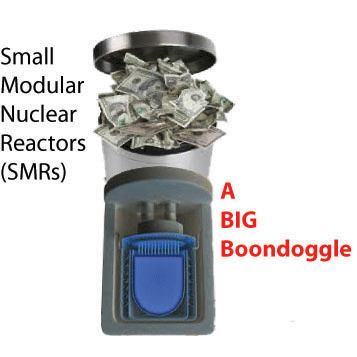
…………………………………….. Critics say SMRs, which are advanced nuclear reactors with a power capacity of up to 300 MW(e), according to the International Atomic Energy Agency, are financially feasible only because of large taxpayer subsidies. Detractors also say solar and wind power, which do not produce waste, can be deployed more quickly than SMRs. https://www.utilitydive.com/news/SMRs-reactor-GE-Hitachi-Ontario-Public-Power-Aecon-Group-nuclear/641483/
The Belmarsh Tribunals Demand Justice for Julian Assange

Never before has a publisher been charged under the U.S. Espionage Act. The Assange prosecution poses a fundamental threat to the freedom of speech and a free press.
President Biden, currently embroiled in his own classified document scandal, knows this, and should immediately drop the charges against Julian Assange
JANUARY 26, 2023, By Amy Goodman & Denis Moynihan https://www.democracynow.org/2023/1/26/the_belmarsh_tribunals_demand_justice_for
“The first casualty when war comes is truth,” U.S. Senator Hiram W. Johnson of California said in 1929, debating ratification of the Kellogg-Briand Pact, a noble but ultimately failed attempt to ban war. Reflecting on World War I, which ended a decade earlier, he continued, “it begins what we were so familiar with only a brief period ago, this mode of propaganda whereby…people become war hungry in their patriotism and are lied into a desire to fight. We have seen it in the past; it will happen again in the future.”
Time and again, Hiram Johnson has been proven right. Our government’s impulse to control information and manipulate public opinion to support war is deeply ingrained. The past twenty years, dominated by the so-called War on Terror, are no exception. Sophisticated PR campaigns, a compliant mass media and the Pentagon’s pervasive propaganda machine all work together, as public intellectual Noam Chomsky and the late Prof. Ed Herman defined it in the title of their groundbreaking book, “Manufacturing Consent,” borrowing a phrase from Walter Lippman, considered the father of public relations.
One publisher consistently challenging the pro-war narrative pushed by the U.S. government, under both Republican and Democratic presidents, has been the whistleblower website Wikileaks. Wikileaks gained international attention in 2010 after publishing a trove of classified documents leaked from the U.S. military. Included were numerous accounts of war crimes in Iraq and Afghanistan, the killing of civilians, and shocking footage of a helicopter gunship in Baghdad slaughtering a dozen civilians, including a Reuters journalist and his driver, on the ground below. Wikileaks titled that video, “Collateral Murder.”
The New York Times and other newspapers partnered with Wikileaks to publish stories based on the leaks. This brought increased attention to the founder and editor-in-chief of Wikileaks, Julian Assange. In December, 2010, two months after release of the Collateral Murder video, then-Vice President Joe Biden, appearing on NBC, said Assange was “closer to being a hi-tech terrorist than the Pentagon papers.” Biden was referring to the 1971 classified document release by Daniel Ellsberg, which revealed years of Pentagon lies about U.S. involvement in the war in Vietnam.
With a secret grand jury empanelled in Virginia, Assange, then in London, feared being arrested and extradited to the United States. Ecuador granted Assange political asylum. Unable to make it to Latin America, he sought refuge in the Ecuadorian embassy in London. He lived inside the small, apartment-sized embassy for almost seven years. In April 2019, after a new Ecuadorian president revoked Assange’s asylum, British authorities arrested him and locked him up in London’s notorious Belmarsh Prison, often called “Britain’s Guantánamo.” He has been held there, in harsh conditions and in failing health, for almost four years, as the U.S. government seeks his extradition to face espionage and other charges. If extradited and convicted in the U.S., Assange faces 175 years in a maximum-security prison.
While the Conservative-led UK government seems poised to extradite Assange, a global movement has grown demanding his release. The Progressive International, a global pro-democracy umbrella group, has convened four assemblies since 2020 called The Belmarsh Tribunals. Named after the 1966 Russell-Sartre Tribunal on the Vietnam War, convened by philosophers Bertrand Russell and Jean-Paul Sarte, The Belmarsh Tribunal has assembled some of the world’s most prominent, progressive activists, artists, politicians, dissidents, human rights attorneys and whistleblowers, all speaking in defense of Julian Assange and Wikileaks.
We are bearing witness to a travesty of justice,” Jeremy Corbyn, a British Member of Parliament and a former leader of the Labour Party, said at the tribunal. “To an abuse of human rights, to a denial of freedom of somebody who bravely put himself on the line that we all might know that the innocent died in Abu Ghraib, the innocent died in Afghanistan, the innocent are dying in the Mediterranean, and innocents die all over the world, where unwatched, unaccountable powers decide it’s expedient and convenient to kill people who get in the way of whatever grand scheme they’ve got. We say no. That’s why we are demanding justice for Julian Assange.”
Corbyn is joined in his call by The New York Times, the Guardian, Le Monde, El Pais and Der Spiegel–major newspapers that published articles based on the leaked documents. “Publishing is not a crime,” the newspapers declared.
Never before has a publisher been charged under the U.S. Espionage Act. The Assange prosecution poses a fundamental threat to the freedom of speech and a free press. President Biden, currently embroiled in his own classified document scandal, knows this, and should immediately drop the charges against Julian Assange.
The dirty secret of US nuclear energy

JOHN GREEN recommends an exposé of dangerous malpractice at the oldest and largest nuclear site in the US
Atomic Days: The Untold Story of the Most Toxic Place in America
By Joshua Frank
A DESCRIPTION of Hanford in Washington state — the place where the US stores much of its plutonium waste — sounds like something out of a dystopian novel by Kurt Vonnegut.
The town of Richland, a stone’s throw from Hanford’s boundary fence and where many of the workers’ families live, is an odd place. No rich mineral deposits, no surrounding agricultural landscape, no ski slopes or well-heeled tourists.
Richland was established by the atom bomb project and celebrates that history. The local pub is called Atomic Ale Brewpub. It showcases beers like Plutonium Porter, half-life Hefeweizen and Atom Bustin’ IPA.
The local school coat of arms boasts an exploding mushroom cloud. There is “a fervent mystifying patriotism” running deep in Richland, says Frank. The town also boasts more PhDs than any similar sized town in the state but voted overwhelmingly for Trump in recent elections.
Hanford’s B reactor has been designated a National Historic Landmark and was the first full scale plutonium production plant in the world. Those acting as guides do not appear to reflect on its legacy or suggest, perhaps, a moment of silence for the victims of nuclear bombs; for them it is a reason to rejoice at the ingenuity and superiority of the US war machine
Atomic Days reads at times like a political thriller, involving government lying and cover-ups, corruption, private-sector rapaciousness, spying on union “troublemakers” or anyone concerned about health and safety, and even the attempted murder of a whistleblower. There is no transparency and little accountability.
Many Hanford workers and their families have suffered serious illness as a result of radioactive contamination, from hyperthyroidism to miscarriages, disabilities and cancers, and numbers of unexplained deaths.
All this has been largely ignored by the national media, despite the fact that Hanford poses not only a danger to local people but to the whole country.
While focusing on Hanford, Frank encompasses the nuclear story on a global scale, from the US army injecting unsuspecting human guinea-pigs with plutonium in the 1940s, to the bombing of Hiroshima and Nagasaki, Chernobyl, Fukushima and the air crash over Spain involving nuclear weapons, to the legacy of nuclear bomb testing.
During the Cold War, the project expanded to include nine nuclear reactors and five large plutonium processing complexes, the last of which was decommissioned in 1987.
Once home to the US largest plutonium production site, the Hanford Nuclear complex is laced with 56 million gallons of radioactive waste. There have been numerous releases of radioactive isotopes into the ground water and into the atmosphere, but it has all been shrouded in secrecy. Today, the EPA has designated Hanford the most toxic place in America; it is also the most expensive environmental clean-up job the world has ever seen, with a soaring price tag of £553 billion.

At present, Hanford’s radioactive waste is stored in 177 waste tanks, 149 of them with just a single wall. The facility sits over a huge aquifer, above which 53 million gallons of radioactive and chemically hazardous waste are stored in leaky underground tanks.
These tanks are well past their life expectancy and full of boiling radioactive gunk. They are leaking, infecting groundwater supplies and threatening the nearby Columbia River. It also sits on around 750,000 cubic metres of buried solid waste, spent nuclear fuel and leftover plutonium.
The threat of an explosive accident at Hanford is all too real and could be more catastrophic than Chernobyl. There have already been numerous accidents, mostly unregistered and unknown to the public. It is one of the most radioactive wastelands on Earth.
It used to be home to several indigenous groups who once fished in the fish-rich Columbia River and hunted the deer and other animals in the surrounding woods. They were resettled from their ancestral lands once the US government determined to use the land to build the biggest plutonium production plant and waste dump in the country.
Frank’s chilling account should certainly disabuse the illusions of anyone out there who still views nuclear energy as a means of producing clean energy and saving the planet.
Joshua Frank is co-editor of the radical magazine, Counterpunch.
As SMR developer X-energy moves to go public, merger partner Ares cautions investors about risks
Utility Dive Stephen Singer, Editor, Jan. 27, 2023
Dive Brief:
- The partner in a merger with a small modular nuclear reactor developer going public has cautioned investors that changing markets and a “limited operating history” may ultimately be unfavorable to the business.
Ares Acquisition Corp., a special purpose acquisition company, warned in an S-4 filing with the U.S. Securities and Exchange Commission Wednesday of “limited operating experience for reactors of this type, configuration and scale” that could lead to higher than expected construction costs, maintenance requirements, operating expenses or changes in the timing of delivery. X Energy Reactor Co. announced the merger in December.- The market for SMRs generating electric power and high-temperature heat is not yet established and “may not achieve the growth potential we expect or may grow more slowly than expected,” Ares said. It’s backed by private equity firm Ares Management Corp.
Dive Insight:
The S-4 filing, which provides a preliminary proxy statement and spells out details of the renamed X-Energy business and market risks, provides boilerplate cautions to investors who require transparency and discussion of as many potential risks as possible. It highlights challenges in a still-emerging industry. The U.S. Nuclear Regulatory Commission on Jan. 19 certified NuScale Power’s SMR design, the first of its type to win federal approval………………………………
Ares said the market for SMRs, and particularly for SMRs using advanced nuclear technologies such as those employed in the Xe-100 — an 80 MWe reactor that can be scaled into a ‘four-pack’ 320 MWe power plant — has not yet been established. SMRs using advanced nuclear technologies have not been proven at scale, it said……………………..
Ares also warned that it may not attract customers for its SMR technology — a “relatively new and unproven technology” — as quickly as it expects, “or at all,” and acquiring customers may be more expensive than it currently anticipates.
In addition, Ares said the time and funding needed to bring X-energy’s nuclear fuel, TRISO-X, to market at scale may “greatly exceed” expectations………………….
Critics of SMRs have raised issues nearly identical to what Ares cited, calling out the reactors over the projected cost and time needed for siting and other approvals.
“Small modular reactors may be viable one day, but they are not today, will not be tomorrow and may never make as much economic sense as renewable sources of electricity,” the Institute for Energy Economics and Financial Analysis says. “We should stick to carbon-free energy sources that make financial and environmental sense.”………. more https://www.utilitydive.com/news/ares-acquisition-x-energy-smr-sec-investor-warning/641337/
Can Talks with China about Nuclear Weapons Be Constructive?
January 26, 2023 Gregory Kulacki https://blog.ucsusa.org/gregory-kulacki/can-talks-with-china-about-nuclear-weapons-be-constructive/
Politico reported US Secretary of State Antony Blinken is “under pressure” to “raise administration concerns” about the size of China’s nuclear arsenal when he travels to Beijing in early February.
Constructive conversations on nuclear weapons policy are urgently needed. Both governments are upgrading their nuclear capabilities. Chinese military planners worry about US preparations to use nuclear weapons first to forestall defeat in a conventional war, as well as US efforts to undermine China’s ability to retaliate. US military planners are concerned about the construction of new Chinese missile silos, which will significantly increase the probability and magnitude of Chinese nuclear retaliation if the United States uses nuclear weapons first.
The nuclear aspect of what some US observers describe as a new Cold War with China is different than the US nuclear contest with the Soviet Union. It’s not about numbers. Chinese leaders don’t express interest in numerical parity. President Biden’s remarks on China’s nuclear weapons policy suggest he thinks they do. That’s unfortunate. If a desired outcome of Blinken’s visit is to start a dialogue on nuclear weapons, he will need to focus less on the numbers and more on why Chinese leaders built the silos.
What Chinese leaders want – what they have wanted since they decided to develop nuclear weapons in 1955 – is to be able to use conventional military force without undue concern the United States will use nuclear weapons to stop them. Being able to credibly threaten to use nuclear weapons to prevent or defeat Chinese conventional military initiatives has been a cornerstone of US defense policy in East Asia since the Korean War.
Chinese efforts to negate US first use threats are an important part of Chinese nuclear strategy. Chinese leaders believe if they can convince US decision-makers they will retaliate, then they can safely ignore US threats to use nuclear weapons first.
Chinese military planners have always been concerned their comparatively small nuclear force could tempt US decision makers to try to wipe it out at the beginning of a war. Continued US investment in ballistic missile defense creates additional doubt about US respect for China’s ability to retaliate.
The bulk of China’s current nuclear force consists of missiles launched from trucks. Recent technological advances increase the possibility the United States could destroy or disable those missiles with conventional munitions. Switching to silos makes that far less likely.
Current US projections of a large increase in the size of China’s nuclear force assume the new silos are an addition, not a replacement. They also assume everyone of those silos will contain a new missile and every one of those missiles will carry multiple warheads. But China does not need that many warheads to achieve its strategic objective. Even if the silos sit empty, US military planners must assume they’re not, and US decision-makers must assume China can retaliate if the United States uses nuclear weapons first.
If Secretary Blinken’s only objective is to talk about numbers, his Chinese interlocutor can tell China’s leaders their decision to build the silos was a strategic success. It is hard to see how that makes the United States or its Asian allies safer.
It would be wiser if Blinken said the United States no longer needs to threaten to use nuclear weapons first to keep the peace. Instead of handing Chinese leaders a strategic victory, he would convey a surprising US confidence in its conventional forces. That’s more likely to restrain Chinese leaders than what they continue to see as empty US threats to start a nuclear war; threats revolutionary leader Mao Zedong famously described as a “paper tiger.”
As paradoxical as it may seem to a US strategic culture obsessed with size, forgoing the option to use nuclear weapons first may be the best way to get Chinese leaders to respect the ability of the United States to defend its allies, and to begin a constructive conversation about nuclear weapons.
Appeals Court Tosses Suit from Environmentalists, Midland Oil Company Contesting Nuclear Waste Storage Permit
Various suits against the NRC and the storage site linger in courts across the country.
The Texan BRAD JOHNSON 27 Jan 23
The D.C. Circuit Court of Appeals tossed a challenge from anti-nuclear organization Beyond Nuclear, environmental groups the Sierra Club and Don’t Waste Michigan, and a Midland-based oil company against the approval of a spent nuclear fuel interim storage permit for a facility in West Texas.
In September 2021, the Nuclear Regulatory Commission (NRC) approved a permit application for the storage of spent nuclear fuel at an Andrews County facility. Interim Storage Partners is jointly owned by Orano USA and Waste Control Specialists — the latter of which has operated a storage facility for low-level radioactive waste at the site for more than a decade.
During the second special session of 2021, Gov. Greg Abbott and the Texas Legislature abruptly passed legislation banning the storage of high-level radioactive waste, including spent nuclear fuel, in response to the NRC. That led to the state suing the NRC over the permit, a case still pending in court.
But the permit approval also sparked other lawsuits from a collection of activists, interest groups, and Fasken Oil & Ranch, the Midland company, consolidated into one proceeding.
On Wednesday, the court dismissed the group’s various claims and tossed the suit; Beyond Nuclear contended that the NRC acted “arbitrarily and capriciously,” the environmental groups alleged the agency “ignor[ed] deficiencies in the project’s environmental impact statement,” and Fasken asserted that it was wrongfully denied the ability to insert into the record its arguments against issuance of the permit by the NRC.
Kevin Kamps, a spokesman for Beyond Nuclear, told The Texan, “We are certainly disappointed and unfortunately the ruling focuses on a procedural technicality.” Kamps said that there is a similar permit and suit in development in New Mexico for a planned interim storage site there. He’s also optimistic that a ruling in the State of Texas’ suit will help their case here, potentially creating contradicting court decisions.
He added that “we’re not going anywhere” and hopes that courts will consider whether the NRC even has the authority from Congress to grant these permits — which he argues the agency doesn’t…………………. more https://thetexan.news/appeals-court-tosses-suit-from-environmentalists-midland-oil-company-contesting-nuclear-waste-storage-permit/
Donald Trump warns of NUCLEAR WAR as Joe Biden sends 31 tanks to Ukraine

omigawd! It’s a weird world when we find Donald Trump saying something sensible!
Former president Donald Trump has hit out at Joe Biden’s decision to send 31 M1 Abrams tanks to Ukraine ahead of a fresh Russian attack as he admitted they could lead to a nuclear war
Mirror, By Liam BucklerNews Reporter, 27 Jan 2023
Donald Trump has warned of a nuclear war as President Biden prepares to send 31 battle tanks to Ukraine in the war against Russia.
Biden’s administration confirmed on Wednesday it would be sending 31 M1 Abrams tanks to Ukraine after President Volodymyr Zelensky’s demand for more heavy armour.
The US are also providing 500 armoured vehicles as part of the help to Ukraine in addition to the $26 billion already committed to Kyiv since Russia’s invasion nearly a year ago.
But in a post to Truth Social, the former president believes sending the thanks could lead to a possible nuclear war.
Donald Trump wrote on Thursday: “‘FIRST COME THE TANKS, THEN COME THE NUKES. Get this crazy war ended, NOW. So easy to do!”
President Zelensky made a visit to the US in December to personally plead for more tanks and weapons as he believed Ukraine were struggling to make inroads with their Soviet-era T-72 tanks.
It comes after Germany confirmed they would send 14 Leopard 2 tanks to Kyiv. Berlin’s decision to send 14 of the world’s most deadly tanks to Ukraine means other western countries can follow suit with their own Leopard 2s.
Germany had been trying to persuade the US to send tanks to Ukraine but top officials in Biden’s administration were wary of the move as they require extensive training.
However, Biden has since u-turned after he originally said last March: “‘The idea that we’re going to send in offensive equipment and have planes and tanks and trains going in with American pilots and American crews, just understand … that’s called World War III, okay?
“Let’s get it straight here, guys. We will not fight the third world war in Ukraine.”
His remarks were similar to Donald Trump who believes giving tanks to Ukraine will be followed by “nukes.”
However, Mr Biden told reporters the tanks will “enhance Ukraine’s capacity to defend its territory and achieve its strategic objectives.”
The tanks heading to Ukraine are set to “take time” as they are “extremely, extremely complex to operate and maintain.”…………….. https://www.mirror.co.uk/news/us-news/donald-trump-warns-nuclear-war-29063832
Nuclear strike chief seeks cancer review of launch officers
Midland Daily News. TARA COPP, Associated Press, Jan. 27, 2023
WASHINGTON (AP) — The top Air Force general in charge of the nation’s air- and ground-launched nuclear missiles has requested an official investigation into the number of officers who are reporting blood cancer diagnoses after serving at Malmstrom Air Force Base in Montana.
The illnesses became publicly known this week after The Associated Press obtained a military brief that at least nine missileers — those officers serving in underground bunkers near silo-based Minuteman III intercontinental ballistic missiles and responsible for turning launch keys if ordered — were reporting diagnoses of non-Hodgkin lymphoma. One of the officers has died.
Gen. Thomas A. Bussiere, commander of Air Force Global Strike Command, which is responsible for all of the silo-based and aircraft-launched nuclear warheads, said in a statement to the AP Friday that he has requested that the U.S. Air Force School of Aerospace Medicine conduct a formal assessment into the reported cancers.
It was not immediately clear if that assessment would be limited to Malmstrom, or if it would include similar nuclear missile facilities at Minot Air Force Base in North Dakota and F.E. Warren Air Force Base in Wyoming.
“Air Force Global Strike Command and our Air Force takes the responsibility to protect airmen and Guardians incredibly seriously, and their safety and health is always my top priority,” Bussiere said. “While we continue to work through this process, service members and their dependents as well as former service members who may have concerns or have questions are encouraged to speak with their healthcare providers.”…………..
Over the last week, more missileers who served at Malmstrom or their families have reached out to the AP to share their experiences with diagnoses of blood cancer and other types of cancer……………………..
nly about 3,300 troops are based at Malmstrom at a time, and only about 400 of those are assigned either as missileers or as support for those operators. The three bases control a total of 400 siloed Minuteman III ICBMs. https://www.ourmidland.com/news/article/nuclear-strike-chief-seeks-cancer-review-of-17747375.php
US sweetens pot to study siting for spent nuclear fuel
https://journalrecord.com/2023/01/27/us-sweetens-pot-to-study-siting-for-spent-nuclear-fuel/ By: Associated Press January 27, 2023
ALBUQUERQUE, N.M. (AP) — The U.S. government has long struggled to find a permanent solution for storing or disposing of spent nuclear fuel from commercial nuclear power plants, and opposition to such a site is flaring up again as New Mexico lawmakers debate banning a facility without state consent.
The state’s prospective ban cleared its first legislative hurdle Tuesday with approval from a key committee. Supporters acknowledge that the bill has a long road ahead, but it does have the backing of Democratic Gov. Michelle Lujan Grisham.
State Sen. Jeff Steinborn, the bill’s sponsor, said momentum against New Mexico becoming a permanent dumping ground for the nation’s nuclear waste – including spent fuel from commercial power plants – is growing and he’s cautiously optimistic this is the year that the state takes a legislative stand.
Stenborn said consent should be mandatory and that the federal government should provide states with a significant financial incentive reflecting the risks associated with managing radioactive materials.
New Mexico and neighboring Texas have sued in federal court over two proposed multibillion-dollar interim storage facilities – one in southeastern New Mexico and the other in Andrews County, Texas.
“New Mexico has not been offered anything with this deal,” Steinborn said. “And even if we had, I don’t think any amount of money would convince me that it’s the right thing.”
The U.S. Nuclear Regulatory Commission approved a license for a facility in West Texas in 2021, and the agency plans to make a final decision as early as March on whether to grant a license for the planned storage complex in New Mexico. The two sites would be about 40 miles apart.
Environmental and nuclear watchdog groups have filed their own lawsuits, but a three-judge panel of the U.S. Court of Appeals for the District of Columbia dismissed all objections opposing the Texas project.
Federal appellate courts elsewhere have yet to rule on the state of Texas’ claims, which focus on whether federal nuclear regulators have authority to license such a facility, or on New Mexico’s claims that regulators did not do enough to vet plans by Holtec International.
The New Jersey-based company is seeking a 40-year license to build what it has described as a state-of-the-art complex near Carlsbad, which already is home to the federal government’s only underground repository for Cold War-era waste generated by decades of nuclear research and bomb-making.
From the decommissioned nuclear plant near the San Onofre Beach in Southern California to plants that have powered communities on the East Coast, spent fuel has been piling up for decades and elected officials in those communities want it shipped elsewhere.
The Biden administration sweetened the pot this month, putting up $26 million for communities interested in studying potential interim storage sites. Biden and his top energy officials have pointed to nuclear power as essential to achieving their goals of producing carbon-free electricity over the next decade.
According to the DOE, nuclear reactors across the country produce more than 2,000 metric tons of radioactive waste a year, with most of it remaining on-site because there’s nowhere else to put it. The federal government is paying to house the fuel, and the cost is expected to stretch into the tens of billions over the next decade, according to a review by independent government auditors.
NASA partners with the military to test nuclear fission-powered spacecraft engine by 2027
The technological advancement has long been seen as critical to long-haul missions, including a manned trip to Mars.
Aljazeera 24 Jan 2023
The top official at the United States space agency NASA has said the country plans to test a spacecraft engine powered with nuclear fission by 2027, an advancement seen as key to long-haul missions including a manned journey to Mars.
NASA will partner with the US military’s Defense Advanced Research Projects Agency (DARPA) to develop the nuclear thermal propulsion engine and launch it into space, NASA administrator Bill Nelson said on Tuesday. The project has been named the Demonstration Rocket for Agile Cislunar Operations or DRACO……………………..
Under the NASA-DARPA agreement, NASA’s Space Technology Mission Directorate will lead technical development of the nuclear thermal engine, which will eventually be integrated with an experimental spacecraft created by the military.
The agency said the last US nuclear thermal rocket engine tests were discontinued in the 1970s… https://www.aljazeera.com/news/2023/1/24/nasa-to-test-nuclear-fission-powered-spacecraft-engine-by-2027
Julian Assange and the US government’s war on whistleblowers
Chris Hedges, The Real News Network, Fri, 20 Jan 2023
Thirteen years ago, WikiLeaks published extensive leaked US government documents detailing a range of criminal and unethical acts, from the slaughter of civilians in the “War on Terror” to acts of espionage against foreign heads of state. Since then, the persecution of Julian Assange has not ceased. This year, Assange is expected to stand trial in the US for violations of the Espionage Act. Journalist Kevin Gosztola joins The Chris Hedges Report to review the cases of Julian Assange and Chelsea Manning, and discuss Washington’s wider war against whistleblowers and the truth itself.
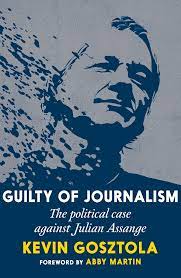
Kevin Gosztola is the managing editor of Shadowproof, where he writes The Dissenter. He is the author of Guilty of Journalism: The Political Case Against Julian Assange.
TRANSCRIPT
Chris Hedges: The long persecution of Julian Assange, the publisher of WikiLeaks, is set to culminate in its final act: a trial in the United States, probably this year. Kevin Gosztola has spent the last decade reporting on Assange, WikiLeaks, and the wider war on whistleblowers. His new book, Guilty of Journalism: The Political Case against Julian Assange, methodically lays out the complex issues surrounding the case, the gross distortions to the legal system used to facilitate the extradition of Julian, now in a high security prison in London, the abuses of power by the FBI and the CIA, including spying on Julian’s meetings when he sought refuge in the Ecuadorian embassy in London with his family, doctors, and attorneys, and the dire consequences, should Julian be convicted, for the press.
Joining me to discuss his new book is Kevin Gosztola. So Kevin, you do a very… I think your book and Nils Melzer are the two books I would recommend for people who don’t understand the case. I use this show in this interview to really lay out for people who are unfamiliar with the long persecution of Julian and the legal anomalies that have been used against him. You know, what those are. So let’s just start with what are the charges, what are the allegations, which is where you begin your book.
Kevin Gosztola: Yeah. And the intention was to look ahead and say, Julian Assange is likely to be brought to the US by the end of 2023, maybe 2024. We need something out there for the general public so they can wrap their head around the unprecedented nature of what’s unfolding. And so the charges against Julian Assange, he was first indicted back in April of 2019. Or sorry, that was when it was unveiled. He was charged first with a computer crime offense. They alleged, essentially, a password cracking conspiracy. And that was of intrusion, of essentially agreeing to help Chelsea Manning anonymously access military computers.
And then the other charges were 17 espionage act offenses. ………………………………………………………… https://therealnews.com/julian-assange-and-the-us-governments-war-on-whistleblowers
Former DEA Nuclear Security Official Says Wyoming Reactor Not Safe

the sodium reactor planned for Kemmerer has a high degree of potential for explosive accidents and proliferation of nuclear weapons material.
Sodium reacts with water and air, which Tallen said poses a huge risk for accidents.
Cowboy State Daily, By Kevin Killough, State Energy Reporter
Kevin@CowboyStateDaily.com January 25, 2023January 25, 2023
When TerraPower and PacifiCorp announced in November 2021 that they had selected Kemmerer as the location of its Natrium reactor demonstration project, many welcomed the opportunity as a path to a diverse energy economy for Wyoming.
In the next few months, TerraPower plans to break ground on a sodium testing project for the larger demonstration project. If the reactor design is proven, it would provide lots of carbon-free energy and provide a viable replacement for retiring coal plants in the state, TerraPower said.
Wapiti resident Bill Tallen had a 20-year career with the Department of Energy that was focused on the threat posed by terrorists who sought ways to create improvised nuclear devices.
Tallen argues that the sodium reactor planned for Kemmerer has a high degree of potential for explosive accidents and proliferation of nuclear weapons material. Henry Sokoloski, executive director of the Nonproliferation Policy Education Center (NPEC), which is based in Washington D.C., has a lot of the same concerns.
Jeff Navin, director of external affairs with TerraPower, says these concerns have been considered and addressed as much as reasonably possible in the project’s design and development.
Not Opposed To Nuclear
Tallen said he’s not ideologically opposed to nuclear power. He said he rubbed elbows with that crowd years ago, but it’s not where he stands today.
“The distrust of nuclear power is one of the major ideological tenets of left-wing, anti-establishment politics,” Tallen said. “I had to say to them, I can’t agree with you on many of your basic assumptions. I’m just saying that this particular [Natrium] technology pursued the way it is right now – I don’t think it’s a good idea.”
Reaction Risk
The Natrium reactor being built in Kemmerer uses sodium instead of water as a heat sink for the reactor core. That heat will then be transferred to water, which will produce steam to turn turbines.
Sodium reacts with water and air, which Tallen said poses a huge risk for accidents.
“There’s never been a sodium reactor that has actually met its promises. They’ve all had leaks and fires and explosions and toxic releases,” Tallen said. “Granted, in America we haven’t had big problems, but the past is not always prologue. The risk is still there.” ……………………
Plutonium And Proliferation
Sokolski with NPEC said these reactors produce plutonium during the fission process.
“The plutonium produced in these machines isn’t just weapons usable. It isn’t even weapons grade. It’s super weapons grade,” Sokolski said.
The Natrium reactors run on high-assay low-enriched uranium, known commonly as HALEU. It’s currently produced only in Russia, and due to the invasion of Ukraine, supplies of the material are scarce. This has led to a delay in the Kemmerer project.
Tallen said that as these reactors grow and more HALEU is produced, it’s just inviting a nation like Iran to find sources of the material, which can be enriched to weapons-grade with the right facilities.
“These are parties that do in fact have, or can construct, enrichment capabilities and will not be concerned by U.S. export restrictions,” Tallen said. ……………………….. https://cowboystatedaily.com/2023/01/25/former-dea-nuclear-security-official-says-wyoming-reactor-not-safe/
The Ohio nuclear scandal: Davis-Besse and Perry power plants in northern Ohio couldn’t cover costs, let alone make a profit.
An arm of FirstEnergy Corp. was “bleeding cash” as it explored options
for the two aging nuclear plants eventually rescued by Ohio House
legislation that federal prosecutors say former Speaker Larry Householder
championed in exchange for corporate bribes, a utility executive testified
Tuesday.
Steven Staub, the company’s vice president and treasurer, told
jurors on the second day of Householder’s corruption trial that power
prices had gotten so low in the years leading up to the bill’s passage in
2019 that the Davis-Besse and Perry power plants in northern Ohio couldn’t
cover costs, let alone make a profit.
Independent 24th Jan 2023
New documentary film ‘Downwind’ explores why testing, using nuclear weapons are deadly mistakes
St George News, by Stephanie DeGraw, January 25, 2023
PARK CITY — The tragedies of nuclear testing are not over, advocates and directors with the world premiere of the film “Downwind” told the audience at the Slamdance Film Festival in Park City Monday evening.
“Subsequent generations may suffer more than the original exposed generation,” Dr. Brian Moench, founder and president of the Utah Physicians for a Healthy Environment, said. “The faces behind the statistics we’ve heard are real human beings, but there will be more who you don’t see because they haven’t been born yet.”
The Slamdance Spotlight documentary film is still relevant today, locally and globally. The film exposes an often-forgotten chapter of U.S. history and the ongoing health consequences for Americans living downwind.
Some 928 nuclear detonations took place from 1951 to 1992 near Las Vegas, Nevada. These included the 100 atmospheric tests residents of Southern Utah could watch. Research shows St. George has above-average rates of radioactivity compared with the nationwide average.
The West Shoshone is also profoundly affected by the government’s testing. Ian Zabarte, principal man of the West Bands of the Shoshone Nation, said their sacred land continues to be cordoned off as a nuclear test site.
For 40 years, large-scale atomic weapons obliterated the landscape. It exposed people, the environment, livestock and agriculture across the country to deadly fallout. Zabarte said despite a moratorium on testing, the Nevada Test Site remains operational with the possibility of resumed testing.
“The film ‘Downwind’ is important because it provides us with an understanding of the past,” Zabarte said. “Awareness is key. If we’re going to protect future generations, we need to know what happened in the past and not repeat those mistakes.
“Testing, developing and using nuclear weapons is a mistake. America is the only nation that’s ever killed people with nuclear weapons.”
Zabarte said that atomic weapons are illegal under the new international law, the Treaty on the Prohibition of Nuclear Weapons, which was enacted on Jan. 22, 2021.
“We can protect our environment, our Mother Earth, by ending our obsession with nuclear weapons of mass destruction,” Zabarte said. “We can join the Treaty on Prohibition of Nuclear Weapons,.”………………………………………………………………………….. more https://www.stgeorgeutah.com/news/archive/2023/01/25/sdw-new-documentary-film-downwind-explores-why-testing-using-nuclear-weapons-are-deadly-mistakes/#.Y9I1onZBy5c
Cost Estimate for Plutonium Pit Project at Savannah River Site Hits $16.5 Billion, $5 Billion above Current Estimate
“Given the myriad of cost and schedule threats facing the SRS pit facility, it’s simply not acceptable that DOE will for four years hide updated costs estimate and technical updates for this daunting project,”
“The shocking cost jumps and continuous delays underscore questions about the need for the redundant SRS pit plant,
NEWS PROVIDED BY Savannah River Site Watch, January 25, 2023,
Public Interest Group Obtains and Releases DOE Assessment of the SRS Plutonium Processing Facility, to make Plutonium Pits for Provocative New Nuclear Warheads
Given the myriad of cost and schedule threats facing the SRS pit facility, it’s simply not acceptable that DOE is hiding updated cost estimates and technical information for this daunting project.”
— Tom Clements, Director, Savannah River Site Watch
COLUMBIA, SC, US, January 25, 2023 /EINPresswire.com/ — A key U.S. Department of Energy document assessing the progress of planning for the proposed plutonium pit project at the Savannah River Site reveals a cost range billions of dollars higher than what has been previously known. DOE has not made the document public and it is only now being released by a non-profit organization tracking the costly project.
The document prepared in 2021 by the DOE’s National Nuclear Security Administration (NNSA) – the nuclear weapons agency inside DOE – estimates that the controversial project to fabricate plutonium pits (cores) for new nuclear warheads could range from $8.7 billion to $16.5 billion, far higher than the currently known cost range of $6.9 billion to $11.1 billion.
The cost estimate for the SRS Plutonium Processing Facility (SRPPF) – also known as the SRS Plutonium Bomb Plant (SRS) PBP) – is presented in a report by a NNSA team that analyzed the SRS pit project in March 2021, three months before the current cost estimate was released and the project given the go-ahead. The review of the documentation to move ahead with the pit project is titled “Critical Decision (CD)-1 Independent Project Review (IPR) – Savanah River Plutonium Processing Facility (SRPPF).” [Correct spelling is “Savannah.”]
The SRS pit “project review,” requested by the acting administrator of the NNSA, was obtained on January 9, 2023 by the public interest organization Savannah River Site Watch via a Freedom of Information Act (FOIA) request. (Key documents are linked here, in SRS Watch news release.)
The document affirms that the congressionally mandated 2030 date to fabricate 50 or more plutonium pits at SRS, in the shell of the partially finished plutonium fuel (MOX) building, cannot be met and makes the startling revelation that the facility would not produce pits until February 2036, a full 2 years after the anticipated 2034 approval to operate, in so-called Critical Decsion-4.
That 2036 start date for the SRS nuclear bomb facility is beyond the 2032-2035 start date presented in congressional testimony by NNSA. The Critical Decision-1 go-ahead decision and rough cost estimate came in June 2021 but a more refined cost estimate might not be available for four years, when Critical Decision-2 is reached in mid-2025, with a new project cost baseline and a supposed 90% design completion. The just-revealed cost estimate includes CD-1 costs.
“Given the myriad of cost and schedule threats facing the SRS pit facility, it’s simply not acceptable that DOE will for four years hide updated costs estimate and technical updates for this daunting project,” said Tom Clements, director of SRS Watch, in Columbia, SC. “The shocking cost jumps and continuous delays underscore questions about the need for the redundant SRS pit plant, which is being pursued at SRS to fill the funding hole when the MOX boondoggle was terminated in 2018,” added Clements.
This significantly higher cost estimate of the program to make new plutonium pits for questionable new nuclear warheads is actually higher as “it does not include Fee or NNSA Other Direct Cost (ODC), both of which are still being developed, typically they are 4% and 2% respectively.”
SRS Watch is a non-profit, public-interest organization working on sound policies and projects by the U.S. Department of Energy, with a focus on the Savannah River Site in South Carolina.
Abandoned plutonium fuel (MOX) building at DOE’s Savannah River Site in South Carolina, coutersy High Flyer to SRS Watch; DOE aims to turn the building into the SRS Plutonium Bomb Plant.
Diagram of nuclear warhead, with plutonium pit. Image by South Carolina Environmental Law Project (SCELP).
Public Interest Group Obtains and Releases DOE Assessment of the SRS Plutonium Processing Facility, to make Plutonium Pits for Provocative New Nuclear Warheads
Given the myriad of cost and schedule threats facing the SRS pit facility, it’s simply not acceptable that DOE is hiding updated cost estimates and technical information for this daunting project.”
— Tom Clements, Director, Savannah River Site Watch
COLUMBIA, SC, US, January 25, 2023 /EINPresswire.com/ — A key U.S. Department of Energy document assessing the progress of planning for the proposed plutonium pit project at the Savannah River Site reveals a cost range billions of dollars higher than what has been previously known. DOE has not made the document public and it is only now being released by a non-profit organization tracking the costly project.
The document prepared in 2021 by the DOE’s National Nuclear Security Administration (NNSA) – the nuclear weapons agency inside DOE – estimates that the controversial project to fabricate plutonium pits (cores) for new nuclear warheads could range from $8.7 billion to $16.5 billion, far higher than the currently known cost range of $6.9 billion to $11.1 billion.
The cost estimate for the SRS Plutonium Processing Facility (SRPPF) – also known as the SRS Plutonium Bomb Plant (SRS PBP) – is presented in a report by a NNSA team that analyzed the SRS pit project in March 2021, three months before the current cost estimate was released and the project given the go-ahead. The review of the documentation to move ahead with the pit project is titled “Critical Decision (CD)-1 Independent Project Review (IPR) – Savanah River Plutonium Processing Facility (SRPPF).” [Correct spelling is “Savannah.”]
The SRS pit “project review,” requested by the acting administrator of the NNSA, was obtained on January 9, 2023 by the public interest organization Savannah River Site Watch via a Freedom of Information Act (FOIA) request. (Key documents are linked here, in SRS Watch news release.)
The document affirms that the congressionally mandated 2030 date to fabricate 50 or more plutonium pits at SRS, in the shell of the partially finished plutonium fuel (MOX) building, cannot be met and makes the startling revelation that the facility would not produce pits until February 2036, a full 2 years after the anticipated 2034 approval to operate, in so-called Critical Decsion-4.
That 2036 start date for the SRS nuclear bomb facility is beyond the 2032-2035 start date presented in congressional testimony by NNSA. The Critical Decision-1 go-ahead decision and rough cost estimate came in June 2021 but a more refined cost estimate might not be available for four years, when Critical Decision-2 is reached in mid-2025, with a new project cost baseline and a supposed 90% design completion. The just-revealed cost estimate includes CD-1 costs.
“Given the myriad of cost and schedule threats facing the SRS pit facility, it’s simply not acceptable that DOE will for four years hide updated costs estimate and technical updates for this daunting project,” said Tom Clements, director of SRS Watch, in Columbia, SC. “The shocking cost jumps and continuous delays underscore questions about the need for the redundant SRS pit plant, which is being pursued at SRS to fill the funding hole when the MOX boondoggle was terminated in 2018,” added Clements.
This significantly higher cost estimate of the program to make new plutonium pits for questionable new nuclear warheads is actually higher as “it does not include Fee or NNSA Other Direct Cost (ODC), both of which are still being developed, typically they are 4% and 2% respectively.”
The document is mentioned in a footnote (on page 3) in a report issued on January 13, 2023 by the Governmental Accountability Office – “NNSA Does Not Have a Comprehensive Schedule or Cost Estimate for Pit Production Capability” (https://www.gao.gov/products/gao-23-104661) but the cost information in the just-released NNSA report was not mentioned or analyzed by the GAO. Rather, GAO reported the NNSA’s cost figures from the Fiscal Year 2023 budget justification – $6.9 billion to $11.1 billion. – and cited NNSA’s “concerns that publicizing preliminary or uncertain information would lead to misinterpretation over increasing costs if preliminary numbers rise.”
The GAO also said that “using NNSA’s fiscal year 2023 budget justification GAO identified at least $18 billion to $24 billion in potential costs for the 80-pit-per-year” pit production construction costs at the Savannah River Site and the Los Alamos National Lab (LANL), where NNSA is aiming for production of 30 or more pits per year………………………………..
The just-revealed $8.7 billion to $16.5 billion SRS pit plant cost could increase the range of the cost of the two pit facilities to a staggering $19.8 billion to $29.4 billion. ………………………………..
“NNSA must immediately implement transparency about the challenging SRS pit project and regularly release cost and technical information but it appears they are choosing the path of needless secrecy and obfuscation, a sure sign the project isn’t healthy,” said Clements. “The clock is ticking on this project and it sadly looks like we could have another MOX debacle in the making by an inflexible bureaucracy that urgently needs an education in openness,” added Clements. https://www.einnews.com/pr_news/613279071/cost-estimate-for-plutonium-pit-project-at-savannah-river-site-hits-16-5-billion-5-billion-above-current-estimate
1 This Month





PLEASE OPPOSE HR 8255 AND S.3639 – bills would accelerate satellite deployment, with no environmental review or safeguards – https://ncstd5li.quorum.us/campaign/169331/
To see nuclear-related stories in greater depth and intensity – go to https://nuclearinformation.wordpress.com
-
Archives
- October 2026 (74)
- September 2026 (339)
- August 2026 (330)
- July 2026 (355)
- June 2026 (287)
- May 2026 (306)
- April 2026 (356)
- March 2026 (251)
- February 2026 (267)
- January 2026 (308)
- December 2025 (358)
- November 2025 (359)
-
Categories
- 1
- 1 NUCLEAR ISSUES
- business and costs
- climate change
- culture and arts
- ENERGY
- environment
- health
- history
- indigenous issues
- Legal
- marketing of nuclear
- media
- opposition to nuclear
- PERSONAL STORIES
- politics
- politics international
- Religion and ethics
- safety
- secrets,lies and civil liberties
- spinbuster
- technology
- Uranium
- wastes
- weapons and war
- Women
- 2 WORLD
- ACTION
- AFRICA
- Atrocities
- AUSTRALIA
- Christina's notes
- Christina's themes
- culture and arts
- Events
- Fuk 2022
- Fuk 2023
- Fukushima 2017
- Fukushima 2018
- fukushima 2019
- Fukushima 2020
- Fukushima 2021
- general
- global warming
- Humour (God we need it)
- Nuclear
- RARE EARTHS
- Reference
- resources – print
- Resources -audiovicual
- Weekly Newsletter
- World
- World Nuclear
- YouTube
-
RSS
Entries RSS
Comments RSS

