US navy accused of cover-up over radioactive shipyard waste

The US navy is covering up dangerous levels of radioactive waste on a
40-acre former shipyard parcel in San Francisco’s waterside Hunters Point
neighborhood, public health advocates charge.
The land is slated to be
turned over to the city as early as next year, and could be used for
residential redevelopment. The accusations stem from 2021 navy testing that
found 23 samples from the property showed high levels of strontium-90, a
radioactive isotope that replaces calcium in bones and causes cancer.
The Environmental Protection Agency raised alarm over the levels, but the navy
in 2022 said its testing was inaccurate and produced a new set of data that
showed levels of strontium-90 lower than zero, which was dismissed by
environmental health experts as impossible.
Guardian 25th June 2023
https://www.theguardian.com/us-news/2023/jun/25/us-navy-accused-radiocative-shipyard-waste
Nuclear Waste Transportation Draws Opposition in West

Concerns are growing in the west about nuclear waste transportation.
On Tuesday, the Snake River Alliance is holding a webinar on these concerns, heightened by the potential of a temporary waste facility opening in New Mexico.
Kevin Kamps is the radioactive waste specialist for Beyond Nuclear. He said these fears are combined with the recent train derailment of toxic waste in Ohio.
He said the federal government and nuclear power industry are rushing to create the New Mexico temporary waste facility.
“These dumps that are proposed are called consolidated interim storage facilities, which means it’s only temporary and the waste will have to move again,” said Kamps. “So it’s really wrongheaded. It’s going to automatically double transportation risks.”
In May, the U.S. Nuclear Regulatory Commission issued a license for the temporary waste site in New Mexico.
The Biden administration says nuclear power is a key component for the country’s clean energy future. However, state officials in New Mexico have voiced their opposition to the facility.
Nuclear waste also is a concern in Idaho. Experiments are starting on new nuclear reactor designs such as small modular reactors at the Idaho National Laboratory.
However, Kamps pointed out that recent research found these SMRs generate two to 30 times the amount of radioactive waste as traditional nuclear reactors.
“So another downside of all this SMR talk,” said Kamps, “which unfortunately Idaho is on the cutting edge of.”
Kamps said he believes the country is living on borrowed time when it comes to the potential for disaster from nuclear power.
“We really should be transitioning into a renewable energy economy in this country,” said Kamps, “which is much safer, much more secure and actually much more cost effective than nuclear power.”
Amid China Tensions, US Nuclear-Powered Aircraft Carrier, USS Ronald Reagan, To Make A Rare Vietnam Port Call
By Ashish Dangwal. Eurasian Times, June 24, 2023
Amid heightened tensions with Beijing in the South China Sea, the US nuclear-powered aircraft carrier Ronald Reagan is scheduled to make a rare visit to Danang, the port city in Central Vietnam, on June 25.
This visit by the USS Ronald Reagan marks only the third time a US aircraft carrier has made such a stop since the end of the Vietnam War.
According to an announcement by Vietnam’s Foreign Ministry, the USS Ronald Reagan, a Nimitz-class aircraft carrier, was scheduled to reach Da Nang on June 25 and remain there until June 30………….
Additionally, Vietnam recently hosted Japan’s largest destroyer, the Izumo, after joint exercises with the USS Ronald Reagan and other American vessels in the South China Sea.
………. The United States aims to enhance its bilateral relationship with Vietnam, especially considering Hanoi’s ongoing disputes with Beijing over territorial boundaries in the South China Sea. …………………………………………….. more https://eurasiantimes.com/amid-china-tensions-us-nuclear-powered-aircraft-carrier-uss-ronald-reagan-to-make-a-rare-vietnam-port-call/
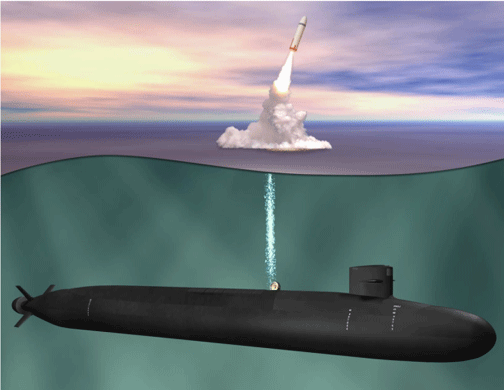
A $31 Billion Missile Program! US Looks To Reintroduce Nuclear Sea-Launched Cruise Missile Costing Equal To 10 Virginia-Class Subs
By Parth Satam, June 23, 2023, https://eurasiantimes.com/a-31-billion-missile-program-us-looks-to-reintroduce-nuclear-sea-launched-cruise-missile-costing-equal-to-10-virginia-class-subs/
A section of US Congressmen are voting for reintroducing a costly and redundant nuclear program. Republican lawmakers in the House are adopting a measure to institutionalize the Sea-Launched Cruise Missile-Nuclear (SLC)The SLCM was denied funding in last year’s Fiscal Year 2023 budget and concluded to have no battlefield use in the 2022 Nuclear Posture Review (NPR).
The Cold War-era concept envisages a cruise missile with a low-yield tactical nuclear warhead that can be fired from submarines, warships, or naval aircraft on a trajectory that makes it hard to track by radar.
According to a report in Defense News, the House Armed Services Committee “voted along party lines to amend the fiscal 2024 National Defense Authorization Act (NDAA) with a provision that would create a program of record (PoR) for SLCM-N.”
A PoR is a listed ‘line item record’ in current and future defense acquisition plans that make them eligible for continued funding over the years.
Obscene Cost for a Useless Weapon
If the full HASC advances the Fiscal Year 2024 (FY24) and passes the full floor vote in July, it would receive nearly $196 million as research and development funds.
However, political leaders and military experts advise against the astronomical costs and a futile capability, which they say can be invested elsewhere and be performed by other weapons systems.
Representative Courtney, a Democratic Congressman from Connecticut, who chairs the sea power subcommittee, cited May testimony from Chief of Naval Operations Admiral Michael Gilday stating that the warheads needed to make an SLCM-N program would cost at least $31 billion.
“The Navy can do a lot of other things with $31 billion. You can build 15 DDG destroyers with $31 billion, 10 Virginia-class submarines with $31 billion. You put nuclear warheads on these vessels, then you are changing the mission,” Courtney said.
Another Democratic Congressman, Representative Adam Smith of Washington, the top Democrat on the Armed Services Committee, argued that the US already has ballistic submarines in its fleet as well as lower-yield nuclear options from the air.
“It’s walking us down a path of spending enormous money on a capability that we don’t really need that will undermine our ability to build capabilities that we do (need) going forward,” said Smith.
Why Doesn’t the US Need the SLCM-N
Citing the need for flexibility and regional presence, the Trump administration’s 2018 Nuclear Posture Review (NPR) called for re-establishing a sea-launched cruise missile-nuclear capability.
President Biden’s FY 2022 budget continued funding SLCM-N, aiming to deploy it by the late 2020s. However, with the 2022 NPR identifying SLCM-N as “no longer necessary,” Biden’s 2023 budget request did not include SLCM-N funding.
The missile basically saddles important weapons platforms like submarines and warships with a mission set that can be undertaken by US Air Force (USAF) strategic bombers. It takes away the flexibility of employing diverse firepower options with a varied range of platforms.
“Should a geographic combatant commander intend to seek permission to use a nuclear weapon for tactical purposes, selecting bombers would offer more flexibility between mission sets and avoid committing to a weapons load-out decision as far in advance as would be necessary if SLCM-N were chosen” retired US Navy officer, Captain John Moulton writes in a paper.
In other words, an SLCM-N armed naval submarine or warship meets a very “narrow” mission set of destroying hardened enemy ground targets while sacrificing equally important tactical and strategic roles like hunting enemy submarines, destroying surface warships, mine laying or providing Intelligence-Surveillance-Reconnaissance (ISR).
Other currently nuclear weapons capable platforms like the B-2 Spirit, B-52 Stratofortress, B-1B Lancer, and the upcoming B-21 Raider envisaged for the same mission could also reach the warzone quickly.
The cost of revealing its position while firing an SLCM-N would also far outweigh the gains from hitting enemy ground targets with low-yield nuclear missiles, Moulton further explains. Moulton is a Senior Fellow at the Council on Strategic Risks’ Janne E. Nolan Center on Strategic Weapons.
The conditions that would justify using a tactical nuclear-tipped cruise missile would be very rare and would prevent a submarine or a naval vessel from performing optimally in a fluid battlefield situation.
In the Western Pacific, becoming part of a “joint force” in a mutually supporting pushback against a People’s Liberation Army Navy (PLAN) fleet inside China’s dangerous Anti-Access/Area-Denial (A2/AD) zone is a new evolving orientation guiding the US Navy’s submarine arm, explained in a previous EurAsian Times analysis.
Lastly, the risks of unintended nuclear escalation are exponentially higher when an SLCM-N is fired since the country sustaining the attack – China or North Korea – might legitimately retaliate with a nuclear strike, triggering a devastating atomic exchange.
Experts have long pointed out how such exchanges cannot be “controlled” given the tensions and the miscalculation involved.
A US asset firing an SLCM-N also counts as a nuclear first strike, which shifts the diplomatic narrative in the Russian, Chinese, or North Korean favor. None of these countries have ever indicated they plan to use nuclear weapons as a warfighting tool. While China has a clear No-First Use (NFU) policy, Moscow and Pyongyang have maintained they will use nukes only when the physical security of their country faces an existential threat. The author can be reached at satamp@gmail.com
A nuclear site is on tribes’ ancestral lands. Their voices are being left out on key cleanup talks
KNKX Public Radio | By The Associated Press, June 23, 2023
Three federally recognized tribes have devoted decades to restoring the condition of their ancestral lands in southeastern Washington state to what they were before those lands became the most radioactively contaminated site in the nation’s nuclear weapons complex, the Hanford Nuclear Reservation.
But the Yakama Nation, Confederated Tribes of the Umatilla Indian Reservation and Nez Perce Tribe have been left out of negotiations on a major decision affecting the future cleanup of millions of gallons of radioactive waste stored in underground tanks on the Hanford site near Richland.
In May, federal and state agencies reached an agreement that hasn’t been released publicly but will likely involve milestone and deadline changes in the cleanup, according to a spokesperson for the Washington State Department of Ecology, a regulator for the site. As they privately draft their proposed changes, the tribes are bracing for a decision that could threaten their fundamental vision for the site.
“As original stewards of that area, we’ve always been taught to leave it better than you found it,” said Laurene Contreras, program administrator for the Yakama Nation’s Environmental Restoration/Waste Management program, which is responsible for the tribe’s Hanford work. “And so that’s what we’re asking for.”
From World War II through the Cold War, Hanford produced more than two-thirds of the United States’ plutonium for nuclear weapons, including the atomic bomb dropped on Nagasaki, Japan, in 1945. Production ceased in 1989, and the site’s mission shifted to cleaning up the chemical and radioactive waste left behind.
For these tribes, which have served as vital watchdogs in the cleanup process, the area’s history dates back long before Hanford, to pre-colonization. It was a place where some fished, hunted, gathered and lived. It’s home to culturally significant sites. And in 1855 treaties with the U.S. government in which the tribes ceded millions of acres of land, they were assured continued access.

The U.S. Department of Energy, the Environmental Protection Agency and the Washington State Department of Ecology have held confidential negotiations since 2020 on revising plans for the approximately 56 million gallons of radioactive waste stored in 177 underground tanks at Hanford. The discerning eyes of the tribal experts have been kept out, though EPA and Ecology have said there will eventually be opportunities for the tribes to meet with them about this.
The revisions are expected to affect an agreement among the three agencies that outlines the Hanford cleanup. Mason Murphy, program manager for the Confederated Tribes’ Energy and Environmental Sciences program, points out that the tribes also weren’t consulted in that original 1989 agreement.
“It’s an old scabbed-over wound,” Murphy said…………………………………………………….. https://www.knkx.org/government/2023-06-23/a-nuclear-site-is-on-tribes-ancestral-lands-their-voices-are-being-left-out-on-key-cleanup-talks
—
Riverkeeper celebrates bipartisan Assembly passage of bill to stop radioactive wastewater discharges into the Hudson River; Governor Hochul must sign.

Riverkeeper, the leading environmental organization dedicated to protecting the Hudson River, celebrates the Assembly taking the final legislative step after the unanimous bipartisan Senate passage of crucial legislation aimed at safeguarding the economic vitality of the Hudson River from the imminent threat of radioactive wastewater discharge at Indian Point by Holtec International, the firm responsible for decommissioning the nuclear power plant. With the legislation now at Governor Hochul’s desk, she must sign the bill immediately to prevent Holtec from releasing radioactive wastewater into the Hudson River.
“The unanimous bipartisan support in the Senate and the bipartisan vote in the Assembly sends a clear signal that New Yorkers of all stripes are opposed to Holtec’s plans. Governor Hochul must sign the legislation to draw a firm line against the use of our river as a dumping ground for radioactive waste and pave the way for a prosperous future for the Hudson River and its surrounding communities,” said Tracy Brown, President of Riverkeeper, “We cannot underestimate the impact of the public perception of a severely polluted Hudson River. Together we have made great strides in cleaning up the Hudson, which has supported increased water-based recreation and tourism. We cannot let outmoded “business-as-usual” polluting practices undercut that work and our goal of a clean and healthy Hudson for all.”
Riverkeeper thanks Assemblymember Dana Levenberg and Senator Pete Harckham for their relentless efforts in championing this important legislation, S6893/A7208. We also thank Assembly Speaker Carl Heastie and Senate Majority Leader Andrea Stewart-Cousins for their leadership in ensuring the legislation received a vote.
Instead of allowing Holtec to discharge the wastewater, Riverkeeper together with a coalition of partners are calling for the secure on-site storage of the contaminated water on the Indian Point site for at least a period of 12.5 years. This would allow for one half life to elapse and reduce the radioactivity of the spent fuel pool water and protect the economic interests of the state, while alternative disposal methods are thoroughly evaluated. Riverkeeper is a member of the Indian Point Decommissioning Oversight Board and provides expertise on issues related to water quality, public health, and impacts to wildlife.
The overwhelming opposition from the public against Holtec’s profit-driven discharges has resonated across the state, as concerned citizens and communities rally together to protect the Hudson River as the vital resource it is.
Riverkeeper stands firm in its commitment to defending the Hudson River and urges Governor Hochul to immediately sign the legislation before Holtec proceeds with the release of radioactive wastewater.
Concerned citizens can take action by urging Governor Hochul to sign the legislation immediately.
New Mexico leaders fear nuclear waste could endanger oil and gas in the Permian Basin

Adrian Hedden, Carlsbad Current-Argus, 23 June 23 https://www.currentargus.com/story/news/2023/06/23/new-mexico-leaders-fear-nuclear-waste-holtec-endanger-oil-gas-fossil-fuel-permian-basin/70338508007/
State land managers in New Mexico doubled down on their opposition to a proposed project to store spent nuclear fuel at a site near the border of Eddy and Lea counties amid the Permian Basin oilfield.
The New Mexico Land Office owns and oversees operations on State Trust land, largely consisting of fossil fuel extraction in southeast corner of the state, generating revenue used to fund public schools, hospitals and other public services.
Sunalei Stewart, deputy commissioner of operations at the office said it owns mineral rights beneath Holtec International’s proposed project location.
He added that means the agency has the right to oppose and block the project which Commissioner of Public Lands Stephanie Garcia Richard signaled disapproval of due to concerns nuclear waste storage could impact other nearby industries like oil and gas.
Stewart’s comments came before the June 15 meeting of the New Mexico Legislature’s interim Radioactive and Hazardous Material Committing in Santa Fe.
“One thing about Holtec that not everybody appreciates, is that the land, the mineral estate is actually owned by the State Land Office,” said Stewart. “The surface is where the project will occur, but we own all of the mineral rights.”
Holtec International recently received a license from the federal Nuclear Regulatory Commission to build and operate the site on about 1,000 acres owned by the Eddy-Lea Energy Alliance (ELEA), a consortium of the cities of Carlsbad and Hobbs and Eddy and Lea counties.
The project would see up to 100,000 metric tons of spent nuclear fuel rods shipped via rail into southeast New Mexico for storage at the surface on a 40-year license, potentially reprocessed for more fuel or sent to final disposal if such a facility becomes available.
The U.S. does not have a permanent repository for disposal of the waste, igniting fears from New Mexico leaders that the Holtec site could become the “de-facto” resting place for the waste.
Stewart said the Land Office has existing oil and gas leases targeting the minerals beneath Holtec’s proposed location, and that multiple analysis conducted by the NRC failed to account for extraction activities.
“We have expressed a lot of frustration and concern,” Stewart said before lawmakers. “The assumptions for the safety analysis, the environmental analysis, all assumed there would be no oil and gas activity at the site, there would be no potash mining at the site, so sand and gravel at the site. There would be no mineral activity at the site.
“We remained very concerned about the project and how it could impact State Trust land specifically.”
The Permian Basin region, which southeast New Mexico shares with West Texas, is the U.S.’ most productive oilfield, generating up to 5.7 million barrels per day, according to the Energy Information Administration (EIA).
That industry was estimated to generate almost half of New Mexico General Fund revenue in the last fiscal year, according to the most recent state budget analysis – about $7 billion.
That industry and its economic support of the state could be imperiled, Stewart said, by Holtec’s proposal.
“This is really in the heart of the Permian,” he said of the proposed site. “If there was an accident, if there was an incident, we could be in a lot of trouble in terms of other operations that are out there. There are active wells out there.”
Committee Chair Rep. Joanne Ferrary (D-37) said the project would draw waste from about 70 sites in 35 states, which could lead to dangers along the route on the U.S. rail system.
She pointed to Senate Bill 53, sponsored by the committee’s Vice Chair Jeff Steinborn (D-36), that barred New Mexico from issuing various permits the Holtec site would need to operate such as for wastewater discharge or air quality impacts.
“From back east, they’re coming to New Mexico. Most of the time, they would not have to come through New Mexico,” said Ferrary. “Hopefully we can head that off with our legislation.”
Sen. Brenda McKenna (D-9) also voiced concerns for the transportation of the waste, arguing any accidents along the route could imperil New Mexicans or any nearby community.
“They have had accidents,” she said of Holtec. “I hope we will succeed in block in entirely.”
1
Plan to discharge water into Hudson River from closed nuclear plant sparks uproar

Michael Hill, Independent 21 June 23
The Indian Point nuclear plant along the Hudson River is at the
center of a controversy two years after it was shut down. The latest
flashpoint revolves around plans to release 1.3 million gallons of water
with traces of radioactive tritium into the river as part of the plant’s
decommissioning…………..
opponents along the river question the health and safety claims. They say the releases of radioactive water could be a step back for a once notoriously polluted river that is now a popular summer attraction for sailors, kayakers and swimmers.
Communities along the river have already passed resolutions opposing the discharges, and an online petition has gathered more than 440,000 signatures. Now a bill being considered in state Legislature on Tuesday sponsored by two Hudson Valley Democrats would ban those radiological discharges into the river.
“It leaves a bad taste in your mouth … the idea that we would be polluting our beautiful Hudson River with waste when we’ve spent so many years trying to clean it up. This shouldn’t be a dumping ground,” Assembly member Dana Levenberg said at a state Capitol rally for her bill.
The bill, approved by the state Senate earlier this month, was opposed by some union officials, who say it could interrupt the decommissioning and cause layoffs…………….. https://www.independent.co.uk/news/world/americas/hudson-river-ap-new-york-city-kathy-hochul-communities-b2361202.html
Prodding the Pentagon
Politico 6/21/23
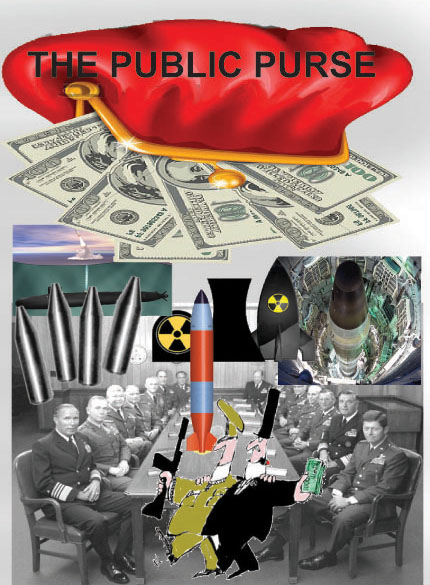
FIRST IN NATSEC DAILY — PRODDING THE PENTAGON: A bipartisan group of senators introduced legislation today that would require the Defense Department to pass an independent audit by the end of fiscal year 2024.
If enacted, the Audit the Pentagon Act of 2023 would require any DOD component that fails to pass an audit to return 1 percent of its budget to the Treasury for deficit reduction.
“If we are serious about spending taxpayer dollars wisely and effectively, we have got to end the absurdity of the Pentagon being the only agency in the federal government that has never passed an independent audit,” wrote Sen. BERNIE SANDERS (I-Vt.), who co-led the bill alongside CHUCK GRASSLEY (R-Iowa).
Co-sponsors include Sens. RON WYDEN (D-Ore.), MIKE LEE (R-Utah), ELIZABETH WARREN (D-Mass.), MIKE BRAUN (R-Ind.), JEFF MERKLEY (D-Ore.), RAND PAUL (R-Ky.), ED MARKEY (D-Mass.), and TAMMY BALDWIN (D-Wis.).
The Pentagon, which has a budget totaling $886 billion for fiscal year 2024, has long come under fire for excessive spending. Calls for oversight have ramped up in recent months after reports of massive price gouging by defense contractors, who will receive almost half of the budget this year.
The Imminent Extradition of Julian Assange and the Death of Journalism

Julian Assange’s legal options have nearly run out. He could be extradited to the U.S. this week. Should he be convicted in the U.S., any reporting on the inner workings of power will become a crime.
By Chris Hedges / Original to ScheerPost more https://scheerpost.com/2023/06/18/chris-hedges-the-imminent-extradition-of-julian-assange-and-the-death-of-journalism/?utm_source=rss&utm_medium=rss&utm_campaign=chris-hedges-the-imminent-extradition-of-julian-assange-and-the-death-of-journalism
High Court Judge Jonathan Swift — who previously worked for a variety of British government agencies as a barrister and said his favorite clients are “security and intelligence agencies” — rejected two applications by Julian Assange’s lawyers to appeal his extradition last week. The extradition order was signed last June by Home Secretary Priti Patel. Julian’s legal team have filed a final application for appeal, the last option available in the British courts. If accepted, the case could proceed to a public hearing in front of two new High Court judges. If rejected, Julian could be immediately extradited to the United States where he will stand trial for 18 counts of violating the Espionage Act, charges that could see him receive a 175-year sentence, as early as this week.
The only chance to block an extradition, if the final appeal is rejected, as I expect it will be, would come from the European Court of Human Rights (ECtHR). The parliamentary arm of the Council of Europe, which created the ECtHR, along with their Commissioner for Human Rights, oppose Julian’s “detention, extradition and prosecution” because it represents “a dangerous precedent for journalists.” It is unclear if the British government would abide by the court’s decision — even though it is obligated to do so — if it ruled against extradition, or if the U.K. would extradite Julian before an appeal to the European court can be heard. Julian, once shipped to the U.S., would be put on trial in the U.S. District Court for the Eastern District of Virginia where most espionage cases have been won by the U.S. government.
Judge Vanessa Baraitser at Westminster Magistrates’ Court refused to authorize the U.S. government’s extradition request in Jan. 2021 because of the severity of the conditions Julian would endure in the U.S. prison system.
“Faced with the conditions of near total isolation without the protective factors which limited his risk at [Her Majesty’s Prison] Belmarsh, I am satisfied the procedures described by the U.S. will not prevent Mr. Assange from finding a way to commit suicide,” said Baraitser when handing down her 132-page ruling, “and for this reason I have decided extradition would be oppressive by reason of mental harm and I order his discharge.”
Baraitser’s decision was overturned after an appeal by U.S. authorities. The High Court accepted the conclusions of the lower court about increased risk of suicide and inhumane prison conditions. But it also accepted four assurances in U.S. Diplomatic Note no. 74, given to the court in Feb. 2021, which promised Julian would be well treated. The U.S. government claimed that its assurances “entirely answer the concerns which caused the judge [in the lower court] to discharge Mr. Assange.” The “assurances” state that Julian will not be subject to Special Administrative Measures (SAMs).
They promise that Julian, an Australian citizen, can serve his sentence in Australia if the Australian government requests his extradition. They promise he will receive adequate clinical and psychological care. They promise that, pre-trial and post-trial, Julian will not be held in the Administrative Maximum Facility (ADX) in Florence, Colorado. No one is held pre-trial in ADX Florence. But it sounds reassuring. ADX Florence is not the only supermax prison in the U.S. Julian can be placed in one of our other Guantanamo-like facilities in a Communications Management Unit (CMU). CMUs are highly restrictive units that replicate the near total isolation imposed by SAMs.
None of these “assurances” are worth the paper they are written on. All come with escape clauses. None are legally binding. Should Julian do “something subsequent to the offering of these assurances that meets the tests for the imposition of SAMs or designation to ADX” he will, the court conceded, be subject to these harsher forms of control.
If Australia does not request a transfer it “cannot be a cause for criticism of the USA, or a reason for regarding the assurances as inadequate to meet the judge’s concerns,” the ruling read. And even if that were not the case, it would take Julian 10 to 15 years to appeal his sentence up to the U.S. Supreme Court, which would be more than enough time to destroy him psychologically and physically.
No doubt the plane waiting to take Julian to the U.S. will be well stocked with blindfolds, sedatives, shackles, enemas, diapers and jumpsuits used to facilitate “extraordinary renditions” conducted by the CIA.
The extradition of Julian will be the next step in the slow-motion execution of the publisher and founder of WikiLeaks and one of the most important journalists of our generation. It will ensure that Julian spends the rest of his life in a U.S. prison. It will create legal precedents that will criminalize any investigation into the inner workings of power, even by citizens from another country. It will be a body blow to our anemic democracy, which is rapidly metamorphosing into corporate totalitarianism.
I am as stunned by this full frontal assault on journalism as I am by the lack of public outrage, especially by the media. The very belated call from The New York Times, The Guardian, Le Monde, Der Spiegel and El País — all of whom published material provided by WikiLeaks — to drop the extradition charges is too little too late. All of the public protests I have attended in defense of Julian in the U.S. are sparsely attended. Our passivity makes us complicit in our own enslavement.
Julian’s case, from the start, has been a judicial farce.
Former Ecuadorian President Lenin Moreno terminated Julian’s rights of asylum as a political refugee, in violation of international law. He then authorized London Metropolitan Police to enter the Ecuadorian Embassy — diplomatically sanctioned sovereign territory — to arrest a naturalized citizen of Ecuador. Moreno’s government, which revoked Julian’s citizenship, was granted a large loan by the International Monetary Fund for its assistance. Donald Trump, by demanding Julian’s extradition under the Espionage Act, criminalized journalism, in much the same way Woodrow Wilson did when he shut down socialist publications such as The Masses.
The hearings, some of which I attended in London and others of which I sat through online, mocked basic legal protocols. They included the decision to ignore the CIA’s surveillance and recording of meetings between Julian and his attorneys during his time as a political refugee in the embassy, eviscerating attorney-client-privilege. This alone should have seen the case thrown out of court. They included validating the decision to charge Julian, although he is not a U.S. citizen, under the Espionage Act. They included Kafkaesque contortions to convince the courts that Julian is not a journalist. They ignored Article 4 of the U.K.-U.S. extradition treaty that prohibits extradition for political offenses. I watched as the prosecutor James Lewis, representing the U.S., gave legal directives to Judge Baraitser, who promptly adopted them as her legal decision.
The judicial lynching of Julian has far more in common with the dark days of Lubyanka than the ideals of British jurisprudence.
The debate over arcane legal nuances distracts us from the fact that Julian has not committed a crime in Britain, other than an old charge of breaching bail conditions when he sought asylum in the Ecuadorian Embassy. Normally this would entail a fine. He was instead sentenced to a year in Belmarsh prison and has been held there since April 2019.
The decision to seek Julian’s extradition, contemplated by Barack Obama’s administration, was pursued by the Trump administration following WikiLeaks’ publication of the documents known as Vault 7, which exposed the CIA’s cyberwarfare programs designed to monitor and take control of cars, smart TVs, web browsers and the operating systems of most smart phones, as well as Microsoft Windows, MacOS and Linux.
Julian, as I noted in a column filed from London last year, is targeted because of the Iraq War Logs, released in Oct. 2010, which document numerous U.S. war crimes, including images seen in the Collateral Murder video, of the gunning down of two Reuters journalists and 10 other civilians and severely injuring two children.
He is targeted because he made public the killing of nearly 700 civilians who had approached too closely to U.S. convoys and checkpoints, including pregnant women, the blind and deaf, and at least 30 children
He is targeted because he exposed more than 15,000 unreported deaths of Iraqi civilians and the torture and abuse of some 800 men and boys, aged between 14 to 89, at Guantánamo Bay detention camp.
He is targeted because he showed us that Hillary Clinton in 2009 ordered U.S. diplomats to spy on U.N. Secretary General Ban Ki-moon and other U.N. representatives from China, France, Russia, and the U.K., spying that included obtaining DNA, iris scans, fingerprints, and personal passwords, all part of the long pattern of illegal surveillance that included eavesdropping on U.N. Secretary General Kofi Annan in the weeks before the U.S.-led invasion of Iraq in 2003.
He is targeted because he exposed that Obama, Hillary Clinton and the CIA backed the June 2009 military coup in Honduras that overthrew the democratically-elected president Manuel Zelaya, replacing him with a murderous and corrupt military regime.
He is targeted because he released documents that revealed the United States secretly launched missile, bomb and drone attacks on Yemen, killing scores of civilians.
He is targeted because he made public the off-the-record talks Hillary Clinton gave to Goldman Sachs, talks for which she was paid $657,000, a sum so large it can only be considered a bribe, as well as her private assurances to Wall Street that she would do their bidding while promising the public financial regulation and reform.
For revealing these truths alone he is guilty.
The U.S. court system is even more draconian than the British court system. It can use SAMs, anti-terrorism laws and the Espionage Act to block Julian from speaking to the public, being released on bail, or seeing the “secret” evidence used to convict him.
The CIA was created to carry out assassinations, coups, torture, kidnapping, blackmail, character assassination and illegal spying. It has targeted U.S. citizens, in violation of its charter. These activities were exposed in 1975 by the Church Committee hearings in the Senate and the Pike Committee hearings in the House.
Working with UC Global, the Spanish security firm in the embassy, the CIA put Julian under 24-hour video and digital surveillance. It discussed kidnapping and assassinating him while he was in the embassy, which included plans of a shoot-out on the streets with involvement by London Metropolitan Police. The U.S. allocates a secret black budget of $52 billion a year to hide multiple types of clandestine projects carried out by the National Security Agency, the CIA, and other intelligence agencies, usually beyond the scrutiny of Congress. All these clandestine activities, especially after the attacks of 9/11, have massively expanded.
Senator Frank Church, after examining the heavily redacted CIA documents released to his committee, defined the CIA’s covert activity as “a semantic disguise for murder, coercion, blackmail, bribery, the spreading of lies.”
The CIA and intelligence agencies, along with the military, all of which operate without effective Congressional oversight, are the engines behind Julian’s extradition. Julian inflicted, by exposing their crimes and lies, a grievous wound. They demand vengeance. The control these forces seek abroad is the control they seek at home.
Julian may soon be imprisoned for life in the U.S. for journalism, but he won’t be the only one.
Workers, residents, at US site that made Nagasaki A-bomb’s plutonium, are still suffering
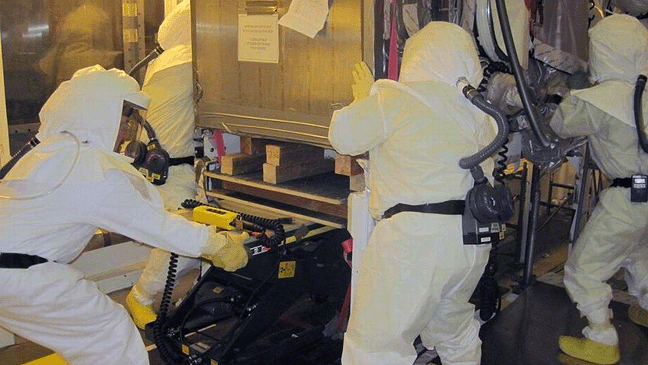
after he and a local journalist conducted a survey on surrounding farms in 1985, Bailie began to have doubts. Nearly all the families living nearby suffered from cancer, birth defects, or thyroid disease, he says — health issues that could be attributed to radiation exposure. This led to the area being coined “the death mile” by some journalists at the time.
documents that were declassified in the late 1980s showed that Hanford had contaminated the surrounding farmland, air, farm animals, and crops with unsafe levels of radiation for years.
June 18, 2023 , Mainichi, Japan
HANFORD, Washington (Kyodo) — As cleanup efforts continue in Washington state at a decommissioned U.S. nuclear facility that played a crucial role in the country’s acquisition of the atom bomb in World War II, questions linger over whether the site has caused serious health issues for workers and local residents.
Construction began on the facility, known as the Hanford site, eighty years ago in 1943 and involved the building of the world’s first large-scale nuclear reactor.
Through the Manhattan Project, a U.S. government research and development program for building nuclear weapons, the site’s B reactor, erected on a 580-square-mile stretch of land next to the Columbia River in south-central Washington, produced the nuclear material for one of the only two atomic bombs ever used in an armed conflict.
Codenamed “Fat Man,” the device was detonated over the city of Nagasaki in southwestern Japan on Aug. 9, 1945, effectively ending Japan’s involvement in the conflict.
The 6.2 kilograms of plutonium contained in the nuclear device released energy equivalent to 21 kilotons of TNT, taking the lives of tens of thousands of innocent people while subjecting the surrounding area to deadly radiation, killing countless more.
But citizens of Nagasaki may not be the only victims of Hanford’s plutonium production. During its decades of operation, U.S. residents living near and mainly downwind of the complex experienced severe health effects that they believe stem from the site’s activities.
One such resident is Tom Bailie, 76, who grew up and still resides just miles downwind from Hanford in a farming community.
Reflecting on his upbringing, Bailie recalled during an interview in April that no one ever thought the site at Hanford would cause harm to “patriotic American citizens.”
But, after he and a local journalist conducted a survey on surrounding farms in 1985, Bailie began to have doubts. Nearly all the families living nearby suffered from cancer, birth defects, or thyroid disease, he says — health issues that could be attributed to radiation exposure. This led to the area being coined “the death mile” by some journalists at the time.
Bailie said that his wife, father, and three uncles all had cancer before passing away, while his two sisters also have cancer and take thyroid medicine. The year before Bailie was born, his mother had a stillbirth. Bailie himself was born with birth defects and was on an iron lung when he was 4 years old. He now requires medication for a thyroid problem.
Bailie vividly remembers encounters with “men in space suits,” equipped with dosimeters to measure radiation levels, walking on his farm. The men would collect soil samples and even ask the farmers to send the heads and feet of ducks and rabbits they would kill while hunting to Hanford for analysis.
When he began speaking out about the hardships and health problems that he attributed to the Hanford site, many people from the community dismissed him as “nuts” or “crazy.” Some even mockingly referred to him as the “glow-in-the-dark farmer.”
But documents that were declassified in the late 1980s showed that Hanford had contaminated the surrounding farmland, air, farm animals, and crops with unsafe levels of radiation for years…………………….
Before being decommissioned in 1989, Hanford produced around 74 tons of plutonium, nearly two-thirds of all the plutonium produced for government purposes in the United States. One of the consequences of the site’s work was massive amounts of contamination and dangerous leftover byproducts, most of which remain on the site today.
Currently, 177 underground tanks containing 56 million gallons of highly radioactive waste, contaminated buildings, and cocooned reactors still exist there, alongside multiple other buried waste sites.
The same year Hanford was decommissioned, cleanup efforts began for dealing with the dangerous byproducts left over from the production of plutonium. Efforts to clean the area of waste are anticipated to be astronomically costly and time-consuming.
According to Hanford’s latest estimate, released in 2022, the total cost of the cleanup is projected to range from $319.6 billion to $660 billion, with a completion date not expected until at least fiscal 2078.
But Tom Carpenter, 66, former head of Hanford Challenge, a nonprofit organization dedicated to ensuring the responsible and safe clearing of the Hanford site, argues that using the word “cleanup” is misleading.
Carpenter says complete eradication of contamination from thousands of acres is impossible, and not the goal of the cleanup process. He asserts that the best that can be achieved at Hanford is “the mitigation of some risks.”
Hanford Challenge’s primary goal, he says, is to ensure authorities prioritize a swift cleanup and make sure that no corners are cut, nor workers put in unnecessary danger. This includes fighting for those who are currently working on the site.
Many workers involved in the cleanup of the Hanford site continue to be exposed to toxic chemicals, vapors, and radioactive materials, resulting in debilitating health conditions.
A recent survey of the workers by Washington state revealed more than 50 percent of them had been exposed to radioactive or toxic chemicals. Workers exposed to these dangerous materials and vapors have developed beryllium disease, cancers, organ damage, and occupational dementia.
Until recently, these workers had to prove that their health issues were directly caused by their work at the Hanford site to receive assistance with their medical expenses.
According to former worker and Hanford Challenge director Jim Millbauer, 65, proving this was extremely difficult, costly, time-consuming, and often fruitless, as most occupational illness claims were rejected.
But a recent law has changed this, presuming that any health effects suffered by workers who spend just eight hours working at Hanford are caused by working at the facility, making it easier for sick workers to get their treatment paid for. https://mainichi.jp/english/articles/20230616/p2g/00m/0in/069000c
More trouble at Vogtle
June 19, 2023 https://beyondnuclear.org/more-trouble-at-vogtle/
The nuclear drumbeaters ignore stories like this latest setback out of Georgia because the inconvenient truth of nuclear power is that it is NOT reliable, is far too slow and expensive and of course comes with a myriad of safety problems and no solution to the radioactive waste it generates.
The only US flagship for new reactors is the Vogtle 3 and 4 project in Georgia, which continues to stutter and stumble as it tries to bring two AP 1000 reactors to life, already heralded as a “milestone” with neither reactor yet on line.
Vogtle 3 has already had several setbacks delaying its commercial operation. The most recent is a problem in the hydrogen system that is used to cool its main electrical generator, delaying operations until July (barring other problems that could still arise.)
The twin reactor project is already 16 years in the making and now at least $20 billion over budget. Despite all this and the nuclear poster child for risk that is the 6-reactor Zaporizhzhia nuclear power plant in Ukraine, embroiled in a war, the pro-nuclear propaganda machine rolls blindly on.
“……………………………………In Georgia, almost every electric customer will pay for Vogtle. Georgia Power’s 2.7 million customers are already paying part of the financing cost and elected public service commissioners have approved a monthly rate increase of $3.78 a month for residential customers as soon as the third unit begins generating power.
A July operation date means that increase would hit bills in August, two months after residential customers see a $16-a-month increase to pay for higher fuel costs. Georgia Power also raised rates by 2.5% in January after commissioners approved a separate three-year rate plan. Increases of 4.5% will follow in 2024 and 2025 under that plan.
Commissioners will decide later who pays for the remainder of the costs of Vogtle, including the fourth reactor.
Norman Solomon: Bipartisan Obsession With War
June 16, 2023.
https://scheerpost.com/2023/06/16/norman-solomon-bipartisan-obsession-with-war/
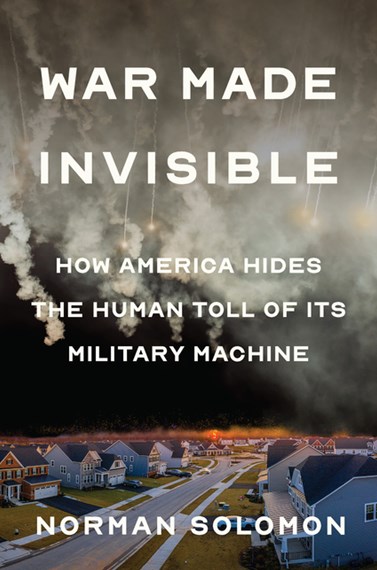
In War Made Invisible, journalist Norman Solomon explains that Biden is as guilty as Trump in ushering a potential nuclear holocaust.
There is no rationality, logic or hope left in the U.S. government’s obsession with war. There is no complexity, awareness or nuance left in the U.S. media and its pundits’ perception of other nations as the enemy. There is only greed, jingoism, hypocrisy and belligerency left to define the current state of affairs, as the proxy war in Ukraine draws nearer to a dreaded nuclear confrontation. Norman Solomon joins host Robert Scheer for this episode of Scheer Intelligence to discuss his new book, War Made Invisible: How America Hides the Human Toll of Its Military Machine, and explain the bipartisan cheerleading for war that goes largely unnoticed.
| .As Scheer points out numerous times in previous episodes of SI, there has always been a precedent for the other side: a peace movement, rational politicians acting against nuclear escalation and simply a recognition of profiteering from war. “Even during World War II, when Harry Truman chaired a committee, they talked about in the Senate war profiteering. You can’t even get that phrase anymore. So it’s lucrative, but hardly mentioned in mass media that the billions and billions of dollars going to Ukraine are making extremely wealthy CEOs and major stockholders even more extremely wealthy,” Solomon explains. |
Diplomacy, Solomon says, has now become a dirty word. Anything other than the complete commitment to funding and continuing the war effort is seen as a threat to the country and status quo. The loss of the ability to even talk about it, has infected both sides of the aisle. But it is the Democrats, as Scheer mentions, who have become the perpetrators of this new jingoism and xenophobia towards Russia. “What we’ve lost now is any sense of complexity and the Democrats are leading the charge of simplification. They did Russiagate. They are the ones who say you can’t negotiate with Putin,” Scheer says.
Transcript
Robert Scheer: Hi, this is Robert Scheer with another edition of Scheer Intelligence, which would be an arrogant title for a show but the intelligence comes from my guests and in this case it’s Norman Solomon…………………………………………….
Norman Solomon: Hey, thanks a lot, Bob. Well, the title is War Made Invisible, and the subtitle is How America Hides the Human Toll of Its Military Machine.
U.S. Congress caves in to nuclear industry pressure for the Nuclear Regulatory Commission to dumb down standards, and shift fees to tax-payers.

“they want the NRC to dumb down its own standards and just rubber-stamp anything that they put before the agency, no matter how flimsy.”
The industry has long argued that NRC fees are an impediment to innovation……the 2023 Appropriations Act…. allows the NRC to shift certain fees from the applicant to the taxpayer.
US Nuclear Push Brings Regulatory Growing Pains, Energy Intelligence Group ,Jun 16, 2023, Jessica Sondgeroth,
Congressional pressure on the US Nuclear Regulatory Commission (NRC) has intensified in recent years, with pro-nuclear lawmakers pressuring the independent government regulator to further reduce regulatory review times, update its regulatory philosophy and minimize fees for developers of next-generation reactor vendors and small modular reactors (SMRs). Lawmakers have already passed new laws to this effect, and proposed legislation would increase the agency’s role in nuclear technology exports. All the while, the NRC is struggling to hire new staff with morale low and older staff members retiring.
“We have seen major shifts in NRC’s workload, budget, staff size, hiring, and overall outlook for the future,” Jeff Baran, NRC’s longest-serving commissioner said last month at his third renomination hearing on Capitol Hill. When Baran was first appointed to the NRC’s five-member board in 2014, “there was little talk of new construction beyond Vogtle. There was some interest in small modular reactors, but almost no real discussion of advanced, non-light-water reactors. Today, we are in a very different situation.”
Indeed, Congress is pushing the NRC to lean away from its traditional, more deterministic regulatory model and shift toward an increasingly risk-informed approach to rulemaking that supports applications for advanced reactors, SMRs and new fuel designs. Meanwhile, a suite of new reactor designs are in early pre-application talks with the agency. And thanks to new policies supporting nuclear in the energy transition, owners of existing reactors are incentivized to extend operating lives from 60 to 80 years rather than retire. All of this means that the NRC’s “overall workload is increasing,” Baran said.
But so too is the pressure on the agency to further minimize the regulatory burden on new reactor vendors and developers, and not all of these changes are being welcomed. “I think it is outrageous that the nuclear industry continues to scapegoat the NRC for its own failures and incompetence,” Union of Concerned Scientists Director of Nuclear Power Safety Ed Lyman told Energy Intelligence. “Instead of improving its applications and doing the hard and time-consuming work to provide sufficient technical justification for the safety of experimental, paper reactor designs, they want the NRC to dumb down its own standards and just rubber-stamp anything that they put before the agency, no matter how flimsy.”
Below are only some of the challenges the agency now faces:
- Advanced Reactor Rulemaking The NRC is in the middle of developing a two-part regulatory framework for advanced reactor designs…………. Advanced reactor and SMR vendors are pushing for more flexibility in the rules, citing advancements in computational modeling, but that is still a challenge given the lack of operational data and staff. ……….
- Review Times
- There are now new generic review milestones in place as mandated by the 2019 Nuclear Energy Innovation and Modernization Act. The NRC has shortened review schedules from approximately five years for conventional LWR designs to 30-42 months, depending on the application and design. With pre-application engagement, those timeframes can be shortened even further…………………………….But the industry is pushing for more. Nuclear Energy Institute Senior Policy Director John Kotek told Energy Intelligence last month that another way to trim regulatory reviews is through less rigorous environmental reviews and fewer hearings.
- Fees The industry has long argued that NRC fees are an impediment to innovation. Congress has already alleviated some of this burden on new reactor applicants with $5 million from the 2023 Appropriations Act for the Advanced Nuclear Energy Cost-Share Grant Program. ………….. This allows the NRC to, on a case-by-case basis, shift certain fees from the applicant to the taxpayer………………………………..
- Staffing
- The agency’s 9.6% attrition rate “is well above the average for federal agencies,” with one-third of the NRC’s workforce eligible for retirement,……………………………….
All of this means that the regulator remains under constant pressure to further streamline and minimize review times and limit environmental and safety reviews. Such pressure will only increase with the proposed Advance Act, introduced by a bipartisan group of senators. The bill cleared the Senate Environment & Public Works Committee in a May 31 business meeting by a vote of 16-3, but must still be passed by both the full Senate and the House of Representatives before becoming law. https://www.energyintel.com/00000188-c325-d38d-a58b-df3509750000
Cyberattack Hits US National Lab, Nuclear Waste Site
A contractor at a US national lab and a radioactive waste storage site
managed by the Department of Energy were among the victims of wide-ranging
cyberattack that saw several federal agencies hacked, according to a person
familiar with the matter.
A department spokesperson confirmed Thursday that
records from two of the agency’s “entities were compromised,” though
further details on the extent of the breach couldn’t immediately be
determined. Multiple US agencies were compromised by a hacking campaign in
which attackers exploited flaws in a popular software tool to gather
information from a range of victims.
Bloomberg 15th June 2023
1 This Month

of the week – Shut Down Drone Warfare!


Tell the Ukrainian Government to Drop Prosecution of Peace Activist Yurii Sheliazhenko

Petition to revoke the licensing of the Near Surface Nuclear Disposal Facility (NSDF) at Chalk River. https://www.ourcommons.ca/petitions/en/Petition/Details?Petition=e-7247
To see nuclear-related stories in greater depth and intensity – go to https://nuclearinformation.wordpress.com
-
Archives
- April 2026 (103)
- March 2026 (251)
- February 2026 (268)
- January 2026 (308)
- December 2025 (358)
- November 2025 (359)
- October 2025 (376)
- September 2025 (257)
- August 2025 (319)
- July 2025 (230)
- June 2025 (348)
- May 2025 (261)
-
Categories
- 1
- 1 NUCLEAR ISSUES
- business and costs
- climate change
- culture and arts
- ENERGY
- environment
- health
- history
- indigenous issues
- Legal
- marketing of nuclear
- media
- opposition to nuclear
- PERSONAL STORIES
- politics
- politics international
- Religion and ethics
- safety
- secrets,lies and civil liberties
- spinbuster
- technology
- Uranium
- wastes
- weapons and war
- Women
- 2 WORLD
- ACTION
- AFRICA
- Atrocities
- AUSTRALIA
- Christina's notes
- Christina's themes
- culture and arts
- Events
- Fuk 2022
- Fuk 2023
- Fukushima 2017
- Fukushima 2018
- fukushima 2019
- Fukushima 2020
- Fukushima 2021
- general
- global warming
- Humour (God we need it)
- Nuclear
- RARE EARTHS
- Reference
- resources – print
- Resources -audiovicual
- Weekly Newsletter
- World
- World Nuclear
- YouTube
-
RSS
Entries RSS
Comments RSS
 nuclear-news