American forces struck a nuclear power plant under construction in southern Iran,
President Trump said American forces ‘hit Iran hard’ in honour of the US service members killed in Jordan on Friday
The state atomic energy
agency called the attack a “clear violation of international law”. The Atomic
Energy Organisation said that several projectiles hit the Darkhovin nuclear
power plant in Khuzestan province, but did not give details about possible
damage from the attack.
The United Nations’ International Atomic Energy
Agency (IAEA) called for restraint, adding that it was looking into the
reports. It also highlighted that the plant was in the “very early stages
of construction” and “contained no nuclear material when last visited
by the IAEA”.
Times 20th July 2026,
https://www.thetimes.com/world/europe/article/iran-claims-us-strikes-hit-nuclear-power-plant-0kb7cpghx
Are Trump and AI driving a nuclear power boom?

July 20, 202 By Berly McCoy, Geoff Brumfiel, Regina G. Barber, Rebecca Ramirez, https://www.npr.org/2026/07/20/nx-s1-5884889/are-trump-and-ai-driving-a-nuclear-power-boom
A race started by President Trump is leading to the rapid construction of new, experimental nuclear reactors. If they work, they could power data centers for artificial intelligence. But critics worry that the breakneck pace is compromising safety and public trust. NPR correspondent Geoff Brumfiel talks about the potential risks and benefits, and whether this may lead to a new nuclear age.
Red, white and glowing blue: Trump’s push for new reactors reaches the finish line
June 29, 2026, Geoff Brumfiel, https://www.npr.org/2026/06/29/nx-s1-5847944/new-nuclear-reactors-america-250-safety-concerns
A little over a year ago, President Trump set an ambitious goal: He wanted to see American companies build at least three new experimental nuclear reactors by July 4, 2026, the 250th anniversary of the Declaration of Independence.
Shortly after Trump signed an executive order enshrining his goal, the Department of Energy launched its Reactor Pilot Program. The program is designed to help companies build and run test reactors quickly, in part by radically cutting back on the regulations required for such reactors.
That program has sparked a nuclear race, and with less than a week to go, two companies have already reached the goal of switching on their reactor (“going critical” in nuclear-speak).
On June 4, Antares Nuclear announced it had gone critical, and Valar Atomics said it went critical on June 18 and is now producing tens of kilowatts of heat from its new reactor core, which is operating out of a tentlike structure in the Utah desert.
Other companies are getting close to making the deadline, and all this happened in less than the span of a year.
“We haven’t done anything this fast, basically ever,” said Nick Touran, chief nuclear officer at Ocean Atomics, which seeks to put nuclear power onto civilian ships. His company isn’t part of this program, but he has been tracking it closely.
He says this pilot program could jump-start America’s nuclear industry.
“I’m just excited that we’re now actually building these little reactors and trying it out and we’re going to look at what the economic story is and find out if there’s a market,” he said. “It’s going to be so much better than sitting there talking about it like we did for the last 40 years.”
But for others, the speed sparks alarm. The race is “essentially an exercise in public relations,” said Edwin Lyman, director of nuclear power safety at the Union of Concerned Scientists. And, he added, the slashing of regulations undoes decades of safety lessons learned in the nuclear industry.
“This is taking us back to the 1950s, and that is not progress,” he said.
Building the core
A lot of the action is happening at the Department of Energy’s Idaho National Laboratory, where several of the companies have set up shop. One of them is Radiant, which hopes to build small reactors for everything from disaster relief to data centers. Rita Baranwal, the firm’s chief nuclear officer, said they are assembling their reactor inside a special secure building called the DOME.
“By July 4, we’re tracking to get the reactor into DOME and to initiate the testing,” she told NPR this month.
Initiating testing isn’t quite the same as going critical, and Baranwal said Radiant probably won’t be critical by the July 4 deadline. But she does expect that Radiant’s reactor will be running soon. “The only thing we will not be doing at [Idaho National Laboratory] this summer is generating electricity,” she said.
Radiant’s reactor looks radically different from the massive reactors that exist today. It’s far smaller, and its nuclear fuel takes a different form. In a modern power reactor, nuclear fuel is loaded into long tubes, but Radiant’s reactor uses little nuclear fuel balls filled with grains of uranium. “Do you remember gobstoppers?” Baranwal said
These nuclear gobstoppers can operate at higher temperatures and are more resistant to melting down. Radiant and several other companies plan on using this type of fuel along with other tech to build a bunch of smaller, more mobile reactors.
“We have broken ground on our factory to mass-produce reactors. We’re targeting around 50 per year,” she said. (Currently, 96 reactors are operating in the United States.).
Safety worries
To get the reactors built this quickly comes at a cost. This year, NPR reported that the Energy Department completely rewrote its safety and security standards to make it easier for companies to win regulatory approval. The department has said that the cut regulations were “unnecessary” and that safety hasn’t been compromised.
The department consulted with the companies but not with the public. It also exempted the new reactors from environmental reviews.
And that has some skeptics of the program worried.
“Yes, of course, if you bend all the rules, you can do things quickly,” said Lyman, referring to the Energy Department’s decision to rewrite its rules for the program.
The test reactors might be working, he said, “but that should not be confused with anything related to a nuclear power reactor that’s capable of producing electricity in a stable and safe way.”
Lyman said he worries that deregulation will erode standards for things like how much security is required or how much environmental monitoring should be done, at a time when these mass-produced little reactors could start popping up at locations all over the country.
A Seat Cushion Triggered One Of History’s Strangest Nuclear Accidents And A Geopolitical Scandal That Lasted Decades
A cushion, a crash, and a Cold War cover-up.
Tom Hale,19 July 26, https://www.iflscience.com/a-seat-cushion-triggered-one-of-historys-strangest-nuclear-accidents-and-a-geopolitical-scandal-that-lasted-decades-84141
There have been 32 known incidents where the US has accidentally detonated, misfired, or lost nuclear warheads (at least those that the public is allowed to know about). Just one of these accidents, however, became an international scandal and environmental disaster thanks to a cozy seat cushion for someone’s ass.
The incident unfolded in early 1968, a time when The Beatles were blasting on the radio, the Vietnam War was raging, and the threat of full-blown nuclear war between the US and the USSR was still very much on the cards.
Ever paranoid about the atomic threat, the US had launched an airborne patrol of up to 12 nuclear-armed bombers to constantly patrol the skies. Known as Operation Chrome Dome, the fleet of planes flew 24/7, non-stop from 1961 to 1968.
The operation’s routes regularly shifted to keep the USSR on its toes, but many of the flights cruised around the upper reaches of the Northern Hemisphere, a nice vantage point from which the US could hop over the Soviet Union and casually obliterate a few million people.
The incident unfolds, then explodes
On the morning of January 21, 1968, a B-52 bomber loaded with four B28FI thermonuclear bombs flew out of Plattsburgh Air Force Base in New York to take up its shift policing the skies.
It was mid-winter and temperatures were achingly low as the giant plane headed northeastwards into the Arctic Circle by mid-afternoon. In a struggle to keep warm, some of the crew had reportedly covered parts of the cabin with cushions. Unbeknownst to them, they had been placed over a heating vent that was blasting hot air from the overheating engine. The cushions turned into a smoldering tinder, and flames slowly engulfed the aircraft.
As the plane headed near the US Thule Air Base in Greenland, the crew bailed. Six of the seven successfully parachuted to safety, but one crew member, co-pilot Leonard Svitenko, attempted to escape through the lower hatch and sustained a fatal head injury.
They drifted down to the ice-covered expanse below, watching the plane turn into a fireball as it nosedived towards Wolstenholme Fjord. The plane exploded on impact, rupturing the nuclear warheads and spreading radioactive debris for miles around like a dirty bomb.
It was about to become a very long day for the US State Department, to say the least. First, they had to find the bombs and the nuclear debris, then they had to consider how they were going to clean up the mess. To make matters even more complicated, nukes weren’t technically allowed in Greenland, a territory under Danish control, and Denmark was keen to maintain its reputation as a nuclear-free zone (at least in public).
“Aircraft carried four repeat four nuclear weapons,” reads a telegram between the State Department and the US Embassy in Denmark. “Wreckage covers five mile area. Difficult climate conditions and lack of daylight hampering search operations. Special USAF team being sent.”
What followed was a nine-month cleanup operation, one of the largest and strangest in Cold War history. Hundreds of US airmen and Danish workers spent the sunless Arctic winter traveling via dog sleds and scraping contaminated ice, snow, and wreckage off the fjord by hand. Greenlandic Inuit people reportedly joined the charge, building a village of igloos to shelter the crews when the wind and chills became too much to bear.
Eventually, some 600 containers of contaminated snow had been gathered and were shipped to the US. Three of the nuclear bombs were accounted for, but the fourth was never fully recovered, presumably buried somewhere in ice.
“Thulegate”
Dealing with the contamination was one thing, but the political fallout was just as tricky to traverse. Publicly, the US and Denmark claimed the B-52 had been diverted over Greenland because of an unexpected in-flight emergency. But both governments were lying.
In the 1990s, declassified documents and journalistic investigations revealed that nuclear-armed bombers had been routinely flying over Greenland throughout the 1960s, unbeknownst to the Danish public. It became a political scandal dubbed “Thulegate” that deepened when it was revealed the Danish government had secretly signed a deal with the US to hold 50 nuclear weapons at the Thule base between 1958 and 1965.
Almost six decades later, Washington’s interest in Greenland hasn’t cooled with President Trump’s repeated demands to acquire the territory, one way or another.
Hopefully, a chilly pilot won’t threaten to turn tempers nuclear once again.
Hegseth Announces Testosterone Testing as Part of Push for “Lethal” Military
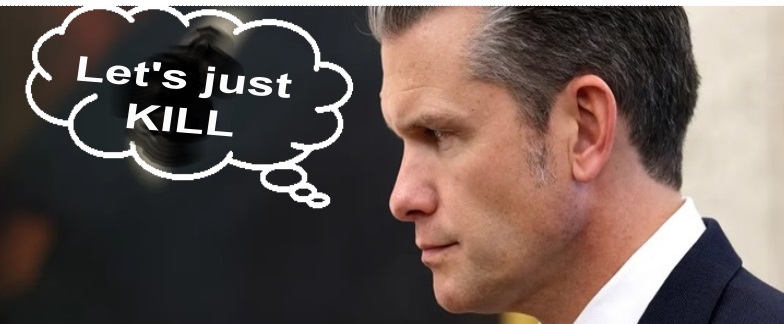
Hegseth has previously told servicemembers that troops will have to meet “the highest male standard.”
, By Chris Walker , Truthout, July 15, 2026
On Wednesday, Secretary of Defense Pete Hegseth announced a new policy aimed at increasing testosterone levels for servicemembers — a move that has been discouraged by health experts.
In a social media post announcing the policy, Hegseth stated that the most “decisive tactical advantage” the U.S. military has “will always be the individual warfighter.”
“We have a sacred duty to maintain that advantage, which is why we must constantly look for new ways to optimize your performance, your resilience, and your long-term health,” the Defense Secretary stated. “To meet that commitment today, I’m authorizing a new screening program for testosterone deficiency for our service members, ensuring you have the right testosterone levels to operate at your absolute best.”
The new policy aims to provide, as part of yearly screening, mandatory testosterone level testing for servicemembers over the age of 30, with those under that age being allowed to request it. Hegseth emphasized that what happens next is up to the individual.
“If treatment is recommended, it’s entirely your choice to receive testosterone replacement therapy,” or TRT, he said.
But the overall message from Hegseth was clear: The military wants and is prioritizing higher testosterone levels in its soldiers.
“The modern battlefield is brutal and unrelenting. It requires and demands maximum psychological and mental readiness, and by addressing these health markers early, we’re keeping you on the leading edge of lethality and giving you the same level of support that you give this nation,” he said.
Hegseth noted that it is “well-established science that as we age, testosterone levels often naturally drop.” While that is true, the “drop” in levels isn’t significant for most people, and certainly not for those of military age — levels drop by about 1 percent per year for people over the age of 30.
While the program appears to be voluntary beyond testing, some servicemembers may feel pressured to take medical supplements after their test results come in (especially since Hegseth’s video message was accompanied by the words, “The High-T Department of War”). Hegseth’s push could also prompt servicemembers to take testosterone supplements before their testing, without proper guidance.
Indeed, Hegseth’s message may feed into the current epidemic of online misinformation, tying masculinity to higher testosterone levels.
“This is a huge problem,” endocrinologist Channa Jayasena, of Imperial College London, told The Guardian in November. “Hospital specialists are seeing patients coming in after having private blood tests, often arranged through influencers, perhaps, and then being told by inexperienced doctors or a wide range of healthcare professionals that they should start testosterone. The advice they are giving is wrong.”
Notably, the Food and Drug Administration (FDA) advises against testosterone replacement therapy unless there is a specific medical reason for it.
Health experts questioned Hegseth’s new initiative.
“I used to do testosterone research — testing for T levels in troops doesn’t make sense without a medical reason,” public health scientist and epidemiologist Eric Feigl-Ding said in a post on X reacting to Hegseth’s announcement. “T level is not associated with higher cognitive function. T can drop because of stress or exhaustion — but TRT doesn’t always improve physical performance.”
The result of TRT is “mixed at best,” Feigl-Ding added.
Testosterone is a naturally occurring sex hormone, commonly associated with being the major hormone for men, though it is present in everyone at varying levels, including women. Benefits of the hormone include increasing muscle size and strength, as well as bone growth.
But according to Harvard Medical School, artificially high levels of testosterone have also been associated with a number of health problems, such as:
- Heart damage and a higher risk of heart attacks;
- High blood pressure and increased cholesterol levels;
- Higher risks for blood clots;
- Liver disease;
- Prostate enlargement;
- Headaches;
- Insomnia, mood swings, irritability, impaired judgment, and possibly overly aggressive behavior.
Hegseth’s announcement came with no similar statement of concern for the health of servicewomen, and is consistent with his past statements on (and apparent obsession with) creating a more “manly” military…………………..https://truthout.org/articles/hegseth-announces-testosterone-testing-as-part-of-push-for-lethal-military/?utm_source=Truthout&utm_campaign=c1d90ce474-EMAIL_CAMPAIGN_2026_07_15_09_13_COPY_01&utm_medium=email&utm_term=0_bbb541a1db-cd76c245dc-650192793
It’s Not Terrorism When We Do It

This is why a state was so crucial to the Zionist project. Before 1948, the groups that became the IDF, from the Haganah, to the Lehi and the Irgun were explicitly called terror groups. And their members were Jewish terrorists. These labels were widely used by western media, and the existence of Jewish terrorism was not controversial. In a 1948 Guardian editorial, in the aftermath of the King David Hotel bombing, the paper referred to “Jewish terrorists” who it said are “ruthless men corrupt by the sickness of the time, caring nothing for the sufferings of the individual Jews in Europe” for whom “every school boy’s jest is another argument for Zionism.”
But as soon as the Jewish Zionists got their own state, the terrorists were absorbed into the military arm of the state,
July 18, 2026, Nate Bear Do Not Panic, https://scheerpost.com/2026/07/18/its-not-terrorism-when-we-do-it/
Yesterday Pete Hegseth triumphantly tweeted a picture of Iran’s Chabahar maritime port tower collapsing following an attack by the US regime. The image bore a striking resemblance to the collapse of the towers on September 11th.
Despite the fact this was, like most of the attacks on Iran, an attack on civilian infrastructure, it will not be labelled as such by the western media and political class. They will never call it terrorism or a war crime, despite the fact that it was both. Whether a civilian tower, a bridge, or a school full of children, western actions that result in mass murder will always simply be the product of a “strike.”
Benign language whenever the imperialist death machine starts slaughtering is a critical tool in maintaining consent for war crimes and state terrorism. And even though Hegseth literally tweeted a picture of this war crime, I‘ve yet to see an imperialist media outlet reproduce the image, because they know how bad it looks. This is a classic tactic we see over and over again: selective reporting and the omission of detail in order to bolster public support for state terrorism and war crimes abroad. Western media has already bundled this “strike” in with all the others in order to present a false equivalence between an illegal war of aggression on the one hand, and legitimate Iranian defence on the other (defensive actions which, by the way, are always labelled as “attacks.”)
The underlying psychology behind the double-standard is rooted in arrogance and supremacy: they’re the bad guys, and they do terrorism. We’re the good guys, and we “conduct strikes.”
And by we, I mean the forces of western imperialism, whether that’s the US or any other power that lines up behind the American regime, especially, but not exclusively, Israel. The use of the words “terror” and “terrorism” are also a critical rhetorical device, conditioning westerners to accept imperial violence as legitimate, and any resistance to that violence as illegitimate. This tendency was seen starkly of course after October 7th. Hamas does terrorism, while Israel merely strikes. Those strikes can be genocidal, they can reduce entire cities to dust, destroy hospitals, schools, universities, water treatment plants, grain silos and the means of life for two million people. They can kill tens of thousands of children in all manner of sadistic and gruesome ways, they can wipe out entire bloodlines, but they are never labelled terrorism. They are, and always will be, simply strikes. Because terrorism is bad, and we’re the good guys.
This is why a state was so crucial to the Zionist project. Before 1948, the groups that became the IDF, from the Haganah, to the Lehi and the Irgun were explicitly called terror groups. And their members were Jewish terrorists. These labels were widely used by western media, and the existence of Jewish terrorism was not controversial. In a 1948 Guardian editorial, in the aftermath of the King David Hotel bombing, the paper referred to “Jewish terrorists” who it said are “ruthless men corrupt by the sickness of the time, caring nothing for the sufferings of the individual Jews in Europe” for whom “every school boy’s jest is another argument for Zionism.”
But as soon as the Jewish Zionists got their own state, the terrorists were absorbed into the military arm of the state, and their violence, which months before was clearly identified as terrorism, was legitimatised by the recognition of a state. And this legitimisation of Israeli state terrorism went hand-in-hand with the decades-long campaign to legally designate resistance to state terrorism as the real terrorism, a campaign which led us inexorably towards the genocide of Gaza.
Genocide. Another word reserved by the hegemonic media only for the victims of the imperial enemy, and not for those slaughtered by the imperial ally.
So for the western media, terrorism isn’t terrorism, genocide isn’t terrorism, and it’s not even genocide. Despite the almost universal belief of genocide scholars, holocaust scholars, and international legal experts that what has taken place, and continues to take place in Gaza, is a genocide, the term is almost never used. The Guardian can even write an article with the title ‘Israel committing genocide in Gaza, world’s top scholars on the crime say’, and in the majority of its subsequent coverage, refer to it as a war. Their main hub for coverage of the genocide, ten months after that headline, is titled Israel-Gaza War. If they had the courage of their supposed progressive convictions, if the truly believed in experts, as all good liberals profess to do, they would accept the evidence they presented themselves, and refer factually to genocide.
They don’t because the western mind, in matters of imperialism requires dissonance. It requires references to “strikes” not terrorism, to “wars” not genocides and to “foreign policy,” not imperialism. This is especially true of the professional media mind which must filter, process and present the news from the imperial core. My guess is that some of the benign, consent manufacturing language is intentional, and some is simply the product of subconscious western supremacy and the dehumanisation of the periphery. Because to fully internalise the evil committed by the system you not only live within but help uphold would require the instant rejection of that system. And well, you’ve got bills to pay. The genocide can be the war if it means making that next installment on your mortgage.
As the terror attacks on Iran and Gaza continue, and as the genocide deepens, we’ll hear only of strikes and wars from a media class fully complicit in both.
Trump Killed Those US Troops In Jordan
Caitlin Johnstone, Jul 19, 2026, https://www.caitlinjohnst.one/p/trump-killed-those-us-troops-in-jordan?utm_source=post-email-title&publication_id=82124&post_id=207612455&utm_campaign=email-post-title&isFreemail=true&r=1ise1&triedRedirect=true&utm_medium=email
More US troops have died in Trump’s insane war of aggression against Iran, so of course we’re seeing a bunch of phony bullshit from American warmongers about what a heroic sacrifice these soldiers made in order to justify further escalations.
“Godspeed, heroes. Their sacrifice only stiffens our resolve,” tweeted Secretary of War Pete Hegseth in response to the news that two US troops were killed with one soldier missing after Iranian retaliatory strikes on a US base in Jordan.
But they weren’t “heroes”, and they did not make any “sacrifice”.
A hero is someone who risks danger taking noble action for the benefit of others. A sacrifice is when you give up your life for a higher cause.
This was neither of those things. Those soldiers were killed in response to US airstrikes on civilian infrastructure in a stupid, evil war of aggression waged by a Zionist president to please his billionaire Israeli megadonor. Those US attacks destroyed a desalination plant, cutting off an essential water supply for thousands of Iranian civilians.
They did not die defending the United States. They did not die protecting the American people. They did not die for freedom, for democracy, or for any of the other bogus reasons you’ll see imperial spinmeisters saying they died for. They died for Israel, for the military-industrial complex, and for US imperial agendas of global domination. And for nothing else.
I said this online and someone tried telling me “They died for their country and Fuck You for pissing on that.”
I told him no, they did not die for their country. The Iranians are dying for their country. The Americans are dying for Israel, for money, and for geostrategic control. Not a single American life in the United States is being protected by the actions of US service members in the middle east. They’re not defending their homeland, they’re attacking people who are defending theirs.
This isn’t worthy of praise, it’s worthy of anger and outrage.
There’s this bizarre, cultish belief among Americans that you have to play along with the idea that every US soldier killed in action died doing something heroic which benefited the American people, even when every reasonably intelligent person knows that’s objectively false. I reject this whole-heartedly. All this does is make it easier for the US military to recruit more soldiers and to manufacture consent for more depraved wars of aggression.
Those soldiers killed in Jordan did not die doin
Those soldiers weren’t killed by Iran. They were killed by Donald Trump. They were killed by the oligarchs and empire managers whose decisions sent them to die in yet another middle eastern war based on lies, and who will never lose a wink’s sleep over it.
Everyone thinking of joining the US military should refrain from doing so, and everyone who is already in the US military should do everything they possibly can to get out. Because there is nothing worse than killing and dying for rich bastards who will never give a fuck about you.g anything noble. They died meaningless, undignified deaths for an immoral and unworthy cause.
Everyone thinking of joining the US military should refrain from doing so, and everyone who is already in the US military should do everything they possibly can to get out. Because there is nothing worse than killing and dying for rich bastards who will never give a fuck about you.
JD Vance Says Israeli Officials Are Pressuring U.S. to Prolong Iran War
SCHEERPOST, July 16, 2026
Vice President JD Vance has made one of the most striking public acknowledgments yet of tensions between Washington and Israel over the future of the Iran conflict, claiming that members of the Israeli government are actively working to keep the United States engaged in an open-ended military campaign.
In an interview with podcaster Joe Rogan, Vance said he was “beyond a shadow of a doubt” certain that Israeli officials had attempted to shift U.S. policy away from negotiations and toward indefinite military action.
“There have been people within the Israeli government who are trying to shift us away from that policy because they want to continue the military campaign.”
Vance framed the dispute as one between competing national interests, saying that while Israeli officials naturally prioritize Israel, his responsibility is to pursue what he believes serves Americans.
“I care about America first.”
Claims of an Israeli Influence Campaign
Vance also alleged that individuals connected to Israel were attempting to manipulate American public opinion in favor of continuing the war.
According to Vance, some actors were:
Leaking information to reporters.- Coordinating attacks against him on social media.
- Opposing negotiations with Iran in favor of continued military operations.
He further claimed he had been falsely accused of acting on behalf of Qatar or taking direction from conservative commentator Tucker Carlson because of his position.
JD Vance on Israel, U.S. Policy, and the Iran War
Vance argued that he sees himself as occupying a moderate position in the debate over Israel within American politics………………………………………………………………………………………………………………………………………………………………
A Growing Divide Inside the Republican Coalition
The interview also highlighted a widening divide within the Republican movement over U.S. foreign policy.
While some Republicans continue advocating close military coordination with Israel, others—including Vance and several prominent “America First” figures—have increasingly argued against deeper U.S. involvement in another prolonged Middle East conflict.
The debate reflects broader disagreements over whether Washington should prioritize diplomacy, military escalation, or a more restrained foreign policy………………………………………………………………………………………………………………… https://scheerpost.com/2026/07/16/jd-vance-says-israeli-officials-are-pressuring-u-s-to-prolong-iran-war/
How Fear of Nuclear Armageddon Leads Me to Protest
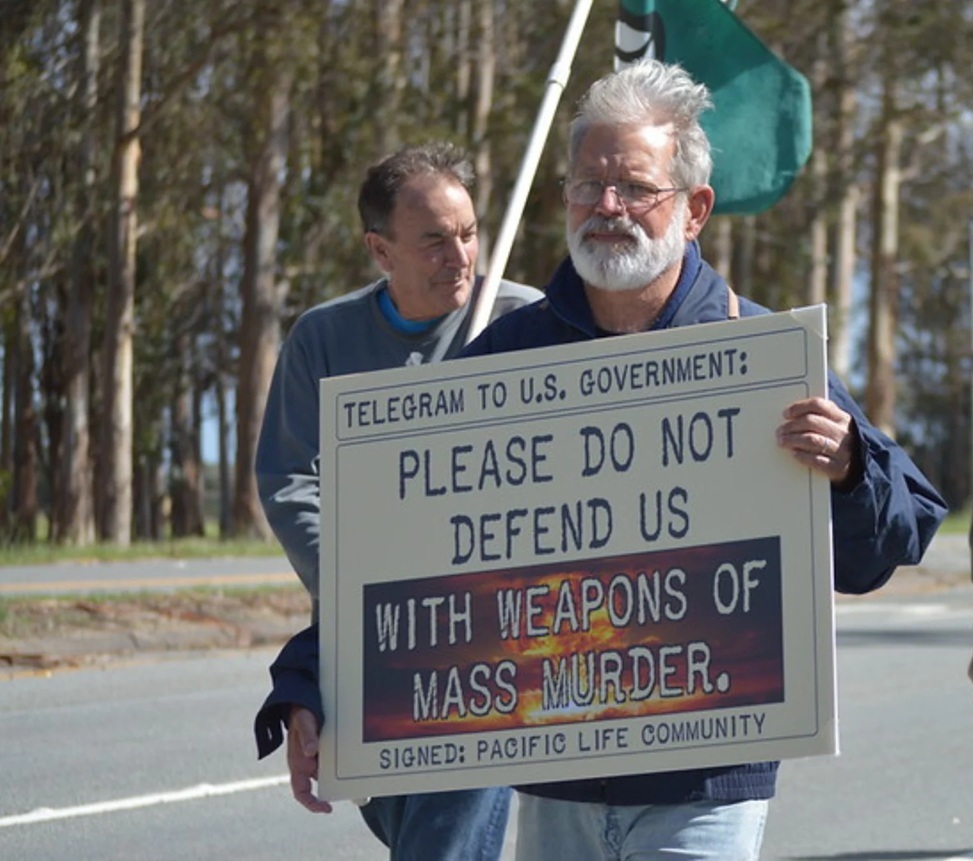
Simply put, the U.S. maintains a first-strike nuclear option to be deployed against even a non-nuclear enemy. Paradoxically, China does have a “no first use” policy for its nuclear arsenal. Hey, U.S. adversaries, don’t even look at us the wrong way!
How radically and overtly hypocritical that the U.S., the greatest military power in the world—holding such a nuclear posture—initiated a war with Iran on the basis that the country might one day develop nuclear weapons, even though there is no conclusive evidence that it intends to do so. But then, this is how big bullies operate.
The blindness of Americans to the reality of nuclear annihilation begins with a national hypocrisy, one that we hold as the first and only nation to ever use nuclear weapons in war, killing hundreds of thousands of innocent people. It is a striking example of our hypocrisy that is blatantly clear to most of the world beyond our borders.
For nearly two decades, I have been arrested, ignored, and dismissed for protesting nuclear weapons—but as the Doomsday Clock inches toward midnight, giving up is not an option.
Scott Fina, Current Affairs, July 2026
Our tiny protest gathering at Vandenberg had a “micro-Woodstock” feel to it. One of us was dressed like an angel, in a white gown with flashing, battery-powered lights on wings attached to her back. She held a peace sign that also had blinking lights. She started beating a drum she had brought, and broke into an Indigenous chant she had learned from a local Chumash (Native American) community, whose descendants continue to protest military installations on their ancestral homelands. She had driven hours to the military base from her home in central Los Angeles—the likely source of her captivating creativity.
So, there we were, observing the flight of the most dangerous weapon ever created and possessed by humanity: an intercontinental ballistic missile (ICBM) that had been launched from an underground silo on the base. The Minuteman III ICBM we were watching could carry multiple nuclear warheads. Fortunately, the missile was not armed, and its launch was a test, sending it 4,200 miles over the Pacific Ocean to the Kwajalein Atoll in the Marshall Islands. The U.S. military has adopted a nickname for such missile flights: “Glory Trips.”
As protesting observers, we failed to see any glory in the exhibition of the ICBM test launch. But if watching an ICBM launch isn’t glorious enough for some folks, they can go to the U.S. Department of War (DOW) website and check out the “multimedia experience” of the military’s nuclear triad delivery system. The online presentation blatantly and unabashedly explains in detail how the U.S. military can readily make nuclear strikes against its adversaries using not only land-based, silo-launched missiles, but also submarine and fighter plane launchings of nuclear bombs.
The DOW’s flashy, action-filled nuclear triad website is full of bravado, and seemingly overloaded with testosterone. It looks like a violent video game. One can imagine Secretary of War Pete Hegseth, messing around with the website, tapping at the keyboard with one hand, while holding a beer in the other.
Interestingly, the introductory section of the DOW nuclear triad website includes a statement which reads, in part, “…the triad ensures a credible and flexible nuclear deterrent, providing the president of the United States with options to accomplish objectives if deterrence fails.”
Those are nuclear options currently available for Donald Trump, who alone has the authority to order a nuclear attack. Having such choices on which weapons to use has got to be alluring, if not tempting, for our president. Imagine what goes on in his brain at times when he thinks about the power he has over nuclear weapons and the fate of humanity. Think, “eeny, meeny, miny, moe…”
On top of all its muscle flexing, there is another feature in the U.S. nuclear weapons policy that exhibits a kind of bullying. I refer here to the U.S. Nuclear Posture Review (NPR) published by the Biden Administration in 2022. The NPR remains operative under the Trump Administration.
Consider this statement in the NPR, which is readily available for the world to see:
We conducted a thorough review of a broad range of options for nuclear declaratory policy – including both No First Use and Sole Purpose policies – and concluded that those approaches would result in an unacceptable level of risk in light of the range of non-nuclear capabilities being developed and fielded by competitors that could inflict strategic-level damage to the United States and its Allies and partners.
Simply put, the U.S. maintains a first-strike nuclear option to be deployed against even a non-nuclear enemy. Paradoxically, China does have a “no first use” policy for its nuclear arsenal. Hey, U.S. adversaries, don’t even look at us the wrong way!
But wait! There’s more going on with the U.S. nuclear arsenal: modernization.
The replacement of over 400 ICBM Minuteman III missiles is currently in the works. These weapons have been in use (on alert but not fired off) for over 55 years, and have been kept viable thanks to “a series of life extension programs,” according to the Air Force Nuclear Weapons Center. In the early 2030s, even more deadly ICBM Sentinel missiles will take their place. According to the Air and Space Forces Magazine, these new ICBMs will cost over $140 billion.
…………………………………………………………………………………………………………………………. Many protesters at Vandenberg have also gone to prison for their nonviolent, civil disobedience: crossing a green line that demarcated where protest was allowed. The case of one courageous protester, Dennis Apel, who was arrested 15 times at Vandenberg, landed at the U.S. Supreme Court……………………………………………………………………………………………………….
Hundreds of Americans protest against nuclear weapons every year at various military bases, and also at private corporate facilities that are connected to the U.S. nuclear program (and make big bucks). Unfortunately, anti-nuclear protesters often go unheard in the U.S., regardless of the often deep, personal sacrifices they make. Also, those voices have been aging and declining in number over the years.
Since I first joined protesters at Vandenberg in 2008, our numbers have dwindled to less than a dozen who gather monthly at the main gate. Annually, on or around the dates of August 6 and August 9—the anniversaries of the nuclear bombing of Hiroshima and Nagasaki, respectively—the number of protesters grows to a few dozen at Vandenberg, with most coming from Los Angeles. The somewhat larger crowd draws a good number of well-armed, military security guards who line up in formation a hundred yards down the base entry road.
The soldiers wait for protesters to cross the green line, and every year, a few do. Over a loud speaker, the military officer in charge of the formation warns these brave folks to cross back over the line within two minutes or they will face arrest. The protesters ignore the command, are handcuffed, cited, and then driven off the base in a van by the soldiers.
This scene is both moving, and a little comical, depending on one’s perspective. You see, these days most of the protesters at Vandenberg are old and grey (including myself). We are also a motley group, and frumpy. It’s not too much of a stretch to imagine us as a collection of outsized Ewoks from a Star Wars film, standing up to Stormtroopers of the Galactic Empire. If someone played a John Williams score over a music box in the background, we’d have a real show.
Admittedly, probably most Americans would see the protesters at Vandenberg as preposterous, daring to confront the most powerful military on the planet with little hope of disarming our nation of nuclear weapons. Perhaps we are. But we are driven by a moral and humane purpose. . And if observers—even those who are patriotic—were more objective and opened their eyes widely, they might see what we protesters deeply sense: that the huge and deadly U.S. nuclear arsenal and forces contain our nation’s own demise.
The blindness of Americans to the reality of nuclear annihilation begins with a national hypocrisy, one that we hold as the first and only nation to ever use nuclear weapons in war, killing hundreds of thousands of innocent people. It is a striking example of our hypocrisy that is blatantly clear to most of the world beyond our borders……………………………………………………………………………………………………………………………………………………………………………………………………………………………………………………………………………….
The most recent, significant multilateral treaty, the Treaty on the Prohibition of Nuclear Weapons (TPNW), was adopted at the United Nations in 2017, and entered into force in 2021. In sum, this treaty calls for nations around the world to either commit to never creating, possessing, testing, or transferring nuclear weapons if they have not yet done so, or to fully rid themselves of nuclear weapons—disarm—if they already have them.
To date, 95 nations have signed onto the TPNW. While that seems promising, it really isn’t, yet. The TPNW has been ignored by all the nuclear states, including the U.S. Still, it’s premature to write the treaty off at this point. But consider what looms over humanity’s head in the meantime.
The International Campaign to Abolish Nuclear Weapons (ICAN), an international coalition of non-governmental organizations and winner of the 2017 Nobel Peace Prize, warns that even limited nuclear conflicts will cause global devastation.
………………………. The second Trump Administration has said it is pursuing a “peace through strength” policy in national security and foreign affairs. The National Defense Strategy emphasizes the importance of modernizing the U.S. nuclear deterrent in response to increased nuclear threats.
“Peace through strength!” That doesn’t quite sound like a winning catchphrase that could inspire adversaries to surrender their nuclear weapons. More accurately, the image I get is Pete Hegseth crushing an empty beer can against the side of his head. Add on the “weapons modernization” program and you don’t really improve nuclear deterrence, but embolden the arms race already in place by nuclear adversaries.
………………………………………………………………………………………………………………………………………………..What JFK described in his peace address is a very different America, one that respects other nations and treasures humanity. It presents an America that tries to lead, rather than rule the nations around the world. Consider these comments:
“What kind of peace do we seek? Not a Pax Americana enforced on the world by American weapons of war. … I am talking about …the kind of peace that makes life on earth worth living, … that enables men and nations to grow and to hope and to build a better life for their children–not merely peace for Americans but peace for all men and women–not merely peace in our time but peace for all time.
I speak of peace because of the new face of war. Total war makes no sense in an age when great powers can maintain large and relatively invulnerable nuclear forces and refuse to surrender without resort to those forces. It makes no sense in an age when a single nuclear weapon contains almost ten times the explosive force delivered by all the allied air forces in the Second World War. It makes no sense in an age when the deadly poisons produced by a nuclear exchange would be carried by wind and water and soil and seed to the far corners of the globe and to generations yet unborn.”
Currently there is a movement in Congress echoing JFK’s thinking on peace……………………………………………………
JFK’s thinking on peace is radically different from Trump’s and Hegseth’s. In our day and age, Kennedy’s perspective would be widely held as preposterous—just like the case of protesters who make personal sacrifices in attempts to waken our nation to see its almost hypnotic violence and self-destruction threatened by nuclear weapons.
……………………………………………………………………………………………Recently, the DOW has posted television and social media ads about “peace through strength” that compliment its multimedia presentation on the nuclear triad. One asks: how do most Americans carry on daily life, seemingly unconscious of the deeply disconcerting possibility of nuclear Armageddon? Is it because our populace is errantly convinced that immense, superior weaponry will fully protect us from our adversaries? Have we drank a soon-fatal dose of the potion of military propaganda? https://www.currentaffairs.org/news/how-fear-of-nuclear-armageddon-leads-me-to-protest
‘Seismic Shift’ as Over 100 House Democrats Vote to Cut Off US Military Aid to Israel
“This should be a blaring wake-up call for Democratic leaders,” said one campaigner. “The political tide is clearly turning against unconditional US military support for Israel.”
SCHEERPOST, Brett Wilkins Common Dreams, July 16, 2026
Nearly half of all Democrats in the House of Representatives voted Wednesday to cut off US military aid to Israel, a move that underscored a dramatic shift away from the US support the Mideast ally has enjoyed for nearly 60 years.
While House lawmakers ultimately rejected Rep. Thomas Massie’s (R-Ky.) amendment to a national security spending bill that would have eliminated the $3.3 billion in annual foreign military financing provided to Israel’s military, the details of the vote were viewed as an encouraging sign by defenders of Palestine and the rule of law.
Massie and 103 Democrats voted for the measure, while 215 Republicans and 98 Democrats rejected it. The overall tally was 104 for, 314 against, and 10 “present” votes, with 9 absences.
“I cannot vote for aid to a country that committed genocide and has used tax dollars to detain Americans like me,” Rep. Ro Khanna (D-Calif.) said ahead of the vote, referring to an incident in which heavily armed residents of an Israeli settler colony stopped and surrounded him last week in the illegally occupied West Bank of Palestine.
Speaking to reporters after the vote, Congressional Progressive Caucus Chair Greg Casar (D-Texas)—who had urged colleagues to support Massie’s amendment—noted, “It used to be that just a small number of House Democrats would vote against sending taxpayer dollars to weapons for the Israeli military.”
“Today, over 100 House Democrats voted for a measure to block billions of dollars in weapons to [Israeli Prime Minister Benjamin] Netanyahu,” he continued. “That is enormous progress. That is a victory for our movement, for security, peace, and justice for all people.”
The vote, Casar said, “sasends a strong message to Netanyahu that the days are over of an unaccountable blank check to his wars and his war crimes, at least from the Democratic Party.”……………………………………………………………………………………………………………………….. https://scheerpost.com/2026/07/16/seismic-shift-as-over-100-house-democrats-vote-to-cut-off-us-military-aid-to-israel/
Challenging New York Times’s Suggestion That We Should Stop Worrying and Love Radiation

The 2006 National Academy of Sciences report on Biological Effects of Ionizing Radiation (BEIR VII) substantiates Liner No Threshhold LNT, as did the 2021 NRC decision to deny a 2015 request to get rid of LNT.
Karl Grossman, July 15, 2026 https://fair.org/home/challenging-nyts-suggestion-that-we-should-stop-worrying-and-love-radiation/
Alfred Meyer, long active in Physicians for Social Responsibility and former co-chair of its Radiation and Health Committee, challenged an article in the July 3 New York Times, headlined “US to Overhaul Radiation Safety Rules to Spur Nuclear Expansion.”
In a July 6 letter to the article’s author, Brad Plumer, Meyer wrote:
When I read the New York Times business page, I assume that there is a high level of investigative journalism being presented so that the news I read will present thorough and well-researched information about the topic at hand. This is not the case with this article.
Plumer began his piece by paraphrasing the Nuclear Regulatory Commission’s proposal on July 1 to overhaul its safety rules for radiation exposure at nuclear power plants. As he put it, the commission was concerned by the cost of the regulations and their tendency to “go beyond what is needed to protect human health.”
The NRC’s proposal asserted that current regulations often incur additional costs “without a measurable safety benefit”—for example, Plumer supplied, when regulators install additional equipment at plants in order to push radiation exposure “far below the legal limits.” Maximum dose limits, the agency said, are already set “well below levels associated with known health effects.”
This was meant to corroborate Plumer’s characterization about costliness, but Meyer noted the lack of substantiation:
You provide no rationale, evidence or citations for these claims, making simple conclusions about a very complex topic. How do you know that human health is indeed being protected, or as you imply, being over-protected? What examples can you provide of radiation exposure being “far below the legal limits”?
Trying to ‘simplify things’
Meyer focused on Plumer’s denial of “measurable safety benefits” from nuclear regulations, the premise of the central question Plumer posed in his piece: How much protection against low levels of radiation is worthwhile? Meyer took issue with Plumer’s framing:
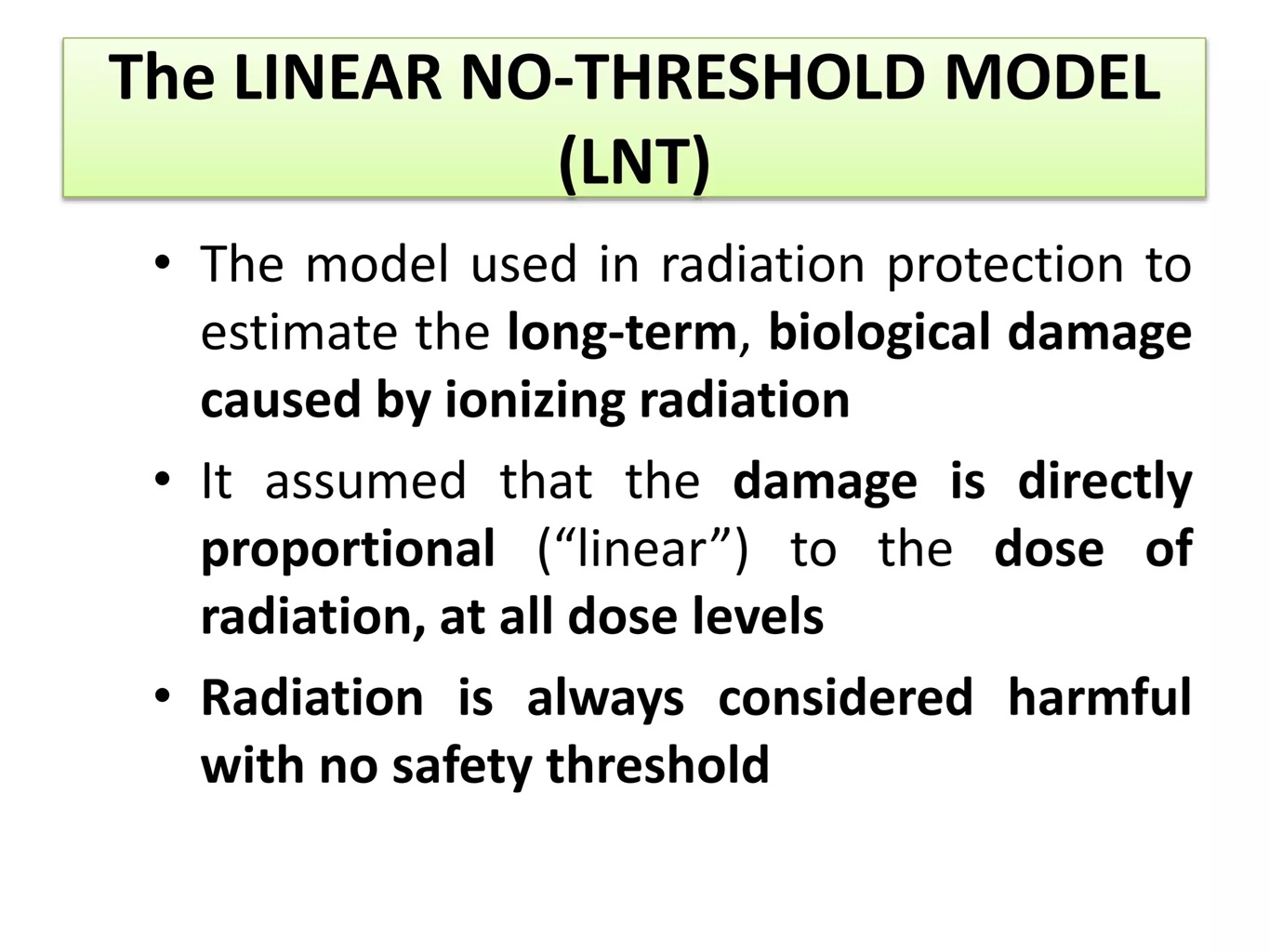
For decades, many researchers and regulators have tried to simplify things by adopting what’s known as the “linear no-threshold model,” which says that the effects of radiation scale down linearly with the dose, and that even tiny amounts of radiation can have small negative effects.
Calling the Linear No Threshold (LNT) model an attempt to “simplify things,” Meyer noted, is “a rather pejorative comment in light of the significant scientific evidence at hand”:
The 2006 National Academy of Sciences report on Biological Effects of Ionizing Radiation (BEIR VII) substantiates LNT, as did the 2021 NRC decision to deny a 2015 request to get rid of LNT.
Plumer “never mentions the history and current state of study and knowledge of the health effects of exposure to low levels of ionizing radiation,” Meyer said, pointing to 80 years of research:
The atomic photographer Robert Del Tredici includes a lengthy endnote in his 1985 book At Work in the Field of the Bomb, which recounts Karl Z. Morgan, the father of health physics—aka the study of the health effects of radiation—discussing how the effects of low-level radiation were well-researched in the late 1940s and were found to be significant. As Morgan’s medical perspectives raised public health questions about further expansion of the nuclear enterprise, they were minimized and ignored.
One of Plumer’s unquestioned and unexplored assertions especially stood out:
Experts agree that high doses of radiation are dangerous and can cause various types of cancer. But there’s much more disagreement about the effects of lower doses of radiation, such as the amounts that workers at nuclear power plants might receive in the course of their jobs. Different studies have found that low doses can be harmful, neutral or even beneficial.
The idea that low doses of radiation may be “even beneficial” refers to “radiation hormesis”—a widely dismissed claim of some nuclear promoters that exposure to radiation exercises the immune system and thus is healthy.
‘History of atomic press censorship’
“This piece,” said Meyer,
serves to promote the current government policies to greatly expand nuclear activities—it is not investigative journalism that thoroughly considers the topics at hand to give the public the information necessary for informed decision-making.
Meyer added: “The New York Times has an uncomfortable history of atomic press censorship.” Meyer cited as “a prime example” William Laurence, who, he noted, helped craft the official military line on Hiroshima while still ostensibly a Times journalist. Laurence was a Times science writer who also worked for the Manhattan Project, for which he drafted press releases and other government statements.
Back at the Times after the war, for years Laurence glorified nuclear technology. As author Beverly Deepe Keever wrote in her book News Zero: The New York Times and the Bomb, Laurence “served as a scribe writing government propaganda” to obscure the deadly and harmful effects of radiation.
More recently, Matthew Wald, who spent 38 years at the Times with a beat including the nuclear industry, left the paper in 2014 and the following year joined the Nuclear Energy Institute, the nuclear industry’s Washington-based trade group, as a policy analyst and communications consultant.
“Is history repeating itself, or can the New York Times cover the whole story here?” Meyer wrote. “The future of our genome is at stake.”
Meyer signed his letter as the treasurer of Physicians for Social Responsibility New York. He was also formerly the chapter’s president, the executive director of PSR Wisconsin, a longtime member of PSR’s national board, and the program director of the Alliance for Nuclear Accountability. He has not yet received a response from Plumer.
ACTION ALERT: You can send a message to the New York Times at letters@nytimes.com or via Bluesky: @NYTimes.com. Please remember that respectful communication is the most effective. Feel free to leave a copy of your message in the comments thread here.
Research Assistance: Emily Marie Spencer
Liberals Have Relaxed About Trump Because They Trust Him To Keep The Wars Going
Caitlin Johnstone, Jul 16, 2026, https://www.caitlinjohnst.one/p/liberals-have-relaxed-about-trump?utm_source=post-email-title&publication_id=82124&post_id=207158487&utm_campaign=email-post-title&isFreemail=true&r=1ise1&triedRedirect=true&utm_medium=email
Have you noticed how the liberal establishment hasn’t been nearly as emotional and outraged about Trump’s second term as they were about his first? Now that he’s the president who bombed Iran, the entire western political/media class is cool with him.
The term “Trump Derangement Syndrome” has always been used by the MAGA crowd as a blanket pejorative to protect the president from criticism, but during Trump’s first term it wasn’t entirely unfair. You’d see Democrats shrieking their lungs out over Trump doing things that other US presidents did all the time like cozying up with dictators and tyrants. They’d lose their minds over relatively sane things like Trump talking about moving troops out of Syria. The whole Russiagate thing was liberals going bat shit over a crazy conspiracy theory that caused them to push for the escalations against Russia which ultimately gave rise to the war in Ukraine.
We’re not seeing any of that in Trump’s second term. That extra layer of screeching emotionality simply isn’t there. There are no Russiagates or emotional support Maddows this time around. Democrats hate Trump, but they hate him about as much as they’d hate any Republican president. The emotional response to his second presidency is wildly, wildly different from the first.
Which is nuts, because he’s quantifiably far worse this time around. His domestic policies are much more tyrannical. He’s as evil a warmonger as the White House has ever seen. He’s so corrupt that he’s just openly admitting to being bought and owned by Zionist oligarchs while making his family a fortune using the power of his office. Now that he doesn’t have to worry about re-election, he’s being completely nakedly monstrous.
And what’s creepy is that’s why the liberal establishment is so much more mellow about him. They’re no longer worried that he’s going to promote “isolationist” foreign policy and roll back the US war machine. He went to war with Iran, so they like him now. Because they know he’s fully compliant.
I’ve had many a Trump supporter tell me that all the anti-Trump vitriol we saw from the imperial political/media class was evidence that he really was fighting the Deep State and draining the swamp, but that was never what was actually happening. As I have been arguing since Trump’s first term, the oligarchs and empire managers never opposed Trump because they believed he was opposed to them. Rather, they simply viewed him as a poor steward of the empire. They didn’t trust him to keep the imperial gears turning in the way they must turn to maintain the status quo.
Clearly that has changed. They trust him now. They know he will keep the bombs dropping, keep the capitalism chugging along, and keep the power centers where they are.
They view him as one of their own now. When he finally dies, he will be lovingly eulogized by all the same liberal institutions which called him a second Hitler during his first term. He did enough to reassure them that the presidency of the United States had not been accidentally awarded to a decent human being.
Iran Accuses Kushner, Witkoff of Pursuing Profits Over Peace in Diplomatic Talks
Drop Site reported that Iran warned Vice President JD Vance that “the pair were more interested in exploiting insider knowledge of the negotiations to profit in financial markets than they were in reaching a deal.”
Jake Johnson, Common Dreams, Jul 16, 2026
Iranian officials reportedly warned US Vice President JD Vance late last month that two officials leading the Trump administration’s diplomatic efforts in the Middle East—special envoys Steve Witkoff and Jared Kushner—were trying to profit from their proximity to critical negotiations rather than working to secure a lasting peace agreement.
According to Drop Site, which cited an unnamed Iranian official, “Iran conveyed to Vance that the pair were more interested in exploiting insider knowledge of the negotiations to profit in financial markets than they were in reaching a deal.” The Iranian side also “expressed concern about repeated leaks from Kushner to Israeli Prime Minister Benjamin Netanyahu.”
Iranian officials reportedly warned US Vice President JD Vance late last month that two officials leading the Trump administration’s diplomatic efforts in the Middle East—special envoys Steve Witkoff and Jared Kushner—were trying to profit from their proximity to critical negotiations rather than working to secure a lasting peace agreement.
According to Drop Site, which cited an unnamed Iranian official, “Iran conveyed to Vance that the pair were more interested in exploiting insider knowledge of the negotiations to profit in financial markets than they were in reaching a deal.” The Iranian side also “expressed concern about repeated leaks from Kushner to Israeli Prime Minister Benjamin Netanyahu.”
Iranians estimated that people with inside information have raked in $9 billion in profits stemming from financial market moves related to the US-Israeli war on Iran, which sparked significant volatility in energy and equity prices.
On several occasions during the war, massive trading volumes have closely preceded major conflict-related announcements by US President Donald Trump. (Kushner is Trump’s son-in-law, and Witkoff is a close personal friend of the president.)
Mohammad Bagher Ghalibaf, speaker of the Iranian Parliament and the country’s top negotiator, accused the Trump administration in March of peddling “fake news” to “manipulate the financial and oil markets and escape the quagmire in which the US and Israel are trapped.”……………………………………………..
“The public has no reason to trust Jared Kushner’s integrity as a government official to put their interests above his financial benefit,” Donald Sherman, president of Citizens for Responsibility and Ethics in Washington, said after Trump formally named Kushner a special peace envoy in February.
Less than a month later, The New York Times reported that Kushner was trying to raise at least $5 billion in funding for his private equity firm, Affinity Partners, from Middle East governments. Saudi Arabia’s Public Investment Fund is the largest investor in Affinity.
Witkoff, a real estate investor, has also faced scrutiny for potentially massive conflicts of interest.
Rep. Greg Stanton (D-Ariz.) noted during a House hearing last month that Witkoff “co-founded the cryptocurrency venture firm World Liberty Financial, alongside President Trump and President Trump’s children.”……………………………………. https://www.commondreams.org/news/kushner-witkoff-profit-iran-war
Israel And The United States Are Merging Their Militaries. Here’s Why.
“From aid to partnership”, the US and Israel are set to become even more united in genocide
While the initial bill, the “United States-Israel FUTURES Act,” failed as a standalone bill, the core provisions have been included in the NDAA. This aims to “expand and accelerate bilateral defense technology research, development, testing, evaluation, integration, and industrial cooperation” between the US and Israel, led by an “executive agent” decided by the US Defense Secretary.
This merger would integrate the United States and Israeli occupation militarily, including “data fusion”, “network integration”, research and development, weapons and bio-manufacturing, and collaboration with AI, cyber, and quantum machine learning technologies. While the Israeli occupation forces and US military are already deeply connected and share many of their genocidal tactics, this represents a significant entanglement of the two most belligerent and murderous militaries in the world.
Nuvpreet Kalra, July 15, 2026, https://scheerpost.com/2026/07/15/israel-and-the-united-states-are-merging-their-militaries-heres-why/
In June 2026, Israeli Prime Minister Netanyahu wrote to Republican Representative Marlin Stutzman of California, saying that “the time has now arrived [for Israel] to move from aid recipient to partner” with the United States. Yesterday, on Fox News, Netanyahu again repeated the proposal to move “from aid to partnership“.
What Netanyahu proclaims is at the core of the proposed “United States-Israel Defense Technology Cooperation Initiative”, which has been included in a section of the National Defense Authorization Act (NDAA) that seeks to push the Pentagon budget to $1.5 trillion in 2027. This proposal to the annual military policy bill aims to essentially merge the Israeli and the US militaries.
In 2008, the US passed a law requiring it to protect Israel’s “military edge” against other countries in the region. The US is required to give Israel at least $3.8 billion a year in military funding until 2028. Israel has always been a major priority of the United States – this only makes that clearer.
This new integration differs from the way the US engages with its other allies. While NATO countries and partners share a degree of military integration with global weapons supply chains, intelligence sharing, military bases, and more, this removes the limitations in existence for military cooperation. Already, the US war drive through NATO has impacts across society beyond what might be recognised as purely military-related, given the military-industrial complex and integration of the US military in all aspects of life. In this case, the merger will deepen ruptures across the political, social, and economic system as the United States moves closer to its proxy. The main beneficiaries of this will be the weapons companies that profited immensely from and have made Israel’s genocide in Gaza possible, as they enter into new seamless contracts.
Israel is increasingly viewed across the world, and within the United States, as a pariah state. In the US, 60% of adults have an unfavourable view of Israel. This push to further integrate with Israel puts the US on the line in an attempt to ensure the continuation and longevity of the settler colonial project. By entrenching the US military with Israel’s own, it provides a layer of protection that goes even further than the impunity that has given Israel full rein to commit a holocaust in Gaza and further colonisation of the occupied West Bank. This integration will mean that Israel is given unfettered support to carry out its genocidal trajectory for the total colonisation of Palestine, inhibiting any future presidents from changing this relationship, if that were to ever occur.
This is the US empire defending itself, as the zionist state becomes isolated, by trying to make its proxy appear more robust and independent, while maintaining its unbreakable connection to the core. This is a clear response to the massive movements that have erupted across the world for nearly three years in opposing Israel’s genocide and the role of countries in facilitating it. The US is, in a way, absorbing Israel to provide the legitimacy being chipped away at internationally and domestically, ending the narrative opposition to unlimited foreign aid to Israel, which has garnered bipartisan support.
Israel is occupying at least 60% of Gaza. Palestinians are being pushed into a shrinking concentration camp, where they are bombed every single day and refused aid during what is described as a ceasefire. For US taxpayers, this merger would put even more of our money into funding this horrific genocide.
This NDAA is dangerous. Through the US-Israeli integration, it would facilitate more deadly technology, more weapons for genocide, and make it nearly impossible to sever support for Israel by the US. Through the $1.5 trillion Pentagon budget, it would funnel money out of welfare into more war and violence across the world. For the sake of humanity, we have to dismantle this apparatus of death that is the US empire, which is in a perpetual, ever-growing state of war to maintain its system of exploitation and plunder.
Nuvpreet Kalra is CODEPINK’s digital content producer. She completed a Bachelor’s in politics and sociology at the University of Cambridge, and an MA in Internet Equalities at the University of the Arts London. As a student, she was part of movements to divest and decolonize, as well as anti-racist and anti-imperialist groups. Nuvpreet joined CODEPINK as an intern in 2023 and now produces digital and social media content. In England, she organizes with groups for Palestinian liberation, abolition, and anti-imperialism.
While the initial bill, the “United States-Israel FUTURES Act,” failed as a standalone bill, the core provisions have been included in the NDAA. This aims to “expand and accelerate bilateral defense technology research, development, testing, evaluation, integration, and industrial cooperation” between the US and Israel, led by an “executive agent” decided by the US Defense Secretary.
This merger would integrate the United States and Israeli occupation militarily, including “data fusion”, “network integration”, research and development, weapons and bio-manufacturing, and collaboration with AI, cyber, and quantum machine learning technologies. While the Israeli occupation forces and US military are already deeply connected and share many of their genocidal tactics, this represents a significant entanglement of the two most belligerent and murderous militaries in the world.
While the initial bill, the “United States-Israel FUTURES Act,” failed as a standalone bill, the core provisions have been included in the NDAA. This aims to “expand and accelerate bilateral defense technology research, development, testing, evaluation, integration, and industrial cooperation” between the US and Israel, led by an “executive agent” decided by the US Defense Secretary.
This merger would integrate the United States and Israeli occupation militarily, including “data fusion”, “network integration”, research and development, weapons and bio-manufacturing, and collaboration with AI, cyber, and quantum machine learning technologies. While the Israeli occupation forces and US military are already deeply connected and share many of their genocidal tactics, this represents a significant entanglement of the two most belligerent and murderous militaries in the world.
Radiation Protection -analysis of NRC proposals
the US NRC is under pressure to weaken its current standards at a time when the scientific
evidence suggests these need to be tightened.
Tony Webb, July 2026.
Current standards under threat
Operating under a Directive from US President Donald Trump the US Nuclear Regulatory
Commission (NRC) proposes to weaken its current radiation protection standards – at a time when
the scientific evidence suggests these existing standards underestimate the risks faced by workers
and the public – and need to be significantly tightened. Unions, public health and environment
groups around the world are pressing governments, international and national protection agencies
to resist pressure from the USA to follow suit – and are calling for a comprehensive review the
evidence leading to increased worker and public protection.
In May 2025 US President Trump issued a Directive to the NRC to revise all its current regulations
and specifically those relating to radiation protection. It called for the NRC to abandon the
fundamental principle that underpins standards worldwide that there is no threshold or ‘safe’ level
of exposure to Ionising radiation. Any dose however small can be the one that triggers what are
known as ‘stochastic’ health effects that emerge over time from damage to individual cells in the
body – damage that is inadequately repaired and where the cells go on to reproduce in in
this damaged form, later manifesting as cancers, genetic, or other health damage. Some
other effects such as skin damage are called ‘deterministic’. A minimum or ‘threshold’ level
of exposure is required, and the severity of the damage increases with the level of exposure.
The severity of stochastic health effects is independent of the dose received – you either get
is or you don’t but the risk-probability that you do increases with the dose received over
your lifetime exposure.
Following from this principle that there is no safe level radiation standards required that all
exposures be kept ‘as low as reasonably achievable’ – known as the ALARA principle. . The
Presidential directive specifically instructed the NRC to reconsider this principle. It also required
review of the legal dose-limits for the amount of non-naturally occurring radiation that workers and
the public can be exposed to in any year. These annual dose limits have been set by national
standards agencies based mainly on international reviews of studies of Japanese survivors of the
bombing of the cities of Hiroshima and Nagasaki in 1945. These survivors who received relatively
large doses over a short time period. The level of damage to their health, notably their rates of
cancer has been tracked over time and used to estimate the probabilistic risk of stochastic damage
from lower doses spread over longer time periods using a ‘Linear No-Threshold’ (LNT) model –
essentially based on the no safe level principle. The risk estimates have been revised over time as
evidence emerged for higher cancer rates among the survivors and revision of the estimates of
doses they received that might have caused these cancers.
More recently large scale studies of nuclear plant workers in France the UK and USA – known as the
INWORKS studies (with more accurate measures of doses received and health effects compared to
non-exposed workers) have shown that the estimates used to set the current standards significantly
under-estimate the risk, and that the risk at low doses – over longer time periods may be
proportionately greater than the LNT model estimates suggest. These studies also show significantly
elevated levels or cardio-vascular diseases such as heart damage and strokes, and other worker
studies show elevated levels of dementia associated with radiation exposure. Together these
studies suggest there is an urgent need to comprehensively review the evidence of risks on which
the current national and international standards are based – particularly worker dose limits . In
addition recent meta analyses of cancer rates in large populations living close to nuclear power plants in Europe and the USA show that there is a significant general increase the closer people live
to these facilities particularly affecting the young and the elderly. These suggest the need to review
the standards that set dose-limits for public exposures alongside those reviewing expsore of
workers.
In short, the US NRC is under pressure to weaken its current standards at a time when the scientific
evidence suggests these need to be tightened.
The NRC proposals
Following the May 2025 Presidential Directive, the NRC has now, after several delays, released its
proposed revision of the standards. It clearly faced a dilemma as adopting the President’s suggested
changes would mean reversing its earlier 1991 decision that specifically rejected these same
proposals requested by industry lobbyists. In essence the 179-page proposal document (open for
45-days for comments) offers its reasoned judgements on the three key aspects of the review: the
LNT model, the ALARA principle and the occupational and public exposure limits.
To its credit the NRC retains the LNT as the basis for assessing risks at lower doses than those
received by Japanese bomb survivors. Hardly surprising as to have rejected this would have flown in
the face of international scientific pinion worldwide and its own 1991 decision. It does give some
credence the highly contested ‘Hormesis’ model based on limited studies suggesting that there may
be positive effects on health at low doses due to the capacity for cellular repair but ultimately
concludes that there is no scientific consensus that would support this or any other alternative to
the LNT model.
Unfortunately, proposes abandoning the ALARA principle arguing that it is subject to ‘excessive
subjectivity that leads to overly conservative assessments’ for managing exposures below the the
occupational and public dose limits. It is clearly identified as a burden on the nuclear industry – and
thus an impediment to the policy of reducing barriers to its development and operation. In its
place the NRC proposes ‘operating principles’ for managing doses below the legally enforceable
limits. Above (and perhaps only above) an expected dose of 100 mrem (1 MSv) per year – the limit
for public exposure – employees would need to be given ‘radiation worker training’. Above (and
again perhaps only above) an expected dose of 500 mrem (5 mSv) /year). i.e., at 10% of the
regulated exposure limit, employers would be required to monitor individual workers exposures. It
further suggests a cost-benefit approach for reducing exposures indicating that it would be
appropriate for employers to spend up to $5,200 (in 2014 US $) to avert each rem of occupational
exposure. If a radiation protection measure were more costly than that, the licensee would have an
acceptable cost-justified basis for not implementing the measure and instead accruing the dose as
long as that dose was within the regulatory dose limits.
The occupational dose limit is however further weakened by allowing exposures up to double the 5
rem (50 mSv) annual limit. Previously employers could apply for ‘planned special exposures’ for
situations needing higher worker-doses. These are no re-badged as ‘occupational dose limit
extensions’ (DLEs) permitting male workers (female workers are excluded) to receiving a dose of up
to 10 rem (100 mSV) in any year provided these do not result in the worker’s five-year average
exceeding the 5 rem (50mSv) annual limit – i.e. a total over any five year period of 25 rem (250 mSv).
These proposals will leave US workers facing permitted exposures greater than recommended by
international bodies and adopted by most national standards-setting agencies where the targeted
annual limit is 20mSv with exceptional exposures permitted up to 50 mSv provided these do not
exceed 20 mSv averaged over any five-year period. This 20 mSv annual averaging standard has been
in place since 1991 but was never adopted in the USA which retains the earlier 5 rem (50 mSv) annual limit. As indicated above the scientific evidence now calls for a revision of the stochastic
health damage risk estimates and a further tightening of the standards rather than their relaxation
as proposed by the NRC. Indeed it is notable that nowhere in the NRC proposals is here any mention
of, let alone critical review of the peer reviewed INWORKS studies.
The NRC does reject the Presidential Directive’s suggestion that the public exposure limit be raised
to 500 mrem (5 mSv). it leaves it at 100 mrem (1 mSv) in line with the international norm though it
does propose relaxing the emissions standards for radiation and radioactive material from nuclear
facilities from the existing 10 mrem to 25 mem. Again, these proposed relaxations come at a time
when the evidence suggests higher risks to the public living close to such plants and that a tightening
of existing standards is warranted. And again, nowhere does the NRC mention let alone critique this
evidence for increased health risks for populations living close to nuclear facilities.
International Opposition to the US NRC proposals
The NRC proposals are currently open for comments with a final decision on the revised regulations
due by the end of 2026. While any revised radiation protection standards will initially apply only to
the USA there are implications for radiation protection in other countries. Pressure on international
and national standards bodies can be expected. As well as the civil nuclear program it is expected
that the revised standards will apply to US based military facilities. Whether these US, or other
countries’ standards will apply to US military facilities and to any jointly owned civilian enterprises
based in other countries may be in doubt. In Australia for example a Naval Nuclear Powered
Submarine Safety Regulator (ANNPSR) has been created to oversee construction, operation,
maintenance, decommissioning and radioactive waste management from the UK, US (AUKUS)
nuclear submarine program. This new regulator reports to the Department of Defence and is
separate from the existing regulator, the Australian Radiation Protection and Nuclear Safety Agency
(ARPANSA) which reports to the Department of Health. How these regulators will collaborate, and
which standards will prevail is yet to be determined.
In Australia, as in other countries, notably the USA, Canada, coalitions bringing together the
concerns of trade unions, public health organisations and environment groups are campaigning for
rejection of the US NRC led proposals that would weaken current radiation protection standards
and for a comprehensive review of the scientific evidence that now strongly suggests the risks to
health of workers and the public are greater that when standards were last revised – now some 25
years ago – and need to be revised and significantly tightened.
Time for all US service personnel in Middle East to disobey illegal Trump orders to wage criminal war on Iran
The men and women carrying out these illegal orders from war criminal Trump and his unhinged defense Secretary Pete Hegseth dishonor their uniform. They are not serving their country. They are serving the war criminals that should be in the dock at The Hague,
Walt Zlotow West Suburban Peace Coalition Glen Ellyn IL, 19 July 26
Eight months ago, six US Congresspersons, all former military or intelligence community members, issued a video urging current service members to disobey illegal orders that might be issued by President Donald Trump’s administration.
They stated “threats to our Constitution are coming from right here at home,” and repeatedly urged the military to “refuse illegal orders.” “No one has to carry out orders that violate the law, or our Constitution. Know that we have your back… don’t give up the ship.” They did not specify the illegal orders referred to but it was assumed they were Trump’s illegal orders for service personnel to obliterate little unarmed boats in the Caribbean imagined to be bringing drugs into the Homeland.
But the six didn’t have current military personnel backs. The six shut up when none of the other 529 congresspersons joined them in doing the principled thing of demanding military not engage in Trump administration war crimes whether they be bombing little unarmed boats, bombing imagined bad guys in Somalia 75 times in 2026, killing over a hundred Venezuelans to snatch Venezuelan President Nicholas Maduro and his wife for a show trial in America.
Worst of all, the Silent Six remained mute when Trump ordered his war fighters to launch his criminal war on Iran that may plunge the world into recession if not depression. Every bomb, every missile they drop on Iran emanates from an illegal, indeed criminal order that kills mostly civilians in America’s lost cause to destroy Iran at the behest of Israel.
After 39 days of murderous bombing that killed thousands, Trump cried ‘uncle’ knowing he’d lost, forcing his negotiated a ceasefire. He thought he could salvage victory with a blockade of Iranian ports but that failed just as spectacularly. So he ordered his war fighters to attack again, except this time their targets were civilian infrastructure, obvious war crimes to any war fighter with a functioning moral compass.
The men and women carrying out these illegal orders from war criminal Trump and his unhinged defense Secretary Pete Hegseth dishonor their uniform. They are not serving their country. They are serving the war criminals that should be in the dock at The Hague, not in the White House and the Pentagon. And the phony Silent Six and their 529 fellow congresspersons doing nothing to end America’s criminal Iran war blowing up the Middle East, the world economy, possibly even unleashing nuclear weapons, are too busy scooping up Israel Lobby and US weapons makers’ money to advise military personnel to disobey illegal, criminal orders.
We need a massive military personnel sit down strike in the Middle East to end this madness and bring Trump and Hegseth to justice.
1 This Month





PLEASE OPPOSE HR 8255 AND S.3639 – bills would accelerate satellite deployment, with no environmental review or safeguards – https://ncstd5li.quorum.us/campaign/169331/
To see nuclear-related stories in greater depth and intensity – go to https://nuclearinformation.wordpress.com
-
Archives
- October 2026 (74)
- September 2026 (339)
- August 2026 (330)
- July 2026 (355)
- June 2026 (287)
- May 2026 (306)
- April 2026 (356)
- March 2026 (251)
- February 2026 (267)
- January 2026 (308)
- December 2025 (358)
- November 2025 (359)
-
Categories
- 1
- 1 NUCLEAR ISSUES
- business and costs
- climate change
- culture and arts
- ENERGY
- environment
- health
- history
- indigenous issues
- Legal
- marketing of nuclear
- media
- opposition to nuclear
- PERSONAL STORIES
- politics
- politics international
- Religion and ethics
- safety
- secrets,lies and civil liberties
- spinbuster
- technology
- Uranium
- wastes
- weapons and war
- Women
- 2 WORLD
- ACTION
- AFRICA
- Atrocities
- AUSTRALIA
- Christina's notes
- Christina's themes
- culture and arts
- Events
- Fuk 2022
- Fuk 2023
- Fukushima 2017
- Fukushima 2018
- fukushima 2019
- Fukushima 2020
- Fukushima 2021
- general
- global warming
- Humour (God we need it)
- Nuclear
- RARE EARTHS
- Reference
- resources – print
- Resources -audiovicual
- Weekly Newsletter
- World
- World Nuclear
- YouTube
-
RSS
Entries RSS
Comments RSS

