Nuclear emergency on Missouri
 Federal Water Tap, June 20: Flood Effects, Nuclear Power, Dam Removal. CIRCLE OF BLUE, 20 JUNE 2011 Nuclear Emergency on the Missouri Because of snowmelt and record releases from dams managed by the Army Corps of Engineers, the Missouri River has surrounded two nuclear power plants in Nebraska, creating atomic islands on the floodplain. In addition to traditional safety measures, water-filled polyethylene berms are being used as a line of defense to keep the river from inundating the facilities.
On Sunday morning, the Cooper plant, 70 miles south of Omaha, filed a “notification of unusual event” with the federal Nuclear Regulatory Commission. It is the lowest of four emergency classifications used by the NRC. The other plant, at Fort Calhoun, submitted such a notice two weeks ago. It has been shut down since April for refueling and won’t be restarted until the flood waters subside. The Omaha World-Herald has more details.
Nuclear Decommissioning
The Nuclear Regulatory Commission has proposed new regulations to guide the decommissioning process. The NRC is clarifying the language used in its statutes to make explicit that residual radioactivity in soil and groundwater should be accounted for in company records. These radioactivity surveys will be used to evaluate decommissioning costs. http://www.circleofblue.org/waternews/2011/federal-water-tap/federal-water-tap-june-20-flood-effects-nuclear-power-dam-removal/
Continued investigation of radiation exposure at Perry Nuclear Plant
Perry plant radiation-exposure remains under investigation Beaver County Times By Patrick O’Shea,18 June 11 After nearly two months, a Nuclear Regulatory Commission special investigation into a radiation-exposure incident at the Perry Nuclear Power Plant near Cleveland remains ongoing, and it is unclear when the review will conclude.The Painesville, Ohio, plant, which is operated by FirstEnergy Corp., the same operator as the Beaver Valley Nuclear Power Station, reported an incident on April 22 that involved contractors that a company official confirmed also work at the Shippingport facility.
According to a NRC release issued four days after the incident, five workers were exposed to higher levels of radiation than normal when a contractor incorrectly installed cables used to pull monitoring equipment from the reactor during a refueling, and the workers were not shielded as well as they should have been…….Perry plant radiation-exposure remains under investigation – Timesonline.com: :
Claims that USA govt covering up crisis at Fort Calhoun Nuclear Power Plant
 A shocking report prepared by Russia’s Federal Atomic Energy Agency (FAAE) on information provided to them by the International Atomic Energy Agency (IAEA) states that the Obama regime has ordered a “total and complete” news blackout relating to any information regarding the near catastrophic meltdown of the Fort Calhoun Nuclear Power Plant located in Nebraska.
US Orders News Blackout Over Crippled Nebraska Nuclear Plant, Salem-News.com,18 June 11 Report notes the “cover-up” of this nuclear disaster by President Obama is based on his “fantasy” of creating so-called green jobs which he (strangely) includes nuclear power into. …….they built this nuclear power plant in the flood plane of the Missouri River, for God’s sake! It reminds us that there are questions over whether nuclear power developers have souls and they don’t even bother making these places on safe high ground. Continue reading
The smell of uranium corruption in Virginia lawmakers’ acceptance of extravagant travel gifts
 The pitch, in a word, stinks. If state legislators want to educate themselves about uranium mining, that’s commendable. But signing up for $10,000 or more in free travel expenses, although allowable under Virginia law, raises big questions about their integrity…...
A junket powered by uranium, Virginia Uranium Inc., a tiny Chatham-based firm that wants to mine uranium in south central Virginia near Gretna, is flying more than a dozen state legislators to France to drum up momentum to end the state’s ban on uranium mining in next year’s General Assembly.Washington Post 17 June 11By Peter Galuszka
The lobbying effort includes all-expenses paid and three days off in Paris so the legislators can visit a closed uranium mine in the city of Bessines in western France, where uranium was extracted for a half a century until the late 1990s. Continue reading
Fort Calhoun Nuclear Plant threatened by Missouri River flooding
 Missouri River Flooding Threatens Nuclear Power Plant, Concern is growing about the safety of a nuclear power plant that sits in a Missouri River flood plain. The Fort Calhoun Nuclear plant was cited for inadequate flood protection just last year and is currently a sandbagged island as the Missouri sits at 1.5 feet over flood stage and is expected to rise another five feet., Care 2, 18 June 11 by: Ann Bibby

Nothing to Worry About
Federal regulators and officials with the Omaha Public Power District (OPPD) insist there is no danger but list the status of the plant at “notification of unusual event,” which is the lowest emergency level emergency. Spokespeople for the OPPD say there has been no leaking of radioactive materials and none expected.
Conspiracy Theories
In the wake of the recent disaster at Fukushima, rumors have been flying fast across the Internet about Fort Calhoun, fueled by the FAA closing the airspace over the plant and an electrical fire, which temporarily shut down cooling pumps. But the FAA’s closing on June 6th was in response to the flooding, and company officials have stated that the plant’s spent fuel was never in any danger during the brief power outage.
Flooding Continues
The Missouri continues to rise, but officials are confident that the plant is secure. Fort Calhoun has been in cold shutdown since April 9th and will remain so until after the flood waters recede, which is not expected to happen soon. In fact, flooding is likely to remain a concern on and off for the rest of the summer for many parts of the Upper Midwest…..http://www.care2.com/causes/environment/blog/missouri-river-flooding-threatens-nuclear-power-plant/
$10,000 ‘gifts’ for each lawmaker’s Paris jaunt, from Virginia Uranium
 The trips, which are permissible under state law, are reported as gifts…..
 Virginia Uranium Inc. picking up tab for trip to France for state lawmakers, Washington Post By Associated Press, : June 17 RICHMOND, Va. — A company that wants to mine a uranium deposit in Southside Virginia is picking up the tab for a trip to France by more than a dozen state legislators who will have a say in whether the state ends a ban on uranium mining. Continue reading
No progress in USA’s dilemma about nuclear wastes
U.S. making little progress on nuclear waste issue, Battle Creek Enquirer 17 June 11 When Congress passed the Nuclear Waste Policy Act of 1982, most Americans thought the nation was on its way toward dealing with the spent radioactive fuel from nuclear power plants.
But nearly 30 years and about $15 billion later, little progress has been made.
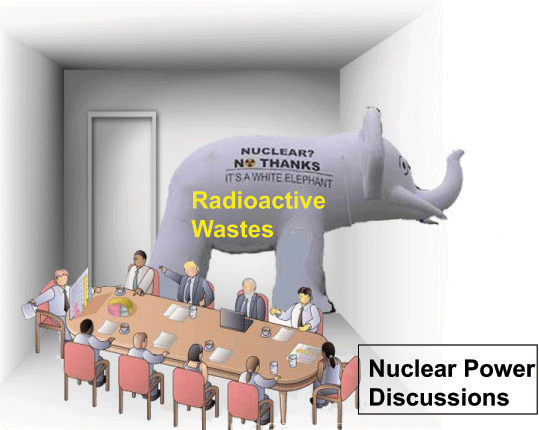
Michigan Public Service Commissioner Greg White, speaking on behalf of the National Association of Regulatory Utility Comm-issioners, told a U.S. House subcommittee earlier this month that the nation is no closer to creating a central repository for nuclear waste than it was in the early 1980s……. Continue reading
U.S. House Appropriations panel cuts funding for new nuclear weapons facility
The House Appropriations subcommittee that approves funding of the weapons complex, run by the National Nuclear Security Agency (NNSA), just whacked almost $500 million from the weapons program.
House panel whacks funding for nuclear complex, Washington Post, 18 June 11 By Walter Pincus Remember the ones demanded by Republican senators as the price for passage of the new Strategic Arms Reduction Treaty (START) last December? Back then, senators succeeded in getting the Obama administration to pledge to spend billions more to upgrade the U.S. nuclear weapons complex and modernize the country’s stockpile of deployed weapons.
Problem is, members of the House weren’t involved in the discussions.
Now, led by Republicans, lawmakers are cutting into the funds that the Obama administration had pledged for upgrades and modernization.
The House Appropriations subcommittee that approves funding of the weapons complex, run by the National Nuclear Security Agency (NNSA), just whacked almost $500 million from the weapons program. A slice of $100 million came out of a $200 million pot that is supposed to finance early steps in the coming year to build a new facility at Los Alamos National Laboratory….. http://www.washingtonpost.com/blogs/checkpoint-washington/post/house-panel-whacks-funding-for-nuclear-complex/2011/06/15/AGPrLAXH_blog.html
USA Senate hearing finds nuclear safety unsatisfactory
Fukushima-Daiichi showed us that we have to consider the possibility of multiple units at a single site, perhaps multiple spent fuel pools being affected at the same time.”
Commissioners also had no answers about how to fix backup power systems that continue to cool nuclear material in the event of a major power outage…….Amidst these less-than-inspiring answers, the NRC commissioners tried to downplay the possibility of similar events happening here anyhow…..
Cold Comfort at Senate Nuclear Safety Hearing, The Nation 17 june 11 George Zornick In the two months since the Fukushima Daiichi Nuclear Power Plant suffered a catastrophic breakdown during an earthquake and tsunami in Japan, what has the United States learned about nuclear safety? How are regulators working to prevent a similar disaster at one of America’s 104 nuclear power plants, about a quarter of which share the same design as Fukushima Daiichi? Continue reading
The devil, as usual, is in the details. For instance, the cost of a nuclear reactor per unit of electrical generating capacity declines with increasing size……There are economies of scale associated with security, too ….Nuclear power advocates have long promised far more than they can deliver, ignoring essential hurdles such as cost, safety, and performance. Decades of experience, however, have proven those promises to be hollow and hazardous. The notion that “small is beautiful” for nuclear reactors is not just fanciful; it is whistling past the graveyard of the “nuclear renaissance” that never was
The problems with small nuclear reactors, THE HILL, By Dr. Arjun Makhijani – 06/15/11 “…… the enthusiasts of small reactors are back, promoting “small modular reactors” (SMRs) which, they say, can solve the central economic problem of large reactors that each cost so much and take so long to build that it becomes a “bet the farm” risk. But this is hype and hope more than substance. Unfortunately, Congress and the administration are buying into it. Continue reading
Nuclear Regulatory Commission’s poor record on fire safety
According to NRC records, there have been at least 154 fires at nuclear plants since 1995, an average of 10 a year. On June 7, a fire at the Fort Calhoun nuclear plant in Nebraska temporarily knocked out cooling to a pool holding spent fuel at the site, prompting an emergency declaration.
Nuclear Regulatory Commission Chief Blasts Agency’s Approach to Fire Safety by John Sullivan, ProPublica June 15 In a forceful critique of his agency’s approach toward fire safety, the chairman of the Nuclear Regulatory Commission declared that the policy of not enforcing most fire code violations at dozens of nuclear plants is “unacceptable” and has tied the hands of NRC inspectors. Continue reading
Huge and expanding costs of USA’s nuclear arsenal
Nuclear Paradox: Shrinking U.S. Arsenal Requires Huge New Expenditures, Forbes, Jun. 13 2011 by Loren Thompson “…..The anti-nuclear rhetoric coming out of the White House during Obama’s early days in office was so persistent that some senior military officers worried the new president was taking America in the direction of unilateral disarmament, even though the candidate had explicitly ruled out that possibility during the campaign. But the military need not have worried, because the way things are turning out, Barack Obama is likely to spend more money on the U.S. nuclear arsenal than any U.S. president since Ronald Reagan. Continue reading
Google’s move into renewable energy – a commercial and environmental plus
 By developing or investing in the technology that makes that goal achievable, Google gets in at the ground level of an industry that’s likely to generate significant revenue in the coming decades.
Google Takes Aim At Renewable Energy, Wired, By Duncan Geere June 8, 2011 Google’s founder and CEO, Larry Page, has announced that the company has tasked an R&D team with making renewable energy cheaper than fossil fuels. Continue reading
Huge public interest as Beyond Nuclear meets Nuclear Regulatory Commission
 Overwhelming public interest in Beyond Nuclear’s meeting with the NRC on US Mark I reactors – crashes agency phone line 9 June 11 Beyond Nuclear staffers Paul Gunter and Kevin Kamps met with a review board of the US Nuclear Regulatory Commission on June 8, 2011 to supplement its April 13th petition calling for the suspension the operation of the 23 Fukushima-style General Electric Mark I Boiling Water Reactors in the US.
The meeting was convened at the request of Beyond Nuclear by the petition process and opened to the public by Federal law.Become a co-petitioner with Beyond Nuclear.
USA nuclear wastes – the intractable problem that just won’t go away
 U.S. nuclear operators have begun moving some of their spent fuel out of pools and into “dry casks,” considered safer because the casks require only natural air flow, not mechanically pumped water, to cool the fuel. But only about 15,000 metric tons of fuel are stored this way in the U.S., in part because the system is expensive. Even dry-cask storage isn’t a permanent solution. The casks are expected to last decades, not the thousands of years it takes the fuel to become safe…. “No one else on the planet has a solution either.”..Problem of Where to Put Waste Besets Nuclear Industry, WSJ, By BEN CASSELMAN, JUNE 9, 2011 No question has bedeviled the U.S. nuclear-power industry more than what to do with the thousands of tons of radioactive waste generated by its reactors every year.
U.S. nuclear reactors run on enriched uranium fuel. A nuclear reaction splits the uranium atoms, emitting heat that boils water, turning a turbine and generating electricity. The process leaves behind waste that is no longer capable of sustaining a nuclear reaction but is still highly radioactive. Continue reading
1 This Month


Tell Congress: Prevent Nuclear Catastrophe in Iran

Tell Congress: Prevent Nuclear Catastrophe in Iran

Read the Public Inquiry Report, the Commissioners’ report, Surrendering Australia: The AUKUS Deception is available to download for free at aukuspublicinquiry.com. Or just watch the replay of the National Press Club Luncheon.
To see nuclear-related stories in greater depth and intensity – go to https://nuclearinformation.wordpress.com
Say No to NASA’s Reckless Nuclear Reactor on the Moon
-
Archives
- November 2026 (281)
- October 2026 (302)
- September 2026 (339)
- August 2026 (330)
- July 2026 (355)
- June 2026 (287)
- May 2026 (306)
- April 2026 (356)
- March 2026 (251)
- February 2026 (267)
- January 2026 (308)
- December 2025 (358)
-
Categories
- 1
- 1 NUCLEAR ISSUES
- business and costs
- climate change
- culture and arts
- ENERGY
- environment
- health
- history
- indigenous issues
- Legal
- marketing of nuclear
- media
- opposition to nuclear
- PERSONAL STORIES
- politics
- politics international
- Religion and ethics
- safety
- secrets,lies and civil liberties
- spinbuster
- technology
- Uranium
- wastes
- weapons and war
- Women
- 2 WORLD
- ACTION
- AFRICA
- Atrocities
- AUSTRALIA
- Christina's notes
- Christina's themes
- culture and arts
- Events
- Fuk 2022
- Fuk 2023
- Fukushima 2017
- Fukushima 2018
- fukushima 2019
- Fukushima 2020
- Fukushima 2021
- general
- global warming
- Humour (God we need it)
- Nuclear
- RARE EARTHS
- Reference
- resources – print
- Resources -audiovicual
- Weekly Newsletter
- World
- World Nuclear
- YouTube
-
RSS
Entries RSS
Comments RSS

