America Is Betting Big on a New Generation of Small Nuclear Reactors

In addition to private-sector development, the U.S. Army has taken the lead in microreactor development in recent years, following Trump’s Executive Order 14299 – Deploying Advanced Nuclear Reactor Technologies for National Security, which established the Army as the lead agency for military nuclear energy efforts. The directive required the Army to create an official programme with a deadline for an operational reactor at a domestic military installation by September 30, 2028.
In August, the U.S. Army announced plans to award up to $2.2 billion to five companies to construct new-generation microreactors at military bases across the United States. The deployment of these reactors will be supported by the federal easing of regulations for innovative reactor designs.
The Army will provide financing to Antares Nuclear at Fort Bragg in North Carolina; BWX Technologies at Fort Campbell in Kentucky; General Atomics at Fort Hood in Texas; Radiant Industries at Fort Benning in Georgia; and Westinghouse Government Services at Fort Drum in New York, with the aim of deploying at least one microreactor by the third quarter of 2028. The companies will be expected to raise billions in private investment to support development efforts.
By Felicity Bradstock – Sep 05, 2026, 2:00 PM CDT
- The U.S. Army has selected five companies and five military installations for its Janus microreactor program, backed by up to $2.2 billion in federal funding.
- The Army aims to have at least one microreactor producing usable electricity at a military installation by September 30, 2028.
- Private developers, including Aalo, are also advancing reactor technology, supported by federal programs and efforts to streamline nuclear regulation.
Governments worldwide are racing to develop small modular reactors (SMRs) as part of their plans for a nuclear power renaissance, with significant progress being seen in recent years. However, the United States appears to be leading the way in nuclear microreactor development, with significant investment in the technology recently announced by the U.S. Army……………
A microreactor is even smaller than an SMR, for which a range of designs are currently under development in the United States with the aim of launching the first versions within the next decade. The compact nuclear reactors will be small enough to be transported by truck, boat, or plane ……
Microreactors will be produced and assembled in factories for transport to a wide range of sites, reducing capital costs and accelerating production. They are expected to have a simple, responsive design that allows them to self-adjust without requiring many specialised operators to make these changes, and will be developed with safety systems to prevent overheating or a reactor meltdown.
Most microreactors are being designed to generate between 1 MW and 20 MW of thermal energy, which could be used directly to heat or converted into clean electricity. They will run on a higher concentration of uranium-235 than is currently used in conventional reactors and can be connected to microgrids alongside renewable energy sources. They may also be useful for use in emergency response following a natural disaster. In addition, they can operate for up to 10 years without refuelling and be quickly removed from sites and replaced with new ones.
In the United States, the Department of Energy (DoE) supports a variety of advanced reactor designs, in line with President Trump’s support for a nuclear power resurgence. Trump has voiced support for a wide range of nuclear technologies, from conventional nuclear plants to SMRs and microreactors, aiming to quadruple nuclear power production in the United States by 2050.
In July, Texas-based Aalo announced that its Critical Test Reactor (CTR) had achieved criticality – the point at which a nuclear reactor is capable of sustaining a controlled, self-supporting chain reaction. Aalo said in a statement, “Our CTR went from groundbreaking to a sustained chain reaction in less than eight months – one of the fastest reactor builds in 80 years – and our company has gone from founding to fission in less than three years.” Aalo is focusing on producing 10 MWe reactors for deployment in 50 MWe Aalo Pods to power AI data centres.
In addition to private-sector development, the U.S. Army has taken the lead in microreactor development in recent years, following Trump’s Executive Order 14299 – Deploying Advanced Nuclear Reactor Technologies for National Security, which established the Army as the lead agency for military nuclear energy efforts. The directive required the Army to create an official programme with a deadline for an operational reactor at a domestic military installation by September 30, 2028.
In August, the U.S. Army announced plans to award up to $2.2 billion to five companies to construct new-generation microreactors at military bases across the United States. The deployment of these reactors will be supported by the federal easing of regulations for innovative reactor designs.
The Army will provide financing to Antares Nuclear at Fort Bragg in North Carolina; BWX Technologies at Fort Campbell in Kentucky; General Atomics at Fort Hood in Texas; Radiant Industries at Fort Benning in Georgia; and Westinghouse Government Services at Fort Drum in New York, with the aim of deploying at least one microreactor by the third quarter of 2028. The companies will be expected to raise billions in private investment to support development efforts.
Jeff Waksman, the principal deputy assistant secretary of the Army for installations, energy and environment, stated, “We believe that this will be the spear tip not just for microreactors but for all advanced reactors in the United States… There have been a lot of microreactor companies that have popped up recently, but we need to get them over the hump.”
While there has been greater discussion around SMR development, the United States is also investing heavily in microreactor construction, aiming to launch the first reactors within the next two years. Funding from the DoE and support from favourable national policies and regulations are expected to help rapidly advance development in the coming years. https://oilprice.com/Alternative-Energy/Nuclear-Power/America-Is-Betting-Big-on-a-New-Generation-of-Small-Nuclear-Reactors.html
Outlaw Trump Must Be Dumbfounded by His Opponents – Ralph Nader

By Ralph Nader, September 4, 2026
What must Tyrant Trump be thinking about his opponents’ feeble, weak, cowardly responses to his daily torrent of serious, impeachable offenses? Even his egomaniacal narcissism cannot fully explain his amazing good luck.
Start with the House’s two impeachments of Trump, while Nancy Pelosi was Speaker, in 2019 and 2021. The first was over Trump’s trying to bribe or extort Ukraine into going after Hunter Biden—an investor and Board member of a Ukrainian business. Pelosi knew there was no chance of getting the required two-thirds vote required for Senate conviction, but went for the House vote anyway. At the same time, Pelosi declined to pursue numerous other ‘slam dunk’ kitchen table impeachable offenses we and others presented to her. (See Congressional Record, December 18, 2019).
In 2021, after the Jan. 6th Trump-incited violent insurrection involving attack on the Capitol and Trump’s effort to overturn the 2020 election, Pelosi did the same thing: impeached Trump in the House. Unfortunately, the Senate fell short of the two-thirds vote required to convict and remove him from office because most Senate Republicans cowardly failed to hold Trump accountable for these treacherous actions.
Come the Second Trump term, after criminal indictments, a felony conviction, and civil litigation brought by women accusing him of sexual misconduct, on Day One, January 20, 2025, Trump began issuing illegal executive orders. Many of them were impeachable offenses as he boastfully implemented them, with the aid of Elon Musk’s criminal enterprise – DOGE.
Trump probably anticipated a much more vigorous impeachment drive by the Democrats, even though they were in the minority in the House. His luck continued. The Democratic Party’s so-called leadership decided against this excellent galvanizing get-out-the-vote initiative for their voters, 90% of whom wanted Impeachment yesterday. Rep. Hakeem Jeffries’ staffers told inquirers that they didn’t know how it would play out.
Jeffries himself told a reporter that “he didn’t want to get ahead of that discussion.” What? Ahead of 90% of his Party’s voters!!?
Trump, who called for the execution of six Congressional Democrats for reminding soldiers of their obligation not to obey an illegal order that is contrary to the Constitution or the laws of the United States (as in described in the Army Manual for Courts-Martial [MCM] along with international law) must be privately dumbfounded. The more violently extreme and erratic he gets, the less interested the Democratic Party is in an Impeachment Drive. (See “Statement from Medical Professionals” in the April 30, 2026 Congressional Record.)
Rep. Al Green (D-Texas) introduced H. Res. 537 on June 24, 2025. It was treated as a privileged impeachment resolution and Rep. Al Green took to the floor for debate and a prompt vote to educate the public about the necessity of ordering Trump, “You’re Fired.” Jeffries and his cohorts opposed it! Trump must have been stunned.
After all, people and their children are feeling, seeing, and hurting in the tens of millions from Trump’s wrecking, endangering, and weakening America. (See my column last week, “Open Letter to Representative Hakeem Jeffries.”)
Under the Jeffries and Schumer anti-impeachment bans, thus agreeing with Trump, the news media has little activity to cover in Washington, D.C. Also, it’s not keeping up with the civic activity around the country demanding Impeachment. (See nader.org/impeachment.)
More puzzling is the refusal of editorial writers to urge impeachment. They regularly make the Impeachment case against Trump but decline to tell their readers the obvious conclusion: that the House should begin an impeachment inquiry and approve articles of impeachment. Congress also has an important role under Section 4 of the Twenty-Fifth Amendment. Congress, by statute, may appoint itself—in lieu of the principal officers of the Executive Branch—to determine whether the president is disabled and should be temporarily removed until the disability lapses.
Despite the many detailed editorials in the New York Times, such as one showing how Trump is harming the health of the American people and another “Autocracy Index” titled “Trump’s Election Meddling Erodes Our Democracy,” the editorial writers limped off their pages without answering the alarmed readers’ question, “What do you want done about this?”
The Times Sunday columnist Jamelle Bouie relentlessly documents Trump’s impeachable crimes, but not once has he moved to recommend this Republic-saving mechanism given to us by our Founding Fathers. Same for other Timescolumnists, Michelle Goldberg and EJ Dionne.
The Times’ reluctance to employ the “I” word is typical of the mass media. What about the independent progressive media? The Nation, In These Times, Progressive Magazine, and The Washington Monthly have all mentioned impeachment, but few have made a sustained, prominent editorial demand for an impeachment drive. Also, they do not report on the rising citizen activities behind Impeachment around the country.
Meanwhile, Trump continues to commit “high crimes and misdemeanors,” brazenly, taunting the so-called leaders of the Democrats by saying, “This is just the beginning.” He provides the Democrats with daily evidence to that should prompt SHADOW CONGRESSIONAL HEARINGS organized by Democratic members of Congress and designed to build a public factual record. Such hearings could attract substantial media attention, particularly if they focused on specific alleged abuses and featured affected witnesses, legal experts, and former public officials. Nonetheless, Jeffries and Schumer block any shadow hearings by dissenting House members.
What explains this historic cowardice? Is it fear of Trump retaliating? Is it smugness over Trump’s low polls, and a belief they can win in November by lying low, raising AIPAC and corporate campaign money, mumbling about affordability, and avoiding heavily poll-favored Pledges or Contracts for the American people showing specifically what they stand for? (See, Compact for American Workers and Robert Reich’s 10-Point Plan To Make America Affordable.) Or is it just trying to avoid Trump accusing the Democrats of having done similar things when they controlled the White House, such as starting or backing unconstitutional wars?
Whatever explains their inhibitions, the result is to signal to Trump that he has two-plus unchallenged years to ravage the lives and livelihoods of millions of people here and abroad, oppose preparedness for climate and pandemic catastrophes, to suppress renewable energy and favor omnicidal fossil-fuel combustion, invade our cities with his stormtroopers, and treat children with unsurpassed cruelty. It also leaves unanswered serious questions about his personal financial enrichment while in office – estimated to be $1.1 million per working hour. All this invites the demand that they resign. The people need fresh, stand-up leaders to take over the Democratic leadership and its party committees. (See RootsAction: “Tell Democrats in Congress to Insist That Schumer and Jeffries Step Aside”.)
The Democrats and electorally frightened Republicans pushed Richard Nixon out in 1974 for far, far lesser transgressions than those committed by Trump in a week.
Big Tech’s Debate Over “Open” and “Safe” AI Leaves Corporate Power Unquestioned

Techno-optimism turns this hierarchy into a story of liberation, presenting corporate technologies as neutral instruments of progress while concealing who owns them and who bears their costs.
September 2, 2026, By Tim Scott
Two seemingly contradictory letters emerging from the AI industry point toward the same future.
On July 24, 2026, an initial coalition of 25 technology companies and organizations, including NVIDIA, Microsoft, and Meta, released the Open Weights and American AI Leadership letter, calling for wider adoption of AI models that institutions can download and modify. By August 3, more than 270 companies and organizations had signed, spanning Big Tech, venture capital, investment management, and the defense and security industries. Four days after Open Weights’ release, another letter, Pacing the Frontier, organized by employees of frontier AI companies with support from two AI-policy nonprofits, drew more than 1,300 signatures. It warned that leading companies may be close to automating AI research, accelerating development beyond society’s ability to understand or control the resulting AI systems.
The letters seem to argue for opposite futures. One presents wider access and fewer restrictions as the route to security and prosperity. The other asks the U.S. government to support an international effort to slow frontier development before competitive pressures make coordinated restraint impossible.
But they address different levels of the industry. Open Weights seeks to deepen AI’s already pervasive presence by making customizable models easier to embed throughout the economy and public life. Pacing the Frontier proposes government-backed management of frontier AI, the industry’s term for its most advanced and broadly capable models. That framework could make the small circle of companies building these systems indispensable to defining the dangers and writing the rules meant to restrain them.
Read together, the letters point toward a two-tier arrangement. AI becomes entrenched across society while ownership of its most powerful systems, infrastructure, and governance remains concentrated at the top. Their connection requires no secret agreement. It lies in what both take for granted: AI development will continue, public institutions will finance and adopt it, and private ownership and corporate power will remain intact.
The letters leave out harder questions: Who will own AI and decide its direction? How will it be used in surveillance and war, and how will it reshape work and deepen inequality? Whose lives and futures will be valued, and does the public have any right to limit or refuse a technology presented as inevitable? Beneath the language of openness and safety lie deeper a general agreement over corporate power, military dominance, elite rule, and the authoritarian currents shaping Silicon Valley’s vision of the future.
Open Weights Are Not Open Source
An AI model is the underlying system that generates answers, predictions, images, or other outputs. Its “weights” are the billions of numerical settings developed from patterns in training data. Releasing those weights allows organizations with computing power and expertise to download, run, and modify the model rather than use it only through a company-controlled service such as ChatGPT, Gemini, or Claude.
Researchers can examine these models, test their weaknesses, and build specialized tools, while organizations can run them locally rather than send sensitive information to a commercial service. Yet proprietary, company-controlled services such as ChatGPT, Gemini, and Claude are not inherently safer: their operators can keep flaws from public scrutiny, monitor how people use them, impose restrictions, raise prices, or withdraw access.
But releasing a model’s weights does not by itself make the AI system open source. Under the Open Source Initiative’s definition, open-source AI must provide the necessary materials and the legal freedom to use, study, modify, and share the system for any purpose. ……………………………………………………………………………………………………………………………………………………………………………………………..
The Ideology Behind the Two-Tier System
Both letters treat AI’s advance as inevitable, leaving the public to adapt and government to manage its deployment. That technological determinism merges with Silicon Valley solutionism: questions about ownership, labor, surveillance, military power, and the right to refuse AI shrink into matters of design and oversight. Within that shared premise, Open Weights gives institutions greater freedom to deploy AI, while Pacing the Frontier places corporate laboratories, experts, and officials at the center of determining whether and when AI development poses an unacceptable danger. The public remains a population to manage rather than a political force empowered to decide whether and how the technology should be developed and used……………………………………………………………………………………………………………………………………………………………….
Despite their differences, these ideological currents converge around the pursuit of ever-more-powerful AI. Accelerationists seek more computing power, faster deployment, and fewer restraints, convinced that technological growth will produce abundance and solve social problems. Longtermist safety frameworks may urge greater control over the pace of development, but they often leave that underlying project and its private corporate ownership and direction unquestioned. In the framework developed by Timnit Gebru and Émile P. Torres, these visions share a tendency to centralize power, elevate technical elites as humanity’s guardians, and invoke “safety” or universal benefit while pushing out of view the exploitation, discrimination, and environmental destruction already affecting dispossessed peoples.
They trace transhumanism, singularitarianism, longtermism, and related ideologies to Anglo-American eugenics. In their account, transhumanism recast improving the “human stock” as creating enhanced or “posthuman” beings. The language shifted from compulsory breeding to innovation and personal choice, but the sorting logic endured: ideas about race, intelligence, productivity, able-bodiedness, and capacity for enhancement continue to shape whose lives and futures are valued. Eugenics has not disappeared. It has been updated for an age in which powerful elites imagine redesigning humanity through technologies that reproduce existing hierarchies.
Techno-optimism turns this hierarchy into a story of liberation, presenting corporate technologies as neutral instruments of progress while concealing who owns them and who bears their costs…………………………………………………………………………………………………………….
None of this means every signer or developer endorses the Trump administration or shares the ideological commitments described here. The point is structural: both letters operate within a political order built around private infrastructure, concentrated wealth, U.S. geopolitical dominance, and interstate competition for AI-enabled military and technological superiority. The race (especially between the United States and China) to develop AI for weapons, intelligence, surveillance, cyberwarfare, logistics, and military planning turns continued expansion into a national-security imperative and makes restraint appear to be strategic surrender. Open weights accelerate diffusion, frontier-safety governance can legitimize control by insiders, and public institutions supply the money, data, infrastructure, legitimacy, and users. AI spreads throughout society, but ownership, power, and wealth remain concentrated. https://scheerpost.com/2026/09/02/big-techs-debate-over-open-and-safe-ai-leaves-corporate-power-unquestioned/
Trump rules out nuclear weapons against Iran, weighs limited Strait of Hormuz strikes
[your]NEWS, Mon, 31 Aug 2026, https://www.sott.net/article/508207-Trump-rules-out-nuclear-weapons-against-Iran-weighs-limited-Strait-of-Hormuz-strikes
President Donald Trump said nuclear weapons are unnecessary because Iran has been “totally defeated militarily,” while his administration considers limited conventional strikes aimed at protecting U.S. forces and commercial shipping in the Strait of Hormuz.
President Donald Trump said Monday that he has ruled out using nuclear weapons against Iran, even as the White House weighs additional conventional military action around the Strait of Hormuz following renewed clashes between U.S. and Iranian forces.
Trump addressed the nuclear question while speaking with reporters in the Oval Office, where he was asked whether he would exclude such an escalation from the ongoing conflict.
“Well, I would never say. That, but the answer is yes, I ruled out.I ruled it out there’s no reason for it.”
The president argued that Iran’s conventional military losses made the use of nuclear weapons unnecessary.
“What a stupid question that is. Actually, here they are. They’re totally defeated militarily. So now I defeat him, and now I should use a nuclear weapon on top of them. What a stupid question.”
Trump’s comments came as his administration considers a different form of escalation focused specifically on protecting traffic through the Strait of Hormuz.
According to Axios, the president is weighing a resumption of limited strikes following an exchange of gunfire between American and Iranian forces over the weekend.
One U.S. official told the outlet that the contemplated operations would be intended to reduce the threat of Iranian attacks against oil tankers, U.S. Navy vessels and Air Force aircraft operating in the region. The potential strikes would therefore be narrower in scope than a major offensive against Iran and would focus on protecting military assets and commercial navigation through the strategic waterway.
The Strait of Hormuz has become one of the central flashpoints in the U.S.-Iran conflict because of its importance to international oil shipments and the continuing danger posed to vessels operating there. Any sustained Iranian attacks on tankers or U.S. military forces could prompt additional American action even as Trump says the administration sees no reason to consider nuclear weapons.
The White House emphasized that the president continues to retain broad military flexibility:
“The President retains all options at his disposal. The Iranians want to make a deal, but they are always a day late and a dollar short.”
That statement leaves open the possibility of additional conventional strikes while simultaneously suggesting Washington believes negotiations remain possible.
Trump’s position therefore separates two questions surrounding the conflict:
On nuclear weapons, he gave an explicit answer that he had ruled them out and argued Iran’s military condition did not justify such an extraordinary escalation.
On conventional force, however, the administration continues evaluating whether further strikes are necessary to protect American personnel and commercial shipping.
The possible Strait of Hormuz operation would be designed around those immediate security concerns rather than the use of substantially more destructive weapons. Trump’s remarks also suggest the administration believes Iran has already suffered significant military setbacks but remains capable of threatening ships and aircraft in the region.
That distinction could shape the next phase of U.S. operations, with Washington continuing targeted military action against specific threats while attempting to avoid an escalation to nuclear warfare.
For now, Trump has publicly closed the door on using nuclear weapons against Iran while leaving conventional military options available if Tehran continues threatening U.S. forces or shipping through the Strait of Hormuz.
Hey Americans! Escape Debt By Going To War With Iran!
Caitlin Johnstone, Sep 03, 2026, https://www.caitlinjohnst.one/p/hey-americans-escape-debt-by-going?utm_source=post-email-title&publication_id=82124&post_id=213955094&utm_campaign=email-post-title&isFreemail=true&r=1ise1&triedRedirect=true&utm_medium=email
Today in dystopia, war pundits have begun suggesting that the US could recruit sufficient troops for a ground invasion of Iran by offering young Americans debt forgiveness in exchange for enlisting.
I guess it was only a matter of time.
In an article titled “The war with Iran will not be won through airstrikes, so what’s left?”, the Jerusalem Post’s AJ Jaff writes the following:
“Recruitment numbers are running below what a ground invasion of Iran would require. Estimates for a successful ground campaign against Iran’s 31 provincial commands and its Mosaic Defense Doctrine run between 750 thousand and 1.5 million American troops. The current active US Army stands at roughly 452 thousand. The math does not work, obviously.
“Based on American history, however, there is a path forward. Not conscription or a draft in a world war-era sense, but enlistment through a ‘debt forgiveness program.’
“The average American aged 18 to 34 carries more than $40 thousand in non-mortgage debt across student loans, credit card balances, auto loans, and personal loans, with some estimates go as high as $100 thousand.
“This is the cohort the Pentagon needs. A federally administered debt-forgiveness enlistment program that fully discharges student loan, credit card, and loan balances after 24 or 36 months of service, and extends the GI Bill, would produce voluntary enlistment at scale.”
“This is not theoretical.
“It is the American state doing what the American state has always done when it needed staff it could not otherwise generate. World War II offered the GI Bill. Vietnam offered college deferments. The post 9/11 wars offered signing bonuses and citizenship pathways. The Iran war will need to offer debt relief. The economics of the indebted American 20-and 30-something make this the most efficient conversion mechanism available to the Pentagon and the Trump administration.
“The moral reading on this is uncomfortable. But states generate the soldiers they need through the incentives that work on the population they have.”
In a Twitter essay on the same subject published earlier this month, AJ Jaff used more blunt language:
“When the choice is decades chained to $45,000+ in debt, or a few years of service that erases it and hands you a clean start, a huge share of desperate young people will take the offer. Not because they ‘support the war’. Because the debt was engineered into a cage, and service is the ONLY door out.”
The Jerusalem Post says that Jaff is a Canadian who currently serves as the head of security for an unnamed “multinational organization,” describing him in his author bio as “a retired officer of the Canadian Armed Forces and a recognized expert in international security, crisis management, and geopolitical risk.”
There isn’t much publicly available information about Jaff apart from this, and yet here he is being amplified by one of Israel’s largest English-language newspapers. So we can expect we’ll be seeing this idea pop up again elsewhere.
It’s just everything ugly about the US empire all rolled up in one neat little package, isn’t it? Struggling American citizens strapped with mountains of bills because they live in a dystopia which plunges people into debt for the privilege of living on the planet they were born on, desperately enlisting to go kill people in an imperialist war of aggression overseas in the hope of one day getting their heads above water financially.
It just might be the most American idea anyone has ever had.
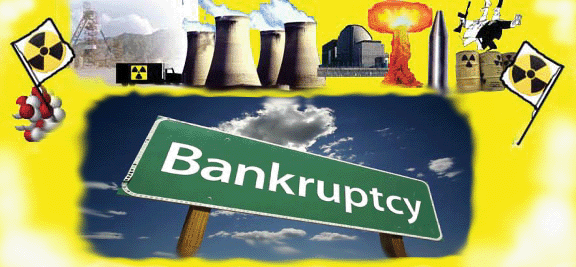
“Merrily we roll along…” – the giddy road to nuclear bankruptcy
Gordon Edwards, Sep 2, 2026
I have often noted that the SMR “rush to market” is first and foremost a “money grab”.
The nuclear industry had performed poorly for a quarter if a century, losing market share steadily,
And yet many governments around the world were putting hundreds of billions of dollars on the table to combat global warming – this provided an opportunity to grab a lot of that public money by making exaggerated and often irresponsible claims that nuclear investment is a winning strategy.
The following document is an easy-to read account of how money gets used by some of the more flagrantly irresponsible companies – the document has to do with the circumstances leading up to the bankruptcy of Ultrasafe Nuclear Corp. (also known as Wind-Down Inc.) which was planning to build a gas-cooled reactor producing 5 megawatts of heat (later upgraded to 15 megawatts) at Chalk River, Ontario. In fact an environmental assessment of the project had already begun, and so far it has been paused but not cancelled….
It is worth reading this eye-popping account of how bankruptcy can be achieved in record time.
www.ccnr.org/Ultrasfafe_Bankruptcy_2026.pdf.
Case 24-12443-KBO Doc 695 Filed 08/13/26 Page 1 of 50
IN THE UNITED STATES BANKRUPTCY COURT FOR THE DISTRICT OF DELAWARE
Chapter 11 Case No. 24-12443 (KBO) (Jointly Administered)
In re: Reactor Parent Wind-Down, Inc.,1 Debtor.
WILMINGTON SAVINGS FUND SOCIETY, FSB, LIQUIDATING TRUSTEEOF THE RPWI LIQUIDATING TRUST, Plaintiff,
v.
WAQAR ZAIDI, RITESH BUDREE, and THE ESTATE OF FRANCESCO VENNERI, -Defendants.
Adv. Proc. No. 26-________ (KBO)
COMPLAINT
Wilmington Savings Fund Society, FSB, solely in its capacity as trustee (the “Liquidating Trustee”) of the RPWI Liquidating Trust (the “Trust”) formed pursuant to the First Amended Joint Chapter 11 Plan of Liquidation for Reactor Parent Wind-Down, Inc. and Its Affiliated Debtors [Dkt. No. 486] (the “Plan”) of the above-captioned debtor and its affiliated debtors (collectively, the “Debtors”),2 respectfully alleges as follows:
1
The Debtor and the last four digits of its federal taxpayer identification numbers is as follows: Reactor Parent Wind-Down, Inc. (f/k/a Ultra Safe Nuclear Corporation) (9774) (“RPWI”). The Debtor’s mailing address is 500 Delaware Ave, Wilmington, DE 19801.
2
The Court previously entered an order [Dkt. No. 597], closing certain of the cases jointly administered with the above-captioned debtor’s case. Those affiliated Debtors, the last four digits of their federal taxpayer identification numbers and the associated case numbers are as follows: Reactor Sub One Wind-Down, Inc. (f/k/a Ultra Safe Nuclear Corporation – Technologies) (9815) (Case No. 24-1244 (KBO)); USNC-Power Ltd. (6500) (Case No.
SUMMARY OF THE ACTION
- In late 2023 and early 2024, Reactor Parent Wind-Down, Inc. (f/k/a Ultra
Safe Nuclear Corporation) and its affiliates (“USNC” or the “Company”) were on the precipice of bankruptcy. The Company—once a promising enterprise in the burgeoning nuclear industry with an estimated valuation of over $250 million—had squandered over $150 million in investments and was struggling to raise the capital necessary to satisfy unchecked liabilities and keep the Company afloat. As liquidity tightened, USNC was forced to cease paying key employees and critical vendors. Failure to pay these mission-critical expenses stifled any further investment, resulting in an inevitable death spiral. Eventually, in late 2024, the Company ceased operations and was sold for parts—netting $41 million in the aggregate—destroying hundreds of millions of dollars in value.
- The Company’s staggering fall from grace was caused by its ChiefExecutive Officer and founder, Francesco Venneri. Dr. Venneri intentionally disregarded red flags repeatedly raised by his executive team regarding the Company’s reckless spending—which, at nearly $7 million per month, far outpaced the Company’s available capital and any reasonable investment expectation. For example, in January of 2024, a critical moment in the Company’s life (when liquidation was not a fait accompli), the Company’s Chief Financial Officer wrote to Dr. Venneri and other key members of the executive team that “we are, at a minimum, 90 days away from any meaningful investment, yet no meaningful reduction in costs has occurred . . . best case scenarios fund us at a rate that is half of our current budget.”
- This was a common refrain, both well before January 2024 and well after.
Dr. Venneri, however, did nothing. A reasonably prudent manager would have cut costs and focused on the Company’s key, profit-making initiatives. Instead, Dr. Venneri provided frivolous payouts and out-of-market benefits to his “inner circle” of favored executives, including a $750,000 payment to the Company’s former Chief Commercial Officer, Waqar Zaidi. In a fleeting moment of self-awareness on the eve of bankruptcy, Dr. Venneri conceded his culpability, writing “it’s easy to point fingers to the former CEO who overspent . . . I have a lot to answer for.” - USNC’s nuclear fission technology was, as one potential investor described
it, “remarkable.” Founded in 2011 by Dr. Venneri, USNC was a pioneer in developing safe and commercially accessible nuclear fuel and reactor technology. In 2023, USNC was on the cusp of large-scale production of its proprietary Fully Ceramic Micro-encapsulated (FCM®) Nuclear Fuel
(“FCM Fuel”), which utilized state-of-the-art Tri-structural ISOtropic (“TRISO”) fuel particles in a uniquely contained format that could withstand extreme heat and explosive impacts. The Company was also developing nuclear plants in Canada and Illinois to demonstrate the viability of its proprietary Micro Modular Reactors (“MMR”), nuclear fission “batteries” utilizing its FCM Fuel that could be linked together to accommodate different business sites and needs. The
Company’s “remarkable” technology and its value, however, was torpedoed by Dr. Venneri’s failures as a manager. The same potential investor remarked in February of 2024 that “[a] company that has received $170M of capital to date should be lightyears ahead in commercial traction and institutional fundraising progress, not be scrambling for last minute change….” The investor prophetically concluded that “I see the most likely outcome being USNC going bust and
someone acquiring the tech for a few million.” The downfall was entirely foreseeable and avoidable. - Like other technology companies, USNC primarily relied on investors—in
particular, the Company’s controlling stockholder, Richard Hollis Helms—to fund its operations. The Company was targeting 2026 to begin commercial fuel production and sales after opening fuel manufacturing facilities and receiving qualification of its fuel. Further, USNC expected to commercialize its MMR technology beginning in or around 2028, following completion of its demo projects in Canada and Illinois. Management projected these business lines to generate hundreds of millions of dollars in revenue per year. - The Company never achieved these milestones. Instead, USNC’s upward
trajectory was cut short by Dr. Venneri’s reckless stewardship and his deliberate disregard of the advice of his executive team, advisors, and the Chairman of the Board. Throughout 2023 and early 2024, management repeatedly urged Dr. Venneri to prioritize the Company’s key value-creating initiatives (i.e., fuel and its MMR demo projects) and to drastically cut costs, so that the Company
could survive long enough to bring in critical capital—whether through sales or third-partyinvestment. - Rather than address these concerns, Dr. Venneri pursued expansive
business development plans, including potential projects and satellite offices across Europe, Asia, and Australia. As explained in further detail below, Dr. Venneri repeatedly and falsely promised that significant financing was imminent, or that he would obtain additional funds from Mr. Helms—a well that was running dry due to growing concerns regarding the Company’s increasing spend. - Dr. Venneri concurrently provided lavish, above-market benefits and payouts to former CCO Waqar Zaidi, who was a member of Dr. Venneri’s “inner circle” alongside former-CFO and Vice President of Finance Ritesh Budree. This included, among other things, causing the Company to pay approximately $750,000 to Mr. Zaidi pursuant to a purported “finder’s fee” agreement that Dr. Venneri and Mr. Zaidi signed in secret, during a time when payroll for non-executive employees was being withheld and vendors were not being paid, endangering the Company’s key operations relating to USNC’s fuel production and MMR demo projects. Dr. Venneri also agreed to an amended employment agreement that provided Mr. Zaidi with egregious severance benefits, including, among other things, a cash payment of at least $1 million if Mr. Zaidi was terminated for any reason other than a chargeable criminal offense that was proven in state court.4
- In October 2024, the Debtors filed voluntary petitions for relief under
chapter 11 of the Bankruptcy Code. Several months later, the Company’s assets were sold for a total of $41.0 million—hundreds of millions of dollars less than the Company had been valued in recent years. - Dr. Venneri’s gross negligence and recklessness as CEO—and the
misconduct perpetrated by his inner circle—must be remedied. The Liquidating Trustee thus brings claims against Dr. Venneri’s estate, as well as Messrs. Zaidi, and Budree, for (1) breach of fiduciary duty; (2) declaratory judgment that Mr. Zaidi’s finder’s fee agreement and Messrs. Zaidi’s and Budree’s amended employment agreements are void; (3) in the alternative, avoidance
of fraudulent obligations allegedly incurred under those agreements pursuant to 11 U.S.C. § 548(a)(1)(B); (4) the avoidance and recovery of the payments made under the finder’s fee agreement as (i) constructively fraudulent transfers pursuant to 11 U.S.C. § 548(a)(1)(B); or (ii) in the alternative, preferences pursuant to 11 U.S.C. § 547; (5) avoidance and recovery of a sign-on bonus paid some 11 months after Mr. Zaidi’s hiring as a preference pursuant to 11 U.S.C. § 547;(6) unjust enrichment; (7) equitable subordination of Defendants’ claims in the Debtors’ bankruptcy proceedings; and/or (8) disallowance and/or reclassification of Defendant Zaidi’s and Budree’s claims in the Debtors’ bankruptcy proceedings.
…………………………………………………………………………………………………………………………………………………………………………………………………………….Despite frequent warnings to adhere to corporate formalities, the Company held no formal Board meetings and did not keep minutes, decisions were largely undocumented, and, upon information and belief, the Board never formally met with its executive team or outside advisors.
……………………………………………………………………………………………………………………………………………………………………………………………..The establishment of a wholly-owned subsidiary of USNC in Italy in July
2023, at a time when the Company was clearly experiencing severe financial distress and escalating liabilities, was emblematic of Dr. Venneri’s folly.
……………………………………………………………………………………………………………………………………………………………………………………………………....F. The Company Crumbles in Early 2024
By early 2024, the Company was in severe financial distress, had no near-
term investment prospects, and had yet to engage in any meaningful reduction in costs………………………………………………………………………………………………………………………………………………………….
ED. This case goes for 50 pages.
Taxpayers Must Not Be on the Hook for Bailing Out the AI Industry

If AI goes south, we should expect major pressures from the Trump administration for a debt- or taxpayer-funded bailout.
SCHEERPOST, September 3, 2026,By C.J. Polychroniou
Hundreds of billions of dollars are flooding the AI industry. Economist Gerald Epstein says this bubble could burst.
The U.S. economy is heading toward uncharted territory. Artificial Intelligence (AI) is transforming business operations and all areas of finance, the national debt is on an unsustainable fiscal path, and most middle-income Americans cannot keep up with rising costs. Moreover, as hundreds of billions of dollars are flooding into artificial intelligence, there are serious concerns that an AI bubble could trigger another bailout with taxpayer money.
In the interview that follows, leading progressive economist Gerald Epstein, who initiated and directs the Game Changers project at the Political Economy Research Institute at the University of Massachusetts Amherst, talks about AI’s impact on finance and the bailout problem and how a transformative public finance strategy can revive democracy, promote equity and social justice, and build strong and sustainable communities. Epstein is professor of economics and founding co-director of the Political Economy Research Institute.
C.J. Polychroniou: AI is possibly the fastest-growing technology in history and is already reshaping the U.S. economy in innumerable ways as organizations of all kinds are deploying AI tools across every functional area. But there are many public concerns surrounding AI, including whether it is becoming “too big to fail.” If so, taxpayer money may be used yet again to bail out private companies and institutions from collapse. What are the dangers here?
Gerald Epstein: There are indeed many public concerns about the economic and financial implications of AI. But let me focus on AI’s impact on finance as there are legitimate fears that the government may be asked at some point to bail out the AI industry, especially given the close ties of the Trump administration to AI firms.
As Marc Jarsulic and I argue in our Game Changers policy analysis “No More Bailouts,” the AI investment boom is increasing the level of risk for AI-related firms. The reason is that for these investments to be profitable, AI revenue will need to grow substantially. But some financial analysts doubt that the revenue will materialize. For example, in Bain’s Technology Report 2025, it is estimated that capital expenditures of $500 billion per year would be required to cover anticipated AI demand. To fund this investment, annual AI revenue would need to increase to $2 trillion. However, after accounting for likely cost reductions at the AI firms, Bain’s research concluded that their annual revenues would fall $800 billion short of that mark.
In that context, some of the risks of the AI-led investment boom have been shifted to financial markets as the AI boom is relying increasingly on debt. The revenues of the tech monopolies are extraordinary, but they are insufficient to pay all the costs of data centers. In 2025, the capital expenditures of the top five hyperscalers were more than 30 percent of their total revenue. They are projected to rise to more than 40 percent by the end of 2026. This has forced these companies to turn to debt and equity markets for finance. In 2025, major tech hyperscalers alone issued $120 billion in debt, but the figure was pushed toward $175 billion in 2026 and is expected to rise to $300 billion annually in the coming years.
A distorted government response to an AI-bust is in the cards. A rational policy response to an AI bust would not include bailouts of AI-related firms or their creditors. The investment boom, and the debt that helps finance it, have been engineered by sophisticated actors aiming to dominate a potentially lucrative innovation. There is no ex ante (“before the event”) government safety net for financial bets of this kind. Caveat emptor (“let the buyer beware”) applies to the firms playing the AI domination game if it ever applied to anyone. Unfortunately, we cannot count on a rational response from the current administration. Extensive conflicts of interest and cronyism mean that government bailouts for insiders would be on the table. Hyperscalers and other AI-related firms have received extraordinary government support. The Trump administration has taken over 90 federal actions to help the AI industry, including executive orders easing permitting for massive data centers, federal support for AI exports and reducing regulatory barriers for the industry. The Trumpian transactional quid pro quo is apparent. Nvidia and Intel have given the government equity to curry favor. A number of major AI companies contributed several million dollars to Trump’s White House demolition — a.k.a. his “ballroom” — fund. And AI firms continue to finance MAGA. This is business as usual for Trump.
If AI goes south, we should expect major pressures from the Trump administration for a debt- or taxpayer-funded bailout.
Bailout operations are a trademark of neoliberalism. That being said, what is the actual problem with bailouts, and how do we put an end to the bailout problem?………………………………………………………………………………………………………………………………………………………………………………………………………………… https://scheerpost.com/2026/09/03/taxpayers-must-not-be-on-the-hook-for-bailing-out-the-ai-industry/
Part II — No Blank Check for the War Machine
The Pentagon’s missile shortage will not be solved tomorrow. But its long-term answer is already being built beside our communities. Project Ranger approved without us—but the Pentagon, Castelion and New Mexico officials still must answer to the people.
Elaine Cimino, Aug 29, 2026
The Pentagon’s missile shortage will not be solved tomorrow. But its long-term answer is already being built beside our communities.
Part I asked what government kept from the public while it assembled the deal. Part II asks what the emerging federal weapons record now tells us about the scale and purpose of what was approved without us.
A national weapons emergency is being converted into a private investment opportunity—and New Mexico has been selected as one of the places where the consequences will be imposed.
The August 21 Defense One investigation, “There’s No Shortcut to Replenish U.S. Munitions Stockpiles,” describes a Pentagon racing to replace missiles being consumed in the Iran war while defense companies pitch a new generation of cheaper weapons. Buried inside that national story is a name New Mexico residents must recognize: Castelion.[1]
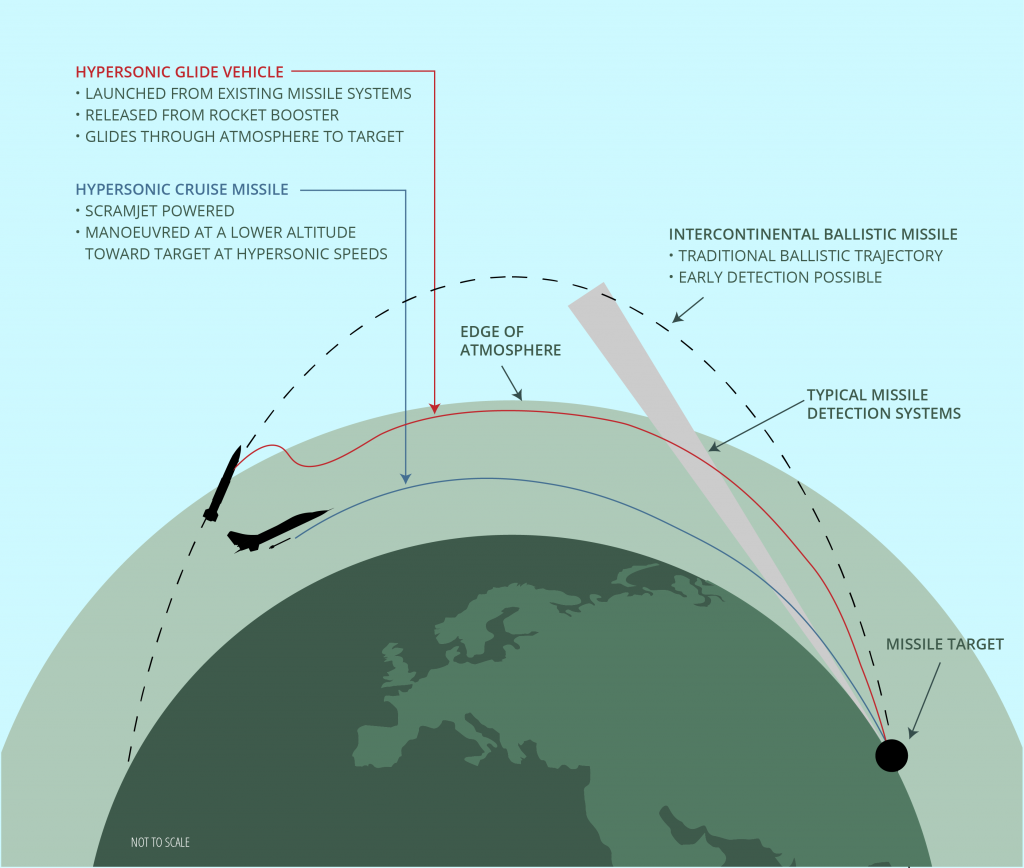
Castelion is constructing Project Ranger, the massive solid-rocket-motor and hypersonic-weapons manufacturing complex west of Rio Rancho in Sandoval County. Its Blackbeard missile is being offered as something the Pentagon has long wanted but struggled to obtain: a hypersonic strike weapon inexpensive enough to manufacture not by the dozen, but by the hundreds and eventually the thousands.
That mention changes the frame around Project Ranger. This is not simply another economic-development project, an isolated factory or a collection of buildings on remote State Trust Land. It is being positioned inside a long-term restructuring of the American war industry.
The federal government wants cheaper missiles, more suppliers, faster testing and industrial-scale production. Castelion wants to become one of the companies that supplies them. Project Ranger is where much of that ambition is supposed to become physical reality.
And while the Pentagon, investors and public officials discuss speed, scale and deterrence, the people living beside the factory are still waiting for something far more basic: full disclosure of what will be manufactured, burned, tested, stored, transported and released near their homes and water.
Blackbeard will not solve the immediate Iran stockpile crisis
The first fact must be stated precisely. Blackbeard is not a replacement for the Patriot and Terminal High Altitude Area Defense interceptors being depleted in the Iran war.
Patriot and THAAD missiles are defensive weapons intended to destroy incoming missiles or aircraft. Blackbeard is an offensive, long-range hypersonic strike weapon intended to hit targets on land or at sea. Producing one does not replenish the other.
That is why the Defense One article warns that the Pentagon’s low-cost weapons campaign will not quickly repair the immediate stockpile crisis. New missiles must still be developed, tested, evaluated, certified, placed under contract and manufactured. That takes years, not weeks. Experts quoted in the article describe a continuing window of vulnerability while the military attempts to rebuild inventories depleted not only by Iran, but by years of global commitments.[1]
Blackbeard is therefore not the emergency cure being delivered to today’s battlefield. It is part of the arsenal the Pentagon wants for the wars it is preparing to fight in 2027, 2028, 2029 and beyond—particularly a possible conflict with China.
That distinction does not make Project Ranger less consequential. It makes it more so. A temporary emergency might end. A permanent industrial strategy can expand for decades.
The Pentagon is building a high-low arsenal
The larger strategy is a “high-low mix”: retain a smaller inventory of extraordinarily expensive weapons while acquiring far greater numbers of cheaper missiles for missions that do not require the most sophisticated system available.
Castelion is marketing Blackbeard as the hypersonic expression of that strategy. It is advertised as a weapon capable of exceeding Mach 5 but designed from the beginning for lower-cost, industrial-rate production.
Reuters reported in April that Navy planning documents contemplated the purchase of 4,500 air-launched hypersonic missiles for F/A-18 aircraft over five years, at an average projected price of about $384,000 each. The same report explained that a $105 million Navy award would fund Blackbeard’s integration onto the F/A-18, including flight tests, safety work and airworthiness certification.[2]
That is not the same as a funded order for 4,500 Blackbeards. But it shows what the Pentagon is testing: whether a weapon once treated as an exotic, multimillion-dollar rarity can become a routinely deployed instrument of war.
If that experiment succeeds, Project Ranger will not be a boutique research site. It will be an arsenal factory………………………………………………………………………………………………………………………………………………………………………………………… https://elainecimino652909.substack.com/p/part-ii-no-blank-check-for-the-war?utm_source=post-email-title&publication_id=3194544&post_id=213199756&utm_campaign=email-post-title&isFreemail=false&r=281p2&triedRedirect=true&utm_medium=email
UKRAINE DEAL DEAD
Russia, in his view, would still prefer a compromise closer to Istanbul and the later Anchorage discussion than the occupation of the whole of Ukraine.
Governing a hostile country is not Moscow’s first choice.
George Beebe on Iran, Trump’s shrinking leverage, and the crash coming in Ukraine
Ian Proud, Sep 01, 2026, https://thepeacemonger.substack.com/p/ukraine-deal-dead?utm_source=post-email-title&publication_id=3221990&post_id=213666173&utm_campaign=email-post-title&isFreemail=true&r=1ise1&triedRedirect=true&utm_medium=email
George Beebe was CIA Director for Russia analysis and is now Director of the Grand Strategy Programme at the Quincy Institute. In this conversation he describes a Trump Administration that wrote a coherent National Security Strategy and then walked away from it. This has left prospects for a credible peace deal for Ukraine remote at best.
“………………………………………………………………………………………. The United States is now in a cul-de-sac: damaged reputation, strained forces, a distracted White House, and no clean exit that does not involve concessions.
That matters for Ukraine because attention and political capital are finite within the Trump White House.
Beebe’s strategic case for ending the war has not changed. A forever proxy war leaves Europe unstable, incentivises a tighter Russia-China partnership, and makes a China-first American strategy impossible.
Russia, in his view, would still prefer a compromise closer to Istanbul and the later Anchorage discussion than the occupation of the whole of Ukraine.
Governing a hostile country is not Moscow’s first choice.
What has changed is Washington’s ability to deliver.
Iran has taken the oxygen out of the room.
Trump needs political juice to force a deal through a hostile Senate and a permanent bureaucracy that still treats detente with Russia as heresy.
Beebe does not think he has that juice.
Midterms loom.
The president is fighting an unpopular war with a precarious economy. Other countries are already pricing him as a lame duck.
If Moscow concludes the administration is not agreement-capable — cannot lock in NATO limits, cannot move sanctions — Plan B is the battlefield.
That is not the conquest of Kyiv. It is a rump Ukraine, too weak to be rebuilt as a Western military outpost, and a worse peace for Ukrainians, Europeans and Americans alike.
Then comes what Beebe calls it a hard crash.
Time is not on Ukraine’s side.
Manpower is failing.
Energy infrastructure is already in tatters ahead of another winter.
Russia can hit harder than Ukraine can endure.
When the gap between Western media victory narratives and the facts becomes undeniable, Washington does not usually say “we did our best.”
It goes into “do-something” mode.
That is how mismanaged wars become direct NATO-Russia crises.
I agree with him.
Europe has no plan.
It has a reflex: ask for more Patriots, flatter Trump, keep Kyiv fighting.
That is not friendship.
It is spending Ukrainian lives to delay an admission of failure.
Beebe’s alternative is old-fashioned and unfashionable: a concert among the United States, Russia and China, starting with Iran and Ukraine, based on self-interest rather than trust.
Whether this White House can still do that is the live question.
Thousands of potential jobs & billions of dollars may tempt Idaho into becoming America’s nuclear waste dump

By Roland Beres, Sep. 1, 2026, https://www.kmvt.com/2026/08/31/thousands-potential-jobs-billions-dollars-may-tempt-idaho-into-becoming-americas-nuclear-waste-dump/
BOISE, Idaho (KIVI) — The U.S. Department of Energy (DOE) is choosing three states to receive all of the country’s high-level nuclear waste by year’s end.
Idaho is among five finalists pursuing what’s known as a Nuclear Lifecycle Innovation Center.
The center would be located in the eastern Idaho, and could bring thousands of jobs and billions of dollars to the state.
Nuclear energy is often referred to as clean energy, because it doesn’t produce greenhouse gasses, but The World Nuclear Association says used nuclear fuel can remain radioactive and deadly for thousands of years.
“How much we talking about a few hundred pounds?” Idaho 6 senior reporter Roland Beres asked.
“We’re talking about 33 thousand tons,” Leigh Ford, Executive Director of the nuclear watchdog group the Snake River Alliance responded.
“Worst case scenario if it comes in. We have a whole bunch of nuclear waste, forever and our kids are going to have to figure out what to do with it,” Ford added.
The Nuclear Waste Policy Act of 1987 designated Nevada’s Yucca mountain as the nation’s permanent nuclear waste storage site. However, they fought tooth and nail to stop it and won. As a result, that high-level waste is being stored in temporary pools at nuclear power sites around the country.
Now, to attract state interest the DOE has shifted from mandating a host community to proposing economic incentives like billions in investments and job creation.
Although details are quite limited, that grabbed Idaho Governor Brad Little’s attention.
“We’re going to consume the spent fuel to create electricity,” Little told Idaho 6. ”We are not going to put any spent fuel or whatever it is over the Idaho aquifer. They know that.”
According to the State’s application with DOE, the Snake River aquifer underlies almost 11 thousand square miles.
Figures on Fox News’ key programs have called for escalation in the Iran war more than 250 times since the initial ceasefire

Jason Campbell, 08/28/26, https://www.mediamatters.org/media-matters-weekly-newsletter/media-matters-weekly-newsletter-august-28
In the four months since the initial ceasefire agreement between the United States and Iran, Fox News figures have continuously warmongered. Throughout the cycle of ceasefire violations and stalled peace talks, individuals on Fox have urged President Donald Trump to “decapitate and destroy this regime” and send Iran “back to the Stone Age,” and encouraged him to “send the SEALs in and blow something up just for grins.”
Media Matters studied 7 key shows on Fox News — which includes the network’s evening programming as well as some shows hosted by commentators whom Trump has praised or promoted during the Iran war — called for escalatory action in the war at least 252 times since the initial ceasefire agreement on April 7. The escalatory rhetoric on the network includes arguments for military strikes, ground invasions, regime change, arming Iranian citizens, or attacks on civilian infrastructure.
I invite you to check out this study to see how the data breaks down. You can find it here.
Also: Many right-wing figures promised an early and easy victory against Iran when the U.S. and Israel launched the war in February. Six months later, it seems very clear the Trump administration has fallen quite short of its objectives. Nonetheless, a set of especially sycophantic pundits — including Sean Hannity, CNN contributor Scott Jennings, and Benny Johnson — are claiming that Trump has already won the war.
You Could Be Next: Trump’s Gestapo Tactics Are Getting Worse

You might also be murdered without a trial if you happen to be on a vessel off Latin America’s Caribbean coast or in the eastern Pacific Ocean. A mere accusation of drug trafficking is enough to kill you, without any evidence presented before any court of law or neutral magistrate.
The US military announced Monday that it had again carried out a strike on a vessel in the eastern Pacific Ocean, killing two people it accused of trafficking drugs — bringing the overall death toll to 223 people killed in 67 strikes during the nearly yearlong US campaign of bombing boats alleged to be smuggling drugs.
Finally, the Trump regime is imprisoning Americans who demonstrate against its police state.
Wake up, America. You’re living in a nightmare.
Robert Reich, Common Dreams, Aug 29, 2026
Imagine living in a country that can arrest and imprison you whenever it wants, without any judge or jury deciding you did anything wrong. It can call you a “domestic terrorist” and put you in prison for life. It can even execute you on the basis of nothing more than its own decision that you’re dangerous.
Well, I have bad news for you. You’re living in that country right now.
As he loses power and popularity — and faces mounting resistance abroad and at home — Trump is enlarging his police state.
His regime is having ever more people arrested, imprisoned, and deported without any judge or jury deciding they did anything wrong. It’s using racial profiling in deciding whom to target. It’s making warrantless searches and seizures of people, their cars, and their homes. All of this violates the US Constitution.
Trump’s police state not only continues, but it is growing larger by the day.
According to a new analysis by The New York Times, the regime’s surge in immigration arrests this summer has swept up thousands of people, most of whom have not been charged with or convicted of a crime (less than 4 percent had a past violent criminal conviction).
Those being arrested, imprisoned, and potentially deported include some married to US citizens, others who entered the US legally and are pursuing asylum claims, and some who came here with temporary legal status that the Trump regime has decided to revoke.
In other words, they were all here legally.
If you have temporary protected status because you escaped from inhumane conditions in another country, ICE might now summon you to an ICE office and put a monitor around your ankle — even if you have no criminal history and are in full compliance with your immigration status. The Trump regime has unilaterally revoked temporary protected status and claims the ankle monitors are necessary to track people whom it may want to deport at some point.
You’re not even safe if you’re a US citizen born in America. ProPublica has found that more than 170 US citizens have been wrongfully detained by ICE agents in raids and protests over a recent nine-month span. It described cases involving alleged force and multiday detention without access to counsel or communication.
Some estimates put the number of US citizens subjected to ICE as much higher, but there’s no way of knowing because there’s no legal process for filtering out and protecting American citizens, just as there’s no legal process for protecting anyone else who’s here legally. Trump’s police state is extrajudicial, and it’s being done in secret.
You might even be murdered, without a trial finding you guilty of anything. In addition to Renee Good and Alex Pretti in Minnesota last January, ICE agents have murdered two others just this summer…………………………………..
You might also be murdered without a trial if you happen to be on a vessel off Latin America’s Caribbean coast or in the eastern Pacific Ocean. A mere accusation of drug trafficking is enough to kill you, without any evidence presented before any court of law or neutral magistrate.
The US military announced Monday that it had again carried out a strike on a vessel in the eastern Pacific Ocean, killing two people it accused of trafficking drugs — bringing the overall death toll to 223 people killed in 67 strikes during the nearly yearlong US campaign of bombing boats alleged to be smuggling drugs.
Finally, the Trump regime is imprisoning Americans who demonstrate against its police state………………………
These cases are the first to incorporate new guidance from the regime that classifies Antifa as a “domestic terrorist organization.” That’s despite the fact that Antifa is a decentralized movement rather than a single organization and that there is no federal charge of domestic terrorism under existing US law.
I want to make three concluding points about all this.
First, Trump’s police state not only continues, but it is growing larger by the day. Kristi Noem’s replacement as secretary of homeland security, Markwayne Mullin, along with his boss in the White House, Stephen Miller, and the secretary of defense, Pete Hegseth, have more money, manpower, and firepower than ever. They are ramping up all of their extrajudicial arrests, detentions, deportations, and murders.
The only difference between last year and now is they’re no longer announcing what they’re doing with fanfare and braggadocio, because the American public has grown wary of it.
Second, none of us is safe from this because the arrests, installations of ankle bracelets, imprisonments, deportations, and murders are made without any judge, jury, or neutral party deciding that the assumptions on which they’re based are adequate and truthful.
Not even “domestic terrorism” arrests and lengthy prison sentences necessitate judicial inquiry into what exactly is meant by “domestic terrorism” and whether defendants have done anything to justify that appellation.
Finally, this growing menace is cruel, inhumane, and likely unconstitutional. It is causing hundreds of thousands of families in our country extreme mental distress; many people are not leaving their homes for fear of being arrested or worse. It is likely chilling First Amendment rights to speak up and protest against these atrocities.
Historians looking back on this shameful period will wonder how this was allowed. How can one maniacal man in the Oval Office, his fanatical assistant, and two suck-up Cabinet secretaries have been so cruel and oblivious to basic human rights? How can their Republican enablers in Congress have been willing to go along? How can the American public have been so quiet? https://www.commondreams.org/opinion/trump-s-gestapo-tactics
Walt Zlotow – Some inconvenient truths about Trump’s Iran war

Walt Zlotow West Suburban Peace Coalition Glen Ellyn IL , 31 Aug 2026, https://theaimn.net/some-inconvenient-truths-about-trumps-iran-war/
The US lost the war within the first 3 days when the US, Israeli attack and assassination of Iranian leader Ali Khomenei did not collapse the Iranian regime
Bombing Iran for 39 days was a catastrophic military failure. Iran’s retaliatory defense decimated all 20 US Gulf State bases inflicting over 750 US casualties including 18 dead.
Running out of both offensive and defensive missiles, Trump blinked first and called for a ceasefire on April 8, war day 40.
The June 17th signing of the Memorandum of Understanding (MOU) was essentially a US surrender document.
Realizing the MOU signaled his defeat, Trump simply ignored it, implemented a blockade and resumed periodic bombing. Both utterly failed to reopen the Strait of Hormuz to resume the critical flow of oil to prevent worldwide economic calamity.
Having been sucker punched with bombs twice by Trump during negotiations, Iran has signaled it will never negotiate with Trump during his remaining 2 years, 5 months in office.
Trump’s statements that Iran is negotiating surrender on Trump’s terms, the Strait is open, and will become US territory, the blockade is a resounding success, the oil is flowing, are so detached from reality one must ponder Trump’s sanity.
Refusal to capitulate is spreading the war within the region to Yemen, Saudi Arabia, Lebanon, West Bank, Iraq, Syria, possibly even Turkey v. Israel.
If Trump’s last gasp is to utterly destroy Iranian infrastructure, Iran will retaliate and destroy the entire Gulf States oil infrastructure and possibly Israel’s infrastructure as well.
Unlike for the US, Trump’s war is an existential threat to Iran’s existence. They have been preparing for the US, Israeli tag team war machine to destroy them for decades. They are and will prevail regardless of the cost.
Israel will do whatever is necessary to keep Trump in the war to destroy Iran. Trump’s only way out is to sever ties with Israel and capitulate to Iran’s sensible terms. Given Trump’s history, the chances of that are nil. Removing Republican control of Congress in 9 weeks may be only chance for America to avoid economic collapse.
But only if a Democratic Congress has the wisdom, decency and good sense to end the most self destructive war in America’s 251 years.
Trump’s shipping race with Xi goes nuclear
COMMENT AA BB
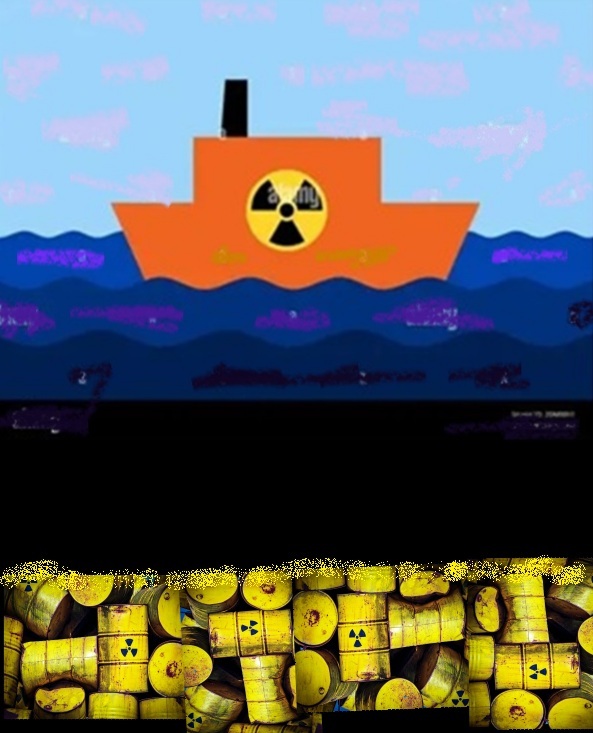
Have they factored in the staggeringly huge cost of the multi decades long decomissioning process and disposal of the reactor and nuclear waste? NS Savanna was built 1961, out if service 1972 – the reactor and ship will ‘remain regulated until 2031″ (wikipedia)
Backing from Washington should help address regulatory challenges as well as insurance issues, which represent one of the main hurdles to expanding nuclear propulsion beyond military submarines, aircraft carriers and a handful of Russian icebreakers.
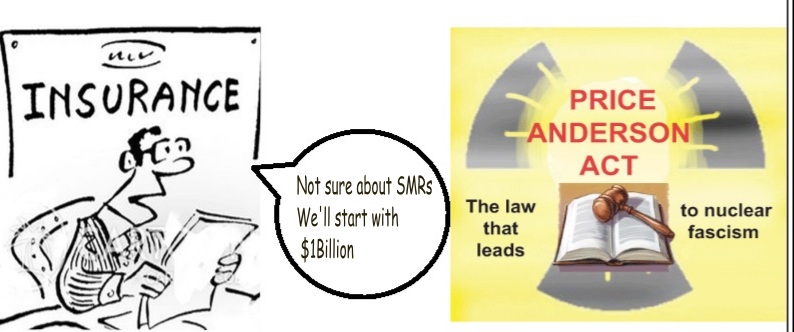
Whereas shipping lines today require coverage for damage to their vessels, the loss of cargoes and injuries to employees, the new ships will need a new level of insurance against nuclear incidents.
US bets uranium-powered British vessels can challenge China’s maritime dominance
Christopher Jasper, Transport industry editor, 29 August 2026
Donald Trump has opened up a new battleground in his trade war with Beijing, and a British start-up building nuclear-powered ships has found itself on the front line.
A US effort to challenge China’s dominance in shipping by building a fleet of nuclear-fuelled vessels is being led by UK-based Core Power.
The start-up, which has 100 employees and moved to London from Singapore in 2020, says it is unique outside Russia and China in having the expertise to integrate reactors with commercial ships, and the White House seems to agree.
Mikal Bøe, the Norwegian founder and chief of Core Power, flew to Washington last week to sign a seven-year pact with the US Maritime Administration…………….
The deal aims to deliver a fleet of zero-emission vessels that travel at 30 knots, or twice the pace of today’s ships, which typically sail slowly to conserve fuel.
They would be assembled in a multibillion-dollar nuclear yard operated by Core Power in the US. Work is slated to commence by 2028, with the first deliveries in 2033.
Trump hopes the plan can revive American shipbuilding and provide a ready market for a nuclear industry.
While China is developing its own maritime nuclear propulsion, the sector is one of the few in which the US is confident it has a major lead.
Onboard reactors heat water to create steam, which generates electricity to drive the engines, providing a permanent source of power and “free speed”, Bøe said…………
The deal aims to deliver a fleet of zero-emission vessels that travel at 30 knots, or twice the pace of today’s ships, which typically sail slowly to conserve fuel.
While the nuclear vessels would cost around $700m (£515m), compared with up to $250m for a large merchant ship, their speed would let them complete far more journeys………………..
Establishing the business case for nuclear power over traditional engines will open up a market to replace 8,000 ships over the next 25 years, Bøe estimates……
Bøe said the Trump administration had been instrumental in accelerating its plans……………
Core Power plans to announce a supplier of nuclear reactors for its ships as early as next month, with BWX Technologies viewed as the frontrunner.
The company is already partnered with BWX – which helped develop the first nuclear submarine in the 1950s – on plans for floating nuclear power plants to supply coastal industrial complexes.
A decision on the location for its nuclear shipyard will follow in the next six months.
A facility capable of producing three vessels a year would have construction costs of about $3bn, increasing to $15bn to churn out ships for the global market………………….
Backing from Washington should help address regulatory challenges as well as insurance issues, which represent one of the main hurdles to expanding nuclear propulsion beyond military submarines, aircraft carriers and a handful of Russian icebreakers.
Whereas shipping lines today require coverage for damage to their vessels, the loss of cargoes and injuries to employees, the new ships will need a new level of insurance against nuclear incidents.
‘The talk of the industry’
Britain’s dominance of the maritime insurance industry could see it play a key role in establishing an insurance regime.
The Technology Prosperity Deal signed by Trump and Sir Keir Starmer last year included a commitment to explore civil nuclear applications at sea and the establishment of a UK-US corridor, which could form the basis of a maritime nuclear insurance zone…………..
Core Power has $200m in financing and will seek to raise a further $600m next year. While existing investors are mostly shipbuilders and owners, the next round will seek to bring in private equity, venture capital and energy companies.
It has also agreed an alliance with authorities in Corpus Christi, Texas, a major US port, to lay out plans for new infrastructure that will be needed for nuclear-propelled tankers.
Mr Bøe said the door was also “wide open” for Britain to become involved in the sector.
Establishing the business case for nuclear power over traditional engines will open up a market to replace 8,000 ships over the next 25 years, Bøe estimates.
He said the first ships could operate on transatlantic routes and that Washington was open to allies – including Britain – becoming involved in the project, although ships were unlikely to be built here.
Bøe said the Trump administration had been instrumental in accelerating its plans.
“The pace at which both nuclear reactors and maritime policy and an action plan to build back shipbuilding capacity have been developed is remarkable,” he said.
“You cannot compete with Beijing on its own terms, we cannot outbid them. But we can put these two things together and establish the world’s first programme for civil maritime nuclear propulsion which creates a whole new adventure and competes with China.”
Core Power plans to announce a supplier of nuclear reactors for its ships as early as next month, with BWX Technologies viewed as the frontrunner.
The company is already partnered with BWX – which helped develop the first nuclear submarine in the 1950s – on plans for floating nuclear power plants to supply coastal industrial complexes.
A decision on the location for its nuclear shipyard will follow in the next six months.
A facility capable of producing three vessels a year would have construction costs of about $3bn, increasing to $15bn to churn out ships for the global market.
The hulls for the ships will be built in Japan or South Korea and floated to the US to be fitted with reactors and engines. The same yard will undertake maintenance and midlife refuelling once supplies of uranium are spent.
Backing from Washington should help address regulatory challenges as well as insurance issues, which represent one of the main hurdles to expanding nuclear propulsion beyond military submarines, aircraft carriers and a handful of Russian icebreakers.
Whereas shipping lines today require coverage for damage to their vessels, the loss of cargoes and injuries to employees, the new ships will need a new level of insurance against nuclear incidents.
Walt Zlotow -Trump first president in America’s 251 years to preside over 2 lost wars
Walt Zlotow West Suburban Peace Coalition Glen Ellyn IL .30 Aug 26
President Trump loves to brag he ended 8 wars. The truth is a tad darker. He’s presiding over the lost US proxy war in Ukraine to destroy Russia. At the same time he’s presiding over the lost war to destroy Iran in the Middle East on behalf of Israel.
Trump didn’t start the Ukraine war. He correctly blamed predecessor Joe Biden for provoking it on his watch in February 2022. Said it wouldn’t have occurred if Biden hadn’t stolen the 2020 election from him. That’s a wild claim as Trump spent the preceding term arming Ukraine to smash the Ukrainian separatists in Donbas and promoting NATO membership for Ukraine. Both actions were instrumental in Russia’s eventual invasion under Biden.
When reelected in 2024, Trump boasted he’d end the war on day one of his second term. Five hundred, eighty days on, Ukraine is a mere rump state largely land locked and near collapse. Trump has done nothing to end Ukraine’s impending defeat. Just the opposite. He’s still supporting Ukraine with intelligence to fire missiles and drones into Russia having no strategic value promoting victory whatsoever. He’s still selling weapons to NATO to gift Ukraine in their futile effort to stay in the fight.
Trump’s impending defeat in the Iran war is even more catastrophic. This war is all on Trump. He made the biggest foreign policy blunder in US history by believing Israeli war whisperer Benjamin Netanyahu that Iran would collapse within a couple of days if only Trump would assassinate Iran’s supreme leader Ali Khamenei.
That two day victory expectation has turned into a six month catastrophe, not only for the US military, but possibly also for the world economy unless Trump admits defeat and settles on Iran’s sensible terms.
Two wars, one Trump helped facilitate in his first term, then prolonged in his second term into certain defeat. The second he started all by his demented self whose dire consequences have yet to be sorted out.
Trump’s two lost wars in term two…a dubious presidential achievement, unprecedented and likely never to be repeated or topped in US history.
1 This Month



Shut down the radiation-damaged Heysham nuclear reactors now
To see nuclear-related stories in greater depth and intensity – go to https://nuclearinformation.wordpress.com

Say No to NASA’s Reckless Nuclear Reactor on the Moon
Say No to NASA’s Reckless Nuclear Reactor on the Moon
-
Archives
- October 2026 (256)
- September 2026 (339)
- August 2026 (330)
- July 2026 (355)
- June 2026 (287)
- May 2026 (306)
- April 2026 (356)
- March 2026 (251)
- February 2026 (267)
- January 2026 (308)
- December 2025 (358)
- November 2025 (359)
-
Categories
- 1
- 1 NUCLEAR ISSUES
- business and costs
- climate change
- culture and arts
- ENERGY
- environment
- health
- history
- indigenous issues
- Legal
- marketing of nuclear
- media
- opposition to nuclear
- PERSONAL STORIES
- politics
- politics international
- Religion and ethics
- safety
- secrets,lies and civil liberties
- spinbuster
- technology
- Uranium
- wastes
- weapons and war
- Women
- 2 WORLD
- ACTION
- AFRICA
- Atrocities
- AUSTRALIA
- Christina's notes
- Christina's themes
- culture and arts
- Events
- Fuk 2022
- Fuk 2023
- Fukushima 2017
- Fukushima 2018
- fukushima 2019
- Fukushima 2020
- Fukushima 2021
- general
- global warming
- Humour (God we need it)
- Nuclear
- RARE EARTHS
- Reference
- resources – print
- Resources -audiovicual
- Weekly Newsletter
- World
- World Nuclear
- YouTube
-
RSS
Entries RSS
Comments RSS

