Ionizing radiation a possibility as cause of seal deaths
Some wonder if radiation could be causing the skin sores and related problems, including ulcers on internal organs and abnormal growths on brains
Is it possible that the ringed seals traveled to a contaminated area?
Or did they eat prey contaminated by radiation?
Is radiation causing Arctic Alaska ringed-seal deaths? Alaska Dispatch Alex DeMarban | Dec 23, 2011 The University of Alaska Fairbanks’ Institute of Marine Sciences is launching an investigation into whether radiation, including possibly from the Fukoshima Daiichi nuclear power-plant disaster in Japan, has harmed or killed more than 100 ringed seals off Alaska’s coasts. Continue reading
America no closer to finding a tomb for its accumulating nuclear wastes
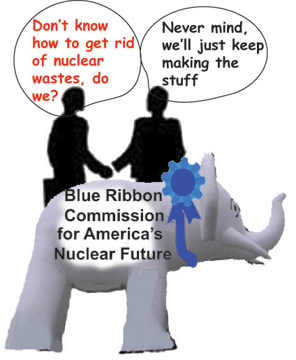 In July, with little fanfare, the Obama administration’s Blue Ribbon Commission on America’s Nuclear Future released a draft report to the Secretary of Energy on a post-Yucca Mountain solution. The report calls for development of “one or more geologic disposal facilities.”
So far, federal officials say they haven’t even started looking for a specific state or single site.
Northland rock considered for nuclear waste storage With Nevada’s Yucca Mountain out of the running as the permanent graveyard for U.S. nuclear waste, scientists now are looking for other places to entomb the stuff, including rock formations common in northern Minnesota and Wisconsin. That’s the message from a 114-page study from the Sandia National Laboratory that surfaced last week. By: John Myers, Duluth News Tribune, 25 Dec 11, Continue reading
Big money pushing for Virginia uranium, rather than water safety

 Virginia. election, uranium’s future among the top political, government stories of 2012, Washingtn Post, 25 Dec 11 RICHMOND, Va. — The list of top stories includes whether money can speak loudly enough to open Virginia to uranium mining despite serious environmental concerns and whether the Republican right rules all of Virginia policymaking…..
A long-awaited independent study by the National Academy of Sciences in December raised serious concerns about whether a massive uranium ore deposit can be safely mined and milled in Pittsylvania County…..
It’s up to the Virginia General Assembly to weigh the appeal of an economic boom in  Southside Virginia — an area hit hard by declines in the textile, furniture and tobacco industries — against the prospect of contaminating water supplies for huge areas of Virginia and North Carolina.
The deep-pockets consortium of investors and corporations eager to recover the 119-million-pound deposit has hired Capitol Square’s most expensive and influential lobbyists to shepherd legislation to end a 30-year uranium mining ban through a deeply divided House and Senate.
This is one of those issues more likely to create geographic divisions than partisan ones…..
http://www.washingtonpost.com/local/va-at-elections-forefront-can-republicans-really-rule-uraniums-future-the-stories-of-2012/2011/12/25/gIQA9RjEHP_story.html
USA $700 Billion for outdated nuclear weapons! – time to question this
in a time of soaring national debts, should we be asking the Chinese to lend us more money for outdated weapons?
What Nuclear Weapons Cost Us — It’s the Right Time for a Debate , Huffington Post, Joel Rubin, 12/20/11 The debate over the extent to which the U.S. government is committing itself to spending vast sums of taxpayer dollars on nuclear weapons and related programs over the next decade is in full force in Congress, inside the administration, and in the media.
An open, transparent debate is essential to ensuring that citizens and policymakers alike have the right information in their hands when deciding about our country’s future spending on both these weapons and their related programs. It’s understandable that there will be differences of opinion throughout this debate – one that’s been made more difficult due to a lack of transparency about what our government actually spends on nuclear weapons and related programs.
It is because of this lack of clear information that Ploughshares Fund is providing its third working paper estimate on what it will cost Americans to produce, build, maintain, and clean-up nuclear weapons and related programs over the next decade. To our knowledge, this estimate is the only current comprehensive assessment that projects these costs for the next decade. It is based upon the best publicly available information.
Our conclusion continues to be that current plans for nuclear weapons and related programs over the next decade will cost the American taxpayer approximately $700 billion.
The state of the debate over these estimates
There is significant consensus between this estimate and others being discussed both on Capitol Hill and in the media. Specifically, there is a common view that the taxpayer will spend a combined $358 billion on nuclear incident management, nuclear threat reduction, missile defense, deferred environmental and health costs, and nuclear weapons activities.
These programs are included in our projection because, as the Congressional Budget Office has noted, they are part of the full cost accounting of nuclear weapons and therefore “…might reasonably be attributed” to nuclear force expenditures….
Bringing it all together Having a debate over the numbers creates an opportunity to ask important questions about our country’s national security and fiscal policy.
For example, what does it really cost to protect Americans from terrorism, cyber attack, and nuclear threats from states such as North Korea and Pakistan? Should it cost that same amount as if the Cold War had never ended? Are there better places to invest these limited defense dollars? And in a time of soaring national debts, should we be asking the Chinese to lend us more money for outdated weapons? …. http://www.huffingtonpost.com/joel-rubin/what-nuclear-weapons-cost_b_1161443.html
USA does not rule out a pre-emptive strike on Iran
 In the interview, Panetta also refused to rule out military action to prevent Iran from obtaining nuclear weapons
The lesson from the US experience in the Iraq war, when Washington claimed there were weapons of mass destruction that never materialized, is for US government figures to speak with more caution,
Panetta refuses to rule out military strike on an Iranian nuclear weapons program National Post, Agence France-Presse Dec 20, 2011, By Dan De Luce WASHINGTON — The Pentagon on Tuesday sought to play down remarks by Defense Secretary Leon Panetta who has suggested Iran’s nuclear program could be on a faster track than previously suspected. Continue reading
Canadian tribes say NO to nuclear waste
 No nuclear waste here, North Shore Tribal Council says,SooToday.com, December 20, 2011 Chiefs of the North Shore Tribal Council say no! to a multi-billion dollar nuclear waste disposal project in their territory CUTLER, ON – The First Nations of the North Shore Tribal Council strongly reject the prospect of the North Shore of Lake Huron becoming a site for the long-term storage of nuclear waste for the Nuclear Waste Management Organization (NWMO). The City of Elliot Lake has publicly expressed interest in possibly becoming one of the sites for the long-term disposal of nuclear waste for Canada’s nuclear industry.
Elliot Lake has a long history of uranium mining that resulted in the boom and bust of the city, as well as significant and lasting environmental damage to the local watershed and nearby ceremonial grounds. In addition, there are dozens of tailings ponds surrounding Elliot Lake currently waiting for a solution for their safe disposal.
“We cannot idly stand by and watch as they inject Mother Earth with this cancer,” says Chief Lyle Sayers, chairman of the North Shore Tribal Council. “We must ensure that the future natural resources of this area are there for our children, generations to come, and businesses alike.”
The half-life of this material is hundreds of thousands of years old and could impact generation after generation. No site can ever be totally safe for nuclear waste storage. “Natural disasters sometimes happen, such as we’ve seen in Japan. It could make this whole area a nuclear wasteland suitable for only that industry,” says Chief Sayers.
Our statement to the Canadian Nuclear Safety Commission and to the Nuclear Waste Management Organization is: Do not waste your financial resources if you plan to conduct a study in this area because a nuclear waste dump is not going to happen here.
The North Shore Tribal Council represents seven First Nation communities across the North Shore of Lake Huron.Chief Lyle Sayers is the chief of the Garden River First Nation and also the chairman of the North Shore Tribal Council. http://www.sootoday.com/content/news/details.asp?c=37141
Shipping dead nuclear reactors across Great Lakes – a dangerous precedent
One of the major concerns is that if this transport goes ahead, it will pave the way for further similar shipments with little government or environment oversight.
Hundreds of municipalities across Ontario, Quebec, U.S. and the U.K. and Sweden have publicly opposed the shipment, citing concerns over the potential for radioactive material to leak into water systems.
 Controversial nuclear shipping plan remains on hold Vanvouver Sun, By Linda Nguyen, Postmedia News December 20, 2011 TORONTO — A controversial plan to ship 16 decommissioned nuclear steam generators across Ontario’s Great Lakes and eventually to Sweden for recycling continues to remain on hold, nearly two years after it was first proposed. Continue reading
Obama government boosts wind and solar energy on both coasts
 Obama Admin Pushes Renewable Energy on 2 Coasts ABC News, By MATTHEW DALY Associated Press WASHINGTON December 20, 2011 (AP) The Obama administration moved Tuesday to boost renewable energy on both coasts, approving onshore solar and wind farms in the West and pushing for offshore wind power in the Atlantic Ocean.
Interior Secretary Ken Salazar said his department has approved a 300-megawatt solar farm on public land in Arizona and a 200-megawatt wind farm in Southern California. The wind farm includes 186 megawatts that would be produced on federal lands.
The projects, southwest of Phoenix and east of San Diego, respectively, are the 24th and 25th renewable energy projects approved on public lands in the past two years, Salazar said, and demonstrate that the administration’s commitment to renewable energy is paying dividends. “Together, these projects will produce the clean energy equivalent of nearly 18 coal-fired power plants, so what’s happening here is nothing short of a renewable energy revolution,” Salazar said.
The Sonoran Solar Energy Project in Arizona, being developed by Florida-based NextEra Energy Resources, will generate enough electricity to power about 90,000 homes. The Tule Wind Project in California, developed by Iberdrola Renewables, the U.S. division of a Spanish energy company, will be able to power about 65,000 homes….
Salazar has urged Congress to extend the wind credit, which expires next year, calling it a lifeline for domestic producers that could save tens of thousands of jobs and bring financial certainty to the renewable industry… http://abcnews.go.com/US/wireStory/interior-backs-solar-wind-farms-calif-ariz-15199048#.TvKi7zXZ7_M
Report on uranium mining and milling in Virginia
Highlights of National Academy of Sciences’ report on uranium mining and milling in Virginia
Uranium report says local sites not viable Fredricksburg.com, By RUSTY DENNEN, 19 Dec 11“.……Virginia Uranium Inc.’s Coles Hill site in Pittsylvania County is the only commercially viable site in the state. Uranium mining and processing carries with it a wide range of
potential adverse human health risks.
A detailed assessment of both the potential site and its surrounding area (including natural, historical and social characteristics) would be needed.
It is not yet possible to predict what specific type of uranium mining or processing might apply to ore deposits in Virginia. A mining project could affect surface water quality and quantity, groundwater quality and quantity, soils, air quality and organisms in
the vicinity.
Because of the 1982 moratorium, the state has no experience regulating uranium mining and there is no regulatory infrastructure. Planning should take into account all aspects of the process—including the eventual closure, site remediation and reclamation—prior to initiation of a project, and there should be opportunities for publicinvolvement throughout.
For more on the report, nationalacademies.org —National Research Council of the National Academies http://blogs.fredericksburg.com/newsdesk/2011/12/19/uranium-report-says-local-sites-not-viable/
Renewable energy gaining strength, saving money for customers and State budgets
A Response To Attacks On Renewable Energy Environmental defense Funds, By COLIN MEEHAN DECEMBER 19, 2011 “……renewable energy saves money for customers and adds much needed revenue to state budgets.
Obscuring the Facts
A recent analysis found that the five states with the highest amount of renewable energy (states that are encouraged by the policies Norquist asks us to rethink) have lower rates than the states with the least amounts of renewable energy. In 2009 the Texas PUC declaredthat the state’s national leadership in wind energy, driven by their RPS, “has had the impact of lowering wholesale and retail prices of electricity.” The Texas State Comptroller said, “After the RPS was implemented, Texas wind corporations and utilities invested $1 billion in wind power, creating jobs, adding to the Texas Permanent School Fund and increasing the rural tax base.” Continue reading
Study finds Fredericksburg uranium sites not commercially viable
Uranium report says local sites not viable, Fredricksburg.com, By RUSTY DENNEN, 19 Dec 11 Uranium mining and milling in Virginia would present human health and safety and environmental risks, which could be mitigated with best-management practices, according to a long-awaited National Academy of Sciences study released Monday.
And, of interest to the Fredericksburg area, it concludes that only Virginia Uranium’s proposed Coles Hill site in Pittsylvania County would be commercially viable among Virginia deposits, for now. The site is about 180 miles southwest of Fredericksburg. Continue reading
USA policies, especially on Israel, motivate Iran to get nuclear weapons
an almost purposeful U.S. policy to drive others to obtain the “doomsday explosive”
by allowing Israel to develop the weapons, the U.S. and friends already stimulated the Middle East arms race. It is mainly due to the United States, Great Britain and France that Israel has nuclear capability. As a consequence, Middle East nations sought means to neutralize the Israel bomb…..

 US Policies Motivate Iran To Obtain Nuclear Weapon by: Dan Lieberman December 18, 2011 When the United States sent the B-29 Superfortress bomber, Elona Gay, to drop “Little Boy” on an unwary Hiroshima and ushered in the nuclear age, its administration neglected to plan for a major concern; how to prevent nuclear proliferation. America could not effectively deter the Soviet Union and China from developing a nuclear capability and maybe it did not want its British and French allies from feeling deprived. Nevertheless, all of those nations, with the United States in the lead, had the power to cower India and Pakistan into being content with conventional armaments. Belatedly and ineffectively, the U.S. tried to discourage Pakistan in its bomb-making activities by terminating economic and military aid in
Oct. 1992. The bluster did not work. Continue reading
The world’s 240,000 tonnes of intensely radioactive civilian waste
Nuclear’s environmental costs No nation has come up with a permanent, safe way to dispose of radioactive waste Montreal Gazette, By IAN MACLEOD, Postmedia News December 17, 2011 “……More than 240,000 tonnes of intensely radioactive civilian waste has piled up around the globe since the dawning of the atomic age.
Sixty years on, no one is sure yet how to safely and permanently dispose of the stuff, much of it harmful to living organisms for thousands of years. Canada’s share of the highlevel heap stands at 44,000 tonnes. Virtually all is spenturanium fuel bundles – 2.3 million of them – that powered the commercial and research reactors that made Canada a leading nuclear nation…..
Spent fuel bundles are just one piece of fallout from the nuclear fuel cycle. Continue reading
USA no nearer to solving its huge nuclear waste problems
Three decades after the 1982 Nuclear Waste Policy Act said the federal government would handle disposal of high-level radioactive waste, the United States still has no agreed-upon solution for where and how to dispose of about 70,000 metric tons of it. About 10 percent is from the military’s nuclear weapons programs; most of the rest is piling up at commercial reactor sites around the country……
Nuclear waste site hunt could point to granite, WSJ, 18 Dec 11, MONTPELIER, Vt. — The likely death of a planned nuclear waste site at Nevada’s Yucca Mountain has left federal agencies looking for a possible replacement. A national lab working for the U.S. Department
of Energy is now eying granite deposits stretching from Georgia to Maine as potential sites, along with big sections of Minnesota and Wisconsin where that rock is prevalent. Continue reading
Stop uranium exploration and all nuclear activities, demand Northern Quebec communities
Northern Quebec Communities Demand End of Uranium Prospecting by
Uracan, MarketWatch, Dec. 18, 2011 “…..All eight municipalities in Minganie, a
region of Northern Quebec, have already voted in favour of a resolution against uranium prospecting on their territory. On November 23rd, the Regional County Municipality of Minganie also adopted a resolution outlawing all uranium-related activities within an area of
50 kilometers north of the coastline. Clearly, there is no social support for uranium mining in Minganie.
Uracan’s drilling sites are located in the area covered by the resolution. This is why we ask that Minister Gignac act immediately and tell Uracan to pack its bags and leave. We will not tolerate more drilling. We demand that the company cease all its activities and move its installations, equipment and machineries elsewhere. If it fails to do so, actions will be taken.
We also ask that Uracan provide compensation to those who have been negatively affected by its activities. Continue reading
1 This Month

Tell Congress: Prevent Nuclear Catastrophe in Iran

Tell Congress: Prevent Nuclear Catastrophe in Iran

Read the Public Inquiry Report, the Commissioners’ report, Surrendering Australia: The AUKUS Deception is available to download for free at aukuspublicinquiry.com. Or just watch the replay of the National Press Club Luncheon.


Shut down the radiation-damaged Heysham nuclear reactors now
To see nuclear-related stories in greater depth and intensity – go to https://nuclearinformation.wordpress.com

Say No to NASA’s Reckless Nuclear Reactor on the Moon
Say No to NASA’s Reckless Nuclear Reactor on the Moon
-
Archives
- November 2026 (269)
- October 2026 (302)
- September 2026 (339)
- August 2026 (330)
- July 2026 (355)
- June 2026 (287)
- May 2026 (306)
- April 2026 (356)
- March 2026 (251)
- February 2026 (267)
- January 2026 (308)
- December 2025 (358)
-
Categories
- 1
- 1 NUCLEAR ISSUES
- business and costs
- climate change
- culture and arts
- ENERGY
- environment
- health
- history
- indigenous issues
- Legal
- marketing of nuclear
- media
- opposition to nuclear
- PERSONAL STORIES
- politics
- politics international
- Religion and ethics
- safety
- secrets,lies and civil liberties
- spinbuster
- technology
- Uranium
- wastes
- weapons and war
- Women
- 2 WORLD
- ACTION
- AFRICA
- Atrocities
- AUSTRALIA
- Christina's notes
- Christina's themes
- culture and arts
- Events
- Fuk 2022
- Fuk 2023
- Fukushima 2017
- Fukushima 2018
- fukushima 2019
- Fukushima 2020
- Fukushima 2021
- general
- global warming
- Humour (God we need it)
- Nuclear
- RARE EARTHS
- Reference
- resources – print
- Resources -audiovicual
- Weekly Newsletter
- World
- World Nuclear
- YouTube
-
RSS
Entries RSS
Comments RSS

