Confusing schoolchildren with anti science, climate denialism
Don’t cloud young minds http://www.newscientist.com/article/mg21328533.600-dont-cloud-young-minds.html New Scientist, 22 February 2012 THERE is a strong sense of déjà vu about what is emerging over leaked emails from the Heartland Institute. The US libertarian think tank, which argues that global warming is not primarily caused by humans, intends to develop teaching material that would cast doubt on the scientific consensus on climate change. Its approach is sadly reminiscent of fogging tactics employed by the tobacco industry and creationists

Children should be taught honestly what we know about climate change, as well as what we don’t know and where the uncertainties lie. Yet a plan outlined in documents allegedly from Heartland would build a curriculum around statements such as “whether humans are changing the climate is a major scientific controversy” (see “Climate sceptics may find fertile ground in US schools“). This is to create controversy where none exists.
There simply is no credible scientific alternative to the theory that humans are warming the atmosphere. In 2010, a survey of 1372 climate scientists found that 97 per cent of those who publish most frequently in the field were in no doubt. They agreed with the Intergovernmental Panel on Climate Change that human activity had caused most of Earth’s warming over the second half of the 20th century. By comparison with these scientists, the climate expertise of the small group of contrarians was substantially lower (Proceedings of the National Academy of Sciences, DOI: 10.1073/pnas.1003187107). Continue reading
Expand public’s right to question nuclear safety, says Nuclear Regulatory Commission chief
 Nuclear Regulatory Commission chief sides with Pilgrim watchdog group, By Christopher Burrell, Enterprise News.com, The Patriot Ledger Feb 23, 2012 In a surprising move to side with critics of the Pilgrim nuclear power plant, the chairman of the Nuclear Regulatory Commission is arguing to expand, not limit, the public’s chance to ask plant-safety questions in light of last year’s Fukushima Dai-ichi disaster in Japan.
The Fukushima nuclear plant has a similar reactor to the one at Pilgrim, which has been trying for six years to win approval from the NRC for a 20-year extension of its operating license. “Given the significance of that accident (at Fukushima) and the potential implications for the safety of our nuclear reactors, we should allow members of the public to obtain hearings on new contentions on emerging information,” NRC Chairman Gregory Jaczko
wrote in a dissenting opinion released Wednesday. Jaczko was the sole dissenter on the five-member commission, which is appointed by the president. Continue reading
Ratepayers to take all financial risks, nuclear company to take profits!
 “It exposes ratepayers to all the risk.” The nuclear industry’s answer to its post-Fukushima challenges, he said, “is to simply rip out the heart of consumer protection and turn the logic of capital markets on their head.”
His message to policymakers is simple, Cooper said. “This is an investment you would not make with your own money. Therefore, you should not make it with the ratepayers’ money.”
The Nuclear Industry’s Answer to Its Marketplace Woes, Greentech media Construction Work in Progress (CWIP) financing shifts the risks of nuclear energy to utility ratepayers. HERMAN K. TRABISH: FEBRUARY 22, 2012 A sign of the nuclear industry’s difficult situation in the aftermath of Fukushima is a proposal before the Iowa legislature that would allow utility MidAmerican Energy Holdings, a subsidiary of Warren Buffett’s Berkshire Hathaway, to build a new nuclear facility in the state using Construction Work in Progress (CWIP) financing (also called advanced cost recovery).
“Investment in nuclear power is the antithesis of the kind of investments you would want to make under the current uncertain conditions,” explained nuclear industry authority Mark Cooper, a senior fellow for economic analysis at Vermont Law School’s Institute for Energy and the Environment. “They cannot raise the capital to build these plants in normal markets under the normal regulatory structures.”
CWIP would allow the utility to raise the money necessary to build a nuclear power plant by billing ratepayers in advance of and during construction.
“Construction Work in Progress was intended to circumvent the core consumer protection of the regulatory decision-making process,” Cooper explained. “It exposes ratepayers to all the risk.” The nuclear industry’s answer to its post-Fukushima challenges, he said, “is to simply rip out the heart of consumer protection and turn the logic of capital markets on their head.”
The Staff of the Iowa Utilities Board concurred with Cooper. Its recommendations to the legislature followed his arguments in “Nuclear Socialism Comes to the Heartland of America,” his most recent paper on nuclear economics. In it, Cooper found that CWIP could increase average utility bills as much as $70 per month “before any power is generated by the reactors.”
His message to policymakers is simple, Cooper said. “This is an investment you would not make with your own money. Therefore, you should not make it with the ratepayers’ money.”
CWIP exposes ratepayers to all the risks inherent in nuclear energy, Cooper explained. Continue reading
Radiation increasing in environment around Savannah River Nuclear Site
“Many things can cause infant death and low birth weight and so on,” “Radiation may not have caused all these deaths, but it certainly should be taken seriously.”
cesium levels in deer and wild hogs killed at the site have increased in recent years, rather than decreased.

 Environmental group contends SRS radiation hazards are increasing, Augusta Chronicle, By Rob Pavey, Staff Writer, Feb. 22, 2012 Environmental groups unveiled a new analysis Wednesday they contend warrants a re-examination of health impacts associated with Savannah River Site radiation. What we are saying is that you have a suspicious situation that certainly calls for a new inquiry,” said Louis Zeller, executive director of the Blue Ridge Environmental Defense League.
The 75-page report involved a year-long study of data from the U.S. Energy Department, state and federal environmental regulators and health departments in Georgia and South Carolina.
Among the findings were indicators that radiation levels are gradually increasing, rather than decreasing, as other studies have said; and that “radiosensitive” diseases and deaths – including infant and fetal deaths, thyroid and lung cancers and leukemia – exceeded the national average in the five-county area surrounding SRS, where about 2,000 “excess deaths” occurred since 2002. Continue reading
Uranium mining’s radiation dangers continue near Grand Canyon
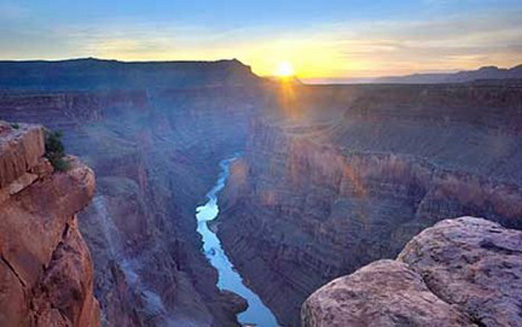
 Risks remain from uranium mining near the Grand Canyon Feb 22, 2012 High Country News By Heather Hansen, Red Lodge Clearing House. “….. There are over 5,000 active uranium claims within those one million acres. The withdrawal goes a long way toward protecting the watersheds, seeps and springs, sacred sites and critical wildlife habitat in the area because the only claims that can now be mined would have had to establish “valid existing rights,” before the 2009 moratorium. Yet even with these protections, the mines with existing rights — the ones allowed to operate despite the moratorium — may still have a significant negative impact on the Grand Canyon environment Continue reading
How the nuclear lobby’s devious marketing distorts “incentives”
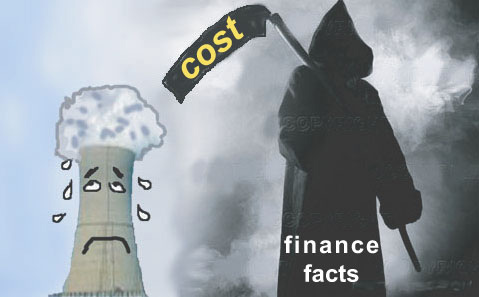 the NRC’s decision on Vogtle was “a non-event” because, he said, “The morning after the license was issued, nobody on Wall Street woke up and said, ‘Hey! Now I’m going to buy in!'” The licensing decision had, he said, “no effect on the economics.”
The Nuclear Industry’s Answer to Its Marketplace Woes, Greentech media Construction Work in Progress (CWIP) financing shifts the risks of nuclear energy to utility ratepayers. HERMAN K. TRABISH: FEBRUARY 22, 2012 “……..An example of incentive distortion is “the sunk-costs argument” now being used by Southern Company for the Vogtle reactors under development in Georgia with CWIP financing. Construction there is reportedly both behind schedule and over budget. Southern Company, Cooper said, is arguing that, with as much as $4 billion in sunk costs, “It’s cheaper to finish this project than to start something else.”
Some nuclear developers, he added, will simply tell regulators that have authorized the spending of billions in ratepayer funds, “If you don’t give me the next $50 million, I’m going to abandon this project.” Continue reading
San Clemente residents want independent radiation monitoring of San Onofre nuclear plant
Growing number of small decentralised renewable energy projects
Smaller, renewable energy projects setting roots across west central Minnesota It’s hard to miss the development of renewable energy at the University of Minnesota campus in Morris. What can be more difficult to see, but no less significant, is the growing number and variety of smaller renewable energy projects setting roots all around the region. Morris Sun Tribune, By: Tom Cherveny, West Central Tribune WILLMAR, Minn. 21 Feb 12, – It’s hard to miss the development of renewable energy at the University of Minnesota campus in Morris.
There are now two, 1.6-megawatt wind generators towering over the prairie and cranking out enough kilowatts to provide 60 percent of the electrical needs on campus. A heating system utilizing locally harvested biomass produces 25 percent of the thermal energy required on campus, with expectations of meeting 50 percent of needs next year.
What can be more difficult to see, but no less significant, is the growing number and variety of smaller renewable energy projects setting roots all around the region. In recent years 17 different “net metering” projects have been added by customers on the Kandiyohi Power Cooperative’s distribution grid, for example. Using small wind generators or solar photovoltaic panels, customers are producing a portion of their own electricity and selling any excess back to the grid.
Renewable energy systems of all types — from small wind generators to methane digesters — are being installed on farms, homes and businesses throughout southwestern Minnesota. Participants from throughout western Minnesota gathered recently at the Prairie Woods Environmental Learning Center to identify the projects and to help chart the way for more….. http://www.morrissuntribune.com/event/article/id/27223/
Top medical isotope can be produced without nuclear reactor
 Nuclear medicine has long been touted as a selling point for nuclear power – a kin do healthy fig leaf put over a n unhealthy, toxic industry. – Christina Macpherson
Nuclear Reactors Not Needed to Make the Most Common Medical Isotope, Science Now by Robert F. Service on 20 February 2012, In recent years, hospitals worldwide have been grappling with short supplies of technetium-99 (Tc-99), the most commonly used radioisotope in medical imaging scans. But help may be at hand: A team of Canadian researchers reported today that they’ve made critical progress in developing a stable new supply of the isotope.
Tc-99 is currently produced in nuclear reactors fueled with highly enriched uranium, which has raised concerns that the nuclear fuel could be intercepted by terrorists to make a nuclear weapon. The new setupproduces Tc-99 with a medical cyclotron, thereby eliminating proliferation concerns. But economic and technical considerations may make it more practical for shoring up Tc-99 supplies in Canada than in the United States. Continue reading
Canada denies asylum to Japanese nuclear refugee
“The claimant feared risks of exposure to radiation,” an IRB member said in a ruling. “She was not convinced by the Japanese government’s assurances of safety from radiation.”
The woman was one of hundreds of Japanese citizens who sought refuge in other countries following the March 11, 2011 catastrophe …. A board member said the claimant’s risk “is characterized as being widespread and prevalent in Japan.”
The woman can still appeal her case to the Federal Court of Canada, and that decision can still be appealed. She claimed her life was in danger from radioactive contaminants that spewed into the environment from the Fukushima plant. …..http://cnews.canoe.ca/CNEWS/Canada/2012/02/18/19397881.html
Historical record shows that USA’s Republicans cut nuclear arms
GOP takes lead in nuclear arms cuts, Times Union .com Associated Press, February 18, 2012 WASHINGTON — The Obama administration’s consideration of severe cuts in nuclear weapons generated a flurry of GOP criticism — “reckless lunacy” in the words of Arizona Rep. Trent Franks. But the historical record shows that in the two decades since the Cold War ended, Republicans have been the boldest cutters of the nuclear arsenal.
“Republican presidents seem to have a thing for 50 percent nuclear reductions,” says Hans Kristensen, a nuclear arms specialist with the Federation of American Scientists, a think tank founded by many of the scientists who built the first atomic bombs.
On President George H.W. Bush‘s watch, the number of deployed weapons as well as those held in reserve was nearly cut in half, from 22,217 to 13,708 warheads, according to official government figures. President George W. Bush went further, cutting the total stockpile by 50 percent, from 10,526 to 5,273 warheads.
Democratic President Bill Clinton trimmed just a little more than 2,000 warheads from the stockpile…… Read more: http://www.timesunion.com/news/article/GOP-takes-lead-in-nuclear-arms-cuts-3341848.php#ixzz1mxcZGzul
Vermont appeals court, to keep its right to shut nuclear power plant
Sat Feb 18, 2012 (Reporting By Jonathan Leff and Eileen O’Grady in Houston, editing by Todd Eastham (Reuters) – Vermont’s Attorney General appealed on Saturday a federal judge’s ruling that had prevented the state from shutting down its only nuclear power plant, escalating a two-year battle over state’s rights and atomic energy. Continue reading
Vogtle’s nuclear waste pools close to full – where to put new wastes?
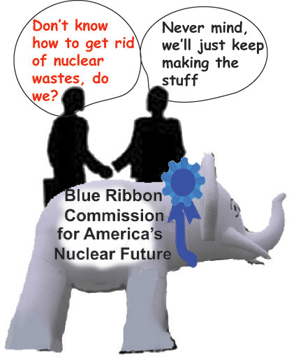 New Plant Vogtle reactors praised despite unresolved nuclear waste plan Augusta Chronicle By Rob Pavey Staff Writer Feb. 17, 2012 Nuclear expansion was touted this week as the answer to America’s energy needs, but there is still a question of what to do with the spent fuel the process creates.
Just a few hundred yards past a Burke County podium where Energy Secretary Steven Chu
cheered the $14 billion expansion of Plant Vogtle, a lesser known construction project is under way to add storage for spent fuel that could be stranded indefinitely here in Georgia.
The waste, part of 2,490 metric tons of the material statewide, has been accumulating in concrete-lined pools since Vogtle’s first two reactors went online in 1987 and 1989. Those pools will be full in 2014, Continue reading
USA’s worries about its nuclear reactors similar to Fukushima’s
U.S. nuclear plants similar to Fukushima spark concerns By Matt Smith, CNN
February 17, 2012 — As the United States prepares to build its first new nuclear power reactors in three decades, concerns about an early generation of plants have resurfaced since last year’s disaster in Japan.
The Vermont Yankee nuclear power plant — the subject of a battle between state authorities and the Nuclear Regulatory Commission over its continued operation — uses one of 23 U.S. reactors built with a General Electric-designed containment housing known as the Mark I.
It’s the same design that was used at Japan’s Fukushima Daiichi nuclear power plant, where three reactors melted down after the station was struck by the tsunami that followed Japan’s historic earthquake in March 2011. The disaster resulted in the widespread release of radioactive contamination that forced more than 100,000 people from their homes…..
Arnie Gundersen, a former nuclear engineer and a leading critic of the Vermont Yankee plant, says the Japanese accident shows the Mark I containment system can’t prevent a release of radioactivity in a meltdown.
Watch an excerpt from this weekend’s CNN Special Investigations Unit report on Vermont Yankee
In an October hearing before the NRC’s Petition Review Board, he said the vents were a “Band-Aid fix” for the design that failed “not once, not twice, but three times” at Fukushima Daiichi.
“True wisdom means knowing when to modify something and knowing when to stop,” said Gundersen, who leads a state commission set up to monitor the Vermont Yankee plant.
Half of U.S. reactors are more than 30 years old….. http://edition.cnn.com/2012/02/17/us/us-nuclear-reactor-concerns/?hpt=us_c1
11 USA nuclear reactors may have unsafe cooling systems
Nuclear Regulatory Commission says accident models could be amiss, By Mike M. Ahlers, CNN February 18, 2012 — The models may underestimate how much nuclear fuel would heat up during system failures
The commission is asking 11 U.S. nuclear power plants for more information
There is no immediate threat to public safety
Washington — The Nuclear Regulatory Commission has asked 11 nuclear power plants for information about the computer models they use to test different accident scenarios, saying those models may underestimate how much nuclear fuel will heat up during cooling system
failures….
At issue is a phenomenon known as “thermal conductivity degradation,” or TCD, the NRC said. TCD refers to the fact that nuclear fuel loses its capacity to transfer heat as it ages.
The NRC said it is concerned that some computer models may not account for TCD. If the plants are not considering TCD, the possibility exists that fuel rods could heat up 100 degrees more than anticipated in an accident scenario, exceeding the 2,200-degree limit considered safe,the NRC said. That could damage the fuel rods’ outer layer, leading to
reactor damage, the NRC said……
The plants have until March 19 to provide the information to the NRC
staff. http://edition.cnn.com/2012/02/17/us/nuclear-accident-models/index.html
1 This Month

Tell Congress: Prevent Nuclear Catastrophe in Iran

Tell Congress: Prevent Nuclear Catastrophe in Iran

Read the Public Inquiry Report, the Commissioners’ report, Surrendering Australia: The AUKUS Deception is available to download for free at aukuspublicinquiry.com. Or just watch the replay of the National Press Club Luncheon.


Shut down the radiation-damaged Heysham nuclear reactors now
To see nuclear-related stories in greater depth and intensity – go to https://nuclearinformation.wordpress.com

Say No to NASA’s Reckless Nuclear Reactor on the Moon
Say No to NASA’s Reckless Nuclear Reactor on the Moon
-
Archives
- November 2026 (269)
- October 2026 (302)
- September 2026 (339)
- August 2026 (330)
- July 2026 (355)
- June 2026 (287)
- May 2026 (306)
- April 2026 (356)
- March 2026 (251)
- February 2026 (267)
- January 2026 (308)
- December 2025 (358)
-
Categories
- 1
- 1 NUCLEAR ISSUES
- business and costs
- climate change
- culture and arts
- ENERGY
- environment
- health
- history
- indigenous issues
- Legal
- marketing of nuclear
- media
- opposition to nuclear
- PERSONAL STORIES
- politics
- politics international
- Religion and ethics
- safety
- secrets,lies and civil liberties
- spinbuster
- technology
- Uranium
- wastes
- weapons and war
- Women
- 2 WORLD
- ACTION
- AFRICA
- Atrocities
- AUSTRALIA
- Christina's notes
- Christina's themes
- culture and arts
- Events
- Fuk 2022
- Fuk 2023
- Fukushima 2017
- Fukushima 2018
- fukushima 2019
- Fukushima 2020
- Fukushima 2021
- general
- global warming
- Humour (God we need it)
- Nuclear
- RARE EARTHS
- Reference
- resources – print
- Resources -audiovicual
- Weekly Newsletter
- World
- World Nuclear
- YouTube
-
RSS
Entries RSS
Comments RSS

