Obama tries (a bit) to prevent war with Iran
 Obama urges Israel to use diplomacy in nuclear stand-off with Iran, THE AUSTRALIAN, AFP March 05, 2012 US President Barack Obama criticised “loose talk of war” as he pleaded for patience in ending the nuclear stand-off with Iran, arguing that sustained international pressure would force Tehran to the negotiating table.
On the eve of White House talks with Israeli Prime Minister Benjamin Netanyahu, Mr Obama sought to reassure a powerful pro-Israel lobby by vowing to use force if necessary. Speaking to the American Israel Public Affairs Committee in Washington alongside Israeli President Shimon Peres, he said sanctions were working and cautioned against the saber-rattling of recent months.
“Because of our efforts, Iran is under greater pressure than ever before,” he told thousands of delegates at the AIPAC annual policy forum. “Iran is isolated, its leadership divided and under pressure,” he said..
.. US intelligence is said to believe Iran does not currently intend to produce nuclear weapons, though it may be seeking the capacity to do so, and Washington has emphasised the importance of deterrent sanctions and diplomacy.
But Israel is reportedly eager to move more quickly and decisively against Iran’s nuclear activities, using a military strike to prevent it from obtaining even the capacity to take a decision to produce nuclear weapons….. http://www.theaustralian.com.au/news/world/obama-urges-israel-to-use-diplomacy-in-nuclear-stand-off-with-iran/story-e6frg6so-1226289117802
Rocketing costs for cleaning up nuclear waste
Nuclear cleanup costs expected to skyrocket at Parks, TRIB LIVE News, By Mary Ann Thomas, ASPINWALL HERALD, March 4, 2012 The cleanup costs for the nuclear waste dump in Parks Township are expected to soar from $170 million to at least $250 million and maybe as much as half a billion dollars because of recently discovered complexities of the site and safety considerations. Continue reading
Older breast cancer patients should not be getting so much radiation treatment
 Radiation still used despite evidence of little benefit to some older breast cancer patients, Health Canal, 6 March, 12 http://www.healthcanal.com/cancers/27253-Radiation-still-used-despite-evidence-little-benefit-some-older-breast-cancer-patients.html By Karen N. Peart – Even though a large clinical study demonstrated that radiation has limited benefit in treating breast cancer in some older women, there was little change in the use of radiation among older women in the Medicare program, Yale School of Medicine researchers report in the March Journal of Clinical Oncology. “We were surprised by these results,” said lead author Dr. Cary P. Gross, associate professor of internal medicine at Yale School ofMedicine. “Clinical trials are considered the gold standard of medical research and in this case the trial was influential enough to lead to a change in treatment guidelines. We expected it to have more of an impact on clinical care at the bedside.” Continue reading
“State of the Art Reactor Consequence Analysis” (SOARCA) downplays nuclear accident impacts
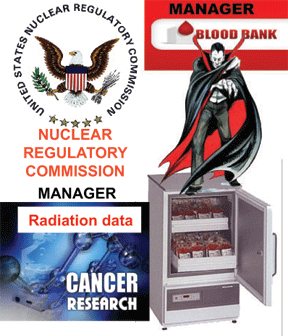 NRC should immediately withdraw its absurd SOARCA report, and get about the business of protecting public health, safety, and the environment — its mandate — rather than doing the nuclear power industry’s bidding by downplaying risks as at Peach Bottom 2 and 3
“Demonic” reality of Fukushima, versus absurdity of NRC Beyond Nuclear 2 Mar 12, I”……..On March 13, 2011, even as Fukushima Daiichi’s reactors were melting down and exploding, and its storage pools at risk of boiling or draining dry and the high-level radioactive waste catching fire, the U.S. Nuclear Regulatory Commission (NRC) provided false assurance to the U.S. public and news media, that no harmful levels of radioactive fallout would reach U.S. territories. However, at the very same time, we now know, NRC was itself worried about potentially hazardous levels of radioactive Iodine-131 reaching Alaska.
Just last week, NRC held public meetings about its newly unveiled, so-called “State of the Art Reactor Consequence Analysis” (SOARCA). One meeting took place near the Peach Bottom nuclear power plant in Pennsylvania, not far from Philadelphia or Washington D.C., where two General Electric Boiling Water Reactors of the Mark I design (GE BWR Mark I) operate. Paul Gunter, Beyond Nuclear’s Reactor Oversight Project Director, attended and testified. Continue reading
Obama makes hawkish noises about Iran

 Obama warns Iran he’s not bluffing over nuclear weapons,
 Herald Sun, by: By Mark S Smith & Anne Gearan in Washington From: AP March 03, 2012 US President Barack Obama warned that he is not bluffing about attacking Iran if it builds a nuclear weapon, in an interview published overnight
In his most expansive remarks on the issue so far, Mr Obama told The Atlantic magazine that Iran and Israel both understand that “a military component” is among a mix of options for dealing with Iran, along with sanctions and diplomacy. Continue reading
Michigan not immune from nuclear danger
Reminders of the Risks of Nuclear Power Come From Past/Present, Near/Far, HUFFINGTON POST, Patrick Geans- 03/ 1/2012 As we come up on the one-year anniversary of the Fukushima Dai-ichi nuclear disaster in Japan, reports are still emerging about the way the Japanese government kept critical information from their own public in the wake of one of the worst nuclear catastrophe’s the world has ever seen.
Likewise with three nuclear sites in the state of Michigan, we should also keep in mind other reminders about the potentially grave risks inherent to nuclear facilities closer to home….. Continue reading
Scientists detail 15 ‘near misses’ at USA nuclear power plants

 Fifteen ‘Near-Misses’ at U.S. Nuclear Plants in 2011 Environmental News Service WASHINGTON, DC, February 28, 2012 (ENS) – The Union of Concerned Scientists has documented 15 “near-misses” at 13 U.S. nuclear plants during 2011 and evaluates the response of the Nuclear Regulatory Commission to each event in a report released today.
The second in an annual series of reports, “The NRC and Nuclear Power Plant Safety 2011 Report: Living on Borrowed Time” details 15 special inspections launched by the federal agency in response to problems with safety equipment, security shortcomings, and other troubling events at nuclear power plants.
The overview is provided by David Lochbaum, the director of UCS’s Nuclear Safety Project. He worked at U.S. nuclear plants for 17 years and was a boiling water reactor technology instructor for the Nuclear Regulatory Commission.
“While none of the safety problems in 2011 caused harm to plant employees or the public, their frequency – more than one per month – is high for a mature industry,” Lochbaum writes.
In the 40 years that the Union of Concerned Scientists has evaluated safety at U.S. nuclear power plants, “We have repeatedly found that NRC enforcement of safety regulations is not timely, consistent or effective,” the report states.
The UCS says its findings match those of the agency’s internal assessments, as well as of independent agents such as the NRC’s Office of Inspector General and the federal Government Accountability Office, which is the investigative arm of Congress.
Many of these 15 “near misses” occurred because reactor owners either tolerated known safety problems or took inadequate measures to correct them, Lochbaum finds…..
Article goes on to detail each of these.… http://www.ens-newswire.com/ens/feb2012/2012-02-28-02.html
Nuclear plants in South Carolina and Virginia had “near misses”
Nuclear watchdog group says Duke Energy plant among 2011 “near misses” Observer.com by johnmurawski on 02/28/2012 “……According to UCS, the situation at Duke Energy’s Oconee nuclear plant in South Carolina involved a glitch in the backup reactor core cooling system that would have rendered the system useless during an accident.
The backup system was installed in 1983 and the plant’s workers didn’t discover the problem until 2011.
Another plant mentioned in the UCS report was the North Anna plant in Virginia which lost offsite power after experiencing an earthquake which was more severe than the plant was designed for……” http://blogs.newsobserver.com/business/nuclear-watchdog-group-says-duke-energy-plant-among-2011-near-misses
Federal govt confident of legal win in keeping new uranium mining from Grand Canyon
Sandy Bahr, director of the Grand Canyon Chapter of the Sierra Club aid the mining industry is used to getting its way when it comes to public lands, and she believes that is one reason for Monday’s lawsuit. “The mining industry seems to forget that these are public
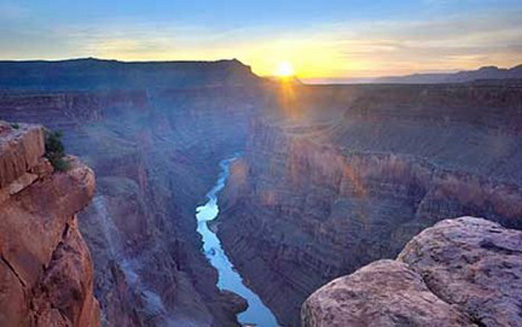 lands, not their lands,” she said. “There are more important things than their short–term profits – namely the Grand Canyon.”
Environmentalists also said they do not believe the department’s environmental analysis will be found to be flawed as it spent more than two years on research, analysis and review of “hundreds of thousands of comments in support of the withdrawal,”
 Salazar confident uranium-mining ban will withstand legal challenge By SALVADOR RODRIGUEZ Cronkite News, 28 Feb 12, WASHINGTON – Interior Secretary Ken Salazar said Tuesday he is confident a 20–year ban on uranium mining near the Grand Canyon will hold up to an industry lawsuit challenging the January withdrawal of the land by federal officials.
Salazar’s comments came one day after the National Mining Association
and the Nuclear Energy Institute filed suit U.S. District Court in Arizona, arguing that the Department of the Interior cannot withdraw more than 5,000 acres of land at a time under the law it cited. Continue reading
A change, but not enough, in the NRC’s pro nuclear culture
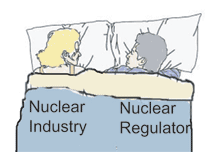 Nuclear Regulatory Commission sea change? Chairman Jaczko wants red tape removed for Fukushima contentions By Frank Mand Wicked Local Feb 27, 2012 PLYMOUTH — While the Nuclear Regulatory Commission seems to be moving quickly now, dispensing with the objections and legal contentions standing in the way of relicensing the Pilgrim Nuclear Power Station, as those impediments are brushed aside something quite remarkable may be taking place.
Almost hidden in several recent decisions by the NRC – decisions which went against critics of relicensing – is the core of a sea change, a belief on the part of certain key individuals in this government bureaucracy that, at least in the case of recent concerns about the relevance of the Fukushima disaster to Pilgrim and other American nuclear power plants, business as usual is no longer acceptable…. Continue reading
Problems of Fort Calhoun nuclear power plant
OPPD’s nuclear problems: how far will they go? (Audio) By Robyn Wisch, KVNO News February 27th, 2012 Even before the great flood of 2011 hit Fort Calhoun last summer, the plant has been on the Nuclear Regulatory Commission’s radar for quite some time as a utility with potential problems. (The plant was cited for inadequate preparations for a flooding emergency in 2010)
But much of that only came to light when the plant actually came under threat of the Missouri waters. The plant has been offline since then – for just about a year now – and in that time the problems have only deepened. ….. Since that time though, in that interim, in June of 2011, there was a fire at Fort Calhoun, which didn’t get a lot of attention at the time. But several months later, the NRC realized the gravity of what took place at that fire, and it’s still not, I don’t think, completely clear to the public how significant that fire was because the plant was already shut down…… what we know now is that the plant suffered certain damage from the flood. Most recently, the NRC said its biggest concern is they’ve checked out the plant, and I think they’ve gone through what they can see above ground. Their biggest concern right now is below the ground, and how much damage was done underneath the earth where the Fort Calhoun plant sits on. And according to the NRC, they haven’t determined that yet, that’s still open for questions. There was a public hearing in Omaha in January. And some members of the public actually raised that issue, before I think we heard it from anybody else. Some people in the general public were wondering is the ground underneath Fort Calhoun secure? And now NRC is making it very clear they don’t know the answer to that yet, and they’re still trying to figure it out. …. http://www.kvnonews.com/2012/02/oppds-nuclear-problems-how-far-will-they-go/
USA’s laughable “Nuclear Waste Confidence Rule”
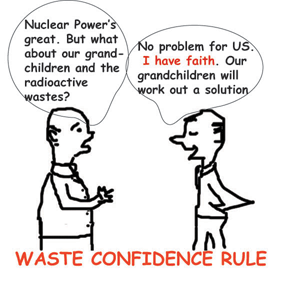 Public comments needed against NRC’s Nuclear Waste Confidence Game , Beyond Nuclear 25 Feb 12, The U.S. Nuclear Regulatory Commission (NRC) has requested public comments on its latest revision to its “Nuclear Waste Confidence Decision.” Please email your comments before March 19th to WCOutreach@nrc.gov in order to head off this latest round of a very dangerous “game being played” by NRC, which is doing the bidding of the nuclear power industry…..
The NRC’s “confidence” that on-site storage for 120 years (60 during reactors operations, 60 after reactor shutdown) is safe and secure would be laughable, if it weren’t so seriously wrong. 120 years is half as long as the United States has been an independent country (1776 to 2012, 236 years). A lot can go wrong in 120 years. NRC’s consideration of 200 to 300 years of on-site storage is even more preposterous. This is not “interim” or “temporary” on-site storage. This is de facto permanent on-site storage, in any common understanding of the term…..
BACKGROUND
First promulgated in 1984, NRC’s “Nuclear Waste Confidence Decision” claimed that by 2007, the U.S. would open one or more repositories for the permanent disposal of irradiated nuclear fuel. In the meantime, NRC expressed its “confidence” that irradiated fuel stored in pools or dry casks on-site would be done so safely and securely. This served as legal cover, carte blanche, for nuclear utilities to generate an unlimited amount of high-level radioactive waste, while blocking concerned citizens and environmental groups intervening in NRC proceedings from challenging new reactor license applications or old reactor license extensions on such grounds as the fact that there is no safe solution to the problem of radioactive waste management.
By 1990, NRC already had to “postpone” its “confidence.” It revised its “Confidence Decision” to now say that by 2025, at least one repository would be opened.
In December 2010, NRC revised its “Nuclear Waste Confidence Decision” yet again, to reflect the reality of the Obama administration’s wise decision to cancel the Yucca Mountain dump. NRC now declared no date certain for the opening of the first repository, but rather stated that on-site storage in pools and/or dry casks was safe for 120 years — 60 years during reactor operations, and 60 years after reactor shutdown. In addition, the five NRC Commissioners ordered their staff to study the potential for on-site storage lasting 200 to 300 years into the future. That explains NRC current request for public comments….
Please submit comments to WCOutreach@nrc.gov. You may also send comments through the U.S mail to: Christine Pineda, Project Manager; Mailstop EBB-2B2; Office of Nuclear Material Safety and Safeguards; U.S. Nuclear Regulatory Commission; Washington, DC 20555-0001 http://www.beyondnuclear.org/radioactive-waste-whatsnew/2012/2/23/public-comments-needed-against-nrcs-nuclear-waste-confidence.html
Rocky Flats nuclear weapons site still contaminated with plutonium
 The Rocky Mountain Peace and Justice Center hired independent contractors to test the soil and find out what the level of present plutonium contamination really looks like – but they were barred from actually entering the refuge. Instead, they tested the soil along the outside of the fence, and found that the level of contamination hasn’t changed since the 1970s.
 Plutonium particles in the soil at Rocky Flats will one way or another, sooner or later, come into people’s lungs and lives, since, with a half-life of 24,000 years, it poses a radiation hazard essentially forever
the Rocky Mountain Peace and Justice Center has filed a lawsuit to attempt to block any construction.
Former Colorado Nuclear Weapons Plant Just As Contaminated 40 Years Later http://www.care2.com/causes/former-colorado-nuclear-weapons-plant-just-as-contaminated-40-years-later.html, Care 2, by Julie Rodriguez February 24, 2012 16 miles northwest of Denver, CO sits the Rocky Flats site, formerly home to a plant that produced nuclear weapons from 1952-1989. These operations were shut down for repeated safety violations, which whistleblowers started bringing to the attention of the EPA and FBI in 1987. The extent of the contamination of the site was never revealed publically. Continue reading
Forceful opposition to renewing license for Pilgrim nuclear power plant
Pilgrim is one of the 23 reactors in the United States that is of the exact same design of the Fukushima reactors
Ms. Lampert also accused the federal government of bowing to corporate interests by disregarding the NRC’s own cautionary findings that these types of reactors should not be allowed to operate.
a 1990 Massachusetts Department of Health study pointed out elevated levels of leukemia among residents living in the region around Pilgrim Power
Opponents To Pilgrim Nuclear Power Plant Turn Out In Force For Panel Discussion, Cape News.net, 24 Feb 12 “……The panel they came to hear from included Carolyn O’Connor, director of external affairs for ISO New England, the entity that oversees the power grid in the region, state Senator Daniel A. Wolf, and Mary E. Lampert, founder and director of Pilgrim Watch and a longtime health and safety advocate.
Entergy Nuclear, the owner of the Pilgrim plant, declined an invitation to have a representative speak at the forum. Continue reading
Nuclear bombing: find out how your city would fare – with NUKEMAP
Nukemap: Shall we play a game? cnet, by Daniel Terdiman February 23, 2012
Tool shows what would happen if history’s most notorious nuclear weapons were dropped on different cities. It’s scary and sobering–and more than a million people have used it. Want to play god much?
With Nukemap, a new tool that lets anyone test out–on a Google Map–the effects of some of history’s most famous nuclear explosions on cities around the world, you can. Continue reading
1 This Month

Tell Congress: Prevent Nuclear Catastrophe in Iran

Tell Congress: Prevent Nuclear Catastrophe in Iran

Read the Public Inquiry Report, the Commissioners’ report, Surrendering Australia: The AUKUS Deception is available to download for free at aukuspublicinquiry.com. Or just watch the replay of the National Press Club Luncheon.


Shut down the radiation-damaged Heysham nuclear reactors now
To see nuclear-related stories in greater depth and intensity – go to https://nuclearinformation.wordpress.com

Say No to NASA’s Reckless Nuclear Reactor on the Moon
Say No to NASA’s Reckless Nuclear Reactor on the Moon
-
Archives
- November 2026 (269)
- October 2026 (302)
- September 2026 (339)
- August 2026 (330)
- July 2026 (355)
- June 2026 (287)
- May 2026 (306)
- April 2026 (356)
- March 2026 (251)
- February 2026 (267)
- January 2026 (308)
- December 2025 (358)
-
Categories
- 1
- 1 NUCLEAR ISSUES
- business and costs
- climate change
- culture and arts
- ENERGY
- environment
- health
- history
- indigenous issues
- Legal
- marketing of nuclear
- media
- opposition to nuclear
- PERSONAL STORIES
- politics
- politics international
- Religion and ethics
- safety
- secrets,lies and civil liberties
- spinbuster
- technology
- Uranium
- wastes
- weapons and war
- Women
- 2 WORLD
- ACTION
- AFRICA
- Atrocities
- AUSTRALIA
- Christina's notes
- Christina's themes
- culture and arts
- Events
- Fuk 2022
- Fuk 2023
- Fukushima 2017
- Fukushima 2018
- fukushima 2019
- Fukushima 2020
- Fukushima 2021
- general
- global warming
- Humour (God we need it)
- Nuclear
- RARE EARTHS
- Reference
- resources – print
- Resources -audiovicual
- Weekly Newsletter
- World
- World Nuclear
- YouTube
-
RSS
Entries RSS
Comments RSS

