Tougher charges against elderly Catholic anti nuclear nun: could face 10 years in prison
 New charges filed in nuclear weapons plant breach The Sacfamento Bee, By ERIK SCHELZIG Associated Press, Aug. 9, 2012 – NASHVILLE, Tenn. — A federal grand jury toughened the charges against three anti-war protesters who authorities say cut their way through three security fences and spray-painted slogans on the walls of a nuclear weapons plant in Tennessee.
An indictment released Thursday in Knoxville charges an 82-year-old Roman Catholic nun with Sisters of the Holy Child Jesus, a gardener and a housepainter with “depredation”
of the Y-12 National Security Complex in Oak Ridge. The charge carries a maximum penalty of 10 years in prison. Continue reading
Nuclear war danger in USA’s Air-Sea Battle plan
US blueprint for war with China flawed and could spark nuclear strikes, says expert http://www.melbournetimesweekly.com.au/news/world/world/general/us-blueprint-for-war-with-china-flawed-and-could-spark-nuclear-strikes-says-expert/2646720.aspx DYLAN WELCH 09 Aug, 2012 THE US government might like to deny it, but Barack Obama’s former intelligence chief has confirmed China is a principal target of a major US war plan.
The American plan, known in Washington as Air-Sea Battle, is strategically flawed, Australia’s foremost regional defence expert, Hugh White, said, and risks escalating a US-China struggle to the level of nuclear strikes. It is also known to have angered the Chinese military, and the confirmation is likely to be viewed with displeasure in Beijing. Continue reading
How fast breeder nuclear reactors were tried in USA, and failed
Despite the efforts of the country’s best minds and nearly limitless budgets, the breeder program did not work. And it was not only the Clinch River team who failed. Breeder programs in Germany, France and the United Kingdom also could not make the leap from lab experiment to commercially viable practice.
United States Circumvented Laws To Help Japan Accumulate Tons of Plutonium, DC Bureau By Joseph Trento, April 9th, 2012.….Reversing Course – Reagan Undermines Carter’s Policies Richard Kennedy One of the most passionate nuclear believers was a career bureaucrat named Richard Kennedy. A former Army officer, he labored in obscurity at the Nuclear Regulatory Commission, his career held hostage by his vehement opposition to President Carter’s nuclear policies. All of that changed after Ronald Reagan’s election in 1980. One of Reagan’s first acts as president was to effectively reverse Carter’s nuclear doctrine, which had barred the United States from using plutonium in civilian power projects with America’s friends or adversaries.
Reagan made Kennedy his right-hand man for nuclear affairs. From his new post as Ambassador at Large for Nuclear Energy, Kennedy oversaw the dismantling of the Carter policies he despised. The new administration rejuvenated American and international reliance on plutonium. Continue reading
How USA secretly transferred nuclear weapons research to Japan
United States Circumvented Laws To Help Japan Accumulate Tons of Plutonium, DC Bureau By Joseph Trento, April 9th, 2012 National Security News Service The United States deliberately allowed Japan access to the United States’ most secret nuclear weapons facilities while it transferred tens of billions of dollars worth of American tax paid research that has allowed Japan to amass 70 tons of weapons grade plutonium since the 1980s, a National Security News Service investigation reveals. These activities repeatedly violated U.S. laws regarding controls of sensitive nuclear materials that could be diverted to weapons programs in Japan. The NSNS investigation found that the United States has known about a secret nuclear weapons program in Japan since the 1960s, according to CIA reports.
The diversion of U.S. classified technology began during the Reagan administration after it allowed a $10 billion reactor sale to China. Japan protested that sensitive technology was being sold to a potential nuclear adversary. The Reagan and George H.W. Bush administrations permitted sensitive technology and nuclear materials to be transferred to Japan despite laws and treaties preventing such transfers. Highly sensitive technology on plutonium separation from the U.S. Department of Energy’s Savannah River Site and Hanford nuclear weapons complex, as well as tens of billions of dollars worth of breeder reactor research was turned over to Japan with almost no safeguards against proliferation. Japanese scientist and technicians were given access to both Hanford and Savannah River as part of the transfer process.
While Japan has refrained from deploying nuclear weapons and remains under an umbrella of U.S. nuclear protection, NSNS has learned that the country has used its electrical utility companies as a cover to allow the country to amass enough nuclear weapons materials to build a nuclear arsenal larger than China, India and Pakistan combined.
This deliberate proliferation by the United States fuels arguments by countries like Iran that the original nuclear powers engage in proliferation despite treaty and internal legal obligations. Russia, France, Great Britain as well as the United States created civilian nuclear power industries around the world from their weapons complexes that amount to government-owned or subsidized industries. Israel, like Japan, has been a major beneficiary and, like Japan, has had nuclear weapons capabilities since the 1960s.
A year ago a natural disaster combined with a man-made tragedy decimated Northern Japan and came close to making Tokyo, a city of 30 million people, uninhabitable. Nuclear tragedies plague Japan’s modern history. It is the only nation in the world attacked with nuclear weapons. In March 2011, after a tsunami swept on shore, hydrogen explosions and the subsequent meltdowns of three reactors at the Fukushima Nuclear Power Plant spewed radiation across the region. Like the bombs dropped on Hiroshima and Nagasaki, Japan will face the aftermath for generations. A twelve-mile area around the site is considered uninhabitable. It is a national sacrifice zone. ……..http://www.dcbureau.org/201204097128/national-security-news-service/united-states-circumvented-laws-to-help-japan-accumulate-tons-of-plutonium.html
According to prosecution, 82 year old anti nuclear nun is “violent”, “a danger to community”
Prosecutor Kirby……asserting that their action was a “crime of violence.” Kirby got worked up enough to hiss, “Their description of nonviolence is not right. They are willing to die for what they believe. That’s violence.”
Unarmed Octogenarian Nun Called ‘Danger to Community’ by Prosecutors Nuclear Security Unmasked by JOHN LaFORGE, AUGUST 08, 2012 “……. something our nuclear war mafia hates as much as vampires hate daylight — is that the gravity of the Y-12 shut-down, along with the government’s wish to keep the interveners behind bars, moved prosecutors to up the charges. The three were at first charged only with federal trespass.
On Aug. 3, prosecutors added a felony count — “willful and malicious destruction or injury to a structure, conveyance, personal or real property” or its attempt — which carries a max of 5 years in prison, 3 years’ probation, and/or a $250,000 fine. Continue reading
USA’s mounting nuclear wastes influenced NRC decision to halt reactor licensing
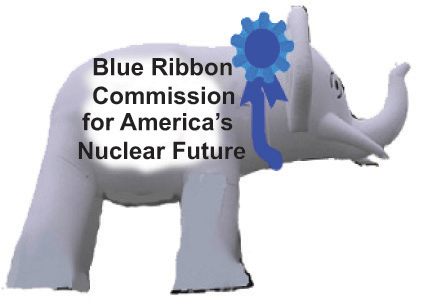 More than 65,000 tons of spent nuclear fuel is stored at operating and shuttered reactor sites across the country. But those 72 sites in 34 states are filling up. Some 2,000 additional tons of waste are produced each year, according to a report released this year by the president’s Blue Ribbon Commission on America’s Nuclear Future. …..
As Nuclear Waste Problem Persists, Federal Regulators Freeze Licensing for Reactors Aug. 8, 2012 Jim Malewitz, Stateline.org The U.S. Nuclear Regulatory Commission (NRC) won’t sign off on licenses for news and existing nuclear power plants until the commission addresses a decades-old problem plaguing states: what to do with spent fuel rods and other hazardous waste piling up at storage sites across the country.
In a unanimous decision on Tuesday (August 7), the commission said it
will hold off licensing plants that are new or up for renewal. That’s
until it responds to a court’s ruling that the NRC failed to consider
the environmental impacts of continuing to store waste at sites meant
to be temporary.
Licensing reviews will continue, the commission said, but no final
decisions will be made.
More than 65,000 tons of spent nuclear fuel is stored at operating and shuttered reactor sites across the country. But those 72 sites in 34 states are filling up. Some 2,000 additional tons of waste are produced each year, according to a report released this year by the
president’s Blue Ribbon Commission on America’s Nuclear Future. …..
In June, a federal appeals court threw out the commission’s “waste
confidence rule” and “temporary storage rule,” decisions that
collectively approved the status quo for onsite storage. Siding with
environmentalists and four states led by New York, the court said the
commission’s rulemaking process was flawed in that it did not
calculate the environmental effects of failing to secure a permanent
disposal site _ “a possibility that cannot be ignored,” the court
ruled. The NRC also, according to the court, “failed to examine future
dangers and key consequences,” in its determination that spent nuclear
fuel could be safely stored at nuclear sites for up to 60 years after
their license expires. ….
Eric Schneiderman, New York’s attorney general, hailed the NRC’s
decision to halt the licensing of reactors.
“The storage of nuclear waste at nuclear power facilities poses
long-term health and environmental risks, including the risk of leaks
from spent fuel pools and fires, he said in a statement yesterday.
“The NRC’s commitment is a welcome step toward ensuring a full, fair
and open examination of the numerous critical questions about the
safety and environmental impact of Indian Point before any decisions
are made about extending its operating licenses for another 20 years.”
How bureaucrats worked secretly to subvert laws on nuclear weapons proliferation
U.S. and international law strictly limited the technology developed in the Clinch River program, particularly reprocessing technology used to separate plutonium from spent nuclear fuel. And the plan would require hundreds of international shipments of weapons-grade plutonium and high level nuclear waste on ships.
United States Circumvented Laws To Help Japan Accumulate Tons of Plutonium, DC Bureau By Joseph Trento, April 9th, 2012“…..Giving to Both Sides – Nuclear deals with China and Japan Westinghouse AP 1000 in China In 1984 the Westinghouse Corporation had struck a deal to supply nuclear reactors to China worth as much as $10 billion. The deal was an incredible windfall for the American nuclear industry and would be a cornerstone in [bureaucrat] Richard Kennedy’s efforts to make the United States dominate in the world’s nuclear commerce. The only problem was China’s abysmal record of sharing nuclear secrets with all bidders.
In a bitter session on the Senate floor, then Democratic Assistant Majority Leader Alan Cranston charged that the Reagan administration on [bureaucrat Richard] Kennedy’s watch had “systematically withheld, suppressed and covered up information – known virtually throughout the executive branch – which Congress might find worrisome.” China was already known to have sold nuclear technology to five international nuclear outlaws: Pakistan, Iran, South Africa, Brazil and Argentina. By 1984, Cranston and most of the American government knew that China had given sophisticated nuclear weapons designs to Pakistan. Beijing had also sold the enriched uranium that would find its way into South Africa’s nuclear bombs. China sold heavy water for use in Argentina’s bomb program, while also selling nuclear materials to arch rival Brazil and negotiating nuclear agreements with Iran.
China’s nuclear proliferation track record could hardly have been worse, but instead of negotiating ironclad safeguards, Kennedy returned from Beijing with an agreement so ambiguous that both sides could interpret it however they liked. Continue reading
U.S. To Provide Access To Marshall Islands Nuclear Test Documents
Marshalls maintains demand for full disclosure of classified information By Giff Johnson SAIPAN, CNMI (Marianas Variety, Aug. 8, 2012) – In response to a strong statement of concern from the Marshall Islands government about the lack of access to classified information about United States nuclear testing in this western Pacific nation more than 50 years ago, a top State Department official has promised to initiate a review of data available for public release.
“Some documents provided in the past were so heavily redacted as to make them unreadable,” said Assistant Secretary of State for East Asian and Pacific Island Affairs Kurt Campbell at a media conference after meeting with President Christopher Loeak in Majuro Thursday evening. “It is fair to ask the United States to see if we’ve provided the Marshall Islands with the information it needs to understand more fully (the nuclear test legacy).”…. http://pidp.org/pireport/2012/August/08-08-09.htm
USA to halt licensing of nuclear plants: no assurance of nuclear waste solution
 U.S. Regulator Halts Nuclear-Plant Licensing, WSJ, By REBECCA SMITH And RYAN TRACY August 7, 2012, Court Rules That NRC Can No Longer Accept Assurances a Permanent Waste Repository Is Coming
The U.S. Nuclear Regulatory Commission said it would stop issuing licenses for nuclear plants until it addresses problems with its nuclear-waste policy that were raised by a recent federal appeals court decision. Continue reading
Nuclear Regulatory Commission to woo indigenous peoples with education money
This funding opportunity is open to institutions of higher education; Alaska Native and Native Hawaiian Serving Institutions; Hispanic-serving Institutions; Historically Black Colleges and Universities; and Tribally-Controlled Colleges and Universities; non-profits.

 $4.7 Million Funding Available for Nuclear Education Curricula Development Power Industry News, WASHINGTON, Aug. 5 — The U.S. Nuclear Regulatory Commission has announced that it expects to award discretionary grant for the development of nuclear education curricula promoting common defense and security; and protecting the environment. Continue reading
U.S. Freezes All Nuclear Power Plant Licensing Decisions
most of the 19 reactor projects are already “essentially sidetracked by the huge problems facing the nuclear industry, including an inability to control runaway costs, and the availability of far less expensive energy alternatives.”
ongoing descent into fiasco of the bubble once known as ‘the nuclear renaissance,’”
WASHINGTON, DC, August 7, 2012 (ENS) – Federal nuclear regulators today froze at least 19 final reactor licensing decisions in response to a ruling by the U.S. Court of Appeals for the DC Circuit that spent nuclear fuel stored on-site at nuclear power plants “poses a dangerous, long-term health and environmental risk.”
In its ruling, the appeals court invalidated the U.S. Nuclear Regulatory Commission’s 2010 updates to the Waste Confidence Rule and also the Temporary Storage Rule and directed the commission to fully comply with federal law.
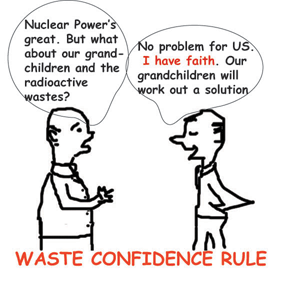
In response, the NRC today put a hold on nine construction and operating licenses, eight license renewals, one operating license, and one early site permit.
The court noted that, after decades of failure to site a permanent geologic repository, including 20 years of working on the now-abandoned Yucca Mountain repository in Nevada, the NRC “has no long-term plan other than hoping for a geologic repository.”
Therefore, it is possible that spent fuel will be stored at reactor sites “on a permanent basis,” the court said.
In its order today, the five-member NRC said, “Waste confidence undergirds certain agency licensing decisions, in particular new reactor licensing and reactor license renewal.”
“Because of the recent court ruling striking down our current waste confidence provisions, we are now considering all available options for resolving the waste confidence issue, which could include generic or site-specific NRC actions, or some combination of both,” the agency said. “We have not yet determined a course of action.”
“In recognition of our duties under the law, we will not issue licenses dependent upon the Waste Confidence Decision or the Temporary Storage Rule until the court’s remand is appropriately addressed,” the NRC said.
The NRC’s order extends only to final license issuance. “All licensing reviews and proceedings should continue to move forward,” the agency said.
The case was originally brought to the appeals court by four states led by New York State, as well as a native Indian community and several environmental groups.
New York Attorney General Eric Schneiderman brought legal action against the NRC because of his concerns about Entergy’s relicensing application for two reactors at Indian Point power plant on the Hudson River at Buchanan, New York, just 24 miles north of New York City. Entergy’s license to operate Indian Point expires on September 28, 2013.
Schneiderman said today, “The storage of nuclear waste at nuclear power facilities poses long-term health and environmental risks, including the risk of leaks from spent fuel pools and fires. Despite this, the NRC has refused my repeated requests to address the serious risks of long-term, on-site storage of nuclear waste in Indian Point’s relicensing proceeding.” Continue reading
Nuclear and fossil fuel lobbies wage expensive war against renewable energy
Renewable Energy Under Siege In The USA http://www.energymatters.com.au/index.php?main_page=news_article&article_id=3326 by Energy Matters, 7 Aug 12, Renewable energy faces opposition from cashed-up fossil fuel supporters in Australia; but it’s nothing compared to what is going on in the USA at the moment. While solar energy, wind power and other clean energy sources have always hit opposition in the USA, the smearing has hit new levels as the nation prepares to vote and crucial renewable energy support mechanisms are under review.

The Sierra Club has released a report revealing how the fossil fuel industry is using tactics such as financial contributions to political campaigns, fake think tanks and faux intellectuals to attack renewable energy in order to alter public opinion and the views of lawmakers. ”From California to Pennsylvania, clean energy jobs are under attack by fossil fuel interest groups – yet many in Congress are sitting on their hands while tens of thousands of American jobs hang in the balance,” said Michael Brune, executive director of the Sierra Club.
The Sierra Club’s report claims the oil and gas industry spent more than $146 million on lobbying alone in 2011 and organizations such as the Manhattan Institute and the Heartland Institute that defend oil subsidies while attacking renewable energy have received in excess of $600,000 each since 1998 from the oil company Exxon. The report states the oil and gas industry contributed to 88 percent of all members of the U.S. House of Representatives and 89% of Senators in the 2010 election cycle.
Quoting data from Open Secrets; ConocoPhillips spent $20.5 million on lobbying last year and Royal Dutch Shell, $14.79 million. Add to those figures spending by ExxonMobil, Chevron, the American Petroleum Institute, and Koch Industries and the grand total comes to more than $74 million in 2011.
The report comes at a crucial time as a crucial element of support for wind energy – the Production Tax Credit (PTC) – may be lost at the end of this year. The PTC helps support the more than 75,000 jobs in the wind industry and many as half those jobs could be lost if it is not renewed.
The report, titled “Clean Energy Under Siege – Following the Money Trail Behind the Attack on Renewable Energy”, can be viewed in full here (PDF).
How Nuclear Regulatory Commissioners undermined nuclear safety
 Congressman releases blockbuster report detailing NRC conspiracy in wake of Fukushima http://enenews.com/just-in-congressman-releases-blockbuster-report-detailing-nrc-conspiracy-in-wake-of-fukushima December 10th, 2011
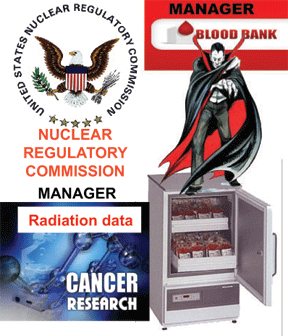
“Regulatory Meltdown” Reveals Efforts to Improve Nuclear Safety Undermined by Four NRC Commissioners New Report Details Conspiracy to Delay, Weaken US Nuclear Safety in Wake of Fukushima, Congressman Edward Markey, Dec. 9, 2011 (Emphasis Added):
WASHINGTON, D.C. – As part of his ongoing investigation into U.S. nuclear safety since the Fukushima meltdowns, today Rep. Edward J. Markey (D-Mass.), Congress’s leading voice for nuclear safety, released a blockbuster new report that details how four Commissioners at the Nuclear Regulatory Commission (NRC) colluded to prevent and then delay the work of the NRC Near-Term Task Force on Fukushima, the entity tasked with making recommendations for improvement to NRC regulations and processes after the Fukushima meltdowns, the worst nuclear disaster in history. The Near-Term Task Force members comprise more than 135 years of collective experience at the NRC, and with full access to expert NRC staff completed a methodical and comprehensive review of NRC’s regulatory system. Continue reading
82 year old anti nuclear nun shows up security danger at nuclear weapons site
 “these anti-Christ nongovernmental terrorists, Christian militias up in Michigan that are getting ready for Armageddon, to kill for Jesus, or the Nazi party or the Taliban, might just as easily have gotten to where we got, with evil intention.”
Security Questions Are Raised by Break-In at a Nuclear Site, NYT, By MATTHEW L. WALD and WILLIAM J. BROAD August 7, 2012 WASHINGTON — An 82-year-old nun and two fellow pacifists who penetrated the defenses of one of the nation’s most important nuclear weapons facilities last week are due in federal court in Knoxville, Tenn., on Thursday to face charges of trespassing and spray-painting antiwar slogans on a building that houses nuclear bomb fuel. But the incident has also put the Department of Energy’s security system on trial.
The security breach, at Oak Ridge in Tennessee, has prompted the Department of Energy to reappraise security measures across its nuclear weapons program and private experts to criticize the agency’s safeguarding of nuclear stockpiles.
The activists, who got past fences and security sensors before dawn on July 28, apparently spent several hours in the Y-12 National Security Complex before they were stopped — by a lone guard, they told friends — as they used a Bible and candles in a Christian peace ritual. In a telephone interview, Sister Megan Gillespie Rice, of Las Vegas, said she was not sure exactly how long they were there. “It was dark; we couldn’t see our watches,” she said. Continue reading
Occupy Nukes Challenges Nuclear Power on A-Bomb Anniversary
 The grassroots struggle against the nuclear-industrial complex in the U.S. is beginning to grow again, as evidenced by Occupy Nukes. This fall, the new anti-nuke movement should find its greatest expression since the height of the disarmament movement in the early 1980s, as thousands from across the country are expected to converge on Washington, D.C., to call for a future free of uranium mining, nuclear weapons, nuke plants and nuke waste.
Opposing Views.com By Waging Nonviolence, August 07, 2012 Occupy Nukes demonstrations were held in towns and cities across the United States on Monday, marking the anniversary of the atomic bombing of Hiroshima on August 6, 1945. Approximately 140,000 civilians were killed by the bomb, code-named Little Boy, while hundreds of thousands died later of cancer, and thousands more inherited birth defects. Nothing before or since has approached the instantaneous and horrific carnage reaped by Little Boy except, perhaps, Fat Man, dropped on Nagasaki three days later.
In a joint declaration, those of us taking part in the nationwide protests said, “Nuclear weapons allow us to gauge the full extent of brutality that the 1 percent — which rules through exploitation, coercion and violence — is capable of committing.” August 6 was a day of remembrance, but also one in which the 99 percent took action “to ensure such destruction [as took place in Hiroshima and Nagasaki] is never wrought on anyone ever again.”
Bearing a banner that read “¡Ya Basta! (un)Occupy The Bomb!” at least six people in New Mexico were arrested as a crowd of roughly 50 demonstrators, periodically throughout the day, blocked an entrance to Los Alamos National Laboratory (LANL). Occupying what was once Pueblo land and the home to 2,000 archeological sites, LANL is the birthplace of the atomic bomb. To this day, secretive weapons experiments are carried out at the lab.
New Mexico local Michelle Victoria, who helped organize the nonviolent direct action at Los Alamos, said the roadblock illustrated community and indigenous opposition to the weapons lab. Last summer, a wildfire swept through Los Alamos, narrowly missing 30,000 55 gallon drums of radioactive waste stored above ground at the site. “There’s a lot radioactivity around here,” said Victoria. “What they used to do at the lab back in the ’50s was just wheel barrels of radioactive material and dump them off the canyon.”
Victoria raised concerns that radioactive ash from last summer’s fire could have spread into the Rio Grande River, which provides drinking water to 90 percent of New Mexico’s municipalities. “We know and believe this is wrong and we are willing to put our bodies on the line for it to stop.”
Meanwhile, 20 miles West of Seattle, members of the Ground Zero Center for Nonviolent Direct Actionsymbolically shut down U.S. Naval base Kitsap-Bangor in the Puget Sound. A fleet of eight nuclear powered submarines carrying Trident D-5 ballistic missiles are docked at Bangor. Each sub can carry up to eight warheads loaded with between 100 kilotons or 475 kilotons of nuclear explosives each. By comparison, the bomb dropped on Hiroshima was 12 kt. “Those submarines could wipe out an entire continent,” said Leonard Eiger with the Ground Zero Center. “They don’t discriminate between civilian and military targets, a violation of international law.”……
On Sunday afternoon, heavily armed police kept a stern eye on peace activists and Buddhist monks making sure those gathered in front of the facility to pray away the demons inside wouldn’t try to hop the fence. In an email message, Rice told Occupy Nukes organizers to “continue the transformation each of you represents.”
The day of action comes amid President Barack Obama’s efforts to expand the U.S.’s nuclear arsenal. According to a White House fact sheet, Obama is pushing for investments of $80 billion “to sustain and modernize the nuclear weapons complex,” and $100 billion to revamp “existing capabilities and modernize some strategic [delivery] systems” by 2020. This nuclear spending spree includes $4 to 12 billion for anew plutonium processing complex at Los Alamos.
“Money spent on nukes is irradiating social programs for the 99 percent,” warns Occupy Nukes. We cite a Brookings Institution study which notes that between 1940 and 1998 the U.S. spent more money on nuclear weapons — $5.5 billion — than the “combined total federal spending for education; training, employment, and social services; agriculture; natural resources and the environment; general science, space, and technology; community and regional development, including disaster relief; law enforcement; and energy production and regulation.” That figure reached 7.2 trillion by the end of President George W. Bush’s term in the White House, and we accuse Obama of charting the same costly nuclear course……
The grassroots struggle against the nuclear-industrial complex in the U.S. is beginning to grow again, as evidenced by Occupy Nukes. This fall, the new anti-nuke movement should find its greatest expression since the height of the disarmament movement in the early 1980s, as thousands from across the country are expected to converge on Washington, D.C., to call for a future free of uranium mining, nuclear weapons, nuke plants and nuke waste.
If inspiration is coming from anywhere, though, it’s from Japan, where hundreds of thousands have taken to the streets in recent weeks against the re-ignition of reactors. The Japanese no nukes movement may even be approaching the critical mass needed to move the country off nukes for good. Close to 80 percent of the population favors a phase-out and the former prime minister, who stepped down after his government’s mishandling of the meltdown, is pushing for legislation that would accomplish just that.
Such a move would go a long way toward showing the ability of people power to disarm nuclear power and help point the way not only to a world free from the fear of another Fukushima or Hiroshima, but also a world where human health and safety is the priority above all. http://www.opposingviews.com/i/religion/christianity/occupy-nukes-challenges-nuclear-power-bomb-anniversary
1 This Month
Tell Congress: Prevent Nuclear Catastrophe in Iran

Tell Congress: Prevent Nuclear Catastrophe in Iran

Read the Public Inquiry Report, the Commissioners’ report, Surrendering Australia: The AUKUS Deception is available to download for free at aukuspublicinquiry.com. Or just watch the replay of the National Press Club Luncheon.


Shut down the radiation-damaged Heysham nuclear reactors now
To see nuclear-related stories in greater depth and intensity – go to https://nuclearinformation.wordpress.com

Say No to NASA’s Reckless Nuclear Reactor on the Moon
Say No to NASA’s Reckless Nuclear Reactor on the Moon
-
Archives
- November 2026 (255)
- October 2026 (302)
- September 2026 (339)
- August 2026 (330)
- July 2026 (355)
- June 2026 (287)
- May 2026 (306)
- April 2026 (356)
- March 2026 (251)
- February 2026 (267)
- January 2026 (308)
- December 2025 (358)
-
Categories
- 1
- 1 NUCLEAR ISSUES
- business and costs
- climate change
- culture and arts
- ENERGY
- environment
- health
- history
- indigenous issues
- Legal
- marketing of nuclear
- media
- opposition to nuclear
- PERSONAL STORIES
- politics
- politics international
- Religion and ethics
- safety
- secrets,lies and civil liberties
- spinbuster
- technology
- Uranium
- wastes
- weapons and war
- Women
- 2 WORLD
- ACTION
- AFRICA
- Atrocities
- AUSTRALIA
- Christina's notes
- Christina's themes
- culture and arts
- Events
- Fuk 2022
- Fuk 2023
- Fukushima 2017
- Fukushima 2018
- fukushima 2019
- Fukushima 2020
- Fukushima 2021
- general
- global warming
- Humour (God we need it)
- Nuclear
- RARE EARTHS
- Reference
- resources – print
- Resources -audiovicual
- Weekly Newsletter
- World
- World Nuclear
- YouTube
-
RSS
Entries RSS
Comments RSS

